Monday, December 29, 2025
Home Blog Page 117

Kamla Pasand Pan Masala Magnate Daughter-in-Law Dies: Tragic Incident in Delhi

New Delhi – A tragic incident unfolded in Delhi’s upscale Vasant Vihar locality on Tuesday when pan masala magnate daughter-in-law dies by suicide at her residence. The 38-year-old woman, connected to the owner of Kamla Pasand Pan Masala brand, was discovered by her husband in their bedroom, sparking an investigation into the circumstances surrounding her death.

Discovery of the Tragic Incident

Police received a distress call from the residence around noon on Tuesday reporting the suicide. When pan masala magnate daughter-in-law dies, the discovery was made by her husband who had left home earlier in the morning for the gym and to complete errands. The couple’s two children had subsequently gone to school, leaving the woman alone in the house.

According to a senior police officer involved in the investigation, the husband found his wife hanging from the ceiling in the dressing room within their bedroom upon his return. “He, along with domestic staff, rushed her to the hospital,” the officer stated, requesting anonymity. The pan masala magnate daughter-in-law dies incident shocked the affluent neighborhood and raised questions about the pressures faced within prominent business families.

Diary Entry Reveals Relationship Troubles

A crucial piece of evidence emerged when police recovered a diary from the room where pan masala magnate daughter-in-law dies. The diary contained entries mentioning “relationship issues,” which officers are currently investigating thoroughly. However, the senior police officer clarified that no specific names were written in the entry, and the deceased did not explicitly blame anyone in her writings.

This discovery has become central to understanding the circumstances leading up to the tragedy. The diary entries are being carefully examined to piece together the emotional state and challenges the woman may have been facing before the pan masala magnate daughter-in-law dies incident occurred.

Official Police Response and Investigation

Deputy Commissioner of Police (Southwest) Amit Goel confirmed that the woman was declared brought dead at the hospital. “The body was shifted to Safdarjung Hospital mortuary. A crime team inspected the spot and statements of all family members were recorded. An autopsy was conducted by a board of doctors and the body has been handed over to the family,” Goel stated.

The DCP also revealed that the couple had married in 2010 and the deceased was a homemaker. Legal proceedings under section 194 of the Bharatiya Nagarik Suraksha Sanhita (BNSS), which specifically deals with inquiries into unnatural or suspicious deaths, have been initiated. However, no First Information Report has been registered so far in the case where pan masala magnate daughter-in-law dies.

Family Allegations of Harassment

The situation became more complex when the woman’s brother came forward with serious allegations following the pan masala magnate daughter-in-law dies tragedy. He claimed his sister had been subjected to harassment and torture by her husband and in-laws.

“Her husband used to harass her. We recently learned that he had illegally married someone else. We brought our sister back to Kolkata, but her in-laws came to take her home. They promised to take care of her, but they tortured her,” the brother alleged. He added that the family had been facing these issues since the previous year.

According to the brother’s account, their sister returned to Delhi only because the in-laws promised to resolve the issues. However, he claimed that her husband and mother-in-law continued to torture her even after her return. These allegations have added another dimension to the investigation into why pan masala magnate daughter-in-law dies under such tragic circumstances.

Also Read: Grap 3 Restrictions Revoked: Shocking Decision Amid Delhi’s Toxic Air

Defense From Businessman’s Family

The businessman’s family has strongly refuted all allegations through their lawyer. Rajender Singh, representing the family, categorically denied the claims made by the woman’s brother. “These claims are absolutely baseless and false. Her mother has been with us since yesterday. Both families are grieving, and everyone wants her to be cremated with dignity. There is no note or complaint against anyone,” Singh stated.

The lawyer’s statement directly contradicts the allegations made by the deceased woman’s family, creating a complex situation for investigators examining why pan masala magnate daughter-in-law dies and what circumstances led to this tragedy.

Community Response and Investigation Progress

The incident where pan masala magnate daughter-in-law dies has sent shockwaves through Delhi’s business community and raised important questions about mental health support and domestic relationships within high-profile families. The Vasant Vihar residence, typically associated with affluence and success, became the scene of this heartbreaking tragedy.

Police continue their investigation, carefully examining all evidence including the diary entries, family statements, and the autopsy report. The crime team’s inspection of the spot and the recording of statements from all family members form crucial components of the ongoing inquiry.

Legal Proceedings Moving Forward

As the investigation continues into why pan masala magnate daughter-in-law dies, authorities are following proper legal protocols under BNSS section 194. The thorough autopsy conducted by a board of doctors will provide medical insights into the case, while investigators work to reconcile the conflicting accounts from both families.

The case highlights the importance of addressing relationship issues and mental health concerns, particularly in high-pressure family environments. As both families grieve this tremendous loss, the investigation seeks to uncover the complete truth behind this tragic incident where pan masala magnate daughter-in-law dies, leaving behind two young children and unanswered questions.
China Arbitrary Actions Unhelpful: India’s Powerful Response to Airport Detention

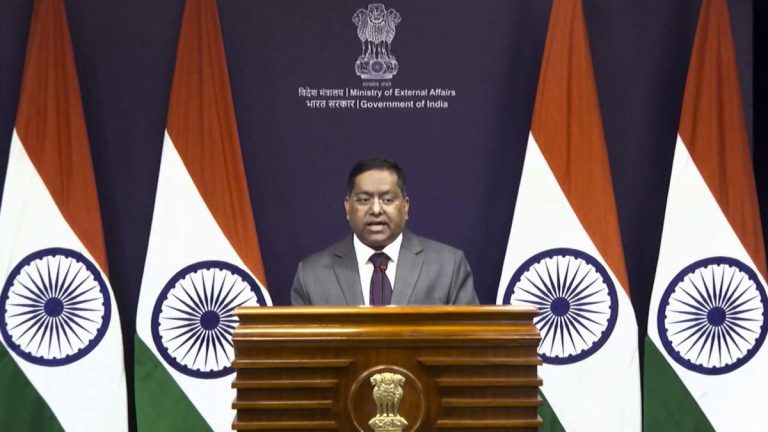
Arunachal Pradesh – India’s Ministry of External Affairs has issued a stern statement declaring that China arbitrary actions unhelpful toward efforts to build mutual trust and normalize bilateral relations. The strong response came following the recent detention of an Indian citizen from Arunachal Pradesh at Shanghai airport, where Chinese authorities declared her Indian passport invalid, claiming the northeastern state was part of Chinese territory.

MEA’s Strong Rebuke Over Shanghai Incident

MEA spokesperson Randhir Jaiswal made clear that China arbitrary actions unhelpful when he addressed the media at a weekly briefing on Wednesday. “Arbitrary actions by China involving an Indian citizen from Arunachal Pradesh are most unhelpful towards efforts being made by both sides to build mutual trust and understanding, and gradually move towards normalisation of bilateral relations,” Jaiswal stated.

The incident involved Prema Wangjom Thongdok, a UK-based Indian citizen traveling from London to Japan on November 21. Her scheduled three-hour layover at Shanghai airport turned into what she described as a traumatizing ordeal when immigration personnel declared her passport invalid solely because it listed Arunachal Pradesh as her birthplace. This action exemplifies why India considers China arbitrary actions unhelpful to ongoing diplomatic efforts.

India’s Unwavering Position on Arunachal Pradesh

Addressing why China arbitrary actions unhelpful to bilateral progress, Jaiswal reiterated India’s firm stance on territorial integrity. “Arunachal Pradesh is an integral and inalienable part of India and no amount of denial by China will alter the indisputable reality,” he emphasized during the briefing.

The MEA had made a similar assertion on Tuesday, just hours after China reiterated its claim over the territory while refuting allegations that the Indian woman was harassed at Shanghai airport. India has consistently rejected Chinese claims over Arunachal Pradesh, maintaining its sovereignty over the northeastern state despite Beijing’s persistent challenges.

Impact on Bilateral Relations

When questioned about what impact such incidents could have on bilateral relations, the MEA’s response highlighting China arbitrary actions unhelpful underscored the serious nature of the situation. The incident comes at a particularly sensitive time when both nations have been working to normalize ties following years of border tensions.

Since October 2024, both countries have worked closely to maintain peace and tranquility in border regions. The two sides reached an understanding to end the standoff along the Line of Actual Control in the Ladakh sector. However, incidents like the Shanghai airport detention demonstrate why China arbitrary actions unhelpful to sustaining this fragile progress.

Border Peace as Prerequisite for Progress

Jaiswal emphasized that peace and tranquility in border regions was a prerequisite for the continued and overall development of India-China bilateral relations. He was responding to questions about ongoing talks under the Special Representatives mechanism.

“Our position in this regard has always been very clear and consistent. Since October 2024, both sides have worked closely to maintain peace and tranquility in the border regions and it is on this basis that progress has been made particularly in people-centric engagements,” he explained. This statement contextualizes why China arbitrary actions unhelpful represents a significant setback to diplomatic momentum.

China’s Territorial Claims and Renaming Campaign

The incident at Shanghai airport reflects China’s broader strategy regarding Arunachal Pradesh. In recent years, China has resorted to renaming dozens of towns and geographical features in the state as part of its efforts to lay claim to the region. These actions consistently prove China arbitrary actions unhelpful in fostering the trust necessary for stable bilateral relations.

Chinese Foreign Ministry’s Response

Chinese foreign ministry spokesperson Mao Ning issued a statement on Tuesday claiming the woman was not subjected to any compulsory measures, detainment, or harassment. “We learnt that China’s border inspection authorities have gone through the whole process according to the laws and regulations and fully protected the lawful rights and interests of the person concerned,” Mao stated.

She added, “Zangnan is China’s territory. China never acknowledged the so-called Arunachal Pradesh illegally set up by India.” This response further illustrates why India views China arbitrary actions unhelpful, as Beijing continues to challenge India’s territorial integrity.

India’s Diplomatic Response

The MEA took swift action following the incident, making a strong demarche with the Chinese side both in Beijing and in Delhi on the same day the detention occurred. The Indian consulate in Shanghai also intervened locally, extending fullest assistance to the stranded passenger.

This immediate diplomatic response demonstrates India’s commitment to protecting its citizens while reinforcing why China arbitrary actions unhelpful to the broader relationship. The incident has become a test case for how both nations handle sensitive issues affecting ordinary citizens while attempting to maintain diplomatic progress.

Future Implications

The Shanghai airport incident serves as a reminder of the challenges facing India-China relations. Despite progress on border disengagement and efforts toward normalization, incidents demonstrating China arbitrary actions unhelpful continue to emerge, threatening the delicate balance both sides have worked to achieve.

As India maintains its position that Arunachal Pradesh is an integral part of its territory, such arbitrary actions by Chinese authorities at airports and borders will continue to strain bilateral efforts. The MEA’s strong statement makes clear that building mutual trust requires both nations to respect each other’s sovereignty and treat citizens with appropriate dignity, rather than using them as pawns in territorial disputes.

Trump Warning Washington DC Suspect: Shocking Vow After Guard Shooting

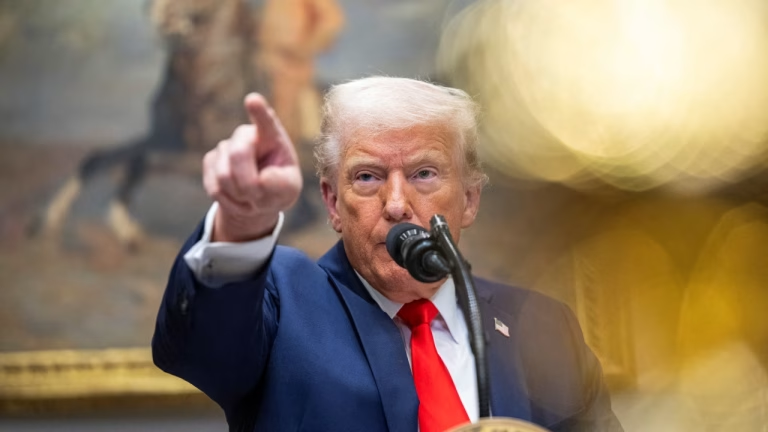
Washington D.C. – United States President Donald Trump issued a stern Trump warning Washington DC suspect on Wednesday following a shocking shooting incident that left two National Guard troops critically wounded just two blocks from the White House. The President’s forceful statement came as authorities took the severely injured suspect into custody, marking a violent attack on military personnel in the heart of the nation’s capital.

Presidential Statement Declares Consequences

The Trump warning Washington DC suspect was delivered through a post on Truth Social, where the President described the attacker as an “animal” who would face severe consequences for the violent assault. “The animal that shot the two National Guardsmen, with both being critically wounded, and now in two separate hospitals, is also severely wounded, but regardless, will pay a very steep price,” Trump wrote.

The President’s message emphasized his administration’s unwavering support for military and law enforcement personnel. “God bless our Great National Guard, and all of our Military and Law Enforcement. These are truly Great People. I, as President of the United States, and everyone associated with the Office of the Presidency, am with you!” he added, reinforcing the Trump warning Washington DC suspect with a pledge of solidarity with the victims.

Critical Condition of National Guard Troops

According to the Trump warning Washington DC suspect statement, both National Guard troops remain critically wounded following the Wednesday afternoon attack. The soldiers were stationed just two blocks from the White House when the suspect opened fire in what authorities are describing as a targeted ambush. Both victims have been transported to separate hospitals where they are receiving urgent medical treatment for their life-threatening injuries.

The severity of their conditions has prompted round-the-clock medical attention as doctors work to stabilize both service members. The attack occurred in a highly visible area near the White House, sending shockwaves through the Washington DC community and raising serious questions about security protocols for military personnel deployed in civilian areas.

Suspect Severely Wounded in Custody

The Trump warning Washington DC suspect also revealed that the attacker sustained severe injuries during the incident. According to local authorities, there were three casualties total in the shooting, with all three victims, including the suspect, taken to hospital for urgent treatment. The suspect was subdued by other National Guard members at the scene following an exchange of gunfire.

Despite the suspect’s serious injuries, the Trump warning Washington DC suspect made clear that consequences would be forthcoming regardless of the attacker’s medical condition. Law enforcement officials have confirmed the suspect remains in custody under heavy security as the investigation continues.

Confusion Over Troops’ Status

Adding to the chaos surrounding the incident, West Virginia Governor Patrick Morrisey initially posted on X that both soldiers had died from their injuries. However, minutes later, he retracted his statement, explaining that officials were receiving conflicting information about the National Guard troops’ condition.

“We are now receiving conflicting reports about the condition of our two Guard members and will provide additional updates once we receive more complete information. Our prayers are with these brave service members, their families, and the entire Guard community,” Morrisey wrote on X, highlighting the confusion in the immediate aftermath of the attack.

This conflicting information underscored the chaotic nature of the situation and the challenges authorities faced in confirming accurate details during the rapidly evolving crisis. The Trump warning Washington DC suspect came amid this uncertainty, as officials worked to verify the soldiers’ medical status.

President’s Location During Attack

Trump was not present in Washington DC when the shooting occurred on Wednesday. The President was at Mar-a-Lago, his residence-cum-resort in Palm Beach, Florida, ahead of the Thanksgiving holiday. The Trump warning Washington DC suspect was issued remotely as the President monitored the situation from Florida.

Despite his physical distance from the incident, Trump’s swift response demonstrated his administration’s commitment to addressing the attack and supporting the wounded service members. His statement from Mar-a-Lago emphasized the gravity with which his administration views violence against military personnel.

Eyewitness Accounts of Chaos

Witnesses near the scene described hearing several loud pops near Farragut Square, a busy outdoor area close to the White House. People were seen running away from the location as the shooting unfolded, creating panic in the normally secure area surrounding the presidential residence.

The incident occurred in broad daylight at approximately 2:15 pm local time, with the National Guard troops stationed at their regular post near the corner of 17th and I streets. The proximity to the White House and the brazen nature of the attack have intensified concerns about security measures for military personnel deployed in high-profile locations.

Ongoing Investigation

As the Trump warning Washington DC suspect reverberates through law enforcement circles, federal and local authorities continue their comprehensive investigation into the attack. Officials are working to determine the motive behind the shooting and whether the suspect acted alone or had assistance.

The Trump warning Washington DC suspect serves as a stark reminder of the administration’s zero-tolerance approach to violence against military personnel. As both wounded soldiers fight for their lives in separate hospitals, the nation awaits further updates on their condition and additional details about the circumstances surrounding this shocking attack on American service members.

Grap 3 Restrictions Revoked: Shocking Decision Amid Delhi’s Toxic Air

0

New Delhi – The Commission for Air Quality Management has sparked widespread criticism after Grap 3 restrictions revoked on Wednesday despite Delhi’s Air Quality Index remaining at 327, firmly in the ‘very poor’ category. The controversial decision came during the capital’s 21st consecutive day of hazardous air quality, raising serious questions about the effectiveness of pollution control measures.

Timing of Decision Raises Eyebrows

When Grap 3 restrictions revoked at 4pm on Wednesday, Delhi’s 24-hour average AQI stood at 327 according to the Central Pollution Control Board’s daily national bulletin. While this represented a marginal improvement from Tuesday’s 353 and Monday’s 382, the reading marked the 21st straight day of AQI above 300, tying for the fifth-longest pollution streak since monitoring began in April 2015.

The CBCP classifies air between 301-400 as ‘very poor’, a level that causes respiratory discomfort to most people on prolonged exposure. This fact was acknowledged at the Supreme Court on Wednesday when the Chief Justice and senior lawyers narrated their own experiences with breathing difficulties in the capital.

Insufficient Explanation From CAQM

CAQM’s order announcing that Grap 3 restrictions revoked didn’t adequately explain the rationale behind its move. The commission seemed to suggest that marginal AQI improvement and its new stringent Grap norms announced on November 21 warranted moving to a lower category, despite forecasts showing AQI would continue being ‘very poor’.

“The AQI of Delhi has been improving since the last three days and has been recorded at 327 today. Further, the forecast by the IMD and Indian Institute of Tropical Meteorology predicts AQI to remain in the ‘very poor’ category in the coming days,” the CAQM sub-committee stated while announcing that Grap 3 restrictions revoked after being imposed on November 11.

Expert Criticism of Premature Action

Air pollution expert Mukesh Khare from IIT Delhi strongly criticized the timing when Grap 3 restrictions revoked. “We know temperatures are dipping and the AQI keeps fluctuating at this time of the year. November, December and January are crucial months and we should not jump the gun during such months, unless there is rain and considerable improvement,” he stated.

Khare emphasized the illogical nature of the decision: “There is not much difference between an AQI of 320 or an AQI of 350. We cannot normalise slightly lower values and this decision feels illogical.”

Citizens Demand Stricter Measures

The decision that Grap 3 restrictions revoked laid bare a disconnect between scientific data, the commission’s approach, and citizen demands. Hours before CAQM’s announcement, the East Delhi Federation of Residents’ Welfare Associations Joint Front called existing stages “ineffective” and demanded even stricter measures.

BS Vohra, the federation president, argued: “As things stand, we need stages 5 and 6 of Grap to be formulated, which have stringent measures. The AQI keeps fluctuating and therefore there is a need for an action plan for this.” The group proposed prohibiting non-essential public movement, allowing markets to function only on alternate days, and making public transport temporarily free.

What Changes After Revocation

Now that Grap 3 restrictions revoked, private construction and demolition, mining and allied activities can resume across NCR. Restrictions on BS-III petrol and BS-IV diesel light motor vehicles have been lifted with immediate effect. Schools no longer need to operate in hybrid mode, and the requirement for offices to function at 50% capacity with work-from-home arrangements has ended.

Delhi Environment Minister Manjinder Singh Sirsa announced Wednesday evening: “Under this, the 50% Work From Home arrangement in offices has been discontinued, and the hybrid mode currently running in schools has also been shut down.” Notably, the office restriction had been in place for just three days, implemented by the Delhi government on Monday.

Supreme Court’s Earlier Guidance Ignored

The timing appears contradictory to Supreme Court guidance from November 19, when the court endorsed CAQM’s plan to make Grap more proactive. “We are of the view that any proactive action in reducing air pollution would always be welcome. We expect the CAQM, while taking such action, to consult all stakeholders,” stated then Chief Justice of India Bhushan R Gavai and Justice K Vinod Chandran.

However, meteorological experts attributed the marginal improvement to variable wind direction, which reduced stubble smoke intrusion, and wind speeds between 5-10 km/hr that allowed slight pollutant dispersion rather than any policy intervention.

Monitoring Data Reliability Questioned

The decision that Grap 3 restrictions revoked comes amid questions about Delhi’s monitoring network reliability this season. Missing station data has followed a pattern, with more gaps occurring during polluted hours than clean ones, systematically understating air quality problems. Issues began during Diwali when several stations went blank at critical hours, including an unexplained blackout on November 10.

Environmental activist Vimlendu Jha criticized the move sharply: “While the AQI levels of entire Delhi, despite sprinkling of water on the monitors, is in the ‘severe’ category at many stations, it has decided to pull off even the band-aid called Grap.”

Sunil Dahiya from Envirocatalysts noted that while activities cannot be suspended indefinitely, current pollution levels remain far from breathable, requiring continued strict action on highly polluting sources.

Karnataka Power Tussle: Kharge Promises Swift Resolution Before December

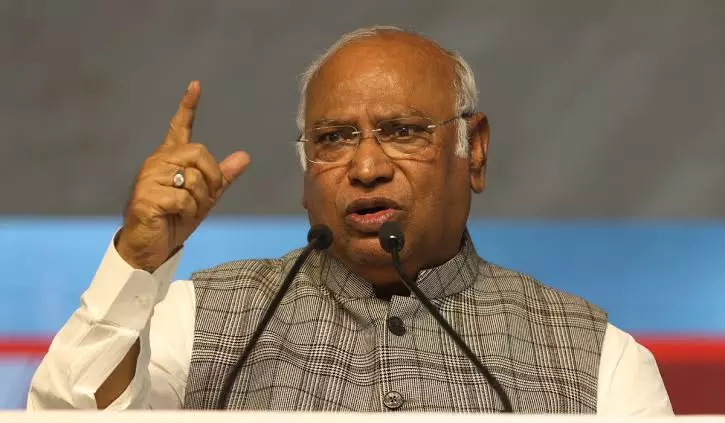
Karnataka – Congress Party Chief Mallikarjun Kharge has publicly acknowledged the ongoing Karnataka power tussle, assuring party workers and the public that the leadership crisis will be resolved swiftly. In a significant statement, Kharge promised that he, along with Sonia Gandhi and Rahul Gandhi, would “fix it” before the winter assembly sessions commence on December 1.

High Command Intervention Promised

The Congress President’s acknowledgment of the Karnataka power tussle marks a departure from weeks of official denials about internal tensions within the state unit. Kharge stated that the high command would “sit together and deliberate” to settle the mounting speculation surrounding the chief ministerial post. This intervention comes as competing factions within the Karnataka Congress have made their positions increasingly clear, threatening party unity in one of its most crucial electoral states.

The Karnataka power tussle has intensified in recent weeks, with supporters of both Chief Minister Siddaramaiah and Deputy Chief Minister DK Shivakumar publicly expressing their expectations. Assembly elections in the state are scheduled in two years, making stable leadership essential for the party’s electoral prospects.

Shivakumar Emphasizes Party Unity

Deputy Chief Minister DK Shivakumar addressed reporters in Bengaluru on Wednesday, firmly distancing himself from speculation about the Karnataka power tussle while emphasizing his commitment to party interests. He insisted that discussions regarding leadership matters would remain “within four walls,” signaling his preference for private negotiations over public confrontation.

“I don’t have any faction. There is only one faction and that is the Congress faction,” Shivakumar declared, rejecting suggestions that the party was divided into competing groups. He emphasized that Congress was built on collective leadership, with all 140 legislators working together for the party’s interests.

When questioned about whether the remaining government term was being reserved for him, Shivakumar maintained, “There is no personal agenda here, the party decides on everything. The party has recognized me. All of us, including myself, Siddaramaiah, ministers and MLAs have collectively worked for all elections.”

Origins of the Karnataka Power Tussle

The current Karnataka power tussle traces its roots to May 18, 2023, when senior party negotiators gathered at Kharge’s New Delhi residence following the party’s electoral victory. The crucial meeting included Siddaramaiah, Shivakumar, KC Venugopal, Randeep Surjewala, and Shivakumar’s brother, MP DK Suresh.

According to those present, Shivakumar initially sought the first 2.5 years of the government’s five-year term as chief minister. Siddaramaiah refused this arrangement, citing his seniority within the party hierarchy. The compromise that emerged from these negotiations granted Siddaramaiah the opening half of the term, with Shivakumar expected to assume leadership for the latter period.

Also Read: Mamata Banerjee SIR Protest: Fierce Warning to BJP and Election Commission

The Confidential Power-Sharing Agreement

Sources close to the Karnataka power tussle reveal that the understanding reached in 2023 was deliberately kept confidential. The party leadership opposed making the arrangement public, fearing it would create governmental instability and provide ammunition to opposition parties.

People familiar with the meeting recall Siddaramaiah reportedly assuring DK Suresh, “Suresh, I am Siddaramaiah. I will stand by the promise I made. One week before completing 2.5 years, I will resign.” This statement, according to Shivakumar’s supporters, created a “moral responsibility” for all parties involved, given Siddaramaiah’s long tenure in key party positions.

Shivakumar’s inner circle maintains that he has intentionally avoided public confrontation regarding the Karnataka power tussle, believing any misstep could damage the party’s prospects. They stress that he continues to regard Siddaramaiah as essential to Congress and has no intention of sidelining the senior leader.

Both Leaders Defer to High Command

Chief Minister Siddaramaiah has stated he will follow whatever decision the high command makes regarding the Karnataka power tussle. Shivakumar has echoed this position, demonstrating both leaders’ willingness to accept the Gandhi family’s final verdict.

A party insider revealed that a meeting between Kharge and Rahul Gandhi is expected within 48 hours. Following this consultation, both Siddaramaiah and Shivakumar are anticipated to be summoned to Delhi for final discussions on resolving the Karnataka power tussle.

Additional Contender Emerges

Complicating the Karnataka power tussle further, Home Minister G Parameshwara has signaled his continued interest in the chief ministerial position. Citing longstanding demands for a Dalit chief minister, Parameshwara reflected on his tenure as KPCC president in 2013, stating, “I have always been in the CM race,” and noting that party presidents typically receive opportunities to lead.

Party’s Strategic Calculations

The Congress party’s public acknowledgment of the Karnataka power tussle represents a significant shift from previous denials. This transparency underscores the competing interests within the state unit and the high command’s recognition that the issue requires immediate resolution to prevent further damage to party cohesion ahead of crucial electoral battles.

National Guard Soldiers Shot Near White House: Critical Details Emerge

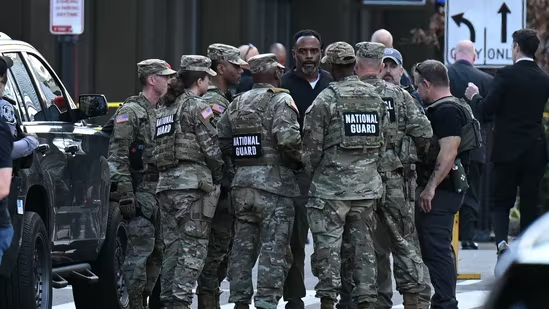
Washington D.C. – Two National Guard soldiers shot near White House in a targeted ambush just blocks from the presidential residence have left Washington DC on high alert. The Wednesday afternoon attack has prompted an immediate security response, with both victims fighting for their lives in separate hospitals as federal authorities investigate the shocking incident.

Shooting Unfolds Blocks From White House

The violent attack occurred around 2:15 pm local time on Wednesday near the intersection of 17th and I streets, approximately two blocks from the White House. Two West Virginia National Guard soldiers shot near White House were on duty when a lone gunman “came around the corner” and opened fire without warning, according to executive assistant DC police chief Jeffrey Carroll. The National Guard soldiers shot near White House were stationed at their post when the suspect launched what authorities are describing as an ambush-style attack.

The swift response from other Guard members at the scene led to an exchange of gunfire, ultimately resulting in the suspect being subdued and taken into custody. The attacker also sustained severe wounds during the confrontation. Streets surrounding the incident were immediately cordoned off with yellow tape as multiple law enforcement agencies descended on the scene.

Critical Condition and Emergency Response

Both National Guard soldiers shot near White House remain in critical condition at separate medical facilities, confirmed Federal Bureau of Investigation chief Kash Patel and Washington Mayor Muriel Bowser during a joint press conference. The severity of their injuries has prompted round-the-clock medical attention as doctors work to stabilize both victims.

The attack triggered immediate lockdown procedures for nearby federal buildings, including the White House and the Treasury Department. Security protocols were activated swiftly to ensure no additional threats existed in the surrounding area. Emergency responders flooded the scene within minutes, establishing a secure perimeter and beginning their preliminary investigation.

Targeted Attack With Unknown Motive

Washington Mayor Muriel Bowser characterized the incident as a “targeted shooting,” suggesting the National Guard soldiers shot near White House were deliberately selected as victims. However, the motive behind this violent attack remains unclear as investigators continue gathering evidence and interviewing witnesses.

“It appears to be a lone gunman that raised a firearm and ambushed these members of the National Guard,” Carroll stated, emphasizing that at this point, authorities have identified no other suspects. The deliberate nature of the attack has raised serious questions about security protocols and the safety of military personnel deployed in the nation’s capital.

Presidential Response and Troop Deployment

United States President Donald Trump, who was in Florida for Thanksgiving at the time of the shooting, issued a stern warning about consequences for the attacker. “The animal that shot the two National Guardsmen, with both being critically wounded, and now in two separate hospitals, is also severely wounded, but regardless, will pay a very steep price,” Trump wrote on Truth Social.

Also Read: Ukraine Peace Deal: Critical Trump Claims vs European Skepticism Revealed

In direct response to the National Guard soldiers shot near White House incident, President Trump ordered the immediate deployment of 500 additional National Guard troops to Washington DC. US Secretary of Defence Pete Hegseth announced the reinforcement decision, stating, “If criminals want to conduct things like this — violence against America’s best — we will NEVER back down.”

Interagency Investigation Launched

Carroll confirmed that both DC Police and federal law enforcement agencies will collaborate closely to investigate the shooting. The joint investigation will examine every aspect of the attack, from the suspect’s background and possible motives to security measures in place at the time of the incident.

The coordinated law enforcement response demonstrates the seriousness with which authorities are treating this attack on military personnel in the heart of the nation’s capital.

Confusion Over Victim Status

West Virginia Governor Patrick Morrisey initially posted on X that the National Guard soldiers shot near White House had died. However, he quickly retracted the statement minutes later, explaining that officials were “receiving conflicting reports about the condition of our two Guard members.” This confusion highlighted the chaotic nature of the immediate aftermath and the challenges in confirming accurate information during rapidly evolving situations.

Security Implications Moving Forward

The attack on National Guard soldiers shot near White House has sparked renewed discussions about security measures for military personnel deployed in civilian areas. The incident serves as a stark reminder of the vulnerabilities faced by service members conducting routine duties in public spaces, even in heavily secured areas of Washington DC.

As both soldiers continue fighting for their lives, the nation awaits answers about what motivated this brazen attack and how similar incidents can be prevented in the future.

Ministry of Jal Shakti Holds Strong High-Level Brainstorming on Water Governance and Service Delivery: 2025

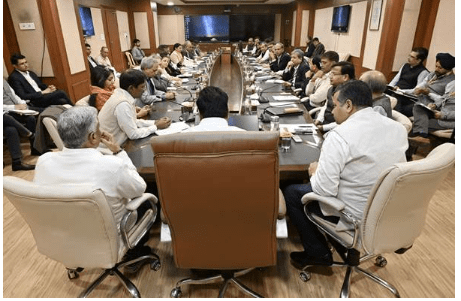
The Ministry of Jal Shakti convened a high-level brainstorming session chaired by Union Minister Shri C. R. Patil on November 26, 2025, in New Delhi to discuss ways to strengthen water governance, improve service delivery, and ensure long-term water security and sustainability across India.​

Comprehensive Discussion on Water Resource Management: Ministry Of Jal shakti

The session featured open and constructive discussions involving Ministers of State Shri V. Somanna and Dr. Raj Bhushan Choudhary, senior ministry officials, and stakeholders. Topics covered included integrated management of water resources, drinking water and sanitation improvements, river rejuvenation programs, irrigation efficiency, institutional reforms, and leveraging modern technology for better outcomes.​


Emphasis on Community Participation and Preparedness

Shri C. R. Patil emphasized the fundamental importance of water in human life and the need for continuous improvements in service delivery, financial planning, and optimal use of public resources. He highlighted the significance of community involvement and awareness at school levels and stressed scaling successful water management models nationwide. The Ministers of State advocated a holistic approach addressing floods, droughts, rainwater harvesting, and groundwater conservation while preparing for climate-related challenges.​

Institutional Strengthening and Coordinated Follow-up

Ministry Secretaries underscored enhancing institutional mechanisms, strengthening grassroots capacity, and ensuring flagship programs’ benefits reach people effectively. The Ministry plans to compile key session suggestions for follow-up actions in coordination with concerned departments and states to address bottlenecks and promote synergy.​


For more real-time updates, visit Channel 6 Network.

Source: PIB

District-Wise Strong Greening Strategy for Delhi NCR Reviewed: 2025

Union Environment Minister Bhupender Yadav chaired a high-level review meeting in New Delhi to advance the greening strategy for the Delhi NCR region. This initiative focuses on a scientifically planned, technology-enabled, and convergence-based approach for improving ecological security and sustained air quality in the nation’s capital and surrounding districts.​

Comprehensive Planning and Mapping

The meeting reviewed ongoing preparations for plantation efforts, emphasizing the need for granular and district-wise action plans involving both urban and rural areas. Each NCR state has been directed to identify and map forest areas, degraded lands, wetlands, zoos, Nagar Vans/Namo Parks, and other public spaces under local authorities. These zones are to be classified by vegetation quality and administrative control to streamline interventions. Active engagement of Eco-Clubs and Natural History centers was also stressed for public awareness and participation in greening initiatives.​


Alignment and Convergence for Effective Execution

States were tasked with preparing micro plans for the next five years, aligned with existing forest and wildlife management plans, legal requirements, and ongoing litigations. These plans will clearly detail annual plantation targets, implementing agencies, community participation opportunities, nursery capacity assessments, and funding sources from Green India Mission, Nagar Van Yojana, Compensatory Afforestation Fund, and other schemes. A Five-Year Greening Plan for the entire NCR, consolidating all district-level micro plans, will be developed for coordinated action and facilitation through the Commission for Air Quality Management (CAQM).​

Technology and Restoration Emphasis: Greening Strategy

The Forest Survey of India (FSI) is to support this effort by supplying data on degraded and invasive species-affected lands, enabling their integration into the Green Credit Programme portal for eco-restoration activities. The Minister emphasized the role of data-driven, technology-backed approaches in making the plan effective and called for the next meeting to review progress of the states and Delhi NCT Government.​


For more real-time updates, visit Channel 6 Network.

Source: PIB

CCRAS Launches SIDDHI 2.0 to Accelerate Ayurveda Innovation

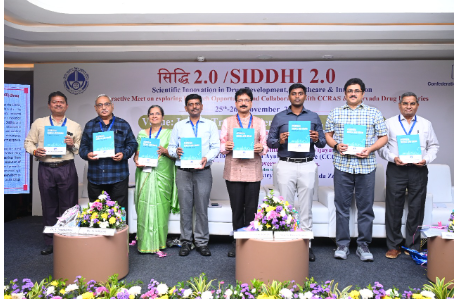
The Central Council for Research in Ayurvedic Sciences (CCRAS), Ministry of Ayush, has launched SIDDHI 2.0 (Scientific Innovation in Drug Development, Healthcare & Integration) in Vijayawada, marking a new chapter for industry-driven research and innovation in the Ayurveda pharmaceutical sector.​

National Industry–Research Platform for Evidence-Based Ayurveda

SIDDHI 2.0 is a national platform designed to act as an industry–research interface, facilitating partnerships between academia, regulators, and pharmaceutical companies to accelerate evidence-based Ayurvedic drug development. The two-day conclave, organised by the Regional Ayurveda Research Institute (RARI), Vijayawada, and the Confederation of Indian Industry (CII), brought together over 100 delegates from more than 25 leading Ayurvedic pharma companies, including Himalaya Wellness Company, Oushadhi, IMPCOPS, and Laila Nutra Pvt. Ltd..​


New Initiatives Unveiled: Digital, Literary, and Regulatory Boost

At the event, CCRAS unveiled several new initiatives, including a medico-historical publication on Ayurveda, Siddha, and Unani drug regulations and the Drug Inventory Management System portal, aimed at improving quality standards, regulatory frameworks, and global competitiveness. The program featured technical sessions where CCRAS researchers showcased research outcomes, advanced formulations, and cutting-edge technologies to fast-track product commercialisation.​

Driving Translational Research and Industry Partnerships

Building on momentum from PRAGATI-2024, SIDDHI 2.0 marks a strategic shift toward indigenous technology, research-led product pipelines, and direct industry engagement. CCRAS champions an innovation agenda that includes IPR-sharing, standards validation, and support for start-ups developing AI-driven and tech-enabled Ayurvedic solutions. The Council emphasised that leveraging CCRAS data and collaborative research will be key for sectoral growth.​

Strengthening Ayurveda’s Role in National and Global Health

Experts at the conclave highlighted the growing relevance of Ayurveda’s wellness-centric approach in tackling lifestyle diseases and enhancing healthy lifespans. Attendees agreed that modern science extends life expectancy, while Ayurveda can improve quality of life. SIDDHI 2.0 aims to position India as a global hub for research-driven, high-quality Ayurveda pharmaceuticals, with a focus on scientific validation, industrial partnerships, and regulatory excellence.​


For more real-time updates, visit Channel 6 Network.

Source: PIB