Monday, April 27, 2026
Home Blog Page 120

Kolkata CBI Bank Fraud Searches 2026 – Detailed Analysis of Multi‑Location Raids, Financial Crime Challenges, and Governance Lessons for India

The Kolkata CBI bank fraud searches 2026 have once again brought financial crime into the spotlight. The Central Bureau of Investigation (CBI) conducted searches at multiple locations across Kolkata in connection with a major bank fraud case. The raids highlight the scale of financial irregularities in India’s banking sector and the growing role of investigative agencies in safeguarding economic integrity.


2. Kolkata CBI Bank Fraud Searches 2026: The Incident

  • Location: Kolkata, West Bengal.
  • Event: CBI conducted multi‑location searches linked to a bank fraud case.
  • Objective: To seize documents, digital records, and evidence of financial misappropriation.
  • Impact: Shockwaves across the banking sector, with questions raised about internal controls and regulatory oversight.

3. What is Bank Fraud?

  • Bank fraud refers to illegal activities aimed at defrauding financial institutions.
  • Common methods include:
    • Forged documents for loans.
    • Misuse of credit facilities.
    • Shell companies used for siphoning funds.
    • Collusion between insiders and external actors.
  • The Kolkata case reportedly involves large‑scale misrepresentation and diversion of funds.

4. CBI’s Role in Financial Investigations

  • The Central Bureau of Investigation (CBI) is India’s premier investigative agency.
  • It handles cases of serious fraud, corruption, and economic offences.
  • In recent years, CBI has intensified its focus on banking frauds, often working with the Reserve Bank of India (RBI) and the Ministry of Finance.
  • The Kolkata raids reflect the agency’s multi‑pronged approach: forensic audits, digital evidence collection, and interrogation of suspects.

5. Governance Challenges

The case underscores systemic governance issues:

  • Weak internal controls in banks.
  • Delayed detection of fraudulent transactions.
  • Collusion between officials and fraudsters.
  • Judicial delays in prosecuting financial crimes.

6. Government External Links for Assistance


7. Historical Context of Bank Frauds in India

  • 2018: Punjab National Bank scam involving Nirav Modi and Mehul Choksi shook the nation.
  • 2020: Yes Bank crisis exposed governance lapses.
  • 2022–23: Multiple cooperative bank frauds reported in Bengal and Maharashtra.
  • 2026: Current Kolkata case adds to the long list of financial irregularities.

8. Community Impact

  • Customers fear loss of trust in banks.
  • Employees face scrutiny and stress during investigations.
  • Businesses dependent on credit facilities suffer delays.
  • Civil society groups demand greater transparency in banking operations.

9. Global Comparisons

Similar financial crime challenges worldwide:

  • USA: Wells Fargo fake accounts scandal.
  • UK: LIBOR manipulation case.
  • China: Shadow banking frauds linked to real estate.

Kolkata’s case mirrors these global struggles where financial crime undermines public trust in institutions.


10. Governance Lessons

The Kolkata bank fraud case teaches:

  • Stronger internal audits are essential.
  • Digital monitoring systems must detect anomalies in real time.
  • Whistleblower protection can expose fraud early.
  • Judicial reforms are needed for faster trials.

11. Future Outlook – Banking Integrity in India

India must move towards:

  • Integrated fraud detection systems across banks.
  • Collaboration between RBI, CBI, and financial intelligence units.
  • Public dashboards showing fraud statistics transparently.
  • Educational campaigns to build financial literacy among citizens.

12. Conclusion

The Kolkata CBI bank fraud searches 2026 are more than investigative raids—they are a test of India’s financial governance. By targeting multiple locations, the CBI has signalled its determination to tackle systemic fraud. For Bengal, the lesson is clear: economic progress must rest on transparency, accountability, and trust in financial institutions.

Also read: Home | Channel 6 Network – Latest News, Breaking Updates: Politics, Business, Tech & More
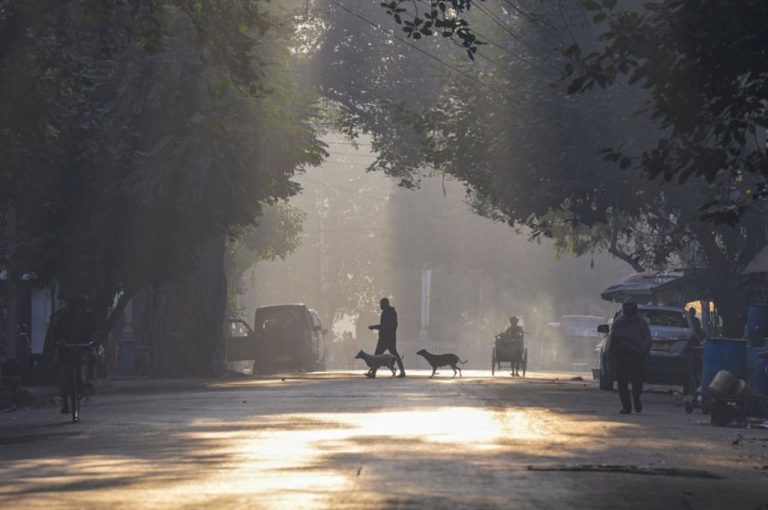
Bengal Dense Fog IMD Warning 2026 – Detailed Analysis of Weather Forecast, Temperature Trends, and Governance Lessons for Climate Preparedness

The Bengal dense fog IMD warning 2026 has drawn attention to the changing winter weather patterns in the state. The India Meteorological Department (IMD) forecasted dense fog conditions in both North and South Bengal over the next few days, accompanied by a rise in minimum temperatures. This dual phenomenon—foggy mornings and warmer nights—reflects the complex interplay of climate variability, urbanisation, and atmospheric changes.


2. IMD’s Forecast

  • Dense fog expected in districts of North Bengal (Darjeeling, Jalpaiguri, Cooch Behar, Alipurduar) and South Bengal (Kolkata, Howrah, Hooghly, Burdwan).
  • Fog likely to persist during early morning and late night hours.
  • Minimum temperatures to rise by 2–3°C compared to last week.
  • IMD warned of visibility hazards for road and rail transport.

3. Why Fog Forms in Bengal Winters

  • Moisture accumulation in the atmosphere due to river basins (Ganga, Teesta).
  • Temperature inversion trapping pollutants and moisture near the surface.
  • Urban heat islands in Kolkata and Siliguri intensifying fog density.
  • Deforestation and land use changes altering microclimates.

4. Impact on Daily Life

  • Transport disruptions: Delays in trains, flights, and buses.
  • Road accidents due to poor visibility.
  • Health concerns: Respiratory issues aggravated by fog mixed with pollutants.
  • Agriculture: Fog affects crop growth, especially vegetables and mustard.

5. Governance Challenges

The IMD warning highlights systemic governance issues:

  • Weak infrastructure for fog management (e.g., runway lighting, highway sensors).
  • Lack of awareness campaigns for rural communities.
  • Need for coordination between meteorological agencies and local governments.
  • Climate adaptation policies still underdeveloped in Bengal.

6. Government External Links for Assistance


7. Historical Context of Fog in Bengal

  • 2000s: Dense fog frequently disrupted train schedules in North Bengal.
  • 2010s: Kolkata witnessed rising pollution levels, worsening fog intensity.
  • 2020s: Climate variability led to warmer winters with patchy fog.
  • 2026: Current IMD warning reflects a shift towards foggy but less cold winters.

8. Community Impact

  • Commuters expressed frustration at train delays and traffic jams.
  • Farmers worried about crop damage and delayed harvests.
  • Students faced difficulties attending early morning classes.
  • Civil society groups demanded better forecasting and public communication.

9. Global Comparisons

Similar fog‑related challenges worldwide:

  • China: Dense smog‑fog mix in Beijing disrupts daily life.
  • UK: Historic “London fog” linked to coal smoke and moisture.
  • USA: Midwest fog events cause highway pile‑ups.

Bengal’s case mirrors these global struggles where fog intersects with pollution and climate change.


10. Governance Lessons

The IMD warning teaches:

  • Early warning systems must be strengthened.
  • Public awareness campaigns can reduce accidents.
  • Technology (fog sensors, GPS alerts) should be deployed on highways.
  • Climate adaptation policies must integrate fog management.

11. Future Outlook – Climate Preparedness in Bengal

India must move towards:

  • Digitised weather dashboards accessible to citizens.
  • Smart traffic systems to manage fog disruptions.
  • Community‑based climate education in rural districts.
  • Cross‑regional cooperation with neighbouring states for coordinated forecasting.

12. Bengal Dense Fog IMD Warning 2026: Conclusion

The Bengal dense fog IMD warning 2026 is more than a weather forecast—it is a reminder of the state’s vulnerability to climate variability. Dense fog combined with rising minimum temperatures signals a changing winter pattern that demands governance reforms, technological adaptation, and community resilience. For Bengal, the lesson is clear: climate preparedness must be proactive, inclusive, and science‑driven.

Also read: Home | Channel 6 Network – Latest News, Breaking Updates: Politics, Business, Tech & More
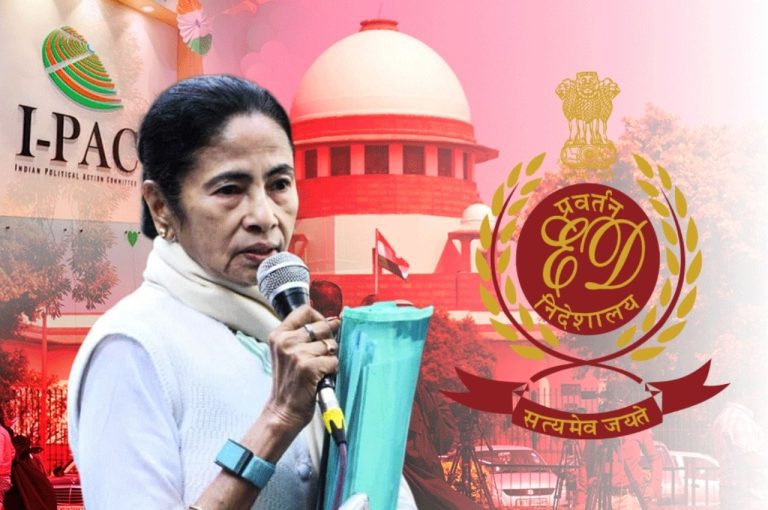
Supreme Court ED I PAC Raid Case 2026 – Detailed Analysis of FIR Stay, Bengal Government Notice, and Governance Lessons for Democracy

The Supreme Court ED I PAC raid case 2026 has become one of the most politically charged developments in India’s pre‑election atmosphere. The apex court stayed four FIRs filed against ED officers in connection with raids at the offices of I‑PAC (Indian Political Action Committee) and issued notices to the Government of West Bengal. The case underscores the intersection of law, politics, and governance, raising questions about the neutrality of central agencies, the rights of political consultants, and the balance of federal power.


2. The Supreme Court’s Intervention

  • A division bench of Justices Prashant Kumar Mishra and Vipul M. Pancholi issued notices to:
    • The Government of West Bengal.
    • Senior police officers including the DGP and Kolkata Police Commissioner.
  • The court stayed all FIRs against ED officers, calling the matter “serious.”
  • The next hearing is scheduled for February 3, 2026.
  • The intervention reflects the judiciary’s role in checking Centre‑state confrontations.

3. Supreme Court ED I PAC Raid Case 2026: ED’s Allegations

  • ED claimed its officers were obstructed during raids at I‑PAC offices and residences.
  • FIRs filed by Bengal police accused ED of misconduct, but ED countered that the raids were lawful under the Prevention of Money Laundering Act (PMLA).
  • Solicitor General Tushar Mehta argued that FIRs against ED officers were meant to intimidate and demoralise central agencies.
  • ED insisted that its investigation was linked to coal scam and money laundering cases.

4. Bengal Government’s Position

  • Bengal police filed FIRs alleging illegal seizure of documents and harassment.
  • The state government defended its actions as necessary to protect citizens and institutions.
  • TMC leaders accused ED of political vendetta, claiming raids were timed to disrupt election preparations.
  • The government argued that I‑PAC, as a political consultant, was unfairly targeted.

5. Political Context

  • I‑PAC is TMC’s official political consultant, managing electoral strategy since 2021.
  • ED raids at I‑PAC offices were seen by TMC as attempts to undermine campaign planning.
  • BJP defended the raids as legitimate investigations into corruption.
  • Civil society groups expressed concern about erosion of democratic space when agencies intervene in political processes.

6. Governance Challenges

The controversy reflects systemic governance issues:

  • Neutrality of central agencies in politically sensitive contexts.
  • Judicial oversight in balancing Centre‑state tensions.
  • Trust deficit between citizens and institutions.
  • Rule of law vs. political vendetta debates.

7. Government External Links for Assistance


8. Historical Context of ED vs State Governments

  • 2010s: ED raids in opposition‑ruled states often triggered political clashes.
  • 2019–2024: Multiple ED investigations in Bengal linked to coal and cattle smuggling.
  • 2026: Current case escalates tensions by directly involving Bengal’s government and police.

9. Community Impact

  • Citizens expressed concern about political instability.
  • Supporters of TMC saw the FIRs as defending Bengal’s sovereignty.
  • Opposition parties framed the Supreme Court’s stay as accountability for misuse of power.
  • Civil society groups demanded judicial clarity to restore trust.

10. Global Comparisons

Similar controversies worldwide:

  • Brazil: Allegations of political misuse of anti‑corruption agencies.
  • Turkey: Opposition leaders accused of harassment by state institutions.
  • Pakistan: NAB raids often criticised as politically motivated.

Bengal’s case mirrors these global struggles where state power and democratic freedoms collide.


11. Governance Lessons

The Supreme Court case teaches:

  • Judicial independence must be safeguarded.
  • Transparency in agency actions builds public trust.
  • Dialogue between Centre and states can reduce confrontation.
  • Civil society vigilance is crucial to protect democratic rights.

12. Future Outlook – Democracy in Bengal

India must move towards:

  • Codified rules for agency conduct during elections.
  • Judicial oversight of politically sensitive investigations.
  • Public dashboards for transparency in raids and FIRs.
  • Strengthening federal institutions to balance Centre‑state relations.

13. Conclusion

The Supreme Court ED I‑PAC raid case 2026 is more than a legal dispute—it is a test of India’s democratic resilience. By staying FIRs against ED officers and issuing notice to the Bengal government, the apex court has signalled the importance of rule of law and institutional independence. For Bengal, the lesson is clear: democracy must be defended not only in elections but also in courts where its principles are tested.

Also read: Home | Channel 6 Network – Latest News, Breaking Updates: Politics, Business, Tech & More
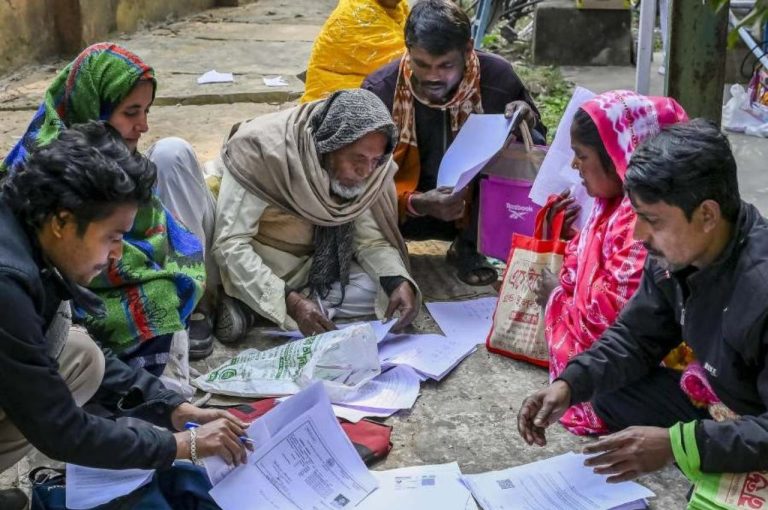
Uttar Dinajpur SIR Verification Protests 2026 – Detailed Analysis of Voter List Notices, Public Anger, and Governance Lessons for Bengal

The Uttar Dinajpur SIR verification protests 2026 have become a flashpoint in Bengal’s ongoing voter list controversy. When residents received Special Intensive Revision (SIR) verification notices, many felt unfairly targeted and burdened. Anger boiled over in Balurghat and surrounding areas, culminating in violent protests and vandalism of a government office. The incident underscores the fragile trust between citizens and institutions, raising urgent questions about governance, inclusivity, and electoral integrity.


2. The Incident

  • Location: Uttar Dinajpur district, West Bengal.
  • Trigger: Distribution of SIR verification notices to hundreds of voters.
  • Reaction: Residents accused authorities of harassment and wrongful targeting.
  • Escalation: Protests turned violent, with a government office vandalised.
  • Response: Police deployed to control the situation, while officials promised inquiry.

3. Why SIR Verification Sparked Anger

  • Repeated hearings forced villagers to miss work and lose wages.
  • Elderly and women voters felt humiliated by bureaucratic questioning.
  • Minority communities feared targeted exclusion.
  • Lack of transparency in the verification process created suspicion.

4. Political Context

  • TMC accused the Election Commission of acting under BJP’s influence.
  • BJP defended the process as necessary to remove fictitious voters.
  • CPM highlighted the erosion of trust in democratic institutions.
  • Civil society groups demanded fair grievance redressal mechanisms.

5. Governance Challenges

The protests reflect systemic governance issues:

  • Balancing electoral integrity with inclusivity.
  • Weak communication between authorities and citizens.
  • Lack of sensitivity in handling vulnerable groups.
  • Judicial oversight needed to prevent misuse of verification powers.

6. Government External Links for Assistance


7. Historical Context of Electoral Roll Disputes in Bengal

  • 2000s: Allegations of bogus voters became common in border districts.
  • 2011–2019: Electoral roll revisions often coincided with political clashes.
  • 2024–25: SIR flagged millions of discrepancies nationwide.
  • 2026: Current protests reflect Bengal’s long history of contested voter lists, now with heightened political stakes.

8. Community Impact

  • Families expressed fear of disenfranchisement.
  • Daily wage earners suffered financial losses due to repeated hearings.
  • Elderly citizens felt humiliated and burdened by bureaucratic demands.
  • Minority communities expressed concern about targeted exclusions.

9. Global Comparisons

Similar voter roll controversies worldwide:

  • USA: Allegations of voter suppression through purges in Georgia and Florida.
  • UK: Concerns about disenfranchisement under new voter ID laws.
  • Nigeria: Disputes over duplicate registrations and ghost voters.

Uttar Dinajpur’s case mirrors these global struggles where electoral integrity collides with human vulnerability.


10. Uttar Dinajpur SIR Verification: Governance Lessons

The Uttar Dinajpur protests teach:

  • Human sensitivity must guide bureaucratic processes.
  • Digital tools must be audited to prevent wrongful flagging.
  • Community engagement ensures inclusivity.
  • Judicial oversight is vital to protect democratic rights.

11. Future Outlook – Democracy in Bengal

India must move towards:

  • Digitised grievance redressal portals for voter roll issues.
  • Periodic audits of electoral rolls by independent agencies.
  • Public dashboards showing deletions and additions transparently.
  • Educational campaigns to help citizens verify their status.

12. Conclusion

The Uttar Dinajpur SIR verification protests 2026 are more than a local disturbance—they are a test of India’s democratic resilience. The vandalism of a government office reflects the depth of public anger and mistrust. For Bengal, the lesson is clear: democracy must never come at the expense of human dignity and voter rights.

Also read: Home | Channel 6 Network – Latest News, Breaking Updates: Politics, Business, Tech & More
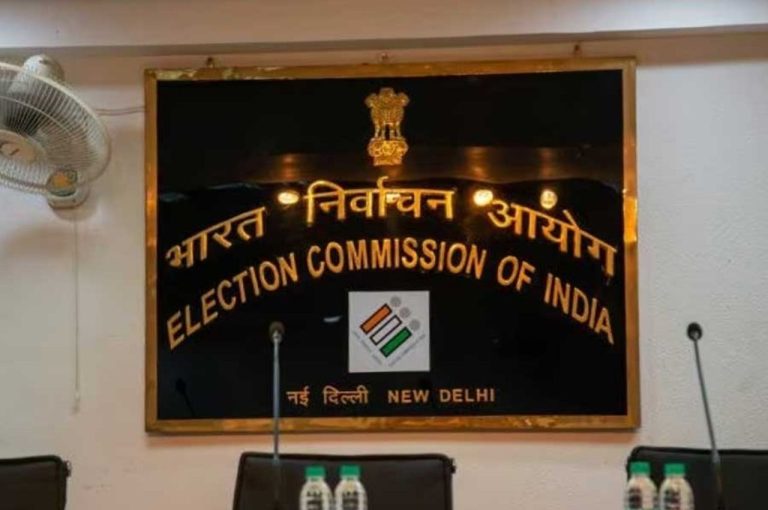
Bengal SIR Verification Madhyamik Admit Card 2026 – Detailed Analysis of EC Rejection, Political Reactions, and Governance Lessons for Electoral Integrity

The Bengal SIR verification Madhyamik admit card 2026 controversy has become a flashpoint in the state’s electoral discourse. The Election Commission (EC) rejected a proposal to allow Madhyamik admit cards (secondary school exam hall tickets) as valid identity proof for voter verification during the Special Intensive Revision (SIR) of electoral rolls. The decision has sparked debate among political parties, civil society groups, and citizens, raising questions about electoral integrity, inclusivity, and governance accountability.


2. The EC’s Decision

  • The EC clarified that Madhyamik admit cards cannot be accepted as proof for voter verification.
  • Officials argued that admit cards are not government‑issued identity documents and lack security features.
  • The rejection was aimed at preventing fraudulent entries and misuse.
  • The EC insisted that only standard identity documents (Aadhaar, voter ID, ration card, passport, etc.) would be valid.

3. Political Context

  • The proposal to accept admit cards was seen as a way to help young voters and students.
  • Opposition parties accused the EC of deliberately complicating the process to disenfranchise sections of society.
  • The ruling party defended the EC’s stance, citing the need for strict verification standards.
  • Civil society groups expressed concern about exclusion of first‑time voters who may not yet have Aadhaar or voter ID.

4. Governance Challenges

The controversy reflects systemic governance issues:

  • Balancing inclusivity with security in electoral processes.
  • Weak outreach to students and first‑time voters.
  • Trust deficit between citizens and institutions.
  • Need for judicial oversight in politically sensitive electoral disputes.

5. Government External Links for Assistance


6. Historical Context of Electoral Roll Verification in Bengal

  • 2000s: Allegations of bogus voters became common in Kolkata and border districts.
  • 2011–2019: Electoral roll revisions often coincided with political clashes.
  • 2024–25: SIR flagged millions of discrepancies nationwide.
  • 2026: Current controversy reflects Bengal’s long history of contested voter lists, now with heightened political stakes.

7. Bengal SIR Verification Madhyamik Admit Card 2026: Community Impact

  • Students expressed frustration at being denied recognition of admit cards.
  • Families worried about delays in registering first‑time voters.
  • Daily wage earners suffered financial losses due to repeated hearings.
  • Minority communities expressed concern about targeted exclusions.

8. Global Comparisons

Similar voter ID controversies worldwide:

  • USA: Debates over voter ID laws and disenfranchisement of minorities.
  • UK: Concerns about exclusion under new voter ID requirements.
  • Nigeria: Disputes over duplicate registrations and ghost voters.

Bengal’s case mirrors these global struggles where electoral integrity collides with human vulnerability.


9. Governance Lessons

The Madhyamik admit card controversy teaches:

  • Human sensitivity must guide bureaucratic processes.
  • Digital tools must be audited to prevent wrongful flagging.
  • Community engagement ensures inclusivity.
  • Judicial oversight is vital to protect democratic rights.

10. Future Outlook – Democracy in Bengal

India must move towards:

  • Digitised grievance redressal portals for voter roll issues.
  • Periodic audits of electoral rolls by independent agencies.
  • Public dashboards showing deletions and additions transparently.
  • Educational campaigns to help citizens verify their status.

11. Conclusion

The Bengal SIR verification Madhyamik admit card 2026 controversy is more than a bureaucratic dispute—it is a test of India’s democratic resilience. The EC’s rejection underscores the urgency of protecting electoral integrity while ensuring inclusivity. For Bengal, the lesson is clear: democracy must never come at the expense of human dignity and voter rights.

Also read: Home | Channel 6 Network – Latest News, Breaking Updates: Politics, Business, Tech & More
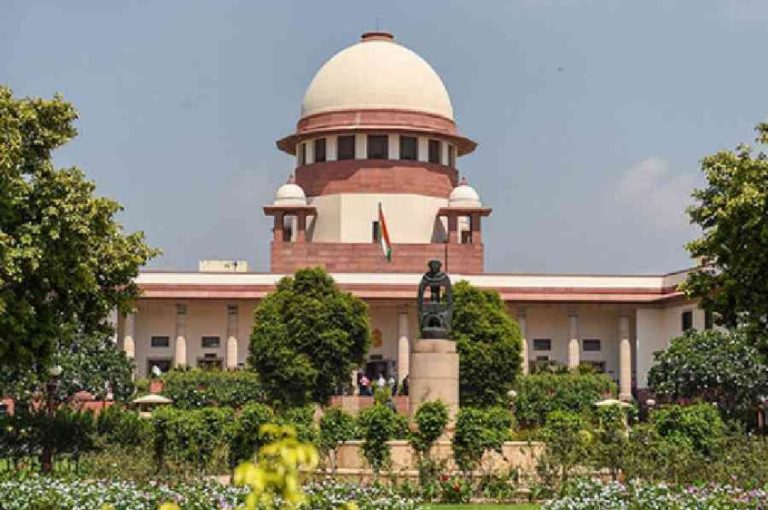
Mamata Banerjee Supreme Court Notice 2026 – Detailed Analysis of ED Allegations, I‑PAC Raid Row, and Governance Lessons for Democracy

The Mamata Banerjee Supreme Court notice 2026 has become one of the most politically charged developments in Bengal’s pre‑election atmosphere. The Enforcement Directorate (ED) accused the Chief Minister of taking away an officer’s phone and files during a raid at I‑PAC’s office and a director’s residence, calling it “theft.” The Supreme Court treated the matter as a “very serious issue” and issued notices to Banerjee, the state government, and senior police officers.


2. The Supreme Court’s Intervention

  • A division bench of Justices Prashant Kumar Mishra and Vipul M. Pancholi issued notices to:
    • Mamata Banerjee.
    • The Government of West Bengal.
    • DGP Rajeev Kumar.
    • Kolkata Police Commissioner Manoj Verma.
    • Divisional Commissioner Priyabrata Roy.
  • The apex court also stayed four FIRs filed against ED officers in connection with the raids.
  • The matter will be heard on February 3, 2026.

3. Mamata Banerjee Supreme Court Notice 2026: ED’s Allegations

  • Solicitor General Tushar Mehta claimed Banerjee took away files and an ED officer’s phone, calling it theft.
  • He argued such acts would demoralise central agencies and encourage obstruction.
  • ED insisted its raid was conducted under Section 17 of the Prevention of Money Laundering Act (PMLA).
  • The agency accused the state of shielding offenders under the guise of party activity.

4. Mamata Banerjee’s Defence

  • Senior advocate Kapil Sibal represented Banerjee, arguing:
    • I‑PAC is a political consultant formally contracted by TMC since 2021.
    • ED’s raid in the midst of elections was suspicious and politically motivated.
    • Sensitive party data was stored at I‑PAC, raising concerns about misuse.
  • He questioned why ED revived old coal scam investigations during election season.

5. Political Context

  • I‑PAC (Indian Political Action Committee) is TMC’s political consultant, managing electoral strategy.
  • ED raids at I‑PAC offices were seen by TMC as attempts to disrupt election preparations.
  • BJP defended the raids as legitimate investigations into money laundering.
  • Civil society groups expressed concern about erosion of democratic space when agencies intervene in political processes.

6. Governance Challenges

The controversy reflects systemic governance issues:

  • Neutrality of central agencies in politically sensitive contexts.
  • Judicial oversight in balancing Centre‑state tensions.
  • Trust deficit between citizens and institutions.
  • Rule of law vs. political vendetta debates.

7. Government External Links for Assistance


8. Historical Context of ED vs State Governments

  • 2010s: ED raids in opposition‑ruled states often triggered political clashes.
  • 2019–2024: Multiple ED investigations in Bengal linked to coal and cattle smuggling.
  • 2026: Current case escalates tensions by directly involving the Chief Minister.

9. Community Impact

  • Citizens expressed concern about political instability.
  • Supporters of TMC saw the notice as targeting Bengal’s leadership.
  • Opposition parties framed it as accountability for misuse of power.
  • Civil society groups demanded judicial clarity to restore trust.

10. Global Comparisons

Similar controversies worldwide:

  • Brazil: Allegations of political misuse of anti‑corruption agencies.
  • Turkey: Opposition leaders accused of harassment by state institutions.
  • Pakistan: NAB raids often criticised as politically motivated.

Bengal’s case mirrors these global struggles where state power and democratic freedoms collide.


11. Governance Lessons

The Supreme Court notice teaches:

  • Judicial independence must be safeguarded.
  • Transparency in agency actions builds public trust.
  • Dialogue between Centre and states can reduce confrontation.
  • Civil society vigilance is crucial to protect democratic rights.

12. Future Outlook – Democracy in Bengal

India must move towards:

  • Codified rules for agency conduct during elections.
  • Judicial oversight of politically sensitive investigations.
  • Public dashboards for transparency in raids and FIRs.
  • Strengthening federal institutions to balance Centre‑state relations.

13. Conclusion

The Mamata Banerjee Supreme Court notice 2026 is more than a legal dispute—it is a test of India’s democratic resilience. By treating ED’s allegations as serious, the apex court has signalled the importance of rule of law and institutional independence. For Bengal, the lesson is clear: democracy must be defended not only in elections but also in courts where its principles are tested.

Also read: Home | Channel 6 Network – Latest News, Breaking Updates: Politics, Business, Tech & More
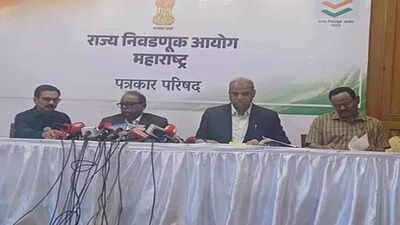
Ink Tampering Claims Rock Maharashtra Civic Polls 2026; State Election Commission Rules Out Re-Voting

Introduction: Controversy Over Ink Marks Emerges During Civic Polling

As voting progressed in the Maharashtra civic polls, a controversy erupted over the integrity of indelible ink used to mark voters’ fingers after casting ballots. Allegations surfaced that the ink could be removed, potentially enabling individuals to vote more than once and undermining the credibility of the election process. The State Election Commission (SEC) responded firmly to these concerns, clarifying that erasing the ink does not permit re-voting and warning that any attempt to commit such malpractice will invite legal action.

Allegations Spark Debate Amid Polling

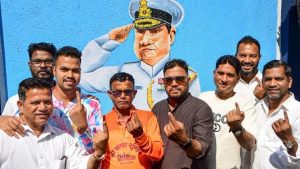
During polling for municipal corporations including the Brihanmumbai Municipal Corporation and others across the state, some political leaders and voters raised questions about the use of marker pens to apply indelible ink. Videos circulated on social platforms showing the ink apparently fading or being wiped off, leading to claims that this could be exploited to cast multiple votes. Critics suggested that the ink used in local body elections might lack the lasting quality of traditional election ink, sparking concerns about potential manipulation of the electoral process.

Maharashtra civic polls
All concerned officials have once again been instructed to remain vigilant in this matter.

State Election Commission Stands Firm on Voting Integrity

In response to the controversy, the SEC issued a detailed clarification to reassure voters and stakeholders. The commission emphasised that attempting to erase the ink applied after voting is classified as an electoral malpractice and that appropriate legal action will be taken if any individual is found trying to commit such an act. Furthermore, it clarified that the application of ink is only one of several safeguards against repeat voting, and that official records are maintained once a person has cast their vote, making it impossible for that person to vote again by merely erasing the ink mark.

The SEC reiterated that once a voter’s name is recorded as having voted, the system recognises this status, so even if the ink is removed, the person cannot re-enter the polling process. Authorities stated that all election officials have been instructed to remain vigilant and report any suspicious activity immediately.

Marker Pens and Historical Guidelines Explained

According to the SEC, the practice of using marker pens — which leave a visible mark on a voter’s finger — has been in place for local body elections since orders issued in 2011. The ink used in these marker pens is designed to be rubbed multiple times on the nail and surrounding skin to ensure visibility and deterrence against fraud. The commission reaffirmed that these procedures have long been standard in municipal elections and are supported by operational guidelines to maintain polling integrity.

The SEC also highlighted that viral videos showing ink removal or suggesting easy erasure do not reflect the actual safeguards embedded in the electoral process. Officials underscored that the mark left by the marker pen is sufficiently distinct to deter casual tampering, and even if superficial removal occurs, it does not affect official voting records.

Public and Political Reactions to the Clarification

The controversy over ink tampering drew mixed reactions from voters and political activists. Some citizens expressed unease, citing concerns about the perceived fragility of the ink mark and questioning if it offers a robust measure against multiple voting. Others acknowledged the SEC’s clarification but urged stronger communication and demonstration of anti-fraud measures to reassure the electorate.

Political voices also weighed in as allegations were floated about systemic weaknesses. Critics demanded clearer explanations and highlighted what they see as a need for stronger voter confidence measures during pivotal civic polls. Nonetheless, the SEC’s repeated insistence that repeat voting is not possible helps counter these claims by underscoring procedural safeguards and official records that prevent misuse.

Legal and Electoral Safeguards Beyond Ink Marking

Election authorities emphasised that indelible ink is one of several layers of security designed to uphold election integrity. Voter rolls, physical identification checks, electronic voting machine (EVM) records and observer supervision all contribute to ensuring that each eligible voter casts only one ballot. If any irregularities are spotted, these systems help officials confirm voter status and take appropriate action even without relying solely on ink marks.

The SEC’s warning about legal consequences for tampering with ink is intended to deter any attempts at malpractice. Legal experts note that election laws clearly define electoral fraud and prescribe penalties for any attempt to interfere with the voting process, including actions that mislead officials or undermine the established safeguards.

Maintaining Confidence in Democratic Processes

Reaffirming that erasing the ink will not allow re-voting is part of broader efforts to maintain public confidence in the civic election process. The SEC’s announcement sought to prevent confusion among voters and counter misinformation that might spread during a high-stakes polling day. By reminding officials and the public of established procedures and protective measures, the commission aims to reinforce trust in democratic procedures.

As polling continues and counting approaches, the SEC’s clarification serves as a clear message that electoral integrity remains a priority. Voters who have cast their ballot should be assured that safeguards exist to protect their participation and that any attempt to circumvent rules will be addressed according to law.

Conclusion: Election Integrity Affirmed Despite Controversy

The Maharashtra civic polls have drawn increased scrutiny not only for their political significance but also for the procedural conduct of voting. While concerns about ink tampering triggered debate, the State Election Commission’s firm stance highlights that democratic safeguards are in place. By dismissing claims that erased ink could lead to repeat voting and warning against malpractice, the poll panel has reiterated its commitment to preserving the credibility of the electoral process in one of India’s most high-profile civic exercises.

Read More: https://channel6network.com/thackerays-vs-bjp-sena-vs-ncp-mumbai-votes/

Thackerays vs BJP-Sena vs NCP as Mumbai Votes in First Civic Polls Since 2017

Mumbai, Maharashtra’s most populous and politically significant city, is once again at the forefront of civic politics as voters turn out for the first municipal elections since 2017. The Brihanmumbai Municipal Corporation election has become a high-stakes contest involving three major political forces: the Thackeray factions, the BJP-led Shiv Sena alliance and the Nationalist Congress Party. With urban governance, infrastructure and local services hanging in the balance, the civic polls have drawn considerable public attention and political energy.

The delay in holding municipal elections in Mumbai for nearly a decade stemmed from legal challenges, administrative issues and disputes over reservation and delimitation. With these hurdles now addressed, the December-January election cycle marks a return to routine democratic processes for the city’s civic administration. The contest is widely seen as a barometer of political sentiment in urban Maharashtra ahead of future state and national elections.

Historic Context and Political Stakes

The Brihanmumbai Municipal Corporation is one of the richest civic bodies in India, responsible for managing critical services such as water supply, solid waste management, public health, urban planning and transportation systems. Control of the BMC has traditionally been a symbol of political strength and influence in Maharashtra, making the 2026 polls particularly significant.

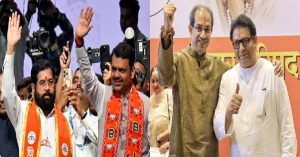
Over the years, the political dynamics in Mumbai have undergone notable shifts. The Thackeray surname once synonymous with unified Shiv Sena politics now represents different factions, adding complexity to the electoral landscape. Meanwhile, the BJP-Shiv Sena (Eknath Shinde faction) alliance has emerged as a potent force, and the Nationalist Congress Party has sought to consolidate its base in urban constituencies. Each coalition and party is aiming for a decisive performance that would bolster its standing within the state’s broader political matrix.

Thackerays vs BJP-Sena vs NCP as Mumbai Votes in First Civic Polls Since 2017Thackeray Factions Rally on Regional Identity
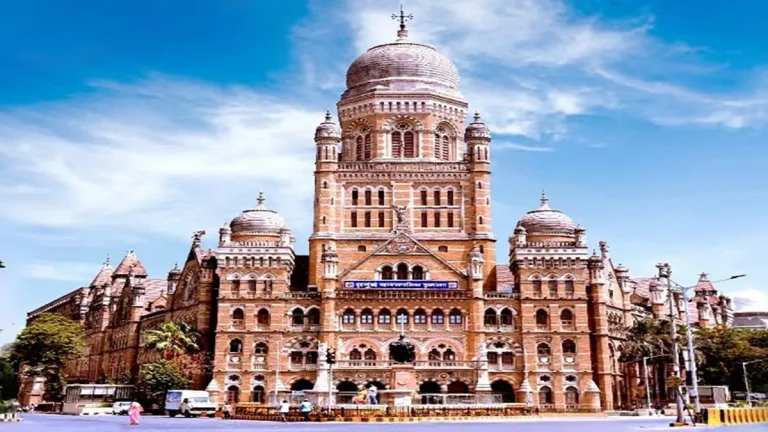
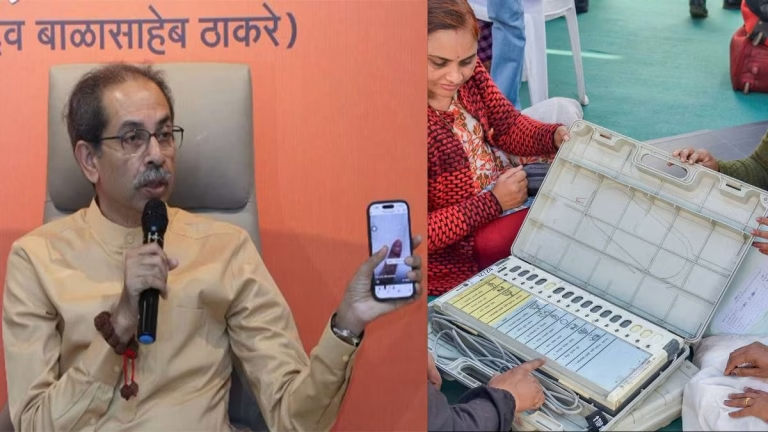
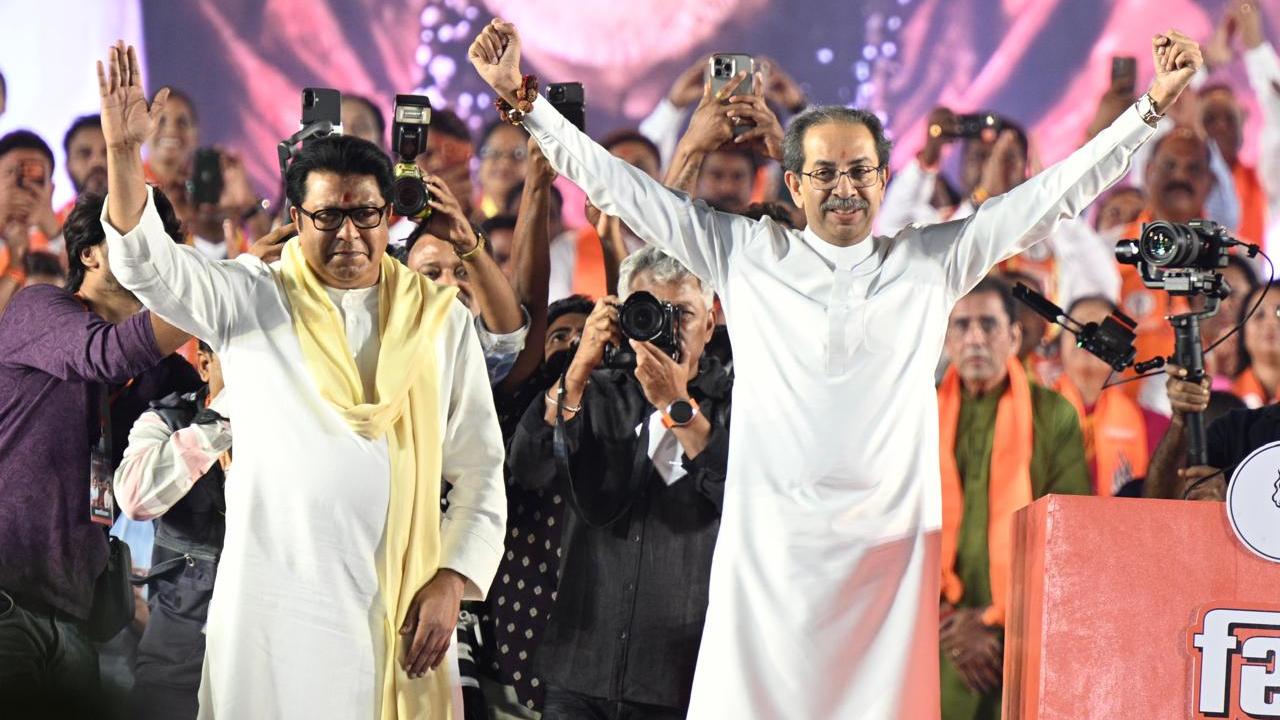
For the Thackeray groups, which include leaders associated with both the Uddhav Thackeray faction and the Maharashtra Navnirman Sena led by Raj Thackeray, the election is as much about cultural identity as it is about governance. Both leaders have campaigned vigorously on issues of Marathi pride and representation, emphasising the importance of protecting local interests in a rapidly evolving metropolis.

Their combined rhetoric has focused on the perceived marginalisation of local communities, rising living costs and urban infrastructure shortcomings. By foregrounding regional identity and community concerns, the Thackeray factions aim to consolidate support among long-standing voters and those who feel left behind by broader economic shifts.

BJP-Shiv Sena Alliance Positions Itself on Governance Record

The BJP-led alliance, which includes the Eknath Shinde faction of Shiv Sena, has adopted a contrasting narrative centred on administrative performance and development outcomes. Under this banner, leaders have highlighted improvements in civic infrastructure, metro expansion, road connectivity and public service delivery as evidence of effective governance.

The alliance has sought to portray itself as capable of bringing sustained policy focus and resources to Mumbai’s complex urban challenges. With its organisational strength and deep roots in the city’s political structure, the coalition is seeking to translate its narrative of growth and governance into electoral success.

NCP Seeks Urban Footprint and Policy Relevance

The Nationalist Congress Party (NCP) is attempting to carve out a meaningful urban presence in these elections. Traditionally stronger in rural and semi-urban regions, the party has intensified its outreach in Mumbai’s wards, focusing on local development issues such as healthcare access, education support and community services.

NCP leaders have emphasised grassroots connection and responsiveness to neighbourhood concerns, aiming to attract voters who prioritise practical civic solutions over ideological considerations. The party’s performance will be closely watched as an indicator of its urban appeal and organisational reach.

Key Issues Driving Voter Decisions

Across Mumbai, several core issues are shaping voter priorities. The city’s infrastructure challenges, including drainage systems, traffic congestion and aging civic utilities, remain top of mind for many residents. Water supply reliability, waste management efficiency and affordable housing are also prominent themes in public discourse.

In addition to physical infrastructure, voters have expressed interest in enhanced transparency, accountability of elected representatives and improved citizen engagement in decision-making processes. Community safety, environmental sustainability and equitable access to public services are further factors influencing voter choices.

Security and Logistics of Election Day

With the polls underway, civic authorities have deployed significant resources to ensure a smooth election process. Security personnel have been stationed at key polling locations to maintain peace and order, while election officials oversee adherence to polling protocols and guidelines.

Measures have been taken to support voters with accessibility needs, including priority lanes, assistance at polling booths and extended support for elderly and differently-abled citizens. The goal is to facilitate broad participation and uphold the integrity of the electoral process.

Looking Ahead: What These Elections Mean for Mumbai

As votes are cast and counting approaches, the results of the Brihanmumbai Municipal Corporation election will reveal not only who governs the city but also how urban voters view competing political narratives. The performance of the Thackeray factions, the BJP-Shiv Sena alliance and the NCP will provide insights into shifting allegiances, pressing civic priorities and the evolving political climate of Maharashtra’s urban electorate.

Beyond immediate governance, the outcome may influence future electoral strategies and alignments. Parties will analyse performance ward by ward, seeking to understand where their messages resonated and where adjustments are needed. For voters, the election represents an opportunity to shape the direction of civic leadership and hold local representatives accountable for delivering on key public needs.

Ultimately, the 2026 municipal elections in Mumbai are a pivotal moment for city politics and public policy. As results unfold, the city will begin a new chapter in its longstanding journey of democratic engagement and urban governance. The elected representatives will inherit the responsibility of addressing deep-rooted urban challenges and driving inclusive growth for one of India’s most complex and dynamic cities.

Read More: https://channel6network.com/maharashtra-election-ink-tampering-allegations/

Breaking: Ink Tampering Allegations Surface as Maharashtra Municipal Corporation Elections 2026 Conclude

Allegations of Ink Tampering Emerge During Voting Process

Voting for the Maharashtra municipal corporation elections concluded after a full day of polling across major urban centres, marking the end of a closely watched civic exercise. Citizens cast their votes to elect representatives for key municipal corporations that play a central role in urban governance, public services, and infrastructure management. Election officials confirmed that polling was completed within the scheduled time across most locations, with orderly queues observed during peak hours in several cities.

As voting progressed, allegations of indelible ink tampering surfaced from a few polling stations, drawing attention from election authorities and political stakeholders. Complaints suggested that the ink applied on voters’ fingers was allegedly removable or faint in certain cases, raising concerns about the sanctity of the voting process. Election officials acknowledged receiving representations related to these claims and stated that preliminary checks were initiated immediately at the affected booths.

Election Commission Responds to Complaints

The State Election Commission clarified that indelible ink is procured through approved suppliers and undergoes quality checks before distribution. Officials stated that any complaint related to ink quality is treated seriously, as it directly affects electoral credibility. Polling officers at concerned booths were instructed to reapply ink where necessary and document the incidents for further review. The Commission assured voters that appropriate action would be taken if procedural lapses were found.

Overall Voting Experience Remains Largely Smooth

Despite isolated complaints, the overall voting process remained largely smooth and peaceful. Polling officials reported that the majority of voters were able to exercise their franchise without difficulty. Security arrangements were maintained throughout the day to ensure law and order, particularly in sensitive wards. Election staff, including presiding officers and observers, were deployed to monitor polling stations and address grievances on the spot.

Voter Turnout and Urban Participation Trends

Urban voter participation varied across regions, with some municipal corporations witnessing moderate turnout while others saw a steady flow of voters through the afternoon and evening. Election authorities noted increased participation during post-work hours, reflecting typical urban voting patterns. Women and senior citizens were seen actively participating, aided by facilitation measures such as priority queues and assistance booths.

Political Stakes in Municipal Corporations

The municipal corporation elections are considered significant as they determine leadership at the grassroots level in cities that drive Maharashtra’s economy. Control over civic bodies influences decisions related to urban development, infrastructure projects, taxation, and public welfare schemes. Political parties had campaigned intensively, focusing on local issues such as road conditions, water supply, waste management, and public transport.

Handling of Complaints and Transparency Measures

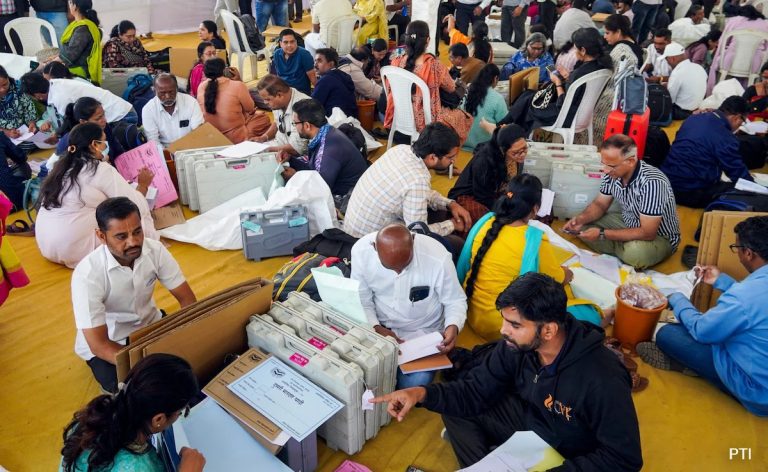
Election officials emphasized transparency in addressing complaints related to polling irregularities. Observers appointed by the Commission submitted reports from various booths, including those where ink-related concerns were raised. Officials stated that a detailed assessment would be conducted after polling to determine whether the complaints had any material impact on the voting process. Voters were encouraged to report issues through designated grievance channels.

Security and Administrative Oversight

Police and civic authorities remained on alert throughout the polling period. No major incidents of violence or large-scale disruptions were reported during the latter half of the day. Administrative officials coordinated closely with polling staff to manage crowd movement, ensure accessibility, and prevent any attempts at malpractice. The presence of security personnel helped maintain confidence among voters.

Counting Process and Next Steps

With voting now concluded, attention shifts to the counting of votes, which will be conducted as per the notified schedule. Election authorities confirmed that all electronic voting machines and related materials have been sealed and secured. The counting process is expected to provide clarity on the political composition of municipal corporations and the direction of urban governance for the coming term.

Impact on Urban Governance and Policy Direction

The outcome of these elections will shape policy decisions at the city level, influencing development priorities and administrative approaches. Civic bodies play a crucial role in implementing state and central schemes at the local level, making these elections significant beyond immediate political gains. Analysts believe the results will also offer insights into voter sentiment in urban Maharashtra.

Conclusion: Scrutiny Continues as Results Awaited

The conclusion of voting in the Maharashtra municipal corporation elections marks an important democratic milestone, even as allegations of ink tampering prompt closer scrutiny by authorities. While the polling process remained largely smooth, the handling of complaints will be critical in maintaining public trust. As the state awaits counting day, the focus remains on ensuring transparency, accountability, and confidence in the electoral outcome.

Read More: https://channel6network.com/maharashtra-civic-body-elections-voting-begins/

BMC Clears the Air on Postal Ballot Handling: 5 Strong Assurances

0

Postal Ballot Boxes to Be Opened Only on Counting Day: BMC Clarifies After Uddhav Thackeray’s Allegation

The Brihanmumbai Municipal Corporation has clarified that postal ballot boxes related to the ongoing civic elections will be opened strictly on the designated counting day and not before. The clarification came after Shiv Sena UBT chief Uddhav Thackeray raised concerns over the handling of postal ballots alleging possible procedural lapses that could impact electoral transparency.raj uddhav shivajipark rane ashish 1768147747484 d

The issue surfaced after a letter issued by a returning officer created confusion among political parties and candidates. The communication suggested that postal ballot boxes would be taken out of the strong room a day before counting. This sparked immediate political reactions with opposition leaders questioning why such a step was being taken ahead of the official counting schedule.

Responding to the controversy the BMC stated that the earlier letter was issued due to a clerical error and was subsequently withdrawn. Officials emphasised that postal ballot boxes will remain sealed and securely stored in the strong room until counting day when they will be opened in the presence of candidates or their authorised representatives. The civic body underlined that the process will follow established election norms and directions issued by the State Election Commission.

Postal ballots are used by a specific category of voters including government employees election staff and those on essential duty who are unable to vote in person. Given their importance in closely contested wards any ambiguity regarding their handling often attracts heightened political scrutiny. The BMC asserted that all safeguards are in place to ensure that the integrity of these votes is maintained.

Uddhav Thackeray had earlier questioned why postal ballot boxes were being mentioned for removal ahead of counting. He argued that any deviation from standard procedures could raise doubts in the minds of voters and political parties. His remarks added to the already charged atmosphere surrounding the civic elections which are being held after a prolonged delay.PTI01 15 2026 000148A

Election officials clarified that postal ballots will be counted only after the Electronic Voting Machines are opened on counting day as per protocol. They added that candidates will be informed in advance and allowed to remain present during every stage of the process to ensure transparency and accountability.

The BMC elections are considered one of the most significant local body polls in the country due to the corporation’s scale budget and administrative influence. With multiple political parties fighting for control the margins in several wards are expected to be narrow making every vote crucial. In such a scenario even minor communication errors tend to snowball into major political issues.

Apart from the postal ballot controversy Thackeray and other leaders have also raised questions on other election-related procedures. These concerns have been dismissed by election authorities who maintain that all voting and counting processes are being conducted in accordance with established rules.

Election officials have reiterated that any attempt to tamper with postal ballots would be impossible under the existing multi-layered security system. Continuous surveillance restricted access to strong rooms and mandatory documentation at every stage are meant to prevent irregularities. Authorities stressed that the credibility of the civic election rests on strict compliance with procedure and assured voters that every valid vote will be counted fairly and transparently on counting day.postal ballot box 1

The civic body has appealed to political parties and candidates not to spread confusion or misinformation and to cooperate with election officials. It reiterated that transparency fairness and adherence to procedure remain its top priorities during the counting process.

As counting day approaches attention remains firmly on how smoothly the final phase of the election unfolds. The BMC’s clarification is seen as an attempt to restore confidence and ensure that the focus remains on the democratic outcome rather than administrative confusion.

With stakes high and political tensions running strong the coming days are expected to be closely watched as Mumbai awaits the results that will determine the future leadership of its civic administration.

Also read: https://channel6network.com/sir-hearing-at-belur-math/