Monday, April 27, 2026
Home Blog Page 119

CRITICAL: Indian Coast Guard Pakistani Boat Interception in Arabian Sea With 9 Members

Gujarat – In a significant maritime security operation, the Indian Coast Guard Pakistani boat interception took place on Thursday when ICG personnel apprehended a fishing vessel that had strayed into Indian territorial waters near the International Maritime Boundary Line in the Arabian Sea. The incident underscores India’s commitment to maintaining vigilant surveillance of its maritime borders.

The Indian Coast Guard Pakistani boat operation involved the vessel AL-MADINA, which was first sighted by ICG personnel during routine patrol operations in the region on January 14, 2026. The successful interception demonstrates the effectiveness of India’s coastal security apparatus in protecting its maritime interests.

Details of the Interception Operation

The Indian Coast Guard Pakistani boat interception unfolded when ICG patrol units spotted the suspicious vessel operating within Indian waters. According to official information shared on social media, the Pakistani fishing boat attempted to flee towards Pakistan upon being detected by Indian authorities.

However, the Indian Coast Guard Pakistani boat pursuit ended successfully when ICG personnel conducted a night operation to intercept and board the vessel. The nighttime interception required skilled seamanship and coordination, reflecting the high operational readiness of Indian maritime forces.

During the boarding operation, ICG personnel discovered nine crew members aboard the Pakistani fishing boat AL-MADINA. The Indian Coast Guard Pakistani boat operation proceeded with the vessel being taken into custody for further investigation.

Towing to Porbandar for Investigation

Following the successful Indian Coast Guard Pakistani boat interception, authorities made the decision to tow the vessel to Porbandar port. This strategic location on Gujarat’s coast serves as a suitable facility for conducting thorough investigations into maritime incidents.

An official statement regarding the Indian Coast Guard Pakistani boat operation stated: “A total of 09 crew were found in the Pakistani boat, AL-MADINA. The boat is being towed to Porbandar by ICG Ship for thorough rummaging and joint interrogation by concerned agencies.”

The decision to conduct a comprehensive search and interrogation indicates that authorities are taking this Indian Coast Guard Pakistani boat incident seriously. Multiple agencies are expected to participate in the joint interrogation process to determine the circumstances that led to the vessel entering Indian waters.

ICG’s Commitment to Maritime Security

The successful Indian Coast Guard Pakistani boat interception operation has been characterized by ICG as a reaffirmation of their commitment to India’s maritime security. Officials emphasized that the operation demonstrated their capability for maintaining “relentless vigil and law enforcement” across India’s maritime domain.

Also Read: BREAKING: India Advisory for Israel Citizens Amid Rising Regional Tensions

This Indian Coast Guard Pakistani boat incident highlights the continuous efforts by Indian maritime forces to prevent unauthorized intrusions into Indian territorial waters. The Arabian Sea region requires constant monitoring due to its strategic importance and the volume of maritime traffic in the area.

Pattern of Similar Incidents

The recent Indian Coast Guard Pakistani boat interception is not an isolated occurrence. In December of last year, a similar incident took place when the Indian Coast Guard apprehended 11 Pakistani fishermen aboard a vessel named Al Wali.

That previous Indian Coast Guard Pakistani boat type incident involved the vessel being found inside Indian waters near Jakhau without proper authorization. The fishermen were intercepted on December 10 inside the Indian Exclusive Economic Zone and were brought to Jakhau Port along with their vessel for further investigation.

These recurring incidents demonstrate the ongoing challenges in maritime boundary management and the need for constant vigilance by Indian coastal security forces. Each Indian Coast Guard Pakistani boat interception serves as a deterrent against unauthorized maritime activities.

Heightened Maritime Security Focus

The Indian Coast Guard Pakistani boat interceptions come at a time when India has placed increased emphasis on maritime security and international cooperation in the region. The incidents reflect broader strategic concerns about securing India’s extensive coastline and maritime boundaries.

India’s maritime security apparatus has been strengthened in recent years through enhanced surveillance capabilities, improved coordination between agencies, and increased patrol activities. Every Indian Coast Guard Pakistani boat interception provides valuable intelligence and helps establish patterns of maritime activity in the region.

International Maritime Cooperation

Complementing domestic security efforts, India has been actively pursuing international maritime cooperation. Recently, India and Japan reaffirmed their commitment to strengthening maritime cooperation during discussions held at the 22nd High-Level Meeting of the Indian Coast Guard.

The meeting was led by Director General of the Indian Coast Guard Paramesh Sivamani and Admiral Yoshio Saguchi, Commandant of the Japan Coast Guard. Such international partnerships enhance the effectiveness of operations like the recent Indian Coast Guard Pakistani boat interception.

Implications for Regional Maritime Security

The Indian Coast Guard Pakistani boat interception serves multiple purposes beyond the immediate apprehension of unauthorized vessels. These operations help establish India’s commitment to protecting its maritime boundaries, gather intelligence about fishing patterns and potential security threats, and demonstrate operational capabilities to deter future violations.

As investigations continue into the latest incident involving the AL-MADINA and its nine crew members, authorities will work to determine whether this was a case of accidental boundary crossing or involved other considerations. The thorough investigation process following each Indian Coast Guard Pakistani boat interception ensures that all aspects of the incident are properly examined and documented.

The successful operation reinforces India’s maritime security posture and demonstrates the professionalism and readiness of the Indian Coast Guard in protecting the nation’s maritime interests in the Arabian Sea region.

SHOCKING: Air India Plane Delhi Accident – Engine Ingests Cargo Container

0

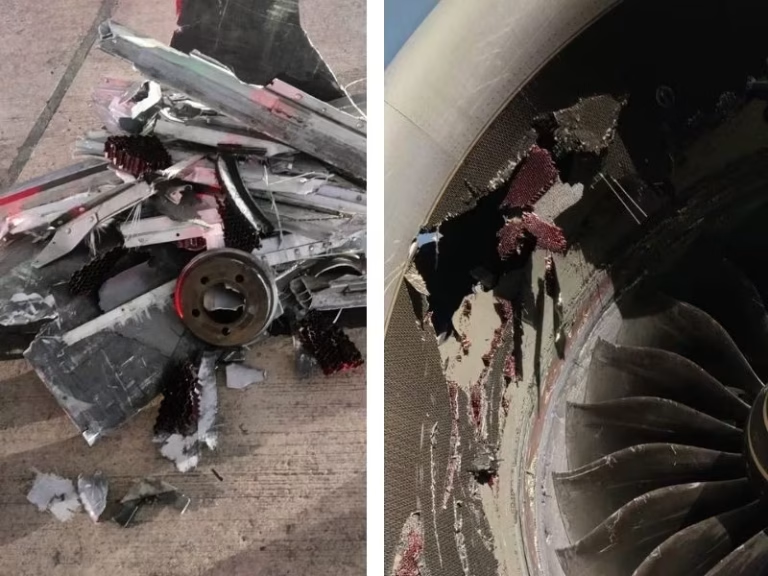
New Delhi – The Directorate General of Civil Aviation has launched a comprehensive investigation into a freak Air India plane Delhi accident that occurred at Indira Gandhi International Airport on Thursday morning. The incident involved an Air India Airbus A350 aircraft whose engine suffered substantial damage after ingesting an unattended cargo container while taxiing in dense fog conditions.

The Air India plane Delhi accident took place at approximately 5:25 am on January 16, 2026, after the aircraft, operating as Flight AI101 on the Delhi-New York route, had returned to the Delhi airport following Iran’s unexpected closure of its airspace. The incident has raised serious questions about ground safety protocols at one of India’s busiest airports.

Details of the Incident

According to the DGCA’s official statement, the Air India plane Delhi accident occurred at the taxiway N/N4 intersection when the aircraft’s second engine ingested a cargo container, causing substantial damage. The aviation regulator revealed that visibility at the time was marginal, contributing to the severity of the situation.

The preliminary investigation into the Air India plane Delhi accident has revealed that a BWFS tug was transporting several containers to the Baggage Makeup Area of Terminal 3 when it crossed the intersection while on the vehicular lane. During this movement, one of the containers toppled onto the taxiway intersection, placing it directly in the path of the taxiing aircraft.

The DGCA statement specified: “While taxiing to apron, at taxiway N/N4 intersection, No. 2 engine ingested a cargo container causing substantial damage to engine. The incident occurred around 05:25 IST.”

Background: Iran Airspace Closure Forces Return

The Air India plane Delhi accident occurred under unusual circumstances. Flight AI101 had originally departed from Delhi at 2 am on Thursday, bound for New York’s JFK Airport. However, shortly after takeoff, Iran unexpectedly closed its airspace, forcing the aircraft to return to Delhi airport.

An Air India spokesperson confirmed: “Air India confirms that Flight AI101, operating from Delhi to New York (JFK), was forced to return to Delhi shortly after takeoff due to the unexpected closure of Iranian airspace, which impacted its planned route.”

The aircraft landed safely following the airspace closure, but the Air India plane Delhi accident occurred during the subsequent taxiing phase as it was being directed to the apron area.

DGCA’s Preliminary Findings

The DGCA’s investigation into the Air India plane Delhi accident has focused on multiple factors, including the marginal visibility conditions caused by dense fog that blanketed Delhi on Thursday morning. These weather conditions significantly impaired visibility for both ground crew and pilots.

After the container was ingested into the engine, airport authorities worked to clear metal pieces from the affected area. Following this cleanup operation, the damaged aircraft was parked on stand 244 for a thorough assessment of the damage.

The Air India plane Delhi accident highlights potential gaps in ground operations coordination, particularly during low-visibility conditions. The investigation will likely examine whether proper protocols were followed by ground handling staff and whether adequate communication systems were in place.

Impact on Air India Operations

The Air India plane Delhi accident has significant operational implications for the airline. The affected Airbus A350 aircraft is currently grounded pending a complete investigation and necessary repairs. Air India has warned passengers that this incident may cause disruptions on select A350 routes.

An Air India spokesperson stated: “The aircraft is currently grounded for a thorough investigation and necessary repairs, which may cause potential disruptions on select A350 routes.”

Air India currently operates six A350 aircraft serving multiple international destinations including Dubai, Singapore, London, New York, and Newark. The grounding of one aircraft from this limited fleet could strain the airline’s capacity on these premium long-haul routes.

Passenger Assistance and Alternative Arrangements

Following the Air India plane Delhi accident, the airline has taken steps to assist affected passengers. According to the Air India spokesperson, the airline is providing alternative travel arrangements and offering refunds to passengers based on their preferences.

The incident affected all passengers aboard Flight AI101 who had already experienced an initial disruption due to the Iran airspace closure. The additional delay caused by the Air India plane Delhi accident compounded their travel challenges.

Safety Concerns and Future Implications

The Air India plane Delhi accident raises important questions about airport ground safety procedures, especially during adverse weather conditions. The incident demonstrates how a seemingly minor lapse in ground operations can result in significant aircraft damage and operational disruptions.

Aviation experts will closely monitor the DGCA’s investigation findings to determine whether systemic changes are needed in ground handling procedures at Indian airports. The Air India plane Delhi accident serves as a reminder of the critical importance of coordination between various airport stakeholders, including ground handling agencies, air traffic control, and airline operations teams.

The investigation is expected to examine whether existing safety protocols were adequate and properly implemented, particularly given the challenging visibility conditions prevailing at the time of the incident. The final report will likely include recommendations to prevent similar incidents in the future, ensuring that the lessons learned from this Air India plane Delhi accident strengthen aviation safety standards across Indian airports.

BREAKING: India Advisory for Israel Citizens Amid Rising Regional Tensions

New Delhi – The Indian Ministry of External Affairs has issued a critical India advisory for Israel, urging Indian nationals currently residing in or planning to visit the country to exercise extreme caution. The advisory, released on January 16, 2026, comes against the backdrop of heightened regional tensions across the Middle East, particularly involving Iran and concerns about potential military escalation.

The India advisory for Israel specifically instructs all Indian citizens to remain vigilant and strictly follow safety protocols established by Israeli authorities and the Home Front Command. This precautionary measure reflects growing concerns about regional stability and the potential impact on foreign nationals in the area.

Key Points of the Advisory

According to the official India advisory for Israel, Indian nationals currently in the country must adhere to all safety guidelines issued by Israeli authorities. The Ministry of External Affairs has strongly recommended that citizens avoid all non-essential travel to Israel given the prevailing security situation in the broader Middle East region.

The advisory stated: “In view of the prevailing situation in the region, all Indian nationals currently in Israel are advised to remain vigilant and strictly adhere to the safety guidelines and protocols issued by the Israeli authorities and the Home Front Command.”

To address potential emergencies, the India advisory for Israel includes a 24×7 helpline operated by the Embassy of India. Indian nationals facing any emergency situations can contact the embassy at the following numbers: +972-54-7520711 and +972-54-3278392. This round-the-clock assistance ensures that Indian citizens have immediate access to consular support when needed.

Regional Context Behind the Advisory

The India advisory for Israel emerges amid a complex and volatile regional situation. Iran is currently experiencing widespread protests, with the United States not ruling out potential interference or military action in the country. This has created a tense atmosphere across the Middle East.

Iranian authorities have issued stern warnings that American military bases throughout the region would become legitimate targets for Iranian strikes if the United States launches any attacks. These mutual threats have significantly raised regional tensions and created uncertainty about potential military confrontations.

Tel Aviv, Israel’s commercial and cultural hub, has particular cause for concern given Israel’s position as an arch rival of Tehran. The historical antagonism between the two nations adds another layer of complexity to the current situation, making the India advisory for Israel particularly timely and necessary.

Also Read: US Troops Middle East: Urgent Withdrawal From Key Bases Amid Iran Threat

Israeli Authorities Take Precautionary Measures

In response to heightened regional tensions, several areas across southern and central Israel have ordered the opening of public shelters. These preventive measures indicate the seriousness with which Israeli authorities are treating the current security environment.

The mayor of Dimona, a city in southern Israel, specifically ordered shelters to be opened throughout the municipality. The mayor’s reasoning was straightforward: “it is better to be prepared than surprised.” This proactive approach to civilian safety underscores the tangible concerns about potential security incidents, further justifying the India advisory for Israel.

Parallel Advisory for Iran

Complementing the India advisory for Israel, the Indian government has also issued updated guidance for citizens in Iran. On Wednesday, the Indian Embassy in Tehran released a fresh advisory as protests continue to rage across the country.

The embassy urged Indian nationals currently in Iran—including students, pilgrims, business persons, and tourists—to leave the country by available means of transport, including commercial flights. This recommendation reflects the evolving and potentially dangerous situation on the ground.

The Iran advisory instructs all Indian citizens and Persons of Indian Origin to exercise due caution and avoid areas where protests or demonstrations are underway. Citizens have been asked to remain in contact with the Indian Embassy in Iran and monitor local media reports for developments.

According to estimates, slightly over 10,000 Indians, including students, are currently living in Iran. India is making preparations to evacuate these nationals if the security situation deteriorates further.

Implications for Indian Travelers and Residents

The dual advisories—the India advisory for Israel and the accompanying guidance for Iran—represent a coordinated response to regional instability. Indian nationals planning travel to the Middle East should carefully reconsider their plans and postpone non-essential trips until the security situation stabilizes.

For those already present in these countries, maintaining regular contact with Indian diplomatic missions is crucial. The India advisory for Israel emphasizes the importance of staying informed through official channels and following all local safety protocols without exception.

Embassy Support and Emergency Protocols

The India advisory for Israel ensures that Indian nationals have access to continuous consular support. The provision of 24×7 helpline numbers demonstrates the government’s commitment to citizen welfare during this uncertain period.

Indian citizens should save these emergency contact numbers and remain aware of their nearest Indian diplomatic mission. Regular monitoring of official advisories and local news sources will help individuals make informed decisions about their safety and movement within Israel.

The current India advisory for Israel will likely remain in effect until regional tensions subside and normal security conditions are restored across the Middle East.

LIVE: Maharashtra Elections Result 2026 – BMC Vote Counting Updates Today

Mumbai – The Maharashtra State Election Commission is set to announce the highly anticipated Maharashtra elections result 2026 on Friday, January 16, as counting of votes begins at 10 am across the state. The elections saw participation from 2,869 seats across 893 wards in 29 municipal corporations, with Mumbai’s Brihanmumbai Municipal Corporation (BMC) being the most prominent among them.

The civic body polls, held on January 15, have drawn significant attention due to shifting political dynamics and new alliances formed specifically for this electoral battle. Key municipal corporations including Pune, Thane, Pimpri-Chinchwad, Kalyan-Dombivli, Mira-Bhayandar, Ulhasnagar, and Navi Mumbai are among the major battlegrounds where results will shape local governance for years to come.

Political Alliances Reshape Electoral Landscape

The Maharashtra elections result 2026 has gained importance due to unprecedented political realignments. Former rivals have joined hands while traditional allies have parted ways, creating an intriguing electoral contest. The most notable reunion involves Thackeray cousins Raj and Uddhav, who ended their long-standing rivalry last June to unite for these civic body polls.

Adding another layer of complexity, Maharashtra Deputy Chief Minister Ajit Pawar is contesting against Sharad Pawar’s NCP faction in two crucial seats—Pune and Pimpri-Chinchwad. This internal family rivalry has captured public attention and is expected to significantly influence the final outcome.

Polling Day Overview and Voter Turnout

Voting commenced at 7:30 am on Thursday and continued until 5:30 pm across all 29 municipal corporations. State Election Commissioner Dinesh Waghmare indicated that the overall voter turnout ranged between 46-50% across the civic bodies, though official final figures are still awaited.

By 3:30 pm on polling day, Kolhapur recorded the highest turnout at 50.85%, followed by Parbhani, Thane, Vasai-Virar, and Panvel. Mumbai’s BMC witnessed approximately 41% voter participation, a figure that will be closely analyzed as the Maharashtra elections result 2026 unfolds.

Controversy Over Erasable Ink Allegations

The polling day was marred by allegations regarding the use of erasable ink or marker pens at voting stations. Multiple voters claimed they could wipe off the ink mark from their fingers using hand sanitizers, raising concerns about potential irregularities.

Uddhav Thackeray addressed these allegations, stating that numerous complaints emerged about ink coming off immediately after voting. He suggested possible collusion between the Election Commission and the ruling party, alleging that various irregularities occurred during the electoral process. These claims have added a controversial dimension to the Maharashtra elections result 2026 announcement.

Complete List of 29 Municipal Corporations

The elections covered an extensive network of civic bodies across Maharashtra. Besides Mumbai’s BMC, other significant municipal corporations included Chhatrapati Sambhajinagar, Navi Mumbai, Vasai-Virar, Kalyan-Dombivli, Kolhapur, Nagpur, Solapur, Amravati, Akola, Nashik, Pimpri-Chinchwad, Pune, Ulhasnagar, Thane, Chandrapur, Parbhani, Mira-Bhayandar, Nanded-Waghala, Panvel, Bhiwandi-Nizampur, Latur, Malegaon, Sangli-Miraj-Kupwad, Jalgaon, Ahilyanagar, Dhule, Jalna, and Ichalkaranji.

This comprehensive coverage across urban Maharashtra makes the Maharashtra elections result 2026 a crucial indicator of political sentiment in the state’s major cities and towns.

Exit Poll Predictions Favor Mahayuti Alliance

Multiple exit polls have projected favorable outcomes for the BJP-led Mahayuti alliance in the BMC elections. According to projections, the BJP-Shiv Sena alliance is expected to secure between 131-151 seats in Mumbai’s civic body.

The Shiv Sena (UBT)-MNS-NCP (SP) alliance is predicted to win 58-68 seats, while the Congress-VBA-RSP alliance may secure 12-16 seats. Other parties and independents are projected to win 6-12 seats. Similar predictions suggest the BJP-led alliance could win at least 138 seats across various municipal corporations.

Mahayuti’s Campaign Promises

During the campaign period, the Mahayuti alliance made several promises to voters, with a pothole-free Mumbai being one of their key commitments for the BMC. This infrastructure-focused agenda resonated with voters frustrated by civic issues.

What’s at Stake

As the Maharashtra elections result 2026 is announced today, the outcomes will determine the administrative control of Maharashtra’s major urban centers. The results will influence local governance, development projects, and political momentum ahead of future state and national elections. The counting process beginning at 10 am will reveal whether exit poll predictions hold true and which alliances successfully navigated the complex political landscape of Maharashtra’s civic body elections.

Elephant Herd Safely Returns to Khayerbari Forest After Straying 20km Into Cooch Behar Villages

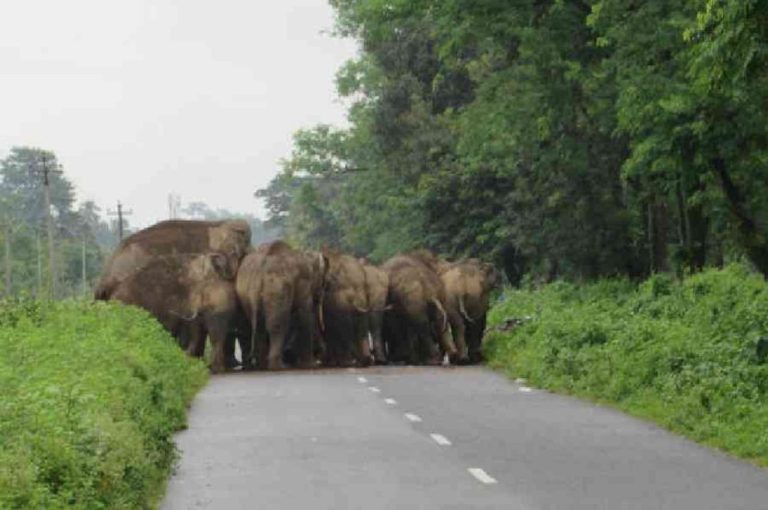
Elephant Herd Safely Returns: An elephant herd that had strayed nearly 20 km into human settlements in Cooch Behar district was safely guided back to the Khayerbari forest, bringing relief to anxious villagers after hours of tension. The incident highlights both the success of forest officials in managing wildlife emergencies and the broader challenge of human‑elephant conflict in North Bengal.


1. Elephant Herd Safely Returns: Incident Overview

  • Location: Balasundar village, Cooch Behar district, West Bengal.
  • Event: A herd of elephants wandered far from their forest habitat, sparking panic among residents.
  • Distance: The herd strayed 20 km from Khayerbari forest.
  • Response: Forest officials, assisted by local teams, worked for hours to guide the animals back.
  • Outcome: The herd was successfully returned to the forest without casualties.

2. Why Elephants Stray into Villages

  • Habitat loss: Expanding agriculture and settlements reduce forest cover.
  • Fragmented corridors: Traditional elephant routes are disrupted by roads and railways.
  • Food and water search: Elephants often raid crops during lean seasons.
  • Disorientation: Young calves or herds separated from larger groups may wander into villages.

3. Community Impact

  • Fear and disruption: Villagers reported sleepless nights and halted daily routines.
  • Crop damage: Farmers worried about destruction of paddy and vegetable fields.
  • Safety concerns: Families kept children indoors to avoid encounters.
  • Relief: Once the herd was guided back, residents expressed gratitude to forest officials.

4. Forest Department’s Role

  • Rapid response teams deployed to monitor herd movement.
  • Use of firecrackers and noise to gently drive elephants away from human settlements.
  • Coordination with local police ensured crowd control as curious onlookers gathered.
  • Continuous monitoring of elephant corridors to prevent recurrence.

5. Historical Context of Human‑Elephant Conflict in Bengal

  • 2010s: Frequent train collisions killed dozens of elephants in North Bengal.
  • 2018: Herds entered Alipurduar villages, damaging crops.
  • 2022: Stray elephants wandered into Siliguri outskirts.
  • 2026: Current Cooch Behar incident adds to the long list of conflicts.

6. Global Comparisons

  • Sri Lanka: Elephants raid villages, leading to farmer deaths.
  • Thailand: Stray elephants enter towns searching for food.
  • Africa: Human‑elephant conflicts escalate near expanding farms.

Cooch Behar’s case mirrors these global struggles where wildlife corridors clash with human expansion.


7. Governance Challenges

  • Weak enforcement of corridor protection laws.
  • Lack of early warning systems for villages near forests.
  • Insufficient manpower in forest departments.
  • Need for community awareness about handling stray wildlife.

8. Governance Lessons

  • Corridor protection is essential for elephant safety.
  • Community awareness campaigns can reduce panic.
  • Rapid response teams must be strengthened.
  • Technology (GPS collars, drones) can track elephant movement.

9. Future Outlook – Wildlife Management in Bengal

India must move towards:

  • Digitised elephant tracking systems accessible to forest officials.
  • Eco‑friendly fencing to protect villages without harming wildlife.
  • Cross‑border cooperation with Bhutan and Nepal for corridor management.
  • Integration of conservation with urban planning in North Bengal towns.

10. Conclusion

The Cooch Behar elephant herd return 2026 is more than a local incident—it is a wake‑up call for Bengal’s wildlife governance. As villages expand into forest corridors, conflicts will intensify unless proactive measures are taken. For Cooch Behar, the lesson is clear: coexistence with wildlife requires planning, awareness, and respect for nature’s boundaries.

Here are some relevant external links you can use for deeper context and official references connected to the elephant herd incident in Cooch Behar and broader wildlife governance in Bengal:


Also read: Home | Channel 6 Network – Latest News, Breaking Updates: Politics, Business, Tech & More

Institutional Human Knowledge Must Anchor Strong Accountable AI for Parliaments: Deputy Chairman Harivansh: 2026

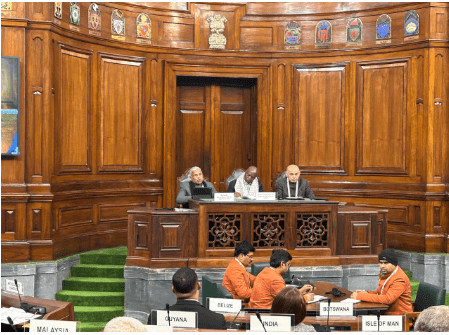
Deputy Chairman of the Rajya Sabha Shri Harivansh has underscored that the future of Artificial Intelligence (AI) in legislatures must be firmly grounded in human institutional wisdom, democratic accountability and ethical restraint. Speaking at a high-level workshop on AI adoption in Parliament during the 28th Conference of Speakers and Presiding Officers of the Commonwealth in New Delhi, he cautioned that while innovation is essential, it must be carefully balanced with responsibility, transparency and human oversight.


“AI in Parliament Must Be Accountable, Contextual and Trustworthy”

Highlighting the sensitivity of legislative institutions, Shri Harivansh stated that AI systems introduced into Parliament cannot be treated like generic technological tools. They must be:

  • Accountable to democratic institutions

  • Context-aware to parliamentary traditions

  • Trustworthy in content and outcomes

  • Anchored in institutional knowledge built over decades

He stressed that parliamentary processes are shaped by precedents, conventions, constitutional practices, rulings and debates, and these cannot be meaningfully understood without deep human involvement.


Institutional Memory is Irreplaceable

Explaining the need for a hybrid approach to AI development, the Deputy Chairman observed:

“Skills can be acquired or outsourced. Knowledge, however, is contextual and deeply embedded within the institution. Parliamentary knowledge is unique.”

He emphasised that just as humans carry institutional memory into new roles, AI systems designed for legislatures must be trained using human institutional wisdom, making human knowledge central to any credible and accountable AI framework for governance.


Balancing Innovation and Restraint

Shri Harivansh cautioned against both technological excess and excessive conservatism, stating:

“Innovation without restraint carries risk, while restraint without innovation can lead to stagnation.”

He called for a deliberate, balanced approach, where:

  • AI supports efficiency

  • Humans retain final authority

  • Oversight mechanisms remain strong

  • Ethical safeguards are non-negotiable

According to him, human intervention must remain integral to any AI-enabled parliamentary system.


AI Already Supporting Parliamentary Work in India

The Deputy Chairman also shared practical examples of how AI is already being responsibly integrated into the Indian Parliament’s functioning.

These include:

  • AI-assisted translation of parliamentary documents

  • Analysis of debates

  • Assistance in framing questions

  • Functionality across 22 Indian languages

A major achievement highlighted was the development of a Parliamentary Language Dictionary containing nearly 48,000 specialised terms, which has been integrated into a custom AI model built exclusively for parliamentary use.

He clarified that:

  • AI is functioning only as a support tool

  • Human translators remain fully in control

  • The customised model has significantly improved accuracy and user acceptance


Ethics, Truth and Democratic Accountability Must Guide AI

Reiterating the philosophical foundation for AI use in democratic institutions, Shri Harivansh stated:

“Artificial Intelligence in Parliament must be rooted in truth, bound by ethics, guided by human judgment, and accountable to democratic values.”

This framework, he said, must define the global approach to AI deployment in legislative spaces.


Call for Greater Cooperation Among Commonwealth Parliaments

In his concluding remarks, the Deputy Chairman urged stronger collaboration among Commonwealth legislatures on responsible AI adoption. He suggested that sharing best practices, ethical frameworks and institutional safeguards would help democracies harness technology without undermining core democratic principles.


Global Parliamentary Platform Hosted by India

The workshop formed part of the 28th Conference of Speakers and Presiding Officers of the Commonwealth, a prestigious international parliamentary gathering.

India is hosting the conference for the fourth time, having previously hosted it in:

  • 1971

  • 1986

  • 2010

The conference was inaugurated earlier by Prime Minister Shri Narendra Modi at the Central Hall of Parliament (Samvidhan Sadan).


Conclusion

Shri Harivansh’s address offers a powerful blueprint for the future of AI in democratic institutions. By positioning human institutional wisdom, ethics, accountability and democratic values at the centre of technological adoption, India is articulating a globally relevant model for responsible governance innovation. The message is clear: AI can assist democracy, but it must never replace human judgment in the service of constitutional values.


For more real-time updates, visit Channel 6 Network.

Source: PIB

Department of Posts Proudly Delivers First-Ever ONDC Order, Marks Major Leap in Digital Logistics Integration: 2026

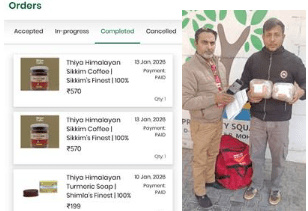
In a landmark development for India’s digital commerce ecosystem, the Department of Posts has successfully delivered its first-ever online order through the Open Network for Digital Commerce (ONDC) while operating as a Logistics Service Provider (LSP). The order was booked on January 13, 2026 and delivered on January 15, 2026, signalling India Post’s growing role as a technology-enabled logistics backbone for inclusive e-commerce.


First ONDC Order Delivered Through India Post Network

The inaugural order was placed by UdyamWell, an ONDC-enabled initiative dedicated to empowering Bharatpreneurs, including artisans, farmers, and rural entrepreneurs. The successful booking and delivery represent a significant milestone in India Post’s transformation into a digitally integrated logistics partner.

This achievement reflects the Department of Posts’ expanding role beyond traditional mail services into interoperable, platform-driven digital logistics solutions.


Strengthening ONDC Through Nationwide Postal Reach

Through its integration with ONDC, the Department of Posts now enables:

  • Sellers on ONDC buyer apps to select India Post as their logistics partner

  • Seamless pickup, booking, transmission, and last-mile delivery

  • End-to-end parcel movement supported by its pan-India postal network

This integration brings together the reliability of India Post’s physical infrastructure with the flexibility of open digital commerce architecture.


“Click & Book” Model Enables Fully Digital Logistics

Currently, the Department of Posts is live on ONDC under the “Click & Book” model, offering sellers a fully digital and convenient logistics experience.

Under this model, sellers can:

  • Generate digital pickup requests

  • Choose India Post as their logistics partner

  • Get parcels picked up directly from their premises

  • Make payment for postage at the time of pickup

  • Track consignments end-to-end using technology-enabled postal systems

This digitised workflow enhances efficiency, transparency, and ease of access for small businesses.


Boost for MSMEs, Artisans and Rural Entrepreneurs

The onboarding of India Post as a Logistics Service Provider on ONDC is expected to significantly benefit:

  • MSMEs

  • Self-help groups (SHGs)

  • Artisans and crafts communities

  • Farmers and rural entrepreneurs

  • Small sellers in remote and underserved regions

With its unmatched geographic reach and public trust, India Post is uniquely positioned to enable inclusive participation in India’s digital economy.


A Step Towards Inclusive Digital Commerce

The successful delivery of the first ONDC order demonstrates the Department of Posts’ readiness to function as a modern, interoperable logistics platform. By combining:

  • A legacy of trusted public service

  • A vast delivery infrastructure

  • Growing digital capabilities

India Post is emerging as a critical enabler of equitable, accessible, and scalable e-commerce across Bharat.


Conclusion

The Department of Posts’ first successful ONDC delivery is more than a technological milestone — it represents a strategic shift toward building a democratised digital commerce ecosystem. As India Post deepens its integration with ONDC and expands digital services, it is set to play a transformative role in empowering small sellers, strengthening MSMEs, and connecting rural India to national markets. This initiative reinforces the vision of an inclusive, tech-enabled, and people-centric digital economy.


For more real-time updates, visit Channel 6 Network.

Source: PIB

West Bengal ₹1.3 Crore Drug Arrest 2026 – Detailed Analysis of Narcotics Seizure, Law Enforcement Challenges, and Governance Lessons for India

The West Bengal ₹1.3 crore drug arrest 2026 has once again highlighted the state’s growing struggle against narcotics trafficking. Police apprehended two individuals in possession of drugs valued at ₹1.3 crore, sending shockwaves across the region. The incident underscores the scale of the narcotics trade in Bengal, its links to cross‑border smuggling, and the urgent need for stronger governance and community resilience.


2. West Bengal ₹1.3 Crore Drug Arrest 2026: The Arrest

  • Location: Conducted by Siliguri Metropolitan Police in West Bengal.
  • Event: Two suspects were apprehended with large quantities of narcotics.
  • Value: Drugs worth ₹1.3 crore seized.
  • Objective: To disrupt trafficking networks operating in North Bengal.
  • Community reaction: Relief at the arrest, but concern about the scale of drug circulation.

3. Why Narcotics Trade Thrives in Bengal

  • Geographical proximity to international borders with Nepal, Bhutan, and Bangladesh.
  • Porous borders facilitating smuggling routes.
  • Socio‑economic vulnerabilities exploited by traffickers.
  • Urban demand in Kolkata, Siliguri, and other hubs.
  • Weak enforcement capacity in rural districts.

4. Law Enforcement Challenges

The arrest reflects systemic challenges:

  • Cross‑border smuggling networks are difficult to dismantle.
  • Local complicity sometimes hampers enforcement.
  • Judicial delays weaken deterrence.
  • Youth addiction creates sustained demand, fueling the trade.

5. Political Context

  • Opposition parties accuse the ruling government of failing to curb narcotics.
  • The government highlights recent arrests and seizures as proof of action.
  • Civil society groups demand community‑based rehabilitation programs.
  • The arrest has reignited debates about law enforcement neutrality and political will.

6. Government External Links for Assistance


7. Historical Context of Drug Trade in Bengal

  • 1990s: Malda became known for opium cultivation.
  • 2000s: Synthetic drugs and cross‑border smuggling expanded.
  • 2010s: Youth addiction rose sharply in urban centres.
  • 2026: Current arrest reflects the persistence of narcotics networks despite crackdowns.

8. Community Impact

  • Families fear youth addiction and crime linked to drugs.
  • Villagers report pressure from traffickers to cooperate.
  • Urban communities express relief at the arrest but demand sustained action.
  • Civil society groups call for rehabilitation centres and awareness campaigns.

9. Global Comparisons

Similar narcotics challenges worldwide:

  • Mexico: Cartels dominate cross‑border smuggling into the USA.
  • Afghanistan: Opium trade fuels regional instability.
  • Myanmar: Synthetic drug production impacts Southeast Asia.

West Bengal’s case mirrors these global struggles where local vulnerabilities feed international drug networks.


10. Governance Lessons

The West Bengal drug arrest teaches:

  • Cross‑border cooperation is essential to dismantle networks.
  • Community engagement can reduce local complicity.
  • Judicial reforms are needed for faster trials.
  • Public health approaches must complement law enforcement.

11. Future Outlook – Bengal’s Fight Against Drugs

India must move towards:

  • Integrated intelligence systems linking police, NCB, and border forces.
  • Digitised tracking of narcotics seizures for transparency.
  • Expansion of rehabilitation centres for addicted youth.
  • International cooperation with Bangladesh, Nepal, and Bhutan to secure borders.

12. Conclusion

The West Bengal ₹1.3 crore drug arrest 2026 is more than a police success—it is a test of Bengal’s governance capacity. While the arrest disrupts one network, the persistence of narcotics trade underscores the need for systemic reforms, community resilience, and cross‑border cooperation. For Bengal, the lesson is clear: law enforcement victories must be matched by social and institutional change to defeat the drug menace.

Also read: Home | Channel 6 Network – Latest News, Breaking Updates: Politics, Business, Tech & More

Op Sindoor Reflects India’s Courage, Restraint and National Character: Raksha Mantri at Army Day Celebrations in Jaipur: 2026

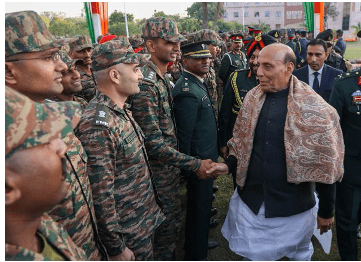
Raksha Mantri Shri Rajnath Singh on January 15, 2026 described Operation Sindoor as a balanced, decisive and morally grounded military response undertaken amid global uncertainties, asserting that it will be remembered as a symbol of India’s courage, strength, restraint and national character. Addressing the 78th Indian Army Day celebrations in Jaipur, he praised the Indian Army’s professionalism, adaptability and sacrifice, while reaffirming the Government’s commitment to modernisation, indigenisation and long-term transformation of the Armed Forces.


Operation Sindoor: Firm Response with Strategic Restraint

The Raksha Mantri stated that the action against terrorists during Operation Sindoor was conducted with:

  • Careful strategic assessment

  • Respect for humanitarian values

  • Discipline, unity and patience

  • Swift and effective execution

He said that the terrorists could never have anticipated the speed and bravery with which the Indian Armed Forces acted, and emphasised that Operation Sindoor is not yet fully over, adding:

“India’s efforts for peace will continue until the terrorist ideology is eradicated.”


Indigenous Weapons Highlight Necessity of Aatmanirbharta

Highlighting the use of indigenous weapons and platforms during the operation, Shri Rajnath Singh stressed that self-reliance is no longer a matter of pride alone but a strategic necessity.

He underlined that:

  • Defence production has risen from ₹46,000 crore (2014) to ₹1.51 lakh crore today

  • Defence exports have grown from less than ₹1,000 crore (2014) to nearly ₹24,000 crore

He credited this progress to the vision of PM Narendra Modi-led Government, which is equipping the Armed Forces with state-of-the-art, India-specific platforms.


Army on Track to Become World’s Most Powerful Force by 2047

Commending the Army’s ongoing reforms, the Raksha Mantri noted that the force is moving forward with a structured roadmap consisting of:

  • A Transformation Phase

  • A Consolidation Phase

  • An Excellence Phase

The long-term objective, he said, is to build the Indian Army into the world’s most powerful force by 2047, aligned with the national vision of Viksit Bharat.

He added that evolving warfare domains — including cyber, space, drones and AI — require stronger inter-service integration and jointness.


“Indian Army is a Beacon of Courage, Sacrifice and Unity”

Describing the Indian Army as a shining symbol of unity in diversity, Shri Rajnath Singh said that soldiers from across cultures, regions and backgrounds come together with one shared purpose — national service.

He observed that unlike many militaries across the world, the Indian Army functions in close harmony with civil society, and the people’s trust remains its greatest strength.

“This bond of trust is the foundation of our national security framework,” he said.


Global Role: Indian Army as Messenger of Peace

The Raksha Mantri highlighted the Army’s contributions to United Nations Peacekeeping Missions, noting that Indian troops have:

  • Maintained peace in conflict zones

  • Provided medical assistance

  • Supported infrastructure development

  • Delivered humanitarian relief

He said this role reflects India’s civilisational philosophy of Vasudhaiva Kutumbakam (the world is one family).


Strong Focus on Welfare of Veterans and Role of Women in Armed Forces

Reaffirming commitment to veterans’ welfare, Shri Rajnath Singh said that caring for ex-servicemen and their families remains a national responsibility.

On women’s empowerment in the Armed Forces, he stated that transformative reforms under PM Modi’s leadership have enabled:

  • Permanent Commission for women in the Army

  • Entry of women into the National Defence Academy (NDA)

  • Expanded opportunities across operational roles

He said the Government remains committed to ensuring equal opportunities for women in uniform.


Call to Youth: Nation-Building Through Service

The Raksha Mantri appealed to the youth to join the Armed Forces and contribute to nation-building. He emphasised that beyond physical strength, a soldier must possess:

  • Mental resilience

  • Moral courage

  • Leadership qualities

  • Sound decision-making ability

He added that citizens also carry a responsibility to support soldiers’ families, uphold national unity and contribute to India’s prosperity.


Shaurya Sandhya and Spectacular Displays Inspire Citizens

As part of the Army Day celebrations under the aegis of South Western Command, Shri Rajnath Singh attended:

  • Interaction with troops at Jaipur Military Station

  • Shaurya Sandhya at Sawai Mansingh Stadium, Jaipur

Highlights included:

  • Paramotor show and balloon release

  • Martial arts and traditional sports displays (Kalaripayattu, Mallakhamb)

  • Performance by Nepalese Army Band

  • Dramatic enactment of Operation Sindoor

  • Spectacular drone show

The programme celebrated the Army’s valour, tradition and operational readiness while strengthening the bond between citizens and soldiers.


Launch of 50 NAMAN Centres for Veterans

A significant milestone during the event was the virtual launch of 50 NAMAN Centres across the country.

Project NAMAN aims to provide one-stop support to:

  • Army veterans

  • Pensioners

  • Veer Naris

  • Next of Kin (NoK)

These centres will deliver:

  • SPARSH-enabled pension services

  • Government-to-Citizen (G2C) services

  • Business-to-Consumer (B2C) services

  • Dedicated facilitation and grievance support

This initiative strengthens the welfare ecosystem for the veteran community.


High-Level Participation Reflects National Significance

The event witnessed the presence of senior national leadership, including:

  • Rajasthan Governor Shri Haribhau Kisanrao Bagde

  • Mizoram Governor General (Dr) Vijay Kumar Singh

  • Rajasthan Chief Minister Shri Bhajan Lal Sharma

  • Chief of Defence Staff General Anil Chauhan

  • Chief of Army Staff General Upendra Dwivedi

  • Senior military officers, veterans, NoKs, civil dignitaries and citizens


Conclusion

The 78th Army Day celebrations in Jaipur emerged not only as a tribute to the bravery and sacrifice of India’s soldiers but also as a powerful reaffirmation of the nation’s strategic direction. By linking Operation Sindoor, indigenisation, modernisation, youth engagement, and veterans’ welfare into one cohesive vision, the Raksha Mantri’s address underscored a clear message: India is resolutely building a stronger, more self-reliant, and future-ready Armed Forces — with the Indian Army standing tall as a pillar of national strength and character.


For more real-time updates, visit Channel 6 Network.

Source: PIB

Dr. Sachchidanand Joshi at NMCM Foundation Day Celebrations: Preserving Villages Is a Cultural Awakening: 2026

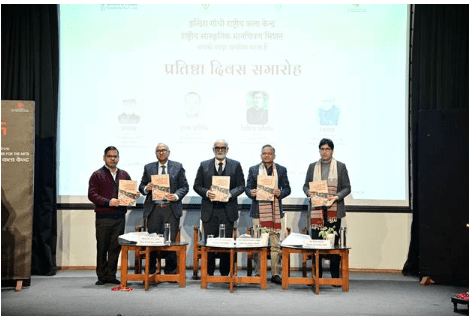
The National Cultural Mapping Mission (NMCM), a key initiative of the Indira Gandhi National Centre for the Arts (IGNCA), celebrated its Foundation Day on the auspicious occasion of Makar Sankranti with a culturally vibrant programme at Samvet Auditorium, IGNCA, New Delhi. The event underscored the growing national commitment to documenting, preserving and celebrating India’s vast cultural heritage, with senior dignitaries highlighting the importance of safeguarding villages, traditions and living heritage for future generations.


Foundation Day Celebrated on Makar Sankranti at IGNCA

The programme was held on January 14, 2026, aligning with Makar Sankranti — a festival celebrated across India as Pongal, Bihu, Uttarayan, Sankranti and Khichdi — symbolising unity in diversity.

The event brought together policymakers, cultural scholars, artists, and students to reflect on NMCM’s journey and its expanding role in strengthening India’s cultural consciousness.


“Preserving Villages is a Great Cultural Awakening”

Presiding over the event, Dr. Sachchidanand Joshi, Member Secretary, IGNCA, highlighted the national significance of NMCM’s work.

He noted that although Makar Sankranti is celebrated under different names across states, the spirit remains the same, representing India’s cultural unity. He proposed that NMCM should prepare a national documentation on regional traditions of Makar Sankranti, covering food, attire, rituals and customs.

Highlighting the mission’s scale, Dr. Joshi said:

“Documenting 6.5 lakh villages is not a small task. Today, NMCM has successfully documented 6.23 lakh villages, which itself is a historic achievement.”

He added that in an era of rapid urbanisation, villages remain the repositories of India’s living traditions. Preserving them, he said, would contribute to a powerful cultural awakening across the country.


Cultural Mapping Essential for Heritage Awareness: Rajesh Kumar Singh

The Chief Guest, Shri Rajesh Kumar Singh, Joint Secretary, Ministry of Panchayati Raj, described cultural mapping as both ambitious and essential.

He emphasised that:

  • Authentic village-level heritage data empowers citizens to understand their roots

  • Heritage awareness strengthens national pride

  • Cultural activities are among the 29 constitutional functions of Panchayats, yet remained under-recognised for long

He highlighted the Ministry’s ‘Panchayat Heritage’ programme, launched to integrate cultural consciousness into grassroots governance.


Authenticity is the Core Responsibility in Cultural Documentation: Dr. Shah Faisal

Dr. Shah Faisal, Deputy Secretary, Ministry of Culture, speaking as Guest of Honour, stressed that Indian culture has largely evolved through oral traditions, making documentation both crucial and challenging.

He cautioned that:

  • Errors in documentation are not merely technical mistakes

  • Inaccurate or unauthenticated data amounts to injustice to India’s heritage

  • Authenticity and integrity must remain the guiding principles of cultural mapping

He noted that unlike rigid text-based civilisations, Indian culture has survived precisely because of its flexibility and continuity through generations.


NMCM Journey and ‘Mera Gaon Meri Dharohar’ Portal Highlighted

Welcoming the dignitaries, Prof. (Dr.) R. C. Gaur, Head of Kala Nidhi Division and In-Charge of NMCM, recalled that NMCM itself was launched on Makar Sankranti in 2021, with IGNCA serving as the nodal agency under the Ministry of Culture.

Dr. Mayank Shekhar, Director, NMCM, presented the annual report and showcased the progress of the ‘Mera Gaon Meri Dharohar’ portal, which serves as a digital repository of village-level cultural, historical and traditional data across India.


Rich Cultural Performances Showcase India’s Diversity

The event featured a series of culturally rich performances that reflected India’s artistic diversity:

  • An auspicious opening performance of ‘Panchavadyam’ (traditional South Indian percussion ensemble)

  • Release of the NMCM brochure and the second issue of its bi-annual journal ‘Maati’

  • Mesmerising Ao Naga tribal dance and music performance from Northeast India

  • Performances by Pragya Arts

  • Musical presentation by Mr. Nitish Kumar

The evening celebrated folk, tribal and classical traditions on a single platform.


Publications Released and Artists Felicitated

Two key publications were released:

  • NMCM Brochure

  • Second issue of the journal ‘Maati’, described as a valuable contribution to cultural research and public discourse

The programme concluded with:

  • Felicitation of artists

  • Prize distribution for the rangoli competition winners

  • Vote of thanks to participants and guests

Guests later shared a traditional Makar Sankranti meal of chura-dahi (flattened rice and curd), reinforcing the cultural spirit of the day.


Celebrating Unity Through Cultural Heritage

The Foundation Day celebrations conveyed a strong message: India’s cultural strength lies in its villages, traditions, and living heritage. By bringing together diverse artistic traditions and focusing on systematic documentation of cultural knowledge, NMCM continues to play a vital role in shaping a national cultural consciousness rooted in authenticity, inclusivity and pride.


Conclusion

NMCM’s Foundation Day celebration was not merely an institutional milestone but a symbolic reaffirmation of India’s commitment to cultural preservation. With over 6.23 lakh villages already documented, and growing engagement with communities, scholars and institutions, NMCM is steadily building one of the world’s most comprehensive cultural knowledge systems. As Dr. Sachchidanand Joshi rightly noted, preserving villages is not just preservation — it is a cultural awakening for the nation.


For more real-time updates, visit Channel 6 Network.

Source: PIB