Thursday, April 30, 2026
Home Blog Page 155

Delhi Shivers as Winds Fog Grip Capital: Critical Yellow Alert

0

New Delhi – Delhi shivers as winds fog continue to grip the national capital, with cold day conditions persisting for the second consecutive day. The maximum temperature remained significantly below normal at 16.7°C on Wednesday, marginally higher than Tuesday’s 15.7°C but still two degrees below the seasonal average. The combination of upper-level fog and icy-cold northwesterly winds created challenging weather conditions across the city, prompting meteorological authorities to maintain heightened alerts for residents.

IMD Issues Yellow Alert for Continued Cold Weather

The India Meteorological Department reported that Delhi shivers as winds fog affected multiple weather stations across the capital. Two key monitoring stations at Palam and Lodhi Road recorded official “cold day” conditions based on IMD classification criteria. The meteorological department predicted a marginal rise in maximum temperature by one degree on Thursday, though no significant overall change is expected. The yellow alert issued the previous day remains in effect, warning residents to take necessary precautions against the persistent cold weather.

Visibility Drops Significantly Due to Fog Cover

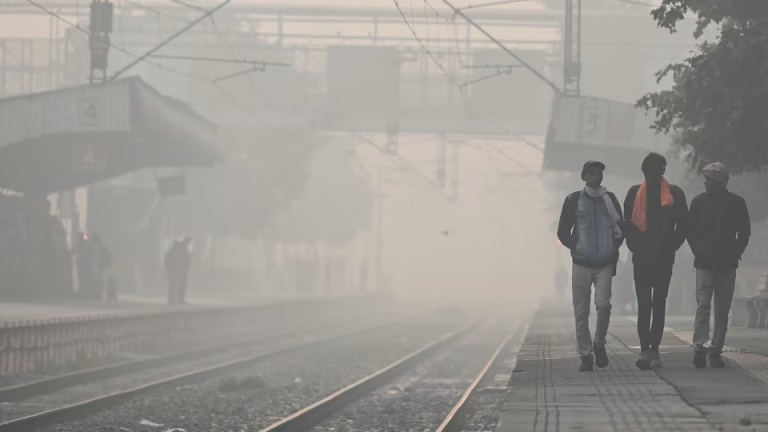
Met officials confirmed that Delhi shivers as winds fog caused shallow fog conditions on Wednesday, significantly impacting visibility across the capital. Visibility dropped to approximately 800 metres at Safdarjung and further reduced to 600 metres at Palam. Although surface-level fog remained mainly shallow, it persisted at upper atmospheric levels, contributing to the continued suppression of daytime temperatures. The fog cover, combined with consistent northwesterly winds, prevented adequate solar radiation from warming the surface.

Meteorological Explanation for Temperature Suppression

Weather experts explained why Delhi shivers as winds fog keep temperatures abnormally low. Mahesh Palawat, vice president at Skymet, stated that consistent northwesterly winds, alongside the fog, prevented the maximum temperature from rising. “While a few places saw sunshine, it was not strong enough,” Palawat noted, explaining the meteorological phenomenon affecting the capital. The persistent wind pattern and upper-level fog created a barrier that blocked sufficient sunlight from reaching ground level.

Official Cold Day Classification Criteria

The situation where Delhi shivers as winds fog met specific meteorological criteria for cold day classification. IMD defines a “cold day” when the minimum temperature falls below 10°C and the maximum temperature departure from normal exceeds 4.5°C. A “severe cold day” occurs when the maximum temperature is 6.5°C or more below normal. Both Palam and Lodhi Road weather stations satisfied these criteria, recording departures of -4.8°C and -4.7°C from normal respectively.

Temperature Variations Across Weather Stations

Multiple monitoring stations recorded how Delhi shivers as winds fog affected different areas of the capital. The lowest maximum temperature was 13.9°C at Palam, followed by 15.9°C recorded at both Ridge and Ayanagar stations. The minimum temperature on Wednesday stood at 8.6°C, two degrees below normal. Remarkably, the difference between maximum and minimum temperatures was only approximately 8°C, indicating unusually suppressed daytime heating.

Also Read: IMD Cold Wave Warning: Urgent Alert for North and Central India

Regional Fog Forecast and Predictions

IMD forecasted that Delhi shivers as winds fog conditions will continue with moderate to dense fog expected in the capital. Upper-level fog is predicted to persist across the Indo-Gangetic Plain region on Thursday. This widespread atmospheric phenomenon affects not just Delhi but encompasses a larger geographical area, suggesting that relief from current conditions may not arrive immediately. The meteorological patterns indicate sustained cold weather across northern India.

Extended Cold Spell Expected Until Mid-January

Experts predict that Delhi shivers as winds fog conditions will intensify across north India until January 15. Navdeep Dahiya, an amateur weatherman, explained that with no obstructions such as western disturbances expected until mid-January, similar conditions should prevail. Single-digit maximum temperatures are anticipated in Punjab, Haryana, Rajasthan, and parts of Uttar Pradesh, indicating a widespread cold wave affecting the entire northern region.

Near Single-Digit Temperatures Across Northern States

On Wednesday, as Delhi shivers as winds fog affected the capital, multiple stations across northern India narrowly missed recording single-digit maximum temperatures, hovering between 10-12°C. The wind chill factor contributed to bone-chilling cold during evening hours. Weather forecasters predicted these conditions would intensify further on Thursday, with Delhi expected to experience maximum temperatures between 12-15°C. The combined effect of low temperatures and wind chill created conditions that felt significantly colder than actual readings.

Minimum Temperature Projections

While Delhi shivers as winds fog continues to dominate weather patterns, experts provided projections for minimum temperatures. Dahiya predicted that while minimum temperatures may not fall as drastically as witnessed in 2019, they should stabilize between 3-4°C in coming days. This represents a significant drop from current levels and would bring the capital closer to experiencing severe cold conditions that require additional public health measures.

Implications for Residents and Daily Life

As Delhi shivers as winds fog persists, residents face challenging conditions affecting daily activities. The combination of low visibility, cold temperatures, and persistent winds creates hazardous conditions for commuters and outdoor workers. The yellow alert serves as an important warning for vulnerable populations, including elderly citizens and children, to limit outdoor exposure during peak cold hours. The sustained nature of these conditions, expected to continue until mid-January, requires residents to maintain vigilance and take appropriate protective measures against the cold weather affecting the national capital region.
Russia-Flagged Oil Tanker Seized: Bold US Atlantic Operation

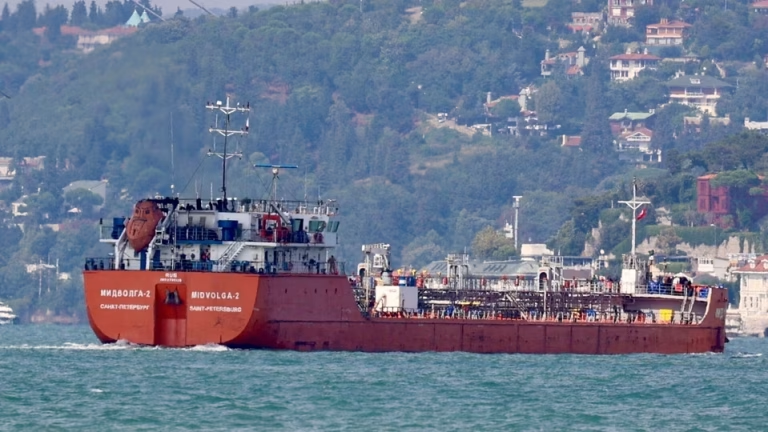
Washington D.C. – The United States seized a Russia-flagged oil tanker with connections to Venezuela on Wednesday following a pursuit lasting more than two weeks across the Atlantic Ocean, according to military sources. The unprecedented operation occurred as Russian military vessels, including a submarine and warship, were positioned in the general vicinity, raising concerns about potential international confrontation. This marked a significant escalation in US enforcement of sanctions against Venezuela and represented a rare direct maritime action involving a Russian-flagged vessel.

Two-Week Atlantic Pursuit Culminates

The Russia-flagged oil tanker, originally known as the Bella-1, had successfully evaded a US maritime blockade of sanctioned vessels and previously rebuffed Coast Guard attempts to board it. The extended pursuit across Atlantic waters demonstrated the determination of US authorities to enforce sanctions despite the vessel’s attempts to avoid interception. The operation involved coordination between the US Coast Guard and military forces, showcasing the complexity and strategic importance of the maritime enforcement action.

Russian Military Presence Complicates Operation

Two US officials confirmed that Russian military vessels were present in the general vicinity during the seizure of the Russia-flagged oil tanker. A Russian submarine was among the military assets in the area, though the exact proximity of these vessels to the actual operation remained unclear. The operation took place close to Iceland, a strategic location in the North Atlantic. The presence of Russian military assets added a layer of international tension to an already sensitive maritime enforcement action.

Back-to-Back Sanctions Enforcement

The United States conducted seizures of two sanctioned oil tankers linked to Venezuela in consecutive actions spanning the North Atlantic and Caribbean regions. The Russia-flagged oil tanker represented one of these vessels, while US Coast Guard forces intercepted another fully-loaded Venezuela-linked tanker near the northeast coast of South America. This marked the fourth such interception case in recent weeks, demonstrating an intensified enforcement pattern under the Trump administration’s pressure campaign against Venezuela.

Unprecedented Nature of US Action

The seizure of the Russia-flagged oil tanker appeared to be the first time in recent memory that the US military attempted to seize a vessel flying the Russian flag. This unprecedented action occurred merely days after a nighttime operation by US Special Forces in Caracas resulted in the capture of Venezuelan President Nicolas Maduro last Saturday. The timing of these operations suggested a coordinated strategy to pressure both Venezuela and its international supporters.

Moscow’s Strong Response

Russia reacted swiftly and strongly to the seizure of the Russia-flagged oil tanker. Andrei Klishas, a senior Russian lawmaker from the ruling United Russia party, characterized the US action as “outright piracy,” according to state news agency reports. Russia’s transport ministry reported losing all contact with the vessel, now known as the Marinera, after US naval forces boarded it. The diplomatic language employed by Russian officials indicated serious displeasure with American maritime enforcement tactics.

Also Read: Trump Veto Override Vote: Critical House Republicans Challenge Unfolds

Visual Evidence of Boarding Operation

Russian state broadcaster RT displayed imagery showing a helicopter hovering near the Russia-flagged oil tanker Marinera, suggesting US forces were attempting to board the American-sanctioned vessel. Reports indicated the tanker was empty at the time of the seizure. The visual documentation of the operation provided evidence of the maritime enforcement action and the methods employed by US forces to take control of the vessel.

Previous Interception Attempts

The Russia-flagged oil tanker had a history of evading US authorities. The Coast Guard first attempted to intercept the vessel last month, but it refused to permit boarding. Following that initial encounter, the tanker registered under a Russian flag, presumably seeking protection through Russian maritime registration. The vessel’s transformation from the Bella-1 to the Marinera, now flying Russian colors, represented an attempt to complicate US enforcement efforts.

Escalating Maritime Blockade Strategy

The Russia-flagged oil tanker represented the latest vessel targeted by US Coast Guard since President Donald Trump initiated his pressure campaign against Venezuela. US officials confirmed that Coast Guard forces had intercepted another Venezuela-linked tanker in Latin American waters as part of continued enforcement of a maritime blockade against sanctioned vessels from Venezuela. This systematic approach indicated a comprehensive strategy to restrict Venezuelan oil exports.

Strategic Implications for Regional Relations

The seizure of the Russia-flagged oil tanker carries significant implications for international relations involving the United States, Russia, and Venezuela. The operation demonstrated American willingness to enforce sanctions even when confronting vessels under Russian flags and in the presence of Russian military assets. This bold stance could potentially escalate tensions between Washington and Moscow while simultaneously applying pressure on the Maduro regime through economic isolation.

Continuing Enforcement Operations

As the Russia-flagged oil tanker seizure demonstrated, US authorities maintained an aggressive posture toward sanctions enforcement in multiple maritime regions. The simultaneous operations in the North Atlantic and Caribbean indicated a coordinated, multi-theater approach to preventing sanctioned Venezuelan oil from reaching international markets. The pattern of recent interceptions suggested this enforcement strategy would continue as part of broader US policy objectives toward Venezuela and its international supporters, regardless of complications posed by Russian military presence or diplomatic protests from Moscow.

Pakistan Hired Lobbying Firms: Exposed $50,000 Monthly US Campaign

Washington D.C. – Pakistan hired lobbying firms in Washington DC to mount an extensive campaign aimed at influencing top US politicians during and after Operation Sindoor, according to official disclosures filed with the US Department of Justice. The revelation exposes how Islamabad invested substantial resources to shape American political opinion and media coverage during a critical period of tensions in South Asia. Established firms like Squire Patton Boggs and newer entrants like Javelin Advisors played central roles in this sophisticated outreach effort.

Javelin Advisors: The Trump Connection

One of the most notable firms Pakistan hired lobbying firms from was Javelin Advisors, founded by Keith Schiller, Donald Trump‘s former bodyguard, and George Sorial, a former Trump Organisation executive. Pakistan engaged Javelin Advisors in April for a substantial monthly fee of $50,000. According to the firm’s filings with the Department of Justice, Javelin Advisors conducted extensive outreach to the offices of some of America’s most influential politicians during Operation Sindoor, demonstrating the strategic importance Islamabad placed on maintaining favorable relations with Washington.

Targeting Congressional Leadership

The disclosures reveal that Pakistan hired lobbying firms specifically to reach the highest echelons of American political power. Javelin Advisors contacted the offices of Senate Majority Leader John Thune, Senate Minority Leader Chuck Schumer, House Majority Leader Steve Scalise, and House Minority Leader Hakeem Jeffries. This comprehensive approach ensured that Islamabad’s message reached both Democratic and Republican leadership in both chambers of Congress, maximizing potential influence across the political spectrum.

Strategic Engagement with Key Committees

Beyond top leadership, Pakistan hired lobbying firms to target lawmakers serving on crucial committees dealing with foreign policy matters. Javelin Advisors successfully arranged a telephone call between Pakistani Ambassador Rizwan Saeed Sheikh and House Foreign Affairs Committee Chairman Brian Mast on May 7, specifically to discuss tensions between New Delhi and Islamabad. The firm also reached out to Senators Jeanne Shaheen, Tom Cotton, and Richard Blumenthal, who serve on the Senate committees overseeing foreign relations, intelligence, and armed services respectively.

Squire Patton Boggs’ Extensive Outreach

Squire Patton Boggs, another prominent firm Pakistan hired lobbying firms from, led outreach efforts to over a dozen members of the House of Representatives during Operation Sindoor. According to their disclosures, the stated purpose of these contacts was to discuss “US-Islamic Republic of Pakistan Bilateral Relations.” Many of the targeted lawmakers served on the subcommittee for South and Central Asian affairs in the House, which directly handles issues related to India and Pakistan, making them particularly valuable contacts for Pakistan’s lobbying objectives.

Also Read: Trump Veto Override Vote: Critical House Republicans Challenge Unfolds

Disseminating Pakistan’s Narrative

The firms Pakistan hired lobbying firms from went beyond simple outreach to actively distribute Pakistan’s official position on Operation Sindoor. Squire Patton Boggs disseminated an informational note that summarized Islamabad’s stance on the conflict. The note accused India of supporting terrorism within Pakistan while denying any Pakistani involvement in the Pahalgam terror attack that occurred in April. The document also expressed Pakistan’s welcome of US President Donald Trump’s willingness to help settle the Kashmir dispute.

Seeking US Mediation Role

The informational note distributed by the Pakistan hired lobbying firms included a direct appeal for American intervention in South Asian affairs. “Having demonstrated its unique ability to avert all-out war, the United States should remain engaged to help India and Pakistan reach verifiable agreements. Pakistan would welcome a U.S. mediating role,” the note stated. This messaging aimed to position Pakistan as open to diplomatic solutions while simultaneously requesting American involvement as a mediator in regional disputes.

Media Outreach Campaign

The lobbying efforts extended beyond politicians, as Pakistan hired lobbying firms also maintained contact with influential American media outlets. According to the disclosures, lobbying firms were in touch with reporters from major US newspapers like the New York Times and the Wall Street Journal both during and after Operation Sindoor. This dual approach of targeting both policymakers and media demonstrated a comprehensive strategy to shape American public opinion and policy simultaneously.

Massive Spending Disparity

Previous reporting revealed the significant financial commitment behind Pakistan’s lobbying efforts. In August, it was reported that Pakistan hired lobbying firms at a rate that outspent India three-to-one. According to lobbying disclosures, Pakistan was spending approximately $600,000 per month on six firms at the time, including Javelin Advisors and Squire Patton Boggs. By contrast, India was spending only $200,000 per month on two lobbying firms, BGR Associates and SHW Partners LLC.

Implications for Regional Diplomacy

The revelation that Pakistan hired lobbying firms spending such substantial sums raises important questions about the role of foreign lobbying in shaping American foreign policy toward South Asia. The extensive nature of the campaign, targeting everyone from congressional leadership to committee members and media professionals, demonstrates the sophistication of Pakistan’s approach. These efforts aimed to influence American perception during a critical period of regional tensions, potentially affecting US policy decisions regarding India-Pakistan relations.

Transparency Through Federal Disclosures

The details about how Pakistan hired lobbying firms became public through the Foreign Agents Registration Act (FARA), which requires lobbyists working for foreign governments to disclose their activities to the Department of Justice. These filings provide transparency about foreign influence operations in Washington, allowing the American public and policymakers to understand which countries are attempting to shape US policy and through what means. The disclosures continue to shed light on the extensive resources nations invest in maintaining favorable relations with the United States government.

Shooting Coach Accused of Raping Minor: Shocking Hotel Assault Case

0

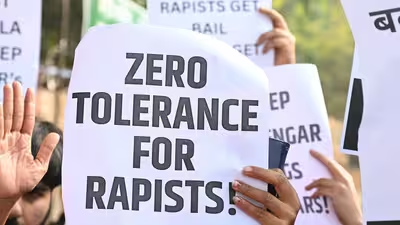
Haryana – Haryana Police have registered a case against a national-level shooting coach following allegations of sexual assault against an 18-year-old woman shooter at a hotel in Faridabad last month. The incident has sent shockwaves through the sporting community as the shooting coach accused of raping minor athlete was among the 13 national pistol coaches appointed by the National Rifle Association of India (NRAI). According to police officials, the victim was a minor at the time of the alleged incident, prompting authorities to invoke the Protection of Children from Sexual Offences (POCSO) Act.

Incident Details and Timeline

The alleged assault took place on December 16 at a hotel in Surajkund, Faridabad, just one day after the athlete participated in a national-level shooting competition at the Dr Karni Singh Shooting Academy in New Delhi. An FIR was registered on Tuesday following a detailed complaint submitted by the shooter’s family. The case involving the shooting coach accused of raping minor has prompted an immediate investigation by Faridabad Police, who are treating the matter with utmost seriousness given the victim’s age and the power dynamics involved.

Coach’s Alleged Manipulation

According to the FIR filed with the Women’s Police Station, NIT Faridabad, the shooting coach accused of raping minor allegedly contacted the athlete and requested her to meet him at the hotel lobby where he was staying. The coach reportedly told the young shooter that the meeting was necessary to analyze her performance and discuss her shooting technique in detail. The complaint states that the athlete was then pressured to accompany the coach to his hotel room under the pretext that the discussion would be more focused and productive in a private setting.

Allegations of Sexual Assault and Threats

Once inside the hotel room, the shooting coach accused of raping minor allegedly committed sexual assault against the athlete. The FIR accessed by investigators reveals that the victim attempted to resist but was overpowered. The complaint further alleges that the coach made threatening remarks, warning the athlete that he would ruin her career and harm her family if she disclosed the incident to anyone. These threats allegedly exploited the coach’s position of authority and influence within the national shooting community.

Victim’s Response and Family Support

Following the alleged assault, the athlete left the hotel in a state of shock and distress. She later gathered the courage to narrate the entire ordeal to her family members, who immediately decided to file a police complaint. The family’s prompt action in reporting the case involving the shooting coach accused of raping minor has been crucial in initiating the investigation and potentially protecting other young athletes from similar situations.

Also Read: IMD Cold Wave Warning: Urgent Alert for North and Central India

Police Investigation Underway

Yashpal Yadav, public relations officer of Faridabad police, confirmed that authorities are taking the allegations seriously. “Looking at the seriousness of the case, we have already asked the hotel administration to share all the CCTV camera footage of the day of the incident immediately to corroborate the allegations of the minor girl,” Yadav stated. The investigation into the shooting coach accused of raping minor includes gathering evidence from multiple sources and recording statements from witnesses who may have information relevant to the case.

Legal Provisions Invoked

Based on the complaint, police have registered a case under Section 6 of the Protection of Children from Sexual Offences (POCSO) Act and Section 351(2) of the Bharatiya Nyaya Sanhita. These legal provisions specifically address sexual offenses against minors and carry stringent penalties upon conviction. The case of the shooting coach accused of raping minor falls under these provisions as the athlete was below 18 years of age at the time of the alleged incident.

Current Status of the Accused

Despite the serious nature of the allegations, the shooting coach accused of raping minor has neither been detained nor issued a notice as of now. According to investigators, the sports federation concerned has also not been formally informed about the case yet. This has raised questions about the pace of the investigation and whether appropriate action is being taken to prevent the accused from potentially influencing the investigation or approaching other athletes.

Ongoing Evidence Collection

Police are systematically collecting evidence to build a strong case. The CCTV footage from the hotel is expected to play a crucial role in establishing the timeline of events and corroborating the victim’s account. Investigators are also recording statements from witnesses who may have seen the athlete or the shooting coach accused of raping minor at the hotel on the day of the incident. The hotel administration has been directed to cooperate fully with the investigation and provide all requested documentation and footage.

Implications for Sports Community

This case highlights serious concerns about the safety of young athletes and the potential abuse of power by coaches in positions of authority. The allegations against the shooting coach accused of raping minor underscore the need for robust safeguarding mechanisms within sports organizations. As the investigation continues, there are growing calls for the NRAI and other sporting bodies to implement stricter protocols to protect athletes, particularly minors, from exploitation and abuse.

Farakka Barrage Project: DoWR, RD & GR Secretary V. L. Kantha Rao proudly Undertakes 2-Day Review

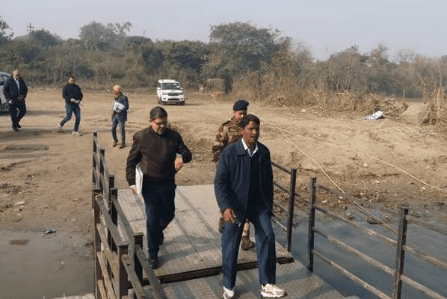
Shri V. L. Kantha Rao, Secretary, Department of Water Resources, River Development & Ganga Rejuvenation (DoWR, RD & GR), Ministry of Jal Shakti, undertook a two-day review visit on January 6–7, 2026 to the Farakka Barrage Project. The visit focused on assessing ongoing works, strengthening infrastructure, resolving operational bottlenecks, and ensuring the efficient functioning of one of India’s most critical river management structures.


Comprehensive Review of Key Infrastructure Components

During the visit, the Secretary reviewed multiple technical and administrative aspects of the Farakka Barrage Project, accompanied by senior officials including the Commissioner (FM), DoWR, RD & GR; the General Manager, Farakka Barrage Project (FBP); and officers from the Central Water Commission (CWC) and FBP.

The inspection covered major components such as:

  • Main Farakka Barrage, including the Head Regulator, Fish Lock Gates and associated structures

  • Eroded section of the 10th Marginal Embankment on the upstream left bank of the river Ganga near the Birnagar area

  • Navigational Lock at Farakka

  • Feeder Canal and Jangipur Barrage


Focus on Maintenance, Modernisation and Timely Execution

Reviewing the progress of ongoing works, Shri Kantha Rao underscored the critical importance of strengthening and proper maintenance of the Farakka Barrage and its components to ensure that the project continues to meet its intended objectives effectively.

He emphasised:

  • Timely completion of ongoing and priority works

  • Proactive identification and resolution of technical and administrative bottlenecks

  • Time-bound progress in operation, maintenance, and modernisation activities

The Secretary stressed that sustained efficiency of the barrage system is vital for river regulation, navigation, and overall water management in the region.


Coordination with Local Administration

As part of the visit, the Secretary also met with the District Collector (DC) and Sub-Divisional Magistrate (SDM) of the area, seeking their cooperation on administrative matters related to the project. The interactions highlighted the importance of Centre–State and local coordination for smooth project execution and infrastructure management.


Assurance of Continued Ministry Support

Concluding the two-day review, Shri V. L. Kantha Rao assured full support from the Ministry of Jal Shakti for the development, operation, and effective management of infrastructure under the Farakka Barrage Project. He reaffirmed the Ministry’s commitment to strengthening institutional oversight and ensuring long-term sustainability of this strategically important water resource asset.


 For more real-time updates, visit Channel 6 Network.

Source: PIB

Union Jal Shakti Minister C. R. Patil Interacts with States/UTs on Innovative Faecal Sludge Management Models under SBM(G)

In a significant step towards strengthening sustainable rural sanitation, the C. R. Patil, Union Minister of Jal Shakti, chaired a virtual interaction on January 6, 2026, with States and Union Territories to review and promote innovative Faecal Sludge Management (FSM) models being implemented under the Swachh Bharat Mission (Grameen). The interaction focused on community-led, scalable, and inclusive FSM solutions that go beyond toilet construction to address the entire sanitation value chain.


High-Level Participation and Nationwide Engagement

The interaction was attended by V. Somanna, Minister of State for Jal Shakti; Ashok K. K. Meena, Secretary, Department of Drinking Water and Sanitation; and Aishvarya Singh, Joint Secretary and Mission Director, SBM(G).

District Collectors, CEOs of Zilla Panchayats, SHG members, Panchayat representatives, State Mission Directors, and senior officials from nodal departments across States and UTs joined virtually, enabling cross-learning and experience sharing at scale.


Focus on Safe Sanitation Beyond Toilets

The objective of the interaction was to:

  • Share successful and scalable FSM models from across the country

  • Strengthen inter-State and inter-district learning

  • Reinforce the importance of safe collection, transportation, treatment, and reuse of faecal sludge and wastewater

  • Promote operation & maintenance (O&M) mechanisms ensuring long-term sustainability

The discussions highlighted how FSM contributes to public health protection, environmental safety, and Sampoorna Swachhata, while also creating local livelihoods.


Innovative FSM Models from Across India

Representatives from Gujarat, Sikkim, Madhya Pradesh, Karnataka, Odisha, Ladakh, and Tripura presented diverse FSM initiatives, including in-situ treatment systems, community-managed models, SHG-led O&M frameworks, and urban–rural linkages.

A standout initiative emerged from Khordha district, Odisha, where a transgender-led Self-Help Group manages the operation and maintenance of a Faecal Sludge Treatment Plant (FSTP). The model exemplifies inclusive sanitation service delivery, combining environmental sustainability with dignified livelihood opportunities for marginalised communities.

Other notable models included:

  • Large-scale twin-pit toilet adoption in remote tribal areas of Dang district, Gujarat

  • Retrofitting single-pit to twin-pit toilets in Mangan district, Sikkim, ensuring FSM compliance in hilly terrain

  • India’s first rural FSTP at Kalibillod Gram Panchayat, Indore district, Madhya Pradesh, featuring pisciculture using treated effluent and a Material Recovery Facility (MRF) for additional revenue

  • Cluster-based FSTP model in Dakshina Kannada district, Karnataka, with strong SHG involvement

  • Ecosan toilets adapted for extreme cold and high-altitude conditions in Leh district, Ladakh

  • Mobile bio-toilets for public events in Gomati district, Tripura, managed through self-sustaining SHG-led O&M


Community Voices and Local Language Engagement

Community members directly involved in implementing FSM models interacted with the Union Minister, sharing on-ground experiences and challenges. The encouragement of local language communication enabled open, enthusiastic participation and practical insights from grassroots implementers.


Minister’s Remarks: Scalable, Inclusive and Sustainable FSM

Shri C. R. Patil lauded the States and communities for demonstrating that challenging geographies can inspire durable solutions. He emphasised that FSM is a critical pillar of sustainable rural sanitation, essential for protecting public health and ensuring a clean environment.

The Minister highlighted the importance of:

  • Community participation

  • Active involvement of SHGs, Panchayats, and local stakeholders

  • Adoption of context-specific, need-based, and appropriate technologies

He also noted that many FSM initiatives are generating income and livelihoods, strengthening the economic dimension of sanitation. Shri Patil reaffirmed that under the leadership of Prime Minister Shri Narendra Modi, the nationwide Swachhata movement has gained unprecedented momentum, carrying forward Gandhiji’s message of cleanliness and mass participation.


Conclusion

The interaction concluded with a reaffirmation of the Ministry of Jal Shakti’s commitment to support States and UTs in scaling FSM initiatives under SBM(G) through technical assistance, capacity building, and promotion of innovative, community-led models. The exchange reinforced that inclusive, locally driven FSM solutions are key to achieving sustainable rural sanitation and Sampoorna Swachhata across India.


 For more real-time updates, visit Channel 6 Network.

Source: PIB

India Crosses Historic Milestone of 50,000 NQAS Certifications, Marking a Quantum Leap in Public Healthcare Quality

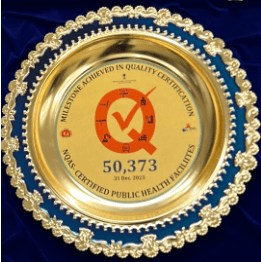
India has achieved a historic milestone in strengthening the quality of its public healthcare system, with 50,373 public health facilities certified under the National Quality Assurance Standards (NQAS) as of 31 December 2025. The certifications have been granted under the comprehensive quality framework of the Ministry of Health and Family Welfare (MoHFW), reflecting a decisive national push towards safe, patient-centred, and equitable healthcare.

This landmark achievement positions India among the few countries to institutionalise quality assurance at such scale across all States and Union Territories, benefiting especially the poor, vulnerable, and marginalised populations.


From 10 Facilities to Over 50,000: A Decade of Transformation

The NQAS journey, launched in 2015, began modestly with just 10 certified District Hospitals. Over the years, the framework was systematically expanded to cover:

  • District Hospitals (DHs)

  • Sub-District Hospitals (SDHs)

  • Community Health Centres (CHCs)

  • Ayushman Arogya Mandirs (AAMs) – Sub Health Centres (SHCs), Primary Health Centres (PHCs) and Urban PHCs (UPHCs)

A key inflection point came with the introduction of virtual assessments, enabling rapid scaling of certifications:

  • 6,506 facilities in December 2023

  • 22,786 facilities in December 2024

  • 50,373 facilities by December 2025

Of these, 48,663 are Ayushman Arogya Mandirs, while 1,710 are secondary care facilities, demonstrating deep institutionalisation of quality across all tiers of public healthcare.


Driving Universal Health Coverage

The expansion of NQAS directly supports India’s commitment to Universal Health Coverage (UHC), as outlined in the National Health Policy 2017, which prioritises quality, affordability, and financial protection.

The rapid scale-up has been enabled by:

  • Continuous capacity building and training

  • Digital innovations and real-time monitoring

  • Expansion of the national assessor pool

  • Robust continuous quality improvement mechanisms


Aatmanirbhar Bharat in Healthcare

Crossing the 50,000 NQAS milestone is a strong reflection of India’s collective resolve to build a resilient, self-reliant, and high-quality public health system, aligned with the vision of Aatmanirbhar Bharat and the guiding principles of Sabka Saath, Sabka Vikas, Sabka Vishwas, Sabka Prayaas.


The Road Ahead

The Government has reaffirmed its commitment to making quality an intrinsic feature of public healthcare delivery. An interim national target has been set to achieve NQAS certification for at least 50% of public healthcare facilities by March 2026, further accelerating India’s journey towards safe, patient-centred, and standardised healthcare for all.

This milestone stands as a powerful testament that quality healthcare is central to India’s development and social equity agenda.

 For more real-time updates, visit Channel 6 Network.

Source: PIB

National Review Meeting of Metropolitan Strong Surveillance Units Held in Nagpur: 2026

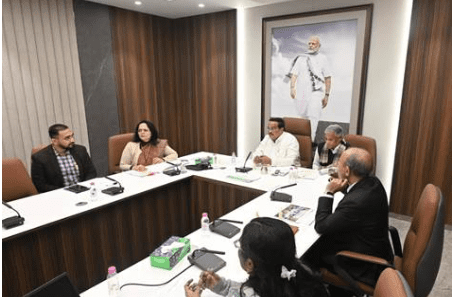
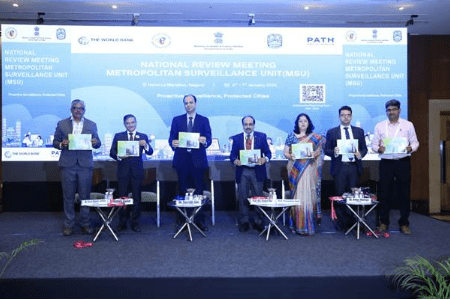
A two-day National Review Meeting of Metropolitan Surveillance Units (MSUs) was held in Nagpur from 6–7 January 2026 under the theme “Proactive Surveillance, Protected Cities.” The meeting brought together representatives from 20 Tier-I and Tier-II cities to review progress and further strengthen urban disease surveillance systems across the country.


Senior Leadership and Key Stakeholders Participate

The meeting was attended by Shri Saurabh Jain, Joint Secretary, Ministry of Health & Family Welfare, and Dr. Ranjan Das, Director, National Centre for Disease Control.

Participants included Municipal Commissioners and senior municipal officials from cities such as Hyderabad, Shimla, Nagpur, Patna, and Bhopal, along with MSU Nodal Officers from States and Municipal Corporations, officials from MoHFW and NCDC, and other key public health stakeholders.


Focus on Early Warning and Rapid Response

Deliberations centred on:

  • Strengthening early warning systems for disease detection

  • Ensuring timely and coordinated public health response

  • Enhancing urban preparedness for outbreaks and health emergencies

Technical sessions featured:

  • A case presentation by Nagpur MSU on investigation and response to an AES (Acute Encephalitis Syndrome) outbreak

  • Sharing of best practices by operational MSUs

  • Review of progress made by priority MSUs across cities


Scientific and Multisectoral Collaboration

A dedicated scientific session on “MSUs – A Strategic Investment in Urban Disease Surveillance” highlighted the importance of collaborative surveillance and multisectoral coordination.

Experts from institutions and organisations including ICMR, AIIMS Nagpur, World Bank, PATH, DAHD, wildlife sector representatives, Government Veterinary College Nagpur, APHO Nagpur, and professional bodies such as IMA and IAP participated in the discussions, reinforcing the One Health and all-hazard approach to public health.


All-Hazard Preparedness and City Emergency Planning

Participants were briefed on the All-Hazard Preparedness Framework and were enabled to develop City Emergency Response Plans, aimed at improving readiness and coordination during public health emergencies in urban settings.


Conclusion

The National MSU Review Meeting concluded with a strong consensus on the need to deepen collaborative disease surveillance, strengthen early detection mechanisms, and ensure coordinated, rapid response to public health threats. The discussions reaffirmed the goal of building safe, resilient, and well-prepared cities, capable of effectively managing current and emerging health challenges.

 For more real-time updates, visit Channel 6 Network.

Source: PIB

DRI Busts Major Trans-Border Gold Smuggling Syndicate; Seizes Gold Worth Over Rs 40 Crore

In a significant crackdown on international smuggling networks, the Directorate of Revenue Intelligence (DRI) has busted a well-organised trans-border gold smuggling syndicate operating across Dubai and Bangladesh. Coordinated searches carried out in Delhi and Agartala led to the seizure of over 29 kg of foreign-origin gold valued at approximately ₹40 crore, along with cash worth ₹2.9 crore.


Targeted Intelligence Leads to Major Seizure

Acting on specific intelligence inputs, DRI officials intercepted a key member of the syndicate on 6 January 2026 at a domestic logistics warehouse while he was taking delivery of two consignments that had originated from Agartala, Tripura.

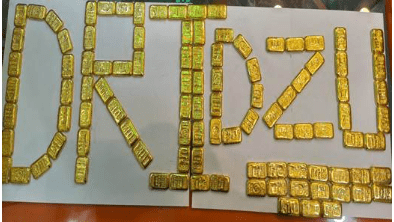
On examination, the consignments yielded 15 kg of foreign-origin gold, bearing international refinery markings, with an estimated value of ₹20.73 crore.


Simultaneous Searches Across Locations

Following the interception, simultaneous searches were conducted at multiple locations in Delhi and Agartala. These operations resulted in the recovery of an additional 14.2 kg of foreign-origin gold and ₹2.90 crore in cash, comprising both Indian and Bangladeshi currency.

In total, 29.2 kg of gold valued at around ₹40 crore and ₹2.9 crore in cash were seized under the provisions of the Customs Act. Additionally, four members of the smuggling syndicate have been arrested in connection with the case.


Smuggling Route and Modus Operandi

Preliminary investigations have revealed that the syndicate was smuggling gold into India through the Indo–Bangladesh border via Tripura. From there, the contraband was transported to Delhi using domestic cargo and logistics services.

The operation involved handlers based in Dubai and Bangladesh, along with local operatives running jewellery shops in Agartala, indicating a well-coordinated international network with local distribution channels.


Safeguarding Economic and Fiscal Stability

By disrupting illicit gold flows, the Directorate of Revenue Intelligence continues to play a critical role in protecting India’s economic and fiscal stability and ensuring a fair, transparent trading environment. Smuggling of precious metals not only impacts revenue but also fuels parallel economies and financial irregularities.


Conclusion

The successful bust of this trans-border gold smuggling syndicate highlights the DRI’s intelligence-driven enforcement capabilities and its sustained focus on combating organised economic अपराध. With further investigation underway, authorities are expected to uncover additional linkages and financial trails connected to the international smuggling network.


 For more real-time updates, visit Channel 6 Network.

Source: PIB

Rajasthan Hosts Regional AI Impact Conference, Advancing India’s Vision for Inclusive and Responsible AI

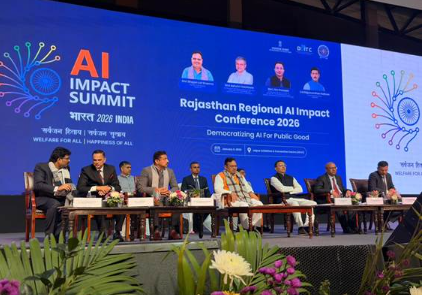
The Rajasthan Regional AI Impact Conference, held on January 6, 2026, marked a major step in India’s journey towards inclusive, responsible, and large-scale adoption of Artificial Intelligence (AI). Bringing together national and state leadership, policymakers, industry leaders, startups, and academia, the conference served as a regional precursor to the India AI Impact Summit 2026, scheduled from February 15–20, 2026.

The event underscored strong Centre–State collaboration in positioning Rajasthan as a key contributor to India’s AI-led growth and governance transformation.


High-Level Participation Highlights Centre–State Synergy

The conference was attended by Bhajan Lal Sharma, Chief Minister of Rajasthan; Ashwini Vaishnaw, Union Minister for Electronics & Information Technology (virtually); Jitin Prasada, Minister of State for Electronics & IT; and Rajyavardhan Rathore, Rajasthan Cabinet Minister for IT & Communication, along with senior officials from MeitY and the Government of Rajasthan.


Programme Launched to Train One Million Youth in AI Skills

Addressing the gathering, Shri Ashwini Vaishnaw described AI as the next transformational force, comparable in scale to electricity, computers, the internet, and mobile technology. He announced the launch of a national programme to train one million young people in AI skills, aligned with the Prime Minister’s vision of democratising technology so that AI-powered intelligence reaches every household, enterprise, and citizen.


₹10,000 Crore IndiaAI Mission for Inclusive Growth

Shri Jitin Prasada highlighted the Government of India’s commitment of ₹10,000 crore under the IndiaAI Mission, aimed at deploying AI across agriculture, healthcare, education, environment, and governance. He emphasised that responsible and inclusive AI adoption will help increase incomes, improve ease of living, and enhance national productivity.


Rajasthan’s Push Towards AI-Led Governance

Chief Minister Bhajan Lal Sharma stated that Rajasthan is moving beyond e-governance towards becoming a leader in AI and machine learning. He announced the introduction of the Rajasthan AI & ML Policy 2026, aimed at ensuring transparent, fair, and accountable AI systems, improving public service delivery, strengthening administrative efficiency, and fostering innovation-driven economic growth.


Key National and State-Level AI Initiatives Launched

A major highlight of the conference was the launch of several flagship initiatives:

  • YUVA AI for All – National AI Literacy Programme: Led by the IndiaAI Mission under MeitY, this initiative aims to build foundational AI awareness among students and youth nationwide through a short, self-paced AI 101 course, anchored around National Youth Day (January 12).

  • Rajasthan AI/ML Policy 2026 and Rajasthan AI Portal, focusing on governance, research, innovation, and high-value employment generation.

  • iStart Learning Management System (LMS) to support skill development, startups, and entrepreneurship.

  • Rajasthan AVGC-XR Portal, strengthening the Animation, VFX, Gaming, Comics, and Extended Reality ecosystem, alongside the unveiling of an AI-themed vision video.


Strategic Partnerships and Global Industry Engagement

To strengthen institutional collaboration, MoUs were signed with Google, IIT Delhi, National Law University Jodhpur, and the Wadhwani Foundation, focusing on AI research, skilling, ethical frameworks, and innovation ecosystems.

A high-level strategic dialogue featured Abhishek Singh, CEO, IndiaAI Mission, in conversation with Vishal Dhupar, NVIDIA South Asia, examining AI infrastructure democratisation, public–private collaboration, and the creation of a global AI safety commons.


Thought Leadership and Thematic Sessions

An overview of the IndiaAI Mission and the India AI Impact Summit 2026 was presented by Kavita Bhatia, MeitY and COO, IndiaAI Mission.

The conference also featured expert sessions on global, national, and regional AI perspectives, delivered by Avinash Sharma, and parallel discussions on AI applications in governance, infrastructure, innovation, ethics, and employment.


Conclusion

The Rajasthan Regional AI Impact Conference emerged as a key regional milestone ahead of the India AI Impact Summit 2026. By combining policy vision, large-scale skilling, institutional partnerships, and industry engagement, the conference reinforced India’s commitment to leveraging AI for public good, inclusive growth, and sustainable development, with Rajasthan positioned as a leading hub in the nation’s AI transformation journey.


 For more real-time updates, visit Channel 6 Network.

Source: PIB