Thursday, April 30, 2026
Home Blog Page 171

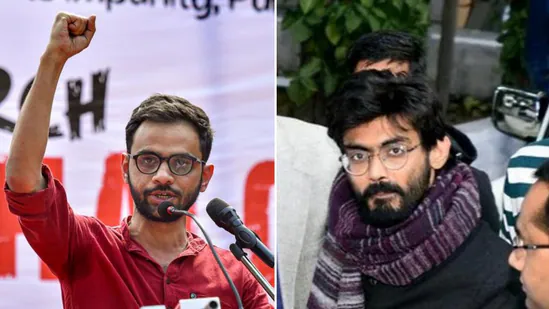
Umar Khalid Sharjeel Imam Bail: Critical Supreme Court Verdict Today

New Delhi – The Supreme Court is poised to deliver a landmark judgment on Monday, January 5, regarding the bail pleas of student activists Umar Khalid and Sharjeel Imam, along with five others who have been imprisoned for over five years in connection with the 2020 Delhi riots case. The Umar Khalid Sharjeel Imam bail verdict will determine whether these activists, jailed under the stringent Unlawful Activities (Prevention) Act (UAPA), will finally walk free after years of incarceration.

Background of the Case

The Umar Khalid Sharjeel Imam bail pleas are connected to allegations of a “larger conspiracy” linked to the 2020 Delhi riots that occurred in February in parts of Northeast Delhi. The violence erupted following weeks of tension surrounding protests against the Citizenship (Amendment) Act (CAA). The riots lasted several days and resulted in 53 deaths along with extensive damage to homes, shops, and places of worship, with hundreds injured in the communal violence.

Umar Khalid has been in custody since September 13, 2020, while Sharjeel Imam has been imprisoned since January 28, 2020, even before the riots broke out. The prolonged detention without trial has raised significant concerns about judicial delays and the application of anti-terror laws in cases involving political dissent.

Supreme Court Hearing Details

A bench comprising justices Aravind Kumar and NV Anjaria reserved judgment on the Umar Khalid Sharjeel Imam bail pleas on December 10 last year after hearing extensive arguments from both the accused and Delhi Police. The police have invoked the UAPA to oppose their release, citing the serious nature of the allegations.

During the December 10 hearing, the Supreme Court repeatedly questioned Delhi Police about the applicability of Section 15 of the UAPA, which defines a “terrorist act,” to speeches and protest-related activities that form the basis of the prosecution’s case. This judicial scrutiny is crucial to the Umar Khalid Sharjeel Imam bail decision.

Other Accused in the Case

Besides the Umar Khalid Sharjeel Imam bail pleas, the Supreme Court verdict will also cover five other activists: Gulfisha Fatima, Meeran Haider, Shifa ur Rehman, Mohd Saleem Khan, and Shadab Ahmed. All seven accused are facing prosecution for allegedly being part of a coordinated conspiracy that culminated in the communal violence in northeast Delhi.

The accused have argued that the prosecution adopted a tactic of arresting one person at a time to artificially extend the alleged conspiracy and delay the trial, effectively keeping them in indefinite detention without a proper judicial determination of guilt.

Allegations and Evidence

The prosecution has presented several pieces of evidence against those seeking relief through the Umar Khalid Sharjeel Imam bail pleas. One crucial piece of evidence cited against Sharjeel Imam is a video where he allegedly spoke about blocking the “chicken neck” corridor and separating Assam from the rest of India. Delhi Police has also cited another video in which Imam allegedly laid out a plan to “paralyse Delhi” through a “chakka jam,” cutting off essential supplies such as milk and vegetables.

Regarding Umar Khalid’s role, Additional Solicitor General SV Raju referred to what he described as Khalid’s antecedents, including a controversial 2016 JNU protest. Raju alleged that Khalid raised the slogan “Bharat tere tukde tukde honge,” and this FIR was relied upon in the supplementary charge sheet filed in November 2020.

Also Read: Baloch Leader Jaishankar Letter: Urgent Warning on China-Pakistan Alliance

Defence Arguments

Advocates for those seeking Umar Khalid Sharjeel Imam bail have countered the allegations, arguing that snippets from hours-long speeches and WhatsApp chats have been selectively handpicked to create prejudice against their clients. They contend that the prosecution’s case relies on taking statements out of context rather than presenting evidence of actual terrorist activities.

The defence has emphasized that prolonged detention without trial violates fundamental rights and that the charges under UAPA are being misapplied to criminalize political dissent and protest activities protected under constitutional freedoms.

High Court’s Previous Ruling

The Umar Khalid Sharjeel Imam bail pleas before the Supreme Court stem from a September 2, 2025 order of the Delhi High Court, which refused bail to nine accused, including Khalid and Imam. A bench of justices Navin Chawla and Shalinder Kaur held that material collected by investigators prima facie pointed to a coordinated conspiracy, describing Khalid and Imam as the “intellectual architects” of the violence.

International Support and Attention

Calls for resolution of the Umar Khalid Sharjeel Imam bail issue have gained international attention. Newly appointed New York City Mayor Zohran Mamdani recently expressed solidarity with Umar Khalid in a letter that read, “Dear Umar, I think of your words on bitterness often, and the importance of not letting it consume one’s self. It was a pleasure to meet your parents. We are all thinking of you.”

On Thursday, the day Mamdani was sworn in as mayor, Khalid’s partner, Bunojyotsana Lahiri, shared a photo of the note on social media, highlighting the growing international concern over the case.

Investigation and Charges

Delhi Police investigated the 2020 violence and described it as a “conspiracy” linked to protests against the CAA. Several activists, students, and intellectuals were arrested under stringent laws such as UAPA. The police alleged that speeches and activities by the accused contributed to planning and escalating violence, claims that all accused have strongly denied.

Significance of Today’s Verdict

The Umar Khalid Sharjeel Imam bail verdict expected today holds immense significance not only for the seven individuals who have spent years in jail but also for the broader interpretation of UAPA and its application to protest-related activities. The judgment will set important precedents regarding the balance between national security concerns and fundamental rights to dissent and peaceful protest.

Conclusion

As the nation awaits the Supreme Court’s decision on the Umar Khalid Sharjeel Imam bail pleas, the case has become emblematic of larger debates about civil liberties, anti-terror laws, and the treatment of political dissent in India. The verdict will have far-reaching implications for how protest activities are treated under national security legislation.
US Attacks Venezuela: Shocking Strike Kills 40, Maduro Captured

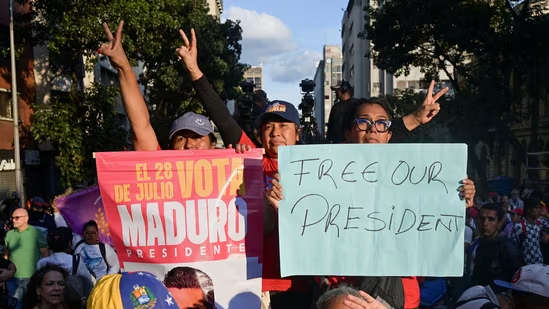
Washington D.C. – In an unprecedented military operation, the United States launched strikes on Venezuela over the weekend, resulting in at least 40 casualties and the capture of President Nicolas Maduro. The bold action has sparked international controversy and raised serious questions about sovereignty and international law.

Death Toll Rises Following Military Strikes

According to official reports, at least 40 people were killed during the US attacks Venezuela carried out on Saturday. The strikes targeted multiple locations in the South American nation, with satellite imagery later revealing extensive damage to key government and military installations in Caracas, including the presidential compound known as Fuerte Tiuna.

A large part of Maduro’s security team was reportedly killed during the operation, according to Venezuela’s defense minister. The scale and precision of the US attacks Venezuela witnessed demonstrated significant military planning and execution, marking one of the most dramatic foreign interventions in recent history.

Maduro Captured and Detained in New York

Venezuelan President Nicolas Maduro and his wife were captured by US forces during the operation and subsequently transported to New York City. Maduro is currently being held at a Brooklyn jail where he faces criminal indictment on various charges. The capture represents a dramatic turn of events for the Venezuelan leader who had maintained power despite years of international pressure and sanctions.

The US attacks Venezuela operation specifically targeted Maduro’s residence, with reports indicating that he and his wife were “dragged from their bedroom” during the raid. The audacious nature of the operation has drawn comparisons to historical US interventions in Latin America, though few precedents exist for the capture of a sitting head of state.

Trump Announces US Will “Run” Venezuela

Following the successful execution of the US attacks Venezuela mounted, President Donald Trump announced that the United States would temporarily govern Venezuela until a proper transition of power could be arranged. “We’re going to run the country until such time as we can do a safe, proper, and judicious transition,” Trump stated.

However, the Trump administration later made a U-turn on the claim about running Venezuela directly. Secretary of State Marco Rubio clarified the situation by citing an “oil quarantine” rather than direct governance, suggesting the US strategy may focus more on controlling Venezuela’s vast oil resources during the transition period.

Colombia Faces Military Action Threat

In the aftermath of the US attacks Venezuela experienced, President Trump expanded his threats to neighboring Colombia. When asked about potential military action against Colombia’s government, Trump responded that such an operation “sounds good to me,” raising concerns about further regional instability and additional military interventions in South America.

Trump also warned Venezuela’s interim leadership of facing “a very big price” if they did not comply with US demands, indicating that the US attacks Venezuela launched may only be the beginning of sustained American involvement in the region.

Delcy Rodríguez Named Acting President

In the absence of Maduro following the US attacks Venezuela conducted, the country’s Supreme Court ordered Vice President Delcy Rodríguez to assume the role of acting president. The ruling stated that the court would further deliberate to “determine the applicable legal framework to guarantee the continuity of the State, the administration of government, and the defense of sovereignty in the face of the forced absence of the President of the Republic.”

Also Read: Trump Tariffs India: Latest Warning Over Russian Oil Trade Could Escalate

Venezuela’s military subsequently recognized Rodríguez as acting president and instructed the population to resume normal activities, attempting to project stability despite the dramatic circumstances created by the US attacks Venezuela suffered.

International Condemnation Mounts

The US attacks Venezuela executed have drawn sharp criticism from multiple nations. China expressed being “deeply shocked and strongly condemns the use of force by the US against a sovereign country and the use of force against the president of a country.”

Russia’s foreign ministry called the operation “an act of armed aggression against Venezuela” that is “deeply concerning and condemnable.” Russia emphasized the importance of preventing further escalation and finding solutions through dialogue.

Brazil’s President Luiz Inacio Lula da Silva stated that “the bombings on Venezuelan territory and the capture of its president cross an unacceptable line. These acts represent a grave affront to Venezuela’s sovereignty and yet another extremely dangerous precedent for the entire international community.”

In a joint statement, Brazil and four other nations rejected outside “control” of Venezuela, while the European Union urged respect for international law and the will of the Venezuelan people.

India Expresses Deep Concern

India joined the international community in responding to the US attacks Venezuela experienced, expressing “deep concern” over the military action. The Indian external affairs ministry called on all parties to address issues peacefully through dialogue to ensure stability in the region.

“India reaffirms its support to the well-being and safety of the people of Venezuela. We call upon all concerned to address issues peacefully through dialogue, ensuring peace and stability of the region,” the statement read.

Regional Impact and Oil Interests

The US attacks Venezuela launched have significant implications for regional stability and global oil markets. Venezuela possesses some of the world’s largest oil reserves, and analysts suggest American interest in these resources may have played a role in the operation’s timing and execution.

Venezuelan opposition figure María Corina Machado called Maduro’s ouster “important but not enough” and demanded the release of all political prisoners. Meanwhile, Venezuela’s state oil company PDVSA has asked joint ventures to cut back oil output amid the uncertainty.

Conclusion

The US attacks Venezuela conducted represent a watershed moment in international relations and hemispheric politics. As the situation continues to develop, questions about sovereignty, international law, and the future of Venezuela remain at the forefront of global diplomatic discussions.

Russia Air Attack Kyiv: Urgent Shelter Warning Issued by Mayor

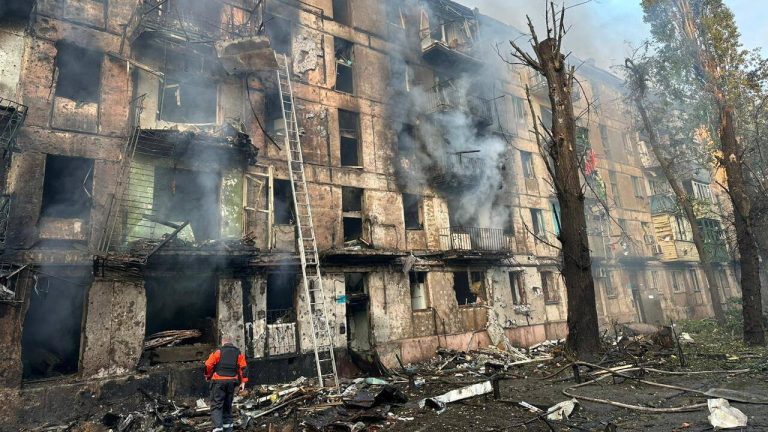
Kyiv, Ukraine – The Ukrainian capital faced a significant security threat on Monday as Russian forces launched an aerial assault on the city. Mayor Vitali Klitschko issued an urgent warning to residents, instructing them to seek shelter immediately as air defence systems engaged with incoming threats.

Mayor Issues Emergency Shelter Warning

During the Russia air attack Kyiv experienced on Monday morning, Mayor Vitali Klitschko took to the Telegram messaging app to alert citizens about the developing situation. His message was clear and direct: “Air defence forces are operating in the capital. Stay in shelters!” The warning underscored the immediate danger facing residents of the Ukrainian capital.

The timing of the Russia air attack Kyiv faced came during early morning hours, a period when many residents were likely preparing for their daily activities. The mayor’s prompt communication through social media channels proved crucial in ensuring public safety and awareness during the critical moments of the assault.

Air Defence Systems Activated

As the Russia air attack Kyiv confronted unfolded, the city’s air defence forces immediately sprang into action to protect the capital and its inhabitants. These defence systems represent Ukraine’s primary line of protection against aerial threats and have been regularly tested throughout the ongoing conflict.

Unverified visuals circulating on social media platforms captured footage of the air defence forces in operation. These images and videos showed the activation of defensive measures designed to intercept and neutralize incoming threats. While the authenticity of such content requires official verification, they provided real-time glimpses of the tense situation unfolding over the Ukrainian capital.

Escalating Aerial Warfare in 2026

The Russia air attack Kyiv experienced is part of a broader pattern of escalating aerial warfare between the two nations. Notably, the conflict has seen a significant increase in drone warfare, with Ukraine launching unmanned aerial vehicles towards Moscow consistently since the beginning of 2026.

According to figures released by Russia’s defence ministry, Ukraine has fired drones towards Moscow every single day so far in the new year. This represents a notable escalation in Ukraine’s offensive capabilities and demonstrates the evolving nature of the conflict between the two nations.

Russian Defence Ministry Reports Interceptions

The Russian defence ministry provided detailed statistics regarding drone interceptions on its official Telegram channel. By midnight on Sunday, Russian air defence systems had successfully shot down 57 drones specifically over the Moscow region. This figure was part of a much larger total, with 437 drones reportedly intercepted across various regions of Russia.

These numbers highlight the scale and intensity of aerial operations currently characterizing the conflict. The Russia air attack Kyiv sustained and Ukraine’s drone operations against Moscow represent two sides of an intensifying aerial warfare campaign that shows no signs of diminishing.

Also Read: Trump Tariffs India: Latest Warning Over Russian Oil Trade Could Escalate

Impact on Civilian Population

The Russia air attack Kyiv residents faced serves as a stark reminder of the continued impact of the conflict on civilian populations. The urgent shelter warnings issued by city officials underscore the real and immediate dangers that ordinary citizens face during such military operations.

Kyiv’s residents have become increasingly familiar with air raid sirens, shelter procedures, and emergency protocols over the course of the conflict. The city’s infrastructure includes numerous designated shelter locations where civilians can seek protection during aerial attacks.

Social Media as Emergency Communication Tool

The Russia air attack Kyiv response highlighted the crucial role social media platforms, particularly Telegram, play in emergency communications. Mayor Klitschko’s decision to use Telegram for issuing his shelter warning demonstrates how modern communication technologies have become integral to civil defence strategies.

This approach allows for rapid dissemination of critical safety information to large populations simultaneously, potentially saving lives during time-sensitive emergency situations. The unverified visuals of air defence operations that appeared on social media also illustrate how citizen journalism has become part of documenting modern conflicts.

Ongoing Military Operations

The Russia air attack Kyiv encountered represents just one incident in the continuing military conflict between Russia and Ukraine. Both nations have demonstrated their capacity and willingness to conduct aerial operations deep within each other’s territories, suggesting that the conflict remains far from resolution.

The daily drone attacks on Moscow reported by Russian authorities, combined with Russia’s continued strikes on Ukrainian cities including the capital, indicate that both sides maintain significant offensive capabilities. This mutual capacity for conducting aerial operations creates a complex military situation with serious implications for regional and international security.

Regional and International Implications

The Russia air attack Kyiv experienced on Monday occurs within a broader geopolitical context that extends beyond the immediate bilateral conflict. The ongoing hostilities continue to affect regional stability, energy markets, global food security, and international diplomatic relations.

The activation of air defence systems over major population centers in both countries highlights the serious nature of the conflict and its potential for escalation. International observers continue to monitor the situation closely, concerned about the humanitarian impact and the broader implications for European and global security.

Conclusion

The Russia air attack Kyiv faced on Monday morning serves as a sobering reminder that the conflict between Russia and Ukraine continues with significant intensity. As both nations demonstrate their capacity for conducting aerial operations against each other’s major cities, the situation remains volatile and concerning for civilian populations and the international community alike.

Trump Tariffs India: Latest Warning Over Russian Oil Trade Could Escalate

Washington D.C. – US President Donald Trump has issued a new warning regarding potential tariff increases on Indian imports, citing concerns over India’s continued oil trade with Russia. The statement about Trump tariffs India, made during a public address on Monday, has raised fresh concerns about the diplomatic and economic relationship between the two nations.

Trump Threatens Higher Tariffs on Indian Imports

President Trump explicitly stated that the United States could raise its existing tariffs on Indian imports if New Delhi fails to cooperate on what he termed the “Russian oil issue.” This marks the latest escalation in the ongoing dispute over India’s energy trade policies with Russia, a matter that has been a point of contention between Washington and New Delhi for several months.

The Trump tariffs India currently faces were doubled to 50% back in August 2025, with the administration citing India’s oil trade with Russia as a primary justification for the increase. The President’s latest comments suggest that these tariffs could climb even higher if India does not align its energy policies with American expectations.

Background of US Concerns Over India-Russia Oil Trade

The Trump tariffs India issue stems from Washington’s opposition to New Delhi’s energy relationship with Moscow. The US administration has consistently pushed back against countries purchasing Russian oil, viewing such transactions as undermining international sanctions and providing financial support to Russia’s economy.

India’s oil trade with Russia has significantly increased in recent years, driven by attractive pricing and India’s growing energy demands. The country has maintained that its energy procurement decisions are based on market conditions and the needs of Indian consumers rather than political considerations.

Modi’s Alleged Assurance and India’s Denial

The controversy surrounding Trump tariffs India intensified when President Trump claimed in October that Prime Minister Narendra Modi had “assured” him that India would cease purchasing Russian oil. According to Trump’s statement at the time, “There will be no oil. He’s not buying oil,” suggesting a commitment from the Indian leadership to halt these transactions.

However, India officially denied Trump’s assertion, stating categorically that no such conversation took place between Prime Minister Modi and President Trump. This contradiction has added another layer of complexity to the diplomatic relationship and the discussion around Trump tariffs India.

India’s Official Position on Energy Policy

Despite the threat of escalating Trump tariffs India faces, New Delhi has consistently maintained its stance on energy independence and policy sovereignty. Indian officials have repeatedly emphasized that the country’s policies are governed by market offers and the needs of Indian consumers, rather than external political pressure.

Also Read: North Carolina ISIS Attack Plot: FBI Prevents Deadly New Year’s Eve Massacre

This position reflects India’s broader strategy of maintaining strategic autonomy in foreign policy matters while balancing relationships with multiple global powers. The country has argued that its energy security requirements necessitate diversified sources of oil imports, including from Russia.

Impact on US-India Trade Negotiations

The latest warning about Trump tariffs India could face comes at a critical juncture in ongoing trade negotiations between the two countries. The threat of additional tariffs adds pressure to these discussions and could complicate efforts to reach mutually beneficial trade agreements.

The 50% tariffs already in place have affected various Indian export sectors, and any further increase could have significant economic implications for Indian businesses and the broader economy. Industries ranging from textiles to pharmaceuticals have felt the impact of existing tariff structures.

Brief Period of Diplomatic Warmth

Interestingly, there was a brief turnaround in relations following the initial imposition of Trump tariffs India experienced in August 2025. President Trump spoke positively about his relationship with Prime Minister Modi, saying he would “always be friends” with the Indian leader and pointing to a “special relationship” between the two nations.

Prime Minister Modi reciprocated these sentiments, stating that he “appreciated” Trump’s positive assessment of bilateral ties. This brief period of diplomatic warmth now appears overshadowed by the renewed threat of additional Trump tariffs India may encounter.

Potential Strain on Diplomatic Relations

Trump’s latest remarks regarding potential increases in Trump tariffs India faces could add fresh strain to diplomatic ties between the two democracies. The public nature of the warning and the specific linkage to the Russian oil issue represents a direct challenge to India’s policy autonomy.

The situation creates a delicate balancing act for both nations, which share strategic interests in various areas including defense cooperation, technology partnerships, and regional security concerns, particularly regarding China’s growing influence in the Indo-Pacific region.

Conclusion

As the Trump tariffs India debate continues, both countries face important decisions about how to navigate their complex relationship. The outcome of this dispute over Russian oil trade will likely have implications beyond bilateral ties, potentially affecting global energy markets and broader geopolitical alignments in an increasingly multipolar world.

Rah-Veer: Save a Life Without Fear — Good Samaritan Protections Ensure You Don’t Need to Worry About Anything: 2026

In the aftermath of a road accident, every second counts, especially during the critical Golden Hour—the first hour after a serious injury when timely medical help can mean the difference between life and death. To empower citizens to act without fear, the Ministry of Road Transport and Highways notified the Good Samaritan Rules (2020) under Section 134A of the Motor Vehicles (Amendment) Act, 2019. These rules are grounded in a simple promise: no one who helps an accident victim should ever be afraid to do so. Those who step up in such moments are called Rah-Veers.


Who Is a Rah-Veer?

A Rah-Veer (Good Samaritan) is any individual who voluntarily helps an accident victim—by calling for assistance, transporting them to a hospital, or ensuring medical attention—without expectation of reward and without fear of legal consequences. The law protects their dignity, privacy, and freedom.


Saving Lives in the Golden Hour

The Golden Hour is the most decisive window for medical intervention. Quick action during this period can prevent lifelong disability and avert countless fatalities. Importantly, you don’t need medical training or special equipment to be a Rah-Veer. Often, the willingness to act is the greatest help of all.


Good Samaritan Protections: Your Rights at a Glance

A Rah-Veer is fully protected when acting in good faith:

  • No legal harassment: You cannot be forced into civil or criminal liability.

  • Right to anonymity: You are not required to disclose personal details unless you choose to be a witness.

  • Single, convenient police interaction: If you volunteer as a witness, you may be examined once, at a time and place convenient to you.

  • Hospital acknowledgement: You can request a simple confirmation that you brought the victim for treatment.

  • No detention: Authorities cannot detain you for helping.

  • No payment obligation: Hospitals cannot demand payment from you for emergency care.


Myths You Shouldn’t Believe (Don’ts)

  • Don’t hesitate due to legal fears—the system protects Rah-Veers.

  • Don’t feel compelled to stay at the hospital after admission—you are free to leave.

  • Don’t assume you must file an FIR or testify—it’s your choice.

  • Don’t reveal personal details if you prefer anonymity—it’s your right.


Why India Needs More Rah-Veers

Despite better roads and expanding infrastructure, road crash injuries and fatalities remain alarmingly high. Nitin Gadkari has noted that the economic impact of road accidents costs India nearly 3% of its GDP, as highlighted in a report by IIT Delhi.

Many deaths occur not because help was impossible, but because help didn’t arrive in time—often due to bystander hesitation rooted in fear of police or hospital procedures. Those lost minutes during the Golden Hour can be fatal.


Recognition and Financial Support for Rah-Veers

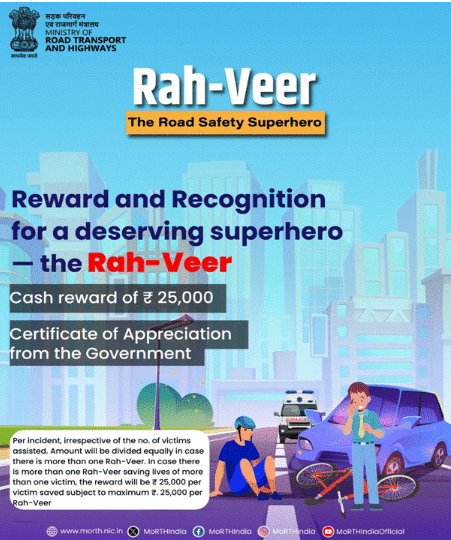
The Rah-Veer (Good Samaritan) Scheme celebrates courage and compassion with tangible recognition:

  • ₹25,000 reward for helping an accident victim receive medical care within the Golden Hour

  • Certificate of Appreciation

  • Recognition available up to five times a year for repeated acts of bravery

Beyond rewards, the scheme builds confidence and a culture of care, making help on the road a shared civic duty and a source of national pride.


Conclusion

Rah-Veer is more than a policy—it’s a movement of courage, empathy, and collective responsibility. The next time you witness an accident, remember: you may be the only hope standing between tragedy and survival. You don’t need to be a doctor to save a life—you just need to be human.


For more real-time updates, visit Channel 6 Network.

Source: PIb

DSIR Marks 42nd Foundation Day with Major Relief for Deep-Tech Startups, Strengthening India’s R&D and Innovation Ecosystem

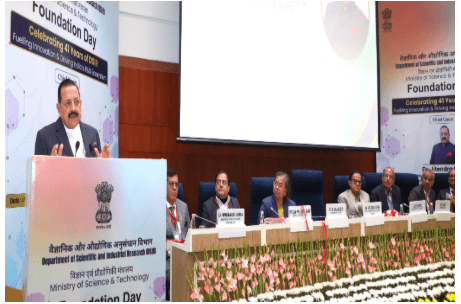
Marking the 42nd Foundation Day of the Department of Scientific and Industrial Research (DSIR) under the Ministry of Science & Technology, Union Minister of State (Independent Charge) Jitendra Singh announced a landmark relaxation for deep-tech startups, exempting them from the mandatory three-year eligibility norm for recognition under DSIR’s Industrial Research and Development Promotion Programme.

The reform is aimed at accelerating India’s startup ecosystem by providing early-stage innovators with faster access to institutional support, recognition, and incentives.


Major Boost for Deep-Tech Startups

Calling the move a “huge relief and support for early starters and beginners”, Dr. Jitendra Singh said the exemption of the three-year existence requirement will allow deep-tech startups to scale faster, even before they are fully established.

He explained that while the ₹1 lakh crore Research, Development and Innovation (RDI) Fund has generated nationwide enthusiasm, it is designed for startups that have already achieved a certain level of technological maturity. Early-stage innovators, he said, will now benefit from DSIR recognition much earlier, reflecting the government’s trust in India’s scientific talent and entrepreneurial intent.


From Atmanirbhar Bharat to Global Reliance on India

Dr. Jitendra Singh noted that India has moved beyond the phase of Atmanirbhar Bharat and is entering an era where global economies increasingly rely on Indian products and technologies. Citing success stories in vaccines, medical devices, and indigenous technologies, he highlighted India’s transformation from import dependence to exports worth several crores, signalling growing global confidence in Indian innovation.


DSIR–CSIR Synergy and Industry Partnership

Describing the relationship between DSIR and CSIR as an “intergenerational symbiosis”, the Minister said both institutions complement and strengthen each other. DSIR’s facilitative role has enabled CSIR’s technology transfers, MoUs, and industry partnerships, helping convert interdisciplinary science into intergenerational collaboration.

He underlined DSIR’s four core pillars—Science, Industry, R&D, and Technology Transfer—and stressed that meaningful research cannot be sustained without early and active industry participation. Beyond recognition, DSIR now also offers fiscal incentives, including customs duty exemptions, making collaboration more attractive for industry, MSMEs, and startups.


Strong Women Participation in India’s Innovation Ecosystem

Highlighting inclusivity, the Minister revealed that over 10,000 women beneficiaries, including more than 55 women-led Self-Help Groups, are currently availing support under DSIR schemes. He described this as a healthy and irreversible shift in India’s innovation culture.


Four Key Initiatives Launched on Foundation Day

The celebrations witnessed the launch of four major initiatives:

  • DSIR Guidelines for Recognition of In-House R&D Centres of Deep-Tech Startups, incorporating the three-year eligibility relaxation

  • PRISM Network Platform – TOCIC Innovator Pulse, to strengthen innovation pipelines

  • Creative India 2025 under the PRISM scheme to promote innovation-led entrepreneurship

  • DSIR Disaster Management Plan, enhancing preparedness and resilience


MoUs and Technology Transfer Agreements Signed

Several important agreements were exchanged to strengthen technology-led development:

  • Technology Development and Utilisation Programme for Women (TDUPW) agreement to establish a Skill Satellite Centre at Dhamtari, Chhattisgarh, in collaboration with NIT Raipur, aimed at livelihood generation for rural women

  • Transfer of Technology (ToT) agreements under the CRTDH Programme for CSIR-CEERI, Pilani, enabling licensing of indigenous technologies to industry and strengthening MSME-focused R&D infrastructure


Leadership Perspectives on Technology Sovereignty

Ajay Kumar Sood, Principal Scientific Advisor to the Government of India, stressed the importance of technology sovereignty in the current geopolitical context. He highlighted the need to scale innovations from lab to market, strengthen private-sector R&D, and build rigour through tools like the National Technology Readiness Assessment Framework (NTRF).

N Kalaiselvi, Secretary, DSIR, emphasised the department’s unique role as a bridge between government, academia, and industry, noting DSIR’s expanding visibility and impact in national development through science and innovation.


Conclusion

The 42nd Foundation Day of DSIR marked a decisive shift in India’s innovation policy, with the relaxation of the three-year eligibility norm emerging as a transformational reform for deep-tech startups. By combining early-stage support, strong industry linkage, women-led innovation, and global technology ambition, DSIR is positioning India firmly on the path toward a future-ready, technology-sovereign nation. As Dr. Jitendra Singh concluded, the celebration was not merely about the past, but about building India’s innovation-driven future up to 2047 and beyond.


For more real-time updates, visit Channel 6 Network.

Source: PIB

Power Minister Proudly Reviews NHPC Hydroelectric Projects in Jammu & Kashmir; Inspects Salal, Sawalkot and Ratle on Day One: 2026

Union Minister of Power and Housing & Urban Affairs Manohar Lal is on a two-day visit to Jammu & Kashmir to review the progress of key hydroelectric projects being executed by NHPC Limited. The visit underscores the Government of India’s focus on strengthening hydropower generation, optimising water resources, and accelerating infrastructure development in the Union Territory.


Arrival in Jammu and Project Briefings

The Power Minister arrived in Jammu accompanied by Pankaj Agarwal, Secretary (Power), Ministry of Power. He was briefed by Bhupendra Gupta, Chairman and Managing Director, NHPC, on the status of ongoing and upcoming hydroelectric projects in Jammu & Kashmir.

The two-day review includes inspections across Reasi, Ramban, and Kishtwar districts, which host some of India’s most strategically important hydropower assets.


Salal Power Project: Focus on Sediment Removal and Sustainability

On Day One, the Minister visited NHPC’s Salal Power Project located on the Chenab River in Reasi district. He reviewed ongoing works and directed NHPC to expedite sediment removal operations from the Salal reservoir to maximise the optimal utilisation of water resources.

The sediment removal activity has gained renewed importance following the termination of the Indus Waters Treaty (IWT), enabling enhanced reservoir management and operational flexibility. During the visit, the Minister also undertook a plantation drive within the project premises, reiterating the Government’s commitment to environmental conservation and sustainable development.

He further held discussions with local administration and senior officials of concerned departments to ensure inter-agency coordination and timely execution of project activities.


Aerial Inspection of Sawalkot Hydroelectric Project

While travelling towards Kishtwar, Shri Manohar Lal conducted an aerial inspection of the Sawalkot Hydroelectric Project (1,856 MW), one of the largest hydropower projects planned in the region. The inspection provided an overview of site conditions and progress, reflecting the government’s emphasis on close monitoring of large-scale infrastructure projects.


Ratle Hydroelectric Project: Foundation Stone Laid

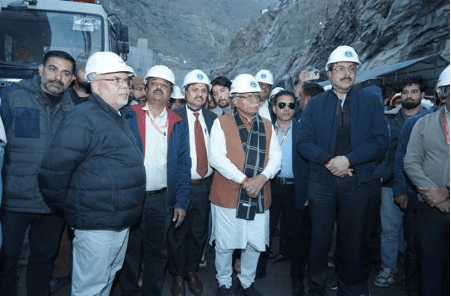
Upon arrival in Kishtwar, the Power Minister visited the Ratle Hydroelectric Project, where he laid the foundation stone for dam concreting works—a key milestone in the project’s execution. He encouraged the project team to complete construction in a time-bound and efficient manner, highlighting the strategic importance of Ratle in enhancing hydropower capacity and grid stability.


Strategic Importance of Hydropower in J&K

The review of Salal, Sawalkot, and Ratle projects reflects the central government’s strategy to leverage Jammu & Kashmir’s hydropower potential for energy security, regional development, and economic growth. These projects are expected to play a crucial role in clean energy generation while supporting local employment and infrastructure development.


Conclusion

The first day of Union Power Minister Manohar Lal’s visit to Jammu & Kashmir marked significant progress reviews and key interventions at major NHPC hydroelectric projects. With a focus on sediment management, timely execution, sustainability, and strategic oversight, the visit reinforces the Government of India’s commitment to accelerating hydropower development and optimising natural resources in the Union Territory.


For more real-time updates, visit Channel 6 Network.

Source: PIB

Army Chief Begins Official Visit to UAE and Sri Lanka to Strengthen Defence Cooperation: 2026

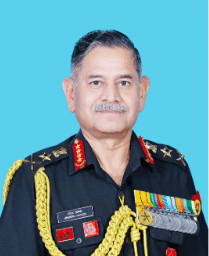
The Chief of the Army Staff (COAS), Upendra Dwivedi, has proceeded on an official visit to the United Arab Emirates (UAE) and Sri Lanka from 05 to 08 January 2026, reaffirming India’s commitment to deepening defence cooperation and military-to-military engagement with friendly nations across West Asia and the Indian Ocean Region.


Engagements in the United Arab Emirates (05–06 January 2026)

The visit will commence in the United Arab Emirates, where General Dwivedi will be accorded a Guard of Honour by the UAE Land Forces on arrival. During his engagements, the Army Chief will call on senior leadership of the UAE Armed Forces, including the Commander of the UAE Land Forces, and receive detailed briefings on the structure, roles, and operational capabilities of the UAE Army.

The COAS will also visit key military establishments and interact with officers and troops, reflecting the steadily expanding India–UAE defence partnership. A significant highlight of the visit will be his interaction with officers at the UAE National Defence College, where he will address the officer cadre, underlining the importance of professional military education, strategic dialogue, and institutional cooperation.

These engagements aim to further enhance bilateral defence ties, joint training, professional exchanges, and strategic understanding between the two armed forces.


Visit to Sri Lanka (07–08 January 2026)

Following his engagements in the UAE, General Dwivedi will travel to Sri Lanka, where he will be accorded a Guard of Honour by the Sri Lanka Army. The visit will include meetings with senior military and civil leadership, including the Commander of the Sri Lanka Army, the Deputy Minister of Defence, and the Defence Secretary.

Discussions will focus on training cooperation, capacity building, defence education, and regional security, reflecting the close and enduring defence relationship between India and Sri Lanka.


Focus on Defence Education and Professional Exchange

During his visit, the COAS will address officers at the Defence Services Command and Staff College (DSCSC) and interact with officers and trainees at the Army War College, Buttala. These engagements highlight India’s strong emphasis on defence education, leadership development, and professional military exchanges, which remain central pillars of bilateral military cooperation.


Tribute at IPKF War Memorial

General Dwivedi will also pay homage at the IPKF War Memorial, honouring the supreme sacrifice of Indian soldiers who laid down their lives in the service of peace and regional stability. The tribute underscores India’s respect for shared history and the enduring bonds forged through sacrifice.


Conclusion

The visit of General Upendra Dwivedi to the UAE and Sri Lanka underscores India’s proactive defence diplomacy and its focus on strengthening interoperability, mutual trust, and strategic cooperation with key partners in West Asia and the Indian Ocean Region. Through high-level engagements, professional exchanges, and commemorative tributes, the visit reinforces India’s role as a reliable and responsible security partner committed to regional stability and collaborative defence engagement.


For more real-time updates, visit Channel 6 Network.

Source: PIB

ADA’s Two-Day National Seminar ‘Aeronautics 2047’ Begins in Bengaluru, Showcasing India’s Aerospace Vision

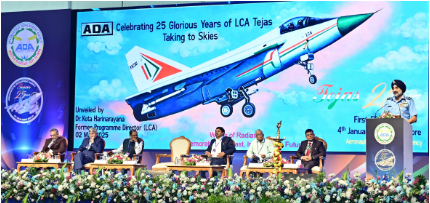
A two-day national seminar titled “Aeronautics 2047”, organised by the Aeronautical Development Agency (ADA), commenced on January 04, 2026, at the Centre for Airborne Systems (CABS) in Bengaluru. The seminar brings together leaders from the armed forces, defence R&D, industry, and academia to chart the future course of Indian aeronautics in line with the national vision of Viksit Bharat @2047.


IAF Chief Inaugurates Seminar, Stresses Timely Deliveries

The seminar was inaugurated by AP Singh, Chief of the Air Staff. In his address, he congratulated ADA on the completion of 25 years of the Light Combat Aircraft (LCA) Tejas flight, describing it as a landmark achievement in India’s aerospace journey. Emphasising operational readiness, he highlighted the importance of adhering to delivery timelines to ensure that the Indian Air Force (IAF) remains prepared amid rapidly evolving security challenges.


Focus on Indigenous Technologies for Viksit Bharat 2047

Speaking on the occasion, Samir V Kamat, Secretary, Department of Defence R&D and Chairman DRDO, underlined the critical need to develop indigenous, cutting-edge technologies to reduce dependence on imports. He noted that self-reliance in aerospace systems is central to achieving the long-term national objective of a developed India by 2047.


A Confluence of the Aerospace Ecosystem

The seminar has brought together domain experts, industrial partners, academia, aviation enthusiasts, and policymakers from across the aerospace ecosystem. Discussions are focused on the evolution of aeronautics and the next frontiers of design, manufacturing, and innovation.

Key thematic areas include:

  • Manufacturing and assembly for next-generation aircraft

  • Digital manufacturing and digital twin technology

  • Advanced aerodynamics for next-generation combat aircraft

  • Propulsion technologies and flight testing techniques

  • Certification challenges and flight control systems & avionics

  • Maintainability challenges in fighter aircraft

  • Artificial Intelligence (AI) in aircraft design

  • Precision manufacturing for actuators


LCA Tejas: From Sketch to Squadron

A major highlight of the seminar is the journey of LCA Tejas, designed and developed by ADA. The programme has achieved over 5,600 successful flight trials, involving collaboration across more than 100 design work centres, including government laboratories, academic institutions, and industry partners.

Several niche technologies—such as carbon composites, lightweight materials, fly-by-wire flight control systems, digital utility management systems, glass cockpit avionics, and advanced software—were developed indigenously, enabling Tejas to emerge as a fourth-generation fighter aircraft.


Future Variants and Operational Strength

The seminar also focuses on future variants, including LCA Mk1A, LCA Mk II, and LCA Navy, which are at various stages of development. The LCA Mk1A, an advanced and more capable variant, is expected to play a critical role in meeting the operational requirements of the IAF.

To date, 38 LCA aircraft (32 fighters and 6 trainers) have been inducted into two IAF squadrons, significantly strengthening India’s indigenous combat aviation capability.


Industry Participation and Indigenous Showcase

As part of Aeronautics 2047, a large number of PSUs, DPSUs, private industries, and MSMEs are showcasing indigenously designed and developed airborne products. The exhibition highlights the growing maturity of India’s aerospace manufacturing ecosystem and its ability to support complex defence platforms.


Conclusion

The ‘Aeronautics 2047’ seminar marks a pivotal moment in India’s aerospace roadmap, reflecting a confident shift towards self-reliance, innovation, and global competitiveness. By bringing together the armed forces, DRDO, industry, and academia, the event underscores India’s resolve to build advanced aeronautical systems indigenously and position itself as a leading aerospace power by 2047.


For more real-time updates, visit Channel 6 Network.

Source: PIB

Brazen Assault: 2 Drunken Youths Held After Shocking Attack on Cops Near Vidhana Soudha

In a disturbing incident that has raised serious concerns over public safety and respect for law enforcement, the Vidhana Soudha police arrested two youths on Thursday for allegedly attacking policemen on duty after being confronted for misbehaving with a group of women near Balekundri Circle in the early hours of January 1. The incident, which unfolded close to the seat of Karnataka’s legislature, has drawn sharp reactions from senior police officials and renewed debate over late-night policing, public conduct, and the safety of both citizens and police personnel in Bengaluru.

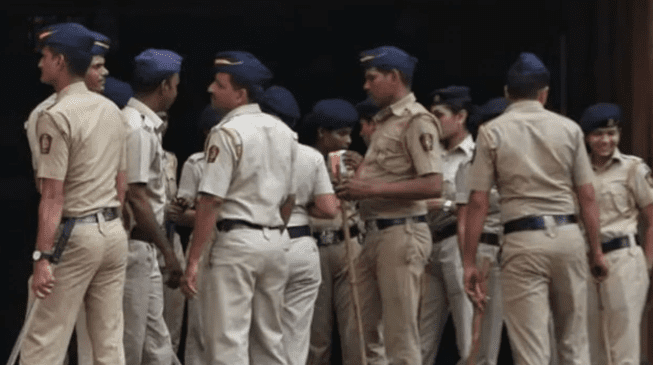
According to the police, the incident occurred around the early morning hours when a patrol team noticed a group of young men allegedly harassing and passing inappropriate remarks at women near Balekundri Circle, a relatively busy junction even during late hours. When the policemen intervened and questioned the youths, the situation reportedly escalated rapidly, with two of the accused turning violent and physically attacking the officers.11 Nepali nationals arrested in connection with clash between groups in  front of Vidhana Soudha | Udayavani - Latest English News, Udayavani  Newspaper

Senior officers said the policemen sustained minor injuries in the scuffle, following which additional personnel were rushed to the spot. The two accused were overpowered and taken into custody. A case has been registered under relevant sections of the Bharatiya Nyaya Sanhita for assault on public servants, obstructing them from discharging their duties, and other related offences.

Midnight Misconduct and Escalation

Police officials said the patrol team was carrying out routine night surveillance as part of heightened security arrangements around the Vidhana Soudha area, especially given the New Year period when instances of drunken behaviour and public nuisance tend to spike. The women who were allegedly targeted reportedly approached the police patrol for help after feeling unsafe due to the youths’ behaviour.

“When our personnel questioned them and asked them to disperse, two of the youths began arguing aggressively. Within moments, the argument turned physical, and the policemen were attacked,” a senior officer said. He added that such incidents underline the unpredictable nature of night policing, where officers are often required to de-escalate volatile situations involving intoxicated individuals.

While the police have not officially confirmed the level of intoxication, preliminary medical examination and witness accounts suggest that the accused may have been under the influence of alcohol. Officials said further details would emerge once chemical examination reports are received.

The women involved were later escorted safely from the area, and their statements were recorded. Police said they were shaken by the incident but did not sustain physical injuries.

Assault on Authority Raises Alarm

The attack on policemen near one of the most secure zones in the city has alarmed law enforcement authorities. Senior officials noted that such incidents reflect a worrying decline in public respect for the uniform and an increasing tendency among certain sections of youth to resort to violence when confronted.

“This is not just an attack on individual policemen; it is an attack on the authority of the law,” a senior police official said. He added that strict action would be taken to send a clear message that violence against on-duty personnel will not be tolerated under any circumstances.

The Vidhana Soudha police station has booked the accused under multiple sections, including those related to criminal force, intimidation, and misbehaviour in public places. The accused were produced before a magistrate and remanded to judicial custody.

Police sources said both youths are residents of Bengaluru and have no major criminal antecedents, though one of them has reportedly been warned earlier for public nuisance. Investigators are also examining whether others present at the scene played any role in provoking or supporting the attack.

Concerns Over Women’s Safety

The incident has once again brought women’s safety in public spaces, especially during late-night hours, into focus. Though the police intervened promptly in this case, activists say the fact that women were subjected to harassment even near a high-security zone is deeply concerning.Pro-Pakistan' slogan row: Bengaluru police arrest 3 people | Bangalore News  - The Indian Express

Women’s rights groups pointed out that Balekundri Circle lies close to government buildings and is frequently patrolled, yet incidents of misbehaviour continue to occur. They stressed the need for a more visible police presence, better lighting, and quicker response mechanisms to deter such behaviour.

“The issue is not just policing but mindset. Until harassment is socially condemned and consequences are swift, such incidents will keep repeating,” an activist said. She also appreciated the quick action taken by the police in arresting the accused.

Police officials said special night patrols and women-centric safety measures, including deployment of women officers and mobile surveillance units, have been intensified in sensitive areas following the incident.

Challenges of Night Policing

The attack has also highlighted the risks faced by policemen during night shifts. Officers on patrol often deal with intoxicated individuals, aggressive crowds, and unpredictable situations with limited manpower. Several police personnel have in the past spoken about the physical and psychological toll of night duty, especially during festival seasons.

A senior officer noted that while technology such as body cameras and surveillance systems can help, on-ground support and public cooperation remain crucial. “Our personnel showed restraint and professionalism despite being attacked. This is exactly the kind of conduct we expect, but it also underscores the dangers they face,” he said.

Police associations have demanded stricter punishment for those who assault law enforcement officers, arguing that leniency in such cases emboldens offenders. They have also called for faster trials to ensure deterrence.

Legal Course and Next Steps

The police said they would oppose bail for the accused, citing the seriousness of the offence and the need to deter similar acts. Statements from eyewitnesses, including the women involved and other bystanders, are being recorded to strengthen the case.

Investigators are also checking nearby CCTV footage to reconstruct the sequence of events and determine whether the accused attempted to flee or resist arrest further. Officials said the footage would play a crucial role in corroborating the police version of events.

Meanwhile, senior officers have directed field units to remain vigilant and proactive, particularly in areas with nightlife and late-night footfall. Special instructions have been issued to immediately intervene in cases of harassment and to ensure the safety of both victims and responding officers.

A Broader Social Concern

The incident has sparked discussion beyond law enforcement circles, with citizens expressing concern over increasing instances of aggressive behaviour in public spaces. Many have pointed to alcohol abuse, lack of fear of consequences, and declining civic sense as contributing factors.Bengaluru Police Disperse Group After Commotion Near Vidhana Soudha

Urban sociologists argue that such incidents reflect deeper societal issues, including inadequate awareness about consent, respect for public spaces, and accountability. They suggest that enforcement must be complemented by sustained public education and community engagement.

At the same time, several citizens have expressed solidarity with the police personnel involved, praising their swift action in protecting the women and maintaining order despite provocation.

Message from the Authorities

Senior police officials reiterated that Bengaluru police would take a zero-tolerance approach towards harassment of women and attacks on police personnel. “Anyone who thinks they can intimidate or assault the police will face the full force of the law,” an officer said.

As the legal process moves forward, the incident stands as a stark reminder of the challenges faced by law enforcement in maintaining public order and ensuring safety in a rapidly growing city. For many, it also underscores the urgent need for collective responsibility, where citizens, authorities, and institutions work together to create safer public spaces.

While the two arrests may bring a measure of immediate accountability, police officials emphasised that sustained vigilance and social change are essential to prevent such incidents from becoming routine headlines rather than shocking exceptions.

Police officials said that incidents of misbehaviour and public disorder tend to increase during extended holiday periods, particularly around New Year celebrations. Despite increased deployment and preventive measures, they said enforcement becomes challenging when large numbers of people remain on the streets late into the night, often under the influence of alcohol.

Officers involved in night patrols said that verbal abuse directed at police personnel has become more frequent, with physical attacks, though less common, posing serious risks. They noted that such confrontations often escalate quickly, leaving little time to assess intent before violence erupts.

The incident has also renewed discussions within the police department about the need for protective equipment and support systems for personnel on night duty. Some officers have suggested wider use of body-worn cameras to document interactions and deter aggressive behaviour, both for public accountability and officer safety.

Public prosecutors indicated that the charges in this case could attract stringent penalties if the court finds the accused guilty, particularly under provisions related to obstructing public servants in the discharge of their duties. They added that strong documentation and eyewitness accounts would be key to securing a conviction.

Residents living near Balekundri Circle said they have witnessed frequent late-night disturbances in the area, especially on weekends and holidays. They urged authorities to regulate alcohol consumption near public spaces and increase patrolling to prevent similar incidents.

As investigations progress, police officials reiterated their appeal to citizens to immediately alert patrol teams or emergency helplines in cases of harassment or disorder. They stressed that timely reporting not only helps protect victims but also enables the police to intervene before situations escalate into violence.

Follow: Karnataka Government

Also read: Home | Channel 6 Network – Latest News, Breaking Updates: Politics, Business, Tech & More