Friday, May 1, 2026
Home Blog Page 178

JP Nadda Leads High-Level Review Meeting with Rajasthan and Maharashtra to Strengthen Healthcare Delivery: 2026

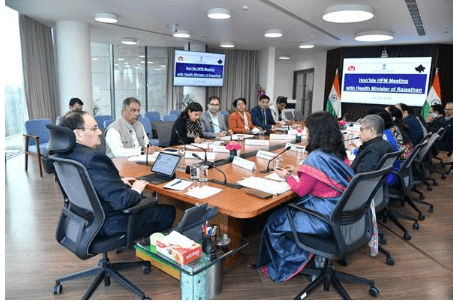
Union Minister of Health and Family Welfare Shri Jagat Prakash Nadda chaired a comprehensive high-level review meeting on January 2, 2026, with the Health Ministers and senior officials of Rajasthan and Maharashtra to assess healthcare delivery mechanisms and accelerate the implementation of key national health priorities. The discussions focused on strengthening public health infrastructure, improving patient-centric services, tightening regulatory oversight, and fast-tracking India’s mission to eliminate tuberculosis.


Focus on Affordable and Accessible Healthcare

During the meeting, Shri Nadda lauded the efforts of both State Governments in advancing affordable and accessible healthcare. He stressed that sustained progress requires continuous improvement in service delivery, regulatory compliance, and patient satisfaction. Reviewing the Free Drugs and Free Diagnostics Initiatives, he urged states to address supply-chain inefficiencies and strengthen monitoring mechanisms to ensure uninterrupted availability of essential medicines and diagnostics.


Strengthening Drug Regulation and Patient Safety

Emphasising the importance of a robust drug regulatory ecosystem, the Union Health Minister highlighted the need for end-to-end regulatory oversight, spanning manufacturing, storage, distribution, and last-mile delivery. He underlined that strong regulation is critical for ensuring drug quality, safety, and public trust, and called for adoption of best practices and vigilant supervision as a continuous process.


Expansion of Jan Aushadhi Kendras and AMRIT Pharmacies

Shri Nadda reiterated the need to expand the network of Jan Aushadhi Kendras and AMRIT Pharmacy stores across Rajasthan and Maharashtra. He noted that a stronger network would significantly improve access to quality and affordable medicines, particularly for economically vulnerable sections. The State of Rajasthan also highlighted the importance of population-based establishment of Ayushman Arogya Mandirs to address scattered habitation patterns and ensure effective primary healthcare coverage.


Diagnostics and Professional Hospital Administration

The Union Health Minister stressed that timely and quality diagnostics are the backbone of effective healthcare delivery and must be seamlessly integrated across primary, secondary, and tertiary levels. He also highlighted the need for professional hospital administration, noting that while doctors drive clinical care, efficient administration and regulatory compliance require trained management structures. Special emphasis was placed on strengthening oversight of blood banks, hospital operations, and patient safety standards.


Renewed Push for TB Mukt Bharat

Reaffirming the national resolve for TB Mukt Bharat, Shri Nadda called for district- and block-level strategies with focused interventions in screening, diagnostics, treatment adherence, and nutritional support. He stressed that TB elimination must be pursued in mission mode, supported by close grassroots-level monitoring and coordinated implementation.


People’s Participation and Legislative Engagement

To enhance accountability and coordination, Shri Nadda proposed sensitisation workshops for Members of Legislative Assemblies (MLAs), encouraging them to actively engage with Chief Medical Officers (CMOs) and Block Medical Officers (BMOs) through structured review mechanisms. He emphasised that Jan Bhagidari (people’s participation) is essential for improving health outcomes and building trust in public health systems.


Role of PPP and Viability Gap Funding

Highlighting innovative financing and implementation models, the Union Health Minister underscored the importance of the Public–Private Partnership (PPP) model and Viability Gap Funding (VGF) in accelerating TB elimination and strengthening health system interventions. He reiterated the Centre’s continued support to states through the National Health Mission, PPP initiatives, expansion of medical education capacity, infrastructure development, and technical assistance.


Commitment from States and Way Forward

The Health Ministers of Rajasthan and Maharashtra assured full cooperation with the Ministry of Health and Family Welfare to strengthen implementation and improve outcomes across priority health programmes. Shri Nadda noted that similar consultative engagements with other states would continue in the coming days as part of a mission-mode approach to health sector reforms, following recent meetings with Health Ministers of Madhya Pradesh, Chhattisgarh, and Haryana.


Conclusion
The high-level review meeting reaffirmed a shared commitment between the Centre and States to enhance drug regulation, strengthen diagnostics, professionalise hospital administration, expand access to affordable medicines, and accelerate progress towards a TB-free India. The deliberations reflected the spirit of cooperative federalism, reinforcing India’s collective resolve to build a resilient, inclusive, and patient-centric public health system.


For more real-time updates, visit Channel 6 Network.

Source: PIB
Bengal Sub Area Command Change – Detailed Analysis of Major General D.K. Singh’s Appointment, Eastern Command Role, and Governance Lessons for Military Logistics

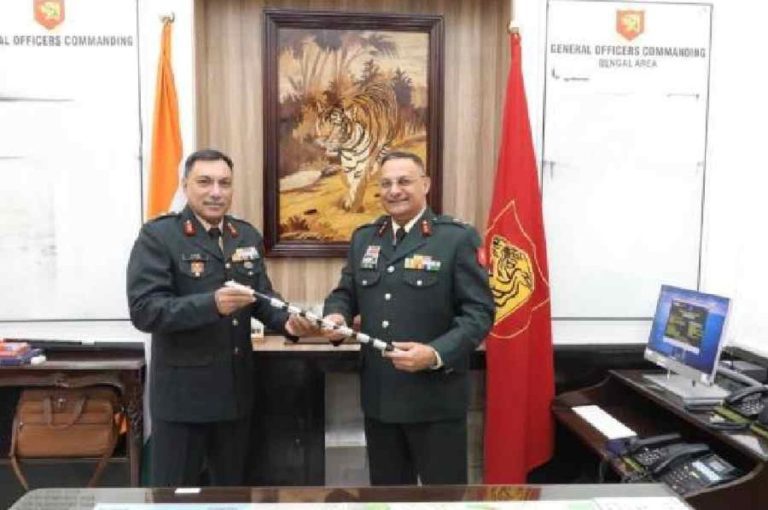
The Bengal Sub Area command change marks a significant moment in India’s military leadership. On January 1, 2026, Major General D.K. Singh formally took charge as the new commander of the Bengal Sub‑Area under the Eastern Command, succeeding Major General Rajesh A. Moghe, who retired after a distinguished 37‑year career. The ceremony, held in Kolkata, symbolised continuity and renewal in one of the most strategically important army formations in eastern India.


2. The Change of Command Ceremony

  • The handover took place in a formal military ceremony in Kolkata.
  • Major General Moghe passed the baton to Major General Singh, marking the end of his long service.
  • Senior officers of the Eastern Command attended, underscoring the importance of the Bengal Sub‑Area.
  • Lt General R.C. Tiwari, Chief of Eastern Command, congratulated Singh and expressed confidence in his leadership.

3. Role of the Bengal Sub‑Area

  • The Bengal Sub‑Area is a vital formation under the Eastern Command.
  • Responsibilities include:
    • Operations support for frontline units.
    • Administration and welfare of personnel.
    • Logistics and supply chain management for fighting formations.
    • Acting as a link between the army and the Bengal government.
  • With China’s military build‑up across the Line of Actual Control (LAC), the Sub‑Area’s role in logistics has become even more critical.

4. Profile of Major General D.K. Singh

  • Singh is described as a highly experienced officer with an illustrious career in the Indian Army.
  • His leadership style is expected to emphasise operational efficiency, welfare, and coordination.
  • His appointment reflects the army’s focus on continuity and preparedness in sensitive regions.

5. Legacy of Major General Rajesh A. Moghe

  • Moghe retired after 37 years of service.
  • His tenure was marked by discipline, welfare initiatives, and operational readiness.
  • He strengthened the Sub‑Area’s role as a bridge between the army and civil administration.
  • His departure was celebrated as the end of a distinguished career of service to the nation.

6. Bengal Sub Area Command Change: Governance Challenges

The Bengal Sub‑Area faces:

  • Logistical challenges in supporting troops along the eastern frontier.
  • Coordination with civil authorities during emergencies and natural disasters.
  • Infrastructure development to support modern warfare needs.
  • Balancing welfare and operational readiness for personnel.

7. Government External Links for Assistance


8. Historical Context of Eastern Command

  • The Eastern Command, headquartered in Kolkata, is one of the largest and most strategically important commands of the Indian Army.
  • It oversees operations in West Bengal, Sikkim, Assam, Arunachal Pradesh, Nagaland, Manipur, Mizoram, Tripura, and Meghalaya.
  • Historically, the command played a decisive role in the 1971 Bangladesh Liberation War.
  • Today, it remains central to India’s defence posture against both China and insurgency threats in the Northeast.

9. Community Impact

  • The Sub‑Area plays a role in civil‑military relations, supporting welfare schemes and disaster relief.
  • It provides logistical support during floods, cyclones, and other emergencies in Bengal.
  • The appointment of a new commander reassures communities about continuity of support and cooperation.

10. Global Comparisons

Similar military logistics formations exist worldwide:

  • US Army Pacific Command: Oversees logistics and operations in Asia.
  • PLA Western Theatre Command (China): Manages operations along the India‑China border.
  • UK Army Regional Commands: Provide administrative and logistical support to frontline units.

The Bengal Sub‑Area mirrors these global structures where logistics and administration are as vital as combat readiness.


11. Governance Lessons

The command change teaches:

  • Leadership continuity is essential for operational stability.
  • Civil‑military cooperation strengthens governance in sensitive regions.
  • Logistics and welfare are critical pillars of military effectiveness.
  • Strategic foresight is needed to prepare for evolving threats.

12. Future Outlook – Military Logistics in Bengal

India must move towards:

  • Digitised logistics systems for real‑time supply chain monitoring.
  • Enhanced infrastructure in border areas to support rapid deployment.
  • Joint training exercises with civil authorities for disaster response.
  • Community outreach programmes to strengthen civil‑military trust.

13. Conclusion

The Bengal Sub‑Area command change with Major General D.K. Singh’s appointment reflects the Indian Army’s commitment to preparedness, welfare, and governance. As Singh takes charge, the Sub‑Area’s role in supporting frontline troops, coordinating with civil authorities, and ensuring logistical readiness becomes even more vital. For Bengal and India, the lesson is clear: strong leadership in military logistics is as crucial as battlefield strategy.

Also read: Home | Channel 6 Network – Latest News, Breaking Updates: Politics, Business, Tech & More

RG Kar Protest Leadership Crisis – Detailed Analysis of Aniket Mahata’s Resignation, Junior Doctors’ Movement, and Governance Lessons for Medical Accountability in Bengal

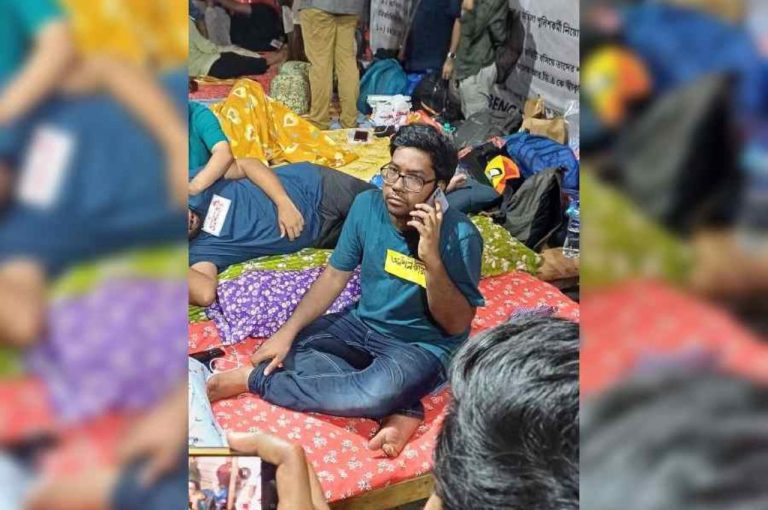
The RG Kar protest leadership crisis has reignited debates about justice, governance, and medical accountability in Bengal. On January 1, 2026, Aniket Mahata, one of the most visible faces of the 2024 junior doctors’ protests following the rape and murder of a postgraduate trainee at RG Kar Medical College and Hospital, announced his resignation from the West Bengal Junior Doctors Front (WBJDF). His decision reflects deep divisions within the organisation and raises questions about the future of the movement that once shook Bengal’s healthcare system.


2. Background of the RG Kar Case

  • In August 2024, a postgraduate trainee doctor was raped and murdered inside RG Kar Medical College.
  • The incident sparked statewide protests by junior doctors demanding justice, safety, and accountability.
  • The WBJDF was formed as a collective platform to unify doctors across medical colleges.
  • Aniket Mahata emerged as a prominent protest leader, symbolising the demand for justice and reform.

3. Aniket Mahata’s Resignation

  • On January 1, 2026, Aniket submitted a letter to the WBJDF trustees announcing his resignation as president.
  • He cited disagreements over the formation of a new executive committee without legal consultation.
  • Aniket described the move as “undemocratic and illegal”, arguing that the WBJDF constitution did not provide for such a committee.
  • He emphasised that the decision undermined the spirit of the protests, which were rooted in demands for justice and transparency.

4. Internal Divisions in WBJDF

  • A section of junior doctors, including trustee members, pushed for a separate executive committee.
  • Aniket opposed the move, insisting on legal clarity before restructuring.
  • Elections were reportedly held for the executive committee despite his objections.
  • The split reflects broader tensions between grassroots activists and institutional leadership.

5. Legal and Professional Context

  • Aniket is one of three doctors who filed a lawsuit against the state for failing to assign them to preferred hospitals during senior resident counselling.
  • While others accepted postings, Aniket refused and pursued legal action.
  • Despite court orders, the health department has not yet posted him at RG Kar, his preferred institution.
  • His resignation adds another layer of complexity to his ongoing legal battle.

6. RG Kar Protest Leadership Crisis: Governance Challenges

The crisis reflects:

  • Lack of clarity in organisational constitutions of protest movements.
  • Fragile unity among junior doctors despite shared grievances.
  • State resistance to demands for justice and reform.
  • Judicial delays in resolving professional disputes.

7. Government External Links for Assistance


8. Historical Context of Doctors’ Protests in Bengal

  • 2019: Junior doctors’ strike over assault on medical staff at NRS Medical College.
  • 2024: RG Kar protests following rape and murder case.
  • 2025: Continued agitation over safety and postings.
  • The WBJDF was created to unify fragmented protests but now faces internal fractures.

9. Community Impact

  • Patients fear disruptions in healthcare services due to divisions among doctors.
  • Families of victims worry that justice demands may lose momentum.
  • The resignation has sparked debates among medical students about leadership accountability.
  • Civil society groups have urged doctors to maintain unity in pursuit of justice.

10. Global Comparisons

Similar medical protest crises worldwide:

  • UK: Junior doctors’ strikes over pay and working conditions.
  • USA: Resident doctors’ unions clashing with hospital administrations.
  • Pakistan: Doctors’ protests over safety following attacks in hospitals.

The RG Kar case mirrors these global struggles where medical professionals balance activism with professional duties.


11. Governance Lessons

The resignation teaches:

  • Legal frameworks are essential for protest organisations.
  • Transparent decision‑making builds trust among members.
  • Judicial efficiency is crucial in resolving professional disputes.
  • Community engagement ensures protests remain connected to public welfare.

12. Future Outlook – Medical Accountability in Bengal

India must move towards:

  • Codified safety protocols for doctors in hospitals.
  • Independent grievance redressal bodies for medical professionals.
  • Periodic audits of hospital security and governance.
  • Dialogue platforms between doctors, government, and civil society.

13. Conclusion

The RG Kar protest leadership crisis following Aniket Mahata’s resignation underscores the fragility of movements born out of tragedy. While the WBJDF was created to unify doctors, internal divisions now threaten its credibility. For Bengal, the lesson is clear: justice for victims and accountability in healthcare must remain above organisational politics.

Also read: Home | Channel 6 Network – Latest News, Breaking Updates: Politics, Business, Tech & More

Secretary, DFS Chairs Inter-Departmental Committee Meeting to Review Foreign Banks’ Entry Proposals: 2025

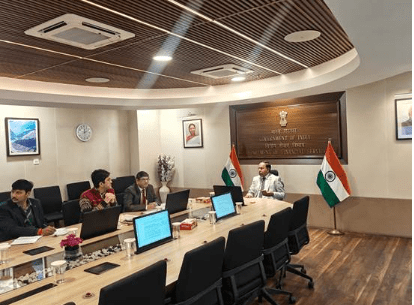
The Secretary, Department of Financial Services (DFS), Shri M Nagaraju, chaired a meeting of the Inter-Departmental Committee (IDC) on January 2, 2026, to review proposals from foreign banks seeking to establish a presence in India. The meeting reflects the Government of India’s structured and consultative approach towards regulating foreign banking operations in the country.


High-Level Participation from Key Ministries and RBI

The IDC meeting was attended by representatives from key ministries and institutions, including:

  • Ministry of Home Affairs (MHA)

  • Ministry of External Affairs (MEA)

  • Department of Commerce (DoC)

  • Reserve Bank of India (RBI)

The proposals under consideration had been forwarded by the RBI and pertained to foreign banks desirous of opening branches, representative offices, or subsidiaries in India.


Deliberations and Recommendations

During the meeting, the Committee held detailed deliberations on the proposals placed before it. After due examination and inter-ministerial consultation, the IDC recommended the proposals for further processing, in line with the applicable regulatory and policy framework.

The discussions focused on ensuring that the entry of foreign banks aligns with India’s financial stability, regulatory norms, and national interest.


Role of the Inter-Departmental Committee

The Inter-Departmental Committee (IDC) functions under the Department of Financial Services, which acts as the nodal department for evaluating proposals from both foreign and domestic banks. Before arriving at a consensus, the Committee undertakes consultations with concerned ministries and regulators to ensure a comprehensive assessment of each proposal.

This mechanism ensures transparency, coordination, and due diligence in decisions related to banking sector expansion.


Strengthening India’s Banking Ecosystem: DFS

The consideration of foreign banks’ proposals highlights India’s continued efforts to maintain a balanced and well-regulated banking ecosystem. Such evaluations are crucial for promoting competition, enhancing access to global financial expertise, and supporting India’s broader economic and financial integration, while safeguarding regulatory and security interests.


Conclusion
The IDC meeting chaired by the Secretary, DFS underscores the government’s collaborative and institutional approach towards overseeing foreign banks’ entry into India. Through inter-ministerial coordination and regulatory scrutiny, the process aims to strengthen India’s banking sector while ensuring financial stability and alignment with national priorities.


For more real-time updates, visit Channel 6 Network.

Source: PIB
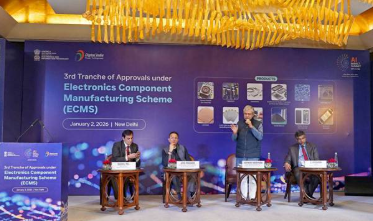
Government Approves 22 Proposals Under 3rd Tranche of ECMS, Boosting India’s Electronics Manufacturing Push

In a major boost to India’s electronics manufacturing ambitions, the Government of India has approved 22 proposals under the third tranche of the Electronics Component Manufacturing Scheme (ECMS). The approvals, announced by the Ministry of Electronics and Information Technology (MeitY) on January 2, 2026, involve a projected investment of ₹41,863 crore and are expected to generate 33,791 direct employment opportunities, significantly strengthening India’s domestic electronics ecosystem.


Scale of Investment and Production Impact

With the latest approvals, the ECMS continues to gain momentum. The newly approved proposals are expected to lead to a projected production output of ₹2,58,152 crore. These approvals follow the earlier clearance of 24 applications worth ₹12,704 crore, taking the total approved investment under ECMS so far to ₹54,567 crore.

Collectively, 46 applications have now been approved across 11 states, with the programme expected to generate around 51,000 direct jobs, underscoring its strong employment and industrial impact.


Wide Product Coverage Across Key Electronics Segments

The approved proposals span 11 target product segments with applications across mobile manufacturing, telecom, consumer electronics, strategic electronics, automotive electronics, and IT hardware.

Product Categories Covered

  • Bare Components (5):
    PCBs, Capacitors, Connectors, Enclosures, Li-ion Cells

  • Sub-Assemblies (3):
    Camera Modules, Display Modules, Optical Transceivers

  • Supply Chain Items (3):
    Aluminium Extrusion, Anode Material, Laminate (Copper Clad)


Key Approvals Across Components and Sub-Assemblies

Significant approvals include:

  • PCBs (including HDIs): Approved for 9 applicants, including India Circuits, AT & S India, BPL Limited, Signum Electronics, and others.

  • Capacitors: Approved for Deki Electronics Limited and TDK India Private Limited, strengthening energy storage and power conditioning capabilities.

  • High-Speed Connectors: Approved for Amphenol High Speed Technology India Pvt Ltd.

  • Enclosures: Granted to Yuzhan Technology (India), Motherson Electronic Components, and Tata Electronics.

  • Li-ion Cells: Approved for ATL Battery Technology (India) Pvt Ltd, a leading global player.

In the sub-assembly segment:

  • Optical Transceivers: Dixon Electroconnect Private Limited

  • Camera Modules: Kunshan Q Tech Microelectronics (India) Pvt Ltd

  • Display Modules: Samsung Display Noida Private Limited


Deepening the Domestic Supply Chain

To further reduce import dependence, approvals were also granted for critical supply chain materials:

  • Anode Material: NPSPL Advanced Materials Pvt Ltd

  • Copper Clad Laminate: Wipro Global Engineering and Electronic Materials Pvt Ltd

  • Aluminium Extrusion: Hindalco Industries Limited, addressing components currently 100% imported

These approvals are expected to significantly enhance domestic value addition and supply chain resilience.


Geographically Balanced Industrial Growth

The approved units are spread across eight statesAndhra Pradesh, Haryana, Karnataka, Madhya Pradesh, Maharashtra, Tamil Nadu, Uttar Pradesh, and Rajasthan—reinforcing the government’s focus on balanced regional industrial development and widespread electronics manufacturing growth.


Government’s Vision for Electronics Manufacturing

Speaking on the occasion, Union Minister for Electronics and IT, Shri Ashwini Vaishnaw, said the ECMS has strengthened India’s electronics manufacturing ecosystem, enabling a large share of domestic demand to be met indigenously. He highlighted India’s long-term demographic advantage, noting that while growth will slow in many global economies, India is expected to continue growing well beyond 2047 and even till 2100, making it crucial to build strong manufacturing foundations today.

Minister of State Shri Jitin Prasada noted that India is emerging as a reliable global electronics manufacturing destination, particularly amid geopolitical uncertainties.
MeitY Secretary Shri S. Krishnan emphasised that the current tranche plays a crucial role in achieving the core objectives of the ECMS.


Conclusion
The approval of 22 proposals under the third tranche of the ECMS marks a decisive step in India’s journey towards becoming a global hub for electronics manufacturing. By strengthening domestic supply chains, reducing import dependence, and creating large-scale employment, the scheme aligns closely with Prime Minister Narendra Modi’s vision of Aatmanirbhar Bharat and positions India for sustained, high-value industrial growth.


For more real-time updates, visit Channel 6 Network.

Source: PIB
Messi India Tour Refunds – Detailed Analysis of Salt Lake Stadium Fiasco, SIT Probe, and Governance Lessons for Sports Management

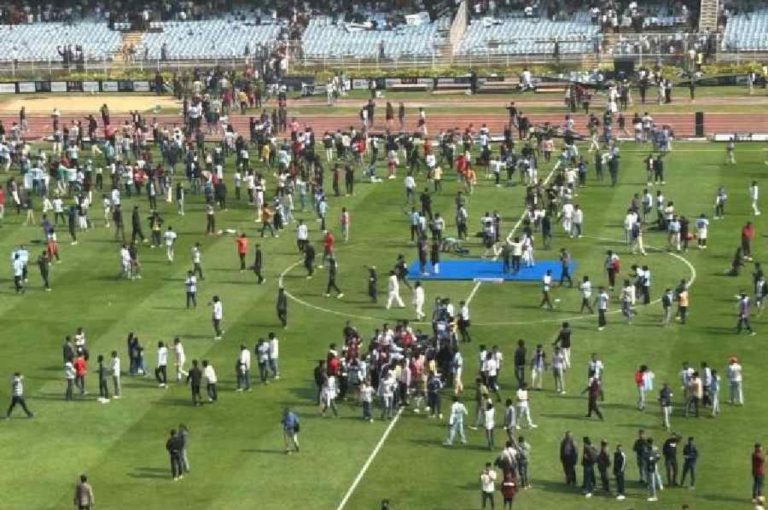
The Messi India Tour refunds saga has become one of the most talked‑about sports controversies in Bengal. On December 13, 2025, thousands of fans gathered at Salt Lake Stadium in Kolkata, hoping to see football legend Lionel Messi. Instead, mismanagement, overcrowding, and chaos led to vandalism, disappointment, and Messi leaving the venue abruptly. Now, the Special Investigation Team (SIT) is considering moving court to seek permission for refunding ticket buyers, marking a rare case of judicial intervention in a sports event gone wrong.


2. Messi India Tour Refunds: The Incident

  • Around 35,000 tickets were sold for the event.
  • Fans alleged they could not even catch a glimpse of Messi due to poor arrangements.
  • Chaos erupted: seats were ripped out, bottles hurled onto the pitch, and property vandalized.
  • Messi reportedly left the venue much before schedule, allegedly “in a huff.”
  • The main organiser, Satadru Dutta, was arrested the same day.

3. Financial Details

  • Ticket sales generated around ₹19 crore.
  • Police found ₹22 crore in Dutta’s account, which has been frozen.
  • The SIT is now seeking court permission to refund ticket buyers, as per legal protocol requiring recovered proceeds of crime to be returned to rightful owners.

4. SIT Investigation

  • SIT sources revealed that ticket buyers were “cheated” as the fiasco could have been avoided.
  • Police had already asked the reselling company not to release ticket sale proceeds.
  • The SIT will request the company’s database of buyers, identified through mobile numbers and email addresses.
  • Dutta remains in judicial custody, the only person arrested so far.

5. Governance Challenges

The fiasco reflects:

  • Poor event management and lack of crowd control.
  • Weak accountability mechanisms in sports event organisation.
  • Legal ambiguity over refunds in cases of mismanagement.
  • Public trust deficit in private organisers of high‑profile events.

6. Government External Links for Assistance


7. Historical Context of Sports Mismanagement in India

  • 2010 Commonwealth Games (Delhi): Criticised for corruption and poor organisation.
  • 2017 U‑17 FIFA World Cup (India): Generally successful, but some matches saw ticketing chaos.
  • 2023 Cricket World Cup (India): Fans complained about ticket distribution and resale scams.
  • The Messi fiasco adds to this list, showing recurring issues in ticketing transparency and crowd management.

8. Community Impact

  • Fans felt betrayed, with many saving for months to afford tickets.
  • Families and children were caught in the chaos, leading to trauma.
  • The incident damaged Kolkata’s reputation as the “football capital of India.”
  • Calls for stricter regulation of sports events grew louder.

9. Global Comparisons

Similar controversies worldwide:

  • Brazil: Ticketing scams during Copa America.
  • UK: Chaos at Wembley during Euro 2020 final.
  • Argentina: Overcrowding incidents at club matches.

The Messi India Tour fiasco mirrors these global struggles where sports passion collides with mismanagement and exploitation.


10. Governance Lessons

The case teaches:

  • Mandatory government oversight for high‑profile sports events.
  • Transparent ticketing systems linked to Aadhaar or verified IDs.
  • Crowd management protocols to prevent vandalism.
  • Legal clarity on refunds and compensation for fans.

11. Future Outlook – Sports Event Governance in India

India must move towards:

  • Public‑private partnerships for event organisation.
  • Digital ticketing with blockchain verification to prevent fraud.
  • Fan grievance redressal mechanisms for accountability.
  • Judicial precedents to ensure refunds in cases of mismanagement.

12. Conclusion

The Messi India Tour refunds saga is more than a sports controversy. It reflects systemic failures in event management, accountability, and governance. As the SIT prepares to move court, fans hope for justice and refunds. For Bengal and India, the lesson is clear: sports passion must be matched with professional management, legal safeguards, and respect for fans.

Also read: Home | Channel 6 Network – Latest News, Breaking Updates: Politics, Business, Tech & More

Coal Output and Dispatches Surge as Captive and Commercial Mines Deliver Strong Performance: 2026

Coal production and dispatches from captive and commercial coal mines recorded steady and sustained growth in December 2025, reflecting strong operational momentum in the sector during FY 2025–26. According to data released by PIB Delhi, improved efficiency, expanded mining capacity, and supportive policy measures have driven higher output and dispatches, strengthening India’s energy security.


December 2025 Performance: Production and Dispatches Rise

During December 2025, coal production from captive and commercial mines stood at 19.48 million tonnes (MT), while coal dispatches for the month were recorded at 18.02 MT. This marks a year-on-year growth of 5.75% in production compared to the corresponding period last year, highlighting consistent operational gains across the sector.


Q3 FY 2025–26: Sustained Operational Momentum

In the third quarter (Q3) of FY 2025–26, cumulative coal production from captive and commercial mines reached 54.14 MT, with dispatches totaling 50.61 MT. The quarter registered a 5.35% year-on-year increase in production, underlining stable growth and efficient capacity utilisation throughout the quarter.


FY 2025–26 (April–December): Robust Cumulative Growth

Cumulative performance for FY 2025–26 up to December reflects robust growth trends:

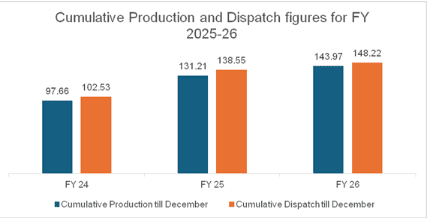
  • Coal production recorded a 9.72% year-on-year increase

  • Coal dispatches rose by 6.98% year-on-year

These figures demonstrate improved operational efficiency and more effective utilisation of mining infrastructure across captive and commercial coal mines.


Policy Support Driving Performance

The Ministry of Coal attributed the sector’s strong performance to a combination of strategic policy interventions, rigorous monitoring, and consistent stakeholder support. These initiatives have helped:

  • Expedite operational and statutory approvals

  • Expand production capacities

  • Improve coordination across the coal value chain

The attached performance graph further illustrates the consistent upward trend in both production and dispatches.


Focus on Energy Security and Viksit Bharat 2047

The Ministry of Coal reiterated its commitment to creating a stable, performance-driven ecosystem for captive and commercial coal mining. Through continued policy facilitation, close monitoring, and coordinated engagement with industry stakeholders, the Ministry aims to:

  • Ensure reliable coal availability

  • Support uninterrupted operations in key sectors such as power and industry

  • Meet India’s growing energy requirements

These efforts align with the long-term national vision of building a Viksit Bharat 2047.


Conclusion
The strong growth in coal output and dispatches from captive and commercial mines during FY 2025–26 underscores the sector’s resilience and operational strength. Backed by supportive policies and efficient execution, the coal sector continues to play a critical role in ensuring energy security and supporting India’s long-term economic development goals.


For more real-time updates, visit Channel 6 Network.

Source: PIB
PM Narendra Modi to Inaugurate International Exposition of Sacred Piprahwa Relics on January 3, 2026

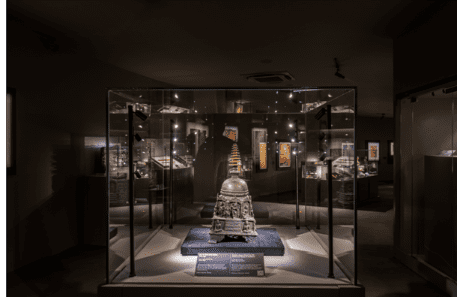
Prime Minister Shri Narendra Modi will inaugurate a landmark international exposition titled “The Light and the Lotus: Relics of the Awakened One” on January 3, 2026, at 11:00 AM, at the Rai Pithora Cultural Complex, New Delhi. Hosted by the Ministry of Culture, the exposition showcases the sacred Piprahwa Relics, reliquaries, and gem relics of Lord Buddha, recently repatriated to India after more than a century, marking a historic moment in India’s cultural and spiritual journey.


Historic Reunification of the Piprahwa Relics

The exposition marks the reunification of the Piprahwa gem relics of Lord Buddha after 127 years, bringing together relics discovered during the 1898 excavation, treasures from subsequent 1971–1975 excavations, and the recently repatriated relics from the Peppé family collection.

This unprecedented assembly reunites, for the first time since 1898, the most comprehensive collection of artefacts associated with the Buddha, underscoring their immense historical, philosophical, and spiritual significance.


About the Exposition: “The Light and the Lotus”

Titled “The Light and the Lotus: Relics of the Awakened One,” the exposition thematically presents antiquities and works of art curated from several cultural institutions under the Ministry of Culture. The exhibition features over 80 rare objects, spanning from the 6th century BCE to the present, including:

  • Sculptures

  • Manuscripts

  • Thangkas

  • Ritual objects

These artefacts collectively represent the largest assemblage attributed to Lord Buddha, reflecting masterful craftsmanship, deep philosophical symbolism, and Buddhism’s enduring global influence.


Key Highlights of the Exhibition

For the first time since the original excavation, the exposition brings together:

  • Relics from the 1898 Kapilavastu excavation

  • Treasures from the 1972 excavations

  • Reliquaries and jewelled artefacts from the Indian Museum, Kolkata

  • Repatriated relics from the Peppé family collection

  • The Monolithic Stone Coffer in which the sacred gem relics and reliquaries were originally discovered


Legacy of the Piprahwa Relics

The sacred relics were discovered in 1898 by William Claxton Peppé at the ancient Kapilavastu stupa in present-day Uttar Pradesh. Following the discovery, portions of the relics were distributed internationally—one gifted to the King of Siam, another taken to England, and a third preserved at the Indian Museum, Kolkata.

In July 2025, the Peppé family-held relics were successfully repatriated to India through a decisive intervention by the Ministry of Culture, supported by Buddhist communities worldwide. The repatriation halted an international auction at Sotheby’s Hong Kong and stands as a major cultural diplomacy achievement.


India’s Global Spiritual and Cultural Leadership

The exposition reinforces India’s role as the birthplace of Buddhism and highlights its growing stature as a global spiritual and cultural leader. Under Prime Minister Narendra Modi’s leadership, India has increasingly drawn upon its civilizational heritage in global engagement. To date, 642 antiquities have been repatriated, with the return of the Piprahwa relics regarded as one of the most significant milestones.


Distinguished Participation at the Inauguration

The inauguration ceremony will be attended by:

  • Union Ministers

  • Ambassadors and members of the diplomatic corps

  • Venerable Buddhist monks

  • Senior government officials

  • Scholars and heritage experts

  • Members of the art fraternity, art enthusiasts, followers of Buddhism, and students


Conclusion
The inauguration of “The Light and the Lotus: Relics of the Awakened One” marks a historic celebration of India’s spiritual legacy and its enduring commitment to heritage preservation. By reuniting the sacred Piprahwa relics and sharing them with the world, the exposition stands as a powerful symbol of India’s civilizational continuity, cultural leadership, and responsibility as the birthplace of the Buddha Dhamma. Hosted by the Ministry of Culture, the exposition showcases the sacred Piprahwa Relics, reliquaries, and gem relics of Lord Buddha, recently repatriated to India after more than a century, marking a historic moment in India’s cultural and spiritual journey.


For more real-time updates, visit Channel 6 Network.

Source: PIB
Indian Equity Markets End Strong as Nifty Climbs Above 26,300; PSU, Metals and Banks Lead Rally

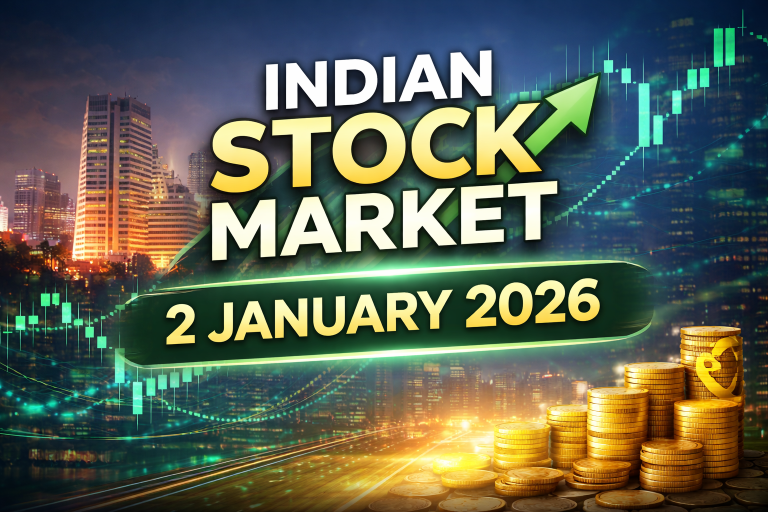
Indian equity markets closed on a firm note on Friday, January 2, 2026, extending gains for the third consecutive session. Strong buying interest in PSU stocks, metals, power and banking counters propelled benchmark indices higher, with the Nifty 50 settling above the 26,300 mark. Broad-based participation across sectors reflected improving investor confidence at the start of the new calendar year, even as select FMCG and auto stocks witnessed profit booking.

Also Read: Indian Equity Markets Extend Rally as Nifty Tops 26,300; PSU, Metals and Financials Power Gains


Benchmark Indices: Nifty Ends at Record Territory

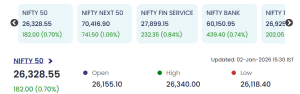
The Nifty 50 closed at 26,328.55, gaining 182.00 points or 0.70%. The index opened at 26,155.10, touched an intraday high of 26,340.00, and recorded a low of 26,118.40, indicating sustained buying throughout the session.

Other key indices also posted solid gains:

  • Nifty Next 50 surged 1.06%, highlighting strength in broader market stocks.

  • Equity Nifty Financial Services rose 0.84%, supported by banking and financial majors.

  • Nifty Bank advanced 0.74%, led by PSU banks and select private lenders.


Top Gainers: PSU, Power and Metal Stocks Outperform

Heavy buying in PSU and metal stocks drove the market higher, with several stocks posting strong gains.

  • Coal India rallied 7.15% to ₹429.10, emerging as the top gainer amid strong volumes and PSU-led buying.

  • NTPC jumped 4.56% to ₹351.65, supported by renewed interest in power sector stocks.

  • Screenshot 2026 01 02 194152Hindalco Industries gained 3.53% to ₹926.50, extending its rally in metal counters.

  • Trent advanced 2.39% to ₹4,400.00, continuing its strong performance in consumption-driven stocks.

  • State Bank of India (SBI) rose 2.12% to ₹1,005.65, lending significant support to the banking index.


Top Losers: FMCG, Auto and Private Banks See Profit Booking

Despite the broader rally, select stocks faced selling pressure as investors booked profits.

  • ITC declined 3.78% to ₹350.10, emerging as the biggest laggard amid heavy trading volumes.

  • Kotak Mahindra Bank slipped 1.26% to ₹2,189.90, weighing slightly on banking gains.

  • Screenshot 2026 01 02 194159Nestlé India fell 1.13% to ₹1,280.40, reflecting weakness in FMCG stocks.
  • Shriram Finance eased 0.94% to ₹1,010.10, despite overall strength in financials.

  • Bajaj Auto declined 0.62% to ₹9,499.00, tracking mild selling in auto counters.


Market Outlook: Indian equity markets

The session underscored a strong risk-on sentiment, with investors favouring PSU, metal, power, and banking stocks. While FMCG and auto stocks witnessed profit booking, the overall market breadth remained positive, suggesting momentum could persist in the near term.


Conclusion
Indian equity markets ended the session on a robust note, with the Nifty 50 closing above 26,300, driven by strong gains in PSU, power, metal, and banking stocks. Despite selective selling in FMCG and auto names, the broader market strength signals a confident and upbeat start to 2026 for domestic equities.


For real time stock Updates, visit NSE website.

Indian Equity Markets Extend Rally as Nifty Tops 26,300; PSU, Metals and Financials Power Gains

Indian equity markets continued their upward momentum on Friday, January 2, 2026, with benchmark indices extending gains in afternoon trade. Strong buying interest in PSU stocks, metals, and financials pushed the Nifty 50 above the 26,300 mark, reflecting a firm risk-on sentiment at the start of the new year. Select FMCG and banking stocks, however, witnessed profit booking.

Also Read: Indian Equity Markets Rally as Nifty Reclaims 26,250; Financials, Metals and PSU Stocks Lead Gains


Benchmark Indices: Nifty Trades Near Day’s High

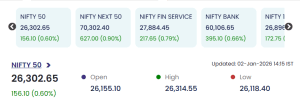
The Nifty 50 was trading at 26,302.65, up 156.10 points or 0.60%, at the time of the update. The index opened at 26,155.10, touched an intraday high of 26,314.55, and slipped to a low of 26,118.40, indicating sustained strength through the session.

Broader markets and sectoral indices outperformed:

  • Nifty Next 50 jumped 0.90%, pointing to broad-based participation.

  • EquityNifty Financial Services gained 0.79%, supported by strength in financial stocks.
  • Nifty Bank rose 0.66%, aided by selective buying in banking counters.


Top Gainers: Coal, Power and Metal Stocks Lead

Several stocks posted sharp gains, supported by strong volumes and sectoral momentum.

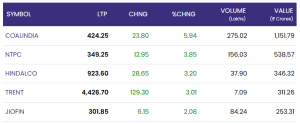
  • Coal India surged 5.94% to ₹424.25, emerging as the top gainer amid heavy buying in PSU stocks.

  • NTPC advanced 3.85% to ₹349.25, tracking strength in the power sector.

  • Screenshot 2026 01 02 141604Hindalco Industries gained 3.20% to ₹923.60, extending its rally in metal stocks.
  • Trent rose 3.01% to ₹4,426.70, continuing its strong performance in consumption-led stocks.

  • Jio Financial Services added 2.08% to ₹301.85, contributing to gains in the financial services space.


Top Losers: FMCG and Select Banking Stocks See Selling

On the downside, profit booking was visible in select FMCG and banking stocks.

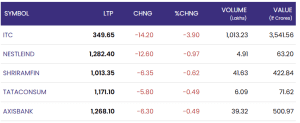
  • ITC declined 3.90% to ₹349.65, emerging as the top laggard despite high trading volumes.

  • Nestlé India slipped 0.97% to ₹1,282.40, reflecting selling pressure in FMCG majors.

  • Shriram Finance fell 0.62% to ₹1,013.35, amid selective weakness in financial stocks.

  • Screenshot 2026 01 02 141611Tata Consumer Products eased 0.49% to ₹1,171.10, extending mild losses.

  • Axis Bank declined 0.49% to ₹1,268.10, trimming some of the sectoral gains.


Market Outlook: Indian equity markets

The ongoing rally highlights strong investor confidence, driven by buying in PSU, metal, and power stocks. While FMCG and select banking stocks faced profit booking, the broader market strength suggests positive momentum could continue in the near term.


Conclusion
Indian equity markets extended their gains with the Nifty 50 trading above 26,300, supported by strong performance in PSU, power, and metal stocks. Despite weakness in select FMCG and banking counters, the overall tone remains positive, signalling a robust start to 2026 for domestic equities.


For real time stock Updates, visit NSE website.