Friday, May 1, 2026
Home Blog Page 181

Trump Health Under Scrutiny, Bold President Blames Aspirin for Bruised Hand

Washington D.C. – President Donald Trump has directly addressed mounting concerns about his well-being, declaring his condition “perfect” while attributing visible bruising on his hands to daily aspirin intake. The 79-year-old leader, who holds the distinction of being the oldest person to assume the US presidency, has faced increasing scrutiny regarding various health-related observations in recent weeks.

President Defends His Physical Condition

Trump health has become a topic of intense discussion following reports highlighting bruising on his hands, episodes of swollen ankles, and instances where he appeared to doze off during public events. The president expressed clear frustration over the repeated focus on his physical condition during a recent interview.

“Let’s talk about health again for the 25th time,” Trump stated, adding emphatically, “My health is perfect.” The president’s defensive tone reflected his irritation with ongoing questions about his fitness for office at an age that has prompted comparisons to his predecessor.

Aspirin Cited as Cause of Hand Bruising

Addressing one of the most visible concerns about Trump health, the president explained that the bruising on his hands results from his daily aspirin regimen. Trump takes aspirin to thin his blood, a common medical practice for cardiovascular health maintenance.

“They say aspirin is good for thinning out the blood, and I don’t want thick blood pouring through my heart. I want nice, thin blood pouring through my heart. Does that make sense?” Trump explained, providing his rationale for the medication.

The blood-thinning effects of aspirin can make individuals more susceptible to bruising, as the medication reduces the blood’s ability to clot. Trump revealed that he sometimes applies makeup or bandages when his hand gets “whacked” to cover the visible marks.

In one specific instance, Trump said the bruising occurred when Attorney General Pam Bondi accidentally struck the back of his hand with her ring while giving him a high-five. This explanation addresses photographs that have circulated showing what appeared to be makeup covering discoloration on his hands.

Clarification on Medical Imaging and Sleep Patterns

Questions about Trump health also extended to reports of medical procedures and his alertness during official duties. When asked about undergoing an MRI in October, Trump clarified that he actually received a CT scan rather than an MRI.

A CT scan provides a faster method for obtaining detailed body images, while an MRI is a slower scanning process typically used for examining soft tissues. This distinction, while technical, addresses speculation about what specific medical examinations the president has undergone.

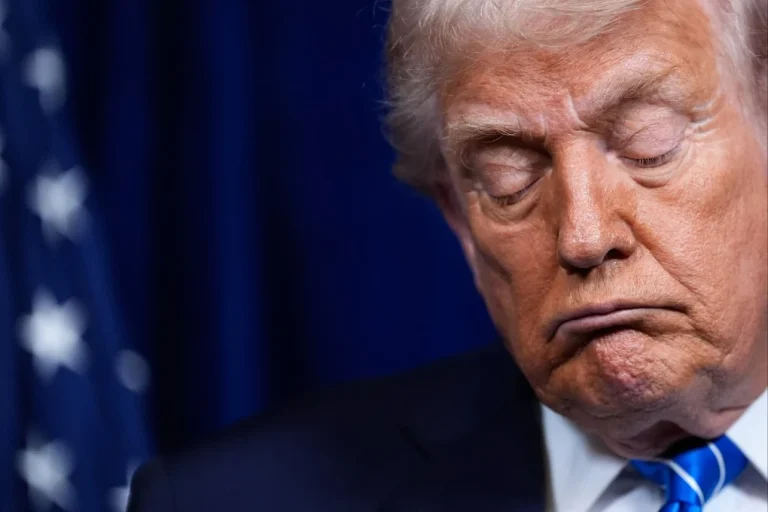
Trump firmly rejected suggestions that he falls asleep during public appearances, despite occasions where he has been photographed with his eyes closed during meetings, including an Oval Office gathering in November. The president characterized these instances differently.

“I’ve never been a big sleeper,” Trump insisted, describing what others interpret as dozing off as “moments of relaxation.” He explained his tendency to close his eyes during certain situations: “I’ll just close. It’s very relaxing to me. Sometimes they’ll take a picture of me blinking, blinking, and they’ll catch me with the blink.”

Additional Health Concerns Addressed

Beyond visible bruising and sleep patterns, discussions about Trump health have included other observations. The president has been seen with swollen ankles on multiple occasions, though he did not specifically address this concern in his recent comments.

Trump also denied claims that he struggles with hearing difficulties, another issue that had been raised in relation to his advancing age and overall physical condition.

Lifestyle Factors and Historical Context

The scrutiny of Trump health carries particular irony given his own past behavior toward political opponents. During his campaigns and presidency, Trump repeatedly mocked his predecessor Joe Biden with the nickname “Sleepy Joe,” targeting Biden’s age and perceived energy levels.

Also Read: Trump MTG Rift: Explosive Claims Over Epstein Files Emerge

Trump’s lifestyle choices have also drawn attention in discussions about his well-being. He rarely exercises beyond his regular golf outings and has been open about his preference for high-fat, high-sodium fast food. These dietary habits stand in contrast to typical recommendations for maintaining cardiovascular health, particularly for individuals in their late seventies.

Significance for Presidential Leadership

As the oldest person to assume the US presidency, questions about Trump health reflect broader concerns about leadership capacity and the demands of the office. The president’s direct engagement with these concerns demonstrates awareness of public interest while attempting to reassure Americans about his fitness for duty.

The combination of his age, visible physical symptoms, and lifestyle choices ensures that Trump health will likely remain a topic of interest throughout his term. His defensive responses suggest sensitivity to comparisons with predecessors and awareness that his physical condition represents both a political and practical consideration for his administration.

Crans-Montana Fire Kills 40: Tragic New Year’s Blaze at Swiss Ski Resort

Switzerland – A devastating fire has claimed at least 40 lives and left 115 others injured at a bar in Crans-Montana, Switzerland’s renowned ski resort town, during New Year’s celebrations. The Crans-Montana fire erupted in the early hours of Thursday morning, transforming what should have been a festive celebration into one of Switzerland’s worst tragedies in recent memory.

Deadly Blaze Strikes During New Year’s Celebrations

The Crans-Montana fire broke out at approximately 1:30 AM local time at Le Constellation bar while revelers were celebrating the arrival of the new year. Swiss authorities held a joint press conference where Commander of the Valais Cantonal Police, Frederic Gisler, confirmed the devastating toll for the first time since the incident occurred.

“As I speak to you, we have identified around 40 people who have died, and another 115 people severely injured,” Gisler stated during the press conference attended by Swiss President Guy Parmelin and other senior officials.

The bar, located in one of Switzerland’s most popular winter destinations, was packed with tourists and locals marking the beginning of 2026 when disaster struck. Emergency services responded swiftly to the scene, working throughout the night and into the day to rescue survivors and recover victims from the wreckage.

Investigation Underway Into Cause of Fire

While the exact cause of the Crans-Montana fire remains under investigation, eyewitnesses near the incident site have suggested that pyrotechnics may have triggered the massive blaze. However, authorities are proceeding cautiously with their investigation.

Beatrice Pilloud, Valais Canton’s attorney general, emphasized during the press conference that it was premature to determine the fire’s cause. She explained that experts have not yet been able to enter the wreckage to conduct a thorough examination of the scene.

“At no moment is there a question of any kind of attack,” Pilloud told reporters, ruling out any terrorism-related motives behind the tragedy. Police reiterated this stance earlier, confirming they are treating the incident as an accidental fire rather than a deliberate act.

Emergency Response and Security Measures

In response to the Crans-Montana fire, authorities implemented comprehensive security measures around the affected area. Police announced that the site has been “completely closed to the public” to facilitate rescue operations and investigative work.

Additionally, officials imposed a no-fly zone over Crans-Montana to prevent interference with emergency helicopter operations and to maintain security at the scene. These measures remained in effect as rescue teams continued their painstaking work of searching through the damaged structure.

The scale of the tragedy has required coordination among multiple emergency services, including firefighters, police, medical personnel, and specialized rescue teams. Hearses were seen outside Le Constellation bar as authorities worked to retrieve victims and transport the injured to nearby medical facilities.

Impact on Crans-Montana Resort Community

The Crans-Montana fire has sent shockwaves through the international ski community and beyond. The resort is renowned worldwide as a premier destination for skiing and golf, attracting thousands of visitors annually. The transformation of Le Constellation bar from a place of celebration to a scene of tragedy has deeply affected both residents and tourists.

Also Read: Trump MTG Rift: Explosive Claims Over Epstein Files Emerge

The resort was scheduled to host the FIS World Cup speed skiing event later this month, though it remains unclear how this devastating incident will affect those plans. The Crans-Montana fire has raised questions about safety protocols at entertainment venues in resort areas during peak tourist seasons.

Switzerland Mourns National Tragedy

The presence of Swiss President Guy Parmelin at the press conference underscored the national significance of the Crans-Montana fire. As investigations continue and authorities work to identify all victims, Switzerland faces one of its most tragic incidents in recent history.

The severely injured victims have been transported to hospitals across the region, where medical teams are working to provide life-saving treatment. Families of victims are being supported by authorities as they await information about their loved ones.

This incident serves as a sobering reminder of the importance of fire safety measures in crowded entertainment venues, particularly during major celebrations when occupancy levels are at their highest. As the investigation into the Crans-Montana fire continues, authorities will likely examine all aspects of the incident to prevent similar tragedies in the future.

The resort town of Crans-Montana, typically associated with winter sports excellence and luxury tourism, now faces the difficult task of recovering from this unprecedented disaster while supporting the victims, their families, and the affected community members who witnessed this horrific event.

DRDO Weapons Played Decisive Role in Operation Sindoor, Says Raksha Mantri on DRDO Day: 2025

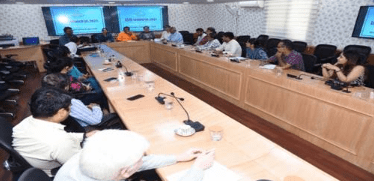
Raksha Mantri Shri Rajnath Singh on January 01, 2026, lauded the Defence Research and Development Organisation for the decisive role played by its indigenously developed weapon systems during Operation Sindoor, calling it a testament to the organisation’s professionalism and unwavering commitment to safeguarding India’s national interests. He made these remarks during his visit to DRDO Headquarters, New Delhi, on the occasion of the organisation’s 68th Foundation Day.


DRDO Systems Proved Their Operational Excellence in Operation Sindoor

Commending DRDO’s contribution to strengthening India’s defence preparedness, the Raksha Mantri stated that the weapon systems developed by the organisation performed seamlessly during Operation Sindoor, significantly boosting the morale and confidence of the Armed Forces. He underlined that DRDO’s continued focus on indigenisation has ensured the availability of state-of-the-art technologies and equipment tailored to India’s operational requirements.


Confidence in Creation of ‘Sudarshan Chakra’ Air Defence Shield

Shri Rajnath Singh expressed strong confidence that DRDO will play a pivotal role in the creation of ‘Sudarshan Chakra’, a comprehensive air defence initiative announced by Prime Minister Shri Narendra Modi during his Independence Day 2025 address.

Under this ambitious initiative, DRDO is tasked with equipping India’s vital installations with an advanced air defence system to provide complete aerial protection over the next decade. Highlighting the growing importance of air defence in modern warfare, as demonstrated during Operation Sindoor, the Raksha Mantri stated that he was confident DRDO would achieve this critical objective in a timely manner.


From Technology Creators to Trust Builders

The Raksha Mantri praised DRDO not only as a creator of advanced defence technologies but also as a trust builder, inspiring confidence and belief among citizens and the Armed Forces alike. He highlighted that DRDO’s growing collaboration with the private sector, academia, start-ups, and MSMEs has led to the creation of a synergised and resilient defence ecosystem.

He noted that DRDO has consistently improved its internal systems and processes—ranging from procurement and project management to industry engagement—making operations faster, more efficient, and more reliable.


Focus on Innovation, Deep Tech and Next-Generation Technologies

Calling upon DRDO to keep pace with the rapidly evolving global technological landscape, Shri Rajnath Singh urged the organisation to continue focusing on innovation and identify newer areas to further enhance private sector participation. He appreciated DRDO’s sustained efforts in deep tech and next-generation technologies, stating that progress in these areas would not only enhance India’s military capabilities but also strengthen the broader defence ecosystem.


Continuous Learning Key to Future Readiness

Emphasising that the current era is defined by continuous development and constant learning, the Raksha Mantri said that concepts such as technology scanning, capability assessment, and future readiness are no longer optional. He cautioned that rapid advancements in technology and new domains of warfare are quickly rendering older knowledge obsolete.

“We must never assume that the learning process has ended. We must continue learning, challenging ourselves, and paving the way for the new generation,” he remarked.


Briefing on Achievements and Roadmap for 2026

During the visit, Secretary, Department of Defence R&D and Chairman DRDO, Dr Samir V Kamat, briefed the Raksha Mantri on the organisation’s ongoing R&D activities, key achievements in 2025, initiatives to promote collaboration with industry, start-ups, and academia, and the strategic roadmap for 2026. Shri Rajnath Singh was also apprised of major targets set for the coming year and the reforms being undertaken to further strengthen DRDO.


Senior Leadership in Attendance

Raksha Rajya Mantri Shri Sanjay Seth was present on the occasion. The event was also attended by Directors General, Corporate Directors, senior scientists, and officials of DRDO, reflecting the collective commitment of the organisation towards innovation-driven national security.


Conclusion

The Raksha Mantri’s remarks on this Day reaffirm the organisation’s critical role in strengthening India’s defence capabilities through indigenous innovation. The proven performance of DRDO systems during Operation Sindoor, coupled with ambitious initiatives like Sudarshan Chakra, highlights India’s steady march towards technological self-reliance, operational superiority, and future readiness in an increasingly complex security environment.


For more real-time updates, visit Channel 6 Network.

Source: PIB

Ministry of Law and Justice Releases Year End Report 2025, Showcasing Major Reforms in Litigation Management, ADR, Digitalisation and Legal Infrastructure

The Ministry of Law and Justice, Government of India, has released its Year End Report 2025, highlighting wide-ranging reforms and initiatives undertaken to strengthen legal governance, reduce litigation, promote alternative dispute resolution, modernise institutions, and enhance access to justice. The report reflects a sustained push towards efficiency, transparency, digital transformation, and capacity building across the legal ecosystem.


Directive for Efficient and Effective Litigation Management

A major milestone in 2025 was the issuance of the “Directive for the Efficient and Effective Management of Litigation by the Government of India” on 4 April 2025 by the Department of Legal Affairs (DLA). Developed on the recommendations of the Committee of Secretaries (CoS) chaired by the Cabinet Secretary, the directive applies to all Central Ministries, Departments, CPSEs, autonomous bodies, and subordinate offices.

The directive aims to:

  • Prevent and reduce avoidable litigation

  • Minimise unwarranted appeals and inconsistencies in government notifications

  • Improve inter-departmental coordination

  • Strengthen accountability in arbitration

  • Establish a robust Knowledge Management System (KMS)

This initiative reinforces good governance and timely justice delivery.


Appointment and Empanelment of Law Officers

During 2025, significant steps were taken to strengthen legal representation for the Government of India:

  • Re-appointment of Shri R. Venkataramani as Attorney General of India for two more years

  • Creation and filling of three new posts of Additional Solicitor General in the Supreme Court

  • Fresh engagement of nine Deputy Solicitors General and extension of tenure for five

  • Empanelment or extension of terms for 3,877 advocates across courts and tribunals

  • Processing of 25 resignations of panel counsel


Strengthening Arbitration and Treaty Engagements

The Ministry engaged Arbitration Panel Counsel in about 100 domestic and international arbitration cases involving Government and PSEs.

In the domain of international legal cooperation, India signed a Mutual Legal Assistance Treaty in civil and commercial matters with Vietnam in 2025, strengthening cross-border legal collaboration.


Processing of International Legal Assistance Requests

As the Central Authority under the Hague Conventions of 1965 and 1971, the Department of Legal Affairs processed approximately 3,200 requests related to service of summons, notices, and evidence in civil and commercial matters during the year.


Expansion of Alternative Dispute Resolution Framework

The India International Arbitration Centre (IIAC) continued to emerge as a premier institution of national importance:

  • Empanelled 97 international arbitrators and 271 domestic arbitrators

  • Hosted multiple national and international conferences, including events in New Delhi and Singapore

  • Signed MoUs with AALCO and University of Delhi (Paryaya ADR Society)

  • Launched the IIAC Annual Magazine

  • Notified new IIAC regulations and amendments to arbitration panel criteria

Legislative and policy interventions under the Mediation Act 2023, Arbitration & Conciliation Act, 1996, and Commercial Courts Act, 2015 continued to strengthen India’s dispute resolution ecosystem.


LIMBS: Transforming Litigation Monitoring

The Legal Information Management and Briefing System (LIMBS) emerged as a cornerstone of digital governance in litigation management:

  • Implemented across all Central Ministries and Departments

  • Integrated via APIs with the Supreme Court, High Courts, District Courts, and 9 Tribunals

  • Captured 13.05 lakh court cases with over 13,310 registered users

  • Enabled access for PMO, NITI Aayog, Cabinet Secretariat, EAC-PM, and CAS

LIMBS has improved accountability, transparency, real-time monitoring, and data-driven decision-making across government litigation.


Institutional Strengthening: ITAT and Law Commission

The 23rd Law Commission of India assumed charge in April 2025. A committee was constituted to examine a comprehensive sentencing policy, submitting its interim report to the Supreme Court in November 2025.

The Income Tax Appellate Tribunal (ITAT) recorded a 35.75% increase in disposal of appeals in 2025, with 52,088 cases disposed. Infrastructure expansion projects at Ahmedabad, Kolkata, and Guwahati are nearing completion, alongside universal adoption of virtual and hybrid hearings.


Capacity Building and Training Initiatives

Over 200 training sessions were conducted under LIMBS and departmental initiatives. Key programmes included:

  • Rastriya Karmayogi Jan Seva Training

  • Legal research tools workshops

  • Leadership training at IIPA

  • Behavioural and capacity-building workshops

These initiatives aimed to instil service orientation, digital competence, and legal efficiency.


Digital Transformation in Notary Services

The Notary Portal (notary.gov.in) enabled issuance of over 35,700 digitally signed Certificates of Practice, promoting paperless, faceless services aligned with the Digital India vision. Integration with DigiLocker enhanced document accessibility.


Central Agency Section and Supreme Court Litigation

In 2025, the Central Agency Section (CAS) filed 8,685 new cases before the Supreme Court and disposed of 2,586 cases, reinforcing coordinated litigation handling for the Union of India.


Promotion of Hindi as Official Language

The Rajbhasha Unit advanced bilingual governance, conducted Hindi workshops, inspections, competitions, and promoted simplified Hindi in legal documents to enhance public accessibility and transparency.


Conclusion: Ministry of Law and Justice 

The Year End Report 2025 of the Ministry of Law and Justice reflects a transformative year marked by litigation reforms, digital innovation, institutional strengthening, international cooperation, and capacity building. Through initiatives like LIMBS, ADR expansion, treaty engagement, and infrastructure upgrades, the Ministry continues to reinforce a modern, responsive, and citizen-centric legal governance framework in India.


For more real-time updates, visit Channel 6 Network.

Source: PIB

Air Marshal Tejinder Singh Proudly Assumes Charge as AOC-in-C, South Western Air Command: 2025

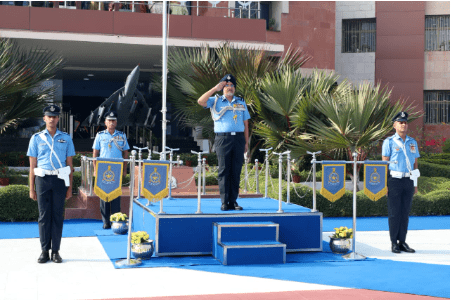
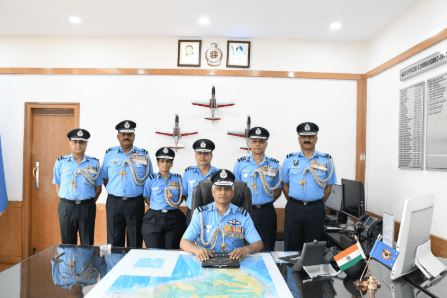
Air Marshal Tejinder Singh assumed charge as the Air Officer Commanding-in-Chief (AOC-in-C), South Western Air Command (SWAC) of the Indian Air Force (IAF) on 01 January 2026. On taking over the prestigious operational command, the Air Marshal paid homage to the fallen heroes at the war memorial, reaffirming the IAF’s enduring commitment to service and sacrifice.


Distinguished Career in the Indian Air Force

An alumnus of the National Defence Academy (NDA), Air Marshal Tejinder Singh was commissioned into the fighter stream of the IAF on 13 June 1987. A Category ‘A’ Qualified Flying Instructor, he has accumulated over 4,500 hours of flying experience across a wide spectrum of aircraft. His professional education includes graduation from the Defence Services Staff College (DSSC) and the National Defence College (NDC), reflecting a strong foundation in operational art and strategic leadership.


Extensive Command and Operational Experience

Throughout his illustrious career, Air Marshal Tejinder Singh has held a range of key command appointments, underscoring his deep operational expertise:

  • Commanding Officer of a Fighter Squadron

  • Commander of a Radar Station

  • Commandant of a premier Fighter Base

  • Air Officer Commanding, Jammu and Kashmir, a critically sensitive operational theatre

These roles provided him with hands-on experience in air defence, combat operations, and joint operational environments.


Key Strategic and Staff Appointments

Air Marshal Tejinder Singh has also served in several senior staff and policy-making roles at Command, Air Headquarters, and Integrated Defence Staff, including:

  • Operational Staff at a Command Headquarters

  • Air Commodore (Personnel Officers-I) at Air Headquarters

  • Deputy Assistant Chief of Integrated Defence Staff (Financial Planning) at HQ IDS

  • Air Commodore (Aerospace Safety)

  • Assistant Chief of the Air Staff (Operations – Offensive)

  • Assistant Chief of the Air Staff (Operations – Strategy) at Air Headquarters (Vayu Bhawan)

  • Senior Air Staff Officer, Eastern Air Command

  • Deputy Chief of the Air Staff at Air Headquarters (VB)

Prior to assuming his current role, he served as the AOC-in-C, Training Command, where he played a pivotal role in shaping the next generation of IAF air warriors.


Decorations and Honours

In recognition of his exemplary and meritorious service, Air Marshal Tejinder Singh has been conferred with prestigious honours by the Hon’ble President of India:

  • Vayu Sena Medal (2007)

  • Ati Vishisht Seva Medal (2022)

These awards reflect his sustained contributions to operational excellence, leadership, and institutional development.


Conclusion

The appointment of Air Marshal Tejinder Singh as AOC-in-C, South Western Air Command brings to the role a seasoned fighter pilot, strategist, and commander with decades of operational and leadership experience. His assumption of command comes at a critical juncture, with SWAC playing a vital role in safeguarding India’s western airspace. Under his leadership, the command is poised to further strengthen operational readiness, training standards, and strategic effectiveness of the Indian Air Force.


For more real-time updates, visit Channel 6 Network.

Source: PIB

Air Marshal Seethepalli Shrinivas Assumes Strong Charge as AOC-in-C, Training Command, Indian Air Force: 2025

Air Marshal Seethepalli Shrinivas took over as the Air Officer Commanding-in-Chief (AOC-in-C), Training Command of the Indian Air Force (IAF) on 01 January 2026. Upon assuming his new appointment, the Air Marshal paid homage to the bravehearts by laying a wreath at the Training Command War Memorial, reaffirming the IAF’s enduring respect for sacrifice and service.


Distinguished Career and Flying Credentials

An alumnus of the National Defence Academy (NDA), Air Marshal Shrinivas was commissioned into the fighter stream of the IAF on 13 June 1987. A ‘Category A’ Qualified Flying Instructor, he brings with him over 4,200 hours of flying experience on a diverse range of aircraft, including MiG-21, Iskra, Kiran, PC-7 Mk II, HPT-32, and Microlite.

In addition, he is qualified as a second pilot on Chetak/Cheetah helicopters and is a categorised Operations Officer on the Pechora missile system, reflecting a rare blend of flying, rotary-wing, and air defence expertise.


Extensive Command Experience Across Training and Operations

Air Marshal Shrinivas has held several prestigious command appointments during his distinguished career, particularly in the training and operational domains:

  • Commandant, Air Force Academy

  • Air Officer Commanding (AOC) of a frontline fighter base on the Western border

  • AOC of a premier flying training base

  • AOC, Advance Headquarters Western Air Command (Jaipur)

  • Commanding Officer, Flying Instructors School

  • Commandant, Institute of Aerospace Safety

  • Commanding Officer, Basic Flying Training School

These roles underscore his deep involvement in shaping the IAF’s flying training ecosystem and operational preparedness.


Key Staff and Instructional Appointments

In addition to command roles, Air Marshal Shrinivas has served in several critical staff and instructional capacities:

  • Assistant Chief of the Air Staff (Personnel Officers)

  • Chief Instructor (Flying), Air Force Academy

  • Operations Staff, HQ Central Air Command

  • Directing Staff, College of Air Warfare

Prior to assuming his current role, he served as the Senior Air Staff Officer at Headquarters South Western Air Command (SWAC).


Academic Excellence and Professional Education

Air Marshal Shrinivas is a graduate of premier professional military institutions, including:

  • National Defence College (NDC)

  • College of Defence Management (CDM)

  • Defence Services Staff College (DSSC)

His academic qualifications include:

  • MPhil in Defence and Strategic Studies

  • Master of Management Studies

  • MSc in Defence and Strategic Studies

This strong academic foundation complements his operational and instructional experience.


Decorations and Honours

In recognition of his meritorious and distinguished service, Air Marshal Shrinivas has been honoured by the Hon’ble President of India with:

  • Vishisht Seva Medal (2017)

  • Ati Vishisht Seva Medal (2024)

These awards reflect his sustained contributions to training excellence, safety, and leadership within the Indian Air Force.


Conclusion

The assumption of charge by Air Marshal Seethepalli Shrinivas as AOC-in-C, Training Command brings to the role a highly experienced instructor, commander, and strategist. With decades of hands-on involvement in flying training, operational command, and aerospace safety, his leadership is expected to further strengthen the IAF’s training philosophy, enhance flight safety standards, and prepare future air warriors to meet evolving operational challenges.


For more real-time updates, visit Channel 6 Network.

Source: PIB

Indian Equity Markets End New Year, January 1, 2026 Session Marginally Higher; Auto, Power Stocks Gain While FMCG Drag Persists

Indian equity markets closed the first trading day of January 1, 2026 on a mildly positive note, supported by selective buying in auto, power, and IT stocks. However, persistent selling pressure in FMCG and select financial stocks capped overall gains, keeping benchmark indices largely range-bound through the session.

Also Read: Indian Equity Markets Trade Flat on New Year’s Day January 1, 2026; FMCG Drag Offsets Gains in Power and Infra Stocks


Benchmark Indices Settle with Modest Gains

The NIFTY 50 ended the session at 26,146.55, up 16.95 points (0.06%). The index opened at 26,173.30, touched an intraday high of 26,197.55, and slipped to a low of 26,113.40, indicating consolidation near elevated levels.

Other indices posted moderate gains:

  • NIFTY Next 50 rose 0.45% to 69,675.40

  • january 1NIFTY Financial Services advanced 0.19% to 27,666.80
  • NIFTY Bank gained 0.22% to 59,711.55

The broader market outperformed the benchmark, reflecting selective risk appetite among investors.


Auto, Power and Select IT Stocks Lead the Gainers

Buying interest was seen in autos, NBFCs, power, and IT stocks, lending support to the indices.

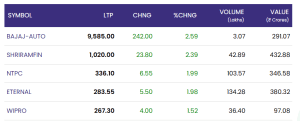
  • Bajaj Auto surged 2.59% to ₹9,585.00, emerging as one of the top gainers on the NIFTY.

  • Shriram Finance gained 2.39% to ₹1,020.00, supported by steady interest in financial stocks.

  • Screenshot 2026 01 01 230215NTPC rose 1.99% to ₹336.10, tracking strength in the power sector.
  • Eternal advanced 1.98% to ₹283.55, backed by healthy volumes.

  • Wipro climbed 1.52% to ₹267.30, continuing its outperformance among IT peers.

These gains helped the benchmark stay in positive territory despite pressure from heavyweight FMCG stocks.


FMCG and Select Large-Caps Remain Under Pressure

FMCG stocks continued to act as a drag on the market, with sharp selling in ITC extending from the previous session.

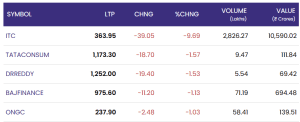
  • ITC plunged 9.69% to ₹363.95, witnessing exceptionally heavy volumes and the highest traded value on the exchange.

  • Tata Consumer Products declined 1.57% to ₹1,173.30.

  • Screenshot 2026 01 01 230226Dr Reddy’s Laboratories slipped 1.53% to ₹1,252.00.

  • Bajaj Finance fell 1.13% to ₹975.60.

  • ONGC eased 1.03% to ₹237.90, despite broader strength in power stocks.

The sharp correction in FMCG names continued to offset gains in cyclical and infrastructure-linked stocks.


Market Breadth and Investor Sentiment

Market breadth remained mixed, with stock-specific action dominating trade. While auto, power, and select IT stocks attracted buying interest, defensive and consumption-focused stocks saw continued profit booking. Investors appeared cautious, preferring selective exposure rather than aggressive positioning at the start of the year.


Conclusion: January 1, 2026

Indian equity markets ended the New Year session with marginal gains, as strength in auto, power, and NBFC stocks was counterbalanced by sustained weakness in FMCG heavyweights, particularly ITC. With indices consolidating near record highs, market participants are likely to remain selective in the near term, tracking global cues, earnings expectations, and sector-specific developments for clearer direction.


For real time stock Updates, visit NSE website.

Indian Equity Markets Trade Flat on New Year’s Day January 1, 2026; FMCG Drag Offsets Gains in Power and Infra Stocks

Indian equity markets opened the New Year on a cautious and range-bound note, with benchmark indices trading almost flat in early afternoon trade on January 1, 2026. While selective buying was seen in power, infrastructure, and capital goods stocks, heavy selling in FMCG majors weighed on overall market sentiment, keeping the indices near unchanged levels.

Also Read: NIFTY 50 Ends 2025 Firmly Above 26,100; Metals, Energy and Banks Drive Year-End Gains


Benchmark Indices Consolidate Near Record Highs

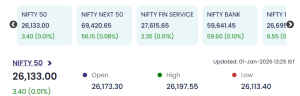
The NIFTY 50 was trading marginally higher at 26,133.00, up just 3.40 points (0.01%), reflecting indecision among investors. The index opened at 26,173.30, touched an intraday high of 26,197.55, and slipped to a low of 26,113.40, highlighting a narrow trading range.

Other key indices also showed muted movement:

  • NIFTY Next 50 edged up 0.08% to 69,420.65

  • january 1NIFTY Financial Services remained nearly flat at 27,615.65
  • NIFTY Bank inched up 0.10% to 59,641.45

The flat performance suggests cautious positioning as investors assess fresh global cues and domestic developments at the start of the calendar year.


Power, Infra and Capital Goods Stocks Support the Market

Buying interest was visible in select PSU, infrastructure, and capital goods stocks, lending support to the indices.

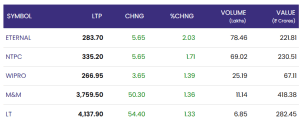
  • Eternal gained 2.03% to ₹283.70, supported by healthy volumes.

  • NTPC rose 1.71% to ₹335.20, tracking strength in the power sector.

  • Screenshot 2026 01 01 132636Wipro advanced 1.39% to ₹266.95, outperforming other IT peers.
  • Mahindra & Mahindra (M&M) climbed 1.36% to ₹3,759.50, aided by continued optimism in the auto space.

  • Larsen & Toubro (L&T) added 1.33% to ₹4,137.90, reflecting sustained interest in infrastructure and capex-driven stocks.

These gains helped offset broader weakness in defensives and financials.


FMCG and Financial Stocks Face Sharp Selling Pressure

On the downside, FMCG stocks emerged as the biggest drag, led by a steep fall in ITC.

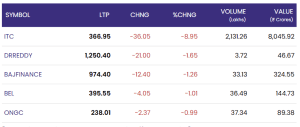
  • ITC plunged 8.95% to ₹366.95, witnessing extremely heavy volumes and high traded value, dragging the benchmark lower.

  • Dr Reddy’s Laboratories declined 1.65% to ₹1,250.40.

  • Screenshot 2026 01 01 132649Bajaj Finance slipped 1.26% to ₹974.40.

  • Bharat Electronics (BEL) fell 1.01% to ₹395.55.

  • ONGC eased 0.99% to ₹238.01, despite strength in energy counters earlier.

The sharp correction in ITC overshadowed gains elsewhere and capped upside in the indices.


Market Breadth and Investor Sentiment

Market breadth remained mixed, with gains in power, infrastructure, and auto stocks counterbalanced by heavy losses in FMCG and select large-cap names. Investors appeared cautious, preferring selective stock-specific trades rather than broad-based exposure at the start of the new year.


Conclusion: January 1, 2026

Indian equity markets began 2026 on a subdued and consolidative note, with the NIFTY 50 hovering near the 26,130 level. While power, infrastructure, and capital goods stocks provided support, sharp selling in ITC and weakness in select financials kept indices largely flat. Going forward, market direction is likely to be influenced by global cues, sector-specific developments, and earnings expectations, with volatility expected to remain stock-driven in the near term.


For real time stock Updates, visit NSE website.

150 Kg Ammonium Nitrate, Cartridges Seized From Car In Rajasthan’s Tonk On New Year’s Eve: Police Arrest Two

0

150 Kg Ammonium Nitrate, Cartridges Seized From Car In Rajasthan’s Tonk On New Year’s Eve During Targeted Operation

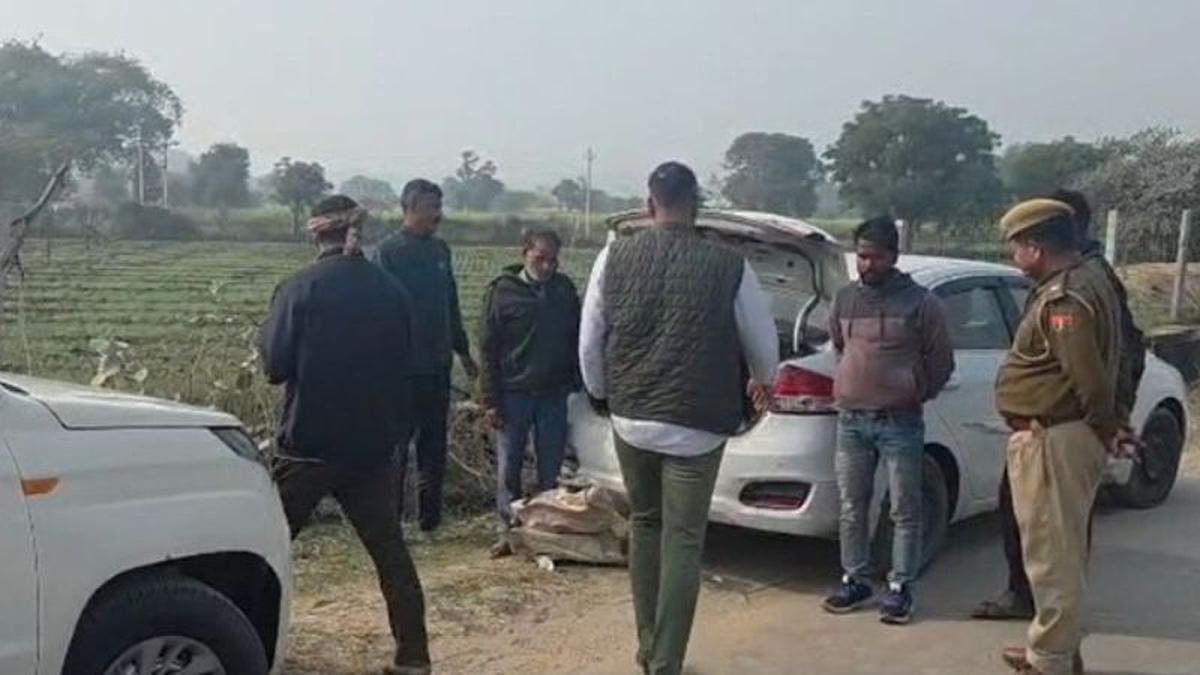
150 Kg Ammonium Nitrate, Cartridges Seized From Car In Rajasthan’s Tonk On New Year’s Eve after the District Special Task Force (DST) carried out a targeted operation in Tonk district, Rajasthan. Acting on specific intelligence, the DST intercepted a vehicle near Baroni police station and discovered a substantial quantity of explosive material concealed in sacks of urea fertiliser.

The seized materials included 150 kilograms of ammonium nitrate, 200 explosive cartridges, and 1,100 meters of safety fuse wire, highlighting the scale of the illegal activity. The operation resulted in the arrest of two men, identified as Surendra Patwa and Surendra Mochi, both residents of Bundi district. seized

DSP Mrityunjay Mishra confirmed the seizure and arrests, stating, “Explosives were seized from a Maruti Ciaz car. One hundred and fifty kg of ammonium nitrate hidden in sacks of urea was recovered. Additionally, 200 explosive batteries and 1,100 meters of wire were found. Two accused have been arrested, and the investigation is ongoing.”

Officials noted that the explosives were likely being transported from Bundi to Tonk, but further investigation is underway to trace the source, network, and intended use of the materials. Authorities emphasized that ammonium nitrate is a highly sensitive chemical and can be misused to manufacture powerful explosives if it falls into the wrong hands.

150 Kg Ammonium Nitrate, Cartridges Seized From Car In Rajasthan’s Tonk On New Year’s Eve, Raising Security Concerns

The recovery comes amid heightened vigilance across Rajasthan during the New Year period. Police have increased monitoring to prevent the illegal transport of explosives and other hazardous materials. The DST operation in Tonk was based on precise intelligence, which helped in preventing potential risks to public safety.

Law enforcement agencies are also looking into the broader network behind the racket. Initial investigations suggest the accused were involved in supplying explosives from Bundi to Tonk, possibly for illegal purposes. Authorities are examining all angles, including the source of the ammonium nitrate, transportation methods, and potential end-users.

The seizure of 200 explosive cartridges and 1,100 meters of safety fuse wires further underscores the seriousness of the case. Such quantities, if misused, could have posed significant dangers. Police stress that strict legal action will follow against those attempting to trade or transport explosives illegally. seized

The arrested individuals are currently under police custody, and further details are expected as investigations continue. Authorities have appealed to the public to report any suspicious activities involving explosives or chemical materials.

150 Kg Ammonium Nitrate, Cartridges Seized From Car In Rajasthan’s Tonk On New Year’s Eve: A Major Breakthrough for Law Enforcement

This operation highlights the proactive measures taken by Rajasthan police to prevent illicit activities involving explosive materials. The DST’s swift action ensured that the explosives did not fall into the wrong hands during a period of large public gatherings and celebrations.

Ammonium nitrate, commonly used as a fertiliser, is strictly regulated due to its potential for misuse. The authorities’ vigilance and intelligence-driven operation in Tonk demonstrate the importance of monitoring sensitive chemicals to maintain public safety, especially during high-risk periods like New Year’s Eve.

Police continue to investigate the broader network and are coordinating with other departments to ensure no further illegal movement of explosives occurs. The arrests of Surendra Patwa and Surendra Mochi serve as a warning against involvement in such criminal activities. Also Read : Explosives haul: 150 kg ammonium nitrate seized in Rajasthan’s Tonk

Conclusion:

150 Kg Ammonium Nitrate, Cartridges Seized From Car In Rajasthan’s Tonk On New Year’s Eve underscores the effective intelligence and enforcement efforts by the Rajasthan police. Authorities continue to probe the case to uncover the full extent of the network and prevent any future risks to public safety.

H1: Amid H-1B visa overhaul, US Embassy warns ‘you will be punished with criminal penalties’ as Indian applicants face delays

0

Amid H-1B visa overhaul, US Embassy warns ‘you will be punished with criminal penalties’ amid growing appointment backlogs

Amid H-1B visa overhaul, US Embassy warns ‘you will be punished with criminal penalties’ as thousands of Indian professionals face long delays in obtaining H-1B and H-4 visas. The embassy issued an advisory emphasizing that violating U.S. immigration laws could lead to serious criminal consequences, heightening anxiety for applicants and their families.

Delays in visa appointments have been ongoing due to stricter vetting procedures and new regulations under the H-1B program. Many Indian IT professionals, students, and skilled workers dependent on these visas are now uncertain about their travel and work plans in the United States.embassy

In a post on X, the US Embassy highlighted: “If you break U.S. law, you will be punished with significant criminal penalties. The administration is committed to ending illegal immigration and protecting national borders and citizens.” While the warning aligns with long-standing U.S. policies, its timing amidst new visa rules caused widespread concern among applicants.

Amid H-1B visa overhaul, US Embassy warns ‘you will be punished with criminal penalties’ as fees and vetting disrupt travel plans

Several factors have contributed to the current backlog. Enhanced vetting procedures, cancellations of pre-scheduled interviews, and additional documentation requirements have slowed down visa processing. The U.S. government also introduced a $100,000 fee on new H-1B visas, creating financial concerns for both applicants and companies sponsoring these visas.embassy

Despite these stricter measures, U.S. officials maintain that attracting skilled global talent remains essential, as domestic labor shortages exist in several key industries. However, the uncertainty surrounding visa approvals has left many Indian professionals in limbo, unable to join projects or pursue work assignments in the U.S.

The Indian government has formally raised concerns with the U.S. over these disruptions. Officials stated that discussions are ongoing to resolve delays and resume H-1B and H-4 visa appointments. Both countries continue diplomatic engagement to balance U.S. security concerns with the need to maintain professional and economic ties.embassy

Amid H-1B visa overhaul, US Embassy warns ‘you will be punished with criminal penalties’, impacting Indian professionals and businesses

The delays have also affected U.S.–India relations in 2025, a year marked by complex diplomatic interactions. Trade disputes, tariffs, and geopolitical issues have added pressure to bilateral relations, with the H-1B visa program becoming another area of tension.

Indian IT and technology companies are particularly affected, as projects are delayed and talent shortages increase due to visa processing issues. Professionals are facing career interruptions, financial stress, and prolonged family separations. Despite these challenges, cooperation continues in areas like trade, research, and technology, highlighting the importance of resolving visa issues promptly. Also Read : You will be punished if…: US embassy in India’s latest amid H-1B visa delays

Conclusion

Amid H-1B visa overhaul, US Embassy warns ‘you will be punished with criminal penalties’, stressing the importance of following U.S. immigration laws. Indian applicants are advised to stay informed through official channels and prepare proper documentation while authorities work on resuming normal visa operations. The situation remains closely monitored by both governments to ensure smoother processing and minimize disruptions for Indian professionals.