Monday, May 4, 2026
Home Blog Page 206

Craig McCracken and Lauren Faust shaped modern animation in a quiet powerful way

0

Craig McCracken and Lauren Faust built their creative legacy long before fans noticed

Craig McCracken and Lauren Faust were already part of the same animation world before their individual creations became global cultural moments. Both entered the industry at a time when television animation was changing, moving away from simple formulas toward stronger characters and deeper storytelling. Their early careers crossed paths in studios where creativity mattered more than trends, and those early connections would later shape the direction of modern animation.catch up lunch with super genius power couple Craig McCracken and Lauren Faust !

Craig McCracken became widely known in 1998 when The Powerpuff Girls premiered. The show stood out for its bold visuals, fast pacing, and characters that were simple but emotionally clear. It appealed to children while also earning respect from adults, which was not common at the time. The series helped redefine what animated television could be, proving that strong ideas could exist within playful formats.

Years later, Lauren Faust made a similar impact with My Little Pony: Friendship is Magic, which launched in 2010. The franchise already existed, but Faust’s version changed how audiences saw it. She focused on personality, relationships, and consistent character growth. The show reached far beyond its expected audience and became known for thoughtful storytelling rather than merchandising alone.

Craig McCracken and Lauren Faust shared creative values behind the scenes

Craig McCracken, the creator of Powerpuff Girls is happily married to the writer of the My Little Pony show, Lauren Faust.Craig McCracken and Lauren Faust did not just work in the same industry; they shared similar beliefs about storytelling. Both valued character-driven narratives over surface-level action. They believed animated characters should feel real, flawed, and emotionally grounded, even in fantasy worlds. This shared mindset helped them connect early in their careers.

They met while working in animation circles where collaboration was common and ideas were openly exchanged. Over time, professional respect turned into personal connection. Their relationship grew quietly, without public attention, even as their individual careers continued to rise. Eventually, they married, forming a partnership that blended personal life with creative understanding.

While they did not co-create every project, their influence on each other was steady. Conversations, feedback, and shared experiences shaped how they approached stories. The emotional clarity seen in Faust’s work and the confident character focus in McCracken’s shows reflect values they both believed in.

Craig McCracken and Lauren Faust influenced animation beyond individual showsBefore they created iconic shows, Craig McCracken and Lauren Faust were already crossing paths in the animation industry. McCracken launched The Powerpuff Girls in 1998, establishing a vibrant and dynamic style that

Craig McCracken and Lauren Faust left a mark on animation that goes beyond specific titles. Their work helped normalize the idea that animated series could have emotional depth, consistent story arcs, and characters who grow over time. This influence can be seen in many shows that followed, even those they were not directly involved in.


View this post on Instagram


A post shared by Humor (@humor)

They also showed that animation creators do not need loud publicity to make lasting impact. Their careers progressed through quality work rather than constant visibility. Fans later began connecting the dots, realizing how closely their creative paths were linked and how much their ideas aligned. Also Read: 2NE1 at 26: A Debut Age That Quietly Changed K-Pop Expectations

Their story also highlights how collaboration in creative industries often happens quietly. Big changes are not always driven by single moments but by years of shared thinking, mutual respect, and consistent values.

Conclusion

Craig McCracken and Lauren Faust built their influence through steady creative work and shared vision rather than public attention. Their individual successes and quiet partnership helped shape modern animation in ways many viewers are only now beginning to recognize.

Swiggy Instamart has opened a new retail shift with its first experiential store in 2025

0

Swiggy Instamart has opened its first experiential store in Gurugram

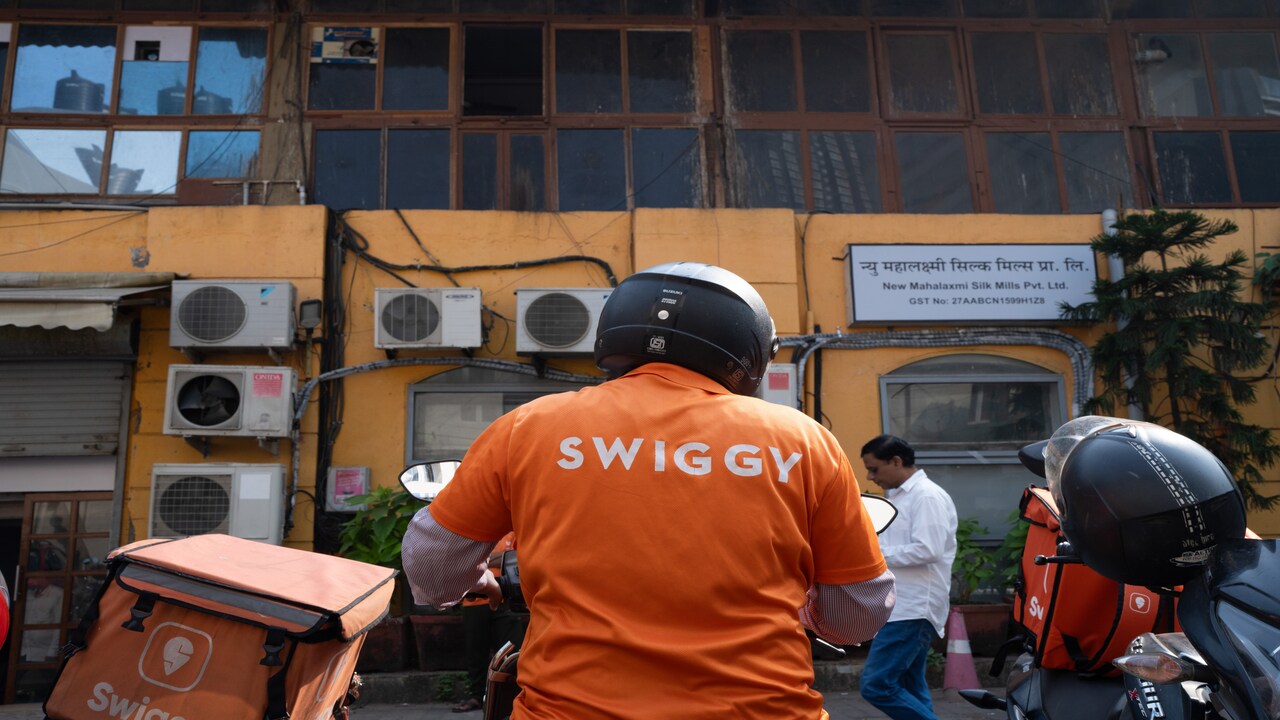
Swiggy Instamart has opened its first mini experiential store in Gurugram, marking a noticeable change in how quick commerce platforms are experimenting with physical formats. Until now, Instamart was known mainly for its dark store model, where products are stored and delivered quickly without customer interaction. This new store takes a different approach by allowing customers to see and feel select products before buying them through the app.Swiggy Instamart goes offline, opens its first-ever experiential store in Gurugram

The store is not designed to replace Instamart’s existing delivery system. Instead, it works as an extension of the digital platform, offering customers a chance to physically experience certain items that are usually ordered online. This move reflects how consumer expectations are slowly changing, especially in urban areas where people want both speed and assurance before making a purchase.

Unlike regular retail outlets, this experiential store carries a limited selection of products. Only around 100 to 200 items are displayed, focusing on commonly used and high-interest categories. This is much smaller when compared to Instamart’s dark stores, which usually hold thousands of products. The goal here is not variety, but experience.

Swiggy Instamart has opened a seller-led model to test offline engagement

Swiggy Instamart has opened this store with a structure that is different from traditional retail partnerships. These mini stores are located near residential societies and are operated directly by sellers. The sellers manage the store, interact with customers, and handle the product display, while Instamart continues to support the digital ordering system.Instamart, Swiggy's rapid delivery arm, has opened its first-of-its-kind experiential mini store in Gurugram, allowing consumers to touch and feel products available on the platform as the quick commerce industry matures and

One major change is how payments are handled. In this model, sales proceeds go directly to the sellers instead of being routed through Swiggy first. This gives sellers more control and faster access to their earnings, which could encourage more participation from local partners.

The store does not function as a walk-in shopping outlet where customers carry products home immediately. Instead, customers view and check the products in person and then place their orders through the Instamart app. The delivery still follows the quick commerce promise, keeping speed at the center of the experience.

This format also helps Instamart understand customer preferences better. By observing which products attract attention in physical form, the platform can refine its online offerings and improve product selection in nearby dark stores.

Swiggy Instamart has opened a practical response to quick commerce competitionSwiggy's Instamart opens offline experience store as quick commerce evolves

Swiggy Instamart has opened this experiential store at a time when competition in quick commerce is increasing. As multiple platforms offer similar delivery speeds, companies are looking for new ways to stand out. Physical experience, even in a limited form, adds trust and familiarity, especially for categories where customers prefer to check quality before buying.

This store also reduces the pressure on full-scale retail expansion. Since it is small, seller-operated, and limited in inventory, the risk and cost remain controlled. It allows Swiggy to test consumer response without making large investments in traditional retail infrastructure. Also Read: 2NE1 at 26: A Debut Age That Quietly Changed K-Pop Expectations

Conclusion

Swiggy Instamart has opened its first experiential store as a cautious but clear step toward blending online speed with offline confidence. While it is not a full retail shift, the move shows how quick commerce is evolving to meet changing consumer habits. If successful, this model could influence how digital-first platforms think about physical presence in the future.

SHINee Key Admitted to a Controversial Medical Choice That Led to a Career Pause

0

SHINee Key Admitted involvement in unlicensed medical treatment

SHINee Key Admitted on Wednesday that he had received medical treatment at home from a person later revealed to be providing unlicensed services. The admission came through an online statement, following growing public attention around the so-called “injection auntie,” a figure already under scrutiny for allegedly offering similar illegal treatments to comedian Park Na-rae.SHINee's Key And SM Release Statements Regarding Recent Allegations + Key Steps Down From Programs | Soompi

Key expressed regret for the situation and acknowledged the controversy his actions had caused. Along with his apology, he announced his decision to step down from all television programs he is currently appearing on, stating that the pause was necessary to take responsibility and prevent further public discomfort.

The incident has drawn attention not only because of Key’s status as a prominent idol and entertainer, but also due to the wider issue of illegal medical services being accessed by public figures.

SHINee Key Admitted misunderstanding the medical provider’s status

According to an official statement released by SM Entertainment, SHINee Key Admitted that his involvement stemmed from a misunderstanding rather than intentional wrongdoing. The agency explained that Key was first introduced to the individual while visiting a hospital in Seoul’s Gangnam District, based on a recommendation from an acquaintance.Injection auntie' controversy: SHINee's Key quits K-pop schedules; SM Ent issues 'delayed' statement - Entertainment News | The Financial Express

At the time, Key believed the person was a licensed doctor, as the treatments were initially conducted at a hospital setting. He continued to receive care there over a period of time. However, due to scheduling difficulties, he later accepted several home visits for treatment, not realizing that such arrangements were legally problematic.

The agency emphasized that Key had no prior indication that the provider was operating outside medical regulations. Because the individual did not raise concerns or clarify her qualifications, Key did not anticipate that receiving treatment at home would violate any rules.

Despite this explanation, public response has remained cautious, reflecting growing sensitivity in South Korea toward medical ethics and celebrity accountability.

SHINee Key Admitted responsibility and stepped away from broadcasts

SHINee Key Admitted that regardless of intent, the situation required accountability. His decision to suspend all television appearances was presented as a voluntary step, not one imposed by broadcasters. Industry observers note that such actions are often taken to prevent further escalation and to show respect toward public concern.SHINee Key Admitted

Key has been an active presence across variety shows, fashion programs, and music-related content, making his absence noticeable. However, stepping back is seen as a way to allow investigations and public discussion to proceed without distraction.

SM Entertainment stated that Key would cooperate fully if further clarification or legal review is required. No formal charges have been announced against him at this stage.

SHINee Key Admitted case highlights broader industry concerns

The situation surrounding SHINee Key Admitted involvement has also reignited debate about how celebrities manage personal health care and the risks of relying on informal recommendations. In recent years, several high-profile cases have exposed gaps between personal trust and legal medical practice.

Experts point out that public figures often face time constraints that lead them to seek convenience, but stress that medical regulations exist to protect both patients and providers. The case underscores the importance of verifying credentials, even when treatments appear routine or familiar. Also Read: 2NE1 at 26: A Debut Age That Quietly Changed K-Pop Expectations

Conclusion

SHINee Key Admitted his mistake, apologized publicly, and chose to pause his television career to address the fallout responsibly. While the matter continues to unfold, his response reflects an attempt to acknowledge public concern and limit further impact. The incident stands as a reminder that misunderstandings around medical care can carry serious consequences, especially for those in the public eye.

Smriti Mandhana Creates a Defining Moment with a Landmark Record in Women’s T20I Cricket

0

Smriti Mandhana Creates a historic milestone in Women’s T20I cricket

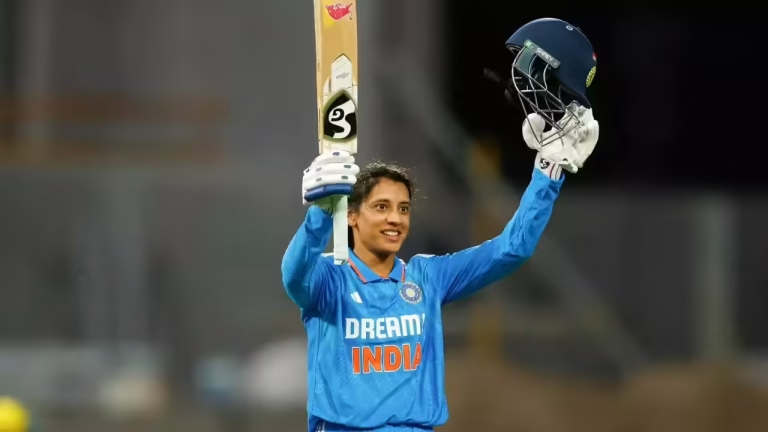
Smriti Mandhana Creates another defining chapter in Indian cricket after becoming the first Indian woman to cross 4,000 runs in Women’s T20 Internationals. The landmark achievement came during the first T20I match against Sri Lanka at Visakhapatnam, a venue that witnessed one of the most important personal milestones of her career.Smriti Mandhana Fastest to Five Thousand ODI Runs | t2ONLINE

With this feat, Mandhana moved to second place on the global list of highest run-scorers in Women’s T20Is, going past several legendary names. Only New Zealand’s Suzie Bates now stands ahead of her. What makes this record even more significant is the speed at which Mandhana achieved it. She reached 4,000 runs in just 3,227 balls, faster than any player in the history of the format. Bates, who currently leads the chart, took 3,675 balls to reach the same mark.

The achievement once again highlights Mandhana’s consistency and impact at the international level, especially in the shortest format of the game.

Smriti Mandhana Creates impact beyond numbers

The record is not just about runs or rankings. Smriti Mandhana Creates influence through the way she plays and the role she holds in Indian women’s cricket. Over the years, she has been one of India’s most dependable batters in T20Is, often setting the tone at the top of the order and anchoring innings when required.

Smriti Mandhana Becomes First Indian to Surpass 4000 T20I Runs Milestone - Female CricketMandhana’s batting style is built on timing, placement, and composure rather than brute force. This approach has allowed her to maintain consistency across different conditions and against varied bowling attacks. Her ability to score runs quickly without taking unnecessary risks has made her one of the most reliable players in the format.

Reaching 4,000 runs at such a rapid pace reflects not only her skill but also her longevity at the top level. It shows how she has adapted her game as Women’s T20 cricket has evolved, becoming faster and more competitive over time.

The Visakhapatnam crowd acknowledged the milestone with loud applause, marking the moment as a proud one for Indian cricket.

Smriti Mandhana Creates a benchmark for the next generation

Smriti Mandhana Creates a standard that future Indian cricketers will look up to. Being the first Indian to reach this milestone places her in a leadership position beyond the team sheet. Young players entering the national setup now see a clear example of what consistency, discipline, and adaptability can achieve.IND W vs SL W: Smriti Mandhana becomes first Indian to unlock this mighty milestone in

Her record also strengthens India’s presence in global women’s cricket. Competing at the top of international charts shows that Indian players are not just participating but shaping the history of the game. Mandhana’s rise has coincided with the growth of women’s cricket in India, both in terms of visibility and performance.


View this post on Instagram


A post shared by VOGUE India (@vogueindia)

While individual records are important, Mandhana has often emphasized team success. Her milestone came during an international match where India aimed to build momentum and confidence. That balance between personal achievement and team responsibility has been a defining trait of her career. Also Read: U19 Asia Cup Final: Pakistan Crushes India in Dominant 191-Run Victory

Conclusion

Smriti Mandhana Creates history once again by crossing 4,000 T20I runs faster than any player before her. The record stands as a reflection of her consistency, skill, and importance to Indian cricket. As she continues her journey, this milestone will be remembered as one of the moments that firmly placed her among the greatest batters in the women’s game.

IP&TAFS Proudly Marks 51st Foundation Year as Sanchar Vitta Lekha Diwas, Hosts Communication Finance Summit 2025

The Indian Posts & Telecommunications Accounts and Finance Service (IP&TAFS) celebrated its 51st Foundation Year as Sanchar Vitta Lekha Diwas and organised the Communication Finance Summit 2025, reaffirming its pivotal role in strengthening financial governance across India’s telecommunications and postal sectors. IP&TAFS is a Central Civil Service recruited through the Union Public Service Commission (UPSC).


Five Decades of Institutional Evolution

Addressing the gathering, the Controller General of Communication Accounts (CGCA), Ms. Vandana Gupta, reflected on IP&TAFS’s 51-year journey and its growing strategic relevance. She highlighted how economic reforms, liberalisation, and rapid technological change have reshaped the mandates of the Department of Telecommunications (DoT) and the Department of Posts (DoP)—and, in turn, expanded the responsibilities of IP&TAFS.

She underscored the Service’s central role in revenue assurance, assessment and collection of licence fees and Spectrum Usage Charges, financial oversight of telecom operators, internal audit, pension management, and policy-oriented financial advice. These contributions have supported transparent, accountable, and sustainable public service delivery, with DoT and DoP consistently ranking among the top departments in grievance redressal published by the Department of Administrative Reforms and Public Grievances (DARPG).


Capacity Building and Training Excellence

Emphasising human capital development, Ms. Gupta noted that IP&TAFS hosts a Sarvottam–Capacity Building Commission highest-rated Central Training Institute, the National Communications Academy–Finance (NCA-Finance). The Academy has successfully conducted the Special Foundation Course for 176 officers from 15 All India Services and Central Civil Services in collaboration with the Lal Bahadur Shastri National Academy of Administration (LBSNAA)—a programme that received strong appreciation.

She also highlighted the expanding remit of IP&TAFS officers beyond traditional accounts and finance, encompassing core operational, governance, audit, and policy-support functions across the communications ecosystem.


Agility, Adaptability and Digital Transformation

Advisor (Finance), Ms. Darshana M. Dabral, congratulated the Service and emphasised the importance of reflective institutional learning. She traced IP&TAFS’s major growth phases—from the liberalisation of the 1990s to the digital transformation of the 2020s—during which the Service evolved from a service provider to a regulator and strategic financial partner.

She identified agility and adaptability as defining pillars and highlighted reforms such as IT 2.0 in postal operations and rapid accounting modernisation. Flagship digital platforms—SAMPANN, IT 2.0, and SARAS—were cited as scalable solutions with potential application across Ministries, State Governments, and Direct Benefit Transfer (DBT) frameworks to enhance efficiency and transparency.


Institutional Memory and Governance Partnerships

Sharing reflections, Shri Rajeev Kumar, Senior Deputy Director General (PAF), spoke about transitions across telecom and postal sectors and the role of veteran and retired officers as mentors and custodians of institutional memory.

Extending greetings, Ms. Astha Saxena, Additional Controller General of Accounts, underscored the enduring importance of Accounts and Finance Services to governance. She highlighted collaboration between IP&TAFS and the Controller General of Accounts (CGA)—including through the Public Financial Management System (PFMS)—and reaffirmed the centrality of communications to government functioning.


Looking Ahead: A Whole-of-Government Approach

The Summit featured discussions on SAMPANN 2.0 for pension management, IT 2.0 for postal reforms, and SAMPANN for revenue assurance and financial risk mitigation. Forward-looking initiatives—including Digital Bharat Nidhi, digital and financial literacy, Innovation Cells, and performance audits—were envisaged to drive inclusive growth and systemic transformation. Interactions with officers from multiple Ministries reflected a strong Whole-of-Government commitment to robust public financial governance.


Conclusion
As IP&TAFS marks its 51st Foundation Year, the Sanchar Vitta Lekha Diwas and Communication Finance Summit 2025 underscored the Service’s evolution into a strategic pillar of India’s communications ecosystem. With a strong focus on digital reforms, capacity building, and collaborative governance, IP&TAFS is well-positioned to continue enabling transparent, efficient, and future-ready public financial management.


For more real-time updates, visit Channel 6 Network.

Source: PIB

Indian Navy Receives ‘Anjadip’, Third Indigenous Anti-Submarine Warfare Shallow Water Craft: 2025

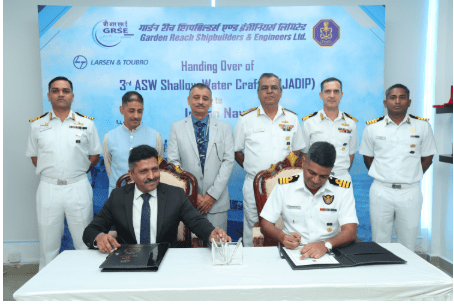
In a significant boost to India’s maritime defence capabilities, the Indian Navy took delivery of ‘Anjadip’, the third Anti-Submarine Warfare Shallow Water Craft (ASW SWC), on December 22, 2025, at Chennai. The induction marks another milestone in India’s journey towards self-reliance in defence manufacturing under the vision of Aatmanirbhar Bharat.


Indigenous Design and Collaborative Construction

‘Anjadip’ is the third of eight ASW SWCs being indigenously designed and constructed by Garden Reach Shipbuilders and Engineers (GRSE), Kolkata. The project is being executed under a Public-Private Partnership (PPP) between GRSE and L&T Shipyard, Kattupalli.

The vessels have been built in accordance with the classification rules of the Indian Register of Shipping (IRS), reflecting the success of collaborative defence manufacturing involving both public and private sector expertise.


Advanced Capabilities for Coastal and Subsurface Defence

Measuring approximately 77 metres in length, the ASW SWC class represents the largest Indian naval warships powered by waterjet propulsion. The vessels are equipped with state-of-the-art systems, including:

  • Lightweight torpedoes

  • Indigenously developed anti-submarine rockets

  • Advanced shallow-water sonar

These capabilities enable effective detection, tracking and engagement of underwater threats, significantly enhancing the Navy’s anti-submarine warfare, coastal surveillance and mine-laying operations, particularly in littoral and shallow-water environments.


Legacy and Strategic Significance

The newly delivered ‘Anjadip’ is a reincarnation of the erstwhile INS Anjadip, a Petya-class corvette that served the Indian Navy until its decommissioning in 2003. The ship derives its name from Anjadip Island, located off the coast of Karwar, Karnataka—symbolising India’s enduring commitment to safeguarding its extensive maritime frontiers.


Strengthening Aatmanirbhar Bharat in Defence

With over 80% indigenous content, the delivery of ‘Anjadip’ underscores the growing maturity of India’s domestic defence manufacturing ecosystem. The project highlights reduced dependence on imports, enhanced technological self-sufficiency, and deeper integration of Indian industry into critical naval platforms.


Conclusion
The induction of ‘Anjadip’ into the Indian Navy marks a decisive step in strengthening India’s coastal and anti-submarine warfare capabilities. As the third vessel in the ASW SWC series, it reinforces the Navy’s operational readiness while standing as a testament to India’s progress in indigenous shipbuilding and its unwavering commitment to Aatmanirbhar Bharat in defence.


For more real-time updates, visit Channel 6 Network.

Source: PIB

Matua Community Electoral Anxiety – Detailed Analysis of Modi’s Chopper Scare, Silence on SIR, and Governance Lessons for Bengal Politics

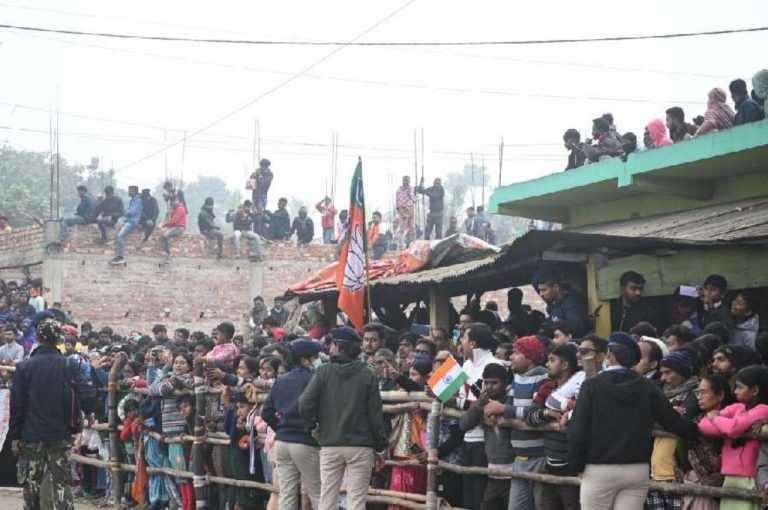
The Matua community electoral anxiety has become a defining issue in Bengal’s political landscape. On December 21, 2025, Prime Minister Narendra Modi’s helicopter failed to land at Taherpur due to poor visibility, forcing him to address supporters virtually. His silence on the Special Intensive Revision (SIR) of electoral rolls—a process that has triggered fears of disenfranchisement among the Matua community—sparked anger, protests, and accusations of betrayal.


2. Matua Community Electoral Anxiety: The Incident

  • Modi was scheduled to address a rally in Taherpur, Nadia district, a Matua‑dominated region.
  • His helicopter hovered but returned to Dum Dum airport due to fog.
  • Modi addressed the gathering virtually, inaugurating highway projects worth ₹3,200 crore.
  • However, he avoided mentioning the SIR controversy, which has left many Matuas fearing deletion from voter rolls.
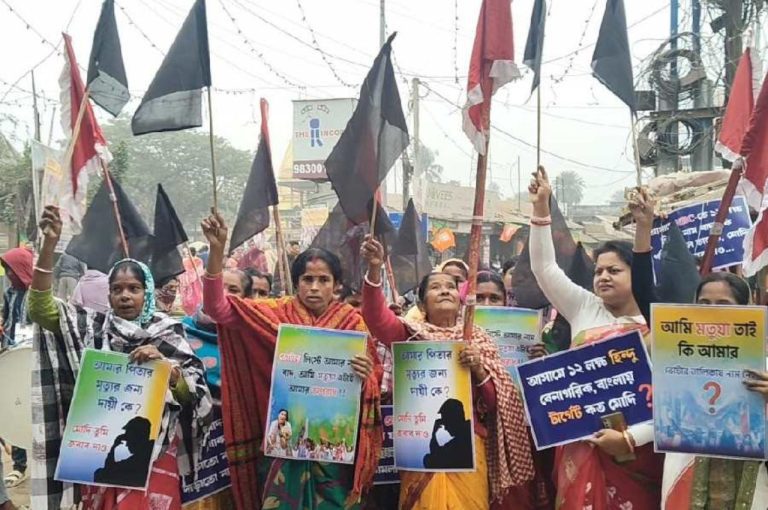
  • By evening, protests erupted at Badkulla railway station, with Matuas demanding clarity.

3. Community Reaction

  • Supratik Biswas, a Matua attendee, said: “We expected a solution from his mouth, but he avoided the issue.”
  • Tea vendor Hira Malik in Thakurnagar followed the speech on his phone and felt disheartened.
  • The absence of reassurance deepened mistrust, with many accusing BJP of deliberately ignoring their plight.
  • The Matua community sees voting rights as central to identity and security, making silence politically costly.

4. The SIR Exercise and Its Impact

  • The Election Commission requires proof of linkage to the 2002 voter list.
  • Many Matuas, being refugees from Bangladesh, lack such documentation.
  • Fear of disenfranchisement has spread across Nadia, North 24‑Parganas, and South 24‑Parganas.
  • BJP had earlier claimed CAA applications would protect voter rights, but the Supreme Court clarified that voting rights come only after formal citizenship.
  • This contradiction has strained BJP’s relationship with the community.

5. Political Fallout

  • BJP leaders admitted disappointment at Modi’s absence and silence.
  • Trinamool Congress (TMC) accused BJP of betraying Matuas, branding them “infiltrators.”
  • Subrata Thakur, BJP MLA and Matua leader, downplayed fears, saying hearings would resolve issues.
  • Sukesh Chowdhury, Trinamool‑backed Matua leader, alleged BJP was conspiring to deport refugees.
  • The incident has become a flashpoint in Bengal’s identity politics.

6. Government External Links for Assistance


7. Historical Context of Matua Politics

  • The Matuas trace their roots to Harichand Thakur and Guruchand Thakur, spiritual reformers of the Namasudra community.
  • Post‑Partition, they migrated to Bengal, demanding recognition and rights.
  • In 2019 Lok Sabha elections, BJP gained massive support from Matuas by promising citizenship under CAA.
  • In 2021 Assembly polls, Matuas remained a decisive factor in nearly 20 constituencies.
  • The current crisis threatens to erode this support base.

8. Governance Challenges

The crisis reflects:

  • Documentation gaps among refugee communities.
  • Confusion over CAA implementation.
  • Polarization of identity politics.
  • Weak communication between government and citizens.

9. Global Comparisons

Similar refugee documentation crises exist worldwide:

  • Rohingyas in Myanmar and Bangladesh: Stateless despite generations of residence.
  • Palestinian refugees: Facing documentation challenges across Middle East.
  • African migrants in Europe: Struggles with citizenship and voting rights.

The Matua case mirrors these global struggles for identity and enfranchisement.


10. Governance Lessons

The Matua crisis teaches:

  • Clear communication on citizenship laws is essential.
  • Simplified documentation processes can prevent disenfranchisement.
  • Community engagement builds trust in governance.
  • Balanced policies must respect both national security and refugee rights.

11. Future Outlook – Citizenship and Democracy in Bengal

India must move towards:

  • Digital citizenship verification linked to Aadhaar.
  • Special provisions for refugee communities with historical roots.
  • Awareness campaigns to guide citizens through hearings.
  • Inclusive electoral reforms to protect vulnerable populations.

12. Conclusion

The Matua community electoral anxiety is more than a dispute over documents. It reflects the fragility of citizenship rights and the political stakes in Bengal. Modi’s silence during his virtual speech has intensified feelings of betrayal, while Trinamool’s attacks highlight the community’s importance in upcoming elections. As hearings begin, the outcome will determine not only the future of the Matuas but also the credibility of India’s democratic process.

Also read: Home | Channel 6 Network – Latest News, Breaking Updates: Politics, Business, Tech & More

India and New Zealand Conclude Landmark Free Trade Agreement, Paving the Way for a People-Centric, Jobs-Driven Partnership: 2025

India and New Zealand have announced the successful conclusion of a comprehensive and forward-looking Free Trade Agreement (FTA), marking a major milestone in India’s global economic engagement and Indo-Pacific strategy. Concluded under the visionary leadership of Narendra Modi, the agreement is aligned with the national aspiration of Viksit Bharat 2047 and represents one of India’s fastest FTAs concluded with a developed country.


A New-Generation FTA Built on Trade, Investment and Talent

Launched on March 16, 2025, during talks between Piyush Goyal, Union Minister of Commerce and Industry, and Todd McClay, Minister for Trade and Investment of New Zealand, the negotiations concluded after five formal rounds and multiple inter-sessional engagements.

The agreement establishes a high-quality, balanced economic partnership anchored on tariff liberalisation, agricultural productivity, investment facilitation and talent mobility—placing people, jobs, and innovation at its core.


Unprecedented Market Access for Indian Exports

Under the FTA, New Zealand has eliminated tariffs on 100% of its tariff lines, granting zero-duty market access to all Indian exports. India, in turn, has offered tariff liberalisation on 70% of tariff lines, covering 95% of bilateral trade value.

This enhanced access significantly boosts the competitiveness of India’s labour-intensive sectors such as:

  • Textiles and apparel

  • Leather, footwear and handicrafts

  • Pharmaceuticals and medical devices

  • Engineering goods and automobiles

  • Agricultural and marine products

The agreement is expected to directly benefit workers, artisans, women entrepreneurs, youth and MSMEs, while strengthening India’s integration into global value chains.


New Zealand’s Most Ambitious Services Offer to India

The FTA delivers New Zealand’s best-ever services commitment in any of its trade agreements. India has secured access across 118 services sectors, with Most-Favoured Nation (MFN) commitments in 139 sub-sectors, including:

  • IT and IT-enabled services

  • Professional and business services

  • Education and financial services

  • Audio-visual, telecom and construction services

  • Tourism and travel-related services

This opens substantial opportunities for Indian service providers and high-skill employment.


Boost to Student Mobility and Skilled Professionals

A future-ready mobility framework forms a key pillar of the agreement. The FTA:

  • Enables post-study work rights up to 3 years for STEM Bachelor’s and Master’s graduates

  • Allows up to 4 years of post-study work for Doctoral scholars

  • Removes numerical caps on student mobility pathways

  • Introduces a dedicated Temporary Employment Entry visa quota of 5,000 professionals

  • Provides 1,000 Work and Holiday visas

The agreement covers diverse professions, including IT professionals, engineers, healthcare workers, educators, AYUSH practitioners, yoga instructors, chefs and cultural professionals—strengthening people-to-people ties.


Agricultural Productivity with Farmer Protection

The FTA establishes Agricultural Productivity Partnerships through Centres of Excellence for apples, kiwifruit and honey. These focus on:

  • Technology transfer and research collaboration

  • Improved planting material and capacity building

  • Orchard management, post-harvest practices and food safety

To protect Indian farmers and domestic industry, market access excludes sensitive products such as dairy, coffee, milk, cheese, sugar, spices, edible oils and rubber. For permitted products, access is linked to quotas and minimum import prices, ensuring safeguards alongside knowledge sharing.


USD 20 Billion Investment Commitment

New Zealand has committed to facilitating USD 20 billion in investments into India over 15 years, supporting manufacturing, infrastructure, services, innovation and employment under the Make in India initiative. Indian enterprises are also expected to benefit from access to New Zealand and wider Pacific markets.


Boost to Pharma, GIs and AYUSH

The agreement streamlines regulatory access for pharmaceuticals and medical devices by enabling acceptance of GMP and GCP inspection reports from global regulators such as the US FDA, EMA and UK MHRA, reducing compliance costs and speeding up approvals.

Commitments on Geographical Indications (GIs) will facilitate registration of Indian wines, spirits and other goods. Cooperation has also been agreed in AYUSH, culture, fisheries, tourism, forestry, horticulture and traditional knowledge, positioning India as a global wellness and medical value travel hub.


Strengthening a Growing Economic Relationship

India–New Zealand economic ties have shown steady growth, with:

  • Bilateral merchandise trade at USD 1.3 billion in 2024–25

  • Total trade in goods and services at USD 2.4 billion

  • Services trade alone reaching USD 1.24 billion, led by travel, IT and business services

The FTA provides a stable and predictable framework to unlock the full potential of this relationship.


Conclusion
The India–New Zealand Free Trade Agreement represents a transformative, new-generation partnership that goes beyond tariffs to focus on people, productivity and prosperity. As the third FTA concluded in 2025 under Prime Minister Narendra Modi’s leadership, it stands as a decisive step toward building a globally competitive, inclusive and resilient Indian economy in line with the vision of Viksit Bharat 2047.


For more real-time updates, visit Channel 6 Network.

Source: PIB

WHO and Ministry of Ayush Proudly Convene High-Level Technical Meeting in New Delhi to Integrate Ayush Systems into Global Health Standards: 2025

In a significant step toward the global mainstreaming of traditional medicine, the World Health Organization (WHO), in collaboration with the Ministry of Ayush, organized a two-day Technical Project Meeting on Traditional Medicine (TM) intervention code set development in New Delhi. The meeting, held on December 20–21, 2025, focused on integrating Ayush systems into the International Classification of Health Interventions (ICHI)—a globally recognized standard for classifying healthcare procedures.


Background: Landmark India–WHO Collaboration

The technical meeting was anchored in the Memorandum of Understanding (MoU) and Donor Agreement signed between the Ministry of Ayush and WHO on May 24, 2025. This agreement lays the foundation for developing a dedicated Traditional Medicine module within ICHI, with India providing both financial and technical support. The initiative aims to bring Ayurveda, Siddha, and Unani (ASU) systems into the global healthcare framework in a structured and scientific manner.


Alignment with National Vision

The initiative reflects the vision articulated by Narendra Modi, who has consistently emphasized the global outreach of Ayush systems through scientific validation. In his Mann Ki Baat address, the Prime Minister highlighted that standardized global frameworks would enhance the credibility, acceptance, and reach of Ayush interventions worldwide.

Echoing this sentiment, the Secretary of the Ministry of Ayush has previously noted that a dedicated ICHI module would not only support WHO’s inclusive and evidence-based healthcare agenda but also enable systematic global recognition of India’s traditional medical knowledge.


Leadership and Expert Participation

The technical sessions were chaired by Ms. Kavita Garg, Joint Secretary, Ministry of Ayush, who led India’s efforts in developing National Health Intervention Codes for Ayurveda, Siddha, and Unani medicine. The Indian delegation included senior experts such as:

  • Prof. Rabinarayan Acharya, Director General, Central Council for Research in Ayurvedic Sciences (CCRAS)

  • Prof. N. J. Muthukumar, Director General, Central Council for Research in Siddha (CCRS)

  • Dr. Zaheer Ahmad, Director General, Central Council for Research in Unani Medicine (CCRUM)


Global Representation and WHO Leadership

The meeting witnessed participation from all six WHO regions—AFRO, AMRO, EMRO, EURO, SEARO, and WPRO, ensuring a comprehensive global perspective. Senior officials from WHO Headquarters, Geneva, led the classification discussions, supported by experts from the WHO Global Traditional Medicine Centre (GTMC), Jamnagar, and the WHO SEARO office in Delhi.

Member States including Bhutan, Brazil, India, Iran, Malaysia, Nepal, Mauritius, South Africa, Sri Lanka, the Philippines, the UK, and the USA participated actively, sharing national experiences and working toward harmonized descriptions of traditional medicine interventions.


Why Integration into ICHI Matters

Integrating traditional medicine into ICHI is a critical step, as intervention coding provides a common global language for healthcare procedures. Standardized codes enable accurate documentation, reporting, and comparative analysis of treatment outcomes across countries and medical systems. This initiative will support:

  • Evidence-based clinical research

  • Policy formulation and health system planning

  • Integration of traditional medicine into national health information systems

  • Global scalability of validated Ayush interventions

The project will be implemented by WHO under strict timelines, following a rigorous scientific and consultative process.


Conclusion
The WHO–Ministry of Ayush technical meeting marks a transformative moment for traditional medicine, positioning India’s Ayush systems within the architecture of global health standards. By embedding Ayurveda, Siddha, and Unani interventions into ICHI, the initiative not only enhances their scientific legitimacy but also paves the way for their wider adoption in global healthcare delivery. The collaboration underscores India’s growing leadership in shaping inclusive, evidence-based, and culturally rooted health systems worldwide.

 The meeting, held on December 20–21, 2025, focused on integrating Ayush systems into the International Classification of Health Interventions (ICHI)—a globally recognized standard for classifying healthcare procedures. The initiative aims to bring Ayurveda, Siddha, and Unani (ASU) systems into the global healthcare framework in a structured and scientific manner.


For more real-time updates, visit Channel 6 Network.

Source: PIB

Matua Community Electoral Roll Crisis – Detailed Analysis of Trinamool’s Attack on Modi’s Silence, SIR Fears, and Governance Lessons for Citizenship in Bengal

The Matua community electoral roll crisis has become a central issue in Bengal’s political discourse. On December 21, 2025, Trinamool Congress leaders accused Prime Minister Narendra Modi of betraying the Matua community by failing to address their concerns during his virtual speech in the state. The controversy revolves around the Special Intensive Revision (SIR) of electoral rolls, which has flagged millions of voters for hearings and deletions, disproportionately affecting the Matua population.


2. Background of the Matua Community

  • The Matuas are a Namasudra Hindu refugee community who migrated from Bangladesh.
  • They form a decisive vote bank in 40–50 Assembly constituencies across Bengal.
  • The community has historically supported BJP due to promises of citizenship under the Citizenship Amendment Act (CAA).
  • However, uncertainty over documentation has left them vulnerable during the SIR exercise.

3. The SIR Exercise and Its Impact

  • The Election Commission mandated 11 documents to prove citizenship.
  • Nearly 95% of Matuas lack these documents, according to Trinamool MP Mamata Bala Thakur.
  • The draft rolls show large‑scale deletions, raising fears of disenfranchisement.
  • Protests erupted in Nadia and North 24‑Parganas, with Matuas accusing BJP of branding them “infiltrators.”

4. Trinamool’s Attack on Modi

  • Mamata Bala Thakur said Modi’s silence aggravated community fears.
  • State minister Chandrima Bhattacharya accused Modi of playing the “Bengali card” without genuine concern.
  • Education minister Bratya Basu alleged BJP was dividing even Hindus by alienating Matuas.
  • Trinamool leaders framed the issue as a betrayal of trust after 2024 elections.

5. Modi’s Response

  • Later in the evening, Modi posted on X assuring Matuas and Namasudras of dignity under the CAA.
  • He claimed BJP would do more for the community once it formed a government in Bengal.
  • His remarks were seen as damage control, but critics argued they lacked clarity on documentation.

6. Government External Links for Assistance


7. Historical Context of Matua Politics

  • The Matua movement began under Harichand Thakur in the 19th century.
  • His son Guruchand Thakur expanded the social reform agenda.
  • Post‑Partition, Matuas migrated to Bengal, demanding recognition and rights.
  • In recent decades, they became a swing vote bank, courted by both TMC and BJP.

8. Governance Challenges

The crisis reflects:

  • Documentation gaps among refugee communities.
  • Confusion over CAA implementation.
  • Polarization of identity politics.
  • Weak communication between government and citizens.

9. Matua Community Electoral Roll Crisis: Global Comparisons

Similar refugee documentation crises exist worldwide:

  • Rohingyas in Myanmar and Bangladesh: Stateless despite generations of residence.
  • Palestinian refugees: Facing documentation challenges across Middle East.
  • African migrants in Europe: Struggles with citizenship and voting rights.

The Matua case mirrors these global struggles for identity and enfranchisement.


10. Governance Lessons

The Matua crisis teaches:

  • Clear communication on citizenship laws is essential.
  • Simplified documentation processes can prevent disenfranchisement.
  • Community engagement builds trust in governance.
  • Balanced policies must respect both national security and refugee rights.

11. Future Outlook – Citizenship and Democracy in Bengal

India must move towards:

  • Digital citizenship verification linked to Aadhaar.
  • Special provisions for refugee communities with historical roots.
  • Awareness campaigns to guide citizens through hearings.
  • Inclusive electoral reforms to protect vulnerable populations.

12. Conclusion

The Matua community electoral roll crisis is more than a dispute over documents. It reflects the fragility of citizenship rights and the political stakes in Bengal. Trinamool’s attack on Modi’s silence underscores the community’s sense of betrayal, while BJP’s assurances highlight the ongoing tug‑of‑war for their support. As hearings begin, the outcome will determine not only the future of the Matuas but also the credibility of India’s democratic process.

Also read: Home | Channel 6 Network – Latest News, Breaking Updates: Politics, Business, Tech & More