Monday, May 4, 2026
Home Blog Page 209

U19 Asia Cup Final: Pakistan Crushes India in Dominant 191-Run Victory

0

Dubai – Pakistan delivered a commanding performance in the U19 Asia Cup final, thrashing India by a massive 191 runs to claim their second youth tournament title after a 13-year wait. Sameer Minhas’s spectacular 172-run innings powered Pakistan to a formidable 347/8 before their bowlers bundled India out for a paltry 156, producing one of the most dominant victories in Asia Cup final history.

Sameer Minhas Powers Pakistan to Mammoth Total

The U19 Asia Cup final witnessed an extraordinary batting display from Sameer Minhas, who anchored Pakistan’s innings with a power-packed 172 runs. His blistering knock came off just 71 balls and was peppered with authoritative boundaries that left India’s bowling attack searching for answers throughout the innings. Minhas’s century laid the foundation for Pakistan’s imposing total of 347/8 in their allotted 50 overs.

Ahmed Hussain provided valuable support to Minhas during the U19 Asia Cup final, contributing a solid 56 runs before his dismissal. The partnership between the two batsmen put Pakistan firmly in command and built the platform for their eventual massive total. Minhas continued relentlessly even after Hussain’s departure, keeping the scoreboard ticking and maintaining Pakistan’s aggressive momentum.

India’s Late Fightback Proves Insufficient

Despite Pakistan’s dominance in the U19 Asia Cup final, India managed to spark a late mini-collapse with quick wickets during the death overs. Devendran emerged as the pick of India’s bowlers, finishing with impressive figures of 3/83 from his 10 overs. Henil Patel also contributed by dismissing Hamza Zahoor early, providing India with an initial breakthrough after Pakistan’s positive start.

However, these efforts proved insufficient to contain Pakistan’s batting onslaught in the U19 Asia Cup final. The late wickets came after Pakistan had already established a commanding position, and Minhas’s innings had already inflicted significant damage. India’s bowlers struggled to maintain consistent pressure throughout the innings as Pakistan posted their highest total of the tournament.

India’s Chase Collapses Dramatically

India’s pursuit of 348 runs in the U19 Asia Cup final began promisingly but quickly spiraled out of control. Vaibhav Suryavanshi came out with clear intent and fearless strokeplay, racing to a brisk start that signaled India’s attacking approach early in the demanding chase. The teenage sensation scored 26 runs before his dismissal amid a tense exchange with a Pakistan bowler, leaving India three wickets down.

After Suryavanshi’s departure, the U19 Asia Cup final turned decisively in Pakistan’s favor as India never managed a comeback. The Indian batting line-up suffered a dramatic seven-wicket collapse under relentless pressure from Pakistan’s disciplined bowling attack. Captain Ayush Mhatre, who had won the toss and elected to field first, fell early in the innings, setting the tone for India’s batting struggles.

Pakistan’s Bowling Dominance Seals Victory

Pakistan’s bowlers maintained exceptional control throughout India’s innings in the U19 Asia Cup final, picking up wickets at regular intervals and never allowing any meaningful partnership to develop. The pressure built steadily as India’s batsmen struggled to cope with the required run rate and quality bowling from Pakistan’s attack.

The Indian team was eventually bundled out for just 156 runs, falling well short of their target and suffering one of their heaviest defeats in recent youth tournament history. The 191-run margin of victory in the U19 Asia Cup final stands as one of the most comprehensive wins in the tournament’s history, showcasing Pakistan’s complete dominance across all departments.

Tournament Recognition and Celebrations

Sameer Minhas received double honors following his match-winning performance in the U19 Asia Cup final, earning both the Player of the Match and Player of the Tournament awards. His consistent performances throughout the competition, culminating in his spectacular 172 in the final, made him the standout performer of the entire tournament.

Also Read: India vs South Africa 5th T20I: Dominant India Clinch Series 3-1

Pakistan Cricket Board chairman Mohsin Naqvi congratulated the team on their triumph, while former Pakistan captain Sarfaraz Ahmed basked in the glory of the young team’s achievement. The victory marked Pakistan’s second U19 Asia Cup title, with their previous triumph coming 13 years ago.

India’s Tournament Journey

Despite the disappointing result in the U19 Asia Cup final, India had produced commanding performances throughout the tournament. Led confidently by Ayush Mhatre, the team cruised through Group A unbeaten and brushed aside Sri Lanka by eight wickets in the semifinals. India had even defeated Pakistan by 90 runs during the group stage, reinforcing their status as tournament favorites.

India’s journey featured remarkable individual performances, including Vaibhav Suryavanshi’s breathtaking 171 off 95 balls against UAE, helping India post 433/6. Seventeen-year-old wicketkeeper-batter Abhigyan Kundu made history by smashing an unbeaten 209 off 125 balls against Malaysia, becoming the first Indian to register a double century in Youth ODIs.

Final Outcome and Legacy

The U19 Asia Cup final ultimately belonged to Pakistan, who executed their game plan to perfection and claimed a memorable victory over their traditional rivals. The comprehensive nature of their win demonstrated the depth of Pakistan’s youth cricket talent and their ability to perform under pressure in high-stakes encounters. For India, despite falling short in the U19 Asia Cup final, the tournament showcased promising young talent that will serve Indian cricket well in the future.


Delhi Fog Disruption: Severe Travel Chaos Continues for 7th Straight Day

0

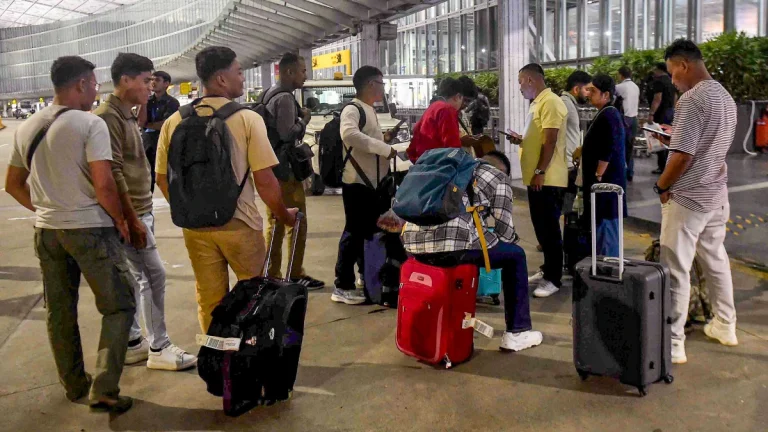
New Delhi – The national capital and northern plains continue to grapple with severe Delhi fog disruption as thick haze reduced visibility for the seventh consecutive day on Sunday, causing massive disruptions to air and rail travel. Weather agencies have forecast that the hazy conditions will persist for two more days, extending the travel chaos that has affected thousands of passengers across the region.

Massive Flight Operations Affected

The Delhi fog disruption severely impacted aviation operations at the national capital’s airport, with over 100 flights cancelled and more than 500 delayed on Sunday alone. According to flight tracking website FlightRadar24, the week-long Delhi fog disruption has resulted in over 4,000 flight disruptions, creating unprecedented chaos for travelers during the busy holiday season.

An airport official, speaking on condition of anonymity, revealed that over 55 of the cancelled flights belonged to IndiGo, followed by approximately 35 Air India flights. Real-time data analysis from the Delhi airport’s website for flights between 5pm and 8pm showed over 20 cancellations, including 10 IndiGo flights, seven Air India or Air India Express flights, three Akasa flights, and one SpiceJet flight.

IndiGo had issued an alert on Saturday warning passengers of possible disruptions due to the Delhi fog disruption. On Sunday morning, the airline extended alerts to fliers in Bengaluru, Amritsar, and Srinagar. However, despite predictions of continued fog, no airlines have issued advance alerts for Monday or Tuesday operations.

Rail Services Experience Significant Delays

The Delhi fog disruption extended beyond aviation to severely impact railway operations across the region. Over 50 trains were delayed under the Northern Railway network, with delay times ranging from 30 minutes to over six hours. The extended delays caused considerable inconvenience to passengers traveling through or departing from the national capital during the ongoing travel season.

Western Disturbance Triggers Weather Phenomenon

Sunday’s spell of Delhi fog disruption was caused by a western disturbance that simultaneously brought fresh snowfall to Jammu and Kashmir, Ladakh, and Himachal Pradesh. The India Meteorological Department explained that this weather system is likely to persist until Tuesday, after which the fog intensity should begin to dissipate.

Western disturbances are weather systems that transport moist air from the Mediterranean Sea across Iran and Afghanistan into the Indian subcontinent. When this moist air encounters the Himalayas, it is forced upward, cools down, and releases precipitation—manifesting as snow in mountainous regions and contributing to fog formation in the plains below.

Visibility Levels Across Delhi

The Delhi fog disruption significantly reduced visibility across various parts of the capital, which woke up to a blanket of haze and pollution. Visibility reached its lowest at Safdarjung, measuring just 200 meters between 1:30 am and 2:30 am on Sunday. At Palam, visibility stood at 300 meters between 10 pm Saturday and 12:30 am Sunday.

The IMD classifies fog based on visibility ranges: ‘shallow’ fog occurs when visibility is between 500 and 1,000 meters, ‘moderate’ fog between 200 and 500 meters, ‘dense’ fog between 50 and 200 meters, and ‘very dense’ fog when visibility drops below 50 meters.

Air Quality Remains Concerning

Alongside the Delhi fog disruption, the capital’s air quality remained a significant concern. Delhi recorded an Air Quality Index of 377 at 4 pm on Sunday, showing improvement from 398 on Saturday but marking the 11th consecutive day that pollution levels remained in the “very poor” band or worse. The combination of fog and poor air quality created particularly challenging conditions for residents and travelers.

Temperature Fluctuations Recorded

Despite the Delhi fog disruption, temperature readings showed some variations from seasonal norms. The minimum temperature on Sunday settled at 9.4°C, significantly higher than 6.1°C recorded the previous day and 1.3 degrees above the season’s normal. The maximum temperature reached 18.1°C, four degrees below normal but higher than Saturday’s 16.9°C.

Snowfall Across Himalayan Regions

The western disturbance causing the Delhi fog disruption brought substantial snowfall to higher altitude regions. The Gulmarg tourist resort in north Kashmir’s Baramulla district reported nearly two inches of snow accumulation. In Sonamarg on the Srinagar-Kargil highway, snowfall began early Sunday morning and continued through the afternoon.

Sadhna Top, the pass connecting the Tangdhar sector along the Line of Control to the main Kashmir Valley, received moderate snowfall with six inches accumulating since Saturday night. Light rainfall began in Srinagar and elsewhere in the valley overnight, continuing intermittently throughout Sunday.

Weather Forecast and Future Outlook

IMD scientist RK Jenamani indicated that the western disturbance’s effect was strongest on Sunday and would begin moving eastward and weakening by December 23. While fog intensity should reduce after the Delhi fog disruption subsides, visibility could still drop to 200 meters or lower in isolated pockets of the capital.

Mahesh Palawat, vice-president at Skymet, predicted reduced fog from December 24 through December 31, though some fog will persist. He warned that January typically experiences multiple western disturbances, keeping chances of dense to very dense fog high across the region, potentially causing further travel disruptions similar to the current Delhi fog disruption.

San Francisco Power Outage: Massive Blackout Paralyzes City During Holidays

San Francisco – A major San Francisco power outage brought California’s iconic city to a near standstill on Saturday, plunging large sections into darkness for several hours and creating widespread chaos during one of the busiest holiday shopping weekends of the year. The blackout affected approximately 130,000 homes and businesses across the city of over 800,000 residents, disrupting daily life, commerce, and transportation throughout multiple neighborhoods.

Substation Fire Identified as Primary Cause

According to Pacific Gas and Electric Company, the San Francisco power outage originated from a fire at a PG&E substation located near the intersection of 8th and Mission streets. City officials confirmed that this substation fire triggered the blackout shortly after 1 pm on Saturday, causing extensive damage to critical infrastructure. The fire led to cascading power failures that rippled across multiple neighborhoods, leaving vast portions of the city without electricity during peak afternoon hours.

PG&E officials characterized the damage from the substation incident as “significant and extensive,” indicating that repairs would be complex and time-consuming. The utility company emphasized that the scale of destruction at the facility would require substantial restoration efforts involving specialized equipment and personnel to bring the San Francisco power outage to a complete resolution.

Gradual Restoration Efforts Underway

By early Sunday morning, restoration crews had made considerable progress in addressing the San Francisco power outage, successfully restoring electricity to approximately 110,000 customers. However, roughly 21,000 customers remained without power as utility workers continued their round-the-clock efforts to repair damaged infrastructure and restore full service to all affected areas.

Pacific Gas and Electric mobilized additional engineers and electricians to expedite the restoration process following the San Francisco power outage. Despite these enhanced efforts, the utility company could not provide a precise timeline for complete power restoration to all customers, citing the complexity of repairs needed at the damaged substation facility and throughout the affected distribution network.

Transportation Systems Severely Impacted

The San Francisco power outage created immediate and severe disruptions to the city’s transportation infrastructure. Traffic lights went dark across wide areas of the city, forcing police officers to manually direct traffic at busy intersections throughout the affected zones. The city’s Department of Emergency Management issued urgent advisories urging residents to avoid non-essential travel and treat non-functioning traffic signals as four-way stops to prevent accidents.

Public transportation services faced significant challenges during the San Francisco power outage. Trains on portions of the city’s rapid transit network were compelled to bypass certain downtown stations, while bus services experienced substantial delays due to gridlocked roads and non-functioning traffic control systems. As an additional safety precaution, self-driving ride-hailing services operated by Waymo were temporarily suspended throughout the affected areas, further limiting transportation options for residents and visitors.

Economic Impact on Holiday Shopping Season

The timing of the San Francisco power outage significantly amplified its economic consequences. With Christmas just days away, the blackout struck during a critical period for retailers and restaurants that traditionally experience high customer volumes during the final holiday shopping weekend. Many commercial establishments were forced to close for the day, leaving normally bustling commercial districts eerily quiet and deserted.

Business owners described the sudden drop in foot traffic as “devastating” to their holiday sales projections. The San Francisco power outage coincided with fog blanketing parts of the city, creating a double deterrent that further discouraged shoppers from venturing out. Retailers who had prepared extensively for one of the year’s most profitable shopping periods found themselves unable to serve customers or process transactions during peak hours.

City Officials Coordinate Emergency Response

Mayor Daniel Lurie addressed the situation from the emergency operations center, acknowledging the significant strain the San Francisco power outage placed on residents and businesses alike. He characterized it as a “rough day” for the city while emphasizing that authorities were maintaining close coordination with Pacific Gas and Electric and first responders to manage the crisis and restore normalcy as expeditiously as possible.

Emergency management teams worked throughout the day to address safety concerns arising from the San Francisco power outage, including traffic management, public safety coordination, and communication with affected residents and businesses about restoration timelines and safety protocols.

Also Read: H-1B Visa Delays Force Indian Workers to Cancel Critical Travel Plans

Grid Stabilization and Ongoing Investigation

By Saturday evening, Pacific Gas and Electric announced that crews had successfully stabilized the electrical grid and did not anticipate further outages related to the substation incident. This stabilization represented a critical milestone in managing the San Francisco power outage and preventing additional cascading failures that could have extended the blackout’s duration and geographic scope.

Investigations into the precise cause of the substation fire that triggered the San Francisco power outage remain ongoing, with officials working to determine whether equipment failure, external factors, or other circumstances contributed to the incident. Authorities reported no injuries linked to the fire or the resulting blackout, though the full economic impact continues to be assessed as the city works toward complete power restoration and normal operations.

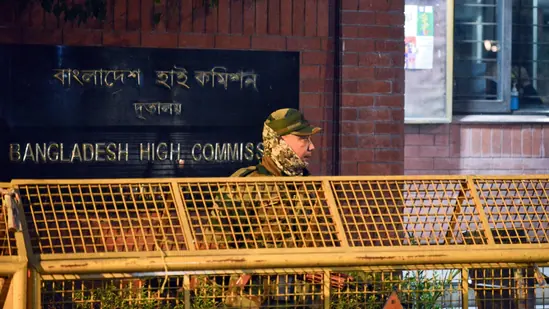
Bangladesh High Commission Security: India Rejects Alarming Breach Reports

New Delhi – India has firmly rejected reports suggesting a security breach at the Bangladesh high commission in New Delhi, characterizing such claims as “misleading propaganda” while simultaneously expressing serious concern over the brutal killing of a Hindu man in Bangladesh. The developments come amid escalating tensions between the two neighboring nations following incidents of violence targeting minorities across Bangladesh.

Protest Dispersed Without Security Incident

According to external affairs ministry spokesperson Randhir Jaiswal, a small group of approximately 20 to 25 youngsters assembled in front of the Bangladesh high commission late Saturday evening. The protesters gathered to voice their opposition to the horrific killing of Dipu Chandra Das, a Hindu man who was lynched in Mymensingh. The group at the Bangladesh high commission called for enhanced protection of all minorities in Bangladesh.

Jaiswal emphasized that contrary to reports circulating in certain sections of Bangladeshi media, there was “no attempt to breach the fence or create a security situation” at the Bangladesh high commission. The police personnel stationed at the location promptly dispersed the small gathering within minutes of their arrival, maintaining order and ensuring the safety of the diplomatic mission throughout the brief demonstration.

India’s Commitment to Diplomatic Security

The Indian government reiterated its unwavering commitment to ensuring the safety and security of all foreign diplomatic missions and posts operating within its territory. This commitment aligns with obligations under the Vienna Convention on Diplomatic Relations, which establishes international protocols for protecting diplomatic facilities. Jaiswal stated that India remains dedicated to upholding these standards for the Bangladesh high commission and all other foreign missions in the country.

Visual evidence of the Saturday evening incident at the Bangladesh high commission is publicly available, according to Indian officials, contradicting claims of any significant security breach or aggressive behavior by protesters. The Indian side dismissed characterizations of an “attack” on the mission as baseless and designed to misrepresent the peaceful nature of the brief gathering.

Enhanced Security Measures Implemented

Following Saturday’s protest, security arrangements around the Bangladesh high commission were substantially strengthened on Sunday. A contingent of armed security personnel was deployed in the vicinity of the diplomatic building located in Chanakyapuri, New Delhi’s diplomatic enclave. These additional measures demonstrate India’s proactive approach to maintaining safety for the Bangladesh high commission despite the absence of any actual breach during the previous day’s protest.

The increased security presence serves both as a precautionary measure and a visible commitment to protecting diplomatic facilities during a period of heightened bilateral tensions stemming from violence in Bangladesh targeting minority communities.

India Condemns Lynching of Hindu Man

The Indian government expressed deep concern over the “horrendous killing” of Dipu Chandra Das, a factory worker who was beaten to death by a mob in Mymensingh city in eastern Bangladesh on Thursday. Das was accused of blasphemy before being lynched, and his body was subsequently tied to a tree and set ablaze. The gruesome images from the incident provoked widespread revulsion and condemnation across India.

Indian officials monitoring the situation at the Bangladesh high commission and broader developments in Bangladesh have called for the perpetrators of Das’s “barbaric killing” to be brought to justice swiftly. The external affairs ministry stated that Indian officials remain in continuous contact with Bangladesh authorities, conveying strong concerns about attacks on minorities and urging accountability for those responsible.

Context of Escalating Tensions

The lynching of Das occurred against the backdrop of widespread violent protests sweeping across Bangladesh following the death of anti-India student leader Sharif Osman Hadi. Hadi sustained serious injuries in a shooting incident in Dhaka on December 12 and succumbed to his injuries while receiving treatment in Singapore on Thursday.

The protests triggered by Hadi’s death saw demonstrators attempting to storm India’s assistant high commission in Chittagong, while additional demonstrations were organized near the main high commission in Dhaka and Indian missions in Khulna and Rajshahi. Violent mobs also attacked and burned the offices of two prominent newspapers in Dhaka during the unrest.

Bangladesh’s Contrasting Position

Bangladesh’s de facto foreign minister Touhid Hossain rejected India’s characterization of the incident outside the Bangladesh high commission in New Delhi. Speaking to reporters at the foreign ministry in Dhaka, Hossain contended that India’s presentation of events oversimplified a more serious security failure. He claimed a larger group was involved in the protest and argued it was “unacceptable” that demonstrators had entered a high security area.

Hossain also reported that the Bangladeshi envoy and his family felt threatened and panicked during the incident at the Bangladesh high commission, asserting that security was clearly inadequate with only two security personnel present who remained passive. He referenced threats allegedly made against the diplomatic staff.

Regarding Das’s killing, Hossain acknowledged that a “Bangladeshi citizen was brutally murdered” but argued there is no justification for connecting this specific incident to broader concerns about minority community security. He stated that law enforcement agencies acted promptly, arresting several individuals in connection with the lynching.

Monitoring Evolving Situation

India continues closely monitoring the evolving situation in Bangladesh, particularly regarding the safety and security of minority communities. The Indian government maintains that protecting the Bangladesh high commission and all diplomatic facilities remains a top priority while simultaneously advocating for justice and protection for vulnerable populations across the border.

Messi Kolkata Event Investigation: Shocking Details Emerge From Stadium Chaos

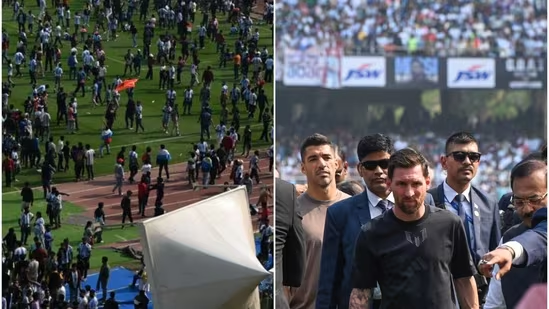
Kolkata – Fresh details emerging from the investigation into the chaotic Messi Kolkata event at Salt Lake Stadium have revealed significant organizational failures and security lapses that led to widespread disorder on December 13. The arrested main organizer, Satadru Dutta, has made several critical disclosures during questioning by the Special Investigation Team, shedding light on what went wrong during the high-profile appearance of the football legend.

Footballer’s Discomfort With Physical Contact

One of the most significant revelations from the Messi Kolkata event investigation concerns the footballer’s personal boundaries. Dutta informed investigators that Lionel Messi was profoundly unhappy with being touched or hugged during his stadium appearance. Foreign security officials had explicitly communicated in advance that the Argentine star does not appreciate being touched on the back or embraced by anyone.

Despite repeated public announcements requesting attendees to maintain appropriate distance and restrain themselves, Messi found himself surrounded by people on the field during the Messi Kolkata event. The overwhelming breach of personal space and security protocols prompted the football icon to depart earlier than the scheduled program timeline, disappointing thousands of spectators who had purchased expensive tickets specifically to see him.

Ground Pass Numbers Tripled Unexpectedly

The organizational breakdown at the Messi Kolkata event began with a dramatic expansion of access permissions. According to Dutta’s testimony, organizers initially issued only 150 ground passes for controlled access to the field area. This limited number was designed to maintain manageable crowd control and ensure security protocols could be properly enforced throughout the event.

However, the situation deteriorated rapidly when an unnamed “very influential person” arrived at Salt Lake Stadium and allegedly overpowered the organizer’s authority. The Messi Kolkata event access was suddenly tripled, with approximately 450 people gaining ground passes instead of the originally planned 150. Dutta stated this unexpected expansion completely disrupted the entire flow chart and operational planning of the program, leaving organizers unable to effectively control access to the ground area where Messi was scheduled to appear.

Investigation Focuses on Influential Figure’s Role

Investigators examining the Messi Kolkata event are now scrutinizing Dutta’s assertion about the influential person whose arrival directly contributed to the catastrophic breakdown of crowd management systems. The Special Investigation Team is particularly interested in understanding whether this intervention led to unauthorized access that subsequently worsened the security lapse.

Police are examining how dozens of people managed to get dangerously close to Messi during the Messi Kolkata event, breaching multiple security perimeters. The identity of this influential figure and their exact role in expanding access beyond planned limits remains a central focus of the ongoing investigation, as authorities seek to establish accountability for the chaos that ensued.

Minister’s Proximity and Subsequent Resignation

West Bengal sports minister Aroop Biswas’s involvement in the Messi Kolkata event has come under intense scrutiny following the incident. Visual evidence from the event shows Biswas in extremely close proximity to the footballer throughout the program, including photographs where the minister is seen holding Messi around the waist while posing for pictures.

The minister has faced serious accusations of using his official position and influence to allow relatives and personal acquaintances unauthorized access to Messi during the Messi Kolkata event. As criticism mounted and the investigation intensified, Biswas took the decision to resign from his ministerial post, pending the completion of the Special Investigation Team’s inquiry into all aspects of the event’s mismanagement and security failures.

Financial Details and Frozen Assets Revealed

The financial arrangements surrounding the Messi Kolkata event have also emerged as a significant aspect of the investigation. Dutta disclosed that Lionel Messi received ₹89 crore as payment for his India tour appearance, while an additional ₹11 crore was paid as tax to the government, bringing the total expenditure to ₹100 crore for organizing the event.

According to the organizer’s statement regarding the Messi Kolkata event financing, approximately 30 percent of the required funds came from corporate sponsors, while another 30 percent was generated through ticket sales to eager fans. Investigators have discovered and frozen over ₹20 crore in Dutta’s bank accounts and seized numerous documents from his residence as part of their financial investigation.

Police are currently verifying Dutta’s claim that the frozen money originated legitimately from ticket sales and sponsorship agreements for the Messi Kolkata event. Thousands of spectators had purchased high-priced tickets expecting to witness Messi’s appearance, but the program descended into complete chaos as the footballer became barely visible from the gallery sections, triggering widespread anger among disappointed fans and subsequent vandalism throughout the stadium premises.

Ongoing Investigation Into Multiple Violations

The Special Investigation Team continues its comprehensive probe into the Messi Kolkata event, examining multiple dimensions including vandalism, security lapses, access violations, and the specific roles played by organizers and government officials in the incident. The investigation aims to establish complete accountability for the failures that transformed a celebrated sporting event into a chaotic and disappointing experience for thousands of fans.

Maharashtra Local Body Election Results 2025: BJP Dominates Stunning Mahayuti Sweep

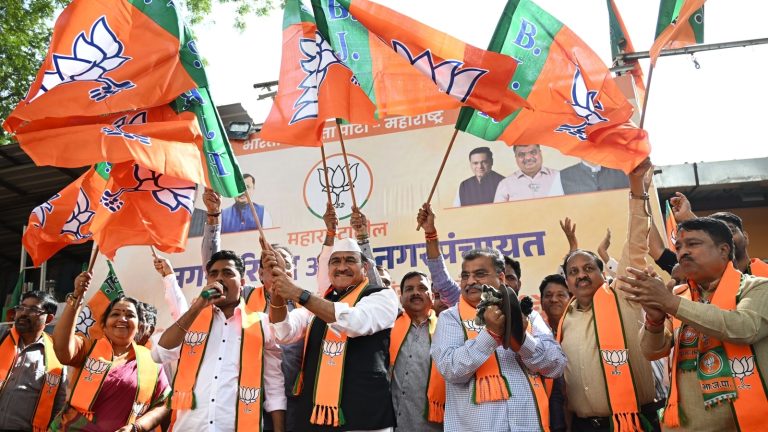
Maharashtra – The Maharashtra local body election results announced on Sunday delivered a resounding victory for the Mahayuti alliance, with the Bharatiya Janata Party establishing itself as the dominant force across the state. According to the State Election Commission, voting took place across 286 seats for the Maharashtra Nagar Panchayat and Nagar Parishad elections, and the ruling coalition demonstrated its continued electoral strength in the state’s political landscape.

BJP Leads Mahayuti to Decisive Victory

The Maharashtra local body election saw the BJP emerge as the single largest party with 117 wins out of the total seats contested. This commanding performance reinforces the saffron party’s position ahead of the crucial Brihanmumbai Municipal Corporation elections. The Mahayuti alliance, comprising the BJP, Shiv Sena led by Eknath Shinde, and the Nationalist Congress Party under Ajit Pawar, collectively secured 207 posts of municipal council presidents across the state.

The alliance’s success in the Maharashtra local body election represents a continuation of their winning momentum following their victory in the 2024 assembly elections. This electoral triumph arrives at a strategic moment, positioning the coalition favorably ahead of upcoming municipal corporation elections that will determine governance in Maharashtra’s key urban centers.

Breaking Down the Maharashtra Local Body Election Numbers

The comprehensive results of the Maharashtra local body election reveal a stark contrast between the ruling Mahayuti alliance and the opposition Maha Vikas Aghadi coalition. Within the Mahayuti, the BJP’s 117 victories were complemented by the Shinde-led Shiv Sena’s 53 wins and the Ajit Pawar-led NCP’s 37 victories, creating a formidable combined total of 207 municipal council president posts.

In contrast, the opposition MVA alliance managed only 44 posts across the Maharashtra local body election. The Congress secured 28 positions, while the Sharad Pawar-led NCP won merely 7 seats, and Shiv Sena (UBT) captured 9 posts. These numbers underscore the significant gap between the two political formations in local governance across Maharashtra.

National Leaders Celebrate Electoral Success

Union Home Minister Amit Shah and senior BJP leader Nitin Gadkari were among the prominent national figures who congratulated the alliance on the Maharashtra local body election results. Shah attributed the victory to public support for the developmental vision championed by Prime Minister Narendra Modi’s NDA government at both central and state levels.

In his statement on social media, Shah expressed gratitude to Maharashtra’s electorate for their overwhelming support in the Maharashtra local body election. He extended congratulations to Chief Minister Devendra Fadnavis, Deputy Chief Ministers Eknath Shinde and Ajit Pawar, and all party workers who contributed to the campaign efforts.

Gadkari emphasized that the Maharashtra local body election victory belonged to dedicated party workers who worked tirelessly across the state. He thanked voters for placing their trust in the BJP’s development-oriented governance model and congratulated state party president Ravindra Chavan and the entire party organization.

Chief Minister Attributes Success to Team Effort

Maharashtra Chief Minister Devendra Fadnavis characterized the Maharashtra local body election results as a collective achievement reflecting both organizational strength and governmental performance. He emphasized that the campaign focused exclusively on development issues without resorting to personal criticism of opposition leaders or parties.

Fadnavis explained that the Mahayuti sought votes based on their development agenda, highlighting past accomplishments and presenting a comprehensive blueprint for future progress. The Maharashtra local body election campaign strategy centered on positive messaging about infrastructure improvements, welfare schemes, and economic development initiatives implemented under the alliance’s governance.

Also Read: No-Confidence Motion: Haryana BJP Government Boldly Defeats Congress Challenge

Opposition Raises Concerns Over Election Process

Despite the clear margin in the Maharashtra local body election, opposition parties raised questions about the electoral process. Maharashtra Congress president Harshwardhan Sapkal congratulated winning Congress candidates while simultaneously criticizing the state election commission, alleging it facilitated the ruling alliance’s victory.

Shiv Sena (UBT) leader Sanjay Raut went further, attributing Mahayuti’s success in the Maharashtra local body election to alleged tampering with Electronic Voting Machines. He claimed the opposition faced an overwhelming influx of money that they could not match, suggesting these factors influenced the electoral outcome rather than genuine public sentiment.

Implications for Future Elections

The Maharashtra local body election results establish important precedents for upcoming municipal corporation elections, particularly the high-stakes BMC polls. The BJP’s emergence as the largest party demonstrates its organizational reach and grassroots appeal across diverse constituencies in Maharashtra’s urban and semi-urban areas.

The Mahayuti alliance’s comprehensive victory in the Maharashtra local body election suggests the coalition has successfully maintained the electoral coalition that brought them to power in the 2024 assembly elections. As Maharashtra moves toward municipal corporation elections, these results provide the ruling alliance with significant momentum and confidence in their development-focused governance narrative.

H-1B Visa Delays Force Indian Workers to Cancel Critical Travel Plans

New Delhi – Indian workers holding H-1B visas in the United States are making difficult decisions to postpone travel back home as H-1B visa delays create unprecedented challenges for visa renewal appointments. Immigration firms representing major technology companies have issued urgent advisories recommending employees avoid international travel, with appointment backlogs now extending up to 12 months at US embassies.

New Social Media Vetting Creates Massive Bottleneck

The H-1B visa delays stem from a new social media vetting policy that took effect on December 15, impacting both H-1B and H-4 dependent visa applications. US authorities implemented this enhanced screening process citing national security concerns, but the policy has created a significant bottleneck in visa processing. Many applicants who had scheduled appointments have received revised dates pushed into mid to late 2026, with some notifications showing appointments as far out as 2027.

Immigration firms working with Apple and Google have distributed internal memos strongly advising employees against traveling home for visa appointments. The advisory extends beyond H-1B holders to include those on H-4, F, J, and M visas, with some US embassies and consulates facing appointment delays approaching a full year.

Tech Professionals Adjust Plans to Avoid Stranding

The impact of H-1B visa delays is forcing immediate lifestyle changes for Indian professionals working in the American technology sector. One tech professional explained their decision-making process: “I was planning on booking an H-1B visa interview appointment for December but this stuff happened. So I decided on pushing it by a couple of months.”

Another professional who had already traveled to India discovered their situation had changed dramatically. Their visa appointment originally scheduled for December was automatically rescheduled to April, exemplifying how H-1B visa delays are affecting those already committed to travel plans. “Companies are recommending not to travel if you are already in the US including all big tech companies,” they reported.

Community Response and Solidarity Efforts

Social media platforms have become hubs for H-1B visa holders coordinating responses to the delays. On Reddit, visa holders are voluntarily canceling their appointments to create availability for others stranded in India. “On it. Mine’s not rescheduled yet, but just want to cancel it and hopefully someone in need gets it,” wrote one user demonstrating community solidarity.

Another user who was in the United States when H-1B visa delays began took proactive action: “Had an appointment for next week, although I had not gotten any reschedule email, I just cancelled mine so anyone stuck in India can get it. It’s not much but I’m still trying to help out there.”

Employment and Economic Implications

Immigration attorneys are warning about severe consequences if H-1B visa delays result in workers becoming stranded abroad. Immigration attorney Ellen Freeman, who works closely with Indian professionals, outlined the employment challenges: “Employers are also stuck in a hard place as to what kind of leave they can offer, because if that leave is not consistent with their general employment policies, then their hands are tied.”

The risk of job loss looms large for those caught by H-1B visa delays, particularly as projects and deadlines continue regardless of visa complications. Freeman emphasized that smaller companies face especially difficult pressures from these regulations, as they have fewer resources to accommodate extended absences or make exceptions to standard leave policies.

Also Read: Epstein Files Released: Shocking Details About Bill Clinton Emerge

Different Outlook Than Student Visa Situation

Some tech professionals are hopeful that additional visa appointments will become available soon, drawing comparisons to when US student visa appointments were temporarily paused earlier this year for similar vetting procedures. However, immigration experts remain skeptical about quick resolution of H-1B visa delays.

Freeman explained the fundamental difference: “I am sceptical that the same thing will happen to H-1B and H-4 workers. Number one, American colleges and universities have a huge lobby in the United States. They have a united organization that lobbies for all of them together, because all of F1 students are in the same boat. H-1B and H-4 workers are not in the same boat.”

Looking Forward

The H-1B visa delays represent a significant shift in US immigration processing that is reshaping how visa holders approach international travel and family visits. With the new social media vetting policy now in effect and appointment backlogs extending well into 2026, Indian professionals face an extended period of uncertainty. The situation requires careful planning and coordination between employers, employees, and immigration attorneys to navigate the complex challenges created by enhanced security screening processes.

As H-1B visa delays continue affecting thousands of workers, the tech industry and immigration system must adapt to this new reality while maintaining workforce stability and protecting worker rights.

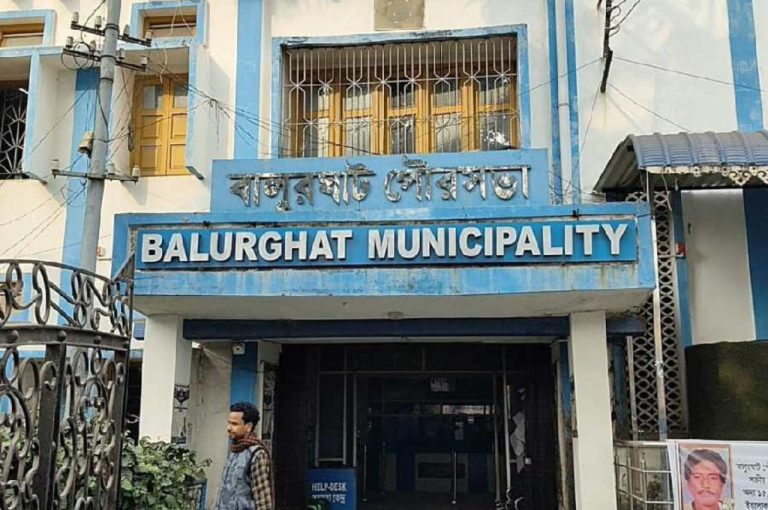
Balurghat Trinamool Congress Factionalism – Detailed Analysis of Councillors’ No‑Trust Motion Against Civic Chief, Political Fallout, and Governance Lessons in Bengal

The Balurghat Trinamool Congress factionalism has once again exposed cracks within Bengal’s ruling party. On December 19, 2025, fourteen councillors of the Balurghat municipality submitted a letter to the subdivisional officer (SDO), seeking to table a no‑confidence motion against civic chairman Ashok Kumar Mitra. Allegations of corruption and mismanagement have triggered this move, raising questions about Trinamool’s internal unity ahead of the 2026 Assembly elections.


2. Background of Balurghat Municipality

  • In the 2022 municipal elections, Trinamool Congress won 23 of 25 seats in Balurghat.
  • Ashok Kumar Mitra, councillor of Ward 5, was sworn in as chairman.
  • The municipality has since faced allegations of irregularities in contracts, fund allocation, and civic services.
  • The no‑trust motion marks the first major rebellion within the civic body since Trinamool’s victory.

3. The No‑Trust Motion

  • Fourteen councillors signed the proposal against Mitra.
  • They cited widespread corruption and failure to deliver civic services.
  • The letter was submitted to SDO Subrata Kumar Barman, who confirmed receipt and promised legal steps.
  • Councillors refrained from public comments, indicating internal pressure and fear of disciplinary action.

4. Balurghat Trinamool Congress Factionalism: Political Fallout

  • BJP’s South Dinajpur district president Swarup Choudhury alleged large‑scale corruption during Mitra’s tenure, claiming the municipality would collapse soon.
  • RSP leader Sucheta Biswas criticized Trinamool, saying corruption exists at every level.
  • District Trinamool president Subhash Bhowal claimed ignorance, citing medical treatment outside the district.
  • Mitra himself dismissed the move as a conspiracy by individuals seeking personal gain.

5. Government External Links for Assistance


6. Historical Context of Trinamool Factionalism

  • Trinamool has faced repeated factional fights in districts like Cooch Behar, Jalpaiguri, and Birbhum.
  • Local leaders often clash over contracts, resource distribution, and political dominance.
  • In Balurghat, factionalism has been visible since 2017, with rival groups competing for control of civic boards.
  • The current crisis reflects a continuation of this trend.

7. Governance Challenges

The Balurghat crisis highlights:

  • Weak internal discipline within Trinamool Congress.
  • Corruption allegations undermining public trust.
  • Factionalism disrupting civic governance.
  • Political instability ahead of crucial elections.

8. Global Comparisons

Factionalism within ruling parties is not unique to Bengal:

  • Japan’s LDP: Internal factions often decide leadership contests.
  • South Africa’s ANC: Divisions over corruption and governance.
  • UK Labour Party: Splits between moderates and leftists.

Balurghat’s case mirrors these global struggles, where ruling parties face internal battles that weaken governance.


9. Governance Lessons

The Balurghat factionalism teaches:

  • Transparency in civic administration is essential to prevent corruption.
  • Internal party democracy can reduce factional disputes.
  • Accountability mechanisms must be strengthened in municipalities.
  • Citizen participation in civic boards can improve oversight.

10. Future Outlook – Stabilizing Civic Governance

India must move towards:

  • Digital monitoring of municipal funds.
  • Independent anti‑corruption audits.
  • Training programs for councillors on governance ethics.
  • Integration of civic boards with smart city initiatives.

11. Conclusion

The Balurghat Trinamool Congress factionalism is more than a local dispute. It reflects the broader challenge of governance in Bengal, where corruption allegations and factional fights undermine public trust. As councillors push for a no‑trust motion against Ashok Kumar Mitra, the outcome will determine not only the future of Balurghat municipality but also Trinamool’s credibility in North Bengal. Strengthening transparency, accountability, and unity will be crucial if the party hopes to retain its dominance in the 2026 Assembly elections.

Also read: Home | Channel 6 Network – Latest News, Breaking Updates: Politics, Business, Tech & More

MoHUA Launches 10th Swachh Survekshan, Strengthening Citizen Voice and Expanding the Cleanliness Framework

The Ministry of Housing and Urban Affairs (MoHUA) today launched the 10th edition of Swachh Survekshan (SS 2025–26) with the release of its comprehensive toolkit by Union Minister for Housing and Urban Affairs Manohar Lal in Bhopal, Madhya Pradesh. Marking a decade since its inception, Swachh Survekshan—recognized as the world’s largest urban cleanliness survey—enters a new phase with stronger citizen participation, expanded coverage and new award categories.


A Decade of Driving Urban Cleanliness

Since its launch, Swachh Survekshan has evolved from an annual ranking exercise into a powerful management and transformation tool under Swachh Bharat Mission–Urban (SBM-U). From assessing 73 Urban Local Bodies (ULBs) in 2016 to 4,900 ULBs in 2024, the survey has catalysed healthy competition, standardized assessment benchmarks, and delivered visible on-ground improvements—making cleanliness a way of life, truly reflecting Swabhav Swachhata, Sanskaar Swachhata.


Theme 2025–26: Collective Action for Clean Cities

The theme for SS 2025–26—“Swacchata Ki Nayi Pehel – Badhayein Haath, Karein Safai Saath”—underscores collective responsibility and participatory governance. All States and ULBs, including Municipal Commissioners and State representatives, joined the launch virtually, signalling nationwide commitment to the next phase of urban cleanliness.


Citizen Voice Goes Round-the-Year

Citizen engagement—long a cornerstone of Swachh Survekshan—has been significantly strengthened in the 2025–26 toolkit. For the first time, residents can submit round-the-year feedback via multiple platforms, including:

  • Vote For My City App & Portal

  • MyGov App

  • Swachhata App

  • QR-code enabled touchpoints

The weightage for citizen validation has been increased, ensuring public perception and experience play a decisive role in assessments.


Expanded Scope: River Towns, Coastal Areas

Building on its assessment of Ganga towns, Swachh Survekshan will now include river towns nationwide, widening the cleanliness framework. Additionally, a separate assessment matrix for coastal areas has been introduced, bringing shoreline sanitation and waste management firmly within the SS ambit.


New Awards & Mentorship: Swachh Shehar Jodi

To deepen peer learning and replication of best practices, MoHUA highlighted the Swachh Shehar Jodi (SSJ) mentorship programme—launched in September 2025—under which 72 mentor cities and 200 mentee cities have signed MoUs. For SS 2025–26, a new award category will recognize Swachh Shehar Jodis, based on average scores across population categories, incentivising collaborative excellence.


Robust, Transparent Assessment Architecture

SS 2025–26 introduces a protocol-driven, tightly monitored assessment framework:

  • National oversight team with a dedicated single-point-of-contact for each State/UT

  • 3,000+ trained field assessors conducting a 45-day on-ground survey

  • Real-time, GPS-enabled monitoring

  • End-to-end digital process—from evidence submission to verification—with rigorous quality checks

This architecture strengthens quality assurance, transparency, and grievance redressal.


Timelines

  • Field assessments: Mid-February to March 2026

  • GFC & ODF certifications: From mid-February 2026


Conclusion: MoHUA

As Swachh Survekshan completes ten years, SS 2025–26 signals a decisive shift toward continuous citizen engagement, expanded ecological coverage, and collaborative excellence. With enhanced feedback mechanisms, new awards, and a rigorous assessment backbone, Swachh Survekshan continues to power India’s largest Jan Andolan, transforming cleanliness into a shared national aspiration and a source of collective pride.


For more real-time updates, visit Channel 6 Network.

Source: PIB

National Commission for Minorities Marks Minority Day, Reaffirms Commitment to Protection, Welfare and Empowerment: 2025

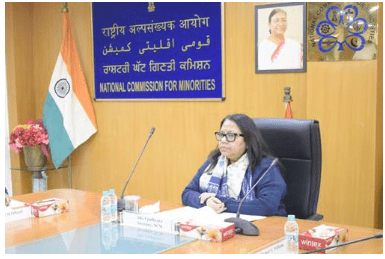
The National Commission for Minorities (NCM) commemorated Minority Day on December 18, 2025, reaffirming its pivotal role in safeguarding the rights, welfare and empowerment of religious minorities in India. The observance brought together leaders and representatives from six minority communities—Muslims, Sikhs, Christians, Buddhists, Jains and Zoroastrians (Parsis)—to reflect on inclusion, coexistence and collaborative nation-building.


Community Voices Highlight Inclusion and Shared Values

Guest Speaker Michael V. Williams of Mount Carmel School highlighted why Minority Day matters, drawing attention to the Christian community’s long-standing contributions to education and healthcare—institutions that serve society beyond denominational lines.

Md. Tauhid Alam of Jamia Hamdard situated minority welfare within the national ethos of Sabka Saath, Sabka Vishwas, Sabka Vikas, emphasising that inclusive governance is central to contemporary policymaking.
Harbans Singh of Khalsa College drew from Gurubani, underscoring that coexistence and collective prosperity are lived traditions, not slogans.

Representing Buddhist and Jain perspectives, Yeshi Phuntsok and Indu Jain candidly discussed community-specific challenges and sought responsive redressal from the Commission. Veteran Parsi leader Marazban Nariman Zaiwalla concluded the session by outlining minority-focused programmes and the NCM’s role as a bridge bringing India’s diverse communities onto a shared civic platform.


Open Session: Dialogue and Solutions

A well-attended open session saw active participation from minority community members. Queries ranged from Minority Certificates to the implementation of government schemes, reflecting strong engagement and a collective commitment to resolving issues through dialogue and cooperation.


Creating an Inclusive and Equitable Society

Addressing the gathering, Alka Upadhyaya, Secretary, NCM, detailed the government’s schemes aimed at uplifting minority communities across education, skill development, financial support and empowerment. She noted that minorities have made invaluable contributions to India’s social, cultural and economic fabric, and reiterated that the Commission works tirelessly to build an inclusive and equitable society.

Ms. Upadhyaya emphasised that government actions are guided by the principle that no one is left behind, ensuring equal opportunities for progress and prosperity for all communities. She also highlighted the importance of continuous inter-community dialogue to address concerns effectively.


NCM’s Enduring Role

Reiterating the Commission’s mandate, Ms. Upadhyaya stated that since its inception, the NCM has played a pivotal role in protecting minority rights, advancing welfare measures and empowering communities through continuous engagement with State Governments, stakeholders and minority groups. She assured that minority voices are heard, their issues addressed, and their aspirations advanced through sustained, constructive engagement.


Conclusion: National Commission for Minorities 

The Minority Day observance underscored the NCM’s commitment to inclusion, dialogue and partnership. By amplifying community voices and strengthening policy outreach, the Commission continues to foster a shared civic space—one where diversity is respected, participation is encouraged and collective progress remains the common goal.


For more real-time updates, visit Channel 6 Network.

Source: PIB