Monday, May 4, 2026
Home Blog Page 212

Darjeeling Oberoi Hotel Luxury Comeback – Detailed Analysis of Makaibari Tea Estate Project, Tourism Growth, and Governance Lessons for Sustainable Hospitality

The Darjeeling Oberoi hotel luxury comeback marks a milestone in Bengal’s tourism landscape. After four decades, the Oberoi Group is returning to the hills with a boutique resort at the historic Makaibari Tea Estate in Kurseong. The project, announced in December 2025, is expected to redefine luxury tourism in North Bengal, blending heritage, sustainability, and modern hospitality.


2. Background of Oberoi in Darjeeling

  • The Oberoi Group once operated the Mount Everest Hotel in Darjeeling town.
  • The property was gutted by fire in the early 1980s and later sold in 2015.
  • The new project at Makaibari represents a revival of Oberoi’s presence in the region.
  • The initiative is part of a broader push to expand luxury tourism in the eastern Himalayas.

3. Details of the Makaibari Project

  • The hotel will initially feature 25 stilted bungalows, designed by Nava Design Studios, Bangkok.
  • Spread across 20 acres of non‑tea producing land within Makaibari’s 500‑hectare estate.
  • Investment estimated at ₹100 crore, funded by the Luxmi Group (owners of Makaibari).
  • Launch targeted for 2030, though efforts are underway to complete within two years.

4. Darjeeling Oberoi Hotel Luxury Comeback: Strategic Importance

  • Makaibari already hosts Taj Chia Kutir Resort and Spa, operated by IHCL (Tata Group).
  • The Oberoi project will make Makaibari unique as a tea estate hosting two of India’s top hospitality chains.
  • The move signals growing interest in tea tourism and experiential luxury.

5. Government External Links for Assistance


6. Economic Impact

  • Expected to generate long‑term employment for local communities.
  • Training programs will be introduced for hospitality skills.
  • Boost to tea tourism, combining plantation heritage with luxury stays.
  • Potential to attract international tourists seeking Himalayan experiences.

7. Historical Context of Tea Tourism in Bengal

  • Makaibari is one of the world’s oldest tea estates, established in 1859.
  • Known for producing premium Darjeeling teas exported globally.
  • Tea estates have increasingly diversified into hospitality ventures.
  • The Oberoi project continues this trend, linking tea heritage with tourism.

8. Governance Challenges

  • Balancing commercial use of tea estate land with preservation.
  • Ensuring environmental sustainability in fragile Himalayan terrain.
  • Managing local community expectations regarding jobs and benefits.
  • Coordinating between state government, Luxmi Group, and Oberoi Group.

9. Global Comparisons

Luxury hospitality in tea and coffee estates is a global trend:

  • Sri Lanka: Boutique resorts in Ceylon tea plantations.
  • Kenya: Safari lodges integrated with coffee estates.
  • Colombia: Coffee tourism blending heritage and luxury.

Darjeeling’s Makaibari project positions India within this global movement.


10. Governance Lessons

The Oberoi comeback teaches:

  • Public‑private partnerships are vital for tourism growth.
  • Heritage branding enhances global appeal.
  • Community involvement ensures sustainability.
  • Diversification of tea estates strengthens rural economies.

11. Future Outlook – Sustainable Hospitality in Darjeeling

India must move towards:

  • Eco‑friendly resort models with renewable energy.
  • Digital tourism platforms for global marketing.
  • Integration of tea tourism with cultural circuits (monasteries, heritage sites).
  • Policy frameworks to regulate commercial use of plantation land.

12. Conclusion

The Darjeeling Oberoi hotel luxury comeback at Makaibari Tea Estate is more than a hospitality project. It symbolizes Bengal’s ambition to reclaim its place in global tourism, blending heritage, sustainability, and luxury. If managed responsibly, the project can transform Darjeeling into a hub of experiential travel, offering visitors not just tea and mountains, but a holistic cultural journey.

Also read: Home | Channel 6 Network – Latest News, Breaking Updates: Politics, Business, Tech & More
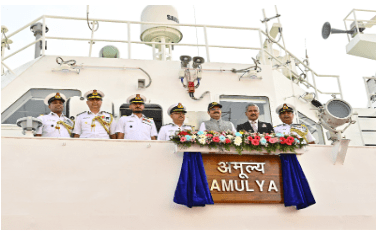
Indian Coast Guard (ICG) Commissions GSL-Built New-Generation Fast Patrol Vessel ‘Amulya’: 2025

The Indian Coast Guard (ICG) commissioned ICG Ship Amulya—the third of eight new-generation Adamya-class Fast Patrol Vessels (FPVs)—at a ceremonial event in Goa on December 19, 2025. Designed and built by Goa Shipyard Limited (GSL), the 51-metre vessel sets a new benchmark in indigenous shipbuilding, featuring over 60% indigenous content and aligning with the Government’s Aatmanirbhar Bharat and Make-in-India initiatives.


Indigenous Design, Speed and Endurance

Built on a modern design philosophy prioritising efficiency, endurance and rapid response, Amulya—meaning “priceless”—is powered by two 3,000-kW advanced diesel engines, delivering a top speed of 27 knots and an operational endurance of 1,500 nautical miles. The vessel integrates state-of-the-art indigenous weapons and systems, offering superior manoeuvrability, operational flexibility and sustained performance across India’s maritime zones.


Mission Profile and Operational Role

The FPV is configured for a wide spectrum of missions critical to maritime security, including:

  • Coastal surveillance and interdiction

  • Search and Rescue (SAR) operations

  • Anti-smuggling missions

  • Marine pollution response

With these capabilities, Amulya will significantly bolster the Coast Guard’s ability to maintain vigilance and rapid response along the seaboard.


Basing, Command and Crew

ICGS Amulya will be based at Paradip, Odisha, operating under the administrative and operational control of the Commander, Coast Guard Region (North East). The ship is commanded by Anupam Singh (Commandant, JG) and carries a complement of 5 officers and 34 personnel.


Commissioning Ceremony

The commissioning ceremony was presided over by Amitabh Prasad, Joint Secretary (IC), Ceremonial & CAO, and attended by senior officials from the ICG, Central and State Governments, and representatives of GSL. The induction marks another milestone in the Coast Guard’s ongoing fleet expansion programme.


Conclusion

The commissioning of Amulya reinforces India’s coastal security architecture while showcasing the maturity of indigenous naval design and shipbuilding. As the Adamya-class programme progresses, vessels like Amulya will play a decisive role in safeguarding maritime interests, enhancing rapid response, and strengthening India’s self-reliant defence ecosystem.


For more real-time updates, visit Channel 6 Network.

Source: PIB

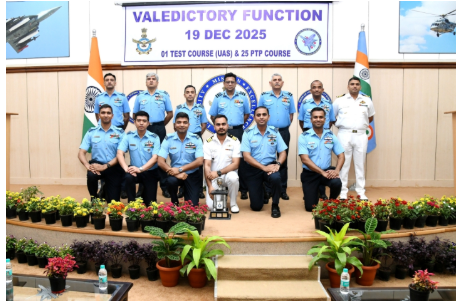
Valedictory Function Proudly Held for 1st Test Course (Unmanned Aerial Systems) and 25th Production Test Pilots Course at ASTE

The valedictory function of the 1st Test Course (Unmanned Aerial Systems) [1TC (UAS)] and the 25th Production Test Pilots (PTP) Course was held on December 19, 2025, at the Aircraft and Systems Testing Establishment (ASTE). The courses were conducted by the Air Force Test Pilots School (AFTPS), operating under the aegis of ASTE. The ceremony marked a significant milestone in India’s expanding capabilities in manned and unmanned aerospace testing.


Distinguished Leadership and Participation

The event was graced by Air Marshal KAA Sanjeeb, VSM, Director General (Aircraft), as the Chief Guest. Senior representatives from the Indian Air Force, Defence Research and Development Organisation (DRDO), Hindustan Aeronautics Limited (HAL), the Society of Experimental Test Pilots (SETP) and the Society of Flight Test Engineers (SFTE) were also present, reflecting strong inter-institutional collaboration in defence aerospace.


Recognising Excellence and Operational Readiness

During the ceremony, meritorious student officers were awarded trophies in recognition of their outstanding performance and professional excellence. Officers graduating from the PTP and TC (UAS) courses will play a critical role in test flying of production aircraft and testing of indigenous unmanned aerial systems currently under development.

Their induction is expected to significantly enhance India’s capability to validate complex platforms and accelerate the nation’s Atmanirbharta initiatives in the defence aerospace sector.


AFTPS: The Nucleus of Flight Test Training in India

The Air Force Test Pilots School (AFTPS) is the only institution in India dedicated to training experimental and production flight test crew for fixed-wing, rotary-wing and unmanned aerial systems. Over the years, AFTPS has produced highly skilled test professionals who have made pivotal contributions not only to India’s defence aeronautical programmes but also to strategic space missions, including the Gaganyaan programme.

The school has also trained officers from friendly foreign nations, further enhancing India’s standing in the global aerospace community.


Legacy of Excellence and Global Recognition

To date, AFTPS has successfully graduated:

  • 47 Flight Test Courses

  • 24 Production Test Pilots Courses

  • 4 Remotely Piloted Aircraft (RPA) Test Courses

AFTPS is among a select group of internationally recognised Test Pilot Schools, with its status and professional standards endorsed by global bodies such as SETP, SFTE and the Aeronautical Society of India (ASI).


Conclusion

The successful completion of the 1st Test Course (UAS) and the 25th Production Test Pilots Course marks a defining step in India’s journey toward self-reliance in advanced aerospace systems. With the growing emphasis on indigenous aircraft and unmanned platforms, the graduating officers from AFTPS are poised to play a decisive role in shaping the future of India’s defence and aerospace capabilities, reinforcing both operational excellence and technological sovereignty.


For more real-time updates, visit Channel 6 Network.

Source: PIB

High-Level Review on Delhi-NCR Air Pollution; Monthly Ministerial Reviews from January 2026

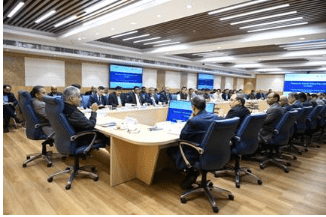
Union Minister for Environment, Forest and Climate Change Bhupender Yadav on Thursday chaired the fourth high-level review meeting to assess the action plans of NCT Delhi, Haryana and Uttar Pradesh, along with concerned municipal bodies, to tackle persistent air pollution in the Delhi-NCR region. The meeting followed a structured review framework directed earlier on December 3, 2025, and was attended by Union Minister of State (EFCC) Kirti Vardhan Singh.


Monthly Ministerial Reviews from January 2026

Expressing concern over the continued poor air quality, Shri Yadav announced that from January 2026 onwards, action plans—now being finalised—will be reviewed every month at the Ministerial level. State Governments were instructed to integrate action plans of all NCR cities under their jurisdiction for unified presentation and execution. He assured that implementation bottlenecks will be resolved through regular inter-State coordination meetings at the highest level.


One-Week Timeline for Visible Improvement

The Minister underscored the need for urgency, directing authorities to ensure visible improvement in air quality across the NCR within one week. While calling for strict action against defaulters, he cautioned against unnecessary inconvenience to the public. Identified gaps are to be addressed through corrective measures, with a review scheduled in 15 days.


Traffic, Transport and Urban Measures

Key directions included:

  • Smooth traffic management at 62 identified congestion hotspots across NCR

  • Promotion of EV/CNG buses by corporates and industrial units for employee transport

  • Staggered timings for offices, malls and commercial complexes to reduce peak congestion

  • End-to-end public transport on high-traffic routes

  • Fast-tracking Integrated Smart Traffic Management Systems (ITMS) in Gurugram, Faridabad, Ghaziabad and Noida

  • Ensuring enforcement checks by traffic police do not themselves cause congestion

The Minister also stressed coordination with DMRC to improve last-mile metro connectivity and directed removal of encroachments causing congestion within 10 days, along with AMC-backed measures for pothole-free roads and improved drainage to prevent monsoon damage.


Dust Control, C&D Waste and Construction Curbs

Immediate actions were ordered to:

  • Remove dust and construction & demolition (C&D) waste from roads

  • Contain biomass burning

  • Enforce construction bans during high pollution periods

Officers were assigned responsibility for Mechanical Road Sweeping Machines (MRSMs) with GPS tracking for accountability. Public representatives are to be involved to strengthen oversight.

The Commission for Air Quality Management (CAQM) was advised to guide municipal bodies to disallow demolition unless C&D waste sub-centres exist within a 10 km radius. C&D activities are to be banned during October–December, and CAQM was asked to explore start-up and private-sector solutions for innovative C&D waste management.


Industry, Emissions and Waste Management

Specific directions included:

  • Sealing illegal tyre-burning units and other non-permitted polluting establishments

  • Ensuring Online Continuous Emission Monitoring Systems (OCEMS) in all polluting units, with December 31 as the compliance deadline—particularly in Haryana

  • Society-wise solid waste collection and joint disposal of Bandhwari legacy waste by Faridabad and Gurugram at a common facility


Agriculture, Biomass and Clean Fuels

Haryana was directed to:

  • Replace defunct Crop Residue Management (CRM) machines

  • Ensure utilisation of paddy straw in power plants, brick kilns and crematoriums

  • Promote pelletisation plants with Central financial assistance

  • Explore decentralised, in-situ solutions such as Compressed Bio-Gas (CBG) and ethanol plants to discourage stubble burning and create revenue streams


Greening, Highways and Toll Management

In coordination with the Delhi Forest Department, plantation opportunities in the NDMC area are to be explored, targeting 11 lakh saplings by World Environment Day 2026. National Highways Authority of India was advised to reduce congestion at toll plazas through improved sensors and ANPR systems, and to ensure upkeep of major traffic corridors.


Conclusion

Reiterating the need for sustained momentum, Shri Bhupender Yadav called for coordinated, accountable and citizen-sensitive implementation to deliver measurable air-quality gains. With monthly Ministerial reviews from January 2026, enhanced inter-State coordination, and time-bound directives across transport, industry, waste management and agriculture, the Government aims to secure durable improvements in Delhi-NCR’s air quality.


For more real-time updates, visit Channel 6 Network.

Source: PIB

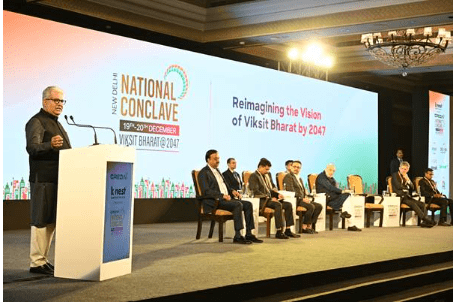
Sustainable and Climate-Resilient Urban Development at CREDAI National Conclave 2025

Union Minister for Environment, Forest and Climate Change Bhupender Yadav on Friday underscored the real estate sector’s pivotal role in building a sustainable and climate-resilient India, while addressing the Confederation of Real Estate Developer Associations of India (CREDAI) National Conclave 2025 in New Delhi. The event was graced by Union Minister for Home Affairs and Cooperation Amit Shah as the Chief Guest.


Real Estate as a Nation-Building Force

Shri Bhupender Yadav described the real estate sector as a nation-building force that shapes India’s economic growth, urban form and quality of life. As India advances towards Viksit Bharat by 2047, he said city planning and construction must prioritise inclusive, resilient and sustainable development, with environmental considerations embedded at the earliest stages of planning.


Sustainability at the Core of Urban Growth

Highlighting the sector’s significant footprint across energy use, water consumption, waste generation, air quality and urban heat, the Minister noted that real estate is central to India’s climate commitments, including the Net Zero target by 2070. Sustainability, he asserted, is no longer optional but the foundation of future-ready urbanisation.

Calling attention to the growing impacts of climate change on cities, he urged developers to adopt climate-resilient urban planning—including flood-resilient layouts, heat-adaptive materials, expanded green cover and sustainable mobility solutions.


Policy Reforms and Modern Environmental Governance

Shri Yadav outlined key reforms undertaken by the Ministry to modernise environmental governance, including:

  • Strengthening environmental clearance mechanisms

  • Promoting digital and technology-driven systems

  • Adopting a risk-based regulatory approach

  • Advancing Mission LiFE and the Green Credit Programme

  • Reinforcing air and water quality frameworks in urban areas

These measures, he said, are designed to balance efficiency with accountability while accelerating sustainable outcomes.


Compliance, Innovation and Ease of Doing Business

Assuring industry stakeholders, the Minister emphasised that the Government aims to reward compliance and efficiency, while dealing firmly with violations. Ease of Doing Business, he said, cannot come at the cost of environmental safeguards—nor should environmental protection cause avoidable delays.

He encouraged the sector to lead by adopting energy-efficient designs, renewable energy integration, water-positive developments, circular construction practices and green buildings, noting that these choices add long-term value for cities, investors and citizens alike.


Partnership for Sustainable Cities

Appreciating CREDAI’s engagement, Shri Bhupender Yadav reiterated that industry bodies are partners in national development. He affirmed the Government’s commitment to sustainable urbanisation, regulatory reform and collaborative governance, to ensure India’s cities are inclusive, resilient and in harmony with nature.


For more real-time updates, visit Channel 6 Network.

Source: PIB

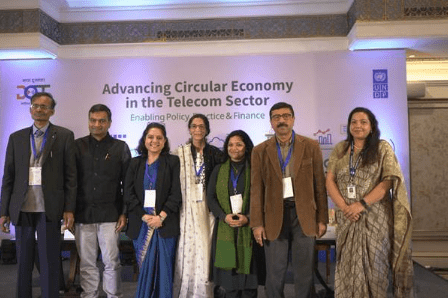
DoT and UNDP Host National Workshop to Advance Strong Circular Economy in India’s Telecom Sector: 2025

The Department of Telecommunications (DoT), Ministry of Communications, in partnership with the United Nations Development Programme (UNDP), organised a National Workshop on “Advancing Circular Economy in the Telecom Sector: Enabling Policy & Practice” in New Delhi. The workshop brought together policymakers, industry leaders, technology providers, academia, international organisations and value-chain stakeholders to chart actionable pathways for embedding circular economy principles across India’s rapidly expanding telecom sector.


Towards Lifecycle-Based and Sustainable Telecom Growth

The workshop focused on aligning policy frameworks, industry practices and technology solutions to enable long-term sustainability and resilience in the telecom sector. Discussions covered sustainable product design, efficient resource utilisation, lifecycle management of telecom assets, digital tools and innovative financing mechanisms, with the objective of transitioning from a linear “use-and-discard” model to a regenerative and circular system.


Telecom Sustainability: From Intent to Implementation

Delivering the inaugural keynote address, R. N. Palai, Member (Technology), Digital Communications Commission (DCC) and ex-officio Secretary to the Government of India, DoT, emphasised that sustainability and circularity in telecom are no longer optional but strategic imperatives.

He noted that although the telecom sector contributes less than two percent of India’s greenhouse gas emissions, its scale—serving nearly 1.2 billion users—places a responsibility on the sector to lead by example. Describing telecom as the invisible infrastructure of the modern economy, Shri Palai highlighted its role as a silent enabler of climate action, improving efficiency and reducing emissions across multiple sectors.

While the transition to renewable energy in telecom networks is gaining momentum, he stressed that sustainability must extend across the entire lifecycle of telecom products and infrastructure, encompassing e-waste management, right-to-repair, sustainable design and resource efficiency.


UNDP’s Role and Global Perspective

Addressing the workshop, Angela Lusigi, Resident Representative, UNDP, highlighted UNDP’s close collaboration with the Government of India in advancing circular economy transitions, including support to DoT in preparing a Circular Economy Plan for the Telecom Sector.

She urged stakeholders to use the platform to develop a time-bound and actionable roadmap, supported by clear policy frameworks, industry commitment, innovation investments, infrastructure development and strong monitoring and accountability mechanisms.


Policy and Practice: Circular Economy Action Plan

A key highlight of the workshop was a presentation by Arun Agarwal, Deputy Director General (Satellite), DoT, on the Circular Economy Action Plan for the Indian Telecom Sector. The presentation outlined policy directions and practical interventions covering:

  • Sustainable design and manufacturing

  • Lifecycle management of telecom assets

  • Reduction and management of e-waste

  • Adoption of digital tracking systems

  • Strengthening transparent and resilient supply chains


Expert Panel Discussions

The technical deliberations featured two focused panel discussions:

Session I: Rethinking the Telecom Supply Chain for Circularity and Sustainability
Moderated by Shri Arun Agarwal, the panel included representatives from MeitY, industry, regulatory bodies and international organisations. Discussions addressed government initiatives, challenges in circular supply chains, design for circularity, component harvesting, sustainable procurement and existing industry practices.

Session II: Digital Tools for Transition towards Circular Economy
Moderated by Dr. Shilpi Karmakar, Project Manager, UNDP, this session explored the role of digital platforms, data analytics, AI, IoT and blockchain-based traceability in improving transparency, enabling Extended Producer Responsibility (EPR) implementation and enhancing material recovery in the telecom sector.


From Dialogue to Action

In the concluding session, participants unanimously stressed the need for India’s telecom sector to move from dialogue to implementation. Key takeaways included:

  • Coordinated, ecosystem-level action

  • Creation of enabling policy and regulatory frameworks

  • Strengthened multi-stakeholder collaboration platforms

  • Pilot-to-scale pathways for circular solutions

  • Shared ownership, with government enabling, industry innovating and partners supporting implementation, capacity building and financing


Conclusion

The workshop concluded with a shared commitment by DoT, UNDP and all stakeholders to accelerate India’s transition towards a circular, sustainable and resilient telecom sector. By embedding lifecycle-based thinking, leveraging digital tools and fostering cross-sector collaboration, India’s telecom ecosystem is poised to lead by example in aligning technological growth with environmental responsibility.


For more real-time updates, visit Channel 6 Network.

Source: PIB

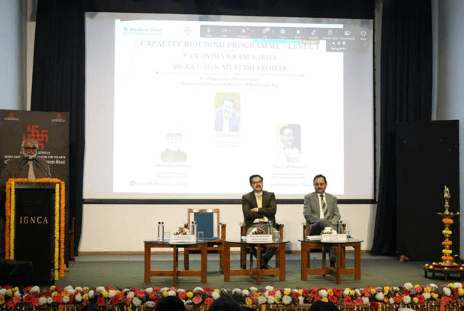
Digital Documentation of Village Strong Heritage Key to Preserving India’s Cultural Roots: Shri Vivek Agarwal: 2025

Emphasising the importance of digitally preserving India’s village heritage, Vivek Agarwal, Secretary, Ministry of Culture, highlighted the need for systematic documentation of rural traditions while inaugurating a Capacity-Building Programme (Level–I) under the National Mission on Cultural Mapping (NMCM) at the Indira Gandhi National Centre for the Arts (IGNCA), New Delhi. The programme forms part of a nationwide series aligned with the All-India Gram Sabhas scheduled for January 26, 2026.


Strengthening Cultural Mapping through NMCM

Organised under the NMCM—implemented by IGNCA—the one-day programme aims to strengthen the documentation of India’s tangible and intangible cultural heritage through the flagship initiative “Mera Gaon Meri Dharohar (MGMD)”. The initiative also seeks to unlock opportunities for heritage-led rural economic revitalisation, positioning cultural assets as drivers of local engagement and livelihoods.


Five-Point Framework for Enriching the MGMD Portal

Addressing participants, Shri Vivek Agarwal described the initiative as a decisive step towards ensuring a robust digital presence for India’s villages. He outlined a five-point framework to enrich the MGMD portal:

  1. Developing a comprehensive understanding of the portal

  2. Assessing categories and identifying limitations

  3. Applying corrective measures through the ‘Contribute’ tab

  4. Collecting data using Participatory Rural Appraisal (PRA) methods

  5. Systematically enriching and validating portal content

Referring to the approach as “heritage in PRA”, he urged cross-departmental collaboration to ensure accuracy, inclusivity and scale. His address concluded with an interactive question-and-answer session.


Role of Panchayati Raj Institutions

The inaugural session was attended by Rajesh Kumar Singh, Joint Secretary, Ministry of Panchayati Raj, as Guest of Honour. He underlined the pivotal role of Panchayati Raj Institutions (PRIs) in cultural mapping, citing their deep grassroots reach and operational experience. He emphasised timely implementation, continuous monitoring and sustained field-level guidance to ensure comprehensive coverage and meaningful outcomes.


Preserving Village Identity in a Rapidly Urbanising World

Delivering the welcome address, Sachchidanand Joshi, Member Secretary, IGNCA, stressed the urgency of preserving the original character and spirit of villages amid rapid urbanisation. Aligning the initiative with the Hon’ble Prime Minister’s vision of Viksit Bharat, he highlighted the importance of documenting both tangible and intangible heritage on the MGMD portal and noted that restoring village identities is central to the broader goal of cultural decolonisation.


Inspiration from Lived Experience

The concluding session was graced by Vivek Bhardwaj, Secretary, Ministry of Panchayati Raj, as Chief Guest, with Sushil Kumar Lohani as Guest of Honour. Reflecting on his childhood memories of village life, Shri Bhardwaj drew attention to the gradual erosion of intangible cultural traditions over time, urging trainers and field teams to pursue documentation with renewed commitment and sensitivity.


Conclusion

The Capacity-Building Programme under NMCM reaffirmed the Government’s commitment to heritage-led, people-centric development. By equipping grassroots stakeholders with digital tools, participatory methods and institutional support, the initiative aims to create a living, evolving record of India’s village heritage—preserving cultural memory while catalysing rural renewal.


For more real-time updates, visit Channel 6 Network.

Source: PIB

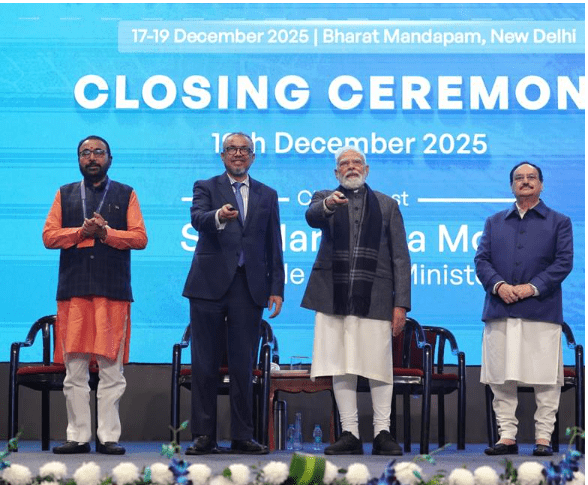
Global Action to Restore Balance in Health and Well-Being at Closing Ceremony of 2nd WHO Global Summit on Traditional Medicine

Prime Minister Shri Narendra Modi on Friday called for faster and coordinated global action to restore balance in health and well-being, as he addressed the closing ceremony of the Second WHO Global Summit on Traditional Medicine at Bharat Mandapam, New Delhi. Highlighting India’s growing leadership in the field, the Prime Minister underlined that traditional medicine must be evidence-based, scientifically validated, safe and globally trusted, positioning it as an integral component of modern, people-centred healthcare systems.

The summit concluded after intensive deliberations among global leaders, policymakers, scientists and practitioners, forging a strong international consensus on integration, equity and scientific credibility.


India’s Leadership in Traditional Medicine

The Prime Minister expressed pride that the WHO Global Centre for Traditional Medicine, established in Jamnagar, Gujarat, has rapidly emerged as a global hub for collaboration, research, regulation and capacity building since its launch in 2022. He reaffirmed India’s commitment to serve as a collaborative platform for strengthening international partnerships in traditional medicine, reflecting growing global trust in India’s leadership.


Restoring Balance: A Global Health Imperative

Referring to the summit theme—“Restoring Balance: The Science and Practice of Health and Well-being”—the Prime Minister noted that balance lies at the heart of holistic health, as articulated in Ayurveda. He observed that many contemporary health challenges, including lifestyle disorders and chronic diseases, stem from various forms of imbalance, making restoration of balance a global urgency, particularly amid rapidly changing technology-driven lifestyles.


Science, Evidence and Global Trust

Emphasising credibility and trust, the Prime Minister stressed that traditional medicine must be backed by scientific validation, robust regulatory frameworks and digital innovation. He highlighted initiatives such as the Traditional Medicine Global Library, launched during the summit, which aims to ensure equitable global access to scientific data, policy resources and validated knowledge.

Citing Ashwagandha as a time-tested herb gaining international acceptance, the Prime Minister noted that India is advancing its global credibility through rigorous research on safety, quality and usage, particularly after heightened global interest during the COVID-19 period.


Integration with Modern Healthcare

The Prime Minister reaffirmed India’s commitment to integrating traditional medicine with modern healthcare systems, including efforts to strengthen integrative cancer care and develop evidence-based guidelines. He stressed that traditional medicine’s role extends beyond wellness into critical public health domains when supported by research and standardisation.


Global Recognition from WHO

WHO Director-General Dr Tedros Adhanom Ghebreyesus lauded India for elevating traditional medicine from heritage to mainstream, evidence-informed healthcare. Recalling the Prime Minister’s call for global collaboration during India’s G20 Presidency, Dr Tedros said it triggered unprecedented international engagement.

He described traditional medicine as a living and evolving science, central to modern healthcare, and welcomed the adoption of the Delhi Declaration as a landmark step forward. He noted that India’s initiatives—such as the Ministry of AYUSH and the WHO Global Centre in Jamnagar—have contributed meaningfully to universal health coverage and sustainable development worldwide.


National Commitment to Integrative Healthcare

Union Minister for Health and Family Welfare Shri J P Nadda emphasised India’s commitment to advancing AYUSH through evidence-based approaches and integrating it with modern medicine for preventive and holistic healthcare. He highlighted the integration of AYUSH into premier institutions like AIIMS through dedicated AYUSH blocks, enabling synergy across healthcare systems.

Minister of State (Independent Charge), Ministry of AYUSH, Shri Prataprao Jadhav described traditional medicine as a central pillar of people-centred healthcare, supported by scientific validation, digital technologies and international cooperation. He urged Member States to translate summit outcomes into concrete national actions.


Key Launches and Milestones

During the event, the Prime Minister and the WHO Director-General jointly inaugurated the WHO South-East Asia Regional Office building in New Delhi. The Prime Minister also launched:

  • Traditional Medicine Global Library

  • My Ayush Integrated Services Portal (MAISP)

  • Ayush Mark, envisioned as a global quality benchmark

  • A commemorative postal stamp on Ashwagandha

  • WHO technical report on Yoga training

  • The book “From Roots to Global Reach: 11 Years of Transformation in Ayush”

He also presented the Prime Minister’s Awards for Outstanding Contribution to the Promotion and Development of Yoga, recognising exemplary national and international contributions.


Conclusion

The Second WHO Global Summit on Traditional Medicine concluded with the adoption of the Delhi Declaration, reaffirming traditional medicine as a shared biocultural heritage and committing Member States to strengthening evidence, regulation, integration and cross-sector collaboration under the WHO Global Traditional Medicine Strategy 2025–2034. The summit marked a clear shift from dialogue to action, reinforcing India’s leadership and a shared global commitment to safe, effective, equitable and sustainable healthcare for all.


For more real-time updates, visit Channel 6 Network.

Source: PIB

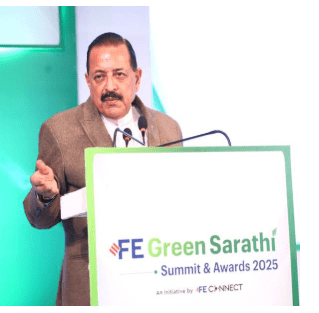
Energy Independence Proudly Aligned with Self-Reliance and Geopolitical Compatibility: Dr Jitendra Singh- 2025

Energy independence has evolved from a policy preference into an economic, strategic and geopolitical necessity, Union Minister of State (Independent Charge) for Science & Technology and Earth Sciences Dr Jitendra Singh said on Thursday. Addressing an event in New Delhi, he underlined that India’s transition towards clean and diversified energy sources is inseparably linked to self-reliance, geopolitical compatibility and the vision of Aatmanirbhar Bharat, as India assumes a larger leadership role on the global stage.


Clean Energy: From Debate to Imperative

Dr Jitendra Singh noted that debates over whether to adopt green and clean energy have become redundant, with global consensus now recognising energy transition as essential for sustainable growth and resilience. “If India has to move forward, there is simply no alternative,” he said, adding that continued dependence on fossil fuels weakens long-term economic security.

He observed that even traditional energy-exporting nations are rapidly diversifying their portfolios, warning that clinging to outdated energy models would be akin to persisting with obsolete technology in a fast-changing world.


India as a Global Trendsetter: Independence

Highlighting India’s rising global stature, the Minister said the country is no longer a passive participant but a trendsetter in climate action, clean energy and advanced technologies. He cited India’s achievements in space exploration and biotechnology as examples where domestic innovation is increasingly benefiting the global community. “India is no longer following global cues; nations are now looking to India for direction,” he said.


Nuclear Energy and the Case for 24×7 Power

Reiterating India’s clean energy commitments announced by Narendra Modi, Dr Jitendra Singh recalled the Net Zero target for 2070 and the goal of achieving 100 GW of nuclear power capacity by 2047. He stressed that energy sources should be evaluated based on suitability, reliability and application-specific utility, not ideological preference.

While renewables will form a substantial share of India’s energy mix, he emphasised that data centres, artificial intelligence and advanced computing require uninterrupted, stable 24×7 power, where nuclear energy plays a decisive role. “The future lies in a hybrid energy model, deploying each source where it is most efficient and cost-effective,” he said.


Integrated Energy Strategy and Bold Reforms

Drawing parallels with technological evolution, the Minister said India’s energy pathway would mature into an integrated framework combining renewables, nuclear power, hydrogen and emerging solutions—much like the balanced convergence of artificial intelligence and human intelligence.

He also highlighted the Government’s bold reforms, including opening strategic sectors such as nuclear energy and space to private participation. This public-private synergy, he said, is vital to achieving scale, speed and sustainability, while moving decisively beyond the status quo.


Collaboration as the Cornerstone

Calling for deeper trust and collaboration between the public and private sectors, Dr Jitendra Singh urged stakeholders to move beyond silos and scepticism. “National progress demands collective responsibility, shared purpose and integrated action,” he asserted, emphasising that innovation ecosystems thrive on cooperation.


Conclusion

Concluding his address, Dr Jitendra Singh said that while the energy transition presents initial challenges, India is firmly on the right path. Clean energy is no longer a subject of seminars alone; it is becoming a way of life, he said, expressing confidence that India will adapt, innovate and lead the global clean energy transition through a balanced, reliable and future-ready energy strategy.


For more real-time updates, visit Channel 6 Network.

Source: PIB

While Paramount and Netflix Squabble, YouTube Quietly Reshapes the Oscars Era

While Paramount and Netflix Squabble Over Studios, YouTube Secures the Oscars

While Paramount and Netflix squabble over acquisitions and streaming dominance, YouTube has taken a decisive step that could redefine how major cultural events are broadcast. Alphabet-owned YouTube has officially secured the television rights to air the Academy Awards beginning in 2029, marking the end of a broadcasting era that lasted more than five decades.Oscars: YouTube Wins TV Rights To Host Academy Awards

The Oscars, one of the most recognizable entertainment events in the world, have been hosted by ABC since 1976. That partnership will conclude after the 100th Academy Awards in 2028. From 2029 through 2033, YouTube will become the primary home of the ceremony, offering global access without a traditional television paywall.

This move reflects a wider shift in the entertainment industry, where digital-first platforms are no longer just distributors of content but major players in live television events. YouTube’s entry into awards broadcasting signals how viewing habits and industry power structures continue to evolve.

While Paramount and Netflix Squabble, YouTube Expands Its Television Influence

While Paramount and Netflix squabble over studio assets and content strategies, YouTube’s approach has been focused on audience reach. According to recent Nielsen data, YouTube already commands the largest share of television viewing time in the United States, surpassing both legacy networks and competing streaming platforms.YouTube secures global live streaming rights for Oscars - OnlineKhabar English News

By acquiring the Oscars, YouTube strengthens its position as more than a video-sharing platform. The agreement includes not only the main awards ceremony but also surrounding events such as the red carpet coverage, Governors Ball, and additional behind-the-scenes programming. All of this content will be available to viewers worldwide for free on YouTube, as well as through YouTube TV.

This accessibility represents a major change in how global audiences experience the Oscars. Instead of relying on regional broadcasters or cable subscriptions, viewers across more than 200 countries will be able to watch the entire event directly through a single platform. With over two billion active users, YouTube offers the Academy its widest potential audience to date.

For advertisers and the entertainment industry, this shift introduces new possibilities for real-time engagement, interactive viewing, and global visibility that traditional television has struggled to provide.

While Paramount and Netflix Squabble, Hollywood Faces a New Broadcast RealityWhile Paramount and Netflix Squabble

The Oscars deal highlights a broader transformation underway in Hollywood. Traditional studios and streaming giants remain locked in competition over content ownership and subscriber growth, but platforms like YouTube are redefining what television means in the digital age.


View this post on Instagram


A post shared by Morning Brew (@morningbrew)

Unlike subscription-based streaming services, YouTube’s model is built around scale and accessibility. Making the Oscars free to watch removes barriers that have previously limited younger and international audiences. This could reshape how future generations connect with film culture and award ceremonies.

Industry analysts view this move as symbolic. It signals that prestige events no longer depend on legacy networks to maintain relevance. Instead, reach, engagement, and global availability are becoming the primary measures of success.

For Disney-owned ABC, the departure marks the end of a long-standing relationship. For YouTube, it represents a strategic expansion into premium live events that were once considered untouchable by digital platforms. Also Read: Mun Ka Young and Lee Min Ho Signal 1 Promising Shift With New Sageuk Drama Talks

Conclusion

While Paramount and Netflix squabble over industry dominance, YouTube has made a clear statement about where the future of entertainment broadcasting is headed. By securing the Oscars, the platform positions itself at the center of global television culture, signaling a new chapter for Hollywood where digital reach outweighs traditional boundaries.