Monday, May 4, 2026
Home Blog Page 211

BJP Woman Activist Sets Herself on Fire in Kalaburagi, Die: Tragic 1 Life, Shocking 6 Minutes

A shocking incident in Kalaburagi has left the city reeling, as a BJP woman activist reportedly set herself on fire outside the residence of a party colleague, succumbing to her injuries despite immediate medical attention. The incident has triggered widespread outrage, grief, and calls for urgent investigation into the circumstances that led to the extreme act of protest. Officials said the incident occurred in the late evening when residents noticed flames and rushed to provide help.

According to local authorities, the woman, in her mid-thirties, doused herself with an inflammable substance and ignited it in front of the house of a colleague with whom she reportedly had a dispute. Eyewitnesses said she shouted about alleged harassment and perceived betrayal within party ranks before the act, drawing the attention of neighbours who alerted emergency services. Despite rapid intervention by police and medical teams, she succumbed to severe burns at a nearby hospital.

Authorities have confirmed that they are coordinating with forensic experts and psychological counsellors to better understand the circumstances surrounding the incident. By examining behavioral patterns, communications, and interactions within the party unit, investigators hope to determine whether the act was spontaneous or the culmination of prolonged distress. Such insights, officials said, could inform both the criminal investigation and future preventive measures for political organisations.

The State BJP leadership has called an emergency review meeting in Kalaburagi to discuss immediate remedial steps and long-term reforms. Party officials emphasised that the safety and well-being of members must be prioritised alongside political activities. Proposals under consideration include mandatory grievance redressal channels, confidential reporting systems, and proactive engagement with members to address interpersonal conflicts before they escalate.

Community members have voiced concerns about the impact of the tragedy on local governance and civic engagement. Many expressed fear that ongoing political tensions could affect routine development activities and participation in community initiatives. Social organisations have urged the party and authorities to ensure that the fallout of the incident does not disrupt essential public services or undermine civic trust.

Mental health professionals have highlighted the need for targeted intervention in high-stress political environments. They stress that women activists often face compounded pressures, including gender-based discrimination, hierarchical constraints, and societal expectations. Expert recommendations include regular mental health check-ins, confidential counseling services, and awareness programs that destigmatise seeking help within political organisations.

The incident has also prompted debate among lawmakers about broader systemic reforms to protect political workers from harassment and undue pressure. Some have suggested codifying internal party grievance mechanisms into formal procedures with independent oversight. Advocates argue that such steps are necessary to ensure that members can raise concerns safely and that extreme outcomes, such as the Kalaburagi tragedy, are prevented in the future.

Meanwhile, the family of the deceased continues to appeal for justice and accountability. They have demanded that all responsible parties, including any individuals who may have contributed to her distress, be thoroughly investigated. Legal experts note that the case could set important precedents regarding organizational responsibility and the duty of care owed by political parties to their members, particularly in high-pressure contexts.

Police officials have confirmed that a detailed investigation is underway to establish the sequence of events and the motives behind the extreme step. Preliminary reports indicate that the activist may have been struggling with internal conflicts within the local party unit. Authorities have registered a case and are gathering statements from neighbours, party members, and family members to reconstruct the events leading to the incident.

The incident has sparked shock waves across the local BJP leadership. Party officials expressed grief and called for calm, urging members to await the outcome of the investigation. Several leaders stated that internal differences should never escalate to such extreme acts and emphasised the need for timely grievance redressal mechanisms within party structures.

Kalaburagi: BJP woman activist ends life by self-immolation | Udayavani -  Latest English News, Udayavani Newspaper


Political and Social Repercussions: woman

The self-immolation has sparked debates over the internal functioning and accountability mechanisms within political parties. Analysts note that intra-party conflicts, if unaddressed, can lead to severe psychological distress and, in rare cases, extreme actions such as this. Social activists highlighted the lack of accessible support systems for party workers, especially women, who may face harassment, marginalisation, or pressure in political spaces.

Local BJP leaders in Kalaburagi have condemned the incident and pledged full cooperation with the police investigation. They have also announced plans to convene meetings at the grassroots level to address internal grievances and ensure that party members feel heard and supported. A few members admitted that internal disputes had escalated in recent months and that greater oversight was needed to prevent conflicts from turning dangerous.

The tragic death has also reignited conversations about mental health support within political organisations. Experts stress that high-pressure environments, combined with interpersonal conflicts, can lead to emotional crises. They argue that party units should institute counseling services, helplines, and conflict-resolution protocols to prevent tragedies. The absence of such measures, as seen in this case, underscores the vulnerability of individuals navigating hierarchical political structures.

Meanwhile, residents near the scene of the incident described a tense atmosphere, with crowds gathering after the event and expressing anger, grief, and confusion. Police have maintained a perimeter around the area to prevent escalation and ensure order, while urging the public not to speculate or spread misinformation on social media.

The incident remains under investigation, with authorities reviewing CCTV footage, witness statements, and communications of the deceased activist. As the probe unfolds, political parties, civil society groups, and local residents are calling for measures to address both the immediate fallout and the systemic issues that may have contributed to this tragic loss of life.

Authorities investigating the Kalaburagi incident have indicated that they are also looking into any external factors that may have contributed to the activist’s extreme action. This includes examining communications, messages, and prior complaints that the deceased may have lodged with party officials or law enforcement. While the exact motive is yet to be confirmed, preliminary accounts suggest that perceived harassment and unresolved conflicts within the party may have played a role, though investigators caution against drawing conclusions prematurely.

Family members of the deceased have expressed grief and shock, stating that they were unaware of the depth of her distress. Relatives described her as committed to social and political work, highlighting her participation in local initiatives and community engagement. They appealed for a transparent investigation to ensure that any accountability, whether internal to the party or external, is established. Legal experts have noted that the family may also seek civil or criminal remedies if negligence or coercion is found to have contributed to her death.

The incident has prompted the State BJP leadership to review internal protocols for handling grievances and conflicts among members. Officials stated that immediate measures would include setting up committees for rapid dispute resolution and ensuring psychological support for members facing stress or harassment. These steps, they said, are intended to prevent recurrence and restore confidence among grassroots workers.ಕಲಬುರಗಿ: ಬಿಜೆಪಿ ಕಾರ್ಯಕರ್ತನ ಮನೆಯಲ್ಲೇ ಪಕ್ಷದ ಕಾರ್ಯಕರ್ತೆ ಬೆಂಕಿ ಹಚ್ಚಿಕೊಂಡು  ಆತ್ಮಹತ್ಯೆ - Kannada News | Kalaburagi Incident: BJP Woman Worker Dies After  Fire Incident at Party Activist's ...
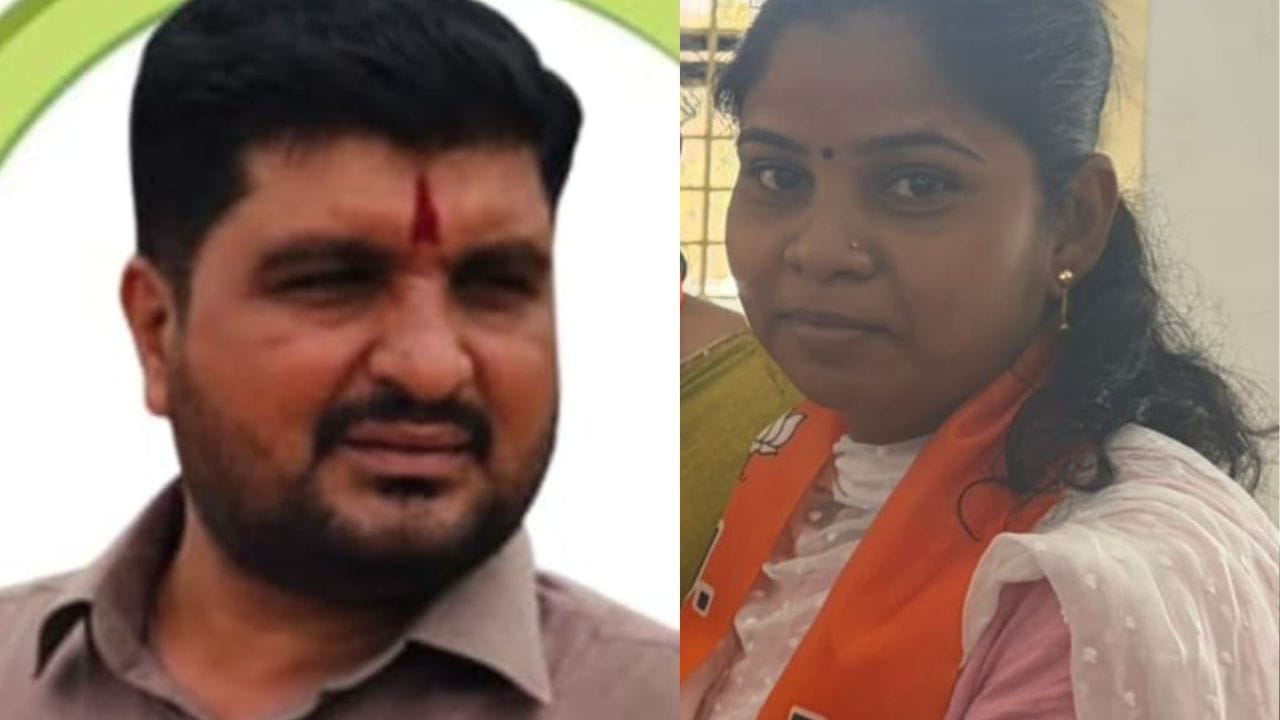
The self-immolation has sparked debates over the internal functioning and accountability mechanisms within political parties. Analysts note that intra-party conflicts, if unaddressed, can lead to severe psychological distress and, in rare cases, extreme actions such as this. Social activists highlighted the lack of accessible support systems for party workers, especially women, who may face harassment, marginalisation, or pressure in political spaces.

Social activists have also weighed in, calling for broader awareness campaigns about mental health, particularly for women in politically charged or high-stress environments. They argue that the lack of formal support structures leaves activists vulnerable to extreme decisions in moments of crisis. Experts emphasised the importance of accessible counseling, peer support, and structured mechanisms to safely report conflicts without fear of reprisal.

Political analysts have noted that incidents such as this can have broader repercussions for party image and public trust. The Kalaburagi self-immolation raises questions about the internal dynamics of political parties and how they manage disputes, particularly when gendered hierarchies and power imbalances are involved. Maintaining transparency and accountability, analysts say, is critical to prevent reputational damage and reassure both members and the public.

Local residents have expressed mixed emotions, with some mourning the activist while others voiced concern over rising tensions within political units. Community leaders are calling for calm and dialogue, emphasising that political disagreements must never escalate into life-threatening situations. Several NGOs and community organisations have stepped in to offer temporary support and counseling to residents affected by the incident, highlighting the ripple effects of such a tragedy on the wider neighbourhood.BJP worker self-immolates outside realtor's home in Kalaburagi; case filed

As the investigation continues, law enforcement has urged political parties and the public to refrain from speculation and to allow official processes to unfold. Authorities have assured that all angles will be examined, including possible failures in grievance handling and any external pressures that may have contributed. Meanwhile, the incident has sparked urgent discussions about institutional responsibilities, mental health support, and the human cost of unresolved conflicts in political organisations, underlining the need for systemic reforms to prevent future tragedies.

Follow: Karnataka Government

Also read: Home | Channel 6 Network – Latest News, Breaking Updates: Politics, Business, Tech & More

Over 150 Families Left Homeless After Yelahanka Demolition Drive: Devastating 150 Stories, Shattered Lives

More than 150 families were left homeless following a large-scale demolition drive carried out in Yelahanka on the outskirts of Bengaluru, triggering anguish, anger and urgent questions about rehabilitation and due process. Makeshift houses, small brick dwellings and temporary shelters were razed as part of an anti-encroachment operation, leaving hundreds of residents, including children, elderly persons and daily wage workers, scrambling for shelter amid the rubble of what once were their homes.

Residents and activists have emphasised that displacement without rehabilitation can have cascading effects on mental health and community cohesion. Families report heightened stress, anxiety and uncertainty, with children displaying signs of trauma from sudden disruption of their routines. Social networks that once provided support during crises have been fractured, leaving vulnerable individuals, especially single parents and the elderly, without assistance. Experts warn that prolonged neglect of such psychosocial impacts can exacerbate long-term hardships for already marginalised communities.

The demolition has also drawn criticism for its timing and execution. Several residents noted that the drive coincided with winter months, exposing families to cold nights and inadequate shelter. Human rights advocates argue that authorities must consider environmental and seasonal factors when planning such operations, and that eviction schedules should prioritise safety and minimum disruption to daily life.

Local political leaders and opposition parties have called for accountability and transparency in the process. They demanded that officials provide a clear list of affected families, outline eligibility for compensation, and ensure immediate access to temporary housing. They also urged the administration to engage directly with residents to plan sustainable rehabilitation rather than relying solely on notices and enforcement actions.Tsunami houses in Nagapattinam: dwellers caught between unsafe homes and  uncertain aid - The Hindu

As the dust settles over Yelahanka, the urgent need for a balanced approach to urban governance is evident. Experts stress that city planning must integrate affordable housing, legal pathways for low-income settlements, and proactive rehabilitation measures to prevent such crises. Without these, the cycle of informal settlement, eviction, and displacement is likely to continue, leaving countless families in limbo while the city’s growth proceeds unabated.

The demolition, carried out by civic and revenue authorities with police support, began early in the day and continued for several hours. Officials stated that the structures were illegal encroachments on government land and that the action was necessary to reclaim public property. However, residents alleged that they were not given adequate notice or alternative arrangements, turning the operation into a humanitarian crisis overnight.

As bulldozers moved in, families rushed to salvage whatever belongings they could. Clothes, utensils, schoolbooks and identity documents lay scattered across the site. Many residents broke down as they watched their homes collapse, saying years of savings and labour were wiped out in a matter of minutes. For several families, the demolished structures represented not just shelter but a sense of stability built over decades.

Local residents said the settlement housed construction workers, domestic workers, street vendors and migrant labourers who contribute significantly to the city’s informal economy. “We clean the city, build its houses, work in its homes. Today, the city has thrown us out,” said one resident, sitting amid debris with her children.

Authorities maintained that the drive was conducted following legal procedures and that notices had been issued earlier. They said encroachments had been identified after surveys and that repeated warnings were ignored. However, residents contested these claims, stating that many families never received written notices and were unaware of the exact date of demolition.

The sudden displacement has raised concerns about the absence of immediate rehabilitation measures. With no temporary shelters provided, several families spent the night in the open or sought refuge with relatives and neighbours. Children missed school, elderly persons struggled without medicines, and working adults lost daily wages as survival took precedence over employment.


Displacement, Due Process and Human Cost

The demolition has once again highlighted the complex and often contentious issue of urban evictions in rapidly expanding cities like Bengaluru. As land values rise and infrastructure projects accelerate, informal settlements frequently find themselves in the crosshairs of development and regulation. While authorities argue that encroachments hinder planned growth, the human cost of abrupt evictions remains a pressing concern.

Residents of the demolished settlement claimed that many of them possessed documents such as ration cards, voter IDs and Aadhaar cards registered at the same address, which they believed legitimised their residence. Some said they had been paying electricity bills and local levies for years, reinforcing their belief that their settlement had been informally regularised.Left to sleep beside the tracks': Eviction drive for Bengaluru's suburban  rail project leaves families homeless

Legal experts point out that possession of identity documents does not confer land ownership, but they also emphasise that eviction processes must adhere strictly to principles of natural justice. This includes clear notice, adequate time to respond and, in many cases, rehabilitation for economically weaker sections. The absence of visible resettlement arrangements in Yelahanka has therefore drawn criticism from rights groups.

Children were among the worst affected. With their homes demolished, many lost school uniforms, textbooks and certificates. Parents expressed fear that prolonged displacement could disrupt education permanently, especially for first-generation learners. Teachers from nearby government schools said several students did not turn up after the demolition, and some families had informed them that they might move out of the area altogether.

Women residents spoke of heightened vulnerability following the eviction. Without secure shelter, concerns about safety, sanitation and privacy have become acute. Pregnant women and new mothers said access to healthcare had become uncertain, while elderly residents worried about exposure to cold nights and lack of medical support.

Activists working with urban poor communities said the Yelahanka demolition reflects a broader pattern where enforcement actions prioritise land clearance over human rehabilitation. They argued that while removing encroachments may be legally justified, it must be accompanied by humane and well-planned relocation measures. “Eviction without rehabilitation is not governance, it is abandonment,” said one activist.

Officials, however, defended the action, stating that encroachments cannot be allowed to continue indefinitely. They said public land is meant for infrastructure, public utilities and environmental protection, and illegal occupation deprives the larger population of these benefits. Some officials also claimed that certain residents had moved in recently, anticipating eventual compensation or alternative housing.

The contradiction between official narratives and residents’ accounts has fueled demands for an independent inquiry. Opposition leaders visited the site and accused the authorities of acting insensitively. They demanded immediate temporary shelters, food assistance and a comprehensive rehabilitation plan, warning that failure to act would deepen social distress.


Urban Growth, Inequality and the Search for Solutions

The Yelahanka demolition has reopened a larger debate about urban planning and inequality in Bengaluru. As the city expands outward, low-income workers often settle on unused land close to employment hubs due to the absence of affordable housing. Over time, these settlements become integral to the city’s functioning, even as they remain legally precarious.

Urban planners argue that the recurring cycle of informal settlement, demolition and displacement reflects a systemic failure to provide inclusive housing solutions. They note that while Bengaluru attracts investment and high-income residents, housing policies for the urban poor lag far behind demand. Without viable alternatives, informal settlements become the only option for thousands of families.

Economists point out that forced evictions also carry economic costs. Displaced workers lose productivity, children drop out of school and health outcomes worsen, creating long-term social burdens. “When you displace a workforce without rehabilitation, the city eventually pays the price,” said an expert, adding that humane urban policy is also sound economic policy.

In the aftermath of the demolition, civil society organisations have stepped in to provide immediate relief. Volunteers distributed food, drinking water and basic supplies to affected families. Some groups are assisting residents in documenting losses and exploring legal options. However, activists stress that charity cannot replace State responsibility.

Residents are now demanding clear answers from the administration. They want temporary shelters, access to basic amenities and a timeline for permanent rehabilitation. Many say they are willing to relocate if provided with affordable housing and reasonable proximity to their workplaces. What they oppose, they insist, is being rendered homeless without warning or support.Demolition drives intensified for G20 events in Delhi, several left homeless:  Activists

The administration has indicated that it will review the situation and consider relief measures for eligible families. Officials said surveys would be conducted to identify long-term residents and assess possible rehabilitation options. However, past experiences have made residents sceptical of such assurances, fearing prolonged delays and bureaucratic hurdles.

Legal challenges are also being considered. Lawyers assisting the residents said they may approach the courts, arguing that the demolition violated procedural safeguards and constitutional rights to life and shelter. Courts in previous cases have emphasised the need for humane treatment of slum dwellers, even when evictions are legally sanctioned.

As night falls over the cleared land in Yelahanka, the silence is heavy with uncertainty. For the families affected, the demolition is not merely an administrative action but a life-altering rupture. Their immediate concern is survival, but their larger struggle is for recognition, dignity and a place in the city they help sustain.

The episode serves as a stark reminder that urban development cannot be divorced from social justice. Bulldozers may clear land in a day, but the consequences of displacement linger for years. Whether the Yelahanka demolition becomes another forgotten eviction or a turning point towards more compassionate urban governance will depend on how authorities respond to the human crisis unfolding in its wake.

Follow: Karnataka Government

Also read: Home | Channel 6 Network – Latest News, Breaking Updates: Politics, Business, Tech & More
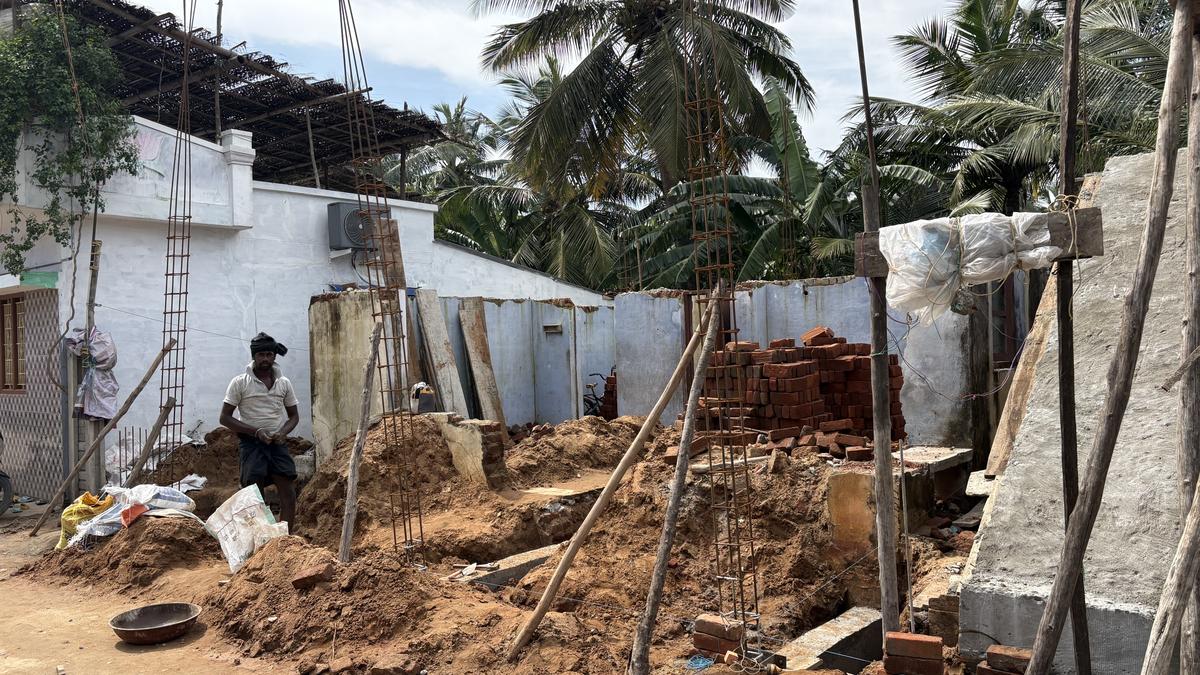
CID Begins Search for BJP MLA Byrathi Basavaraj in Murder Case: Shocking 5 Turns, Political Shockwaves

The Criminal Investigation Department CID has begun an intensive search for BJP MLA Byrathi Basavaraj in connection with a high-profile murder case, escalating political tensions in Karnataka and triggering sharp reactions across party lines. The development marks a significant turn in an investigation that has already drawn public attention due to the seriousness of the charges and the involvement of an elected representative.

According to official sources, the CID initiated efforts to locate the MLA after repeated attempts to question him reportedly did not materialise. Investigators are seeking to record his statement as part of the probe into the murder, which has raised questions about motive, alleged conspiracy and the sequence of events leading up to the crime. While the agency has not disclosed specific details of the case, officials indicated that the MLA’s presence is considered crucial to move the investigation forward.

The search operation is being carried out at multiple locations linked to the legislator, including residences and places he is known to frequent. CID teams are also examining travel records and communication details to establish his movements in the days surrounding the incident. Senior officials said all actions are being taken in accordance with legal procedures and that no conclusions have been drawn at this stage.

The murder case itself has sent ripples through the political establishment, given its alleged links to local disputes and power dynamics. The victim’s family has been demanding a thorough and impartial investigation, insisting that those responsible, irrespective of political position, be brought to justice. Their demand has found resonance among civil society groups calling for accountability and transparency.

The BJP, reacting to the developments, has termed the CID’s actions as politically motivated and accused the ruling party of misusing investigative agencies to target opposition leaders. Party leaders said the MLA has cooperated with authorities in the past and questioned the need for what they described as a “public spectacle” around the search. They maintained that due process must be followed and that guilt cannot be presumed.

On the other hand, the State government has defended the investigation, asserting that no individual is above the law. Ministers said the CID is an independent agency and that its actions are guided solely by evidence and legal requirements. They urged political parties not to interfere with the probe or attempt to influence public opinion while the investigation is underway.

Observers note that the case could also have implications for legislative functioning, particularly if the investigation leads to prolonged legal proceedings. Questions have already been raised about the responsibilities of elected representatives facing serious criminal allegations and whether political parties should adopt clearer internal norms on accountability. While no statutory requirement mandates stepping aside at the investigation stage, the ethical debate has gained momentum in the wake of the CID’s action.

The developments have also renewed discussion on the pace of criminal justice delivery in cases involving influential individuals. Delays in investigation or trial often fuel public cynicism and perceptions of unequal treatment under the law. Legal commentators have stressed that timely completion of the probe and clear communication from authorities will be crucial to maintaining credibility and public confidence.CID begins search for BJP MLA Byrathi Basavaraj in murder case - The Hindu

Within the broader political context, the case adds to an atmosphere of heightened confrontation between the ruling party and the opposition in Karnataka. Each side has accused the other of politicising the issue, reflecting a deeper erosion of trust. Analysts warn that such polarisation risks overshadowing governance and policy debates, further narrowing space for constructive dialogue.

As attention remains fixed on the CID’s next steps, the case stands as a reminder of the complex challenges involved in balancing democratic representation with legal accountability. Whether it ultimately reinforces faith in institutions or deepens scepticism will depend on how transparently and fairly the investigation is conducted. For now, the unfolding events continue to command public attention, symbolising the high stakes involved when law enforcement and political power intersect.

The case has also sparked debate about the broader issue of criminal allegations against elected representatives. Legal experts note that such cases test the credibility of democratic institutions and underscore the need for swift and impartial investigations. They emphasised that transparency and adherence to the rule of law are essential to maintain public trust.


Investigation Intensifies Amid Political Crossfire

As the CID’s search for Byrathi Basavaraj continues, the investigation has entered a sensitive phase marked by heightened political rhetoric. Officials said the agency is focusing on reconstructing the chain of events leading up to the murder, including financial transactions, personal rivalries and possible involvement of intermediaries. Several individuals connected to the case have already been questioned, and forensic evidence is being analysed.

As the search for Byrathi Basavaraj continues, speculation is likely to intensify. Whether the MLA presents himself before investigators or is located by the CID will be a crucial development in the days ahead. Each step taken by the agency will be closely watched by political actors, the media and the public.

Ultimately, the case underscores the fragile intersection of law, politics and public trust. How it unfolds will not only determine individual accountability but also shape perceptions of the State’s commitment to the rule of law. For now, the CID’s actions signal an intent to pursue the investigation to its logical conclusion, regardless of political stature, a stance that could set an important precedent in Karnataka’s political and legal landscape.

Sources indicated that investigators are paying close attention to call data records and digital footprints to establish links between suspects. Such evidence, they said, could provide crucial insights into whether the crime was premeditated and who may have played a role in planning or executing it. The agency is also examining statements recorded earlier for inconsistencies or corroboration.

The absence of the MLA has added a layer of complexity to the probe. While legal experts caution against reading too much into this at an early stage, they acknowledge that non-availability of a key individual can slow down investigations and raise suspicions. At the same time, they stress that the presumption of innocence must be upheld until evidence proves otherwise.Adhere to SC guidelines while quizzing BJP MLA in murder case: Karnataka HC  - The Hindu

Within the BJP, reactions have ranged from strong defence of the MLA to calls for clarity and transparency. Some leaders have urged the party to allow the legal process to take its course, arguing that credibility is best preserved by cooperating fully with investigators. Others have accused the government of orchestrating the timing of the CID’s actions to divert attention from governance issues.

Opposition parties have seized upon the developments to criticise the BJP, framing the case as symptomatic of a deeper problem of criminalisation of politics. They have demanded that the MLA step aside until the investigation is complete, citing the need to uphold ethical standards in public life. Such demands, however, have been rejected by BJP leaders as premature and politically motivated.

Public reaction has been mixed, with social media platforms reflecting both outrage and scepticism. While some users have expressed anger over the alleged involvement of a legislator in a serious crime, others have questioned the motives behind the investigation and urged caution against trial by media. The case has thus become a flashpoint in the State’s already polarised political landscape.

Meanwhile, the victim’s family continues to seek answers. They have reiterated their appeal for justice and urged authorities to ensure that the investigation is not influenced by political considerations. Their statements have added a human dimension to a case often discussed in abstract political terms.


Legal, Political and Public Implications

The unfolding case has significant legal and political implications. If evidence establishes the involvement of a sitting MLA, it could lead to serious consequences, including arrest, prosecution and potential disqualification. Legal analysts point out that the Representation of the People Act and other statutes provide mechanisms to deal with criminal cases involving elected representatives, but enforcement often depends on the pace and integrity of investigations.

From a political perspective, the case poses challenges for both the BJP and the ruling party. For the BJP, it raises questions about candidate selection, internal accountability and the handling of leaders facing serious allegations. For the government, it tests claims of impartial governance and the ability to conduct investigations without political interference.

The role of the CID is also under scrutiny. As a specialised investigative agency, it is expected to function with professionalism and independence. Any perception of bias or procedural lapses could undermine the credibility of the probe and invite judicial scrutiny. Officials said they are conscious of this responsibility and are proceeding cautiously.Bengaluru realtor murder: CID gets 45-day extension to file chargesheet in  KCOCA case where MLA Byrathi Basavaraj is accused

Civil rights groups have called for restraint in public commentary, warning that excessive politicisation could compromise the investigation. They have emphasised the need to protect the rights of all parties involved, including the accused, while ensuring justice for the victim. Transparency, they argue, is essential but must be balanced with the integrity of the legal process.

As the search for Byrathi Basavaraj continues, speculation is likely to intensify. Whether the MLA presents himself before investigators or is located by the CID will be a crucial development in the days ahead. Each step taken by the agency will be closely watched by political actors, the media and the public.

Ultimately, the case underscores the fragile intersection of law, politics and public trust. How it unfolds will not only determine individual accountability but also shape perceptions of the State’s commitment to the rule of law. For now, the CID’s actions signal an intent to pursue the investigation to its logical conclusion, regardless of political stature, a stance that could set an important precedent in Karnataka’s political and legal landscape.

Follow: Karnataka Government

Also read: Home | Channel 6 Network – Latest News, Breaking Updates: Politics, Business, Tech & More

Congress Pushing Karnataka Towards ‘Undeclared Emergency’, Says Shobha Karandlaje: Explosive 7 Claims, Democratic Fear

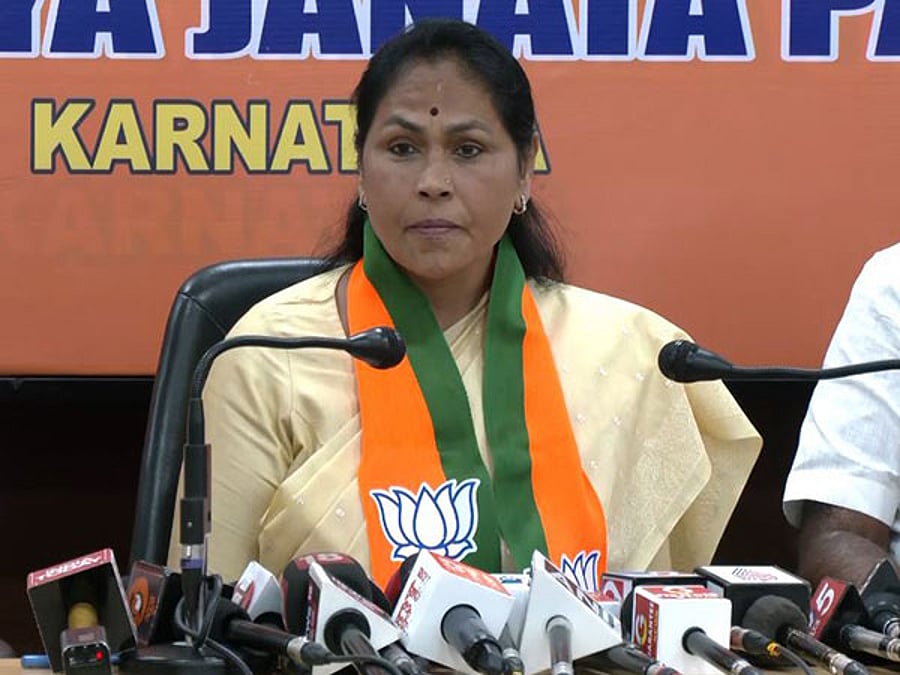
Union Minister and senior BJP leader Shobha Karandlaje on Tuesday launched a sharp attack on the Congress-led government in Karnataka, alleging that the State is being pushed towards an “undeclared Emergency” through what she described as systematic misuse of power, suppression of dissent and erosion of democratic institutions. Addressing a press conference, she said recent actions of the State government reflected an authoritarian mindset that threatens constitutional freedoms and democratic norms.

Ms. Karandlaje also linked what she described as democratic backsliding to policy-making that, in her view, lacks transparency and adequate consultation. She alleged that several decisions with wide social and economic implications were being taken without meaningful debate either within the legislature or with stakeholders outside it. Such an approach, she argued, reduces governance to executive fiat and sidelines representative institutions that are meant to reflect public will.

She further claimed that the atmosphere of fear was affecting ordinary citizens, not just political actors. According to her, people were increasingly hesitant to speak out against administrative lapses or local issues, fearing official reprisals. This, she said, is a dangerous sign for any democracy, as it erodes the feedback mechanisms that help governments correct course and respond to public concerns.

The Union Minister warned that prolonged suppression of dissent often leads to deeper social and political fractures. When grievances are not allowed to surface through peaceful and democratic means, she argued, they tend to accumulate and erupt in more destabilising ways. Preserving spaces for dialogue and protest, she said, is therefore essential not only for democracy but also for social stability.

Ms. Karandlaje reiterated that her party’s criticism should be seen as a call for course correction rather than mere political rhetoric. She said the Congress government still had an opportunity to restore confidence by reaffirming its commitment to constitutional values, protecting institutional autonomy and engaging constructively with critics. Ignoring these concerns, she warned, would only deepen distrust and polarisation.

Concluding her remarks, she said Karnataka stands at a crossroads where choices made today will shape the State’s democratic character for years to come. Whether the government responds with introspection or confrontation, she said, will determine how history judges this period. For the opposition, she added, the priority remains to keep democratic principles at the centre of political discourse and to ensure that the voices of citizens are neither marginalised nor silenced.

Ms. Karandlaje accused the ruling dispensation of targeting political opponents, civil society voices and officials who do not align with its views. She said that instead of focusing on governance and development, the government was increasingly relying on intimidation, selective enforcement of laws and administrative pressure to silence criticism. According to her, this pattern mirrors the excesses witnessed during the Emergency period, albeit without a formal proclamation.

The BJP leader said the Congress government’s conduct over the past months had created an atmosphere of fear and uncertainty. She claimed that individuals expressing dissent, whether journalists, activists or opposition leaders, were being subjected to inquiries, notices and legal scrutiny. “Democracy does not die overnight. It is strangled slowly, through fear and coercion,” she said, warning that Karnataka was witnessing such a gradual erosion.

Referring to recent controversies involving administrative decisions and law enforcement actions, Ms. Karandlaje alleged that institutions meant to function independently were being used as tools of political vendetta. She argued that frequent transfers of officials, pressure on police personnel and interference in investigations pointed to a deliberate attempt to centralise power and stifle autonomy.

She also criticised what she termed as the government’s intolerance of criticism. According to her, instead of engaging with opposing viewpoints, the Congress leadership was quick to brand critics as anti-government or politically motivated. This, she said, undermines the spirit of democratic debate and weakens public trust in governance.

Ms. Karandlaje maintained that the BJP would continue to raise these issues both inside and outside the legislature. She urged citizens to remain vigilant and resist any attempts to curtail democratic freedoms. “Karnataka has a proud democratic tradition. It cannot be reduced to a State where people are afraid to speak,” she asserted.


Allegations of Institutional Misuse and Suppression

Expanding on her allegations, Ms. Karandlaje said the most disturbing aspect of the current political climate was the alleged misuse of constitutional and statutory bodies. She claimed that institutions which are expected to act impartially were being influenced to serve political interests. Such practices, she argued, not only damage institutional credibility but also weaken the foundations of democracy.

She cited instances where opposition leaders were subjected to what she described as “selective scrutiny,” while alleged irregularities involving ruling party members were ignored or delayed. This selective approach, she said, sends a message that power determines accountability, a principle that runs contrary to the rule of law.

The Union Minister also raised concerns about what she termed as intimidation of media and civil society. She alleged that journalists critical of the government were facing pressure through legal notices and official warnings. According to her, a free press is a cornerstone of democracy, and any attempt to intimidate it should be seen as an assault on democratic values.

Ms. Karandlaje further alleged that the State government was attempting to control narratives by discouraging public protests and dissent. She said restrictions on assemblies, denial of permissions and heavy policing of demonstrations were being used to curb public expression. While law and order must be maintained, she argued, it cannot become a pretext to suppress democratic rights.Congress pushing Karnataka towards 'undeclared Emergency': Shobha Karandlaje  - The Hindu

The BJP leader also criticised the government’s handling of administrative machinery. She alleged that frequent transfers of senior officials had created instability and demoralisation within the bureaucracy. According to her, officers were under constant pressure to align with political expectations, affecting decision-making and governance efficiency.

She warned that such practices could have long-term consequences. When institutions lose independence, she said, governance becomes personality-driven rather than rule-based. This, she added, ultimately harms citizens who depend on fair and transparent administration for essential services.

Ms. Karandlaje contrasted the current situation with what she described as Karnataka’s earlier reputation for balanced governance and institutional integrity. She said the State had historically been known for respecting democratic norms, irrespective of which party was in power. The present trend, she argued, marked a departure from that tradition.Undeclared Emergency in Karnataka, says Union Minister Shobha Karandlaje


Political Polarisation and the Road Ahead

The allegations come amid heightened political polarisation in Karnataka, with the opposition and the ruling party locked in frequent confrontations. Ms. Karandlaje said the Congress government appeared more focused on consolidating power than on addressing pressing issues such as unemployment, price rise and rural distress. She argued that governance failures were being masked through aggressive political tactics.

She also accused the government of diverting attention from unfulfilled promises by creating a climate of confrontation. According to her, instead of being held accountable for policy outcomes, the ruling party was engaging in what she described as “manufactured controversies” and targeting opponents to control public discourse.

The BJP leader called upon constitutional authorities to remain vigilant and ensure that democratic safeguards are upheld. She said institutions such as the judiciary and election machinery play a crucial role in preserving balance and preventing executive overreach. Any weakening of these checks, she warned, could tilt the democratic framework dangerously.

Ms. Karandlaje reiterated that the BJP would intensify its campaigns to expose what it views as authoritarian tendencies. She said the party would take its message to the grassroots, highlighting issues related to governance, freedom of expression and institutional independence. Public awareness, she argued, is essential to counter what she described as creeping authoritarianism.

She also appealed to citizens, especially the youth, to engage actively in democratic processes. Democracy, she said, survives not merely through elections but through constant vigilance and participation. Silence in the face of injustice, she warned, only emboldens those who seek to concentrate power.

Responding to possible criticism that her remarks were politically motivated, Ms. Karandlaje said questioning the government is the duty of the opposition. She argued that raising concerns about democratic erosion should not be dismissed as partisan politics. “This is about safeguarding the future of Karnataka,” she said.Undeclared emergency in Karnataka': Shobha Karandlaje attacks Congress  government

As political tensions continue to rise, the debate over governance and democratic norms in Karnataka is likely to intensify. While the Congress government has rejected similar allegations in the past, Ms. Karandlaje’s remarks reflect a broader opposition narrative that accuses the ruling party of intolerance and overreach.

Whether these accusations resonate beyond political circles remains to be seen. However, the rhetoric underscores deepening mistrust between the government and the opposition. In such a charged atmosphere, the challenge for Karnataka lies in ensuring that democratic institutions remain robust and that dissent, criticism and debate continue to find space in public life.

The BJP leader called upon constitutional authorities to remain vigilant and ensure that democratic safeguards are upheld. She said institutions such as the judiciary and election machinery play a crucial role in preserving balance and preventing executive overreach. Any weakening of these checks, she warned, could tilt the democratic framework dangerously.

Ms. Karandlaje reiterated that the BJP would intensify its campaigns to expose what it views as authoritarian tendencies. She said the party would take its message to the grassroots, highlighting issues related to governance, freedom of expression and institutional independence. Public awareness, she argued, is essential to counter what she described as creeping authoritarianism.

Follow: Karnataka Government

Also read: Home | Channel 6 Network – Latest News, Breaking Updates: Politics, Business, Tech & More
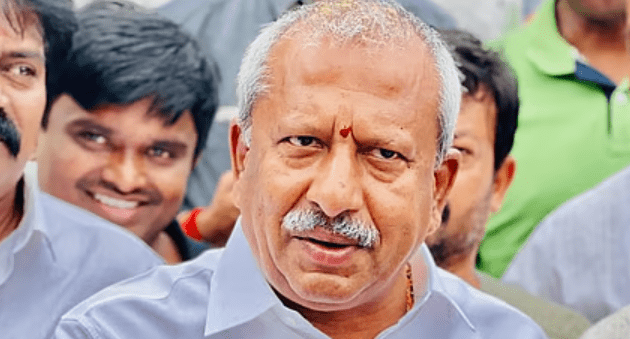
Economist Decries Centre’s Scrapping of MGNREGA: Grim 3 Warnings, Broken Lives

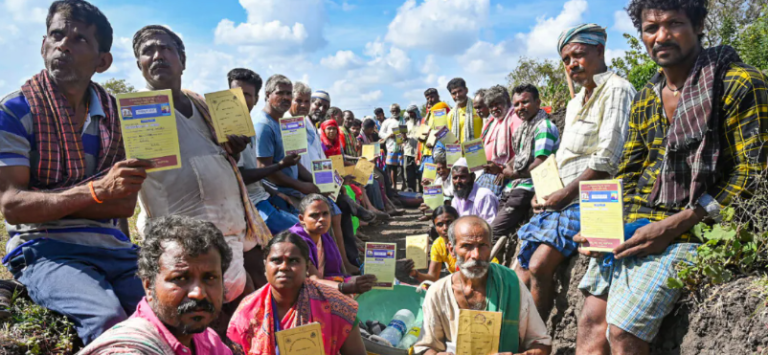
The reported move by the Union government to scrap the Mahatma Gandhi National Rural Employment Guarantee Act has drawn sharp criticism from economists, social activists and rural policy experts, who warn that the decision could have far-reaching consequences for employment security, rural livelihoods and social stability. An economist speaking at a public forum described the proposal as “economically short-sighted and socially devastating,” arguing that the programme remains a lifeline for millions of households struggling with irregular incomes, agrarian distress and climate uncertainty.

MGNREGA, enacted in 2005, guarantees 100 days of wage employment to rural households and has long been seen as a cornerstone of India’s social security framework. Over the years, it has provided critical income support during droughts, floods, economic slowdowns and even the COVID-19 pandemic. The economist said scrapping the scheme without a credible alternative would undo years of progress in poverty reduction and rural resilience.

According to the economist, the argument that MGNREGA has outlived its utility is flawed. While acknowledging implementation challenges such as delayed payments and uneven asset creation, he said these issues stem from administrative lapses rather than the design of the programme itself. “You do not demolish a bridge because it has cracks; you repair it,” he remarked, adding that dismantling MGNREGA would leave vulnerable populations without any fallback mechanism.

The criticism comes amid growing concerns over rising rural unemployment, stagnating farm incomes and increasing migration to cities. The economist pointed out that in many districts, MGNREGA wages form a crucial supplement to agricultural earnings, particularly for landless labourers, women and marginal farmers. Removing this support, he warned, could deepen inequality and push more households into chronic debt.

He also questioned the timing of the move, noting that climate-induced shocks are becoming more frequent and severe. Erratic rainfall, prolonged droughts and floods have made rural incomes increasingly unpredictable. In such a context, he said, employment guarantee schemes are not merely welfare measures but essential tools for economic stabilisation.Economist decries scrapping of MGNREGA by Centre - The Hindu

Beyond immediate economic impacts, the economist stressed that scrapping MGNREGA would also weaken democratic participation at the grassroots. The scheme, he noted, is deeply intertwined with local self-governance, as gram panchayats play a central role in identifying works, registering demand and implementing projects. This process, imperfect as it may be, gives rural citizens a sense of agency and involvement in decision-making. Removing the programme, he warned, would erode these participatory structures and further marginalise voices that are already underrepresented in policy debates.

The economist also raised concerns about intergenerational consequences. For many rural families, income from MGNREGA helps cover basic expenses such as food, healthcare and children’s education. Without this support, households may be forced to pull children out of school or push them into informal labour to make ends meet. Such outcomes, he argued, perpetuate cycles of poverty and limit social mobility, undermining long-term development goals that successive governments have claimed to prioritise.

He further argued that MGNREGA has symbolic significance as a commitment to constitutional values. By guaranteeing the right to work, the State acknowledges its responsibility to ensure livelihoods for its citizens. Rolling back such a guarantee, he said, sends a troubling signal about the direction of social policy. In times of economic uncertainty, he added, citizens look to the State for reassurance, not retrenchment. Policies perceived as withdrawing support risk weakening public trust in institutions.

Concluding his critique, the economist called for a broader national conversation on the future of employment and social security. Rather than dismantling existing safeguards, he urged the Centre to explore ways of integrating MGNREGA with climate adaptation, rural infrastructure and skill development initiatives. Such an approach, he said, could make the programme more resilient and relevant to contemporary challenges. Scrapping it outright, he warned, would be a decision whose social costs may only become visible when it is too late to reverse course.


A Lifeline for Rural India Under Threat

The economist traced the origins of MGNREGA to a period when rural distress had reached alarming levels. Conceived as a rights-based programme, it was designed not just to provide employment but to empower rural citizens by giving them a legal entitlement to work. This, he said, marked a fundamental shift from discretionary welfare to enforceable social security.

Over the years, MGNREGA has played a critical role in reducing seasonal migration, especially among the poorest households. By providing work close to home, the scheme allowed families to stay together and reduced dependence on exploitative labour markets in urban areas. Women, in particular, benefited from the programme’s emphasis on equal wages and local employment, leading to greater financial autonomy and participation in village economies.

The economist highlighted data showing that women account for a significant share of MGNREGA workers in several States. This, he argued, is evidence of the scheme’s inclusive design. Scrapping it would disproportionately affect women, who often have fewer alternative employment options due to social constraints and unpaid care responsibilities.

He also underscored the programme’s role in creating durable assets such as water harvesting structures, rural roads and soil conservation works. While acknowledging that asset quality varies, he said many regions have benefited from improved irrigation and groundwater recharge, contributing to long-term agricultural productivity. Abandoning the scheme, he warned, would mean abandoning these gains as well.

Critics of MGNREGA often cite fiscal burden as a reason for its removal. The economist countered this argument by pointing out that expenditure on the scheme constitutes a relatively small fraction of total government spending. Moreover, he said, the economic multiplier effects of rural wage employment generate demand for goods and services, stimulating local economies and contributing to overall growth.

He cautioned that reducing public investment in rural employment could have unintended macroeconomic consequences. Lower rural incomes would mean reduced consumption, which in turn could dampen demand in sectors ranging from consumer goods to small-scale manufacturing. “This is not just a rural issue; it affects the entire economy,” he said.

The economist also raised concerns about the moral implications of scrapping a rights-based programme. He argued that employment is not merely a matter of charity but a fundamental aspect of dignity and citizenship. Removing a legal guarantee without adequate consultation or safeguards, he said, undermines the social contract between the State and its citizens.Economist decries scrapping of MGNREGA by Centre - The Hindu


Economic Logic Versus Social Reality

Addressing claims that MGNREGA distorts labour markets by discouraging people from seeking private employment, the economist said such arguments overlook ground realities. In many rural areas, he noted, private employment opportunities are scarce, seasonal or poorly paid. MGNREGA does not replace private work but fills gaps during lean periods, ensuring minimum income security.

He also dismissed the notion that rural development can rely solely on market-driven growth. While infrastructure investment and private enterprise are important, he said they cannot substitute for social protection in a country with deep structural inequalities. “Markets do not automatically reach the poorest; the State has to step in,” he asserted.

The economist emphasised that rather than scrapping MGNREGA, the focus should be on reforming and strengthening it. Measures such as timely wage payments, better planning of works, use of technology for transparency and stronger grievance redressal mechanisms could significantly improve outcomes. He suggested that decentralisation and greater involvement of local governments could enhance accountability and effectiveness.

He also warned that scrapping the scheme could exacerbate rural unrest. With limited employment options and rising living costs, frustration among rural youth is already high. Removing one of the few guaranteed sources of work, he said, could fuel social tensions and migration pressures, placing additional strain on urban infrastructure.

The economist pointed to the experience of the pandemic as a stark reminder of MGNREGA’s importance. When economic activity came to a standstill, the scheme acted as a safety net for millions of returning migrants. Demand for MGNREGA work surged, demonstrating its role as a counter-cyclical tool during crises. Scrapping it, he said, would leave the country ill-prepared for future shocks.

He also questioned the transparency of the decision-making process. Any move to dismantle a programme of this scale, he argued, should be preceded by detailed impact assessments and consultations with States, experts and beneficiaries. Rushing such a decision, he warned, risks policy failure with irreversible social costs.

The economist acknowledged that public finances are under pressure and that priorities must be balanced. However, he insisted that cutting back on employment guarantees is a false economy. The social costs of unemployment, malnutrition and distress migration, he said, far outweigh the fiscal savings from scrapping the scheme.Economist decries scrapping of MGNREGA by Centre - The Hindu

As debates continue, the future of MGNREGA remains uncertain. For millions of rural households, the scheme represents more than just wages; it symbolises security, dignity and a measure of control over their lives. The economist concluded by urging policymakers to reconsider the move and view MGNREGA not as a burden but as an investment in social stability.

He warned that dismantling the programme could mark a retreat from the principles of inclusive growth and social justice. In a country still grappling with poverty and inequality, he said, employment guarantees remain a vital instrument of public policy. The question, he concluded, is not whether India can afford MGNREGA, but whether it can afford to do without it.

Follow: Karnataka Government

Also read: Home | Channel 6 Network – Latest News, Breaking Updates: Politics, Business, Tech & More

Nirmala Sitharaman Launches ‘VijAIpatha’ Labs in Hosapete Government Schools: Transformative 1 Step, Young Dreams

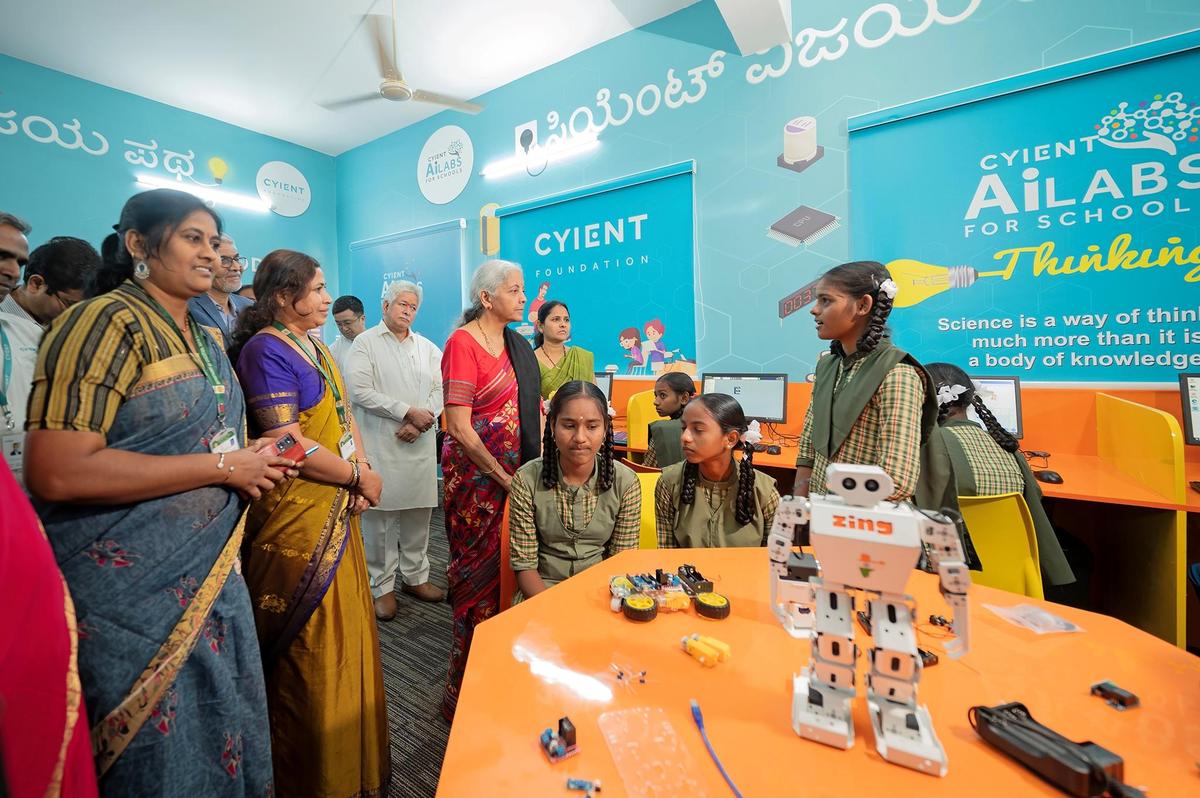
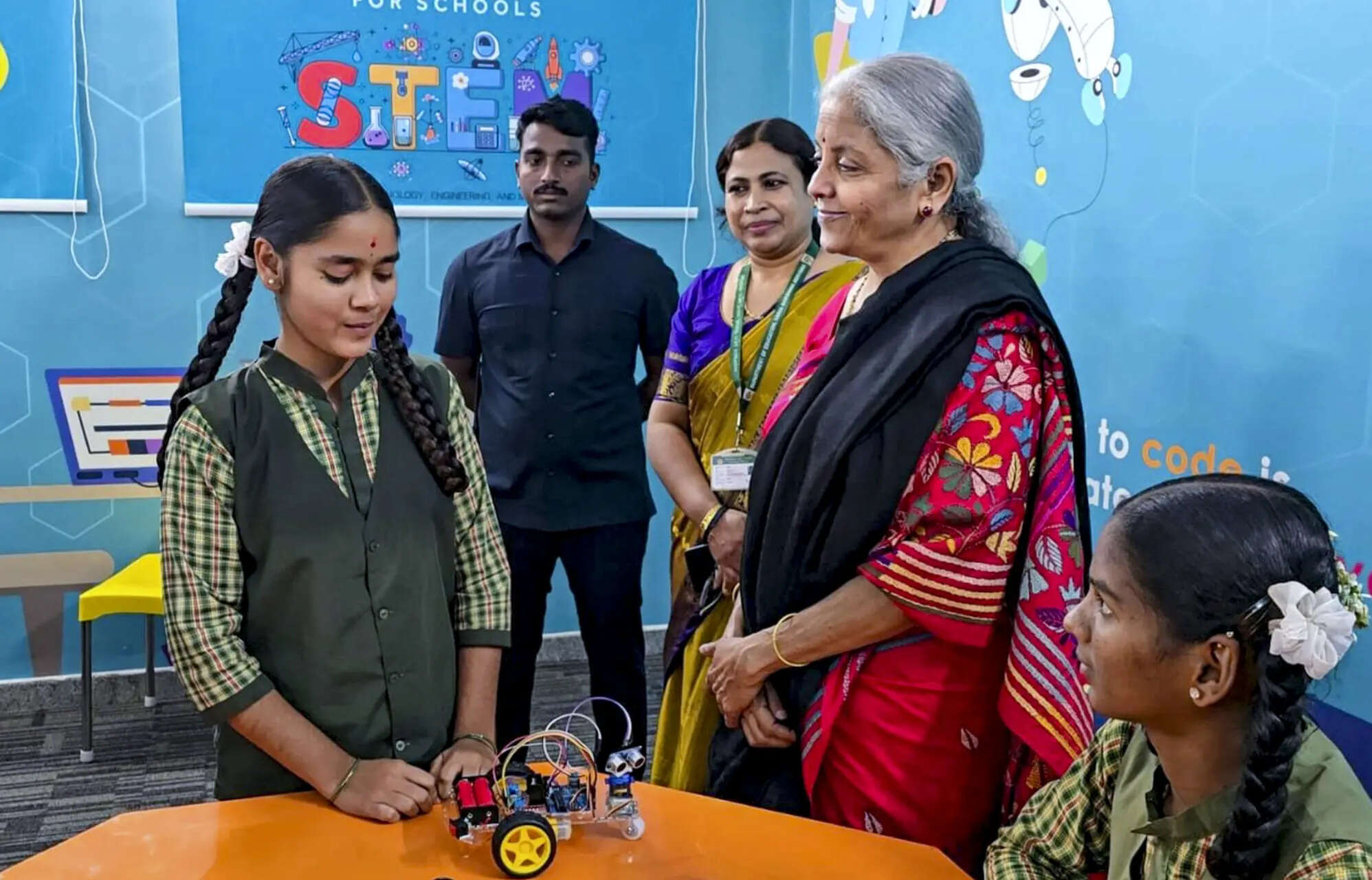
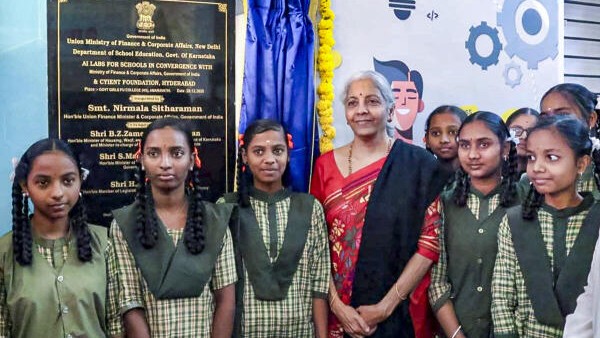
Union Finance Minister Nirmala Sitharaman on Saturday launched ‘VijAIpatha’ laboratories in select government schools in Hosapete, marking a significant push towards integrating artificial intelligence and emerging technologies into public school education. The initiative, aimed at equipping students with future-ready skills, seeks to bridge the digital divide by bringing advanced learning tools to classrooms that have traditionally lacked access to such resources.

Looking ahead, officials said the success of VijAIpatha would be measured not merely by infrastructure creation but by learning outcomes and student confidence. Periodic assessments are expected to track how students engage with technology, apply logical reasoning and collaborate on problem-solving tasks. Education department representatives indicated that data from these assessments would guide refinements in curriculum design and teacher training. The aim, they said, is to ensure that technology use remains meaningful and inclusive, enhancing comprehension rather than becoming a symbolic addition to classrooms already burdened with syllabus pressures.

As the event concluded, the broader message resonated beyond Hosapete’s school premises. The initiative has rekindled debate on how public education can respond to rapid technological change without losing its social purpose. By placing advanced tools in the hands of students from ordinary backgrounds, VijAIpatha underscores a belief that innovation and equity need not be opposing goals. Whether the programme can sustain momentum and scale effectively will shape its legacy, but for now, it has introduced a sense of possibility rooted in access, aspiration and the quiet confidence of young learners.

The launch event, held at a government high school in Hosapete, witnessed participation from education officials, teachers, students and local representatives. Addressing the gathering, Ms. Sitharaman described the initiative as an investment in India’s demographic dividend. She said empowering students from government schools with exposure to artificial intelligence, coding and problem-solving would enable them to compete on equal footing with peers from private institutions.

‘VijAIpatha’, a play on the words “vijaya” meaning victory and “AI” referring to artificial intelligence, is envisioned as a pathway that introduces students to technology-driven learning from an early age. The labs are designed to provide hands-on experience with concepts such as basic programming, data literacy, logical reasoning and applied problem-solving, using age-appropriate tools and curricula.

Officials explained that the initiative is part of a broader effort to modernise government school education and align it with the changing demands of the global economy. By situating such labs in towns like Hosapete, the programme aims to ensure that technological advancement is not confined to metropolitan centres but reaches students in smaller cities and semi-urban regions.

The Finance Minister emphasised that technology should be seen as an enabler rather than a replacement for traditional learning. She noted that while foundational literacy and numeracy remain essential, familiarity with digital tools and emerging technologies is increasingly becoming a necessity rather than a luxury. According to her, initiatives like VijAIpatha are meant to complement classroom teaching and ignite curiosity among students.

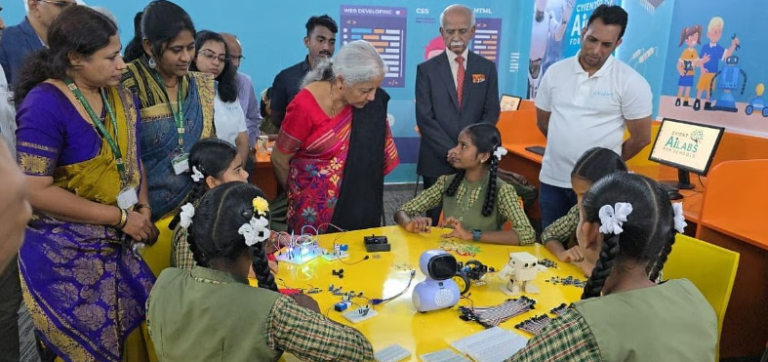
Students present at the event interacted with demonstration models and software installed in the labs, showcasing simple AI-based applications and coding exercises. Teachers expressed optimism that such exposure would make learning more engaging and help students develop confidence in handling technology.

The launch has drawn attention not only for its focus on artificial intelligence but also for its emphasis on inclusivity. By prioritising government schools, the initiative seeks to reduce disparities in access to quality education and prepare students from diverse socio-economic backgrounds for a rapidly evolving future.Nirmala Sitharaman launches 'VijAIpatha' labs in Hosapete govt. schools -  The Hindu


Reimagining Government School Education Through Technology

The VijAIpatha labs represent a shift in how government school education is being envisioned in India. For decades, public schools have grappled with challenges ranging from inadequate infrastructure to limited access to modern teaching aids. While policy reforms have addressed some of these issues, the integration of advanced technology has often remained uneven.

Education officials involved in the programme said the labs are designed to be simple, scalable and adaptable. Each lab is equipped with computers or tablets, interactive learning software and curated content aligned with school curricula. The focus, they said, is not on rote learning of technology but on cultivating computational thinking and problem-solving skills.

Teachers have been trained to use the labs effectively, ensuring that technology becomes an integral part of pedagogy rather than an isolated add-on. Training sessions emphasised guiding students through inquiry-based learning, encouraging them to ask questions, experiment and learn from mistakes. This approach, educators believe, can transform classrooms into more dynamic learning environments.

The choice of Hosapete for the launch is seen as symbolic. Located in a region better known for its historical and industrial significance, the town represents many parts of India where aspirations are high but opportunities are limited. By introducing AI labs in such settings, the initiative aims to demonstrate that cutting-edge education need not be restricted to elite institutions.

Ms. Sitharaman, in her address, noted that India’s education system must adapt to the realities of a technology-driven world. She pointed out that future jobs will increasingly require skills such as data analysis, logical reasoning and adaptability. Exposing students to these concepts early, she said, would help demystify technology and reduce fear or hesitation around it.

The initiative also aligns with national education priorities that stress experiential learning and interdisciplinary approaches. Rather than teaching artificial intelligence as a standalone subject, VijAIpatha integrates it with mathematics, science and language learning. For instance, students might use simple coding exercises to understand mathematical patterns or explore scientific concepts through simulations.

Parents and community members attending the launch expressed cautious optimism. Many acknowledged that government schools often struggle to keep pace with private institutions in terms of facilities. The introduction of AI labs, they felt, could change perceptions and instil greater confidence in public education.

However, some educators also stressed the importance of sustained support. Infrastructure upgrades, regular maintenance of equipment and continuous teacher training will be crucial to ensure that the labs do not fall into disuse. They cautioned that technology initiatives must be accompanied by long-term planning and monitoring.

Despite these concerns, the launch has generated enthusiasm among students, many of whom experienced hands-on interaction with digital tools for the first time. For them, the labs represent not just new equipment but a window into possibilities previously perceived as distant or unattainable.


Equity, Skills and the Promise of a Digital Future: Nirmala

A key theme of the VijAIpatha initiative is equity in education. By targeting government schools, the programme addresses a long-standing gap in access to quality technological education. Experts argue that without such interventions, the digital divide risks becoming a structural barrier that limits social mobility.FM Sitharaman launches 'VijAIpatha' labs in govt schools in Karnataka,  ETEducation

Ms. Sitharaman highlighted that talent is not confined to privileged spaces. She said that with the right tools and guidance, students from any background can excel. The responsibility of the State, she added, is to create enabling environments where potential can be nurtured regardless of socio-economic status.

The labs are expected to benefit students at multiple levels. At the foundational stage, exposure to technology can enhance engagement and curiosity. At higher levels, it can help students develop skills relevant to future academic and career paths. Even for those who may not pursue technology-related professions, familiarity with digital tools is increasingly essential across sectors.

Industry observers note that early exposure to AI and coding can also help students make informed choices later in life. Rather than being passive consumers of technology, they can become active creators and critical thinkers. This shift, they argue, is vital in a world where algorithms increasingly influence decision-making.

The initiative also places significant responsibility on teachers, who are central to its success. Recognising this, officials said professional development has been built into the programme. Teachers are encouraged to view themselves as facilitators of learning rather than mere transmitters of information. This pedagogical shift, while challenging, is seen as necessary to make education more relevant and engaging.

Local administrators have been tasked with monitoring the implementation and gathering feedback from schools. Such feedback, they said, would help refine the programme and address practical challenges. There are also plans to gradually expand VijAIpatha labs to more schools based on outcomes and resource availability.

Critics have cautioned against overemphasis on technology at the expense of basic educational needs. They argue that issues such as teacher shortages, classroom infrastructure and foundational learning gaps must also be addressed in parallel. Proponents of the initiative, however, contend that technology can be a catalyst for broader improvements if integrated thoughtfully.

The launch has also sparked conversations about the role of government in shaping the future workforce. As automation and artificial intelligence transform industries, preparing students for these changes becomes a policy imperative. Initiatives like VijAIpatha, supporters say, represent proactive steps in this direction.

For students in Hosapete, the labs have already begun to reshape their learning experience. Many spoke excitedly about experimenting with simple programs and understanding how machines can be taught to recognise patterns. Such experiences, educators believe, can boost confidence and inspire aspirations that extend beyond traditional boundaries.

As the programme moves forward, its impact will depend on sustained commitment, adaptability and inclusivity. If implemented effectively, VijAIpatha could serve as a model for integrating emerging technologies into public education systems across the country.FM Sitharaman Launches VijAIpatha AI Labs in Karnataka

In launching the labs, Ms. Sitharaman framed the initiative as an investment in the nation’s future. She said that empowering young minds with knowledge and skills is the most sustainable form of development. For the students of Hosapete’s government schools, VijAIpatha represents a step towards that promise, blending technology with hope and opening pathways to possibilities shaped by learning rather than limitation.

Follow: Karnataka Government

Also read: Home | Channel 6 Network – Latest News, Breaking Updates: Politics, Business, Tech & More
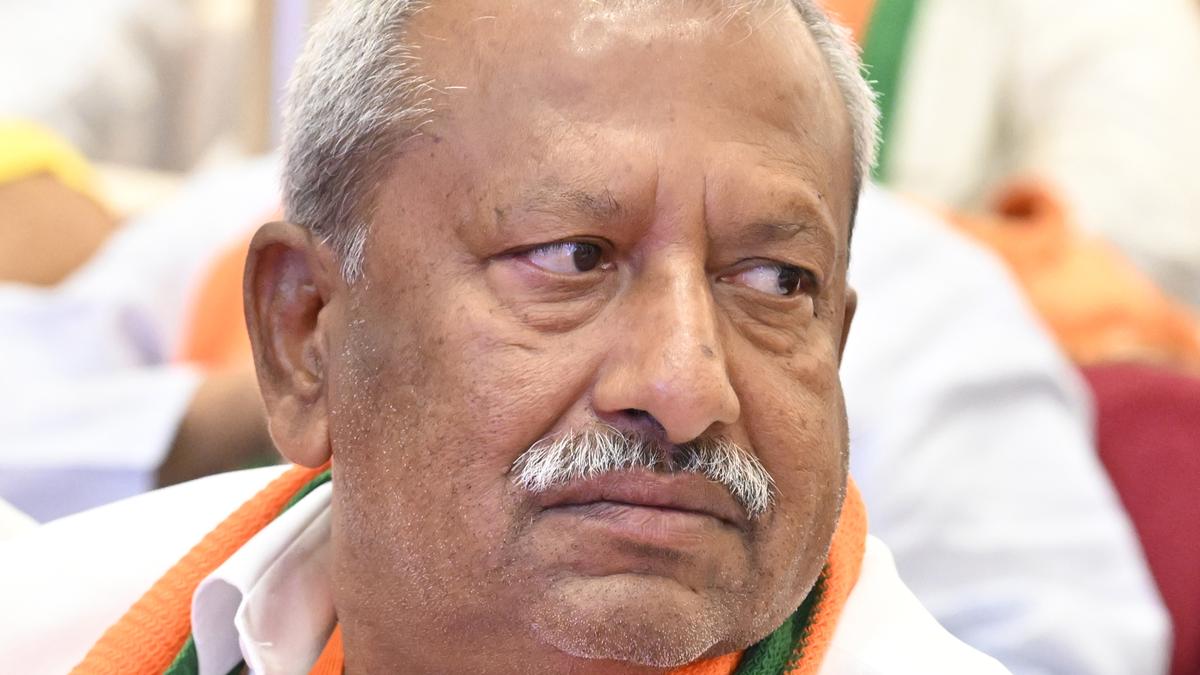
Horatti Chairs Council Proceedings Non-stop: Unyielding Surprising 11 Hours, Democratic Resolve

Legislative Council Chairman Basavaraj Horatti chaired the proceedings of the Karnataka Legislative Council continuously for more than 11 hours, drawing attention across political circles for his endurance, composure and firm control over a marathon sitting of the Upper House. The extended session, marked by intense debates, procedural wrangles and opposition protests, became a testament to both parliamentary persistence and the demands placed on presiding officers in an increasingly polarised political climate.

The proceedings began in the morning and stretched late into the night as the House took up crucial legislative and policy-related business. Despite repeated disruptions, sharp exchanges between treasury and opposition benches, and the physical strain of presiding for such a prolonged duration, Mr. Horatti remained in the Chair without a break, steering the House through the agenda listed for the day.

Members across party lines acknowledged that it was rare for a presiding officer to remain continuously in the Chair for over 11 hours. While marathon sittings are not unprecedented, they are usually managed with brief adjournments or by sharing responsibilities with the Deputy Chairman. On this occasion, however, Mr. Horatti chose to remain present throughout, citing the importance of completing legislative business amid a tight Assembly session schedule.

The long sitting was necessitated by delays caused earlier in the day due to heated debates and repeated adjournments. With time running out and several key matters pending, the Council decided to extend proceedings. What followed was an unusually long and demanding session that tested the stamina of legislators and officials alike.

Observers noted that the Chairman’s decision to continue uninterrupted sent a strong signal about institutional responsibility. At a time when legislative productivity is often questioned, the uninterrupted sitting underscored the pressure to ensure that the House discharges its duties, even under strained circumstances.Horatti chairs Council proceedings non-stop for over 11 hours - The Hindu


Managing Disorder, Debate and Democratic Duty

Throughout the prolonged sitting, the Council witnessed frequent disruptions, particularly during discussions on contentious issues. Opposition members staged protests, raised slogans and repeatedly sought clarifications, leading to tense moments on the floor of the House. Maintaining order under such conditions required constant intervention from the Chair.

Mr. Horatti repeatedly appealed to members to respect the dignity of the House and allow debates to proceed. On several occasions, he was seen patiently listening to points of order, objections and counter-arguments before giving rulings. Despite the fatigue that naturally sets in during long sittings, his responses remained measured and consistent, earning appreciation from senior legislators.

Members from the treasury benches praised the Chairman for ensuring that legislative business was not derailed by disruptions. They argued that prolonged protests had already affected the functioning of the House on earlier days and that the extended sitting was necessary to compensate for lost time.

Opposition leaders, while critical of certain rulings, also acknowledged the physical and mental effort involved in presiding for such an extended duration. Some members remarked that disagreements with the Chair are part of parliamentary democracy, but the Chairman’s role in facilitating debate under difficult conditions deserved recognition.

The extended sitting also highlighted the procedural challenges faced by the Council. Several members raised concerns about limited time for detailed discussion, arguing that marathon sessions can sometimes compromise the quality of debate. However, others countered that disruptions leave little choice but to extend sittings if pending business is to be completed.

Officials of the Council Secretariat were also on duty throughout the long hours, coordinating legislative paperwork, recording proceedings and assisting the Chair. The session placed considerable demands on staff, reflecting the broader institutional effort required to keep legislative processes running smoothly.

As the night wore on, attendance in the House fluctuated, with some members leaving due to exhaustion while others remained present till the end. Despite thinning numbers, the Chair continued proceedings, ensuring that listed items were taken up in sequence.Remarks on CS: Horatti seeks explanation from Ravikumar - The Hindu


Political Reactions and Institutional Significance

News of Mr. Horatti chairing proceedings non-stop for over 11 hours quickly spread beyond the Council chamber, prompting reactions from political leaders and commentators. Many described the episode as symbolic of the pressures faced by constitutional authorities in managing legislative business amid political confrontation.

Senior leaders recalled Mr. Horatti’s long association with the legislature and his reputation for procedural knowledge and discipline. Having served in various capacities over decades, he is regarded as one of the most experienced parliamentarians in the State. His decision to continue presiding without a break was seen as consistent with his style of prioritising institutional continuity.

Supporters described the moment as a reminder of the often-unseen demands placed on presiding officers. Unlike members who can step out or take brief rests, the Chair is required to remain alert, impartial and engaged throughout proceedings. Extended sittings magnify this responsibility, making endurance as much a requirement as procedural expertise.

Critics, however, raised questions about whether such long sittings are desirable. Some argued that legislative efficiency should not come at the cost of physical strain on presiding officers and staff. They called for better time management, consensus-building and adherence to schedules to avoid the need for marathon sessions.Basavaraj Horatti likely to stay on as Karnataka Legislative Council  Chairperson amid leadership tussle in Congress - The Hindu

The episode has also prompted reflections on the physical and mental well-being of those holding constitutional positions. Former presiding officers and senior legislators have pointed out that while dedication is admirable, institutions must also evolve mechanisms to prevent burnout. They have suggested structured breaks, rotation of presiding duties and more predictable scheduling as ways to balance efficiency with human limits.

Within the Council Secretariat, the marathon sitting has renewed discussions on preparedness for extended sessions. Staff members, who worked continuously alongside the Chair, played a critical role in ensuring that proceedings were recorded accurately and business was conducted smoothly. Officials say the experience highlighted both the commitment of personnel and the need for adequate logistical planning during prolonged sittings.

The long hours also brought renewed focus on legislative decorum. Some senior members observed that repeated disruptions not only delay business but also force such extreme measures. They argued that respecting debate time and parliamentary rules would allow the House to function within scheduled hours, reducing pressure on the Chair and the institution as a whole.

Political commentators have noted that moments like these often fade quickly from public memory, even though they reflect deeper systemic issues. The endurance displayed by the Chairman may be praised, they said, but unless underlying causes such as frequent adjournments and confrontational politics are addressed, similar situations are likely to recur.

In retrospect, the non-stop 11-hour sitting has come to symbolise both resilience and warning. It showcased the strength of legislative institutions to function under strain, while simultaneously highlighting the urgent need for reforms in conduct and time management. For many observers, it serves as a reminder that democracy depends not only on laws and debates, but also on the sustained, often taxing efforts of those entrusted to keep its processes alive.

Political analysts noted that the episode reflects deeper challenges in legislative functioning. Frequent disruptions, walkouts and protests have become common, reducing productive hours. Extended sittings, they said, are often reactive measures rather than planned strategies, highlighting the need for reforms in parliamentary conduct.

The incident has also sparked discussion on the role of the Legislative Council itself. As an Upper House meant to provide revising and deliberative scrutiny, the Council’s effectiveness depends on calm and detailed debate. Prolonged and tense sessions risk undermining this role if fatigue affects participation.

At the same time, many see the 11-hour sitting as an assertion of democratic resolve. Completing legislative business despite obstacles sends a message that governance cannot be held hostage to disruptions. In this sense, the Chairman’s endurance became a symbol of institutional persistence.


As proceedings finally concluded late at night, there was a palpable sense of exhaustion within the House. Yet there was also recognition that a significant moment had unfolded in the Council’s history. Mr. Horatti’s non-stop chairing of the session was widely described as unusual, demanding and reflective of his commitment to legislative duty.

In a brief remark at the end of the sitting, the Chairman thanked members and staff for their cooperation, urging legislators to uphold the dignity of the House in future sessions. His understated closing words contrasted with the intensity of the day, reinforcing his image as a presiding officer focused more on institution than personal credit.

For the Karnataka Legislative Council, the marathon sitting will likely be remembered as an example of both the strain and strength of parliamentary democracy. It exposed the pressures created by political confrontation but also highlighted the capacity of institutions to function under stress.

Whether such extended sittings become a precedent or remain an exception will depend on how political actors conduct themselves in future sessions. Many legislators privately expressed hope that better coordination and mutual respect would reduce the need for such endurance tests.

For now, the image of the Chairman presiding continuously for over 11 hours stands as a powerful reminder of the human effort behind democratic processes. Beyond statistics of laws passed or hours logged, it underscored the quiet perseverance required to keep legislative institutions running.

In an era where political noise often overshadows institutional work, the long sitting chaired by Basavaraj Horatti brought attention back to the Chair itself, and to the demanding role of those entrusted with safeguarding the procedures and spirit of democracy.

Follow: Karnataka Government

Also read: Home | Channel 6 Network – Latest News, Breaking Updates: Politics, Business, Tech & More
JNCASR Researchers Uncover Missing Link in Cellular Cleanup: Breakthrough 1 Hope, Healing Cells

Researchers at the Jawaharlal Nehru Centre for Advanced Scientific Research (JNCASR), Bengaluru, have uncovered a crucial missing link in the process of cellular cleanup, a discovery that could significantly advance the treatment of neurodegenerative disorders such as Alzheimer’s and Parkinson’s, as well as certain forms of cancer. The findings shed light on how cells maintain internal balance by clearing damaged components, a function that is central to human health and longevity.

Beyond immediate disease applications, the discovery has implications for understanding aging itself. Cellular cleanup mechanisms gradually decline with age, leading to the accumulation of damaged proteins and organelles. Scientists believe this decline contributes to frailty, cognitive impairment and increased susceptibility to disease. By clarifying how autophagy is regulated, the JNCASR findings provide a framework to study whether reinforcing this pathway could promote healthier aging and delay the onset of age-related disorders.

The research has also highlighted the importance of context-specific regulation within cells. The same cleanup process can have different consequences depending on cell type, developmental stage and environmental stress. This complexity underscores why one-size-fits-all therapies have struggled in the past. The newly identified regulatory link offers a way to fine-tune interventions, adjusting cellular cleanup precisely rather than broadly amplifying or suppressing it.

International collaborators and reviewers have noted that the study strengthens global efforts to map cellular quality-control systems in greater detail. Similar mechanisms may exist in other organisms, suggesting that the findings could have relevance beyond human disease. Comparative studies across species could help scientists understand how evolution has shaped cellular maintenance and why certain organisms are more resistant to neurodegeneration or cancer.

As further experiments build on this work, the emphasis will remain on bridging laboratory insights with real-world impact. The researchers have stressed that sustained funding, interdisciplinary collaboration and patient-focused translation will be essential to move from discovery to therapy. While challenges remain, the identification of this missing link has given scientists a clearer direction, marking a meaningful advance in the long journey toward treating some of the most complex diseases of our time.

The study focuses on autophagy, the cell’s self-cleaning mechanism, through which unwanted or damaged proteins and organelles are broken down and recycled. While autophagy has been studied extensively over the past two decades, scientists have long suspected that key regulatory steps in the process were not fully understood. The JNCASR team’s work identifies a previously unrecognised molecular interaction that plays a decisive role in coordinating this cleanup activity.Indian Scientists Uncover Missing Link In Cellular Cleanup

According to the researchers, the discovery fills a critical gap in understanding how cells decide what to degrade and when. This decision-making process is particularly important in neurons, which are long-lived cells and are highly vulnerable to the accumulation of toxic protein aggregates. Failure of cellular cleanup has been directly linked to neurodegenerative diseases, making the findings especially relevant.

The researchers explain that disruptions in autophagy not only contribute to brain disorders but also affect cancer progression. In some cancers, defective cellular cleanup allows abnormal cells to survive and multiply, while in others, excessive autophagy helps cancer cells withstand stress and treatment. Understanding the precise control mechanisms behind this process could therefore open new therapeutic avenues.

Scientists involved in the study have described the discovery as a foundational advance rather than an incremental one. By identifying the missing link, they say, it becomes possible to design targeted interventions that restore balance within cells. Such interventions could slow disease progression or enhance the effectiveness of existing treatments.

The findings have generated interest within the global scientific community, as they address a long-standing question in cell biology. Experts say the work highlights the growing contribution of Indian research institutions to cutting-edge biomedical science.


Decoding the Cell’s Recycling Machinery

At the centre of the discovery is a deeper understanding of how autophagy is regulated at the molecular level. Autophagy involves the formation of specialised structures that engulf cellular waste and deliver it to compartments where it is broken down. While the basic steps of this process are known, the regulatory signals that ensure precision and timing have remained elusive.

The JNCASR team identified a specific molecular mediator that acts as a bridge between cellular stress signals and the machinery responsible for waste clearance. This mediator ensures that autophagy is activated only when needed and directed towards the appropriate targets. Without this coordination, cells either accumulate toxic material or degrade essential components, both of which can be harmful.

Researchers found that this missing link plays a particularly important role in neurons. Unlike many other cells, neurons do not readily regenerate, making efficient cleanup essential for their survival. In conditions such as Alzheimer’s and Parkinson’s disease, proteins like amyloid-beta and alpha-synuclein accumulate abnormally, overwhelming the cell’s ability to clear them. The newly identified mechanism appears to influence how effectively such proteins are recognised and processed.

Laboratory experiments showed that when this regulatory link is disrupted, cells exhibit signs of stress and dysfunction. Conversely, restoring its function improves cellular health and resilience. These observations suggest that targeting this pathway could help slow or prevent the cellular damage seen in neurodegenerative diseases.Health Update: Indian Scientists Find Missing Link In Body's Cells To Boost  Therapies For Alzheimer's, Cancer

The study also explored implications for cancer biology. Autophagy has a complex relationship with cancer, acting as both a tumour suppressor and a survival mechanism depending on context. The researchers demonstrated that the missing link influences how cancer cells respond to metabolic stress. This insight could be used to design therapies that selectively weaken cancer cells by disrupting their adaptive cleanup processes.

Importantly, the discovery offers a more nuanced view of autophagy regulation. Rather than being a simple on-or-off process, cellular cleanup emerges as a finely tuned system governed by multiple checkpoints. Understanding these checkpoints allows scientists to think more precisely about intervention strategies.

Experts not involved in the study have noted that such mechanistic clarity is essential for translating basic research into clinical applications. Drugs that broadly stimulate or inhibit autophagy have shown limited success due to side effects. Targeting specific regulatory nodes, such as the one identified by the JNCASR team, could offer greater precision and safety.


Implications for Treatment and Future Research

The potential medical implications of the discovery are significant. Neurodegenerative diseases currently have no cures, and available treatments largely focus on managing symptoms rather than addressing underlying causes. By restoring proper cellular cleanup, it may be possible to slow the progression of these disorders and preserve neuronal function for longer periods.

In Alzheimer’s disease, for instance, impaired autophagy contributes to the buildup of toxic plaques and tangles. Enhancing the newly identified regulatory mechanism could help cells more efficiently remove these aggregates. Similarly, in Parkinson’s disease, improved clearance of damaged mitochondria and misfolded proteins could reduce neuronal stress and degeneration.

Cancer therapy could also benefit from the findings. Many tumours exploit autophagy to survive chemotherapy and radiation by recycling cellular components under stress. By selectively disrupting the regulatory link in cancer cells, treatments could make tumours more vulnerable while sparing healthy cells.

The researchers caution that translating these findings into therapies will take time. Drug development requires extensive testing to ensure safety and efficacy. However, identifying a clear molecular target is a crucial first step. The team is already exploring ways to modulate this pathway using small molecules and genetic approaches.

The discovery also opens new directions for fundamental research. Scientists can now investigate how this regulatory link interacts with other cellular pathways involved in metabolism, inflammation and aging. Such studies could reveal broader connections between cellular cleanup and systemic health.Indian scientists find missing link in body's cells to boost therapies for  Alzheimer's, cancer - DD India

Within India’s scientific ecosystem, the work is being seen as a testament to sustained investment in basic research. JNCASR has long been known for its emphasis on fundamental science, and this breakthrough underscores the value of curiosity-driven inquiry. Researchers involved in the study highlighted the collaborative nature of the work, which brought together expertise in cell biology, biochemistry and advanced imaging.

Policy experts have pointed out that discoveries of this nature strengthen the case for continued support of research institutions. Breakthroughs in understanding disease mechanisms often originate from basic science rather than immediate clinical goals. The long-term payoff, however, can be transformative.

As the global population ages, the burden of neurodegenerative diseases is expected to rise sharply. At the same time, cancer remains a leading cause of mortality worldwide. Advances that address shared cellular mechanisms underlying these conditions are therefore of immense importance.

While clinical applications may still be years away, the discovery of the missing link in cellular cleanup represents a critical step forward. It reshapes scientific understanding of how cells maintain health and respond to stress. For patients and families affected by Alzheimer’s, Parkinson’s and cancer, the findings offer a renewed sense of possibility.

In the broader narrative of biomedical research, the JNCASR study stands as a reminder that solving complex diseases often begins with uncovering the smallest, most fundamental processes within cells. By illuminating one such process, the researchers have opened a path that could eventually lead to more effective and targeted treatments, turning basic discovery into tangible hope.

Follow: Karnataka Government

Also read: Home | Channel 6 Network – Latest News, Breaking Updates: Politics, Business, Tech & More

High Command Will Call Us at an Appropriate Time, Says Shivakumar: Bold Decisive 1 Voice, Party Loyalty

Karnataka Pradesh Congress Committee president and Deputy Chief Minister D.K. Shivakumar on Tuesday sought to downplay speculation surrounding leadership change in the State, asserting that the Congress high command would take a call at an “appropriate time.” His remarks come amid persistent political chatter, opposition attacks and internal discussions within the ruling party about stability, succession and the future course of governance in Karnataka. While reiterating his loyalty to the party and its collective leadership, Shivakumar’s statement has once again brought the issue of leadership to the centre of political discourse in the State.

Senior party functionaries have indicated that managing perceptions within the organisation is as important as managing governance. With a large number of newly elected legislators and ministers, the leadership is conscious that uncertainty over the future could affect morale. As a result, efforts are being made to keep communication channels open and ensure that party workers remain focused on organisational strengthening rather than internal speculation.

There is also an awareness within the Congress that public patience with political drama is limited. Voters who delivered a decisive mandate expect stability and delivery, not constant debate over leadership equations. Analysts point out that prolonged leadership chatter, even if unfounded, can distract from policy messaging and give the opposition space to question the government’s seriousness.

As the government settles into its term, the leadership question is likely to resurface periodically, driven by political cycles and external commentary. For now, Shivakumar’s assertion reflects a strategic pause rather than a resolution. How long this pause lasts, and how decisively the party addresses the issue when the time comes, will be crucial in shaping both internal cohesion and public confidence in the Congress government.

Speaking to reporters, Shivakumar made it clear that decisions regarding leadership are not taken in public forums or through media debates. He emphasised that the Congress is a disciplined organisation where the high command’s word is final. “We will wait. The high command knows everything and will call us at the appropriate time,” he said, adding that his focus remains on governance, party organisation and fulfilling promises made to the people.

The comments assume significance against the backdrop of repeated statements by opposition leaders, particularly the BJP and JD(S), who have sought to project instability within the Congress government. They have frequently alleged differences between Chief Minister Siddaramaiah and Shivakumar, claiming that a power struggle is brewing behind the scenes. Congress leaders, however, have consistently dismissed such claims as politically motivated attempts to weaken the government.

Shivakumar also underscored that the government enjoys the full confidence of the party leadership in Delhi. He pointed out that the Congress had come to power with a strong mandate and that its priority was to deliver on governance and welfare rather than indulge in speculation. According to him, internal discussions within the party are normal and should not be misconstrued as signs of discord.

The leadership issue has been a recurring theme since the Congress returned to power in Karnataka. While Siddaramaiah assumed office as Chief Minister, Shivakumar, who played a key role in the party’s electoral victory, took charge as Deputy Chief Minister and KPCC president. This arrangement, while stabilising in the immediate aftermath of the election, has continued to fuel questions about the future leadership trajectory of the party in the State.

Political observers note that Shivakumar’s measured response reflects an attempt to strike a balance between asserting his position and avoiding open confrontation. By repeatedly invoking the authority of the high command, he appears keen to signal loyalty while keeping his political options open.Leadership issue: High command will call us at an appropriate time:  Shivakumar - The Hindu


Balancing Governance and Political Speculation

Shivakumar used the opportunity to stress that governance, not leadership speculation, remains the government’s primary concern. He said the Congress government has been implementing its guarantees and development programmes despite financial and administrative challenges. According to him, the people of Karnataka are more interested in outcomes than internal political debates.

He pointed out that schemes related to social welfare, infrastructure development and administrative reforms are progressing steadily. “Our responsibility is to govern well. People did not vote for us to fight among ourselves. They voted for change and stability,” he said, adding that the government’s performance would speak for itself.

Shivakumar also highlighted the importance of collective leadership within the party. He said decisions are taken after consultations with ministers, legislators and party workers, ensuring that diverse voices are heard. This, he argued, is a strength rather than a weakness of the Congress.

The Deputy Chief Minister dismissed suggestions that differences between senior leaders were affecting administration. He said coordination between the Chief Minister, Cabinet colleagues and party leadership remains strong. “We meet regularly, discuss issues and take decisions in the interest of the State,” he said, insisting that there is no paralysis or confusion within the government.

He also took a swipe at the opposition for attempting to distract the government through constant criticism. According to him, the BJP, having lost power, is struggling to come to terms with its defeat and is therefore resorting to speculation and allegations. “They have no real issues to raise, so they keep talking about leadership,” he said.

Within the Congress, leaders have echoed Shivakumar’s stance, maintaining that the government is stable and united. Several ministers have publicly stated that both Siddaramaiah and Shivakumar are working in tandem and that the party is stronger because of this partnership. They argue that the Congress’s internal mechanisms are robust enough to handle differences without affecting governance.

However, political analysts note that leadership questions are unlikely to disappear entirely. Karnataka has a history of leadership tussles, and the Congress itself has experienced factionalism in the past. While the current arrangement has so far held, the timing and manner of any future decision by the high command will be crucial in determining the party’s trajectory.

Shivakumar’s insistence on waiting for the high command is seen as an attempt to prevent premature debates. By refusing to be drawn into specifics, he aims to project calm and confidence, even as speculation continues outside.Leadership Issue: Cong High Command Will Call Us At 'Appropriate Time,' Will  Wait, Says Shivakumar


High Command, Power Sharing and the Road Ahead

The repeated reference to the “high command” reflects the centralised decision-making structure of the Congress. In Karnataka, as in several other States, major leadership decisions are ultimately taken by the party’s national leadership. Shivakumar’s statement reinforces this tradition, signalling that no unilateral move will be made at the State level.

Sources within the party say that the leadership in Delhi is closely monitoring the situation in Karnataka. Performance, public perception and political stability are expected to be key factors in any future decision. For now, the emphasis appears to be on ensuring that the government completes its full term without disruption.

The issue of power sharing has been a sensitive one. While there has been no official announcement regarding any rotation of leadership, speculation has persisted about possible changes mid-term. Congress leaders, however, have consistently refused to comment on timelines or arrangements, reiterating that such matters are internal.

Shivakumar’s political journey adds another layer of complexity. As a powerful organiser with strong grassroots support, particularly in southern Karnataka, he is widely seen as a potential Chief Ministerial candidate. At the same time, Siddaramaiah remains a mass leader with a strong social base and administrative experience. Managing the ambitions and expectations of both leaders is a delicate task for the party high command.

Party insiders suggest that the Congress is keen to avoid the mistakes of the past, where leadership changes led to instability and loss of public trust. The emphasis, therefore, is on unity and continuity. Shivakumar’s public posture of patience and loyalty aligns with this approach.

Opposition parties, however, continue to exploit the issue. The BJP has repeatedly claimed that there is an unspoken power-sharing agreement and that tensions are inevitable. The JD(S) has also sought to position itself as a stable alternative by highlighting alleged Congress infighting. These narratives, while denied by the Congress, keep the leadership issue alive in public discourse.

Civil society and political commentators have urged the ruling party to focus on transparency and communication. While internal discussions are a party’s prerogative, prolonged ambiguity can sometimes fuel rumours and uncertainty. Clear messaging, they argue, is essential to maintain public confidence.

For now, Shivakumar’s statement serves as a holding line. By emphasising trust in the high command and commitment to governance, he seeks to reassure party workers, legislators and the public. Whether this approach will be sufficient to quell speculation remains to be seen.

As Karnataka navigates complex challenges ranging from economic pressures to social welfare delivery, political stability will be closely watched. The leadership issue, though internal to the Congress, has wider implications for governance and policy continuity.Leadership issue: Cong high command will call us at 'appropriate time,' will  wait, says Shivakumar

In the coming months, much will depend on how the Congress manages expectations within its ranks and communicates its intentions. Shivakumar’s words suggest a willingness to wait and abide by collective decisions. “The high command will call us at an appropriate time,” he said, a phrase that encapsulates both patience and anticipation.

Until that call comes, the Congress leadership in Karnataka appears determined to project unity and focus on administration. Whether this balance can be maintained amid constant scrutiny will shape not only the party’s future but also the political landscape of the State.

Follow: Karnataka Government

Also read: Home | Channel 6 Network – Latest News, Breaking Updates: Politics, Business, Tech & More
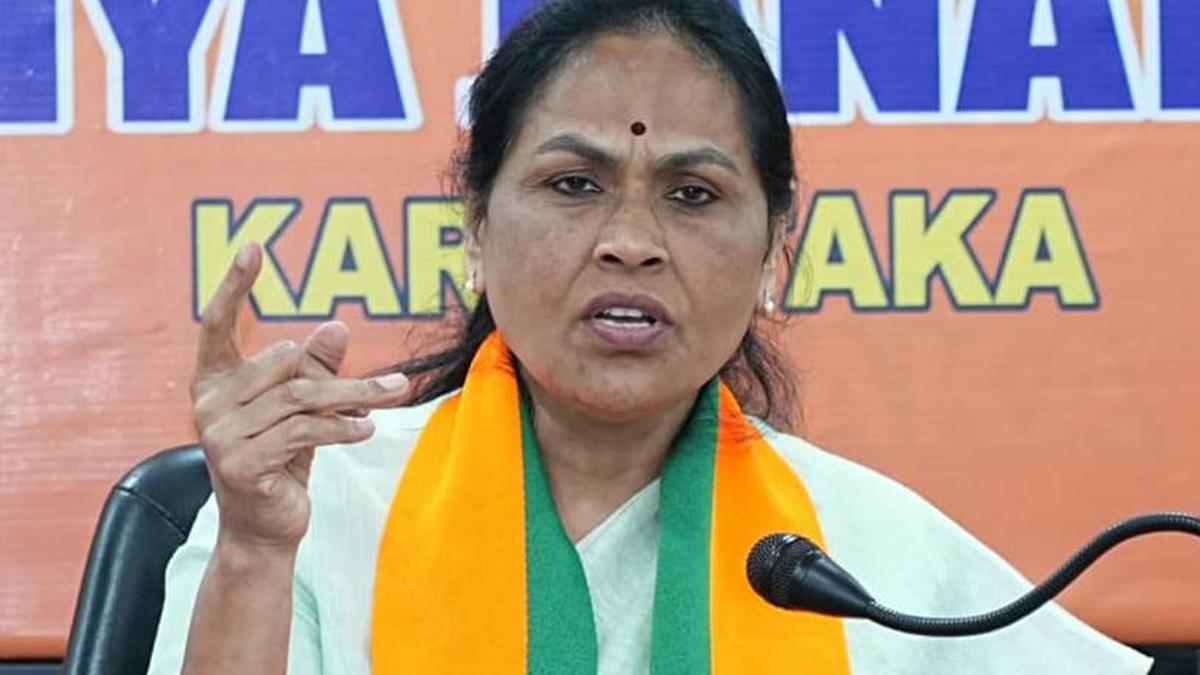
Mysuru Tree Census to Begin on December 22: Bold 1 Promise, Living Legacy

Mysuru, long celebrated for its tree-lined boulevards and green public spaces, is set to undertake a comprehensive tree census beginning December 22, marking a significant step in documenting and protecting its urban ecology. The initiative, led by the city administration in coordination with forest and municipal authorities, aims to create a detailed database of trees across public spaces, roadsides, parks and institutional lands. Officials say the exercise is intended not merely as a numerical count but as a foundational effort to understand the city’s green cover and plan for its sustainable future.

The census comes at a time when Mysuru is witnessing steady urban expansion, increased infrastructure projects and growing pressure on natural resources. Environmentalists have repeatedly warned that without accurate data on tree density, species diversity and health, urban planning risks becoming blind to ecological consequences. The proposed census seeks to address this gap by providing granular information that can guide policy decisions and conservation strategies.

According to officials involved in planning the exercise, trained enumerators will be deployed across wards to record details such as tree species, age estimation, girth, height and health condition. Each tree will be geo-tagged, allowing authorities to track changes over time. The data collected is expected to serve as a baseline for monitoring tree loss, compensatory plantation and long-term ecological trends within the city.

The initiative has been welcomed by environmental groups and citizen collectives, many of whom have long demanded a scientific approach to managing Mysuru’s green assets. They argue that trees are often treated as obstacles to development rather than as living infrastructure that provides shade, regulates temperature, supports biodiversity and improves air quality. A comprehensive census, they say, could help shift this perspective.

Officials have stressed that the census will be carried out in phases and is expected to take several months to complete. While the initial focus will be on public land, there are plans to eventually include private properties, subject to consent and logistical feasibility. The administration has indicated that public participation will be encouraged to ensure transparency and accuracy.

As Mysuru prepares for the census, the exercise is being viewed as both a technical and symbolic step. For many residents, it represents an acknowledgement of the city’s deep relationship with its trees, which have shaped its identity as much as its palaces and cultural heritage.


Mapping a City’s Green Wealth

At the heart of the tree census lies an effort to systematically map Mysuru’s green wealth. Officials say the lack of updated and reliable data has often hampered decision-making, particularly when development projects require tree felling or transplantation. Without knowing how many trees exist, where they are located and what ecological roles they play, authorities have struggled to assess the true impact of such interventions.

The census will involve collaboration between the municipal corporation, the forest department and technical experts. Enumerators will use digital tools to record data, reducing the risk of duplication or omission. Geo-tagging will enable the creation of interactive maps, allowing planners to visualise tree distribution across neighbourhoods and identify areas with sparse green cover.

Environmental experts note that such mapping can reveal important patterns. Older parts of Mysuru, for instance, are known for mature avenue trees that provide extensive canopy cover, while newer layouts often lack adequate plantation. By highlighting these disparities, the census can inform targeted greening efforts in underserved areas.

Species identification is another crucial component of the exercise. Mysuru is home to a mix of native and exotic trees, each with different ecological values. Native species are often better suited to local conditions and support a wider range of birds and insects. By documenting species composition, authorities can prioritise native trees in future plantation drives.

The health assessment of trees is expected to be particularly valuable. Many urban trees suffer from soil compaction, pollution and improper pruning, which weakens them over time. Identifying stressed or diseased trees early can help prevent accidents and improve survival rates through timely intervention.

Officials have also pointed out that the census will aid compliance with environmental regulations. Accurate data can strengthen oversight of compensatory afforestation requirements, ensuring that trees cut for development are genuinely replaced. It can also provide a factual basis for resolving disputes related to tree felling permissions.Mysuru tree census to begin on December 22 - The Hindu

For urban planners, the census promises to integrate ecology into development planning more effectively. Road widening, drainage works and construction projects can be designed with greater sensitivity when tree data is readily available. This, experts argue, could reduce conflicts between development objectives and environmental protection.

Experts have also pointed out that the census could play a critical role in climate resilience planning for Mysuru. Trees act as natural buffers against rising temperatures, heatwaves and erratic rainfall, all of which are becoming more frequent. By identifying areas with low canopy cover, authorities can prioritise plantation in heat-prone neighbourhoods, especially those with high population density and limited open spaces.

Another expected outcome of the census is better protection for heritage trees. Mysuru has several old and ecologically significant trees that are deeply embedded in the city’s cultural memory. Environmental historians argue that documenting the age and species of such trees can help classify them as heritage assets, offering them stronger legal and administrative protection against indiscriminate felling.

The exercise is also likely to influence future infrastructure projects. With detailed tree maps in place, planners can explore alternatives such as realigning roads, redesigning footpaths or modifying utility layouts to avoid cutting mature trees. Conservationists say this proactive approach could reduce conflicts that often arise when projects are announced without ecological assessments.

Educational institutions in the city have shown interest in using the census data for academic and research purposes. Teachers and researchers believe the information can be integrated into environmental studies, urban planning courses and citizen science initiatives. Involving students, they say, could help build long-term environmental stewardship among younger generations.

Some residents, however, have raised concerns about follow-through. Past initiatives, they point out, have generated extensive data but limited action. Civil society groups are urging the administration to clearly outline how the findings will translate into policy decisions, budget allocations and on-ground conservation measures, ensuring the census does not remain merely a technical exercise.

Ultimately, the Mysuru tree census is being viewed as a test of governance intent. Its success will depend not only on accurate counting but on the willingness to let ecological data shape development choices. If the findings are acted upon with seriousness and transparency, the census could mark a turning point in how the city plans its growth while safeguarding its green legacy.


Citizens, Conservation and the Road Ahead

Beyond administrative utility, the tree census is being seen as an opportunity to deepen citizen engagement with environmental conservation. Officials have indicated that residents’ welfare associations, students and volunteers may be involved in awareness campaigns linked to the exercise. Such participation, they believe, can foster a sense of shared ownership over the city’s green assets.

Environmental groups have emphasised that public access to census data will be key to its success. Transparency, they argue, can empower citizens to hold authorities accountable and advocate for greener neighbourhoods. Open data can also support research, education and community-led conservation initiatives.

There is also hope that the census will influence public attitudes towards trees. When trees are formally counted, mapped and monitored, they gain visibility as assets rather than background elements. This shift in perception, activists say, is essential in a city where development pressures often overshadow ecological considerations.Mysuru tree census to begin on 22nd December The Confederation of Indian  Industry (CII), Mysuru zone has initiated a Tree Census Project for Mysuru  city aimed at creating a credible ward-wise baseline

However, experts caution that a census alone will not guarantee conservation. The real test lies in how the data is used. Without clear policy commitments and enforcement mechanisms, there is a risk that the exercise becomes a one-time documentation effort rather than a tool for long-term change.

Funding and capacity are also potential challenges. Maintaining an updated tree database requires regular monitoring and dedicated personnel. Officials acknowledge that sustaining the initiative will require budgetary support and institutional continuity beyond initial enthusiasm.

Despite these concerns, the announcement of the census has generated cautious optimism. Mysuru’s history of civic engagement and environmental awareness provides fertile ground for such an initiative to succeed. If implemented thoughtfully, the census could become a model for other cities seeking to balance growth with ecological responsibility.

As December 22 approaches, the tree census stands as a reminder that cities are living ecosystems. Counting trees is not merely about numbers; it is about recognising the silent work they do every day in sustaining urban life. For Mysuru, the exercise offers a chance to reaffirm its identity as a city that values its natural heritage as much as its cultural one.Mysuru tree census to begin on December 22 - The Hindu

In the years to come, the true measure of the census will be seen in cooler streets, healthier air and neighbourhoods where green cover is not an afterthought but a guiding principle. Whether this promise is fulfilled will depend on sustained commitment, informed planning and a collective will to protect what makes Mysuru green and alive.

Follow: Karnataka Government

Also read: Home | Channel 6 Network – Latest News, Breaking Updates: Politics, Business, Tech & More