Monday, May 4, 2026
Home Blog Page 214

DU Professors Harassment: Shocking Allegations Against Male Colleagues

0

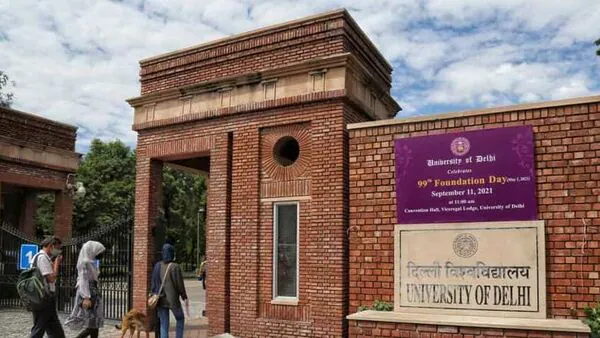
New Delhi – Three female professors from Delhi University’s Kalindi College have accused a group of male faculty members of subjecting them to sexual harassment, inappropriate comments, and physical threats, according to complaints filed with the college’s Internal Complaints Committee and local police. The DU professors harassment case has raised serious concerns about workplace safety and the efficacy of institutional mechanisms designed to protect faculty members from misconduct.

Serious Allegations Include Physical Threats

One professor involved in the DU professors harassment case, speaking on condition of anonymity, stated that male colleagues had made obscene gestures, remarks of a sexual nature, and physically threatened her. The gravity of the allegations extends beyond verbal harassment to include documented threats of physical violence, creating an atmosphere of fear and intimidation within the academic institution.

A video shows one male professor threatening physical harm against a complainant in the DU professors harassment case. While the authenticity of the video could not be independently verified, the complainants assert they have submitted this video evidence along with other documents to support their allegations. The existence of such visual documentation underscores the seriousness of the accusations and the alleged brazenness of the misconduct.

ICC Response Deemed Inadequate

The DU professors harassment case has exposed significant concerns about the Internal Complaints Committee’s handling of the matter. Despite providing what the complainants describe as substantial evidence, including video recordings and multiple supporting documents, they were informed there was insufficient material evidence to proceed with their complaints.

“Despite providing a video recording file and enough documents to the Internal Complaints Committee of the college, we were told that there was lack of material evidence,” one professor stated, expressing frustration with the institutional response to the DU professors harassment allegations. This assertion by the ICC has raised questions about the criteria used to evaluate evidence and whether the committee is adequately equipped to handle such serious allegations.

Formal Complaint Details Pattern of Misconduct

A formal ICC complaint dated July 17 provides detailed documentation of the DU professors harassment case, outlining a disturbing pattern of workplace misconduct. The complaint describes “derogatory comments that were hurtful, gender provocative, and slanderous in nature,” demonstrating that the harassment extended beyond isolated incidents to constitute systematic mistreatment.

The complaint also references “sexualized comments” and “physical threats,” painting a comprehensive picture of a hostile work environment. The complainant, a teacher with nearly two decades of service at the institution, urged the committee to ensure a safe working environment, emphasizing that her lengthy tenure at the college made the situation particularly distressing.

Procedural Delays Compound the Problem

The DU professors harassment case has been further complicated by significant procedural delays in the complaint processing system. The professors allege that one complaint filed on August 27 remains unprocessed months later, suggesting systemic failures in the institution’s response mechanisms to harassment allegations.

“I urge you to take immediate and appropriate action as laid down in law and ensure a safe and respectful working environment and protect me from further harassment,” the professor wrote in her complaint, highlighting the urgent nature of the situation and the continuing risk faced by the complainants while their cases remain unresolved.

The extended delay in processing complaints in the DU professors harassment case raises serious questions about whether the Internal Complaints Committee is functioning effectively and whether complainants are receiving the protection mandated by law. Such delays can discourage other potential victims from coming forward and allow alleged perpetrators to continue their behavior unchecked.

Police Investigation Initiated

The DU professors harassment case has escalated beyond internal college mechanisms, with complainants seeking intervention from law enforcement authorities. A complaint was lodged at Patel Nagar police station on November 7, bringing the matter under criminal investigation jurisdiction.

Also Read: Latest Delhi Air Ultimatum: Centre Demands Visible Improvement Within 1 Week

A senior police officer confirmed that a formal complaint had been registered and an enquiry initiated into the DU professors harassment allegations. “An enquiry is being conducted. We are yet to examine all the witnesses and the accused. Legal action has been initiated in the case. We have reached out to the college to record their statement and help in probe,” the officer stated.

DCP (Central) Nidhin Valsan confirmed that an enquiry is ongoing into the DU professors harassment case, though no FIR has been registered yet. The police investigation represents a parallel track to the internal college proceedings, potentially providing the complainants with an alternative avenue for justice if institutional mechanisms continue to prove inadequate.

College Administration Silent

Attempts to contact the college’s officiating principal for comment on the DU professors harassment case went unanswered, leaving questions about the institution’s official position and planned response to these serious allegations. The administrative silence is particularly concerning given the severity of the accusations and the potential impact on the college’s reputation and the safety of its faculty members.

Broader Implications for Academic Institutions

The DU professors harassment case highlights systemic challenges facing academic institutions in addressing workplace misconduct. The allegations suggest that even in educational environments that should exemplify progressive values and respect, faculty members can face serious harassment and threats.

The case underscores the need for robust, effective complaint mechanisms that treat allegations seriously, process them promptly, and provide adequate protection for complainants. The apparent disconnect between the evidence provided and the ICC’s determination of insufficient material evidence in the DU professors harassment case raises questions about training, resources, and commitment to addressing harassment in academic settings.

As the investigation continues, this case serves as a reminder that workplace safety and dignity remain critical issues requiring institutional vigilance, proper procedures, and a commitment to creating environments where all faculty members can work without fear of harassment or retaliation.
No-Confidence Motion: Haryana BJP Government Boldly Defeats Congress Challenge

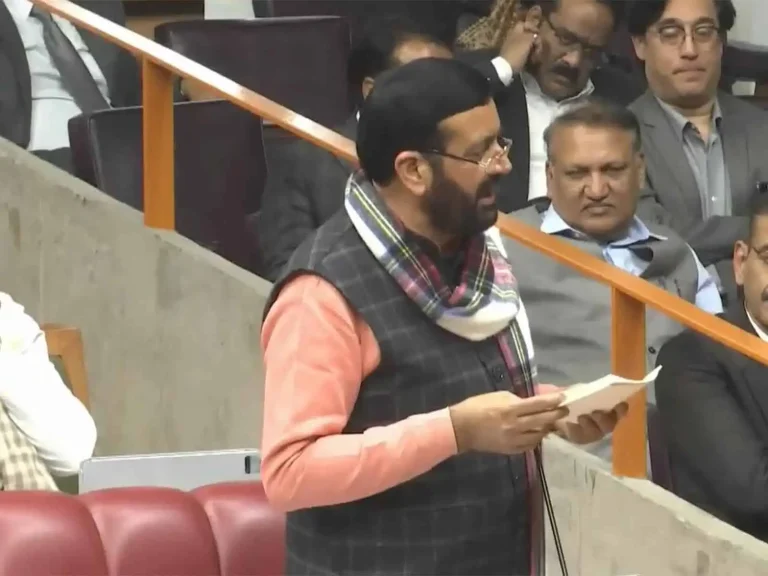
Haryana – The much-touted no-confidence motion brought by the Congress against Chief Minister Nayab Singh Saini-led BJP government in Haryana was defeated through a voice vote on Friday after the principal Opposition party MLAs walked out of the House following an acrimonious debate that continued beyond 10 pm. The outcome was expected given the BJP’s numerical strength in the 90-member Haryana Legislative Assembly.

Numbers Favor BJP Government

The no-confidence motion was destined to fail from the outset as the mathematical calculations clearly favored the ruling party. In the 90-member House, the BJP commands 48 MLAs, including the Speaker, while three Independents are also supporting the ruling party, giving them a comfortable majority. The Congress has 37 members, while the Indian National Lok Dal has two legislators, insufficient numbers to pass the no-confidence motion against the Saini government.

Lengthy Debate Extends Beyond Ten Hours

The heated debate on the no-confidence motion began at 5:23 pm during the second day of the Haryana Legislative Assembly Winter Session-2025 in Chandigarh. Members from across the political spectrum engaged in verbal sparring, taking potshots at each other throughout the evening. Opposition and ruling party members spoke until 8:23 pm, after which Chief Minister Nayab Singh Saini took the floor to deliver his response.

Saini’s reply to the no-confidence motion continued until 10:10 pm, with his floor strategy appearing to tire the Opposition through his lengthy address. Congress MLAs repeatedly asked him to complete his speech and focus on substantive issues. Leader of Opposition Bhupinder Singh Hooda urged the Chief Minister to conclude, saying “Baat karo matlab ki” (speak to the point), reflecting growing frustration with the extended debate.

Congress Stages Walkout, Motion Defeated

Alleging that the Chief Minister was giving a vague reply to the issues raised in the no-confidence motion, Congress members led by Bhupinder Singh Hooda walked out of the House at 10 pm. Following the Opposition’s exit, Parliamentary Affairs Minister Mahipal Dhanda moved that the no-confidence motion should be rejected unanimously. Speaker Harvinder Kalyan then put the motion to vote, which was rejected through a voice vote, and the House was adjourned at 10:13 pm.

The Congress had moved the no-confidence motion against the BJP government, which came to power for a third consecutive term in October 2024, just 14 months before this legislative challenge.

Core Allegations Against Saini Government

At the heart of the no-confidence motion were serious allegations by Congress leaders that the BJP came to power through “vote chori” (vote theft). The Opposition accused the government of presiding over deteriorating law and order conditions, implementing anti-people policies, and demonstrating weak governance across multiple sectors.

Congress leader Raghuvir Singh Kadian kicked off the debate, followed by Hooda and several other Congress leaders who argued that the Saini government had lost the trust of every section of Haryana’s population. Congress Legislative Party leader Bhupinder Singh Hooda alleged that through mismanagement, the government had transformed “loktantra” (democracy) into “tantralok” (system of oppression).

Opposition Highlights Governance Failures

Congress MLA Geeta Bhukkal painted a grim picture during the debate on the no-confidence motion, stating: “An atmosphere of fear and corruption prevails in the state. Murder, rape, extortion and dacoity have become commonplace. The police are helpless. The suicides of senior police officers expose the gravity of the situation.”

The Congress emphasized unemployment as a critical failure, claiming that due to lack of opportunities, youth were risking their lives by migrating abroad, while government recruitments were not taking place. “The people of Haryana are exhausted by the system and want to get rid of this government. Hence, this no-confidence motion,” Congress leaders declared.

They also alleged electoral malpractices, claiming that fake ration cards were created during elections to add beneficiaries and were later cancelled, leading to loss of public trust.

Also Read: Power-Sharing Deal: Siddaramaiah Rejects Claims While DKS Confirms Pact

Saini’s Spirited Defense

In a reply peppered with humor and criticism of the Congress, Chief Minister Saini characterized the no-confidence motion as hastily drafted in panic. He repeatedly questioned who had authored the notice, challenging the Opposition’s preparation and seriousness.

“Our vision is not narrow, as the Congress has alleged. Our focus is like that of Arjun in the Mahabharata. Our vision is ‘sabka saath, sabka vikas, sabka vishwas, sabka prayas,'” Saini said, invoking the popular BJP slogan while taking a swipe at the Opposition.

The Chief Minister defended his government’s record by reeling out statistics to counter Congress’s contentions about deteriorating law and order. “We have been continuously working to uplift every section of society. We are burning the midnight oil to fulfill the aspirations of the people, ensuring last-mile delivery and smiles on the faces of those standing last in the queue,” Saini asserted.

BJP Ministers Launch Counterattack

The BJP fielded its top leaders to defend against the no-confidence motion. Parliamentary Affairs Minister Mahipal Dhanda recounted government achievements and described the Congress challenge as an eyewash and attempt to mislead people. “Our performance speaks for itself and people are rewarding us for our performance,” Dhanda said, directly countering the “vote chori” allegations.

Irrigation Minister Shruti Choudhry questioned the relevance of bringing a no-confidence motion against a government with clear majority support. “This government enjoys the absolute confidence of the House and the people of the state,” she declared.

INLD Attacks Both Parties

INLD legislator Aditya Devilal attacked both the ruling BJP and the Congress during debate on the no-confidence motion. “This is a no-confidence motion behind which is Hooda and not the Congress. By this motion, Hooda has attempted to wash his sins of helping the BJP form the government,” he said, before walking out. The INLD questioned why Congress did not seek their support for the motion, suggesting the effort lacked seriousness and cross-party coordination.

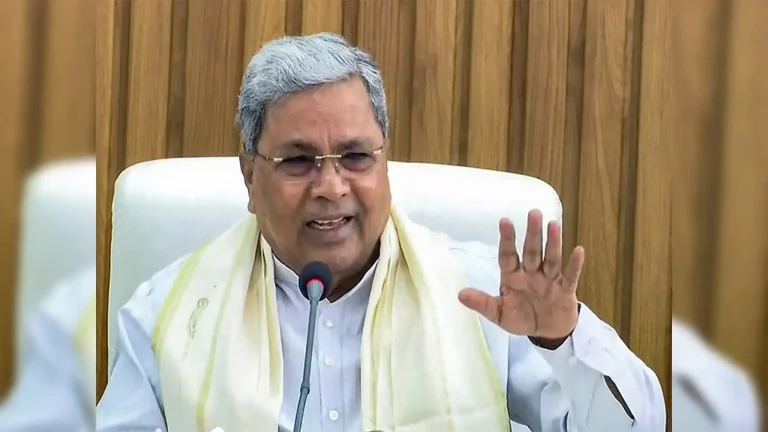
Power-Sharing Deal: Siddaramaiah Rejects Claims While DKS Confirms Pact

Karnataka – Karnataka Chief Minister Siddaramaiah on Friday dismissed claims of a two-and-a-half-year power-sharing deal within the state government, even as his deputy DK Shivakumar asserted that both leaders have reached an agreement with the involvement of the Congress high command. The contrasting statements have reignited debate about the leadership arrangement in Karnataka as the government crosses the midpoint of its five-year term.

Siddaramaiah Denies Two-and-Half-Year Arrangement

During a discussion in the assembly on issues pertaining to North Karnataka’s development, Chief Minister Siddaramaiah firmly rejected suggestions of any power-sharing deal that would limit his tenure. When Opposition BJP MLAs questioned whether the Congress government would fulfill promises made for North Karnataka’s development during his term, Siddaramaiah expressed confidence about completing the full five-year term.

“I am confident that the high command will allow me to complete five years’ term,” Siddaramaiah stated emphatically. The Chief Minister added that he feels the high command supports him, though he would abide by whatever decision the party leadership makes. His comments came in response to pointed questions from Opposition members about the alleged power-sharing deal between him and Deputy Chief Minister Shivakumar.

When Opposition members pressed further on the power-sharing deal for holding the top post on a rotational basis, Siddaramaiah categorically denied making any such commitment. “I never said that I will be the Chief Minister for two-and-half years,” he declared, directly addressing speculation about a mid-term leadership change that has dominated political discourse in Karnataka.

DK Shivakumar Confirms Agreement with High Command

Hours after Siddaramaiah’s statements in the assembly, Deputy Chief Minister DK Shivakumar offered a different perspective on the power-sharing deal controversy. Speaking to reporters, Shivakumar clarified that he had never claimed Siddaramaiah would not serve as Chief Minister for the full five years, nor had he suggested that the high command was not supporting the current CM.

“I had never said, he (Siddaramaiah) will not be there (as CM) for five years. I have never said that the high command is not with him. As the high command is with him, he is chief minister today,” Shivakumar explained, attempting to balance his support for Siddaramaiah while acknowledging the existence of some understanding regarding the power-sharing deal.

Shivakumar noted that Siddaramaiah occupies the Chief Minister’s position as per the party’s decision, emphasizing the role of the Congress high command in the leadership arrangement. However, he then made a significant statement that appeared to confirm the existence of an agreement related to the power-sharing deal.

Both Leaders Claim to Have Reached Understanding

“Both of us have come to an agreement, the high command has got us to an understanding, as per that both of us have discussed and have said several times that we will abide by it and go ahead,” Shivakumar stated, clearly indicating that some form of power-sharing deal or understanding exists between the two leaders, facilitated by the Congress high command.

This acknowledgment of an agreement stands in contrast to Siddaramaiah’s categorical denial of any two-and-a-half-year arrangement, creating ambiguity about the exact nature of the power-sharing deal that may have been reached. Shivakumar’s statement suggests that while an understanding exists, its specific terms and timeline may not be as publicly speculated.

Media Speculation vs. Internal Discussions

When questioned about ongoing talks regarding a potential Chief Minister change, Shivakumar deflected by suggesting that media speculation was driving the narrative rather than actual internal discussions. “It is you (media) who is talking about it, there is no discussion among us. We will abide by what the party says,” the Deputy Chief Minister said, attempting to downplay suggestions of any internal conflict regarding the power-sharing deal.

However, his earlier acknowledgment of an agreement reached with high command involvement indicates that discussions about leadership arrangements have indeed taken place, even if the specific details of the power-sharing deal remain undisclosed or subject to interpretation by the two leaders.

Also Read: VB-G RAM G Bill: Parliament Passes Controversial MGNREGA Replacement

Historical Context and Succession Debate

The succession debate surrounding the alleged power-sharing deal has resurfaced after the Congress government crossed the midpoint of its five-year term on November 20. This milestone has revived discussion about a power-sharing understanding that was reportedly reached in 2023 between Siddaramaiah and Shivakumar when the government was formed following the Congress party’s victory in state elections.

Political observers note that both Siddaramaiah and Shivakumar were strong contenders for the Chief Minister’s position when the Congress came to power. The party high command’s decision to appoint Siddaramaiah as CM while making Shivakumar his deputy was seen by many as a compromise arrangement, leading to persistent speculation about a possible power-sharing deal.

Implications for Karnataka Governance

The conflicting statements about the power-sharing deal have created uncertainty about the state’s political stability going forward. While Siddaramaiah appears determined to complete his full five-year term as Chief Minister, Shivakumar’s confirmation of an agreement with high command involvement suggests that the leadership question remains open to negotiation.

The ongoing debate about the power-sharing deal also raises questions about how this internal political maneuvering might affect governance and the implementation of development programs, particularly for regions like North Karnataka that were specifically mentioned during the assembly discussion.

As Karnataka moves into the second half of its current legislative term, the resolution of the power-sharing deal controversy will likely depend on decisions made by the Congress high command, which both leaders have pledged to respect and abide by, even as they offer different interpretations of what arrangements currently exist.

Air India Express Pilot: Shocking Assault Allegation at Delhi Airport

0

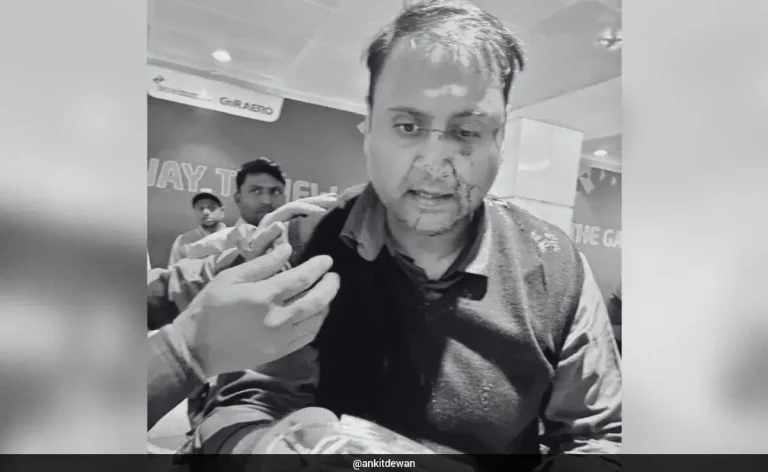
New Delhi – A SpiceJet passenger at Delhi airport‘s Terminal 1 alleged that an off-duty Air India Express pilot physically assaulted him on Friday after an altercation over queue-cutting at the security check escalated into violence. The incident has raised serious questions about professional conduct and airport security management, prompting the airline to take immediate action against the accused crew member.

Incident Details and Passenger’s Account

Ankit Dewan, the passenger involved in the incident, detailed his account in a post on social media platform X, accusing Air India Express pilot Captain Virender Sejwal of physically assaulting him. According to Dewan’s statement, he and his family were directed to use the security check designated for staff, which also serves as the Persons with Reduced Mobility check, because they were traveling with a four-month-old baby in a stroller.

Dewan alleged that the Air India Express pilot and other staff members were cutting the queue ahead of passengers waiting for security screening. When Dewan called out this behavior, Captain Sejwal, who was among those bypassing the line, confronted him directly. The Air India Express pilot allegedly asked Dewan if he was “anpadh” (uneducated) and couldn’t read the signs indicating the entry was designated for staff use.

Verbal Altercation Escalates to Physical Violence

The confrontation between Dewan and the Air India Express pilot quickly escalated from a verbal dispute to physical violence, according to the passenger’s account. Dewan stated that the pilot was unable to exercise restraint and proceeded to physically assault him during the altercation at the security checkpoint.

“Not able to exercise restraint, the AIX pilot proceeded to physically assault me, leaving me bloody,” Dewan wrote in his social media post. The passenger described the attack as brutal and stated that his seven-year-old daughter witnessed the entire incident, leaving her traumatized and scared by seeing her father attacked by the Air India Express pilot.

Family Holiday Ruined by Assault

Dewan explained that the alleged assault by the Air India Express pilot completely ruined his family’s holiday plans. Instead of enjoying their vacation, the first thing he had to do upon reaching his destination was visit a doctor for treatment of his injuries. The passenger expressed deep concern about the psychological impact on his young daughter, who witnessed the violent confrontation between her father and the Air India Express pilot.

The incident raises serious questions about whether individuals who cannot maintain their composure under stress should be permitted to operate commercial aircraft, Dewan argued. The passenger questioned the fitness of the Air India Express pilot to handle the responsibilities and pressures associated with flying passengers if he could not keep his cool during a minor dispute at an airport security checkpoint.

Also Read: Delhi Orange Alert: Severe Fog and 400+ AQI Expected This Weekend

Airport Management Criticized for Security Lapses

Beyond his allegations against the Air India Express pilot, Dewan also criticized Delhi airport management for what he described as poor planning and mismanagement. He pointed out that combining staff entry with the checkpoint for passengers carrying infants creates unnecessary chaos at a sensitive security area, potentially leading to conflicts like the one he experienced.

The passenger’s complaint highlights broader concerns about airport security procedures and the need for better crowd management systems that prevent confrontations between staff and passengers. The incident involving the Air India Express pilot occurred in an area where families with young children should expect a smooth and stress-free experience.

Forced Compromise and Justice Concerns

Dewan revealed that he was pressured to write a letter stating he would not pursue the matter further, facing a difficult choice between seeking immediate justice and making his scheduled flight. The passenger stated he had invested 1.2 lakh rupees in holiday bookings and couldn’t afford to miss his flight and lose that investment.

“I was forced to write a letter stating that I will not pursue this matter further … It was either write that letter, or miss my flight and throw the 1.2 lakhs holiday bookings down the drain,” Dewan wrote. He questioned Delhi Police about why he couldn’t file a complaint after returning from his holiday, expressing concerns about whether CCTV footage would still be available when he returned to Delhi two days later.

The passenger asked whether he must sacrifice his money in addition to suffering the assault to seek justice against the Air India Express pilot, highlighting the difficult position many passengers face when incidents occur immediately before scheduled flights.

Airline Takes Swift Action

Air India Express responded to Dewan’s social media post with an official statement, confirming that the Air India Express pilot had been immediately removed from his official duties and that appropriate action was being taken against him. The airline expressed profound regret over the incident and extended heartfelt empathy for the distress it caused.

“We profoundly regret this incident at Delhi Airport, involving one of our employees who was traveling as a passenger on another airline. We extend our heartfelt empathy for the distress it has caused, and strongly condemn such behaviour,” the airline stated.

Sources indicated that the Air India Express pilot, Captain Sejwal, took an IndiGo flight to Bengaluru after the incident at Terminal 1. The swift action by the airline in removing the pilot from duty demonstrates a commitment to addressing employee misconduct, though questions remain about the broader implications for aviation safety and professional standards.

Bangladesh Violence Highlights: Massive Unrest After Osman Hadi’s Death

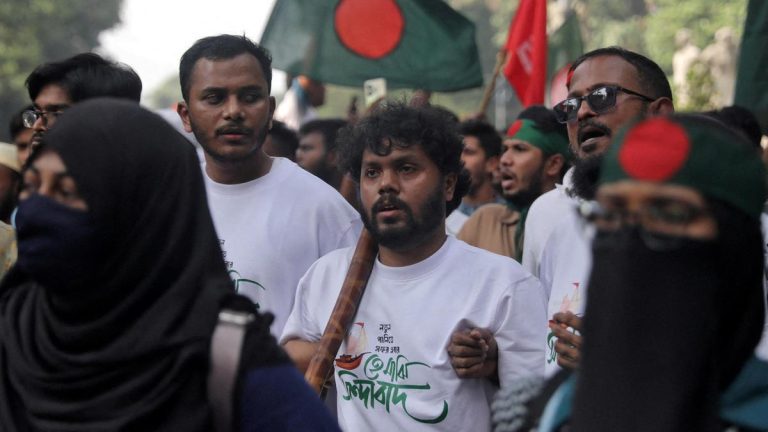
Dhaka, Bangladesh – Violence erupted across Bangladesh early Friday after the death of Sharif Osman Hadi, triggering widespread protests, attacks on media offices, and street clashes that have left the nation on edge. The Bangladesh violence highlights a deepening political crisis as protesters demand justice for the slain student leader who played a pivotal role in the 2024 uprising that led to regime change in the country.

Osman Hadi’s Death Sparks National Crisis

The Bangladesh violence highlights began unfolding after Hadi, a senior leader of the student protest group Inquilab Mancha from the 2024 uprising, succumbed to gunshot injuries sustained during his campaign for upcoming national elections. Hadi was shot on December 12 during his electoral campaign in Dhaka and remained in critical condition before the interim government arranged his airlift to Singapore for better treatment. However, the ministry of foreign affairs in Singapore announced on Thursday that the leader had died from his injuries.

Hadi’s body arrived in Dhaka from Singapore on Friday evening, with his funeral prayer scheduled for Saturday at the South Plaza of the Parliament Building at approximately 2:00 pm local time. The interim government announced that Hadi would be buried next to national poet Kazi Nazrul Islam, recognizing his significant contribution to the nation’s political transformation.

UN Rights Chief Calls for Impartial Investigation

The Bangladesh violence highlights prompted international concern, with the UN human rights chief urging an impartial probe into Osman Hadi’s death. The call for an independent investigation underscores the gravity of the situation and the need for transparency in determining who was responsible for the assassination of the prominent student leader.

Sharif Osman Hadi’s family has demanded that a memorial be constructed in his honor at Shahbagh, where he initiated the movement that led to the regime change in Bangladesh in 2024. This demand reflects the family’s desire to permanently commemorate his role in the country’s political transformation.

Yunus Vows Justice, Declares State Mourning

Chief Adviser Muhammad Yunus addressed the nation to confirm Hadi’s death, stating: “Today, I came before you with very heartbreaking news. Sharif Osman Hadi, the fearless frontline fighter of the July Uprising and spokesperson of the Inqilab Mancha, is no more among us.” The Bangladesh violence highlights show Yunus declaring a one-day state mourning and vowing to apprehend the suspects in the shooting.

“I sincerely call upon all citizens – keep your patience and restraint,” Yunus appealed as public outrage grew over the assassination. The interim government condemned the unrest and appealed for calm in Hadi’s name, with officials stating the government “stands by” the affected parties. A five million taka reward was announced for information leading to the arrest of the gunmen responsible for Hadi’s death.

Media Offices Targeted in Widespread Violence

The Bangladesh violence highlights include devastating attacks on press freedom, with protesters setting fire to and vandalizing the offices of Daily Prothom Alo and Daily Star, two of Dhaka’s leading newspapers. At least 25 journalists were rescued after the Daily Star office was set ablaze, with trapped reporters taking to social media to share their ordeal. One journalist described feeling like they “can’t breathe anymore” while trapped inside the burning building.

The editor of Prothom Alo newspaper condemned the vandalization as an “attack on freedom of speech,” highlighting the assault on democratic institutions amid the chaos. Both newspapers issued notices to readers and suspended publication on Friday due to the attacks. The New Age editor was also attacked while attempting to calm protesters, demonstrating the dangers faced by media personnel during the unrest.

Attacks on Indian Diplomatic Missions

The Bangladesh violence highlights show protesters hurling stones at the Indian mission in Chattogram amid escalating tensions. Fresh protests erupted near the Indian mission in Rajshahi, while the home of the Indian deputy ambassador to Dhaka was also targeted by demonstrators. Security was subsequently tightened at the Bangladesh High Commission in New Delhi as a precautionary measure.

India shut visa centers amid the protests, and Indian officials in Dhaka were confirmed “safe” despite tensions outside the Indian mission. Protesters called on India to return former Prime Minister Sheikh Hasina, who fled to India following the 2024 uprising. A former Indian envoy flagged concerns about attacks on minorities and diplomatic missions during the crisis.

Historical Sites and Properties Vandalized

The Bangladesh violence highlights include attacks on historically significant locations, with protesters vandalizing Sheikh Mujibur Rahman’s house and burning posters of Sheikh Hasina. The partially demolished house of Sheikh Mujibur, the founding father of Bangladesh, was vandalized, marking the second attack on the property. Protesters also vandalized the Chhayanaut office and burned Sheikh Hasina posters during demonstrations.

Hindu Minority Community Faces Violence

The Bangladesh violence highlights reveal disturbing incidents targeting the Hindu minority community, with the interim government condemning the lynching of a Hindu man in Mymensingh. A minority group condemned the killing of the Hindu youth, raising concerns about religious violence amid the political turmoil. The interim government addressed the incident, acknowledging the need to protect minority communities during this volatile period.

Road Blockades and Widespread Protests

The Bangladesh violence highlights show protesters blocking Shahbagh Square in Dhaka while demanding justice for Hadi’s death. Highway blockades were reported across multiple locations, with demonstrators gathering at Dhaka University to mourn Osman Hadi’s death. The Bangladesh Election Commission also mourned the student leader’s death, reflecting the widespread impact of his assassination.

Political Leaders Express Condolences

The Bangladesh violence highlights prompted responses from political leaders across the spectrum. The BNP acting chief mourned Hadi’s death, characterizing the killing as a “political conspiracy.” The Bangladesh Chief Justice expressed condolences, stating the nation had “lost a courageous voice.” Political parties urged restraint, with Inquilab Mancha calling on citizens to “consider who truly benefits if unrest is created.”

India vs South Africa 5th T20I: Dominant India Clinch Series 3-1

0

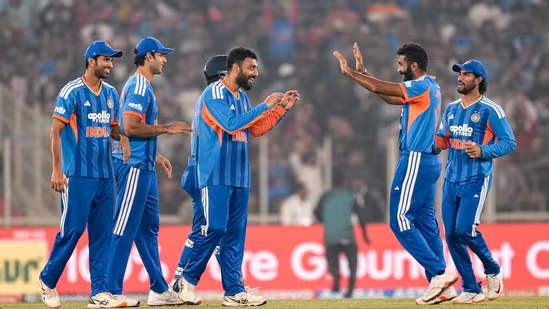
Ahmedabad – India delivered a commanding all-round performance in the India vs South Africa 5th T20I at the Narendra Modi Stadium in Ahmedabad, defeating the Proteas by 30 runs to seal the five-match series 3-1. Hardik Pandya and Tilak Varma produced match-defining knocks with explosive fifties, while Varun Chakravarthy’s exceptional four-wicket haul dismantled the South African batting lineup in a comprehensive victory.

Explosive Batting Powers India to 231/5

The India vs South Africa 5th T20I witnessed a spectacular batting display from the hosts as they posted a commanding total of 231/5 in their 20 overs. After South Africa captain Aiden Markram won the toss and elected to bowl first, India’s batsmen seized the initiative despite missing regular opener Shubman Gill due to a foot injury sustained during training.

Sanju Samson returned to the opening role in Gill’s absence and made an immediate impact with aggressive strokeplay, scoring 37 runs before being dismissed by George Linde. His partnership with Abhishek Sharma provided India with a solid foundation, with the duo hammering the South African bowlers during the powerplay overs. Abhishek Sharma contributed 34 runs before departing, frustrated at throwing away his wicket after getting a good start.

Tilak Varma’s Elegant Fifty Sets Up India

Tilak Varma showcased his class in the India vs South Africa 5th T20I with an elegant fifty that complemented the aggressive approach of his partners. His strokeplay demonstrated both timing and placement as he found gaps regularly against the South African bowling attack. Varma’s innings provided the perfect platform for the explosive finish that followed, ensuring India maintained momentum throughout their innings.

The young left-hander’s performance in the India vs South Africa 5th T20I continued his impressive form in the series, proving his credentials as a reliable middle-order batsman capable of adapting to various match situations. His ability to rotate strike while finding boundaries at crucial moments kept South Africa under constant pressure.

Hardik Pandya’s Blistering 16-Ball Fifty

The defining moment of the India vs South Africa 5th T20I came when Hardik Pandya unleashed a devastating assault on the South African bowlers. Pandya rocketed to a breathtaking 16-ball fifty that drew a standing ovation from former India opener and head coach Gautam Gambhir. His power-hitting display included massive sixes and boundaries that demoralized the opposition.

Pandya’s explosive knock in the India vs South Africa 5th T20I included a memorable six that unfortunately struck a cameraman, highlighting the sheer power behind his batting. He particularly targeted George Linde, hammering the spinner for multiple boundaries during the death overs. This innings showcased why Pandya remains one of the most dangerous finishers in world cricket, capable of changing games single-handedly.

Quinton de Kock’s Aggressive Start

South Africa’s chase in the India vs South Africa 5th T20I began promisingly as Quinton de Kock provided a flying start, cracking three consecutive boundaries off Arshdeep Singh. De Kock reached his fifty and looked set to anchor the chase, but India’s bowling attack had different plans. His aggressive approach kept South Africa in the hunt during the early overs of their innings.

Bumrah and Pandya Strike Early Blows

Jasprit Bumrah’s return to the playing XI proved crucial in the India vs South Africa 5th T20I as he struck early by dismissing the dangerous Quinton de Kock, swinging momentum firmly in India’s favor. Bumrah’s ability to deliver breakthrough wickets in pressure situations once again proved invaluable for the team.

Hardik Pandya followed up his batting heroics with an important bowling contribution, removing Dewald Brevis to further dent South Africa’s chase. The all-rounder’s dual impact in the India vs South Africa 5th T20I exemplified his value to the team across both departments.

Also Read: Yashasvi Jaiswal Hospitalized: Alarming Health Scare After SMAT Match

Varun Chakravarthy Destroys South African Middle Order

The match-turning performance in the India vs South Africa 5th T20I came from Varun Chakravarthy, who ripped through the South African batting lineup with a crucial four-wicket haul. The mystery spinner exploited the conditions perfectly, claiming back-to-back wickets at regular intervals to put the visitors firmly on the back foot.

Chakravarthy’s variations and accuracy in the India vs South Africa 5th T20I left South African batsmen clueless, unable to read his deliveries or build any meaningful partnerships. His spell effectively ended South Africa’s hopes of chasing down the massive target of 232 runs.

Arshdeep Singh Provides Crucial Support

Arshdeep Singh contributed significantly to India’s bowling effort in the India vs South Africa 5th T20I, dismissing the dangerous David Miller to further tighten India’s grip on the match. Despite being punished early by de Kock, Arshdeep maintained his composure and delivered when it mattered most.

Series Victory and World Cup Preparations

The India vs South Africa 5th T20I victory gave India a 3-1 series win, with the fourth match in Lucknow abandoned without a ball being bowled due to heavy fog. This series-clinching performance came at a perfect time as India prepares for the T20 World Cup, with the squad announcement scheduled for the following day.

Captain Suryakumar Yadav will be pleased with the overall team performance despite his own struggles with the bat. His leadership has delivered results including an Asia Cup title and a memorable series win in Australia. However, concerns about his form persist as his scoring has dipped since taking over the captaincy.

The comprehensive nature of India’s victory in the India vs South Africa 5th T20I demonstrated their depth and versatility across all departments. With players like Pandya, Varma, Chakravarthy, and Bumrah firing on all cylinders, India enters the World Cup with significant momentum and confidence after this dominant series triumph.

Latest Delhi Air Ultimatum: Centre Demands Visible Improvement Within 1 Week

0

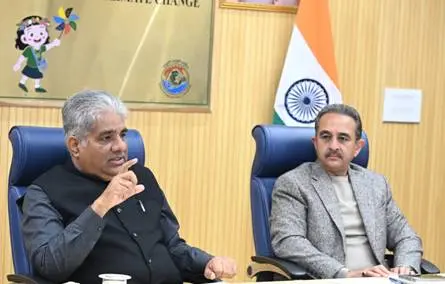
New Delhi – Union Environment Minister Bhupender Yadav has issued a Delhi air ultimatum to authorities in the National Capital Region, directing them to ensure visible improvement in air quality across the region within one week. The directive comes as Delhi continues to grapple with hazardous pollution levels, with the air quality index registering 376 in the “very poor” category on Friday.

High-Level Review Meeting Emphasizes Urgency

Chairing a comprehensive review meeting of action plans for Delhi, Haryana, and Uttar Pradesh with concerned municipal bodies on Friday, Yadav emphasized through the Delhi air ultimatum that the momentum of pollution control actions must be sustained until there is visible improvement within seven days. The minister stressed the critical balance between enforcement and public convenience in addressing the region’s persistent air quality crisis.

“Strict measures must be taken against defaulters, but at the same time the general public must not get inconvenienced unnecessarily. Identified issues are to be addressed through corrective actions, with a review scheduled in 15 days,” Yadav stated during the meeting, underscoring the urgency reflected in the Delhi air ultimatum.

Fourth Review Meeting Signals Escalating Concern

The Delhi air ultimatum was delivered during the fourth review meeting held in recent weeks, demonstrating the government’s escalating concern as air quality continues to deteriorate across the region. Yadav announced that monthly meetings will be held from January 2026 onwards to review action plans prepared by states and address implementation bottlenecks through interstate coordination meetings at the highest level.

This structured approach accompanying the Delhi air ultimatum aims to ensure continuous monitoring and swift corrective action, preventing the lapses that have historically plagued pollution control efforts in the National Capital Region. The commitment to monthly reviews represents a significant shift toward sustained engagement rather than reactive responses to pollution episodes.

Traffic Management at 62 Hotspots Mandated

In a communique issued by the Union environment ministry following the Delhi air ultimatum, specific directions were issued to ensure smooth traffic management at 62 identified traffic hotspots throughout the region. These congestion points have been identified as significant contributors to vehicular emissions and overall air pollution levels.

The Delhi air ultimatum also includes directives to promote electric vehicle and CNG buses for employees of corporates and industrial units across the region. Additionally, staggered timings for offices, shopping malls, and commercial complexes were suggested to reduce peak-hour congestion, which exacerbates pollution through increased vehicular emissions during concentrated time periods.

Smart Traffic Systems Fast-Tracked

As part of the Delhi air ultimatum, the Centre specifically directed Gurugram, Faridabad, Ghaziabad, and Noida to fast-track the implementation of the Integrated Smart Traffic Management System. This technological solution is expected to optimize traffic flow, reduce congestion, and consequently lower vehicular emissions across the NCR.

The minister also underscored the need for coordinated planning with Metro rail authorities to improve last-mile connectivity, making public transportation more accessible and attractive to commuters. This comprehensive approach addresses one of the fundamental challenges in reducing private vehicle usage in the region.

Infrastructure Improvements Within 10 Days

The Delhi air ultimatum includes specific timelines for infrastructure improvements, with authorities directed to remove encroachments causing traffic congestion within 10 days. This aggressive timeline reflects the urgency of the situation and the government’s determination to see immediate action on long-standing issues.

Yadav emphasized the need to ensure annual maintenance contracts for pothole-free roads and proper drainage systems to prevent monsoon damage to roads. Poor road conditions contribute to slower traffic movement and increased emissions, making road quality an important factor in pollution control efforts.

Dust and Construction Waste Removal Prioritized

The Delhi air ultimatum specifically addresses the removal of dust and construction and demolition waste lying on roads, which contributes significantly to particulate matter pollution. Authorities have been directed to ensure containment of biomass burning and strict enforcement of construction bans during high pollution periods.

Also Read: Delhi Orange Alert: Severe Fog and 400+ AQI Expected This Weekend

These measures target some of the most visible and controllable sources of pollution, offering opportunities for quick wins in improving air quality. The emphasis on immediate action reflects the government’s understanding that public confidence requires visible results.

Coordinated Grievance Redressal System

According to the ministry’s statement on the Delhi air ultimatum, coordinated redressal of public grievances related to pollution must be ensured under the Commission for Air Quality Management’s supervision. This includes focused Information, Education, and Communication activities for stakeholder engagement, ensuring that citizens are informed about pollution sources and control measures.

The comprehensive nature of the Delhi air ultimatum demonstrates recognition that air quality improvement requires multi-pronged action across transportation, construction, waste management, and public engagement sectors. The one-week deadline for visible improvement sets a clear benchmark for accountability, while the 15-day review period ensures sustained pressure on implementing authorities.

Balancing Enforcement with Public Convenience

A key element of the Delhi air ultimatum is the minister’s emphasis on balancing strict enforcement against defaulters with avoiding unnecessary inconvenience to the general public. This approach acknowledges the criticism that previous pollution control measures have sometimes disrupted daily life without producing proportionate improvements in air quality.

The Delhi air ultimatum represents a comprehensive strategy combining immediate action, technological solutions, infrastructure improvements, and sustained monitoring to address the National Capital Region’s chronic air quality crisis.

Epstein Files Release: Shocking Trump Photo With $22,500 Check Emerges

Washington D.C. – The Justice Department released thousands of pages of documents related to its investigation into convicted sex offender and financier Jeffrey Epstein on Friday, marking a significant moment in the ongoing scrutiny of the disgraced financier’s connections to powerful figures. The Epstein files release, mandated by Congress, has already yielded intriguing discoveries, including a heavily redacted photograph featuring a reference to President Donald Trump.

Trump Reference Surfaces in Redacted Photo

Within the massive document dump of the Epstein files release, investigators discovered an image showing Epstein standing with a woman whose face has been completely blacked out. Both individuals in the photograph are holding a giant novelty check for $22,500, prominently displaying Trump’s signature. The picture is contained within a frame inscribed with the phrase “Once in a blue moon,” adding an element of mystery to the photograph’s context and significance.

While the exact date and location of when the photo was taken remain unclear, the check appears to match one previously seen in images from a birthday book that Ghislaine Maxwell compiled for Epstein’s 50th birthday celebration. That same page in the birthday compilation featured a note from a Mar-a-Lago member making a joke about selling a “fully depreciated” woman to Trump for the exact amount of $22,500.

White House Remains Silent on Photograph

As of the Epstein files release on Friday, the White House has not issued any statement or comment addressing the photograph or the novelty check bearing Trump’s signature. The silence from the administration comes amid intense public scrutiny over the president’s past associations with Epstein, despite Trump’s previous statements that he had severed ties with the financier in the mid-2000s following a falling out.

According to published reports, Trump appeared in this initial tranche of documents only a handful of times during the Epstein files release. One image appears to show an array of photographs in which the president is posing with various women, though details remain limited due to extensive redactions throughout the documents.

Scope and Scale of Document Release

The Epstein files release is expected to span several hundred thousand records, with additional documents to follow in the coming weeks, according to Deputy Attorney General Todd Blanche. He confirmed that prosecutors are withholding material tied to active investigations and obscuring specific details to protect victims’ identities. Blanche emphasized that “no new charges” are expected to result from the document disclosure.

The comprehensive nature of the Epstein files release includes numerous photographs depicting Epstein alongside well-known individuals from various fields, including politics, entertainment, and business. Among those featured are former Democratic President Bill Clinton and Rolling Stones frontman Mick Jagger, demonstrating the breadth of Epstein’s social connections across multiple elite circles.

Bill Clinton Images Draw Immediate Attention

Several previously unseen images involving Clinton quickly drew significant attention following the Epstein files release. One photograph shows a younger-looking Clinton reclining in a hot tub, with his body partially obscured by a large black rectangle placed for redaction purposes. Another image appears to show Clinton swimming with a dark-haired woman believed to be Ghislaine Maxwell, Epstein’s longtime associate and convicted accomplice.

The presence of these Clinton photographs in the Epstein files release prompted immediate reactions from White House officials. Communications Director Steven Cheung posted on social media: “Slick Willy! @BillClinton just chillin, without a care in the world. Little did he know…” Press Secretary Karoline Leavitt added a simple “Oh my!” in response to the images.

Extensive Redactions Protect Victim Information

The Epstein files release includes seven pages listing 254 masseuses, with every single name concealed beneath thick black bars labeled “redacted to protect potential victim information.” This extensive redaction effort reflects the Justice Department’s commitment to safeguarding the identities of potential victims while still providing transparency about the scope of Epstein’s operations.

Other documents contained within the Epstein files release feature dozens of censored images showing nude or scantily clad figures, as well as photographs of Epstein and unidentified companions posing with firearms. In these images, faces have been systematically obscured to protect identities and maintain privacy for individuals who may have been victims or unknowing participants in Epstein’s activities.

Political Fallout and Accusations

Democrats sharply criticized the scope and presentation of the Epstein files release, questioning whether the administration had disclosed all relevant materials. Senate Minority Leader Chuck Schumer accused the administration of shielding the president, characterizing the partial disclosure as “a cover-up to protect Donald Trump from his ugly past.”

The political tensions surrounding the Epstein files release reflect the sensitive nature of the investigation and its potential implications for numerous high-profile individuals. The document dump arrives at a time of heightened public interest in Epstein’s connections and the circumstances surrounding his 2019 death in a Manhattan jail cell.

More Documents Expected in Coming Weeks

As the Epstein files release continues over the coming weeks, additional revelations are anticipated. The Justice Department has indicated that several hundred thousand more records will be made public, potentially shedding further light on Epstein’s network of associates and the full scope of his criminal activities. The ongoing release process ensures that transparency efforts will continue while balancing the need to protect victim privacy and maintain the integrity of any active investigations.

Delhi Orange Alert: Severe Fog and 400+ AQI Expected This Weekend

0

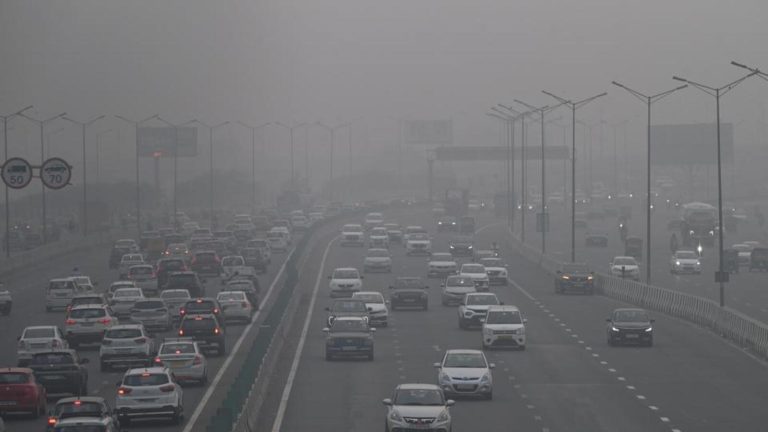
New Delhi – The India Meteorological Department has issued a Delhi orange alert for fog on Saturday, as the national capital continues to battle a deadly combination of dense fog and severe air pollution. The Air Quality Early Warning System has predicted that the air quality index will climb into the 400+ “severe” category over the weekend, creating a public health emergency for millions of residents.

Massive Flight Disruptions Continue

Dense fog converged with air pollution to smother Delhi for yet another day on Friday, causing widespread disruptions across the city’s aviation sector. Over 700 flights experienced delays, while at least 177 flights were cancelled, including 88 departures and 89 arrivals. Two international flights were among those cancelled as visibility conditions deteriorated dramatically at Indira Gandhi International Airport.

The Delhi orange alert comes after visibility dropped to zero at the Safdarjung weather station at 5:30 am on Friday and plunged to just 50 metres at Palam. These extreme conditions forced the India Meteorological Department to issue a red alert in the early hours, warning travelers and residents of the hazardous conditions.

Weekend Weather Forecast Predicts Worsening Conditions

According to IMD officials, the Delhi orange alert for Saturday indicates that dense to very dense fog is expected to form at several places across the city during the early morning hours. At night, shallow fog or mist might be observed throughout the capital region. Sunday and Monday are likely to see moderate fog at many places and dense fog at isolated locations during morning hours.

The air quality index, which barely moved from 373 to 374 in the 24 hours ending at 4 pm Friday, is predicted to deteriorate further. The AQEWS forecast suggests the index will climb into the 400+ “severe” category over the weekend, making outdoor activities hazardous for all residents, particularly vulnerable groups including children, elderly citizens, and those with respiratory conditions.

Air Quality Reaches Dangerous Levels

While the city’s 24-hour average air quality index stood at 374 in the “very poor” category, the morning reading climbed to 382, edging dangerously close to the severe threshold of 401. Alarmingly, 11 of 40 monitoring stations across the city recorded severe air quality levels on Friday.

Vivek Vihar reported the worst air quality with an index of 434, followed by Anand Vihar at 430. At one point during the day, 14 stations were in the severe category before conditions improved slightly at some locations. The deteriorating air quality marks the ninth consecutive day of very poor or severe pollution despite aggressive enforcement measures.

Supreme Court Criticizes Pollution Control Measures

The worsening conditions that prompted the Delhi orange alert underscore what the Supreme Court described earlier this week as the “total failure” of reactive pollution control measures. An aggressive vehicular enforcement drive launched Thursday resulted in thousands of challans and widespread disruption to vehicle users across the National Capital Region, yet failed to significantly improve air quality.

Data from the Centre’s Decision Support System for Air Quality Management showed vehicular pollution contributed 15.72 percent to Friday’s pollution despite Thursday’s enforcement drive targeting older vehicles and those without valid pollution certificates. Forecasts indicate this contribution will rise to 17.36 percent on Saturday and 18.41 percent on Sunday.

Temperature Drop to Intensify Pollution Crisis

The minimum temperature was recorded at 9 degrees Celsius on Friday, 0.9 degrees above normal, while the maximum reached 22.2 degrees. Forecasts suggest the minimum could fall to 7-9 degrees on Saturday, with the maximum hovering around 21-23 degrees over the weekend before dropping to 20-22 degrees by mid-next week.

The temperature decline accompanying the Delhi orange alert threatens to intensify what meteorologists call the inversion effect, trapping pollutants in lower layers of the atmosphere. “A fall in temperature can intensify the inversion effect, which can lead to a spike in pollution levels, as this causes pollutants to get trapped near the lower layers of the atmosphere,” explained Anumita Roychowdhury, executive director at the Centre for Science and Environment.

Also Read: Fire Safety Inspection: Delhi Shuts 5 Establishments for Serious Violations

December Becomes Dirtiest Month in Eight Years

December has already recorded three severe air days between December 13-15, with the month’s average air quality index climbing to problematic levels. The capital experienced a 24-day streak of very poor air between November 6 and 29, including three severe days from November 11-13. This December has been the dirtiest in eight years, according to pollution monitoring data.

Absence of Rainfall Compounds Crisis

The persistent fog that necessitated the Delhi orange alert also highlights the absence of rainfall this December. The Safdarjung weather station has recorded no precipitation, including trace amounts. The lack of rain prevents pollutants from being washed out of the atmosphere, compounding the air quality crisis and making recovery more difficult.

Supreme Court Orders Structural Reforms

In a sharp assessment on Wednesday, the Supreme Court directed the Commission for Air Quality Management to abandon short-term responses in favor of comprehensive structural reforms addressing urban mobility, industrial emissions, and agricultural burning. The court emphasized that sustainable solutions require coordinated action across Delhi, Uttar Pradesh, Haryana, and Rajasthan, scheduling its next hearing for January 6.

The Delhi orange alert serves as another stark reminder of the urgent need for long-term solutions to the capital’s recurring air quality and fog crisis.

US Airstrikes Syria: Bold Retaliation Against Islamic State Targets

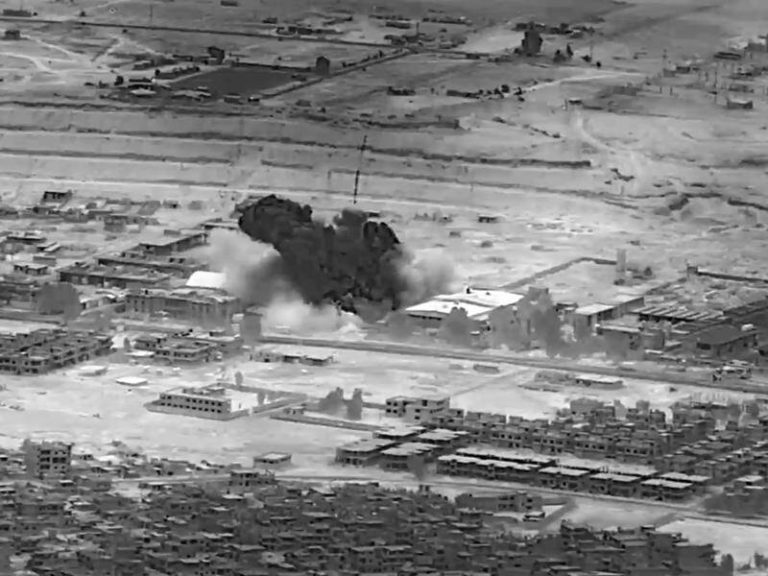
Washington D.C. – The United States launched a massive military operation on Friday, conducting extensive airstrikes across central Syria in direct retaliation for a deadly attack on American personnel. The US airstrikes Syria operation, officially designated as Operation Hawkeye Strike, targeted dozens of Islamic State positions, marking a significant escalation in America’s ongoing fight against terrorism in the region.

Operation Hawkeye Strike Targets Islamic State Infrastructure

Defense Secretary Pete Hegseth confirmed that the US airstrikes Syria campaign specifically targeted Islamic State fighters, infrastructure, and weapons sites throughout central Syria. In a forceful statement released on social media, Hegseth emphasized the retaliatory nature of the operation and warned that additional military action could follow.

“This is not the beginning of a war — it is a declaration of vengeance,” Hegseth declared. “Today, we hunted and we killed our enemies. Lots of them. And we will continue.” The defense secretary’s statement underscored the administration’s determination to respond decisively to attacks on American forces.

Two senior officials, speaking on condition of anonymity, confirmed that the US airstrikes Syria operation hit dozens of Islamic State targets distributed across central Syria. The coordinated assault represents one of the most comprehensive American military responses against Islamic State positions in recent months.

Military Assets Deployed in Coordinated Attack

The US airstrikes Syria operation involved a sophisticated combination of military aircraft and weaponry. An official revealed that the operation deployed F-15 Eagle fighter jets, A-10 Thunderbolt ground-attack aircraft, and AH-64 Apache helicopters in the coordinated assault. The official also indicated that additional strikes were expected in the coming days, suggesting a sustained campaign against Islamic State targets.

The Pentagon declined to provide further operational details beyond Hegseth’s official statement, maintaining operational security while the mission continues. The use of multiple aircraft types demonstrates the comprehensive nature of the US airstrikes Syria campaign, combining air superiority fighters, close air support platforms, and attack helicopters for maximum effectiveness.

Deadly Attack Prompts Swift Retaliation

The US airstrikes Syria operation follows a devastating attack last weekend in the Syrian desert near Palmyra, where American and Syrian forces came under assault. The attack resulted in the deaths of two US Army soldiers and a US civilian interpreter, while three other American soldiers sustained injuries. The attacker targeted a convoy of American and Syrian forces before being shot dead by military personnel, according to official military accounts.

The US Army subsequently identified the fallen service members as Sergeant Edgar Brian Torres-Tovar, 25, of Des Moines, Iowa, and Sergeant William Nathaniel Howard, 29, of Marshalltown, Iowa. Both soldiers served with the Iowa National Guard, representing their state and country in the dangerous mission against Islamic State forces. The civilian interpreter killed in the attack was Ayad Mansoor Sakat, of Macomb, Michigan, who was providing critical linguistic support to American forces operating in the region.

Syrian Security Forces Under Scrutiny

The Syrian Interior Ministry has described the attacker as a member of Syria’s security forces who was suspected of sympathizing with Islamic State ideology. This revelation raises serious concerns about infiltration within Syrian security apparatus and the challenges facing coalition forces working alongside local partners. The incident underscores the complex security environment in which American forces operate and the persistent threat posed by Islamic State sympathizers.

Presidential Response and White House Statement

President Donald Trump had vowed “very serious retaliation” immediately following the deadly attack, while emphasizing that Syrian forces were fighting alongside US troops in the region. The president’s promise of swift action preceded the US airstrikes Syria operation by several days, allowing military planners to develop a comprehensive response strategy.

White House deputy press secretary Anna Kelly confirmed that the president was delivering on his commitment to retaliate. “President Trump told the world that the United States would retaliate for the killing of our heroes by ISIS in Syria, and he is delivering on that promise,” Kelly stated, linking the US airstrikes Syria operation directly to the president’s earlier declaration.

Also Read: Epstein Files Released: Shocking Details About Bill Clinton Emerge

Ongoing Military Presence and Future Operations

The US airstrikes Syria campaign represents a continuation of America’s commitment to combating Islamic State forces in the Middle East. Despite previous announcements regarding troop withdrawals from Syria, American forces maintain a presence in the region, working alongside Syrian partners to prevent Islamic State resurgence.

Defense Secretary Hegseth’s warning that more action could follow suggests that the US airstrikes Syria operation may be the beginning of a sustained campaign rather than a one-time response. Military officials have indicated that additional strikes are expected, potentially targeting other Islamic State positions throughout central Syria.

Broader Implications for Regional Security

The US airstrikes Syria operation sends a clear message to Islamic State remnants and other terrorist organizations that attacks on American personnel will be met with overwhelming force. The swift and comprehensive nature of the retaliation demonstrates American resolve to protect its forces and interests in the region while supporting partners in the fight against terrorism.

As Operation Hawkeye Strike continues, military officials will assess the effectiveness of the US airstrikes Syria campaign and determine whether additional operations are necessary to degrade Islamic State capabilities in central Syria.