Tuesday, May 5, 2026
Home Blog Page 218

India Oman Trade Pact: CEPA Trade Pact Signed to Boost Bilateral Commerce

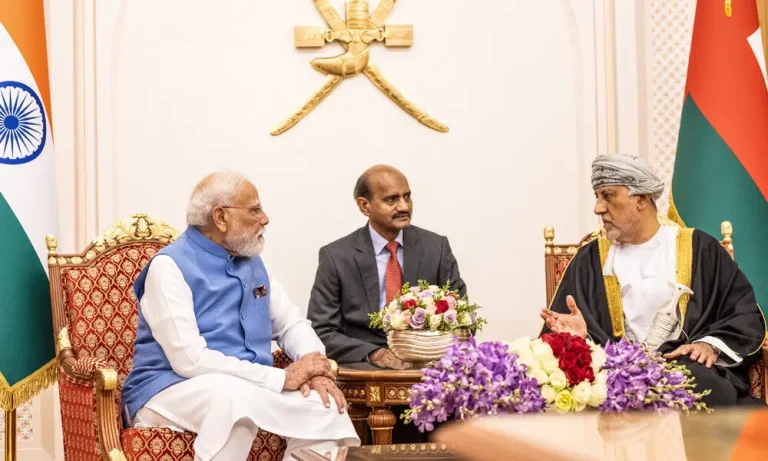
Oman, Muscat – India signed a landmark economic partnership agreement with Oman on Thursday, marking a significant milestone in bilateral relations and India’s broader strategy to expand Middle East ties. The India Oman trade pact, formally known as the Comprehensive Economic Partnership Agreement (CEPA), aims to boost bilateral trade and investment while helping India diversify its export markets amid steep tariffs imposed by the United States.

Key Features of India Oman Trade Pact

The India Oman trade pact includes substantial tariff concessions from both nations designed to enhance bilateral commerce. Oman has offered zero-duty access on over 98% of its tariff lines, covering nearly all Indian exports to the Gulf nation. This generous market access extends to critical Indian export sectors including gems and jewellery, textiles, pharmaceuticals, and automobiles, according to the Indian trade ministry statement.

In reciprocal measures under the India Oman trade pact, India will cut tariffs on approximately 78% of its tariff lines, covering nearly 95% of imports from Oman by value. This balanced approach reflects both nations’ commitment to fostering mutually beneficial trade relationships while protecting sensitive domestic industries.

Strategic Importance of India Oman Trade Pact

The India Oman trade pact holds particular strategic significance for New Delhi beyond mere commercial considerations. Oman serves as a crucial gateway to the narrow Strait of Hormuz between Oman and Iran, which represents a major transit point for global oil shipments. This geographic advantage makes the India Oman trade pact an important component of India’s energy security and regional diplomatic strategy.

Prime Minister Narendra Modi emphasized the transformative potential of the India Oman trade pact during his address in Oman. “This will set a new pace of our trade, add new trust to our investments and open doors to new opportunities in many sectors,” Modi stated, highlighting the agreement’s comprehensive scope and long-term vision.

Context: US Tariffs Drive Diversification

The India Oman trade pact represents India’s second major trade agreement this year, following a similar pact with the United Kingdom. The timing reflects Indian exporters’ intensified diversification efforts to counter U.S. President Donald Trump’s punishing tariffs on Indian goods. After negotiations fell apart, Trump doubled duties on Indian goods to 50% in late August, imposing the highest tariff rates in the world on Indian exports.

The U.S. tariff hike included a 25% levy implemented in retaliation for India’s purchases of Russian oil, creating significant challenges for Indian exporters. Despite ongoing negotiations, New Delhi has been unable to close trade deals with the United States or the European Union this year, as initially intended. This impasse has made alternative trade agreements like the India Oman trade pact increasingly crucial for maintaining India’s export growth momentum.

Historic Significance for Oman

The India Oman trade pact represents Oman’s first bilateral trade agreement since its 2006 deal with the United States, underscoring the Gulf nation’s selective approach to trade partnerships. This nearly two-decade gap between bilateral agreements highlights the special significance Oman attaches to the India Oman trade pact and the broader relationship with New Delhi.

Experts view the India Oman trade pact as reflecting both nations’ evolving economic priorities and their desire to strengthen strategic ties in an increasingly complex regional environment. The agreement positions both countries to leverage their complementary economic strengths and geographic advantages.

Sectoral Benefits of India Oman Trade Pact

The India Oman trade pact is expected to deliver substantial benefits across multiple sectors. The gems and jewellery industry stands to gain significantly, with exports projected to rise from $35 million to approximately $150 million over the next three years, according to Kirit Bhansali, chairman of the Gems & Jewellery Export Promotion Council. This represents more than a fourfold increase in sectoral exports.

The India Oman trade pact also provides opportunities in Oman’s $12.5 billion services import market, where India currently holds just a 5.3% share. This substantial untapped market presents significant growth potential for Indian service providers across sectors including information technology, healthcare, education, and professional services.

Protected Sectors and Strategic Considerations

While comprehensive in scope, the India Oman trade pact includes carefully considered exclusions to protect sensitive domestic industries. Items including dairy products, tea, coffee, rubber, and tobacco have been kept out of the agreement, reflecting both nations’ concerns about protecting vulnerable agricultural sectors and maintaining domestic production capabilities.

Ajay Srivastava, founder of the Global Trade Research Initiative, observed that the India Oman trade pact is “as much about geopolitics and regional presence as it is about tariffs.” This assessment captures the multifaceted nature of the agreement, which serves economic, strategic, and diplomatic objectives simultaneously.

Current Trade Relations

India and Oman currently maintain annual bilateral trade exceeding $10 billion, providing a substantial foundation for the India Oman trade pact to build upon. The agreement is expected to significantly increase this trade volume by eliminating tariff barriers and creating new market opportunities for exporters from both nations.

Future Outlook

The India Oman trade pact positions both nations to navigate an increasingly protectionist global trade environment while strengthening their strategic partnership. As India continues seeking trade diversification opportunities and Oman pursues economic diversification beyond oil, the India Oman trade pact represents a mutually beneficial framework for sustainable long-term cooperation that could serve as a model for future agreements in the region.
Fire Safety Inspection: Delhi Shuts 5 Establishments for Serious Violations

0

New Delhi – The Delhi Fire Services has issued closure notices to five establishments and identified 24 units violating safety norms during a comprehensive week-long fire safety inspection drive across restaurants, hotels, and clubs in the capital. Delhi home minister Ashish Sood announced on Thursday that 74 units were inspected as part of the preventive measure following a deadly fire incident at a Goa club earlier this month that killed 25 people and injured 50.

Comprehensive Fire Safety Inspection Drive Launched

The fire safety inspection drive represents the Delhi government’s proactive response to ensure public safety in commercial establishments across the city. Minister Ashish Sood emphasized that the Delhi Fire Service is conducting thorough examinations of all fire prevention and safety arrangements in restaurants, hotels, and clubs throughout Delhi. The initiative comes at a critical time as the capital prepares for increased festive and New Year gatherings, when adherence to fire safety norms becomes even more crucial.

During the fire safety inspection process, officials are thoroughly examining multiple aspects of fire prevention infrastructure. This includes checking the functionality of firefighting equipment, verifying the availability and accessibility of emergency exits, and ensuring compliance with building by-laws. The comprehensive nature of these inspections reflects the government’s determination to prevent tragedies similar to the Goa club fire that claimed 25 lives.

Serious Violations Lead to Closure Notices

Of the 74 premises subjected to fire safety inspection, 24 units were found violating established safety norms, representing nearly one-third of all inspected establishments. More alarmingly, five premises have been issued closure notices due to serious violations that pose immediate risks to public safety. Minister Sood stated that directions have been issued to close these five establishments until they can demonstrate full compliance with fire safety regulations.

The fire safety inspection revealed various categories of violations, ranging from non-functional firefighting equipment to blocked emergency exits and inadequate safety systems. Government officials stressed that these findings underscore the importance of regular monitoring and enforcement to ensure that commercial establishments maintain proper safety standards at all times.

Preventive Action in Public Interest

A government official clarified that the fire safety inspection drive and subsequent closure notices are not punitive in nature but rather preventive measures taken in the larger public interest. With the festive season and New Year celebrations approaching, officials emphasized that ensuring fire safety compliance is critical to protecting public lives and preventing potential disasters.

The official appealed to business owners to take fire safety inspection results seriously and regularly check their safety systems. Additionally, establishments have been urged to provide adequate training to staff members on fire safety protocols, emergency procedures, and proper use of firefighting equipment. This comprehensive approach aims to create a culture of safety awareness among both management and employees.

Trigger for Fire Safety Inspection Drive

The comprehensive fire safety inspection drive was initiated following the devastating fire at a Goa club on December 6, which resulted in 25 fatalities and left 50 people injured. This tragedy served as a wake-up call for authorities across India to reassess and strengthen fire safety measures in commercial establishments, particularly those hosting large gatherings.

The Goa incident highlighted systemic failures in fire safety compliance and the potentially catastrophic consequences of neglecting safety norms. In response, Delhi authorities moved swiftly to conduct proactive fire safety inspection drives to identify and rectify violations before they could lead to similar disasters in the capital.

MCD Parallel Inspection Drive

Complementing the Delhi Fire Services’ efforts, the Municipal Corporation of Delhi has directed its public health department to conduct a parallel fire safety inspection drive. The MCD plans to inspect 1,834 premises across various zones of Delhi, significantly expanding the scope of safety compliance monitoring in the capital.

Also Read: Delhi Air Pollution: Shocking AQI Spike Despite Aggressive Vehicle Curbs

According to officials, the highest number of checks in the MCD’s fire safety inspection drive will be conducted in the South Zone, with 452 units scheduled for inspection. The Najafgarh zone follows with 282 units, while the West Zone will see 222 units inspected. This zone-wise distribution ensures comprehensive coverage across Delhi’s commercial landscape.

Key Areas of Fire Safety Inspection

The fire safety inspection process focuses on several critical areas that are essential for ensuring public safety in commercial establishments. Officials are paying particular attention to the functionality of firefighting equipment, including fire extinguishers, sprinkler systems, smoke detectors, and fire alarms. The availability and accessibility of emergency exits represent another crucial component, as blocked or inadequate emergency exits were contributing factors in the Goa tragedy.

Compliance with building by-laws forms the third major pillar of the fire safety inspection drive. This includes verifying that establishments have obtained necessary clearances, maintained prescribed occupancy limits, and implemented proper ventilation systems to prevent smoke accumulation during emergencies.

Looking Ahead: Sustained Compliance

The fire safety inspection drive represents an important step toward ensuring public safety in Delhi’s commercial establishments. However, officials emphasize that sustained compliance requires continuous monitoring, regular self-assessment by business owners, and a collective commitment to prioritizing safety over convenience or cost-cutting measures.

As Delhi approaches the festive season and New Year celebrations, the results of this fire safety inspection drive serve as a timely reminder of the critical importance of maintaining rigorous safety standards. The closure of five establishments and identification of 24 violators demonstrate that authorities are serious about enforcement, sending a clear message that public safety cannot be compromised under any circumstances.

Gaza Ceasefire: Critical Talks Begin in Miami to Secure Peace Deal

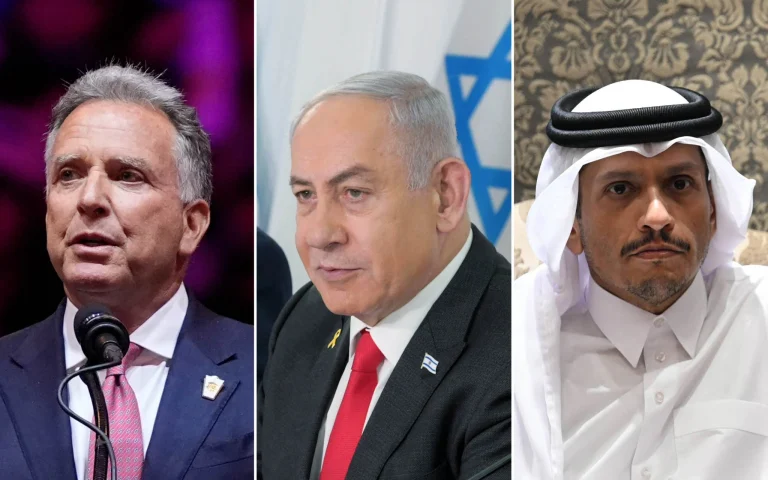
Washington D.C. – US President Donald Trump’s special envoy Steve Witkoff will hold crucial talks with senior officials from Qatar, Egypt, and Turkey in Miami on Friday to advance the next phase of the Gaza ceasefire deal. A White House official confirmed that these high-level discussions aim to address the implementation challenges of the October agreement that has so far seen limited progress in moving toward sustainable peace in the Palestinian territory.

Key Players in Gaza Ceasefire Negotiations

The Miami summit will bring together critical regional stakeholders who have been instrumental in brokering the Gaza ceasefire. Turkish Foreign Minister Hakan Fidan confirmed his attendance at the talks, while Qatari Prime Minister Mohammed bin Abdul Rahman al-Thani and Egyptian Foreign Minister Badr Abdelatty are also expected to participate. These nations have served as essential mediators between Israel and Hamas, working alongside Washington to establish and maintain the fragile peace agreement.

Steve Witkoff and Trump’s son-in-law Jared Kushner played pivotal roles in the shuttle diplomacy that led to the deal ending the Gaza war, which was sparked by Hamas’s October 2023 attack on Israel. Their involvement in the Miami discussions underscores the Trump administration’s continued commitment to securing a lasting Gaza ceasefire and broader Middle East stability.

Second Phase of Gaza Ceasefire Agreement

Under the second stage of the Gaza ceasefire, Israel is expected to withdraw from its positions in Gaza, marking a significant milestone in the peace process. The agreement also calls for an interim authority to govern the Palestinian territory instead of Hamas, fundamentally altering the administrative landscape of Gaza. Additionally, an international stabilization force is scheduled for deployment to ensure security and prevent violations of the ceasefire terms.

However, progress has been notably slow in advancing to this following phase of October’s agreement between Israel and Hamas, which was brokered by Washington and its regional allies. The upcoming Miami discussions aim to identify obstacles and develop actionable strategies to accelerate implementation of the Gaza ceasefire provisions.

Turkey’s Commitment to Gaza Ceasefire

Turkish President Recep Tayyip Erdogan emphasized his nation’s dedication to the Gaza ceasefire during a speech on Wednesday. “Turkey will continue to fight determinedly on every front to ensure that what is happening in Gaza is not forgotten, that justice is served,” Erdogan declared, signaling Turkey’s long-term commitment to Palestinian rights and regional peace efforts.

Turkey’s active participation in the Miami talks reflects its significant diplomatic influence in the Middle East and its determination to serve as a bridge between Western interests and regional concerns. Foreign Minister Hakan Fidan’s attendance demonstrates the highest level of Turkish engagement with the Gaza ceasefire process.

Fragility of Current Gaza Ceasefire

Despite initial optimism, the Gaza ceasefire remains fragile, with both sides alleging violations of the agreement’s terms. Mediators have expressed concerns that Israel and Hamas alike may be playing for time rather than genuinely committing to sustainable peace. These allegations threaten to undermine the carefully negotiated Gaza ceasefire and risk a return to violence in the region.

Also Read: Trump Travel Ban: Unprecedented Expansion to 39 Countries

Israel reported striking and killing the head of weapons production in Hamas’s military wing in the Gaza Strip last weekend, a military action that allegedly sparked Trump to warn of jeopardizing the truce. Such incidents highlight the precarious nature of the Gaza ceasefire and the challenges facing negotiators in Miami as they work to strengthen and extend the agreement.

Trump’s Vision for Middle East Peace

President Trump said in a televised address to the nation on Wednesday that the Gaza ceasefire had brought peace to the Middle East “for the first time in 3,000 years.” While this characterization represents significant rhetorical optimism, it also reflects the administration’s determination to frame the Gaza ceasefire as a historic diplomatic achievement with transformative potential for the region.

Israeli Prime Minister Benjamin Netanyahu is expected to meet Trump at his Mar-a-Lago resort in Florida on December 29, as the US president pushes for a longer-term deal that extends beyond the current Gaza ceasefire framework. This upcoming meeting will provide an opportunity for direct discussions between the US and Israeli leadership on the future of Palestinian governance and regional security arrangements.

Broader Diplomatic Portfolio

The Miami summit extends beyond the Gaza ceasefire, as Witkoff and Kushner are also involved in talks to end Russia’s invasion of Ukraine. The US diplomatic pair will meet Russian officials in Miami over the weekend, demonstrating the Trump administration’s ambitious approach to resolving multiple international conflicts simultaneously through personalized diplomatic engagement.

Challenges Ahead for Gaza Ceasefire

The Friday discussions face significant challenges in advancing the Gaza ceasefire to its next critical phase. Establishing an interim governing authority acceptable to all parties, coordinating Israeli military withdrawal, and deploying an international stabilization force require complex negotiations and substantial political will from all stakeholders.

The involvement of Qatar, Egypt, and Turkey provides essential regional legitimacy to the Gaza ceasefire process. These nations bring unique relationships with various actors in the conflict and can leverage their influence to encourage compliance with the agreement’s terms.

Looking Forward

As negotiations continue in Miami, the international community watches closely to see whether the Gaza ceasefire can transition from a temporary pause in hostilities to a sustainable peace framework. The success of these talks will determine whether the Palestinian territory can achieve stability and whether the broader Middle East peace process gains momentum or stalls amid competing interests and historical grievances.

Gender-Affirming Care: Trump Administration Boldly Proposes Sweeping Ban for Minors

Washington D.C. – The U.S. Department of Health and Human Services unveiled sweeping regulatory actions on Thursday designed to effectively ban gender-affirming care for minors across the nation. The comprehensive proposals represent the most significant moves the Trump administration has taken to restrict access to puberty blockers, hormone therapy, and surgical interventions for transgender children, potentially affecting healthcare access in nearly two dozen states.

Federal Funding Restrictions Target Gender-Affirming Care

The proposed regulatory framework includes cutting off federal Medicaid and Medicare funding from hospitals that provide gender-affirming care to children. Additionally, the restrictions would prohibit federal Medicaid dollars from being used to fund such procedures entirely. These sweeping proposals would also extend to the State Children’s Health Insurance Program for individuals under age 19, according to federal notices posted Thursday morning.

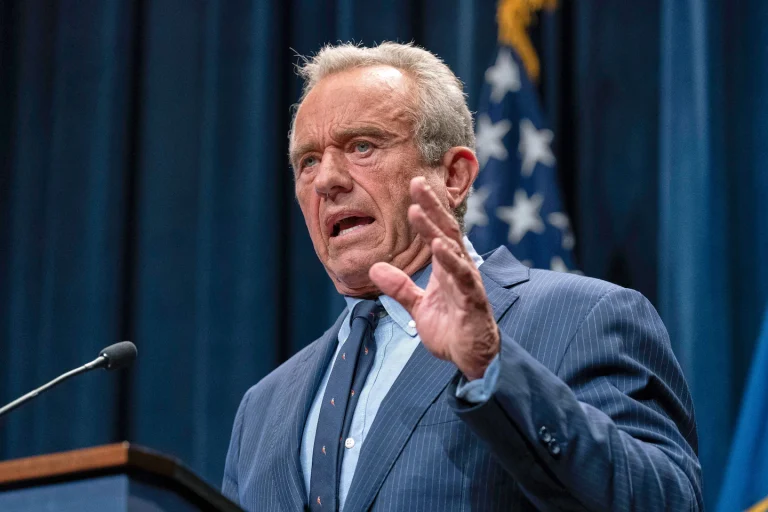
Health Secretary Robert F. Kennedy Jr. defended the administration’s position during a news conference, declaring that gender-affirming care procedures on children constitute malpractice rather than legitimate medicine. “Sex-rejecting procedures rob children of their futures,” Kennedy stated, framing the regulatory actions as protective measures for minors.

Impact on Healthcare Providers and Access

Nearly all U.S. hospitals participate in the Medicare and Medicaid programs, which represent the federal government’s largest health plans covering seniors, disabled individuals, and low-income Americans. Losing access to these payments would create existential threats for most U.S. hospitals and medical providers, effectively forcing healthcare institutions to choose between providing gender-affirming care and maintaining crucial federal funding.

The proposed restrictions on gender-affirming care would imperil access in approximately two dozen states where drug treatments and surgical procedures remain legal and funded by Medicaid, which combines federal and state dollars. Currently, more than half of U.S. states already ban or restrict such care through state-level legislation.

Additional Regulatory Measures

Kennedy announced that the HHS Office of Civil Rights will propose a rule excluding gender dysphoria from the definition of a disability under federal law. This regulatory change would represent another significant shift in how the federal government recognizes and addresses transgender healthcare needs.

In a related action, the Food and Drug Administration issued warning letters to a dozen companies that market chest-binding vests and other equipment used by people with gender dysphoria. Manufacturers targeted include GenderBender LLC of Carson, California, and TomboyX of Seattle. The FDA letters assert that chest binders can only be legally marketed for FDA-approved medical uses, such as recovery after mastectomy surgery.

Medical Community Response to Gender-Affirming Care Restrictions

The administration’s approach contradicts recommendations from most major U.S. medical organizations, including the American Medical Association, which has urged states not to restrict gender-affirming care for individuals with gender dysphoria. Medical professionals and advocacy groups have strongly refuted the administration’s characterization of these treatments.

Dr. Jamila Perritt, a Washington-based OB/GYN and president and CEO of Physicians for Reproductive Health, criticized the regulations in a statement: “In an effort to strongarm hospitals into participating in the administration’s anti-LGBTQ agenda, the Trump Administration is forcing health care systems to choose between providing lifesaving care for LGBTQ young people and accepting crucial federal funding. This is a lose-lose situation where lives are inevitably on the line.”

Current State of Gender-Affirming Care

Young people who persistently identify as a gender differing from their sex assigned at birth typically undergo evaluation by a team of professionals. Some may initially try a social transition involving changes to hairstyle or pronouns. Others may later receive hormone-blocking drugs that delay puberty, followed by testosterone or estrogen to bring about desired physical changes. Surgical interventions remain rare for minors.

Medicaid programs in slightly less than half of states currently cover gender-affirming care. At least 27 states have already adopted laws restricting or banning such care. Federal judges have struck down bans in Arkansas and Montana as unconstitutional, though legal battles continue in those states.

Also Read: Trump Travel Ban: Unprecedented Expansion to 39 Countries

Regulatory Process and Legal Challenges

The proposals announced by Kennedy and his deputies are not final or legally binding. The federal government must complete a lengthy rulemaking process, including periods of public comment and document revisions, before restrictions become permanent. These regulations are also likely to face significant legal challenges from advocacy groups and affected families.

However, the proposed rules are already creating a chilling effect among healthcare providers. Many hospitals have ceased providing gender-affirming care to children in anticipation of federal action, even before final regulations take effect.

Broader Context of Transgender Rights Restrictions

These announcements build upon a wave of actions President Donald Trump, his administration, and congressional Republicans have taken to target transgender rights nationwide. On his first day in office, Trump signed an executive order declaring the federal government would recognize only two immutable sexes: male and female. He has also signed orders aimed at cutting off federal support for gender transitions for people under age 19 and barring transgender athletes from participating in girls’ and women’s sports.

Congressional action has accompanied these executive measures. On Wednesday, legislation passed the U.S. House that would expose transgender healthcare providers to prison time if they treat patients under age 18. Another bill under House consideration aims to ban Medicaid coverage for gender-affirming care for children entirely.

Rodrigo Heng-Lehtinen, senior vice president at The Trevor Project, called the changes a “one-size-fits-all mandate from the federal government” on decisions that should remain between doctors and patients.

Osman Hadi: Tragic Death of Bangladesh Student Leader After Assassination

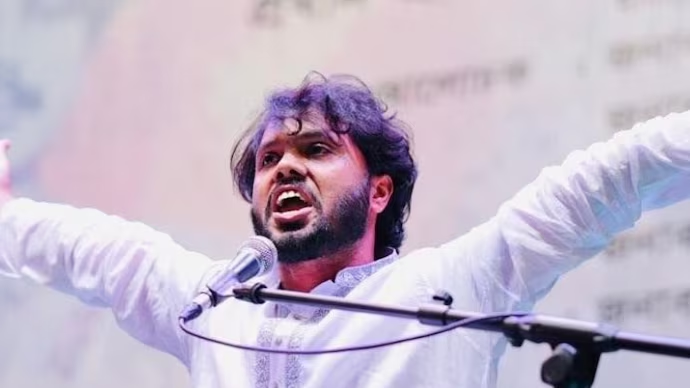
Dhaka, Bangladesh – Osman Hadi, a prominent leader from the 2024 Bangladeshi student uprising, died on Thursday in Singapore after succumbing to injuries sustained in an assassination attempt. The Ministry of Foreign Affairs in Singapore officially confirmed that Sharif Osman Hadi passed away on December 18, 2025, despite intensive medical treatment at Singapore General Hospital. His death has sent shockwaves through Bangladesh, triggering widespread protests and prompting interim leader Muhammad Yunus to declare a state of mourning.

The Assassination Attempt on Osman Hadi

Osman Hadi was shot by unidentified assailants in Dhaka on December 12 while traveling in a battery-powered auto-rickshaw on Culvert Road in the Paltan area of the Bangladeshi capital. The brutal attack targeted the student leader as he campaigned for the upcoming February elections as an independent candidate from the Dhaka-8 constituency. The shooting occurred in broad daylight, highlighting the dangerous political climate in Bangladesh following the July uprising that led to Sheikh Hasina’s ouster.

Following the attack, Osman Hadi was immediately rushed to Dhaka Medical College Hospital for emergency treatment. Given the severity of his head injuries, medical professionals quickly transferred him to Evercare Hospital, where he received specialized care. However, recognizing the critical nature of his condition, authorities decided to airlift the student leader to Singapore for advanced medical intervention.

Medical Treatment in Singapore

Osman Hadi was evacuated by air from Bangladesh to the Singapore General Hospital (SGH) Neurosurgical Intensive Care Unit on December 15, three days after the shooting incident. The decision to airlift him to Singapore reflected both the gravity of his injuries and the limitations of available medical facilities in Dhaka. At SGH, a team of specialists from the hospital and the National Neuroscience Institute worked tirelessly to save his life.

Despite the best efforts of the medical professionals at Singapore General Hospital, Osman Hadi could not overcome the traumatic head injuries inflicted during the assassination attempt. The Singapore Ministry of Foreign Affairs released a statement confirming his death and indicating that Singapore is currently working to assist the Bangladesh High Commission in repatriating his body back to Dhaka for final rites.

Who Was Osman Hadi?

Osman Hadi emerged as a significant figure during Bangladesh’s July 2024 student uprising, which ultimately resulted in the removal of Prime Minister Sheikh Hasina from power. He was a prominent member and spokesperson of the anti-Hasina platform Inqilab Mancha, a group that came into sharp focus during the historic protests that reshaped Bangladesh’s political landscape. His fearless activism and articulate advocacy for change made him a symbol of the youth movement.

At the time of his assassination, Osman Hadi was actively campaigning as an independent candidate for the upcoming national elections scheduled for February. His candidacy from the Dhaka-8 constituency represented his commitment to translating the revolutionary spirit of the student uprising into electoral politics. However, his political journey was cut tragically short by the assassination attempt.

Also Read: Bangladesh Violence: Chaos Erupts in Dhaka After Osman Hadi’s Death

Inqilab Mancha and Political Context

Osman Hadi’s association with Inqilab Mancha placed him at the center of Bangladesh’s most contentious political movements. The organization, though labeled by some as a radical outfit, played a crucial role in the July uprising and has been at the forefront of efforts to dismantle the Awami League, Sheikh Hasina’s political party. Despite Inqilab Mancha’s significant participation in the student uprising, the Yunus interim government took the controversial decision to disband the party and bar it from contesting the national elections.

This political backdrop adds layers of complexity to understanding the assassination attempt on Osman Hadi. His prominence in the anti-Hasina movement and his role in Inqilab Mancha made him a potential target for those opposed to the changes brought about by the July uprising.

Muhammad Yunus Vows Investigation

In a solemn address to the nation following confirmation of Osman Hadi’s death, Bangladesh interim leader Muhammad Yunus expressed profound grief and pledged a comprehensive investigation into the assassination. “Today, I came before you with very heartbreaking news. Sharif Osman Hadi, the fearless frontline fighter of the July Uprising and spokesperson of the Inqilab Mancha, is no more among us,” Yunus stated during his address.

Declaring a one-day state mourning to honor Osman Hadi’s memory, Chief Adviser Yunus vowed to apprehend the suspects responsible for the shooting. He called upon all citizens to maintain patience and restraint during this volatile period. Yunus characterized Osman Hadi as an “enemy to the defeated forces and fascist terrorists,” a pointed reference to deposed Prime Minister Sheikh Hasina’s now-disbanded Awami League.

Legacy and National Impact

The death of Osman Hadi represents a significant loss for Bangladesh’s student movement and democratic aspirations. His assassination and subsequent death have exposed the continuing dangers faced by political activists in the country’s evolving political landscape. The interim government’s promise to investigate the killing will test its commitment to justice and accountability.

As Bangladesh prepares to repatriate Osman Hadi’s body from Singapore, the nation grapples with questions about political violence, security for activists, and the path forward for the revolutionary ideals that he represented. His legacy as a fearless student leader will continue to inspire those who seek democratic transformation in Bangladesh.

VB-G RAM G Bill: Parliament Passes Controversial MGNREGA Replacement

New Delhi – Parliament passed the Viksit Bharat Guarantee for Rozgar and Ajeevika Mission (Gramin) Bill on Thursday, marking a significant shift in India’s rural employment landscape. The VB-G RAM G Bill, which will replace the 20-year-old Mahatma Gandhi National Rural Employment Guarantee Act (MGNREGA), was approved by the Rajya Sabha through a voice vote amid fierce opposition protests and walkouts that extended proceedings until midnight.

Key Features of the VB-G RAM G Bill

The VB-G RAM G Bill introduces substantial changes to India’s rural employment guarantee framework, most notably increasing the wage employment guarantee from 100 days to 125 days annually for unskilled workers. This 25-day enhancement represents the centerpiece of the government’s argument that the new legislation will provide better livelihood security to rural households compared to the existing MGNREGA framework.

Union Rural Development Minister Shivraj Singh Chouhan emphasized that the VB-G RAM G Bill was designed to address critical shortcomings in the old scheme while maintaining the core objective of providing employment opportunities to rural populations. The government has positioned this legislation as essential for achieving comprehensive village development and modernizing rural employment programs.

Parliament Proceedings and Opposition Resistance

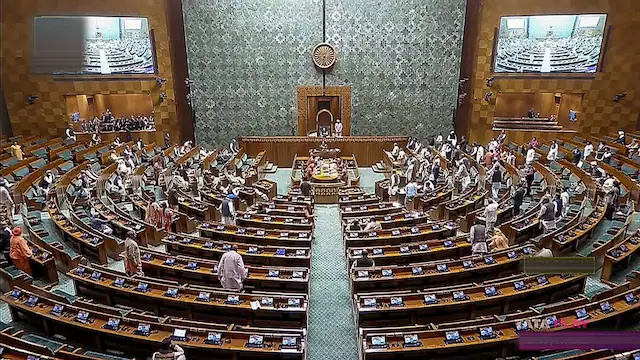
The passage of the VB-G RAM G Bill was marked by intense parliamentary drama as opposition members staged walkouts in the Rajya Sabha, demanding withdrawal of the legislation. After the Lok Sabha cleared the bill earlier in the day, the Rajya Sabha session continued late into the night, with opposition parties raising slogans against the ruling NDA government and refusing to participate in the final vote.

Opposition members went beyond parliamentary protests, staging a dharna outside the Samvidhan Sadan in the Parliament complex to register their strong objections to the VB-G RAM G Bill. The coordinated opposition response reflected deep concerns about the implications of replacing a well-established employment guarantee scheme with new legislation.

Government’s Defense of VB-G RAM G Bill

Responding to opposition allegations and protests, Minister Shivraj Singh Chouhan mounted a vigorous defense of the VB-G RAM G Bill, accusing the Congress party of “killing” the ideals of Mahatma Gandhi multiple times and using his name merely for political gains. Chouhan argued that during the United Progressive Alliance’s tenure, MGNREGA was plagued by widespread corruption that undermined its effectiveness.

The minister asserted that the VB-G RAM G Bill would bring much-needed transparency and accountability to rural employment programs. According to government representatives, the new framework is designed to empower gram panchayats and gram sabhas, giving local bodies greater control over implementation and resource allocation.

Enhanced Employment Guarantee Under VB-G RAM G Bill

The most significant enhancement in the VB-G RAM G Bill is the statutory wage employment guarantee of 125 days in every financial year for unskilled workers, compared to MGNREGA’s 100-day provision. This represents a 25 percent increase in guaranteed employment opportunities, which the government claims will significantly improve income security for rural households dependent on wage employment.

The VB-G RAM G Bill aims to provide comprehensive coverage while maintaining focus on creating productive assets in rural areas. The extended employment guarantee period is expected to offer rural workers greater financial stability throughout the year, particularly during agricultural off-seasons when alternative income sources are limited.

Transparency and Accountability Mechanisms

The government has emphasized that the VB-G RAM G Bill incorporates robust mechanisms for transparency and accountability that were allegedly lacking in MGNREGA’s implementation. While specific details of these mechanisms were not elaborated during the parliamentary debate, officials have indicated that the new framework will leverage technology and strengthen monitoring systems to reduce corruption and ensure proper utilization of funds.

The VB-G RAM G Bill’s focus on empowering gram panchayats and sabhas is intended to bring decision-making closer to beneficiaries, potentially improving program responsiveness to local needs and reducing bureaucratic delays that often plagued MGNREGA implementation.

Also Read: SHANTI Bill: Revolutionary Nuclear Energy Law Passes Lok Sabha

Opposition Concerns and Political Implications

Despite the government’s assurances, opposition parties have expressed serious reservations about the VB-G RAM G Bill, leading to their dramatic walkout from parliamentary proceedings. While specific opposition concerns were not detailed in the legislative debate, the intensity of protests suggests fundamental disagreements about the bill’s approach to rural employment and concerns about potential dilution of employment guarantees.

The political standoff over the VB-G RAM G Bill reflects broader tensions between the government and opposition over economic policy and rural welfare programs. The opposition’s decision to stage a dharna outside Samvidhan Sadan demonstrates their determination to highlight what they perceive as problematic aspects of the legislation.

Looking Forward: Implementation Challenges

As the VB-G RAM G Bill becomes law, the focus will shift to implementation challenges. Successfully transitioning from MGNREGA to the new framework will require careful planning, adequate resource allocation, and effective coordination between central and state governments. Minister Chouhan’s assertion that the bill will contribute to comprehensive village development will be tested through actual implementation outcomes in coming months.

The success of the VB-G RAM G Bill will ultimately depend on whether it can deliver on promises of enhanced employment opportunities, reduced corruption, and improved rural livelihoods while addressing the concerns raised by opposition parties and rural employment activists.

Delhi Air Pollution: Shocking AQI Spike Despite Aggressive Vehicle Curbs

0

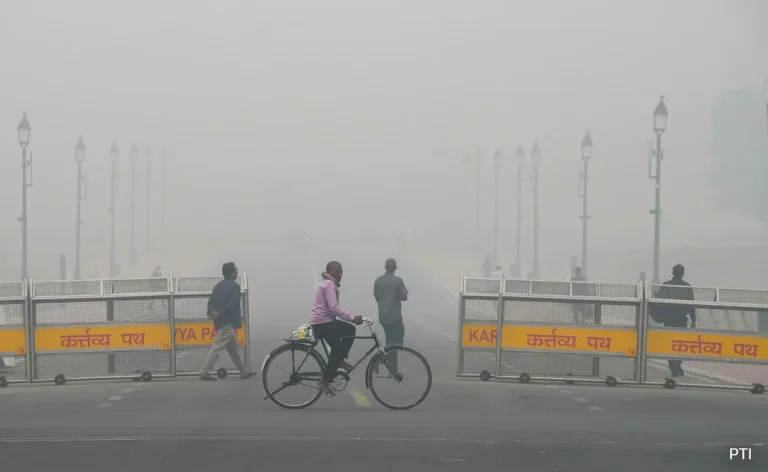
New Delhi – Delhi air pollution reached alarming levels on Thursday despite aggressive enforcement of vehicular restrictions, with the Air Quality Index recording 373 and later spiking to 398 by late evening. The deteriorating air quality, combined with widespread confusion over new regulations, has exposed what critics describe as the futility of reactive pollution control measures that fail to address the root causes of the environmental crisis.

Massive Enforcement Drive Fails to Curb Delhi Air Pollution

Authorities issued approximately 3,746 challans to vehicles lacking valid pollution certificates within just 24 hours, while hundreds of motorists were turned back at border crossings. Despite this extensive crackdown, Delhi air pollution levels remained stubbornly in the hazardous range for the eighth consecutive day, marking the city’s second-worst December pollution since standardized monitoring began in 2015.

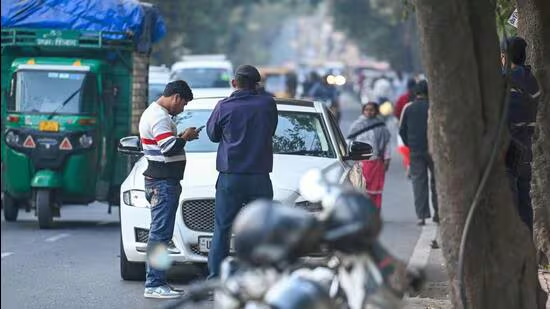
The enforcement actions targeted multiple fronts, with the most disruptive measures focusing on vehicular emissions. Environment Minister Manjinder Singh Sirsa conducted surprise inspections at fuel stations near the Delhi-Gurgaon border and central Delhi areas, overseeing the implementation of the “No PUC, No Fuel” directive alongside a complete ban on all non-Delhi, non-BS-VI emission standard vehicles.

Border Chaos and Commuter Confusion

The widespread disruption affected daily commuters, healthcare workers, and residents navigating life across the sprawling national capital region. At Kalindi Kunj bridge connecting Delhi and Uttar Pradesh, traffic police teams stopped vehicles entering from Noida, checking older models and damaged-looking cars for BS-VI compliance. Approximately 100 vehicles had been turned back by mid-morning at this location alone.

However, enforcement intensity varied across different entry points. At the Badarpur border with Haryana, only two to three cars were turned back during morning hours, indicating either higher compliance rates or reduced traffic volumes. This inconsistent implementation has contributed to the ongoing Delhi air pollution crisis by allowing gaps in the regulatory framework.

Fuel Stations Turn Away Hundreds

Fuel stations across the capital turned away dozens of motorists as the government’s “No PUC, No Fuel” directive took effect. One station reported refusing service to 25 cars and nearly 100 motorcycles on Thursday alone, while another facility recorded 60-70 vehicles daily seeking pollution checks—well above normal volumes.

At the Sarai Kale Khan CNG station, staff wearing placards reading “No PUC, No CNG” meticulously checked pollution documents of vehicles seeking refills. Manpower was increased from 20 to 27 personnel to handle the verification process. The Delhi Petrol Dealers’ Association confirmed that enforcement remained largely peaceful but called for uniform implementation across the national capital region to prevent drivers from simply refueling in neighboring states.

Human Cost of Short-Term Measures

The mounting human cost of these reactive measures became evident through numerous personal accounts. Cary Divelo, a 51-year-old Gurgaon resident, was stopped at Kalindi Kunj with his six-year-old BS-IV vehicle, completely unaware of the new regulations. Dr. Pushkar Verma, returning from Jaipur to his posting at a hospital, was turned back at the Ghazipur border with his 10-year-old BS-IV vehicle, highlighting how Delhi air pollution control measures have disrupted essential services.

Expert Criticism of Reactive Approach

Environmental experts stressed that last-minute measures are inadequate to address the scale of the Delhi air pollution crisis. Sunil Dahiya, founder and lead analyst at Envirocatalysts, emphasized that high pollution levels require drastic steps such as large-scale emission control across all sectors including vehicles, industries, and power plants.

Also Read: Delhi BS-VI Ban: Strict Vehicle Entry Restrictions Enforced

“What is needed in Delhi is consistent large-scale measures throughout the year rather than reducing a few hundred vehicles by checking PUC. Besides, at this time of year, pollution is highly dependent on meteorological factors that can easily negate the impact of any such small steps taken for a few days,” Dahiya explained.

Supreme Court Intervention

The Supreme Court, which has monitored Delhi air pollution for nearly four decades, described the current measures as a “total failure” earlier this week. The court emphasized that sustainable solutions require coordinated action across Delhi, Uttar Pradesh, Haryana, and Rajasthan. The next hearing is scheduled for January 6, when authorities are expected to present a revised long-term strategy.

Long-Term Solutions Under Consideration

Minister Sirsa called the initiative a “people’s movement to protect the health of Delhiites,” appealing for citizen compliance with emission norms and work-from-home advisories. The government is exploring longer-term technological interventions, including an algae-based air purification system for crowded areas and GIS tools for integrated pollution planning.

Officials indicated that a carpooling app and AI-enabled upgrades to monitoring systems are under consideration to strengthen enforcement and citizen participation. However, as Delhi air pollution continues unabated, the effectiveness of these proposed measures remains to be seen, with residents demanding comprehensive year-round action rather than seasonal panic responses.

Bangladesh Violence: Chaos Erupts in Dhaka After Osman Hadi’s Death

Dhaka – Bangladesh violence has escalated dramatically following the death of prominent student leader Sharif Osman Hadi, plunging Dhaka into unprecedented chaos. The tragic demise of this key figure from the July 2024 uprising has triggered widespread protests, vandalism, and arson attacks across the capital, creating a volatile security situation that threatens the country’s fragile political stability.

The Death That Sparked Bangladesh Violence

Sharif Osman Hadi, a fearless frontline fighter of the July Uprising and spokesperson of the Inqilab Mancha, succumbed to his injuries on Thursday in Singapore. The student leader had been shot during his campaign for the upcoming national elections in Dhaka last week. Despite being airlifted to Singapore by the interim government for advanced medical treatment, Hadi could not survive the gunshot wounds. His death has become the catalyst for the current wave of Bangladesh violence sweeping through major cities.

The Ministry of Foreign Affairs in Singapore officially confirmed Hadi’s passing, sending shockwaves through Bangladesh’s activist community and general population. Chief Adviser Muhammad Yunus addressed the nation with the heartbreaking news, declaring a one-day state mourning to honor the fallen leader’s sacrifice and contributions to the student movement.

Newspaper Offices Targeted Amid Bangladesh Violence

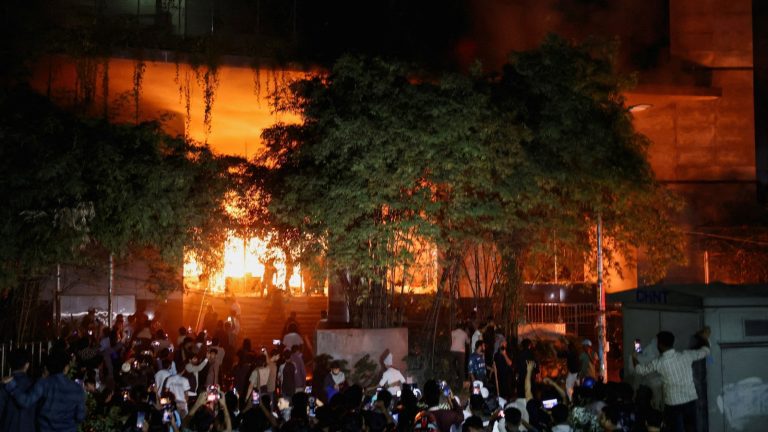
The Bangladesh violence took a disturbing turn when angry protesters stormed and vandalized the offices of major newspapers in Dhaka. The Daily Star and Daily Prothom Alo offices were specifically targeted, with demonstrators setting fires and causing extensive property damage. Videos circulating on social media captured the intensity of the attacks, showing flames engulfing parts of the newspaper buildings.

Twenty-five journalists were successfully rescued from the Daily Star office after protesters set it ablaze. Staff members and journalists trapped inside the buildings used social media platforms to share their ordeal and appeal for public intervention to stop the violence. The attacks on media houses represent a concerning escalation in the Bangladesh violence, raising serious questions about press freedom and safety.

Government Response to Bangladesh Violence

Chief Adviser Muhammad Yunus made a solemn pledge to bring Hadi’s killers to justice while urging citizens to maintain patience and restraint. In his address to the nation, Yunus emphasized the government’s commitment to investigating the assassination and prosecuting those responsible. The interim administration has announced a five million taka reward for information leading to the arrest of the gunmen.

However, the government’s calls for calm have done little to quell the Bangladesh violence as public anger continues to intensify. The fragile security apparatus struggles to contain the widespread protests and prevent further escalation of the volatile situation.

Also Read: Trump Travel Ban: Unprecedented Expansion to 39 Countries

Political Dimensions of Bangladesh Violence

The acting chief of the Bangladesh Nationalist Party (BNP) described Hadi’s killing as a “political conspiracy,” adding another layer of complexity to the Bangladesh violence. Political leaders have gathered at Dhaka University to mourn Hadi’s death, with thousands joining the demonstrations demanding accountability and justice.

The protests have increasingly focused on former Prime Minister Sheikh Hasina, who remains in exile in India after being sentenced to death last month. Demonstrators are demanding her extradition, leading to direct targeting of Indian diplomatic installations in Dhaka.

India-Bangladesh Tensions Amid Violence

The Bangladesh violence has strained relations with neighboring India, as protesters stormed the Indian High Commission and targeted the home of India’s deputy ambassador to Dhaka. Demonstrators are calling on India to return Sheikh Hasina to face justice in Bangladesh, viewing her continued refuge as an affront to their demands for accountability.

In response to the deteriorating security situation, India has temporarily shut down its visa centers in Bangladesh. This move reflects growing concerns about the safety of Indian diplomatic staff and facilities amid the ongoing Bangladesh violence.

The July Uprising Legacy

Osman Hadi rose to prominence during the July 2024 student uprising, becoming a symbol of resistance and youth activism. His assassination while campaigning for upcoming elections has raised serious questions about political violence and the safety of activists in Bangladesh. The current Bangladesh violence represents the anger and frustration of supporters who view his death as an attack on the democratic aspirations of the student movement.

Looking Ahead

As Bangladesh violence continues to grip Dhaka and other cities, the interim government faces mounting pressure to restore order while addressing legitimate grievances. The targeting of media houses, diplomatic missions, and political figures indicates a deepening crisis that requires urgent resolution. The coming days will be critical in determining whether Bangladesh can navigate this turbulent period and prevent further escalation of violence that threatens the nation’s stability and democratic future.

Indian Stock Market Closing Update – 18 December 2025: Drops Slightly lower amid Market Fluctuations

The Indian equity market ended the session on 18 December 2025 largely flat with a negative bias, as profit booking in broader markets offset selective buying in financials and select midcaps.

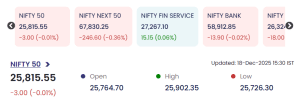
  • NIFTY 50: 25,815.55 ▼ 3.00 points (-0.01%)

  • 18 December 2025Opening: 25,764.70

  • Day’s High: 25,902.35

  • Day’s Low: 25,726.30

Sectoral cues remained mixed, with Nifty Financial Services marginally positive, while Nifty Next 50 and Nifty Bank witnessed mild pressure, indicating cautious sentiment among investors.

Also Read: 18 December 2025 (Mid-Session Update) | Indian Stock Market Snapshot: Strong Movements


🔼 Top Gainers (Stock-Specific Action)

Strong buying interest was seen in select small and mid-cap stocks, many of which hit upper circuits, backed by heavy volumes:

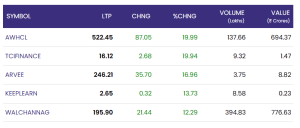
  • AWHCL surged nearly 20%, supported by strong volumes, emerging as the top gainer of the session.

  • Screenshot 2025 12 18 181403TCI Finance locked at +19.94%, continuing strong momentum.
  • ARVEE gained close to 17%, reflecting sustained buying interest.

  • Keeplearn advanced over 13%, with healthy participation.

  • Walchandnagar Industries rose over 12%, supported by significant trading volumes, indicating institutional and trader interest.


🔽 Top Losers (Pressure Points)

Selling pressure was visible in select stocks across retail, logistics and chemical segments:

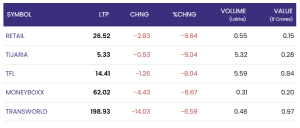
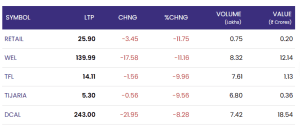
  • Retail sector stocks witnessed sharp cuts, with losses exceeding 11%.

  • WEL declined over 11%, reflecting profit booking after recent gains.

  • Screenshot 2025 12 18 181410TFL dropped nearly 10%, extending its corrective phase.

  • Tijaria Polypipes slipped over 9%, amid weak sentiment.

  • DCAL corrected more than 8%, dragged by selling across midcaps.


📈 Market Breadth & Sentiment

  • The session was marked by stock-specific volatility, especially in lower-priced and high-beta stocks.

  • Volumes remained elevated in select gainers, suggesting active trader participation.

  • Overall sentiment stayed cautious, with investors preferring selective exposure rather than broad-based buying.


🔎 Conclusion: 18 December 2025

The market closed flat-to-negative, reflecting indecision ahead of upcoming global and domestic cues. While headline indices showed limited movement, sharp stock-specific action dominated the session. Traders may continue to focus on momentum-driven counters, while positional investors are likely to remain selective amid consolidation near record levels.

For real time stock Updates, visit NSE website.

18 December 2025 (Mid-Session Update) | Indian Stock Market Snapshot: Strong Movements

Benchmark Indices Overview: 18 December 2025

  • NIFTY 50: 25,882.9064.35 points (+0.25%)

  • 18 December 2025
    • Open: 25,764.70

    • High: 25,902.35

    • Low: 25,726.30

  • Sectoral Performance

    • NIFTY Bank: 59,124.10197.35 (+0.33%) – steady buying in banking majors

    • NIFTY Fin Service: 27,358.65106.70 (+0.39%) – strength in NBFCs and financials

    • NIFTY Next 50: 67,985.4091.45 (-0.13%) – mild profit booking after recent rally

Overall sentiment remained positive and range-bound, with selective stock-specific action dominating the session.

Also Read: Markets Trade Firm in Early Session; Nifty 50 Holds Above 25,850 Led by Bank and Financial Stocks


Top Gainers (High Momentum Stocks)

  • TCIFINANCE: ₹16.12 ▲ 19.94%
    Strong buying interest, indicating speculative momentum.

  • KEEPLEARN: ₹2.79 ▲ 19.74%
    Locked near upper circuit with rising volumes.

  • Screenshot 2025 12 18 130706AWHCL: ₹502.60 ▲ 15.43%
    Continued accumulation, supported by strong traded value.

  • GVPTECH: ₹9.99 ▲ 14.04%
    Sharp upside move on improved participation.

  • ARVEE: ₹239.20 ▲ 13.63%
    Sustained interest after recent consolidation.

Broader market pockets showed aggressive buying, especially in small- and mid-cap names.


Top Losers (Pressure Counters)

  • RETAIL: ₹26.52 ▼ 9.64%

  • TIJARIA: ₹5.33 ▼ 9.04%

  • Screenshot 2025 12 18 130713TFL: ₹14.41 ▼ 8.04%

  • MONEYBOXX: ₹62.02 ▼ 6.67%

  • TRANSWORLD: ₹198.93 ▼ 6.59%

Losses were largely attributed to profit booking and weak intraday sentiment in select counters.


Market Breadth & Tone

  • Market breadth tilted slightly positive, aided by gains in financials and selective midcaps.

  • Volatility remained controlled, suggesting wait-and-watch mode ahead of further cues.

  • Traders preferred stock-specific strategies rather than broad index bets.


Key Takeaway

The Indian equity market traded with a positive bias, supported by strength in banking and financial services, while broader indices showed mixed cues. Momentum stocks dominated action, indicating selective risk appetite, even as some pockets witnessed sharp corrections.

For real time stock Updates, visit NSE website.