Tuesday, May 5, 2026
Home Blog Page 221

Delhi Air Pollution: Supreme Court Demands Complete Strategy Overhaul

0

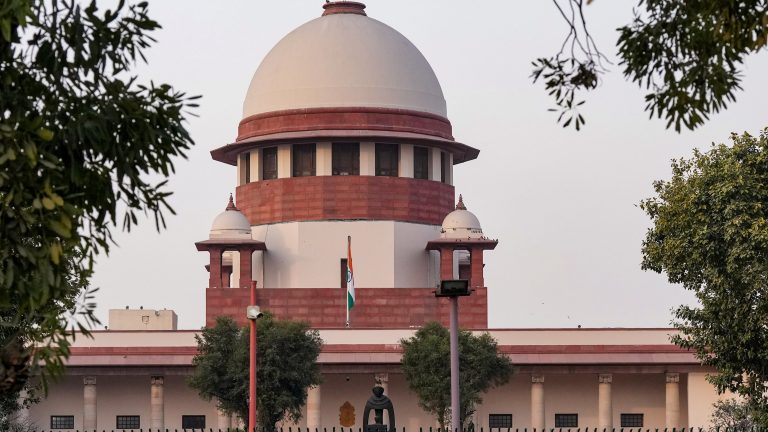
New Delhi – In a landmark ruling addressing the persistent Delhi air pollution crisis, the Supreme Court has termed all measures taken so far a “total failure” and directed the Commission for Air Quality Management (CAQM) to develop a comprehensive long-term strategy. The court’s strong observations came as the national capital region continues to grapple with severe air quality levels during winter months.

Supreme Court’s Stern Assessment of Delhi Air Pollution

A bench led by Chief Justice of India Surya Kant, along with justices Joymalya Bagchi and Vipul M Pancholi, delivered scathing remarks on the current approach to tackling Delhi air pollution. The bench emphasized that ad hoc and short-term responses cannot deliver any meaningful reduction in pollution levels, stating, “Whatever efforts were taken so far, they have failed. We have to think of long term.”

The court’s observations highlight the urgent need for structural planning rather than reactive measures that have characterized the response to Delhi air pollution over the years. The bench noted that the current approach had exhausted its utility and required complete reformulation.

Predictable Annual Crisis Requires Structural Solutions

The Supreme Court observed that Delhi air pollution has become a predictable annual phenomenon, particularly during winter months. This recurring pattern demands structural planning rather than reactive firefighting measures that authorities have relied upon thus far.

The bench emphasized that any sustainable solution to Delhi air pollution must be implemented in a phased manner and backed by coordinated action across states. The court’s directive acknowledges that air quality management cannot succeed through isolated efforts but requires integrated regional cooperation.

Comprehensive Long-Term Action Plan Mandated

In its detailed order, the Supreme Court directed CAQM to reformulate its long-term action plan for addressing Delhi air pollution, focusing on several structural issues. The court specifically asked CAQM to concentrate on urban mobility, cleaner industrial processes, energy use, and stubble burning as priority areas requiring immediate attention.

The bench suggested incentivizing farmers to stop burning crop residue and encouraging its use for alternative purposes. This approach addresses one of the major contributors to Delhi air pollution during winter months when agricultural burning peaks in neighboring states.

The court also flagged the need for better regulation of construction activities, which significantly contribute to Delhi air pollution through dust and emissions. Additionally, authorities were asked to examine pollution generated from household activities and identify areas to increase green cover across the region.

Urban Mobility and Public Transport Enhancement

Improving public transport emerged as a crucial component of the Supreme Court’s vision for tackling Delhi air pollution. The bench highlighted that strengthening citizen awareness programs and encouraging voluntary behavioral changes should be priority areas in the comprehensive strategy.

The court’s emphasis on urban mobility reflects the understanding that vehicular emissions constitute a major source of Delhi air pollution. Enhanced public transport infrastructure could significantly reduce private vehicle usage and associated emissions.

Also Read: Delhi Anti-Pollution Measures: Strict GRAP-4 Rules Enforced Now

Regional Coordination Essential for Success

Stressing that pollution control cannot succeed in silos, the Supreme Court emphasized that a coordinated approach involving Delhi, Uttar Pradesh, Haryana, and Rajasthan was essential for addressing Delhi air pollution effectively. The bench asked CAQM to consider constituting a single regulatory and administrative body for the entire Delhi-NCR region to ensure accountability.

This regional approach acknowledges that Delhi air pollution is not confined by state boundaries and requires synchronized action across the National Capital Region.

Temporary Measures and Their Limitations

Hearing petitions challenging measures such as school closures or hybrid learning to protect children from Delhi air pollution, the bench declined to interfere. The court observed that such steps were temporary measures to mitigate immediate health risks but cautioned that they could not substitute for long-term solutions.

The Supreme Court’s position recognizes the necessity of emergency measures during severe Delhi air pollution episodes while maintaining that these cannot replace comprehensive structural reforms.

Construction Workers’ Welfare and Alternative Employment

The bench addressed concerns regarding construction workers affected by stoppages under the Graded Response Action Plan (GRAP). It cautioned that welfare measures must genuinely reach workers and not become tools for exploitation during periods when construction halts contribute to controlling Delhi air pollution.

The court asked states to frame policies providing alternative employment during prolonged suspensions. “Suppose in 2026 construction work has to be stopped for a few months, why does not the state plan an alternative work option for them?” the bench observed.

Four Decades of Judicial Monitoring

The Supreme Court has been monitoring Delhi air pollution for nearly four decades, beginning with a public interest litigation filed in 1985. Successive benches have passed orders directing the conversion of Delhi’s public transport fleet to compressed natural gas, regulating industrial emissions, and restricting polluting vehicles.

Signaling sustained scrutiny of Delhi air pollution, the Supreme Court announced it would hear the matter at least twice monthly. The case is listed for January 6, when CAQM is expected to present its revised roadmap.

Delhi Anti-Pollution Measures: Strict GRAP-4 Rules Enforced Now

0

New Delhi – The national capital has implemented stringent Delhi anti-pollution measures starting December 18, following three consecutive days of severe air quality levels. With the Air Quality Index plummeting to alarming levels, authorities have announced comprehensive restrictions affecting offices, vehicles, and construction activities across the city.

Understanding the New Delhi Anti-Pollution Measures

The fresh Delhi anti-pollution measures come as the city registered an AQI in the ‘severe’ category for three consecutive days since Saturday, December 13. These restrictions are in addition to GRAP-4 (Graded Response Action Plan Stage-4) guidelines announced by the Commission for Air Quality Management. The emergency measures aim to curb the deteriorating air quality that has engulfed the capital in hazardous smog.

Labour Minister Kapil Mishra announced that all government and private institutions must switch to work-from-home arrangements or face action. Meanwhile, Environment Minister Manjinder Singh Sirsa emphasized stricter vehicular controls, making these Delhi anti-pollution measures among the most comprehensive interventions undertaken by authorities this year.

Work From Home Guidelines: Implementation Details

The work-from-home mandate represents a significant component of the Delhi anti-pollution measures. All private offices functioning within the National Capital Territory must ensure that not more than half of their staff attend the workplace physically, while the remaining employees work from home mandatorily.

However, several categories of workers are exempt from this requirement. Emergency and frontline workers, including those employed in hospitals, departments involved in fighting air pollution, fire departments, and other essential services, must continue physical attendance. Public and private health services, transport, and sanitation services also remain operational in physical mode.

The hybrid working model aims to reduce vehicular traffic significantly, thereby decreasing emissions from one of the city’s major pollution sources. These Delhi anti-pollution measures acknowledge the balance between environmental necessity and operational requirements of essential services.

Mandatory PUC Certificate Requirements

Among the most impactful Delhi anti-pollution measures is the mandatory Pollution Under Control (PUC) certificate requirement. Starting December 18, vehicles without valid PUC certificates will not be provided fuel at petrol pumps across the capital.

The PUC certificate is issued after a simple emission check of vehicles at authorized centers throughout the national capital. The certification costs ₹60 for two and three-wheeled vehicles, ₹80 for four-wheeled vehicles, and ₹100 for diesel-driven vehicles. The certificate remains valid for 12 months for Bharat Stage IV and Bharat Stage VI compliant vehicles.

This enforcement mechanism ensures that only vehicles meeting emission standards remain operational, making it one of the most enforceable Delhi anti-pollution measures implemented to date.

Ban on Vehicles Below BS-6 Category

The Delhi anti-pollution measures include a comprehensive ban on vehicles below the BS-6 category registered outside Delhi. These vehicles will not be allowed entry into the city when GRAP 3 and 4 restrictions are in place. The ban became effective on December 18.

Additionally, trucks carrying construction materials into Delhi have been completely banned. Environment Minister Manjinder Singh Sirsa appealed to people coming from outside Delhi to bring only vehicles complying with Bharat Stage 6 emission standards.

The Delhi Traffic Police and transport department’s enforcement teams will be deployed at petrol pumps and borders to ensure strict implementation of these restrictions. The Supreme Court has also ended protection against coercive action for BS-3 and below vehicles in the national capital, strengthening these Delhi anti-pollution measures.

Also Read: Delhi Minister Apologises Pollution: Shocking Admission on AQI Crisis

Construction Activity Restrictions and Worker Compensation

Construction activities face significant restrictions under the new Delhi anti-pollution measures. Vehicles carrying construction materials are prohibited from entering the city, effectively halting major construction operations during the GRAP-4 period.

Recognizing the impact on construction workers, the government has announced compensation of ₹10,000 for affected workers. The Labour Minister confirmed that workers will receive compensation for the days GRAP-4 remains in place, with the registration process currently ongoing.

Future Plans: Carpooling Initiative

Looking ahead, the Delhi government has announced plans to launch its own carpooling application to curb vehicular pollution. This initiative represents a long-term component of the Delhi anti-pollution measures, encouraging shared transportation to reduce the number of vehicles on roads.

The Commission for Air Quality Management called an emergency meeting on December 13 as AQI entered the ‘severe’ category, invoking Stage-IV of GRAP with immediate effect. These comprehensive Delhi anti-pollution measures reflect the government’s commitment to addressing the capital’s air quality crisis through multi-pronged strategies targeting various pollution sources simultaneously.

India and Argentina Sign ICAR–INTA Work Plan 2025–27 to Deepen Agricultural Research and Technology Cooperation

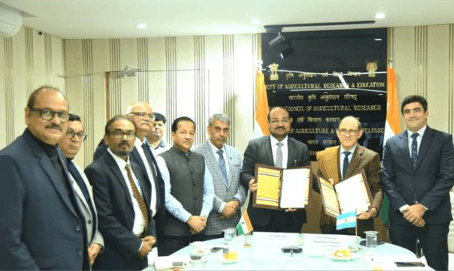
India and Argentina have taken a significant step towards strengthening bilateral cooperation in agriculture by signing the ICAR–INTA Work Plan for 2025–2027, aimed at enhancing collaboration in agricultural research, capacity building and technology exchange. The agreement was formalised through the exchange of the signed Work Plan between Dr. M. L. Jat, Secretary, Department of Agricultural Research and Education (DARE) and Director General, Indian Council of Agricultural Research (ICAR), and H.E. Mariano Augustin Caucino, Ambassador of Argentina to India.

The new Work Plan builds upon the long-standing scientific partnership between the two countries and aligns with shared priorities of sustainable agriculture, innovation-driven growth and climate-resilient food systems.


Expanding the Scope of Agricultural Collaboration

The ICAR–INTA Work Plan establishes a comprehensive framework for cooperation across a wide range of agricultural domains. These include natural resource management, sustainable agronomy practices such as zero tillage, agricultural mechanisation, micro-irrigation and fertigation, as well as crop and animal biotechnology.

Additional focus areas include livestock improvement, production technologies for temperate and tropical crops, digital agriculture, biosafety and phytosanitary measures, and value chain development. The collaboration will be implemented through joint research projects, germplasm exchange, expert interactions, and structured training and study visits.


Knowledge Exchange and Capacity Building

As part of the Work Plan, study visits and training programmes have been planned in advanced areas such as greenhouse vegetable production, floriculture and temperate fruit cultivation, post-harvest physiology, functional food development, and veterinary diagnostics.

The cooperation also covers precision livestock farming, waste-to-wealth technologies, microbial feed enhancement, digital agriculture tools, and sanitary and phytosanitary systems, enabling researchers and practitioners from both countries to exchange best practices and cutting-edge technologies.


Germplasm Exchange and Crop Development

A key component of the agreement is germplasm exchange, which will include strategic crops such as soybean, sunflower, maize, blueberry, citrus, guava, selected vegetable crops, and wild papaya species. This exchange is expected to support crop improvement programmes, enhance genetic diversity, and strengthen resilience against climate and pest-related challenges.


Focus on Oilseeds, Pulses and Mechanisation

India and Argentina will deepen cooperation in oilseeds and pulses value chains, reflecting shared interests in boosting productivity and market integration. The Work Plan also places emphasis on agricultural mechanisation, including zero-tillage technologies, cotton harvesting machinery and the use of drones in agriculture.

In horticulture, the collaboration will support value chain development, infrastructure creation, and exchange of quality planting material, contributing to higher farmer incomes and improved market access.


Strengthening Plant and Animal Health Systems

In the area of plant and animal health, the Work Plan envisages cooperation on region-specific Foot-and-Mouth Disease (FMD) elimination strategies, as well as enhanced collaboration on locust surveillance and management. These efforts will be supported through technical exchanges and sharing of best practices, strengthening preparedness and biosecurity in both countries.


Monitoring and Long-Term Partnership

Both sides reaffirmed their commitment to the India–Argentina scientific partnership and agreed on annual monitoring and review mechanisms to ensure effective implementation of the Work Plan and timely achievement of agreed objectives.


Conclusion

The signing of the ICAR–INTA Plan 2025–27 marks a strategic advancement in India–Argentina relations in agriculture. By combining scientific expertise, technology exchange and capacity building, the partnership aims to promote sustainable, resilient and innovation-driven agricultural systems, benefiting farmers, researchers and agri-value chains in both countries while contributing to global food security.


For more real-time updates, visit Channel 6 Network.

Source: PIB

SHANTI Bill Retains Robust Safety and Liability Safeguards While Enabling Clean Energy Expansion: Dr. Jitendra Singh in Lok Sabha: 2025

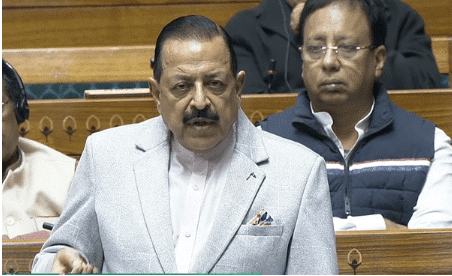
Union Minister of Science and Technology Dr. Jitendra Singh on Tuesday delivered a detailed reply in the Lok Sabha during the debate on the Sustainable Harnessing and Advancement of Nuclear Energy for Transforming India (SHANTI) Bill, 2025, addressing concerns raised by Members across party lines. The Minister asserted that the proposed legislation modernises India’s nuclear governance framework while retaining and strengthening core safety, security and accountability mechanisms that have underpinned the sector since the Atomic Energy Act, 1962.


Modernising Nuclear Governance Without Compromising Safety

Dr. Jitendra Singh explained that the SHANTI Bill consolidates existing nuclear laws into a single, contemporary legal framework, aligned with present-day technological, economic and energy realities. A key reform under the Bill is granting statutory status to the Atomic Energy Regulatory Board (AERB), which had so far functioned under an executive order.

He emphasised that safety norms, security controls over fissile material, spent fuel and heavy water, along with periodic inspections, will continue to remain under strict government oversight, irrespective of any private sector participation. Clarifying apprehensions, the Minister stated that private entities will have no control over sensitive nuclear materials, and management of spent fuel will remain entirely with the government, as has been the long-standing practice.


Liability Framework: Protection of Victims Remains Intact

Addressing liability concerns—a central theme of the debate—Dr. Jitendra Singh categorically stated that the Bill does not dilute compensation to victims of nuclear incidents. He explained that operator liability has been rationalised through graded caps linked to reactor size, a move aimed at facilitating newer technologies such as small modular reactors (SMRs).

The Minister highlighted that compensation mechanisms remain multi-layered, comprising:

  • Operator liability,

  • A proposed Nuclear Liability Fund backed by the Government of India, and

  • Additional international compensation through India’s participation in the Convention on Supplementary Compensation (CSC).

He clarified that while supplier liability has been removed after careful consideration of global best practices and advancements in reactor safety, provisions related to negligence and penal accountability continue to be enforceable under existing laws.


Private Participation Essential for Clean Energy Goals

Rejecting the view that the Bill undermines public sector capability, Dr. Jitendra Singh pointed to a nearly 170 per cent increase in the Department of Atomic Energy’s budget over the past decade and a doubling of installed nuclear capacity since 2014. He noted that despite these gains, India’s nuclear share in the energy mix remains modest compared to global peers.

The Minister stressed that scaling up nuclear power is critical to meeting rising energy demand from data centres, healthcare, manufacturing and industry, alongside renewable sources. The SHANTI Bill, he said, enables responsible private and joint venture participation to bridge resource constraints, reduce project gestation periods and support India’s ambition of achieving 100 GW of nuclear capacity by 2047, without compromising national security or public interest.


Broader Applications and Environmental Accountability

Placing the Bill in a wider national context, Dr. Jitendra Singh highlighted that nuclear energy extends beyond electricity generation, playing a vital role in cancer treatment, agriculture, industrial applications and research. Notably, the SHANTI Bill for the first time explicitly includes environmental and economic damage within the definition of nuclear harm.

With dedicated investments announced for small modular reactors, as well as enhanced focus on research and innovation, the Minister said the Bill seeks to create an enabling ecosystem for clean, reliable and round-the-clock energy as India approaches the centenary of its Independence.


Conclusion

Concluding his reply, Dr. Jitendra Singh affirmed that the SHANTI Bill reflects India’s long-standing commitment to the peaceful use of atomic energy, while adapting governance structures to contemporary needs. By strengthening regulation, safeguarding public interest and enabling calibrated private participation, the proposed law aims to position nuclear power as a key pillar of India’s clean energy transition and long-term energy security.


For more real-time updates, visit Channel 6 Network.

Source: PIB

2nd WHO Global Summit on Traditional Medicine Begins in New Delhi, Reaffirming Global Commitment to Science-Based Traditional Healthcare

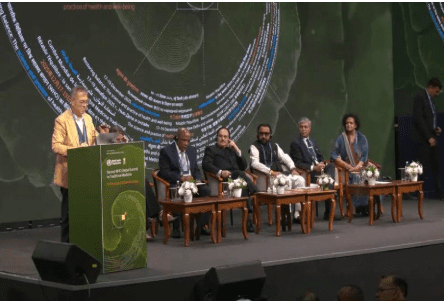
The Second WHO Global Summit on Traditional Medicine commenced today at Bharat Mandapam, New Delhi, marking a significant milestone in the global integration of traditional medicine into modern health systems. The summit was inaugurated by Union Minister of Health and Family Welfare Shri JP Nadda, in the presence of Union Minister of State (Independent Charge), Ministry of Ayush, Shri Prataprao Jadhav. The inaugural session also featured a special video address by Dr. Tedros Adhanom Ghebreyesus, Director-General of the World Health Organization (WHO).

Held from 17 to 19 December 2025, the three-day global scientific congregation is jointly organised by the WHO and the Ministry of Ayush, Government of India, under the theme “Restoring Balance: The Science and Practice of Health and Well-Being.” Prime Minister Shri Narendra Modi is expected to address the closing ceremony on December 19, 2025.


WHO Applauds India’s Leadership in Traditional Medicine

In his video message, Dr. Tedros Adhanom Ghebreyesus lauded India’s leadership and sustained partnership with WHO in advancing traditional medicine globally. He underlined that health is not solely about technology or treatment, but about balance, dignity and shared human wisdom.

Referring to the adoption of the WHO Global Traditional Medicine Strategy 2025–2034 by the World Health Assembly earlier this year, Dr. Tedros highlighted its four key pillars—strengthening scientific evidence, ensuring safety and quality through regulation, integrating traditional medicine into national health systems starting with primary healthcare, and unlocking its value for biodiversity and sustainability. He also emphasised the establishment of the WHO Global Centre for Traditional Medicine in India as a decisive step toward translating global strategy into action.


India–WHO Partnership Driving Global Integration

Addressing the inaugural session, Union Minister Shri Prataprao Jadhav stated that India’s collaboration with WHO reflects a shared commitment to mainstreaming traditional medicine through science, standards and evidence. He highlighted key milestones since the partnership began in 2016, including the launch of ICD-11 Module 2 in 2024, which integrates Ayurveda, Siddha and Unani morbidity codes into international health classification systems.

Shri Jadhav noted that ongoing work on the International Classification of Health Interventions (ICHI) and the establishment of the WHO Global Traditional Medicine Centre at Jamnagar, scheduled for completion in October 2025, represent a decisive shift toward global acceptance and institutional strengthening of traditional medicine.


Expanding Global Footprint of AYUSH

Shri Jadhav further outlined India’s expanding international cooperation in traditional medicine through education, research and capacity building. India currently offers 104 scholarships annually to foreign nationals, has signed 26 country-level MoUs, collaborates with over 50 global institutions, and has established Ayush Chairs in 15 universities and Ayush Information Cells in 43 countries.

He highlighted collaborative research initiatives such as Ashwagandha trials in the UK, Guduchi studies in Germany, and Ayurveda-based diabetes research in Latvia, which are building a growing global evidence base. Leveraging digital platforms like the Ayush Grid and emerging technologies such as artificial intelligence, India is systematically documenting and validating traditional knowledge to address contemporary global health challenges.


Reaffirming Commitment to Science-Based and Equitable Traditional Medicine

Vaidya Rajesh Kotecha, Secretary, Ministry of Ayush, emphasised that the Summit builds on the momentum of the first WHO Global Summit and the Gujarat Declaration, reaffirming a global commitment to science-based, sustainable and equitable traditional medicine. He highlighted the Jamnagar WHO Centre as a future global hub for policy, research and innovation and stressed that the Summit aims to strengthen regulation, safeguard biodiversity and traditional knowledge, and harness frontier technologies—anchored in the principle of restoring balance for people and the planet.


Ashwagandha in Focus: From Tradition to Global Science

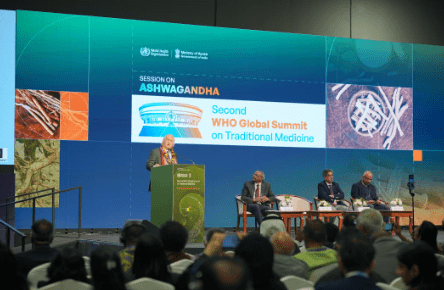
A key highlight of the inaugural day was the parallel session titled “Ashwagandha: From Traditional Wisdom to Global Impact.” The session brought together international experts, regulators and researchers to examine the scientific, regulatory and safety landscape of Withania somnifera.

Discussions focused on Ashwagandha’s growing global recognition for its adaptogenic, neuroprotective and immunomodulatory properties, while emphasising the need for rigorous clinical research, standardisation, pharmacovigilance and harmonised global standards to ensure responsible integration into modern healthcare.


Plenary Sessions on Restoring Balance in Global Health

Following the inauguration, the Summit opened a series of plenary discussions examining balance in health systems, knowledge governance, biodiversity stewardship and equity. Plenary 1 brought together leaders from WHO, the Ministry of Ayush, China, South Africa, Canada and New Zealand, highlighting imbalances in knowledge access, governance and planetary health.

Subsequent sessions explored plural evidence models, equity and benefit-sharing for Indigenous knowledge holders, ecological balance and biodiversity conservation, and governance frameworks for Traditional, Complementary and Integrative Medicine (TCIM). Collectively, the discussions underscored that health is inseparable from harmony between people, communities and ecosystems.


Conclusion

The opening day of the Second WHO Global Summit on Traditional Medicine reaffirmed India’s leadership and global commitment to advancing science-based, equitable and sustainable traditional medicine. As the Summit progresses toward technical deliberations and policy dialogues, it sets a strong conceptual foundation for positioning traditional medicine as a vital catalyst for restoring balance in global health systems and fostering harmony between humanity and nature.


For more real-time updates, visit Channel 6 Network.

Source: PIB

Global Experts Deliberate on better Future of Ashwagandha at WHO Global Traditional Medicine Summit: 2025

Ashwagandha (Withania somnifera)—one of the most revered Rasayana herbs of Ayurveda—took centre stage at a high-level international side event organised on the sidelines of the 2nd WHO Global Traditional Medicine Summit, 2025, reinforcing India’s leadership in advancing traditional medicine through evidence-based global dialogue. The session reaffirmed the growing global consensus on responsibly integrating traditional knowledge systems with modern scientific frameworks.

The event, titled “Ashwagandha: From Traditional Wisdom to Global Impact – Perspectives from Leading Global Experts,” was organised by the WHO Global Traditional Medicine Centre (WHO-GTMC) in collaboration with the Ministry of Ayush, Government of India, at Bharat Mandapam, New Delhi.


Bridging Traditional Knowledge and Modern Science

The session brought together eminent global experts, regulators, researchers and policymakers to examine the evolving scientific, regulatory and safety landscape surrounding Ashwagandha. With the herb gaining increasing international recognition for its adaptogenic, neuroprotective and immunomodulatory properties, discussions focused on building robust bridges between ancient wisdom and contemporary scientific validation.

Experts unanimously stressed that the responsible global adoption of Ashwagandha must be underpinned by rigorous preclinical and clinical research, comprehensive safety assessments, pharmacovigilance, and internationally harmonised quality and standardisation protocols.


Global Perspectives from Leading Experts

Moderated by Dr. J.B. Gupta, Secretary, World Ashwagandha Council, the session featured keynote presentations by globally recognised authorities in herbal medicine and regulation.

  • Dr. Roy Upton, American Herbal Pharmacopoeia, outlined global benchmarks for identity verification, quality testing and therapeutic applications, emphasising the importance of pharmacopeial standards for international acceptance.

  • Ms. Mari Lyyra, Head of Food and Feed, Medfiles Ltd, Finland, shared insights into the European regulatory landscape, highlighting growing acceptance of Ashwagandha within evidence-driven frameworks.

  • Dr. Ikhlas Khan, Director, National Center for Natural Products Research, University of Mississippi, underscored the need for methodological rigor and reproducible evidence to guide regulatory decisions worldwide.

  • Dr. Geetha Krishnan, WHO-GTMC, addressed the delicate balance between scientific promise and precaution, stressing the importance of safety, surveillance and responsible integration.


Harmonising Standards and Strengthening Collaboration

An interactive panel discussion enabled candid exchanges on harmonising global standards, ensuring consistent efficacy, and fostering collaborative international research. Panelists highlighted that sustained cooperation among governments, research institutions, regulators and industry is essential to position Ashwagandha within conventional healthcare frameworks while preserving the integrity of traditional knowledge systems.

The session concluded with a shared consensus that Ashwagandha represents a powerful example of how traditional medicine can be integrated into modern health systems safely, scientifically and sustainably, when guided by evidence and global cooperation.


Aligning with the Broader WHO Vision

The deliberations echoed the broader objectives of the WHO Global Traditional Medicine Summit, which serves as a global platform for dialogue, cooperation and policy alignment on traditional, complementary and integrative medicine. With a strong emphasis on evidence, safety and quality, the Summit continues to advance pathways for integrating traditional medicine into contemporary health systems worldwide.


Conclusion

The Ashwagandha-focused session marked a significant step in shaping a science-led global future for Ayurveda’s flagship herb. By bringing together diverse global perspectives, the dialogue reinforced India’s leadership and the shared international commitment to ensuring that traditional medicines like Ashwagandha contribute meaningfully to global health—anchored in scientific credibility, regulatory clarity and respect for ancient wisdom.


For more real-time updates, visit Channel 6 Network.

Source: PIB

December 17, 2025: Markets End Lower for Second Straight Session; Nifty 50 Closes Below 25,820 Amid Financials Drag

Indian equity markets closed marginally lower on Wednesday, December 17, 2025 extending their consolidation phase as selling pressure in financials and select large-cap stocks outweighed strong gains in a handful of midcap and small-cap counters. Despite sharp upper-circuit moves in select stocks, benchmark indices struggled to hold early levels.

Also Read: December 17, 2025 (mid-cap): Markets Trade Lower in Mid-Session; Nifty 50 Slips Below 25,800 Amid Financials Drag


Benchmark Indices: Closing Snapshot

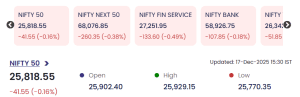
At the close of trade (3:30 PM IST), the Nifty 50 settled at 25,818.55, down 41.55 points (-0.16%).

  • Open: 25,902.40

  • Day’s High: 25,929.15

  • Day’s Low: 25,770.35

December 17, 2025Other key indices also ended in the red:
  • Nifty Next 50: 68,076.85 (↓ 0.38%)

  • Nifty Financial Services: 27,251.95 (↓ 0.49%)

  • Nifty Bank: 58,926.75 (↓ 0.18%)

Persistent weakness in financial and banking stocks continued to cap overall market sentiment.


Top Gainers: Upper Circuits in Mid & Small Caps

The session witnessed aggressive buying in select momentum-driven stocks, with multiple counters locking in at upper circuits:

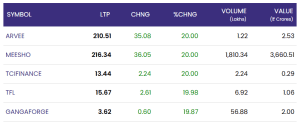
  • Arvee Laboratories (ARVEE) surged 20.00% to ₹210.51.

  • Meesho jumped 20.00% to ₹216.34, recording exceptionally high volumes, indicating strong speculative interest.

  • Screenshot 2025 12 17 222259TCI Finance (TCIFINANCE) gained 20.00% to ₹13.44.
  • TFL rose 19.98% to ₹15.67.

  • Gangaforge advanced 19.87% to ₹3.62.

These sharp moves highlight continued risk appetite in select midcap and small-cap names, even as broader indices remain under pressure.


Top Losers: Heavy Selling in Select Stocks

On the downside, several stocks witnessed steep declines, driven by profit booking and negative stock-specific cues:

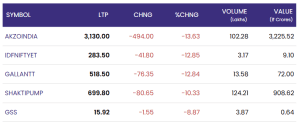
  • Akzo India (AKZOINDIA) tumbled 13.63% to ₹3,130.00, emerging as the biggest laggard.

  • IDFC Nifty ETF (IDFNIFTYET) slipped 12.85% to ₹283.50.

  • Screenshot 2025 12 17 222307Gallantt Metal (GALLANTT) fell 12.84% to ₹518.50.

  • Shakti Pumps (SHAKTIPUMP) declined 10.33% to ₹699.80, despite heavy trading volumes.

  • GSS eased 8.87% to ₹15.92.

The losses remained stock-specific, with no signs of broad-based panic selling.


Market Outlook

Market participants remained cautious amid recent volatility and sectoral rotation, particularly away from financial stocks. Analysts believe the market may continue to consolidate in the near term, with attention shifting towards global cues, interest-rate expectations, and upcoming corporate updates.

While headline indices remain range-bound, sharp divergence within stocks suggests selective trading opportunities persist for active participants.


Conclusion: December 17, 2025

The December 17 session ended on a muted note, with the Nifty 50 closing below 25,820 as financial stocks dragged benchmarks lower. However, strong rallies in select midcap and small-cap counters underscored ongoing stock-specific momentum, indicating that while the broader market consolidates, opportunities remain beneath the surface.


For real time stock Updates, visit NSE website.

December 17, 2025 (mid-cap): Markets Trade Lower in Mid-Session; Nifty 50 Slips Below 25,800 Amid Financials Drag

Indian equity markets traded lower during mid-session on Wednesday, December 17, 2025 with benchmark indices extending their decline amid continued weakness in financial services and banking stocks. The Nifty 50 slipped below the 25,800 mark, reflecting cautious investor sentiment, even as several midcap and small-cap counters witnessed strong, stock-specific buying.

Also Read: December 17, 2025 (opening): Markets Open Flat-to-Positive; Nifty 50 Trades Range-Bound Amid Stock-Specific Action


Benchmark Indices Snapshot

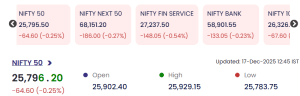
As of 12:45 PM IST, the Nifty 50 was trading at 25,796.20, down 64.60 points (-0.25%). The index opened at 25,902.40, touched an intraday high of 25,929.15, and slipped to a low of 25,783.75, indicating sustained pressure through the session.

Other key indices also traded in the red:

  • Nifty Next 50: 68,151.20 (↓ 0.27%)

  • December 17, 2025Nifty Financial Services: 27,237.50 (↓ 0.54%)

  • Nifty Bank: 58,901.55 (↓ 0.23%)

The decline in financials remained the primary drag on the broader market.


Top Gainers: Midcaps Hit Upper Circuits

Despite the weak index trend, select midcap and small-cap stocks surged sharply, driven by strong volumes and stock-specific triggers:

  • TCI Finance jumped 20.00% to ₹13.44, hitting the upper circuit.

  • Meesho surged 20.00% to ₹216.34, witnessing exceptionally high trading volumes.

  • Screenshot 2025 12 17 124615Arvee Laboratories (ARVEE) advanced 20.00% to ₹210.51, continuing its strong momentum.
  • TFL rose 19.98% to ₹15.67.

  • Raj Television (RAJTV) gained 15.88% to ₹45.46.

The sharp rallies underscore continued risk-taking appetite in momentum-driven names, even as headline indices remain under pressure.


Top Losers: Sharp Selling in Select Stocks

On the downside, several stocks witnessed steep corrections, reflecting profit booking and cautious sentiment:

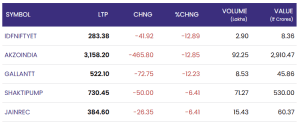
  • IDFC Nifty ETF (IDFNIFTYET) fell 12.89% to ₹283.38.

  • Akzo India (AKZOINDIA) declined 12.85% to ₹3,158.20, remaining under pressure.

  • Gallantt Metal (GALLANTT) dropped 12.23% to ₹522.10.

  • Screenshot 2025 12 17 124622Shakti Pumps (SHAKTIPUMP) slipped 6.41% to ₹730.45, despite heavy volumes.
  • Jain Irrigation (JAINREC) fell 6.41% to ₹384.60.

The losses were largely stock-specific, with no signs of panic selling across the broader market.


Market Outlook

Market participants remained cautious amid recent volatility and sectoral rotation. Analysts expect continued near-term consolidation, with markets likely to remain sensitive to global cues, interest-rate expectations and earnings-related developments.

While financial stocks continue to weigh on benchmarks, sharp stock-specific moves suggest select opportunities for active traders.


Conclusion: December 17, 2025

The mid-session trade on December 17 reflected a weak and cautious market environment, with the Nifty 50 slipping below 25,800 due to pressure in financials. However, strong rallies in select midcap and small-cap stocks highlighted ongoing divergence within the market. Investors are expected to remain selective, balancing risk while awaiting clearer directional triggers.


For real time stock Updates, visit NSE website.

December 17, 2025 (opening): Markets Open Flat-to-Positive; Nifty 50 Trades Range-Bound Amid Stock-Specific Action

Indian equity markets opened Wednesday’s session, December 17, 2025 on a cautiously positive and range-bound note, with benchmark indices showing marginal gains in early trade. The Nifty 50 hovered around the 25,860 level, supported by strength in broader markets, even as financials and select heavyweights remained under pressure. The session witnessed clear stock-specific action, particularly in midcap and small-cap counters.

Also Read: December 16, 2025: Markets End Sharply Lower; Nifty 50 Closes Near Day’s Low Amid Heavy Selling in Banks and Financials


Benchmark Indices Snapshot

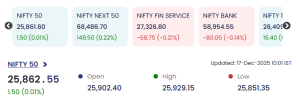
As of 10:01 AM IST, the Nifty 50 was trading at 25,862.55, up 1.50 points (0.01%). The index opened at 25,902.40, touched an intraday high of 25,929.15, and a low of 25,851.35, reflecting a narrow trading range and cautious sentiment.

Other key indices showed mixed trends:

  • December 17, 2025Nifty Next 50: 68,486.70 (↑ 0.22%)

  • Nifty Financial Services: 27,326.80 (↓ 0.21%)

  • Nifty Bank: 58,954.55 (↓ 0.14%)

Strength in the broader market helped offset mild pressure in banking and financial stocks.


Top Gainers: Midcaps Lead with Strong Momentum

Buying interest was visible in select midcap and small-cap stocks, with several counters posting sharp early gains:

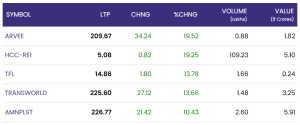
  • Arvee Laboratories (ARVEE) surged 19.52% to ₹209.67, emerging as the top gainer.

  • HCC-REI jumped 19.25% to ₹5.08, backed by heavy volumes.

  • Screenshot 2025 12 17 100215TFL gained 13.78% to ₹14.86.

  • Transworld Shipping (TRANSWORLD) rose 13.66% to ₹225.60.

  • AMNS Power & Steel (AMNPLST) advanced 10.43% to ₹226.77.

The sharp moves indicate continued risk appetite in momentum-driven names, despite a cautious index-level trend.


Top Losers: Pressure in Select Large and Midcap Stocks

On the downside, a few stocks witnessed notable selling pressure:

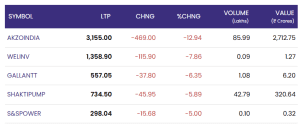
  • AKZO India (AKZOINDIA) declined sharply by 12.94% to ₹3,155.00, weighing on sentiment.

  • Welspun Investments (WELINV) slipped 7.86% to ₹1,358.90.

  • Screenshot 2025 12 17 100222Gallantt Metal (GALLANTT) fell 6.35% to ₹557.05.
  • Shakti Pumps (SHAKTIPUMP) dropped 5.89% to ₹734.50, despite strong volumes.

  • S&S Power Switchgear (S&SPOWER) eased 5.00% to ₹298.04.

The declines appeared stock-specific, driven by profit booking and technical correction.


Market Outlook

Market participants remained cautious following the recent correction from record highs. Analysts expect near-term consolidation, with markets likely to remain sensitive to global cues, sectoral rotation and stock-specific triggers. While financials may continue to cap upside, broader markets are showing resilience.


Conclusion: December 17, 2025

The early trade on December 17 reflects a consolidating market, with the Nifty 50 holding flat while broader indices show mild strength. Sharp divergence among individual stocks highlights ongoing selective opportunities for traders, even as investors await clearer directional cues for the next market move.


For real time stock Updates, visit NSE website.

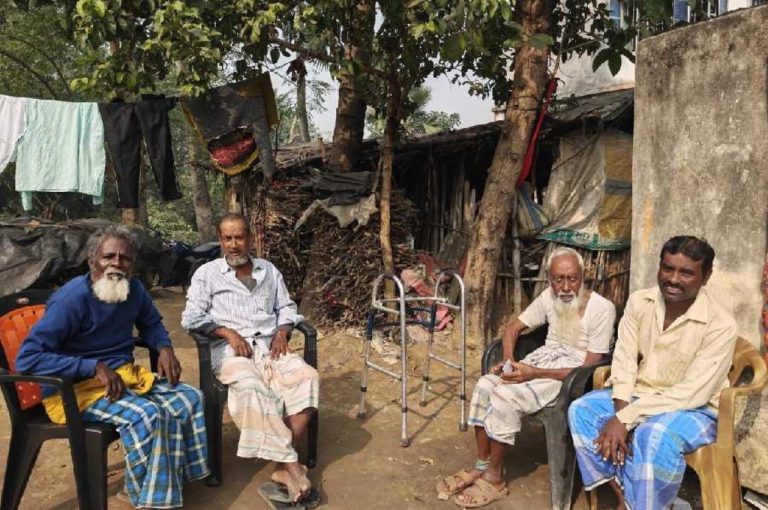
Kolkata Hate Violence and City of Love – Detailed Analysis of Assault on Muslim Vendors, 90‑Year Bond of Harmony, and Governance Lessons for Social Unity

The Kolkata hate violence and city of love debate has shaken Bengal’s cultural conscience. For decades, Kolkata was celebrated as a city of inclusivity, where Hindus and Muslims lived, worked, and celebrated together. But the recent assault on Muslim vendors during a religious event at Brigade Parade Grounds has corroded this bond, raising questions about the city’s identity and governance.


2. Kolkata Hate Violence and City of Love: The Incident

  • On December 7, 2025, vendors were attacked during a mass Gita recital at Brigade Parade Grounds.
  • Victims included Sheikh Riyazul, a 50‑year‑old puff seller, who was forced to do squats and beaten.
  • Assaulters accused him of selling chicken puffs disguised as vegetable puffs.
  • Other Muslim vendors were targeted for allegedly adding onions to “jhal muri.”
  • Three men were arrested but quickly released on bail.

3. Historical Bond of Harmony

  • The Abedin family has sold bakery products in Kolkata since the 1930s.
  • Vendors recall selling cakes and puffs to Hindu advocates, pilgrims, and families during Durga Puja.
  • For decades, religion was never a barrier in trade or social relations.
  • The attack marks the first time many hawkers felt unsafe in Kolkata.

4. Kolkata Hate Violence and City of Love: Community Reaction

  • Families in Rohina Para (Hawkers’ Para) expressed fear about continuing their trade.
  • Children refused to eat until their fathers returned home safely.
  • Vendors worry about legal cases filed against them by their attackers.
  • The incident has created mistrust and insecurity among hawkers.

5. Government External Links for Assistance


6. Political Fallout

  • Opposition parties condemned the violence as a failure of governance.
  • Trinamool Congress leaders promised stricter policing at religious events.
  • Civil society groups demanded accountability and protection for vendors.
  • The incident has become a flashpoint in Bengal’s political discourse.

7. Governance Challenges

The Kolkata violence reflects:

  • Weak policing at mass gatherings.
  • Failure to protect vulnerable communities.
  • Lack of accountability in granting bail to accused.
  • Erosion of trust in Kolkata’s inclusive identity.

8. Historical Context of Violence in Kolkata

  • 1946 Great Calcutta Killings: Communal riots scarred the city.
  • 1992 Babri Masjid aftermath: Sporadic clashes occurred.
  • 2025 Brigade Parade incident: Adds to the list of communal tensions.

Yet, Kolkata has always rebuilt itself as a city of resilience and love.


9. Global Comparisons

Cities worldwide have faced similar challenges:

  • London: Terror attacks tested multicultural harmony.
  • Paris: Religious tensions after Charlie Hebdo.
  • New York: Post‑9/11 solidarity rebuilt trust.

Kolkata must emulate global models of community resilience and inclusive governance.


10. Governance Lessons

The incident teaches:

  • Need for stronger crowd management.
  • Community policing in sensitive zones.
  • Dialogue between religious groups.
  • Legal reforms to prevent misuse of complaints.

11. Future Outlook – Rebuilding Kolkata’s Identity

India must move towards:

  • Inclusive urban policies that protect vendors.
  • Educational campaigns promoting harmony.
  • Strict accountability for communal violence.
  • Revival of Kolkata’s cultural image as a “city of love.”

12. Conclusion

The Kolkata hate violence and city of love debate is more than a local incident. It reflects the fragility of communal harmony and the urgent need for governance reforms. For a city that has thrived on inclusivity for 90 years, the assault on Muslim vendors is a wake‑up call. By prioritizing justice, accountability, and compassion, Kolkata can reclaim its identity as a city where humanity triumphs over hate.

Also read: Home | Channel 6 Network – Latest News, Breaking Updates: Politics, Business, Tech & More