Indian equity markets traded decisively lower during the morning session on Tuesday, December 16, 2025 with benchmark indices under pressure across the board. The Nifty 50 slipped below the 26,000 mark, dragged by weakness in banking, financial services and frontline stocks, even as a handful of midcap counters witnessed strong buying interest.
As of 10:48 AM IST, the Nifty 50 was trading at 25,906.30, down 121.00 points (-0.46%). The index opened at 25,951.50, touched an intraday high of 25,980.75, and a low of 25,879.30, indicating sustained selling pressure through the session.
Other key indices also traded in the red:
Nifty Next 50: 68,400.85 (↓ 0.32%)
Nifty Financial Services: 27,466.30 (↓ 0.50%)
Nifty Bank: 59,133.65 (↓ 0.55%)
The sharp decline in banking and financial stocks significantly weighed on overall market sentiment.
Top Gainers: Select Midcaps Defy Market Weakness
Despite broader market weakness, selective midcap stocks recorded strong gains, supported by stock-specific momentum and buying interest:
Agritech surged 16.84% to ₹169.60, emerging as the top gainer of the session.
Tainwala Chemical (TAINWALCHM) rose 14.35% to ₹219.44, extending its recent upward trend.
Welspun Investments (WELINV) jumped 14.04% to ₹1,509.00, rebounding sharply.
AMNS Power & Steel (AMNPLST) gained 14.03% to ₹199.07.
Sintercom India (SINTERCOM) advanced 13.81% to ₹114.00.
The gains highlight continued selective risk-taking in midcaps, even as headline indices remain under pressure.
Top Losers: Sharp Declines in Select Stocks
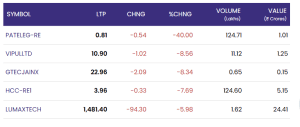
On the downside, several stocks witnessed steep corrections, reflecting profit booking and stock-specific concerns:
Patanjali Engineering RE (PATELEG-RE) plunged 40.00% to ₹0.81, the steepest fall of the session.
VIP Clothing (VIPULLTD) declined 8.56% to ₹10.90.
GTEC Jainx slipped 8.34% to ₹22.96.
HCC-REI fell 7.69% to ₹3.96, amid heavy volumes.
Lumax Auto Technologies (LUMAXTECH) dropped 5.98% to ₹1,481.40.
The selling pressure remained largely stock-specific, though the overall tone stayed cautious.
Market Outlook
Market participants appeared risk-averse amid elevated valuations and recent volatility near record highs. Analysts expect continued consolidation in the near term, with direction likely to be influenced by global cues, interest-rate expectations and upcoming macroeconomic data.
While broader indices remain weak, the sharp moves in individual stocks indicate that stock-picking opportunities persist for active traders.
Conclusion: December 16, 2025
The session so far reflects a weak and cautious market environment, with benchmark indices slipping and sectoral pressure led by banks and financials. However, strong moves in select midcap stocks underline ongoing divergence within the market. Investors are expected to remain selective, balancing risk while tracking broader cues for clarity on near-term direction.
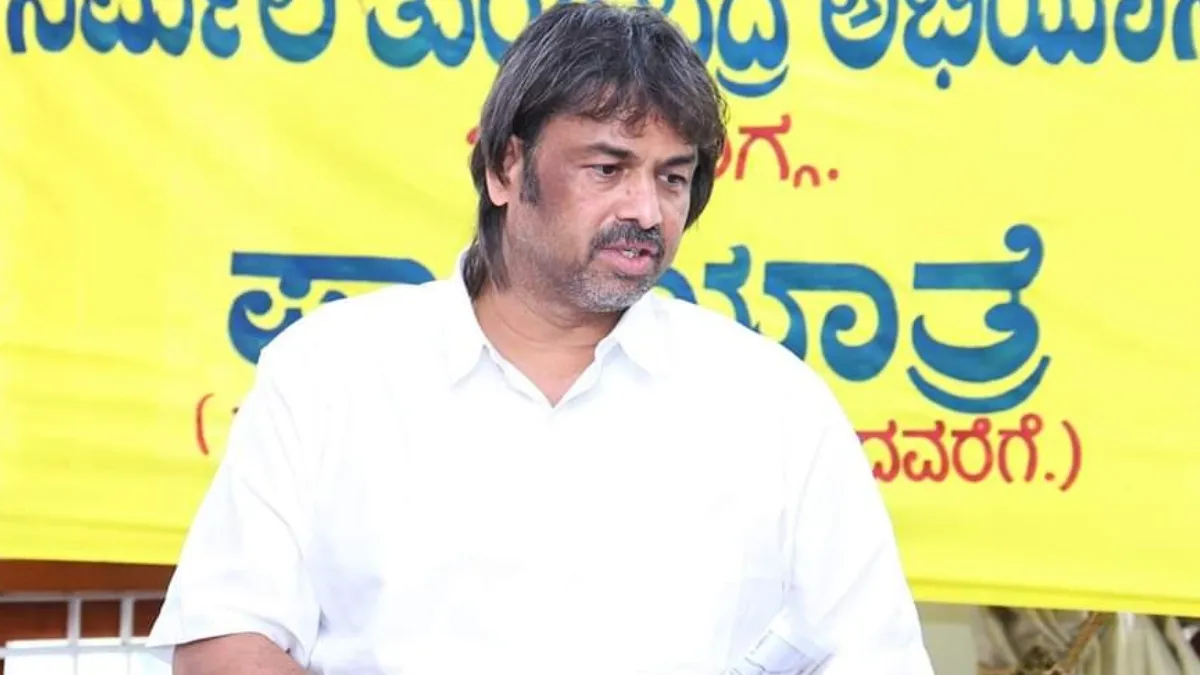
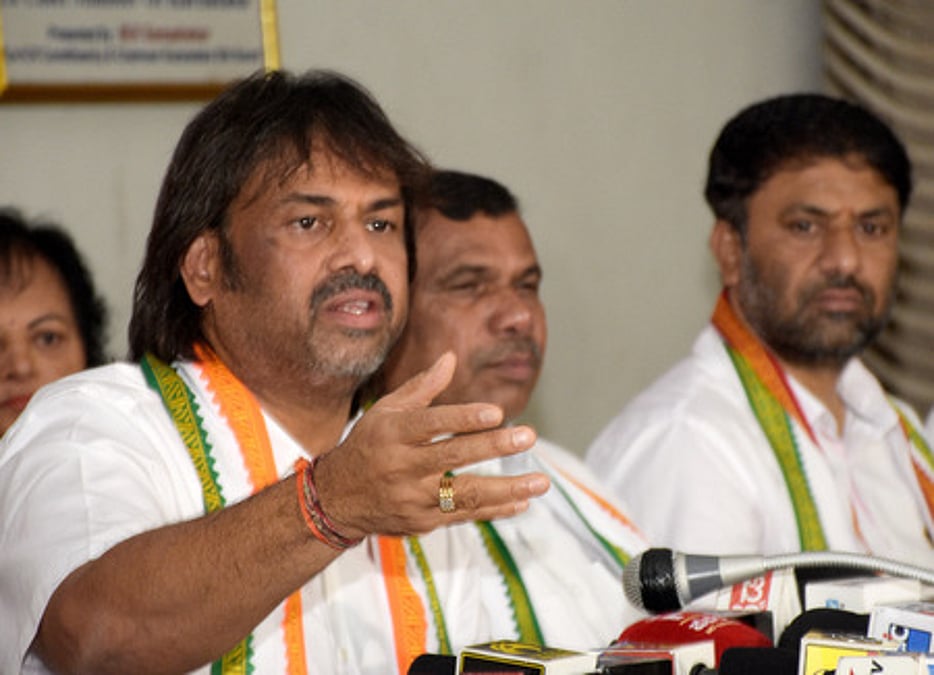
The Karnataka government has taken action against two private schools in Bengaluru for violating provisions of the Kannada Language Comprehensive Development Act, School Education and Literacy Minister Madhu Bangarappa informed the Legislature. The Minister’s statement came amid growing public concern over the perceived marginalisation of Kannada in educational institutions, particularly in the State capital, where private and international schools dominate the landscape. The issue has once again brought language identity, compliance with law, and the responsibilities of educational institutions into sharp focus.
Several legislators argued that the issue must be viewed in the context of generational language transmission, warning that reduced exposure to Kannada in formative years could weaken long-term linguistic continuity. Schools, they said, occupy a unique position in reinforcing everyday usage of the language, particularly in urban settings where English and other Indian languages dominate public spaces. Ensuring Kannada’s visibility within educational environments was described as essential for sustaining cultural rootedness among younger generations.
Senior bureaucrats pointed out that the Education Department is working on standard operating procedures to help schools understand compliance requirements clearly. These include templates for bilingual communication, guidelines on signage placement, and advisory notes on integrating Kannada respectfully into school culture. Officials said such measures would reduce confusion and help institutions comply without fear of punitive action.
Some members of the Council also raised concerns about the unequal burden of enforcement, questioning whether elite institutions often escape scrutiny while smaller schools face inspections. The Minister responded by stating that enforcement drives would be random and data-driven, based on complaints and compliance audits rather than institutional profile. Transparency in action, he said, would be key to maintaining public trust.
Language scholars welcomed the discussion, noting that legal enforcement alone cannot sustain a language. They stressed the importance of cultivating pride and emotional connection to Kannada through literature, cultural activities, and everyday usage. Schools that celebrate local festivals, writers, and history, they said, can create an organic relationship between students and the language beyond statutory obligations.
As the debate drew to a close, members across party lines agreed that the issue extended beyond two schools or one city. It reflected broader anxieties about cultural erosion amid rapid urbanisation and globalisation. How Karnataka navigates this challenge, they said, will determine whether Kannada thrives as a living language in public life or remains confined to symbolic gestures.
According to the Minister, the government acted following complaints and inspections that revealed non-compliance with mandatory norms related to the use of Kannada. These include the display of Kannada on signboards, communication with parents, and adherence to guidelines regarding the teaching and usage of the State’s official language. Bangarappa emphasised that the action was not punitive in spirit but corrective, aimed at ensuring respect for the law and preserving Karnataka’s linguistic heritage.
The Minister asserted that the Kannada Language Act is not intended to restrict educational freedom or impose unreasonable burdens on institutions. Instead, it seeks to ensure that Kannada, as the language of the land, receives due recognition and functional presence in public and private spaces. “This is about dignity and constitutional responsibility,” he said, adding that educational institutions play a crucial role in shaping cultural awareness among students.
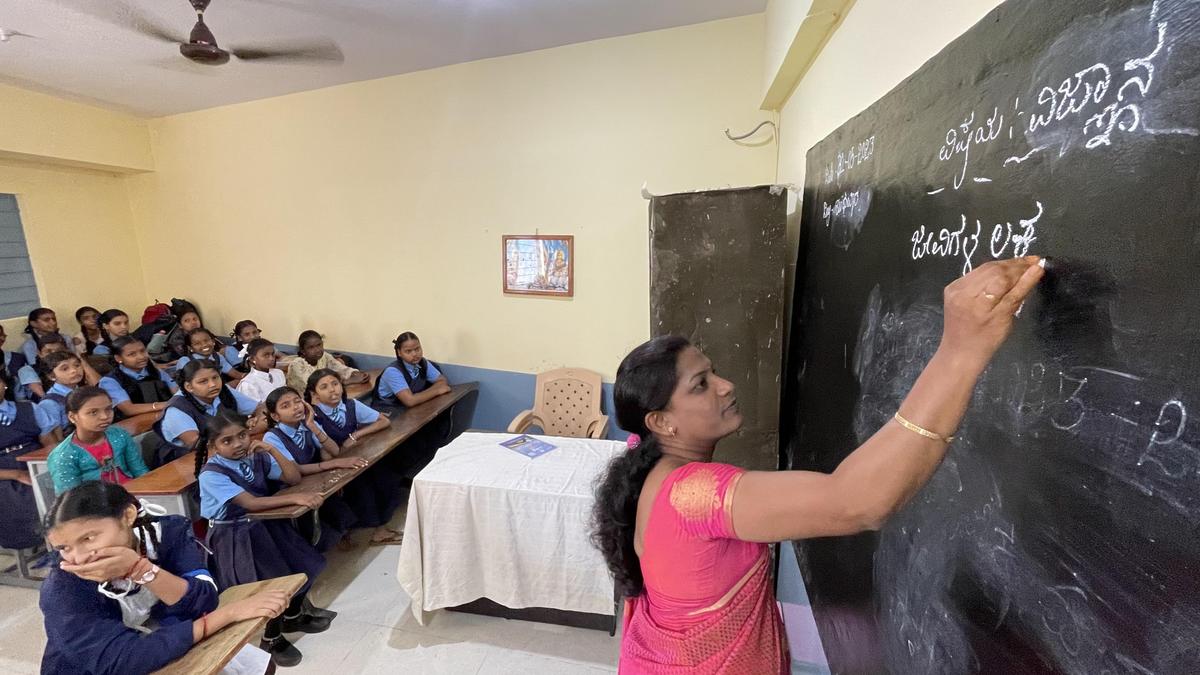
The issue of Kannada usage in schools has been a recurring subject of debate in Karnataka. While the State has witnessed rapid growth in private, ICSE, CBSE, and international schools, many parents and language activists argue that this expansion has coincided with a gradual erosion of Kannada’s presence in everyday school life. Complaints range from the absence of Kannada signage to schools allegedly discouraging the use of the language within their premises.
Government officials clarified that the action against the two Bengaluru schools followed due process, including notices and opportunities for compliance. Inspections reportedly found that the institutions had failed to implement required measures despite earlier advisories. The Minister stressed that enforcement would be uniform and that no institution would be singled out arbitrarily.
Opposition members, while broadly supporting the protection of Kannada, sought clarity on the nature of action taken and the safeguards in place to prevent misuse of authority. They cautioned that enforcement should not turn into harassment of institutions or parents, particularly those who have chosen non-State syllabi for their children. The government responded by reiterating that the law applies across boards and that compliance does not interfere with academic autonomy.
Kannada, Education, and the Question of Cultural Responsibility
Language activists welcomed the government’s action, describing it as a long-overdue assertion of linguistic rights. They argue that schools are not merely centres of academic instruction but social institutions that influence how children relate to their surroundings. When Kannada is sidelined, they say, it sends a message that local language and culture are secondary, even in their own State.
Activists also pointed out that the Kannada Language Act has been in place for years, yet enforcement has often been lax. This, they claim, has emboldened some institutions to ignore statutory requirements. The recent action, they hope, will serve as a signal that compliance is not optional and that the government is serious about protecting Kannada’s public presence.
Teachers and educationists offered a more nuanced view, acknowledging the importance of Kannada while cautioning against rigid implementation. They stressed that many students in Bengaluru come from diverse linguistic backgrounds and that schools must balance inclusivity with statutory obligations. Encouraging Kannada learning through positive engagement, they said, is more effective than fear-driven compliance.
Parents expressed mixed reactions. While many welcomed the emphasis on Kannada, others worried about potential disruptions or increased administrative pressure on schools. Some parents of migrant backgrounds said they support Kannada signage and basic communication but hope that enforcement does not affect academic priorities or lead to unnecessary conflicts.
The Minister sought to allay such fears, stating that the government’s objective is not to burden parents or students. He emphasised that learning Kannada enhances integration and helps students engage meaningfully with society. “Knowing Kannada is not a disadvantage; it is an asset for anyone living in Karnataka,” he said.
The debate also touched upon the role of private education in a linguistically diverse city like Bengaluru. As the city attracts people from across India and the world, questions arise about how to preserve local identity while remaining inclusive. The government maintains that respecting Kannada does not conflict with diversity, but rather anchors it.
Enforcement, Future Action, and the Larger Language Debate
Minister Bangarappa indicated that the Education Department has been directed to conduct awareness drives alongside inspections. Schools will be given clear guidelines and reasonable timelines to ensure compliance. The focus, he said, will be on education and correction rather than punishment, unless institutions repeatedly defy the law.
Officials noted that the Kannada Language Act mandates the prominent display of Kannada on name boards, notices, and official communication. In the case of schools, this extends to interactions with parents and the community. However, the Act does not restrict the medium of instruction chosen by the institution, a point the government reiterated to counter misinformation.
Legal experts observe that language laws often sit at the intersection of identity and governance, making their enforcement particularly sensitive. Uniform application, transparency, and clear communication are essential to avoid allegations of arbitrariness. The Karnataka government’s challenge, they say, lies in balancing assertive enforcement with social harmony.
The action against the two Bengaluru schools has also reignited calls for periodic audits of compliance across sectors, including commercial establishments and corporate offices. Kannada organisations argue that schools should not be the only focus and that language laws must be implemented comprehensively to be effective and fair.
Political observers note that language remains a powerful emotional issue in Karnataka, capable of mobilising public opinion across party lines. Governments, regardless of ideology, have historically faced pressure to demonstrate commitment to Kannada. In this context, the current action is seen both as administrative enforcement and a symbolic reaffirmation of linguistic pride.
As discussions continue, the Minister reiterated that Kannada’s protection is a shared responsibility. He urged institutions, parents, and civil society to view compliance not as coercion but as respect for the State’s cultural foundation. Education, he said, should produce not only skilled professionals but socially rooted citizens.
The episode has once again underlined the evolving dynamics of language, education, and identity in Karnataka’s urban centres. As Bengaluru grows into a global city, the question of how Kannada finds its rightful place within this transformation remains central. The government’s recent action suggests a renewed resolve to ensure that growth does not come at the cost of linguistic and cultural visibility.
Whether this approach fosters cooperation or invites further debate will depend largely on how consistently and sensitively the law is enforced. For now, the government’s message is clear: Kannada is not optional in Karnataka’s public life, and educational institutions, as pillars of society, are expected to uphold both the letter and the spirit of the law.
Whether this approach fosters cooperation or invites further debate will depend largely on how consistently and sensitively the law is enforced. For now, the government’s message is clear: Kannada is not optional in Karnataka’s public life, and educational institutions, as pillars of society, are expected to uphold both the letter and the spirit of the law.
A heated debate over alleged noise pollution caused by the azaan resonated through the Karnataka Legislative Council, bringing to the fore deep-seated questions about religious freedom, public order, urban governance, and the limits of regulation in a plural society. What began as a discussion on noise norms soon evolved into a wider conversation on coexistence, constitutional rights, and selective enforcement, reflecting the sensitivities that surround matters of faith in public spaces.
Several members also drew attention to the need for decentralised resolution mechanisms, arguing that local ward committees and municipal bodies are better positioned to address noise-related complaints than state-level interventions. By involving residents’ associations, religious representatives, and local officials, they said, disputes could be resolved amicably without escalating into political flashpoints. Such community-level engagement, members felt, would reinforce trust and reduce the burden on law enforcement agencies.
Education and awareness emerged as another recurring theme during the discussion. Legislators suggested that many violations stem from a lack of understanding of permissible noise limits rather than deliberate defiance. Public campaigns explaining decibel norms, silent zones, and time restrictions could help institutions voluntarily comply. Several members noted that when communities understand the health implications of excessive noise, they are more likely to adopt self-regulation.
The debate also prompted reflections on the role of media and social platforms in shaping public perception. Some Council members warned that selective amplification of complaints or isolated incidents can distort reality and inflame tensions. They urged responsible reporting and fact-based discussions that avoid sensationalism, especially on issues involving faith and identity.
A few legislators proposed revisiting urban planning norms to better account for the coexistence of residential spaces and places of worship. As cities expand, zoning regulations, soundproofing measures, and buffer zones could help minimise conflict. While such solutions require long-term planning and investment, members argued that they are essential for sustainable urban living.
Minority representatives reiterated that discussions on the azaan must be contextualised within constitutional guarantees. They stressed that freedom of religion includes the right to practice and express faith, subject to reasonable restrictions. Any policy response, they said, must reaffirm this principle to prevent the perception that religious expression itself is under threat.
As the House adjourned, there was broad agreement that noise pollution is a legitimate civic concern but one that cannot be addressed in isolation from social realities. The azaan debate, members observed, has become a mirror reflecting broader anxieties about coexistence in a changing society. Whether Karnataka can navigate these sensitivities with fairness and restraint will shape not just policy outcomes, but also the tone of public discourse in the days ahead.
The issue was raised during a Council session when members flagged complaints from residents in urban areas about early morning and late-night azaan announcements being broadcast over loudspeakers. They argued that the sound levels often exceeded permissible limits under noise pollution rules, disturbing senior citizens, patients, students, and working professionals. Some members insisted that the matter should be treated purely as a civic and public health concern, devoid of religious overtones.
However, the discussion quickly acquired political and social dimensions, with several members countering that religious practices were being unfairly targeted under the guise of noise regulation. They warned against framing the azaan as a nuisance, pointing out that loudspeakers are used across religious institutions and during festivals of all communities. Singling out one practice, they said, risked deepening social divisions and undermining Karnataka’s tradition of communal harmony.
Government representatives sought to strike a cautious tone, emphasising that the administration was committed to enforcing noise pollution norms uniformly, without discrimination. They reiterated that existing rules already regulate the use of loudspeakers and public address systems, and that enforcement agencies were empowered to act against violations irrespective of the source. At the same time, they acknowledged the need for sensitivity while dealing with matters linked to faith.
Several members highlighted that urbanisation has intensified the conflict between residential needs and long-standing religious practices. Areas that were once sparsely populated have become dense neighbourhoods, bringing places of worship closer to homes, hospitals, and educational institutions. This changing urban landscape, they argued, necessitates dialogue rather than confrontation, and adaptation rather than blanket restrictions.
Others pointed out that noise pollution is a broader problem that extends well beyond religious institutions. Traffic congestion, construction activity, political rallies, weddings, and commercial events contribute significantly to sound levels in cities and towns. Focusing narrowly on the azaan, they said, risks ignoring these larger and more persistent sources of noise that affect everyday life.
Law, Regulation, and the Question of Selective Enforcement
Legal experts cited during the debate noted that noise pollution rules are clear about permissible decibel levels and time restrictions. Loudspeakers are prohibited during night hours except under specific exemptions, and even then, sound levels must remain within prescribed limits. The law, they stressed, does not differentiate between religious and non-religious sources of noise.
Yet, several Council members argued that enforcement on the ground has been inconsistent. While permissions are routinely granted or overlooked for political events and festivals, religious institutions often face scrutiny only when complaints escalate. This selective enforcement, they warned, creates mistrust among communities and fuels perceptions of bias.
Opposition members demanded clarity on whether the government planned to issue fresh guidelines or advisories specifically targeting places of worship. They cautioned that any such move must be preceded by consultations with religious leaders and civil society groups to avoid unrest. Sudden or unilateral action, they said, could be misinterpreted as an attempt to regulate faith rather than sound.
Ruling party members countered that the government had no intention of interfering with religious practices, but insisted that public health concerns could not be ignored. Prolonged exposure to high noise levels, they said, has been linked to stress, sleep disturbances, cardiovascular problems, and reduced concentration, making it a legitimate governance issue.
Some legislators proposed the use of technology to address the problem. Suggestions included automated sound-level monitoring near sensitive zones, time-bound volume control systems, and awareness campaigns for religious institutions. Such measures, they argued, could ensure compliance without the need for punitive action.
The debate also touched upon judicial precedents, where courts have repeatedly upheld the right to practice religion while affirming that such practices are subject to reasonable restrictions in the interest of public order, health, and morality. Council members noted that the challenge lies not in the law itself, but in its fair and empathetic implementation.
Social Sensitivities and the Larger Question of Coexistence
Beyond legalities, the discussion revealed anxieties about growing intolerance and the shrinking space for dialogue. Members from minority communities expressed concern that debates around the azaan often surface in charged political climates, amplifying mistrust and fear. They urged lawmakers to be mindful of language and framing, warning that careless rhetoric can inflame passions outside the House.
Several members recalled Karnataka’s history of relative communal harmony and argued that issues like noise pollution should be resolved through local understanding rather than state-level confrontation. In many neighbourhoods, they noted, informal arrangements already exist where volume levels are adjusted following discussions between residents and religious authorities.
There were also voices urging introspection within religious institutions. Some members acknowledged that technological amplification has transformed traditional practices, making them louder and more pervasive than in the past. Voluntary moderation, they said, could go a long way in addressing grievances and demonstrating sensitivity to changing social contexts.
Women members highlighted the impact of noise pollution on domestic spaces, particularly on children preparing for exams and caregivers attending to the sick. They stressed that the debate should not lose sight of these everyday realities, which often remain unheard amid political arguments.
At the same time, they cautioned against allowing public discourse to slide into majoritarian narratives. Protecting the rights of minorities, they said, is not just a constitutional obligation but a moral one, essential for maintaining social cohesion in a diverse society.
Civil society observers note that the azaan debate reflects a broader national pattern where civic issues intersect with identity politics. Noise pollution, while a genuine concern, becomes contentious when discussions appear to target specific communities. Managing such debates requires political maturity, restraint, and a commitment to inclusive dialogue.
As the Council debate concluded without a resolution, it became clear that the issue is far from settled. The government indicated that it would continue to enforce existing noise regulations while engaging with stakeholders to prevent misunderstandings. Whether this translates into consistent action on the ground remains to be seen.
As the Council debate concluded without a resolution, it became clear that the issue is far from settled. The government indicated that it would continue to enforce existing noise regulations while engaging with stakeholders to prevent misunderstandings. Whether this translates into consistent action on the ground remains to be seen.
For now, the debate has underscored the delicate balance between regulation and respect, between public interest and personal belief. In a society where sounds mark both devotion and daily life, finding harmony may depend less on decibel limits and more on empathy, dialogue, and the willingness to coexist.
Kim Go Eun revealed her honest reaction as a devoted viewer
Kim Go Eun revealed that she has become a sincere fan of the drama Explosive Kiss, watching every episode with full attention and strong emotional involvement. The actress shared that the series drew her in completely, making her react naturally to each scene without holding back. While watching, she often finds herself sending animated messages to fellow actress Ahn Eun Jin, sharing her excitement and surprise in real time.
According to Kim Go Eun, the experience of watching Explosive Kiss felt refreshing and freeing. She admitted that at certain points during the episode, she wondered whether the drama was becoming too intense or dramatic. However, those doubts faded completely when she reached the final kiss scene. At that moment, she said she could not stop herself from clapping, laughing, and celebrating out loud, fully embracing the emotions the scene delivered.
Her reaction highlighted how deeply the series managed to connect with its audience, even someone as experienced as her, who has worked across multiple genres and formats in the Korean entertainment industry.
Kim Go Eun revealed why Explosive Kiss feels special
Kim Go Eun explained that Explosive Kiss represents the kind of drama that can be enjoyed without guilt or overthinking. She described it as a story that allows viewers to react freely, whether that means laughing, clapping, or feeling overwhelmed by emotion. For her, the drama does not demand analysis or restraint, but instead invites viewers to feel everything openly.
She praised the show for embracing pure emotion and spontaneity, saying that it reminded her why romantic dramas continue to hold a strong place in popular culture. Kim Go Eun noted that while some dramas aim for realism or depth through complexity, Explosive Kiss succeeds by leaning into emotional honesty and bold storytelling.
The actress also compared the series with her own past work, including Yumi’s Cells. While she spoke fondly of her previous projects, she clearly stated that Explosive Kiss stands apart and cannot be directly compared. In her view, the drama has its own identity and charm, built around emotional release rather than subtle restraint.
Kim Go Eun’s comments suggest that audiences are still drawn to stories that allow them to disconnect from pressure and simply enjoy strong feelings, something the series delivers consistently.
Kim Go Eun revealed interest in future romantic comedies
Beyond her praise as a viewer, Kim Go Eun also expressed interest in participating in a romantic comedy similar in tone to Explosive Kiss. She said she would welcome the chance to act in a project that embraces expressive storytelling and emotional openness.
Her statement reflects a growing interest among established actors in exploring lighter, emotion-driven roles that connect directly with audiences. Rather than focusing only on serious or complex characters, Kim Go Eun acknowledged the value of stories that provide joy, excitement, and emotional comfort.
She believes that romantic dramas like Explosive Kiss serve an important purpose by offering viewers a space to feel without judgment. For an actress known for versatility, this interest hints at a possible shift or expansion in her future project choices.
Kim Go Eun revealed how the drama connects beyond the screen
One of the most striking aspects of Kim Go Eun’s revelation is how Explosive Kiss has become a shared experience among actors themselves. Her habit of messaging Ahn Eun Jin while watching shows how the drama sparks conversation and shared reactions, extending its impact beyond the screen.
This kind of response suggests that the series has achieved something many productions aim for but rarely reach: genuine emotional engagement that feels personal. Kim Go Eun’s unfiltered reactions underline how the drama succeeds not through complexity, but through sincerity.
Kim Go Eun revealed that Explosive Kiss offered her a rare viewing experience filled with honest emotion and spontaneous joy. Her reaction reflects the drama’s ability to connect deeply with audiences and reminds viewers why emotionally driven stories continue to resonate across generations.
Aanshul Uthaiah chooses uncertainty over a routine path
Aanshul Uthaiah, a 22-year-old resident of Bengaluru, has drawn public attention after announcing his decision to quit his full-time job, describing it as boring and mentally exhausting. His statement, shared through a video on social media, reflects a growing conversation among young professionals about job satisfaction, mental well-being, and the pressure to follow traditional career paths.
Aanshul explained that the work environment and daily routine were affecting his mental health. He felt stuck in repetitive tasks that offered no sense of purpose or growth. According to him, continuing in the same role felt impossible, even though the decision to leave was not easy. His announcement has resonated with some viewers while also drawing strong criticism from others.
The situation became more complex when Aanshul revealed that he had also declined admission offers from two universities in Australia. He said he did not want to return to studying simply to enter another job that he might dislike in the future. For him, the issue was not about opportunity, but about direction.
Aanshul Uthaiah turns away from a fixed career route
In his video, Aanshul spoke openly about his confusion and inner conflict. While he believes he knows what he wants to pursue, he also admitted that his parents are unhappy with his choice. This gap between personal desire and family expectations is common in many Indian households, especially when stable jobs or foreign education are involved.
Aanshul stated that he does not see value in continuing education or employment that does not interest him. He described his workdays as mentally draining, with little satisfaction at the end of the day. Rather than forcing himself to continue, he decided to step away and explore something he feels more connected to.
Over the past three months, he has been focusing on creating online content. Though still early, he believes this is an area where he can grow over time. He acknowledged the uncertainty involved and did not present his decision as a guaranteed success. Instead, he framed it as an attempt to find meaning rather than comfort.
This honest admission of doubt has made his story relatable to many young people who feel trapped in jobs they do not enjoy but fear leaving due to financial and social pressure.
Aanshul Uthaiah faces mixed reactions online
The public response to Aanshul’s decision has been sharply divided. While some users appreciated his honesty and courage to speak openly about mental strain, others reacted with anger and harsh judgment. Several comments accused him of being entitled, careless, or disconnected from reality.
Some users argued that boredom is a normal part of working life and that quitting a job without a clear plan is irresponsible. Others suggested that his parents should withdraw financial support to teach him the value of hard work. These comments reflect a broader belief that stability should come before personal satisfaction. Also Read: Lizzo Legal Case Sees a Major Turn With Court Dismissing Key Allegations
At the same time, supporters pointed out that ignoring mental health can lead to long-term damage. They argued that it is better to pause and reassess than to continue in a role that causes distress. The discussion highlights a clear generational divide in how work, success, and well-being are viewed.
The debate surrounding Aanshul’s choice goes beyond one individual. It reflects a larger shift where young professionals are questioning traditional definitions of success and seeking careers that align with their interests, even if the path is uncertain.
Conclusion
Aanshul Uthaiah’s decision has opened up a wider conversation about work, mental health, and expectations placed on young adults. Whether his path leads to success or further challenges remains to be seen, but his story clearly reflects the changing mindset of a generation that is willing to question routine paths in search of personal clarity.
Tazza 4 begins a new chapter in the long-running gambling film series
Tazza 4 has officially confirmed its main cast and revealed its first poster, signaling the return of one of Korea’s most well-known gambling film franchises after a six-year gap. The upcoming film brings the story back to the world of high-stakes poker, but this time with a wider global setting and a conflict driven by broken trust between former friends. With production currently underway, the film is scheduled for release in 2026.
The Tazza series has always focused on the darker side of gambling, exploring ambition, greed, loyalty, and betrayal. Tazza 4 continues this tradition by placing its characters in an international poker business where success depends not only on skill, but also on power, alliances, and survival. The newly released poster hints at a serious and intense tone, suggesting a story that is more psychological and character-driven than its predecessors.
Tazza 4 builds its story around friendship, betrayal, and ambition
At the center of Tazza 4 are two men who were once close friends but are now locked in a dangerous rivalry. Byun Yo Han plays Jang Tae Young, a natural gambler who builds a successful poker business through instinct and experience. His rise, however, comes to a sudden end after a betrayal that leaves him financially and emotionally ruined. The character represents raw talent shaped by hardship, but also someone vulnerable to trust.
Opposite him is Roh Jae Won as Park Tae Young, a highly skilled poker player driven by sharp intelligence and business ambition. Unlike Jang Tae Young, Park Tae Young approaches gambling as a system to be controlled. His obsession with expansion and profit leads him to betray his former friend, setting off the central conflict of the film. The relationship between the two men forms the emotional core of the story, turning poker tables into battlegrounds of personal revenge.
The film places their rivalry within a global gambling network, raising the stakes far beyond local competition. Deals, power struggles, and loyalty tests push both characters into increasingly dangerous territory, where every decision carries lasting consequences.
Tazza 4 introduces an international force that changes the balance
Adding a strong international presence to the story is Japanese actress Ayaka Miyoshi, known for her work in global productions. She plays Kaneko, a division head backed by a yakuza organization who becomes closely involved in the men’s poker business. Her character is not just an observer but a key power figure who understands control, influence, and long-term strategy.
Kaneko’s role introduces an added layer of tension, as her interests complicate the already fragile relationship between the two former friends. Her presence shifts the story from a personal feud to a larger power struggle that crosses borders. This international angle reflects the changing nature of gambling, where influence is no longer limited by geography.
The casting choice suggests that Tazza 4 aims to reach a broader audience while staying grounded in its core themes. By bringing together Korean and Japanese characters within the same high-stakes environment, the film explores how ambition and greed operate similarly across cultures.
Tazza 4 continues the franchise’s focus on realism and consequences
Unlike glamorous portrayals of gambling, the Tazza series has always emphasized consequences. Tazza 4 appears to follow the same path by focusing on emotional cost rather than easy victories. Characters are shaped by loss, regret, and the weight of their choices. Success comes with isolation, and betrayal leaves permanent scars.
The six-year gap since the last installment has raised expectations, and early signs suggest the filmmakers are taking a more grounded and mature approach. The confirmed cast includes actors known for intense, character-focused performances, reinforcing the idea that the film will rely on acting strength rather than spectacle alone.
Production updates indicate careful attention to setting and atmosphere, aiming to reflect the pressure and uncertainty of global gambling operations. Every move matters, and trust becomes the most fragile currency of all. Also Read: Lizzo Legal Case Sees a Major Turn With Court Dismissing Key Allegation
Conclusion
Tazza 4 marks a serious return for the franchise, combining personal betrayal with an expanded global setting. With its confirmed cast, focused storyline, and international elements, the film sets the stage for a tense and character-driven entry that stays true to the spirit of the series while moving it forward.
PlayStation has officially marked the transition away from PlayStation 4
PlayStation has officially announced that first-party support for the PlayStation 4 will come to an end by Spring 2026, closing a long and influential chapter in gaming history. The decision reflects Sony Interactive Entertainment’s shift toward focusing entirely on PlayStation 5 and future platforms, as the company continues to push forward with next-generation experiences. While the PS4 will remain usable for existing owners, official updates, major releases, and direct platform support will gradually phase out.
The PlayStation 4 was first launched in 2013 and quickly became one of Sony’s most successful consoles. Over the years, it built a massive global user base and delivered a wide range of critically acclaimed titles. For many players, the PS4 was more than a gaming device. It became part of daily life, offering shared experiences, late-night sessions, and long-term online communities. With this announcement, Sony is formally acknowledging that the console’s active lifecycle is nearing its conclusion.
PlayStation has officially shifted its strategy toward next-generation platforms
According to Sony Interactive Entertainment, the move is part of a broader strategy to streamline development and resources toward PlayStation 5. As newer hardware becomes the standard, maintaining full-scale support for older platforms becomes increasingly difficult. Developers require advanced tools, faster systems, and unified targets to continue pushing game design forward.
Over the past few years, Sony has already reduced the number of major PlayStation 4-exclusive releases. Many new titles launched across both PS4 and PS5, but the balance has steadily tilted toward the newer console. The Spring 2026 timeline provides developers and players with a clear transition window, allowing studios to complete ongoing projects and users to prepare for future upgrades.
Sony has clarified that PlayStation 4 systems will not suddenly stop functioning after support ends. Players will still be able to access their libraries, play physical and digital games, and use the console offline. However, new first-party titles, large-scale updates, and official feature enhancements will no longer be introduced once the support period concludes.
This approach mirrors previous console transitions, where legacy systems continued to exist without active development. Sony’s announcement is less about shutting down the PS4 and more about formally closing its development chapter.
PlayStation has officially acknowledged the PS4’s lasting legacy
The PlayStation 4 era is often remembered for redefining single-player storytelling and large-scale multiplayer experiences. During its lifespan, the console delivered several landmark titles that shaped player expectations and industry standards. These games helped establish Sony’s reputation for strong exclusive content and cinematic experiences.
Beyond software, the PS4 also played a role in changing how players interacted with games. Features such as digital libraries, social sharing, streaming integration, and regular updates became mainstream during this generation. Many of these systems laid the groundwork for what players now expect from modern consoles.
The announcement has triggered a wave of reflection among long-time users. For many, the PS4 represented their first console, their introduction to online gaming, or a constant presence during significant life stages. Sony’s acknowledgment of the platform’s sunset is both a practical business move and a symbolic moment for the gaming community.
As PlayStation moves forward, the PS4 remains an important part of its history. The lessons learned during its lifespan continue to influence hardware design, game development, and player engagement strategies today. Also Read: Lizzo Legal Case Sees a Major Turn With Court Dismissing Key Allegations
Conclusion
PlayStation has officially confirmed the end of active PS4 support, signaling a natural shift toward the future of gaming. While the console’s development era is closing, its impact remains deeply rooted in the industry and in the memories of millions of players worldwide.
Pandora and the Indian Artist Who Helped Build Its Visual Reality
Pandora has become one of the most recognisable fictional worlds in modern cinema, known for its glowing forests, living oceans, and detailed ecosystems. While audiences across the world admire its beauty on screen, much of the technical precision behind that realism has been shaped by an Indian visual effects professional working far from the spotlight.
Pandora’s visual depth across all three Avatar films has been guided in part by Pavani Rao Boddapati, a Visual Effects Supervisor at Wētā FX. For more than a decade, she has played a key role in translating director James Cameron’s demanding vision into believable cinematic environments. Her journey with the Avatar franchise began in 2009, when she moved to New Zealand to work on the first film, and it has continued through each phase of Pandora’s expansion.
Her career has evolved alongside the Avatar universe itself. As the films pushed visual boundaries, so did the expectations placed on the visual effects teams. Every environment, movement, and interaction had to feel grounded, even though the world itself was entirely fictional. That balance between imagination and realism became central to the success of Pandora on screen.
Pandora and the Technical Challenge of Creating Realism
Pandora’s transformation became especially demanding with Avatar: The Way of Water. Unlike the first film, which focused heavily on forests and land-based environments, the sequel required extensive underwater realism. Nearly 3,000 visual effects shots were created for the film, with a significant portion involving water-based scenes.
Water is one of the most difficult elements to recreate convincingly in visual effects. Audiences can immediately sense when it looks artificial. Every ripple, reflection, breath, and fabric movement had to behave exactly as it would underwater. Achieving this required years of research, real-world underwater references, and new simulation techniques.
Pavani Rao Boddapati worked closely with James Cameron and his long-standing creative team to ensure this level of authenticity. Cameron is known for his attention to detail and high expectations, and collaboration on Avatar involved constant refinement. Shots were reviewed repeatedly until movement, lighting, and emotion aligned perfectly. When a sequence succeeded, feedback was minimal but meaningful. A simple acknowledgment from the director signaled that the work had met the standard.
Her role was not limited to supervising visuals alone. It involved problem-solving at scale, coordinating teams, and ensuring that artistic goals and technical execution remained aligned. As Pandora’s environments became more complex, the responsibility of maintaining consistency across films also increased.
Pandora and the Legacy of Behind-the-Scenes Creators
Pandora’s impact on cinema goes beyond box office numbers and visual spectacle. It represents a shift in how immersive worlds are created, blending technology, art, and scientific accuracy. Professionals like Pavani Rao Boddapati are central to that shift, even though their names are rarely known to the public.
As the upcoming Avatar: Fire and Ash prepares to push visual storytelling even further, the work behind Pandora continues to evolve. Each new film expands the world’s geography, physics, and emotional depth, requiring even more precision from visual effects teams.
Her journey from India to working on one of the most ambitious film franchises ever made reflects a broader truth about modern filmmaking. Global cinema is built by talent from across the world, collaborating quietly behind the scenes to create experiences that feel seamless to audiences.
Pandora did not become believable by chance. It was built through years of discipline, experimentation, and collaboration. The realism viewers experience on screen is the result of countless invisible decisions made by artists who understand that immersion depends on details most people never consciously notice. Also Read: Lizzo Legal Case Sees a Major Turn With Court Dismissing Key
Conclusion
Pandora stands as a cinematic achievement shaped by many hands, including Indian talent working far from public attention. Through years of dedication and technical mastery, Pavani Rao Boddapati has helped define how immersive worlds are created, proving that the most powerful storytelling often happens behind the camera.
Meet Anjali Sardana and the Idea That Challenged India’s Home Service System
Meet Anjali Sardana stepped away from a secure and respected venture capital role in the United States at just 23, choosing uncertainty over comfort. While many her age were focused on career stability, she returned to India driven by a problem that millions quietly accept every day. Finding reliable house help was inconsistent, unsafe, and emotionally exhausting for families, despite the presence of multiple apps and service platforms.
The issue was not a lack of workers or technology. It was trust. Families struggled with last-minute cancellations, poor quality work, and safety concerns. Service workers faced irregular pay, no dignity, and zero job security. Most people around her believed this system could never be fixed. The sector was seen as too unorganised and too risky to standardise. Anjali Sardana did not agree with that assumption.
Instead of building solutions from a distance, she chose to understand the problem at ground level. She spoke directly with domestic workers and households, listening to frustrations from both sides. What emerged was a clear gap. The market did not need another listing app. It needed a reliability-first model that respected both customers and workers equally. That understanding became the foundation of Pronto.
Meet Anjali Sardana and the Early Growth of Pronto
Meet Anjali Sardana launched Pronto with a simple promise: dependable household services delivered with consistency and dignity. The platform focused on trained professionals, predictable schedules, and accountability. The first booking confirmed there was real demand for such a model. Growth followed faster than expected, but the journey was not smooth.
The broader tech slowdown created funding pressure. Internal challenges tested the team. Several moments threatened the company’s survival. Still, the focus remained fixed on execution rather than perception. Pronto continued refining operations, hiring carefully, and improving worker conditions. That discipline paid off.
Within just seven months, Pronto raised $11 million, crossing ₹100 crore in funding. The company expanded across major Indian cities, built a team of over 230 employees, and created earning opportunities for more than 1,000 service professionals. Unlike many fast-scaling startups, Pronto placed worker stability at the centre of its growth strategy. This approach helped reduce attrition and improve service quality, reinforcing customer trust.
Anjali Sardana’s leadership stood out because of its clarity. Age was never positioned as an advantage or disadvantage. Decisions were data-driven and field-tested. Her belief was direct and consistent. Progress comes from learning faster than failure spreads. That mindset allowed Pronto to move through uncertainty without losing direction.
Today, Pronto represents a shift in how India views household services. It shows that structure, respect, and accountability can coexist in a sector long written off as chaotic. The company’s growth reflects a deeper change in consumer expectations and worker empowerment. Also Read: NeoSapien Plans a Quiet Shift in How Professionals Manage Memory at Work
Conclusion
Meet Anjali Sardana is not just the story of a young founder, but of a system questioned and rebuilt. By choosing problem-solving over comfort, she turned a daily frustration into a scalable solution. Pronto’s rise proves that meaningful businesses are built not on age or background, but on clarity, persistence, and execution.
NeoSapien Plans a New Way to Reduce Mental Load at Work
NeoSapien plans to change how professionals handle daily information overload by moving memory support away from screens and into the background. The Bengaluru-based startup is building technology that focuses on reducing mental strain rather than adding more tools to manage.
Modern work environments are crowded with meetings, calls, and constant messages. Important points are often missed, follow-ups get delayed, and professionals feel mentally exhausted despite being active all day. NeoSapien was created to address this exact problem without demanding more attention from users.
The company believes that people should not waste energy trying to remember everything. Instead, technology should quietly support them, allowing users to stay focused on the present moment.
NeoSapien Plans Rooted in Real Workplace Problems
NeoSapien was founded in 2024 by cousins Dhananjay Yadav and Aryan Yadav. Dhananjay leads the company as Chief Executive Officer, while Aryan oversees technology and product development. Both founders have backgrounds in artificial intelligence and product building.
While working in Bengaluru, they observed a common pattern across teams. Professionals stayed busy throughout the day but still lost track of critical details. Notes were scattered across platforms, reminders were inconsistent, and existing tools demanded too much manual effort.
This insight shaped the company’s direction. NeoSapien decided to focus on reducing cognitive load instead of increasing productivity pressure. The founders have described their goal as building technology that stays invisible while still being useful.
NeoSapien Plans Centered Around the Neo 1 AI Necklace
NeoSapien’s core product is an AI-powered wearable called Neo 1. Designed as a small pendant worn around the neck, Neo 1 listens to conversations only with user permission and turns them into structured memory.
The device can record meetings, identify action items, track follow-ups, and allow users to search past conversations using an app-based timeline. The focus is not on alerts or notifications but on providing calm support when users need to recall information.
NeoSapien Plans Expansion After Investment and Visibility
NeoSapien gained national attention after appearing on Shark Tank India Season 4, where investor Namita Thapar invested ₹80 lakh in exchange for 4 percent equity. The appearance helped validate the company’s concept and brought visibility to the emerging category of personal AI assistants.
In December 2025, NeoSapien raised a $2 million seed funding round led by Merak Ventures. The company has stated that the funding will be used to expand into additional devices while keeping user control and privacy at the center of its design.
NeoSapien positions itself within a growing category known as Personal AI Personal Assistants, where devices operate quietly in the background and build long-term memory rather than demanding constant interaction.
Conclusion:NeoSapien plans to grow its presence by focusing on calm, background intelligence that reduces mental effort instead of increasing it. As work becomes more complex, the startup’s approach highlights a shift toward technology that supports human attention rather than competing for it.


 Nifty Next 50: 68,400.85 (↓ 0.32%)
 Nifty Next 50: 68,400.85 (↓ 0.32%)
 AMNS Power & Steel (AMNPLST) gained 14.03% to ₹199.07.
 GTEC Jainx slipped 8.34% to ₹22.96.

























 While working in Bengaluru, they observed a common pattern across teams. Professionals stayed busy throughout the day but still lost track of critical details. Notes were scattered across platforms, reminders were inconsistent, and existing tools demanded too much manual effort.