Wednesday, May 6, 2026
Home Blog Page 254

Microsoft India Investment: Big $17.5 Billion AI Transformation

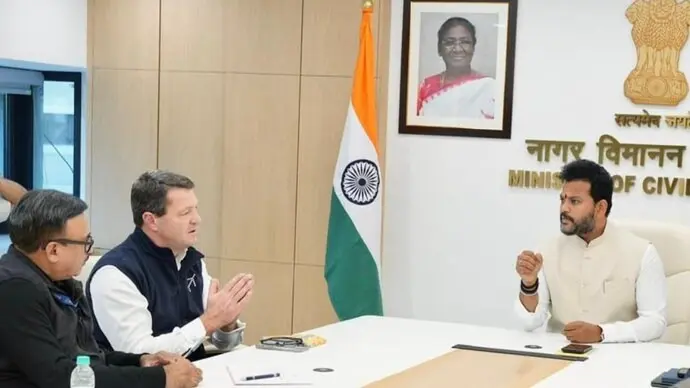
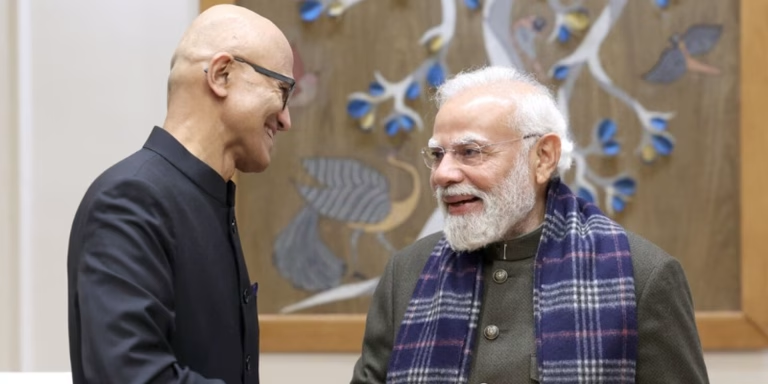
New Delhi – Microsoft CEO Satya Nadella has unveiled a monumental Microsoft India investment worth $17.5 billion, marking the company’s largest commitment ever in Asia. The announcement, made on Tuesday following a meeting with Prime Minister Narendra Modi, has ignited widespread enthusiasm across social media platforms, with users describing it as a transformative moment for the country’s technological landscape and artificial intelligence ambitions.

Historic Commitment to AI-First Future

The Microsoft India investment represents a strategic commitment to building comprehensive infrastructure, developing critical skills, and establishing sovereign capabilities required for India’s “AI-first future.” Nadella emphasized the transformative potential of this investment during his announcement, highlighting its role in positioning India as a global leader in artificial intelligence and technology innovation.

In a post on social media platform X, Nadella expressed gratitude to Prime Minister Modi for an inspiring conversation about India’s AI opportunity. “Thank you, PM @narendramodi ji, for an inspiring conversation on India’s AI opportunity. To support the country’s ambitions, Microsoft is committing US$17.5B—our largest investment ever in Asia—to help build the infrastructure, skills, and sovereign capabilities needed for India’s AI first future,” Nadella wrote, tagging the Prime Minister’s Office.

Significance of Record-Breaking Investment

The Microsoft India investment of $17.5 billion surpasses all previous commitments the technology giant has made across the Asian continent, underscoring the company’s confidence in India’s technological ecosystem and market potential. This unprecedented financial commitment is expected to catalyze significant developments across multiple sectors, including data center infrastructure, cloud computing expansion, artificial intelligence research and development, and comprehensive skill-building initiatives.

The investment signals Microsoft’s recognition of India’s strategic importance in the global technology landscape. With a population of 1.4 billion people and a rapidly growing digital economy, India presents unique opportunities for technological innovation and market expansion. The Microsoft India investment aims to leverage this demographic advantage while contributing to the nation’s digital transformation goals.

Infrastructure and Capability Building

A substantial portion of the Microsoft India investment will focus on developing world-class infrastructure essential for supporting advanced artificial intelligence applications and cloud computing services. This includes the construction of massive data centers equipped with cutting-edge technology, expansion of cloud service capabilities, and establishment of research and development facilities focused on artificial intelligence innovation.

The infrastructure component of the Microsoft India investment addresses critical needs in India’s technology sector, where demand for cloud services and AI capabilities continues to grow exponentially. By investing in physical infrastructure and technological capabilities, Microsoft aims to create a robust foundation that can support both current requirements and future innovations in artificial intelligence and related technologies.

Skills Development and Human Capital

Beyond physical infrastructure, the Microsoft India investment places significant emphasis on developing human capital and technical skills across the country. The initiative is expected to provide AI training and upskilling opportunities for millions of Indians, creating pathways for engineers, developers, students, and professionals to acquire expertise in cutting-edge technologies.

This focus on skills development aligns with India’s national priorities of creating employment opportunities in high-value technology sectors and building a workforce capable of competing globally. The Microsoft India investment in human capital development will help ensure that India’s vast population can actively participate in and contribute to the AI revolution.

Also Read: PM Dhan-Dhaanya Krishi Yojana – FPO Sangam Day 1 Concludes in New Delhi

Social Media Erupts with Enthusiasm

The announcement of the Microsoft India investment sparked an immediate and overwhelmingly positive response on social media platforms. Users across various demographics expressed excitement about the implications for India’s technological future and economic growth prospects.

“Massive moment for India. When global tech bets this big, you know the next decade is already written,” one user commented, capturing the sentiment that this Microsoft India investment represents a watershed moment. Others highlighted the long-term transformational impact, with one user noting, “Investments at this scale don’t just build infrastructure, they open doors for an entire generation of builders.”

Global Recognition and National Pride

Many social media users framed the Microsoft India investment as validation of India’s growing prominence on the global technology stage. “$17.5B isn’t an investment, it’s a signal. India just became the default address for global AI,” one comment read, emphasizing how this commitment positions India as a central hub for artificial intelligence innovation and development.

The announcement also resonated emotionally with many Indians who view it as recognition of the country’s potential. “Some may talk down on India, but the world is investing in us. That’s real power,” one user wrote, reflecting a sense of national pride and vindication.

Economic and Employment Impact

Observers highlighted the tangible economic benefits expected from the Microsoft India investment. “$17.5B from Microsoft — biggest ever in Asia! This means massive data centers, cloud expansion, AI skilling for millions, startups getting world-class infra, and lakhs of new high-paying tech jobs. The golden era for Indian engineers, founders & students just began,” one enthusiastic user commented.

Transformational Vision

The Microsoft India investment embodies a vision of comprehensive technological transformation that extends beyond major cities to rural areas. “India’s AI journey is just beginning and we’re building it with 1.4 billion minds. From rural healthcare to vernacular AI, the real innovation is happening here. Proud to be part of this wave,” one user wrote, emphasizing the inclusive and far-reaching potential of this historic commitment.


Arpora Club Fire: Shocking Bulldozer Demolishes Romeo Lane

0

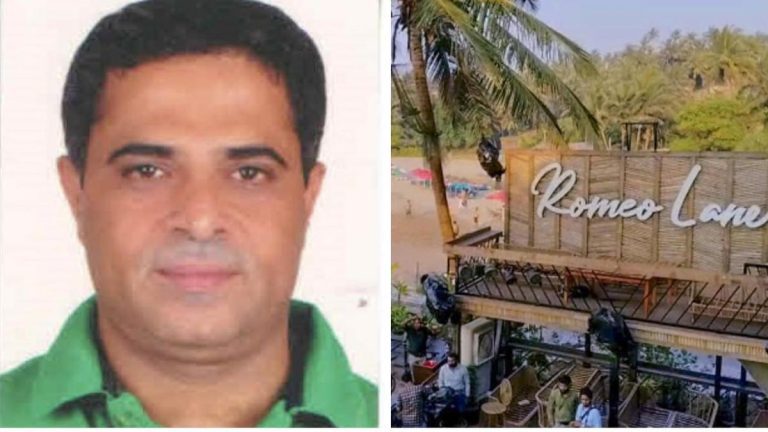
Goa – Goa authorities initiated bulldozer action on Tuesday to demolish Romeo Lane, the Vagator beach shack owned by Saurabh and Gaurav Luthra, following the devastating Arpora club fire that claimed 25 lives over the weekend. Chief Minister Pramod Sawant ordered the demolition as part of intensified action against the brothers who also operated Birch by Romeo Lane, the nightclub-cum-restaurant where the fatal blaze occurred. The demolition work commenced on Tuesday evening, with visuals circulating on social media confirming the action.

Deadly Arpora Club Fire Claims 25 Lives

The tragic Arpora club fire tore through the 300 square meter Birch by Romeo Lane property around 11:45 pm on Saturday, resulting in catastrophic loss of life. Of the 25 people killed in the inferno, 20 were staff members working at the establishment, while five were tourists. Among the tourists killed were four members of a Delhi family, making this tragedy particularly heartbreaking for multiple families.

The fire’s rapid spread through the premises and the high casualty count have raised serious questions about fire safety measures, emergency exits, and building compliance at the nightclub. Investigators are working to determine the exact cause of the Arpora club fire and identify all factors that contributed to the devastating outcome.

Swift Escape to Thailand

In a dramatic development following the Arpora club fire, the Luthra brothers fled to Thailand barely hours after the blaze. According to Goa Police, Saurabh and Gaurav Luthra boarded an IndiGo flight from New Delhi to Phuket at 5:30 am on Sunday morning, just hours after the deadly fire engulfed their establishment late Saturday night.

Deputy Superintendent of Police and Public Relations Officer Nilesh Rane confirmed the escape route, stating, “The Bureau of Immigration at Mumbai was contacted and it was found that both the accused had taken 6E 1073 flight (New Delhi to Phuket) at 5:30 am on 7th December.” The timing of their departure, so soon after the Arpora club fire, has intensified scrutiny on their awareness of the incident and raised questions about their intentions.

Lookout Notice and International Coordination

Officers revealed that a lookout notice had already been issued with the Bureau of Immigration to prevent the brothers from leaving the country. However, this action came too late to stop their departure. Indian agencies are now coordinating with Thai authorities to geolocate the duo in Phuket and are seeking their deportation based on an arrest warrant.

Authorities are hoping to avoid a lengthier extradition route by securing the brothers’ deportation through direct cooperation with Thai law enforcement. Police teams visited the Luthras’ north Delhi residence on Monday but could not find them, confirming their flight from the country following the Arpora club fire.

Criminal Charges Filed

In an FIR registered at 9:30 am on Sunday, Goa Police booked the Luthra brothers and some unnamed persons for serious offenses related to the Arpora club fire. The charges include culpable homicide not amounting to murder under section 105, endangering lives and personal safety under section 125(a)(b), and negligent handling of fire or combustible material under section 287 of the Bharatiya Nyaya Sanhita.

These charges reflect the gravity of the allegations against the owners and underscore authorities’ determination to hold responsible parties accountable for the Arpora club fire tragedy. The legal framework allows for significant penalties if the accused are found guilty of these offenses.

Five Arrests Made in Investigation

Goa Police have made substantial progress in their investigation of the Arpora club fire, arresting five individuals connected to the nightclub’s operations. Four people were arrested on Sunday: chief general manager Rajiv Modak, gate manager Priyanshu Thakur, bar manager Rajveer Singhania, and general manager Vivek Singh. These arrests targeted key operational personnel responsible for day-to-day management of the establishment.

A fifth person, Bharat Singh Kohli, was arrested on Monday. Police described Kohli as someone who was “managing the daily operations of the establishment on behalf of the owners,” indicating his significant role in the nightclub’s functioning during the Arpora club fire.

Widening Action Against Luthra Properties

The demolition of Romeo Lane beach shack represents an expansion of action against the Luthra brothers’ business interests following the Arpora club fire. Chief Minister Pramod Sawant’s directive to demolish the Vagator beach shack owned by the brothers demonstrates the government’s commitment to taking swift action against properties linked to the accused.

The bulldozer action sends a strong message about accountability and consequences for business owners whose establishments may have violated safety regulations or operated without proper compliance. This action follows the wider pattern of authorities using demolition as a tool to enforce regulations and penalize alleged wrongdoing.

Investigation Continues

As the investigation into the Arpora club fire continues, authorities are examining multiple aspects including fire safety compliance, building permits, occupancy limits, emergency evacuation procedures, and the cause of the blaze. Forensic personnel have inspected the site to gather evidence that will help establish the sequence of events and identify any violations that contributed to the tragedy.

The coming days will be critical as investigators work to build a comprehensive case while seeking the return of the Luthra brothers from Thailand to face charges related to the Arpora club fire.

Japan Megaquake Advisory: Terrifying 98-ft Tsunami Warning Issued

Japan – Japan issued a rare and significant Japan megaquake advisory on Tuesday after a magnitude 7.5 earthquake struck off the eastern coast of Aomori, just south of Hokkaido. This extraordinary alert has placed millions of residents on high alert and rekindled memories of the devastating 2011 catastrophe that claimed nearly 20,000 lives. While the recent tremor caused only modest damage, 34 mostly mild injuries, and limited impact on infrastructure, officials have warned that it temporarily raised the risk of a much larger seismic event in the region.

Understanding the Advisory

The Japan megaquake advisory is not a definitive earthquake forecast, officials emphasized. The Japan Meteorological Agency (JMA) clarified that while there is an elevated chance of a powerful magnitude-eight-plus earthquake within the next week, the actual likelihood remains relatively low at approximately one percent. However, authorities issued the Japan megaquake advisory hoping it will encourage residents to prepare for worst-case scenarios and take necessary precautions.

This cautious approach reflects lessons learned from past disasters and aims to ensure that coastal communities remain vigilant during this elevated-risk period. The advisory spans 182 municipalities from Hokkaido down to Chiba Prefecture, representing one of the widest geographical alerts issued in recent years. Residents in coastal belts have been urged to stay alert, keep emergency kits ready, and evacuate quickly if needed.

Geological Factors Behind Increased Risk

The JMA explained that Monday’s earthquake increased seismic risks along the Hokkaido-Sanriku coast, where the Pacific Plate dives beneath Japan, forming the Japan Trench and Chishima Trench. These geological zones are responsible for many of the country’s largest historic earthquakes, making this region particularly vulnerable to major seismic events. The complex interaction of tectonic plates in this area creates conditions conducive to massive earthquakes.

Experts noted that the devastating 2011 earthquake and tsunami were caused by movement along the same Japan Trench. This geographical connection adds particular urgency to the current Japan megaquake advisory, as the same fault systems that produced the 2011 disaster remain active and capable of generating similar catastrophic events.

Troubling Pattern Recognition

The JMA pointed out a concerning historical pattern that informed the Japan megaquake advisory. The 2011 magnitude 9.0 megaquake was preceded just two days earlier by a magnitude 7.3 tremor in the same zone, similar to the pattern observed this week. This precedent suggests that the current 7.5 magnitude earthquake could potentially be a foreshock to a much larger seismic event.

The 2011 tsunami reached 15 meters (50 feet) in some areas, ravaging coastal communities in Iwate, Miyagi, and Fukushima. The disaster destroyed the Fukushima Daiichi nuclear plant, leaving deep and long-lasting fears over radiation exposure that persist today. These traumatic memories make the current Japan megaquake advisory particularly resonant for Japanese citizens.

Catastrophic Potential of Future Megaquake

Government estimates paint a sobering picture of what another offshore megaquake in the Hokkaido-Sanriku region could entail. According to official projections, such an event could unleash a devastating 30-meter (98-foot) tsunami, far exceeding the height of the 2011 tsunami. The projected human toll is staggering, with estimates suggesting up to 199,000 people could lose their lives.

The economic and structural damage would be equally catastrophic. Projections indicate that a future megaquake could destroy 220,000 structures and cause nearly 31 trillion yen ($198 billion) in economic losses. Additionally, up to 42,000 people could suffer hypothermia if such a disaster occurs during winter months, adding another dimension to the potential humanitarian crisis.

Learning from Previous Advisory Shortcomings

This week’s Japan megaquake advisory reflects improvements in crisis communication based on past experiences. The current alert is more cautious and specific than a similar warning issued last year. In summer 2024, a broad “Nankai Trough” megaquake advisory for southern Japan triggered public anxiety, panic buying, and widespread event cancellations because of its ambiguity.

The JMA has clearly learned from that experience, carefully balancing the need to warn the public with avoiding unnecessary panic. By providing specific geographical parameters, clear probability estimates, and practical guidance, the current Japan megaquake advisory aims to promote preparedness without causing undue alarm.

Preparedness and Response Measures

The Japan megaquake advisory serves as a crucial reminder of the importance of disaster preparedness in seismically active regions. Authorities are emphasizing practical steps residents can take, including maintaining emergency supply kits, identifying evacuation routes, and staying informed through official channels. The goal is to ensure that if a major earthquake does occur, communities will be as prepared as possible to respond effectively and minimize casualties.

The week-long advisory period gives residents time to review their emergency plans, secure their homes, and ensure they have adequate supplies of food, water, and medical necessities. While the probability of a major earthquake remains low, the potential consequences are severe enough to warrant serious preparation efforts across affected regions.

Goa Nightclub Fire: Shocking Detention Of Ajay Gupta After 25 Deaths

0

Goa – The Goa Police detained Ajay Gupta on Tuesday, marking a significant development in the investigation of the devastating Goa nightclub fire that claimed 25 lives. Gupta, identified as an alleged partner of the Luthra brothers who owned the fire-ravaged establishment, was apprehended following the issuance of a Look Out Circular. This detention comes as authorities intensify efforts to bring all responsible parties to justice after one of the deadliest fire tragedies in recent Goan history.

Look Out Circular Issued Against Multiple Suspects

A Look Out Circular (LOC) had been issued against the detained Gupta and another individual identified as Surinder Kumar Khosla, according to a senior police official. Both suspects came under the police scanner hours after the owners of ‘Birch by Romeo Lane’ nightclub, Saurabh and Gaurav Luthra, fled to Thailand on Sunday morning, just hours after the Goa nightclub fire tragedy unfolded on Saturday.

Deputy Inspector General (DIG) of Police Varsha Sharma confirmed the LOC issuance during a press conference at Anjuna police station in North Goa. Sharma revealed that Khosla holds British citizenship, adding an international dimension to the investigation. The Look Out Circular is a crucial mechanism that alerts immigration authorities at all exit points to prevent suspects from leaving the country.

The Deadly Fire Incident

The Goa nightclub fire broke out at the ‘Birch by Romeo Lane’ establishment located in Arpora village of Goa on Saturday. The tragic incident resulted in the deaths of 25 people, making it one of the most catastrophic fire incidents in the state’s hospitality sector. The first alert regarding the Goa nightclub fire was received by police at 12:04 am on Sunday, triggering an immediate emergency response from fire services and law enforcement.

The scale of casualties has shocked the local community and raised serious questions about safety standards, fire prevention measures, and regulatory compliance in commercial entertainment establishments. Investigators are working to determine the exact cause of the fire and identify all factors that contributed to the high death toll.

Swift Escape of Nightclub Owners

In a dramatic turn of events following the Goa nightclub fire, the Luthra brothers managed to flee the country within a remarkably short timeframe. Saurabh Luthra and his brother Gaurav, prominent Delhi businessmen, fled the country merely five hours after the fire at their nightclub. The owners boarded IndiGo flight 6E 1073 from New Delhi to Phuket, Thailand, at 5:30 am on Sunday, according to Goa Police records.

Flight tracking data confirmed that the aircraft landed in Phuket after 11 am on Sunday. The swift departure of the owners, occurring so soon after the Goa nightclub fire tragedy, has raised serious concerns about their awareness of the incident and potential attempts to evade legal accountability. Police reached the Luthras’ residence in Delhi on Monday, but by then the owners had already left the country.

Look-Out Notice and Pursuit

Recognizing the urgency of the situation following the Goa nightclub fire, authorities acted swiftly to prevent further escapes. A look-out notice against the Luthra brothers was issued via the Bureau of Immigration (BoI) on Sunday evening. However, this action came too late to prevent their departure, as they had already left Indian territory hours earlier.

The Bureau of Immigration maintains databases and alert systems at all airports, seaports, and land border crossings. The look-out notice ensures that if the Luthra brothers attempt to return to India, they will be immediately detained by immigration authorities.

Five Arrests Made in Investigation

The Goa Police have made significant progress in their investigation of the Goa nightclub fire, having arrested five individuals so far. Those taken into custody include the nightclub’s chief general manager Rajiv Modak, general manager Vivek Singh, bar manager Rajiv Singhania, gate manager Riyanshu Thakur, and Bharat Kohli. These arrests reflect the police’s approach of holding various levels of management accountable for the tragic incident.

Investigators are examining whether these individuals failed to implement adequate safety measures, ignored fire safety regulations, or contributed to conditions that led to the catastrophic outcome of the Goa nightclub fire. Their roles in the nightclub’s daily operations make them crucial sources of information about safety protocols and operational procedures.

Ongoing Investigation and Accountability

The detention of Ajay Gupta represents another step in building a comprehensive case regarding the Goa nightclub fire. Authorities are working to establish the complete ownership structure of the establishment and identify all parties who may bear responsibility for safety lapses. The investigation involves examining fire safety certifications, building permits, occupancy limits, and emergency evacuation procedures.

As the probe into the Goa nightclub fire continues, authorities face the challenge of securing the return of the Luthra brothers from Thailand and ensuring that all responsible parties face appropriate legal consequences. The tragedy has prompted calls for stricter enforcement of fire safety regulations across Goa’s hospitality and entertainment sectors to prevent similar disasters in the future.

Ukraine Peace Plan: Shocking Zelensky Rejects Territorial Concessions

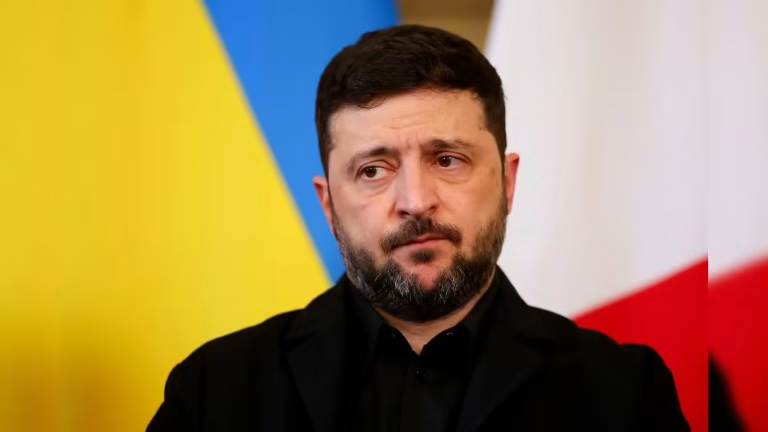
Washington D.C. – Ukrainian President Volodymyr Zelensky has categorically rejected any possibility of ceding territory to Russia, even as United States President Donald Trump intensifies pressure for a response to his proposed Ukraine peace plan. The Ukrainian leader’s unwavering stance highlights the fundamental differences between Western diplomatic approaches and Ukraine’s non-negotiable positions regarding its territorial integrity.

Zelensky’s Categorical Rejection

President Zelensky has reaffirmed Ukraine’s firm position against any territorial concessions, making it clear that surrendering land is not an option under any circumstances. Speaking about the ongoing negotiations surrounding the Ukraine peace plan, Zelensky stated emphatically, “Undoubtedly, Russia insists for us to give up territories. We, clearly, don’t want to give up anything.” He added, “That’s what we are fighting for,” underscoring the fundamental principle driving Ukraine’s resistance.

The Ukrainian President emphasized that territorial concessions are not merely a matter of political choice but are prohibited by law. “Do we consider ceding any territories? According to the law we don’t have such right,” Zelensky explained. He stressed that Ukraine’s constitution, national law, and international law all prohibit such concessions, making any Ukraine peace plan requiring territorial losses legally unacceptable.

Moral and Legal Imperatives

Beyond legal constraints, Zelensky highlighted the moral dimensions of the territorial integrity question. “And to be frank, we don’t have a moral right either,” the Ukrainian President stated, emphasizing that Ukrainian leadership cannot morally justify abandoning citizens and territory to foreign occupation. This statement reflects the deep responsibility Ukrainian officials feel toward their citizens living in contested or occupied areas.

The legal framework protecting Ukraine’s territorial integrity serves as a fundamental barrier to any Ukraine peace plan that includes land concessions. Ukraine’s constitution explicitly prohibits actions that would compromise the country’s territorial integrity, creating a significant legal obstacle to proposals requiring territorial compromises.

Trump’s Peace Proposal and Pressure Tactics

President Trump revealed in an interview with Politico that he had offered a new draft of the Ukraine peace plan to Ukrainian officials, claiming that some officials from the country liked the proposal. However, Trump expressed frustration that Zelensky had not yet reviewed the document, stating bluntly, “It would be nice if he would read it.”

According to reports, Trump’s envoys have given Zelensky only “days” to respond to the proposed peace deal. The Ukraine peace plan allegedly requires Ukraine to accept territorial losses in exchange for US security guarantees, a framework fundamentally incompatible with Zelensky’s stated positions. Trump has further argued that Moscow has the “upper hand” in the conflict, suggesting his assessment of the military situation influences his diplomatic approach.

The short timeline imposed by Trump’s envoys adds significant pressure to an already complex diplomatic situation. The urgency reflects the Trump administration’s desire to broker a quick resolution to the conflict, though this timeline may not align with Ukraine’s need for comprehensive security guarantees and territorial restoration.

European Diplomatic Circuit

Amid intense discussions about the Ukraine peace plan, Zelensky embarked on a critical diplomatic mission across Europe to garner support from key allies. The Ukrainian President met with Italian Premier Giorgia Meloni in Rome, where they discussed the progress of the peace process. A statement from the Italian Premier’s office indicated that the leaders focused on “developing robust security guarantees to prevent future aggression and maintaining pressure on Russia to join the negotiating table in good faith.”

This meeting followed crucial discussions with other European leaders. Just one day earlier, Zelensky held talks with British Prime Minister Keir Starmer, French President Emmanuel Macron, and German Chancellor Friedrich Merz in London. These meetings demonstrate Ukraine’s strategy of building a united European front to support its position in peace negotiations.

Security Guarantees vs Territorial Losses

The central tension in the current Ukraine peace plan discussions revolves around the trade-off between security guarantees and territorial concessions. While Trump’s proposal reportedly offers US security guarantees in exchange for accepting territorial losses, Zelensky’s position makes clear that no security arrangement can compensate for territorial surrender.

Also Read: Trump Peace Deals Crumbling: Congo Accuses Rwanda of Truce Violation

European leaders appear more aligned with Ukraine’s perspective, emphasizing the development of robust security guarantees that would prevent future Russian aggression without requiring territorial concessions. This European approach to the Ukraine peace plan focuses on creating conditions that deter future attacks while respecting Ukraine’s territorial integrity.

International Law and Sovereignty

Zelensky’s invocation of international law highlights broader principles at stake in Ukraine peace plan negotiations. The principle of territorial integrity is enshrined in the United Nations Charter and numerous international treaties. Accepting territorial changes through force would set a dangerous precedent for international relations and potentially encourage future aggression.

Path Forward

As negotiations around the Ukraine peace plan continue, the fundamental disagreement between Ukraine’s non-negotiable positions and proposals requiring territorial concessions remains unresolved. Zelensky’s European diplomatic tour aims to strengthen support for Ukraine’s position while building consensus on comprehensive security arrangements. The coming days will prove critical as Trump’s deadline approaches and European allies coordinate their response to protect both Ukrainian sovereignty and regional stability.

IndiGo Flight Cancellations: Govt. Orders Shocking 10% Operations Cut

New Delhi – The aviation sector witnessed unprecedented turmoil as IndiGo flight cancellations entered their eighth consecutive day, prompting the government to take decisive action. The civil aviation ministry has ordered the airline to reduce its operations by 10 percent, marking a significant intervention in the country’s largest carrier’s functioning. This directive came after continuous operational failures that affected thousands of passengers across major Indian cities.

Mass Disruptions Affect Major Cities

IndiGo flight cancellations reached alarming levels on Tuesday, with over 400 flights grounded across the country. Delhi bore the brunt of these disruptions with 152 flights cancelled, while Bengaluru witnessed 121 cancellations. The ripple effect extended to other metropolitan cities, with Hyderabad recording 58 cancellations, Chennai 41, Ahmedabad 16, Thiruvananthapuram 4, and Mumbai 3. Since the beginning of this crisis, nearly 5,000 flights have been cancelled, leaving countless passengers stranded and frustrated.

The scale of IndiGo flight cancellations has created chaos at airports nationwide, with passengers scrambling to find alternative arrangements. The airline’s inability to maintain its scheduled operations has raised serious questions about its capacity planning and operational readiness. Aviation experts suggest that the carrier may have overextended its network beyond its operational capabilities.

Government’s Firm Action

The civil aviation ministry took unprecedented action by mandating a 10 percent reduction in IndiGo’s operations across all sectors. Aviation Minister Ram Mohan Naidu explained that this curtailment was necessary to stabilize the airline’s operations and reduce the frequency of cancellations. The minister emphasized that while complying with this directive, IndiGo would continue to serve all its existing destinations.

Initially, the Directorate General of Civil Aviation (DGCA) had issued an order directing a 5 percent operational cut. However, recognizing the severity of operational constraints, the ministry doubled this curtailment to a minimum of 10 percent. This decision reflects the government’s determination to ensure passenger welfare and restore normalcy to air travel operations.

CEO’s Apology and Recovery Plans

IndiGo CEO Pieter Elbers was summoned by the civil aviation ministry to provide a comprehensive update on the ongoing situation. In a video statement released on the airline’s social media platform, Elbers assured passengers that IndiGo is “back on its feet” with stable operations. He expressed his profound apologies for the inconvenience caused by these disruptions.

Elbers stated that the restoration of the airline’s network was being executed on a war footing. He confirmed that lakhs of customers have already received full refunds, with remaining cases being processed daily. The CEO also reported that most baggage stuck at various airports has been delivered to passengers, with efforts underway to clear the remaining items.

Operational Recovery Measures

Despite the ongoing IndiGo flight cancellations, the airline demonstrated signs of recovery. On Tuesday, IndiGo operated more than 1,800 flights, connecting all 138 stations in its network. The carrier announced plans to increase this number to nearly 1,900 flights on Wednesday, December 10.

The airline has implemented several measures to optimize operations and restore normalcy. IndiGo reported that its on-time performance has returned to normal levels, a crucial indicator of operational stability. Additionally, the company has automated the refund process, allowing customers to receive full refunds upon cancellations through a simple procedure on their website, with no questions asked.

Prime Minister’s Intervention

Prime Minister Narendra Modi addressed the IndiGo flight cancellations during an NDA parliamentary meeting. He emphasized that passengers should not face harassment or inconvenience due to operational chaos. Union Parliamentary Affairs Minister Kiren Rijiju conveyed the Prime Minister’s message, stating that while rules and laws are important, they should not be used to harass people during efforts to correct systemic issues.

Impact on Passengers

The extended period of IndiGo flight cancellations has severely impacted travel plans across the country. Passengers have faced significant inconvenience, including missed business meetings, disrupted holiday plans, and financial losses. The airline’s dominance in the Indian aviation market, operating nearly 2,000 flights daily under normal circumstances, means that these disruptions have had a disproportionate impact on air travelers.

Way Forward

As IndiGo works to stabilize its operations following the government-mandated 10 percent cut, the aviation industry watches closely. The airline must demonstrate improved operational efficiency and reliability to regain passenger trust. The coming days will be crucial in determining whether these measures successfully resolve the crisis and prevent future large-scale disruptions in Indian aviation.

West Bengal Caste Certificate Controversy – Suvendu Adhikari Accuses Govt of Rushing Tribal Certificates

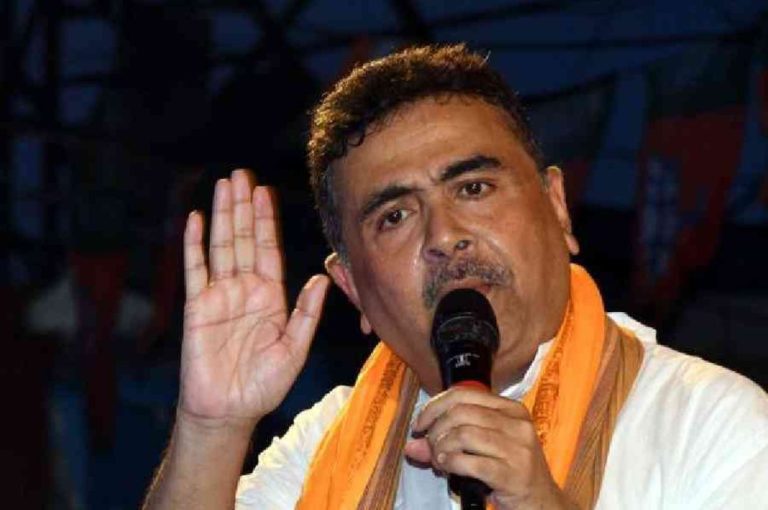
West Bengal Caste Certificate Controversy: The political climate in West Bengal has intensified following Leader of Opposition Suvendu Adhikari’s accusations against the ruling Trinamool Congress (TMC) government. Adhikari alleged that the state administration was “frantically” issuing caste and tribal certificates to undocumented infiltrators and fake claimants. He claimed this was a deliberate attempt to manipulate the electoral rolls ahead of the upcoming elections.

This article provides a revised and expanded 3000‑word narrative of the controversy, its political implications, historical context, and broader lessons for governance and democracy. It also integrates official government external links for readers who wish to explore more about caste certificates, electoral processes, and minority rights in India.


Suvendu Adhikari’s Allegations

  • Adhikari accused the Bengal government of conducting special camps to fast‑track the issuing of SC, ST, and OBC certificates.
  • He claimed these certificates were being given to “undocumented infiltrators” to help them qualify as voters.
  • According to him, this was a “mockery of democracy”, designed to flood the system with bogus credentials.
  • He urged the Election Commission of India (ECI) to scrutinize all certificates issued after June 24, 2025, the date when the Special Intensive Revision (SIR) of electoral rolls began.

The Special Intensive Revision (SIR)

The SIR is an electoral exercise aimed at revising and updating voter lists.

  • Objective: To ensure accuracy in electoral rolls.
  • Allegations: Adhikari claimed the SIR was being misused to include ineligible voters.
  • Political Context: The timing of the SIR coincided with heightened political tensions ahead of the 2026 elections.

For more details, readers can visit:


Government’s Position

The West Bengal government has defended its actions, stating that:

  • Issuing caste certificates is part of its welfare measures.
  • Camps are organized to ensure marginalized communities receive their due rights.
  • Allegations of misuse are politically motivated.

Judicial Context

Adhikari pointed out that courts have previously struck down religion‑based OBC certificates issued by the state.

  • He argued that the current exercise could similarly be challenged.
  • The controversy raises questions about the legal validity of caste certificates issued under political pressure.

For judicial frameworks, readers can explore:


Community Concerns

  • Genuine SC, ST, and OBC communities fear being deprived of benefits due to fake claimants.
  • Minority groups worry about being targeted in the political crossfire.
  • The issue has sparked debates about identity, inclusion, and electoral fairness.

Broader Political Implications

  • The controversy highlights the polarized political climate in Bengal.
  • The BJP, led by Adhikari, has positioned itself as the watchdog against alleged voter fraud.
  • The TMC insists it is protecting marginalized communities.
  • The issue may significantly influence voter sentiment ahead of the 2026 elections.

Government and Institutional Links

For deeper exploration of policies and governance frameworks:


Preventive Measures Suggested

To strengthen electoral integrity and protect marginalized communities:

  • Transparency: Ensure caste certificate issuance is monitored and audited.
  • Judicial Safeguards: Allow time for legal challenges before elections.
  • Community Outreach: Educate citizens about documentation requirements.
  • Technology Use: Employ digital verification to reduce manual errors.

West Bengal Caste Certificate Controversy: Conclusion

The West Bengal caste certificate controversy reflects the deep tensions between governance, electoral management, and political trust. Suvendu Adhikari’s claims underscore the challenges of ensuring fair access to welfare benefits while safeguarding electoral integrity. By addressing concerns about certificate misuse, judicial oversight, and community inclusion, India can strengthen both democracy and social justice.

Also read: Home | Channel 6 Network – Latest News, Breaking Updates: Politics, Business, Tech & More

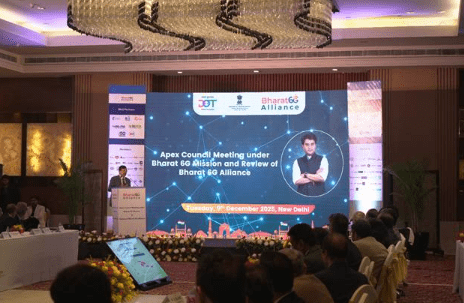
Bharat 6G Mission: Union Minister Shri Jyotiraditya M. Scindia Proudly Chairs Apex Council Meeting

The Union Minister of Communications, Shri Jyotiraditya M. Scindia, chaired the Apex Council Meeting of the Bharat 6G Mission, reviewing the progress of the Bharat 6G Alliance (B6GA) and charting the next steps toward India’s goal of establishing global leadership in 6G technologies by 2030.

The meeting saw participation from Union MoS for Communications Dr. Chandrasekhar Pemmasani, Secretary (Telecom) Dr. Neeraj Mittal, Principal Scientific Adviser Prof. Ajay Sood, senior officials from multiple ministries, academia, R&D institutions, telecom service providers, industry stakeholders, and members of B6GA.


Government’s Vision and Strategic Direction

Addressing the Council, Shri Scindia reiterated the Government’s commitment to accelerating 6G innovation, stating that India must transition rapidly from early-stage leadership to global dominance in future communication technologies.

He outlined four priority directives:

  1. Continue leapfrogging by investing in cutting-edge future technologies.

  2. Examine the entire 6G value chain end-to-end, from silicon to devices to networks.

  3. Break down complex R&D challenges into actionable, time-bound modules.

  4. Set measurable quarterly targets for each Working Group to ensure accountability.

The Minister emphasized that India must shape the future of wireless communication—not follow it—and that 6G benefits must reach every citizen, including rural communities, in line with the vision of Prime Minister Shri Narendra Modi.


India’s Shift from Technology User to Technology Creator

Union MoS Dr. Pemmasani highlighted the release of eight technical reports and whitepapers from B6GA, covering:

  • AI-native networks

  • Spectrum management

  • Green telecom initiatives

  • RF sensing

  • Emerging applications

“These achievements mark India’s historic transition from a technology implementer to a technology creator,” he stated.


Scientific Advisor Calls for Mission-Mode Execution

Prof. Ajay Kumar Sood stressed the need for:

  • Mission-mode execution of 6G initiatives

  • Stronger integration of cybersecurity in AI and 6G architecture

  • Rapid advancements in quantum communication, now moving from concept to reality

  • Exploration of convergence between quantum tech, cybersecurity, and next-gen networks

He underscored the need for clearly defined deliverables to achieve global leadership.


Update from the Department of Telecommunications

Secretary (Telecom) Dr. Neeraj Mittal reviewed key decisions from previous meetings, including:

  • Timelines for indigenous 6G chipsets (SoCs) and 6G base stations (BTS) by 2027–28

  • The Indian silicon roadmap

  • Strengthening India’s position in the ITU IMT-2030 (6G) framework

  • Accelerating sustainability KPIs

  • Expansion of international engagements

He emphasized connecting research, standards, testing, and deployment to fast-track India’s 6G rollout.


₹1-Lakh-Crore RDI Fund to Boost Frontier Tech Research

The recently approved ₹1-lakh-crore Research, Development and Innovation (RDI) Fund, anchored within ANRF, was highlighted as a major enabler of:

  • AI-native network innovation

  • Semiconductor and photonics development

  • Advanced sensing

  • Cybersecurity

  • Satellite–terrestrial network integration

This marks one of India’s largest-ever public research investment frameworks.


Unveiling of 5G Use Case Lab Publications

Shri Scindia released three key booklets:

  1. The 5G Use Case Lab: From Infrastructure to Innovation

  2. 5G Lab Book – Edition 1: Experiments in 5G Core, 5G NR & Use Cases

  3. 5G Hackathon Compendium documenting nationwide 5G prototypes

These publications showcase the evolution of India’s 100 5G labs from basic infrastructure to real-world innovation hubs across multiple sectors.


Awards to Best Performing 5G Labs

The Minister honoured four institutions under the Excellent Category:

  • Punjab Engineering College – Strong prototype pipeline across multiple sectors

  • Banasthali Vidyapith – Leadership in private 5G, MEC, AI, automation

  • IIT Roorkee (AMRIT) – India’s first deployed RIS, patents, commercialisation

  • Thapar University – Innovations in V2X, accessibility tools, drone detection, and infrastructure monitoring


Bharat 6G Alliance: Significant Expansion & Global Outreach

The Alliance reported major progress:

  • Growth from 16 founding members to over 84 organisations

  • Seven Working Groups covering the full 6G technology stack

  • New international MoUs and collaborative R&D partnerships

  • Development of India-led 6G applications, sustainability frameworks and device research


Stakeholder Feedback for Strengthening India’s 6G Roadmap

Members of the Apex Council provided strategic inputs to refine:

  • Testing and certification mechanisms

  • IPR and patent generation

  • Interoperability frameworks

  • Ecosystem development for devices, chipsets, and networks

These suggestions will shape the action plan for the next review cycle.


About Bharat 6G Alliance (B6GA)

The Bharat 6G Alliance is a multi-stakeholder platform bringing together:

  • Academia

  • R&D institutions

  • Industry leaders

  • Startups

  • Public institutions

Its mission is to build a future-ready, indigenous 6G ecosystem and position India as a frontrunner in global telecom innovation.

For more real-time updates, visit Channel 6 Network.

Source: PIB

PM Dhan-Dhaanya Krishi Yojana – FPO Sangam Day 1 Concludes in New Delhi

Day 1 of the PM Dhan-Dhaanya Krishi Yojana – FPO Sangam successfully concluded today at the NCUI Auditorium and NCDC Complex, New Delhi. Organised by the Ministry of Agriculture & Farmers’ Welfare in partnership with the Bill & Melinda Gates Foundation and convened by Intellecap Advisory Services, the event saw active participation from over 72 Farmer Producer Organizations (FPOs) representing 15 states and 33 PMDDKY districts, alongside senior government officials, financial institutions, private-sector buyers, and AgTech innovators.


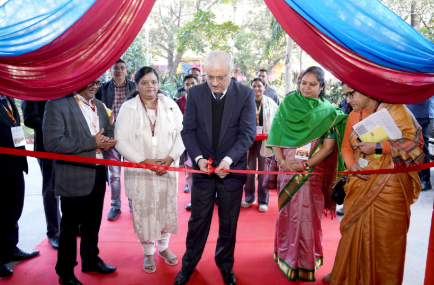
FPO Exhibition Inaugurated; Showcases India’s Agricultural Diversity

The day commenced with the inauguration of the FPO Exhibition at the NCDC Atrium by Shri Devesh Chaturvedi, Secretary, Department of Agriculture & Farmers’ Welfare.

FPOs displayed a wide array of:

  • Cereals & pulses

  • Horticultural produce

  • Millets & coarse grains

  • Processed and packaged foods

  • Honey, spices & oilseed products

  • Region-specific value-added items

The Secretary interacted with farmer groups and encouraged them to strengthen value addition, branding, packaging, and market linkages to improve income realization.


FPOs Are the Backbone of PM Dhan-Dhaanya Krishi Yojana: Secretary

Delivering the keynote address, Shri Devesh Chaturvedi emphasised that FPOs lie at the heart of the PM Dhan-Dhaanya Krishi Yojana, which aims to:

  • Enhance productivity

  • Improve irrigation and water-use efficiency

  • Promote crop diversification

  • Modernise post-harvest management

  • Enable market-led growth in agriculture

He stated,

“FPOs are central to improving input access, building better production systems, expanding market opportunities, and unlocking higher incomes for farmers.”

The Secretary also encouraged buyers, processors, and retail chains to develop long-term procurement partnerships with FPOs to strengthen sustainable value chains.


Technical Sessions Spotlight Integrated Farming, Value Chains & Financing

Throughout the day, multiple thematic sessions were organised on:

  • Integrated & natural farming practices

  • Oilseeds and beekeeping value chains

  • Protected cultivation models

  • Micro-irrigation & climate-smart technologies

  • Institutional financing for FPOs

  • Digital and data-driven agriculture

Speakers from institutions such as ICAR, National Beekeeping Mission, Kheyti, Nabkisan Finance, and leading AgTech companies shared insights, case studies, and best practices.


Experience-Sharing: Success Stories from PMDDKY Districts

A dedicated segment allowed FPOs and KCC beneficiaries to present on-ground success stories, illustrating:

  • Increased yields

  • Direct market access

  • Improved aggregation & storage

  • Higher price realisation

  • Reduced input costs

  • Stronger governance and FPO-led enterprise development

The interactive quiz sessions kept FPO members engaged on governance, good farming practices, fertilizer optimisation, and operational management.


High Footfall at FPO Stalls; Buyers Engage Directly with Collectives

FPO stalls recorded strong engagement from:

  • Retail chains

  • Wholesalers

  • Institutional buyers

  • Government representatives

  • Development partners

Visitors explored and purchased products directly, strengthening farm-to-market linkages. The exhibition will continue on Day 2.


Conclusion of Day 1

Day 1 concluded with networking and high tea, allowing FPOs, experts, officials, financial institutions, and private-sector partners to deepen collaborations and explore future opportunities.

The event will resume tomorrow with:

  • More technical sessions

  • Farmer success presentations

  • Business-to-business interactions

  • The closing ceremony of the FPO Sangam

For more real-time updates, visit Channel 6 Network.

Source: PIB

India to Co-Host 2nd WHO Global Summit on Traditional Medicine in New Delhi

India will co-host the 2nd WHO Global Summit on Traditional Medicine in New Delhi from 17–19 December 2025, in partnership with the World Health Organization (WHO). The three-day Summit will bring together Ministers, global health leaders, researchers, policymakers, practitioners and industry stakeholders to discuss innovation, scientific validation and the future roadmap for integrating traditional medicine into global health systems.


Curtain Raiser Highlights India’s Expanding Global Leadership in Traditional Medicine

The Ministry of Ayush organised a Curtain Raiser Programme on 8th December 2025, chaired by Shri Prataprao Jadhav, Union Minister of Ayush.
In his address, the Minister underscored:

  • India’s rising global prominence in traditional medicine

  • The country’s expanding research infrastructure

  • The growing confidence of the global community in India’s traditional knowledge systems

  • The importance of evidence generation and scientific rigor

Shri Jadhav emphasised that the Summit aligns with India’s vision of strengthening traditional medicine as a holistic, inclusive and science-backed component of national and global healthcare.


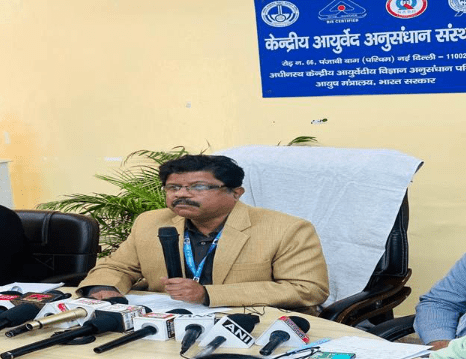
CARI Delhi: A Key Institution Driving Evidence-Based Ayurveda Research

In the Delhi-NCR region, the Central Ayurveda Research Institute (CARI), Delhi—under CCRAS—continues to serve as a major centre for Ayurvedic research and clinical development.
Dr. Hemanta Panigrahi, Director (In-Charge), highlighted that CARI’s research encompasses:

  • Clinical Research on lifestyle and non-communicable diseases

  • Fundamental Research for strengthening Ayurveda’s scientific foundations

  • Policy Research to support national healthcare planning

He stated that CARI’s specialty clinics, ongoing studies and capacity-building programmes are aligned with India’s national priorities for evidence-driven traditional healthcare.

The institute’s contributions are expected to significantly enrich the discussions at the upcoming Summit.


Summit to Focus on Global Integration, Scientific Evidence and Knowledge Exchange

The 2nd WHO Global Summit on Traditional Medicine will include:

  • Ministerial roundtables

  • Scientific panel discussions

  • Technical deliberations

  • Exhibitions featuring global innovations

  • Knowledge-sharing forums involving experts from over 100 countries

Key themes will include:

  • Strengthening scientific evidence for traditional medicine

  • Innovation and digital health integration

  • Biodiversity protection and sustainability

  • Global collaboration in research and regulatory frameworks

The Summit aims to support WHO member states in advancing safe, effective and equitable integration of traditional medicine into public health systems.


Conclusion

By hosting this landmark Summit, India reaffirms its commitment to global health cooperation and its leadership in the field of traditional medicine. The event is poised to shape the next decade of global policies, research priorities and international partnerships in traditional and integrative healthcare.

For more real-time updates, visit Channel 6 Network.

Source: PIB