Wednesday, May 6, 2026
Home Blog Page 259

Proudly Hosting UNESCO’s 20th ICH Committee at Red Fort Reflects India’s Unique Blend of Tangible and Intangible Heritage: Culture Secretary

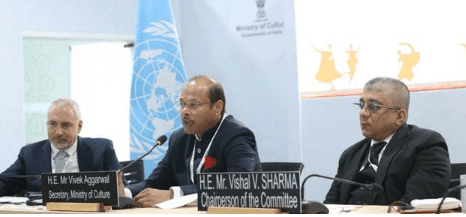
The 20th Session of the Intergovernmental Committee for the Safeguarding of Intangible Cultural Heritage (ICH) of UNESCO commenced today at the historic Red Fort in New Delhi. The opening day witnessed participation from senior officials including Shri Vivek Aggarwal, Secretary, Ministry of Culture; Shri Vishal V. Sharma, 20 COM Chairperson and India’s Permanent Representative to UNESCO; and Mr Ernesto Ottone, Assistant Director General for Culture at UNESCO.

After the morning session, Shri Vivek Aggarwal chaired a press conference outlining India’s contributions, vision, and continued leadership in safeguarding living heritage.


India’s Cultural Heritage: A Fusion of Tangible Grandeur and Living Traditions

Speaking at the press conference, Shri Vivek Aggarwal stated that hosting the 20th session at the iconic UNESCO World Heritage Site of Red Fort symbolizes India’s distinctive fusion of tangible heritage—monuments, architecture, archaeological sites—and intangible cultural expressions such as performing arts, rituals, craftsmanship, festivals, and oral traditions.

He underscored India’s community-centered approach to safeguarding intangible heritage, driven by:

  • Expansion of the National Inventory of Intangible Cultural Heritage

  • Capacity-building programmes for practitioners and knowledge-holders

  • Integration of living heritage into national development frameworks

The Secretary highlighted India’s 15 elements inscribed on UNESCO’s Representative List, from Vedic Chanting, Kutiyattam and Yoga, to Durga Puja, Garba, Kumbh Mela, and others—describing them as a “kaleidoscope of India’s cultural identity.”

He affirmed that intangible heritage represents the “living heartbeat of humanity,” preserved and transmitted across generations by communities.


Global Challenges and UNESCO’s Role in Safeguarding Living Heritage

Shri Aggarwal noted that the session is taking place at a time when intangible cultural heritage worldwide is threatened by:

  • Commercialization pressures

  • Shifting social and community dynamics

  • Transformations brought by digital ecosystems

He emphasized that UNESCO’s multilateral platform remains essential for dialogue, cooperation, and collective stewardship to ensure sustainable preservation of cultural expressions across nations.


India’s Leadership in Intangible Heritage Governance

Addressing the gathering, Shri Vishal V. Sharma, Chairperson of the 20th COM Session, welcomed participating delegates from across the world and reaffirmed India’s long-standing commitment to safeguarding global cultural heritage.

He noted that India’s ongoing membership (2022–2026) in the Intergovernmental Committee strengthens its role in shaping global frameworks, policies, and collaborative initiatives for protecting living heritage.


UNESCO Acknowledges India’s Role and Hospitality

UNESCO’s Assistant Director General for Culture, Mr Ernesto Ottone, expressed heartfelt gratitude to the Government of India for hosting the 20th session in New Delhi. He applauded India’s sustained efforts and leadership in protecting cultural heritage, and appreciated the enriched dialogue fostered through the New Delhi session.


A Global Gathering at the Red Fort

The week-long session, scheduled from 8–13 December 2025, is bringing together nearly 1,000 delegates from UNESCO Member States, cultural institutions, NGOs, researchers, heritage practitioners, and global experts.

Discussions will focus on:

  • Strengthening global safeguarding measures

  • Reviewing nominations to the Representative List

  • Enhancing international cooperation

  • Supporting communities who keep living traditions vibrant


Conclusion

By hosting the 20th ICH Committee session at the Red Fort, India has once again positioned itself at the heart of global cultural stewardship. The event showcases India’s profound civilizational heritage and reaffirms its commitment to ensuring that living traditions continue to thrive in a rapidly changing world.

As nearly a thousand global delegates convene in New Delhi, India’s leadership in cultural policy, preservation, and community-based heritage safeguarding shines on the world stage.


For more real-time updates, visit Channel 6 Network.

Source: PIB
Sunali Khatun Freed but Return to India Uncertain 2025

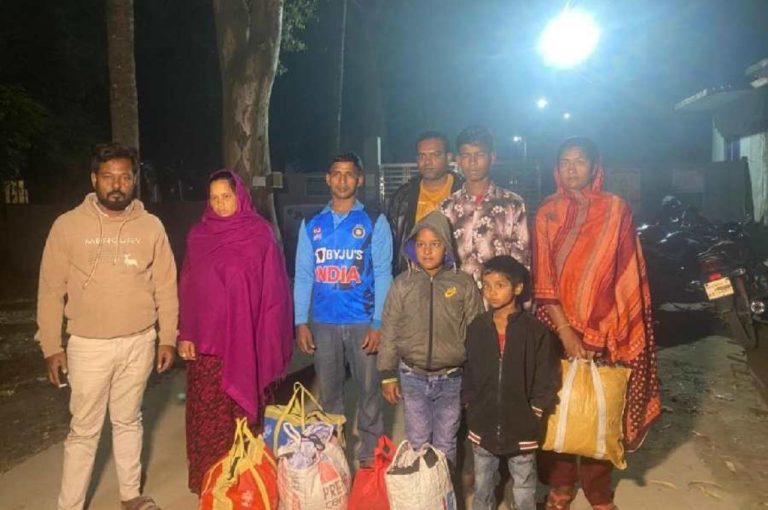
The Sunali Khatun Freed Return to India 2025 case has become emblematic of the challenges surrounding citizenship disputes in South Asia. On December 1, 2025, a Bangladesh court granted bail to Sunali, who is pregnant, along with five others including children. They had been deported from Delhi earlier this year on suspicion of being Bangladeshi nationals. While the Supreme Court of India has urged the Centre to consider her return on humanitarian grounds, bureaucratic delays and political sensitivities continue to stall her homecoming.


2. Background: Deportation and Detention

  • In June 2025, Delhi police detained Sunali, her husband, and their son, suspecting them of being Bangladeshi citizens.
  • Within days, they were deported to Bangladesh despite possessing documents claiming Indian origin.
  • Sunali was incarcerated in Chapainawabganj prison for over three months, enduring severe hardship during advanced pregnancy.

This reflects the complexity of deportation processes and the vulnerability of families caught in citizenship disputes.


3. Sunali Khatun Freed: Bangladesh Court’s Decision

On December 1, 2025, the Chapainawabganj court:

  • Declared Sunali and others to be Indian citizens.
  • Directed the Indian High Commission in Dhaka to initiate repatriation.
  • Released them under the custody of a Bangladeshi national until repatriation is finalized.

This ruling provided a legal lifeline but not immediate relief.


4. Supreme Court of India’s Intervention

On the same day, India’s Supreme Court:

  • Asked the Centre to consider Sunali’s return on humanitarian grounds.
  • Emphasized that deportees must be given opportunities to establish citizenship claims.
  • Directed physical verification of documents submitted by families.

Chief Justice Surya Kant noted: “It’s only on humanitarian grounds.”


5. Sunali’s Plea

Speaking from Bangladesh, Sunali said:

  • “I am at a very advanced stage of pregnancy. I want my baby to be born on Indian soil.”
  • She expressed exhaustion after months of incarceration and legal battles.

Her words highlight the human cost of bureaucratic delays and governance failures.


6. Governance Challenges

The case exposes systemic governance issues:

  • Delayed compliance with Calcutta High Court’s September 2025 order to repatriate.
  • Centre’s reluctance to act swiftly, citing precedent concerns.
  • Weak coordination between Indian and Bangladeshi authorities.

7. Political Fallout

The controversy has political consequences:

  • TMC leaders accused the Centre of negligence and cruelty.
  • BJP defended the deportation as lawful.
  • Civil society debated the balance between national security and humanitarian responsibility.

8. Historical Context: Citizenship Disputes in Bengal

Bengal has long been a hotspot for citizenship disputes:

  • Partition of 1947 displaced millions.
  • 1971 Bangladesh Liberation War triggered refugee influx.
  • Assam’s NRC excluded millions despite decades of residence.

Sunali’s case echoes these historic struggles of identity and belonging.


9. Broader Implications for Democracy

The incident raises fundamental questions:

  • Can democracy thrive if citizens are arbitrarily deported?
  • Will governance prioritize compassion over exclusion?
  • How can development balance citizenship with human dignity?

10. Recommendations for Reform

Experts suggest:

  • Fast‑track repatriation mechanisms for disputed cases.
  • Judicial oversight of deportation processes.
  • Community awareness campaigns on citizenship rights.
  • Transparent grievance redressal systems.

11. Comparative Lessons from Other Countries

Other nations have faced similar challenges:

  • Germany integrated refugees with legal safeguards.
  • Canada provided asylum seekers pathways to citizenship.
  • India’s case reflects a national struggle for balancing law, politics, and compassion.

12. Human Stories: Families in Distress

Families described:

  • Anxiety about losing homes and livelihoods.
  • Fear of being branded “illegal aliens.”
  • Hope for Supreme Court protection.

These stories highlight the human dimension of governance failures.


13. Law Enforcement and Accountability

Courts emphasized:

  • States must act within constitutional limits.
  • Deportees must be given opportunities to prove citizenship.
  • Accountability measures must be enforced.

14. Conclusion: A Test of Governance and Humanity

The Sunali Khatun Freed Return to India 2025 case is more than a legal dispute — it is a test of governance, democracy, and human dignity. Unless systemic reforms are undertaken, families will remain vulnerable, and public trust in institutions will erode.

The controversy underscores the urgency of balancing citizenship law with compassion, electoral integrity, and governance accountability.


🔗 Government External Links

For further reading and official updates, here are relevant government sources:

Also read: Home | Channel 6 Network – Latest News, Breaking Updates: Politics, Business, Tech & More

Operation Sagar Bandhu: Indian Navy Strong Deployment of Four Additional Warships to Deliver 1,000 Tons of HADR Material to Sri Lanka

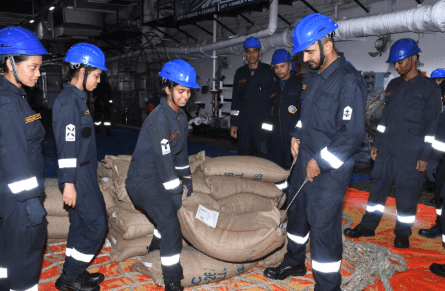
The Indian Navy has deployed four additional warships—INS Gharial, LCU 54, LCU 51, and LCU 57—to deliver 1,000 tons of Humanitarian Assistance and Disaster Relief (HADR) supplies to cyclone-affected areas of Sri Lanka as part of Operation Sagar Bandhu. The mission was launched to provide urgent Search & Rescue (SAR) support and vital relief material to the island nation following severe cyclone devastation.

This action underscores India’s longstanding commitment to supporting its Indian Ocean Region (IOR) neighbours in times of crisis.


Earlier Assistance by INS Vikrant, INS Udaygiri & INS Sukanya

Prior to the latest deployment, three Indian Navy ships—INS Vikrant, INS Udaygiri, and INS Sukanya—had already extended critical assistance, including:

  • Delivery of essential relief stores

  • Heli-borne Search & Rescue missions

  • Medical support and evacuation assistance

Their rapid response played a key role in stabilizing relief operations during the immediate aftermath of the cyclone.


Arrival of LCUs and Scheduled Deployment of INS Gharial

The three Landing Craft Utility vessels—LCU 54, LCU 51, and LCU 57—arrived in Colombo on 07 December 2025, where they handed over critical relief material to Sri Lankan authorities. These supplies include food items, tents, medicines, hygiene kits, generators, and other essential resources required for community rehabilitation.

INS Gharial is scheduled to reach Trincomalee on 08 December 2025, continuing the humanitarian mission with sizeable HADR consignments.


Strengthening India–Sri Lanka Partnership Through Humanitarian Outreach

The Indian Navy’s deployment of ships carrying 1,000 tons of HADR supplies reflects:

  • India’s rapid response capability in regional humanitarian crises

  • Strong people-to-people ties between India and Sri Lanka

  • India’s steadfast commitment to ensuring safety and security across the Indian Ocean Region

Operation Sagar Bandhu continues the tradition of India’s maritime outreach, following earlier missions such as Sagar, Sagar-II, and Sagar-III that extended assistance to nations across the IOR.


Conclusion: Operation Sagar Bandhu 

Through Operation Sagar Bandhu, India has once again demonstrated its role as a dependable first responder in the Indian Ocean Region. With multiple warships engaged in relief operations and a substantial volume of aid delivered, the mission reaffirms the Indian Navy’s humanitarian leadership and the deep friendship shared between India and Sri Lanka.


For more real-time updates, visit Channel 6 Network.

Source: PIB
UPI Recognized as World’s Largest Real-Time Payment System by IMF; Accounts for 49% of Global Transactions

Unified Payments Interface (UPI) has once again reinforced India’s global leadership in digital payments. According to the International Monetary Fund (IMF) report titled “Growing Retail Digital Payments (The Value of Interoperability)” published in June 2025, UPI is the world’s largest retail fast-payment system (FPS) in terms of transaction volume.

Additionally, the ACI Worldwide ‘Prime Time for Real-Time’ 2024 report confirms that UPI accounts for a remarkable 49% share of all global real-time payment transactions, significantly outperforming other major platforms worldwide.

This information was shared by Minister of State for Finance Shri Pankaj Chaudhary in a written reply in the Lok Sabha.


India Leads Global Real-Time Payments: Comparative Snapshot

The ACI Worldwide report provides a comparative overview of global real-time payment systems, highlighting UPI’s unparalleled scale and efficiency.

UPI’s Global Position

Country Transaction Volume (in Billions) Global Share
India (UPI) 129.3 49%
Brazil 37.4 14%
Thailand 20.4 8%
China 17.2 6%
South Korea 9.1 3%
Others 52.8 20%
Total 266.2 100%

UPI’s near-half share of global real-time transactions underscores its robustness, interoperability, and widespread adoption across urban and rural India.


Government and RBI Interventions Driving Digital Inclusion

To accelerate the adoption of digital payments—particularly among small-scale merchants—the Government, RBI, and NPCI have launched targeted initiatives, including:

1. BHIM-UPI Incentive Scheme

Designed to promote low-value digital transactions and encourage first-time users.

2. Payments Infrastructure Development Fund (PIDF)

Providing grants to banks and fintech firms for deploying digital payment infrastructure such as POS terminals and QR codes in Tier 3 to Tier 6 cities.

  • 5.45 crore digital touchpoints deployed under PIDF as of 31 October 2025

  • 56.86 crore QR codes deployed to 6.5 crore merchants across India in FY 2024–25

These interventions significantly enhance digital penetration, ease of doing business, and financial inclusion.


Expanding RuPay and UPI Across Public Services

The Government, RBI, and NPCI have undertaken nationwide efforts to deepen the use of RuPay cards and Unified Payments Interface in:

  • Public service platforms

  • Transportation networks

  • E-commerce ecosystems

  • Utility payments

  • Retail and MSME sectors

This expansion ensures seamless digital transactions for citizens across multiple interfaces.


Conclusion

India’s leadership in global digital payments is the result of sustained innovation, robust public digital infrastructure, and coordinated institutional efforts. With Unified Payments Interface commanding the largest share of real-time payment transactions worldwide, India’s digital economy continues to expand rapidly while setting global standards for interoperability, accessibility, and financial inclusion.

The continued rollout of PIDF infrastructure, merchant incentives, and RuPay-UPI integration positions India to further strengthen its status as the world’s foremost digital payments powerhouse.


For more real-time updates, visit Channel 6 Network.

Source: PIB

8 December 2025: Nifty 50 Declines 225 Points Amid Broad Market Weakness; Select Mid- and Small-Cap Stocks Outperform

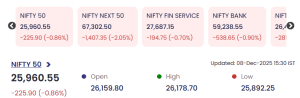
The Indian equity market extended its downward trend on 8 December 2025, with the benchmark Nifty 50 closing at 25,960.55, down 225.90 points (–0.86%) by 15:30 IST.
Broader indices recorded even steeper losses, pointing to widespread risk aversion and profit booking across the market.

Also Read: 8 December 2025 (Midcap): Nifty 50 Slumps 254 Points as Market Extends Losses; Select Small- and Mid-Cap Stocks Defy Weak Sentiment


Market Snapshot: Index Performance

  • NIFTY 50: 25,960.55 (–225.90 / –0.86%)

  • Open: 26,159.80

  • High: 26,178.70

  • Low: 25,892.25

8 December 2025Other major indices also traded sharply lower:
  • Nifty Next 50: –2.05%

  • Nifty Financial Services: –0.70%

  • Nifty Bank: –0.90%

Weak global cues and sectoral rotation contributed to the subdued sentiment across the board.


Top Gainers: Select Counters Witness Strong Momentum

Despite overall weakness, several stocks posted impressive gains driven by strong volumes and investor interest:

Screenshot 2025 12 08 235620

SYMBOL LTP CHNG %CHNG VOLUME (Lakhs) VALUE (₹ Cr)
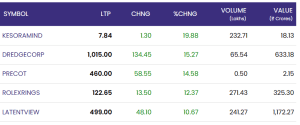
KESORAMIND 7.84 +1.30 +19.88% 232.71 18.13
DREDGECORP 1,015.00 +134.45 +15.27% 65.54 633.18
PRECOT 460.00 +58.55 +14.58% 0.50 2.15
ROLEXRINGS 122.65 +13.50 +12.37% 271.43 325.30
LATENTVIEW 499.00 +48.10 +10.67% 241.27 1,172.27

Market Highlights

  • KESORAMIND surged nearly 20%, continuing its sustained upward momentum with high liquidity.

  • DREDGECORP recorded a strong rally backed by ₹633 crore in traded value, signalling institutional action.

  • LATENTVIEW posted double-digit gains with exceptionally high turnover (₹1,172 crore), reflecting robust investor confidence.

  • Mid-cap performers like PRECOT and ROLEXRINGS also defied market weakness.


Top Losers: Heavy Selling in Select Mid- and Large-Cap Stocks

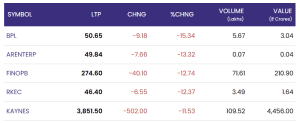
Sharp declines were witnessed in several stocks, led by steep corrections in high-volatility counters:

Screenshot 2025 12 08 235627

SYMBOL LTP CHNG %CHNG VOLUME (Lakhs) VALUE (₹ Cr)
BPL 50.65 –9.18 –15.34% 5.67 3.04
ARENTERP 49.84 –7.66 –13.32% 0.07 0.04
FINOPB 274.60 –40.10 –12.74% 71.61 210.90
RKEC 46.40 –6.55 –12.37% 3.49 1.64
KAYNES 3,851.50 –502.00 –11.53% 109.52 4,456.00

Key Observations

  • KAYNES Technology saw a significant decline of ₹502 per share, with massive turnover of ₹4,456 crore, reflecting strong institutional selling.

  • FINOPB and BPL dropped sharply amid high volatility and weak sentiment in small- and mid-cap pockets.

  • Across the losers’ list, all counters witnessed double-digit percentage declines, reinforcing broad-based market pressure.


Conclusion: 8 December 2025

The market on 8 December 2025 witnessed intensified selling across benchmark and broader indices. However, selective strength in mid-cap and analytics/tech-driven counters like DREDGECORP and LATENTVIEW provided some resilience.

Analysts expect volatility to remain elevated in the near term, with global cues and institutional flows likely to guide further market direction.


For real time stock Updates, visit NSE website.

8 December 2025 (Midcap): Nifty 50 Slumps 254 Points as Market Extends Losses; Select Small- and Mid-Cap Stocks Defy Weak Sentiment

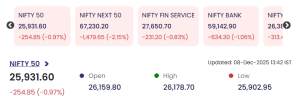
Indian equity markets continued to face selling pressure on 8 December 2025, with the benchmark Nifty 50 declining 254.85 points (-0.97%) to 25,931.60 by 13:42 IST. The fall was accompanied by deeper corrections in the broader market, with the Nifty Next 50, Financial Services, and Bank Nifty indices registering sharper declines.

Global market weakness, profit booking, and increased volatility weighed on investor sentiment, dragging major sectoral indices into negative territory.

Also Read: 8 December 2025 (Opening): Nifty 50 Declines 104 Points Amid Broad-Based Selling; Select Small-Cap Stocks Shine Despite Market Weakness


Market Snapshot: Index Performance

  • NIFTY 50: 25,931.60 (–254.85 / –0.97%)

  • Open: 26,159.80

  • High: 26,178.70

  • Low: 25,902.95

8 December 2025Other key indices recorded steep declines:
  • Nifty Next 50: –2.15%

  • Nifty Fin Service: –0.83%

  • Nifty Bank: –1.06%

The downturn signals continued caution among investors, with selling pressure intensifying across high-beta sectors.


Top Gainers: Select Stocks Rally Despite Market Selloff

Several small- and mid-cap stocks bucked the broader market trend, registering substantial gains:

Screenshot 2025 12 08 134247

SYMBOL LTP CHNG %CHNG VOLUME (Lakhs)
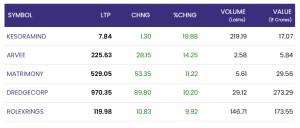
KESORAMIND 7.84 +1.30 +19.88% 219.19
ARVEE 225.63 +28.15 +14.25% 2.58
MATRIMONY 529.05 +53.35 +11.22% 5.61
DREDGECORP 970.35 +89.80 +10.20% 29.12
ROLEXRINGS 119.98 +10.83 +9.92% 146.71

Key Observations

  • KESORAMIND surged nearly 20% with exceptionally high volumes (219 lakh shares), indicating strong speculative interest.

  • DREDGECORP saw a sharp rise supported by significant value turnover (₹273 crore), suggesting institutional participation.

  • ROLEXRINGS, ARVEE, and Matrimony.com displayed strong upward momentum despite overall market weakness.


Top Losers: Heavy Selling Hits High-Value Counters

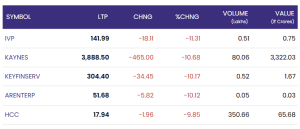
Several mid- and large-cap names witnessed steep declines as selling intensified:

Screenshot 2025 12 08 134253

SYMBOL LTP CHNG %CHNG VOLUME (Lakhs)
IVP 141.99 –18.11 –11.31% 0.51
KAYNES 3,888.50 –465.00 –10.68% 80.06
KEYFINSERV 304.40 –34.45 –10.17% 0.52
ARENTERP 51.68 –5.82 –10.12% 0.05
HCC 17.94 –1.96 –9.85% 350.66

Key Observations

  • Kaynes Technology witnessed a major correction of ₹465 per share, with heavy trading volume exceeding 80 lakh shares.

  • HCC showed massive volume activity (350 lakh shares) but slumped nearly 10% on heightened selling.

  • Across the list, all top losers recorded double-digit percentage declines, suggesting broad-based profit booking.


Conclusion: 8 December 2025

The market on 8 December 2025 reflected heightened volatility, with benchmark indices sliding sharply and broader indices showing even deeper corrections. However, selective buying in small- and mid-cap stocks provided pockets of resilience amid the downturn.

Analysts expect short-term volatility to persist, driven by global cues and domestic institutional flows, while stock-specific action is likely to continue in the broader market space.


For real time stock Updates, visit NSE website.

8 December 2025 (Opening): Nifty 50 Declines 104 Points Amid Broad-Based Selling; Select Small-Cap Stocks Shine Despite Market Weakness

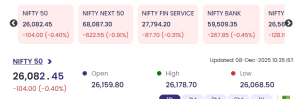
The Indian equity market witnessed mild pressure in early trade on 8 December 2025, with the benchmark Nifty 50 slipping 104 points (-0.40%) to 26,082.45 by 10:35 AM IST. Despite the subdued sentiment in frontline indices, several small-cap and mid-cap stocks saw robust buying interest, posting double-digit gains.

The broader market trend reflected a phase of profit booking following recent rallies, as key sectoral indices—Nifty Bank, Nifty Fin Service, and Nifty Next 50—also traded in the red.

Also Read: December 5, 2025: Nifty 50 Ends Higher Above 26,180; Financials and Banking Stocks Push Markets Up as Broader Indices Show Strength


Market Snapshot: Index Performance

  • Nifty 50: 26,082.45 (–104.00 / –0.40%)

  • Open: 26,159.80

  • High: 26,178.70

  • Low: 26,068.50

Other major indices also saw declines:

  • 8 December 2025Nifty Next 50: –0.91%

  • Nifty Fin Service: –0.31%

  • Nifty Bank: –0.45%

The weak sentiment suggests continued global uncertainty, sectoral rotation, and selective accumulation in outperforming small-cap counters.


Top Gainers: Small-Caps Lead with Double-Digit Gains

Despite the overall negative market breadth, several stocks delivered impressive early-session gains:

Screenshot 2025 12 08 103621

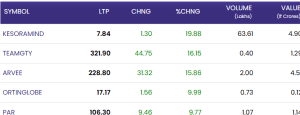
SYMBOL LTP CHNG %CHNG VOLUME (Lakhs)
KESORAMIND 7.84 +1.30 +19.88% 63.61
TEAMGTY 321.90 +44.75 +16.15% 0.40
ARVEE 228.80 +31.32 +15.86% 2.00
ORTINGLOBE 17.17 +1.56 +9.99% 0.73
PAR 106.30 +9.46 +9.77% 1.07

Key Observations

  • Strong accumulation was seen in Kesoram Industries (KESORAMIND) with a surge of nearly 20% and high volume of 63.61 lakh shares.

  • TEAMGTY and ARVEE saw double-digit percentage jumps, signalling robust buying interest from investors despite volatile market conditions.

  • The gainers list was dominated by small-cap names, indicating continued retail participation and selective sectoral resilience.


Top Losers: Profit Booking Hits Select Mid-Cap Stocks

Several mid-cap counters witnessed notable declines, reflecting profit booking and cautious investor sentiment:

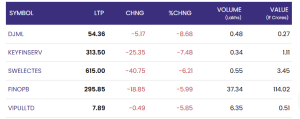
Screenshot 2025 12 08 103629

SYMBOL LTP CHNG %CHNG VOLUME (Lakhs)
DJML 54.36 –5.17 –8.68% 0.48
KEYFINSERV 313.50 –25.35 –7.48% 0.34
SWELECTES 615.00 –40.75 –6.21% 0.55
FINOPB 295.85 –18.85 –5.99% 37.34
VIPULLTD 7.89 –0.49 –5.85% 6.35

Key Observations

  • DJML led the losers’ chart with an 8.68% decline, reflecting weakness in micro-cap sentiment.

  • FINOPB recorded significant value-wise turnover (₹114 crore), suggesting heavy institutional profit taking.

  • Keyfinserv and Swelect Energy (SWELECTES) also saw sharp drops, dragging down the mid-cap segment.


Conclusion: 8 December 2025

Market action on 8 December 2025 reflected broad-based selling in benchmark indices while strong momentum persisted in niche small-cap pockets. The divergence between frontline and smaller indices suggests rotation of capital and selective opportunity-driven buying.

With global cues, macroeconomic data, and institutional flows influencing sentiment, analysts expect volatility to remain elevated in the near term.


For real time stock Updates, visit NSE website.

Bengal Fan Touches Virat Kohli Feet in Ranchi ODI 2025

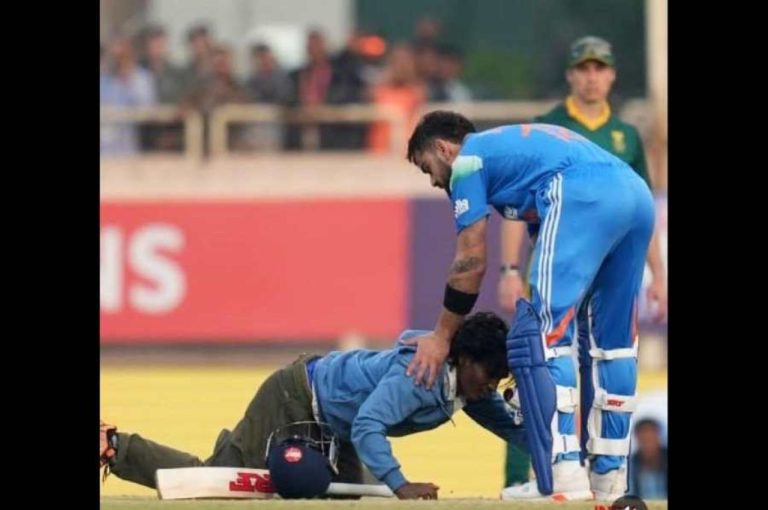
Bengal Fan Touches Virat Kohli Feet: The Bengal Fan Touches Virat Kohli’s Feet 2025 incident has become a defining story in Indian cricket culture. On December 1, 2025, a young tribal student from Arambagh, Bengal, breached multiple layers of security at the JSCA International Stadium in Ranchi during the India–South Africa ODI. He leapt across barriers, ran onto the pitch, and fell at Kohli’s feet, seeking blessings from his idol. The act, though born of devotion, led to his arrest and sparked debates about fandom, security, and governance.


2. The Fan’s Identity

The fan was identified as Soubhik Murmu, a first‑year undergraduate student at Kabikankan Mukundaram Mahavidyalay in Kesabpur, Arambagh.

  • He belongs to a tribal family in Madhurpur village, Hooghly district.
  • His father, Samar Murmu, is a traditional medicine practitioner.
  • His mother, Mangali, and younger sister live in the same village.
  • Soubhik had long idolized Kohli, keeping his photos on his phone and cycling to Chennai in 2024 to watch an IPL match.

This reflects the depth of cricket fandom in rural Bengal.


3. The Incident in Ranchi

Details of the dramatic moment:

  • Soubhik jumped from the stands, crossed advertisement boards, and rolled onto the pitch.
  • Security personnel chased him but failed to stop his sprint.
  • He knelt before Kohli and touched his feet.
  • Kohli, who had just scored a century (135 off 120 balls), looked surprised but calm.
  • India won the match by 17 runs, but the incident overshadowed celebrations.

This highlights the intersection of passion and security lapses in stadiums.


4. The Parents’ Defense

Soubhik’s father, Samar Murmu, said:

  • “My son is mad about cricket and a die‑hard fan of Virat Kohli. Whatever he did was without intention to harm anyone. It was pure love.”
  • He expressed shock at the arrest and appealed for leniency.
  • His mother added that Soubhik had vowed not to cut his hair until he met Kohli.

Their defense underscores the emotional and cultural dimensions of fandom.


5. Governance and Security Concerns

The incident exposes systemic governance challenges:

  • Failure of stadium security to prevent pitch invasion.
  • Risk to player safety despite multiple barriers.
  • Pressure on police to enforce strict rules.
  • Debate on balancing fan passion with discipline.

6. Political Fallout

The controversy has political consequences:

  • Local BJP MLA and district president were contacted to secure bail.
  • Opposition parties debated the role of governance in managing stadium security.
  • Civil society discussed the cultural meaning of fandom in tribal communities.

7. Historical Context: Fans and Cricket Icons

India has witnessed similar incidents:

  • Fans rushing to touch Sachin Tendulkar’s feet.
  • Stadium invasions during Dhoni’s matches in Ranchi.
  • Global parallels with football fans invading pitches to meet Lionel Messi or Cristiano Ronaldo.

This reflects a global culture of devotion to sports icons.


8. Broader Implications for Democracy and Society

The incident raises fundamental questions:

  • Can democracy thrive if passion overrides rules?
  • Will governance prioritize security over fan experience?
  • How can society balance devotion with discipline?

9. Bengal Fan Touches Virat Kohli Feet: Recommendations for Reform

Experts suggest:

  • Improved stadium security protocols.
  • Fan engagement zones to allow safe interaction.
  • Awareness campaigns on respecting boundaries.
  • Community outreach to tribal youth passionate about sports.

10. Comparative Lessons from Other Countries

Other nations have faced similar challenges:

  • UK football stadiums impose strict bans on pitch invasions.
  • Australia introduced fan zones for safe player interaction.
  • India’s case reflects a national struggle for balancing passion with order.

11. Human Stories: Families and Communities

Villagers described:

  • Pride in Soubhik’s devotion to Kohli.
  • Fear of legal consequences.
  • Hope for leniency and recognition of his passion.

These stories highlight the human dimension of governance and fandom.


12. Scientific and Cultural Impact

Researchers emphasized:

  • Fandom can trigger adrenaline‑driven impulsive acts.
  • Tribal communities often integrate sports into cultural identity.
  • Cricket serves as a unifying force across India.

This adds a scientific and cultural perspective to the incident.


13. Conclusion: A Test of Governance and Passion

The Bengal Fan Touches Virat Kohli’s Feet 2025 is more than a stadium incident — it is a test of governance, democracy, and cultural identity. Unless systemic reforms are undertaken, players will remain vulnerable, and public trust in institutions will erode.

The controversy underscores the urgency of balancing fan devotion with security, governance accountability, and cultural sensitivity.


🔗 Government External Links

For further reading and official updates, here are relevant government sources:

Also read: Home | Channel 6 Network – Latest News, Breaking Updates: Politics, Business, Tech & More

Supreme Court to Examine NGO Plea on Refugee Citizenship Protection 2025

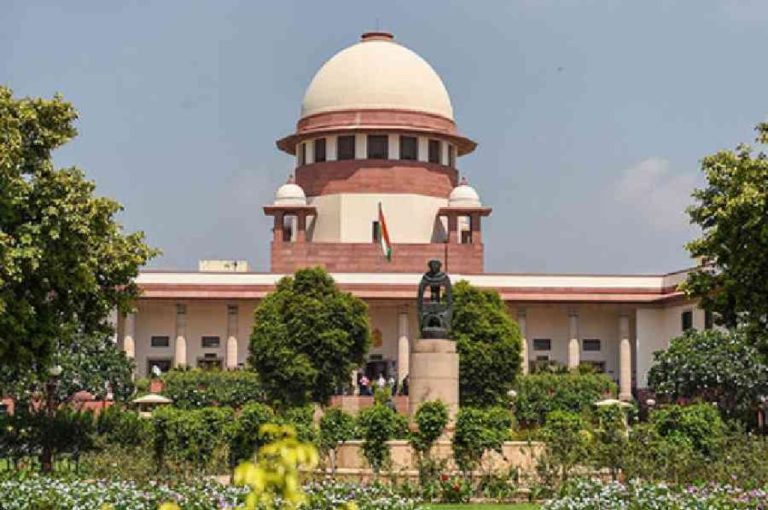
Supreme Court to Examine NGO Plea: The Supreme Court NGO Plea Refugee Citizenship Protection 2025 case has become a defining moment in India’s democratic and constitutional journey. On December 2, 2025, the Supreme Court agreed to hear a petition filed by NGO Atmadeep, challenging the disenfranchisement of Hindu, Sikh, Buddhist, Jain, and Christian refugees who entered India before 2014 but have not yet been granted citizenship under the Citizenship Amendment Act (CAA), 2019. The plea seeks protection for these refugees from being struck off electoral rolls during the ongoing Special Intensive Revision (SIR) in Bengal.


2. Background: The Citizenship Amendment Act (CAA), 2019

The CAA was passed to grant citizenship to persecuted minorities from Pakistan, Bangladesh, and Afghanistan.

  • Eligible groups: Hindus, Sikhs, Buddhists, Jains, Parsis, and Christians.
  • Cut‑off date: Refugees who entered India before December 31, 2014.
  • Exclusion: Muslims were not included, sparking nationwide protests.

Despite the law, thousands of applications remain pending, leaving refugees in a legal limbo.


3. The NGO’s Plea

NGO Atmadeep argued:

  • Refugees meeting CAA criteria have not been granted citizenship.
  • Their names risk deletion from electoral rolls during SIR.
  • This violates constitutional guarantees of equality and dignity.

The plea highlights the intersection of refugee rights and electoral democracy.


4. The Supreme Court’s Response

Chief Justice Surya Kant, heading the bench, issued notices to:

  • The Union Government.
  • The Election Commission of India (ECI).
  • The Government of West Bengal.

The matter was posted for further hearing on December 9, 2025.


5. The Calcutta High Court’s Earlier Judgment

Earlier, the Calcutta High Court had refused to grant protection to refugees.

  • It held that pending citizenship applications did not entitle refugees to voting rights.
  • The NGO appealed to the Supreme Court.

This reflects the judicial divergence on refugee rights.


6. Governance Challenges

The incident highlights systemic governance failures:

  • Delays in processing citizenship applications.
  • Weak communication between Centre and states.
  • Risk of disenfranchisement during electoral roll revisions.
  • Lack of clarity on refugee documentation.

7. Political Fallout

The controversy has political consequences:

  • TMC accused the Centre of weaponizing SIR to exclude minorities.
  • BJP defended the process as lawful.
  • Civil society debated governance failures in refugee protection.

The issue has become a flashpoint ahead of the 2026 Assembly elections.


8. Historical Context: Refugees in Bengal

Bengal has long hosted refugees:

  • Partition of 1947 brought millions from East Pakistan.
  • 1971 Bangladesh Liberation War saw another influx.
  • Refugees integrated into society but faced documentation challenges.

The current crisis echoes these historic refugee struggles.


9. Supreme Court to Examine NGO Plea: Broader Implications for Democracy

The incident raises fundamental questions:

  • Can democracy thrive if refugees remain disenfranchised?
  • Will governance prioritize compassion over exclusion?
  • How can development balance citizenship with human dignity?

10. Recommendations for Reform

Experts suggest:

  • Fast‑track processing of CAA applications.
  • Judicial oversight of electoral roll revisions.
  • Community awareness campaigns on refugee rights.
  • Transparent grievance redressal mechanisms.

11. Comparative Lessons from Other Countries

Other nations have faced similar challenges:

  • Germany integrated refugees from Syria with legal safeguards.
  • Canada granted asylum seekers pathways to citizenship.
  • India’s case reflects a national struggle for balancing law, politics, and compassion.

12. Human Stories: Refugees in Distress

Refugees described:

  • Anxiety about losing voting rights.
  • Fear of being branded “illegal aliens.”
  • Hope for Supreme Court protection.

These stories highlight the human cost of governance failures.


13. Law Enforcement and Accountability

Courts emphasized:

  • States must act within constitutional limits.
  • Welfare cannot override statutory boundaries.
  • Accountability measures must be enforced.

This reflects the importance of institutional safeguards in democracy.


14. Conclusion: A Test of Governance and Citizenship

The Supreme Court NGO Plea Refugee Citizenship Protection 2025 is more than a legal case — it is a test of governance, democracy, and human dignity. Unless systemic reforms are undertaken, refugees will remain vulnerable, and public trust in institutions will erode.

The controversy underscores the urgency of balancing citizenship law with compassion, electoral integrity, and governance accountability.


🔗 Government External Links

For further reading and official updates, here are relevant government sources:

Also read: Home | Channel 6 Network – Latest News, Breaking Updates: Politics, Business, Tech & More

Elephant Deaths in Jalpaiguri Spur Train Speed Curbs 2025


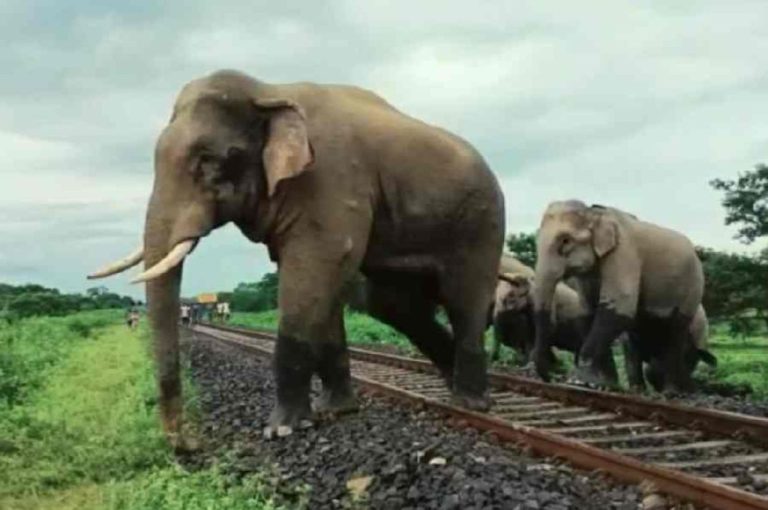
The Elephant Deaths in Jalpaiguri Spur Train Speed Curbs 2025 story has become a defining moment in India’s wildlife conservation and governance. On December 1, 2025, two elephants were killed after being struck by a goods train near Khalaigram in Jalpaiguri district. A third tusker was injured. The incident has reignited debates about railway safety, wildlife corridors, and the urgent need for speed restrictions in sensitive forest zones.


2. The Incident at Khalaigram

Details of the tragedy:

  • A goods train from Alipurduar to New Jalpaiguri collided with a herd of elephants.
  • Two elephants died instantly.
  • A third tusker sustained minor injuries and was tracked by forest officials.
  • The herd had wandered into Khalaigram after losing its usual route from Cooch Behar forests.

This reflects the fragility of wildlife corridors amid human infrastructure expansion.


3. The Old Jumbo Corridor

Khalaigram is not part of any designated elephant corridor.

  • Forest officials suspect elephants used it historically as a “light corridor.”
  • No speed restrictions were imposed on trains in this area.
  • The incident has prompted investigations into past elephant movement patterns.

This highlights the importance of mapping and protecting secondary wildlife corridors.


4. Governance Response

Officials announced:

  • Data collection on elephant movement over the past decade.
  • Consideration of speed curbs if evidence of corridor use is confirmed.
  • Monitoring instructions for Khalaigram and surrounding areas.

This reflects governance accountability in wildlife protection.


5. The Role of Forest Officers

Forest officers played a crucial role:

  • Tracked the injured tusker to Binnaguri–Moraghat forest stretch.
  • Ensured medical monitoring of the animal.
  • Coordinated with railway authorities for preventive measures.

Their dedication underscores the importance of frontline enforcement in conservation.


6. Historical Context: Elephant Corridors in Bengal

Bengal has long been a hotspot for elephant movement:

  • The Dooars region connects Assam, Bhutan, and Bengal forests.
  • Elephants frequently cross railway tracks between Siliguri and Alipurduar.
  • Past accidents have killed dozens of elephants.

This incident echoes a decades‑long struggle to balance railways and wildlife.


7. Political Fallout

The controversy has political consequences:

  • Conservationists accused authorities of negligence.
  • Civil society demanded stricter railway regulations.
  • The issue has become a flashpoint ahead of the 2026 Assembly elections.

8. Broader Implications for Democracy

The incident raises fundamental questions:

  • Can democracy thrive if wildlife heritage is endangered?
  • Will governance prioritize conservation over economic speed?
  • How can development balance infrastructure with ecological preservation?

9. Recommendations for Reform

Experts suggest:

  • Mandatory speed restrictions in all potential corridors.
  • Advanced warning systems for train drivers.
  • Infrared and drone monitoring of elephant movement.
  • Community awareness campaigns on wildlife protection.

10. Comparative Lessons from Other States

Other states have undertaken similar initiatives:

  • Assam imposed speed curbs in Kaziranga corridors.
  • Uttarakhand introduced elephant underpasses near Rajaji National Park.
  • Bengal’s case reflects a national struggle for wildlife‑friendly infrastructure.

11. Human Stories: Communities in Distress

Villagers near Khalaigram described:

  • Shock at seeing elephants killed.
  • Fear of losing cultural heritage tied to elephants.
  • Hope for stricter railway rules.

These stories highlight the human dimension of conservation failures.


12. Scientific and Environmental Impact

Researchers emphasized:

  • Elephants are keystone species maintaining forest ecosystems.
  • Railway accidents disrupt herd structures.
  • Habitat fragmentation increases conflict with humans.

This adds a scientific perspective to the crisis.


13. Conclusion: A Test of Governance and Conservation

The Elephant Deaths in Jalpaiguri Spur Train Speed Curbs 2025 is more than a local tragedy — it is a test of governance, democracy, and conservation. Unless systemic reforms are undertaken, elephants will remain vulnerable, and public trust in institutions will erode.

The incident underscores the urgency of balancing wildlife preservation with infrastructure development and governance accountability.


🔗 Government External Links

For further reading and official updates, here are relevant government sources:

Also read: Home | Channel 6 Network – Latest News, Breaking Updates: Politics, Business, Tech & More