Friday, May 15, 2026
Home Blog Page 316

Devastating Impact On Kashmir Tourism After Red Fort Blast

Jammu & Kashmir – Kashmir tourism has received a devastating second blow following the Red Fort blast in Delhi, compounding the already severe impact of the Pahalgam attack earlier this year. The industry, which had been struggling to recover from the April 22 incident, now faces an even bleaker situation as security concerns continue to deter potential visitors. The involvement of Kashmir residents in the Delhi explosion has created fresh hesitation among tourists, pushing the already fragile Kashmir tourism sector into deeper crisis.

The suicide car blast that rocked Delhi on November 10, driven by a Kashmir doctor, killed 12 people and injured many others. The National Investigation Agency has arrested six people linked to a “white collar terror module,” including two Kashmir doctors working outside the Union territory. This development has significantly impacted Kashmir tourism perceptions nationwide.

Industry Leaders Express Deep Concern

Sajad Kralyari, secretary general of the Travel Agents Association of Kashmir, expressed the gravity of the situation facing Kashmir tourism. “After Pahalgam, the Delhi blast has been another setback for our tourism. The turnout is very low, almost negligible than what was expected,” he stated, highlighting the dramatic decline in visitor numbers.

Kralyari further explained that the involvement of Kashmiri residents in the Delhi blast, combined with the accidental blast at Nowgam police station on November 14, has made people increasingly hesitant to visit the region. This concatenation of security incidents has created a perfect storm for Kashmir tourism, which had been showing tentative signs of recovery.

Pahalgam Attack’s Lasting Impact

The April 22 Pahalgam attack, which left 26 people dead—most of them tourists—in Baisaran meadow in south Kashmir, had already dealt a crushing blow to Kashmir tourism. The immediate aftermath saw a rapid flight of tourists out of the valley, prompting the Jammu and Kashmir government to close more than 50 tourist destinations across the Union territory as a precautionary measure.

After conducting comprehensive security reviews, authorities reopened around 28 tourist destinations in a phased manner. Tour operators had been hopeful when Kashmir tourism started showing signs of recovery in October, primarily due to early snowfall and concerted government efforts to attract more visitors. However, these green shoots of recovery were short-lived.

Occupancy Rates Hit Rock Bottom

Wahid Malik, former president of Kashmir Hotels and Restaurant Owners Federation and current president of the Jammu and Kashmir chapter of SKAL International Club, provided stark statistics about the current state of Kashmir tourism. “The business is very less now. The April 22 attack caused the real problem but the Delhi blast and now Nowgam blast have caused further fear and downfall,” he explained.

According to Malik, hotel occupancy rates currently stand at a dismal 2 to 5 percent, representing an unprecedented crisis for Kashmir tourism infrastructure. He acknowledged that the marginal improvement witnessed in September-October had been primarily due to holidays and the festival season across the country, rather than any genuine recovery in confidence.

Contrasting with Record-Breaking Years

The current crisis stands in sharp contrast to the remarkable success Kashmir tourism had enjoyed over the previous three years. The region witnessed back-to-back record tourist arrivals during this period. According to official numbers, 34.98 lakh tourists visited the Himalayan valley last year, up from 31.55 lakh visitors in 2023 and 26.73 lakh in 2022.

This year, Kashmir tourism numbers had reached approximately 6 lakh visitors until the Pahalgam incident in April. Post-attack, arrivals have plummeted to just a few thousand, representing a catastrophic decline that threatens the livelihoods of thousands dependent on the industry.

Hope Pinned on Winter Season

Despite the grim situation, neither Kashmir tourism players nor government authorities have completely lost hope. Chief Minister Omar Abdullah and many others had pinned their expectations on favorable weather conditions to attract more tourists, especially following early snow activity in the valley in early October.

The Jammu and Kashmir government continues its promotional efforts, currently participating in the 56th International Film Festival of India in Goa 2025. A dedicated J&K pavilion has been established at the Waves Film Bazar to showcase the Union territory’s vibrant cinematic potential and promote it as a premier film shooting destination.

Winter Games Offer Ray of Hope

Darakshan Andrabi, Chairperson of the J&K Waqf Board, expressed optimism about Kashmir tourism revival during a tourism event in Srinagar. “The tourism footfall in Kashmir had been very good from 2019 onwards but some unfortunate incidents here plunged down the arrivals. But I am hopeful of this season when the Khelo India Winter Games are held in Gulmarg,” she stated.

Andrabi emphasized that snowfall transforms the region into a winter paradise, expressing confidence that hotels would not remain empty during the winter season. Kralyari also noted that Kashmir tourism typically receives visitors from Southern India during winter, particularly IT professionals from multinational companies who get holidays during Christmas and New Year.

The industry now anxiously awaits early and substantial snowfall, which could potentially revive Kashmir tourism fortunes and provide much-needed relief to an industry reeling from consecutive security setbacks. The coming months will determine whether the Valley can reclaim its position as a premier tourist destination or face a prolonged period of uncertainty.
Ramaphosa Modi Meeting: Delightful Exchange at G20 Summit in Johannesburg

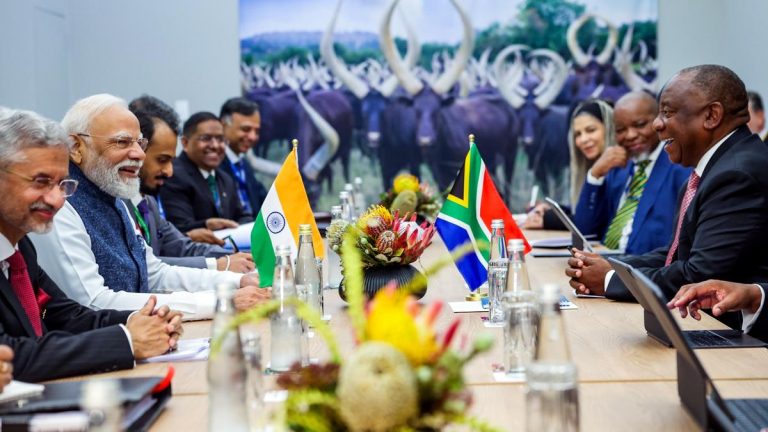
Johannesburg, South Africa – South African President Cyril Ramaphosa shared a memorable light-hearted moment with Indian Prime Minister Narendra Modi during their bilateral talks on Sunday, creating a warm atmosphere at the G20 Summit in Johannesburg. The Ramaphosa Modi exchange captured the friendly rapport between the two leaders as the South African President jokingly remarked that New Delhi should have warned him that hosting the G20 summit “is such a difficult task.” This candid moment reflected the strong personal chemistry and diplomatic camaraderie that characterizes India-South Africa relations.

The bilateral meeting between Ramaphosa Modi took place on the sidelines of what was a historic occasion—South Africa’s hosting of the first G20 Summit ever held on African soil. President Ramaphosa formally closed the summit on Sunday, announcing that the presidency would now transition to the United States. He ceremonially banged the Gavel of the G20, marking the conclusion of South Africa’s successful tenure as the host nation.

Gratitude and Humor Mark Delegation-Level Talks

During the India-South Africa delegation-level talks, President Ramaphosa expressed sincere gratitude to India for its support in hosting the G20 leaders’ summit. It was during these discussions that the memorable Ramaphosa Modi exchange occurred, creating a moment of levity amid serious diplomatic deliberations.

“Thank you for the support that India has given to South Africa in hosting G20…You should have told us that it is such a difficult task, maybe we would have run away,” Ramaphosa said with a giggle, drawing hearty laughter from Prime Minister Modi and all those present in the room. The spontaneous humor highlighted the ease and comfort that defines the Ramaphosa Modi relationship.

The South African leader went on to acknowledge that his country had learned valuable lessons from India’s experience. “We have learned a lot from your hosting of the G20 … and yours was spectacular… building … ours is really small,” Ramaphosa added, paying tribute to India’s successful presidency in 2023.

PM Modi’s Gracious Response

In characteristic diplomatic style, the Ramaphosa Modi interaction continued with Prime Minister Modi offering a gracious response to his counterpart’s modest assessment. “Small is always beautiful,” PM Modi replied, demonstrating the mutual respect and appreciation that underpins the bilateral relationship between the two nations.

This exchange between Ramaphosa Modi served as a reminder that even at the highest levels of international diplomacy, personal connections and genuine warmth can flourish, making complex negotiations and partnerships more effective and sustainable.

India’s Spectacular G20 Hosting in 2023

The reference during the Ramaphosa Modi talks to India’s hosting capabilities was well-deserved. In September 2023, India hosted the 18th G20 summit at the Bharat Mandapam in New Delhi, a state-of-the-art venue that was unveiled just ahead of the global event. The summit was widely praised for its impeccable organization, cultural showcasing, and diplomatic achievements.

One of the most significant accomplishments during India’s presidency in 2023 was the inclusion of the African Union as a member of the G20. This historic decision, championed by India, expanded the forum’s representation and gave greater voice to the African continent in global economic governance—a development that President Ramaphosa undoubtedly appreciated.

Comprehensive Bilateral Cooperation Discussed

Beyond the lighter moments, the Ramaphosa Modi meeting addressed substantial bilateral issues. The two leaders discussed cooperation in various critical areas, including trade, investment, mining, critical minerals, artificial intelligence, and food security. These discussions reflected the multifaceted nature of India-South Africa relations and the potential for expanded partnership across diverse sectors.

After the bilateral meeting, Prime Minister Modi posted on X: “Had an excellent meeting with President Cyril Ramaphosa during the G20 Summit in Johannesburg.” He elaborated that the Ramaphosa Modi discussions reviewed the full range of the India-South Africa partnership, “especially in boosting linkages of commerce, culture, investment and diversifying cooperation in technology, skilling, AI, critical minerals and more.”

Wildlife Conservation and BRICS Cooperation

The Ramaphosa Modi meeting also touched upon wildlife conservation initiatives. Prime Minister Modi thanked President Ramaphosa for South Africa’s cheetah relocation program to India and extended an invitation for South Africa to join the International Big Cat Alliance led by New Delhi. This environmental cooperation dimension adds another layer to the comprehensive bilateral relationship.

Significantly, President Ramaphosa assured South Africa’s complete support to India for its upcoming chairship of BRICS in 2026. This commitment from the Ramaphosa Modi talks signals continued cooperation within the broader framework of emerging economies and demonstrates South Africa’s confidence in India’s leadership capabilities.

Looking Forward: Strengthening Global South Partnership

The warm Ramaphosa Modi exchange at the G20 Summit represents more than just a pleasant diplomatic moment. It symbolizes the deep and growing partnership between India and South Africa, two leading voices of the Global South. As both nations continue to play increasingly important roles in shaping global economic governance and addressing shared challenges, the personal rapport between leaders like Ramaphosa Modi becomes an invaluable asset in fostering cooperation and understanding.

Prime Minister Modi concluded his remarks by congratulating President Ramaphosa for South Africa’s successful G20 Presidency, acknowledging the nation’s achievement in hosting Africa’s first-ever G20 Summit and setting the stage for continued collaboration between these two important democracies.

Tejas Crash: Heartbreaking Farewell to Wing Commander Namansh Syal

Himachal Pradesh – Kangra district in Himachal Pradesh stood still on Sunday as hundreds gathered to pay their last respects to Wing Commander Namansh Syal, 37, who was killed in the Tejas crash at the Dubai air show on November 21. The air was filled with prayers mingled with tears as the mortal remains of the brave pilot arrived in his native village Patialkar, creating an atmosphere charged with both pride and profound grief. The entire region came together to honor a son who had given his life serving the nation.

The Tejas crash that claimed the life of Wing Commander Namansh Syal shocked the aviation community and the nation at large. The incident occurred while he was flying a Tejas Light Combat Aircraft (LCA Mk-1) during the prestigious international air show in Dubai, where India was showcasing its indigenous fighter aircraft capabilities to the world.

Final Journey Home with Full Military Honours

The mortal remains were first brought to Sulur Air Force Base in Tamil Nadu on Sunday morning, where they were received with full military honours befitting a fallen hero. The Indian Air Force paid tribute to one of its finest pilots, acknowledging the supreme sacrifice made in the line of duty. Subsequently, the body arrived at Kangra airport, marking the beginning of the final journey home.

From the airport, an army truck bedecked with flowers carried the mortal remains to his ancestral village Patialkar for the final rites. A long convoy of armed forces and civilian vehicles followed the truck, demonstrating the deep respect and admiration the community held for the fallen pilot. The procession moved slowly through the streets as onlookers paid their respects to the hero who had made the ultimate sacrifice.

A Village United in Grief and Pride

Upon the arrival of the martyr’s body in Patialkar village, the entire area was engulfed in an overwhelming mix of grief and pride. From colleagues to friends, hundreds joined Wing Commander Namansh Syal’s last journey, creating a sea of mourners determined to honor his memory. Present officials, public representatives, and military officers expressed their deepest condolences to the bereaved family, assuring them that the nation would always remember the sacrifice of the martyred pilot.

The Tejas crash victim’s wife, Wing Commander Afshan Akhtar, herself an IAF officer, displayed remarkable courage despite her overwhelming grief. Sobbing inconsolably yet maintaining composure, she managed a farewell salute to her husband before his mortal remains were consigned to flames. The couple’s six-year-old daughter and Namansh’s parents stood by as the nation bid farewell to their beloved family member.

Father’s Poignant Words Echo National Loss

Jagan Nath Syal, the father of the Tejas crash victim and himself a former Indian Army serviceman who later worked in the education department before retiring as a principal, spoke with remarkable composure about his loss. “I have lost my son, but the country has lost a promising pilot. It is not just my personal loss; it is the nation’s loss. Not many get the honour of serving the country,” he stated, capturing the sentiment of everyone present.

Reflecting on his son’s exceptional qualities, Jagan Nath shared: “He was outstanding since childhood. He always excelled and never disappointed us. In every competition he participated in, he emerged at the top. The last time I spoke to him, I had asked him to share photos, and he told me to watch it on YouTube.” These words painted a picture of a dedicated professional who took pride in his service.

Also Read: Bihar Result Mandate Infiltrators: Shah’s Powerful Warning to Opposition Parties

A Distinguished Career Cut Short

Wing Commander JK Sharma (retired), who knew the Tejas crash victim since 2005, provided insight into Namansh’s exceptional career. “I knew him since 2005. He was a wonderful pilot. From the training days he was good at what he did. He was actually the best. He passed with the sword of honour from NDA. I was with him in NDA as a course-mate. We did our flying training together,” Sharma recalled.

He continued: “Tejas crash victim, Namansh Sayal was good at flying that is why he got chosen to fly fighters from IAF. For about 8-9 years he flew the MiG-21. We all know it is kind of a tough jet to fly but he did it for nine years. He was a qualified flying instructor for three years and he trained a lot of young people who come to the Air Force. Then he was chosen to fly the LCAs and I think for the last around four years he flew the LCAs.”

Remembering a Simple, Brilliant Soul

Villagers remembered the Tejas crash victim as an athletic, simple, and intelligent person who never forgot his roots. Sandeep Kumar, a villager, said: “The whole village is in grief and sorrow. He was like a younger brother to us and it is our personal loss. He was very promising but a simple person and used to meet everyone cordially. He had met me a few months ago when he visited the village.”

Distinguished dignitaries including AYUSH, youth services and sports minister Yadvinder Goma, Nagrota Bagwan MLA and tourism corporation chairman RS Bali, Kangra deputy commissioner Hemraj Bairwa, Dehra superintendent of police Mayank Chaudhary, former minister Vipin Singh Parmar, and senior officers of the Indian Army and Air Force paid tribute to the fallen hero, ensuring that Wing Commander Namansh Syal’s sacrifice will never be forgotten.

Zelensky Trump Peace Plan Update: Dramatic Shift After ‘Zero Gratitude’ Accusation

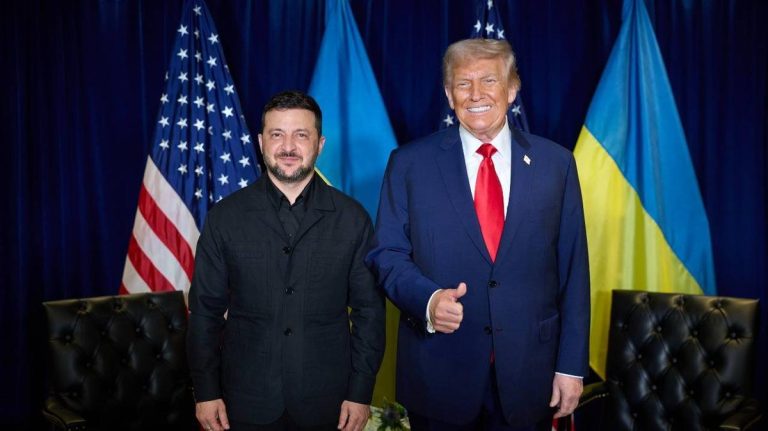
Washington D.C. – In a dramatic turn of events highlighting the complex dynamics between Washington and Kyiv, Ukrainian President Volodymyr Zelensky on Sunday appeared to soften his tone toward the United States after President Donald Trump publicly accused Ukraine of showing “zero gratitude” for America’s latest peace proposal. The Zelensky Trump exchange unfolded on social media platforms, capturing international attention as sensitive Geneva-based negotiations to end the war with Russia reached a critical juncture.

The public confrontation between Zelensky Trump began when the US President used his Truth Social account to express frustration with Ukraine’s leadership. Trump, who has oscillated sharply in his approach to Ukraine since the start of his second term, claimed that Ukraine’s leadership “EXPRESSED ZERO GRATITUDE FOR OUR EFFORTS,” referring to his peace blueprint that incorporates several of Moscow’s demands.

Zelensky’s Conciliatory Response

Hours after Trump’s pointed criticism, Zelensky Trump relations took a conciliatory turn when the Ukrainian President responded with a markedly diplomatic post on X. Zelensky wrote: “Ukraine is grateful to the United States, to every American heart, and personally to President Trump for the assistance that — starting with the Javelins — has been saving Ukrainian lives.” This carefully crafted response appeared designed to defuse tensions and maintain crucial American support during a critical phase of peace negotiations.

The Zelensky Trump exchange demonstrated the delicate balance Ukraine must maintain in its relationship with its most important Western ally. While Ukraine depends heavily on US military and financial assistance, the public nature of Trump’s criticism placed President Zelensky in a difficult position, requiring immediate diplomatic damage control.

Geneva Peace Negotiations Advance

As the Zelensky Trump public exchange played out online, negotiators from both countries were simultaneously huddled in Geneva, working to refine the controversial 28-point US draft plan. Ukrainian officials indicated that the latest version of the proposal shows movement in their favor, suggesting that behind-the-scenes diplomacy has yielded some positive results despite the public tensions.

Rustem Umerov, Ukraine’s security council secretary and lead negotiator, provided cautiously optimistic commentary on the negotiations. “The current version of the document, although still in the final stages of approval, already reflects most of Ukraine’s key priorities,” Umerov stated, signaling that Ukrainian concerns were being addressed in the revised proposal.

Controversial Elements of Trump’s Peace Plan

The original US blueprint presented by Trump had raised significant eyebrows in Kyiv and across Europe for conceding to several Russian demands. The proposal’s most controversial elements included requiring Ukraine to cede territory to Russia, reduce its military capabilities significantly, and pledge not to join NATO—all conditions that have been central to Moscow’s negotiating position since the conflict began.

However, the proposal also contained provisions more favorable to Ukraine, including broad security guarantees and a mechanism for using frozen Russian assets to fund Ukraine’s post-war reconstruction. These elements have provided some basis for continued negotiations despite Ukrainian reservations about territorial concessions.

Thanksgiving Deadline Looms

Adding urgency to the Zelensky Trump negotiations, President Trump has set a soft deadline of November 27, Thanksgiving Day in the United States, for Ukraine to decide on the proposal. However, Trump has hinted that the timeline could be extended if talks show meaningful progress, providing some flexibility in the negotiation process.

Productive Talks with Secretary Rubio

In Geneva, top Ukrainian officials held substantive talks with US Secretary of State Marco Rubio to assess the viability of Trump’s proposal. Rubio described the opening session as “probably the most productive and meaningful meeting” since the Trump administration took office, suggesting that despite the Zelensky Trump public tensions, working-level negotiations were proceeding constructively.

Also Read: India Canada Trade: Significant $50 Billion Target Set for 2030

Rubio informed reporters that both delegations would reconvene for a second round later Sunday, indicating momentum in the negotiation process. “This will ultimately have to be signed off by our presidents, although I feel very comfortable about that happening given the progress we’ve made,” Rubio stated, expressing optimism about reaching an agreement that both Zelensky Trump could endorse.

The Secretary of State emphasized that any final peace plan would require Russia’s approval as well, acknowledging the trilateral nature of any lasting settlement. Rubio was accompanied by Army Secretary Dan Driscoll and Trump’s special envoy Steve Witkoff, demonstrating the high-level American commitment to the negotiation process.

Navigating Complex Diplomatic Waters

The Zelensky Trump episode underscores the complexities facing Ukraine as it navigates between defending its sovereignty and maintaining vital international support. The public nature of Trump’s criticism and Zelensky’s measured response highlight the diplomatic tightrope both leaders must walk as they pursue a negotiated end to the conflict.

As negotiations continue in Geneva, the Zelensky Trump relationship will likely remain central to determining Ukraine’s future path. The coming days will reveal whether the diplomatic reconciliation witnessed on Sunday can translate into a peace agreement acceptable to Ukraine, the United States, and ultimately Russia, bringing an end to one of Europe’s most devastating conflicts in decades.

Justice Surya Kant: Historic Oath as 53rd Chief Justice of India

New Delhi – Justice Surya Kant officially takes oath as the 53rd Chief Justice of India on Monday, November 24, 2025, marking a significant milestone in the country’s judicial history. Succeeding Chief Justice Bhushan Gavai, who retired on Sunday evening, Justice Surya Kant brings with him an impressive record of constitutional rulings and judicial expertise spanning several decades. His appointment represents not just a transition in leadership but also the culmination of a remarkable journey from a small-town practitioner to the highest judicial office in the nation.

The oath-taking ceremony marks the beginning of a nearly 15-month tenure for Justice Surya Kant, who is scheduled to demit office on February 9, 2027, upon reaching the retirement age of 65 years. His appointment as CJI-designate was announced on October 30, 2025, following the constitutional convention of appointing the senior-most judge of the Supreme Court to the position.

From Humble Beginnings to Supreme Leadership

Born on February 10, 1962, in Hisar district of Haryana, Justice Surya Kant comes from a middle-class family background. His journey to becoming Chief Justice of India exemplifies the principle of meritocracy in the Indian judicial system. Rising through the ranks from the Bar as a small-town practitioner, Justice Surya Kant demonstrated exceptional legal acumen and dedication throughout his career, ultimately reaching the pinnacle of judicial service.

His academic credentials are equally impressive. Justice Surya Kant completed his Master’s degree in law from Kurukshetra University in 2011, securing “first class first” distinction. This academic excellence laid the foundation for his distinguished legal career, which has been marked by landmark judgments and significant contributions to constitutional jurisprudence.

Significant Constitutional Rulings and Judicial Contributions

Throughout his tenure at the Supreme Court, Justice Surya Kant has been associated with several groundbreaking constitutional rulings that have shaped contemporary Indian law. His involvement in the historic case concerning the abrogation of Article 370, which dealt with the special status of Jammu and Kashmir, stands as one of the most significant constitutional matters in recent Indian history. This ruling had far-reaching implications for the country’s federal structure and constitutional framework.

Justice Surya Kant also played a crucial role in the Pegasus spyware case, which raised critical questions about surveillance, privacy rights, and national security. His judicial approach to balancing individual freedoms with state interests has been widely recognized and appreciated by legal experts across the country.

Another notable contribution of Justice Surya Kant involved the revision of Bihar’s electoral rolls. He specifically directed the Election Commission to furnish details of 65 lakh voters omitted from the state’s draft electoral rolls. This intervention came while the Supreme Court was hearing petitions challenging the Commission’s decision to carry out a Special Intensive Revision of the voters list ahead of elections in Bihar, demonstrating his commitment to electoral integrity and democratic processes.

Career Trajectory and Notable Appointments

Before his elevation to the Supreme Court, Justice Surya Kant served as Chief Justice of the Himachal Pradesh High Court from October 5, 2018. This appointment was a testament to his judicial capabilities and leadership qualities. Prior to his tenure in Himachal Pradesh, Justice Surya Kant authored several notable judgments while serving in the Punjab and Haryana High Court, establishing himself as a jurist of considerable merit and expertise.

His judgments during these years covered diverse areas of law, including free speech, citizenship issues, and various constitutional matters. These rulings have had lasting impacts on legal interpretation and have been frequently cited in subsequent judicial proceedings.

Pending Matters and Future Implications

Justice Surya Kant was part of the Bench that heard a recent presidential reference examining the scope of the Governor’s and President’s powers in dealing with bills cleared by state legislatures. The verdict in this matter is currently awaited and is expected to have significant implications for multiple states across India. This case represents one of the most important constitutional questions regarding federal relations and the distribution of powers between the Centre and states.

Also Read: Bihar Result Mandate Infiltrators: Shah’s Powerful Warning to Opposition Parties

A Tenure Focused on Constitutional Values

As Justice Surya Kant begins his tenure as Chief Justice of India, the legal community and citizens alike look forward to his continued commitment to constitutional values and judicial independence. His track record suggests a balanced approach to interpreting the law, one that respects precedent while remaining responsive to contemporary challenges.

The 15-month tenure of Justice Surya Kant comes at a crucial time when the judiciary faces numerous challenges, including pendency of cases, technological modernization, and maintaining public trust in judicial institutions. His experience with landmark constitutional cases positions him well to address these challenges while upholding the dignity and independence of the judiciary.

Justice Surya Kant’s elevation to Chief Justice of India represents not just a personal achievement but also reinforces the principle that talent, hard work, and dedication can enable individuals from modest backgrounds to reach the highest positions in the country’s constitutional framework, inspiring future generations of legal professionals.

India Canada Trade: Significant $50 Billion Target Set for 2030

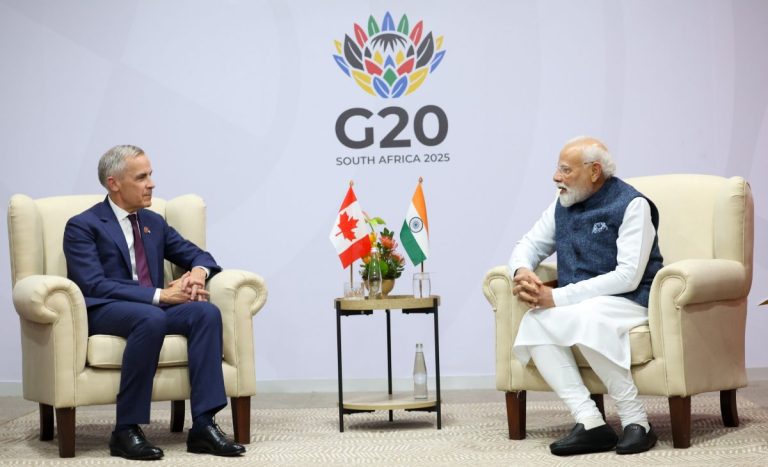
Johannesburg, South Africa – In a significant development for India Canada trade relations, Prime Minister Narendra Modi and Canadian Prime Minister Mark Carney held productive discussions on the sidelines of the G20 Summit in Johannesburg, South Africa. The two leaders agreed to set an ambitious target of USD 50 billion for bilateral trade by 2030, marking a substantial increase from the current USD 30 billion. This announcement signals a new era of economic cooperation between the two nations, with both countries committed to deepening their partnership across multiple sectors.

The meeting between the two prime ministers focused on enhancing India Canada trade through collaboration in areas including investment, technology, innovation, energy, and education. Prime Minister Modi emphasized the significant momentum in bilateral ties since their previous meeting during the G7 Summit hosted by Canada, expressing optimism about advancing relations in the coming months.

Technology and Innovation Partnership Takes Center Stage

A key highlight of the India Canada trade discussions was the announcement of the Australia-Canada-India Technology and Innovative (ACITI) partnership. This trilateral initiative represents another milestone in the revival of relations between India and Canada following Mark Carney’s assumption of office as Prime Minister. The ACITI partnership aims to foster collaboration in cutting-edge technologies and innovation, positioning all three nations as global leaders in the technology sector.

The leaders also agreed to begin negotiations on a high ambition Comprehensive Economic Partnership Agreement (CEPA), which is expected to further boost India Canada trade by reducing barriers and creating new opportunities for businesses in both countries. This agreement will provide a structured framework for expanding economic ties and facilitating smoother trade flows between the two nations.

Defense and Space Cooperation on the Horizon

Beyond traditional trade sectors, Prime Minister Modi announced that India and Canada have agreed to unlock potential for deeper cooperation in defense and space sectors. This expansion of India Canada trade into strategic domains reflects the growing trust and mutual interests between the two countries. The leaders committed to meeting again in the near future to advance these discussions and explore concrete areas of collaboration.

Canadian Pension Funds have shown keen interest in Indian companies, demonstrating strong investor confidence in India’s growing economy. With the India Canada trade, Prime Minister Modi highlighted that India and Canada have great potential in strengthening trade and investment linkages, with numerous opportunities for Canadian investors to participate in India’s development story.

Also Read: PM Modi G20 Summit: Latest Visit to South Africa Marks Crucial Diplomatic Milestone

India-Italy Counter-Terrorism Initiative

During separate talks with Italian Prime Minister Giorgia Meloni, Prime Minister Modi announced a joint initiative for cooperation in combating financing of terrorism. The India-Italy Joint Initiative to Counter Financing of Terrorism aims to deepen bilateral cooperation and strengthen collaboration in global platforms including the Financial Action Task Force (FATF) and the Global Counter Terrorism Forum (GCTF).

Prime Minister Meloni expressed solidarity with India on a recent terror incident in Delhi and reiterated Italy’s strong commitment to combating terrorism. Both leaders also discussed advancing cooperation in trade, investment, defense, innovation, artificial intelligence, space, and education, demonstrating the multifaceted nature of India-Italy relations.

Strategic Partnerships with Japan and South Africa

Prime Minister Modi also held discussions with Japanese Prime Minister Sanae Takaichi, focusing on adding momentum to bilateral cooperation in innovation, defense, and talent mobility. The leaders agreed on working closely in strategic sectors including artificial intelligence, semiconductors, critical minerals, technology, and innovation. The India-Japan Special Strategic and Global Partnership continues to be anchored in shared values, mutual trust, and goodwill.

In talks with South African President Cyril Ramaphosa, both leaders agreed to amplify the voice of the Global South. They reviewed bilateral ties and discussed ways to enhance cooperation in artificial intelligence, Digital Public Infrastructure, and critical minerals. The leaders welcomed the growing presence of Indian firms in South Africa and agreed to facilitate mutual investments in infrastructure, technology, innovation, mining, and start-up sectors.

G20 Summit Declaration Reflects India’s Priorities

The G20 South Africa Summit Leaders’ Declaration, unanimously adopted at the start of talks in Johannesburg, reflected several of India’s key priorities in this India Canada trade. These included the campaign against terrorism, bolstering financing for addressing the climate crisis, and measures to address concerns of the Global South. Several outcomes built on initiatives taken up by India during its G20 presidency in 2023, demonstrating India’s continued leadership role in global forums.

The India Canada trade announcement, along with other bilateral agreements reached at the G20 Summit, underscores India’s growing influence in shaping international economic cooperation and its commitment to building strategic partnerships that benefit all participating nations while advancing shared prosperity and security objectives.

Delhi pollution: CAQM Strictly Revises GRAP Schedule to Tighten Air Quality Measures in Delhi-NCR- Nov 2025

The Commission for Air Quality Management in NCR and Adjoining Areas (CAQM) announced a revised Graded Response Action Plan (GRAP) for the National Capital Region (NCR) on 21 November 2025. This revision makes the GRAP schedule more stringent to prevent further deterioration of air quality in Delhi-NCR amid worsening pollution levels.

Understanding GRAP and Its Purpose

GRAP is an emergency response mechanism activated based on average Air Quality Index (AQI) levels and meteorological forecasts for Delhi-NCR. It coordinates multiple stakeholders and implementing agencies to take timely and effective actions to combat air pollution. The revised plan is based on scientific data, expert recommendations, and lessons learned from past years to optimize pollution control efforts.


Key Amendments in the Revised GRAP Schedule

The major changes in the GRAP schedule include shifting pollution control measures to earlier stages, effectively making the response more proactive and stringent:

  • Stage I (Poor Air Quality, AQI 201-300): Measures previously under Stage II (such as uninterrupted power supply to avoid diesel generators, better traffic management, public advisories, and augmentation of public transport services) are now implemented at Stage I.

  • Stage II (Very Poor Air Quality, AQI 301-400): Measures previously under Stage III, including staggered office timings for public and municipal bodies in Delhi and key NCR districts, are moved to Stage II.

  • Stage III (Severe Air Quality, AQI 401-450): Measures previously under Stage IV, such as permitting government and private offices to operate at 50% capacity with the rest working from home, are now enforced at Stage III.

Immediate Implementation and Enforcement

CAQM has directed all responsible agencies across the NCR to immediately adopt and enforce the revised GRAP schedule. This updated framework aims to intensify pollution control, especially during the high-risk winter season, to safeguard public health and improve air quality more effectively.

Conclusion

The revised GRAP schedule represents a critical step to combat the persistent air pollution challenges in Delhi-NCR by implementing stricter, earlier interventions. This proactive approach balances scientific assessment with ground realities to prevent further deterioration of the region’s air quality and protect the health of millions of residents.


For more real-time updates, visit Channel 6 Network.

Source: PIB

10th Session of APDIM on Inclusive Disaster Risk Data Governance Concludes at Vigyan Bhawan, New Delhi

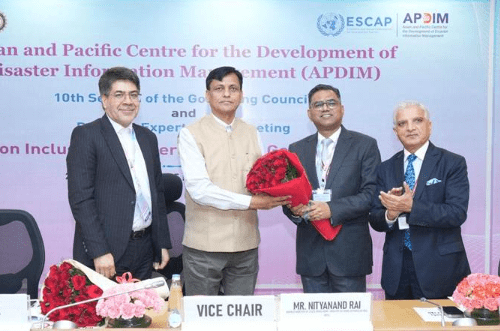
The 10th Session of the Asian and Pacific Centre for Development of Disaster Information Management (APDIM) on Inclusive Disaster Risk Data Governance was held at Vigyan Bhawan, New Delhi, bringing together key stakeholders across the Asia-Pacific region to strengthen disaster resilience and cooperation. The Indian delegation, led by Minister of State for Home Affairs Shri Nityanand Rai, reaffirmed India’s commitment to championing a comprehensive agenda for disaster risk reduction under Prime Minister Shri Narendra Modi’s visionary leadership.

India’s Leadership and Capacity-Building Agenda

In his inaugural address, Shri Nityanand Rai emphasized India’s dedication to regional disaster resilience through a capacity-building framework that includes risk assessment, geospatial applications, impact-based forecasting, early warning dissemination, and climate-resilient infrastructure planning. He highlighted that India’s active chairmanship and collaboration with multilateral forums such as UN ESCAP and APDIM are aligned with the Prime Minister’s 10-Point Agenda for Disaster Risk Reduction. This agenda prioritizes investments at the local level, technology leverage, academic and research network strengthening, enhanced risk data, and regional cooperation.


Collaborative Regional Commitment

The session brought together delegations from member states including Bangladesh, Iran, Maldives, Kazakhstan, Mongolia, and Turkey, along with observer representatives from Tajikistan. Leading officials from UN ESCAP and APDIM Secretariat and representatives from various observer organizations participated to foster a unified approach to disaster risk data governance.

The meeting reviewed past activities, discussed plans for 2026, and formulated the strategic work plan for 2026-2030. Its outcomes are intended to steer APDIM’s future programs and contribute materially to the Sendai Framework for Disaster Risk Reduction and the 2030 Agenda for Sustainable Development.

Conclusion

The 10th APDIM session concluded with a strong, shared commitment to enhance regional collaboration and apply innovative strategies for disaster risk reduction across the Asia-Pacific. Guided by India’s proactive leadership and the Prime Minister’s 10-Point Agenda, the session reinforced the importance of data-driven governance and resilient infrastructure in effectively managing disaster and climate risks in the region.


For more real-time updates, visit Channel 6 Network.

Source: PIB

IICA and DGR Successfully Conclude Third Batch of Certification Program for Senior Defence Officers in Corporate Governance: 2025

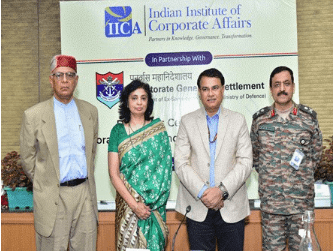
The Indian Institute of Corporate Affairs (IICA), in partnership with the Directorate General Resettlement (DGR), Ministry of Defence, successfully concluded the third batch of its Directors’ Certification Program in Corporate Governance for Defence Officers on 21st November 2025 at the IICA campus in Manesar, Gurugram. This two-week intensive program certified 30 senior officers, both serving and recently retired, across the Indian Army, Navy, and Air Force, bringing the total number of trained officers to 90 since the program’s inception in August 2024.

Comprehensive Training for Corporate Governance

The certification program delivered 35 specialized sessions covering a wide spectrum of corporate governance topics, including frameworks, regulatory provisions under the Companies Act 2013 and SEBI LODR regulations, financial stewardship, audit committee functions, enterprise risk management, corporate social responsibility (CSR), and sustainable governance. Employing diverse methodologies such as lectures, case discussions, interactive sessions with practicing independent directors, and experiential learning, the program bridges the gap between military leadership expertise and corporate boardroom competencies.


Strategic Insights from Key Dignitaries

The valedictory ceremony featured addresses by distinguished dignitaries. Shri Gyaneshwar Kumar Singh, DG & CEO of IICA, welcomed the participants and highlighted the alignment between military strengths—such as strategic thinking, risk assessment, ethical framework, and the ability to stay objective under pressure—and the qualities required for effective independent directorship. Dr. K P Krishnan, former Secretary of the Government of India, in his inaugural address, emphasized the fiduciary responsibilities of independent directors as protectors of minority shareholders and stakeholders. Smt. Sukriti Likhi, Secretary of the Department of Ex-Servicemen Welfare, underscored the importance of this partnership in creating avenues for defence personnel to leverage their leadership skills in the civilian corporate sector.

Empowering Defence Officers for Corporate Roles

The program equips participants to serve as impartial and visionary board members in public and private sector companies. It facilitates registration with the Independent Directors’ Databank (IDDB), managed by IICA, which hosts over 35,000 registered independent directors, including more than 10,000 women. The initiative reflects a strategic effort to channel military values of trust, integrity, and strategic decision-making into the corporate governance framework, addressing the demand for dynamic and ethical leadership in Indian corporations.

Conclusion

The IICA-DGR Certification Program marks a significant step in empowering senior defence officers with essential corporate governance knowledge, enabling their successful transition into corporate leadership roles. The partnership exemplifies the convergence of military discipline and corporate accountability, fostering visionary and ethical boardroom stewardship vital for India’s evolving corporate landscape and economic growth.


For more real-time updates, visit Channel 6 Network.

Source: PIB

Curtain Raiser Event for Sixth International Agronomy Congress 2025 Highlights Focus on Smart Agri-Food Systems and Environmental Stewardship Introduction

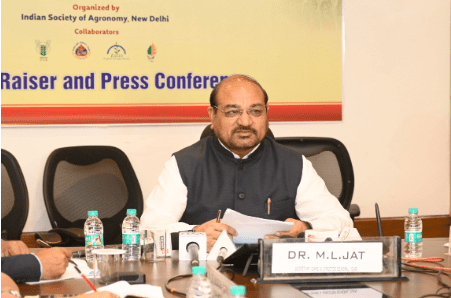
The curtain raiser for the Sixth International Agronomy Congress (IAC) 2025 was held at Agni Hall, NASC Complex, New Delhi, setting the stage for a major three-day event dedicated to advancing sustainable agronomy for India’s future. The gathering included senior leadership from ICAR, the Indian Society of Agronomy, scientists from IARI, and media representatives, marking a collaborative platform to boost agronomic research and innovation.

Advancing Sustainable Agronomy in India

Dr. S.K. Sharma, President of the Indian Society of Agronomy, welcomed the audience and highlighted the Congress’s goal to foster scientific cooperation and policy linkages that could accelerate agronomic advancements nationwide. The event spotlighted the critical role agronomy plays in supporting resilient, efficient, and ecologically balanced agricultural systems.


Keynote Address on India’s Agricultural Achievements and Future Directions

Dr. M.L. Jat, Secretary of DARE and Director General of ICAR, delivered the keynote address emphasizing India’s milestone achievements such as a record food grain production of 357.73 million tonnes and a remarkable 95 percent reduction in crop residue burning since 2020. He framed the Congress theme — “Re-Envisioning Agronomy for Smart Agri-Food Systems and Environmental Stewardship” — as a guiding vision to promote sustainable practices in agriculture.

Dr. Jat stressed the importance of system agronomy approaches, including natural and regenerative farming, alongside the integration of data-driven technologies like artificial intelligence and the Internet of Things (IoT). These innovations are key to closing yield gaps, improving nutrient use efficiency, reducing import dependency, and enhancing overall sustainability within Indian agriculture.

Engagement with Participants and Forward-Looking Policy Integration

During the interactive session, Dr. Jat responded to queries, reassuring that recommendations emerging from the Congress would undergo prompt compilation and be integrated into national agricultural planning frameworks. This commitment underscores the Congress’s role in shaping practical and impactful policy measures.

Conclusion and Media Outreach Call

Dr. S.S. Rathore, Organizing Secretary of the Congress, concluded the event with a vote of thanks and emphasized the importance of extensive media coverage. He urged that the insights and outcomes of the IAC should reach farmers, policymakers and the scientific community to maximize impact on India’s agri-food systems.


For more real-time updates, visit Channel 6 Network.

Source: PIB