Friday, May 15, 2026
Home Blog Page 318

Karnataka CM’s Letter to PM Over Maize Price Crash: 8 Urgent Concerns and a Hopeful Plea

Karnataka Chief Minister Siddaramaiah has written an urgent letter to Prime Minister Narendra Modi over the steep fall in maize prices, expressing concern that the crisis has pushed thousands of farmers in the State into a state of financial distress. The letter highlights how maize growers across regions such as Haveri, Belagavi, Raichur, Ballari, Chitradurga and Vijayapura are witnessing dramatic drops in market prices, far below the Minimum Support Price (MSP). The State government insists that without immediate intervention by the Centre, maize farmers may be forced to abandon cultivation or face crushing debt.

According to market records cited in the Chief Minister’s letter, maize prices have fallen significantly below the MSP fixed at ₹2,225 per quintal. Farmers are reportedly being forced to sell their produce anywhere between ₹1,350 and ₹1,700 in several Agricultural Produce Market Committees (APMCs). This disparity is being blamed on low procurement, rising imports of broken maize substitutes, and alleged cartelisation by traders. The CM has urged the Centre to direct central procurement agencies to begin large-scale purchases at MSP rates, claiming that failure to do so will trigger irreversible livelihood losses.

Farmers Say Delay in Response Is Affecting Next Crop Cycle

In several maize-growing regions, farmers are now uncertain about sowing plans for the upcoming season. Many say they cannot risk growing maize again without knowing whether the Centre will intervene at MSP. Farmers in Belagavi and Raichur argue that crop decisions are directly linked to government market assurances, and delaying a response forces them to choose alternative crops with lower yields but predictable prices. Extension workers warn that sudden shift from maize could destabilise fodder markets and livestock feed supply. Farmer groups fear that without timely intervention, Karnataka might witness a decline in maize acreage next season.

A Domino Effect on Poultry and Cattle Feed Industries

The steep fall in maize prices has not only affected farmers but also created unusual dynamics in livestock feed industries. Lower maize prices temporarily favour poultry and cattle feed manufacturers, who benefit from cheaper raw materials. However, agricultural experts caution that long-term exploitation of farmers will hurt the livestock sector eventually, as poor prices discourage maize cultivation. If maize production decreases in upcoming cycles, feed industries will face a shortage, triggering sudden price spikes. Thus, experts argue that market correction must happen now to avoid future instability that could affect the entire agricultural value chain.

Storage Infrastructure Remains the Weak Link in the Crisis

The crisis has revealed a long-standing weakness in Karnataka’s agricultural infrastructure: the shortage of government-run storage facilities. Despite being one of the leading maize producers, regions like Ballari and Vijayapura lack adequate warehouses under public agencies. Farmers without access to storage are forced to sell immediately, losing bargaining power. The State insists that procurement cannot succeed unless supported by decentralised storage with modern drying and grading facilities. Analysts believe that the Centre must expand storage infrastructure, not merely announce MSP interventions. Without storage, price protection becomes an empty promise for farmers.

Farmer Leaders Warn Against Middlemen Dominance

Farmer organisations fear that delayed government action will strengthen the influence of traders and private millers. Leaders argue that middlemen profit most during market collapse by purchasing crops at distress rates and releasing them later when prices recover. This cycle reinforces trader dominance and prevents farmers from accessing stable market benefits. Leaders from northern Karnataka have demanded strict monitoring of APMC markets during procurement phases, along with punitive action against traders who engage in price suppression. They warn that without accountability, maize farmers will continue suffering regardless of MSP announcements or government guidelines.

Women Farmers Face a Unique Financial Strain

A significant portion of maize cultivation in parts of Haveri, Chitradurga and Belagavi involves the participation of women farmers, especially small landholders and widows running family farms. Many of them depend on local cooperatives for loans, which demand repayment soon after harvest. With falling prices, women cultivators claim they are unable to repay their loans, forcing them to borrow again or rely on informal lenders who charge high interest rates. Women’s agricultural unions argue that government policies rarely address gender-specific vulnerabilities, even though women farmers bear heavier financial burden during market fluctuations.

Awaiting Centre’s Intervention: Farmers Hope Letter Sparks Change

Across Karnataka’s maize belt, farmer groups hope that Siddaramaiah’s letter triggers swift intervention from the Central Government. They believe a strong response could revive confidence, stabilise markets, and signal that maize cultivation remains a viable livelihood option. Traders and mill owners also await clarity, stating that clear directives from the Centre can prevent disputes over pricing. Economists caution that the longer the government takes to respond, the deeper the economic shock. For now, Karnataka waits for acknowledgement from New Delhi, with farmers holding onto the hope that their urgent plea will not be ignored.

CM Urges Centre to Start Emergency Procurement

The Chief Minister’s letter emphasises that urgent procurement at MSP is the only way to restore confidence among maize farmers who fear they will not recover the cost of cultivation. Farmers spent significantly more on fertilisers, seeds, labour, irrigation, and transportation during the recent season, expecting MSP-based returns. Siddaramaiah argues that if the Centre activates urgent procurement through agencies such as the Food Corporation of India and the National Agricultural Cooperative Marketing Federation, farmers will receive fair compensation. The State maintains that its procurement capacity alone cannot handle the current scale of market collapse without Central support.CM writes to PM on steep crash in maize prices - The Hindu

Abandonment of maize crops is becoming a real fear, the CM noted, especially among small and marginal farmers who do not possess storage facilities to hold back harvests until market recovery. Many farmers sell immediately after harvest to avoid rental charges for storage or interest burdens on loans. The letter stresses that this has left thousands vulnerable to middlemen who exploit distressed sales. Siddaramaiah claims that the Centre must not treat the price fall as a routine fluctuation but as an agricultural emergency impacting lakhs of families. Farmers’ organisations have welcomed the CM’s decision to escalate the crisis to the Prime Minister.


Falling Prices, Rising Stocks: Farmers Trapped in Debt

Traders Accused of Manipulating Markets Amid High Yield

Farmer groups across Karnataka are alleging that traders and mill owners are colluding to keep prices artificially low despite a robust market demand for fodder and industrial-grade maize. In districts like Belagavi and Haveri, farmers report that traders enter into informal agreements to delay purchases, forcing farmers to dump crops at throwaway rates. Some millers allegedly cite poor grain quality to refuse MSP-based purchase. This contradicts data cited by State authorities indicating that overall yield and grain quality are no different from previous years. Farmer unions argue that procurement indifference enables traders to control prices in their favour.

Surplus Maize Leaves Farmers Without Storage Options

During the past season, Karnataka witnessed a spike in maize production due to favourable weather and increased acreage under cultivation. Unfortunately, the spike has turned into a disadvantage for farmers with no access to decentralised warehouses. In Raichur and Ballari, several farmers reportedly kept their produce in open spaces or temporary tarps, exposing it to moisture and loss of quantity. Storage facility shortages have now forced many cultivators to sell even lower, as deteriorating grain conditions fetch further reduced prices. Agricultural economists assert that State-level storage does not match Karnataka’s maize output, worsening the crisis.

Debt Burdens Rise as Farmers Spend More to Earn Less

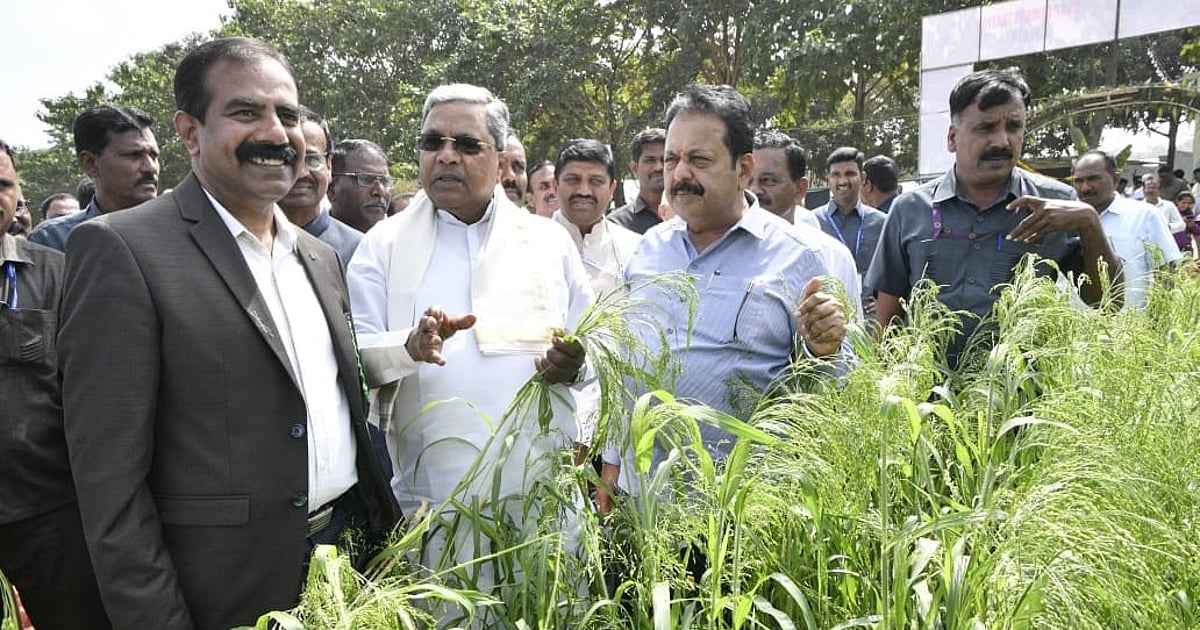
A large section of maize growers entered the cultivation season with borrowed capital from banks, private lenders, or cooperative societies. The cultivation costs have risen by 20–30 percent due to increased labour charges, irrigation needs, diesel requirements, and fertiliser price fluctuations. However, the revenue earned after harvest has remained stagnant or significantly lower. In districts such as Chitradurga and Vijayapura, farmers say they are unable to repay loans, forcing them to consider borrowing again to sustain daily household expenses. Many farmer families warn that if prices do not stabilise, debt cycles could worsen beyond recovery.Karnataka CM Seeks Centre's Help as Maize, Green Gram Prices Plunge

Call for Policy Shift Beyond MSP

Demand for Ban on Cheap Maize Imports

Another pressing concern raised by the Karnataka government relates to imported maize and maize substitutes entering the domestic market. The CM’s letter argues that imports of cheaper broken maize and feed-grade corn are weakening farmer profits while supporting industrial livestock feed manufacturers. Farmers in Haveri and Belagavi claim that their produce is rejected on grounds of “quality mismatch” whenever substitute imports become available. The State wants the Centre to temporarily restrict imports or impose tariffs to ensure domestic farmers receive priority. CM Siddaramaiah asks the Union Government to recognise the imbalance created by unrestricted imports.

Support for Market Intervention and Price Stabilisation Funds

The CM’s appeal emphasises that MSP must be backed by market intervention mechanisms that safeguard farmers when market volatility becomes unbearable. Siddaramaiah has asked the Centre to activate the Price Stabilisation Fund to assist maize cultivators, claiming that without financial cushioning, MSP remains only a symbolic price. The letter highlights that past voluntary procurement schemes failed due to low Central participation. Farmers demand long-term commitments that extend beyond occasional intervention, arguing that maize cultivation lies at the heart of fodder security and rural employment, especially in northern Karnataka’s semi-arid zones.

Experts Call for Early Farmer Consultations

Agricultural researchers from universities in Dharwad and Bengaluru have argued that policy decisions must involve grassroots consultations. They maintain that maize farmers possess firsthand understanding of sowing cycles, rainfall inconsistencies, input cost variations, and trader behaviours. Experts believe that farmer advisory boards must be formed at district levels to predict and manage cropping patterns and price stability. Without farmer participation, sudden market shocks will persist. Researchers insist that the Centre must treat maize like sugarcane and paddy, where long-term procurement strategies already exist. Karnataka’s request echoes calls raised by farmer economists across India.CM writes to PM on steep crash in maize prices - The Hindu


Conclusion: A State Waiting for Centre’s Response

Karnataka has made a strong appeal to protect maize farmers facing economic instability due to unprecedented price collapse. Siddaramaiah’s letter underscores the urgency of Centre-led procurement, import regulation, storage expansion, and price stabilisation strategies. Agricultural stakeholders across the State insist that the crisis is not limited to fluctuations but threatens rural livelihoods and the future of maize cultivation. The next few weeks are crucial, as delayed response will push many farmers deeper into debt cycles and influence cropping decisions in future seasons. Karnataka’s farming community now waits for decisive intervention from the Centre, hoping that their produce will finally command the dignity of fair compensation.

Follow: Karnataka Government

Also read: Home | Channel 6 Network – Latest News, Breaking Updates: Politics, Business, Tech & More

7 Confusion Over Karnataka’s New Minimum Wage Leaves Workers Worried

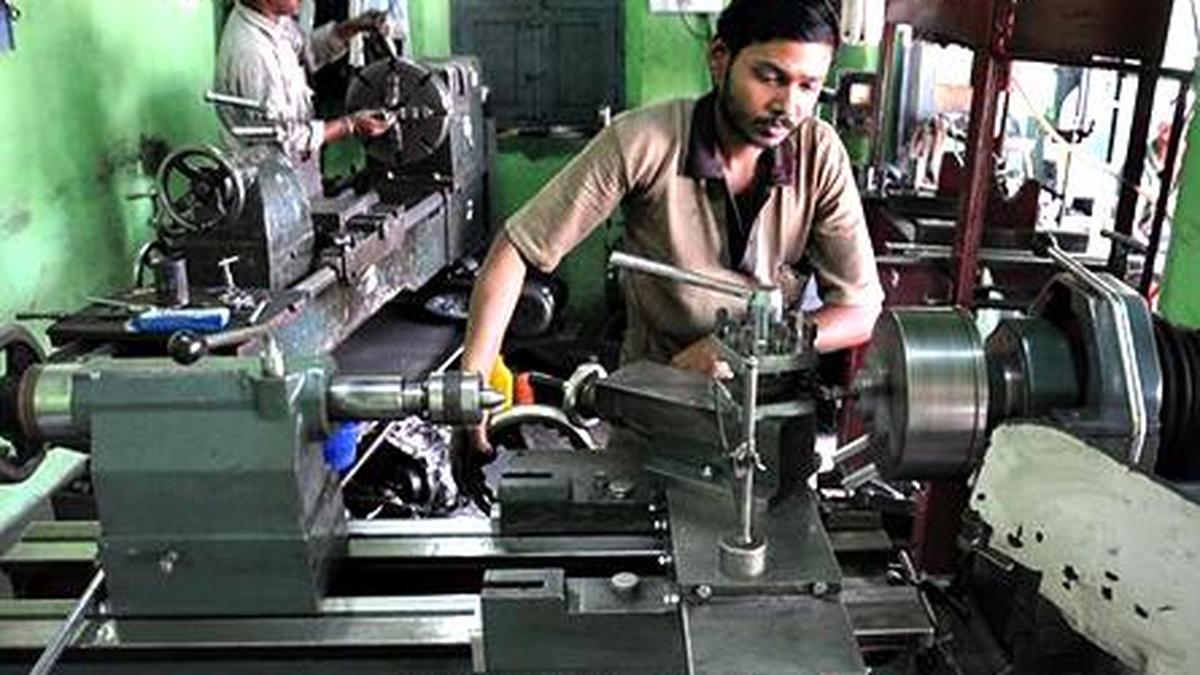
The confusion surrounding Karnataka’s latest minimum wage revision has emerged as a major concern among thousands of workers, particularly those involved in construction labour across the State. The introduction of the new labour codes has caused uncertainty regarding implementation timelines, revised wage structures, and enforcement responsibility. With many construction workers already facing irregular payments, unsafe working conditions, and limited access to welfare measures, delays in the revised wage notification have created new layers of anxiety. Labour unions have expressed frustration, claiming that workers expected immediate relief but instead received a lack of clarity on how wages will be calculated, monitored, and paid.

Skill Classification Debate Adds Fresh Complexity

One of the central challenges emerging under the revised wage structure is the classification of workers according to skill levels such as unskilled, semi-skilled, and skilled labour. In the construction sector, job roles often overlap, making it difficult to assign workers to rigid categories. Contractors worry that they may be penalised for incorrect categorisation, while workers fear being classified under lower-paying brackets. Labour activists argue that skill classifications must reflect real on-site responsibilities rather than job titles alone. The government is expected to provide clearer categorisation guidelines before enforcing wage revisions across the State.

Opaque Wage Calculations Raise Doubts Among Employers

Employers and project developers say they remain unclear about how revised wages will affect overtime rates, weekly offs, gratuity, and bonus calculations. Many construction firms operate on tight margins and long project timelines, and sudden wage implementation could affect ongoing contracts. Builders argue that without clear direction on how to calculate benefits and allowances linked to minimum wage, they are at risk of unknowingly violating compliance rules. They have urged the government to issue a detailed explanatory circular breaking down wage components to prevent calculation-based disputes in the coming months.

Small Contractors and Labour Providers Struggle With Compliance

Smaller contractors who operate with limited workforce sizes express concern that they lack the administrative capacity to comply with new wage documentation norms. Many construction teams consist of temporary labourers recruited on a rotational basis, making maintenance of records extremely complicated. Contractors fear that strict enforcement with heavy penalties could force them out of business or into informal hiring practices. Labour experts suggest that compliance modules should be designed differently for smaller contractors, offering simplified formats or thresholds. Without flexible compliance mechanisms, small-scale contractors may become unintended casualties of wage reform.

Experts Warn Delay Could Weaken Wage Reform Intent

Labour economists caution that prolonged delays in implementation could weaken the core objectives of wage revision. They argue that labour reforms are effective only when supported by timely communication, awareness programmes, and structured enforcement. If confusion persists, experts believe workers will stop expecting benefits from wage reforms, gradually eroding trust in labour policies. They warn that reforms may end up benefiting neither workers nor employers unless the State government ensures swift rollout, transparent documentation, and proactive outreach. Experts say urgency is critical to preserve public confidence in Karnataka’s wage reform efforts.

Government Delay Leaves Workers in Limbo

Construction workers across Karnataka have been hopeful that the revised minimum wage structure would bring some relief in the form of higher daily earnings. The State government’s promise of revising wages under the new labour codes initially generated optimism among labour communities. However, the continued delay in issuing a final notification related to the updated wage calculations has left workers uncertain about what they will be earning in the coming months. Contractors, who serve as primary employers at many sites, claim they are unable to modify wage payments without official instructions, further prolonging workers’ wait.

Contractors and Builders Protest Sudden Revisions

The confusion has not been limited to workers alone. Contractor associations and large builders have insisted that the government must provide a clear explanation of how the new wage codes align with the existing system. Many have argued that sudden changes without direct communication leave them unprepared to manage their own payroll and project expenses. They fear financial strain, claiming that unclear wage brackets force them to either halt recruitment or delay ongoing construction activities. Calls for training sessions, explanatory guidelines, and phase-wise implementation have surfaced as industry demands, urging the government to adopt a more organised approach to the revision.


Dilemma at Worksites: New Codes But Old Payments

Workers Question Why Revised Wages Have Not Been Applied

Across construction sites in Bengaluru, Kalaburagi, Ballari, and Mysuru, workers say they have been hearing about wage hikes without seeing any change reflected in their payments. Many claim contractors still pay wages based on older notifications that were supposed to be superseded by the updated labour codes. The delay in notifying the final amount has led to disputes, with workers questioning whom they should hold accountable. Labour department officers state that the confusion stems from the State having to align wage calculations with central labour laws while also safeguarding local labour rights.New labour codes lead to confusion over Karnataka's minimum wage revision -  The Hindu

Union Leaders Say Delay Benefits Contractors, Not Workers

Labour unions argue that while workers continue to receive stagnated payments, contractors and construction firms save money due to the government’s reluctance to issue clear wage standards. Leaders of construction labour associations allege that despite inflation, cost of living, and rising prices of essential commodities, workers are still being paid outdated wage rates. They emphasise that delay only harms vulnerable labourers, many of whom depend on daily wages to purchase basic food supplies and pay rent. Unions have warned that prolonged ambiguity may lead to statewide protests if action is not taken quickly.

Workers Struggle With Higher Living Costs, Same Wage

In cities like Bengaluru, the cost of living has rapidly increased, while construction workers continue earning wages that fail to cover basic expenses. Migrant workers, who make up a significant portion of the construction workforce, say they spend almost half their income on shared accommodation and food. Some workers express disappointment that despite labour reforms being highlighted as pro-worker, implementation has proved slow and ineffective. Families dependent on single-income labourers have reported cutting back on nutrition, education expenses, and healthcare visits due to uncertainty surrounding wage revision.


Lack of Awareness Adds to the Complexity

Workers Unaware of Their Rights Under New Codes

At many worksites, a large number of workers have no knowledge of the new labour codes or the expected revision in wage structure. Labour inspectors reveal that lack of awareness leaves workers vulnerable to exploitation, as they do not demand revised wages they are legally entitled to. Several construction sites even lack displayed wage charts, which are mandatory under previous labour laws. Without clear information, workers rely solely on contractors to inform them, creating a power imbalance. Government officials admit that awareness drives are urgently needed to educate workers.No hasty implementation of labour codes in Karnataka, will discuss with  unions: Santosh Lad - The Hindu

Contractors Demand Clarity Over Compliance Procedures

Contractor groups insist that they are not opposed to paying higher wages, but they require precise notification on record-keeping practices, wage classification patterns, and skill-based payment categories. Under the new codes, wage categories may be restructured according to skill level and regional classification. Contractors argue that without understanding how each worker category is defined, they risk penalties for incorrect implementation. They have requested the labour department to organise workshops and publish circulars in regional languages, ensuring compliance without confusion.

Labour Inspectors Face New Enforcement Challenges

The transition to new labour codes has also left enforcement authorities unsure about their scope of monitoring and penalisation. Inspectors report that they have not received training on enforcement methods that align with the restructured labour codes. Their uncertainty reflects a systemic gap in administration, leading to uneven enforcement across districts. Some officers admit that they continue functioning under earlier wage-related instructions to avoid procedural errors. They warn that future disputes between contractors and workers could escalate if government guidelines do not reach them in time.


Larger Questions Loom Over the Implementation Phase

Will Wage Revision Be Uniform Across Karnataka?

A critical question emerging from the confusion is whether minimum wage implementation will be uniform across districts or continue to vary by zone. Construction labour unions argue that workers in poorly developed districts deserve equal pay for equal work, especially as materials and labour demand continue to rise statewide. Contractors in Bengaluru and Mysuru, however, insist that urban construction costs differ drastically from smaller towns, requiring wage zoning. The lack of clarity has left both groups at odds, with the government expected to bridge these differing expectations through structured guidelines.New labour codes lead to confusion over Karnataka's minimum wage revision -  The Hindu

Will Migrant Construction Workers Be Tracked Under the New Codes?

Karnataka’s construction workforce includes a large migrant population from states like Bihar, Odisha, Assam, and Uttar Pradesh. Stakeholders question whether the revised wage structure will require contractors to legally register migrant labourers to ensure fair wage payment. In many cases, migrant workers do not possess bank accounts, identity records, or registration under welfare boards. Labour activists fear that unregistered workers may remain excluded from wage benefits under the new codes if the government does not create simplified identity protocols. They argue that no wage reform is complete without addressing migrant worker enrolment barriers.

Will Welfare Benefits Improve Along With Wages?

Construction workers receive limited benefits despite contributing to an industry that significantly influences urban growth. Welfare boards offer pension, insurance, and housing assistance, but workers say access remains extremely difficult due to documentation barriers and delayed processing. Unions argue that wage revision alone is insufficient if welfare access continues to be burdensome. They demand that the government ensure digital registration assistance at worksites and simplify documentation for migrant workers. The government’s response remains unclear, raising concerns over whether the wage revision will lead to genuinely improved livelihood conditions.


Conclusion: The Way Forward for Karnataka

The confusion over Karnataka’s new minimum wage revision highlights the deeper challenges associated with transitioning to modern labour regulations. For construction workers, delayed wage implementation translates into daily financial struggle, especially as living costs escalate rapidly. Contractors and developers demand clearer guidelines to manage payroll, while enforcement officers require structured training. Stakeholders agree on one point: clarity must precede enforcement. Without timely notification and awareness campaigns, the wage reform will remain a promise rather than a policy. The State’s ability to address these issues promptly will determine whether the wage revision truly empowers workers or becomes another fragmented administrative effort.

Follow: Karnataka Government

Also read: Home | Channel 6 Network – Latest News, Breaking Updates: Politics, Business, Tech & More

7-Stage Storm: HD Kumaraswamy’s Emotional Warning of ‘Explosive Political Developments’ in Karnataka

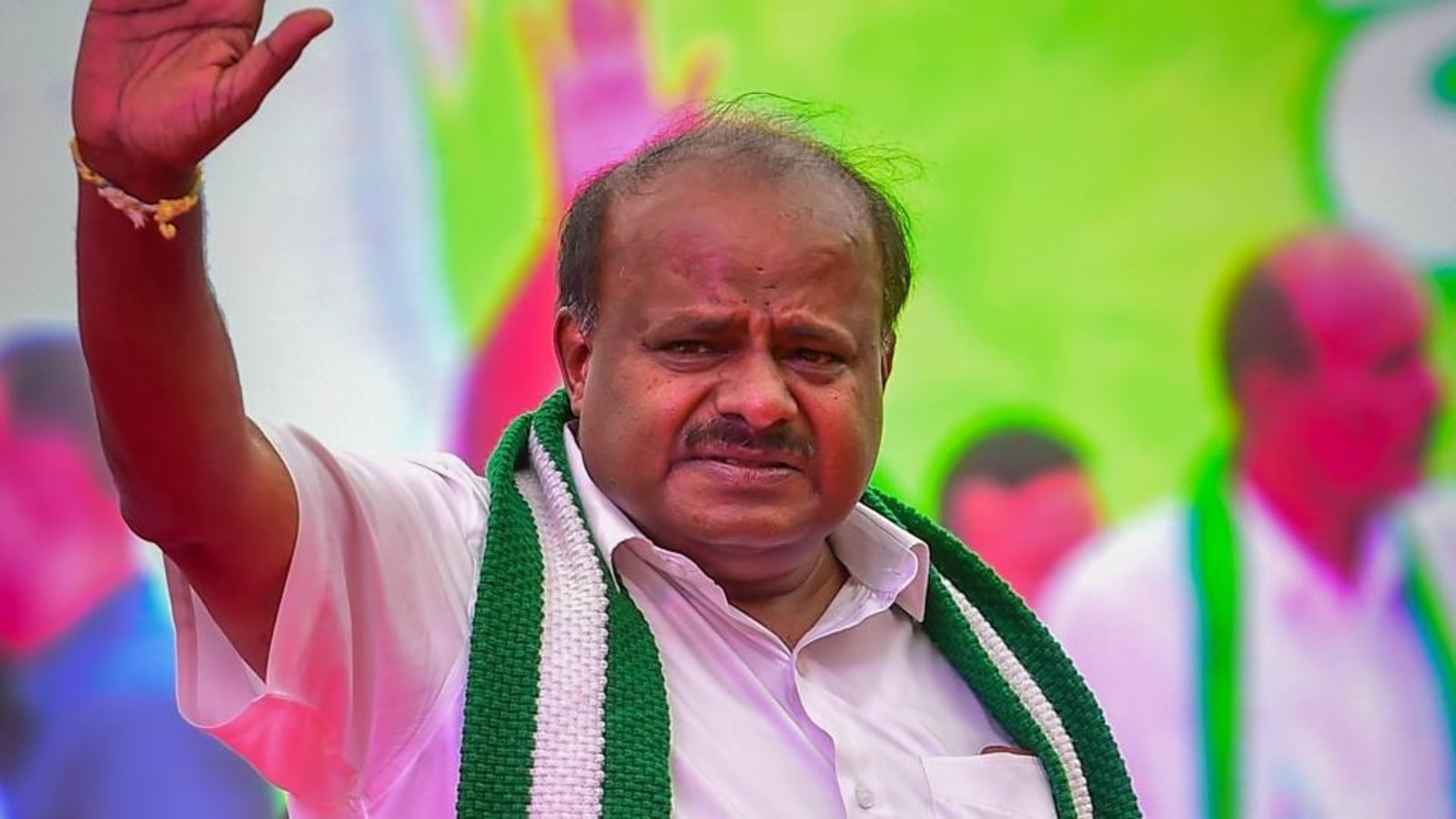
Former Karnataka Chief Minister H.D. Kumaraswamy has triggered intense speculation in the State’s political circles after declaring that “explosive developments” are imminent in the coming weeks. Kumaraswamy, widely known for his calculated statements and political foresight, hinted at a dramatic shift that could alter the power equations between major parties. His comments have sparked debates among observers who see this as more than a casual remark but an indication of emerging realignments ahead of electoral shifts. With Karnataka’s political landscape already tense due to internal rifts and coalition rumors, his words have added fuel to an atmosphere of suspense and anticipation.

Kumaraswamy’s predictions come at a time when multiple parties are grappling with internal challenges. The Congress government faces dissent over Cabinet reshuffle demands, power-sharing expectations, and regional representation. The BJP is in the midst of structural reorganisation with new leadership strategies, while the JD(S), Kumaraswamy’s party, is watching the situation closely to reposition itself for future relevance. Against this backdrop, his use of the word “explosive” is being interpreted as a strategic warning rather than mere rhetoric. Analysts say he may be hinting at coalition possibilities, defections, leadership transitions, or a shift in alliances that could shake the current establishment.

A Calculated Hint or a Political Pressure Game?

Kumaraswamy has a reputation for predicting political turbulence before it unfolds. His 2018 warning about government instability came true when the Congress-JD(S) coalition collapsed, paving the way for the BJP. This history makes his current prediction particularly significant. Some believe his statement is directed at the Congress for neglecting disgruntled legislators, indirectly hinting at possible defections. Others suggest he may be hinting at realignments between the BJP and JD(S), a relationship that has fluctuated in recent months. By keeping his statement ambiguous, he has forced ruling and opposition leaders to question their assumptions and re-examine their positions within a shifting political landscape.

Those close to Kumaraswamy argue that he is responding to growing dissatisfaction among MLAs, many of whom feel ignored or sidelined by their parties. They believe that he is signalling an opportunity for legislators seeking alternative political spaces. Meanwhile, some Congress leaders fear that such comments could embolden rebellion within their ranks if reshuffle decisions are delayed. BJP insiders, on the other hand, believe Kumaraswamy could be hinting at a strategy that strengthens opposition unity before national elections. JD(S) spokespersons have maintained that Kumaraswamy does not speak without a reason and that his words reflect “a changing mood in Karnataka politics that others have not yet recognised.”

Critics argue that Kumaraswamy may simply be trying to regain relevance ahead of upcoming elections. They claim that the JD(S) is using suspense as a tactic to remain visible in a crowded political space. However, supporters counter that maintaining ambiguity is a proven strategy in a State known for dramatic political turnarounds. Kumaraswamy’s message, they say, serves as both a warning and an invitation—warning dominant parties of potential instability and inviting disgruntled leaders to explore alternatives. This dual impact has ensured that his statement dominates conversations in political and media circles despite the absence of clear details.ʻಕರ್ನಾಟಕ ರಾಜಕಾರಣದಲ್ಲಿ ಯಾರೂ ನಿರೀಕ್ಷಿಸದಂತಹ ಕ್ರಾಂತಿ ಆಗತ್ತೆʼ: HD ಕುಮಾರಸ್ವಾಮಿ  ಸುಳಿವು ಕೊಟ್ಟಿದ್ದಾದರು ಏನು? - unexpected explosive development is happen in  congress politics says ...

Political analysts caution that while such remarks attract attention, they also create anxiety among governing parties. Siddaramaiah’s administration, already facing internal pressures, must now manage not just dissent but the fear of defections. Analysts highlight that Karnataka politics is historically prone to sudden realignments driven by regional factors, caste equations, and personal grievances. Kumaraswamy’s warning will likely intensify lobbying within parties, either to strengthen loyalty or to negotiate better positions. Ironically, even if no explosive development occurs, the perception of instability alone can influence governance decisions, reshuffle negotiations, and electoral strategies.

Potential Scenarios Behind the ‘Explosive’ Remark

One scenario being widely discussed is the possibility of a split within the ruling Congress if Cabinet aspirations are not resolved soon. At least a dozen MLAs have expressed frustration over being denied ministerial roles or being stuck with less influential portfolios. If their demands are overlooked, political observers warn these legislators could seek new alignments. Kumaraswamy’s statement may be an early signal—or a strategic push—to accelerate such decisions. Whether he expects them to join JD(S), BJP, or form an independent bloc remains unclear, but the hint alone could influence upcoming negotiations within Siddaramaiah’s Cabinet.

A second scenario involves a deeper understanding between JD(S) and BJP, potentially emerging as a tactical alliance for upcoming elections. While both parties have previously clashed politically, pragmatic politics often overrides ideology in Karnataka’s dynamic landscape. BJP insiders acknowledge that a strategic arrangement with JD(S) could strengthen their regional influence, especially in Vokkaliga-dominated areas where JD(S) retains substantial presence. On the other hand, Kumaraswamy would benefit from the BJP’s organisational capabilities. “Explosive developments” may therefore refer to a political friendship that surprises voters and shifts electoral mathematics across key constituencies.

A third possibility lies in leadership transitions within major parties. Congress faces debates over long-term leadership between Siddaramaiah and D.K. Shivakumar, BJP is undergoing internal reorganisation ahead of elections, and JD(S) continues to position Kumaraswamy as its pivotal figure. Kumaraswamy’s comments might therefore indicate a broader change in Karnataka’s leadership landscape, where new power centres challenge traditional hierarchies. Some insiders believe he may be hinting at movements that will alter not only representation in the Assembly but also the leadership faces that dominate State politics, especially as national electoral strategies require fresh partnerships and new regional icons.

Apart from party politics, regional representation and caste equations may also be fueling the predicted developments. Leaders from different regions, including Hyderabad-Karnataka, coastal areas, and old Mysuru, are bargaining for stronger roles. Similarly, caste-based influence remains crucial. The Vokkaliga and Lingayat vote blocs still carry significant political weight, while Dalit and minority representation is under constant review. Kumaraswamy’s remark may reflect a potential shake-up that redistributes influence among these groups, forcing parties to rethink how they appeal to diverse communities. Any shift in caste-negotiated representation could produce political shocks that are “explosive” in both perception and impact.

Economists and policy experts are also considering how governance and budget priorities could be affected by possible alignments. If parties reorganise power-sharing or change leadership focus, it could alter welfare delivery, infrastructure priorities, and development funding. Karnataka’s multi-sector governance—from social schemes to industrial investment—depends heavily on stability and coordination. A sudden political development could shift bureaucratic control, stall policies, or accelerate new initiatives. Kumaraswamy’s vague warning therefore does not just create political noise; it raises questions about governance continuity, investor confidence, and administrative predictability in one of India’s most economically influential States.HD Kumaraswamy challenges Siddaramaiah to float his own party in Karnataka  | Bengaluru

If the developments Kumaraswamy predicts revolve around defections or alliances, they could trigger legal and constitutional processes under anti-defection laws. The Speaker’s decisions, court actions, and procedural formalities often extend over months, complicating governance. Karnataka’s history of legal battles over resignations and speaker approvals has previously delayed legislative and administrative functioning. Kumaraswamy’s warning may therefore foreshadow not just political realignments but prolonged institutional negotiations. A politically unstable environment could create opportunities for opposition strategies or cause ruling parties to prioritise internal management over public policy commitments, affecting the State’s progress at a crucial moment.

Some observers argue that Kumaraswamy’s statement may also reflect broader dissatisfaction among leaders who feel Karnataka’s political model lacks inclusivity for smaller parties. The JD(S), despite strong regional presence, has often struggled against bipolar competition. His comment could be interpreted as an effort to reclaim bargaining influence. Whether the “explosion” is external or internal, it reasserts the JD(S) as a key player capable of destabilising or stabilising governments. By creating suspense, Kumaraswamy positions himself not as a spectator but as a disruptor ready to shape the next chapter of Karnataka politics through negotiation, strategy, and unpredictable timing.

Despite all speculations, it is also possible that Kumaraswamy is employing a strategic bluff to compel other parties to act cautiously. His remarks serve as a reminder that no one can take the political landscape for granted. Whether a genuine plot unfolds or not, his message reinforces a competitive mindset across parties. Ultimately, the real impact of his warning lies not in the certainty of developments but in the political calculations it activates. For now, Karnataka watches closely, unsure whether a seismic shift is truly approaching or whether Kumaraswamy has merely lit a fuse that may or may not explode.

If the developments Kumaraswamy predicts revolve around defections or alliances, they could trigger legal and constitutional processes under anti-defection laws. The Speaker’s decisions, court actions, and procedural formalities often extend over months, complicating governance. Karnataka’s history of legal battles over resignations and speaker approvals has previously delayed legislative and administrative functioning. Kumaraswamy’s warning may therefore foreshadow not just political realignments but prolonged institutional negotiations. A politically unstable environment could create opportunities for opposition strategies or cause ruling parties to prioritise internal management over public policy commitments, affecting the State’s progress at a crucial moment.All is well with Congress, tears were not of 'helplessness': HD Kumaraswamy  - The Statesman

Economists and policy experts are also considering how governance and budget priorities could be affected by possible alignments. If parties reorganise power-sharing or change leadership focus, it could alter welfare delivery, infrastructure priorities, and development funding. Karnataka’s multi-sector governance—from social schemes to industrial investment—depends heavily on stability and coordination. A sudden political development could shift bureaucratic control, stall policies, or accelerate new initiatives. Kumaraswamy’s vague warning therefore does not just create political noise; it raises questions about governance continuity, investor confidence, and administrative predictability in one of India’s most economically influential States.

Follow: Karnataka Government

Also read: Home | Channel 6 Network – Latest News, Breaking Updates: Politics, Business, Tech & More
6-Point Powerful Deadlock: Congress’ Emotional Gamble as Siddaramaiah Seeks Kharge’s Intervention on Cabinet Reshuffle and Power Sharing

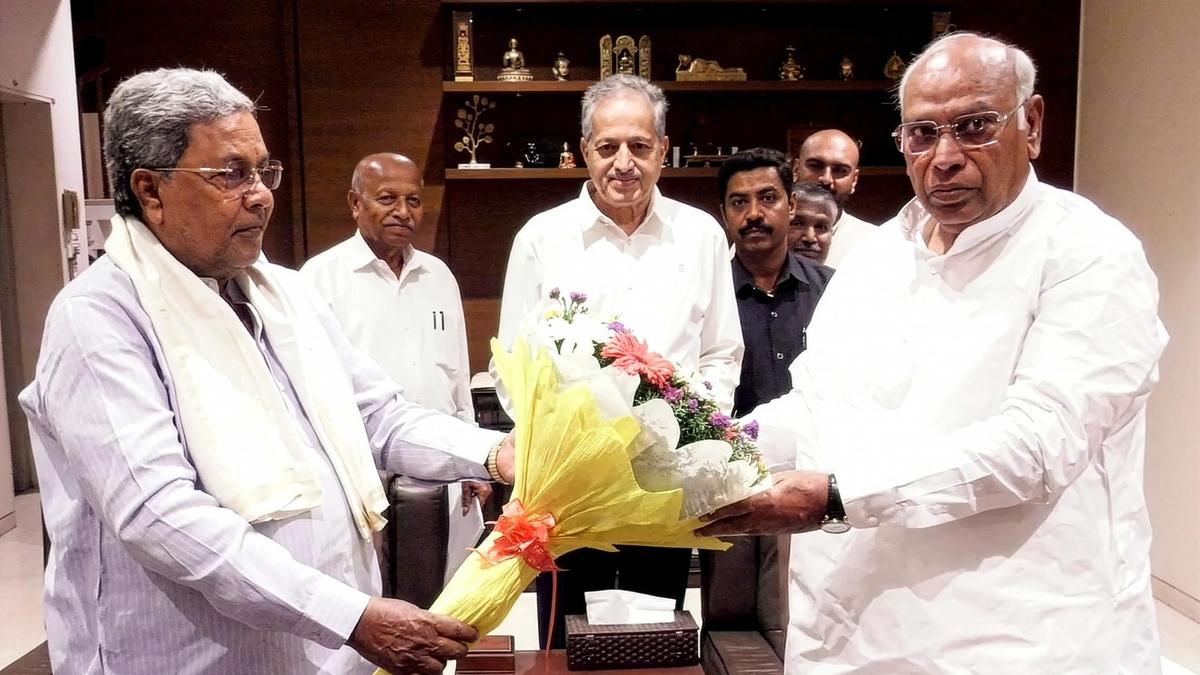
Karnataka Chief Minister Siddaramaiah met Congress president Mallikarjun Kharge to break the intensifying deadlock over Cabinet reshuffle and internal power-sharing in the State. The meeting comes amid escalating frustration among party legislators demanding ministerial berths, reallocation of portfolios, and a structured roadmap for leadership transition. According to party insiders, Siddaramaiah sought Kharge’s intervention to prevent growing factional disputes from damaging the government’s stability. With dissent gradually becoming vocal, the political tension raises questions about the future of the Congress coalition of senior leaders and newly elected MLAs who believe it is their turn to share power.

For weeks, pressure has mounted on the Chief Minister to expand or modify the Cabinet. At least 20 disgruntled lawmakers have reportedly pushed for either Cabinet inclusion or key portfolio changes, citing non-performance by a few ministers. Meanwhile, some senior legislators claim they were instrumental in ensuring electoral success but were left out of governance decisions. Siddaramaiah’s strategy so far has been to delay changes to avoid infighting. However, the growing impatience among different factions has forced him to seek national leadership’s guidance. His meeting with Kharge signals a moment of negotiation that could determine whether the Congress government navigates smoothly or struggles to maintain cohesion.

Tug-of-War Between Senior Leadership and Aspiring MLAs

The state is witnessing a growing divide between experienced ministers and newer MLAs eager to rise within the party. Senior leaders argue that stability requires keeping proven hands in decision-making roles, especially with Lok Sabha elections approaching. However, first-time and second-time legislators contend that failing to accommodate emerging leaders will alienate grassroots workers and weaken the party’s long-term base. They demand a more balanced sectoral approach where performance, people connect, and regional representation determine ministerial allocations rather than seniority alone. Siddaramaiah’s challenge is to craft a compromise that protects experience while nurturing ambition without disturbing governance.

Kharge, being a Karnataka veteran and respected figure among all factions, is seen as the most influential mediator. His experience in handling Congress power struggles has turned the focus on whether he will encourage a rotation system within the Cabinet, offer performance-based retention, or press for a generational shift in governance. Sources suggest that Kharge may push for clear deliverables tied to ministerial continuation, reducing arguments that power distribution is arbitrary. While no official outcomes were disclosed, party leaders believe Kharge’s advice will shape not just the reshuffle but a broader long-term transition plan. The unresolved disagreements indicate that Karnataka Congress faces an internal test of discipline ahead of national elections.

Many disgruntled legislators believe that the growth of their constituencies and electoral responsibility entitles them to more meaningful roles. They point out that governance should reflect evolving voter expectations rather than relying solely on traditional seniors. On the other hand, established ministers insist that political experience enables better policymaking, especially concerning complex welfare schemes and budget management. If reshuffle decisions appear to reward loyalty over performance or ambition over expertise, it risks a deeper divide within the party. The fact that Siddaramaiah turned to Kharge underscores how sensitive and politically consequential these decisions have become for the Congress leadership.Siddaramaiah meets Kharge on resolving impasse over Cabinet reshuffle, power  sharing - The Hindu

Some party strategists are worried that a poorly managed reshuffle may trigger resignations or rebellious behaviour similar to previous political crises in Karnataka. The state has witnessed multiple defections and government collapses in the past decade due to dissatisfaction over power distribution. Party elders are wary of repeating history. They argue for a strategy that acknowledges grievances but prevents a free-for-all contest that destabilises governance. Siddaramaiah’s circle reportedly believes reshuffling should wait until after the Lok Sabha polls, but this suggestion has caused further resentment among legislators who feel their electoral performance is being ignored.

Pressure Builds Ahead of Lok Sabha Elections

The Lok Sabha elections have become a decisive factor in the timing and nature of the Cabinet reshuffle. Congress leaders want a Cabinet that boosts the party’s national prospects and strengthens its local image. Dissatisfied MLAs argue that being given responsibilities now will strengthen their ability to campaign effectively. In contrast, senior strategists insist that sudden reshuffle could disrupt ongoing policy work and limit campaign results. With both sides attempting to frame their positions as beneficial for electoral success, the leadership struggle has turned into a high-stakes argument over Congress’ mission in upcoming national polls.

Party insiders believe that the Congress high command might propose a middle path, allowing limited reshuffle with strict conditions on performance. This approach could include targets for ministers tied to constituency welfare, project completion, and social sector initiatives. Meanwhile, younger MLAs may be offered advisory roles, committee leadership, or future Cabinet assurances based on results. Such negotiation could blend continuity with promise, but its success depends on whether legislators trust the commitment. If they view such arrangements as symbolic compromises, the dissatisfaction may remain unresolved. Siddaramaiah hopes Kharge’s stature can reassure factions and ensure cooperation.

The Congress government in Karnataka launched several welfare programmes such as Gruha Lakshmi, Shakti, and Anna Bhagya, which positioned the party as a champion of social justice. However, some argue that welfare success should now be complemented by development-driven governance. Resentment arises from legislators who feel welfare policies overshadow regional development demands, reducing ministerial roles to implementation rather than policy innovation. For them, Cabinet reshuffle is also about evolving the governance agenda toward infrastructure, employment generation, and regional investments. The leadership now faces the challenge of balancing welfare popularity with broader economic vision, which may influence who gets key ministries.

Reports suggest that certain ministers may lose portfolios due to perceived underperformance or low visibility. However, removing them abruptly might weaken the support structure around Siddaramaiah. Some leaders are influential organisers during elections and may wield significant influence over party workers. If they are removed without careful negotiation, it could affect morale at grassroots levels. Siddaramaiah must therefore undertake reshuffle like a political chess game—removing weak links, rewarding merit, retaining strategic allies, and avoiding creation of enemies. The Chief Minister’s request for Kharge’s intervention indicates he does not want to handle this delicate reshuffle alone.Siddaramaiah meets Kharge on resolving impasse over Cabinet reshuffle, power  sharing - The Hindu

The Congress leadership must also consider caste dynamics, as Karnataka politics remains deeply linked to community representation. The Cabinet currently includes seniors from Scheduled Castes, Muslims, Lingayats, Vokkaligas, and several backward castes. Any reshuffle could inflame identity concerns if it alters representation patterns. Factions are already pushing for caste-sensitive negotiations that ensure balance, particularly among dominant communities. Kharge’s influence as a Dalit leader may help calm anxieties, but the party must ensure its decisions appear fair across regions and communities. Managing ideological commitments, caste equations, and performance expectations simultaneously makes the reshuffle even more complex.

Regional imbalance is another issue fuelling frustration. MLAs from Hyderabad-Karnataka, coastal, and central Karnataka regions claim they deserve stronger representation considering their electoral contributions. Some argue that political dominance of particular regions is an outdated approach that harms statewide administration. Siddaramaiah’s meeting with Kharge reportedly included discussions on regional appropriateness while selecting ministers. The leadership may choose to adjust portfolios to reflect equitable governance rather than arbitrary allocations. With Karnataka’s diverse geography and cultural identities, maintaining regional harmony is essential for political stability and effective administration, the party recognises.

Party sources indicate that Kharge may ask both Siddaramaiah and Deputy Chief Minister D.K. Shivakumar to hold wider consultations with MLAs before finalising reshuffle decisions. Shivakumar, who heads the state unit, holds considerable influence among legislators and grassroots organisers. His role could be crucial in persuading dissatisfied MLAs to accept compromises. However, both leaders must present a united front. Any perception of rivalry between them could worsen factionalism. Siddaramaiah’s visit to Kharge is therefore not only about reshuffle but also about consolidating the partnership between the two top leaders to project strength and unity.

The leadership tussle has put Deputy CM Shivakumar in a particularly interesting position. Many MLAs loyal to him believe the time is right for a stronger share in governance decisions. Others view him as a natural successor post-election. Meanwhile, Siddaramaiah loyalists believe that stability requires him to continue leading major welfare and budgetary measures. The high command must therefore mediate not only individual grievances but long-term leadership succession trajectories. Kharge’s decision-making is expected to factor in both short-term electoral strategy and long-term party identity in Karnataka, ensuring no faction feels overshadowed or insecure.Siddaramaiah's meeting with Kharge remains inconclusive - The Hindu

As negotiations continue, Congress is mindful of political opponents who may exploit the internal divisions. State BJP leaders have already begun criticising the government for spending time on internal bargaining rather than public work. The Congress leadership is aware that allowing discontent to spill into public view can weaken its electoral credibility. A carefully structured reshuffle, backed by unanimous messaging, is therefore essential to counter opposition attacks. Strategists believe Karnataka can be the Congress’ strongest national narrative if the government showcases unity, welfare success, and progressive governance led through disciplined decision-making.

The coming weeks are therefore critical. Siddaramaiah must present measurable governance outcomes, Shivakumar must mobilise the base, and Kharge must guide faction management with authority and empathy. The reshuffle decision will reflect how Congress plans to blend loyalty, ambition, ideology, and governance into its national strategy. Karnataka holds not only political symbolism but organisational lessons for Congress’ future. A peaceful, merit-based reshuffle could inspire confidence among voters and party workers nationally. A mismanaged decision, however, risks reopening the wounds of past instability. For now, all eyes remain on Kharge’s eventual direction—whether it unlocks cohesion or merely postpones conflict.

Follow: Karnataka Government

Also read: Home | Channel 6 Network – Latest News, Breaking Updates: Politics, Business, Tech & More

West Bengal BLO Workload Crisis: CEO’s Office Begins Data Collection on Booth Level Officers’ Deaths Amid Rising Concerns Over SIR Workload 

West Bengal BLO Workload Crisis: The ongoing Special Intensive Revision (SIR) of electoral rolls in West Bengal has taken a grim and deeply troubling turn, with multiple Booth Level Officers (BLOs) dying allegedly due to extreme job stress, excessive workload, and inadequate administrative support. As public outrage grows and political tempers flare, the office of the Chief Electoral Officer (CEO) of West Bengal has initiated the process of collecting comprehensive details of these deaths. This development marks a critical point in the state’s electoral roll revision exercise, raising urgent questions about worker safety and systemic responsibility.


Paragraph 2 — West Bengal BLO Workload Crisis: CEO’s Office Begins Data Collection

According to the CEO’s office, district-level authorities have been instructed to send verified reports on each BLO death that occurred during or immediately after the commencement of the SIR process. These reports will include medical records, duty logs, workload summaries, and any written communication made by the officers prior to their deaths. This step reflects growing concern within the election administration machinery, as widespread allegations link the increased workload under SIR to stress-induced fatalities.
Official Election Commission resources:
https://eci.gov.in/


Paragraph 3 — The Purpose of SIR and Why It Became Controversial

The Special Intensive Revision is an Election Commission-mandated drive aimed at cleaning the voter list, removing deceased or duplicate voters, adding new electors, and correcting errors. While this process is vital for electoral integrity, the timeline for completion has been significantly tightened, and execution has demanded relentless door-to-door visits, data verification, and form processing. As a result, BLOs in West Bengal have found themselves overwhelmed by a schedule they describe as “impossible to complete within human limits.”


Paragraph 4 — What BLOs Are Expected to Do Under SIR

Booth Level Officers are responsible for physically visiting every household in their assigned polling area, verifying voter details, collecting forms, checking documentation, and uploading data via digital platforms. Many of these officers are schoolteachers, para-teachers, ICDS workers, health workers, and clerical staff who must manage these duties alongside their primary jobs. The SIR process has drastically increased their hours, pushing many to work late nights, early mornings, and even weekends — often without additional support staff.


Paragraph 5 — Reported Deaths Across Multiple Districts

Tragically, several BLO deaths have already been reported across districts such as Jalpaiguri, Nadia, East Burdwan, Bankura, and South 24-Parganas. In multiple cases, families have alleged that the deceased had been under immense job pressure, had expressed severe mental stress, or had tried unsuccessfully to resign from BLO duties before their deaths. These incidents have turned the SIR exercise into a major humanitarian and administrative concern.


Paragraph 6 — The Case of Jalpaiguri BLO Death

One of the most widely discussed cases comes from Jalpaiguri district, where a female BLO — also an anganwadi worker — died after reportedly experiencing mental and physical strain due to the workload. Her family alleged that she voiced repeated fear that she would not be able to meet the targets set under SIR. Although the final medical cause of death was recorded as a cardiovascular collapse, her family insists that the long hours, field visits in hilly zones, and lack of rest contributed directly to her declining health.


Paragraph 7 — Nadia Suicide Case Raises Alarming Questions

In Nadia, another BLO — a para-teacher — died by suicide, leaving behind a note describing difficulties with the online data upload system. Despite completing nearly all offline responsibilities, she wrote that she was unable to handle the digital portion of her duties due to limited technical knowledge. This case has sparked a debate on whether sufficient digital training is provided to BLOs before assigning them data-heavy responsibilities.
Digital literacy initiatives (Government of India):
https://www.digitalindia.gov.in/


Paragraph 8 — East Burdwan Stroke Case Highlights Physical Toll

A third case from East Burdwan involved a BLO who suffered a fatal stroke. Her husband stated that she had complained for days about unbearable pressure, rapid deadlines, and long working hours. Although natural health events cannot always be directly linked to work, relatives argue that the stress of the SIR exercise contributed significantly to her deteriorating condition.


Paragraph 9 — How BLO Workload Accelerated After SIR Announcement

According to field reports, the Election Commission instructed BLOs to complete the SIR verification within a compressed timeframe. This accelerated timeline meant many officers were left with little sleep, irregular meals, and constant field movement. With most BLOs shouldering dual responsibilities — their permanent job and BLO duty — the workload reached exhausting levels, making the SIR one of the most demanding administrative activities in recent years.


Paragraph 10 — CEO States They Cannot Halt SIR Without ECI Orders

In response to questions about whether the SIR process could be paused due to the rising deaths, the CEO clarified that only the Election Commission of India has the authority to stop or reschedule such exercises. The state CEO’s role is limited to implementation and monitoring. His office, however, is now collecting detailed documentation to send to the higher authorities, which may influence future decisions.
Election Commission contact information:
https://eci.gov.in/contact-us/


Paragraph 11 — Chief Minister Mamata Banerjee’s Strong Response

West Bengal Chief Minister Mamata Banerjee has publicly condemned the SIR exercise, calling it “inhuman,” “unplanned,” and “dangerously rushed.” She accused the Election Commission of treating BLOs like machines rather than people and urged the Commission to immediately halt the exercise until a proper evaluation of ground realities is done. Her statements have fueled a larger political debate about worker safety during administrative drives.


Paragraph 12 — Political Tension Between State and Centre

This issue has ballooned into a major political confrontation, with the ruling party attacking the Election Commission for neglecting worker welfare, while opposition parties claim the state government is using the deaths to discredit the SIR process for political gain. Both narratives have intensified the political atmosphere, making BLO safety not only an administrative issue but also an electoral flashpoint.


Paragraph 13 — The Issue of “Digital Overload” for BLOs

A critical dimension of the crisis is the sudden shift to digital reporting and data uploading. BLOs are required to use mobile applications, online portals, and secure upload systems to submit verified voter information. Many BLOs from rural and semi-rural areas struggle with:

  • Limited digital literacy
  • Poor internet connectivity
  • Unfamiliar devices
  • Lack of formal training
    This technological barrier has significantly increased mental stress, contributing to emotional exhaustion and in some cases tragic outcomes.
    Government digital resources:
    https://www.india.gov.in/topics/information-technology

Paragraph 14 — Linguistic and Cultural Barriers

In multi-lingual regions like the Dooars, many BLOs speak tribal or regional languages but are required to fill forms available only in Bengali or English. Families in some cases claimed that the BLOs were given inadequate support in understanding terms, translating forms, or navigating digital interfaces in unfamiliar languages.


Paragraph 15 — Why BLOs Felt They Could Not Resign

Several reports indicate that BLOs who attempted to resign from their duties were discouraged or told that resignation was not possible during an active SIR period. This added to the psychological pressure, causing many to feel trapped in a role they could not withdraw from, even as stress built up. The inability to leave an overwhelming assignment can be mentally devastating, especially for workers who are not trained to handle intense data-driven responsibilities.


Paragraph 16 — Civil Society Organizations Demand Independent Probe

Human rights and civil society groups across West Bengal have demanded an independent committee to investigate BLO deaths, workload allocation, and procedural gaps in SIR management. They argue that without independent review, the root causes behind these crises will remain buried in bureaucratic paperwork.


Paragraph 17 — Election Workers’ Rights and Legal Considerations

Legal experts say BLOs, though temporary functionaries, are still entitled to occupational safety under Indian administrative law. If extreme stress, poor planning, or unreasonable deadlines contributed to their deaths, authorities may be answerable for breach of duty of care. Several organizations have urged the government to issue a worker-safety guideline specifically for election-related duties.
Ministry of Law & Justice — Election Division:
https://lawmin.gov.in/


Paragraph 18 — What District Officers Are Reporting

Preliminary feedback from districts indicates:

  • Many BLOs were handling large areas alone
  • Some had more than 1,000 households to verify within a tight timeline
  • Night-time form verification became routine
  • Many BLOs used their personal mobile phones and data plans, adding financial burden
  • There were no designated rest days during peak SIR work
    These findings suggest that workload pressure was far beyond normal administrative expectations.

Paragraph 19 — Common Stress Indicators Observed Among BLOs

Colleagues and families of deceased BLOs reported common symptoms including:

  • Repeated anxiety attacks
  • Sleeplessness
  • Fear of missing deadlines
  • Physical exhaustion
  • Sudden mood shifts
  • Difficulty balancing their primary job and BLO tasks
    These patterns are consistent with burnout and extreme occupational stress.

Paragraph 20 — Accountability Questions Facing Election Authorities

As the CEO gathers detailed reports, pressure is mounting on election authorities to determine:

  • Whether SIR deadlines were realistic
  • Whether workload distribution was equitable
  • Whether adequate training was provided
  • Whether BLOs could have been given assistants
  • Whether mental-health support was considered
  • Whether district officials ignored early warning signs
    These questions will likely form the backbone of policy debates in upcoming weeks.

Paragraph 21 — What the Data Collection Means for Future Reforms

The CEO’s collection of death reports may influence reforms such as:

  • Extending SIR deadlines
  • Increasing BLO allowances
  • Providing assistants or secondary BLOs
  • Offering counseling and wellness support
  • Introducing mandatory digital training
  • Reducing booth size for officer convenience
  • Upgrading offline-to-online workflow systems
    If the Election Commission adopts these reforms, it could prevent similar tragedies in future revision cycles.

Paragraph 22 — The Human Cost Behind Statistical Targets

Behind every BLO death is a grieving family, a disrupted community, and a haunting question about why a democratic administrative process had to turn fatal. These officers form the backbone of the electoral system, yet their struggles often go unnoticed. The ongoing crisis exposes the fragile support system they operate within and underscores the need for empathy-driven administrative planning.


Paragraph 23 — The Role of Government Welfare Measures

The state government has considered offering compensation to the families of deceased BLOs, though official details have not been publicly finalized. Experts argue that compensation alone is insufficient without structural change. Worker welfare needs to be integrated into election planning rather than addressed retroactively after tragedies occur.
Government welfare portal:
https://www.india.gov.in/topics/social-development/welfare


Paragraph 24 — Public Reactions and Citizen Concerns

Citizens have expressed shock on social media platforms, questioning why essential frontline workers were subjected to such immense pressure. Many voters say they were unaware that BLOs faced such stressful conditions and have called for better community awareness regarding the difficulties of electoral work.


Paragraph 25 — How the Tragedy Impacts Electoral Integrity

Ironically, the very process designed to strengthen electoral transparency has become tainted by allegations of mismanagement. If BLOs continue to work under fear and exhaustion, the accuracy and credibility of voter rolls may actually decline rather than improve. Several experts warn that pushing workers beyond reasonable limits can introduce more errors — not fewer.


Paragraph 26 — Potential Administrative Restructuring Ahead

The Election Commission may consider restructuring the BLO system entirely by:

  • Dividing each polling booth among multiple micro-BLOs
  • Reducing field travel through centralized digital kiosks
  • Outsourcing non-sensitive tasks to trained volunteers
  • Improving coordination between BLOs and district officials
    Such measures, if implemented, may modernize the voter verification system and lower risk.

Paragraph 27 — The Psychological Element of Public Duties

Psychologists argue that administrative roles like BLOs require emotional resilience, patience, and high tolerance for repetitive tasks. Without proper rest, recognition, or support, workers face burnout. This is especially true when they are simultaneously handling their primary employment responsibilities.


Paragraph 28 — The Broader National Context

This crisis in West Bengal is not an isolated incident. Several states conducting SIR have reported BLO stress cases. Although deaths outside Bengal have not received as much media attention, the systemic nature of the issue points toward a nationwide need for revising SIR protocols.
National Electoral Roll Services Portal:
https://www.nvsp.in/


Paragraph 29 — The Final Responsibility Rests with the Election Commission

Ultimately, the responsibility for protecting BLOs during SIR rests with the Election Commission of India, the apex election authority. The Commission must balance voter-roll accuracy with worker well-being. A purely technical approach cannot replace humane administrative sensitivity.

Also read: Home | Channel 6 Network – Latest News, Breaking Updates: Politics, Business, Tech & More

Suvendu Adhikari Counter-Letter to the Chief Election Commissioner: A Detailed Analysis of the Intensifying West Bengal Voter Roll Controversy During the Special Intensive Revision 2024–25

Suvendu Adhikari Counter-Letter: The political landscape of West Bengal has been thrust into yet another intense confrontation as Suvendu Adhikari, Leader of the Opposition and a top BJP strategist in the state, issued a four-page counter-letter to Chief Election Commissioner (CEC) Gyanesh Kumar. This letter responds sharply to Chief Minister Mamata Banerjee’s earlier communication to the Election Commission of India (ECI), in which she raised objections over the ongoing Special Intensive Revision (SIR) of the electoral rolls across West Bengal.

What should have been a routine voter list verification has now evolved into a statewide political dispute, highlighting long-standing tensions between West Bengal’s ruling Trinamool Congress (TMC) and the Bharatiya Janata Party (BJP). With Assembly elections approaching in 2026, both sides consider the voter roll a decisive battleground.

Adhikari’s counter-letter accuses Mamata Banerjee of shielding ineligible voters, undermining the ECI, and issuing public directives that could influence Booth Level Officers (BLOs). The Chief Minister, meanwhile, alleges that the SIR is disorderly, rushed, and endangering citizens and officials.

This article provides a full-length, 3000-word analytical narrative of the issue, backed by constitutional references, institutional frameworks, historical context, and governmental external links.


SECTION 1: BACKGROUND OF THE SPECIAL INTENSIVE REVISION (SIR)

The SIR is a large-scale, on-ground verification exercise conducted by the Election Commission of India.

Its objective is to:

  • Remove deceased voters
  • Identify duplicate entries
  • Verify change-of-residence cases
  • Correct errors in voter details
  • Ensure no ineligible individuals remain on the rolls

Official ECI reference: https://eci.gov.in

1.1 Why SIR Matters in Bengal

West Bengal is one of India’s densely populated states with a constantly shifting demographic pattern, especially in border districts. With concerns regarding infiltration, migration, and internal displacement, maintaining an accurate voter database is a monumental task.

For the 2024–25 cycle, the ECI deployed additional teams and tightened verification mechanisms.
The Chief Electoral Officer, West Bengal, maintains state-level SIR status updates:
https://ceowestbengal.nic.in

1.2 Political Sensitivity of Voter Roll Exercises

Every major political party sees voter rolls as the foundation of electoral outcomes. Accusations of including “ghost voters,” “illegal migrants,” or “multiple enrollments” have been common across the political spectrum for decades.

In West Bengal, however, these debates are especially charged due to:

  • The state’s border with Bangladesh
  • Large migrant settlements
  • Rapid urbanization
  • Historical political patronage networks

This explains why the SIR has become a political flashpoint.


SECTION 2: MAMATA BANERJEE’S ORIGINAL LETTER — THE TRIGGER POINT

Chief Minister Mamata Banerjee wrote an official letter to the Chief Election Commissioner raising concerns about the SIR. She accused the process of being:

  • Poorly planned
  • Disorganized
  • A burden on BLOs
  • Stressful for citizens
  • Potentially misused for mass deletion

She cited the death of at least one BLO and highlighted that the revision drive should not be conducted in a way that creates “inhuman working conditions.”

Her letter argued that the SIR needed:

  • More time
  • Better logistical support
  • Clearer instructions
  • A humane approach

She warned that the current approach risks eliminating genuine voters, creating mistrust and unrest.


SECTION 3: SUVENDU ADHIKARI’S COUNTER-LETTER — WHAT HE CLAIMS

Suvendu Adhikari’s four-page counter-letter is a direct, uncompromising rebuttal of Mamata Banerjee’s claims. It positions the Chief Minister’s objections as politically motivated attempts to stop a voter roll purification that may expose “widespread ineligible voters.”

Below is a breakdown of his major allegations.


3.1 ALLEGATION: Mamata Banerjee Is Undermining the Election Commission

Adhikari states that Mamata is creating a narrative of mistrust around the EC’s constitutionally protected authority.

Under Article 324 of the Constitution:
https://legislative.gov.in/constitution-of-india
…the Election Commission has complete responsibility for supervising, directing, and controlling elections.

Adhikari claims that Mamata’s criticism amounts to interference in this constitutional mandate and may influence public perception against the EC.


3.2 Suvendu Adhikari Counter-Letter: TMC Is Shielding an Illegal Vote Bank

This is the most incendiary charge.
Adhikari contends:

  • The ruling party has maintained an ecosystem of ineligible voters, including deceased individuals, fraudulent entries, and suspected illegal immigrants.
  • The SIR threatens to expose these irregularities.
  • Mamata’s letter is designed to “protect” this vote bank.

He alleges that the TMC has historically relied on such voters in closely contested constituencies.


3.3 ALLEGATION: Mamata Banerjee Is Intimidating BLOs

BLOs (Booth Level Officers) are the backbone of voter verification efforts.
ECI official role description:
https://eci.gov.in/files/category/152-handbooks-manuals/

Adhikari claims that Mamata, through public statements, has:

  • Instructed BLOs not to delete names
  • Created fear of reprisals
  • Politically interfered with administrative duties

He asserts this is unprecedented in a functioning democracy.


3.4 ALLEGATION: Mamata Is Spreading Misleading Information

Adhikari’s letter states that Mamata’s concerns are “factually incorrect and misleading.”

He argues:

  • SIR has been conducted for decades
  • Similar revisions were done in years when Mamata herself was elected
  • No new or extreme rules have been introduced

He cites earlier EC-led revisions in the 1950s onward as precedent.


SECTION 4: THE ADMINISTRATIVE FRAMEWORK — WHAT EC RULES SAY

To understand the merits of each side’s argument, it is essential to examine what the EC’s rules actually require.

4.1 ECI Guidelines for Roll Revision

  • Mandatory field verification
  • Door-to-door visits in many cases
  • Strict deletion protocols
  • Mandatory documentation for new inclusions
    Source: https://eci.gov.in

4.2 Claim and Objection Timeline

Every citizen can file claims or objections through:
https://voters.eci.gov.in

4.3 Protections for BLOs

While BLOs are protected under civil service rules, they do not have robust legal immunity from political pressure. Many civil society groups have demanded reforms.


SECTION 5: THE POLITICAL CONTEXT — A STATE BATTLING FOR NARRATIVE CONTROL

This dispute is not happening in isolation. It reflects broader electoral tensions.

5.1 BJP’s Narrative

The BJP alleges:

  • Bengal’s voter rolls contain lakhs of ghost entries
  • Illegal immigrants have been enrolled
  • TMC uses administrative influence to block corrections

For the BJP, the SIR presents a rare opportunity to level the field.


5.2 TMC’s Narrative

The TMC argues:

  • BJP is weaponizing the voter roll to exclude minorities
  • SIR is being rushed to engineer deletions
  • BLOs and citizens are being harassed
  • The EC is being influenced by central power

This narrative positions Mamata as a defender of the electorate.


5.3 Civil Society Concerns

Multiple groups express worry that:

  • Speedy deletions may remove genuine voters
  • BLO workload is excessive
  • Final voter lists may cause disputes

SECTION 6: POSSIBLE IMPACT ON FUTURE ELECTIONS

The SIR’s outcome may significantly affect West Bengal’s political map.

6.1 Constituency-Level Impact

Urban areas may see the most deletions due to shifting populations, while border districts may face disputes over voter eligibility.

6.2 Social and Demographic Impact

Minority groups, migrants, and refugees may fear targeted deletions.

6.3 Administrative Impact

ECI may face more petitions and legal challenges in upcoming years.


SECTION 7: BREAKING DOWN THE LANGUAGE OF SUVENDU ADHIKARI’S LETTER

Here is an analytical look at the tone and style of the letter:

7.1 Tone: Confrontational & Accusatory

Adhikari uses direct language, consistently framing Mamata’s actions as harmful to democracy.

7.2 Strategy: Escalation

By writing directly to the CEC, he escalates the issue from state-level politics to national attention.

7.3 Narrative Structure

He emphasizes:

  • Historical examples
  • Constitutional roles
  • Detailed accusations
  • Calls for strict EC intervention

SECTION 8: ADMINISTRATIVE CHALLENGES FACING THE EC

The EC must navigate several challenges:

8.1 Political Pressure

Both parties are attempting to influence EC decisions.

8.2 Public Opinion

Conflicting statements from leaders are creating confusion among citizens.

8.3 Resource Constraints

The EC needs:

  • More staff
  • Better local coordination
  • Stronger digital tools

SECTION 9: HISTORICAL PRECEDENTS

Voter roll disputes are not new in India but have intensified due to:

  • Digitization of databases
  • Migration patterns
  • Political polarization

West Bengal has faced similar controversies during past election cycles.


SECTION 10: POTENTIAL LEGAL DIMENSIONS

Several legal issues could arise:

10.1 Court Cases on Mass Deletions

Parties may approach High Court if mass deletions occur.

10.2 PILs by Civil Groups

NGOs may challenge the transparency of the SIR process.

10.3 Constitutional Debates

Arguments around Article 324 may resurface.


SECTION 11: WHAT THE EC MAY DO NEXT

Possible EC actions:

  • Issue clarifications
  • Enhance supervision
  • Address BLO safety and workload
  • Publish district-wise reports
  • Hold press briefings

The EC often responds only through institutional statements.


SECTION 12: PUBLIC REACTION & SOCIAL IMPACT

Citizens want clarity and fairness. Many are:

  • Visiting voter centers for verification
  • Checking names online via NVSP (https://voters.eci.gov.in)
  • Raising concerns on digital platforms

SECTION 13: ANALYSIS — WHO GAINS FROM THIS CONFRONTATION?

BJP Gains:

  • Positions itself as pro-transparency
  • Sets narrative of voter fraud

TMC Gains:

  • Presents itself as protector of genuine voters
  • Mobilizes public sympathy

EC Gains:

  • Reasserts constitutional authority

Voters Gain:

  • Better verification opportunities

CONCLUSION: A DEFINING MOMENT FOR DEMOCRATIC INSTITUTIONS

Suvendu Adhikari’s counter-letter marks a critical moment in West Bengal’s electoral history. The SIR process, which should ideally be administrative and apolitical, has evolved into a high-stakes political confrontation.

The coming weeks will test:

  • The EC’s independence
  • The resilience of BLOs
  • Public trust in voter rolls
  • Political maturity from all sides

The outcome will not only shape the 2026 Assembly Elections, but also influence national conversations about electoral integrity in India.

Also read: Home | Channel 6 Network – Latest News, Breaking Updates: Politics, Business, Tech & More
India Electoral Integrity at Risk: Election Commission Warns of 40 Lakh ‘Ghost Electors’ — A Deep Investigation into the Rising Crisis of Dead Voters in Electoral Rolls

India Electoral Integrity at Risk: India’s Election Commission (EC), the constitutional body responsible for safeguarding the democratic process, is grappling with a significant challenge: the alarming rise of dead voters, also referred to as ghost electors, in electoral rolls across states. According to senior EC officials conducting district-level reviews, the number of such ghost electors may reach up to 40 lakh (4 million) if the issue is not controlled in time.

This emerging crisis threatens not only the credibility of electoral rolls but also the fundamental trust citizens place in democratic institutions. The EC’s recent field visits across West Bengal and other states have brought widespread concerns to the surface — from delayed death registrations to lack of coordination among municipal bodies, district administrations, and electoral officers.

This extensive 3,000-word investigative article examines the scale, causes, consequences, administrative failures, legal framework, technology gaps, voter rights issues, and the future of electoral management in India.


Section 1: Why Dead Voters Pose a Serious Threat to Democracy

The presence of dead voters in electoral rolls raises several critical concerns:

  • Possibility of impersonation during elections
  • Inflated voter population, affecting constituency calculations
  • Distortion of electoral rolls, undermining fair representation
  • Resource wastage as officials conduct verification on faulty data
  • Loss of public trust in the voting process

The Election Commission considers the accuracy of rolls to be the backbone of electoral integrity. When rolls are flawed, the fairness of elections comes into question even before the first vote is cast.


Section 2: How the Issue Came to Light — EC’s District-Level Visits

In the weeks leading up to the latest review meeting, senior EC officials conducted field visits across multiple districts of West Bengal as part of the Special Summary Revision (SSR) of electoral rolls. These visits revealed startling inconsistencies:

  • Several families reported that deceased relatives continued to appear on voter lists.
  • Municipal death records were not updated in time or not synced with electoral databases.
  • District officials failed to remove electors even years after their death.

The EC’s observations are part of the SSR, which is mandated under:

External Government Link:
👉 Election Commission of India – Electoral Roll Management
https://eci.gov.in


Section 3: The Scale of the Crisis — Why 40 Lakh Ghost Electors Is a Red Flag

The EC fears that the total number of ghost electors across states may reach 40 lakh, a figure unprecedented in recent history. In states with high mortality and migration rates, dead voters are often not removed for years.

Why the numbers are rising:

  • Lack of mandatory linkage between death registrations and voter deletions
  • Differences in data formats across municipal bodies
  • Delays in field verification by Booth Level Officers (BLOs)
  • Families failing to inform electoral offices
  • Migration leading to outdated electoral entries
  • Deaths occurring in other states, with no communication between state registries

Such systematic and operational breakdowns have turned dead voters into one of the biggest modern challenges to electoral integrity.


Section 4: Administrative Gaps — Where the System Fails

1. Weak Civil Registration Systems

The Civil Registration System (CRS) under the Ministry of Home Affairs is responsible for recording births and deaths. However, gaps persist:

External Government Link:
CRS Portal – Office of Registrar General of India
https://crsorgi.gov.in

Issues identified:

  • Underreporting of deaths in rural areas
  • Delay in issuing death certificates
  • Lack of digital integration with state election offices

2. Municipal Bodies Not Compiling Data Properly

Urban local bodies often maintain outdated, paper-based death records, which complicate synchronization with digital electoral databases.

3. Lack of Inter-Department Coordination

There is no automatic, real-time system linking:

  • Municipal registries
  • Health department data
  • District magistrates
  • Election officers
  • Aadhaar databases (due to legal restrictions)

4. Staffing Shortages

Many districts lack adequate Booth Level Officers (BLOs), who are the foot soldiers tasked with verifying voter addresses and statuses.


Section 5: India Electoral Integrity at Risk: The Human Stories Behind Statistical Failures

In multiple districts, families narrated similar experiences:

  • A widow in Cooch Behar reported her husband’s name had been on the rolls four years after his death.
  • A family in Jalpaiguri found their deceased parents’ names still listed during the EC’s verification drive.
  • BLOs said they had submitted deletion requests but they were not processed due to administrative delays.

These stories reveal how structural inefficiencies and bureaucratic bottlenecks affect ordinary citizens.


Section 6: How Dead Voters Distort Democratic Processes

1. Constituency Delimitation Problems

Inflated population figures cause miscalculations during delimitation, affecting political representation.

2. Polling Station Staffing and Resource Allocation

Extra polling stations, EVMs, and staff are assigned based on ghost voter numbers, increasing national election expenses.

3. Opportunities for Electoral Fraud

Even if impersonation is rare, the presence of dead voters creates a perception of vulnerability.

4. Legal Challenges

Political parties often file complaints regarding inflated rolls, leading to courtroom battles that delay elections.


Section 7: Why the Problem Is Worse in West Bengal

EC officials found the issue to be particularly severe in:

  • North Bengal districts
  • Urban municipalities
  • Tea garden regions
  • Migrant-heavy blocks

Factors contributing:

  • Large seasonal migration
  • Poor death registration rates
  • Rapid population mobility
  • Administrative paralysis during political transitions

West Bengal has been under continuous electoral scrutiny due to its competitive political climate, making accurate rolls even more critical.


Section 8: What Political Parties Are Saying

Trinamool Congress (TMC)

The ruling party argues that the EC must strengthen its coordination with local bodies and ensure adequate manpower.

Bharatiya Janata Party (BJP)

The opposition accuses the TMC government of failing to maintain civic records, leading to widespread ghost voters.

Left Front & Congress

These parties demand transparent and door-to-door verification, alleging that inaccuracies benefit ruling parties.

Political polarization around this issue complicates administrative decision-making.


Section 9: The Legal Framework Governing Voter Clean-Up

The EC operates under:

Representation of the People Act, 1950

Defines voter eligibility criteria and processes for addition and deletion.

Representation of the People Act, 1951

Covers electoral offenses, including impersonation.

Electoral Registration Rules, 1960

Specifies procedures for maintaining electoral rolls.

External Government Link:
Ministry of Law & Justice – RPA Acts
https://legislative.gov.in

However, legal provisions do not mandate automatic deletion of dead voters, leaving gaps in enforcement.


Section 10: Technology Solutions — Are They Enough?

1. EPIC & Aadhaar Seeding

The EC had once begun Aadhaar-EPIC linking but paused due to legal concerns over privacy and voter profiling risks.

2. Garuda App for BLOs

Helps conduct door-to-door verification but requires accurate input.

3. Online Self-Reporting Portal

Citizens can register deaths of relatives for deletion requests:
https://voters.eci.gov.in

4. DBT-style Filtering

The EC is considering using data-analytics to compare:

  • Life certificates
  • Death registries
  • Pension databases
  • Health department registries

Technology provides a path forward but cannot replace physical verification.


Section 11: Field Verification — The Most Crucial Yet Weakest Link

The EC’s strength lies in its network of approximately 10 lakh BLOs nationwide. However:

  • Many BLOs handle multiple polling booths
  • They juggle their regular government duties with electoral tasks
  • Travel allowances and safety provisions are inadequate
  • Political pressure sometimes interferes with objective verification

Until BLOs receive better training, pay, and protection, manual verification will remain inconsistent.


Section 12: Role of Families — Citizen Participation is Low

Many families simply do not report deaths to electoral officers due to:

  • Lack of awareness
  • Long queues at government offices
  • Cultural hesitance in engaging with official machinery
  • Belief that “it doesn’t matter” to remove names

The EC emphasizes public participation through:

External Link:
National Voters Service Portal (NVSP)
https://www.nvsp.in


Section 13: Case Studies from Districts

Case Study A: Malda

A survey found over 27,000 ghost voters in rural blocks alone.

Case Study B: Uttar Dinajpur

Severe gaps in death registrations because many deaths occur at home, with no certificates issued.

Case Study C: Kolkata

Urban areas suffer from data mismatch between the Kolkata Municipal Corporation and district voter databases.

Case Study D: Darjeeling Hills

High migration to other states creates “living ghost electors” — people alive but absent from the actual location.


Section 14: Election Commission’s Action Plan

The EC’s response includes:

1. Special Summary Revision 2025

A massive door-to-door re-verification drive.

2. Clean-Up Dead Voters Initiative

Combining municipal body data with district death records.

3. District Accountability Meetings

District Magistrates to submit monthly roll-purification reports.

4. Unified Database Push

Long-term goal of linking CRS and electoral rolls.

5. Public Awareness Drive

Encouraging citizens to self-report deaths via the NVSP portal.

6. Penalties for Negligence

Officers reportedly warned of disciplinary action for lapses.


Section 15: Government Agencies Involved

  • Ministry of Home Affairs — Civil Registration System
  • Ministry of Law & Justice — Election Law Oversight
  • Ministry of Electronics & IT — Digital Identity infrastructure
  • State Municipal Affairs Departments
  • Panchayats & Rural Development
  • District Magistrates
  • Election Commission of India

Coordination among them is essential.


Section 16: International Comparisons — How Other Democracies Handle It

United States

Uses the National Death Index and Social Security Administration data.

United Kingdom

Relies on local councils and mandatory death reporting.

Australia

Has one of the world’s most advanced death-voter deletion systems integrated with the Australian Electoral Commission (AEC).

India’s scale makes implementation harder but not impossible.


Section 17: The Roadmap to Purify Electoral Rolls

To clean the system, experts suggest:

  • Legal mandate for death-voter auto-deletion
  • Technology integration across departments
  • Strengthening BLO workforce
  • Accurate death registration
  • Seamless inter-state data sharing
  • Public awareness campaigns
  • Independent audits of electoral rolls
  • Real-time dashboards for transparency
  • Stronger penalties for impersonation
  • Modernization of municipal records

Section 18: What This Means for the Future of Indian Elections

If the EC successfully cleans up the rolls:

  • Voters will have greater confidence in elections
  • Political parties will face fewer disputes
  • Polling logistics will become more efficient
  • Fraud opportunities will decline
  • Better demographic data will enable more accurate policymaking

If not, the issue could snowball into one of India’s biggest electoral vulnerabilities.


Conclusion: A Defining Moment for Electoral Governance

India’s democratic credibility depends on the purity of its electoral rolls. The Election Commission’s fear that dead voters may reach 40 lakh is a warning signal demanding urgent, coordinated action.

This is not merely an administrative issue — it is a matter that affects the legitimacy of the world’s largest democracy.

The EC must now ensure:

  • strict verification
  • inter-department data integration
  • technological upgrades
  • citizen participation
  • transparent reporting

Whether India succeeds in this massive clean-up exercise will shape the reliability of elections for decades to come.

Also read: Home | Channel 6 Network – Latest News, Breaking Updates: Politics, Business, Tech & More

“National Framework in Fisheries and Aquaculture 2025” Strong revelation by India

India has marked World Fisheries Day 2025 with a major policy and infrastructure push for the fisheries and aquaculture sector, anchored by the launch of the “National Framework on Traceability in Fisheries and Aquaculture 2025” and a clear export target of ₹1 lakh crore by 2030.​

World Fisheries Day event

The Department of Fisheries celebrated World Fisheries Day 2025 in New Delhi under the theme “India’s Blue Transformation: Strengthening Value Addition in Seafood Exports.” Union Minister Rajiv Ranjan Singh addressed participants via video, while Ministers of State Prof. S.P. Singh Baghel and Shri George Kurian attended in person, signalling strong political backing for the sector’s reform and export agenda.​


New national traceability framework

A central highlight was the release of the National Framework on Traceability in Fisheries and Aquaculture 2025, developed under the Pradhan Mantri Matsya Kisan Samridhi Sah-Yojana (PM‑MKSSY). The framework aims to create a unified national digital traceability system to ensure food safety, sustainability and compliance with domestic and international regulations, integrating tools such as blockchain, IoT, QR codes, GPS and cloud platforms to enable real-time “farm to plate” and “catch to consumer” tracking.​

Supporting SOPs and guidelines

Alongside the framework, several key documents were released to modernise infrastructure and standardise practices across the value chain. These include SOPs for mariculture, smart and integrated fishing harbours, and minimum basic infrastructure at notified marine fish landing centres, as well as guidelines for reservoir fisheries management and a compendium of coastal aquaculture guidelines. Together, these instruments aim to upgrade landing, culture and processing facilities while embedding sustainability and quality standards across marine and inland segments.​

Ministerial vision and export goals

In his message, Rajiv Ranjan Singh called for coordinated efforts across stakeholders to improve packaging, meet certification norms and leverage Free Trade Agreements to penetrate new markets, positioning FTAs and standards compliance as twin levers for export growth. He described the National Traceability Framework as a transformative step to strengthen traceability, branding and biosecurity, thereby boosting seafood exports and securing better price realisation for fishers.​

Production growth and sectoral impact

Minister of State George Kurian highlighted that India has nearly doubled fish production from 96 lakh tonnes to around 195 lakh tonnes over the past decade, supported by investments of about ₹38,572 crore under flagship schemes such as PMMSY. He outlined the ambition to reach ₹1 lakh crore in seafood exports by 2030, with 30% coming from high‑value, value‑added products, signalling a shift from volume‑led to value‑led growth.​

Livelihoods and ease of doing business

Prof. S.P. Singh Baghel underlined the fisheries sector’s role in supporting over 3 crore livelihoods and contributing significantly to export earnings. He noted that reforms in GST, digitisation and training, along with a rise in registered exporters, have improved ease of doing business and strengthened India’s global presence in seafood trade.​

Growth, sustainability and compliance

Secretary (Fisheries) Dr Abhilaksh Likhi stated that the fisheries sector is growing at around 9% annually, with seafood exports touching 16.85 lakh tonnes in FY 2024–25, an 88% increase over the past decade. He stressed the government’s focus on value addition, diversification and regulatory compliance to establish India as a leading seafood processing hub, while pointing to sustainability initiatives like marine mammal stock assessment and the use of Turtle Excluder Devices to meet international ecological norms.​

Global partners and Blue Port Initiative

FAO India Representative Takayuki Hagiwara reaffirmed FAO’s support for India’s efforts to strengthen food security, sustainability and resilience in fisheries and aquaculture. He highlighted the Blue Port Initiative to modernise fisheries infrastructure, attract private investment and enhance competitiveness, and also stressed the need to curb antimicrobial resistance by reducing drug use in the seafood value chain.​

International participation and diplomacy

The event drew representatives from 19 embassies and key international organisations including the World Bank, FAO, AFD, GIZ, JICA, BoBP and MSC, reflecting deepening global engagement in India’s fisheries sector. This builds on recent diplomatic outreach to countries such as Thailand, Indonesia, Japan and Australia to expand cooperation in fisheries and drive export promotion.​

Technical sessions and PMMSY Phase 2

Two technical sessions focused on value addition and export potential of inland states and UTs, especially for freshwater fish species. Discussions covered innovation, branding, compliance with quality norms, smart infrastructure and digital traceability, with outputs expected to inform the design and priorities of PMMSY Phase 2.​

Core features of the traceability framework

The traceability framework seeks to address fragmented existing practices by creating a unified, interoperable digital system across value chains. It emphasises inclusivity for small-scale fishers and farmers, alignment with initiatives such as Digital India and the Blue Economy Policy, and phased implementation backed by capacity-building, cybersecurity safeguards and clear KPIs for monitoring and evaluation.​

Conclusion

The World Fisheries Day 2025 announcements position India’s fisheries and aquaculture sector for a phase of technology‑driven, export‑oriented and sustainability‑linked growth. With the National Traceability Framework, new SOPs, and a clear ₹1 lakh crore export target by 2030, the government is signalling a shift towards higher value addition, stronger compliance and deeper global integration, while seeking to protect marine ecosystems and secure better livelihoods for millions dependent on the blue economy.​

For more real-time updates, visit Channel 6 Network.

Source: PIB

“Joint Electromagnetic Board Meeting 2025” to Enhance Synergy in Joint Operations and Showcase Emerging Technologies

The annual Joint Electro Magnetic Board (JEMB) meeting, a crucial sub-committee of the Chiefs of Staff Committee (COSC), was held on November 20, 2025, in New Delhi under the chairmanship of Air Marshal Rakesh Sinha, Deputy Chief of Integrated Defence Staff (Operations). The meeting aims to foster greater synergy among the three Services through enhanced jointness and integration in critical domains such as Electronic Warfare (EW), Electromagnetic Interference (EMI)/Electromagnetic Compatibility (EMC), Counter-Unmanned Aerial Systems (CUAS) operations, emerging technologies, and spectrum management.

Driving Jointness and Technological Advancement

The JEMB meeting focused on several strategic areas to ensure the Indian Armed Forces maintain operational superiority in the rapidly evolving electromagnetic battlespace. One of the meeting’s highlights was the demonstration of the Electromagnetic Battlespace Management System, designed to optimize spectrum exploitation in tactical battlefield environments. This system is expected to provide a decisive edge by enabling efficient management and utilization of the electromagnetic spectrum during joint operations.


Release of Technical Newsletter 2025

During the event, the Technical Newsletter (TNL) 2025 was also released. The newsletter is a vital publication that offers insights into future technologies with the potential to revolutionize modern warfare. It encapsulates ongoing research, technological innovations, and emerging trends that the Services need to adapt to maintain battlefield advantage.

Operational Achievements and Future Vision

In his address, Air Marshal Rakesh Sinha acknowledged the tremendous efforts of the Indian Armed Forces in successfully executing Operation Sindoor, a joint operation integrating lessons learned in real-time. He highlighted the importance of joint training exercises in enhancing interoperability and operational readiness across the Services.

Air Marshal Sinha also praised the progress made in niche technology domains, attributing it to collaborative efforts between Defence Public Sector Undertakings (PSUs), industry partners, and academia. This cooperation aligns with the vision of Prime Minister Shri Narendra Modi on “Aatmanirbharta”, emphasizing self-reliance and indigenous technological development in defence.

Strengthening Defence Preparedness through Collaboration

The meeting underscored the importance of a unified approach in tackling complex electromagnetic challenges. Enhanced collaboration between the Army, Navy, and Air Force, combined with state-of-the-art technology adoption, is expected to elevate India’s defence preparedness significantly. The JEMB continues to be instrumental in formulating policies and operational frameworks to meet such objectives.


For more real-time updates, visit Channel 6 Network.

Source: PIB

Ayush Pavilion Steals the Spotlight at India International Trade Fair 2025

The Ayush Pavilion has emerged as one of the most popular attractions at the India International Trade Fair (IITF) 2025, drawing thousands of visitors with its vibrant blend of traditional wellness practices, interactive activities, and free health consultations. Organized under the theme “आयुष के साथ – स्वस्थ भारत, श्रेष्ठ भारत” (With Ayush – Healthy India, Superior India), the pavilion has become a hub for holistic health awareness, showcasing the best of India’s ancient healing systems—Ayurveda, Yoga, Naturopathy, Unani, Siddha, Sowa-Rigpa, and Homoeopathy.


A Celebration of Holistic Wellness

The Ministry of Ayush has curated the Ayush Pavilion to highlight the rich heritage and scientific advancements in traditional Indian medicine. Each stall is dedicated to a specific Ayush system, offering visitors a comprehensive experience that blends education, engagement, and practical wellness solutions. From digital diagnostics and dietary demonstrations to interactive games and expert consultations, the pavilion is designed to appeal to all age groups.

Families, students, and international visitors have flocked to the pavilion, eager to explore the diverse range of Ayush-based products and services. The event’s emphasis on preventive healthcare, affordable wellness, and community engagement has resonated strongly with the public, making it a standout feature of the IITF 2025.


Showcasing Ayurveda-Based Nutrition

The All India Institute of Ayurveda (AIIA) has captured attention with its focus on Ayurveda-based dietary practices. The institute is displaying a variety of functional food products, including Ragi Nachos, Sunthyadi Laddoo, Ragi–Urad Laddoo, Mudga Soup Premix, and Yavadi Saktu. These items are prepared in accordance with classical Ayurvedic principles and are designed to support improved nutrition, anemia management, immune system enhancement, and digestive wellness.

Visitors are receiving educational booklets that provide recipes, preparation methods, and information on the role of traditional grains, herbs, and spices in strengthening the body’s natural resilience. Experts at the stall are explaining how these preparations can be integrated into daily diets for optimal health benefits.


Sattvic Diet and Ayurvedic Wellness

The National Institute of Ayurveda (NIA), Jaipur, is presenting a comprehensive display aligned with the ‘Ayush Food’ theme. The institute is showcasing Sattvic dietary products such as Triphala Jam, Rejuvenating Granules, and Ragi Biscuits, along with personal care items like Aloe Vera Gel, Lip Balm, and Foot Cream made from authentic Ayurvedic ingredients.

Faculty members are interacting with visitors to explain how Sattvic food principles contribute to mental clarity, balanced energy levels, and long-term well-being. Information brochures are available to help visitors understand how simple dietary modifications based on Ayurveda can be incorporated into everyday life.


Ayurveda Nutrition and Healthy Food Innovations

Rashtriya Ayurveda Vidyapeeth (RAV) is highlighting Ayurveda-based nutritional products under the Ayush Aahar theme. The stall features items such as Poshak Cookies (Til, Ajwain, and Jeera), Annie Bread, Jeetayu Tea, Enppy Drink, and Full Moon Chocolate, all of which integrate Ayurvedic principles into daily diet.

To engage visitors, RAV is conducting a Millet Quiz that raises awareness on the benefits of millets in Ayurveda. The stall has attracted enthusiastic participation from students, families, and international visitors, who appreciate RAV’s efforts toward promoting healthy, sustainable food habits rooted in Ayurvedic wisdom.


Yoga for Modern Lifestyles

The Morarji Desai National Institute of Yoga (MDNIY) is contributing to the pavilion through a series of yoga-based demonstrations and educational activities. The institute is offering guided sessions on the Common Yoga Protocol, rhythmic yoga demonstrations, interactive yoga quizzes, and short “Y-Break” practices designed for working individuals seeking quick relaxation techniques.

Through these activities, MDNIY aims to help visitors experience how simple yoga practices can be seamlessly incorporated into modern lifestyles to reduce stress, enhance focus, and improve flexibility.


Unani Medicine and Digital Mizaj Assessment

The Central Council for Research in Unani Medicine (CCRUM) and the National Institute of Unani Medicine are representing Unani medicine with a joint stall. The stall features traditional Unani foods such as Harrera, Unani Qahwa, Halwa Gheekwar, Gulqand, and Talbeena-based barley products, followed by explanations on their therapeutic significance within the Unani dietetic framework.

A major attraction is a digital Mizaj-assessment kiosk that allows visitors to understand their individual temperament type—such as Damvi, Balghami, Safravi, or Saudavi—based on Unani diagnostic principles. Physicians from CCRUM and NIUM are offering free consultations and distributing medicines, helping visitors understand how personalized Unani regimens can support preventive health.


Siddha System and Preventive Health

The National Institute of Siddha (NIS), Chennai, and the Central Council for Research in Siddha (CCRS) are jointly showcasing the Siddha system with a focus on preventive health, nutrition, and public awareness. Under the “Ayush Aahar” theme, CCRS is demonstrating Siddha-inspired foods such as Hibiscus Infusion Tea, Panchamutti Kanji, Karisalai Mittai, and Halim Nachos.

The NIS team is engaging with visitors through IEC materials, free medical consultations for more than 100 beneficiaries, and awareness sessions at the IITF Ayush stall. The Institute is also sharing information on its UG, PG, and Ph.D. programmes, encouraging wider participation in Siddha education and research.


Homoeopathy and Scientific Validation

The Central Council for Research in Homoeopathy (CCRH) has set up a comprehensive stall displaying research publications, posters, digital content, and information on clinical studies and safety protocols in Homoeopathy. A Homoeopathic OPD is operating within the pavilion where physicians are providing free consultations and dispensing necessary medicines.

The exhibit also explains the fundamental principles of Homoeopathy, the role of individualized treatment, and the scientific methodologies adopted by CCRH for research and clinical validation.


Sowa-Rigpa and Himalayan Healing Traditions

The National Institute of Sowa-Rigpa is offering visitors insights into the ancient healing traditions of the Himalayan region. The stall features detailed information on Sowa-Rigpa diet, therapeutic regimens, and herbal formulations. The institute is providing around forty free consultations daily, with practitioners offering personalized guidance based on classical Sowa-Rigpa texts.

The interaction has given visitors a unique opportunity to understand a system of medicine that emphasizes harmony with nature through diet, behavior, and herbal therapies.


Medicinal Plants and Herbal Awareness

The National Medicinal Plants Board (NMPB) is presenting a live exhibition of medicinal plants, followed by detailed information on their identification, cultivation, and therapeutic applications. Educational material describing home-based uses of herbs is being distributed to visitors.

As part of the ongoing “Atal Ayush Mahotsav,” NMPB is also distributing medicinal saplings to commemorate the birth centenary of Bharat Ratna Late Shri Atal Bihari Vajpayee Ji, attracting large numbers of visitors interested in cultivating medicinal plants at home.


Government Enterprises and Quality Assurance

Indian Medicines Pharmaceutical Corporation Limited (IMPCL), a Government of India enterprise under the Ministry of Ayush, is presenting its range of authentic Ayurvedic and Unani medicines at the pavilion. With its WHO-GMP and ISO-certified manufacturing facility in Mohan (Uttarakhand), IMPCL is highlighting high-quality classical formulations supplied to Central and State government healthcare institutions.

The stall is drawing interest for showcasing the organisation’s trusted product range and its role in ensuring availability of standardized, quality-assured Ayush medicines, supported by an annual turnover of approximately ₹170 crore in FY 2024–25.


Pharmacopoeia Standards and Scientific Validation

The Pharmacopoeia Commission for Indian Medicine & Homoeopathy (PCIM&H) is exhibiting key publications including ASU&H Pharmacopoeias, Formularies, and dried single drugs, alongside brochures and audio-visual content explaining its mandate. As the apex body for pharmacopoeial standards and a NABL-accredited laboratory with BIS-certified Integrated Management Systems, PCIM&H is using the pavilion to raise public awareness about quality standards, safety, and the scientific validation of Ayurveda, Siddha, Unani, and Homoeopathy medicines.


Naturopathy and Wellness Innovations

The Central Council for Research in Yoga & Naturopathy (CCRYN) is presenting a range of activities focused on naturopathy-based nutrition and wellness. The stall features Ayush Aahar displays in both physical and digital formats, including documentaries and AV content. CCRYN is also distributing IEC material to familiarize visitors with naturopathy and yoga practices.

Visitors are sampling traditional naturopathy-inspired snacks such as Til Laddoo, Groundnut-Til Laddoo, Makhana Laddoo, and Millet Namkeen, which demonstrate simple, wholesome dietary options recommended in classical naturopathy texts.


Ayush Start-Ups and Entrepreneurship

The pavilion also features several Ayurveda-based start-ups showcasing a diverse range of products including skincare and haircare formulations, detox drinks, Ayurvedic foods, and other wellness offerings. Their participation highlights the Ministry of Ayush’s efforts to promote young enterprises and encourage innovation, providing these start-ups with a national platform to engage with visitors and introduce contemporary applications of traditional health knowledge.


Engaging Activity Zone for Families

Adding to its appeal, the Ayush Pavilion hosts an engaging activity zone designed to attract children, youth, and families. The area features drawing competitions for children aged six to twelve, health-themed snakes and ladder games, Prakruti Parikshan and Mizaj tests, slogan writing and poster-making sessions, spin-the-wheel games, millet quizzes, and a dedicated photo booth. These activities ensure active participation and help visitors understand wellness concepts in an enjoyable, interactive manner.


Conclusion

The Ayush Pavilion at IITF 2025 continues to attract strong public footfall with its diverse exhibits and active participation from visitors. The pavilion highlights India’s rich tradition of holistic healthcare and showcases how classical Ayush knowledge is being integrated with modern scientific approaches. Free health checkups and Ayush medicines are also being provided to visitors, reinforcing the Ministry of Ayush’s focus on preventive, affordable, and community-oriented healthcare.


For more real-time updates, visit Channel 6 Network.

Source: PIB