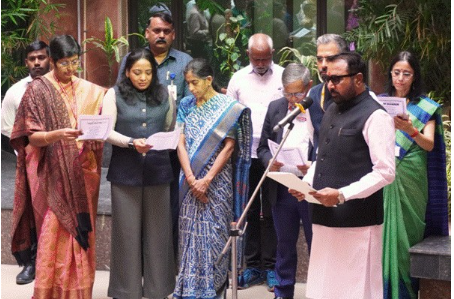
The Ministry of Ayush joined nationwide commemorations on November 7, 2025, marking the 150th anniversary of India’s National Song, ‘Vande Mataram.’ The event took place at Ayush Bhawan and featured a mass singing ceremony, as government departments and citizens across India united to honor the iconic anthem of patriotism and unity.
Historic Observance and Leadership
Union Minister Shri Prataprao Jadhav, Chief Guest for the occasion, led officers and staff of the Ministry in a collective recitation of ‘Vande Mataram.’ In his address, he said, “In celebrating 150 years of Vande Mataram, we honour a song that became a powerful symbol of national awakening and a rallying cry in the struggle against British rule.\
Every word of this timeless composition reflects the deep love and devotion of our citizens towards the Motherland. As we observe this anniversary across the country—from group singing and assemblies to seminars and special sessions in our legislatures—we reaffirm that India’s progress must go hand in hand with the preservation of our heritage.” The Minister further highlighted Prime Minister Narendra Modi’s commitment to heritage conservation alongside development, expressing confidence that collective efforts will strengthen India’s journey toward 2047.
Nationwide Events and Cultural Impact
The Ministry of Ayush’s programme was part of a larger initiative launched by the Ministry of Culture, which includes year-long celebrations inaugurated by Prime Minister Shri Narendra Modi in New Delhi. The anniversary events span mass singing sessions across public venues, seminars reflecting on the song’s legacy, educational campaigns, and the launch of commemorative coins and stamps. A special website, https://vandemataram150.in/, serves as a national hub for the campaign, aiming to ignite patriotic fervor, especially among India’s youth.
Following the singing, participants attended a presentation detailing the history and lasting influence of ‘Vande Mataram’, which originally appeared in Bankim Chandra Chatterjee’s novel ‘Anandamath’ in 1875. The enduring message of unity and self-respect embedded in the song inspired generations of freedom fighters and continues to connect the nation emotionally and spiritually.
Legacy and Future Vision
Over the decades, ‘Vande Mataram’ has become a timeless expression of love for the Motherland and an emblem of India’s spirit. Its invocation of strength and divinity resonates deeply in the nation’s collective memory. The Ministry of Ayush’s active participation underlined its role in fostering patriotism and promoting cultural heritage among its workforce and the larger society. The celebrations reaffirm that India’s path to progress is inseparable from its rich traditions and shared identity.
Conclusion: Ministry of Ayush
The Ministry of Ayush’s mass singing programme for ‘Vande Mataram’ exemplified the unity and reverence that the song inspires, connecting past struggles with the country’s aspirations for the future. The observance stood as a tribute to both the song’s legacy and its continuing role in India’s journey as a proud and progressive nation.
Union Minister for Agriculture, Farmers’ Welfare, and Rural Development, Shri Shivraj Singh Chouhan, addressed a massive congregation of 20,000 farmers at the Global Vikas Trust (GVT) Krishikul in Beed district, Maharashtra, on November 7, 2025. The conference served as a vital platform for direct engagement with farmers and showcased the government’s latest initiatives to strengthen rural and agricultural development.
Major Announcements and Commitments
Shri Chouhan, during his address, made several crucial commitments aimed at supporting farmers:
He assured that every rupee of crop insurance under the Pradhan Mantri Fasal Bima Yojana would reach farmers and that the government would directly intervene if required to resolve any claim discrepancies.
The Minister declared that in case of severe crop damage, the Centre would provide a special relief package for Maharashtra, supplementing assistance already delivered through the National Disaster Response Fund.
A new bill against the production and sale of fake fertilisers, seeds, and pesticides is set to be introduced in the upcoming Budget Session, reflecting the government’s determination to protect farmers’ interests.
Focus on Innovation, Climate Resilience, and Welfare Schemes
Shri Chouhan called for the development of climate-resilient seeds and the promotion of natural farming as key strategies for advancing Indian agriculture in the face of erratic weather conditions. He emphasised the government’s commitment to delivering high-quality seeds, encouraging less chemical dependency, and shifting towards more sustainable agricultural practices.
During the conference, he highlighted the distribution of 30 lakh houses to Maharashtra under the Pradhan Mantri Awas Yojana and indicated that more families would benefit after an ongoing survey is completed. The Minister also outlined plans to reform fertiliser subsidies and improve transparency by considering direct transfers to farmers’ accounts.
Direct Dialogue and Practical Solutions
Prior to his address, Shri Chouhan held face-to-face interactions with farmers, listening to stories on silk farming, water conservation, and adoption of new technologies. He advocated for broader adoption of successful rural models and cluster-based farming to enhance market linkages and profits. The Minister stressed the integration of farming with allied activities like beekeeping and fisheries for boosting farm incomes.
Underlining the aim of “doubling farmer incomes,” he called for diversified cropping patterns—including fruits, vegetables, and agroforestry—and championed cluster-based procurement and local processing units. Chouhan confirmed that the government is investing MGNREGA funds in drought-prone areas for water conservation to strengthen irrigation and improve rural resilience.
National Pride and Unity
Concluding his address, Shri Shivraj Singh Chouhan greeted farmers and the public on the 150th anniversary of the national song ‘Vande Mataram,’ linking the spirit of patriotism to the government’s resolve for farmer welfare. He reaffirmed the Centre’s commitment to ensuring that every farmer’s life is marked by “dignity, prosperity, and self-reliance”.
Conclusion
The Maharashtra farmers’ conference reflected the government’s responsiveness and multi-pronged strategy towards sustainable agricultural growth, disaster support, and rural livelihood security. The event embodied a collaborative approach between policymakers and farmers, driving forward India’s vision of a thriving, resilient, and inclusive agricultural sector.
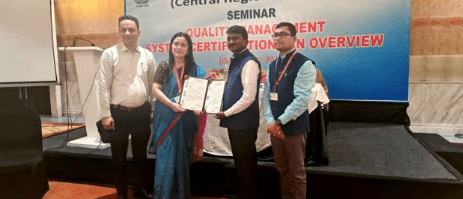
The Pharmacology Laboratory at the All India Institute of Ayurveda (AIIA), New Delhi has earned triple ISO certification from the Bureau of Indian Standards (BIS), marking a landmark achievement for quality, safety, and environmental responsibility in Ayurveda research.
Triple ISO Accreditation and Its Impact
AIIA’s Pharmacology Laboratory received the prestigious IS/ISO 9001:2015 (Quality Management System), IS/ISO 14001:2015 (Environmental Management System), and IS/ISO 45001:2018 (Occupational Health and Safety Management System) certifications. These accreditations confirm that AIIA’s pre-clinical pharmacological research now adheres to globally recognized best practices, greatly enhancing institutional credibility both in India and internationally.
Integrated Management for Excellence
Through an Integrated Management System (IMS), AIIA has:
Standardized all laboratory processes for reliability and reproducibility.
Strengthened compliance with ethical, safety, and environmental norms, including waste minimization and optimized energy usage.
Fostered a robust safety culture with regular risk assessments, ergonomic design, and frequent safety audits.
The BIS audit, conducted in two stages, helped contextualize ISO requirements specifically to the needs of pharmacological and animal research, adding further value to India’s Ayurveda research sector.
Leadership Perspectives and Broader Reach
Prof. (Vaidya) P. K. Prajapati, Director of AIIA, described the accomplishment as a “proud moment” that advances educational, research, and governance excellence at the institute. BIS representatives and other healthcare leaders emphasized the importance of prioritizing quality and continuous improvement within Ayurveda and research institutions. AIIA’s public sector Ayurveda hospital is also NAAC A++ and NABH-accredited, with a comprehensive model integrating 12 specialty departments and 45 specialty clinics for evidence-based Ayurvedic healthcare.
Vision for the Future
This certification cements AIIA’s role as a benchmark institution for Ayurveda research. Standardized processes, ethical research, and sustainable practices will serve as a blueprint for similar labs nationwide, encouraging adherence to international standards while preserving India’s ancient medical heritage.
Conclusion
With the triple ISO certification, AIIA’s Pharmacology Laboratory reaffirms its commitment to pioneering research, global quality benchmarks, and institutional excellence. The achievement reflects India’s growing prominence in evidence-based Ayurvedic medicine and sets a new standard for academic and research institutions across the sector.
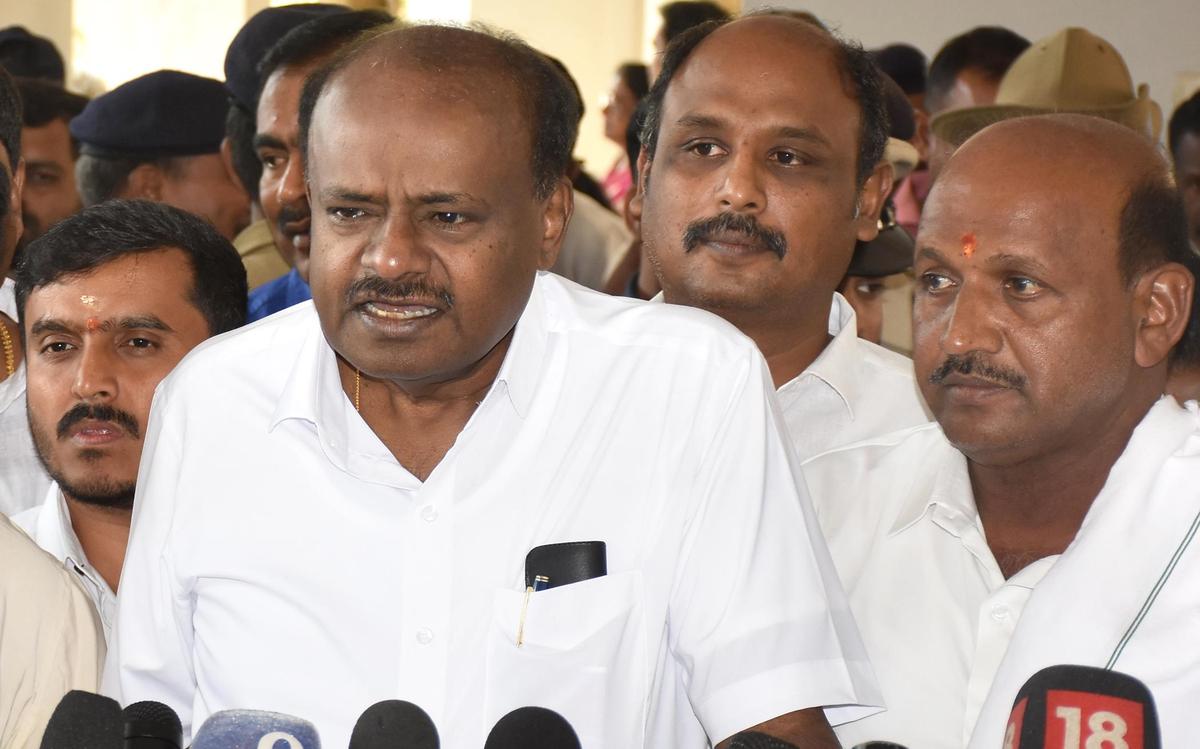
Former Karnataka Chief Minister and Union Minister H.D. Kumaraswamy rejected swirling speculation regarding a supposed “November Revolution” targeting the Congress government in the State. His remarks come amid rising chatter in political circles hinting at a dramatic change of administration. Speaking firmly, Kumaraswamy clarified that no such political upheaval was imminent and dismissed the rumours as imaginative narratives with no grounding in reality. His statement arrives at a tense moment in Karnataka, where shifting loyalties, coalition uncertainty, and internal party fissures have generated an atmosphere thick with speculation. For now, however, Kumaraswamy’s denial places a steadying hand over a politically restless State.
The phrase “November Revolution,” circulating through social and political talk networks, suggested a significant realignment involving MLAs who were reportedly dissatisfied with the Congress leadership. Many assumed that the Opposition, including the JD(S) and BJP, might attempt to reshape the government by wooing disgruntled legislators. However, Kumaraswamy stressed that he was not involved in any such political manoeuvring. He noted that the rumours were likely crafted to fuel drama and distract from ongoing policy issues. His intervention appears designed to stabilise public perception and deny political stakeholders an opportunity to escalate tension.
His comments also reflect a conscious effort to distance the JD(S) from claims of covert operations. The party, now aligned with the BJP at the national level, has attracted frequent scrutiny for its possible role in orchestrating regime shifts. Kumaraswamy’s refusal indicates strategic restraint. It may also signal a desire to protect the JD(S) from being prematurely implicated in destabilising Karnataka’s administration. According to him, the Congress government remains firmly in power; any suggestion of its imminent collapse is merely the product of creative storytelling by people hoping to inflame political atmospheres for personal benefit.
Seasoned observers point out that Karnataka has often been fertile ground for sudden power reversals. The State has seen shifting alliances, resignations, trust votes, and surprise floor outcomes. Therefore, the idea of a “November Revolution” was not entirely dismissed by political watchers when first rumoured. However, Kumaraswamy’s blunt refutation pushes back against sensationalism. He argued that constant fixation on hypothetical drama undermines governance, deters investment confidence, and distracts citizens from legitimate challenges. In his view, speculation may excite partisanship, but it does little to advance solutions on the ground.
Some Congress insiders have acknowledged minor dissatisfaction within the ruling party, especially relating to portfolio distribution, regional balance, and internal decision-making. However, they insist that these tensions are normal fluctuations in a large coalition of voices and do not represent imminent collapse. Kumaraswamy, by shutting down rumours about orchestrated upheavals, subtly suggested that despite internal arguments, no serious desertions are developing. His comments also help ensure that routine internal friction within Congress is not mistaken for full-scale breakdown. The statement may also be aimed at creating political breathing room in an otherwise cluttered narrative.
POLITICAL UNDERCURRENTS STEADILY RESHAPE STRATEGY ACROSS CAMPS
While dismissing talk of revolution, Kumaraswamy acknowledged that political terrain in Karnataka remains fluid. He suggested that each party is currently focused on strengthening organisational structure and public outreach. For the BJP-JD(S) bloc, this means preparing for upcoming electoral cycles rather than orchestrating abrupt power grabs. Analysts believe his calm tone signals long-term strategy rather than short-term disruption. By denying involvement in destabilisation, he positions JD(S) as a disciplined partner in a national formation, thereby presenting an image of maturity and predictability.
However, whispers persist across districts that a few Congress legislators remain uneasy under the current government’s hierarchy. They reportedly feel sidelined or constrained under internal power equations. Some critics have argued that new schemes, though beneficial, have reduced discretionary influence for senior leaders, causing unease. Yet, this sentiment has not translated into visible rebellion. For now, these murmurs remain localized frustrations rather than organised dissent. Kumaraswamy’s denial may help diffuse emerging tensions by signalling that Opposition groups are not actively courting defectors.
The “November Revolution” rumour also highlights how rapidly narratives grow in Karnataka politics. Small statements become magnified into statewide speculation—often aided by fast social media cycles. Political rumours now function like currency, traded to gain leverage, unsettle opponents, or shape voter expectations. But Kumaraswamy’s intervention takes aim at this habit, urging political actors to reject sensationalism. He noted that the State’s priorities should revolve around development, governance, and stability rather than fiction-driven agitation. His response appears intentionally sharp, meant to remind leaders of responsibilities rather than thrill-seeking.
Meanwhile, the Congress government continues implementing flagship guarantee schemes, which form the core of its people-focused platform. These schemes, although praised by some, have also sparked funding concerns from critics. Rumour-mongers positioned these financial debates as triggers for internal revolt. Yet, senior Congress figures publicly deny fractures. Kumaraswamy’s assertions inadvertently reinforce their messaging, reducing space for defect narratives. Interestingly, even his political rivals may benefit from his statement, as it tempers speculation and delays momentum for opportunistic bargaining among legislators.
Political analysts suggest that the rumour wave likely began due to seasonal churn. Winter sessions typically heighten political manoeuvring. MLAs begin evaluating positions, reassessing alliances, and negotiating advantages. This annual calendar often gives birth to resignation gossip, reshuffle predictions, and coalition forecasts. The “November Revolution” story rode these seasonal winds without substantive backing. Kumaraswamy’s response tries to deflate these anticipatory balloons. His calm dismissal may be tactical as well—minimising theatre and reducing expectations for dramatic shifts he has no desire to engineer.
Opposition parties note that stability benefits all political stakeholders by maintaining economic predictability and preventing volatility. Karnataka’s governance structure is highly sensitive to rumor clouds, especially in industrial corridors. Investors worry that chaos at the top could derail approvals, incentives, and reforms. Thus, the denial of political turbulence becomes more than rhetoric—it helps safeguard administrative confidence. In this sense, Kumaraswamy’s words operate beyond partisan messaging: they serve as reassurance to business, industry, and civil network actors eyeing stability.
CALMING NARRATIVES AMID COMPLEX FUTURE POLITICAL POSSIBILITIES
Despite his firm tone, many believe Kumaraswamy’s remarks are strategically layered. Public denial is politically useful even when future cooperation or realignment remains possible. Karnataka politics is famously flexible; alliances shift based on election arithmetic rather than ideological boundaries. Therefore, he may simply be preserving space for future manoeuvre by refusing to endorse premature speculation. This approach allows JD(S) to retain relevance without committing to present theatrics. His statement, therefore, might serve the dual purpose of shutting down rumour while also protecting his party’s negotiation bandwidth.
Simultaneously, Congress leaders remain engaged in strengthening internal cohesion. Multiple public welfare commitments have tied significant political capital to their stability. The leadership realises that any hint of uprising weakens public trust. Therefore, reassuring messaging is essential. Kumaraswamy’s denial indirectly fortifies this narrative, though the two parties remain opponents. Congress may use these remarks to showcase growing political maturity among senior figures—even adversaries acknowledge that talk of revolution is exaggerated. This unusual narrative convergence offers temporary relief to the ruling government.
Public reaction to the rumour has been mixed. Some citizens view political reshuffling as normal in a vibrant democracy, while others express concern that constant instability derails development agendas. For many, election-like tension every few months generates administrative paralysis. Many residents welcomed Kumaraswamy’s dismissal, hoping it reflects a longer pause from political brinkmanship. They argue that Karnataka needs continuity to address infrastructure, job growth, agriculture concerns, and sector reforms. Recurrent overthrow speculation diverts attention from core issues that determine livelihood.
Farmers, workers, and industrial groups have repeatedly urged political actors to prioritise economic stability. The “November Revolution” rumour triggered anxiety in some sectors, especially among MSMEs reliant on steady contract cycles. Industry associations note that administrative stability influences loan approvals, land allocation, and compliance systems. Thus, even rhetorical turbulence carries cost. Political observers believe Kumaraswamy recognised this vulnerability and sought to protect the State’s economic atmosphere by deploying reassurance. His message appears to prioritise public calm over partisan celebration.
Meanwhile, within JD(S), the denial allows party leaders to emphasise ideological discipline. By rejecting chaos narratives, the party can portray itself as a structured regional force dedicated to stability. This aids recruitment, fundraising, and local electoral outreach. His statement may also have internal benefits—keeping party workers focused on organisational tasks rather than fueling gossip. The party’s long-term health depends on maintaining local relevance, not on rumours about sudden takeovers that rarely materialise. Rejecting theatrical politics may therefore strengthen JD(S)’s credibility.
Looking at Congress, internal management continues to be a work in progress. Leadership must balance representation across regions, caste groups, and generational lines. While minor dissatisfaction persists, there is no sign of an organised plan to topple the administration. Kumaraswamy’s statement helps suppress internal anxiety and ensures that individuals do not misinterpret small disagreements as exit cues. Reducing psychological noise becomes important when one is managing a broad coalition. His tone, though externally directed, thus holds indirect organisational stabilising value.
Though he denied involvement in any power shift, Kumaraswamy did not shy away from criticising the government’s performance. He argued that governance must focus on grounded needs rather than headline-driven schemes. Yet, he maintained that replacing the government was not his objective. This nuanced balance—criticise governance but dismiss coup talk—allows him to maintain opposition relevance without igniting instability. Through this strategy, he strengthens his image as a seasoned player who avoids reckless escalation.
Ultimately, the “November Revolution” claims serve as a reminder of Karnataka’s unpredictable political climate. Even minor statements can ignite wildfire narratives. Yet, Kumaraswamy’s approach, grounded in calm denial, sets a template for handling such storms: acknowledge speculation, reject baseless drama, and signal stability. Whether his message reflects pure sincerity, tactical discipline, or both, it cools a heated conversation. For now, the State steps away from the precipice of imagined turbulence, returning its sights to real policy challenges waiting at ground level.
Going forward, analysts anticipate that political undercurrents will continue evolving. Leaders may reassess tactics depending on public reception, alliance equations, and national-level developments. However, for the moment, the “November Revolution” remains only a rumour—stilled by a veteran’s refusal. The broader emotional lesson holds significance: Karnataka’s democratic rhythm thrives not on spectacle, but on steady dialogue. A single definitive message may not erase future speculation, yet it reminds citizens that change, when real, must be earned through transparent democratic process—not conjured through whispers.
The Indian stock market experienced a volatile session on November 7, 2025, with the Nifty 50 ending marginally lower by 17.40 points (-0.07%) at 25,546.35. The day’s trading reflected a tug-of-war between selective buying in outperformers and widespread profit booking, resulting in a flat close for the benchmark index.
Nifty 50 fluctuated through the session, opening at 25,433.80, hitting an intraday high of 25,551.25, and dipping to a low of 25,318.45 before ending at 25,546.35. Other major indices outperformed modestly: Nifty Next 50 advanced by 66.60 points (0.10%) to 69,366.15, Nifty Financial Services gained 205.65 points (0.76%) at 27,238.75, and Nifty Bank rose by 322.55 points (0.56%) to finish at 57,876.80. The mixed movement underscored cautious investor sentiment amid uncertain global cues.
Top Gainers
Among the session’s top gainers, HBSL surged 19.99% to close at 99.81 on active volumes of 8.87 lakh shares, benefiting from strong momentum and positive institutional interest. INTERARCH climbed 15.84% to 2,542.00, supported by considerable turnover of ₹636.84 crores. MBEL advanced 13.19% at 495.10, while ROSSTECH (up 11.57% at 683.00) and RAMAPHO (up 10.92% at 209.80) also featured among the most notable performers, reflecting scattered buying interest in select sectors.
Top Losers
On the downside, BLISSGVS led with a 14.81% drop to 129.47, reflecting heavy profit-booking after recent upmoves and sizeable volumes of 43 lakh shares. RSSOFTWARE declined by 10% to 57.05, while SAATVIKGL slipped 9.81% to 485.00. AMBER retreated 8.48% to 7,168.00, marking a continued downtrend, and SILLYMONKS dropped 8.43% to 24.01, indicating sectoral weakness and shifting investor sentiment towards defensives.
Sectoral Performance and Turnover
While the main benchmark was subdued, sectoral rotation continued, with key outperformers attracting inflows and underperformers seeing aggressive selling. Volume and value turnover remained robust across both gainers and losers, reflecting persistent trading activity even as headline indices drifted.
Conclusion: November 7, 2025
The Indian equity market concluded the session nearly flat despite pockets of strength in select counters such as HBSL and Interarch. Overall sentiment remained cautious, with traders navigating global volatility, sector churn, and profit-taking. Investors are likely to watch for clearer macro signals as the market seeks direction in upcoming sessions.
The Indian stock market posted a modest recovery during the afternoon session on November 7, 2025, with the Nifty 50 closing up by 31.00 points (0.12%) at 25,540.70. Positive movements in select mid- and small-cap stocks contributed to the improved sentiment despite continued volatility in some sectors.
The Nifty 50 index opened flat at 25,433.80, hitting an intraday high of 25,545.05 and a low of 25,318.45. Other major indices also registered gains: Nifty Next 50 rose by 194.00 points (0.28%) to 69,493.55, Nifty Financial Services surged by 255.25 points (0.94%) to 27,288.35, and Nifty Bank advanced by 403.10 points (0.70%) to 57,957.35. The overall market tone turned cautiously optimistic as investors responded to encouraging sectoral cues and renewed buying interest.
Top Gainers
Leading the session’s gainers was MBEL, which soared 17.63% to close at 514.50, driven by robust trading volumes of 70.36 lakh shares and investor focus on sector strength. INTERARCH followed with a gain of 16.96% at 2,566.50 on substantial value turnover of ₹531.02 crores. Other notable performers included PRICOLTD (up 12.59% at 583.00), HBSL (up 10.84% at 92.20), and SWANCORP (up 10.29% at 480.50), all supported by strong volumes and positive sentiment in broader market segments.
Top Losers
Despite the upward trend, several stocks faced sharp declines. BLISSGVS was down 14.81% at 129.47, leading the list of losers with the highest volume of 43 lakh shares. RSSOFTWARE dropped 10.00% to 57.05, while SAATVIKGL lost 9.81% to settle at 485.00. AMBER experienced a pullback of 8.48%, closing at 7,168.00, and SILLYMONKS slid 8.43% to 24.01. Heavy selloff in these counters indicated sector-specific profit booking and cautious short-term trading.
Sectoral Sentiment and Participation
The positive closing of benchmark indices was underpinned by select buying in financials, industrials, and autos, with high turnover and trading activity in both gainers and losers. Investors displayed a prudent approach, cycling capital between outperformers and taking profits in recently overbought names.
Conclusion: November 7, 2025 (Midcap)
The Indian equity markets ended the session with moderate gains, reversing earlier losses and reflecting balanced participation across major sectors. With robust moves in stocks like MBEL and INTERARCH cushioning the indices, the market outlook remains constructive while traders continue to monitor macroeconomic developments and global signals.
The Indian stock market opened lower on November 7, 2025, with benchmark indices facing significant pressure across key sectors. The Nifty 50 index registered a decline of 164.20 points (-0.64%), closing at 25,345.50 as market sentiment remained cautious due to mixed global cues and sectoral selloffs.
During the early trading hours, the Nifty 50 opened at 25,433.80, touched a high of 25,447.10, and reached an intraday low of 25,318.45. Other indices mirrored this cautious trend, with the Nifty Next 50 falling by 552.25 points (-0.80%) to finish at 68,747.30, Nifty Financial Services losing 98.25 points (-0.36%) to settle at 26,934.85, and Nifty Bank slipping by 263.15 points (-0.46%) to 57,291.10. The session saw widespread profit-booking and thin participation from institutional investors.
Top Gainers
Selected mid-cap and small-cap stocks managed to buck the broader market trend. NEXTMEDIA surged 13.71% to end at 7.30, driven by positive earnings and increased trading volume. INTERARCH climbed 11.84% to 2,454.30, attracting significant market interest with a turnover of ₹191.96 crores. Other top gainers included COASTCORP (up 11.59% at 42.74), DCI (up 10.77% at 279.20), and HBSL (up 10.16% at 91.63).
Top Losers
The session witnessed steep declines in select counters. CAPTRU-REI dropped 15.83% to 4.52, and BLISSGVS fell 15.13% to 128.99. AMBER experienced a major loss, down 12.12% to 6,883.50, erasing gains from previous sessions. SAATVIKGL and DCAL also faced heavy selling, closing down 10% and 8.85% respectively.
Sectoral and Investor Sentiment
Broader market activity reflected caution as traders anticipated key domestic and international macroeconomic announcements. Despite outperformers in certain segments, negative cues dominated as profit-booking prevailed. Turnover in key stocks remained robust, yet the value drag in index-heavyweights weighed heavily on the overall indices.
Conclusion: November 7, 2025 (Opening)
The Indian stock markets concluded the day on a negative note as broad-based selling pressure pulled major indices lower. While a handful of stocks managed impressive gains, overall sentiment remained subdued with investors closely tracking economic developments and awaiting clarity on both domestic reforms and global market trends.
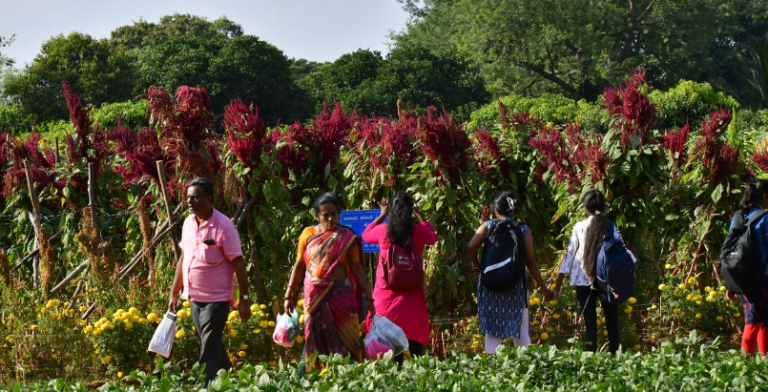
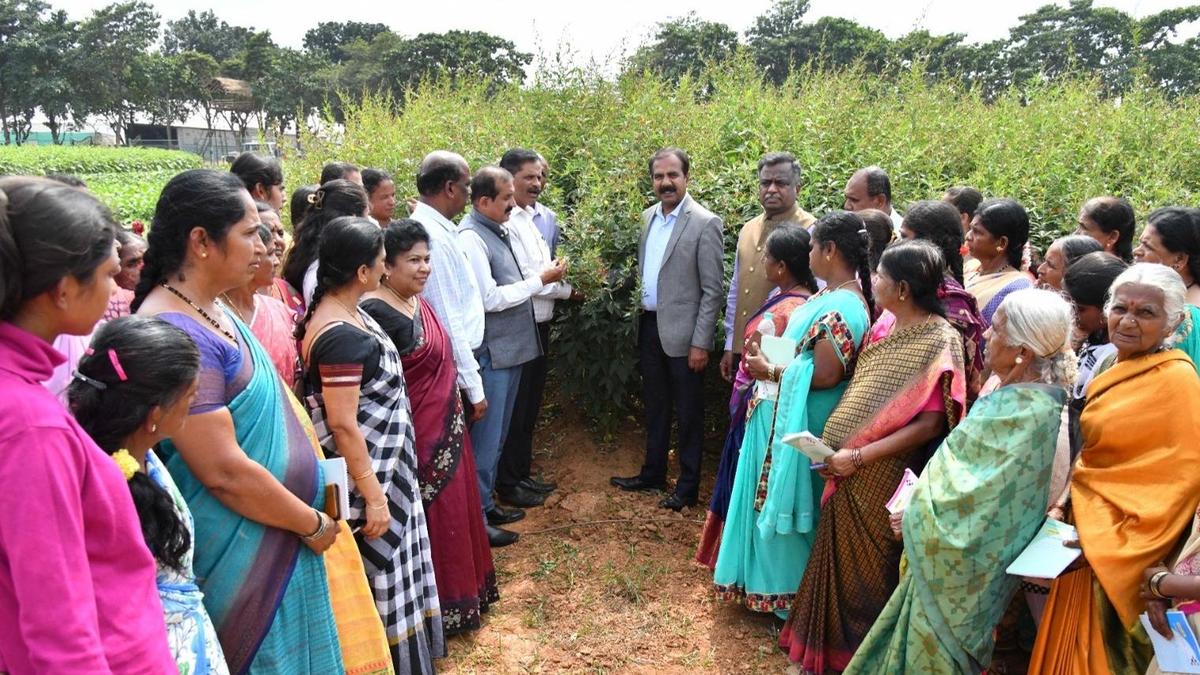
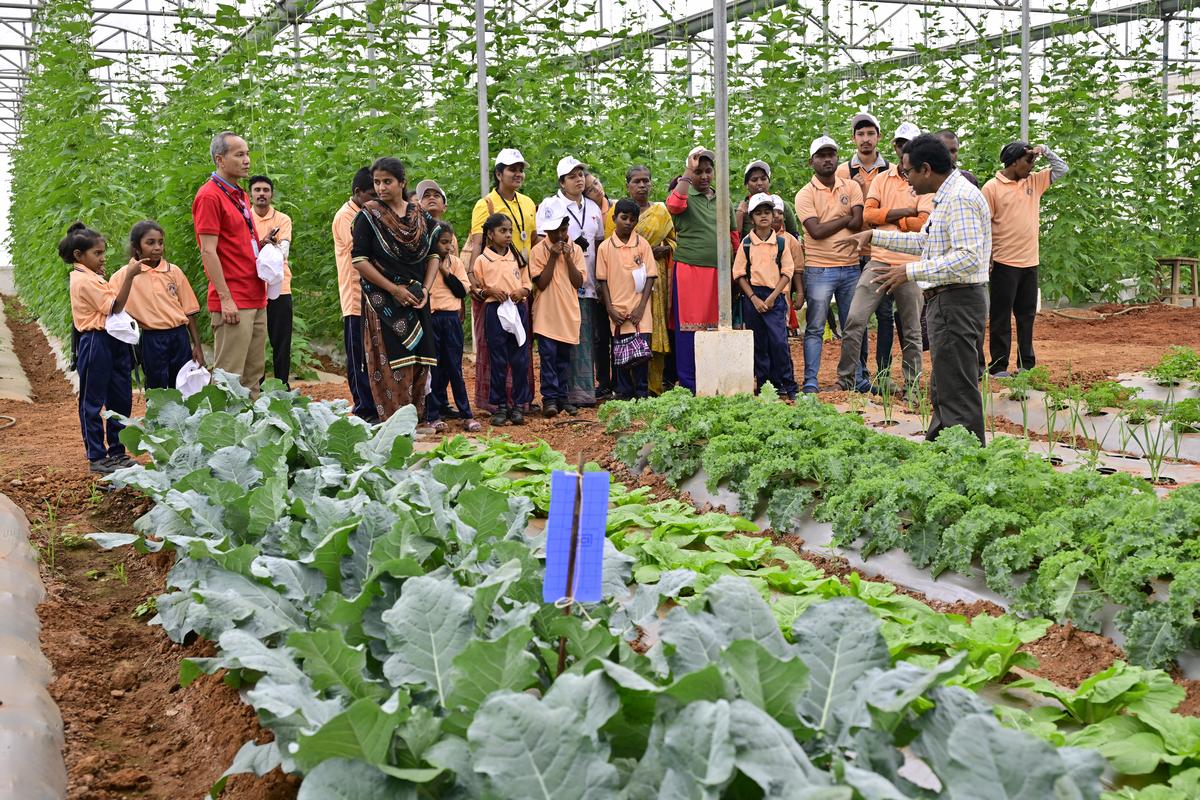
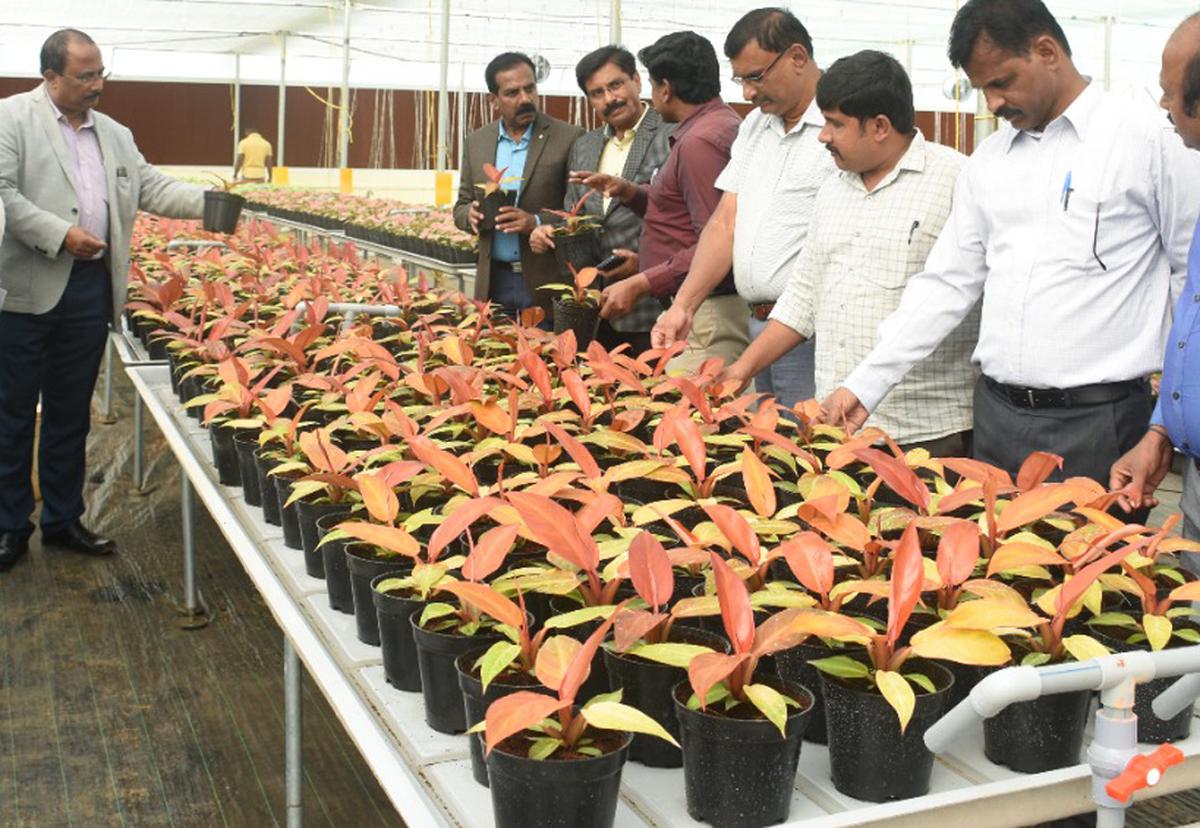
The University of Agricultural Sciences, Bengaluru (UAS-B), is preparing to host its annual Krishi Mela from November 13 to 16, a four-day festival of agricultural innovation, sustainability learning, knowledge exchange, and community bonding. The event is expected to draw thousands of farmers, students, researchers, agri-entrepreneurs, and policy experts from across Karnataka and beyond. Every year, Krishi Mela aims to empower farmers through exposure to emerging technologies, improved seeds, mechanisation models, climate-adaptive practices, and value-addition methods that can transform agricultural outcomes. Organisers reaffirm that this year’s edition will focus strongly on farm resilience, market linkages, and eco-friendly cultivation.
The mela will be conducted at the UAS-B GKVK campus, which annually transforms into an experiential landscape representing diverse farming realities. Farmer visitors will have opportunities to interact directly with scientists, input manufacturers, and government departments. Demonstration plots on the latest crop varieties—especially for millets, paddy, oilseeds, pulses, and horticulture—will provide practical insights. Scheduled workshops will explain how small and marginal farmers can adopt cost-efficient technologies without harming soil health. The organisers emphasise that this year’s theme underlines strengthening rural livelihoods through knowledge-led growth.
Experts note that Krishi Mela has become more than a knowledge platform; it is now a community gathering that sustains agricultural identity. Many farmers return annually because of the mela’s ability to present realistic technologies that align with their resource limitations. According to UAS-B event coordinators, equal importance will be given to innovations and traditional systems. Several programmes will celebrate indigenous seed conservation, water stewardship, and inter-generational knowledge. The mela will also highlight sustainability concerns facing the State—erratic rainfall, rising input costs, and shrinking farm incomes—while proposing solutions rooted in scientific evidence.
The mela will host stalls from Krishi Vigyan Kendras (KVKs), self-help groups (SHGs), farmer-producer organisations (FPOs), government research institutes, and private firms dealing with seed, fertiliser, tools, and irrigation systems. Many first-time participants interested in agri-business incubation will receive guidance on business planning, certification, and financial support schemes. Agricultural officers observe that farmers increasingly want value-addition know-how to diversify risk beyond cultivation. Sessions will thus focus on post-harvest technologies, agri-branding, and direct marketing models. With digital marketplaces emerging rapidly, organisers aim to help farmers navigate new platforms while maintaining bargaining power.
The event will also spotlight Karnataka’s continued leadership in millet cultivation, especially after the International Year of Millets. Improved varieties and processing solutions will be showcased alongside recipes and nutritional workshops. Millet entrepreneurs and cooperatives will share business models adopted to capture niche markets domestically and overseas. The mela will emphasise that value-added millet products—such as flours, snacks, and ready-to-cook ingredients—have strong market potential. Experts believe focused training during the mela can push many young farmers to explore entrepreneurial diversification, particularly in semi-arid regions where millet cultivation is best suited.
Farmer interaction sessions remain a key attraction. These open forums allow participants to share challenges directly with experts, whom they may not usually access. Most farmers reportedly seek advice on water management, pest control, seed selection, and fallout of climate variability. Scientists at UAS-B insist that dialogue is essential because technology adoption becomes meaningful only when shaped by real farm problems. Social science researchers at the mela will also map farmer priorities to enhance future extension programmes. The University maintains that its field interventions are strongest when guided by firsthand farmer experiences.
Many visitors come specifically to witness live demonstrations of integrated farming systems (IFS). This model promotes combining crops, livestock, horticulture, fisheries, and value-addition to increase productivity per unit land. Demonstrations show how farmers can recycle resources, reduce dependency on external inputs, and diversify income. In drought-hit districts, IFS has helped families buffer price volatility by balancing multiple farm-based enterprises. During Krishi Mela, subject experts will illustrate how small farms can redesign layouts to accommodate poultry, biogas units, and kitchen gardens, while maintaining soil nutrition and biodiversity.
One of the headline features this year will be climate-smart agriculture, which integrates weather-adaptive crop planning, micro-irrigation, organic nutrient management, and smart forecasting tools. Scientists argue that climate unpredictability makes traditional cropping assumptions inadequate. Technologies like sensor-based irrigation and remote advisory services can help farmers anticipate drought and pest cycles. Demonstrations will explain how these tools can be adopted at scale with minimal investment. Event planners believe this focus is timely, given the alarming frequency of unseasonal rains and erratic monsoons in Karnataka.
Entrepreneurship cells at the mela will mentor youth interested in agriculture-linked industries—vertical farming, hydroponics, processing units, on-farm tourism, and farm-to-consumer retail. Students pursuing agriculture degrees are likely to benefit from industry interactions and live case studies presented by innovators. Women entrepreneurs will also play an important role, with dedicated stalls highlighting their contributions to seed conservation, processing, and micro-manufacturing. Sessions will address credit access challenges and ensure that women farmers gain awareness of gender-inclusive schemes.
Large crowds traditionally gather at Krishi Mela’s livestock pavilions. Breeders and veterinarians will counsel farmers on high-yield cattle, disease resistance, feed optimisation, and indigenous breed preservation. Many families specifically attend to learn advanced poultry and dairy practices that increase household income. Officials from the Department of Animal Husbandry are expected to showcase subsidy-based programmes. Demonstrators will illustrate how farmer collectives can set up low-investment dairy units managed with community participation and shared profit models.
STRONG KNOWLEDGE, SHARED FUTURES
Beyond technologies, Krishi Mela nurtures agrarian bonding—a sentiment that organisers say is vital in times of market uncertainty. Farmers from different districts bring stories of success and struggle, forming a support network that extends beyond the mela. Elders often share experiences that help younger farmers contextualise newer interventions. This intergenerational exchange is particularly meaningful in regions where youth are increasingly migrating away from agriculture. The mela becomes a space where young farmers witness how sustainable models can still yield viable livelihoods.
The mela also strengthens the university-farmer connect. Researchers get real-time feedback that shapes long-term experiments, while farmers learn how research outcomes can be adapted to their local context. UAS-B officials emphasise that extension is most effective when based on mutual respect rather than one-way instruction. Over the years, farming families have developed trust in UAS-B, returning consistently for guidance. This long-term engagement is considered central to Karnataka’s agricultural progress, particularly in pulses, horticulture, and dryland farming.
This year, Krishi Mela is also expected to engage policymakers in sessions that reflect on agricultural priorities and budget allocations. Many experts argue that expansion of cold-chain networks, agro-processing clusters, and institutional credit access are necessary to ensure that innovations showcased at events like Krishi Mela translate into material gains. Policymakers will likely discuss subsidy rationalisation, insurance coverage expansion, and water-security strategies. Observers hope this platform will encourage alignment across departments, helping to build a unified roadmap for farm development.
The mela’s cultural programmes reinforce agriculture’s social roots. Folklore, storytelling, traditional seed festivals, and local food stalls celebrate rural heritage. Culinary demonstrations introduce urban visitors to sustainable food systems. This focus is not ornamental but intentional—organisers want people across class boundaries to see farming as a dignified profession that fuels the economy and shapes identity. By maintaining a strong cultural element, Krishi Mela blends modern science with lived traditions, creating a holistic experience.
Sessions on organic farming remain in high demand. Many farmers are concerned about soil degradation, chemical dependency, and rising input prices. Experts will guide them through low-cost composting, integrated pest management, biological plant protection, and certification pathways. Demonstrations on preparing botanical pesticides using local ingredients are popular because they reduce financial burden. Certification experts will advise on building market credibility. Organisers emphasise that organic farming is not merely a rejection of chemicals but a regenerative philosophy based on soil life.
Water scarcity will be another focal topic. Karnataka’s recurring droughts and erratic rainfall patterns have heightened anxiety in agricultural communities. Rainwater harvesting, check-dam construction, watershed models, and micro-irrigation solutions will be showcased. Demonstrations will break down their technical aspects and financial feasibility. Experts will explain how community-driven watershed projects have transformed productivity in some semi-arid regions. The mela aims to highlight how collective action has long-term benefits beyond individual farms.
For urban residents curious about agriculture, Krishi Mela acts as an entry point into food systems. Many visitors, including families and students, explore terrace-garden workshops and small-scale composting options suited for apartments. This aspect helps city dwellers reconnect with nature and understand food sourcing. Event organisers hope such engagement can inspire better consumption habits, including supporting farmer-collectives and local produce markets.
A PLATFORM FOR FUTURE-READY FARMING
As climate pressures intensify, agriculture is transitioning toward models that emphasise knowledge-sharing, resilience, and diversified income. Krishi Mela plays a critical role in this journey by democratizing access to expertise. The organisers state that innovation must be inclusive—suited to both resource-rich and resource-poor families. By showcasing cost-effective tools alongside advanced technologies, the mela maintains accessibility.
Youth engagement will be pivotal this year. Coordinators note that agriculture needs fresh perspectives, especially from young farmers who can integrate digital tools. Many sessions will highlight precision farming, satellite-based forecasting, drone spraying, and data-led planning. Experts insist that digital literacy can significantly reduce uncertainty, helping farmers choose appropriate sowing windows, fertiliser schedules, and crop plans. However, they caution that digital adoption must be supported through training.
Farmer-producer organisations (FPOs) will receive special focus, with discussions on aggregation for better pricing, market intelligence, cold-chain partnerships, and export pipelines. Many small farmers struggle individually but find strength through collective bargaining. The mela aims to accelerate FPO formation and strengthen existing ones that lack managerial capacity. Experts from cooperative models will share successful case studies of collective marketing that have improved income stability. The sessions will highlight how FPOs can negotiate better terms for input purchase and product sale.
Seed companies, nurseries, and biotechnology groups will display drought-tolerant varieties and disease-resistant hybrids. Farmers will learn how to evaluate new cultivars, balancing yield with ecological suitability. Demonstrations will discuss the importance of seed purity, storage, and seasonal planning. Extension officials assert that seed selection remains one of the most significant determinants of profit, yet many farmers take unverified advice. Krishi Mela hopes to correct this gap, helping farmers make informed choices.
Soil health testing will be a major service at the event. Many families lack access to testing labs, leading to guesswork in fertiliser application. At the mela, experts will demonstrate how soil composition affects crop choice, input planning, and water strategy. Sustainability guidelines encourage farmers to treat soil as a living entity—requiring balanced nutrients, organic matter, and microbial life. Visitors can submit samples and receive tailored recommendations. Officials emphasise that healthy soil is central to long-term productivity.
Packaging and branding workshops are being planned for small entrepreneurs seeking better market presence. Specialists will discuss how visual appeal, storytelling, accurate labelling, and compliance standards influence consumer decisions. As direct-to-consumer sales rise, farmers stand to benefit from improving their marketing capabilities. Many young entrepreneurs view agriculture through the lens of value-addition rather than raw production. The mela aims to nurture this shift by combining technical and business-centric knowledge.
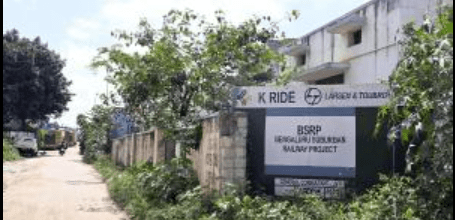
The proposed Bengaluru Business Corridor is poised to become one of the most significant industrial development projects in Karnataka, with the State government preparing to float tenders worth nearly ₹7,000 crore by March. The initiative, which has been under discussion for several years, aims to build a concentrated cluster of commercial, industrial and logistics infrastructure around the capital city. Government officials say this corridor is designed to boost employment generation, facilitate manufacturing, attract foreign and domestic investments and ease pressure on the urban core. If completed as planned, the corridor could reshape the economic map of the region.
Public-finance analysts note that a ₹7,000-crore tendering plan marks only the first wave of expenditure; significantly higher capital infusion will be required as the corridor scales. They estimate that full realisation may demand multi-phase funding from State allocations, public-sector undertakings and private partners. Officials are examining viability-gap funding to attract large investors while ensuring profitability. Financing mechanisms will determine how efficiently construction proceeds, particularly in road expansion, water pipelines and power networks. Analysts add that predictable financial commitments are crucial to prevent long-term stagnation. Without continuity, they warn, the corridor risks becoming yet another partially completed development zone.
Local bodies around Bengaluru say that institutional capacity will need strengthening to manage this transformation. Many panchayats and municipal councils currently lack staff and technical expertise required to evaluate proposals, issue land-use clearances, and monitor compliance. The government is reportedly exploring training programmes as well as dedicated facilitation centres to guide businesses setting up in the corridor. Officials argue that empowering district-level institutions will distribute responsibility more evenly and curb bureaucratic delays. Civic groups, however, caution that decentralisation must not become a cover for diluted accountability. They stress the need for strong grievance-redress systems accessible to residents.
For small and medium enterprises, the corridor presents both opportunity and uncertainty. Proponents believe the ecosystem will allow SMEs to access shared logistics, cheaper warehousing and smoother supply chains. Such efficiencies could reduce overheads, helping them scale more quickly. Yet many SME owners fear being overshadowed by large multinational companies, especially if policy incentives favour capital-intensive industries. Industry associations are urging the government to reserve pockets for small manufacturers, provide subsidised facilities and simplify compliance. They argue that nurturing SMEs is essential for resilient growth and preventing excessive consolidation that narrows economic participation.
Transport integration remains one of the most debated components. Officials are exploring dedicated freight routes, arterial road linkages and multimodal connectivity with rail. Experts say strategically placed logistics nodes could significantly reduce transport time and improve last-mile delivery efficiency. However, they warn that poorly planned road expansion could worsen bottlenecks or fragment agricultural land. Urban planners advocate for early collaboration with transport agencies to finalise alignments that minimise community disruption. They also recommend designing worker-friendly transit systems, noting that industrial corridors often overlook public-transport needs, forcing employees into long, costly commutes that undermine labour stability.
Labour-rights advocates say the project must adopt fair-work principles to ensure secure employment and dignified conditions. They note that rapid industrialisation often leads to widespread contract hiring with minimal social protection, limited insurance and weak safety compliance. Many call for baseline safeguards, including regulated wages, transparent hiring, skill-development programmes and enforceable health-and-safety standards. Experts argue that worker well-being directly influences productivity and investor confidence. If companies treat labour as disposable, they warn, the corridor could fall into the pattern of high-turnover, low-skill jobs that offer little long-term mobility. Strong enforcement mechanisms will therefore be essential.
The broader success of the Bengaluru Business Corridor may depend on how seamlessly it integrates with the State’s long-term development vision. Karnataka’s policymakers have been promoting innovation-driven growth, particularly in green energy, semiconductor manufacturing and aviation components. Aligning corridor incentives with these priorities could create synergies and help the State capture global supply-chain shifts. Conversely, unclear sectoral anchoring may lead to scattered industrialisation with limited strategic depth. Analysts say the corridor’s policy framework should balance flexibility with focus, enabling responsive growth while building specialised industry clusters. Ultimately, continuity of vision will determine whether the project delivers sustained economic transformation.
A crucial element of the project is the development of large industrial parcels supported by upgraded power, water and road networks. Early estimates indicate that around 15,000 to 20,000 acres may eventually come under direct or affiliated development zones. Officials note that talks with private and multinational firms have already begun, with many expressing interest. The corridor is expected to connect seamlessly with national highways and existing logistics hubs, forming an integrated ecosystem that reduces freight costs. Authorities argue that Bengaluru’s reputation as a knowledge and innovation hub makes it an ideal anchor for such a commercial expansion.
Systems Need Reform: A Call to Recognise Human Context
Economic planners believe the business corridor could help redistribute growth, allowing more industrial activity to move outside the congested city core. This shift would support cleaner, better-regulated industrial zones equipped with modern waste-management facilities. The government is concurrently considering simplified compliance frameworks to attract investors who often cite policy ambiguity as a barrier. Sectoral diversification is also a stated priority. While technology companies will likely be early entrants, the corridor is expected to draw firms specialising in electronics assembly, renewable-energy hardware, pharmaceuticals, logistics and warehousing. Supporters argue this mixture is essential for balanced development.
Meanwhile, the State Cabinet is expected to finalise land acquisition proposals over the next few months. Officials say the tendering phase will begin in stages to prevent administrative delays and allow flexibility as the project evolves. However, land acquisition remains one of the most sensitive aspects, with the government promising “fair and transparent” compensation. Farmer groups in surrounding rural belts say they have sought assurance that displaced residents will receive jobs or training within the new industries. Without such guarantees, they fear the project may mirror previous industrial parks, where local communities felt marginalised in the long term.
Urban-planning experts note that the corridor concept mirrors global development models, where satellite industrial clusters support core cities. They view the project as a response to mounting pressure on Bengaluru’s urban infrastructure, which has struggled to serve its rapidly increasing population. Officials believe shifting manufacturing and warehousing out of the city may ease traffic congestion, reduce pollution and free land for housing and public services. However, experts caution that outcomes will depend on whether new zones receive reliable utilities, public transport and institutional services, which have historically lagged in industrial belts.
Stories as Data: Why Lived Narratives Matter in Healing
Environmental advocates say the government must ensure that the corridor does not develop at the cost of ecologically sensitive regions. Many proposed sites lie close to agricultural belts, lakes and forest fragments. Conservationists argue that previous industrialisation drives have compromised green spaces through unregulated waste discharge and groundwater exploitation. They urge the authorities to implement strict environmental clearances, third-party audits and transparent environmental-impact assessments. Rainwater harvesting, green buffers and renewable-energy infrastructure are among the sustainability measures encouraged. Without these, they warn, Bengaluru’s long-standing environmental challenges could worsen.
Infrastructure specialists stress the importance of strong civic planning to ensure the project’s longevity. Past mega-infrastructure initiatives in Karnataka have sometimes faced bottlenecks due to delays in land consent, funding and inter-departmental coordination. To avoid similar setbacks, the government is considering a dedicated project-monitoring unit. This team would track timelines, evaluate contractor performance and coordinate across agencies. Specialists add that reliable transport access — especially through multi-modal links — will be critical. They propose integrating the corridor with rail freight stations, highways and bus networks to ensure efficient movement of workers and goods.
Industry bodies have welcomed the announcement, stating that large-scale industrial expansion is necessary for Karnataka to maintain its competitive edge. They argue that while Bengaluru dominates the technology space, other states have been quicker to build manufacturing-friendly environments offering plug-and-play facilities, power security and smoother approvals. A structured corridor could help Karnataka address this gap. Business leaders also highlight the job-creation potential. The project is expected to generate both skilled and unskilled employment, particularly in logistics, machinery operation, construction, retail and maintenance services within the industrial belt.
However, critics question whether the corridor might worsen regional disparities. While Bengaluru and its surroundings stand to benefit, interior districts may see little improvement. Analysts recommend that revenue from the corridor be used to support agriculture, health, education and infrastructure in less-developed regions. Otherwise, they argue, Karnataka could face higher intra-State inequality. They add that the corridor must not distract from strengthening rural industries, which employ a significant share of Karnataka’s population. A balanced approach, they say, will protect livelihoods and avoid over-concentration of wealth.
Public-policy observers also emphasise the need for transparency. They argue that large infrastructure projects often face corruption risks during land acquisition, contracting and procurement. Ensuring real-time disclosure of spending, land records and impact projections could build public trust. Citizens have raised concerns that peripheral development could trigger real-estate speculation, making land unaffordable for local communities. Observers insist that affordable-housing options, public amenities and economic opportunities must be included in master plans. Without these safeguards, they warn, the corridor could become an elite-driven enclave disconnected from social needs.
Despite mixed perspectives, momentum around the Bengaluru Business Corridor appears strong. Officials believe tenders by March will mark a significant milestone, setting construction in motion within the year. If the project adheres to proposed timelines and sustainability norms, Karnataka could benefit from a world-class industrial ecosystem. The endeavour’s success rests on inclusive planning, transparent execution and meaningful participation from local communities. For now, industry bodies remain cautiously optimistic, farmers await concrete guarantees, and observers continue to debate the long-term consequences. The coming months are expected to shape how this ambitious idea translates into practice.
Mental health experts across Karnataka have underscored that lived experiences must be considered core knowledge when understanding psychological distress, developing interventions, and shaping public policy. Speaking at a recent panel discussion that brought together psychologists, psychiatrists, caregivers, social workers, and individuals with lived experiences, speakers said conventional clinical approaches often ignore the emotional histories people carry. This omission, they argue, creates gaps in treatment, resulting in alienation and mistrust. Participants emphasised that mental health frameworks must evolve beyond symptom-based diagnoses and include narratives of identity, trauma, and social context to foster meaningful healing.
Experts said the medicalisation of mental distress frequently overlooks the unique sociocultural elements that define a person’s journey. They explained that factors such as caste dynamics, economic hardship, gender discrimination, and family structures often shape how individuals understand and cope with emotional crises. When systems discount these realities, care becomes transactional rather than transformative. Speakers insisted that patient stories must be treated as valuable data, vital for understanding triggers and evaluating treatment progress. Many stressed that lived experiences offer practical insights that can help support recovery and reduce stigma around seeking help.
Another key point raised was the importance of acknowledging emotional memory within therapeutic settings. Mental health professionals said recovery is not merely symptom reduction, but also regaining agency and self-trust. Counselors noted that validating a person’s narrative helps channel their strengths, building resilience rather than reinforcing dependence. Participants shared cases in which individuals regained stability only after clinicians agreed to apply culturally sensitive methods. For example, involving family members, community elders, or peers was cited as a powerful tool for bridging emotional and cultural disconnects between patients and professionals.
Stories as Data: Why Lived Narratives Matter in Healing
Panelists argued that mental health policy and research frameworks must expand their lens to incorporate real-world experiences. Many insisted that people living with conditions such as depression, anxiety, PTSD, bipolar disorder, OCD, and schizophrenia should participate in decision-making processes. Not only do they bring crucial insights into symptoms and treatment gaps, but they also help expose nuances not visible through textbooks or clinical observation. Experts said this participatory model offers a “people’s perspective,” helping reduce stereotypes and ensuring interventions are not one-size-fits-all. It also creates supportive ecosystems that nurture reintegration.
Further, speakers noted that caregivers often possess critical insights that can enhance treatment outcomes. They pointed out that many families navigate emotional and financial hardships while supporting loved ones, often without societal or professional support. Gathering their experiences can help policymakers create welfare schemes that address real needs, from accessible counseling services to caregiver respite programmes. Mental health professionals suggested that caregiver testimony should feature in hospital records and policy consultations. They believe this could shift medical institutions away from purely clinical models toward holistic care systems grounded in compassion and community support.
Another concern raised was the continuing stigma around mental health, which often silences people with lived experiences. Experts shared that individuals fear being labelled “unstable” or “dangerous,” limiting their willingness to disclose symptoms. This fear isolates many who need help, particularly in rural and marginalised communities where treatment access is scarce. The panel stressed that acknowledgement of lived experiences dispels misinformation by humanising distress. When people learn that mental illness can affect anyone, it encourages earlier intervention and removes the sense of shame that prevents meaningful recovery.
The panel also highlighted how language plays a crucial role in shaping perception. They said words like “patient,” “victim,” or “sufferer” imply helplessness, even when individuals are actively pursuing recovery. Instead, they advocated using inclusive language that respects personhood. Terms such as “individual with lived experience” centre dignity and autonomy. Mental health practitioners noted that communication style influences treatment adherence. When people feel respected, they trust professionals more deeply. This helps individuals open up about sensitive experiences, enabling accurate diagnosis and tailored therapy.
Speakers emphasised that lived experiences are not always catastrophic stories. Many testimonies reflect gradual resilience, the ability to navigate emotional complexity, and the strength to rebuild social identities. These accounts challenge assumptions that mental illness defines a person completely. Experts asked institutions to highlight recovery stories to inspire individuals recently diagnosed. Such narratives, they said, remind people that there is life beyond diagnosis. They also help shift public imagination from fear to empathy. Some participants suggested compiling oral histories of mental health journeys to document evolving societal attitudes.
Systems Need Reform: A Call to Recognise Human Context
Participants argued that community-based mental health models must be strengthened. They said neighbourhood clinics, peer support groups, and rehabilitation centres closer to home make care more accessible, especially for people with mobility or financial constraints. Peer-led initiatives were praised for helping individuals develop coping skills. Many people share experiences more openly with peers because of common ground. This sense of solidarity prevents isolation. Mental health advocates asked the government to support more peer networks and community counsellors, particularly in rural belts where formal mental health specialists are scarce.
Professionals also pointed out how therapy and medication alone are insufficient when systemic barriers remain unaddressed. Problems such as unemployment, financial insecurity, domestic violence, and discrimination often fuel emotional distress. Without parallel welfare policies, mental health treatment may remain limited in impact. Experts recommended an integrated model combining clinical care, social security benefits, and legal support. They said trained social workers should accompany mental health teams to assist individuals facing bureaucratic hurdles. By reducing external pressures, systems improve the chances of long-term recovery and lower relapse rates.
One of the most pressing concerns raised during the session was the shortage of mental health professionals. Karnataka and several other states struggle to meet recommended psychiatrist and psychologist ratios. Panelists argued that undervaluing the expertise of people with lived experiences worsens the crisis. They suggested that trained peer support specialists could act as a bridge between clinicians and communities. These individuals could be formally recognised and remunerated. By professionalising their roles, the mental health ecosystem becomes more robust and reflective of diverse human realities.
Experts also stressed the need to improve student mental health support. They said academic pressure, peer competition, and uncertainty about job markets contribute significantly to youth anxiety and depression. Schools and colleges must cultivate environments where students feel safe expressing emotional struggles. Teachers should receive training to identify signs of distress and intervene early. Many panelists encouraged institutions to create counselling cells staffed by both professionals and peer volunteers. They argued that student voices must shape campus policies, ensuring that welfare programmes respond to real, lived campus stressors.
The discussion also touched on digital mental health platforms, which have become widely used since the pandemic. While experts acknowledged their utility, especially in remote regions, they cautioned against over-reliance on generic modules. Many digital platforms provide AI-guided assessments or chat support but fail to capture individual context. Speakers insisted that technology must complement—not replace—human interactions. They also highlighted privacy concerns. Lived experiences are deeply personal; mishandling sensitive data can cause further trauma. Therefore, platforms must follow strong ethical frameworks that respect confidentiality and informed consent.
Panelists expressed concern about the increasing commodification of mental health services. They said rising therapy costs create inequity, preventing low-income communities from accessing care. Since lived experiences often intersect with poverty, marginalised groups disproportionately suffer. To address the gap, experts urged the government to expand mental health coverage under public insurance schemes. They also suggested subsidised counseling centres, sliding-scale fees, and free support groups. They emphasised that financial barriers must not silence those who most urgently need help. Fair wages for mental health workers were also discussed as part of building sustainable systems.
Speakers highlighted the emotional labour undertaken by mental health professionals themselves. Many clinicians absorb second-hand trauma while supporting clients, often without adequate outlets. Their lived experiences of burnout, anxiety, and compassion fatigue should also be acknowledged. Institutions must provide therapists with regular supervision, rest periods, and peer support networks. Without these measures, professionals may struggle to deliver empathetic care. Experts argued that acknowledging their emotional journeys strengthens the overall system, fostering mutual respect between treatment providers and recipients.
Families of individuals with mental health conditions often navigate cultural judgements and loneliness. Panelists pointed out that families need structured support to sustain caregiving roles. They recommended counselling programmes designed specifically for caregivers, helping them understand conditions, manage crises, and cope emotionally. Family support groups could create shared spaces for learning and empathy. Such initiatives reduce shame and foster acceptance. Caregivers’ lived experiences give institutions valuable information about gaps in home care systems, medicine side effects, and triggers that professionals may not see in clinical environments.
Many participants emphasised that lived experiences must inform legislative processes as well. They said people with mental health histories should serve on consultative committees, mental health review boards, and policy drafting panels. Their involvement would ensure laws uphold human dignity and protect against discrimination. Experts cited examples where policies were well-intentioned but ineffective due to lack of grounded understanding. They argued that legislation must address social determinants of mental health, including secure employment, housing rights, and protection from stigma. This will help people rebuild fulfilling lives after crisis.
Speakers encouraged the integration of traditional healing systems with modern therapy. India’s diversity offers multiple cultural approaches to emotional well-being, including spirituality, art, storytelling, and community-based rituals. Rather than dismissing these as unscientific, experts suggested engaging with them sensitively, acknowledging their cultural significance. Many people find meaning through local healing practices intertwined with identity. Combining them with clinical support can improve acceptance and outcomes. Lived experiences often reflect these cultural layers; thus, acknowledging them is central to effective mental health systems.
Toward the close of the discussion, several individuals with lived experiences shared stories of recovery. They described journeys marked by fear, confusion, stigma, and eventual resilience. Many spoke of how validation from empathetic therapists, social workers, and peers allowed them to reclaim autonomy. Their voices illustrated that recovery is not linear, but deeply personal. Participants said society must shift from pity to solidarity, recognising that people with mental health histories can lead rich, purposeful lives. Their testimonies served as a reminder that mental health is not merely a medical issue but a profound human experience.
In conclusion, mental health experts reiterated that lived experiences are indispensable for understanding emotional suffering and building responsive systems. They urged institutions to treat personal narratives as equal to clinical data. Incorporating lived experiences transforms mental health care—from symptom management to holistic well-being rooted in dignity. As Karnataka continues strengthening mental health infrastructure, the voices at the heart of these struggles must guide strategy, research, and policy. Only then can healing be comprehensive, inclusive, and deeply humane.




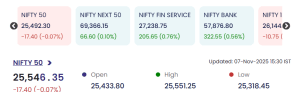 Nifty 50 fluctuated through the session, opening at 25,433.80, hitting an intraday high of 25,551.25, and dipping to a low of 25,318.45 before ending at 25,546.35. Other major indices outperformed modestly: Nifty Next 50 advanced by 66.60 points (0.10%) to 69,366.15, Nifty Financial Services gained 205.65 points (0.76%) at 27,238.75, and Nifty Bank rose by 322.55 points (0.56%) to finish at 57,876.80. The mixed movement underscored cautious investor sentiment amid uncertain global cues.
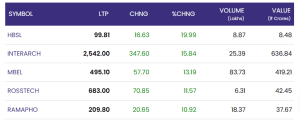 Among the session’s top gainers, HBSL surged 19.99% to close at 99.81 on active volumes of 8.87 lakh shares, benefiting from strong momentum and positive institutional interest. INTERARCH climbed 15.84% to 2,542.00, supported by considerable turnover of ₹636.84 crores. MBEL advanced 13.19% at 495.10, while ROSSTECH (up 11.57% at 683.00) and RAMAPHO (up 10.92% at 209.80) also featured among the most notable performers, reflecting scattered buying interest in select sectors.
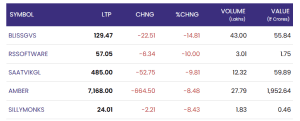 On the downside, BLISSGVS led with a 14.81% drop to 129.47, reflecting heavy profit-booking after recent upmoves and sizeable volumes of 43 lakh shares. RSSOFTWARE declined by 10% to 57.05, while SAATVIKGL slipped 9.81% to 485.00. AMBER retreated 8.48% to 7,168.00, marking a continued downtrend, and SILLYMONKS dropped 8.43% to 24.01, indicating sectoral weakness and shifting investor sentiment towards defensives.
 The Nifty 50 index opened flat at 25,433.80, hitting an intraday high of 25,545.05 and a low of 25,318.45. Other major indices also registered gains: Nifty Next 50 rose by 194.00 points (0.28%) to 69,493.55, Nifty Financial Services surged by 255.25 points (0.94%) to 27,288.35, and Nifty Bank advanced by 403.10 points (0.70%) to 57,957.35. The overall market tone turned cautiously optimistic as investors responded to encouraging sectoral cues and renewed buying interest.
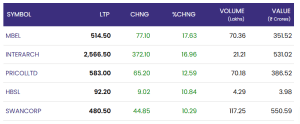 Leading the session’s gainers was MBEL, which soared 17.63% to close at 514.50, driven by robust trading volumes of 70.36 lakh shares and investor focus on sector strength. INTERARCH followed with a gain of 16.96% at 2,566.50 on substantial value turnover of ₹531.02 crores. Other notable performers included PRICOLTD (up 12.59% at 583.00), HBSL (up 10.84% at 92.20), and SWANCORP (up 10.29% at 480.50), all supported by strong volumes and positive sentiment in broader market segments.
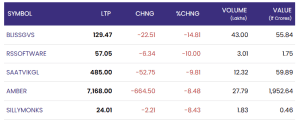 Despite the upward trend, several stocks faced sharp declines. BLISSGVS was down 14.81% at 129.47, leading the list of losers with the highest volume of 43 lakh shares. RSSOFTWARE dropped 10.00% to 57.05, while SAATVIKGL lost 9.81% to settle at 485.00. AMBER experienced a pullback of 8.48%, closing at 7,168.00, and SILLYMONKS slid 8.43% to 24.01. Heavy selloff in these counters indicated sector-specific profit booking and cautious short-term trading.
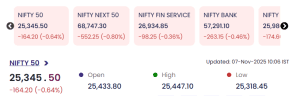 During the early trading hours, the Nifty 50 opened at 25,433.80, touched a high of 25,447.10, and reached an intraday low of 25,318.45. Other indices mirrored this cautious trend, with the Nifty Next 50 falling by 552.25 points (-0.80%) to finish at 68,747.30, Nifty Financial Services losing 98.25 points (-0.36%) to settle at 26,934.85, and Nifty Bank slipping by 263.15 points (-0.46%) to 57,291.10. The session saw widespread profit-booking and thin participation from institutional investors.
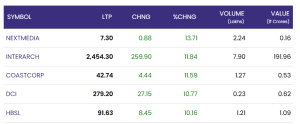 Selected mid-cap and small-cap stocks managed to buck the broader market trend. NEXTMEDIA surged 13.71% to end at 7.30, driven by positive earnings and increased trading volume. INTERARCH climbed 11.84% to 2,454.30, attracting significant market interest with a turnover of ₹191.96 crores. Other top gainers included COASTCORP (up 11.59% at 42.74), DCI (up 10.77% at 279.20), and HBSL (up 10.16% at 91.63).
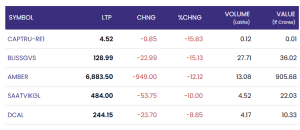 The session witnessed steep declines in select counters. CAPTRU-REI dropped 15.83% to 4.52, and BLISSGVS fell 15.13% to 128.99. AMBER experienced a major loss, down 12.12% to 6,883.50, erasing gains from previous sessions. SAATVIKGL and DCAL also faced heavy selling, closing down 10% and 8.85% respectively.