Saturday, May 16, 2026
Home Blog Page 351

Karnataka’s Sentimental Leap into the Deep Tech Decade: Powering 600 Dreams

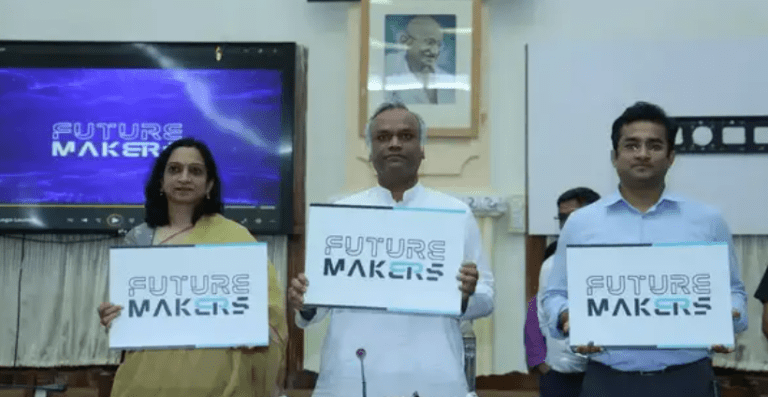
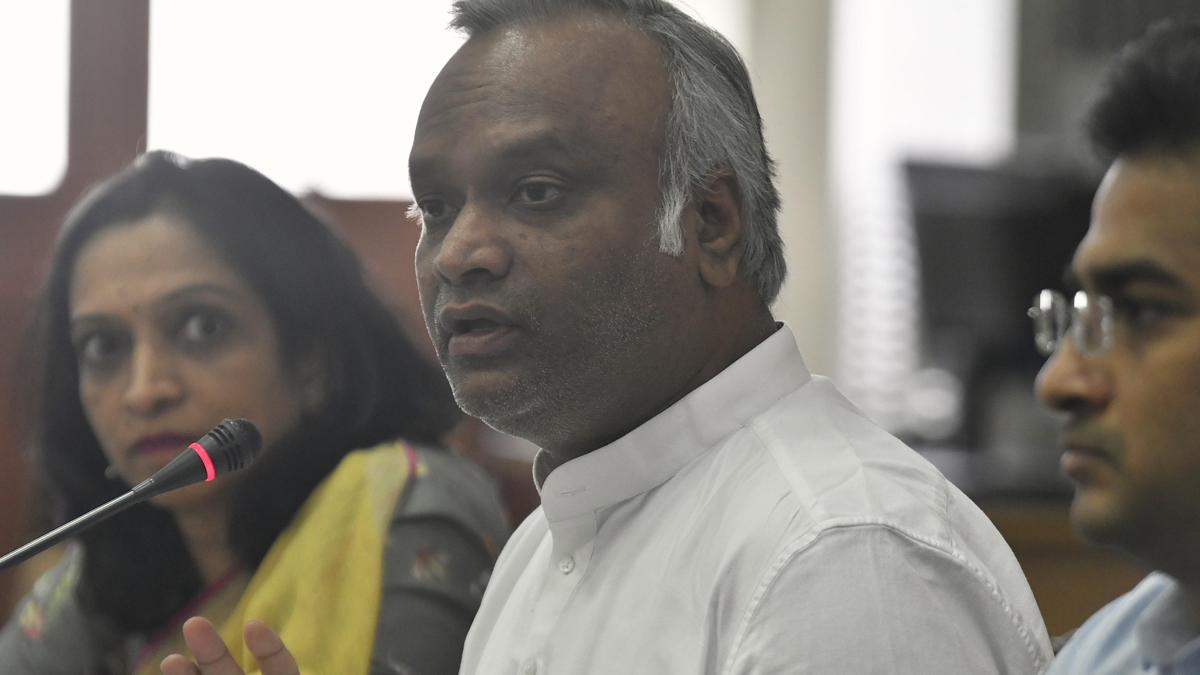
Karnataka has announced a monumental ₹600-crore fund to power what the government calls the ‘Deep Tech Decade,’ marking a defining moment in the State’s long association with technology-driven innovation. The investment arrives against a backdrop of increased global competition, where countries are aggressively pushing strategic technologies to sharpen national capabilities. While many Indian states are still focused on conventional startup encouragement, Karnataka’s decision reflects a deeper, more emotional commitment — to not just build tech companies, but to nurture groundbreaking knowledge that can reshape society. The declaration has sparked widespread optimism within technology circles, academia, and policy institutions.

The initiative aims to create long-term technological self-reliance, one that will not merely enrich private founders but influence core sectors like healthcare, energy, defence, mobility, and environmental resilience. The State believes that investing in deep tech today will secure future generations, shaping livelihoods and ensuring India remains globally competitive. At the same time, officials argue that technology must serve people, not just markets. This emotional emphasis on inclusive development has broadened the scope of the fund, attracting academics, researchers, startups, and industrial bodies eager to collaborate.

Karnataka has consistently positioned itself as India’s innovation capital. Bengaluru, home to unicorns, global R&D centres, and seed-stage startups alike, sits at the heart of this ecosystem. However, State officials say deep tech requires a different mindset: research-intensive, capital-heavy, and slow in commercial arrival. Because such ventures need patient funding, high-quality labs, and large-scale testing, a special public mechanism had to be built. The ₹600-crore fund is being pitched not merely as monetary assistance, but as a confidence-building gesture meant to encourage bold experimentation in domains where failures are likely and breakthroughs transformational.Karnataka Bets Big on the Future: ₹600-Crore Push to Power Its 'Deep Tech  Decade'

Building the Deep Tech Foundation

The government clarified that the fund would support early-stage and growth-stage companies working on core technologies like artificial intelligence, robotics, semiconductors, space systems, quantum computing, biotech, clean technology, and advanced materials. These areas are seen as crucial national priorities, capable of pushing India into a new league of technological capability. In practical terms, capital infusion will be paired with incubation networks, testing zones, policy support, and access to global mentorships. The goal is to provide more than money — to build a full foundation in which ideas can become industries.

Technologists note that deep tech companies often struggle to raise early funding. Traditional investors expect market-ready prototypes, but deep tech needs years of experimentation before results appear. Karnataka’s fund acknowledges this gap, allowing founders to take risks others would not support. This is expected to especially benefit homegrown research talent that often leaves India due to inadequate funding. The government is also partnering with academic institutions to bridge theoretical research with practical business implementation. Policymakers claim the fund is designed to break conventional barriers that separate universities, startups, and industries.

Officials highlighted that deep tech is not about chasing mass-market scale but building technological sovereignty. Themes like defence autonomy, climate-friendly innovation, and bioscience resilience have been placed at the centre. The State hopes that such focus can stimulate solutions to real community problems — from early disease detection to drought management to safe autonomous transport. This emphasis on people-centred innovation forms the sentimental thread in the government’s narrative, presenting technology as a tool to secure futures and rebuild trust in public institutions.

Bengaluru’s long-standing legacy enables the State to move quickly. Existing infrastructure — from venture firms to multinational R&D units to science foundations — gives deep tech companies a ready-made environment for exploration. The new fund therefore acts as a force multiplier, accelerating what was already a flourishing landscape. Instead of building from scratch, the government is narrowing critical gaps such as early seed capital, regulatory support, and public procurement pathways. Observers suggest this is an unusually coordinated approach, blending academia, entrepreneurs, bureaucracies, and global networks in one vision.

Industry groups have reacted positively, noting that the fund can significantly boost confidence, particularly in the semiconductor and AI sectors. Karnataka has already attracted major global players interested in design and manufacturing. With the new fund, the State hopes to support local startups that can produce vital components, specialised software, and infrastructure solutions. These would help reduce supply-chain dependency and position India as a key contributor to technology originating rather than being imported. Future applications may include smarter factories, cybersecurity systems, and climate-adaptive agricultural models.Karnataka announces ₹600 crore fund to push 'Deep Tech Decade' - The Hindu
The Promise and the Pressure 

However, expectations also come with pressure. Deep tech success is slow and unpredictable, meaning investment impact may take years to measure. Critics warn that enthusiasm must be matched with transparent processes and consistent execution. To address this, the government is building long-term evaluation frameworks encouraging collaboration over competition. A network of public-private accelerators is being developed to guide companies beyond prototyping into real-world deployment. The State plans to promote deep tech adoption across relevant departments, creating anchor customers who validate innovation through public use.

Deep tech also demands skilled talent. While Karnataka leads in STEM education and technology employment, the sector needs specialised expertise in physics, material science, bioengineering, and advanced computing. The government plans to expand training programs in partnership with universities, aiming to increase both faculty and research quality. Scholarships, internship pipelines, and joint research labs are expected to form the talent backbone for deep tech. Industry participants believe that with sustained investment in training, Karnataka can keep pace with global innovation and prevent another wave of brain drain.

The State is also emphasising inclusivity. Leaders argue that the Deep Tech Decade must benefit not only founders but ordinary citizens. This requires bringing research closer to grassroot challenges, ensuring new technologies are accessible, affordable, and ethically designed. Public welfare applications — from farmers using AI-driven soil analytics to telemedicine for rural populations — are being explored as key focus areas. By linking deep tech to societal healing, Karnataka hopes to invoke emotional optimism among communities otherwise left behind in globalisation. Policymakers say bridging these emotional and economic divides is central to the programme.

The investment also signals increased competition with national initiatives. Delhi’s large-scale semiconductor and electronics missions are already reshaping the landscape. Karnataka’s move aligns with these efforts while reinforcing its own leadership. The State believes competition will foster stronger results, especially when combined with collaborative projects involving central institutions like ISRO, DRDO, and national universities. Domestic manufacturing goals, too, could see a boost as more companies scale from R&D into production, potentially creating new industrial clusters. These clusters may redefine Karnataka’s regional economies beyond Bengaluru.

Finance will flow through a combination of government grants, venture partnerships, and innovation credits. Although policy details are still emerging, the State aims to prioritise transparent application processes and structured reviews. Startups will be selected based on technological originality, scalability relevance, and long-term societal benefit. Officials want the initiative to send a clear message: deep thinking will be funded, curiosity will be rewarded, and time will not be seen as waste. The emotional energy behind this messaging has resonated strongly within research communities across India.

This sentiment matters. Deep tech is not only a financial gamble; it requires belief. Researchers invest years with no guarantee of outcome, and emotional persistence is often the real fuel. Karnataka’s declaration recognises this unseen labour, giving legitimacy to those dreaming of impossible systems. By acknowledging emotional resilience as central to innovation, the government has built a bond with the scientific ecosystem. Many view the fund as a vote of trust toward engineers and scientists, affirming that their journeys — often slow, exhausting, and uncertain — hold purpose for society.Karnataka Declares 'Deep Tech Decade,' Pledges ₹600 Crore for Global AI  Leadership | AI Tech Suite News

The ₹600-crore allocation also aligns with global geopolitics. Nations are racing to secure semiconductors, medical manufacturing, and defence-related tech. Indian policymakers argue that without deep tech capabilities, the country remains vulnerable to foreign dependence. Karnataka seeks to position itself at the heart of India’s self-reliance mission by building technologies that can stand on the global stage. While the sentiment is patriotic, the execution requires global partnerships. The State plans to invite international firms to collaborate, share expertise, and co-manufacture products designed in India.

Startups will also gain access to government procurement channels. These are crucial for deep tech adoption, especially when private markets hesitate due to higher costs. By promising to become an early customer, the government hopes to shorten scaling timelines for emerging companies. Successful public deployments — for example, using quantum cryptography for secure records or robotics in healthcare facilities — could demonstrate viability to the wider market. Analysts say such proof-of-concept deployments will be essential to ensure innovation does not remain locked inside laboratories.

Another emotional dimension is sustainability. Karnataka has tied deep tech ambitions to planetary health. Clean energy storage, waste-to-value systems, water intelligence networks, and pollution-monitoring technologies are expected to receive special focus. These fields demand advanced materials research, chemical engineering, and AI-driven modelling — all areas that traditionally lack substantial funding. The new initiative hopes to unlock these sectors, creating environment-centric technologies that adapt to India’s unique conditions. By tying environment to identity, the programme reinforces emotional urgency around climate challenges.

Entrepreneurs say the announcement sends a strong policy signal encouraging stable investment. India’s startup ecosystem has struggled with fluctuating sentiment and funding freezes. A large government commitment can attract private capital and reduce investor hesitation. Venture firms likely to join the programme believe that public-private co-investment will increase risk tolerance and encourage long-term thinking. Such thinking is key when breakthroughs take a decade to mature. The hope is that Karnataka can catalyse an entire generation of researchers to remain in India instead of pursuing fast-scale opportunities elsewhere.

A major barrier remains infrastructure. The government acknowledges that laboratories, fabrication centres, biotech parks, and testing corridors must expand. Discussions are underway to create shared infrastructure so smaller firms can access high-cost equipment traditionally limited to large campuses. Regional hubs outside Bengaluru — including Mysuru, Dharwad, and Mangaluru — could see new specialised clusters. Officials say decentralisation is critical: it spreads opportunity, reduces pressure on Bengaluru, and brings innovation closer to small-town youth. This spatial equity adds emotional resonance to the initiative.

The full framework will emerge over the coming months. Consultations with universities, founders, industry bodies, and scientific institutions are ongoing. Observers believe Karnataka’s strength lies not only in plans but in institutional memory; the State has already navigated multiple innovation waves, from IT outsourcing to global R&D. Deep tech is its next chapter. Unlike previous waves, this one places equal focus on intellect, compassion, and national ambition. The combination of emotional narrative and practical design has made the announcement one of the year’s most promising economic developments.

In conclusion, Karnataka’s ₹600-crore deep tech fund marks a brave and heartfelt step into the future. It acknowledges that technological revolutions are built not only with money, but with belief. The State hopes to craft a decade where researchers feel valued, startups feel supported, and society feels the benefit of invention. The vision extends beyond financial return: it seeks to inspire young minds, strengthen national resilience, and carry forward a legacy of innovation anchored in humanity. The world will watch as Karnataka attempts to translate emotional intent into real, measurable, transformative impact.

Follow: Karnataka Government

Also read: Home | Channel 6 Network – Latest News, Breaking Updates: Politics, Business, Tech & More
Satish Jarkiholi Quells Delhi Rumours: Powerful 7-Point Calm Assertion

Senior Congress leader and Karnataka Minister Satish Jarkiholi clarified that he has no plans of going to Delhi at present, addressing speculation that he might travel to the national capital for high-level discussions. His statement comes amid internal shifts, ministerial expectations, and ongoing political recalibrations within the State unit. Jarkiholi’s calm dismissal signals a desire to neutralise rumours and maintain administrative focus. While political circles continue to observe every move, the minister appears committed to strengthening governance at home rather than pursuing new responsibilities. His comments reflect broader attempts to stabilise party dialogues during a sensitive period.

As questions about cabinet reshuffles and organisational restructuring intensify, Jarkiholi’s remarks carry weight. A section of observers had suggested he might head to Delhi to speak with central party leadership over evolving political strategies. Others speculated that he might push for additional responsibilities or raise demands linked to representation. However, his statement reframed the narrative, emphasising that decisions must align with ground priorities rather than speculation. The minister reiterated that leadership processes require patience and collective wisdom. His refusal to fuel conjecture demonstrates a measured, grounded approach in an increasingly volatile political landscape.

Jarkiholi’s statement arrives amid continued conversation about representation of North Karnataka leaders in high-ranking roles. His name has often been associated with powerful demands within the party. Yet, he struck a neutral tone, asserting that his present focus remains on administrative delivery. By distancing himself from rumours, he signalled confidence in ongoing systems of decision-making. The gesture suggests that political responsibility cannot be dictated by external pressure or media chatter. Rather, he framed the moment as an opportunity to prioritise public service. This move positions him as both a disciplined leader and a strategic communicator.

At a time when party cohesion is essential, Jarkiholi’s assertion carries a stabilising effect. State politics often sees leaders travel to Delhi seeking approval on appointments, disagreements, or policy proposals. However, Jarkiholi’s disinterest in making such a trip conveys a message of internal trust. It suggests that state leadership retains capacity to resolve matters independently. Such gestures reinforce the importance of decentralised political engagement. His stance highlights the significance of strengthening bureaucratic clarity. It also projects maturity at a time when political actors often rely on high command intervention. The minister thus attempts to steer discourse away from speculation.

Many political narratives originate in public expectation. Recent discussions about shifts within the State cabinet were amplified by observers seeking to interpret silences and brief remarks. Jarkiholi’s clarification rejects interpretive politics. He stressed that leadership conversations must be grounded in reality rather than assumptions. The minister’s roots in social movements and organisational politics help him recognise the risks of public speculation. Rumours, he indicated, create unnecessary distraction. His perspective encourages focus on issues that directly impact citizens. He emphasises that effective governance requires clarity of intent. Minimising speculation enables political actors to focus on policy instead of commentary.

Jarkiholi’s name has surfaced repeatedly in conversations about caste representation, administrative reform, and organisational power. His influence in North Karnataka has made him central to multiple developments within the party. While some observers expect him to take on larger roles, his measured tone conveys humility. He recognises that aspirations, however legitimate, must align with party process. His avoidance of Delhi speculation demonstrates sensitivity to internal dynamics. He subtly distances himself from narratives that position him in conflict. By doing so, he strengthens his political standing. This approach preserves unity while projecting responsibility.Satish Jarkiholi says he has no plans of going to Delhi now - The Hindu

Though rumours have quieted, questions remain. Some analysts believe that Jarkiholi may still engage in deeper discussions later. However, his insistence on remaining in Karnataka reflects a deeper grounding. He has repeatedly emphasised that political leadership must emerge from grassroots understanding rather than symbolic movement. By refusing to travel, he demonstrates confidence in the work unfolding at the state level. His outlook urges colleagues to build stronger institutions locally. He recognises that Delhi is not a destination for every negotiation. Instead, lasting power is built through continuous, community-centred engagement.

Stability Over Suspense: Quiet Messaging Amid Political Reorganisation

This clarification comes at a time when discussions about cabinet expansion, ministerial redistribution, and internal party strategies are active. Many leaders have recently travelled to New Delhi seeking discussions on future roles. Against this backdrop, Jarkiholi’s stance signals caution. His refusal to join that wave sends a subtle message—patience and collaboration must precede ambition. His words mark a conscious effort to slow the pace of speculation. Amid a shifting political terrain, where rumours drive perception, ensuring administrative continuity becomes essential. Jarkiholi thus shifts attention back to grounded governance rather than high-decibel posturing.

The Congress government in Karnataka is navigating simultaneous pressures: welfare commitments, regional distribution of power, community representation, and organisational balance. Leaders from across the state have expressed interest in being recognised within Cabinet and party structures. Jarkiholi has long represented the aspirations of North Karnataka, especially communities seeking greater voice. Yet, his refusal to chase immediate advancement demonstrates political maturity. By urging caution, he signals trust in process. His stance invites other leaders to approach discussions thoughtfully. Instead of rallying for individual interests, he highlights responsibility toward collective political health.

His neutral statement carries layered meaning. It reassures supporters that he remains rooted in Karnataka complications, not in distant deliberations. It also communicates that political change must be guided, not rushed. As multiple power centres negotiate influence, his presence at home stabilises local leadership expectations. His decision may ease anxieties among party workers who worry about rapid transition. It also signals confidence that his political future does not depend on sudden intervention. The strength of his organisational base gives him the freedom to adopt measured pacing, strengthening his influence even in restraint.

Jarkiholi’s position may also reflect strategic timing. Leaders often move when conditions align—either after pressure mounts, public sentiment shifts, or party command signals opportunity. His decision to remain in Karnataka could be interpreted as a choice to consolidate local gains before seeking broader platforms. The message indicates that purpose must precede movement. Remaining local allows him to engage directly with constituents, address regional grievances, and shape policy implementation. This clarity enhances his administrative credibility. In politics, refusing to act prematurely can be as impactful as decisive action. His statement demonstrates this subtle strategic understanding.

Another aspect of his communication is the emotional calmness with which it was delivered. Instead of denouncing rumours aggressively, he offered a simple explanation. This tone reflects disciplined leadership. Public statements carry weight, especially during transition. Leaders who communicate carefully help reduce anxiety among supporters. His clarity demonstrates empathy toward party workers who may be unsettled by rumours. He ensures that the political environment remains composed. In a culture where declarations can prompt agitation, his controlled tone becomes a model for stable discourse. The human element in his message underscores responsible political conduct.

Observers note that remaining in Karnataka allows him to evaluate evolving circumstances from proximity. The state’s political atmosphere is influenced heavily by community-based expectations, social justice narratives, and development debates. Jarkiholi’s reputation as a voice for social equality requires his presence. He must remain connected to his base to maintain trust. His decision strengthens relationships with communities that rely on his advocacy. It communicates priority: people first, politics later. This alignment with grassroots sentiment adds emotional resonance to his statement. His leadership style emphasises accessibility and local responsiveness.Satish Jarkiholi says he has no plans of going to Delhi now - The Hindu

Ground Focus: Local Priorities Over National Speculation

Jarkiholi has long championed issues related to education, community empowerment, and representation. By remaining in Karnataka, he signals continuity in this mission. Complex social challenges require persistence. Leaving at a politically sensitive moment could weaken momentum. His refusal demonstrates commitment to sustained development work. For many, his decision represents an assertion that power arises through grounded engagement rather than symbolic mobility. This reflects a philosophy rooted in public service. His stance may encourage leaders to invest time in strengthening regional foundations.

At the administrative level, remaining in the state allows him to oversee ongoing governmental schemes. As ministries balance welfare demands with fiscal constraints, leadership continuity becomes essential. His presence helps maintain focus on execution. Political transitions often disrupt administrative rhythm. His decision preserves stability. He appears prepared to reinforce governance without distraction. This approach underscores the importance of leadership consistency in delivering public programmes. His prioritisation of policy over conjecture positions him as a pragmatic decision-maker whose political identity is deeply connected to performance.

The timing of his statement intersects with larger national conversations about decentralisation and federal autonomy. States increasingly assert their right to shape internal processes without continuous intervention. Jarkiholi’s declaration aligns with this shift. By refusing to travel when rumours intensify, he symbolically reinforces Karnataka’s capacity to handle matters internally. This messaging resonates with broader political principles that encourage state-level decision-making. His statement prompts reflection on how national and state leadership can balance roles effectively. It offers a subtle critique of cultures that over-centralise deliberation. abandonment of ground responsibilities. His decision honours the emotional contract he holds with voters. This moral dimension enriches his political clarity.Satish Jarkiholi says he has no plans of going to Delhi now - The Hindu

Conclusion

Satish Jarkiholi’s declaration that he has no plans of going to Delhi now offers an instructive pause in an atmosphere of heightened speculation. His calm phrasing, disciplined tone, and grounded reasoning reflect political maturity rooted in service. By choosing stability over symbolic movement, he strengthens trust among supporters while nurturing organised dialogue within the party. His decision underscores a simple truth—public life must prioritise people over rumour, substance over spectacle. In remaining present, he affirms commitment to Karnataka’s evolving needs. His perspective invites a broader reflection on leadership grounded in patience, empathy, and steady purpose.

Follow: Karnataka Government

Also read: Home | Channel 6 Network – Latest News, Breaking Updates: Politics, Business, Tech & More
Hubballi Auto Drivers Push Back Against App Expansion: Bold 9-Point Emotional Demand

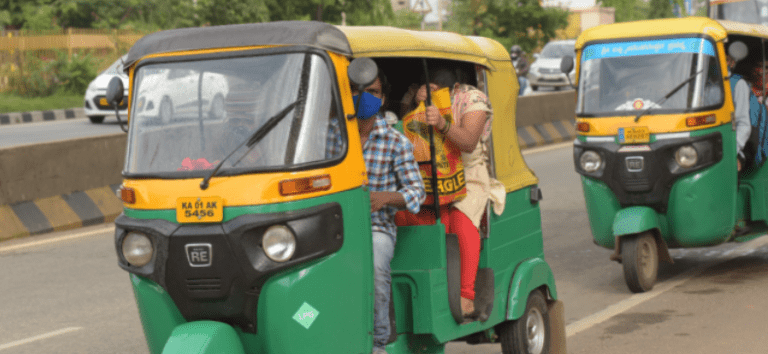
Auto-rickshaw drivers in Hubballi have raised strong objections to the growing presence of travel-booking applications in their city, arguing that such platforms should remain restricted to Bengaluru. Their demand reflects simmering anxieties about shrinking earnings, unequal competition, and uncertain futures as technology reshapes mobility services. While digital platforms promise convenience, lower fares, and transparency for passengers, many drivers believe these apps undermine traditional livelihood systems that have historically supported thousands of families. The rising friction highlights a deeper debate—how to balance innovation with economic security in India’s rapidly evolving transport landscape.

Auto drivers say that booking platforms, though well established in metropolitan markets like Bengaluru, are ill-suited for smaller cities where demand patterns, transportation culture, and local economies differ. In Hubballi, drivers emphasise that the entry of app-based mobility services disrupts the fragile financial stability of traditional three-wheeler operations. They claim that incentives offered by platforms initially appear attractive, but eventually lead to reduced income, increased dependency, and exploitative fare structures that favour large companies over independent workers. Many drivers therefore urge the government to implement clear boundaries that protect their livelihoods.

Passengers, on the other hand, see benefits in booking apps. The ability to track rides, access predictable fares, and ensure safety are notable advantages. However, the drivers reiterate that such platforms, if introduced without safeguards, create steep financial pressure on traditional operators. Both perspectives highlight the need for thoughtful regulatory policy that ensures fairness for workers while supporting passenger comfort. The demand by Hubballi drivers suggests the importance of context-specific policies rather than blanket expansion of digital services across urban spaces.

Growing Resistance: Economic Anxiety and Market Imbalance

Hubballi auto-rickshaw drivers explain that their resistance stems from escalating financial uncertainty. Traditional fare systems allow drivers to negotiate prices based on distance and demand. App-based platforms, however, impose dynamic pricing models that often produce lower fares. Drivers fear that, over time, these reduced earnings will make it difficult to sustain families, repay vehicle loans, and manage daily expenses. In metropolitan centres, higher passenger volume offsets these challenges, but in regional cities like Hubballi—where demand fluctuates—earnings become unpredictable.Auto drivers in Hubballi want travel booking apps to be restricted to  Bengaluru - The Hindu

Many drivers also recount earlier experiences from peers in other cities, where app-based companies initially offered lucrative incentives to build market presence. Once established, these incentives faded, leaving earnings far lower than promised. This cycle fosters mistrust. Traditional auto drivers, who have long relied on direct cash payments, prefer predictable fare systems. App operations, in contrast, introduce delayed settlements and digital deductions, adding administrative burdens. These changes create financial stress, particularly for drivers unfamiliar with digital tools. Concerns about long-term sustainability overshadow short-term benefits.

Several drivers say that their daily income already suffers due to rising fuel costs and increased living expenses. Introducing travel apps, they argue, further compresses earnings by controlling base fares. Unlike Bengaluru, Hubballi has fewer high-volume commercial hubs, meaning fewer guaranteed rides. With lower population density and slower economic velocity, app-based models may not provide sufficient demand. This could force drivers to accept rides at low fares or remain idle for long periods. Unused time directly translates to lost wages, deepening financial insecurity.

Additionally, many drivers fear that once apps gain presence, they will monopolise the transportation market. With their technological advantage, aggressive pricing strategies, and large advertising budgets, such platforms could push smaller operators into marginal existence. The concern is not merely about competition, but about power imbalance. If fares are dictated by distant corporate offices, drivers lose autonomy. They worry that future fare structures could become increasingly exploitative. The emotional core of their resistance lies in preserving control over their livelihood decisions.

Platform-based rating systems also provoke anxiety. Drivers express that their reputation could suffer due to subjective passenger reviews. A single negative rating—even caused by factors beyond their control, like traffic or app glitches—could reduce ride assignments. This system, they argue, treats workers as easily replaceable. Traditional auto operations involve face-to-face negotiation, allowing communication to resolve misunderstandings. Apps remove this personal element. Drivers fear being penalised without recourse. Their frustration reflects a broader critique of algorithmic control over human labour decisions.

Another concern centres around commission charges. App companies typically retain a portion of each fare, reducing take-home income. In major cities, high frequency makes up for this loss. In Hubballi, however, daily ride count is lower, meaning commissions significantly erode income. Drivers argue that earnings become too low to justify long hours on the road. Some fear accumulating debt if revenue falls below sustainable levels. With many already repaying loans for their vehicles, financial vulnerability intensifies. These fears fuel their demand for app restriction.

Drivers also express cultural concerns. In smaller cities, transportation systems depend on longstanding relationships between drivers and passengers. This familiarity builds trust and security. App-based travel disrupts this community-based model, replacing it with transactional interactions mediated by technology. Drivers argue that such platforms weaken local bonds that have helped maintain order and safety. Their resistance reflects an attempt to preserve community fabric while safeguarding economic survival. These social ties, they believe, cannot be replaced by automated systems.

Meanwhile, regulatory clarity remains absent. Drivers highlight that many apps operate without consistent fare rules, enforcement mechanisms, or transparency in deductions. They urge the government to establish guidelines before permitting expansion. The absence of clear policy amplifies fears of exploitation. Hubballi drivers insist that Bengaluru, with its stronger administrative capacity and larger market, can manage such platforms. Smaller cities, however, lack adequate systems for regulation, grievance resolution, and worker protection. Without safeguards, drivers feel exposed to corporate advantage.Demand spikes for autos in Bengaluru after bike taxi ban; commuters face  long wait times - The Hindu

There is also concern about safety and accountability. Some drivers believe that app operations may increase pressure to accept long-distance rides late at night, risking personal security. Smaller urban centres may not have rapid emergency response systems. Additionally, drivers fear that disputes could be handled unfairly, with companies siding with passengers to protect market reputation. Without local mediation systems, workers could be penalised unjustly. These safety concerns add an emotional dimension to their demand, portraying resistance not as obstruction, but as a plea for dignity.

The entry of app-based services also changes passenger expectations. In Bengaluru, apps ensure lower fares, making negotiation unnecessary. If similar expectations form in Hubballi, traditional drivers could face tension when quoting regular fares. Many passengers may insist on app-based pricing even when booking traditionally. This creates conflict and potential harassment of drivers. They fear widespread misunderstanding about fare structures. For decades, drivers have operated within mutually accepted norms; apps threaten to redefine these expectations unfairly.

Voices of Drivers, Public Concerns, and Road Ahead

Driver unions in Hubballi emphasise that their struggle is not against technology, but against unregulated expansion. They acknowledge that digital tools offer benefits, but argue that technology must work alongside traditional systems, not replace them. They propose limited, community-centric operations that respect local economics. Many call for hybrid models where auto unions collaborate with platforms to define fair pricing. They believe that inclusive planning can produce systems that maintain dignity, autonomy, and fair earning for drivers while supporting passenger convenience.

Passengers in Hubballi present a contrasting viewpoint. Many express frustration over fare negotiation, especially during peak hours. They feel that apps reduce conflict by providing standardised rates. In addition, digital bookings offer safety features like trip tracking, emergency buttons, and digital receipts. These advantages appeal particularly to women, students, and senior citizens. However, passengers also acknowledge that driver livelihood must be protected. Some propose limited app usage during specific hours or on designated routes to create balance. Their voices show nuanced public sentiment.

Policy experts observe that the clash represents India’s broader transition toward digital mobility. While urban centres rapidly adopt app-based services, smaller cities remain economically fragile. Introducing disruptive systems without adaptation may destabilise local labour markets. Policymakers therefore face a difficult task—crafting frameworks that allow innovation while ensuring equity. Experts suggest that participatory policymaking, involving unions, citizens, and companies, can help build sustainable solutions. Such collaboration ensures that reforms are grounded in lived realities rather than corporate expectations.

Experts also point out that mobility services are essential for economic development. Improved connectivity enhances access to jobs, education, and healthcare. If thoughtfully introduced, apps can support these goals. However, the benefits must be distributed fairly. Drivers need access to training, support, and transparent pricing. Regulations must prevent predatory pricing that pushes competitors out of the market. Some countries have successfully integrated traditional operators into app systems by offering shared governance. India can consider similar models to protect livelihoods.

The emotional dimension of this debate is unmistakable. For many drivers, their auto is more than a vehicle—it is a symbol of identity and dignity. The fear of losing control over earnings and working conditions creates anxiety. Some drivers recall experiences from other cities where colleagues were forced to quit after earnings fell. These stories fuel apprehension. Their demand reflects a desire for occupational security, social respect, and stable income. They emphasise that decisions affecting livelihoods must consider human consequences, not merely technological progress.

At the same time, emerging generations in Hubballi see digital platforms as necessary for modern living. They argue that technology enhances transparency, reduces overcharging, and promotes accountability. The challenge, therefore, is not to halt innovation but to integrate it responsibly. This requires policymakers to establish guardrails—ensuring that technological adoption does not deepen inequality. The push-and-pull reflects India’s ongoing struggle to marry tradition with transformation.

Discussions also highlight the need for strong grievance systems. Drivers insist that opaque dispute resolution mechanisms create power imbalances. Platforms must establish transparent procedures that allow fair hearing. Dedicated local offices could help address complaints. Without such systems, trust remains low. Drivers argue that meaningful participation in governance structures can reduce conflict. If workers are included in decision-making, they are more likely to embrace change.Bengaluru Ride Apps: Routing Glitches on Uber, Rapido Cost Commuters Extra

The debate also raises questions about regional autonomy. Drivers argue that each city must determine its mobility model based on local needs. While Bengaluru benefits from high density, corporate presence, and digital literacy, Hubballi follows different rhythms. State-level policies must therefore be flexible. Local authorities should consult drivers and citizens before approving app expansion. Such decentralised policymaking can ensure that systems reflect community realities. Drivers say that ignoring these differences risks harming regional economies.

Follow: Karnataka Government

Also read: Home | Channel 6 Network – Latest News, Breaking Updates: Politics, Business, Tech & More

Former Karnataka Minister H.Y. Meti: 8 Bold Victories and a Lasting Legacy

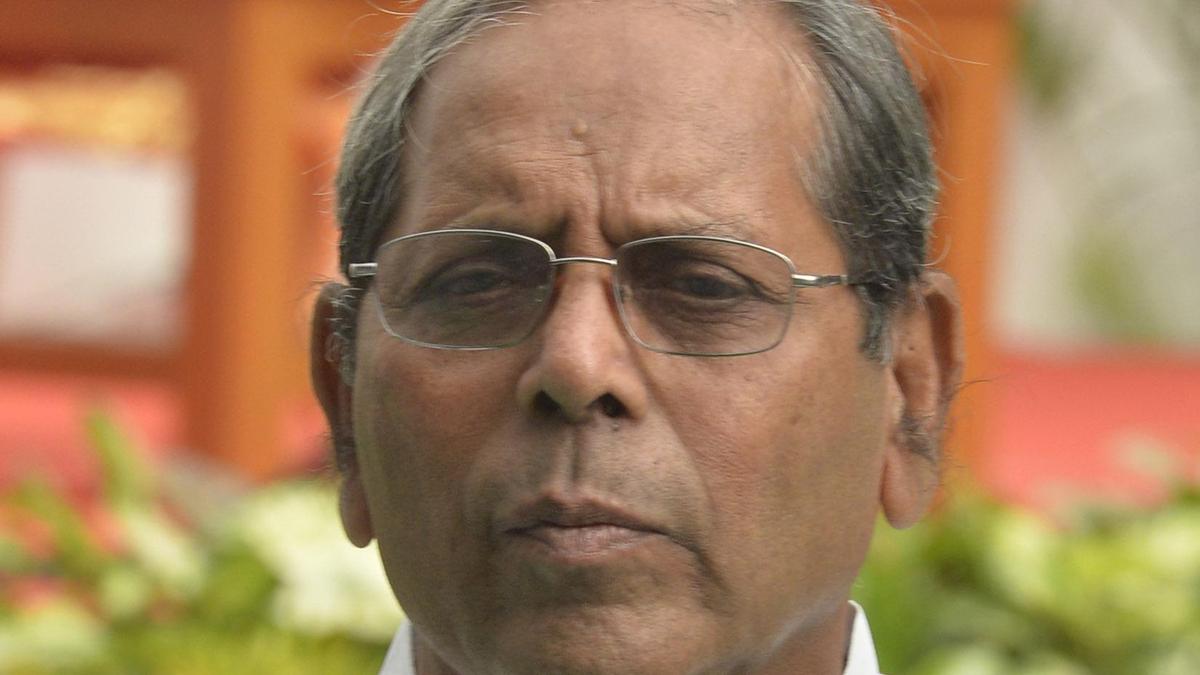
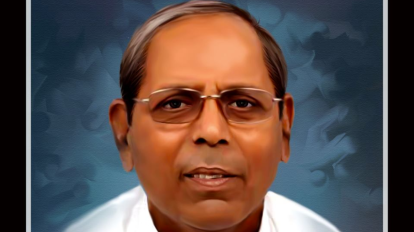
When the news broke from Bengaluru late Tuesday evening that former Karnataka minister H.Y. Meti had passed away, a wave of sorrow rippled through the political and social fabric of the state. The veteran Congress leader, known for his calm demeanor, earthy wisdom, and long public service, breathed his last at a private hospital, marking the end of a steady, decades-long career deeply rooted in Karnataka’s grassroots politics.

H.Y. Meti was 78, and for those who followed the evolution of state politics over the last four decades, his name evoked memories of the old guard—a generation of leaders who rose not through social media slogans or corporate optics, but through the sweat of constituency work and a direct connection with the people they served. In the corridors of Dharwad and Bagalkot, his presence had long become synonymous with accessibility and moderation.

Officials confirmed that Meti had been ailing for several weeks, struggling with age-related health complications. His demise, while expected by those close to him, still resonated as a moment of collective pause—a reminder of an era slowly fading from Karnataka’s political landscape. Condolence messages poured in from across party lines. Chief Minister Siddaramaiah, who shared ideological and generational kinship with Meti, described him as “a pillar of grassroots politics who believed in silent service over spectacle.”

Born in the modest surroundings of Bagalkot district, H.Y. Meti’s political journey was intimately entwined with the state’s social movements, cooperative banking networks, and agricultural reforms. He began his career as a teacher, a fact that often shaped his conversational humility and deep respect for public education. Over time, he rose through the ranks of the Congress Party, representing Bagalkot constituency multiple times and holding portfolios that reflected his commitment to social welfare and development without fanfare.Former Karnataka minister H. Y. Meti passes away in Bengaluru - The Hindu


A Life Defined by Steadfast Simplicity

In the crowded world of Karnataka’s shifting power dynamics, H.Y. Meti stood apart for his patience and steadiness. Unlike many of his contemporaries, he rarely courted publicity or indulged in high-octane oratory. His method of politics was quiet, deliberative, and locally anchored. As a lawmaker, Meti favored long dialogues with local cooperatives and community leaders over headline-making press conferences.

During his tenure as the Minister for Excise and before that, as a trusted Congress representative in Bagalkot, Meti’s policy decisions often reflected a blend of pragmatism and compassion. He prioritized schemes for irrigation, farmer credit relief, and land tenancy reforms in north Karnataka. Many of those initiatives, though modest in announcement, persist today as the bones of local welfare infrastructure.

Colleagues recall that Meti never saw politics as spectacle. He embodied an older Karnataka ethos—one drawn from the cooperative movements and mutual respect that defined the early 1980s in the state’s developmental phase. He frequently cited leaders like Devaraj Urs and Veerendra Patil as inspirations, aligning himself more with the quiet reformist tradition than the contemporary model of factional politics.

But Meti’s legacy was not without its blemishes. In 2016, a controversy briefly clouded his long career when a private video involving him surfaced, triggering a personal and political storm. Although he resigned from the cabinet taking moral responsibility, he consistently maintained that he was the target of internal political rivalry. The incident, while sensational at the time, gradually receded from the public memory as Meti retreated into low-profile service in his constituency. Many who knew him personally observed that the episode left him quieter but not bitter.

In later years, he returned to what he knew best—working among farmers, meeting cooperative societies, and attending rural development meetings far from the limelight. Friends describe his later life as one of reconciliation: he sought to reestablish trust with his people by letting deeds replace defenses.

The last few public appearances he made were during local Congress conventions in Bagalkot, where he was greeted more as a respected elder than an active power player. A simple man fond of reading Kannada novels and spending evenings over tea with old colleagues, Meti often expressed discomfort with the aggressive polarization that had come to define newer political styles.


The Final Bow: Reflections and Farewell

By the time H.Y. Meti was admitted to the hospital earlier this month, the veteran leader had spent much of the year away from the public eye. His close aides revealed that he had been quietly mentoring a younger generation of Congress workers, emphasising values over visibility. His passing, they said, marks not just a personal loss but the symbolic departure of a generation that viewed politics as service rather than opportunity.

Chief Minister Siddaramaiah, Deputy Chief Minister D.K. Shivakumar, and several past and present ministers paid their respects at the Bengaluru hospital before the body was moved to Bagalkot for last rites. The Chief Minister recalled their long political association, beginning in the 1980s, when their shared ideological roots in the Congress cooperative movement shaped their friendship. “We have lost a man who understood both the arithmetic and the soul of rural Karnataka,” he said.

Public life in Karnataka has witnessed many such transitions, but the quiet dignity attached to Meti’s farewell stands out. Thousands are expected to attend his cremation, with the state government likely to accord full honors. Flags across government offices in Bagalkot and surrounding districts have been lowered to half-mast.H Y Meti Death News: Former Karnataka Minister H Y Meti Dies, Bagalkot's  Voice Silenced| Karnataka Congress leader

Followers of Meti’s political approach highlight three key aspects that sustained his influence even after controversies dimmed his prominence. First, his consistent accessibility—people in Bagalkot recall being able to approach his home without appointments. Second, his tendency to bridge divides—he frequently mediated between local Congress factions rather than aggravating them. Third, his belief that public administration should focus on dignity in welfare delivery.

Even his detractors, while critiquing his old-school methods, acknowledged his sincerity. Unlike younger politicians often ensnared by factional battles, Meti’s focus stayed on agricultural cooperatives—a foundation that nurtured growth in one of Karnataka’s most underdeveloped regions. His early initiatives in irrigation management and village micro-financing programs eventually evolved into models used elsewhere in the state.

In conversations with reporters in his final years, Meti occasionally reflected on the changing face of politics. He lamented that younger leaders were “quicker to shout than to listen,” and that “emotion often replaces empathy.” To him, leadership was not about dominating discourse but about nurturing trust. Many who listened to him during these conversations found that sentiment bittersweet but prescient, especially at a time when public discourse has grown divisive.

The Congress leadership, mindful of history, paid tribute to that gentler style of politics. Former Chief Minister Siddaramaiah described him as an “invisible backbone of Karnataka’s democratic institutions.” State Congress President D.K. Shivakumar called him “a cultivated, restrained voice of reason.” Senior BJP leaders too offered condolences, with Union Minister Shobha Karandlaje writing that “Meti’s life stood for service, simplicity, and sincerity.”

In Dharwad, small processions of farmers and cooperative society members began gathering after the news spread. Candle vigils have been organized in Bagalkot to honor his contributions to local welfare. For many in the region, H.Y. Meti was not just another politician—he was a mentor, a listener, and an elder statesman who understood the soil he represented.


In a political era dominated by rhetoric and rivalry, Meti’s departure evokes both nostalgia and introspection. His life offers a humbling lesson on endurance and redemption—how one can remain relevant not through publicity, but through persistence in purpose. Karnataka, amid its shifting alliances and generational change, will likely remember him as part of the vanishing class of leaders who believed in integrity as method, not strategy.

As his body is prepared for final rites in Bagalkot, the atmosphere is solemn yet celebratory of a life that refused to abandon dignity even amid storms. Workers are expected to accompany his cortege on foot, covering the final stretch to his ancestral home. It will be a farewell befitting the man: humble, rooted, and without extravagance.

In the words of one of his longtime associates, “Meti avaru was never louder than the people—he moved with them, not ahead of them.” That perhaps best summarizes his role in Karnataka politics: a constant, unassuming figure who practiced democracy not as performance, but as everyday humanity.

With his passing, a page quietly turns in Karnataka’s political history—a page inked not with ambition, but with patience, service, and the belief that public life, when lived right, can be its own reward.

Followers of Meti’s political approach highlight three key aspects that sustained his influence even after controversies dimmed his prominence. First, his consistent accessibility—people in Bagalkot recall being able to approach his home without appointments. Second, his tendency to bridge divides—he frequently mediated between local Congress factions rather than aggravating them. Third, his belief that public administration should focus on dignity in welfare delivery.Karnataka Congress MLA and former minister H Y Meti passes away at 79; CM  Siddaramaiah calls it 'a personal loss' | Bangalore News - The Indian  Express

Even his detractors, while critiquing his old-school methods, acknowledged his sincerity. Unlike younger politicians often ensnared by factional battles, Meti’s focus stayed on agricultural cooperatives—a foundation that nurtured growth in one of Karnataka’s most underdeveloped regions. His early initiatives in irrigation management and village micro-financing programs eventually evolved into models used elsewhere in the state.

Follow: Karnataka Government

Also read: Home | Channel 6 Network – Latest News, Breaking Updates: Politics, Business, Tech & More
The Renukaswamy Murder Case and Its Powerful Fallout: 17 Shocking Truths of a Heartless Crime

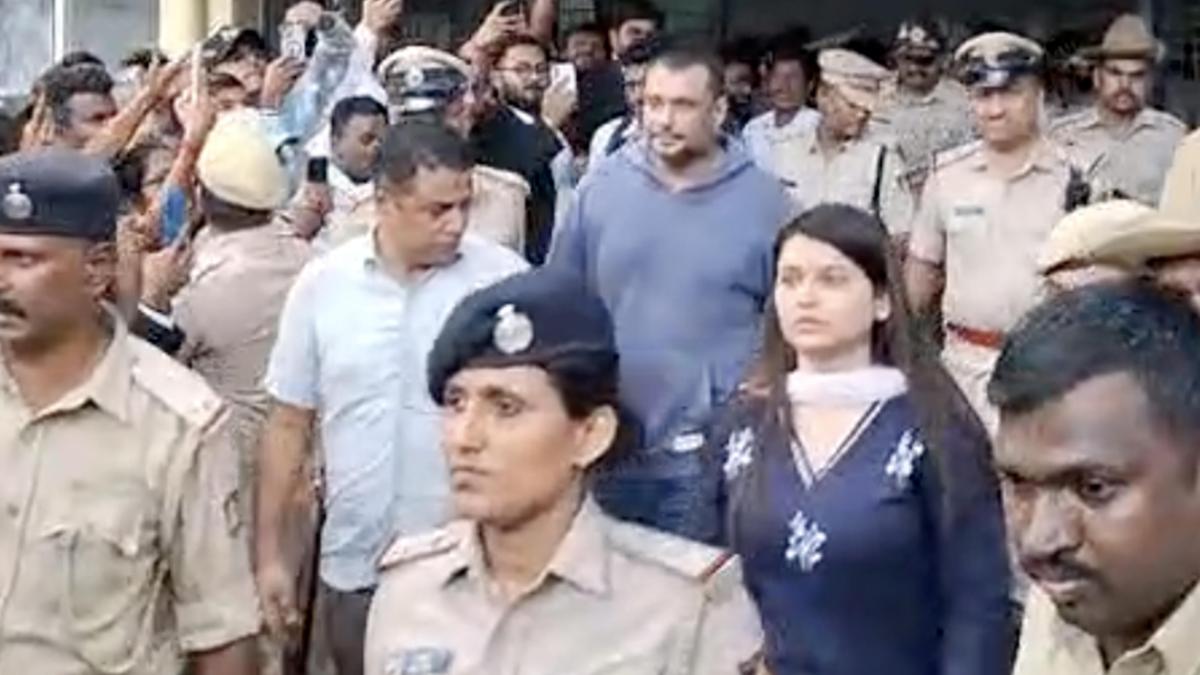
On June 9, 2024, a dark tragedy struck Bengaluru. The battered body of Renukaswamy, a 33-year-old resident of Chitradurga, was discovered near a stormwater drain, setting off a media and police storm across Karnataka. What first appeared as a mysterious death quickly spiraled into a public scandal after investigators uncovered evidence implicating Kannada superstar Darshan Thoogudeepa, his close associate Pavithra Gowda, and 15 others in the kidnapping, brutal assault, and murder of the young fan. Now, as a Bengaluru court has officially framed charges and set November 10, 2025 for the start of a high-profile trial, the case serves as a grim mirror for celebrity, justice, and accountability in Indian public life.

The murder’s motive grew from a disturbing foundation: Renukaswamy allegedly sent obscene messages to Pavithra Gowda on Instagram, sharply criticizing her relationship with the married Darshan. Investigators believe that this triggered a ruthless sequence of events, drawing together Darshan’s circle of associates, drivers, fan leaders, and friends in an act of violent retribution. According to police, Renukaswamy was kidnapped from his hometown, driven to a shed in Pattanagere, and then subjected to hours of systematic torture—beaten with pipes, belts, and sticks, shocked with electrical wire, and left to die from multiple head and chest injuries.

Evidence against the accused has proven as shocking as the crime itself. Surveillance footage, location data, and confessions reveal a meticulously coordinated effort, from the luring of the victim and alleged planning messages to the ultimate attempts at destroying evidence. Multiple members of Darshan’s fan association, along with his personal aides and drivers, joined in the operation. Darshan and Pavithra are accused of remaining in constant contact during the assault, with messages and calls allegedly proving their real-time involvement in orchestrating the attack.


Fame, Fallout, and the Search for Justice

The aftermath has ruptured both the film industry and public confidence. Darshan, once known as the “Challenging Star,” enjoyed a spotless reputation among millions. Fans, devastated and divided, watched as their idol was arrested in Mysuru while filming, paraded through police custody, and later incarcerated in Bengaluru and Ballari jails. Throughout, videos soon surfaced showing Darshan receiving special privileges—scenes that only sharpened public skepticism about the justice process and led to the suspension of jail officials and a broader probe into celebrity influence within the system.Renukaswamy case: Actor Darshan, Pavithra Gowda and 15 others charged with  murder, trial likely from November 10 - The Hindu

Pavithra Gowda, for her part, was also arrested and has fought for bail rights, ultimately denied by the Supreme Court amid fears of witness tampering and evidence suppression. The case’s relentless visibility—fueled by social media campaigns, protests, court crowd surges, and round-the-clock television debates—forced the state administration and judiciary to move with rare speed and transparency.

Court proceedings remain tightly watched. When charges were framed in November 2025, the courtroom was packed with supporters, lawyers, family, and members of the media, leading the judge to shift hearings to a closed chamber to maintain order. The accused pleaded not guilty. Defense attorneys argued that Darshan was being targeted due to his stardom and political enemies, while the prosecution cited the mental and digital evidence as overwhelming.


A Trial That Grips a State

The coming trial promises to be one of the most closely observed in Karnataka’s modern history. Testimonies from the victim’s family, digital forensics experts, and the accused themselves are expected to stretch over months. Legal experts believe that key issues will revolve around the organization of the crime, attempts to misdirect police with false confessions, and whether celebrity privilege shielded the accused from faster indictment in the early stages.

The charge sheet, 1,300 pages thick, chronicles the crime in chilling detail: the formation of an unlawful assembly, conspiracy to kidnap, brutal murder, destruction of evidence, and repeated efforts to bribe, coach, or intimidate witnesses. Every step is corroborated with phone records, payment information, CCTV footage, and statements from a web of accomplices—some of whom are believed to have been paid to take the fall for Darshan’s role.

For the police, the case is a test of their ability to hold even the most wealthy and influential to account. The Supreme Court’s intervention, which saw Darshan’s bail revoked months after it was granted by the High Court, was a sharp reminder that in cases of grave public outrage, legal and procedural rigor will be held to the highest possible standard.


Public Reckoning and Cultural Reflections

As the November 10 trial date nears, the broader implications of the Renukaswamy case ripple across society. It has forced tough questions about the power celebrities wield, the responsibilities of fan culture, and the ability of India’s justice system to function impartially amid intense social and political pressure.

Families hold vigils for Renukaswamy; the Kannada film industry has paused promotions, put projects on indefinite hold, and faces calls to adopt new ethical standards about how stars interact with fans and handle allegations. Youth movements have issued statements demanding justice, warning against the normalization of violence and abuse of power by public figures. Civil society groups monitor each development closely, noting that the outcome will shape not only legal precedent but public expectations around accountability and justice in high-profile cases.

For Darshan’s supporters and the industry, the scandal is also a tale of dashed hope. Many among his millions-strong fan base remain loyal, claiming a setup and conspiracy to malign a rural superstar who symbolized upward mobility and regional identity. Others, especially among youth, say the revelations have destroyed trust in the notion of celebrity itself.Renukaswamy Murder Trial: Darshan Faces Charges, Court Date | Kannada Actor  Darshan Charged | Renukaswamy Murder Case | Renukaswamy Murder Trial Update


The Road Ahead: Lessons for Karnataka

The Renukaswamy murder trial stands as a rare convergence of fame, crime, and the demand for justice. As the legal process unfolds, Karnataka watches with rare unity: some horrified, others hopeful, all wrestling with the reality that the boundaries between personal power and social responsibilities have never been starker. For the accused, the stakes are existential; for the public, the judgment will carry lessons far beyond one case.

Once the courtroom doors close on November 10 and witness after witness is summoned, what began as a gruesome crime will become an enduring story—one about celebrity, accountability, law, and the human cost of unchecked emotion and power. The final verdict, when it comes, will mark more than the end of a news cycle; it will echo through a state and a film industry searching for justice and a way forward.Renukaswamy case: Actor Darshan, Pavithra Gowda and 15 others charged with  murder, trial likely from November 10 - The Hindu

The Renukaswamy murder case has reached another significant milestone as the Bengaluru City Civil and Sessions Court formally framed charges against Kannada superstar Darshan Thoogudeepa, his partner Pavithra Gowda, and 15 other accused. The hearing on November 3, 2025, saw the charges under Indian Penal Code Sections 302 (murder), 120B (criminal conspiracy), 364 (kidnapping to murder), and 201 (disappearance of evidence) read out in detail in the presence of all accused. Each pleaded not guilty, setting the stage for a high-profile trial scheduled to begin on November 10.

The case arises from the brutal killing of 33-year-old Renukaswamy from Chitradurga, whose body was found near a stormwater drain in Bengaluru on June 9, 2024. Police investigations revealed that the murder was alleged to have been orchestrated following abusive messages sent by Renukaswamy to Pavithra Gowda, which triggered a coordinated abduction and torture by Darshan’s close associates. The comprehensive charge sheet, running over 1,300 pages, includes confessions, call records, payment trails, and forensic evidence linking the accused to the crime.

The court hearing had to be shifted to a closed chamber due to an overwhelming crowd of supporters, media, and public curiosity. Following security protocols, only those directly involved in the case were permitted within, reflecting the intense public and media interest. The judge has scheduled a decision on whether to continue holding proceedings in-camera for the forthcoming trial date. Renukaswamy’s family has withheld public comment, preparing through legal counsel for the trial.

Darshan Thoogudeepa, once one of Kannada cinema’s most beloved stars, was arrested in Mysuru while filming a movie shortly after the murder came to light. He spent 131 days in Parappana Agrahara Central Prison before being granted interim bail in October 2024. However, his bail was revoked by the Supreme Court in August 2025 amid concerns over potential witness tampering and evidence manipulation. Pavithra Gowda similarly contested the bail revocation and approached the Supreme Court, which is currently reviewing her plea.

Following the framing of charges, the trial is anticipated to involve a rigorous examination of a range of critical evidence: confessions of several accused who surrendered after police custody extensions; digital communications indicating real-time coordination during the crime; forensic results detailing horrendous physical injuries suffered by Renukaswamy; and testimonies from eyewitnesses and police officials.

The case has sent ripples across Karnataka’s entertainment industry and society at large. It confronts uncomfortable questions about the intersection of fame, fanaticism, and the rule of law. Darshan’s prominence and massive fan base have complicated proceedings, but the thoroughness of the investigation under Commissioner B. Dayananda has been widely praised for its speed and clarity despite initial challenges.

As the trial unfolds, Karnataka awaits a verdict that promises to be a landmark in holding high-profile individuals accountable irrespective of their social stature. The outcome will resonate not only within the justice system but also influence public discourse on celebrity culture, fan behavior, and ethical responsibilities within the film fraternity.

The November 10 trial opening thus marks not only the start of a legal battle but a profound societal reckoning—testing Karnataka’s commitment to justice, transparency, and equality before the law in the face of powerful interests and complex emotions entwined in this tragic case.

Follow: Karnataka Government

Also read: Home | Channel 6 Network – Latest News, Breaking Updates: Politics, Business, Tech & More
Vijayendra’s Bold Stand Echoes Sugarcane Farmers’ Struggle in Belagavi:7 Unyielding Voices in a Determined Battle

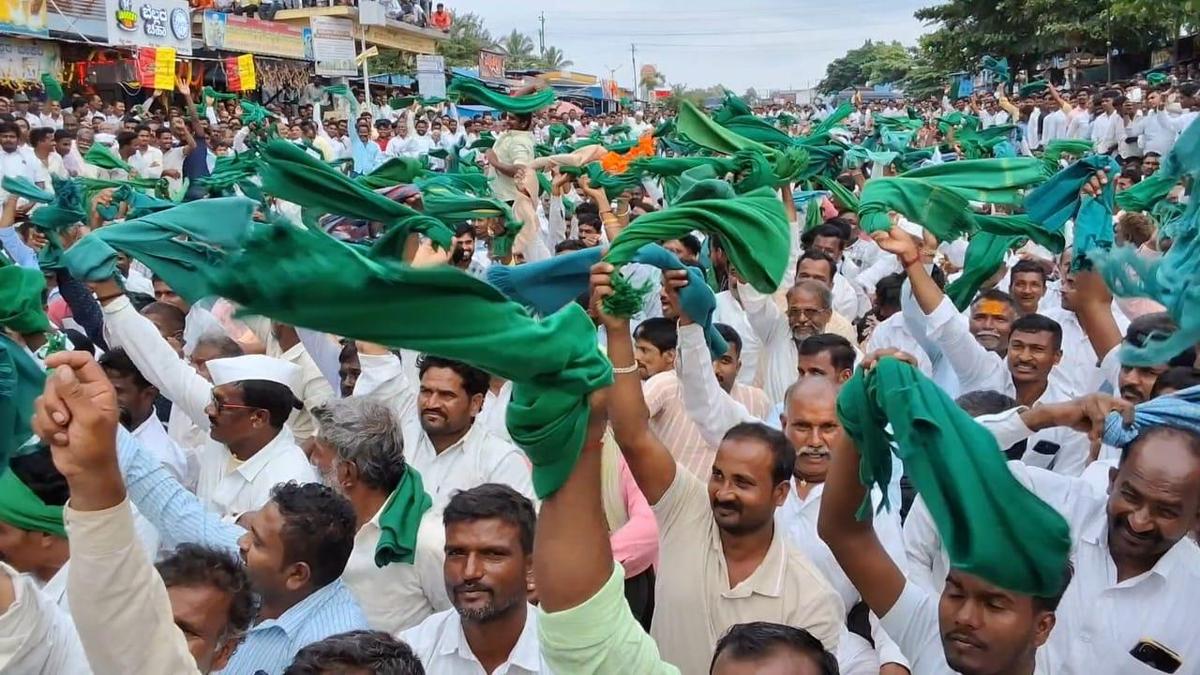
The air in Belagavi district is thick with tension and determination as protests by sugarcane farmers intensify, bringing vast portions of Karnataka’s northern heartland to a standstill. The central demand is clear and urgent: a higher and fairer price for sugarcane—specifically, Rs 3,500 per tonne, a rate that growers insist is the minimum needed for decent survival in a year marked by erratic weather, rising input costs, and lagging payments from sugar mills. Into this charged atmosphere has stepped BJP State President B.Y. Vijayendra, throwing the weight of his position and party squarely behind the agitating farmers and amplifying their cry for justice.

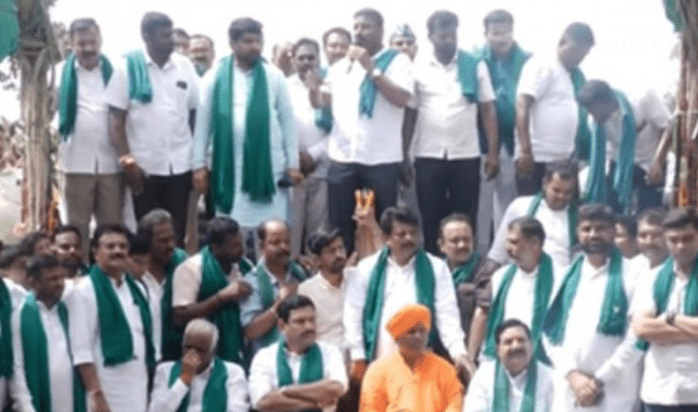
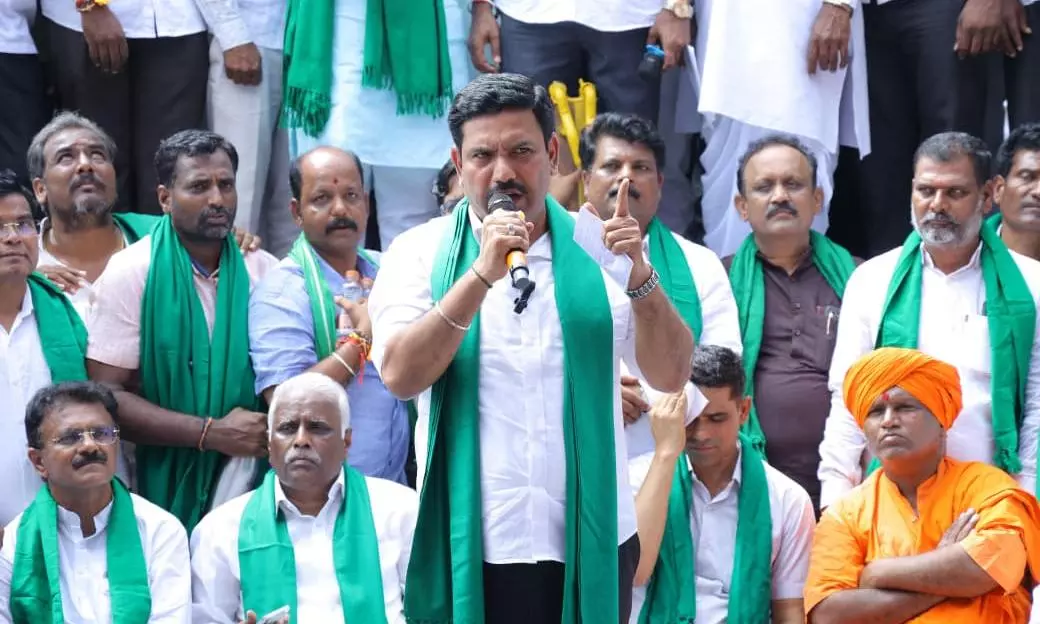
On the muddy grounds of Gurlapura village in Mudalagi taluk, where farmers from Belagavi, Bagalkot, and Vijayapura have camped for nearly a week, Vijayendra’s arrival brought renewed attention and hope to the agitation. He stood shoulder to shoulder with hundreds of cultivators, many of whom had arrived on tractors or by foot, demanding the state government shift from indifference to action. Speaking to the press, Vijayendra accused the Congress-led administration of ignoring the core issues tormenting farmers, reminding reporters that the sugar industry—though a massive source of revenue for Karnataka—would collapse without the sacrifice of those tilling the land.

“We are here not just as political opponents, but as citizens who understand the pain of the farmer,” Vijayendra declared passionately. “Every year, six million tonnes of sugarcane are crushed, and the government earns tens of thousands of crores through taxes and by-product sales. Yet, the ones who make this industry possible are left unheard and unpaid. This is a gross injustice.”BJP leader B.Y. Vijayendra joins farmers demanding higher price for  sugarcane in Karnataka - The Hindu


Roadblocks, Rallies, and a Spiraling Crisis

The impact of the ongoing protest has been both symbolic and disruptive. Over 50,000 farmers, supported by students and local associations, have joined the outcry, blocking highways around Gokak, enforcing a total bandh in Hukkeri, and staging sit-ins in front of district offices. The stalling of operations at 26 sugar factories—one of the region’s lifelines—has sent aftershocks through the local economy, forcing mill owners and government officials into emergency negotiations even as traffic and business are paralyzed.

Protesters have rejected the Rs 3,200 per tonne rate proposed by sugar mills and government mediators, arguing that input costs, labour wages, and weather-damaged crops have made this figure financially unviable. Many have urged the state to emulate Maharashtra’s payment model, lauded for its more structured and timely payments. The memory of past tragedies is never far from the conversation, with Vijayendra recalling the 2014 suicide of sugarcane farmer Vittal Arabavi, a searing reminder of what’s at stake for families burdened by debt and neglect.BJP to Stand with Sugarcane Growers as Karnataka Govt Remains Unmoved:  Vijayendra


Political Stakes and Calls for Change

Vijayendra’s decision to join the protest comes with significant political weight. He invoked the memory of his own party’s former chief minister, B.S. Yediyurappa, whose public protest a decade ago extracted a crucial support price hike for farmers. The BJP’s positioning transforms the current struggle into both a fight for rural justice and a pointed critique of what it calls “Congress apathy” in North Karnataka. Advocates warn that if the state continues to align with sugar mill owners, the agitation could swell into a wider rural unrest, shaking not just sugar factories but the broader narrative of governance.

Farmers, meanwhile, have vowed to sustain their protest and escalate further if their voices are not heard. Many have left their fields untended, willing to incur daily hardship for the promise of a more secure future. In speaking with the crowds, Vijayendra pledged ongoing support: “We will not leave the side of the farmer. This cause rises above party lines—it is about respect, dignity, and survival.”K'taka: BJP to support sugarcane farmers' protest in Belagavi, says state  unit chief Vijayendra - Social News XYZ

As the agitation stretches on, the region waits for a definitive government response—one that does justice to the relentless work, risk, and hope rooted in every sugarcane field now standing as a silent witness to this battle for fairness.

The roots of the current unrest run deep. Sugarcane farming in North Karnataka has long endured fluctuations in market price, delayed payments from mills, and heavy dependence on rain-fed irrigation. Farmers complain that government-set State Advisory Prices (SAP) never reflect true production costs, with fertilizer, diesel, and labour rates rising each season but support prices failing to keep pace. This chronic gap, they argue, keeps families perpetually indebted as they struggle to recover investments from one harvest before the next begins.

Local cooperative leaders point out that many factories in the region are owned by politically influential figures, exacerbating the tension between growers and mill owners. Though both Congress and BJP have leaders in the sugar industry, farmers remain skeptical, citing broken promises delivered before elections. The protests—now entering their sixth day—have grown in size and complexity. Dozens of tractors and bullock carts parked along highways serve as both transport and makeshift shelters for those determined to stay until their demands are met.

The sight of students and women joining the agitation lends it an unmistakable emotional power. Young people have marched around district headquarters waving placards for fair prices, while groups of women have cooked meals on the roadside and organized sit-ins outside mill gates. Their presence is a reminder that the movement is not just a fight for money but a plea for dignity and future security.

Anger spilled onto the Bengaluru–Pune Highway, bringing one of India’s busiest transport routes to a standstill. Farmers set up camp in the middle of the thoroughfare, making headlines and drawing comparisons with the famous Delhi farmers’ rally. Motorists stuck in long traffic jams expressed impatience, but many also offered food and water to protesters—a show of solidarity cutting across urban and rural divides.

The sense of urgency escalated when one protester attempted suicide, consuming poison on the rally’s frontlines. Quick police intervention saved his life, but the episode underscored the mental and financial pressure weighing on Karnataka’s cultivators. Farmer suicide has a tragic history in the region, making the current protests more fraught and prompting political leaders to handle negotiations with extra sensitivity.

In response, the state government has taken a cautious approach. Home Minister Parameshwar announced that police would not forcibly disperse protesters, tasking sugar minister Shivanand Patil with direct negotiations. Ministers Sathish Jarkiholi and Lakshmi Hebbalkar have been sent to Belagavi to engage with farmer representatives, seeking to avoid escalation and reach a middle ground.

The farmers’ principal demand—adoption of Maharashtra’s payment model—remains steadfast. Maharashtra not only pays higher prices per tonne but also enforces structured and timely payments to cane growers, avoiding the chronic delays that plague Karnataka. Local leaders reference successful Maharashtra reforms, arguing that their model could stabilize the industry and stem unrest.

Political implications are significant. With BJP president Vijayendra joining the protest, the agitation has evolved from an economic movement into a clear test of state government responsiveness. He has promised to carry the fight into upcoming assembly sessions, while opposition leaders are watching closely to gauge public sentiment in an agrarian belt critical to both parties’ electoral fortunes.

Meanwhile, factory owners, caught between farmers and government, have called for subsidies and relief measures to offset their own costs. Looming uncertainty over pricing is forcing mills to halt operations, with cut sugar production threatening broader disruption across Karnataka’s economy. Analysts warn that if deadlock persists, rural distress could translate into urban shortages and rising consumer prices for sugar, further expanding the impact of the protest.

As night falls over Belagavi’s crowded protest camps and shuttered factories, grassroots resolve and political bargaining continue side by side. The region’s sugarcane fields—normally symbols of prosperity—now stand as monuments to struggle. The outcome will affect not just today’s agitators, but the next generation whose future rides on the price of a crop and the promise of fair governance.

As the agitation intensifies, the protest’s reach has spread even further: schools, colleges, and shops across Belagavi remained shut in solidarity, while highway blockades have disrupted connectivity between major towns and created economic ripples far outside the agricultural sector. Local community leaders warn that unless the government quickly announces a revised price and adapts linkages to the Maharashtra payment model, rural unrest could snowball to neighboring districts, drawing in more farmer unions and potentially affecting supply chains for allied industries like transport and retail.

Student participation continues to be a defining feature of the movement, with young protesters staging rallies, organizing food and water distribution, and amplifying demands through social media and local networks. Their involvement highlights the generational stakes: for many, their family’s future depends on a fair resolution, and their actions reflect a deep connection to both the land and tradition. The sight of students, women, and elderly farmers united has put extra moral urgency on the government to avoid heavy-handed responses and listen genuinely to grassroots voices.

In interviews at the protest sites, farmers express frustration at what they call the government’s “slow response” and “side-lining of priorities,” insisting that previous announcements about weighbridges and cabinet-level reforms have amounted to little in the face of escalating hardship. Many leaders vow that the current agitation will continue, with or without party support, until their demands are met in full. With BJP’s support prominent and JD(S) youth leaders voicing solidarity as well, pressure mounts for the ruling administration to deliver concrete solutions and ensure justice for those whose entire livelihoods depend on a crop that now stands at the center of Karnataka’s most urgent rural crisis.

Follow: Karnataka Government

Also read: Home | Channel 6 Network – Latest News, Breaking Updates: Politics, Business, Tech & More

BJP Seeks Re-verification of Bengal Voter Documents Before West Bengal Voter Roll Revision 2025: Party Raises Alarm Over Forged IDs, Citizenship, and Illegal Infiltration

BJP Seeks Re-verification of Bengal: As West Bengal prepares to undertake its Special Intensive Revision (SIR) 2025 of the electoral rolls — a massive verification exercise meant to clean and update voter records — a fresh political storm has erupted. The Bharatiya Janata Party (BJP) has demanded a statewide re-verification of voter documents before the revision begins, alleging that fake identity and residence certificates are being used to legitimize illegal immigrants in the state.

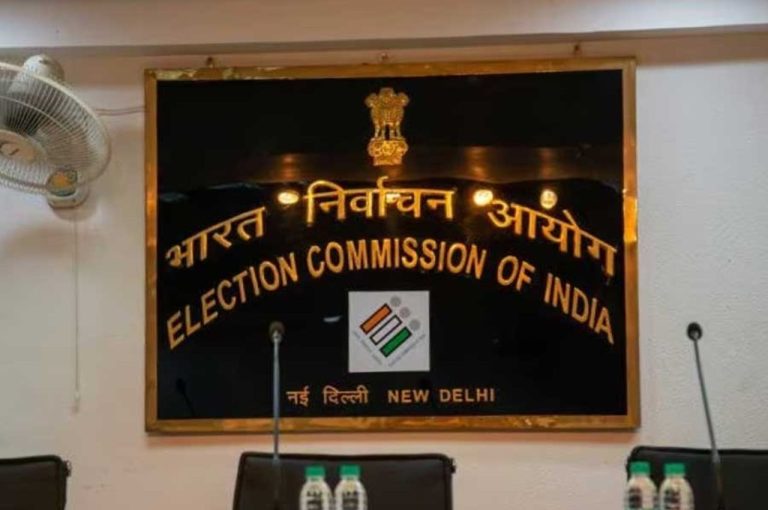
On Monday, a high-level BJP delegation met officials of the Election Commission of India (ECI) in New Delhi, seeking urgent intervention. The move comes amid intensifying political tension between the ruling Trinamool Congress (TMC) and the opposition BJP over voter legitimacy, citizenship rights, and demographic shifts in border districts.


1. The Core Demand: BJP’s Call for Document Re-verification

The BJP’s central allegation is that the West Bengal government has issued a large number of forged identity documents — including birth certificates, residence proofs, caste certificates, and forest rights documents — allegedly to accommodate non-citizens and influence future elections.

The delegation, which included senior leaders Amit Malviya, Samik Bhattacharya, Biplab Deb, and Om Pathak, submitted a detailed memorandum to the Chief Election Commissioner (CEC), Gyanesh Kumar, and other top EC officials.

In their submission, the BJP leaders claimed that the voter rolls in Bengal are being “manipulated through fraudulent documentation” and demanded that all voter-related documents be reverified independently by Election Commission officials rather than relying on data authenticated by state authorities.

“We have requested the Election Commission to ensure that before the SIR begins, all documents submitted for voter registration be verified afresh by central agencies. Forged certificates are being used to create new voters who may not be Indian citizens,” a BJP leader said after the meeting.


2. BJP Seeks Re-verification of Bengal: The Special Intensive Revision (SIR) 2025

The Special Intensive Revision (SIR) 2025, launched by the Chief Electoral Officer (CEO) of West Bengal, is a large-scale exercise meant to update the state’s voter rolls — identifying missing voters, removing duplicates, and verifying addresses.

It is a routine electoral process supervised by the Election Commission of India, but this year’s revision has acquired unprecedented political importance. The reason: the BJP believes that unauthorized voter additions could tilt electoral arithmetic in several key constituencies, especially in border districts like North 24-Parganas, Murshidabad, Malda, and Cooch Behar.

The revision will involve Booth Level Officers (BLOs) distributing pre-filled enumeration forms to every household. Citizens will verify and return these forms, after which data will be updated and a draft roll will be published for public scrutiny.

However, before this process even begins, the BJP wants a statewide re-verification of all supporting voter documents — a step that could delay the revision schedule but, according to them, is necessary to “protect electoral integrity.”


3. BJP’s Concerns: The Issue of ‘Infiltration’ and Citizenship

BJP’s central narrative revolves around illegal infiltration from neighbouring Bangladesh — a politically sensitive and polarizing issue in West Bengal.

The party has long claimed that infiltrators are being given false residency or birth documents by local officials and panchayats sympathetic to the ruling TMC, thereby gaining access to voter rolls and, ultimately, influencing election outcomes.

The delegation’s memorandum alleged that local bureaucrats have been “co-opted” into a scheme to issue forged documents that enable non-citizens to register as voters.

“Documents like residence certificates and caste certificates are being misused. These are being issued without proper verification, creating an artificial voter base,” said BJP spokesperson Samik Bhattacharya.

The party believes that without a thorough pre-verification of all such documents, the SIR 2025 will legitimize fake entries and defeat the very purpose of a voter roll update.


4. The TMC’s Counter: “False Propaganda” and “Political Panic”

The Trinamool Congress (TMC) has dismissed the BJP’s claims as “baseless and politically motivated.” Senior party leaders said the BJP’s demand reflects its panic and insecurity after losing ground in Bengal post the 2021 Assembly elections.

“The BJP is trying to discredit the voter list even before the process begins. They are scared because the SIR will expose how weak their organization is on the ground,” said a TMC minister in Kolkata.

TMC leaders argue that the voter roll revision is being conducted under the direct supervision of the Election Commission of India, not the state government. Hence, any allegations of bias are unfounded.

Furthermore, they claim that the BJP’s insistence on “re-verification” is merely a delay tactic meant to disrupt the voter inclusion of legitimate citizens — particularly Hindu refugees from Bangladesh, many of whom support TMC after the Citizenship (Amendment) Act, 2019 (CAA) failed to be implemented fully in the state.


5. Political Undertones: The Battle Over the CAA and the Matua Vote

The demand for voter re-verification has deep political roots tied to Bengal’s Matua community — a Hindu refugee group originating from Bangladesh.

The BJP’s 2021 election campaign heavily focused on promising citizenship under the CAA for Matuas and other displaced groups. However, bureaucratic delays and confusion have prevented most of them from obtaining formal citizenship documents.

Now, the TMC argues that the SIR process will confirm the legitimacy of these groups as Indian voters, while the BJP fears that unauthorized infiltrators might also slip through the process.

Thus, the current controversy is as much about political optics as it is about administrative verification.

“This isn’t just about documents — it’s about who gets to define belonging in Bengal,” said political analyst Dr. Pratip Chatterjee of Jadavpur University.
“The BJP wants to appear tough on infiltration, while the TMC wants to project itself as the protector of refugees and marginalized communities.”


6. The EC’s Role: Between Administrative Neutrality and Political Pressure

The Election Commission of India now finds itself in a delicate position. On one hand, it must maintain the integrity of voter lists through proper verification. On the other, it must avoid appearing politically biased by either delaying or accelerating the SIR process based on party demands.

According to sources in Nirvachan Sadan, the EC acknowledged the BJP’s memorandum and promised to “examine the matter in accordance with established procedures.”

However, officials privately noted that document verification falls under the jurisdiction of local electoral officers, who are already guided by strict EC protocols.

“The EC cannot simply suspend or redo document verification across the entire state without credible evidence of systemic fraud,” an EC official said on condition of anonymity.


7. Internal BJP Dynamics: A Fractured Front?

Notably, Union Minister Shantanu Thakur, a prominent Matua leader from Bongaon, was absent from the BJP delegation that met the EC.

His absence has sparked speculation about internal divisions within the party over how aggressively to push the infiltration narrative — especially since the Matua community, a traditional BJP vote base, could be alienated by blanket demands for re-verification.

A BJP insider admitted:

“There is a strategic disagreement. Some leaders want to go hard on the infiltration issue, others worry it may alienate Hindu refugees who are still waiting for citizenship under the CAA.”

This underscores the complex electoral balancing act the BJP faces in Bengal — between targeting illegal infiltration and retaining refugee support.


8. Administrative Challenge: The Scale of Verification

Even if the Election Commission were to consider BJP’s demand, the logistical challenges are immense. West Bengal has nearly 7.5 crore registered voters across 81,000 polling booths.

Re-verifying each voter’s supporting documents — birth certificates, residence proofs, caste or refugee certificates — would require thousands of officers and months of fieldwork.

The Chief Electoral Officer (CEO) has already stated that the SIR process is on a tight schedule, with enumeration forms being distributed, collected, and processed before the publication of the draft rolls later this year.

Any additional verification step could delay the electoral calendar and potentially overlap with upcoming municipal or parliamentary election preparations.


9. Public Reaction: Fear, Confusion, and Polarization

The BJP’s re-verification demand has created confusion among citizens, especially in border districts where residents already face frequent scrutiny over identity and nationality.

Social workers in North 24-Parganas reported that some villagers fear their names might be struck off the voter list if their documents are questioned.

“People are worried — especially daily-wage workers and refugees. Many of them have only local certificates issued years ago. They are scared that the re-verification demand will lead to exclusions,” said Sukla Mondal, a civic volunteer from Basirhat.

Human rights groups have urged the Election Commission to prioritize inclusion and transparency, ensuring that genuine citizens are not harassed or disenfranchised in the name of scrutiny.


10. The Political Optics: Delhi vs. Kolkata

The BJP’s decision to escalate the issue to the Election Commission in Delhi — rather than addressing it locally — highlights the party’s national-level strategy to spotlight alleged electoral irregularities in opposition-ruled states.

This fits into the BJP’s broader narrative of demanding electoral integrity and documented citizenship, themes that have resonated in states like Assam and Tripura.

However, TMC leaders argue that the BJP is using Delhi institutions to “pressure” state machinery and delegitimize the Bengal government ahead of the 2026 Assembly elections.

“The BJP wants to control Bengal from Delhi. But Bengal’s voter lists are managed under constitutional autonomy, not political diktat,” said a TMC spokesperson.


11. Legal and Constitutional Perspective

From a legal standpoint, the Representation of the People Act, 1951 and the Electoral Registration Rules, 1960 govern voter enrollment procedures.

These laws empower the Election Commission and its state-level officers to manage voter rolls, with state governments playing only a supporting role in providing administrative infrastructure.

Therefore, while the BJP can raise concerns, the EC must evaluate them within the framework of these statutes.

For context:

  • Section 22 of the RPA allows correction or deletion of entries after due verification.
  • Section 23 allows inclusion of names based on documentary evidence, subject to EC approval.

Any mass re-verification would require specific evidence and EC notification, not merely political allegations.


12. Expert Views: Between Security and Suffrage

Election experts and academics have offered nuanced views on the controversy.

Dr. Anindita Mukherjee, a professor of political science, said:

“The BJP’s demand stems from genuine concerns about document authenticity, but blanket re-verification could disenfranchise poor and marginalized citizens who lack access to formal documentation.”

Similarly, law scholar Soumen De noted:

“The EC must strike a balance between ensuring electoral purity and preventing voter suppression. Both infiltration and exclusion are threats to democracy.”


13. The Broader Implications: National Echoes

This Bengal controversy echoes similar tensions seen in Assam’s National Register of Citizens (NRC) process, which led to years of litigation and social anxiety.

The NRC experience demonstrated how document-based citizenship verification can easily become bureaucratically unmanageable and socially divisive.

Bengal’s voter roll revision — if politicized along similar lines — risks repeating those mistakes, experts warn.


14. The Road Ahead: What the EC Might Do

Sources suggest that the Election Commission may take a middle path — ordering random verification audits in sensitive areas instead of statewide re-verification.

This approach could reassure the BJP about vigilance without derailing the SIR timeline.

Meanwhile, the Chief Electoral Officer, West Bengal continues preparations for the voter roll revision, with strict instructions to avoid irregularities and report discrepancies immediately.


15. Conclusion: The Fight for the Voter List as the New Electoral Battleground

The BJP’s call for voter document re-verification ahead of the West Bengal SIR 2025 underscores how the voter list itself has become a political battleground.

For the BJP, it’s a test of their national narrative on citizenship and security. For the TMC, it’s an opportunity to defend Bengal’s administrative integrity and the rights of legitimate residents.

The Election Commission now stands as the arbiter of truth and trust, balancing transparency with inclusion.

As the SIR begins across Bengal’s 23 districts, one thing is clear: this voter roll revision is no longer just about paperwork — it’s about who belongs, who decides, and who votes in the next chapter of Bengal’s democracy.


Verified External References for Context

Also read: Home | Channel 6 Network – Latest News, Breaking Updates: Politics, Business, Tech & More
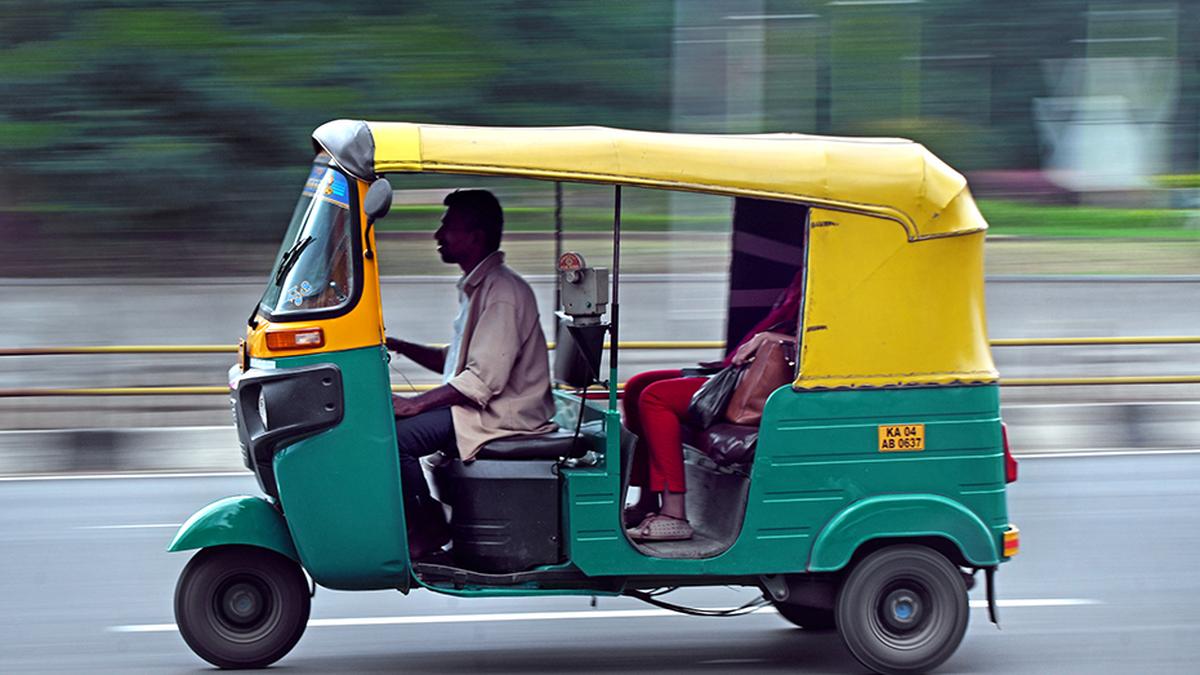
Justice After 7 Years: 2 Convicted in Heart-Wrenching Bold Road Rage Murder

The long wait for closure has finally come to an end as a court convicted two men for murdering a private firm employee in a brutal road-rage incident that occurred seven years ago. The judgment has brought a wave of mixed emotions — grief, relief, and a renewed sense of trust in the justice system. The tragic case, which lingered in public memory, highlights the rising threat of impulsive violence on urban roads and reinforces the need for stricter deterrents against road rage. Families of the victim expressed sorrow over the delay but relief that justice was ultimately served.

The incident dates back seven years, when what began as a minor roadside altercation escalated into a violent attack. The victim, a 28-year-old employee of a private company, was returning home from work when his motorbike allegedly brushed against a vehicle belonging to the accused. An argument broke out between the sides, and within moments, the confrontation spiralled into assault. The attack led to fatal injuries, resulting in the victim’s death soon after. His family, devastated by the sudden loss, has been fighting for justice ever since.

For years, the judicial process crawled forward, weighed down by procedural delays, witness inconsistencies, and multiple appeals. Despite these hurdles, the prosecution eventually managed to establish guilt through corroborated testimonies, technical evidence, and medical reports. The court held the two accused responsible for intentional assault leading to death. The victim’s family, who attended court sessions relentlessly, expressed bittersweet relief — justice has arrived, but their son will never return. Their grief serves as a reminder of how road rage leaves emotional scars that no conviction can ever heal.

The case sheds light on India’s growing road-rage culture. Urban roads have become zones of unpredictable aggression, where minor gestures are often interpreted as provocation. Psychologists say rising stress, poor traffic discipline, and lack of emotional regulation are key triggers. This incident, though not the first, stands as an example of how trivial disagreements can escalate into irreversible tragedy. Experts argue that stronger preventive measures must be implemented, including stricter enforcement, awareness campaigns, and anger-management interventions. The conviction marks one legal victory but underscores the larger issue of road safety.

Madding crowds and raging tempers - The Hindu


How the Case Progressed Over 7 Painful Years

The journey to conviction was long and arduous. Initially, police arrested the suspects within days of the incident, based on eyewitness accounts and CCTV visuals from nearby establishments. However, the case soon encountered complications. Key witnesses were reluctant to testify, fearing retaliation. Several hearings were postponed due to procedural issues. For the grieving family, each delay felt like reopening the wound. Their perseverance became central in keeping the momentum alive, ensuring the case did not fade with time.

During trial, the prosecution presented medical reports detailing the injuries inflicted upon the victim, establishing a clear link between the assault and the death. The defense attempted to argue that the altercation was unplanned and that intoxication played a role, claiming it was a case of accidental harm rather than intentional violence. However, the court rejected these claims after evaluating the severity of the injuries and the manner of attack. The judgment stated that the accused acted with clear aggression that resulted in fatal consequences.

Witness testimonies were critical. Several bystanders who had observed the confrontation came forward to confirm that the victim had not provoked the accused. One witness recalled how the attackers dragged the victim from his bike and beat him mercilessly. Another recounted desperate attempts by onlookers to intervene, but they were threatened. These statements significantly strengthened the prosecution’s case. In addition, CCTV footage placed the accused at the scene, supporting eyewitness claims and closing potential loopholes in the defense narrative.

Throughout the proceedings, the victim’s family shared how their lives had been shattered. The victim had been the primary breadwinner, and his parents struggled emotionally and financially. After his death, his mother reportedly suffered psychological trauma and required extensive treatment. The family’s lawyer highlighted these effects during the sentencing argument, urging the court to consider the long-term suffering inflicted upon them. Their loss, he argued, was not only emotional but also socio-economic — a painful burden they continued to carry.

The court’s decision came after careful assessment of all testimonies and evidence. In its order, the judge emphasised the gravity of the crime and the need to send a strong message against road violence. Both accused were convicted under relevant sections of the IPC related to culpable homicide not amounting to murder, along with assault. Sentencing is expected to take place in the coming days and may include significant jail time. Legal experts predict that the punishment could serve as a landmark, encouraging stricter punitive action for similar offences.

The verdict has generated public conversation about justice delays in India. While the conviction brings closure, many believe seven years is too long for a straightforward road-rage murder case. Advocates suggest that special fast-track procedures must be introduced for violent crimes arising from traffic disputes. They argue that delayed justice weakens public trust and prolongs suffering for families. Courts, however, continue to be burdened by heavy caseloads, shortage of judicial staff, and slow investigative processes — challenges that contribute to prolonged trials.

Road-rage cases have become alarmingly common. In recent years, several cities have reported fatal confrontations over trivial issues like overtaking, honking, or accidental contact between vehicles. Experts argue that rising urban stress, lack of awareness regarding legal consequences, and insufficient traffic regulation collectively fuel such incidents. They emphasise the need to treat road-rage as a serious criminal issue rather than a traffic matter. Public campaigns focusing on emotional regulation and traffic discipline could play a significant role in reducing aggression.Road Rage Issues in India: Causes, Possible Solutions & More


Families React, Experts Speak, and Larger Lessons for Society

The victim’s family expressed relief that the trial had concluded but said the judgment could not replace what they lost. The victim’s father told reporters that he still wakes up thinking about his son’s final moments. He said the family’s only motive in pursuing the case was to ensure no other family endures similar trauma. While they feel justice has been served, the absence of their loved one remains a permanent void. Their resilience throughout the ordeal has been honoured by activists and legal communities.

Legal experts believe the conviction is an important precedent. It reaffirms that road-rage incidents will not be treated lightly and that perpetrators will be held accountable. Some advocates have called for harsher sentences in such cases, arguing that fear of punishment may deter impulsive violence. They also recommend mandatory anger-management workshops for repeated traffic offenders. The tragedy highlights how an emotionally charged moment on the road can lead to irreversible consequences — a lesson society must absorb deeply.

Psychologists describe road rage as a symptom of broader social frustration. Rapid urbanisation, traffic congestion, noise pollution, and demanding work environments contribute to elevated stress levels. These factors, combined with impatience and lack of civic discipline, create a volatile traffic environment. Experts suggest that building emotional intelligence should be central to driver training. Public policies promoting mental well-being and awareness about consequences of aggressive driving can help prevent such incidents.

The responsibility for prevention lies not only with individuals but also with institutions. Law-enforcement agencies must adopt proactive measures, including higher penalties, regular patrolling, and faster grievance redress. The transport department could introduce awareness modules about road rage in driving tests. Schools and colleges can incorporate lessons on traffic sensitivity and conflict de-escalation. Urban planners advocate for better infrastructure, arguing that smoother traffic flow can reduce stress on roads. These multifaceted approaches can help control negative behaviours.

Public response to the conviction has been largely empathetic. Many people have expressed solidarity with the victim’s family while also voicing frustration over the length of the trial. On social media, several users pointed out that similar cases continue to occur, demanding stronger systemic reforms. The judgment, they believe, should serve as a warning to those who resort to violence on the road. Citizens stressed that mutual respect among drivers, patience, and emotional restraint must be promoted as essential traffic values.

The incident also highlights the need for improved safety mechanisms on roadways. Installing more CCTV units, deploying mobile patrol units, and encouraging public reporting can deter violent behaviour. Community groups believe that collaboration between civil society, police, and local authorities could help reduce conflict. Awareness campaigns at public transport hubs, educational institutions, and corporate campuses can help spread preventive messages. Families who have experienced such tragedies have offered to contribute to awareness drives, hoping their stories can save others.Toronto road-rage incident caught on camera, in front of officer | CBC News

While the conviction has brought legal closure, the wound remains deep. Stories like these might encourage introspection about the fragility of life and the importance of emotional control in stressful situations. In the end, every driver carries the responsibility of preserving safety — their own and that of others. A few seconds of anger can destroy lives. For the victim’s family, this single truth has reshaped their world forever. Their hope is that society will learn from their loss and prioritise compassion over confrontation.

In the courtroom, as the verdict was read, the victim’s parents held each other tightly. Their tears reflected both sorrow and relief. For them, justice has been a long road — full of uncertainty, anxiety, and heartbreak. They now hope that sentencing will reflect the severity of their suffering and the brutality of the attack. Their lawyer shared that they will continue monitoring the sentencing process, determined to see the matter through to the end.

Road-rage incidents may occur in moments, but their aftermath lasts for generations. This case is a somber reminder that cities must cultivate patience and empathy on the road. As vehicles multiply and urban spaces tighten, conflicts will intensify unless emotional awareness is prioritised. The conviction offers a moral lesson — violence is never justified, especially over trivial disagreements. It urges communities to treat road spaces as shared environments rather than battlegrounds of ego.


Conclusion

Seven years after a fatal altercation cut short a young life, justice has finally prevailed, convicting two individuals responsible for the murder. While it cannot erase the family’s grief, the verdict validates their perseverance and reassures society that accountability is possible, even after long delays. The tragedy underscores the dangers of unchecked aggression on the road, pushing for reforms in traffic awareness, psychological education, and legal enforcement. As Bengaluru — and India at large — grapples with rising road rage, this case stands as a powerful reminder: a single moment of fury can destroy entire futures, but justice, though delayed, can still provide healing.

Follow: Karnataka Government

Also read: Home | Channel 6 Network – Latest News, Breaking Updates: Politics, Business, Tech & More

BJP’s Sentimental Push to Fix Bengaluru’s Garbage & Potholes: Bold 7-Day Promise Stirring Hope

The BJP in Karnataka has launched a vigorous, week-long campaign to address two of Bengaluru’s most persistent civic crises — garbage mismanagement and pothole-ridden roads. The initiative arrives at a time when public frustration over collapsing infrastructure, flooding, waste overflow, and deadly road conditions has reached a peak. The campaign is designed to engage citizens, party workers, local leaders, and civic experts to identify hyperlocal failures and pressure municipal agencies to deliver immediate corrective action. For many Bengaluru residents, this is a sentimental moment of renewed hope after years of slow progress.

The campaign draws political significance as well, with the party positioning itself as a guardian of Bengaluru’s urban identity. The BJP leadership argues that civic problems in the city have reached an unacceptable scale due to inefficiencies in the existing system, requiring strong, coordinated efforts to reverse the decline. The problem is immense — garbage generation has skyrocketed due to rapid population expansion, and unplanned road works have left thousands of potholes across the city. These conditions have not only disrupted everyday life but have also harmed the city’s global reputation.

The week-long drive is expected to involve mapping problematic zones, holding public meetings, and encouraging residents to report areas suffering from unattended debris, damaged roads, or uncollected waste. The party says this feedback will help build a transparent dataset to ensure greater accountability. According to BJP leaders, the campaign will redefine citizen engagement by empowering neighbourhood voices rather than restricting improvement efforts to elected bodies alone. Residents will be seen as partners rather than mere complainants.

While the announcement has gathered momentum, experts caution that short-term campaigns cannot replace deeper structural solutions. Bengaluru has grappled with chronic solid waste issues for over a decade, and attempts at decentralised processing, waste segregation, and landfill reduction have repeatedly stalled. The result has been greater pressure on existing landfills and illegal dumping across the city. Similarly, pothole repairs continue to be temporary, with poor-quality material and lack of coordination between civic departments causing frequent road damage. People are waiting to see if this new pledge leads to lasting results.K'taka BJP to launch campaign against garbage disposal & pothole menace


Major Civic Concerns Driving Demand for Action

For many residents, the campaign is more than a political statement; it is a response to a long trajectory of disappointment. Bengaluru’s rapid expansion has resulted in a mismatch between infrastructure planning and population growth. Overflowing garbage mounds in residential neighbourhoods have caused foul odours, disease-bearing mosquitoes, and declining public hygiene. In various localities, garbage collection suffers delays because of logistical failures, worker shortages, and weak monitoring systems. Household segregation — mandatory by law — remains poorly implemented, worsening garbage contamination and landfill dependence.

Meanwhile, potholes have become symbolic of the city’s decaying infrastructure. Every monsoon season brings images of cratered roads, traffic pile-ups, and tragic accidents. Several deaths and severe injuries have been linked to pothole-related mishaps over the past few years. Civic agencies admit that patchwork repairs are only temporary solutions and do not address underlying causes like drainage inefficiency, frequent digging by utility departments, and poor tendering processes. Residents complain that promises between elections often fade without consequence.

This campaign aims to spotlight hotspot zones by encouraging booth-level workers and volunteers to record civic problems and share them with party representatives. To support this, the BJP is likely to deploy data collection tools and field teams to track progress in real time. Local units may host community meetings where residents can directly present concerns. The party hopes that this participatory approach will generate ownership among citizens, ensuring better sustainability.

At the core of the pothole crisis is a lack of coordination between government departments. Even newly laid roads are damaged when water, gas, or internet lines need maintenance, indicating a broken planning system. Experts suggest that long-term solutions require integrated mapping of underground utilities and comprehensive contracts that ensure quality and accountability. The BJP wants to use the campaign period to gather evidence illustrating how contractor failures and administrative loopholes have worsened the situation.

The waste-management challenge is equally complex. Over the years, Bengaluru has experimented with segregation campaigns, decentralised processing plants, incentivised home composting, and fines for non-compliance. However, infrastructural and administrative bottlenecks have stalled progress. Local communities often resist waste-processing facilities due to fears of contamination, while transportation networks fail during peak hours. A single week cannot address all these concerns, but it provides a focused platform for attention and pressure.

The campaign has stirred conversation around political responsibility as well. Critics argue that addressing civic failures requires collaborative governance rather than a party-led mission. They believe that municipalities, state departments, and citizen groups must join forces for systemic transformation. Yet, supporters highlight that political campaigns can catalyse awareness and force reluctant agencies into action. For residents, any step toward cleaner neighbourhoods and safer roads is welcomed.

One of the strongest arguments in support of the campaign is that it creates structured visibility. When citizens and party workers map problems together, civic agencies may feel greater pressure to fix issues quickly. Complaints that typically remain unheard could find their way into government action plans. Volunteers passionate about their communities may use this platform to seek improvement in drainage, signage, footpaths, and waste-collection frequency. If done with sincerity, the campaign could build sustainable civic habits.'BJP responsible for potholes in Bengaluru': DK Shivakumar amid protests over bad roads | Bengaluru


Public Reaction, Political Significance, and the Road Ahead

Public reaction to the campaign has been mixed. Many citizens have welcomed the initiative, saying that a city as large and economically influential as Bengaluru should not be tarnished by basic sanitation failures. They believe that political resolve is necessary to overcome bureaucratic inertia. Some see the campaign as a chance for long-term reforms, urging officials to fix root issues rather than cosmetic problems. They also hope that neighbourhood-level participation will help change behavioural patterns around garbage disposal.

However, scepticism persists. Bengaluru residents have witnessed multiple clean-up drives over the years, each claiming to bring change. These efforts often lose traction after their launch, leaving the same conditions in place. Critics argue that genuine reform requires legal and policy shifts, not temporary campaigns. Waste-processing units must be modernised, supply chains stabilised, and enforcement strengthened. Similarly, road-repair contracts must emphasise quality materials and transparent tendering.

Politically, the campaign signals the BJP’s bid to remain strongly engaged with urban issues. Bengaluru is a crucial economic hub and a significant electoral focus. With increasing competition from other parties, the BJP sees civic issues as a strategic platform to reconnect with urban voters. This drive is not only symbolic — it offers an opportunity to build credibility through measurable improvement. If well executed, the campaign could enhance public trust in the party’s governance capacity.

At the grassroots level, local party leaders are expected to play a significant role. They will coordinate activities, motivate volunteers, and ensure that collected data reaches appropriate authorities. Neighbourhood walks, sanitation reviews, youth participation events, and pothole-reporting missions are likely to be organised. Educational outreach on waste segregation could accompany these activities. Some party units may also collaborate with environmental groups and resident welfare associations for broader support.

For urban planners and civic scholars, the campaign offers a revealing case study of political intervention in municipal governance. Efficient waste management requires coordinated logistics — seamless segregation, processing, recycling, and safe disposal. Shifting this ecosystem takes more than community reporting; it demands integrated planning, investment, and law enforcement. Similarly, ensuring strong road infrastructure requires data-driven planning, predictable maintenance schedules, and penalties for contractual negligence. Whether the campaign can trigger such change remains to be seen.

The campaign also highlights the emotional connection residents feel toward Bengaluru. Once celebrated for clean air, greenery, and its “garden city” identity, the city now struggles with toxic waste piles and traffic-clogged roads. For older residents, seeing the city’s decline has been deeply painful. Many hope that the new drive will revive pride and restore Bengaluru’s lost charm. The emotional undertone is strong — civic renewal is not just about development but about reclaiming dignity.

This initiative is expected to gather data that could help in policy framing. Detailed maps of waste hotspots, accident-prone pothole zones, and poorly serviced neighbourhoods may guide future infrastructure investment. While administrative action lies beyond the party’s direct control, public pressure generated during the campaign could influence decisions. Long-term improvements, however, depend on persistent follow-through beyond the seven-day window.

Experts emphasise that the movement must look beyond surface cleaning and ensure systemic change. Bengaluru generates thousands of tonnes of waste daily; solving this requires scalable, decentralised processing. Similarly, pothole-free roads need quality engineering, improved drainage, contractor accountability, and better planning. A successful campaign must carry its momentum forward through institutional channels, legal reforms, and budgetary support. Short-term visibility must become sustained civic discipline.

In summary, the BJP’s week-long drive is both a symbolic and practical intervention in Bengaluru’s civic landscape. It holds promise because it mobilises people and acknowledges the scale of public distress. Civic movements can inspire behavioural change and expose administrative gaps. Yet, the real test lies in execution and continuity. Residents hope the promise of cleaner streets and safer roads will materialise, leaving a visible imprint on the city’s future.BJP seeks withdrawal of user fee for garbage handling in Bengaluru - The Hindu


Conclusion

Bengaluru stands at a crossroads, struggling to balance its global aspirations with foundational civic challenges. The BJP’s ambitious week-long campaign against garbage mismanagement and pothole-related dangers carries emotional weight, political purpose, and urban urgency. It highlights the need for collective commitment while acknowledging citizen frustration. While questions remain about its long-term impact, the initiative has revived conversation about the city’s infrastructure crisis. Whether sentiment transforms into structural reform will determine the campaign’s legacy — but for now, it brings renewed hope to a city yearning for relief and revival.

Follow: Karnataka Government

Also read: Home | Channel 6 Network – Latest News, Breaking Updates: Politics, Business, Tech & More
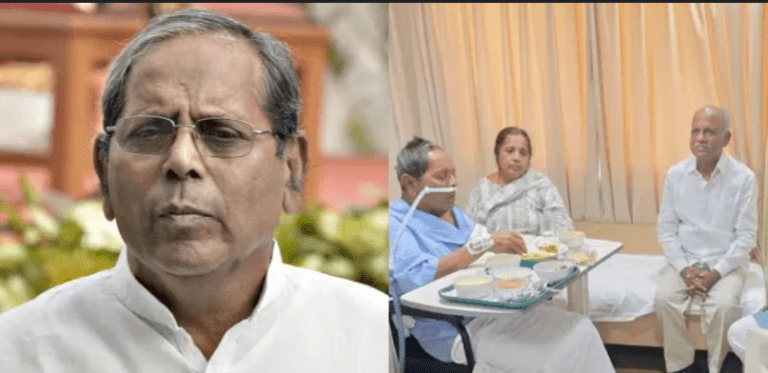
BJP, Powerful 11-Point Rift: A Bitter Undercurrent Shadows BJP’s GBA Poll Strategy in Bengaluru

Discontent is growing within the Bharatiya Janata Party (BJP) in Bengaluru following the announcement of an 11-member committee tasked with overseeing the upcoming Greater Bengaluru Authority (GBA) elections. While the party hoped the committee would streamline decision-making and bolster strategy, internal reactions suggest the opposite: frustration, exclusion, and emotional unrest among senior cadres. Leaders who were expecting more consultative participation say this top-down move signals shrinking internal democracy. Their grievances indicate that the committee, intended as a unifying mechanism, has instead become a flashpoint for internal divisions. Party strategists now face mounting pressure to contain the friction.

BJP’s central and state units had announced the committee with great conviction, emphasising experience, discipline, and organisational strength. But the emotional tremors within the rank-and-file were immediate. Many senior local leaders who assumed they would be consulted say they learned about the development through the media. Some allege that the selections favour personal loyalties and factional ties rather than ground-level capability. The possibility that key voices have been sidelined has caused visible agitation among grassroots members who fear that the approach may weaken party resolve ahead of a critical electoral moment.

The GBA polls are expected to be a high-stakes contest. Bengaluru’s civic administration directly shapes urban quality of life, infrastructure spending, road development, waste management, housing layouts, welfare schemes, and mobility. Political influence in this space carries long-term benefits. The BJP, which has repeatedly projected Bengaluru as a global innovation hub, cannot afford to falter. However, internal displeasure threatens to derail the party’s momentum. The 11-member committee was supposed to inject clarity, but instead, critics argue, it has deepened existing tensions. The emotional anxiety is tied to fears that organisational alienation could cost the party its footing in India’s most prominent tech city.Bengaluru: Disgruntlement in BJP over 11-member committee to oversee GBA polls - The Hindu

Roots of Resentment

The source of the discontent lies primarily in the selection process. Many veteran leaders from Bengaluru felt they were overlooked despite having decade-long experience in local governance. These leaders have worked closely with voters, builders, resident groups, and civic activists, helping navigate local challenges. Their omission has been interpreted as a dismissal of lived expertise. Several pointedly question whether the committee members truly reflect Bengaluru’s diversity — north, south, east, west, and peripheral zones all have distinctive demands, and critics argue the committee lacks balanced representation. This proportion gap has fueled emotional criticism within the party corridors.

Another thread in the backlash stems from factional politics. The BJP in Karnataka has undergone multiple internal shifts since the government change in 2023. Leadership transition, strategic recalibration, and seat negotiations have created fluid alliances. Some leaders believe the new committee reinforces existing dominant factions while excluding emerging voices. This dynamic has added emotional weight to the criticism. Disgruntled leaders feel that while the party publicly champions collective discipline, its backstage functioning still remains personality-driven. They fear that ignoring organisational memory and grassroots bonds may erode the BJP’s long-built Bengaluru structure.

BJP workers admit that consultation did occur at higher levels, but the broader cadre was left uninformed. A sense of procedural opacity has stirred unease. Those close to the city unit say that public dissatisfaction is only the visible layer; deeper conversations reflect frustration over repeated centralisation of decisions. Several ward-level organisers argue that the committee’s success depends on incorporating their real-time insights. They warn that relying solely on central strategists risks missing subtle ward-level dynamics shaping the GBA electorate — dynamics shaped by potholes, water shortages, inflated bills, flooding, poor waste management, and daily commuter challenges.Bengaluru: Disgruntlement in BJP over 11-member committee to oversee GBA polls - The Hindu

The GBA polls are poised to be a test of party alignment as much as voter preference. The Congress is already strengthening alliances with apartment associations and welfare groups. If the BJP remains preoccupied with internal tussles, it will lose campaign days, messaging focus, and volunteer energy. Bengaluru constituencies are known for rapid mood shifts; political alerts travel swiftly through online platforms and resident groups. Any disruption within the BJP will be magnified in these spaces. Party elders privately acknowledge this emotional risk. They argue that the leadership must placate concerns honestly before campaign rhythms accelerate.

The selection of senior former ministers and parliamentarians for the committee has sparked mixed reactions. Some supporters believe experienced hands will steer the campaign efficiently. Others fear the leadership is favouring figures who can command top-down directives rather than foster collaboration. The emotional divide is not simply ideological; it concerns trust. Many booth workers argue that winning Bengaluru requires careful persuasion, empathy, and commitment — traits nurtured over close community relationships. They question whether high-profile committee members can meaningfully engage with ordinary citizens whose problems demand day-to-day presence.

If frustration grows, the party risks muted campaigning at the grassroots. BJP’s past civic successes were rooted in mobilising ward-level networks, apartment residents, traders, tech professionals, and local volunteers. Disheartened organisers warn that without recognition and involvement, they may not feel motivated to push as aggressively. Their emotional withdrawal could weaken door-to-door outreach and social media dialogues. Party strategists concede privately that urban elections depend more on personalised contact than speeches alone. To regain energy, the BJP must integrate dissatisfied leaders quickly and assure them that their voices matter in the electoral strategy.

Residents watching the unfolding tensions say that every major party grapples with internal politics, but the timing here is troubling. The Bruhat Bengaluru Mahanagara Palike (BBMP) was dissolved long ago, and prolonged absence of elected representatives has delayed civic rejuvenation. Citizens hoped the GBA would finally restore accountability. The BJP’s internal friction dimmed that hope slightly. Some citizens fear that political distraction may overshadow serious issues such as delayed infrastructure projects, garbage pile-ups, traffic chaos, public health preparedness, and stormwater upgrades — issues central to Bengaluru’s lived emotional fabric.

Strategic Uncertainty Ahead

The BJP must now decide whether to expand the committee, revise its structure, or hold conciliatory meetings. Senior leaders are reportedly considering outreach dialogues to reassure overlooked members. Emotionally, many simply seek acknowledgment; their disappointment stems not from anger alone, but from feeling undervalued. If their feelings are addressed respectfully, they are willing to contribute. This emotional nuance is important because Bengaluru politics blends civic complexity with professional expectations. Leaders here are accustomed to negotiation rather than rigid hierarchy. A communicative approach could revive internal goodwill.

The BJP leadership argues that the 11-member group was designed to improve coordination — not exclude. They say compact teams help streamline responsibilities, accelerate decision-making, and prevent confusion. The committee reportedly includes individuals with election expertise, administrative experience, and active public engagement. Still, insiders note that optics matter. Even if the motive was efficiency, poor communication created emotional fallout. The leadership is now tasked with reframing the narrative to emphasise inclusiveness. They must demonstrate that additional advisory layers will be created, allowing all voices space.

There is also uncertainty about how the committee will function. Will it craft candidate lists, coordinate campaigns, or design urban policy agendas? Without clarity, many cadres feel alienated. They want concrete roles in the campaign. If the BJP were to define committee tasks publicly — for example, splitting responsibilities between outreach, manifesto development, resident-welfare communication, and public grievance channels — the ambiguity could fade. Clear roles would provide emotional reassurance that the committee is intended to empower the wider organisation and not restrict it.Bengaluru: Disgruntlement in BJP over 11-member committee to oversee GBA polls - The Hindu

Opposition parties are watching the situation with interest. The Congress has seized early talking points, arguing that BJP politics is in disarray. Congress leaders claim the committee lacks city-centric competence and accuse the BJP of prioritising internal hierarchy over Bengaluru’s civic future. These comments play into emotional narratives surrounding governance. If the BJP cannot manage its internal house, citizens may question how it will manage civic institutions. The Congress hopes to exploit this narrative, presenting itself as a more stable alternative. In electoral politics, perception often shapes voting trends as strongly as performance.

The Janata Dal (Secular) is less influential in Bengaluru, yet it could disrupt vote shares and alliances. If BJP’s internal discontent intensifies, some disillusioned leaders might slow their campaign efforts, indirectly helping rival parties. The emotional effect of fractured teamwork is significant. Historically, internal cohesion has been a major BJP strength. Booth structure, volunteer mobilisation, and rapid communication enabled swift grassroots feedback. If these mechanisms weaken, voter enthusiasm could drift. Urban voters in particular respond well to attentive campaigning; division sends the opposite message.

More broadly, the internal tensions reveal underlying anxiety about leadership succession in the Karnataka BJP. Since the fall of its state government, the party has navigated uncertainty. Key figures lead with authority, but factional strands have resurfaced. The committee announcement triggered old fault lines. Analysts describe the situation as emotionally layered: loyalty, ambition, insecurity, and ideological conviction intersect. The GBA polls thus become a mirror, reflecting deeper organisational anxieties. How the party addresses this moment will determine internal morale going into future elections.

Grassroots workers are calling for quick resolution. They emphasise that voters are already impatient with Bengaluru’s slow civic functioning. They want stability, participation, and a united message. For them, internal quarrels are emotionally draining and practically disruptive. Their plea is simple: focus on people. Water supply, sanitation systems, housing approvals, street lighting, accessibility, and safe public spaces demand urgent attention. Internal disputes delay meaningful engagement with these issues. The more the party remains inward-focused, the less citizens feel seen. The emotional resonance of neglect could be detrimental.

The BJP still holds significant strengths. Its organisational history in Bengaluru runs deep, from tech districts to older neighbourhoods. Residents remember its civic undertakings, infrastructure efforts, and public projects. However, memories alone will not guarantee support. Infrastructure fatigue, climate stress, and service delays have made voters sceptical. The party must demonstrate fresh vision and credible execution. Internal harmony is part of that. Emotional coherence — where leaders trust each other and collaborate — translates into sharper, more empathetic governance narratives. Without it, even strong technical proposals may feel hollow.

If reconciled quickly, the 11-member committee could still serve its purpose. Its members bring voter outreach knowledge, media experience, organisational reach, and electoral logic. Their strategic guidance could help develop innovative solutions for civic pain points: waste segregation failures, clogged drains, mobility deficits, lake encroachment, and rising pollution. If the committee engages citizen wings, technology volunteers, and policy researchers, it can craft realistic plans. Bengaluru voters respond well to data-driven proposals with emotional clarity — plans that acknowledge daily struggle yet promise responsive city governance.

In conclusion, the BJP’s decision to form an 11-member committee for the Greater Bengaluru Authority elections was intended to streamline strategy, but it has sparked notable internal disgruntlement. Emotional reactions among sidelined leaders reflect deeper anxieties around representation, participation, and trust. These concerns must be resolved quickly to prevent further fragmentation. Bengaluru’s civic stakes are high, and voters expect unity from parties. If the BJP can transform the controversy into constructive dialogue, it may emerge stronger. But if the discontent intensifies, it could mark a critical fracture at a decisive political moment for the city.

Follow: Karnataka Government

Also read: Home | Channel 6 Network – Latest News, Breaking Updates: Politics, Business, Tech & More