Saturday, May 16, 2026
Home Blog Page 357

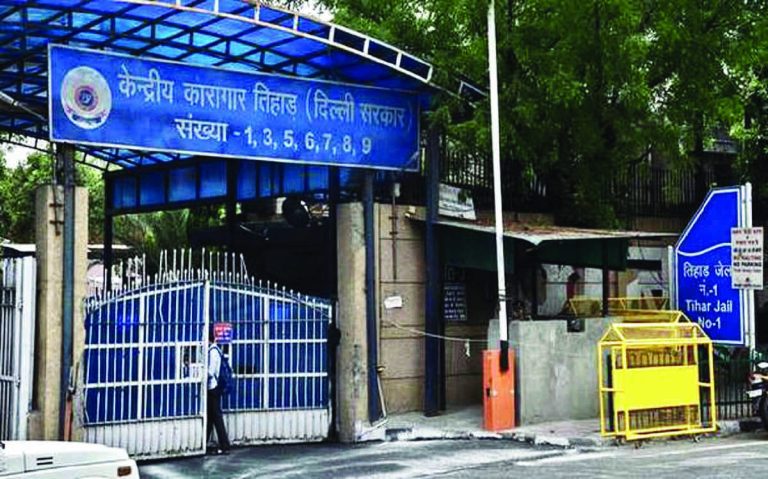
Tihar Mobile Phones Seized: Shocking 300+ Devices This Year

0

New Delhi – The number of Tihar mobile phones seized has reached alarming levels in 2025, with Delhi prison administration recovering over 300 devices from inmates in the past ten months. This represents nearly double the number confiscated during the same period last year, raising serious concerns about prison security and the effectiveness of anti-contraband measures, according to senior prison officers.

Dramatic Increase Despite Intelligence Cell

The surge in Tihar mobile phones seized comes despite the formation of a dedicated Intelligence Cell specifically designed to curb smuggling of contraband inside the prison complex. This paradoxical increase has prompted authorities to reassess their strategies and investigate how sophisticated smuggling networks continue to operate within what should be a secure environment.

Officers maintained that while the 2025 numbers appear alarming, the overall frequency of cases has actually declined compared to 2023, when over 500 mobile phones were recovered between January and October. In 2024, following the establishment of the Intelligence Cell and regular raids, the number of Tihar mobile phones seized dropped to around 150-200 devices during the same period, according to data shared by senior officers.

Intelligence Cell Structure and Operations

The Intelligence Cell responsible for tracking Tihar mobile phones seized operates under the leadership of a superintendent-level officer. The team includes jail staff, Central Reserve Police Force (CRPF) personnel, and Indo-Tibetan Border Police (ITBP) personnel who conduct weekly raids across various prison blocks.

“The cell, led by a superintendent-level officer, includes jail staff, CRPF and ITBP personnel who conduct weekly raids,” a senior prison officer explained, speaking on condition of anonymity. The officer attributed this year’s surge in Tihar mobile phones seized to evolving smuggling tactics employed by criminal networks.

Gangster Networks and Threats

The increase in Tihar mobile phones seized has been accompanied by an escalation in gangster sophistication and boldness. “We have noticed a spike this year since gangsters are finding new ways to avoid being caught. Also, gangsters outside now know about the cell,” the officer revealed.

The situation has become so serious that two staff members from the Intelligence Cell have received threats from gangster networks. “Two of our staff from the cell have also received threats from gangsters. Complaints are with the DG Prison,” the officer added, highlighting the personal risks faced by security personnel.

High-Risk Jail No. 13

According to police sources, the majority of Tihar mobile phones seized this year were recovered from Jail No. 13, which houses high-risk inmates from notorious criminal organizations including the Nandu gang, Chhenu gang, and Bishnoi gang. These groups are known for violent rivalries inside the prison complex, making mobile phone access particularly dangerous as it enables coordination of criminal activities both inside and outside prison walls.

Also Read: Delhi Air Quality AQI: Alarming Season’s Worst at 366

The concentration of Tihar mobile phones seized in Jail No. 13 suggests that organized crime networks have established sophisticated supply chains specifically targeting this high-security facility.

Creative Concealment Methods

Prison officials have discovered that inmates employ increasingly creative methods to hide contraband devices. The Tihar mobile phones seized typically include China-made Kechaoda devices, which are particularly popular among inmates due to their compact size.

“Inmates are very sharp. They get these China-made Kechaoda phones through their lawyers or families. These are thumb-sized phones and can be hidden in any body cavity,” one officer explained. The miniature size of these devices makes detection extremely challenging during routine searches.

Soap Decoy Tactic

Perhaps most ingeniously, inmates have developed a decoy system to protect their devices. “Some inmates, in collusion with others, switch real devices with soap-carved phones. Many times, when we conduct raids based on confirmed intel, they throw away the real phones and give us soap ones,” the officer revealed.

This tactic has significantly complicated efforts to increase the number of Tihar mobile phones seized, as security personnel must now contend with deliberate misdirection in addition to basic concealment.

Notable Cases and Disciplinary Action

Last month during Diwali, gangster Deepak Boxer was among the Tihar mobile phones seized cases when he was caught with a device inside Jail No. 14. Boxer, who was arrested by the FBI in Mexico in 2023 and subsequently extradited to India, was found using one of the compact Kechaoda devices that function even in low-signal areas despite the presence of jammers.

Prison authorities have announced that disciplinary action will be taken in each case involving Tihar mobile phones seized, based on inquiry findings against the inmates. Action will also be taken against any staff members found complicit in smuggling operations. Police will lodge FIRs where required, depending on the outcome of these investigations.

Additional Contraband Recovery

Beyond the Tihar mobile phones seized, officials reported recovering other dangerous contraband items from the prison complex. These include improvised knives, sticks, and sharp weapons recovered from Jail Nos. 3 and 4, indicating that mobile phones are just one component of a broader contraband smuggling problem.

Ongoing Challenges

The escalating numbers of Tihar mobile phones seized despite enhanced security measures underscore the persistent challenges facing prison administration. As criminal networks adapt their methods and intimidate security personnel, authorities must continuously evolve their strategies to maintain control over contraband flow.

The Intelligence Cell continues its operations, conducting regular raids and investigations, while prison administration explores additional technological and procedural solutions to address the smuggling crisis affecting India’s largest prison complex.
Delhi Air Quality AQI: Alarming Season’s Worst at 366

0

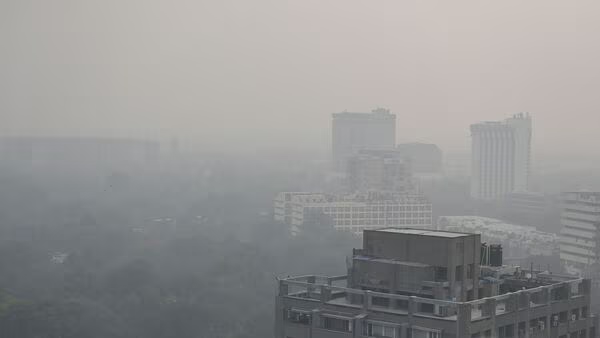
New Delhi – Delhi air quality AQI deteriorated significantly on Sunday, recording the season’s worst pollution levels and raising concerns about public health as the capital enters its most polluted period of the year. With forecasts predicting the first ‘severe’ air day of 2025 this week, residents are bracing for hazardous atmospheric conditions that characterize Delhi’s winter months.

Season High Recorded on Sunday

The Delhi air quality AQI stayed in the ‘very poor’ category throughout Sunday, touching a season high of 388 at 10 am. This represents one of the worst pollution days recorded since the beginning of the current season. At 4 pm, when the Central Pollution Control Board (CPCB) released its daily national bulletin, the average Delhi air quality AQI had marginally improved to 366 as winds picked up speed during the day.

Despite this slight improvement in the city-wide average, at least five individual active ambient air quality monitoring stations recorded readings in the ‘severe’ category, indicating highly localized pockets of dangerous pollution levels across the capital.

Understanding AQI Categories

The CPCB classifies the Delhi air quality AQI using a comprehensive scale to help citizens understand pollution severity. An AQI between 0-50 is classified as “good”, 51-100 as “satisfactory”, 101-200 as “moderate”, 201-300 as “poor”, 301-400 as “very poor”, and readings over 400 as “severe”. The severe category represents the most hazardous air quality conditions, posing serious health risks to all residents, particularly vulnerable populations.

Severe Air Day Expected Tuesday

According to the Centre’s Air Quality Early Warning System (EWS) daily bulletin, the Delhi air quality AQI trajectory over the coming days follows a concerning pattern. “Delhi’s air quality is very likely to be in the ‘very poor’ category from Sunday till Monday. The air quality is very likely to be in the ‘severe’ category on Tuesday, before once again returning to ‘very poor’ on Wednesday,” the bulletin stated.

If this forecast materializes, Tuesday will mark the capital’s first official ‘severe’ air day of 2025. The last time the Delhi air quality AQI reached severe levels was on December 23, 2024, when it was recorded at 406.

Stations Recording Severe Levels

On Sunday at 4 pm, of the 39 active ambient air quality monitoring stations across Delhi, five had already entered the ‘severe’ category. According to CPCB data, Burari recorded an AQI of 404, Chandni Chowk registered 404, RK Puram showed 401, Vivek Vihar recorded 402, and Wazirpur registered the highest reading at 418. Another 30 stations recorded readings in the ‘very poor’ category, indicating widespread pollution across the capital.

Also Read: Critical Delhi BS-III Ban: 23 New Entry Rules for Goods Vehicles Explained

Most Polluted Time of Year

Long-term Delhi air quality AQI trends reveal that the capital has now entered its most polluted period. A Delhi Pollution Control Committee (DPCC) assessment of CPCB data between 2018 and 2022 showed that November 1-15 consistently records the highest AQI readings in the entire year. This period is followed by December 16-31, which has the second-highest average pollution levels over a 15-day period.

A 2019 IIT-Delhi study corroborated these findings, noting that the first pollution peak typically occurs between October 29 and November 4, followed by a second peak between December 30 and January 5. The current Delhi air quality AQI deterioration aligns perfectly with these established patterns.

Meteorological Factors

Mahesh Palawat, vice president at Skymet meteorology, explained that atmospheric conditions were unfavorable for dispersion of pollutants, leading to gradual accumulation that worsened the Delhi air quality AQI. “Winds picked up—touching around 10 km/hr during the day on Sunday, which led to an improvement in the AQI. Otherwise, we were mostly seeing calm winds,” he stated.

The wind direction remained variable throughout the day, except during the afternoon when it shifted to westerly and northwesterly—conditions favorable for transporting stubble smoke to Delhi. Despite the influence of a western disturbance on the region on November 4 and 5, Delhi is not expected to receive rain, which typically helps improve air quality. “It will impact the hills. Over Delhi, we will only see some cloudiness,” Palawat added.

Dramatic Oscillations

The Delhi air quality AQI has witnessed dramatic oscillations over recent days, registering 373 on October 30, improving significantly to 218 on October 31, deteriorating again to 303 on November 1, and reaching 366 on November 2. The Delhi government has defended itself against allegations of data manipulation, emphasizing that AQI monitoring stations are “tamper-free.”

Pollution Source Analysis

Data from the Decision Support System (DSS) revealed that stubble burning contribution to the Delhi air quality AQI was relatively low at 3.5% on Sunday, dropping from 9%—a season-high—on Saturday. This year’s delayed harvesting season has kept farm fires relatively low compared to previous years when stubble burning peaked at up to 35% contribution during the first week of November.

The transport sector emerged as the biggest contributor to Delhi’s PM2.5 pollution at 18.13%, followed by 11.2% from Jhajjar and 4.5% from Delhi’s residential sector. Approximately 36.8% came from unaccounted sources outside Delhi, highlighting the regional nature of the pollution crisis.

Weather Conditions

Delhi’s minimum temperature stood at 16.8°C, two degrees above normal, while the maximum reached 30.7°C, around normal levels. The minimum temperature is expected to touch and possibly dip below 15°C after November 7, while the maximum is likely to oscillate between 29-31°C until Wednesday.

As the Delhi air quality AQI continues deteriorating, health experts advise residents to limit outdoor activities and use protective measures.

Modi Tejashwi CM Claim: Stunning ‘Gunpoint’ Insider Revelation Ahead Bihar Polls 2025

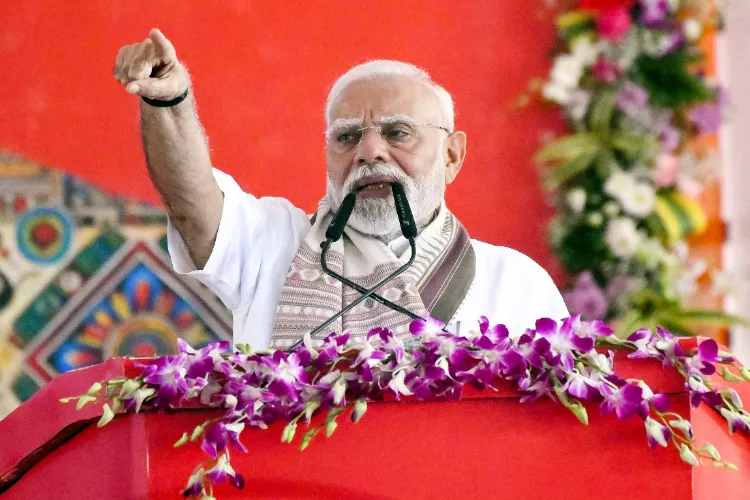
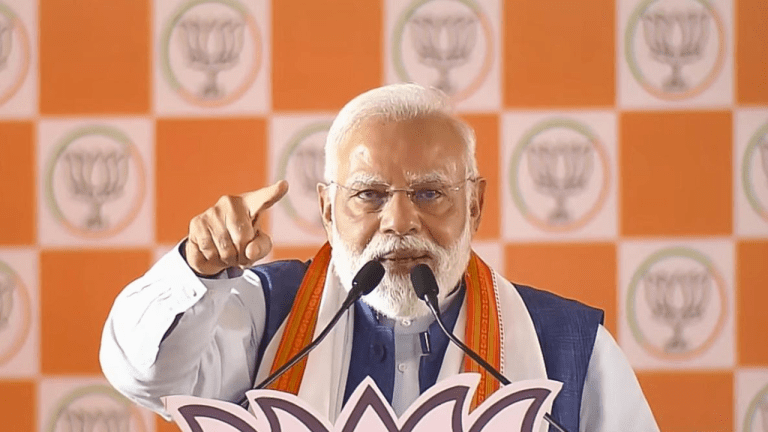
Bihar – Prime Minister Narendra Modi dropped a political bombshell during his Bihar campaign in Arrah on Sunday with a sensational Modi Tejashwi CM claim, alleging that the Rashtriya Janata Dal forced Congress to announce Tejashwi Yadav as the Mahagathbandhan’s chief ministerial candidate through coercive tactics. The PM’s explosive allegations included gun references and accusations of “gundagardi” within the opposition alliance.

‘Insider Information’ on Closed-Door Politics

The Modi Tejashwi CM claim was presented as exclusive insider knowledge of what transpired behind closed doors just before nomination filing. “Today I will tell you insider information. Just a day before nomination filing, behind closed doors, gundagardi (hooliganism) was happening,” the Prime Minister said while addressing the rally in Arrah, speaking in Hindi.

This Modi Tejashwi CM claim suggested that far from being a democratic decision-making process, the announcement of Tejashwi Yadav as the CM face was the result of pressure tactics and internal arm-twisting within the opposition coalition. The timing of the revelation—coming during the crucial campaign period—was clearly designed to damage the Mahagathbandhan’s credibility among voters.

‘Kanpatti Pe Katta’ Allegation

The most striking aspect of the Modi Tejashwi CM claim involved the use of street language to describe the alleged power play. Using the phrase “kanpatti pe katta” (gun to the temple), Modi painted a vivid picture of coercion. “Congress did not want to have an RJD CM, but RJD did not leave the opportunity. They put a gun to Congress’s head and stole the CM’s post,” the Prime Minister declared.

This Modi Tejashwi CM claim portrayed the RJD as having metaphorically held Congress at gunpoint, forcing them to accept Tejashwi Yadav as the chief ministerial candidate against their will. The dramatic imagery was designed to suggest that the Mahagathbandhan was not a coalition of equals but rather one dominated by strong-arm tactics.

Congress ‘Forcibly Made’ to Announce

Elaborating on the Modi Tejashwi CM claim, the PM stated that “Congress was forcibly made to announce the CM candidate with a gun to their head.” This characterization suggested that the national party had been bulldozed by its regional ally on one of the most crucial decisions facing any electoral alliance.

The Modi Tejashwi CM claim further alleged that Congress was not even consulted when the RJD-led alliance made its manifesto, indicating a pattern of exclusion and domination rather than collaborative decision-making. By highlighting these alleged internal tensions, Modi sought to raise questions about the stability and viability of a potential Mahagathbandhan government.

‘Gundagardi’ vs Development Partnership

Calling the alleged RJD tactics “gundagardi,” the Modi Tejashwi CM claim contrasted the opposition’s internal dysfunction with the NDA’s projected unity. “The NDA in turn has been working together, hand in hand for Bihar’s development,” the Prime Minister stated, positioning his alliance as the stable, development-focused alternative.

The Modi Tejashwi CM claim also included a prediction that the Mahagathbandhan alliance would likely “break each other’s heads” after the election, suggesting that even if they won power, internal conflicts would make governance impossible.

Increased RJD-Congress Tensions

According to the Modi Tejashwi CM claim, “The fight between RJD and Congress has increased a lot.” This assertion was meant to convince voters that the opposition alliance was on the verge of collapse, held together only by the immediate goal of winning elections, with no shared vision for Bihar’s future.

The Modi Tejashwi CM claim suggested that these tensions would inevitably surface post-election, leading to political instability and paralysis in governance—a scenario the PM painted as disastrous for Bihar’s development.

‘Jungle Raj’ Era Invoked

The Modi Tejashwi CM claim was reinforced by invoking memories of the RJD’s infamous “jungle raj” era. “On one side is NDA’s governance, and on the other side is the misgovernance of ‘jungle raaj’ era. That time of darkness slowly emptied out Bihar,” the Prime Minister said.

This historical reference in the Modi Tejashwi CM claim was designed to trigger negative memories among voters who had lived through that period, creating fear about a potential return to lawlessness and poor governance.

‘Infiltrators’ Allegation

The Modi Tejashwi CM claim expanded beyond internal coalition dynamics to include allegations about the Mahagathbandhan’s stance on demographic issues. The PM alleged that the RJD-Congress alliance is looking to “erase Bihar’s identity” by supporting “infiltrators.”

“These people are conducting yatras in support of infiltrators in Bihar. These people are fully dedicated, body and soul, to saving the infiltrators,” Modi said, apparently referring to Rahul Gandhi’s Voter Adhikar Yatra concerning exclusions from voter lists. This aspect of the Modi Tejashwi CM claim attempted to frame the opposition’s advocacy work as support for illegal immigration.

Electoral Context and Implications

The timing of the Modi Tejashwi CM claim is significant as Bihar prepares to vote for its 243-seat Assembly in two phases on November 6 and 11, with counting scheduled for November 14. The explosive nature of these allegations suggests that the BJP views aggressive campaigning as crucial for electoral success.

Strategic Objectives

The Modi Tejashwi CM claim serves multiple strategic purposes: questioning the legitimacy of Tejashwi Yadav’s CM candidature, exposing alleged internal divisions within the Mahagathbandhan, positioning NDA as the stable alternative, and raising concerns about governance stability under opposition rule.

By presenting these allegations as “insider information,” the Modi Tejashwi CM claim attempts to give them credibility while simultaneously undermining the opposition’s electoral narrative and unity in the crucial final days of campaigning.

Modi Bihar Attack: Bold ‘Gunpoint’ Charge Against Opposition

Bihar – Prime Minister Narendra Modi launched a fierce Modi Bihar attack on Sunday, turning up the political heat ahead of the Assembly elections with explosive allegations against the opposition Mahagatbandhan. In a sharp address that drew loud cheers from supporters, the PM accused the Rashtriya Janata Dal and Congress of “political gundagardi” and internal power struggles that have exposed deep divisions within the opposition alliance.

‘Katta on Kanpatti’ Allegation

The most striking element of the Modi Bihar attack came when the Prime Minister used vivid street language to describe the power dynamics within the opposition coalition. “RJD ne Congress ki kanpatti par katta rakhkar CM pad chura liya,” Modi declared, alleging that the RJD had metaphorically held a gun to Congress’s temple and snatched away the chief minister’s post.

This dramatic Modi Bihar attack painted a picture of backstage political maneuvering in “band kamra” (closed rooms), where according to the PM, a power play had unfolded just days before Bihar was scheduled to go to polls. The allegation suggested that rather than operating as a united front, the opposition alliance was riven by internal conflicts over power distribution.

Congress Forced Into Submission

Elaborating on his Modi Bihar attack narrative, the Prime Minister claimed that Congress had not wanted an RJD leader to become the chief minister if the Mahagatbandhan won the elections. However, according to Modi’s version of events, the RJD refused to relinquish this opportunity and forced the announcement at gunpoint.

“Congress didn’t want an RJD leader to be CM, but RJD didn’t let go of the opportunity. They forced the announcement at gunpoint,” Modi stated during his Modi Bihar attack, suggesting that the larger national party had been bulldozed by its regional ally on a critical decision that would determine Bihar’s governance structure.

This Modi Bihar attack was designed to expose fault lines within the opposition coalition, portraying it as an alliance of convenience rather than shared ideology or mutual respect. By highlighting internal discord, the PM sought to contrast the opposition’s alleged dysfunction with the NDA’s projected unity.

Mahagatbandhan as ‘Divided House’

The Modi Bihar attack further characterized the Mahagatbandhan as a “divided house,” with the Prime Minister stating explicitly that the RJD and Congress are embroiled in an intense internal fight that threatens to tear the alliance apart.

“Main aapko ek andar ki baat batane ja raha hu. Congress aur RJD mein ghamasaan macha hua hai, aur aisa lagta hai chunaav ke baad, ye ek dusre ka sar phod denge,” the Prime Minister said, claiming insider knowledge of the brewing conflict.

This portion of the Modi Bihar attack predicted that post-election, assuming the alliance won, the two parties would engage in violent internal conflicts—metaphorically described as “sar phod denge” (breaking each other’s heads). The imagery was designed to create doubt among voters about the stability and viability of an opposition government in Bihar.

Pakistan Reference and Operation Sindoor

Perhaps the sharpest component of the Modi Bihar attack involved a reference to Pakistan and Operation Sindoor, the military action that took place in May 2025. Modi alleged that Congress’s “royal family” had been losing sleep when attacks were conducted on Pakistan, suggesting divided loyalties or lack of nationalist commitment.

Also Read: Rahul Gandhi Modi Attack: Explosive ‘Remote-Controlled’ Accusation

“Dhamake Pakistan mein ho rahe the, Congress ke ‘shahi parivar’ ki neend ud jaati thi,” the Prime Minister said, implying that while explosions were happening in Pakistan during Indian military operations, the Congress leadership was worried rather than celebrating national success.

This Modi Bihar attack on the issue of national security aimed to position the opposition as weak on matters of defense and Pakistan policy, while projecting the NDA as the strong, decisive force willing to take tough action against adversaries. The reference to the “shahi parivar” (royal family) was a thinly veiled attack on the Gandhi family leadership of the Congress party.

Political Gundagardi Accusation

Throughout his address, the Modi Bihar attack repeatedly used the term “political gundagardi” to describe opposition tactics. This characterization suggested that rather than democratic processes and negotiations, the opposition alliance relied on strong-arm tactics, threats, and coercion to settle internal disputes.

The Modi Bihar attack framed the RJD-Congress relationship as fundamentally unhealthy, marked by domination rather than partnership, and predicted that such an alliance would be incapable of providing stable governance to Bihar even if elected to power.

Electoral Strategy Behind the Attack

The timing and nature of the Modi Bihar attack reveal a calculated electoral strategy. By exposing alleged opposition disunity, the PM sought to accomplish multiple objectives: raising doubts about opposition stability, positioning NDA as the unified alternative, questioning opposition nationalist credentials through the Pakistan reference, and energizing the NDA base through aggressive rhetoric.

Implications for Bihar Elections

The Modi Bihar attack comes at a crucial juncture as Bihar prepares to vote for its 243 Assembly seats in two phases on November 6 and November 11, with counting scheduled for November 14. The intensity of the Prime Minister’s rhetoric suggests that the BJP views Bihar as a high-stakes battle where aggressive campaigning could make the difference.

By focusing his Modi Bihar attack on both governance issues and national security concerns, the Prime Minister sought to appeal to voters across different segments—those concerned about stable government and those prioritizing strong national defense policies.

The opposition’s response to this Modi Bihar attack will likely shape the final days of campaigning in this crucial electoral contest.

Rahul Gandhi Modi Attack: Explosive ‘Remote-Controlled’ Accusation

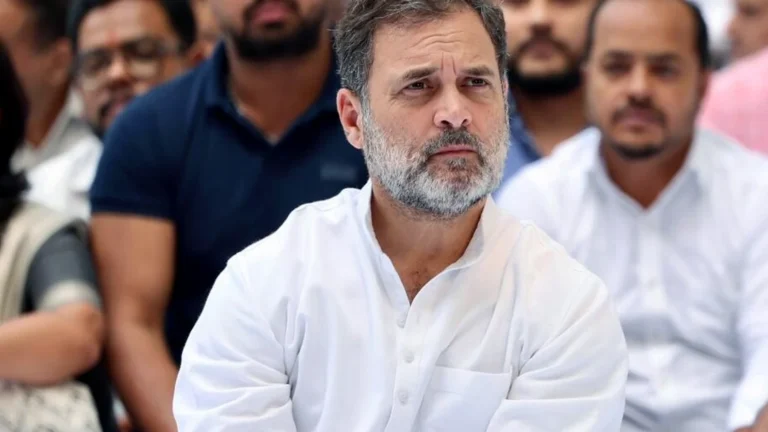
Bihar – The political temperature in poll-bound Bihar has soared as Congress leader Rahul Gandhi launched a scathing Rahul Gandhi Modi attack, accusing Prime Minister Narendra Modi of being “remote-controlled” by the United States and big business interests. Speaking at an election rally in Begusarai district, the Leader of Opposition in the Lok Sabha intensified his criticism with sharp personal jibes and policy allegations.

’56-Inch Chest’ Claim Challenged

The latest Rahul Gandhi Modi attack directly challenged the Prime Minister’s figurative claim of having a “56-inch chest,” which Modi has used to project strength and decisiveness. Gandhi countered this narrative by stating, “Having a huge chest does not make you strong,” drawing a powerful contrast with historical figures.

“Just look at Mahatma Gandhi, who had a frail build but took on the British, who were the superpowers of the time,” the Congress leader said, attempting to redefine the parameters of political strength and courage. This comparison formed a central element of the Rahul Gandhi Modi attack strategy, positioning moral courage above physical symbolism.

Pakistan Ceasefire and US Influence Allegations

A significant component of the Rahul Gandhi Modi attack focused on India’s decision for a ceasefire with Pakistan following Operation Sindoor in May 2025. Gandhi alleged that Modi experienced a “panic attack” when US President Donald Trump allegedly called him to demand an end to the conflict within two days.

The Rahul Gandhi Modi attack suggested that the Prime Minister followed Trump’s instructions, portraying him as subservient to American interests rather than acting independently in India’s national interest. The Modi government has consistently denied these claims of US intervention in the ceasefire decision. However, Gandhi reiterated his allegation that India ended its conflict with Pakistan on American cue, making this a recurring theme in his Bihar campaign narrative.

‘Yoga’ and ‘Dance’ Jibes Spark Controversy

The Rahul Gandhi Modi attack took a more personal turn with jibes about the Prime Minister’s willingness to do anything for votes. “Tell him to do yoga, he will do a few asanas,” Gandhi remarked, suggesting opportunistic behavior from the Prime Minister.

This followed an earlier statement at a rally in Muzaffarpur where Gandhi had said, “Tell him at a rally, ‘Mr. Prime Minister, we’ll vote for you if you dance,’ and he’ll break into the act without a second thought.” These remarks prompted the BJP to file a complaint against the Congress leader, with the party viewing the Rahul Gandhi Modi attack as crossing acceptable political discourse boundaries.

Economic Policy Critique

The Rahul Gandhi Modi attack extended to major economic decisions taken by the BJP government at the Centre. Gandhi alleged that policies such as the Goods and Services Tax (GST) and demonetisation were “aimed at destroying small businesses and benefiting the big ones.”

Specifically naming the Ambani and Adani groups, Gandhi suggested that government policies favored large corporate houses at the expense of smaller enterprises. Both business groups have repeatedly denied his claims and allegations. The Rahul Gandhi Modi attack on economic policy resonated with his broader campaign theme of protecting small businesses and promoting inclusive growth.

Alternative Vision for Bihar

Contrasting his approach with the current government’s policies, Gandhi articulated an alternative vision during his Rahul Gandhi Modi attack speeches. “Our approach is different. We want to promote the small businesses. We want to replace made in China labels on your phones and T-shirts with ‘made in Bihar’,” he stated.

This economic nationalism combined with regional pride formed part of the Congress strategy to appeal to Bihar’s entrepreneurial class and youth. The Rahul Gandhi Modi attack thus wasn’t merely critical but also attempted to present constructive alternatives.

Allegations of Distraction Tactics

The Rahul Gandhi Modi attack also accused the Prime Minister of deliberately diverting youth attention from real issues. Gandhi alleged that Modi was asking young people to watch reels because he wanted to distract them from raising questions about genuine concerns such as unemployment.

This critique positioned the Rahul Gandhi Modi attack within a broader narrative about governance priorities and the government’s approach to addressing youth concerns in India.

BJP Control Over Bihar Governance

At a rally in Darbhanga, the Rahul Gandhi Modi attack extended to state-level politics, claiming that Chief Minister Nitish Kumar was merely a figurehead. “Forget the myth that Nitish Kumar runs this state — it’s the BJP pulling strings from afar, with zero regard for Bihar’s people,” Gandhi declared.

This assertion aimed to undermine the NDA’s Bihar credentials by suggesting that real power resided with the BJP leadership in Delhi rather than with local representatives understanding ground realities.

INDIA Bloc’s Inclusive Promise

Concluding his Rahul Gandhi Modi attack narrative, the Congress leader promised that if the INDIA bloc secured power in Bihar, it would form a government for every section of society, not for any particular caste. This inclusive messaging attempted to appeal across Bihar’s complex caste dynamics.

Election Context

The intensified Rahul Gandhi Modi attack comes as Bihar prepares for Assembly elections across 243 seats in two phases on November 6 and 11, with counting scheduled for November 14. The war of words between the NDA and the opposition’s grand alliance has reached fever pitch as both sides compete for voter attention in this crucial electoral battle.

Anant Singh Arrest: Shocking Murder Charge Rocks Bihar Polls 2025

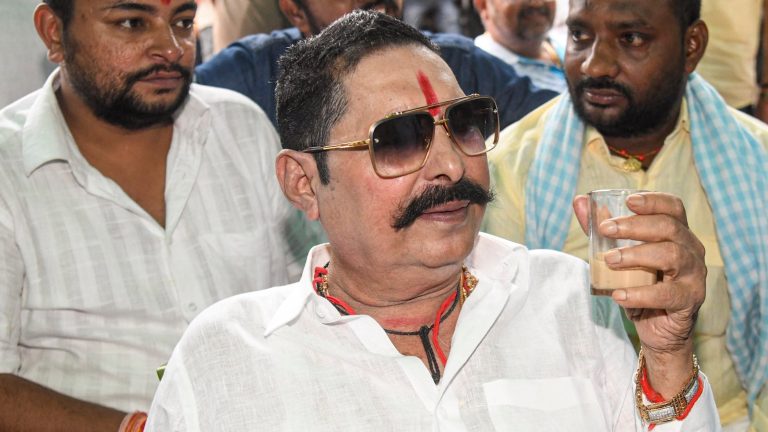
Bihar – The Anant Singh arrest in a late-night operation on Saturday has sent shockwaves through Bihar’s political landscape just days before the Assembly elections. The Janata Dal (United) candidate from Mokama was detained in connection with the murder of Jan Suraaj supporter Dularchand Yadav, raising serious questions about criminalization in politics and electoral violence.

Singh has been fielded by the JD(U) from his traditional stronghold Mokama, which is scheduled to vote in the first phase of the Bihar Assembly elections on November 6. The Anant Singh arrest comes at a critical juncture, threatening to disrupt the party’s electoral calculations in this key constituency.

Profile: Who is Anant Singh?

The Anant Singh arrest brings renewed attention to one of Bihar’s most controversial political figures. A don-turned-politician, Singh has represented the Mokama Assembly constituency for the past two decades, having made his electoral debut in 2005. His political journey reflects the complex interplay between muscle power and electoral politics that has long characterized certain regions of Bihar.

Singh’s family has maintained a virtual monopoly over the Mokama seat since 1990, except for a brief period when the constituency was captured by a rival “bahubali.” This dynastic control over the seat has made Mokama synonymous with the Singh family’s political dominance.

Electoral Journey and Party Affiliations

Following his initial victory in 2005, Singh was re-elected in 2010, demonstrating his growing influence in the constituency. The 2015 elections saw a significant development when Singh quit the JD(U) and contested as an Independent candidate, yet managed to secure victory, underlining his personal vote bank independent of party affiliations.

Prior to the 2020 Bihar Assembly elections, Singh joined the Rashtriya Janata Dal (RJD) and once again emerged victorious. However, his political career faced a major setback in 2022 when he was convicted in an arms case, resulting in the loss of his legislative seat.

Following this conviction, his wife Neelam Devi contested the subsequent bye-election and won, currently representing the Mokama constituency. The Anant Singh arrest now occurs as he attempts a political comeback, this time contesting on a JD(U) ticket.

Criminal Record and Asset Declaration

The Anant Singh arrest is hardly surprising given his extensive criminal history. According to the nomination papers he filed for the upcoming polls, Singh has 28 ongoing cases against him. These cases include serious charges such as murder, criminal conspiracy, torture, kidnapping, and assault—painting a picture of a politician deeply entangled with the criminal justice system.

Despite these serious allegations, or perhaps because of the power they represent, Singh has amassed considerable wealth. He declared movable and immovable assets worth ₹37.88 crore in his nomination papers, raising questions about the sources of such substantial wealth accumulation.

History of Violence in Mokama

The Anant Singh arrest is not an isolated incident in Mokama’s violence-prone political landscape. Earlier in January 2025, heavy exchange of fire was reported between Singh’s group and his rival Sonu-Monu gang. Following that incident, Singh had surrendered in court after being named in two FIRs and was subsequently sent to jail.

That episode came shortly after Singh’s release from Beur jail in Patna in August 2024, following his acquittal in an Arms Act case. This pattern of arrests, jail terms, and releases has characterized Singh’s recent political trajectory, with the current Anant Singh arrest being the latest chapter.

Details of Dularchand Yadav Murder Case

The circumstances leading to the Anant Singh arrest revolve around the murder of Jan Suraaj supporter Dularchand Yadav, who was shot dead on October 30 during firing between two groups amid election campaigning in Mokama. The incident also involved stone-throwing as supporters of rival groups clashed, resulting in multiple injuries.

Following a detailed investigation, Singh was arrested along with two associates—Manikant Thakur and Ranjeet Ram. Patna Senior Superintendent of Police Kartikeya Sharma stated, “It was found that all this happened in the presence of the candidate, Anant Singh, who is also the main accused in the case.”

This statement from the Patna SSP indicates that the Anant Singh arrest is based on substantial evidence placing him at the scene and implicating him as the primary accused in the murder.

Electoral Implications

The Anant Singh arrest has dramatically altered the electoral dynamics in Mokama, a constituency infamous as a stronghold of influential and often controversial ‘bahubalis.’ The seat is now set to witness an intense contest between Singh and his rival Veena Devi.

The timing of the Anant Singh arrest, coming just days before voting in the first phase, raises questions about its potential impact on voter sentiment and the JD(U)’s electoral prospects. Whether voters will rally behind Singh as they have in the past, or whether this arrest will finally turn public opinion against him, remains to be seen.

Conclusion

The Anant Singh arrest underscores the persistent challenge of criminalization in Indian politics, particularly in constituencies where muscle power has traditionally determined electoral outcomes. As Bihar prepares to vote, the Mokama constituency stands as a litmus test for whether the electorate will continue to support candidates with serious criminal backgrounds or demand cleaner political representation.

India’s US Exports Plunge: Alarming 37.5% Drop Amid Tariffs

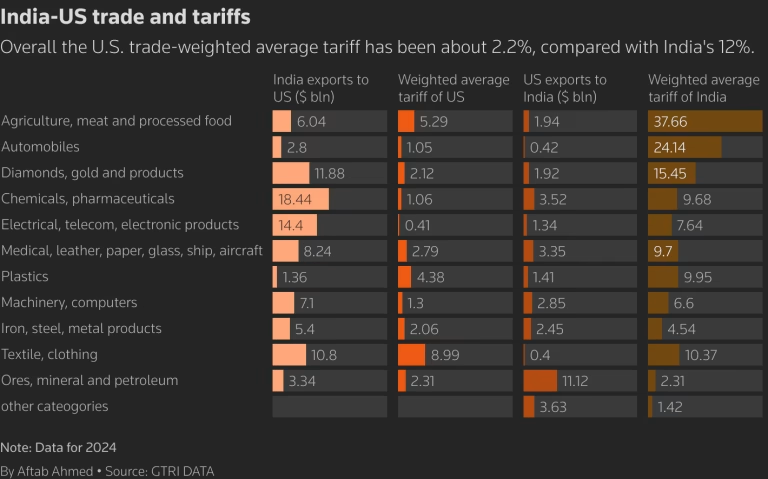
New Delhi – India’s US exports have experienced a dramatic downturn, falling 37.5% during the May-September 2025 period, according to a comprehensive analysis by the Global Trade Research Initiative (GTRI). Despite ongoing trade deal negotiations between President Donald Trump and Prime Minister Narendra Modi, the real-world impact of massive US tariffs continues to inflict significant damage on India’s export sector.

Sharp Contraction in India’s US Exports

The decline in India’s US exports represents one of the sharpest short-term collapses in recent years. In absolute terms, India’s US exports plummeted from $8.8 billion in May to $5.5 billion in September 2025, marking the fourth consecutive month of decline across multiple sectors. This dramatic reduction occurred despite the visible bonhomie between Indian and American leadership.

The GTRI analysis examined export performance between May and September to assess the immediate fallout of tariffs imposed from April 2 onwards. Initially set at 10% at the beginning of the fiscal year, the tariffs escalated dramatically in August, reaching 25% at the month’s start, followed by an additional 25% penalty imposed for India’s purchase of Russian oil despite the ongoing Ukraine conflict.

Labour-Intensive Sectors Bear the Brunt

Labour-intensive sectors, which account for nearly 60% of India’s US exports, witnessed a devastating 33% decline. These critical sectors—including textiles, gems and jewellery, chemicals, agricultural products and foods, and machinery—saw their combined export value drop from $4.8 billion in May to $3.2 billion in September.

The impact on India’s US exports has been particularly severe in sectors that employ millions of workers. The textile industry, traditionally a major employment generator, has faced mounting pressure as American importers seek alternative suppliers in countries with lower tariff burdens.

Tariff-Free Products Face Steepest Decline

Paradoxically, tariff-free products that constitute nearly one-third of India’s US exports experienced the steepest contraction. These products fell 47% from $3.4 billion in May to $1.8 billion in September. According to GTRI, smartphones and pharmaceuticals emerged as the biggest casualties in this category.

Smartphone Export Collapse

The smartphone sector’s trajectory in India’s US exports tells a particularly troubling story. After surging 197%—effectively tripling—during the April-September 2024 period, smartphone exports crashed 58% in the same period of 2025. The monthly decline was stark: from $2 billion in June to $1.52 billion in July, $964.8 million in August, and finally $884.6 million in September. GTRI noted that “the reasons for decline are not known and need examination,” highlighting the mysterious nature of this collapse.

Pharmaceutical Sector Struggles

Pharmaceutical product exports, another crucial component of India’s US exports, slipped 15.7% during the analysis period. This decline affects India’s reputation as the “pharmacy of the world” and threatens jobs in a sector known for its high-value employment opportunities.

Also Read: Controversial JD Vance Christianity Remarks Spark Outrage Online

Sector-Specific Impact Analysis

Industrial metals and auto parts, subject to uniform tariffs across all countries, registered a relatively milder 16.7% decline in India’s US exports. However, specific commodities within this category showed varying degrees of damage: aluminium exports dropped 37%, copper fell 25%, auto parts decreased 12%, and iron and steel declined 8%.

The gems and jewellery sector experienced a catastrophic 59.5% collapse, with exports falling from $500.2 million to $202.8 million. This decline has deeply affected manufacturing units in Surat and Mumbai, while Thailand and Vietnam reportedly captured the lost US orders, further diminishing India’s US exports market share.

Solar panel exports, critical to India’s renewable energy ambitions, plunged 60.8% from $202.6 million to $79.4 million, eroding India’s competitive edge in the green energy export market. GTRI observed that with China facing only 30% tariffs and Vietnam 20% during the analysis period, India’s competitiveness in US exports has sharply deteriorated.

Structural Vulnerabilities Exposed

The GTRI analysis concluded that the decline in India’s US exports has revealed deeper issues beyond immediate tariff impacts. “Tariffs have not only squeezed India’s trade margins but also exposed structural vulnerabilities across key export industries,” the think tank stated. These vulnerabilities threaten India’s long-term competitiveness in the American market.

Urgent Interventions Required

Exporters are urging the government to respond swiftly to stabilize India’s US exports. GTRI recommends priority measures including emergency credit lines for MSME exporters, who form the backbone of many export sectors. Without urgent intervention, India risks losing market share to Vietnam, Mexico, and China, even in sectors where it previously held strong positions.

Trade Deal Negotiations Continue

India maintains it is currently in the final stages of trade deal discussions with the United States. American officials have stated that India has agreed to scale down purchases of Russian oil—an assertion that Delhi has neither confirmed nor denied. The outcome of these negotiations could significantly impact the future trajectory of India’s US exports.

The current data underscores an urgent need for strategic action to protect India’s export interests and prevent permanent market share loss in one of its most important trading partnerships.

CMS-03 Satellite Launch: Big Success On Bahubali Rocket

New Delhi – India achieved a significant milestone in its space programme on Sunday as the Indian Space Research Organisation (ISRO) successfully executed the CMS-03 satellite launch aboard the powerful LVM3-M5 rocket, nicknamed ‘Bahubali’. The communication satellite, weighing 4,410 kg, represents the heaviest payload ever launched from Indian soil, marking another triumph in the nation’s rapidly advancing space capabilities.

Record-Breaking CMS-03 Satellite Launch

The CMS-03 satellite launch took place from the Satish Dhawan Space Centre in Sriharikota, Andhra Pradesh, on November 3, 2025. Hours after the successful deployment, ISRO shared remarkable footage capturing the lift-off and on-board camera views of the historic mission. The video showcased the communication satellite’s journey into space following a brief countdown sequence.

This CMS-03 satellite launch surpassed the previous record held by the Chandrayaan-3 mission satellite, which weighed 3,841.4 kg when it was launched in 2023. The achievement demonstrates ISRO’s growing capabilities in handling heavier payloads and executing complex space missions with precision.

LVM3-M5 ‘Bahubali’ Rocket: India’s Heavy-Lifter

ISRO Chairman V Narayanan bestowed the ‘Bahubali’ tag upon the LVM3-M5 rocket during his post-launch address from the Mission Control Center, acknowledging its exceptional heavy-lifting capabilities. The name, inspired by the legendary warrior from Indian mythology and popular culture, perfectly encapsulates the rocket’s strength and reliability.

The LVM3-M5 rocket that facilitated the CMS-03 satellite launch features sophisticated engineering components designed for maximum efficiency. Two S200 solid rocket boosters are mounted on either side of the rocket, providing the essential thrust required for lift-off. These boosters work in conjunction with the L110 Liquid Stage, which is powered by two Vikas engines, creating a formidable combination that enables the rocket to carry heavy payloads into orbit.

The on-board camera footage from the CMS-03 satellite launch captured the precise separation of the two S200 solid rocket boosters and the L110 liquid core stage, demonstrating the flawless execution of each mission phase. This technical precision has become a hallmark of ISRO’s launch operations.

Technical Specifications and Mission Objectives

The CMS-03 satellite launch involved deploying a multi-band communication satellite into the Geosynchronous Transfer Orbit (GTO). According to ISRO officials, the 4,410 kg satellite was precisely injected into its designated orbit, meeting all mission parameters with exceptional accuracy.

ISRO Chairman V Narayanan emphasized that the satellite’s strategic positioning will enable it to provide comprehensive communication services across a wide oceanic region, including the entire Indian landmass. This capability significantly enhances India’s communication infrastructure and strengthens national security through improved connectivity.

The CMS-03 satellite launch represents a long-term investment in India’s space infrastructure, as the satellite has been designed to provide uninterrupted communication services for at least 15 years. This operational lifespan ensures sustained benefits and justifies the substantial resources invested in the mission.

Symbol of Atmanirbhar Bharat

During his post-launch address, ISRO Chairman V Narayanan, who also serves as Secretary of the Department of Space, described the CMS-03 satellite launch as “yet another shining example of Atmanirbhar Bharat” (self-reliant India). This statement underscores how the mission reflects India’s growing self-sufficiency in advanced space technology and satellite manufacturing.

Also Read: Blood Test Can Detect: 5 Groundbreaking Findings That Could Transform Early Cancer Diagnosis

The successful CMS-03 satellite launch demonstrates that India no longer needs to depend on foreign launch vehicles or facilities for deploying heavy communication satellites. This independence in space technology represents a crucial strategic advantage and positions India as a major player in the global space industry.

LVM3’s Impeccable Track Record

The CMS-03 satellite launch adds to the LVM3 rocket family’s impressive success record. According to ISRO data, LVM3 rockets have now completed eight launches, all of them successful, maintaining a perfect 100 percent success rate. This consistency has established the LVM3 as one of the most reliable launch vehicles in operation today.

Chairman Narayanan also recalled the LVM3 rocket’s previous achievement with “the most prestigious Chandrayaan-3 which brought pride to the nation.” The Chandrayaan-3 mission, which successfully landed on the lunar surface in 2023, demonstrated the rocket’s versatility in handling diverse mission profiles.

Strategic Implications and Future Prospects

The CMS-03 satellite launch strengthens India’s position in space technology and opens new possibilities for future missions. The proven capability to launch satellites exceeding 4,400 kg enables ISRO to undertake more ambitious projects, including potential interplanetary missions and advanced communication satellite constellations.

The success of the CMS-03 satellite launch also enhances India’s commercial space launch services, making ISRO an attractive option for international clients seeking reliable and cost-effective launch solutions for heavy satellites.

Conclusion

The CMS-03 satellite launch represents a defining moment in India’s space journey, showcasing technological excellence, strategic vision, and national self-reliance. As the heaviest satellite ever launched from Indian soil begins its 15-year operational life, it stands as a testament to ISRO’s engineering prowess and India’s emergence as a spacefaring nation of global significance. The Bahubali rocket’s flawless performance ensures that India’s space ambitions will continue reaching new heights.

India Women’s World Cup Triumph: Historic Maiden Title Victory By 52 Runs

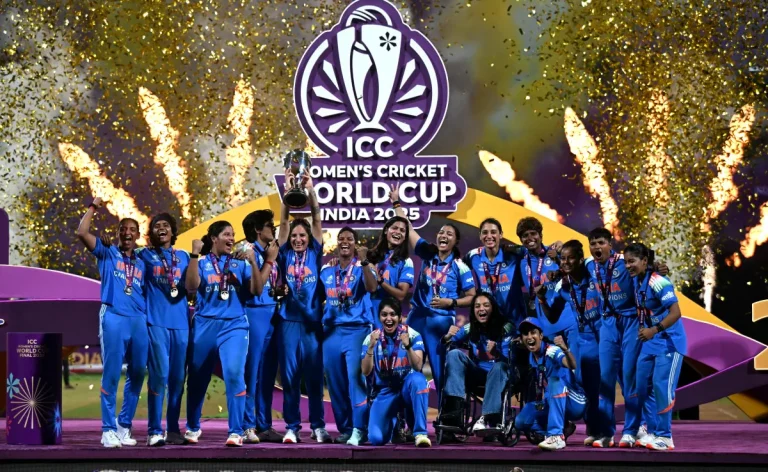
New Delhi – Harmanpreet Kaur‘s India created history by clinching their first-ever India Women’s World Cup title with a commanding 52-run victory over South Africa on Sunday. The triumph, powered by exceptional performances from Shafali Verma and Deepti Sharma, ended years of heartbreak and established a new era in Indian women’s cricket.

Shafali Verma’s Redemption Story

The India Women’s World Cup final witnessed an extraordinary redemption arc as Shafali Verma, who wasn’t even part of the original squad a week ago, delivered when it mattered most. The 21-year-old, who had endured heartbreak five years ago in the T20 World Cup final at the MCG, produced a stunning all-round performance that will be remembered for generations.

Verma’s magnificent 87 with the bat anchored India’s innings, while her crucial 2/36 with the ball turned the game decisively in India’s favor. Her Player of the Match performance in the India Women’s World Cup final placed her alongside legends like Mohinder Amarnath, Irfan Pathan, MS Dhoni, and Virat Kohli, all of whom had shone in World Cup finals.

Coming in as a replacement for the injured Pratika Rawal, Shafali chose the grandest stage to etch her name in cricketing folklore. She became the youngest cricketer to score a fifty in a World Cup final across men’s and women’s cricket, while also helping India achieve their first-ever century opening partnership in any ICC World Cup knockout match.

Deepti Sharma’s Match-Winning Performance

Deepti Sharma’s all-round brilliance was equally instrumental in the India Women’s World Cup victory. Her composed half-century of 58 runs off as many balls proved crucial in pushing India’s total close to 300. However, it was her devastating bowling spell of 5/39 that sealed the victory for India.

With 20 wickets in the tournament, Deepti was deservedly named Player of the Tournament, capping off an exceptional campaign that showcased her ability to deliver in pressure situations. Her performance in the final exemplified the fighting spirit that defined India’s journey to their maiden World Cup title.

India’s Batting Masterclass

Despite the play beginning 90 minutes late due to rain interruptions, India’s batting lineup produced a masterclass in the India Women’s World Cup final. Shafali Verma and Smriti Mandhana provided a blazing start, bringing up India’s 50 in just over seven overs. Mandhana’s fluent 45 set the tone, while Shafali’s aggressive intent put South Africa under immediate pressure.

Jemimah Rodrigues provided stability with a solid 24 off 37 balls, while captain Harmanpreet Kaur contributed a valuable 20, sharing a crucial 52-run partnership with Deepti. Richa Ghosh’s explosive 34 off 24 balls, featuring three fours and two sixes, proved to be the difference maker in the final analysis.

India’s total of 298 became the second-highest ever in a World Cup final, behind Australia’s 356 against England in 2022. With dew expected to be a factor, the total represented a formidable challenge for South Africa.

South Africa’s Valiant Effort

South Africa’s chase in the India Women’s World Cup final was led brilliantly by captain Laura Wolvaardt, who scored a sublime century to keep her team in contention. However, crucial strikes from Shafali and Deepti at regular intervals prevented South Africa from building the momentum required for such a challenging chase.

The breakthrough came when Amanjot Kaur ran out Tazmin Britz after a fifty-run opening partnership. Shree Charani then dismissed Anneke Bosch for a duck, before Shafali’s golden arm struck twice in quick succession to put India firmly in control.

Despite Wolvaardt’s heroic resistance and a promising 50-plus partnership with Annerie Dercksen, India’s bowling attack remained relentless. Deepti’s yorker dismissed Dercksen, while Amanjot’s spectacular juggling catch to dismiss Wolvaardt effectively ended South Africa’s hopes.

Historic Achievement for Indian Cricket

The India Women’s World Cup victory represents the culmination of years of effort and near-misses. After falling agonizingly short in 2005, 2017, and 2020, Harmanpreet’s team finally crossed the line when it mattered most. The triumph places Harmanpreet alongside Kapil Dev, MS Dhoni, and Rohit Sharma as Indian captains who have lifted cricket’s ultimate prize.

This historic India Women’s World Cup title marks the beginning of a golden chapter in Indian women’s cricket. The performances of Shafali Verma and Deepti Sharma demonstrated that Indian cricket possesses both the talent and temperament to succeed on the biggest stages. As the nation celebrates this landmark achievement, the future of women’s cricket in India has never looked brighter.

The victory not only ended a long wait for glory but also inspired millions across the country, proving that dedication, resilience, and belief can turn dreams into reality.

Labour Rights and India’s Industrial Future: Powerful Call: 7 Emotional Truths

India’s economic landscape continues to transform rapidly, but an uncomfortable truth persists—labour remains caught in a tightening vise of weakened rights, political disinterest, and industrial pressure. The statement that “Leaders in States are unable to understand that good industrial environment cannot be created by suppressing labour” reflects a deeper national uncertainty about what true industrial development should look like. Economic expansion cannot be sustainable without a fair, secure environment for workers, whose contributions form the foundation of every production ecosystem. Yet, states often appear more inclined toward appeasing corporate interests over ensuring dignity and justice for labour communities.

Despite growing investment and ambitious development policies, workers in many regions face shrinking rights, stagnant wages, and eroding safety protections. The assumption that industrial growth demands labour silence reflects a narrow perspective—one that disregards decades of evidence demonstrating that strong labour rights and transparent dialogue bolster productivity and stability rather than weaken it. As India aims to position itself as a global manufacturing hub, its ability to ensure a balanced ecosystem of rights, welfare, and competitiveness will determine whether growth remains inclusive or lopsided.

Labour Rights at a Crossroads: Misinterpretation of Industrial Growth

Across India, state administrations frequently measure economic success through indices such as foreign investment, tax revenue, export volume, and industrial output. While these indicators carry value, they fail to reveal the human cost when labour protections are diluted. Workers in many industrial belts struggle to access timely wages, regularised employment, adequate safety, and forums to voice grievances. The growing prevalence of contract labour heightens precarity, pushing workers into cycles of insecurity. Such conditions may deliver temporary ease for employers, but they undermine long-term ecosystem health.

The belief that a subdued labour force enables smoother industrial performance has circulated widely in policymaking circles. Some states have amended key labour laws under the banner of “ease of doing business,” extending work hours, weakening collective bargaining rights, or reducing employer liability. Although pitched as reforms fostering efficiency, these measures threaten to deepen vulnerabilities among workers who lack strong representation. Economists warn that such an approach may increase labour abuse while decreasing productivity, morale, and skill mobility. Ultimately, a frustrated workforce seldom fosters innovation or reliability within industries.

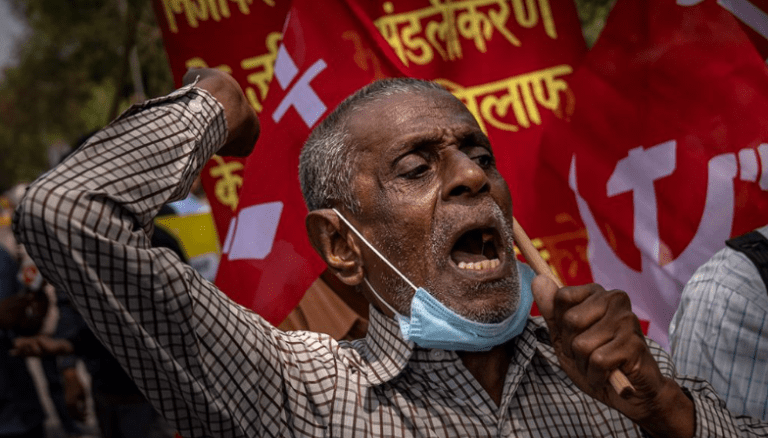
Many unions argue that suppressing dissent neither protects industry nor advances national interests. Historical precedents across the world—from Scandinavian manufacturing to post-war Japan—demonstrate that stable, rights-oriented labour frameworks generate higher quality manufacturing, better retention, and stronger global competitiveness. Nations prioritising such models have consistently outperformed those that resorted to labour suppression. India, by contrast, risks undermining its demographic dividend by failing to protect the wellbeing of its labouring population. If industrial growth is achieved by widening inequality, the social cost will outweigh economic gains.Leaders in States are unable to understand that good industrial environment  cannot be created by suppressing labour' - The Hindu

Workers’ voices remain indispensable for identifying workplace failures. When their rights are curtailed, crucial information about safety hazards, unethical practices, wage theft, or environmental risks is lost. This silence magnifies risks for both workers and industries. A well-protected workforce, empowered to speak up, acts as a stabilising force that safeguards productivity, societal balance, and institutional legitimacy. Policies that limit worker participation create fragility within the industrial environment, threatening continuity and sustainable growth.

The government’s efforts to streamline labour laws into four labour codes aimed partly to provide clarity. Yet, many labour organisations claim these codes dilute long-standing protections, impose stricter thresholds for forming unions, and increase employer power in dispute resolution. Critics warn that these changes may worsen living conditions for millions. Without clear implementation plans, welfare funds, or monitoring bodies, states may interpret reforms solely as flexible labour regimes favouring industries. Such actions risk creating a model where industrial expansion becomes increasingly detached from ethical social progress.

Voices from the Ground: Workers and Economists Challenge Narrow Policies

On the ground, industrial workers share stories of unpaid wages, layoffs without severance, and unsafe factories. Many hesitate to report grievances for fear of losing their jobs. In several states, workers migrating from rural areas lack legal documentation, making them vulnerable to exploitation. These workers helped keep factories running even during crises—yet policies continue to treat their rights as dispensable. The absence of labour courts and slow grievance mechanisms further hinder justice. Such conditions contribute to rising distrust between workers and state systems meant to protect them.

Economists note that countries investing in formalisation, social protection, and collective representation benefit from increased output and global competitiveness. Labour suppression, however, breeds high turnover, low skill development, workplace accidents, and reputational damage. States ignoring these lessons risk cultivating fragile industrial hubs dependent on short-term gains rather than resilient, diversified economies. Research indicates that workers with secure contracts and welfare access are more productive. Therefore, fostering dignity and safety is not a burden—it is a proven economic catalyst.

Labour leaders argue that a meaningful industrial environment requires mutual respect between employers, workers, and policymakers. The dignity of labour is central to a thriving economy, and workers must be recognised as essential contributors, not expendable tools. Countries with strong collective bargaining frameworks have demonstrated significant gains in productivity and innovation. These systems encourage long-term collaboration and stability, allowing industries to evolve strategically rather than chaotically. India’s industrial policies must therefore adopt an inclusive mindset that acknowledges the indispensable role of labour.Leaders in States are unable to understand that good industrial environment  cannot be created by suppressing labour' - The Hindu

State leaders often celebrate new manufacturing plants as symbols of progress, viewing them as magnets for prosperity and employment. Yet, without robust labour protections, such projects may perpetuate cycles of inequality. Skilled and unskilled labour in many regions suffer under informal contracts with inadequate compensation. Without proactive measures to ensure welfare, industrialisation may widen economic divides rather than bridge them. Workers need access to job security, safety nets, healthcare, and training. Policymakers must therefore move beyond symbolic development and focus on strengthening structural safeguards.

Social justice must anchor industrial policies. Sustainable growth relies on equitable systems that respect human rights. Nations that disregard labour rights often face long-term instability, economic contraction, and social conflict. In India, multiple industries still struggle with hazardous working conditions. Policies must prioritise workers’ health and safety. Investments in technology and mechanisation should be paired with skill development programmes that uplift workers. India’s demographic advantage will fade if it fails to protect those at the heart of its production industries.

Unions provide a vital defence against exploitation, offering workers platforms to express grievances and negotiate fair conditions. Curtailing union rights eliminates important checks on power, enabling exploitative practices to flourish unchecked. Collective representation encourages transparent negotiation, reducing conflict. When workers have a voice, industries benefit from constructive dialogue that resolves issues efficiently. Suppressing unions often leads to frustration, strikes, and industrial unrest. Therefore, unions should be strengthened rather than weakened. Their participation in policymaking creates balanced frameworks that ensure fairness and long-term stability.

Public health crises further spotlight labour vulnerability. During such times, governments must prioritise safety and healthcare. However, many workers struggle without proper protections. The pandemic highlighted the precariousness faced by millions dependent on daily earnings. Governments and companies must ensure workers can access essential healthcare without financial strain. Protective equipment must be provided in hazardous environments. Long-term health insurance should form a basic entitlement. Societies flourish when all members, especially those who toil hardest, are cared for. Protecting workers ensures national resilience and prosperity.

Family structures in India have traditionally supported working-class members. Yet economic volatility and urban migration strain these systems. Workers often live far from families, placing financial pressures on households. Employers and legislators must recognise these challenges. Policies promoting financial security, housing, and healthcare strengthen families and enhance productivity. The wellbeing of families affects workforce stability. When workers feel secure, they function more efficiently. Social support systems alleviate stress and improve mental health, positively influencing industrial output. Strengthening family support contributes to societal harmony and industrial growth.

Women comprise a significant portion of India’s labour force, especially in textiles, healthcare, and services. They face unique challenges, including wage disparity, harassment, and lack of maternity support. Achieving gender equality requires targeted reforms. Safe working environments empower women, enhancing participation and economic independence. Childcare support and flexible workplaces are essential. Societies thrive when all members have equal opportunity. Protecting women’s rights uplifts future generations. Their contributions fuel national progress. Industrial policies must therefore prioritise women’s security, equity, and professional growth to foster balanced development.Bureau of Indian Standards must focus on sector-specific standards:  Minister - The Hindu

Migrant workers form the backbone of India’s workforce, yet live under precarious conditions. Their struggles reflect systemic shortcomings in policy and social welfare. Migrants often lack social protection due to documentation barriers. They endure unsafe housing and poor sanitation. Policymakers must address these challenges through inclusive identification systems and mobile benefits. Healthcare access, housing schemes, and fair wages are crucial. Societies must acknowledge migrant contributions and support their rights. Protecting migrants strengthens labour markets and enhances industrial productivity. Inclusive policies build a more resilient and equitable future.

Technology modernises industries, transforming traditional roles. Automation may replace some jobs, yet creates opportunities. Workers must adapt to evolving demands. Governments and companies should invest in training programmes. Skill development enables workers to flourish in new roles. Technological progress must not marginalise labour. Inclusive growth requires proactive policies. Human expertise cannot be replaced entirely; collaboration between humans and machines drives innovation. Protecting labour during this transition fosters sustainable growth. Empowering workers strengthens national competitiveness. India must prioritise skill-building initiatives to maintain a globally relevant workforce.

Follow: Karnataka Government

Also read: Home | Channel 6 Network – Latest News, Breaking Updates: Politics, Business, Tech & More