Sunday, May 17, 2026
Home Blog Page 375

Explosive BJP Churchgate Land Controversy Erupts in Mumbai: Inside the Political Storm

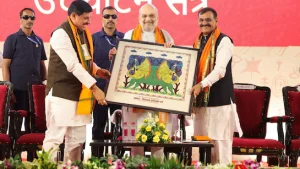
A major political controversy has engulfed Maharashtra following the foundation stone laying ceremony of the Bharatiya Janata Party’s new state headquarters near Churchgate railway station in Mumbai. The BJP Churchgate land controversy has triggered intense debate over alleged procedural irregularities, with opposition leaders questioning the manner and speed of land acquisition. Union Home Minister Amit Shah performed the groundbreaking ceremony on October 27, 2025, but the event became overshadowed by serious allegations from Shiv Sena (UBT) and Nationalist Congress Party (Sharad Pawar faction) leaders.
BJP Churchgate land controversy
Also Read: BJP Churchgate land controversy

Other: Jaishankar Rubio meeting

The BJP Churchgate land controversy centres on a 1,377.79 square meter plot in one of Mumbai’s most expensive real estate locations. Opposition leaders claim that administrative rules were bypassed and files were fast-tracked to facilitate the land transfer, while the ruling party maintains that all legal procedures were meticulously followed. This clash has brought questions of transparency, due process, and alleged abuse of power to the forefront of Maharashtra’s political discourse.

Historical Background of the Disputed Land

The land at the centre of the BJP Churchgate land controversy has a complex ownership history dating back over a century. Originally leased to the Vasani family and the Maharashtra State Cooperative Finance Corporation Limited in 1902, the property was divided, with the Vasani family holding 46 per cent and MSCFC holding 5 per cent under a 99-year lease that expired in February 2001.

The property, known as Vasani Chambers, was jointly owned by the Brihanmumbai Municipal Corporation and the Vasani family. Over time, financial complications arose when loans secured against the property remained unpaid, leading banks to take possession of portions of the asset. The matter remained dormant for years until 2025, when Eknath Realtors suddenly entered the picture, triggering the sequence of events that would become the BJP Churchgate land controversy.

According to opposition allegations, the land was originally designated for residential purposes under municipal regulations. This classification became a key point of contention, with critics arguing that converting residential land to commercial use for a political party office required more scrutiny than was apparently given.

Opposition’s Allegations: The Sanjay Raut Letter

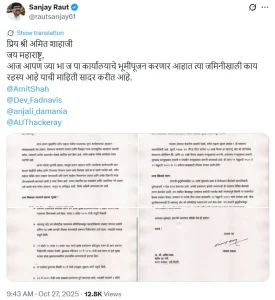
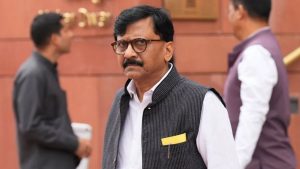
Shiv Sena (UBT) Rajya Sabha MP Sanjay Raut launched a frontal attack on the land acquisition process hours before the foundation stone ceremony. In a detailed letter addressed to Union Home Minister Amit Shah, Raut outlined what he termed a “major scam” in the BJP Churchgate land controversy, alleging that administrative procedures were bypassed and files were moved at unprecedented speed.

Raut’s letter claimed that Eknath Realtors applied to the property department on April 1, 2025, to purchase the percentage land portion held by banks. This application received approval within just three days, on April 4, 2025. Subsequently, an application was made to transfer the entire plot—both the 46 per cent and the original mortgaged 54 per cent—to the BJP’s state office. According to Raut’s timeline in the BJP Churchgate land controversy, the correction application was approved on May 22, 2025, and the final property transfer was completed by May 31, 2025.

The Shiv Sena leader alleged that Eknath Realtors paid a transfer premium of Rs 21.25 crore, and the Mumbai Suburban Reform Committee, chaired by Chief Minister Devendra Fadnavis, approved the transaction on May 29, 2025. Raut further claimed the BJP completed the property transfer in just 11 days, paying approximately Rs 3 crore in stamp duty. He accused administrative officials of colluding with Eknath Realtors under political pressure, with some transactions allegedly occurring at midnight.

“Files were circulated very quickly to take over the space at Marine Lines, and outright coercion was used in many places,” Raut wrote, comparing the speed of file movement to Rafale fighter jets. Emphasised that while important files for farmer aid and other development projects languished for months, the BJP Churchgate land controversy showed how quickly bureaucracy could move when politically motivated.

BJP Churchgate land controversy

Rohit Pawar’s Constitutional Questions
NCP (Sharad Pawar faction) MLA Rohit Pawar added another dimension to the BJP Churchgate land controversy by raising technical and legal questions about the land classification. Pawar pointed out that the land in question was lease land designated as “Schedule W” and questioned whether such land could be sold without lease renovation or renewal.

On the day of the foundation ceremony, Pawar posted on the social media platform X, stating: “Information is emerging that the BJP office land where the foundation is being laid today is Lease Land, is Schedule W land, and lease renovation has not been done. Can Lease Land, Schedule W land be sold if the lease renovation has not been done? Will the BMC Commissioner clarify this?”

Pawar warned that if a precedent was set allowing Schedule W lease land to be sold without proper renovation, other important public spaces like Mahalaxmi Racecourse could potentially be transferred to private individuals. He also alleged that media houses were being contacted to suppress coverage of the BJP Churchgate land controversy, similar to alleged pressure tactics used in the Pune Jain Boarding case.

The constitutional questions raised by Pawar highlighted concerns about whether proper due diligence was conducted regarding land classification, zoning regulations, and conversion procedures that should govern such high-value transactions in Mumbai.

Government’s Defence: Fadnavis Strikes Back

Maharashtra Chief Minister Devendra Fadnavis mounted a vigorous defence of the land acquisition, categorically rejecting all allegations in the BJP Churchgate land controversy. Speaking to reporters on October 28, 2025, Fadnavis asserted that the BJP had purchased the property through legitimate private channels using party funds, not government resources.

“We decided not to seek government land but to acquire private land. Manoj Kotak found this land. We bought it with our party funds, following all legal procedures and public notifications,” Fadnavis stated emphatically. He added that the party was using only the required Floor Space Index (FSI) and urged party workers to contribute to the building fund.

In a pointed response to critics, Fadnavis warned: “We do not live in a glass house. Those who throw stones should look at their own record first.” The Chief Minister suggested that opposition leaders who were “accustomed to grabbing land” had no standing to question the BJP’s transparent transaction. He characterised the allegations in the BJP Churchgate land controversy as coming from “unscrupulous people” who were “ready to ask questions every day.”

Fadnavis confirmed that construction of the new party headquarters would begin soon and was expected to be completed within two to two-and-a-half years. He maintained that all BMC rules were strictly followed during the land purchase process.

BJP Mumbai spokesperson Navnath Ban also responded sharply to Sanjay Raut’s allegations, suggesting that if Raut had courage, he should declare the accounts of properties associated with the Thackeray family. “We do not build five-star bungalows and houses for ourselves by ripping off other people’s land, but build offices for BJP workers,” Ban stated.

The Timeline: 61 Days That Sparked Controversy

The rapid timeline of approvals and transfers lies at the heart of the BJP Churchgate land controversy. Opposition leaders have repeatedly emphasised the speed with which bureaucratic processes were completed, contrasting it with delayed files on public welfare projects.

Here is the detailed timeline based on opposition allegations:

  • April 1, 2025: Eknath Realtors applied to the property department to purchase 46 per cent of the land held by banks
  • April 4, 2025: Application approved within three days
  • May 22, 2025: Application for “correction” approved
  • May 29, 2025: Mumbai Suburban Reform Committee, chaired by CM Fadnavis, approved the transaction
  • May 31, 2025: Final property transfer completed
  • October 27, 2025: Foundation stone laid by Union Home Minister Amit Shah

This 61-day period from initial application to possession became the focal point of criticism in the BJP Churchgate land controversy, with opposition leaders arguing that such speed was unprecedented and suggesting special treatment.

raut 0Financial Aspects and Property Details

The financial dimensions of the BJP Churchgate land controversy involve substantial sums in one of India’s most expensive real estate markets. According to various allegations and statements, the transaction involved multiple financial components:

Eknath Realtors reportedly paid a transfer premium of over Rs 21.25 crore to complete the land acquisition. The BJP subsequently paid approximately Rs 8.11 crore to complete the land transfer, along with roughly Rs 3 crore in stamp duty charges. The total financial outlay for securing this prime South Mumbai location thus exceeded Rs 30 crore.

The planned BJP headquarters will span a 55,000 square foot area across multiple floors. According to party sources, the modern facility will include:

  • A comprehensive library for reference and research
  • Multiple meeting rooms for organisational work
  • A conference room for senior leadership deliberations
  • A 400-seat auditorium for large gatherings
  • Dedicated offices for the state BJP president and the Chief Minister
  • Multi-level basement parking facilities
  • Three to four accommodation rooms for visiting party workers

Union Home Minister Amit Shah mentioned during the foundation ceremony that the new office would feature advanced security systems, including biometric technology and state-of-the-art communication infrastructure, positioning it as a central hub for the BJP’s Maharashtra operations.

Legal and Administrative Questions

Several legal and administrative questions remain at the centre of the BJP Churchgate land controversy, irrespective of political positions. These questions concern procedural propriety rather than legality per se:

Land Classification Issue: The primary question revolves around whether land originally reserved for residential purposes under municipal regulations can be converted for commercial-political use without additional scrutiny. The opposition argues that such conversion requires explicit approvals and public consultations that may not have occurred.

Lease Land Status: Rohit Pawar’s pointed question about Schedule W lease land raises important administrative issues. Can leased municipal land be sold to third parties without lease renewal or renovation? What are the BMC’s responsibilities in ensuring compliance with lease terms before approving transfers?

Speed of Approvals: While speed itself does not indicate illegality, the contrast between the rapid approvals in this case and delayed files on public welfare projects raises questions about administrative priorities and potential political influence on bureaucratic decision-making.

Public Notification: The government claims all public notifications were properly issued. Opposition leaders have not specifically disputed this but question whether adequate time was provided for public feedback and whether concerns raised were addressed.

Transfer Premium Calculations: The basis for determining the Rs 21.25 crore transfer premium remains unclear. Were market rates properly assessed? Was there competitive bidding or transparent valuation?

These questions in the BJP Churchgate land controversy require technical administrative responses rather than political rhetoric.

Political Implications and Broader Context

The BJP Churchgate land controversy emerges against the backdrop of Maharashtra’s complex political landscape following the 2024 assembly elections. The BJP-led Mahayuti alliance secured a decisive victory, with the BJP winning 132 seats, Shiv Sena (Shinde faction) 57 seats, and NCP (Ajit Pawar faction) 41 seats, giving them a combined strength that dominates the state legislature.

The controversy provides opposition parties—particularly the Shiv Sena (UBT) and NCP (SP)—with an opportunity to question the ruling coalition’s governance standards and administrative transparency. For a government that projects itself as corruption-free and efficient, allegations of fast-tracked approvals and special treatment create political vulnerabilities.

Union Home Minister Amit Shah’s presence at the foundation ceremony was significant. In his address, Shah emphasised that “the BJP doesn’t need crutches and runs on its own strength in Maharashtra,” referring to the party’s electoral dominance. He urged party workers to ensure opposition parties are “wiped out” in the upcoming local body elections.

The timing of the BJP Churchgate land controversy, ahead of crucial municipal corporation elections in Maharashtra, adds political weight to the issue. Opposition parties are likely to use this narrative to question the ruling alliance’s commitment to transparency and proper governance.

The BJP workers who stormed the Congress office al 1734635884430Media Coverage and Public Discourse

The BJP Churchgate land controversy has generated extensive media coverage across regional and national platforms, with differing interpretations based on political alignments. Marathi language media has provided detailed coverage of the allegations, timelines, and responses, while national media has focused on the broader political implications.

Rohit Pawar’s allegation that media houses were contacted to suppress coverage adds another layer to the controversy, though specific evidence for such pressure has not been publicly presented. This claim resonates with broader concerns about media independence and political pressure on coverage of sensitive issues.

Social media has become a primary battleground for the debate, with Sanjay Raut’s detailed letter to Amit Shah shared widely on platform X (formerly Twitter), generating thousands of responses and shares. BJP supporters have countered with questions about opposition leaders’ own property acquisitions, creating a broader discourse about political finances and real estate holdings.

The public discourse around the BJP Churchgate land controversy reflects deeper questions about governance standards, transparency expectations, and the appropriate use of administrative powers in land transactions involving political parties.

Conclusion: Transparency Remains the Key Question

The BJP Churchgate land controversy ultimately centres on questions of transparency, due process, and public accountability rather than straightforward illegality. The government maintains that all legal procedures were followed, public notifications were issued, and party funds—not government resources—were used for the purchase. Opposition leaders argue that the speed of approvals, possible rule bypassing, and conversion of residential land suggest special treatment and abuse of administrative powers.

Several facts remain undisputed: the land transaction was completed rapidly by bureaucratic standards, the location is in premium South Mumbai real estate, the transaction involved substantial sums, and the approvals came from committees headed by the Chief Minister himself. Whether these facts constitute impropriety or simply efficient administration remains the core dispute in the BJP Churchgate land controversy.

For objective observers, the controversy highlights the need for clear, transparent protocols governing land acquisitions by political parties, especially when such transactions involve municipal or formerly leased lands, require classification changes, or occur in high-value locations. Robust administrative safeguards, mandatory public consultations, and independent oversight could prevent such controversies regardless of which political party is involved.

As Maharashtra moves toward local body elections, the BJP Churchgate land controversy will likely remain a talking point. The ultimate resolution may come through legal scrutiny, administrative review, or political verdict at the ballot box. What remains certain is that public expectations for transparency in governance continue to rise, and political parties across the spectrum must demonstrate higher standards of accountability in their institutional dealings.

The new BJP headquarters, when completed in two to two-and-a-half years, will stand as a physical manifestation of the party’s dominance in Maharashtra politics. Whether it also serves as a reminder of transparency concerns or as an example of efficient land acquisition will depend on how comprehensively the questions raised in this controversy are addressed.
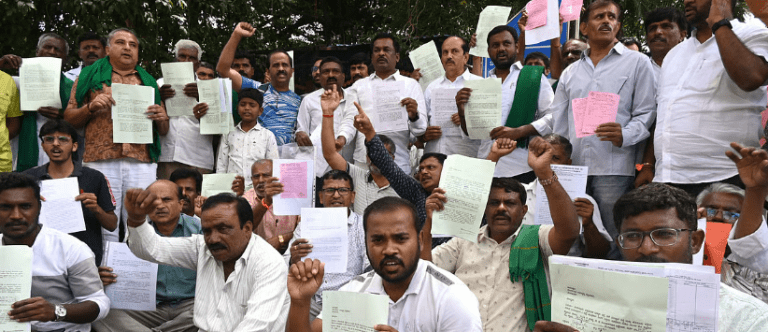
1 Fierce Protest Echoes Farmers’ Anguish over Bengaluru’s Ring Road Project

In a strong show of dissent, the Bengaluru Farmers’ Association has demanded the complete scrapping of the Peripheral Ring Road (PRR) Project, alleging that the scheme has lapsed and that landowners have been subjected to unfair compensation and administrative neglect. The association’s representatives staged demonstrations and submitted petitions to government authorities, claiming that the project, conceptualised nearly two decades ago, no longer holds legal or economic validity. Their protest has reignited long-standing debates about urban expansion, land acquisition, and the widening gap between development priorities and agrarian justice in Karnataka’s capital.


Background: The Long-Delayed Project

The Peripheral Ring Road Project, first proposed in 2005, was envisioned as a 74-kilometre orbital highway intended to decongest Bengaluru’s growing traffic and connect major national highways surrounding the city. The project was to be executed by the Bangalore Development Authority (BDA), covering approximately 1,810 acres of land across several villages in northern and eastern Bengaluru.

However, the project faced repeated delays due to funding shortages, environmental clearances, and disputes over compensation. Over the years, changes in governments, fluctuating land values, and evolving urban policies have further complicated the process. Farmers now argue that the original land acquisition notification has expired, making the current proceedings legally untenable. They contend that the state’s insistence on reviving the project without revising its legal basis or compensation terms is an injustice to thousands of landowners who have been left in limbo.Farmers' association seeks scrapping of Peripheral Ring Road Project; cites  lapse of scheme and unfair compensation - The Hindu


Farmers’ Allegations: Expired Notifications and Unfair Compensation

At the heart of the farmers’ agitation lies a claim that the preliminary and final land acquisition notifications under the BDA Act of 1976 have long lapsed due to inaction. According to representatives, many land parcels identified for the project were neither acquired nor released, leaving farmers unable to cultivate, sell, or develop their own lands for over a decade.

The Karnataka Rajya Raitha Sangha and affiliated farmer groups assert that compensation offered by the BDA is far below current market rates. While the market value of land in these areas has skyrocketed due to urbanisation, the compensation remains based on outdated valuations. Several farmers have accused officials of discriminatory practices, claiming that affluent landowners with political connections received preferential settlements while small and marginal farmers were sidelined.

They demand that the state government either completely scrap the project or initiate fresh acquisition proceedings under the Right to Fair Compensation and Transparency in Land Acquisition, Rehabilitation and Resettlement Act, 2013, which mandates higher payouts and greater transparency.


BDA’s Stand: Development Over Delay

Officials from the Bangalore Development Authority, however, maintain that the Peripheral Ring Road Project remains essential to the city’s infrastructure growth. A BDA spokesperson stated that the project would “greatly reduce congestion in the city and serve as a vital link for future expansion.” According to the authority, procedural clearances and updated land acquisition efforts are underway to ensure that affected landowners are duly compensated.

The BDA also emphasised that the Japan International Cooperation Agency (JICA) had expressed interest in financing portions of the project through soft loans, though these discussions have faced setbacks due to local resistance. The agency reiterated that it was following legal frameworks and that compensation payments would be disbursed as per government guidelines once disputes are resolved. Officials argue that the larger public interest—particularly decongesting Bengaluru’s traffic—should not be derailed by prolonged litigation and protests.


Political Reactions and Administrative Challenges

The controversy has taken a political turn, with opposition parties accusing the government of failing to protect farmers’ rights while promoting projects that primarily benefit real estate developers and contractors. Leaders from the BJP and JD(S) have criticised the Congress-led state government for what they call “selective development” that ignores rural stakeholders.

Chief Minister Siddaramaiah, meanwhile, has stated that his administration is reviewing the legal and environmental aspects of the project before proceeding. He assured that “no injustice will be done to any farmer” and that all compensation-related issues would be handled transparently. Deputy Chief Minister D.K. Shivakumar, who also holds the Bengaluru Development portfolio, said the project’s continuation would depend on its financial viability and legal clarity. He added that the government was open to discussions with farmer associations to reach an amicable solution.Farmers' association seeks scrapping of Peripheral Ring Road Project; cites  lapse of scheme and unfair compensation - The Hindu


Legal and Environmental Concerns Surrounding the Project

Legal experts supporting the farmers argue that the PRR project has exceeded its statutory deadlines, rendering the acquisition process invalid. They highlight that under existing laws, land acquisition must be completed within a specified timeframe, failing which notifications automatically lapse. In several other states, courts have ruled similarly in favour of landowners, setting a precedent that farmers in Bengaluru hope will apply to their case.

Environmentalists have also raised serious objections. The proposed PRR alignment passes through eco-sensitive areas, including parts of the Rachenahalli and Jakkur lakes catchment zones. Construction in these zones could disturb the fragile hydrological balance and lead to large-scale displacement of flora and fauna. Experts from the Indian Institute of Science (IISc) have warned that the project could worsen the city’s flood vulnerability by disrupting natural stormwater channels. The environmental impact assessment for the PRR is still under review, adding another layer of uncertainty to its future.


Socio-Economic Impact on Affected Communities

The affected villages, once primarily agricultural, have already witnessed large-scale transformation due to rapid urbanisation. Farmers say the project has trapped them in an uncertain zone—unable to farm, yet not compensated enough to rebuild their lives elsewhere. Generations that once depended on fertile lands for sustenance are now facing unemployment, debt, and loss of community structures.

Social activists argue that such mega-infrastructure projects often result in asymmetrical development, where urban elites reap the benefits while rural landowners bear the costs. Many of these displaced families struggle to find adequate livelihoods in urban environments, leading to social alienation and economic distress. The farmers’ association insists that true progress must include equitable development, not merely expansion of roads and cities.


Government’s Efforts to Mediate

In response to growing discontent, the Karnataka government has initiated consultative meetings between BDA officials, local representatives, and farmer associations. Preliminary discussions have revolved around revising compensation packages, exploring rehabilitation schemes, and potentially realigning the project to reduce displacement.

Officials have hinted at the possibility of introducing land-pooling mechanisms, wherein farmers could retain ownership of a portion of developed land in return for contributing part of it for public infrastructure. However, farmer unions remain sceptical, citing past experiences where such promises failed to materialise. They demand written guarantees and transparent timelines before agreeing to any negotiation framework.


Economic Arguments for and Against the PRR

Supporters of the Peripheral Ring Road argue that the project will significantly boost Bengaluru’s economic prospects by reducing travel time, promoting industrial connectivity, and attracting investments in logistics and technology corridors. Urban planners believe that without a ring road system, the city’s existing infrastructure will soon reach a breaking point.

Critics, however, counter that the project’s financial model is outdated and unsustainable. With escalating land prices and construction costs, they question whether the PRR will deliver a meaningful cost-benefit ratio. They also note that Bengaluru’s traffic challenges are largely due to poor public transport integration and unregulated real estate expansion—issues that a single highway cannot solve. Instead of new mega-projects, experts advocate for investment in mass transit systems, efficient zoning laws, and decentralisation of urban development.Farmers' association seeks scrapping of Peripheral Ring Road Project; cites  lapse of scheme and unfair compensation - The Hindu


Farmers’ Call for Judicial Intervention

The farmers’ association has announced plans to approach the Karnataka High Court, seeking a stay on all project-related activities until their grievances are addressed. Legal petitions are being prepared to challenge the BDA’s acquisition powers and the validity of expired notifications. The petitioners are also likely to demand an independent inquiry into alleged irregularities in compensation assessments and project planning.

Civil society groups have joined hands with the farmers, arguing that the issue goes beyond compensation—it represents a systemic failure in balancing urban ambition with rural justice. For many, the PRR has become a symbol of how development projects can alienate those who contribute most to the land but benefit least from its transformation.


Conclusion

The ongoing standoff over the Peripheral Ring Road Project captures a deeper dilemma in Bengaluru’s evolution—between rapid urban growth and the ethical responsibility to protect the livelihoods of those displaced by it. As the farmers’ association continues to push for scrapping the project, the government stands at a crossroads, tasked with reconciling infrastructure imperatives with social justice.

The future of the PRR now hinges not just on policy decisions, but on the trust between the state and its citizens. Whether the government listens to the anguished voices of farmers or pursues the path of expansion will determine not only the fate of a highway but also the moral compass of Karnataka’s development journey.

The conflict over the Peripheral Ring Road has thus become more than just a battle over land—it represents a struggle for dignity and recognition among communities caught in the shadow of Bengaluru’s relentless urbanisation. For many farmers, this fight is not merely about compensation but about preserving their identity, culture, and right to participate in decisions that reshape their lives. As bulldozers wait and petitions pile up, the PRR controversy stands as a reminder that true development must be rooted in fairness, empathy, and dialogue—values that determine whether progress uplifts or uproots those who sustain it.

Follow: Karnataka Government

Also read: Home | Channel 6 Network – Latest News, Breaking Updates: Politics, Business, Tech & More

1 Crucial Call That Tests Karnataka’s Political Loyalty: Powerful Roadcross

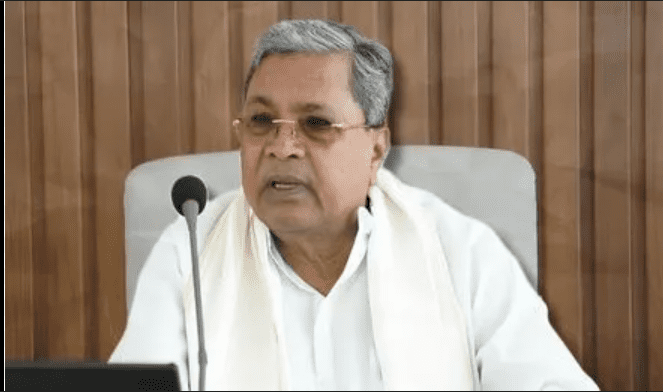
Karnataka Chief Minister Siddaramaiah has clarified that any decision regarding a change in leadership within the state government will be taken solely by the Congress high command, not by state-level leaders. His statement came amid growing speculation over internal rifts and leadership debates within the Karnataka Congress. Siddaramaiah’s remark, made during an interaction with the media, was both assertive and strategic—aimed at reinforcing party discipline while subtly addressing political murmurs surrounding his tenure. The comment has reignited discussions about unity, succession, and the balancing act of power in Karnataka’s ruling party.


Background: Political Undercurrents and Leadership Speculations

The Karnataka Congress, which came to power with a strong mandate in 2023, has recently found itself at the center of intense political discussions. Over the past few weeks, rumours have circulated about potential leadership changes following reports of differences between Chief Minister Siddaramaiah and Deputy Chief Minister D.K. Shivakumar. Although both leaders have repeatedly dismissed talk of rivalry, the perception of an ongoing power tussle continues to linger within political circles.

The Congress leadership at the national level has so far maintained silence, choosing not to intervene prematurely. However, local dynamics have intensified with certain party legislators reportedly expressing differing preferences. Siddaramaiah’s reiteration that the high command will make any final decision appears to be a calculated move to reaffirm the chain of command and preserve public unity within the state unit.


Siddaramaiah’s Clarification and Message to Party Cadre

Speaking to reporters, Siddaramaiah made it clear that leadership decisions in the Congress party are guided by collective principles rather than personal ambitions. “The Congress is a national party with a structured system. The high command will decide on leadership matters, and we will all abide by that decision,” he said. His tone reflected confidence in the central leadership’s wisdom while projecting himself as a disciplined party worker.

Political observers interpret the statement as Siddaramaiah’s attempt to silence speculation without appearing defensive. By placing the responsibility squarely on the party’s central leadership, he deflected internal pressures while maintaining the moral upper hand. The move also reinforces his image as a seasoned politician who values stability over confrontation—an image that has defined much of his long political career.


High Command’s Role in Karnataka’s Leadership Dynamics

The Congress high command, comprising senior leaders in New Delhi, has traditionally maintained significant influence over key state-level decisions. In Karnataka, this influence is particularly crucial given the power-sharing expectations and electoral calculations ahead of the 2028 Assembly elections.

Sources within the party suggest that the high command’s current priority is to ensure that the government completes its full term smoothly, without internal disruptions. The leadership’s focus remains on governance, welfare schemes, and strengthening the organisation ahead of the 2026 Lok Sabha elections. A leadership shake-up at this stage, they argue, could send mixed signals to the electorate and embolden the opposition BJP and JD(S).

Siddaramaiah’s statement, therefore, appears aligned with the party’s national strategy—projecting unity and command hierarchy at a time when public perception is key to maintaining stability.


Balancing Equations Between Siddaramaiah and D.K. Shivakumar

The political relationship between Siddaramaiah and Deputy CM D.K. Shivakumar has long been one of mutual dependence laced with strategic competition. Both leaders bring distinct strengths to the table: Siddaramaiah’s mass appeal and administrative experience complement Shivakumar’s organisational clout and strong network within the party.

However, the leadership question has often tested the equilibrium between them. Party insiders admit that managing the ambitions of two powerful figures requires continuous coordination by the central leadership. So far, both leaders have publicly maintained that they are working together for the state’s progress. Yet, periodic tensions surface through political signals, statements, and the posturing of their respective supporters.

Siddaramaiah’s emphasis on the high command’s authority could thus be seen as a subtle reminder to all factions that the party’s collective discipline outweighs individual aspirations.


Governance Record and Public Sentiment

Despite internal speculation, Siddaramaiah continues to enjoy a substantial base of support across various sections of society. His government’s welfare schemes—such as ‘Anna Bhagya,’ ‘Gruha Lakshmi,’ and ‘Shakti’—have earned widespread appreciation, particularly among women and lower-income groups. These initiatives have become the cornerstone of his political identity, helping the Congress consolidate its voter base across rural Karnataka.Siddaramaiah says he'll be CM for 5 years if Congress high command wills it  | Bangalore News - The Indian Express

However, critics within the party argue that administrative challenges and regional imbalances in development could still pose hurdles. Opposition parties, especially the BJP, have attempted to capitalise on these concerns, accusing the Congress government of favouritism and poor fiscal management. In response, Siddaramaiah’s supporters highlight his proven governance track record and ability to manage coalition pressures in earlier tenures.

Public sentiment toward Siddaramaiah remains relatively positive, with surveys suggesting that he continues to be among the most popular Congress leaders in the southern region.


Opposition Reactions and Political Calculations

The opposition BJP and JD(S) have closely monitored the evolving political narrative, viewing the leadership debate as an opportunity to weaken the Congress’s internal cohesion. BJP leaders have questioned whether the Congress can sustain unity amid visible differences between its top leaders. “When two captains steer the same ship, confusion is inevitable,” remarked a BJP spokesperson, referring to the Siddaramaiah–Shivakumar dynamic.

JD(S) leaders have also weighed in, suggesting that instability within the Congress could benefit their party in upcoming local body elections. However, the Congress has thus far maintained a united front in public appearances, focusing on its governance achievements rather than internal speculation.

Analysts believe that as long as the Congress delivers on its promises and maintains coordination between its key leaders, opposition efforts to exploit internal rifts may remain ineffective.


Historical Precedents in Leadership Changes

The Congress party has a long history of leadership transitions being overseen by its central leadership. From the days of Indira Gandhi to Sonia Gandhi and now under Mallikarjun Kharge, the party has often exercised top-down control to ensure organisational stability. In Karnataka itself, several leadership changes—such as the transitions between S.M. Krishna, Dharam Singh, and Siddaramaiah in previous decades—were executed under similar guidance.

Such precedents indicate that any potential decision regarding the chief minister’s post will likely follow the same consultative model, balancing political realities with electoral priorities. The high command’s intervention, if it comes, is expected to be driven more by strategy than by internal dissent.


Party Unity and Organisational Discipline

Within the Congress, senior leaders have echoed Siddaramaiah’s stance, emphasising unity as the party’s greatest strength. Minister Ramalinga Reddy stated that “discussions about leadership only benefit the opposition,” while Revenue Minister Krishna Byregowda reaffirmed that the party remains “fully united under collective leadership.”

The Congress’s ability to project internal harmony has often played a decisive role in its electoral performance in Karnataka. Political strategists suggest that by keeping the narrative focused on governance and social welfare, the party can sidestep internal distractions. Siddaramaiah’s message to the cadre—to trust the high command and continue working for the people—reflects this pragmatic approach.Leadership change in Karnataka: Congress high command will decide, says CM  Siddaramaiah


Media Speculation and Public Perception

Media discussions about potential leadership changes have added layers of complexity to the issue. Several regional outlets have reported alleged lobbying efforts by various factions within the Congress, though no concrete evidence has emerged. Siddaramaiah’s clarification is seen as a direct response to such speculative reports, aiming to restore calm within the political landscape.

Political commentators note that Karnataka’s electorate is highly perceptive and that prolonged speculation could create confusion among voters. By reiterating that the high command will decide, Siddaramaiah not only reaffirmed organisational structure but also shielded his government from unnecessary distractions ahead of crucial policy announcements.


The Road Ahead for Congress in Karnataka

Looking ahead, the Congress faces multiple challenges—managing governance efficiently, maintaining unity among diverse factions, and preparing for national elections. Siddaramaiah’s emphasis on central decision-making indicates that the party leadership is focused on continuity rather than disruption.

The state government is expected to intensify the rollout of welfare programmes and infrastructure projects over the next year. Political observers believe that a strong performance at the administrative level could neutralise leadership debates and strengthen the Congress’s position in the national context. The ultimate test will come during the next electoral cycle, where both governance outcomes and internal cohesion will determine the party’s future trajectory.


Conclusion

Chief Minister Siddaramaiah’s assertion that the Congress high command alone will decide on leadership changes serves as both reassurance and warning—reassurance for those seeking stability, and a subtle warning against factional ambitions. His statement underscores the Congress’s centralised decision-making tradition while reaffirming his own commitment to party discipline and democratic norms.Congress high command will decide on changing Chief Minister, says  Siddaramaiah - The Hindu

As Karnataka continues its journey under the Congress’s governance, the immediate priority for the party remains clear: governance first, politics later. Whether the high command eventually makes a leadership decision or maintains the current arrangement, the coming months will be a defining phase in shaping Karnataka’s political balance and the Congress’s credibility as a unified force.

The debate in Karnataka also reflects a larger national pattern within the Congress, where questions of leadership, succession, and generational transition continue to shape the party’s internal dynamics. Political analysts believe that how the Congress high command handles the situation in Karnataka could set a precedent for similar state-level equations across India. By maintaining control while promoting unity, the party aims to project an image of discipline and maturity ahead of the 2026 Lok Sabha elections. For now, Siddaramaiah’s loyalty to central authority stands as both a test and testimony to Congress’s enduring structure and internal resilience.

Follow: Karnataka Government

Also read: Home | Channel 6 Network – Latest News, Breaking Updates: Politics, Business, Tech & More

India’s Aviation Future: 1 Bold Deal Ignites Hope

In a move that could reshape India’s civil aviation landscape, Hindustan Aeronautics Limited (HAL) has joined hands with Russia’s United Aircraft Corporation (UAC) to manufacture and produce the SJ-100 civil jet in India. The collaboration marks a new chapter in Indo-Russian aerospace cooperation, combining HAL’s manufacturing excellence with UAC’s engineering expertise. Announced this week, the partnership aims to strengthen India’s domestic aircraft production capacity, reduce dependency on imports, and position the nation as a key player in global aviation manufacturing.


Background: The SJ-100 and Its Global Context

The SJ-100, also known as the Superjet 100, is a regional jet originally developed by Sukhoi Civil Aircraft Company, now a part of UAC. Designed for short-to-medium-range routes, the jet can carry around 95 passengers and has been widely used by several international airlines. With a reputation for operational efficiency and modern design, it offers an appealing solution for growing regional air travel demands.

India’s decision to co-produce the SJ-100 aligns with the government’s ‘Make in India’ and ‘Atmanirbhar Bharat’ initiatives. The partnership aims not only to bolster the domestic aviation industry but also to provide airlines with affordable, home-produced aircraft suited to Indian conditions. This collaboration comes at a time when the country’s regional aviation sector is expanding rapidly under the UDAN scheme, which promotes connectivity to smaller towns and cities.India and Russia Team Up to Build SJ-100 Aircraft Locally | Dynamite News


Significance of the HAL–UAC Collaboration

The partnership signifies more than just a commercial agreement; it represents a strategic convergence between two long-standing defence and aerospace allies. HAL’s role will involve setting up manufacturing infrastructure, component assembly, and system integration within India. Meanwhile, UAC will share advanced technology, design expertise, and production know-how to ensure seamless adaptation of the SJ-100 to Indian standards.

Officials from both sides confirmed that the production model would involve a significant portion of indigenisation, including potential use of Indian-made avionics, interiors, and support systems. By localising production, the joint venture aims to cut costs and enhance the availability of spare parts and maintenance support—areas that have long challenged India’s aviation ecosystem.


Statement from Indian and Russian Representatives

During the announcement ceremony, HAL Chairman and Managing Director C.B. Ananthakrishnan described the collaboration as “a defining step toward India’s self-reliance in the civil aviation sector.” He emphasised that the project would not only create new opportunities for Indian engineers and technicians but also open pathways for exports to other developing nations.

Representatives from UAC echoed similar optimism. Yuri Slyusar, President of UAC, stated that the partnership reinforces the “decades-old trust and technological synergy” between India and Russia. He highlighted that adapting the SJ-100 for Indian operations would allow the aircraft to cater to the country’s unique climatic and operational conditions.


A Boost for India’s Civil Aviation Ecosystem

India’s civil aviation industry, though rapidly expanding, has long relied heavily on foreign manufacturers such as Boeing and Airbus for commercial aircraft procurement. This dependency has often led to high operational costs, delays in maintenance, and limited domestic technological growth. The HAL–UAC collaboration could serve as a game-changer by initiating a local manufacturing ecosystem that caters to both Indian and regional demand.

Industry experts predict that the SJ-100’s production in India will encourage more research and development in indigenous aviation technology. It could also stimulate growth in related industries—such as avionics, materials engineering, and aircraft maintenance—thereby generating thousands of skilled jobs. The project’s success would demonstrate India’s capability to produce world-class civil aircraft and set a precedent for future international collaborations.


Potential Economic Impact

Economists view the partnership as a strategic move to strengthen India’s industrial base. The project is expected to attract investment in aviation infrastructure, supply chains, and technology parks. The creation of production facilities could benefit states with existing aerospace clusters, such as Karnataka and Telangana, by providing new employment opportunities and encouraging innovation-driven growth.

Furthermore, the localisation of SJ-100 components could save millions of dollars in foreign exchange annually. It will also contribute to India’s export ambitions, as the aircraft could find markets in South Asia, Africa, and Latin America—regions with growing demand for affordable, short-haul jets. This collaboration thus positions India not only as a consumer but as a potential export hub in the global aviation value chain.


Technology Transfer and Engineering Collaboration

One of the most significant outcomes of this agreement is the transfer of technology (ToT) from Russia to India. UAC engineers will work closely with HAL teams to adapt the SJ-100 for Indian manufacturing conditions, ensuring compatibility with local materials, safety standards, and operational requirements.

The joint venture also opens opportunities for Indian research institutions and start-ups to collaborate in developing next-generation avionics, navigation systems, and propulsion solutions. HAL’s experience in aircraft design—combined with UAC’s expertise in civil jet engineering—creates a powerful framework for technological innovation. This collaboration could eventually lead to the development of indigenous variants of regional aircraft tailored for Indian and Asian markets.HAL and Russia's UAC join hands for production of civil jet SJ-100 - The  Hindu


Geopolitical and Strategic Dimensions

The deal carries strong geopolitical undertones, reaffirming India’s long-standing defence and industrial partnership with Russia. Historically, the two nations have collaborated extensively in military aviation through projects like the Su-30MKI and BrahMos missile system. Extending this cooperation to the civil aviation sector symbolises mutual confidence and diversification of strategic engagement.

Analysts suggest that the agreement also reflects India’s attempt to balance its international partnerships amid evolving global alignments. With Western sanctions restricting Russia’s access to certain technologies, collaboration with India offers Moscow a valuable production base and a gateway to new markets. For India, the deal underscores its growing assertiveness in pursuing strategic autonomy while leveraging partnerships to boost domestic capabilities.


Training, Workforce Development, and Employment Opportunities

The success of the HAL–UAC partnership will depend heavily on skilled manpower. To this end, HAL plans to establish specialised training programmes for engineers, technicians, and quality-control specialists. These initiatives will focus on advanced manufacturing techniques, composite materials, aerodynamics, and maintenance protocols.

Universities and technical institutes are also expected to introduce new aerospace curricula aligned with the SJ-100 project. This collaboration is anticipated to create over 6,000 direct and indirect jobs, spanning design, assembly, logistics, and maintenance. For India’s young engineering graduates, the venture presents a rare opportunity to gain hands-on experience in cutting-edge aviation technology.


Environmental and Operational Adaptations

As part of its localisation strategy, HAL will work on adapting the SJ-100’s engines and systems for India’s climatic and operational conditions. Modifications are expected to include enhanced cooling systems, dust-resistant filters, and fuel efficiency optimisation. Additionally, the aircraft will comply with India’s Bureau of Civil Aviation Security (BCAS) and Directorate General of Civil Aviation (DGCA) standards.

Environmental experts have pointed out that producing the SJ-100 domestically could also reduce the carbon footprint associated with importing large aircraft from overseas. If integrated with future green-aviation initiatives, the jet could be adapted for hybrid or biofuel-based propulsion systems, supporting India’s sustainability goals in the aviation sector.


Challenges and Market Competition

Despite the enthusiasm surrounding the collaboration, experts caution that the project faces several challenges. The global aviation market is highly competitive, with established players like Embraer and Airbus dominating the regional jet segment. To succeed, HAL and UAC must ensure reliability, cost efficiency, and world-class after-sales service.

Additionally, overcoming supply chain constraints and securing certification from international aviation authorities will be crucial. Maintaining high safety and performance standards will determine the SJ-100’s acceptance among Indian airlines. However, both partners have expressed confidence that their combined experience and government backing will help overcome these obstacles.In a major boost for Make in India, Hindustan Aeronautics Limited (HAL) and  Russia's Public Joint Stock Company United Aircraft Corporation (PJSC-UAC)  signed a Memorandum of Understanding (MoU) for the production of


Industry Reactions and Expert Opinions

Aviation experts have lauded the partnership as a “milestone moment” for India’s aerospace ambitions. According to analyst Vinod Menon, “The HAL–UAC deal is more than industrial cooperation—it’s a statement that India is ready to move from being a buyer to a builder in civil aviation.”

Private airline executives have shown interest in the SJ-100, citing its operational efficiency and cost benefits for regional routes. However, they also emphasise the need for reliable maintenance infrastructure and competitive financing models. Experts predict that if the aircraft performs successfully in domestic trials, it could become a strong competitor in regional aviation markets across Asia.


Timeline and Future Roadmap

The initial phase of the partnership includes establishing production facilities, followed by joint certification and prototype testing. HAL is expected to begin assembly work within the next two years, with the first Indian-assembled SJ-100 likely to roll out by 2028.

Subsequent phases may involve full-scale production, export-oriented variants, and research into next-generation regional jets. Both sides have hinted at exploring long-term collaboration in developing 100–150 seater aircraft, which could eventually compete with global manufacturers in the medium-haul category.


Conclusion

The partnership between HAL and Russia’s UAC for the production of the SJ-100 civil jet marks a defining moment in India’s aviation history. It symbolises ambition, self-reliance, and the deep-rooted strategic partnership between the two nations. More importantly, it offers a glimpse into a future where India is not merely a marketplace for foreign aircraft but a manufacturing powerhouse capable of shaping global aviation trends.

By merging technological innovation with industrial vision, the HAL–UAC collaboration sets the stage for an era of opportunity, employment, and pride. As the engines of cooperation roar to life, this landmark venture carries the promise of making India soar higher—both literally and symbolically—in the world of civil aviation.

Follow: Karnataka Government

Also read: Home | Channel 6 Network – Latest News, Breaking Updates: Politics, Business, Tech & More

2 States, 1 Online Feud Stirring Political Emotions Nationwide: Fiery Bold Exchange

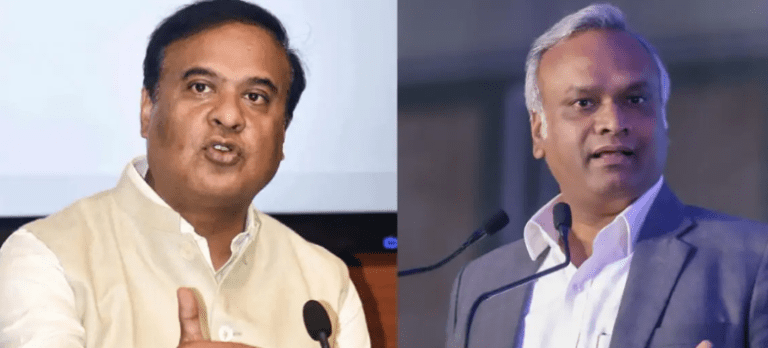
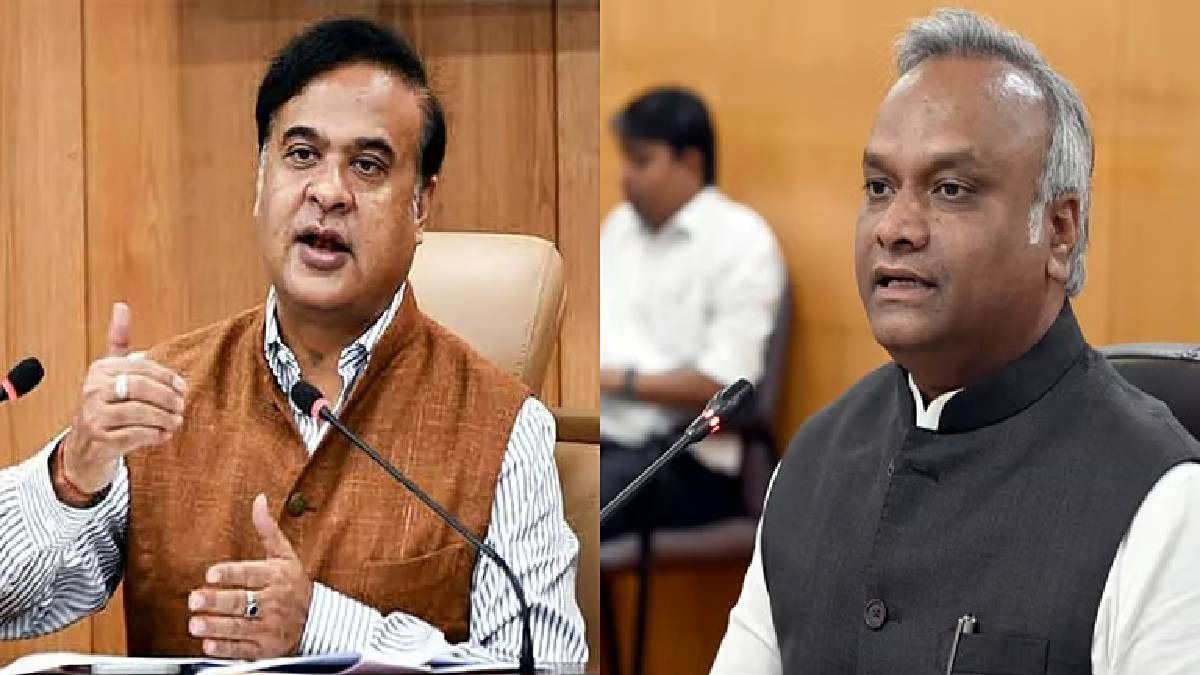
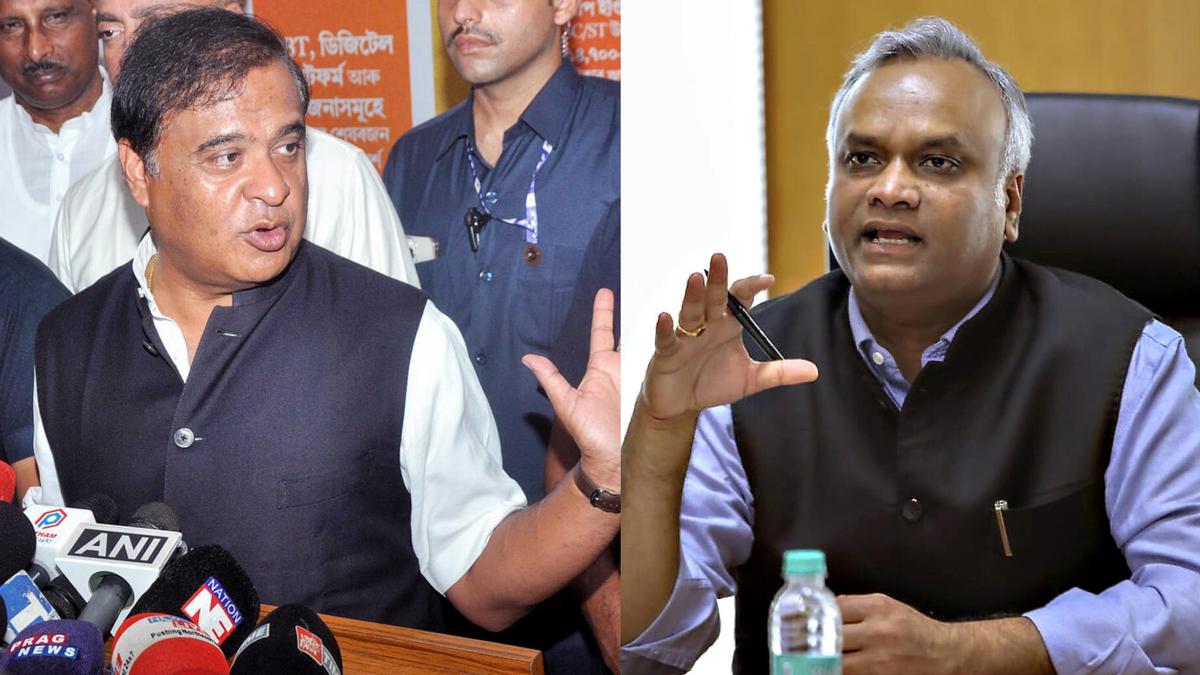
A digital storm has gripped India’s political state landscape as the social media sparring between Karnataka’s IT-BT Minister Priyank Kharge and Assam Chief Minister Himanta Biswa Sarma continues to escalate. What began as a war of words over governance and regional priorities has now evolved into a broader political confrontation played out publicly across social platforms. With each tweet and counter-response, the feud has not only drawn nationwide attention but also highlighted how social media has become the new battleground for India’s federal politics.


Origin of the Dispute

The verbal crossfire began when Priyank Kharge, known for his outspoken presence online, criticised certain northeastern governance models while defending Karnataka’s progressive policies in sectors like technology, welfare, and education. Sarma, never one to let a remark pass unanswered, swiftly retaliated by questioning Karnataka’s administrative record and accusing Kharge of indulging in political theatrics.

What could have been a brief exchange soon spiralled into a heated online rivalry. Both leaders began posting pointed remarks that touched on broader themes of development, ideological orientation, and political responsibility. Their exchanges, punctuated by sharp wit and rhetorical flair, have since kept both states’ followers hooked, drawing millions of impressions and triggering widespread commentary across India’s digital space.


Political Context and Underlying Tensions

While the feud appears to be a war of words, analysts believe it reflects deeper ideological and regional undercurrents. Kharge, representing Karnataka’s Congress government, has often positioned himself as a vocal critic of the BJP’s national leadership. Sarma, on the other hand, is a senior BJP leader and one of the most prominent chief ministers from the northeast.Hello, Teddy Boy”: Assam BJP joins CM Sarma in fiery spat with Priyank  Kharge - “Hello, Teddy Boy”: Assam BJP joins CM Sarma in fiery spat with Priyank  Kharge -

The confrontation, therefore, embodies more than personal rivalry—it mirrors the ongoing Congress-BJP ideological clash that defines India’s current political climate. Experts note that both leaders are using social media not merely as a platform for rebuttal but as a stage for mobilising support, reinforcing regional pride, and showcasing their party’s policy stances.


Tone and Style of the Exchanges

The exchanges between Kharge and Sarma have been marked by a mix of humour, sarcasm, and assertive language. Kharge’s responses typically emphasise Karnataka’s governance model—its welfare schemes, digital infrastructure, and technological advancements—while Sarma counters with remarks about efficiency, fiscal discipline, and ideological consistency.

In recent days, the tone has grown sharper, with both leaders directly naming each other in posts that garner significant public traction. Social media analysts note that the exchanges are carefully curated to resonate with each leader’s core audience—Kharge’s rhetoric appeals to urban, tech-oriented youth, while Sarma’s tone caters to nationalists and party loyalists who value assertive communication.


Digital Politics: The Rise of Social Media Rivalries

The ongoing feud illustrates how social media has reshaped India’s political communication. Once limited to speeches and press releases, debates between politicians now unfold in real time before millions of users. This immediacy amplifies political reach but also heightens the risk of polarisation.

Political strategists argue that online sparring is no longer accidental—it’s a calculated part of public engagement. By taking debates to digital platforms, leaders like Kharge and Sarma ensure constant visibility and direct interaction with voters. Their posts often blend personal conviction with party narratives, blurring the lines between individual opinion and institutional stance.

Yet, critics warn that such exchanges, while entertaining, risk overshadowing substantive governance debates. As the feud between the two leaders intensifies, questions arise about whether these digital duels enhance democratic dialogue or merely feed performative politics.


Public and Political Reactions

The social media feud has sparked strong reactions across the political spectrum. Supporters of both leaders have rallied online, turning comment sections into arenas of ideological confrontation. Congress loyalists have praised Kharge for defending Karnataka’s progressive image, while BJP supporters have applauded Sarma for standing firm and challenging what they perceive as political provocation.

Neutral observers, however, see the spat as reflective of a growing tendency among politicians to prioritise online optics over policy outcomes. Some civil society members argue that such exchanges distract from real issues like job creation, infrastructure development, and inter-state cooperation. Still, others appreciate the transparency that such public disagreements bring, viewing them as a sign of democratic engagement in the digital age.


Media Coverage and Narrative Building

Traditional media outlets have been quick to amplify the story, dedicating columns, talk shows, and editorials to dissect the ongoing feud. Each side’s statements are scrutinised for political intent, language choice, and broader implications. The exchanges have also become fodder for memes and debates across television and radio, blending political analysis with public entertainment.

Political commentators note that such feuds contribute to the “spectacle effect” in modern politics, where attention often outweighs nuance. By drawing viewers and readers, these spats keep both politicians relevant in the fast-moving news cycle. Media experts argue that this dynamic often rewards aggression and wit over collaboration and policy depth.Why are Assam youths leaving state for work?' Priyank Kharge hits back  after Himanta Biswa Sarma calls him 'first-class idiot' amid semiconductor  investments row | Bengaluru News - The Times of India


Rival Strategies and Political Symbolism

For Priyank Kharge, the ongoing exchange serves as a platform to project Karnataka’s image as a progressive, tech-driven state that champions secularism and welfare. His posts often highlight data-driven governance and citizen welfare initiatives as counterpoints to ideological criticism. The strategy resonates with the Congress narrative of inclusive development.

Himanta Biswa Sarma, conversely, has positioned himself as a defender of decisive governance and cultural pride. His communication strategy underscores discipline, nationalism, and administrative performance. Through his responses, Sarma reinforces the BJP’s national message of strength and continuity, ensuring his words echo beyond Assam’s borders.

Both leaders, despite their differences, share a keen awareness of digital optics. Every tweet is crafted with precision—each statement serves dual purposes: reinforcing state pride while fuelling the broader political storyline between the two dominant parties.


The Role of Youth and Online Engagement

Younger citizens have emerged as active participants in the feud, using social media platforms to voice opinions, share memes, and interpret the exchanges through their own creative lenses. For many urban youth, the ongoing sparring between Kharge and Sarma symbolizes a new form of political theatre—dynamic, bold, and unfiltered.

However, educators and social scientists warn that such online intensity may blur the distinction between informed debate and emotional reaction. They urge digital literacy initiatives to help citizens evaluate political content critically, especially when it involves high-profile leaders whose statements can shape public sentiment rapidly.


National Implications and Inter-State Dynamics

Beyond entertainment, the ongoing exchange has subtle implications for inter-state relations and federal politics. Karnataka and Assam, though geographically distant, represent contrasting models of governance—one driven by tech innovation and welfare schemes, the other emphasising administrative control and cultural consolidation.

As both leaders defend their respective states online, they indirectly highlight the diverse governance philosophies within India’s federal structure. The feud, in essence, has evolved into a symbolic contest between two political cultures—one that prides itself on progressive policies and another on assertive nationalism. Observers believe such online rivalries could increasingly shape national discourse in the coming years.


Expert Opinions and Sociopolitical Analysis

Political sociologists interpret the feud as a product of India’s digital transformation. According to analyst Ramesh Chandra, “Social media has democratised political dialogue, but it has also incentivised confrontation. Leaders now compete not just for votes but for virality.” Others note that the Kharge-Sarma exchanges exemplify how online communication can blur institutional boundaries, where personal remarks become political positions.

Communication experts stress that the intensity of online rivalry also signals a changing electorate—one that values immediacy and emotional connection. In this context, the Kharge-Sarma feud is less about disagreement and more about visibility, engagement, and identity projection.


Timeline of the Feud

The first exchange reportedly occurred in late September 2025, when Kharge made a statement highlighting Karnataka’s leadership in digital innovation. Sarma responded days later with a tweet questioning the efficiency of the state’s public services. The back-and-forth intensified through October, drawing interventions from party spokespersons and media commentators.

Both leaders have since posted multiple responses, occasionally referencing national issues like federal resource sharing, employment, and ideological commitment. Despite periodic calls for restraint from supporters, neither side has indicated any intention to de-escalate the online rivalry.Social media sparring between Karnataka's IT-BT Minister Priyank Kharge and Assam  CM Himanta Biswa Sarma continues - The Hindu


Broader Lessons and Public Reflection

While the feud continues to dominate headlines, it also serves as a case study on how technology has changed political behaviour. The immediacy of online exchanges can both empower leaders and expose them to public scrutiny. For citizens, it offers direct access to political discourse, but it also requires discernment to separate meaningful debate from performative aggression.

Political psychologists note that such feuds can influence emotional voting behaviour by shaping public perceptions of strength, intelligence, and authenticity. They argue that while spirited debate is healthy for democracy, its digital form must evolve toward respect and responsibility.


Conclusion

The ongoing social media sparring between Karnataka’s Priyank Kharge and Assam’s Himanta Biswa Sarma has transcended regional boundaries to become a national conversation about political communication, leadership, and digital democracy. It highlights both the power and the peril of instant interaction in an era where every statement travels across the country in seconds.

What began as a disagreement between two leaders has evolved into a reflection of India’s changing political landscape—where dialogue, dissent, and performance coexist on the same digital stage. Whether this feud leads to deeper political insight or simply more spectacle remains uncertain. But one thing is clear: in modern India, governance is no longer confined to offices and assemblies—it unfolds, tweet by tweet, in the public eye.

Follow: Karnataka Government

Also read: Home | Channel 6 Network – Latest News, Breaking Updates: Politics, Business, Tech & More

1 Remarkable Ranking That Fills Karnataka with Pride

In a moment of immense pride for the state, Chief Minister Siddaramaiah announced that the Karnataka Police has been ranked number one in the India Justice Report (IJR) 2024, marking a historic achievement in the field of law enforcement. The announcement, made at a press briefing in Bengaluru, has sparked widespread appreciation for the state’s policing system and its sustained commitment to reforms, transparency, and citizen trust. The ranking is being hailed as a reflection of Karnataka’s efficient governance and its balanced approach to justice delivery across urban and rural areas.


Background: The India Justice Report and Its Criteria

The India Justice Report, prepared annually by Tata Trusts and several research organisations, evaluates the justice delivery system across all Indian states. It assesses four pillars—police, judiciary, prisons, and legal aid—using data sourced from government records. Each sector is measured on parameters like infrastructure, personnel, diversity, representation, training, and budget utilisation.

In the 2024 edition, Karnataka outperformed other states in the police category, securing the top spot ahead of Maharashtra and Tamil Nadu. The report noted that Karnataka demonstrated consistent improvement in recruitment, gender representation, and training standards. It also highlighted the state’s advancements in technology integration, which have enhanced efficiency in investigation, crime prevention, and citizen service delivery.


Chief Minister Siddaramaiah’s Statement

Addressing the media at Vidhana Soudha, Chief Minister Siddaramaiah expressed deep satisfaction over the recognition. “This achievement belongs to every police officer and constable who has worked tirelessly to protect the people of Karnataka,” he said. Emphasising the government’s continued investment in modern policing, he added that the state’s focus on community engagement and capacity-building had played a key role in securing the top position.

He further stated that the ranking validated the government’s ongoing efforts to make Karnataka’s justice system more inclusive and accessible. The Chief Minister assured that the administration would continue to strengthen the state’s law enforcement infrastructure with an emphasis on technology, human rights, and accountability.


Police Department’s Reaction and Internal Acknowledgment

Senior police officials across Karnataka expressed pride in the ranking, describing it as the result of years of coordinated effort. Director General of Police (DGP) Alok Mohan remarked that the recognition was a testimony to the department’s emphasis on professionalism and public service. He credited the achievement to improvements in police training, digital record-keeping, forensic capabilities, and prompt grievance redressal.

Officers at various ranks acknowledged that the shift toward smart policing, data analytics, and improved inter-department coordination had greatly enhanced their ability to respond to citizens effectively. Many also highlighted the department’s community outreach programmes, such as ‘Beat Policing’ and ‘Janamaithri’ initiatives, which have helped bridge the gap between police and the public.Karnataka police ranked number one in the India Justice Report: CM  Siddaramaiah - The Hindu


Comparative Performance and Key Metrics

Karnataka’s score in the IJR 2024 reflected significant growth compared to the previous year. The report indicated that the state had reduced the number of police vacancies, improved women’s representation to over 15%, and established training modules focused on digital forensics and cybercrime investigation. It also credited the efficient use of the Crime and Criminal Tracking Network System (CCTNS) and other real-time monitoring tools that ensured accountability and transparency.

In contrast, states such as Gujarat, Uttar Pradesh, and Rajasthan lagged behind on several parameters, particularly in infrastructure and personnel diversity. Experts observed that Karnataka’s sustained investment in officer welfare, housing, and psychological counselling initiatives played a crucial role in enhancing morale and performance.


Public and Expert Reactions to the Achievement

The news of Karnataka Police topping the India Justice Report received widespread attention and applause from citizens and experts alike. Civic bodies, human rights groups, and public policy researchers praised the state for maintaining high levels of professionalism while adapting to technological change.

Law enforcement experts described the achievement as a “turning point” for Indian policing, especially because Karnataka’s model balances both urban challenges and rural outreach. Social activists, however, cautioned that despite the recognition, the department must continue improving its approach to handling gender-based crimes and mental health support for officers.

For the public, the announcement came as reassurance that the state’s law enforcement system is evolving in a citizen-centric direction. Residents of Bengaluru and Mysuru expressed pride in how the police have managed complex law and order situations with tact and restraint, reinforcing public faith in governance.


Historical Progress and Reforms

Karnataka’s journey toward police reform began more than a decade ago, with the state prioritising transparency, training, and technology. The introduction of modern control rooms, integrated emergency response systems, and digital case tracking mechanisms transformed operational efficiency. The establishment of the State Forensic Science Laboratory and the expansion of women’s police stations further demonstrated the government’s progressive vision.

Over time, the department introduced specialised units for cybercrime, traffic management, and economic offences. Regular training on human rights and crisis management helped create a more empathetic and aware police force. This long-term institutional strengthening has now culminated in national recognition, placing Karnataka at the forefront of justice delivery innovation.


Role of Technology and Modernisation in Policing

A major reason for Karnataka’s success lies in its rapid technological adaptation. The state police have embraced digital transformation through mobile apps, predictive policing software, and data-driven surveillance systems. The use of drones for crowd monitoring, AI tools for facial recognition, and GPS-enabled patrolling have enhanced efficiency in urban centres.

Additionally, the department’s e-office initiatives have reduced paperwork and improved internal communication, leading to faster decision-making. Digital complaint registration systems like the ‘Sakala’ and online FIR services have simplified citizen interactions. These innovations have ensured transparency, timely response, and accountability—key indicators that contributed to Karnataka’s top ranking.


Training, Diversity, and Inclusion

Karnataka has been a national leader in improving gender representation and inclusivity in policing. The recruitment of women officers in leadership roles and at grassroots levels has expanded over recent years. The establishment of all-women police stations across districts has ensured safer reporting environments for female victims.

Training academies in Bengaluru and Mysuru have introduced new modules on cyber awareness, forensic analysis, crisis counselling, and community sensitivity. By integrating these modules with traditional policing, Karnataka has built a more adaptable and empathetic force. Diversity in recruitment, particularly from Scheduled Castes, Scheduled Tribes, and backward communities, has strengthened representation and improved community relations.Karnataka police ranked number one in the India Justice Report: CM  Siddaramaiah - The Hindu


Financial Management and Resource Utilisation

The report also highlighted Karnataka’s effective financial management. The state successfully utilised its police budget, ensuring that allocated funds were directed toward welfare, training, and infrastructure development. The construction of new police quarters, modern control rooms, and regional forensic centres demonstrates the state’s focus on strengthening core infrastructure.

Unlike several other states that left large portions of their allocated budgets unspent, Karnataka’s efficient resource utilisation ensured visible improvements in equipment, mobility, and communication. Analysts argue that this disciplined financial planning played a decisive role in propelling Karnataka to the top spot.


Public Perception and Ground-Level Impact

Public trust has been a defining aspect of Karnataka’s policing success. Surveys conducted by civic groups in Bengaluru, Mangaluru, and Hubballi revealed increased satisfaction levels among residents regarding police responsiveness and transparency. Initiatives like neighbourhood watch schemes, police-public meetings, and school outreach programmes have helped humanise the police force and improve cooperation.

During festivals, rallies, and emergencies, the department’s coordination with traffic, health, and fire services has set a benchmark for integrated governance. The police’s proactive role during the COVID-19 pandemic—ensuring public safety and welfare simultaneously—earned lasting appreciation. This sustained public engagement has translated into confidence, one of the intangible yet powerful factors behind the IJR ranking.


Challenges That Remain

Despite the achievement, experts acknowledge that challenges persist. The police force continues to grapple with long working hours, stress-related issues, and occasional public distrust in specific cases. Cybercrime remains a growing concern, demanding continuous technological upgrades.

Furthermore, rural stations still face infrastructural shortages and uneven distribution of resources. Policymakers and law enforcement strategists stress the need to address these gaps to sustain Karnataka’s leadership position. The government’s ongoing efforts to improve staff welfare and mental health support indicate a willingness to confront these challenges directly.


Broader Implications for the Justice SystemKarnataka police ranked number one in the India Justice Report: CM  Siddaramaiah - The Hindu

Karnataka’s success in the police pillar of the India Justice Report sends a strong message to other states about the value of consistent reform and citizen engagement. It also highlights the interconnectedness of the justice system—where efficient policing supports effective judiciary and prison administration. The state’s performance could inspire a nationwide reevaluation of law enforcement priorities and resource allocation strategies.

Legal scholars believe that such recognition can encourage constructive federal competition, ultimately benefiting citizens. By proving that sustained investment in human and technological capital can yield tangible outcomes, Karnataka has set a new benchmark for governance excellence.


Conclusion

Karnataka’s number one ranking in the India Justice Report 2024 represents more than just a statistical victory—it is a symbol of public trust, institutional integrity, and visionary governance. Under the leadership of Chief Minister Siddaramaiah and senior police officials, the state has demonstrated how dedication to transparency, inclusivity, and innovation can transform a public institution into a national exemplar.

The achievement stands as a reminder that justice begins with the first responder—the police officer on the street—and that empowering this force through reform and respect ultimately strengthens democracy itself. Karnataka’s story today is one of progress, resilience, and pride—an inspiring testament to what a committed government and dedicated citizens can accomplish together.

Follow: Karnataka Government

Also read: Home | Channel 6 Network – Latest News, Breaking Updates: Politics, Business, Tech & More

7 Reasons Why Karnataka’s High Court Stay Sparks Public Relief: Powerful Verdict

In a decisive move that stirred both legal and civic circles, the Karnataka High Court has stayed the state government’s recent order restricting the use of public properties by private organisations. The interim stay was issued after several petitions challenged the legality and implications of the order, which had raised concerns among NGOs, cultural bodies, and educational institutions. The court’s decision has provided temporary relief to numerous organisations that depend on government halls, grounds, and auditoriums to conduct public events and community activities.


Background of the Controversial Order

Earlier this year, the Karnataka government issued an order limiting the use of public properties—such as community halls, playgrounds, and open spaces—by private entities, including non-profit organisations and cultural groups. The government justified its decision by citing the need to preserve public infrastructure, ensure proper maintenance, and prevent misuse. However, the order drew immediate backlash, as critics argued that it would stifle social and cultural engagement across the state.

The directive mandated prior approval from multiple departments and imposed stricter conditions for renting government spaces. In many cases, even educational institutions found it difficult to conduct events, prompting them to join the protest against the order.High Court stays Karnataka government's order restricting use of public  properties by private organisations - The Hindu


Stakeholder Reactions and Concerns

The order’s impact extended far beyond just administrative inconvenience. Various cultural associations, civic groups, and social service organisations expressed deep disappointment, stating that the new restrictions would hinder community participation and cultural preservation. Bengaluru’s local art circles, which often rely on government auditoriums for performances, claimed that the move would weaken public access to affordable cultural venues.

NGOs working in rural Karnataka voiced similar concerns. They argued that such rules would limit their outreach, as many government schools and halls serve as venues for awareness drives and social campaigns. According to several activists, the order reflected a top-down approach that ignored grassroots realities.


Legal Grounds for the Challenge

Several petitioners approached the High Court, contending that the state’s directive was arbitrary, unreasonable, and contrary to the principles of public trust. Their argument was rooted in the idea that public properties belong to the people and must remain accessible for lawful and community-driven purposes. Restricting their use, they argued, violated constitutional rights ensuring equality, freedom of association, and expression.

The petitions also questioned whether the state government had followed proper procedure before issuing the order. Many claimed that there was no consultation with the public or local bodies, making the decision unilateral. Legal experts highlighted that any restriction on public property use should align with constitutional safeguards, not administrative convenience.


The High Court’s Interim Stay

After reviewing the petitions, the Karnataka High Court granted an interim stay on the government order. The bench observed that the restrictions appeared excessive and could disrupt essential community activities. The court noted that while the state has the right to regulate public spaces, such regulations must be balanced with citizens’ rights to access and utilise those spaces for lawful purposes.

This stay has temporarily halted the implementation of the order, allowing organisations to continue using public properties for events and programmes. The decision has been widely seen as a relief for several small-scale associations and educational groups struggling to find affordable venues.


Broader Legal and Political Context

The issue touches upon a wider debate concerning how governments manage public assets. Over the past decade, many states have tightened rules around public property usage, citing maintenance costs and security reasons. However, in democratic systems, public spaces are often seen as platforms for cultural exchange, education, and expression. The Karnataka government’s order reignited this national conversation.

Politically, the matter has gained traction as opposition parties accused the government of attempting to curb civic participation. They argued that such restrictions could reduce transparency and limit the scope of citizen-led events that often criticise or question government policies. The High Court’s intervention has thus not only addressed a legal question but also highlighted the importance of maintaining a balance between governance and public freedom.In setback to Karnataka govt, high court stays new order for use of public  spaces | Latest News India


Community Voices: From Cultural Groups to Civic Forums

Across Karnataka, artists, teachers, and social workers have welcomed the High Court’s stay with visible relief. Cultural organisations in Mysuru and Hubballi celebrated the decision as a win for public expression. Many described it as a restoration of “people’s access to people’s property.”

Educational institutions that host inter-school competitions, seminars, and cultural fests in government auditoriums can now resume their plans without bureaucratic hurdles. Similarly, social service groups that conduct blood donation drives, health camps, and environmental campaigns have been given the green signal to continue using local government venues. The sentiment across communities is that the stay has protected civic harmony and inclusivity.

Rural activists particularly stressed that access to public halls and grounds is crucial in areas where private venues are scarce or unaffordable. For them, the High Court’s stay represents not just legal relief but social justice in action.


Administrative Perspective

From the government’s point of view, the order was never intended to suppress public activity. Officials maintain that the motive was to ensure accountability and prevent damage to state property. Several instances of property misuse and non-payment of maintenance fees had reportedly prompted the move.

However, bureaucratic critics within the system acknowledge that the order’s implementation lacked clarity and communication. Some departments had not even received proper instructions on how to enforce it. The abruptness of the policy rollout, combined with the lack of public consultation, intensified confusion among administrative staff and citizens alike.


Expert Legal Opinions

Constitutional lawyers and administrative law scholars have praised the High Court’s balanced approach. According to legal analyst M.K. Rao, “Public property, by its very nature, must serve the collective good. Regulations are necessary, but they cannot be arbitrary. The High Court’s stay preserves that delicate balance.”

Other experts noted that this case could set a precedent for similar disputes in other states. They emphasized that the right to access public property must always be seen through the lens of public interest, not administrative expediency. Furthermore, the decision underlines the judiciary’s role as a guardian of civic freedoms against overreach by the executive.


Political Ripples and Public Sentiment

The High Court’s order has also taken on political significance. Opposition leaders have hailed it as a victory for democracy, accusing the government of trying to centralize control over civic spaces. Rallies were held in Bengaluru and Mangaluru to celebrate the decision, with banners declaring it a “triumph of citizen rights.”

On social media, citizens voiced their support, sharing examples of how community halls and public parks had historically fostered social unity. Many expressed that restricting access would have created an invisible wall between the government and the people. The emotional tone of the public reaction underscores how deeply the issue connects with citizens’ sense of belonging and participation.

For the ruling administration, the stay is a reminder of the need to maintain sensitivity toward grassroots concerns. Senior ministers have stated that the government will revisit the order and, if necessary, issue revised guidelines that consider public opinion.Setback for Siddaramaiah: Karnataka HC stays order on restrictions for  activities of private organisations | Latest News India


Impact on NGOs and Cultural Ecosystem

Non-governmental organisations across Karnataka rely heavily on public infrastructure to conduct outreach programmes. For many of these groups, especially those working in health, education, and women’s empowerment, the High Court’s stay has revived operational confidence.

Cultural festivals, heritage exhibitions, and youth camps that were previously cancelled or postponed are now back on the calendar. The decision has rejuvenated Karnataka’s vibrant cultural scene, which often uses government-owned spaces as platforms for local artists. Event organisers argue that this development not only safeguards artistic expression but also protects the state’s inclusive social identity.


Timeline of Events

The controversy began in early 2025 when the government issued its circular limiting private use of public properties. Within weeks, civic bodies and educational groups filed representations against the move. By mid-year, petitions reached the Karnataka High Court, which heard arguments from both sides.

On October 20, 2025, the bench granted an interim stay, citing the need for further examination of constitutional validity and public interest. The court scheduled additional hearings in the coming months to determine the final outcome. Until then, all previous permissions and bookings for public property use remain valid, restoring normalcy for organisers statewide.


Environmental and Social Dimensions

While primarily a legal issue, the case also brings attention to the social role of public spaces in urban and rural life. Parks, playgrounds, and halls are more than infrastructure—they serve as the lifeblood of civic engagement. Environmental activists point out that public spaces often host awareness drives and sustainability campaigns that benefit communities directly.

Restricting such activities, they argue, would not only limit civic interaction but also slow down environmental and educational progress. The High Court’s decision thus indirectly supports ongoing social and ecological initiatives by keeping public spaces accessible for collective action.


What Lies Ahead

Although the stay has offered temporary respite, the larger legal battle is far from over. The government is expected to file its response, possibly seeking to modify the order with more specific guidelines rather than a total ban. Observers believe that a middle path could emerge—where public properties remain accessible, but under better regulation and transparent booking systems.

The High Court’s final verdict will likely influence how other states interpret their own policies regarding public assets. It could also encourage more citizen participation in decision-making processes that affect communal resources.


Conclusion

The Karnataka High Court’s stay on the government order restricting the use of public properties by private organisations stands as a reaffirmation of democratic access, civic rights, and judicial oversight. For countless NGOs, artists, teachers, and students, it represents more than just a legal reprieve—it is a reminder that public spaces are the shared heart of society.

By halting the government’s order, the judiciary has once again underscored that governance must operate hand in hand with the people, not above them. As the case moves forward, Karnataka finds itself at the crossroads of policy and public sentiment—seeking a path that preserves both administrative integrity and the spirit of community belonging.

Follow: Karnataka Government

Also read: Home | Channel 6 Network – Latest News, Breaking Updates: Politics, Business, Tech & More

Srijit Mukherji Brings 1906 London Alive in His New Film on Arthur Conan Doyle’s Life

0

Srijit Mukherji directs film on Sherlock Holmes creator Arthur Conan Doyle

Srijit Mukherji, one of India’s most acclaimed filmmakers, is set to direct a powerful Indo-British feature film based on the life of Sir Arthur Conan Doyle, the legendary creator of Sherlock Holmes. The film, titled Elementary, My Dear Holmes, will explore the untold emotional and moral struggles of Doyle the man who gave the world one of its greatest fictional detectives.শার্লক স্রষ্টা এবার সিনেমার পর্দায়, হলিউডে পরিচালনায় বাংলার সৃজিত

According to early production reports, the film has been officially approved by the Conan Doyle Estate and will be co-produced by Matchcut Productions and Shahnaab Alam, known for films like The Lunchbox and D-Day.

Srijit Mukherji reimagines Doyle’s world in ‘Elementary, My Dear Holmes’

Set in London, 1906, Elementary, My Dear Holmes will take viewers into a period when Doyle’s personal and professional worlds were falling apart. His wife lay critically ill, urging him to find love again, while his mind was occupied by real-life injustices, including the wrongful conviction of George Edalji, a man of Indian descent.

Srijit Mukherji explained that the film imagines Doyle stepping into his own fiction a man haunted by the clarity he gave to Sherlock Holmes yet trapped in the chaos of his own reality. The narrative moves through Doyle’s internal battles, questioning morality, justice, and human frailty.Srijit Mukherji to direct film on Sherlock Holmes creator Arthur Conan Doyle  - Srijit Mukherji to direct film on Sherlock Holmes creator Arthur Conan  Doyle -

This approach reflects Mukherji’s long-standing fascination with crime, mystery, and layered storytelling. Known for his deep character work, the director aims to blur the line between imagination and truth in a way that feels both haunting and human.

A global collaboration with emotional depth and historical precision

The film is an Indo-British co-production, bringing together talents and teams from both countries to authentically portray the early 20th-century London backdrop. The story isn’t merely a biographical retelling but a deeply emotional journey into the making of a literary genius.

Richard Pooley, Director of the Conan Doyle Estate, remarked that few people realize how active Doyle was in fighting social injustice, both within and beyond Britain. The film aims to highlight this lesser-known side portraying him not only as a writer but also as a reformer, spiritual seeker, and man of conscience.Srijit Mukherji to Direct Film on Sherlock Holmes Creator Arthur Conan Doyle  : 2025-10-28 | Aajkaal Bengali News, Bangla News, Breaking News in Bengali

While the official cast and production schedule are yet to be announced, sources suggest that the film will feature an international ensemble to reflect the cultural and political context of the era.

Srijit Mukherji’s passion for mystery and layered storytelling

Srijit Mukherji is no stranger to the world of thrillers and detective fiction. In Bengali cinema, he has already captivated audiences with his celebrated Feluda adaptations, Feluda Pherot and Feludar Goyendagiri. His ability to mix suspense with strong emotional undercurrents has earned him multiple National Awards for films like Chotushkone, Gumnaami, and Ek Je Chhilo Raja.Srijit Mukherji to bring Sherlock Holmes creator Arthur Conan Doyle's story  to screen | Mint

In Bollywood, he has directed notable films like Begum Jaan, Shabaash Mithu, and Sherdil: The Pilibhit Saga. His storytelling often revolves around human complexity, moral ambiguity, and the thin line between truth and illusion themes that fit perfectly with Doyle’s world.

Mukherji’s statement about the new project captures his creative vision: “I first met Sherlock Holmes not in Baker Street, but in the quiet between pages. This film imagines Doyle stepping into that quiet confronting his own creation.”

A promising cinematic bridge between India and the world

Elementary, My Dear Holmes marks another milestone in Indian cinema’s growing international presence. The collaboration between Indian and British studios aims to deliver a film that appeals to global audiences while retaining an Indian emotional core. Also Read: Jamtara 2 Actor Sachin Chandwade’s Tragic Death at 25 Leaves Fans in Shock

The story’s focus on truth, justice, and imagination makes it relevant even today. By revisiting Arthur Conan Doyle’s struggles, the film draws parallels between art and reality, showing how great stories often emerge from personal pain and purpose.

Conclusion

Srijit Mukherji’s upcoming film Elementary, My Dear Holmes is shaping up to be a fascinating journey through literature, morality, and human endurance. With his signature blend of emotion and intellect, Mukherji is set to reveal the man behind Sherlock Holmes not the detective, but the dreamer who created him.

Rukmini Vasanth Brings 5 Powerful Emotions Alive in Kantara Chapter 1 Behind-the-Scenes Moments

0

Rukmini Vasanth offers a rare behind-the-scenes glimpse from Kantara Chapter 1

Rukmini Vasanth, one of the most talented faces in South Indian cinema, has captured attention once again with her recent behind-the-scenes post from Kantara Chapter 1. The actress shared unseen moments from the sets, giving fans a closer look into the grand vision, intense preparation, and the emotional spirit that defines the upcoming prequel to the 2022 blockbuster Kantara.Rukmini Vasanth shares rare behind-the-scenes glimpse from Kantara Chapter 1 sets - India Today

Rukmini Vasanth shares the essence of tradition and transformation

Set during the Kadamba dynasty in pre-colonial Karnataka, Kantara Chapter 1 delves into the Bhoota Kola ritual and the mystical folklore rooted in coastal Karnataka. Rukmini Vasanth, who plays Kanakavathi, expressed her admiration for the film’s authenticity and the effort that went into representing the deep cultural essence of the story.Rukmini Vasanth stuns as Kanakavathi in Kantara: Chapter 1

The actress revealed that working on Kantara Chapter 1 was unlike any other experience  the atmosphere, energy, and connection to the land brought an emotional depth to every scene. Her words reflected the strong bond between the performers and the story’s divine elements, which symbolize faith, nature, and power.

Rishab Shetty’s transformation inspires the cast and crew

Rukmini Vasanth also mentioned how Rishab Shetty’s preparation for his role as Kaadubettu Shiva inspired everyone on set. His dedication from learning Kalaripayattu and horse riding to undergoing long prosthetic sessions became a motivating force for the entire team.

A special video released earlier showcased his transformation, not just in appearance but also in spirit. Rukmini said that seeing such commitment made her push her own limits as an actor, ensuring every frame of the film felt alive and real.Rukmini Vasanth: We treated Kantara: Chapter 1 as a new film

The film’s production has been praised for staying true to traditional practices while blending cinematic beauty and emotional storytelling. Every costume, prop, and chant is carefully researched to match the historic timeline of the Kadamba era.

Kantara Chapter 1 promises a powerful prequel with Rukmini Vasanth at the heart of it

The upcoming film explores the origins of Kaadubettu Shiva and the sacred forest that forms the soul of Kantara. As one of the central characters, Rukmini Vasanth’s Kanakavathi is said to bring warmth, strength, and emotional intensity to the narrative.

The cast also includes talented performers like Gulshan Devaiah, Jayaram, Pramod Shetty, and Prakash Thuminad, each adding depth to the world Rishab Shetty has created. Every frame promises a mix of myth, human emotion, and nature’s power a balance that made Kantara a cultural milestone in Indian cinema.Rukmini Vasanth on Kantara & Amrapali-Inspired Look | THR India

The movie, titled Kantara: A Legend Chapter 1, will premiere exclusively on Prime Video from October 31, in Kannada, Tamil, Telugu, and Malayalam. Fans are eagerly awaiting how the prequel uncovers the roots of Shiva’s legend and how faith intertwines with destiny.

Rukmini Vasanth’s rising impact in Indian cinema

Rukmini’s growing presence in the film industry marks her as one of the most promising talents of her generation. From Sapta Sagaradaache Ello to Kantara Chapter 1, she has shown an impressive ability to merge grace with depth, portraying characters that stay with the audience long after the credits roll.


View this post on Instagram


A post shared by Rukmini Vasanth (@rukmini_vasanth)

Her grounded performances and thoughtful choices highlight her commitment to meaningful cinema rather than commercial fame. With Kantara Chapter 1, she once again steps into a role that reflects emotion, strength, and culture a combination that defines her artistic journey. Also Read: Jamtara 2 Actor Sachin Chandwade’s Tragic Death at 25 Leaves Fans in Shock

Conclusion

Rukmini Vasanth’s behind-the-scenes glimpse from Kantara Chapter 1 offers fans not just a sneak peek into the film’s grandeur but also into the emotional energy that fuels its creation. Her reflections remind us that cinema, at its best, is not just about storytelling but about capturing the essence of human spirit and tradition.

Rashmika Interview: 5 Powerful Revelations That Inspire Balance and Positivity in Cinema

0

Rashmika Interview Makes a Bold Stand on Work Culture in Films

Rashmika Interview has stepped into the spotlight not just for her latest film but for a topic many prefer to avoid: the relentless culture of overwork in Indian cinema. In a recent interview, she made it clear, this isn’t a glamorous badge to wear. It’s a problem.rashmika-interview-powerful

In the candid conversation, she said, “Us glorifying over-working is not good. I overwork, and I am telling you, it is not suggestible and sustainable.” She went on to share that despite her own willingness to give her all, she’s learning that pushing beyond limits has consequences for health, relationships, and creative energy.

Rashmika Interview Urges the Industry to Value Rest and Well-being

Rashmika Interview : Her message comes at a key moment. The debate about 8-hour workdays, defined schedules, and humane practices is gaining traction. Others in the industry directors, co-actors, and crew members, have also voiced concerns, making Rashmika’s remarks timely and important.rashmika-interview-powerful

She acknowledged that she often says yes to extended hours because she feels part of a team, there are location demands, and deadlines that can’t shift. But she added that if given a choice, she would reject that model. “If I could choose for myself, I would say, please don’t make us do that,” she shared.

Rashmika Interview : What makes her stand out is her belief that this issue isn’t limited to actors. She emphasised that every craft from lighting to set design to costumes deserves fairer structure and humane timelines.

Rashmika Mandanna Reflects on Her Own Journey of Overwork

It’s a message rooted in self-respect as well as collective care. Rashmika discussed how ignoring rest doesn’t get you extra credit it often leads to burnout, emotional strain, and in the long run, diminished creativity.Can't Live According To Others': Rashmika Mandanna On 'Ban' From Kannada Industry, Says 'World Doesn't Know What's Happening'

Amid her promotional phase for The Girlfriend, and fresh off the success of Thamma, she’s using her platform to raise a serious concern. She reminded people that on-screen glamour often hides real off-screen fatigue, and the industry’s gears are running fast at the expense of personal wellbeing.

Rashmika Mandanna Highlights the Need for Respect Across All Crafts

Beyond the work hours, she spoke about the mental and emotional toll of being away from home, missing meaningful time, and the pressure to always stay ‘on’. She asked: why not create systems that let people have safer rhythms, better sleep, and more balanced lives?Rashmika Mandanna calls for unity in the film industry: 'We're all part of one nation...' - Entertainment News | The Financial Express

Her call isn’t about freeloading or shirking responsibility. It’s about rethinking what sustains talent, quality, and joy in the long term. An actress who continues to ride high on hits and offers could easily play along with the grind but she chose to speak up. Also Read: Jamtara 2 Actor Sachin Chandwade’s Tragic Death at 25 Leaves Fans in Shock

By bringing this to the foreground, Rashmika Mandanna becomes part of a growing chorus asking for change in the workings of the film world. And because she does it while she’s at a peak moment in her career, the message hits harder.


View this post on Instagram


A post shared by Zoom TV (@zoomtv)

Conclusion:
Rashmika Mandanna’s honesty about overworking adds a crucial voice to the industry’s changing conversation. As she works on bigger projects and bigger screen moments, she reminds us that success doesn’t have to come with exhaustion. In fact, creativity often flourishes better in balance than in burnout.