Sunday, May 17, 2026
Home Blog Page 393

Sigma Company Gang: Shocking Delhi Encounter, Kills 4, Ends Criminal Spree

New Delhi – The Sigma Company Gang gained widespread notoriety on September 26 after gunning down a former chief of the Brahmarshi Sena at his residence in Bihar’s Dumra. Following the murder, the Sigma Company Gang issued a detailed note titled “Nyaya, Sewa, Sahyog (justice, service, cooperation)” that listed eight alleged crimes committed by the victim that supposedly warranted his execution. The gang members called journalists and boasted about defeating what they characterized as a casteist and corrupt leader, positioning themselves as vigilante justice providers.

The Sigma Company Gang’s audacious approach to publicizing their crimes—combining social media announcements with direct media outreach—distinguished them from typical criminal organizations and drew intense law enforcement scrutiny from both Bihar and Delhi Police.

Thursday’s Fatal Encounter

On Thursday, four prominent Sigma Company Gang members were gunned down by a joint team of Delhi and Bihar Police at Bahadur Shah Marg in Rohini. The eliminated gang members were identified as Ranjan Pathak (25), Bimlesh Mahto (25), Manish Pathak (33), and Aman Thakur (21). This encounter effectively dismantled a significant portion of the Sigma Company Gang’s operational capability, though gang leader Bharti-Kapoor Jha remains at large.

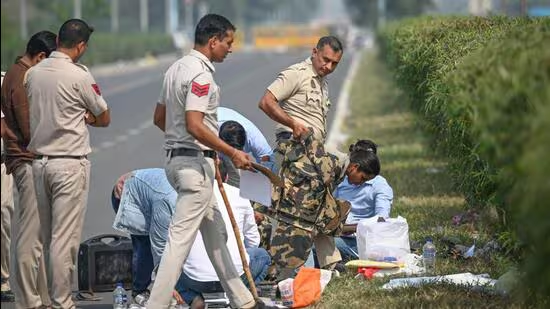
The encounter site became a focus of intense forensic investigation as police documented evidence from the confrontation that ended the Sigma Company Gang members’ criminal careers.

Gang Structure and Modus Operandi

According to a senior Delhi Police Crime Branch officer, the Sigma Company Gang comprised approximately 12 members who presented themselves as “budding” criminals with a unique twist—they pretended to be social heroes on media platforms while simultaneously accepting murder contracts and executing targets. This dual identity strategy distinguished the Sigma Company Gang from traditional criminal organizations.

The relatively smaller size of the Sigma Company Gang compared to similar operators allowed them greater mobility and operational flexibility. After committing crimes, gang members typically escaped to Nepal or border areas, though the high-profile nature of the Brahmarshi Sena chief’s murder intensified law enforcement pressure that ultimately trapped four members in Delhi.

The Brahmarshi Sena Chief Murder

The Sigma Company Gang’s most notorious crime occurred when victim Ram Manohar Sharma, also known as Ganesh Sharma (40), was washing his car. Two men on a motorcycle approached and shot him dead at point-blank range in broad daylight. Sharma headed a local caste-based group and owned a diagnostics center, making him a well-known figure whose murder shocked the community.

The Sigma Company Gang not only executed Sharma but also extensively publicized their crime through social media and journalist contacts, enraging local residents. This public relations approach to contract killing represented a disturbing evolution in the Sigma Company Gang’s criminal methodology.

Also Read: West Delhi Car Accident: Tragic Deaths of 2 Cousins As SUV Car Catches Fire

The “Justice” Manifesto

Hours after Sharma’s murder, the Sigma Company Gang released a detailed note undersigned by “Bharti-Kapoor Jha – BA (H) LLB” and delivered via “Rahul Jha – Ranjan Pathak.” The document termed Sharma a “betrayer,” “traitor,” “dictator,” “dishonest,” “smuggler,” “immoral,” “great sinner,” and guilty of “arrogance” for allegedly betraying friends, assaulting poor people, smuggling drugs, and grabbing land.

The Sigma Company Gang’s manifesto claimed: “Our fight is not against any caste or community. We respect everyone and the law. However, the current behaviour of the bureaucrats and police, their policy of distorting the truth and ruining the lives of the poor and the weak, has led us to take this step.” This rhetoric attempted to justify the Sigma Company Gang’s criminal activities as social justice activism.

Criminal Timeline and Contract Killings

Police details reveal the Sigma Company Gang’s extensive criminal activities over three months:

On July 18, Ranjan Pathak and associates shot dead Aditya Kumar, marking the beginning of the Sigma Company Gang’s documented murder spree.

August 21 saw the Sigma Company Gang kill Madan Kumar Kushwaha in Dumra on contract, shooting the victim five times near a railway crossing.

On September 17, Aman Thakur executed Guddu Jha and fired at his friend on contract in Sheohar, demonstrating the Sigma Company Gang’s willingness to target multiple victims.

The September 26 murder of Ganesh Sharma, involving three gunshots on contract, became the Sigma Company Gang’s signature crime that brought widespread notoriety.

On September 29, the Sigma Company Gang killed bank customer service point operator Shravan Yadav inside a shop for a contract payment of ₹1.7 lakh, revealing their fee structure.

Gang Leadership and Origins

Investigators identified Bharti-Kapoor Jha as the Sigma Gang leader who remains at large following Thursday’s encounter. Police characterized Jha as a “white-collar” criminal who started the gang earlier this year to tackle business and realty rivals. This background distinguishes the Sigma Gang from traditional street-level criminal organizations, suggesting educated leadership with specific economic motivations.

The joint Delhi and Bihar Police operation that eliminated four Sigma Gang members represented coordinated interstate law enforcement cooperation. The encounter at Bahadur Shah Marg in Rohini marked a significant victory against organized crime, though the escape of gang leader Jha means the Sigma  Gang threat has not been entirely eliminated.

Police continue investigating the Sigma Gang’s network, financial backing, and remaining members to prevent the organization’s reconstitution under new leadership.

West Delhi Car Accident: Tragic Deaths of 2 Cousins As SUV Car Catches Fire

0

New Delhi – Two cousins in their 20s were charred to death in a devastating West Delhi car accident early Thursday morning when the white Fortuner they were traveling in collided with a truck from behind in the Rani Bagh area. The West Delhi car accident occurred around 3 am, resulting in the immediate arrest of the truck driver on charges of rash driving and causing death by negligence. Police officials identified the victims as Henry, 20, a resident of Meera Bagh, and his cousin Dipanshu Chandela, 21, from Paschim Vihar.

The West Delhi car accident’s severity became apparent when first responders arrived to find the SUV almost entirely wedged underneath the truck, with flames engulfing the trapped vehicle and its occupants unable to escape the horrific situation.

High-Speed Impact and Immediate Fire

According to a senior police officer investigating the West Delhi car accident, the control room received an emergency call at 3:10 am alerting authorities about the collision. A police team immediately rushed to the scene and discovered the catastrophic situation with the car trapped beneath the truck’s chassis.

“It appeared that the car was going at a very high speed and the impact of the hit was such that it went under the truck,” the investigating officer stated, describing the West Delhi car accident’s violent nature. The tremendous force of the collision caused the Fortuner to become lodged underneath the commercial vehicle, creating a deadly trap for both occupants.

As soon as the West Delhi car accident impact occurred, the car caught fire due to fuel system damage. Because the vehicle was trapped under the truck, the victims had absolutely no chance to escape the flames. “However, we strongly suspect that the impact of the hit may have led to the instant death of the two men even before the vehicle caught fire,” the officer added, suggesting the collision’s force itself may have been fatal.

Preliminary Investigation Findings

Investigators examining the West Delhi car accident site conducted a preliminary probe that revealed critical details about the fire’s origin. After the car went underneath the truck, the fuel tube sustained severe damage, triggering the catastrophic fire that consumed the vehicle. “A mechanical inspection was conducted and the report is awaited,” the officer confirmed, indicating that technical analysis continues to determine exact mechanical failures.

The bodies were recovered from the West Delhi car accident scene and sent for autopsy examination. Police stated that it remains to be established who was actually driving the vehicle at the time of the collision, as both victims were of similar age and the impact’s severity made immediate determination impossible.

Timeline of Tragic Events

Family members provided crucial timeline information regarding the West Delhi car accident to investigating officers. The cousins had left their homes around 2:30 am, and the accident occurred approximately thirty minutes later around 3 am. Authorities received notification of the West Delhi car accident at 3:10 am, suggesting bystanders or witnesses immediately reported the incident.

Also Read: Yamuna Dredging Machine: Revolutionary International Equipment Arrives in Delhi

The truck driver, identified as Digambar, was apprehended at the spot immediately following the West Delhi car accident and subsequently arrested for rash driving and causing death by negligence. His arrest provides authorities with a key witness to the collision’s circumstances, though investigations continue.

Victims’ Background and Family Impact

The West Delhi car accident claimed the life of Henry, who was pursuing a Bachelor of Business Administration degree in Pune and had returned home to celebrate Diwali with his family. The tragedy is particularly devastating as Henry’s older brother had died a few years earlier. Henry is survived by his parents and two sisters, with his father running a mobile tower installation business.

Dipanshu Chandela, the second victim of the West Delhi car accident, was pursuing BBA at a private college in Rohini. He is survived by his parents and a sister, with his father working as a property dealer in Delhi. The loss of both young men, both in their early twenties and pursuing similar educational paths, has devastated their families during what should have been a festive celebration period.

Official Response and Investigation Status

Delhi Police confirmed that postmortem examinations have been completed following the West Delhi car accident, and the bodies have been handed over to grieving families for final rites. The West Delhi car accident investigation remains ongoing, with authorities examining multiple aspects including vehicle speed, road conditions, truck positioning, and potential contributing factors.

The mechanical inspection report awaited by investigators will provide crucial technical insights into the West Delhi car accident, particularly regarding fuel system damage and fire ignition sequence. This information will be vital for determining exact cause of death and potential liability issues.

Road Safety Concerns

The West Delhi car accident highlights persistent road safety concerns in the capital, particularly regarding high-speed driving during early morning hours when traffic is minimal. The collision’s extreme violence—sufficient to wedge an SUV entirely underneath a truck—underscores the dangers of excessive speed on urban roads.

The West Delhi car accident serves as a tragic reminder of the importance of speed management, defensive driving, and maintaining safe following distances, especially during nighttime travel when visibility and reaction times may be compromised.

AIMIM Muslim Representation: Explosive Attack on Bihar Alliance

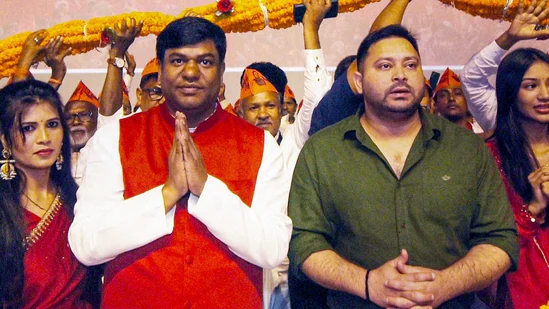
Bihar – A senior leader of Asaduddin Owaisi‘s AIMIM party has launched a scathing attack on the opposition Mahagathbandhan’s alleged neglect of AIMIM Muslim representation in Bihar’s power structure. The criticism targeting AIMIM Muslim representation came immediately after the INDIA bloc parties RJD and Congress announced Tejashwi Yadav as chief ministerial candidate and Mukesh Sahani as deputy CM face, with no Muslim leader given prominent position despite the community comprising 18 percent of Bihar’s population.

AIMIM’s Uttar Pradesh unit chief Shaukat Ali raised pointed questions about AIMIM Muslim representation through a controversial social media post that used population percentages to highlight the disparity between demographic weight and political recognition.

Controversial AI Image Sparks Debate

Ali’s criticism of inadequate AIMIM Muslim representation utilized an AI-generated image featuring RJD’s Tejashwi Yadav and VIP’s Mukesh Sahani in a provocative scenario. The image depicted a Muslim man on his knees on the floor while the two alliance leaders shared laughs over tea on sofas, visually representing Ali’s argument about AIMIM Muslim representation being relegated to subordinate status.

The post explicitly contrasted population percentages with political positioning: Muslims forming 18 percent of Bihar’s population are reduced to “laying carpets” while leaders from smaller demographic groups occupy positions of power. This stark imagery aimed to dramatize the AIMIM Muslim representation deficit within the Mahagathbandhan’s leadership structure.

Population Mathematics and Political Power

Ali’s critique of AIMIM Muslim representation employed precise demographic analysis to support his argument. He noted that Mukesh Sahani’s Nishad community comprises merely 2 percent of the state’s population yet secured the deputy CM position. The CM face represents the Yadav community at 13 percent of Bihar’s population. Meanwhile, Muslims at 18 percent—the largest minority group—received what Ali described as “carpet-laying minister” status, highlighting the AIMIM Muslim representation gap.

This population-based argument regarding AIMIM Muslim representation challenges the Mahagathbandhan’s claim to represent all marginalized communities equitably, suggesting that political calculations prioritize other backward classes over Muslim interests despite numerical demographics.

‘Abdul, Stay Quiet’ Accusation

Ali’s post addressing AIMIM Muslim representation included a particularly pointed political accusation: “When we say something, they’ll say, ‘Abdul, stay quiet, or the BJP will come.'” This statement accused the INDIA bloc of using the ruling party as a threatening spectre to silence legitimate demands for AIMIM Muslim representation.

The reference to “Abdul”—a name frequently weaponized by the Hindutva right wing for political attacks—underscored Ali’s argument that even opposition parties perpetuate marginalization patterns affecting AIMIM Muslim representation. His critique suggests the Mahagathbandhan exploits Muslim voters’ fears of BJP rule while denying them meaningful political power and adequate AIMIM Muslim representation.

AIMIM’s Independent Electoral Strategy

The criticism of inadequate AIMIM Muslim representation comes as AIMIM contests approximately 30 of Bihar’s 243 assembly seats independently. This solo electoral effort followed failed negotiations to join the RJD-Congress alliance, suggesting disagreements over AIMIM Muslim representation and seat allocation prevented alliance formation.

By fielding its own candidates, AIMIM positions itself as the authentic voice for AIMIM Muslim representation that mainstream opposition parties allegedly neglect. This independent strategy risks splitting anti-NDA votes but allows AIMIM to directly challenge narratives about AIMIM Muslim representation within secular alliances.

Owaisi’s Consistent Opposition Critique

The AIMIM Muslim representation criticism aligns with party chief Asaduddin Owaisi’s longstanding accusations against Congress and other opposition parties. Owaisi has repeatedly characterized these parties as half-hearted and even unfair in countering BJP’s alleged communalism, suggesting their commitment to AIMIM Muslim representation remains superficial.

Owaisi’s critique of AIMIM Muslim representation extends beyond seat-sharing to fundamental questions about opposition parties’ willingness to genuinely champion Muslim interests versus merely seeking their votes while maintaining distance to avoid “communal” labeling by political opponents.

Strategic Implications for Bihar Elections

The AIMIM representation controversy injects additional complexity into Bihar’s already contentious electoral landscape. With the Mahagathbandhan struggling with internal seat-sharing disputes and now facing external criticism over AIMIM representation, the opposition’s united front appears increasingly fractured.

The 2025 Bihar assembly elections scheduled for November 6 and 11 will test whether AIMIM’s critique of inadequate AIMIM representation resonates with Muslim voters or whether fear of NDA victory keeps them aligned with the Mahagathbandhan despite perceived marginalization.

Broader Questions of Inclusive Politics

Ali’s intervention regarding AIMIM Muslim raises fundamental questions about secular parties’ approach to minority politics. Do demographic percentages automatically translate to leadership positions? How do alliances balance various community claims? Does genuine AIMIM representation require Muslim faces in top positions or can other communities adequately represent Muslim interests?

Electoral Mathematics and Vote Splitting

The AIMIM’s emphasis on Muslim representation through independent candidature carries risks of vote fragmentation. With Muslims comprising 18 percent of Bihar’s population concentrated in specific constituencies, AIMIM candidates could split opposition votes, potentially benefiting the NDA despite AIMIM’s stated opposition to BJP politics.

The Mahagathbandhan’s response to AIMIM Muslim speech criticism will likely emphasize this vote-splitting danger, arguing that practical politics requires unified opposition rather than ideal demographic representation in leadership positions.

Mukesh Sahani Deputy CM: Stunning Choice Reshapes Bihar Elections 2025

Bihar – “I had been waiting for this moment for three and a half long years,” declared a visibly charged Mukesh Sahani moments after being announced as the Mukesh Sahani deputy CM nominee for the Mahagathbandhan in Bihar’s 2025 assembly election. The Vikassheel Insaan Party chief’s elevation to the Mukesh Sahani deputy CM position alongside RJD leader Tejashwi Yadav as chief ministerial candidate represents a calculated political strategy aimed at consolidating backward and marginalized community support.

Once a BJP ally, the Mukesh Sahani deputy CM nomination bestows upon him the responsibility of steering the alliance boat with Tejashwi Yadav at the helm. During Thursday’s joint press conference announcing his selection, Sahani took a powerful oath: “BJP ko jab tak hum todenge nahi, tab tak chhoddenge nahi. (We will not let go until we break the BJP).”

Personal Vendetta Against BJP

The Mukesh Sahani deputy CM candidate has accused the saffron party of systematically undermining his political standing. “BJP broke our party and poached our MLAs. At that time, we had pledged with Ganga jal in our hands. The time has come. Standing strong with Mahagathbandhan, we will form our government in Bihar and oust the BJP from the state,” he declared, revealing the personal and political motivations behind his alliance with the opposition.

Sahani claims the BJP engaged in “splitting” his party and “luring away” its MLAs, creating deep resentment that now fuels his determination to defeat his former allies in the upcoming assembly elections.

Strategic Importance Despite Small Numbers

Despite Nishads comprising merely 2.5 percent of Bihar’s population and VIP contesting only 15 of the total 243 seats, the Mukesh Sahani deputy CM nomination highlights his vital importance to the Mahagathbandhan’s electoral calculations. His significance extends far beyond simple numerical strength, reflecting sophisticated caste arithmetic and grassroots influence.

The Mukesh Sahani deputy CM candidate even refused to completely bow to the giant RJD, fielding candidates on two seats where RJD contenders are also in the fray. However, Sahani himself will stay away from direct contest, nominating his brother Santosh from the Gaura Bauram seat instead.

Caste Arithmetic and Grassroots Hold

The Mukesh Sahani deputy CM selection’s strategic brilliance lies in caste arithmetic and his strong grassroots connections. His party website describes him as the “Son of Mallah,” noting that “his childhood was spent in extreme poverty, and from an early age, he witnessed the backwardness of the Nishad community up close.”

Born on March 31, 1981, in Supaul district into a fisherman family, the Mukesh Sahani deputy CM nominee represents the Nishad community (Other Backward Classes)—a small but politically influential group spread across several districts along the Ganga. His inclusion as deputy CM face constitutes a calculated effort by the Mahagathbandhan to strengthen its appeal among backward and marginalized communities.

Near Exit and Rahul Gandhi’s Intervention

The Mukesh Sahani deputy CM deal was far from straightforward. Sources indicate that VIP nearly walked out of the Mahagathbandhan after expressing dissatisfaction with seat-sharing arrangements. The party decided to stay only after Congress leader Rahul Gandhi personally intervened, demonstrating the national significance attributed to the Mukesh Sahani deputy CM nomination.

While Sahani’s personal electoral success has been modest, he is considered a leader with wide-reaching influence over voters across multiple constituencies, making the Mukesh Sahani deputy CM position crucial for the alliance’s prospects.

Also Read: BJP Bihar Manifesto: Big Release After Chhath Puja 2025 Announced

Political Journey of Shifting Alliances

The Mukesh Sahani deputy CM candidate’s political journey has been marked by shifting alliances and unrelenting ambition. He first supported the BJP during 2015 assembly polls, when Prime Minister Narendra Modi publicly endorsed him as a representative of the Nishad community.

However, disenchantment grew after the BJP failed to fulfill its promise of granting Scheduled Caste status to Nishads. In response, Sahani founded the Nishad Vikas Sangh in 2015 to mobilize his community and later launched the Vikasheel Insaan Party in 2018.

VIP initially joined Mahagathbandhan for 2019 Lok Sabha polls but failed to win any seats. In 2020, the future Mukesh Sahani deputy CM nominee switched to the NDA and won four assembly seats, later serving as Bihar’s minister for animal husbandry and fisheries before being dismissed in March 2022.

Electoral Contest Framework

The 2025 Bihar assembly election, scheduled in two phases on November 6 and 11, will witness direct contest between the NDA and Mahagathbandhan, with the Mukesh Sahani deputy CM nomination adding significant intrigue. Results will be declared on November 14.

The NDA comprises the Bharatiya Janata Party, Janata Dal (United), Lok Janshakti Party (Ram Vilas), Hindustani Awam Morcha (Secular), and Rashtriya Lok Morcha. The Mahagathbandhan, led by the Rashtriya Janata Dal, includes Congress, CPI-ML (Liberation), CPI, CPM, and Sahani’s Vikasheel Insaan Party.

Symbol of Backward Community Empowerment

The Mukesh Sahani deputy CM nomination transcends individual political ambition, symbolizing the Mahagathbandhan’s commitment to backward community representation and empowerment. His selection alongside Tejashwi Yadav creates a leadership team representing different backward caste constituencies, potentially broadening the alliance’s electoral appeal across Bihar’s complex social landscape.

The 44-year-old leader’s journey from extreme poverty to the Mukesh Sahani deputy CM position embodies aspirational politics that the Mahagathbandhan hopes will resonate with marginalized communities seeking representation in state governance.

BJP Bihar Manifesto: Big Release After Chhath Puja 2025 Announced

Bihar – The Bharatiya Janata Party will release its BJP Bihar manifesto for the upcoming assembly elections after Chhath Puja festivities conclude on October 28, according to sources familiar with the planning. The strategic timing of the BJP Bihar manifesto release reflects the party’s sensitivity to Bihar’s cultural calendar and recognition of Chhath Puja’s significance as one of the state’s most important festivals. This BJP Bihar manifesto represents the party’s comprehensive vision for the state, addressing development, infrastructure, law and order, and economic growth policies.

The state will conduct polling on November 6 and 11, with results declared on November 14, making the post-Chhath BJP Bihar manifesto release a calculated move to maximize impact during the crucial final campaign phase.

Individual Manifestos Despite Alliance Coordination

While the upcoming polls represent a contest between the National Democratic Alliance and the Opposition’s Mahagathbandhan, NDA allies have decided to release individual manifestos rather than a common agenda. The BJP Bihar manifesto will therefore articulate the party’s specific priorities and commitments, even as coordination continues within the broader alliance framework.

“Our manifesto is ready and the campaign too begun, but as Chhath Puja is one of the main festivals in Bihar, it has been decided to release the manifesto after the festivities and also intensify the campaign with rallies being addressed by senior leaders such as home minister Amit Shah, defence minister Rajnath Singh, UP CM Yogi Adityanath,” explained a senior party functionary.

Comprehensive Consultation Process

The BJP Bihar manifesto development involved extensive grassroots consultation through the Sujhav Yatra (suggestion-seeking exercise) conducted across the state from October 4 to 20. This systematic outreach formed the foundation of the BJP Bihar manifesto’s policy framework, ensuring it reflects ground-level concerns and aspirations.

Through the Ghar Ghar Jan Sampark Abhiyan (door-to-door campaign), party cadre engaged with diverse demographic segments including students, first-time voters, women, working professionals, and agriculturists. This comprehensive feedback mechanism shaped the BJP Bihar manifesto’s priorities by capturing suggestions on existing schemes and future policy directions from a representative cross-section of Bihar’s population.

Drafting Committee and Core Focus Areas

A 13-member committee drafted the BJP Bihar manifesto, focusing primarily on four key pillars: development, infrastructure, law and order, and economic growth policies. These thematic priorities reflect the party’s assessment of Bihar’s most pressing needs and voter concerns ahead of the assembly elections.

“We are driven to create infrastructure on the ground that will invite investment, curb migration and empower entrepreneurs,” stated a party functionary, outlining the economic vision embedded in the BJP Bihar manifesto. This infrastructure-centric approach aims to address Bihar’s historical challenges with outmigration and limited industrial development.

Attacking Opposition’s “Hollow Promises”

While the BJP Bihar manifesto emphasizes concrete development plans, party leaders have launched sharp attacks on opposition promises, particularly targeting RJD leader Tejashwi Yadav’s commitments to Jeevika Didis. The BJP has characterized these as fiscally irresponsible “hollow promises” that lack financial grounding.

“Tejashvi Yadav has claimed that permanent jobs will be provided to Jeevika Didis…does he know how much burden that would put on the exchequer? Bihar’s total budget (for 2025-26) was ₹3,16,895.02 crore and the permanent jobs alone will cost ₹4,22,000 crore…People in the state are not fools, they can see through false promises,” a BJP functionary argued, positioning the BJP Bihar manifesto as realistic compared to opposition commitments.

Women’s Employment Schemes Battle

The BJP Bihar manifesto will compete directly with opposition promises on women’s employment and welfare. Following the NDA government’s disbursement of ₹10,000 to eligible women under the Mukhya Mantri Mahila Rojgar Yojana scheme, Tejashwi Yadav pledged permanent government jobs with ₹30,000 monthly salaries and interest-free loans to Jeevika self-help group members.

The BJP Bihar manifesto will counter these promises with what party leaders characterize as financially sustainable and implementable women’s welfare schemes, avoiding what they term the opposition’s “populist” approach.

Law and Order Emphasis

Historical governance failures will feature prominently in both the BJP Bihar manifesto and campaign messaging. Party functionaries indicated that decades of RJD misrule and its severe impact on law and order will constitute a central campaign theme.

“A lot has been accomplished by the NDA government and there is much more to be done…the decades of RJD’s misrule and the severe impact it had on the state’s law and order will be the mainstay of our campaign and will also find mention in the manifesto,” a party source confirmed, suggesting the BJP Bihar manifesto will extensively document governance improvements under NDA rule.

High-Profile Campaign Intensification

Post-Chhath Puja, the BJP Bihar manifesto release will be accompanied by intensified campaigning featuring senior national leaders. Home Minister Amit Shah, Defence Minister Rajnath Singh, and Uttar Pradesh Chief Minister Yogi Adityanath will address rallies promoting the BJP Bihar manifesto’s vision, lending national prominence to Bihar’s assembly elections.

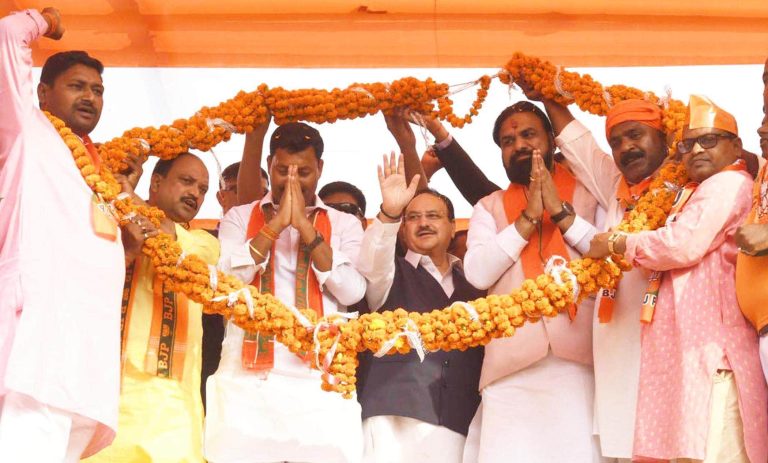
BJP National President JP Nadda has already begun election rallies supporting NDA candidates, setting the stage for the BJP Bihar manifesto’s formal unveiling and the campaign’s final phase.

Investment and Migration Focus

The BJP Bihar manifesto’s infrastructure emphasis aims to address two interconnected challenges: attracting investment and curbing migration. By creating ground-level infrastructure and empowering entrepreneurs, the BJP Bihar manifesto promises to transform Bihar’s economic trajectory and provide in-state employment opportunities that reduce the necessity for outmigration to other states.

Tejashwi Yadav CM Candidate: Powerful Declaration Ends Bihar Crisis Amid Polls 2025

Bihar – After weeks of suspense and internal discord over seat-sharing arrangements, the Opposition’s INDIA bloc in Bihar finally rallied around Rashtriya Janata Dal leader, Tejashwi Yadav with his CM candidate announcement on Thursday. The formal declaration of the Tejashwi Yadav CM candidate status came during a joint press conference in Patna, ending months of speculation and behind-the-scenes negotiations. Political analysts had long considered the Tejashwi Yadav CM candidate designation inevitable, given his political stature and electoral track record.

In a symbolic gesture promoting alliance unity, Vikassheel Insaan Party chief Mukesh Sahani was named the deputy chief ministerial face, signaling the INDIA bloc’s attempt to move beyond weeks of public squabbling and present a united front against the ruling National Democratic Alliance.

Congress Leadership Endorses Decision

The Tejashwi Yadav CM candidate announcement received full backing from Congress leadership, with former Rajasthan Chief Minister Ashok Gehlot serving as the party’s troubleshooter. Gehlot shared the dais with Lalu Prasad, Rabri Devi, and Tejashwi Yadav during the historic press conference that finalized the opposition’s leadership structure.

“All allies in the INDIA bloc, including our leader Rahul Gandhi, have decided that Tejashwi will be our CM face and we will fight the election unitedly. The decision has been taken after consultation with all allies and our president Mallikarjun Kharge,” Ashok Gehlot stated, bringing clarity to the prolonged leadership question surrounding the Tejashwi Yadav CM candidate matter.

An Inevitable Political Choice

The Tejashwi Yadav CM candidate elevation represents less a sudden rise than a carefully crafted inevitability shaped by political realities. Having led the alliance in 2020 when it came within striking distance of power, Tejashwi understood the complex dynamics at play. Despite Congress reportedly using delay tactics to negotiate more seats, the Tejashwi Yadav CM candidate announcement ultimately reflected his undeniable political primacy within the alliance.

His strategic equation with Vikassheel Insaan Party chief Mukesh Sahani proved crucial in smoothing tensions and facilitating the Tejashwi Yadav CM candidate declaration, demonstrating his diplomatic skills beyond mere electoral popularity.

Learning from 2020 Near-Victory

The Tejashwi Yadav CM candidate credentials were substantially strengthened by the 2020 election performance, when the Mahagathbandhan under his leadership fell just 12 seats short of majority. The RJD emerged as the single-largest party with 75 seats, establishing Tejashwi’s electoral viability. Reports suggested he had even prepared for the swearing-in ceremony before the opportunity slipped away, a near-miss that profoundly shaped his political evolution.

Since that heartbreaking loss, the Tejashwi Yadav CM candidate has transformed from being perceived merely as a political dynast to becoming a decisive campaigner who effectively sets narratives around employment, youth empowerment, and welfare policies.

Also Read: Tejashwi Yadav Jeevika Jobs: Bold Promise Transforms Bihar Campaign

Political Journey and Evolution

The Tejashwi Yadav CM candidate’s confirmation as the Mahagathbandhan’s undisputed leader comes 15 years after his first press appearance at the RJD office in Patna. A former Delhi Daredevils IPL squad member who never took the field during four seasons, Tejashwi chose politics over cricket, guided by his father Lalu Prasad’s political instincts and aided by trusted adviser Sanjay Yadav.

He entered electoral politics in 2015 from Raghopur in Vaishali district and swiftly ascended to deputy chief minister in Nitish Kumar’s government. During that brief 17-month tenure, the future Tejashwi Yadav CM candidate earned reputation as an efficient road construction minister.

Opposition Leadership Consolidation

Even after Nitish Kumar switched sides citing corruption allegations, the Tejashwi Yadav CM candidate’s rise remained uninterrupted. As Leader of the Opposition, he became the government’s loudest critic, with his 2020 campaign promise of “10 lakh jobs” resonating across Bihar’s youth demographic.

During his second stint as deputy chief minister from 2022-2024, the Tejashwi Yadav CM candidate influenced Nitish’s own policy pitch. The chief minister’s Independence Day speech that year included promises of five lakh government jobs, echoing Tejashwi’s campaign themes and demonstrating his policy influence.

Family Dynamics and Party Control

With elder brother Tej Pratap Yadav pursuing an independent political path and sister Misa Bharti consolidating her position in national politics, the Tejashwi Yadav CM candidate firmly controls the RJD’s direction and destiny. This internal family dynamic has eliminated potential succession disputes and strengthened his position as the undisputed party leader.

Legal Challenges and Controversies

The Tejashwi Yadav CM candidate faces ongoing legal challenges, including a 2017 CBI case involving alleged irregularities in awarding IRCTC hotel maintenance contracts during Lalu Prasad’s railway minister tenure between 2004-2009. A 2022 CBI case accuses him of involvement in exchanging land for Group D railway jobs during the same period.

Additionally, the Tejashwi Yadav CM candidate is accused in a 2020 murder case alongside his brother. His 2020 election affidavit disclosed 11 criminal cases, including charges of criminal conspiracy, cheating, forgery, and offences under anti-corruption and money-laundering laws. He dismisses these as “political vendetta” by the BJP.

Strategic Focus on Employment and Governance

Despite controversies, the Tejashwi Yadav CM candidate has maintained focus on employment and governance issues, challenging the NDA’s “jungle raj” narrative with crime and corruption data from Nitish Kumar’s two-decade rule. This strategic positioning has helped him maintain credibility among Bihar’s youth demographic.

Electoral Prospects

The Tejashwi Yadav CM candidate announcement aims to unseat Chief Minister Nitish Kumar after four consecutive terms. Thursday’s declaration injected confidence into the opposition alliance and shifted focus toward the ruling National Democratic Alliance, setting the stage for a competitive Bihar assembly election.

H-1B Visa Fee Hike: Explosive White House Defense Against Lawsuits

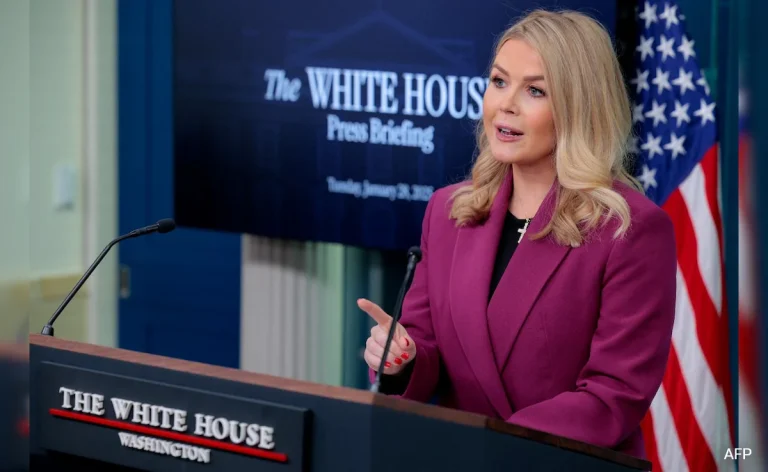
Washington D.C. – The White House doubled down on Thursday defending President Donald Trump’s controversial H-1B visa fee hike, with Press Secretary Karoline Leavitt stating the administration will vigorously fight legal challenges in court. The H-1B visa fee hike, which raises petition costs to $100,000, has sparked intense controversy and multiple lawsuits from business groups, unions, and religious organizations. Leavitt’s forceful defense of the H-1B visa fee hike came during a media briefing where she characterized the existing visa system as riddled with fraud that has depressed American wages.

“The administration will fight these lawsuits in court. The president’s main priority has always been to put American workers first and to strengthen our visa system. For far too long, the H-1B visa system has been spammed with fraud, and that’s driven down American wages,” Leavitt declared, framing the H-1B visa fee hike as a necessary corrective measure.

White House Justifies Massive Fee Increase

The press secretary emphasized that the H-1B visa fee hike represents part of President Trump’s broader strategy to refine and improve the skilled worker visa system. “The president wants to refine this system, which is part of the reason he implemented these new policies. These actions are lawful, they are necessary, and we’ll continue to fight this battle in court,” she stated, signaling the administration’s determination to defend the H-1B visa fee hike against mounting legal opposition.

The administration’s defense of the H-1B visa fee hike rests primarily on claims that the current system has been exploited through fraudulent applications, undermining both American workers’ employment prospects and wage levels. By implementing the substantial fee increase, Trump aims to deter abuse while prioritizing American job seekers.

US Chamber of Commerce Files Legal Challenge

The White House defense of the H-1B visa fee hike came in direct response to a legal challenge filed by the US Chamber of Commerce, one of America’s most influential business advocacy organizations. The Chamber’s lawsuit argues that the H-1B visa fee hike is unlawful and will severely damage US industries’ ability to compete globally.

According to the Chamber’s official litigation statement, the H-1B visa fee hike overrides provisions of the Immigration and Nationality Act that govern the H-1B program, including statutory requirements that fees be based on actual government processing costs rather than arbitrary amounts. This legal argument challenges the fundamental authority behind the H-1B visa fee hike.

Widespread Opposition from Multiple Sectors

Beyond the US Chamber of Commerce, the H-1B visa fee hike has attracted legal challenges from diverse groups including unions, employers, and religious organizations. Multiple lawsuits have been filed in federal courts in California and Washington DC, with plaintiffs unanimously arguing that the fee increase is unlawful and harmful to American economic interests.

Neil Bradley, Executive Vice President and Chief Policy Officer at the US Chamber, articulated concerns about the H-1B visa fee hike’s practical impact: “The new $100,000 visa fee will make it cost-prohibitive for US employers, especially start-ups and small and midsize businesses, to utilize the H-1B program, which Congress created expressly to ensure that American businesses of all sizes can access the global talent they need to grow their operations here in the US.”

Also Read: Trump Putin Sanctions: Critical 6-Month Timeline Showdown Over Russian Oil

Economic Growth Concerns

Bradley’s statement highlighted an apparent contradiction in Trump’s economic agenda, noting that while the administration pursues pro-growth policies including tax reforms and deregulation, the H-1B visa fee hike works against these objectives. “President Trump has embarked on an ambitious agenda of securing permanent pro-growth tax reforms, unleashing American energy, and unravelling the overregulation that has stifled growth. The Chamber and our members have actively backed these proposals to attract more investment in America. To support this growth, our economy will require more workers, not fewer,” Bradley stated.

This argument positions the H-1B visa fee hike as counterproductive to broader economic expansion goals, potentially limiting companies’ access to necessary skilled talent during a period of economic growth.

Understanding the H-1B Visa System

In the United States, the H-1B visa system allows companies to hire skilled foreign workers in specialty occupations requiring theoretical or technical expertise. President Trump announced the H-1B visa fee hike in September as part of his immigration policy overhaul aimed at tackling immigration issues and expanding employment opportunities for American workers.

Under the executive order implementing the H-1B visa fee hike, companies must pay the $100,000 fee in addition to existing vetting charges when sponsoring an H-1B visa petition. This represents a dramatic increase from previous fee structures, fundamentally changing the economics of hiring foreign skilled workers.

Disproportionate Impact on Small Businesses

Critics of the H-1B visa fee hike particularly emphasize its disproportionate burden on startups and small to midsize businesses. While large corporations may absorb the increased costs, smaller companies with limited budgets may find the H-1B visa fee hike prohibitively expensive, potentially forcing them to forgo hiring skilled foreign workers even when no qualified American candidates are available.

Legal Battle Ahead

With the White House firmly committed to defending the H-1B visa fee hike and multiple plaintiffs equally determined to overturn it, a protracted legal battle appears inevitable. Federal courts in California and Washington DC will ultimately determine whether the administration possessed legal authority to implement such a substantial fee increase and whether it aligns with congressional intent behind the H-1B program.

The outcome of this litigation will significantly impact American businesses’ ability to access global talent and could reshape the skilled worker immigration landscape for years to come.

Trump Canada Trade Talks: Shocking Termination Over Old 1987 Reagan Ad

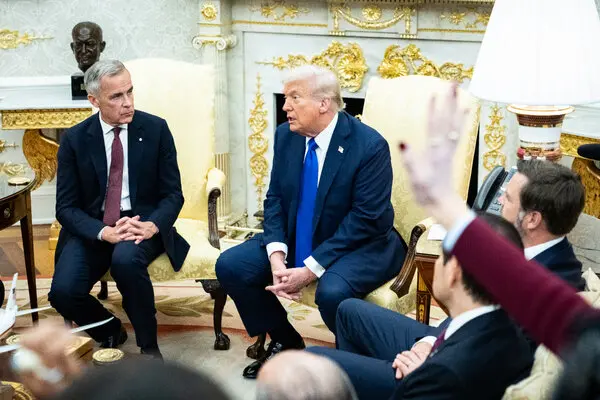
Washington D.C. – US President Donald Trump announced on Thursday the immediate termination of Trump Canada trade talks, citing what he described as fraudulent use of former President Ronald Reagan’s image in a Canadian advertising campaign. The abrupt decision to end Trump Canada trade talks comes weeks after Canadian Prime Minister Mark Carney visited the White House in an attempt to mend deteriorating trade relations between the neighboring nations. This dramatic escalation marks a significant setback in bilateral economic diplomacy.

Trump’s declaration ending Trump Canada trade talks appeared on Truth Social, where he accused Ottawa of deliberately misrepresenting Reagan’s position on tariffs to influence American legal proceedings and public opinion.

Reagan Foundation Statement Triggers Crisis

“The Ronald Reagan Foundation has just announced that Canada has fraudulently used an advertisement, which is FAKE, featuring Ronald Reagan speaking negatively about Tariffs,” Trump stated in his post. The president characterized the advertisement as an attempt to interfere with decisions of the US Supreme Court and other judicial bodies, elevating the dispute beyond simple trade disagreements.

Trump emphasized the strategic importance of tariffs, declaring: “TARIFFS ARE VERY IMPORTANT TO THE NATIONAL SECURITY, AND ECONOMY, OF THE U.S.A. Based on their egregious behavior, ALL TRADE NEGOTIATIONS WITH CANADA ARE HEREBY TERMINATED.” This forceful language signals the severity with which Trump views Canada’s advertising campaign and its impact on Trump Canada trade talks.

Controversial Ontario Anti-Tariff Campaign

The advertisement that precipitated the end of Trump Canada trade talks featured excerpts from a 1987 radio address by former Republican President Ronald Reagan. The one-minute promotional spot used Reagan’s words to argue against tariffs, specifically referencing his justification for imposing 100 percent tariffs on Japanese electronics during a semiconductor trade dispute.

In the advertisement, Reagan’s voice warns about the long-term dangers of protectionist trade policies: “High tariffs inevitably lead to retaliation by foreign countries and the triggering of fierce trade wars. Then the worst happens. Markets shrink and collapse, businesses and industries shut down and millions of people lose their jobs.”

The advertisement aired on major American networks, reaching audiences across the United States and directly challenging Trump’s tariff-centric trade policy.

Ontario Premier’s Strategic Messaging

Ontario Premier Doug Ford announced the $75 million advertising campaign that ultimately ended Trump Canada trade talks. “I’m a big Ronald Reagan fan . . . We’re going to launch a $75 million ad, and we’re going to repeat that message to every Republican district there is, right across the entire country,” Ford declared, indicating the campaign’s ambitious scope and targeted political strategy.

This aggressive approach, designed to influence American public opinion and potentially sway Republican lawmakers, backfired spectacularly by provoking Trump’s complete withdrawal from Trump Canada trade talks rather than moderating his tariff positions.

Also Read: Trump Putin Sanctions: Critical 6-Month Timeline Showdown Over Russian Oil

Liberation Day Tariffs Sparked Initial Tensions

The current crisis in Trump Canada trade talks stems from Trump’s “Liberation Day” tariff announcements, which imposed new levies on Canadian steel, automobiles, digital services, and numerous other products. These sweeping tariffs fundamentally disrupted the integrated North American supply chains that have developed over decades of economic cooperation.

Earlier this year, the United States imposed a 25 percent tariff on Canadian exports and an additional 10 percent levy on energy product exports from Canada. These measures created immediate economic hardship for Canadian industries and prompted retaliatory responses that further complicated Trump Canada trade talks.

Canadian Counter-Tariff Measures

In response to American tariffs, Canada implemented counter-tariffs on $30 billion worth of goods imported from the United States. The Canadian retaliation targeted strategically significant American products including orange juice, peanut butter, wine, spirits, beer, coffee, appliances, and apparel, aiming to create political pressure in key American constituencies.

Following specific tariffs on steel and aluminum, Canada imposed matching 25 percent tariffs on American steel and aluminum products, along with tools, computers, servers, display monitors, sports equipment, and cast-iron products. This tit-for-tat escalation created the contentious environment that ultimately doomed Trump Canada trade talks.

Mark Carney’s Failed Diplomatic Mission

Canadian Prime Minister Mark Carney visited Washington DC earlier this month specifically to defuse escalating trade tensions and restart productive Trump Canada trade talks. During this diplomatic visit, both leaders publicly agreed to “work out their differences,” suggesting potential progress toward resolving the tariff dispute.

However, the subsequent Reagan advertisement controversy completely undermined whatever goodwill had been established during Carney’s Washington visit, demonstrating the fragility of Trump Canada trade talks and the president’s sensitivity to perceived slights or manipulation.

Implications for Bilateral Relations

The termination of Trump Canada trade talks represents a significant deterioration in historically close US-Canada relations. The integrated economies of both nations mean that prolonged trade conflicts create substantial economic pain on both sides of the border, affecting industries, workers, and consumers throughout North America.

The Reagan advertisement controversy, while seemingly a peripheral issue, became the breaking point in already strained Trump Canada trade talks. Trump’s characterization of Canadian actions as “egregious behavior” suggests deep offense that may take considerable diplomatic effort to overcome.

Uncertain Path Forward

With Trump Canada trade talks officially terminated, both nations face uncertain economic futures. The escalating tariff war continues without diplomatic channels to resolve disputes, potentially leading to further retaliatory measures and economic damage. The complete breakdown of Trump Canada trade talks leaves businesses and workers on both sides facing prolonged uncertainty about cross-border commerce.

Trump Putin Sanctions: Critical 6-Month Timeline Showdown Over Russian Oil

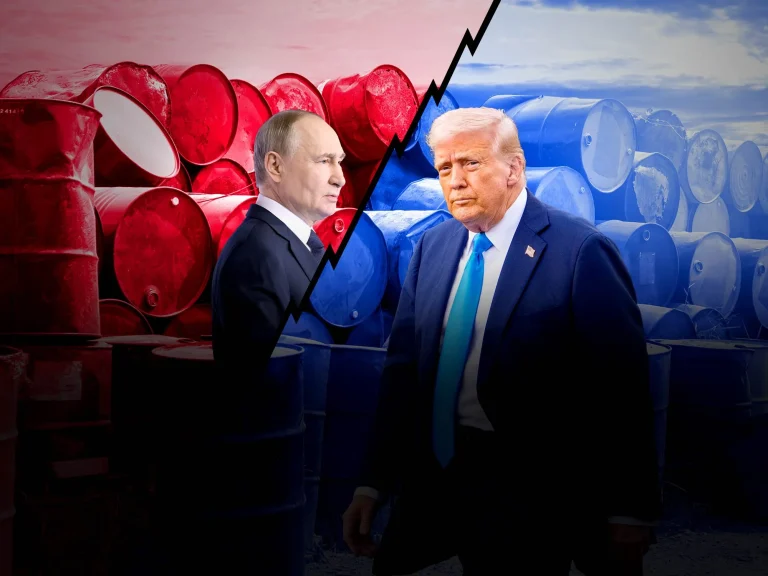
Washington D.C. – United States President Donald Trump sought to dismiss Russia’s reaction to the Trump Putin sanctions announced on Wednesday, stating that the true impact of these measures remains to be seen over the coming months. When questioned by a White House reporter on Thursday about Russian President Vladimir Putin’s assertion that the sanctions won’t significantly harm Russia’s economy, Trump responded, “I am glad he feels that way. I’ll let you know about it in six months from now. Let’s see how it all works out…”

This measured response from Trump regarding the Trump Putin sanctions suggests a wait-and-see approach to evaluating their effectiveness, while demonstrating confidence in the measures’ long-term impact on Russian economic interests.

Putin’s Defiant Stance on New Measures

Responding to the Trump Putin sanctions, the Russian president declared that Moscow will “never bow down” to US pressure. Speaking to Russian journalists on Thursday, Putin characterized the sanctions as an “unfriendly act that does nothing to strengthen Russian-American relations” and dismissed them as a futile “attempt to put pressure on Russia.”

Putin emphasized national sovereignty in his response to the Trump Putin sanctions, stating, “No self-respecting country ever does anything under pressure.” The Russian leader maintained that these economic measures would not significantly affect the Russian economy, projecting confidence despite global market reactions indicating otherwise.

Tomahawk Missile Warning Escalates Tensions

Beyond economic concerns, Putin issued a stark warning regarding military implications of the Trump Putin sanctions. The Russian leader cautioned Trump about a “strong response” if Ukraine were to use US Tomahawk missiles against Russia amid the ongoing conflict. This military dimension adds another layer of complexity to the Trump Putin sanctions dispute, suggesting potential escalation beyond economic warfare.

The Tomahawk warning represents Putin’s attempt to establish red lines in the conflict, directly connecting the economic pressure from Trump Putin sanctions with potential military consequences if certain thresholds are crossed in Ukraine.

First Ukraine-Related Sanctions of Second Term

The Trump Putin sanctions mark a significant policy milestone as the first time the US President has imposed Ukraine-related sanctions on Russia during his second term. This shift represents a departure from Trump’s earlier conciliatory approach toward Moscow and signals increased frustration with Russia’s unwillingness to end the Ukraine conflict.

On Wednesday, Trump announced sanctions targeting two of Russia’s largest oil companies—Rosneft and Lukoil—in a strategic bid to pressure Russia into stopping the war in Ukraine. Global oil prices surged by 5 percent following the announcement, demonstrating the market’s recognition of these Trump Putin sanctions’ potential impact on energy supplies.

Cancelled Budapest Meeting

The Trump Putin sanctions announcement came after Trump cancelled a planned meeting with Putin in Budapest. “We cancelled the meeting with President Putin — it just didn’t feel right to me. It didn’t feel like we were going to get to the place we have to get. So I cancelled it, but we’ll do it in the future,” Trump explained at the White House on Wednesday.

Earlier, Trump had hoped to persuade Putin to end the Ukraine war through direct dialogue, with both leaders scheduled to meet in the Hungarian capital. However, the cancellation suggests deteriorating prospects for diplomatic breakthrough, making the Trump Putin sanctions a primary tool for applying pressure instead of negotiation.

Impact on Global Oil Markets

The Trump Putin sanctions specifically target Rosneft and Lukoil, effectively cutting them off from the global monetary exchange system underpinned by the American dollar. Since oil consignment payments are primarily conducted in US dollars, these companies face severe limitations in conducting international business.

The 5 percent surge in global oil prices immediately following the Trump Putin sanctions announcement reflects market concerns about supply disruptions and the effectiveness of these measures in restricting Russian energy exports.

Indian Refiners Face Difficult Choices

The Trump Putin sanctions have created significant complications for India’s energy sector. US President Trump has repeatedly claimed that India will slash its oil purchases from Russia, though no official confirmation has emerged from Indian authorities. However, several Indian and Chinese refiners may be forced to reduce Russian oil imports due to the dollar-based payment restrictions.

Under the Trump Putin sanctions framework, Indian refiners are reviewing their Russian oil purchase agreements and awaiting government guidance on how to proceed. The sanctions’ extraterritorial impact means that even non-US companies risk secondary sanctions if they continue extensive dealings with sanctioned Russian entities.

Putin’s Broader Critique of US Policy

Putin’s response to the Trump Putin sanctions extended beyond immediate economic concerns to address broader principles of international relations. He emphasized that “no self-respecting country and no self-respecting people ever decides anything under pressure,” framing the issue as one of national dignity and sovereignty rather than purely economic calculation.

This rhetorical positioning suggests Putin views the Trump Putin sanctions not merely as economic policy but as an attempt to undermine Russian independence and force policy changes through coercion rather than mutual agreement.

Six-Month Timeline for Assessment

Trump’s statement about evaluating the Trump Putin sanctions’ effectiveness in six months establishes a specific timeline for measuring success. This timeframe allows sufficient duration for sanctions to impact Russian oil revenues, government budgets, and economic planning while providing a concrete deadline for policy assessment.

The six-month evaluation period for the Trump Putin sanctions suggests Trump expects measurable economic consequences despite Putin’s confident dismissal of their potential impact, setting up a clear test of whether economic pressure can achieve diplomatic objectives in ending the Ukraine conflict

Kurnool Bus Fire: Devastating Tragedy Claims 20 Lives

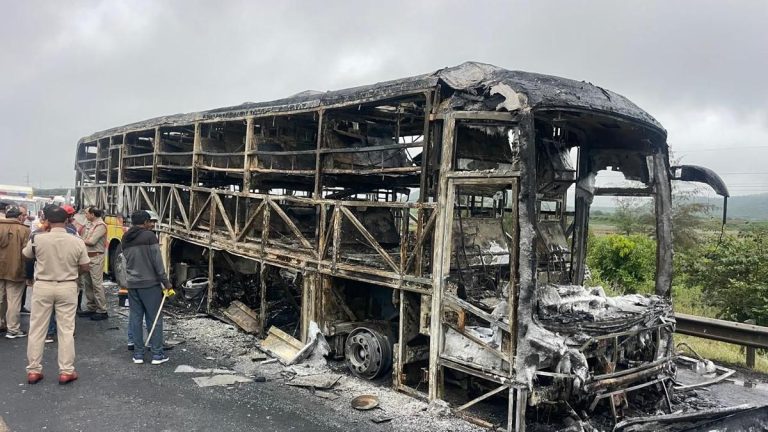
Andhra Pradesh – In a devastating incident that shocked Andhra Pradesh, the Kurnool bus fire tragedy claimed at least 20 lives when a private bus caught fire while traveling from Hyderabad to Bengaluru. The catastrophic Kurnool bus fire occurred around 3:30 am on Friday on National Highway 44 outside Kurnool city, leaving families in mourning and raising serious questions about road safety protocols. The bus, operated by Kaveri Travels, carried 44 passengers when flames suddenly engulfed the vehicle in the early morning hours.

The Kurnool bus fire represents one of the most horrific road accidents in recent Andhra Pradesh history, with the intensity of the blaze leaving little chance for many passengers to escape. Most victims were sleeping when disaster struck, making rescue efforts even more challenging.

Chain of Events Leading to the Disaster

According to police reports, the Kurnool bus fire was triggered by a sequence of unfortunate events beginning with a collision. The bus reportedly rammed into a motorcycle traveling on the highway, and the two-wheeler became lodged underneath the vehicle. As the motorcycle was dragged along, it struck the bus’s fuel tank, causing an immediate and catastrophic explosion.

The impact on the fuel tank proved fatal, as flames rapidly spread throughout the vehicle within seconds of the initial collision. Police officials investigating the Kurnool bus fire revealed that the situation worsened dramatically when the bus door jammed due to a short circuit, trapping passengers inside the burning vehicle. Within minutes, the bus was completely gutted, leaving rescuers with limited time to save lives.

Passenger Casualties and Survivors

The Kurnool bus fire occurred during early morning hours when most passengers were asleep, significantly contributing to the high death toll. However, those passengers who were awake or immediately awakened by the crash impact managed to escape by breaking windows. The quick thinking of these individuals saved their lives as traditional exit routes became inaccessible.

Most survivors of the Kurnool bus fire are reportedly aged between 25 and 35 years. Among those who escaped the inferno were two children and two bus drivers. The drivers’ decision to flee the scene immediately after the accident has drawn criticism and prompted police to launch an extensive search operation. Authorities have registered a case and deployed teams to trace the absconding drivers who abandoned passengers during the crisis.

Local Response and Rescue Operations

The Kurnool bus fire attracted immediate attention from local residents who heard passengers’ desperate screams for help amid the flames. These brave locals rushed to the accident site and attempted to rescue trapped passengers before professional help arrived. Their efforts, though commendable, could only do so much against the intensity of the fire.

Firefighters from Kurnool deployed four fire engines to combat the Kurnool bus fire and bring the blaze under control. Despite their prompt response and professional efforts, the fire had already consumed the vehicle by the time they arrived. The bus was reduced to ashes, leaving behind a charred frame and devastating loss.

Also Read: Massive Fire Engulfs House and Godown on Sahebganj Road in Dinhata, Cooch Behar: Highlights Urgent Need for Improved Fire Safety Measures and Emergency Preparedness

Rescue teams immediately shifted injured survivors to Kurnool Government General Hospital for emergency medical treatment. Preliminary reports indicate that the majority of passengers were Hyderabad residents, making the tragedy particularly painful for families in the city.

High-Level Government Response

President Droupadi Murmu expressed profound sorrow over the Kurnool bus fire, stating, “The loss of lives in the tragic bus fire accident in Kurnool, Andhra Pradesh, is deeply unfortunate. I extend my heartfelt condolences to the bereaved families and pray for the speedy recovery of those injured.”

Andhra Pradesh Chief Minister N Chandrababu Naidu, currently in Dubai on official business, received briefings about the Kurnool bus fire and expressed deep sorrow over the tragic loss of lives. He immediately directed the chief secretary and senior officials to rush to the accident site and personally oversee rescue and relief operations.

The Chief Minister issued specific instructions regarding the Kurnool bus fire response: injured passengers must receive the best possible medical care, all necessary assistance must be extended to deceased victims’ families, steps must be taken to prevent further casualties, and a thorough investigation must determine the accident’s exact cause.

Investigation and Identification Process

Forensic teams have been deployed to the Kurnool bus fire site to identify the charred bodies recovered from the wreckage. The intense heat of the flames made visual identification extremely difficult, necessitating scientific methods. DNA tests will be conducted where necessary to confirm victims’ identities, providing closure to grieving families.

The police investigation into the Kurnool bus fire continues, focusing on multiple aspects including the initial motorcycle collision, fuel tank vulnerability, door jamming mechanism, and drivers’ actions. Authorities are examining whether safety protocols were followed and if any negligence contributed to the high casualty count.

Impact on Communities

The Kurnool bus fire tragedy has cast a pall of gloom across Kurnool and Hyderabad, with anxious relatives awaiting confirmation about their loved ones. The incident has reignited debates about bus safety standards, emergency exit accessibility, fuel tank protection, and driver accountability during accidents.

This devastating Kurnool bus fire serves as a stark reminder of the importance of stringent vehicle safety standards, regular maintenance checks, driver training for emergency situations, and rapid response mechanisms for highway accidents across India’s extensive road network.