Friday, April 24, 2026
Home Blog Page 76

Darjeeling Hill Politics Mamata Loyalty Debate 2026 – Detailed Analysis of Anit Thapa vs Ajoy Edwards and Governance Lessons

The Darjeeling hill politics Mamata loyalty debate 2026 has reignited tensions in the region’s political landscape. A public sparring between Anit Thapa, president of the Bharatiya Gorkha Prajatantrik Morcha (BGPM), and Ajoy Edwards, leader of the Hamro Party, has triggered a heated discussion over loyalty to West Bengal Chief Minister Mamata Banerjee.

This confrontation reflects deeper questions about identity, autonomy, and political allegiance in the Darjeeling hills, where the demand for Gorkhaland has historically shaped electoral strategies.


2. Darjeeling Hill Politics: The Trigger

  • Anit Thapa’s stance: Defended his party’s alliance with Mamata Banerjee and the Trinamool Congress (TMC), arguing it ensures development and stability in the hills.
  • Ajoy Edwards’ criticism: Questioned Thapa’s loyalty, accusing him of compromising hill identity for political convenience.
  • Public debate: Sparked discussions across Darjeeling, Kalimpong, and Kurseong about whether aligning with Mamata strengthens or weakens the Gorkha cause.

3. Historical Context of Hill Politics

  • 1980s: Gorkhaland agitation led by Subash Ghising and the GNLF.
  • 2007–2017: Bimal Gurung’s GJM revived the demand, leading to violent agitations.
  • 2011: Mamata Banerjee’s rise shifted state‑hill relations, with promises of development boards.
  • 2021–2026: BGPM and Hamro Party emerged as new players, reshaping alliances.

4. Anit Thapa’s Position

  • Development narrative: Argues that aligning with Mamata ensures funds, projects, and peace.
  • Pragmatism: Frames loyalty as a strategic choice to avoid instability.
  • Criticism of rivals: Accuses Ajoy Edwards of exploiting identity politics without offering solutions.
  • Grassroots strategy: Mobilises cadres through promises of jobs and infrastructure.

5. Ajoy Edwards’ Position

  • Identity narrative: Frames loyalty to Mamata as betrayal of Gorkha aspirations.
  • Criticism: Accuses BGPM of being a proxy for TMC in the hills.
  • Strategy: Mobilises youth and civil society around autonomy and cultural pride.
  • Electoral pitch: Positions Hamro Party as the true defender of Gorkha identity.

6. Governance Challenges

The loyalty debate reflects systemic governance issues:

  • Autonomy vs integration: Balancing Gorkha identity with Bengal’s governance.
  • Development gaps: Roads, schools, and healthcare remain inadequate in hill districts.
  • Trust deficit: Citizens sceptical of promises from both state and hill parties.
  • Judicial oversight: Courts have occasionally intervened in disputes over hill governance.

7. Community Concerns

  • Families: Fear instability if hill politics returns to agitation.
  • Youth: Demand jobs and education, frustrated by identity politics.
  • Civil society: Call for participatory governance and transparency.
  • Tourism stakeholders: Worry that political unrest could damage Darjeeling’s global image.

8. Government External Links for Assistance


9. Global Comparisons

Similar identity‑politics disputes worldwide:

  • Scotland: Debate over loyalty to UK vs independence.
  • Catalonia (Spain): Tensions over autonomy and loyalty to Madrid.
  • Quebec (Canada): French identity vs Canadian federalism.

Darjeeling’s case mirrors these global struggles where regional identity collides with national integration and political pragmatism.


10. Governance Lessons

The hill loyalty debate teaches:

  • Identity politics must be balanced with development.
  • Transparency in alliances is essential.
  • Community participation ensures legitimacy.
  • Judicial oversight protects democratic values.

11. Future Outlook – Hill Governance in Bengal

India must move towards:

  • Balanced policies combining autonomy and integration.
  • Digitised project dashboards to track hill development.
  • Public‑private partnerships for sustainable tourism.
  • Educational campaigns linking identity with civic responsibility.

✅ Conclusion

The Darjeeling hill politics Mamata loyalty debate 2026 is more than a clash between Anit Thapa and Ajoy Edwards—it is a test of Bengal’s ability to reconcile identity with governance. As loyalty to Mamata Banerjee becomes a litmus test in the hills, ordinary citizens bear the brunt of uncertainty. For Darjeeling, the lesson is clear: democracy thrives when governance delivers jobs, fairness, and respect for both identity and integration.

Also read: Home | Channel 6 Network – Latest News, Breaking Updates: Politics, Business, Tech & More
Abhishek Banerjee TMC Strategy 2026 – Detailed Analysis of Supreme Court Verdict on 1.36 Crore Voters and Governance Lessons for Bengal

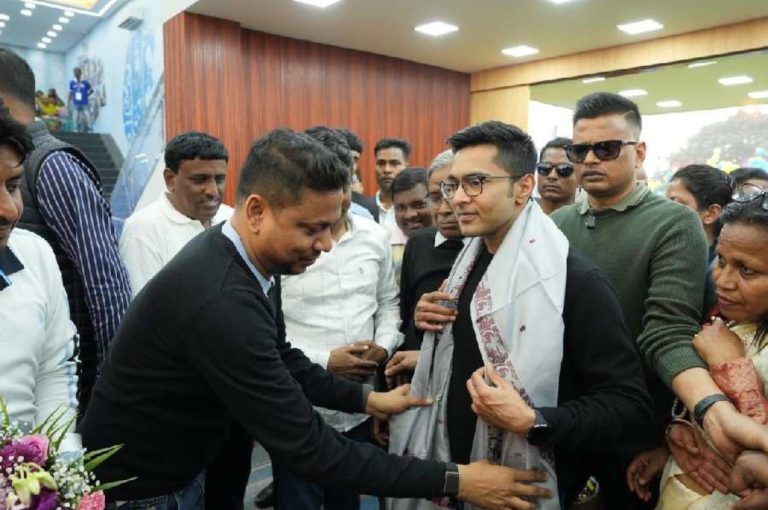
The Abhishek Banerjee TMC strategy 2026 has become a defining moment in Bengal’s electoral politics. Following the Supreme Court’s directive questioning the Election Commission’s logic in flagging 1.36 crore voters under “logical discrepancy,” the TMC’s national general secretary announced a mega virtual meeting with over one lakh party functionaries to set the party’s next course of action.

This strategy session is aimed at mobilising booth‑level agents (BLAs) and grassroots cadres to reach out to affected voters, assist them during hearings, and politically capitalise on what TMC describes as a setback for the Election Commission and BJP.


2. Supreme Court’s Verdict

  • Bench: Chief Justice Surya Kant, Justice Joymalya Bagchi, and Justice Dipankar Datta.
  • Order: Directed the Election Commission to publish the complete list of 1.36 crore voters flagged under “logical discrepancy” at panchayat, block, and ward offices.
  • Observation: Questioned the logic adopted by the EC in scrutinising voter enumeration forms.
  • Impact: Ensured transparency and allowed BLAs or accompanying persons to attend hearings.

3. Abhishek Banerjee’s Strategy

  • Mega meeting: Scheduled with over one lakh party functionaries, including BLAs.
  • Objective: Mobilise cadres to assist affected voters during hearings.
  • Directive: BLAs to remain present at hearings to ensure no voter is harassed.
  • Narrative: Position TMC as the defender of voter rights against EC and BJP.

4. TMC’s Allegations

  • Targeting communities: TMC suspects women, minorities, tribal, and backward‑class voters were disproportionately flagged.
  • AI errors: Many discrepancies arose due to flaws in the EC’s scanning system, allegedly driven by artificial intelligence.
  • Examples: Names like “Sarbajit” recorded as “Sarbajeet” and “Sirajul” as “Crajole.”
  • Narrative: EC’s flawed system resulted in harassment of innocent voters.

5. BJP’s Position

  • Response: BJP appeared subdued after the SC verdict.
  • Demand: EC must ensure rolls are free of infiltrators, deceased, and duplicate voters.
  • Complaint: BJP claimed its supporters were barred from submitting Form 7.
  • Counter‑strategy: BJP BLAs will also attend hearings to protect their interests.

6. Governance Challenges

The controversy reflects systemic governance issues:

  • Electoral transparency: Citizens lack trust in the voter roll revision process.
  • Administrative neutrality: Allegations of bias against election officials persist.
  • Technology flaws: AI‑driven errors highlight risks of automation without oversight.
  • Judicial oversight: Supreme Court remains vital in protecting democratic rights.

7. Community Concerns

  • Families: Fear wrongful deletion of names due to minor errors.
  • Students: Frustrated by rejection of Madhyamik admit cards despite SC order.
  • Civil society groups: Demand transparency and grievance redressal mechanisms.
  • Opposition voices: Warn of potential misuse of relaxed verification standards.

8. Government External Links for Assistance


9. Historical Context of Electoral Disputes in Bengal

  • 1970s–80s: Allegations of voter list manipulation during Left Front rule.
  • 2011: TMC rose to power, promising electoral reforms.
  • 2019–2021: BJP gained ground, raising concerns about fictitious voters.
  • 2026: SC verdict on 1.36 crore voters reflects continuity of disputes over voter rolls.

10. Global Comparisons

Similar electoral disputes worldwide:

  • USA: Allegations of voter suppression through purges in Georgia and Florida.
  • UK: Concerns about disenfranchisement under new voter ID laws.
  • Nigeria: Disputes over duplicate registrations and ghost voters.

Bengal’s case mirrors these global struggles where electoral integrity collides with political rivalry and human vulnerability.


11. Governance Lessons

The SC verdict teaches:

  • Judicial orders must be implemented swiftly.
  • Transparency in electoral processes is non‑negotiable.
  • Technology must support, not obstruct, citizen rights.
  • Community engagement reduces panic and misinformation.

12. Future Outlook – Electoral Governance in Bengal

India must move towards:

  • Digitised grievance redressal portals for voter roll issues.
  • Periodic audits of electoral rolls by independent agencies.
  • Public dashboards showing deletions and additions transparently.
  • Educational campaigns to help citizens verify their status.

✅ Conclusion

The Abhishek Banerjee TMC strategy 2026 is more than a political manoeuvre—it is a test of Bengal’s democratic resilience. By mobilising cadres to assist 1.36 crore voters flagged under “logical discrepancy,” TMC seeks to position itself as the defender of voter rights, while BJP continues to push for deletion of fictitious names. For Bengal, the lesson is clear: democracy thrives when governance delivers clarity, fairness, and respect for citizens.

Also read: Home | Channel 6 Network – Latest News, Breaking Updates: Politics, Business, Tech & More
Bengal SIR Election Observers 2026 – Detailed Analysis of EC’s Monitoring Move, Political Reactions, and Governance Lessons

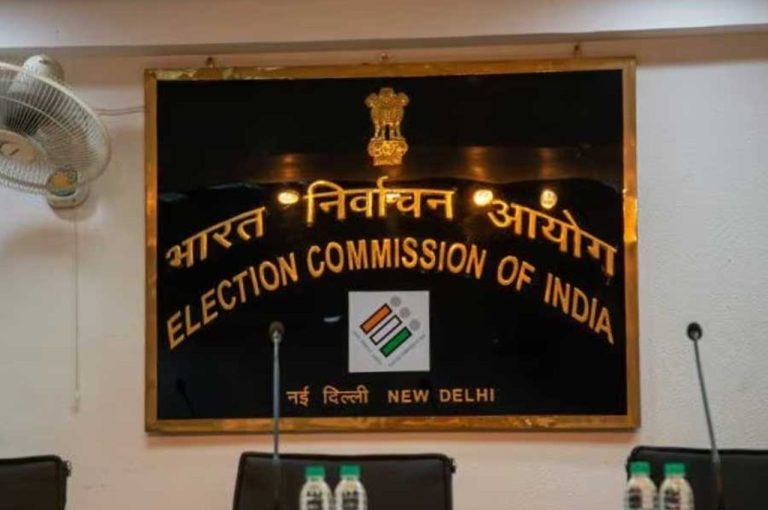
The Bengal SIR election observers 2026 initiative marks a significant intervention by the Election Commission of India (ECI) in West Bengal’s ongoing voter roll revision process. Amid mounting allegations of bias, harassment, and technical glitches, the ECI has deployed observers to 10 districts to oversee the Special Intensive Revision (SIR) hearings.

This move is intended to restore public confidence in the electoral process, ensure compliance with Supreme Court directives, and prevent further escalation of political clashes between the Trinamool Congress (TMC) and the Bharatiya Janata Party (BJP).


2. The Observers’ Mandate

  • Monitoring hearings: Observers will oversee the conduct of SIR hearings in designated districts.
  • Ensuring compliance: They will check whether Supreme Court orders—such as acceptance of Madhyamik admit cards—are being followed.
  • Reporting irregularities: Observers are tasked with documenting misbehaviour, harassment, or technical failures.
  • Restoring trust: Their presence is meant to reassure citizens that the process is transparent and fair.

3. Districts Under Observation

While the EC has not publicly disclosed all names, reports indicate that observers have been sent to politically sensitive districts such as:

  • North 24‑Parganas
  • South 24‑Parganas
  • Murshidabad
  • Nadia
  • Hooghly
  • Jalpaiguri
  • Cooch Behar
  • Alipurduar
  • Birbhum
  • Malda

These districts have witnessed clashes, mob attacks on BDO offices, and widespread complaints during the SIR process.


4. Bengal SIR Election Observers 2026: Political Reactions

  • TMC: Welcomed observers but accused the EC of creating confusion with its “logical discrepancy” filter.
  • BJP: Claimed observers are necessary to prevent TMC interference and protect genuine voter deletions.
  • Civil society: Expressed cautious optimism, urging observers to act independently.
  • Judicial voices: Stressed that compliance with Supreme Court orders is non‑negotiable.

5. Governance Challenges

The deployment of observers reflects systemic governance issues:

  • Electoral transparency: Citizens lack trust in the voter roll revision process.
  • Administrative neutrality: Allegations of bias against election officials persist.
  • Public safety: Violence and vandalism undermine democratic processes.
  • Judicial oversight: Supreme Court’s directives must be implemented effectively.

6. Community Concerns

  • Families: Fear wrongful deletion of names due to minor errors.
  • Students: Frustrated by rejection of Madhyamik admit cards.
  • Civil society groups: Demand transparency and grievance redressal mechanisms.
  • Opposition voices: Warn of potential misuse of relaxed verification standards.

7. Government External Links for Assistance


8. Historical Context of Electoral Disputes in Bengal

  • 1970s–80s: Allegations of voter list manipulation during Left Front rule.
  • 2011: TMC rose to power, promising electoral reforms.
  • 2019–2021: BJP gained ground, raising concerns about fictitious voters.
  • 2026: Observer deployment reflects continuity of disputes over voter rolls.

9. Global Comparisons

Similar electoral monitoring initiatives worldwide:

  • USA: Federal observers deployed in states with voter suppression concerns.
  • Kenya: International observers monitor elections to ensure fairness.
  • Bangladesh: Election observers deployed amid allegations of voter intimidation.

Bengal’s case mirrors these global practices where observer deployment strengthens electoral integrity and public trust.


10. Governance Lessons

The Bengal observer initiative teaches:

  • Transparency in electoral processes is non‑negotiable.
  • Neutrality of election officials must be ensured.
  • Community engagement reduces panic and misinformation.
  • Judicial oversight is vital to protect democratic rights.

11. Future Outlook – Electoral Governance in Bengal

India must move towards:

  • Digitised grievance redressal portals for voter roll issues.
  • Periodic audits of electoral rolls by independent agencies.
  • Public dashboards showing deletions and additions transparently.
  • Educational campaigns to help citizens verify their status.

✅ Conclusion

The Bengal SIR election observers 2026 initiative is more than a bureaucratic measure—it is a test of India’s democratic resilience. By sending observers to 10 districts, the Election Commission has acknowledged the seriousness of citizen complaints and political clashes. For Bengal, the lesson is clear: democracy thrives when governance delivers clarity, fairness, and respect for citizens.

Also read: Home | Channel 6 Network – Latest News, Breaking Updates: Politics, Business, Tech & More

Singur Political Showdown 2026 – Detailed Analysis of Mamata Banerjee’s Event, Modi’s Rally, and Governance Lessons for Bengal

The Singur political showdown 2026 has reignited one of Bengal’s most symbolic debates: the clash between industrialisation and farmers’ rights. Chief Minister Mamata Banerjee announced that she will hold a major political event in Singur on January 28, 2026, just days after Prime Minister Narendra Modi’s rally at the same site—the former Tata Nano factory plot.

This move is widely seen as a strategic counter‑narrative, with Mamata seeking to reclaim Singur’s legacy as a victory for farmers, while BJP positions it as a lost opportunity for industrialisation.


2. Singur Political Showdown 2026: The Context

  • Singur plot: Located in Hooghly district, once earmarked for Tata Motors’ Nano factory.
  • 2008 withdrawal: Tata pulled out after prolonged protests led by Mamata Banerjee and the Trinamool Congress (TMC).
  • Symbolism: Singur became a rallying cry for TMC’s rise to power, representing farmers’ rights against forced land acquisition.
  • 2026 showdown: Modi’s rally emphasised industrial revival, while Mamata’s upcoming event seeks to reaffirm her legacy.

3. Mamata Banerjee’s Strategy

  • Timing: Event scheduled just days after Modi’s rally to directly counter BJP’s narrative.
  • Message: Reinforce Singur as a victory for farmers and a symbol of people’s resistance.
  • Mobilisation: TMC cadres preparing to bring large crowds to showcase grassroots support.
  • Narrative: Position herself as the protector of Bengal’s agrarian identity against corporate exploitation.

4. Modi’s Rally

  • Focus: Industrial revival and job creation.
  • Observation: Modi avoided direct mention of Singur, sparking speculation.
  • Impact: Left space for state BJP leaders to take a stronger stance, promising industry on the Singur plot.
  • Political reading: Silence interpreted differently by TMC (as weakness) and BJP (as strategic restraint).

5. TMC vs BJP Narratives

  • TMC: Frames Singur as a moral victory for farmers, highlighting Supreme Court’s 2016 ruling that land acquisition was illegal.
  • BJP: Frames Singur as a lost opportunity, promising industry and jobs if elected.
  • Electoral impact: Singur remains a touchstone for Bengal’s voters, especially in rural and industrial constituencies.

6. Governance Challenges

The Singur debate highlights systemic governance issues:

  • Land acquisition: Balancing farmers’ rights with industrial needs.
  • Industrialisation: Bengal lags behind other states in attracting investment.
  • Trust deficit: Farmers remain sceptical after past controversies.
  • Political rivalry: Industrialisation debates often overshadow policy clarity.

7. Government External Links for Assistance


8. Historical Context of Singur

  • 2006: Tata Motors began construction of Nano factory.
  • 2008: Tata withdrew after protests led by Mamata Banerjee.
  • 2011: TMC used Singur as a key campaign issue to win power.
  • 2016: Supreme Court ruled land acquisition illegal, ordering return of land to farmers.
  • 2026: Mamata’s planned event reopens the debate amid BJP’s industrial promises.

9. Community Impact

  • Farmers: Divided between pride in TMC’s victory and hope for jobs through industry.
  • Youth: Demand employment opportunities, see industry as future.
  • Civil society: Call for balanced development respecting both agriculture and industry.
  • Business stakeholders: Interested in clarity on land policy before investing.

10. Global Comparisons

Similar land‑industry disputes worldwide:

  • China: Balances rapid industrialisation with rural displacement.
  • Brazil: Agro‑industrial conflicts between farmers and corporations.
  • South Africa: Land reform debates intersect with industrial development.

Singur’s case mirrors these global struggles where land, livelihood, and industrialisation collide in political discourse.


11. Governance Lessons

The Singur showdown teaches:

  • Industrialisation must respect farmers’ rights.
  • Transparency in land acquisition is essential.
  • Community participation ensures legitimacy.
  • Judicial oversight protects democratic values.

12. Future Outlook – Industrialisation in Bengal

India must move towards:

  • Balanced land policies combining agriculture and industry.
  • Digitised land records to prevent disputes.
  • Public dashboards showing industrial project progress.
  • Educational campaigns linking industrialisation with employment.

✅ Conclusion

The Singur political showdown 2026 is more than a clash of rallies—it is a symbolic reaffirmation of Bengal’s identity and a test of its future. As Mamata Banerjee prepares to hold her event on January 28, she seeks to reclaim Singur’s legacy as a farmers’ victory, while BJP continues to frame it as a lost industrial opportunity. For Bengal, the lesson is clear: democracy thrives when governance delivers jobs, fairness, and respect for both farmers and industry.

Also read: Home | Channel 6 Network – Latest News, Breaking Updates: Politics, Business, Tech & More
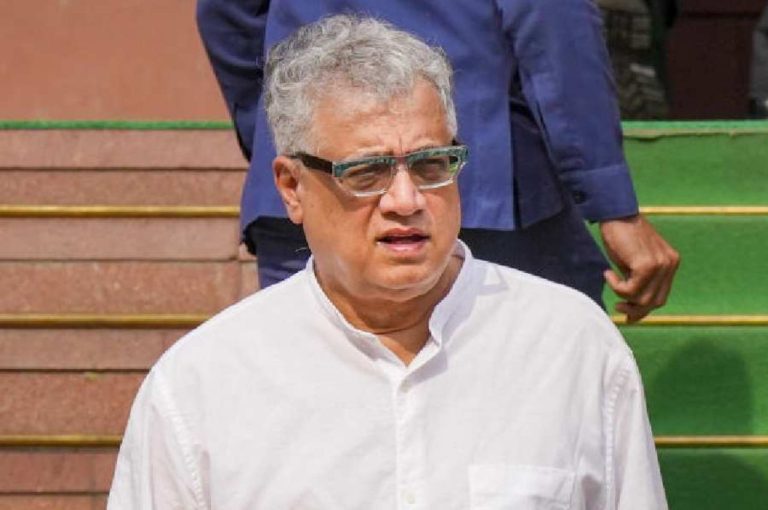
Bengal SIR Logical Discrepancy Filter 2026 – Detailed Analysis of TMC’s ‘Software Rigging’ Allegations, EC’s Role, and Governance Lessons

The Bengal SIR logical discrepancy filter 2026 has become the latest flashpoint in West Bengal’s electoral politics. The Election Commission (EC) flagged 94.5 lakh voters under the category of “logical discrepancy” during the Special Intensive Revision (SIR) of electoral rolls. The ruling Trinamool Congress (TMC) mocked the process as “software intensive rigging,” accusing the EC of bias and questioning the credibility of the filter.

This controversy has triggered political uproar, citizen anxiety, and judicial scrutiny, with the Supreme Court already intervening to ensure transparency and fairness.


2. What is the Logical Discrepancy Filter?

  • Definition: A software‑driven mechanism used by the EC to identify inconsistencies in voter records.
  • Criteria: Includes mismatched addresses, duplicate entries, incomplete documentation, or suspected anomalies.
  • Scale: 94.5 lakh names flagged across Bengal.
  • Process: Booth Level Officers (BLOs) tasked with verifying flagged cases through hearings.
  • Outcome expected: Clarification of voter rolls before upcoming elections.

3. Bengal SIR Logical Discrepancy Filter 2026: TMC’s Allegations

  • Mockery: TMC leaders described the filter as “software intensive rigging.”
  • Accusation: EC deliberately flagged genuine voters to benefit opposition parties.
  • Narrative: The ruling party framed the discrepancy list as an attempt to disenfranchise minorities and rural voters.
  • Strategy: Mobilised cadres to resist BJP’s Form 7 submissions and protect voter rights.

4. BJP’s Position

  • Defense: BJP argued the filter is necessary to weed out fictitious voters.
  • Narrative: Claimed TMC fears losing illegal voters, including alleged Rohingya entries.
  • Demand: State BJP leaders urged the EC to extend deadlines and ensure deletion of duplicate, fake, dead, and “shifted” voters.
  • Accusation: BJP accused TMC of obstructing legitimate submissions and inciting violence.

5. Governance Challenges

The discrepancy filter reflects systemic governance issues:

  • Electoral transparency: Lack of trust in the voter roll revision process.
  • Administrative neutrality: Allegations of bias against election officials.
  • Public safety: Violence and vandalism undermine democratic processes.
  • Judicial oversight: Supreme Court’s directive on transparency not implemented effectively.

6. Community Concerns

  • Families: Fear wrongful deletion of names due to minor errors.
  • Students: Frustrated by rejection of Madhyamik admit cards.
  • Civil society groups: Demand transparency and grievance redressal mechanisms.
  • Opposition voices: Warn of potential misuse of relaxed verification standards.

7. Government External Links for Assistance


8. Historical Context of Electoral Disputes in Bengal

  • 1970s–80s: Allegations of voter list manipulation during Left Front rule.
  • 2011: TMC rose to power, promising electoral reforms.
  • 2019–2021: BJP gained ground, raising concerns about fictitious voters.
  • 2026: Logical discrepancy filter controversy reflects continuity of disputes over voter rolls.

9. Global Comparisons

Similar electoral disputes worldwide:

  • USA: Allegations of voter suppression through purges in Georgia and Florida.
  • UK: Concerns about disenfranchisement under new voter ID laws.
  • Nigeria: Disputes over duplicate registrations and ghost voters.

Bengal’s case mirrors these global struggles where electoral integrity collides with political rivalry and human vulnerability.


10. Governance Lessons

The Bengal SIR controversy teaches:

  • Transparency in electoral processes is non‑negotiable.
  • Neutrality of election officials must be ensured.
  • Community engagement reduces panic and misinformation.
  • Judicial oversight is vital to protect democratic rights.

11. Future Outlook – Electoral Governance in Bengal

India must move towards:

  • Digitised grievance redressal portals for voter roll issues.
  • Periodic audits of electoral rolls by independent agencies.
  • Public dashboards showing deletions and additions transparently.
  • Educational campaigns to help citizens verify their status.

✅ Conclusion

The Bengal SIR logical discrepancy filter 2026 is more than a technical exercise—it is a test of India’s democratic resilience. As TMC mocks the process as “software intensive rigging” and BJP defends it as necessary for electoral integrity, ordinary citizens bear the brunt of confusion, harassment, and insecurity. For Bengal, the lesson is clear: democracy thrives when governance delivers clarity, fairness, and respect for citizens.

Also read: Home | Channel 6 Network – Latest News, Breaking Updates: Politics, Business, Tech & More
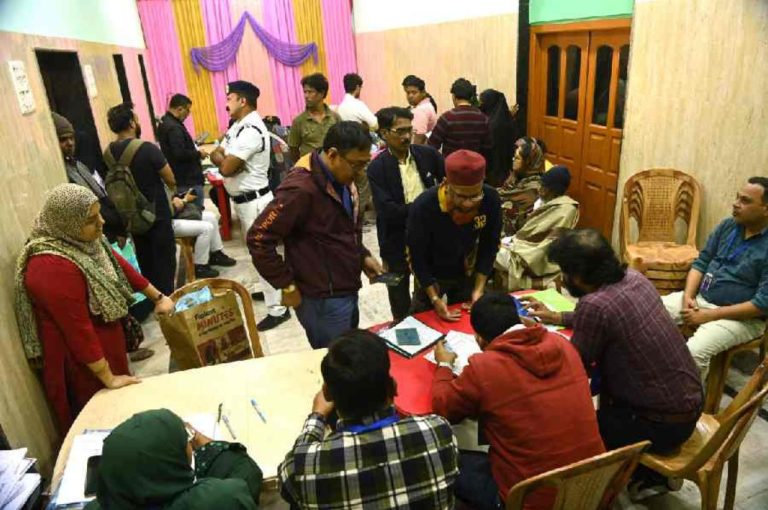
Bengal SIR Document Receipt Crisis 2026 – Detailed Analysis of Supreme Court Order, EC Failures, and Governance Lessons

The Bengal SIR document receipt crisis 2026 has exposed serious flaws in the state’s ongoing voter roll revision process. Despite a Supreme Court directive mandating that voters receive receipts for documents submitted during hearings and that Madhyamik admit cards be accepted as valid proof of age, many centres across Kolkata and Bengal continued to reject admit cards and failed to issue receipts.

This disconnect between judicial orders and ground‑level implementation has triggered widespread frustration among citizens, raised questions about the Election Commission’s accountability, and intensified political tensions in Bengal.


2. The Supreme Court’s Directive

  • Date: January 20–21, 2026.
  • Bench: Chief Justice Surya Kant, Justice Joymalya Bagchi, and Justice Dipankar Datta.
  • Order: Madhyamik admit cards must be accepted as valid proof of age, alongside pass certificates.
  • Receipts: Officials conducting hearings must certify receipt of documents and attendance.
  • Legal presumption: Admit cards issued by the Bengal school board carry legal validity and must be accepted.

3. Ground‑Level Reality

  • No receipts: Voters left centres without proof of submission.
  • Rejection of admit cards: Officials insisted on Class X pass certificates, despite SC order.
  • Confusion among BLOs: Booth Level Officers uploaded admit cards, but senior officials rejected them.
  • Frustrated citizens: Many took leave from work only to face repeated summons and unclear discrepancies.
  • Example: Chandan Verma, a software developer, submitted documents but received no receipt, unsure why he was summoned.

4. Political Reactions

  • TMC: Accused the Election Commission of harassing voters and ignoring Supreme Court orders.
  • BJP: Claimed the chaos reflects TMC’s interference and EC’s inefficiency.
  • Civil society: Condemned the lack of transparency and demanded accountability.
  • Judicial voices: Warned that non‑compliance with SC orders undermines rule of law.

5. Governance Challenges

The crisis reflects systemic governance issues:

  • Judicial compliance: Failure to implement SC directives undermines trust.
  • Administrative gaps: Poor communication between EC headquarters and ground staff.
  • Citizen harassment: Repeated hearings and lack of receipts create insecurity.
  • Technology flaws: EC’s verification system rejected valid documents.

6. Community Concerns

  • Families: Fear wrongful deletion of names due to minor errors.
  • Students: Frustrated by rejection of admit cards.
  • Civil society groups: Demand transparency and grievance redressal mechanisms.
  • Opposition voices: Warn of potential misuse of relaxed verification standards.

7. Government External Links for Assistance


8. Historical Context of Electoral Disputes in Bengal

  • 1970s–80s: Allegations of voter list manipulation during Left Front rule.
  • 2011: TMC rose to power, promising electoral reforms.
  • 2019–2021: BJP gained ground, raising concerns about fictitious voters.
  • 2026: Document receipt crisis reflects continuity of disputes over voter rolls.

9. Global Comparisons

Similar electoral disputes worldwide:

  • USA: Allegations of voter suppression through purges in Georgia and Florida.
  • UK: Concerns about disenfranchisement under new voter ID laws.
  • Nigeria: Disputes over duplicate registrations and ghost voters.

Bengal’s case mirrors these global struggles where electoral integrity collides with political rivalry and human vulnerability.


10. Bengal SIR Document Receipt Crisis 2026: Governance Lessons

The Bengal SIR crisis teaches:

  • Judicial orders must be implemented swiftly.
  • Transparency in electoral processes is non‑negotiable.
  • Community engagement reduces panic and misinformation.
  • Technology must support, not obstruct, citizen rights.

11. Future Outlook – Electoral Governance in Bengal

India must move towards:

  • Digitised grievance redressal portals for voter roll issues.
  • Periodic audits of electoral rolls by independent agencies.
  • Public dashboards showing deletions and additions transparently.
  • Educational campaigns to help citizens verify their status.

✅ Conclusion

The Bengal SIR document receipt crisis 2026 is more than a bureaucratic lapse—it is a test of India’s democratic resilience. As voters face harassment, confusion, and rejection of valid documents, the gap between judicial directives and administrative execution grows wider. For Bengal, the lesson is clear: democracy thrives when governance delivers clarity, fairness, and respect for citizens.

Also read: Home | Channel 6 Network – Latest News, Breaking Updates: Politics, Business, Tech & More
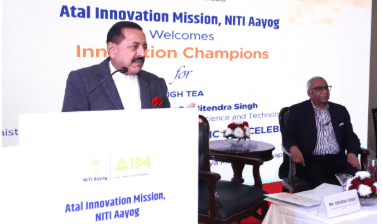
Dr Jitendra Singh Interacts with ATL Students at NITI Aayog’s Atal Innovation Mission Programme Ahead of Republic Day 2026

Union Minister of State (Independent Charge) for Science & Technology and Earth Sciences, and Minister of State in the Prime Minister’s Office, Personnel, Public Grievances and Pensions, Atomic Energy and Space, Dr Jitendra Singh, interacted with young school students from Atal Tinkering Labs (ATLs) across the country at a special engagement organised by the Atal Innovation Mission (AIM), NITI Aayog, on the eve of the 77th Republic Day celebrations. The interaction celebrated youth-led innovation and reinforced the message that India@2047 will be shaped by young innovators, not spectators.


Youth-Led Innovation is the Backbone of Viksit Bharat

Addressing students from diverse regions, Dr Jitendra Singh emphasised that India’s future growth will be driven by the creativity, confidence and problem-solving ability of its youth.

“India@2047 will be built by young innovators, not spectators. Youth-led innovation is the backbone of Viksit Bharat,” he said.

He noted that India is among the world’s youngest nations, with a large proportion of its population below the age of 35, making the present decade a defining phase for national transformation.


Atal Innovation Ecosystem Building Confidence from School Level

The Minister explained that the Atal Innovation ecosystem, including Atal Tinkering Labs, was designed to:

  • Build confidence at an early age

  • Shift learning from rote methods to problem-solving and experimentation

  • Encourage teamwork and creative thinking

  • Help students engage with real-world challenges

He said ATLs are not just labs but platforms where students begin to discover their strengths and develop a mindset for innovation.


Mentoring in School Years is Crucial for Discovering Real Talent

Dr Jitendra Singh highlighted the importance of mentorship during formative years, stating that adolescence is the stage when interests, abilities and life paths begin to take shape.

“Mentoring at the school level is key to discovering real talent, as India’s future architects sit in classrooms today,” he remarked.

He stressed that platforms like ATLs allow students to identify what they are naturally good at, instead of blindly following conventional career paths.


Technology Should Be Used for Creation, Not Just Consumption

Encouraging students to adopt a creator mindset, the Minister said technology must be viewed as a platform for innovation rather than passive consumption. He noted that with widespread digital access, knowledge is no longer confined to libraries or coaching centres.

What truly matters, he said, is the ability to use technology:

  • Wisely

  • Productively

  • Ethically

  • Creatively


Innovation No Longer Limited to Metro Cities

Referring to the student projects showcased during the interaction, covering areas such as:

  • Health and hygiene

  • Safety solutions

  • Agriculture innovation

  • Artificial Intelligence and Robotics

  • Environmental sustainability

  • Peer-to-peer learning tools

Dr Jitendra Singh observed that innovation is rapidly expanding beyond metropolitan cities. He noted that nearly half of India’s startups now originate from Tier-2 and Tier-3 cities, reflecting the success of equal access to opportunity and institutional support.


Region-Specific Innovation Can Create Unique Identities

The Minister encouraged students to explore local, region-specific innovation, stating that geography itself offers powerful opportunities. Students from:

  • Coastal areas

  • Island regions

  • Hilly terrains

  • Mining belts

  • Rural and agrarian regions

can develop solutions uniquely suited to their environments, creating sustainable and impactful innovation pathways.


From Prototypes to Scalable Solutions and Entrepreneurship

Highlighting the growing convergence between innovation and entrepreneurship, Dr Jitendra Singh advised students to think beyond building prototypes. He urged them to work towards:

  • Scalability of ideas

  • Market relevance

  • Long-term viability

  • Social impact

He also spoke about the expanding ecosystem of support available to young innovators, including funding, mentorship, patent facilitation and industry linkages through various science and technology programmes.


Collaboration and Peer Learning Essential for Future Leaders

Reiterating that innovation is a continuous journey, the Minister encouraged students to:

  • Collaborate with peers

  • Exchange ideas freely

  • Form innovation teams

  • Learn collectively

He said such collaboration strengthens solutions and nurtures leadership, communication and entrepreneurial skills — qualities essential for the future workforce.


Conclusion

The interaction between Dr Jitendra Singh and ATL students reaffirmed the Government’s strong belief in youth as the driving force of India’s future. By empowering school students through platforms like Atal Tinkering Labs, India is nurturing a generation of thinkers, creators and problem-solvers who will shape the nation’s journey towards Viksit Bharat @2047. The engagement stood as a powerful reminder that the classrooms of today hold the architects of tomorrow’s India.


For more real-time updates, visit Channel 6 Network.

Source: PIB

WEF 2026 Engagements Strengthen Global Partnerships for India’s Renewable Energy Transition: Union Minister Pralhad Joshi

Union Minister for New and Renewable Energy, Shri Pralhad Joshi, concluded his participation at the World Economic Forum (WEF) Annual Meeting 2026 in Davos, marking a significant milestone in strengthening India’s global leadership in the clean energy transition. Through a series of high-level engagements with global leaders, institutional investors, and industry CEOs, the Minister reinforced India’s positioning as one of the world’s most attractive destinations for long-term renewable energy investment.

The Minister stated that the engagements at WEF 2026 strengthened strategic partnerships, deepened investor confidence, and reaffirmed global faith in India’s stable policy ecosystem, predictable regulatory framework, and long-term energy transition roadmap.


India’s Renewable Energy Journey: Policy Stability Driving Investor Confidence

During multiple global forums and media interactions, Shri Pralhad Joshi highlighted that India’s clean energy progress has been achieved through:

  • Stable and transparent policy frameworks

  • Predictable regulatory mechanisms

  • Strong Centre–State coordination

  • People-centric flagship programmes

Global stakeholders appreciated the success of initiatives such as PM-Surya Ghar and PM-KUSUM, recognising India’s unique ability to implement large-scale clean energy programmes at speed and scale.

India’s push to strengthen domestic manufacturing across the solar PV value chain also drew widespread appreciation, reinforcing the country’s emergence as a resilient and competitive clean energy manufacturing hub. The growing export potential of green hydrogen derivatives was highlighted as a strategic tool for supporting the global energy transition.


India Achieves 267 GW Non-Fossil Capacity Ahead of Schedule

Addressing global leaders, the Union Minister showcased India’s milestone achievements, including:

  • 267 GW of non-fossil fuel-based installed capacity

  • 50% non-fossil capacity achieved five years ahead of the 2030 Paris target

He underlined that India requires approximately USD 300–350 billion (₹30 lakh crore) in financing to achieve the ambitious target of 500 GW non-fossil capacity by 2030, inviting global investors to partner in this transformative journey.


AI and Digital Public Infrastructure for Energy to Drive Next-Gen Transition

The Minister highlighted the transformative role of Artificial Intelligence in the energy sector, noting its ability to:

  • Improve forecasting accuracy

  • Reduce transmission and distribution losses

  • Lower operational costs

  • Strengthen grid stability

He emphasised India’s shift from pilot-based projects to platform-based deployment through Digital Public Infrastructure for Energy, enabling large-scale adoption of AI-driven clean energy solutions.


High-Level Bilateral Engagements Strengthen International Cooperation

On the sidelines of WEF 2026, Shri Pralhad Joshi held extensive bilateral meetings to deepen global collaboration:

  • Oman: Discussions with Dr Said Mohammed Ahmed Al Saqri on cooperation in solar, wind, green hydrogen and storage technologies under CEPA and ISA frameworks

  • Belgium: Talks with Deputy PM Maxime Prévot on R&D, offshore wind, solar and green taxonomy

  • Kuwait: Engagement with Minister Subaih Al-Mukhaizeem on investment opportunities and interest from Kuwait Investment Authority

  • Paraguay: Interaction with President Santiago Peña on technology partnerships and capacity-building

  • Zimbabwe & Jordan: Focused discussions on expanding renewable cooperation and investment partnerships

  • Multilateral Engagements: Meetings with Dr Fatih Birol (IEA) and Rafael Grossi (IAEA) to strengthen cooperation on global clean energy technologies

These engagements underscored India’s leadership role in enabling a just, inclusive and global energy transition.


Global Industry Leaders Express Strong Investment Interest in India

Shri Joshi engaged with several global CEOs and corporate leaders, inviting deeper investment in India’s clean energy ecosystem. Key discussions included:

  • Mercuria Group: Collaboration on climate finance, carbon markets, green hydrogen, storage

  • TotalEnergies: Expansion in solar, storage and green hydrogen under National Green Hydrogen Mission

  • La Caisse: Scaling long-term climate investments aligned with USD 400 billion climate commitment

  • Ingka Group (IKEA): Strong interest in solar, wind and hybrid renewable projects

  • ENGIE, EDF, Acciona: Renewed investment interest in India’s large renewable project pipeline

  • Topsoe & Bloom Energy: Collaboration on advanced electrolyzers and fuel cell solutions

  • S&P Global: Cooperation on ESG standards, credit frameworks and price discovery mechanisms

Global corporates acknowledged that India’s scale, execution capability, policy certainty and market depth make it one of the most compelling clean energy destinations worldwide.


India Emerging as a Global Driver of the Energy Transition

The engagements at Davos 2026 reinforced that:

  • India will remain central to global clean energy investment flows

  • Global companies increasingly seek partnerships with Indian firms

  • Both greenfield and brownfield investments in India are accelerating

  • India’s experience offers replicable models for the Global South

The Minister emphasised that India’s clean energy transition is not only about climate goals, but about ensuring inclusive growth, job creation, energy security, and global leadership.


Conclusion

Union Minister Pralhad Joshi’s engagements at WEF 2026 have firmly positioned India as a key architect of the global energy transition. With policy certainty, large-scale ambition, strong execution, and deep international partnerships, India is emerging not only as a destination for investment, but as a global clean energy leader shaping the future of sustainable development.

For more real-time updates, visit Channel 6 Network.

Source: PIB

Union Minister Kiren Rijiju Welcomes NMDFC Beneficiaries Participating in Republic Day 2026 Celebrations

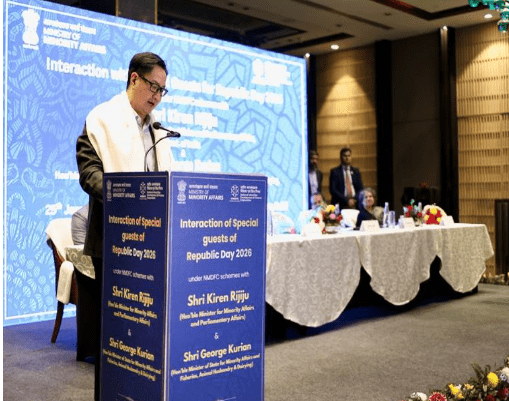
Union Minister of Minority Affairs, Shri Kiren Rijiju, today warmly welcomed beneficiaries NMDFC Beneficiaries from across the country who are participating in the 77th Republic Day celebrations as special guests. Calling the occasion deeply meaningful, the Minister noted that the beneficiaries are guests of the Prime Minister, reflecting the Government’s commitment to inclusive participation and people-centric governance.

The interaction was organised by the Ministry of Minority Affairs in collaboration with the National Minorities Development and Finance Corporation (NMDFC) as part of the Republic Day 2026 programme.


Celebrating India’s Diversity and Inclusive Development

Addressing the gathering, Shri Rijiju highlighted India’s rich cultural diversity and social harmony, stating that the Republic Day celebrations embody the spirit of unity in diversity. He informed that the Ministry of Minority Affairs implements various schemes for the welfare of six minority communities across the country.

The Minister underlined the impact of flagship initiatives such as:

  • PMJVK (Pradhan Mantri Jan Vikas Karyakram)

  • PMVIKAS (Pradhan Mantri Virasat Ka Samvardhan)

  • Skill development programmes for minority youth

  • Financial inclusion initiatives through NMDFC

He also highlighted the launch of the Haj Suvidha App as a reflection of the Ministry’s commitment towards modernisation and digital empowerment.


Beneficiaries Share Experiences of Empowerment

During the interaction, beneficiaries from Ladakh, Ahmedabad, Tamil Nadu and several other states shared their personal journeys and expressed gratitude for the support received under schemes such as NMDFC financing and PMVIKAS skilling programmes. Their experiences reflected how government interventions have enhanced livelihoods, confidence, and economic independence.


Jan Bhagidari Strengthens National Celebrations

Union Minister of State for Minority Affairs, Shri George Kurian, addressing the gathering, emphasised that the participation of beneficiaries from across India reflects the Prime Minister’s vision of “Jan Bhagidari” (people’s participation). He appreciated NMDFC’s dedicated efforts in reaching the grassroots and empowering minority communities nationwide.


Government Ensures Meaningful Exposure for Special Guests

Secretary, Ministry of Minority Affairs, Dr. Chandra Shekhar Kumar, welcomed the beneficiaries and noted that the Prime Minister has personally invited these special guests. He highlighted that the Ministry has arranged visits to national landmarks including:

  • Republic Day Parade at Kartavya Path

  • National War Memorial (Rashtriya Samar Smarak)

  • Pradhanmantri Sangrahalaya

These visits aim to provide meaningful exposure to India’s democratic heritage, leadership journey and national values.

Joint Secretary, Shri Ram Singh, also extended warm greetings to the guests and reiterated the Ministry’s commitment to empowering minority communities and strengthening their sense of belonging in national life.


Participation Reflects Inclusive Governance

The presence of NMDFC beneficiaries at the Republic Day celebrations stands as a powerful symbol of inclusive development, social equity and people-centric governance. It reinforces the Government’s approach of ensuring that the benefits of national progress are visible not only in policy, but also in representation at the country’s most important national events.


Conclusion

The participation of NMDFC beneficiaries in Republic Day 2026 exemplifies the Ministry of Minority Affairs’ commitment to empowerment, inclusion and dignity. By bringing beneficiaries to the heart of national celebrations, the Government reaffirms that India’s progress is built with the participation of every community.


For more real-time updates, visit Channel 6 Network.

Source: PIB

MoS for Housing and Urban Affairs (MoHUA) Shri Tokhan Sahu Proudly Interacts with PM SVANidhi Beneficiaries and Construction Workers Invited as Special Guests for Republic Day 2026

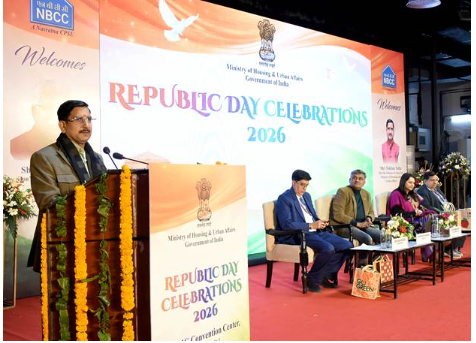
On the eve of the 77th Republic Day, the Minister of State for Housing and Urban Affairs (MoHUA), Shri Tokhan Sahu, interacted with beneficiaries of the PM SVANidhi scheme and construction workers associated with iconic national projects such as Kartavya Path and Kartavya Bhawan, who have been invited as Special Guests for the Republic Day 2026 celebrations. The interaction reflected the Government’s commitment to inclusive, people-centric development and the spirit of Jan Bhagidari in nation-building.

The event was also graced by the presence of Secretary, MoHUA, Shri Srinivas Katithikala, along with senior officers of the Ministry.


Republic Day Now a Celebration of Jan Bhagidari: Tokhan Sahu

Addressing the gathering, Shri Tokhan Sahu remarked that Republic Day has evolved from being merely a ceremonial event into a true celebration of people’s participation.

“Republic Day is no longer just a ceremonial occasion; it has become a celebration of Jan Bhagidari, where citizens from all walks of life are at the centre of national pride,” he said.

He added that when street vendors and workers witness the parade as honoured guests, it sends a powerful message that the foundation of New India rests on the strength and dignity of ordinary citizens.


PM SVANidhi Transforming Lives Through Dignity and Financial Inclusion

Highlighting the impact of the PM SVANidhi scheme, the Minister noted that the programme goes beyond credit support and represents a mission for:

  • Dignity and self-reliance of street vendors

  • Financial inclusion at the grassroots level

  • Empowerment of the informal sector

He informed that over one crore loans have already been disbursed under the scheme, enabling lakhs of families to improve their livelihoods.

He also highlighted the growing digital empowerment of vendors, with widespread adoption of QR-based payments and digital transactions, marking their integration into the formal financial ecosystem.


Extension of PM SVANidhi Till 2030 Reflects Long-Term Commitment

Shri Tokhan Sahu noted that the extension of the scheme till March 2030 reflects the Government’s sustained commitment towards empowering every street vendor. He also referred to the recent launch of credit cards with limits up to ₹30,000 for PM SVANidhi beneficiaries, which will further enhance access to affordable institutional credit.


Construction Workers Are the Architects of New India

Paying tribute to construction workers, the Minister said that landmark projects such as:

  • Central Vista

  • Kartavya Path

  • Kartavya Bhawan

are not merely infrastructure projects, but symbols of a new work culture rooted in service, efficiency and national purpose.

He described construction workers as the true architects of the nation’s destiny and reaffirmed the Government’s commitment to ensuring their welfare, dignity and recognition.


Secretary MoHUA Highlights Constitutional Spirit of Republic Day

Welcoming the Special Guests, Shri Srinivas Katithikala, Secretary, MoHUA, extended Republic Day greetings and reflected on the significance of the occasion.

He recalled that India:

  • Attained Independence in 1947

  • Adopted the Constitution in 1950, becoming a Republic

He emphasised that a Republic represents a nation where supreme power rests with the people, and governance is carried out in their name. He said that witnessing the Republic Day Parade in the presence of the Hon’ble President of India would be a proud and memorable experience for all guests.


200 Special Guests from Across States Invited for Celebrations

A total of 200 Special Guests, comprising PM SVANidhi beneficiaries and construction workers from multiple States, have been invited to participate in the Republic Day 2026 celebrations. Earlier in the day, the guests also visited the Pradhanmantri Sangrahalaya, giving them deeper insight into India’s democratic journey and leadership legacy.


Conclusion

The interaction with PM SVANidhi beneficiaries and construction workers ahead of Republic Day 2026 powerfully reinforces the Government’s commitment to inclusive growth, dignity of labour and people-first governance. By placing ordinary citizens at the heart of national celebrations, the initiative reflects the true spirit of Jan Bhagidari and strengthens the vision of building a strong, inclusive and developed India by 2047.


For more real-time updates, visit Channel 6 Network.

Source: PIB