Saturday, April 25, 2026
Home Blog Page 86

Supreme Court SIR Bihar: Crucial Citizenship Questions Raised Against Poll Body

0

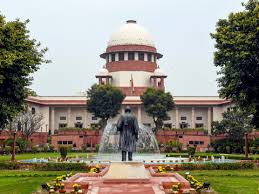
New Delhi – The Supreme Court of India has raised critical questions regarding the Election Commission’s intentions behind conducting the special intensive revision (SIR) in Bihar, specifically questioning whether citizenship determination was a primary consideration. The hearing, conducted on Thursday, has brought renewed focus to the controversial electoral revision exercise that resulted in significant deletions from the state’s voter rolls.

Supreme Court SIR Bihar Hearing Examines Poll Panel’s Intent

During the Supreme Court SIR Bihar proceedings, Chief Justice of India Surya Kant and Justice Joymalya Bagchi questioned the Election Commission of India about its original objectives when initiating the revision exercise. The bench specifically asked whether citizenship was a consideration at the outset or if it was being retrospectively justified as a reason for the exercise.

The court was hearing multiple petitions challenging the June 24 notification that authorized the special intensive revision in Bihar. The petitions, filed last year, have raised concerns about the process and its implications for voting rights in the state.

Migration and Urbanization Cited as Primary Reasons

Senior advocates Rakesh Dwivedi and Maninder Singh, representing the Election Commission, argued that the Supreme Court SIR Bihar case should consider the fact that such an exercise hadn’t been conducted in the state since 2003. They emphasized that changing demographic realities, including significant urbanization and migration patterns, necessitated the revision.

According to the Election Commission’s representatives, Bihar had relied on summary revisions for the past two decades. These periodic revisions required voters to provide self-declarations of citizenship without subjecting them to intensive scrutiny of their claims.

Court Questions Inconsistency in ECI’s Arguments

The bench hearing the Supreme Court SIR Bihar case pointed out an apparent inconsistency in the Election Commission’s position. The judges noted that while the notification cited migration, urbanization, and updating entries as dominant reasons, the commission was now defending the exercise based on examining illegal migration.

“You say 20 years have lapsed and so much migration and urbanisation has taken place and so you invoke your power to have a SIR. But if you are defending SIR to examine illegal migration, it is not very eloquently put in your SIR notification,” the bench observed.

The court emphasized that the term “migration” ordinarily refers to lawful movement, and inter-state migration is a constitutional right. The judges remarked that the SIR notification did not specifically pinpoint trans-border migration or illegal migration as concerns.

Citizenship Amendment Act Connection Explored

During the Supreme Court SIR Bihar hearing, Dwivedi referenced the Citizenship (Amendment) Act of 2003, which introduced stricter requirements for establishing citizenship, including proof of parents’ citizenship. This legislation was enacted after the last SIR was conducted in Bihar.

Also Read: EV Water Tankers: Delhi Approves Revolutionary 600-Vehicle Fleet

When the bench questioned whether this amendment acted as a trigger for the current SIR order, Dwivedi responded that while the amendment had never been operationalized earlier, the present exercise provided an appropriate opportunity to implement the changed legal framework.

Massive Voter Deletions Under Scrutiny

A significant aspect of the Supreme Court SIR Bihar case involves the deletion of approximately 6.6 million names from the electoral rolls. Dwivedi argued against what he termed a “roving and fishing enquiry” into the special scrutiny, stating it shouldn’t be conducted at the behest of NGOs, parliamentarians, and politicians.

The senior advocate pointed out that none of the 6.6 million individuals whose names were deleted approached the Supreme Court, high courts, or filed complaints with the Election Commission. He argued that organizations like the Association for Democratic Reforms and the People’s Union for Civil Liberty, along with some parliamentarians, should not be permitted to conduct such extensive inquiries.

Court Acknowledges ECI’s Position

While raising critical questions during the Supreme Court SIR Bihar hearing, the bench also complimented the Election Commission, acknowledging that it had a valid case given that no appeals had been filed against the SIR exercise in Bihar by affected individuals.

The Chief Justice clarified the court’s objective: “All that we are trying to ascertain is what was there in the mind of the commission while seeking SIR.”

Matter Adjourned for Further Hearing

The Supreme Court SIR Bihar case has been posted for further hearing on January 28, allowing both parties to prepare additional arguments. The court’s scrutiny of the Election Commission’s intentions and the legal framework governing electoral revisions will likely have significant implications for future such exercises across the country.

The hearing reflects the judiciary’s careful examination of the balance between maintaining electoral roll accuracy and protecting citizens’ fundamental right to vote, particularly in the context of large-scale deletions from voter lists.

22 January 2026: Market Wrap: Nifty Ends Higher at 25,289 as Pharma, Defence and Adani Stocks Lead Rally

Indian equity markets ended firmly higher on Thursday, 22 January 2026, supported by strong buying in pharma, defence, infrastructure and metal stocks. Positive momentum across broader indices and strength in key sectors helped the benchmarks close near the day’s highs, even as select consumption and insurance counters witnessed profit booking.

Also Read: 22 January 2026: Midday Market Update: Nifty Trades Flat Near 25,205 as Pharma and PSU Stocks Support; Titan Drags


Nifty 50 Closes Strong Above 25,280

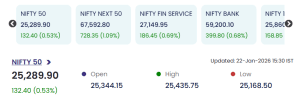
At market close (15:30 IST), the Nifty 50 settled at 25,289.90, up 132.40 points (+0.53%).

  • Open: 25,344.15

  • Screenshot 2026 01 22 221649Day’s High: 25,435.75

  • Day’s Low: 25,168.50

The index showed resilience throughout the session and managed to hold above the key psychological level of 25,250, indicating sustained bullish sentiment.


Broader Indices Outperform

The broader market continued to outperform the headline benchmark, reflecting strong participation across sectors:

  • Nifty Next 50: 67,592.80 (+1.09%)

  • Nifty Financial Services: 27,149.95 (+0.69%)

  • Nifty Bank: 59,200.10 (+0.68%)

Gains in financials, combined with strength in broader market stocks, added further support to the overall market structure.


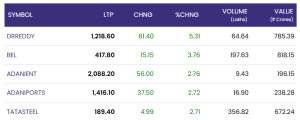
Top Gainers: Dr Reddy’s, BEL and Adani Stocks Shine

Strong buying was witnessed across pharma, defence and infrastructure stocks:

  • Dr Reddy’s Laboratories (DRREDDY): ₹1,218.60, +5.31%

  • BEL: ₹417.80, +3.76%

  • Screenshot 2026 01 22 221658Adani Enterprises (ADANIENT): ₹2,088.20, +2.76%
  • Adani Ports: ₹1,416.10, +2.72%

  • Tata Steel: ₹189.40, +2.71%

The rally in Dr Reddy’s continued to lift the pharma space, while BEL outperformed on strong investor interest in defence stocks. The Adani group stocks remained in focus throughout the session, contributing significantly to the market’s upward momentum.


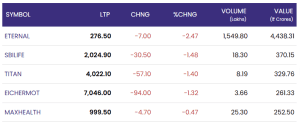
Top Losers: Eternal, Titan and SBI Life See Profit Booking

Some selling pressure was seen in select high-valuation and defensive names:

  • Eternal: ₹276.50, -2.47%

  • SBI Life: ₹2,024.90, -1.48%

  • Screenshot 2026 01 22 221707Titan: ₹4,022.10, -1.40%

  • Eicher Motors: ₹7,046.00, -1.32%

  • Max Healthcare: ₹999.50, -0.47%

The decline in Titan and Eicher Motors weighed on the auto and consumption space, while weakness in SBI Life reflected profit booking in insurance counters.


Market View: Broader Strength Signals Positive Undertone

The session highlighted clear sectoral leadership from pharma, defence, infrastructure and metals, while financials also contributed positively. The broader market’s outperformance indicates that investors continue to deploy capital selectively rather than exiting risk assets.

Technically, analysts are watching:

  • Support: 25,150–25,200

  • Resistance: 25,450–25,550

A decisive breakout above resistance could open further upside in the coming sessions.


Conclusion: 22 January 2026

Markets ended the day on a strong note, backed by healthy sectoral participation and improving sentiment. While selective profit booking persists in consumption and defensive pockets, the overall structure remains constructive. Investors are likely to track upcoming earnings, institutional flows and global cues for further direction.


For real time stock Updates, visit NSE website.

22 January 2026: Midday Market Update: Nifty Trades Flat Near 25,205 as Pharma and PSU Stocks Support; Titan Drags

Indian equity benchmarks traded with mild gains in the early afternoon session on Thursday, 22 January 2026, as strength in pharma, defence and select metal stocks offset weakness in consumer and insurance counters. The broader market continued to outperform, indicating selective buying despite the absence of strong directional momentum.

Also Read: 22 January 2026: Midday Market Update: Nifty Trades Above 25,260 as Pharma, Metals and PSU Stocks Gain; Financials Mixed


Nifty 50 Holds Above 25,200 Amid Volatility

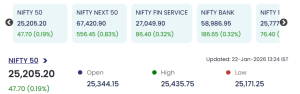
As of 13:24 IST, the Nifty 50 stood at 25,205.20, up 47.70 points (+0.19%).

  • Open: 25,344.15

  • 22 january 2026Day’s High: 25,435.75

  • Day’s Low: 25,171.25

The index witnessed intraday swings but managed to hold above the key psychological support of 25,200, reflecting cautious stability in market sentiment.


Broader Indices Remain Firm

Broader indices continued to show relative strength compared to the frontline benchmark:

  • Nifty Next 50: 67,420.90 (+0.83%)

  • Nifty Financial Services: 27,049.90 (+0.32%)

  • Nifty Bank: 58,986.95 (+0.32%)

This suggests ongoing stock-specific accumulation beyond the heavyweight names.


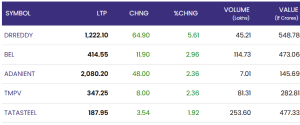
Top Gainers: Dr Reddy’s Leads, BEL and Adani Ent Rally

Buying momentum was visible in select sectors such as pharma, defence and metals:

  • Dr Reddy’s Laboratories (DRREDDY): ₹1,222.10, +5.61%

  • BEL: ₹414.55, +2.96%

  • Screenshot 2026 01 22 132428Adani Enterprises (ADANIENT): ₹2,080.20, +2.36%
  • Tata Steel: ₹187.95, +1.92%

Strong performance in Dr Reddy’s continued to lift the pharma pack, while BEL sustained momentum on defence-related optimism. Gains in Adani Enterprises and Tata Steel further supported market breadth.


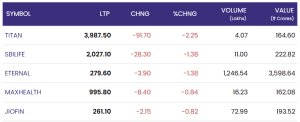
Top Losers: Titan, SBI Life and Eternal Under Pressure

Selling pressure emerged in select consumer and insurance stocks:

  • Titan: ₹3,987.50, -2.25%

  • SBI Life: ₹2,027.10, -1.38%

  • Screenshot 2026 01 22 132436Eternal: ₹279.60, -1.38%

  • Max Healthcare: ₹995.80, -0.84%

  • Jio Financial Services (JIOFIN): ₹261.10, -0.82%

The decline in heavyweight Titan weighed on the consumption space, while weakness in financial services and healthcare limited stronger index gains.


Market View: Consolidation with Sector Rotation

Market participants appear to be adopting a buy-on-dips approach in select sectors, while booking profits in overperforming names. The session reflects a phase of healthy consolidation after recent moves, characterized by:

  • Strength in pharma and defence

  • Selective buying in metals

  • Profit booking in consumption and financial stocks

Technically, the market continues to respect the 25,150–25,200 support zone, while facing resistance near 25,430–25,500.


Conclusion: 22 January 2026

Indian markets traded cautiously positive in the early afternoon, with broader market strength cushioning weakness in select heavyweights. The ongoing sector rotation suggests investors are positioning selectively rather than exiting risk altogether. Direction in the second half of the session is likely to be guided by institutional flows and global cues.


For real time stock Updates, visit NSE website.

22 January 2026: Midday Market Update: Nifty Trades Above 25,260 as Pharma, Metals and PSU Stocks Gain; Financials Mixed

Indian equity markets traded firmly in the late morning session on Thursday, 22 January 2026, with benchmark indices extending gains on the back of buying interest in pharma, metals, defence and infrastructure stocks. While frontline financial stocks showed mixed movement, strength in broader market counters helped maintain positive momentum.

Also Read: January 21, 2026: Market Wrap: Nifty Ends Lower at 25,157 as Banking Stocks Drag; Eternal and Metals Limit Losses


Nifty 50 Holds Above 25,260; Positive Breadth Continues

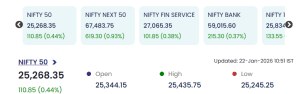
As of 10:51 IST, the Nifty 50 stood at 25,268.35, up 110.85 points (+0.44%).

  • Open: 25,344.15

  • 22 January 2026Day’s High: 25,435.75

  • Day’s Low: 25,245.25

The index remained resilient despite minor intraday volatility, with buying emerging on dips near the 25,240–25,250 zone.


Broader Indices Trade in Green

Market sentiment was supported by gains across broader indices:

  • Nifty Next 50: 67,483.75 (+0.93%)

  • Nifty Financial Services: 27,065.35 (+0.38%)

  • Nifty Bank: 59,015.60 (+0.37%)

The performance reflects selective accumulation across sectors, even as investors remain cautious on heavyweight financial stocks.


Top Gainers: Dr Reddy’s, Adani Ports Lead the Rally

Strong buying was witnessed in pharma, infrastructure and metal counters:

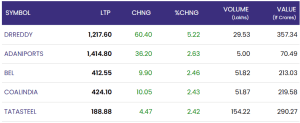
  • Dr Reddy’s Laboratories (DRREDDY): ₹1,217.60, +5.22%

  • Adani Ports: ₹1,414.80, +2.63%

  • Screenshot 2026 01 22 105124BEL: ₹412.55, +2.46%

  • Coal India: ₹424.10, +2.43%

  • Tata Steel: ₹188.88, +2.42%

The rally in Dr Reddy’s provided strong support to the pharma pack, while gains in Coal India, Tata Steel and BEL reflected strength in commodities and defence-linked counters.


Top Losers: Insurance and Banking Stocks Under Mild Pressure

Some profit booking was seen in select large-cap names:

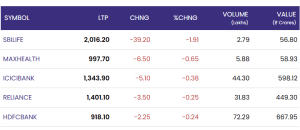
  • SBI Life: ₹2,016.20, -1.91%

  • Max Healthcare: ₹997.70, -0.65%

  • Screenshot 2026 01 22 105135ICICI Bank: ₹1,343.90, -0.38%

  • Reliance Industries: ₹1,401.10, -0.25%

  • HDFC Bank: ₹918.10, -0.24%

Weakness in heavyweight stocks such as ICICI Bank, HDFC Bank and Reliance capped sharper upside for the benchmark indices.


Market View: Stock-Specific Action Driving Momentum

The current session reflects a market driven more by sectoral and stock-specific triggers rather than broad-based rallies. Strength in pharma, metals and PSU stocks indicates defensive and value buying, while cautious sentiment persists in financial heavyweights.

Technically, traders are watching:

  • Support: 25,200–25,250

  • Resistance: 25,430–25,500

A sustained move above resistance could open room for further upside in the near term.


Conclusion: 22 January 2026

Indian markets continue to show resilience in the late morning session, supported by strong participation in select sectors. While financial heavyweights remain a drag, broader market strength suggests underlying sentiment remains constructive. Investors are likely to remain selective, tracking global cues, institutional flows and upcoming earnings commentary.


For real time stock Updates, visit NSE website.

Maharashtra Signs ₹2,500 Crore Smart Agriculture MoU at Davos to Transform Farming

A Groundbreaking Step for Smart Agriculture in Maharashtra

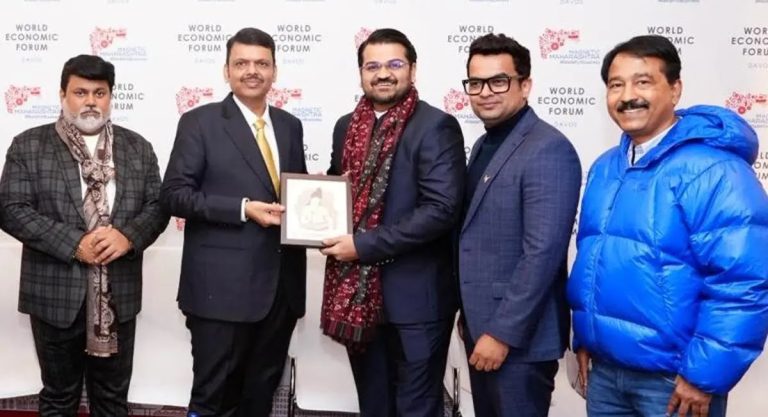
In a major boost to its agricultural and economic agenda, the Government of Maharashtra signed a Memorandum of Understanding valued at approximately ₹2,500 crore at the World Economic Forum (WEF) in Davos, Switzerland. The agreement, inked with the Rural Enhancers Group and Nutrifresh Farm Tech India Pvt. Ltd., spots the state at the forefront of smart agriculture innovations that blend technology with sustainability. The signing took place in the presence of Maharashtra Chief Minister Devendra Fadnavis, marking the first agriculture-focused MoU that the state has formalised at the global economic summit.

Details of the Smart Agriculture MoU

Under the terms of the MoU, Maharashtra will receive large-scale investments aimed at building climate-responsive and technology-oriented agricultural infrastructure. The initiative is designed to be launched by April 2026 and will leverage technologies such as Artificial Intelligence (AI) and the Internet of Things (IoT) to modernise farming practices across the state. Nutrifresh Farm Tech India, a Pune-based agricultural technology company known for its Controlled Environment Agriculture (CEA) solutions, will play a key role in delivering quality produce using advanced digital tools.

The MoU was formally signed by Ambar Ayade, Managing Director and Chief Executive Officer of Rural Enhancers Group, and Sanket Mehta, Chief Executive Officer of Nutrifresh Farm Tech India Pvt. Ltd. Rural Enhancers Group will act as the project integrator and funding agency, while the Maharashtra government will provide vital policy support, institutional backing, and implementation partnerships. The investment is expected to be financed through a blended structure involving financial institutions based in the United Arab Emirates, Indian public sector banks, development finance institutions and other foreign lenders.

Technological Focus and Project Vision

A key pillar of the initiative is the use of Controlled Environment Agriculture, a system that enables cultivation in regulated conditions that optimise water, nutrition and climate variables. Nutrifresh’s expertise in CEA is expected to help farmers produce consistent, high-quality agricultural products year-round, regardless of seasonal constraints. The strategies to be deployed include deployment of AI for data-driven crop management and IoT-enabled sensors for real-time monitoring of crop health, water usage and environmental conditions.

Nutrifresh Farm Tech India was founded in 2019 by Ganesh Nikam and Sanket Mehta. The company currently offers more than 50 agricultural products and operates across more than 15 Indian states in addition to select international markets. Under the terms of this MoU, Nutrifresh plans to expand its operational footprint to cover 2,000 acres of farmland by 2028, targeting an annual revenue of USD 250 millions.

Employment Opportunities and Economic Impact

One of the core objectives of the smart agriculture initiative is to generate significant employment in both direct and indirect agricultural sectors throughout Maharashtra. Ambar Ayade highlighted that the project would create job opportunities in rural areas and encourage climate-resilient agricultural practices. This includes supporting women’s participation in agri-business, bolstering rural incomes, and fostering agri-tourism as complementary economic activities.

Structured programmes backed by assured market linkages are also expected to benefit farmers by creating stable demand and reducing market uncertainties. The combination of advanced technologies, better planning, and an integrated supply chain has the potential to transform farming from a primarily subsistence activity to a technology-enabled business model for thousands of small and medium farmers across the state.

Strategic Importance for Maharashtra’s Agriculture Sector

The smart agriculture MoU aligns with Maharashtra’s broader policy goals to modernise its agriculture sector and enhance resilience against climate change. By integrating cutting-edge technologies into farming practices, the state aims to reduce the environmental footprint of agriculture while increasing productivity. Given that agriculture remains a cornerstone of Maharashtra’s economy, supporting 45 percent of the workforce and contributing significant value to the state’s GDP, investments that improve sustainability and innovation are critical.

The adoption of AI and IoT technologies also complements other state initiatives, such as the MahaAgri-AI Policy, which is designed to expand AI usage across farming systems, boost farm productivity, and improve access to markets and credit facilities for farmers. These synergistic efforts aim to make Maharashtra a leader in digital agriculture in India.

Government Support and Global Recognition

Chief Minister Devendra Fadnavis, who witnessed the MoU signing in Davos, emphasised the importance of attracting global partnerships that can bring technological advancement to Maharashtra’s farmers. The smart agriculture agreement reflects an increasing confidence among international investors in the state’s agricultural reforms and policy environment. It also underscores Maharastra’s commitment to climate-smart solutions that combine economic growth with sustainability.

The World Economic Forum platform provided a global stage for Maharashtra to showcase its potential as a hub for agri-tech innovation, and this momentum is likely to attract similar collaborations in the future. As part of its participation in Davos, the state government also secured multiple other MoUs across sectors, highlighting its strategic approach to comprehensive socio-economic developments.

Future Outlook and Challenges Ahead

Looking forward, the implementation phase beginning in April 2026 will be crucial in translating the goals of the MoU into tangible benefits for farmers and rural communities. Key challenges will include ensuring equitable access to new technologies, effective training for users of smart farming systems, and creating robust market channels to absorb increased agricultural outputs. Sustained monitoring and adaptation of strategies based on farmer feedback and environmental conditions will be essential for long-term success.

The Maharashtra government and its partners have expressed confidence that, with the right policy framework, investment support, and community participation, this smart agriculture initiative can become a model for similar efforts across India and beyond. As Maharashtra transitions towards more productive and sustainable farming models, this ₹2,500 crore MoU serves as a foundational step in a broader transformation of the agriculture landscape.

Conclusion: A New Era for Smart Agriculture

The signing of the ₹2,500 crore smart agriculture MoU at Davos marks a significant milestone for Maharashtra’s agricultural sector. With a focus on leveraging technology, enhancing climate resilience, and expanding economic opportunities for farmers, this partnership between the government, Rural Enhancers Group, and Nutrifresh Farm Tech is poised to reshape farming practices across the state. As implementation unfolds in 2026 and beyond, the success of this initiative will be closely watched by policymakers, industry stakeholders, and agricultural communities alike.

Read More: https://channel6network.com/water-rise-by-20-feet-maharashtra-lonar-lake/

Maharashtra’s Lonar Lake Water Created By Meteorite Impact Rises By 20 Feet

Introduction: Unusual Water Surge at Lonar Lake

Water levels at Lonar Lake, a unique geological feature in Maharashtra’s Buldhana district formed by a meteorite impact thousands of years ago, have risen dramatically in recent months. Officials and experts report that the increase, believed to be between 15 to 20 feet compared to previous levels, has raised alarms among environmentalists, heritage conservationists and local communities alike. This unexpected rise in water has led to widespread concerns about the lake’s ecological health, submergence of historical structures, and potential long-term environmental impact.

What Is Lonar Lake and Why It Matters

Lonar Lake is one of the few impact craters in basaltic rock on Earth, created when a meteorite struck the Deccan Plateau. The lake has a mean diameter of about 1.83 kilometres and lies within a volcanic basalt field that dates back millions of years. Its saline and alkaline waters make it ecologically distinct from many other freshwater lakes, and its geological origin has made it a subject of scientific research and tourism. The area also forms part of the Lonar Wildlife Sanctuary, a protected zone that supports a range of flora and fauna adapted to the lake’s unique environment.

The lake’s standing water and the surrounding forest create an environment that supports various species unique to this region, making it a focal point for both ecological studies and biodiversity conservation efforts.

Extent of the Water Rise

Local observations and official reports suggest that the water level at Lonar Lake has been rising steadily since around September of last year. Continuous inflow from at least four perennial springs around the lake rim is believed to be the primary reason for this increase. Experts say that the water level has increased by about 15 to 20 feet over this period, a significant rise for a naturally enclosed water body with no natural outlet.

This substantial increase in water level has already inundated several historically important structures on the lake’s perimeter, posing real threats to local cultural heritage. Among the submerged structures is the Kamalja Devi Temple, a centuries-old shrine that now has water entering its sanctum sanctorum. The Deepstambh, a traditional lamp tower situated before the temple, now stands half submerged, indicating just how profound the changes to the lake’s water level have become.

Court Orders Public Interest Litigation

The Nagpur Bench of the Bombay High Court has taken notice of the situation and ordered the filing of a Public Interest Litigation (PIL) to further investigate the causes and the risks involved. The court has expressed serious concern about the rapid rise in water level and its potential effects on the lake’s unique ecology, heritage structures, and surrounding environment. A bench consisting of Justice Anil Kilor and Justice Raj Wakode has asked for a detailed PIL to be submitted within the next seven days, demonstrating the urgency of addressing this environmental challenge.

To assist the court, Advocate Mohit Khajanchi has been appointed as Amicus Curiae — a friend of the court — to help prepare the litigation document and present a comprehensive case on the rising water level, its impacts, and necessary remedial measures.

Expert Observations and Scientific Inquiries

Initial inspections ordered by state authorities involved groundwater experts and local administrative officials. Professor Ashok Tejankar and Tehsildar Bhushan Patil were among those who examined the lake to gather data and observe current conditions. While the exact scientific reasons behind the water surge remain unclear, experts have stressed the need for deeper research to understand both hydrological and environmental factors at play.

Environmentalists are voicing concern that continued freshwater inflow from springs into a saline, alkaline water body could alter the lake’s natural chemistry. Lonar Lake is known for its high salinity, and mixing with freshwater could disrupt the ecological balance that supports its specialized biodiversity. The appearance of fish, which have not historically been characteristic of the lake’s fauna due to its saline nature, has been noted by observers and suggested as a sign of ecological changes.

Lonar Lake, created by a meteorite impact, is globally significant for scientific research.

Threats to Cultural and Natural Heritage

The rapid rise in water levels poses clear threats not only to the lake’s ecological structure but also to the cultural and heritage sites situated along its banks. The submergence of ancient temples and sacred sites has alarmed historians, archaeologists, and local devotees alike, who fear that prolonged inundation may lead to irreversible damage. Such temples are part of the cultural landscape that has coexisted with the lake for generations.

The high court’s intervention reflects the multi-faceted nature of the problem, involving environmental science, heritage conservation, and community interests. Authorities are now seeking expert opinions and empirical data that could guide remediation and conservation strategies without compromising the geological uniqueness of this impact crater.

Local and Scientific Community Responses

Local residents and researchers have expressed mixed reactions to the situation. Some believe that the rising waters could be linked to altered rainfall patterns or increased groundwater discharge from surrounding springs. Others point to longer-term changes in regional climate or hydrology as contributing factors. There is also concern that the absence of a natural outlet for Lonar Lake means that any increase in inflow will inevitably raise water levels until evaporation or seepage balances the input.

Meanwhile, scientists have called for comprehensive field studies and data collection to understand not only why the water level is rising but also how this might influence the long-term sustainability of the lake’s unique saline ecosystem. The challenge, they say, is to balance conservation priorities with natural geological and hydrological processes

Looking Ahead: Conservation and Monitoring

As the water level in Lonar Lake continues to be monitored, authorities have been urged to adopt a multidimensional approach that includes scientific research, environmental protection, cultural heritage preservation, and community engagement. The high court’s directive to compile a thorough PIL is expected to bring together data and recommendations from various experts, potentially establishing a roadmap for sustainable management.

Lonar Lake’s status as a national geo-heritage monument and a site of global scientific interest underscores the need for coordinated action to protect this remarkable landscape. The rise in water level highlights how even ancient natural wonders are susceptible to changing environmental conditions and human-influenced hydrological dynamics.

Read More: https://channel6network.com/mahayuti-to-secure-mayor-posts/

Mahayuti Set to Secure Mayor Posts in Kalyan-Dombivli, Thane and Ulhasnagar Amid Strategic Gains

Mahayuti Dominance in Civic Polls Signals Mayoral Control

The Mahayuti alliance in Maharashtra is on track to secure mayoral positions in three key municipal corporations — Kalyan-Dombivli, Thane and Ulhasnagar. The Bharatiya Janata Party (BJP) state president Ravindra Chavan stated that the alliance has received a clear public mandate in all three civic bodies, and leaders are preparing to form the respective civic administrations accordingly. A combination of election results and alliance support has strengthened Mahayuti’s position across these urban centres.

Chavan affirmed that detailed discussions had already taken place between senior alliance leaders, and a final decision on the mayoral appointments will be made after Chief Minister Devendra Fadnavis returns from an overseas engagement, followed by a joint meeting with Deputy Chief Minister Eknath Shinde in Mumbai.

Kalyan-Dombivli: Alliance Strengthened by MNS Support

In the 122-member Kalyan-Dombivli Municipal Corporation (KDMC), Mahayuti’s prospects have been significantly bolstered by strategic support from the Maharashtra Navnirman Sena (MNS). The Shiv Sena faction led by Deputy Chief Minister Eknath Shinde emerged as the single largest party with 53 seats, closely followed by the BJP with 50 seats. The addition of five corporators from the MNS has strengthened Mahayuti’s collective numbers, making the alliance’s position more commanding.

The cushion provided by the MNS support has pushed the alliance’s effective strength well beyond the simple majority mark, enabling its leaders to assert confidence in claiming the mayoral post. Sources within the alliance indicate that discussions over rotational terms for the position are ongoing, with both parties keen to manage power sharing in a way that reflects their electoral performance and strategic alliances.

This cooperation comes amid reports of some corporators from rival factions being in contact with Mahayuti leaders, though specifics remain fluid as parties finalise their internal arrangements.

Thane Municipal Corporation: Clear Majority for Mahayuti

The Thane Municipal Corporation, with 131 members, has also delivered a decisive outcome for the ruling alliance. In this civic body, the Shinde-led Shiv Sena won 75 wards, while its ally BJP secured 28 seats, comfortably surpassing the 66-seat majority threshold. This dominant performance gives Mahayuti a firm mandate to lead the civic body and positions the alliance well for selecting the next mayor.

Local political analysts suggest that the strong performance in Thane reflects voter confidence in the alliance’s governance record and development agenda. The ability to cross the majority mark with a clear cushion has reduced the need for post-poll negotiations with smaller parties, streamlining Mahayuti’s path toward municipal leadership.

Ulhasnagar: Close Contest Ends in Alliance Advantage

In the 78 – member Ulhasnagar Municipal Corporation, Mahayuti partners contested separately but maintained a commanding presence. The BJP won 37 seats, while the Shiv Sena secured 36, giving the alliance a combined total of 73. This tally represents a comfortable majority compared to the 40 seats needed to control the civic body. Additionally, the alliance strengthened its position further with support from two newly elected corporators from the Vanchit Bahujan Aghadi (VBA).

Political observers note that the strong showing in Ulhasnagar underscores the alliance’s wide appeal across different urban regions and demographic groups. With such a commanding seat share, Mahayuti is poised to elect its mayor without significant external support, further consolidating its governance foothold.

Strategic Implications of MNS Support in Kalyan-Dombivli

The decision by the MNS to back the Mahayuti alliance in Kalyan-Dombivli marks a noteworthy strategic development in Maharashtra’s local politics. MNS corporators, led by former legislators, formalised their support by registering their group alongside Shiv Sena corporators at official procedures. Shiv Sena representatives emphasised that this cooperation is aimed at facilitating development in the region, reiterating that the mayor would emerge from the alliance.

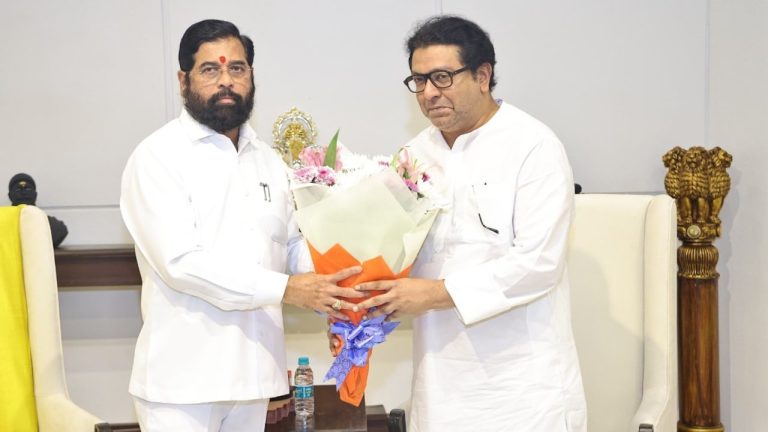
This move also reflects broader political realignments following the civic polls, in which the MNS chose to support the ruling coalition, potentially sidelining its earlier alliances with rival factions. By aligning with Mahayuti, MNS has positioned itself as a kingmaker in KDMC, amplifying its influence despite having a smaller number of corporators.

Alliance Leadership on Voter Mandate and Governance

Ravindra Chavan has framed the Mahayuti’s performance as a direct reflection of public mandate, noting that voters across Kalyan-Dombivli, Thane and Ulhasnagar have entrusted the alliance with civic governance responsibilities. He stated that such outcomes endorse the alliance’s development-oriented approach and strengthens its claim over mayoral positions. Chavan also highlighted the necessity of holding joint consultations to finalise leadership roles.

Political strategists believe that securing mayor posts in these key municipal bodies will offer Mahayuti an opportunity to demonstrate its governance capacity ahead of future state and national elections. Control over mayoral offices will also enable the alliance to shape local policy priorities and administrative decisions directly, reinforcing its political footprint at the grassroots level.

Looking Ahead: Final Decisions and Broader Impacts

While the Mahayuti alliance appears well positioned to install its candidates as mayors in the three municipal corporations, formal announcements are expected once Chief Minister Fadnavis returns and alliance leaders conclude their deliberations. The outcomes will not only reflect electoral arithmetic but also negotiations within the alliance over power sharing.

These developments also have broader implications for Maharashtra’s political landscape, as alliance dynamics and support from smaller parties such as the MNS highlight the fluid nature of post-poll coalitions. The strategic positioning of mayoral roles could influence future political negotiations and governance strategies across the state’s urban centres.

Read More: https://channel6network.com/mns-shinde-bjp-congress-maharashtra-mayor/

Rs 19 crore sanctioned signals renewed focus on Tamil Nadu government college labs

0

Rs 19 crore sanctioned for laboratory upgrades in Tamil Nadu government colleges

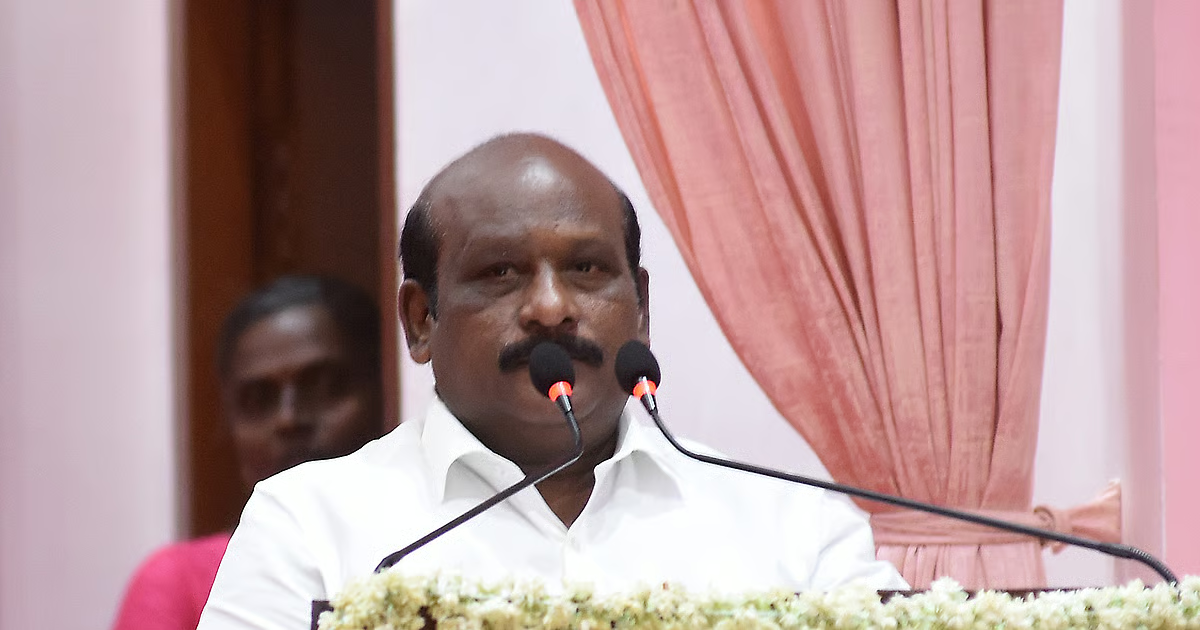
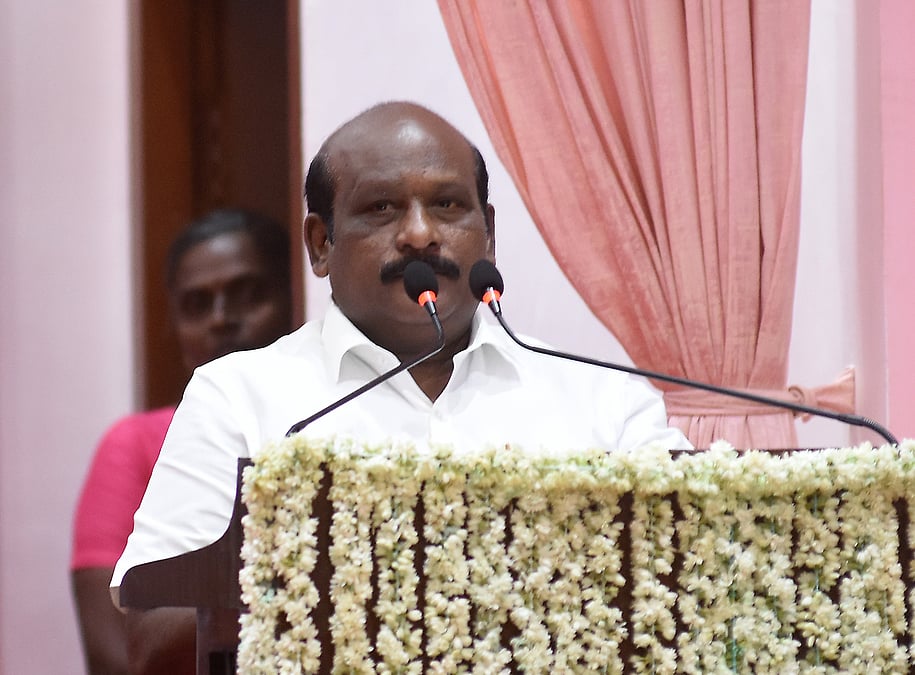
Rs 19 crore sanctioned by the Tamil Nadu Higher Education Department has marked a significant step towards improving laboratory facilities in government arts and science colleges across the State. The funding, amounting to ₹19.18 crore, will be used to upgrade laboratories in 112 government colleges, with a focus on strengthening science education for students from rural and economically weaker backgrounds.Rs 19 crore sanctioned to upgrade labs in 112 TN government colleges

The sanction orders were handed over by Higher Education Minister Govi Chezhiaan at the Directorate of Collegiate Education in Chennai. Officials said the move aligns with the State’s long-term goal of ensuring equal access to quality higher education infrastructure, particularly in institutions that cater largely to first-generation learners.

According to the minister, modern laboratory facilities are essential for students to understand scientific concepts through practice rather than theory alone. The upgraded labs are expected to support undergraduate and postgraduate courses by providing improved equipment, safer working environments, and better learning conditions.

The initiative is also seen as a response to the growing demand for science education in government colleges, where enrolment numbers have steadily increased over the years.

Rs 19 crore sanctioned as part of wider higher education expansion

The decision to allocate funds for laboratory upgrades comes alongside broader developments in Tamil Nadu’s higher education sector. For the 2025–26 academic year, the government created nearly 15,000 new seats across government colleges to accommodate increasing student intake.Tamil Nadu sanctions 59 new posts to strengthen cancer care services in  medical colleges

In addition to infrastructure improvements, the department has taken steps to reduce the digital divide among students. Nearly 10 lakh students studying in government, government-aided, and self-financing institutions have been provided with laptops, enabling better access to online learning resources and academic tools.

Officials said these measures are aimed at ensuring that students from disadvantaged backgrounds are not left behind due to lack of facilities. By strengthening both physical and digital infrastructure, the government hopes to improve learning outcomes and employability among graduates.

The laboratory upgrade programme is expected to benefit science departments such as physics, chemistry, biology, and computer science, where practical exposure plays a key role in academic performance.

Rs 19 crore sanctioned alongside student welfare and staff reforms

Beyond infrastructure development, the Higher Education Department has introduced several initiatives to improve campus life and student well-being. One of the key measures includes the mandatory formation of ‘Drug Awareness Committees’ in all government colleges. These committees are tasked with educating students about the dangers of substance abuse and promoting a safe and healthy campus environment.Rs.19.18 crore sanctioned for improvement of labs of 112 government colleges!”  - Full details inside!

In addition, ‘Psychological Awareness Committees’ have been established to address mental health concerns and promote gender equality within colleges. Officials said these committees would work towards creating supportive spaces for students to discuss stress, emotional challenges, and social issues.

The department is also focusing on strengthening alumni involvement. Alumni associations have been formed in every government college to help bridge gaps in facilities and student support through contributions and mentorship from former students.

On the administrative front, the minister also issued transfer orders to teaching and non-teaching staff during the event. A total of 164 teachers and 91 non-teaching staff were transferred following an online general counselling process conducted between December 24, 2025, and January 5, 2026.

Official sources stated that the transfers were carried out transparently based on eligibility criteria. Out of 340 applications received from teachers, 164 were approved, while 91 out of 256 applications from non-teaching staff were cleared.

Senior officials, including the Higher Education Secretary and the Commissioner of Collegiate Education, were present during the proceedings. Also Read: Consider SL man plea brings focus on decades-old citizenship struggle in 2026

Conclusion

The decision to allocate ₹19.18 crore for laboratory upgrades reflects Tamil Nadu’s continued emphasis on strengthening government higher education institutions. By combining infrastructure improvement, student welfare initiatives, and administrative reforms, the State aims to create a more supportive and effective learning environment for college students.

MNS Backs Shinde Sena As BJP, Congress Face Infighting Ahead Of Maharashtra Mayor Battles

Introduction: A New Political Equation in Maharashtra

Political tensions in Maharashtra have escalated dramatically following the recent civic body election results, with shifting alliances and intra-party disputes setting the stage for intense battles over mayoral positions across the state. In one of the most unexpected developments, the Maharashtra Navnirman Sena (MNS), led by Raj Thackeray, has announced its support for the Eknath Shinde faction of the Shiv Sena in the Kalyan-Dombivli Municipal Corporation (KDMC). This move has reshaped local political dynamics, complicating prospects for both the Bharatiya Janata Party (BJP) and the Congress as they struggle with internal discord and strategic positioning ahead of crucial mayoral polls.

MNS Support for Shinde Sena Upends Local Politics

In the recently concluded KDMC elections, the Eknath Shinde-led Shiv Sena emerged as the single largest party with 53 corporator seats in the 122-member house, followed closely by the BJP with 50 seats. Neither party had a clear majority on its own, with the majority threshold standing at 61 seats. The MNS, which won five seats, announced that its corporators would back Shinde’s Sena, effectively boosting the faction’s numbers to 58. Although still short of a simple majority, this enhanced tally significantly improves Shinde’s leverage in mayoral negotiations.

Dr Shrikant Shinde, representing the Shinde faction, confirmed that the MNS had submitted its support formally to the district collector, stating that the backing was aimed at ensuring developmental governance in the KDMC. While the Shiv Sena leader insisted that the alliance with the BJP remains intact, this newfound support from MNS underscores how local political manoeuvres can defy pre-poll alliances and reshape the balance of power on the grounds.

Reactions and Rivals’ Responses

The MNS decision to align with Shinde’s faction has drawn sharp criticism from the rival Shiv Sena faction led by Uddhav Thackeray (UBT). Sharad Patil, district chief of the UBT faction in Kalyan, labelled the move as a betrayal and a significant setback to their efforts to retain influence in the municipal corporation. There have also been reports that several UBT corporators were temporarily unreachable, fuelling speculation about possible defections or shifting loyalties, though party leaders later downplayed these reports, attributing them to local decisions rather than official party directives.

In addition to tensions within the Shiv Sena family, the recalibrated alliance has implications for the BJP, which had contested the civic polls alongside Shinde’s faction as part of the broader Mahayuti alliance. While Shinde’s supporters maintain that their partnership with the BJP is unaffected, political commentators suggest that such realignments create uncertainty about how united the alliance truly is. Reports from other municipal bodies in the state indicate similar manoeuvring, with parties engaging in negotiations and strategic outreach to independent and smaller party corporators to secure crucial support.

BJP and Congress: Internal Struggles and Cross-Party Talks

Meanwhile, both the BJP and the Congress are confronting internal fissures that threaten to weaken their positions ahead of the mayoral contests. In several municipal bodies, including Chandrapur, neither party has managed to secure a clear majority, pushing them into prolonged talks with smaller parties and independents.

Sources within the BJP acknowledge the existence of factional disagreements, particularly between leaders aligned with senior BJP figure Sudhir Mungantiwar and those supporting Kishore Jorgewar. Such internal divides have complicated the BJP’s ability to present a cohesive front in negotiations, allowing opposition parties to exploit these weaknesses.

The Congress, too, is grappling with its own share of strategic dilemmas. Having emerged as the largest party in some civic bodies but falling short of majorities, its leaders face criticism for failing to translate electoral strength into governance control. Internal disagreements over tactics and potential alliances have at times hampered decisive action, prompting accusations from rival parties including the BJP of engaging in back-channel approaches to corporators.

Political Manoeuvring Across Municipal Bodies

The unfolding scenario in KDMC is not isolated. Political analysts note that similar strategic manoeuvres are underway in multiple civic corporations across Maharashtra. Reports indicate that in cities such as Kolhapur, Malegaon, and even the Brihanmumbai Municipal Corporation (BMC), parties are attempting to woo rival corporators, revive old alliances and exert pressure where numbers are tight. In some cases, these efforts are leading to public accusations of horse-trading, though party spokespeople often dismiss such claims as speculative or exaggerated.

Such political churn underscores the fragmented nature of Maharashtra’s civic electoral landscape, where no single party has managed an outright majority in many key bodies. This fragmentation elevates the importance of post-poll alliances, strategic support from smaller entities like the MNS, and the ability of political actors to negotiate effectively under fluid conditions.

Implications for the Mayoral Battles

As parties navigate this intricate web of negotiations, the stakes for the upcoming mayoral elections are high. The mayoral position in major municipal bodies not only holds ceremonial importance but also influences the allocation of development funds, local governance priorities and administrative control over crucial urban functions.

In KDMC, the enhanced strength of Shinde’s Sena with MNS support may give it an edge in claiming the mayor’s post, but achieving the required majority will still depend on securing further backing, potentially from independents or minor parties. The BJP’s close second position and internal pressures add another layer of complexity, as do the Congress’s attempts to covet the mayoral chair through tactical alliances.

Conclusion: A Fluid Political Landscape

The MNS’s unexpected support for the Shinde faction in KDMC has injected fresh unpredictability into Maharashtra’s local political scene. With internal strife affecting both the BJP and the Congress, and with local alliances transcending traditional party lines, the race for mayor across the state’s municipal bodies remains highly competitive. As corporators deliberate on allegiances and parties engage in intensive negotiations, Maharashtra’s civic politics stands at a decisive juncture where strategic decisions today will shape governance outcomes for years to come.

Read More: https://channel6network.com/india1st-innovation-city-mumbai-fadnavis/

Tamil Nadu resource centre marks a focused shift in school education approach

0

Tamil Nadu resource centre inaugurated to support students and teachers across the state

Tamil Nadu resource development in school education took a significant step forward with the inauguration of a new state-level learning centre in Chennai. The facility, launched by School Education Minister Anbil Mahesh Poyyamozhi, has been set up at the Perasiriyar Anbazhagan Education Complex and is designed to support both students and teachers through hands-on and experience-based learning methods.Many of teachers' demands met, issue will be resolved in consultation with  CM, says Anbil Mahesh Poyyamozhi

Built at a cost of ₹5 crore, the centre is expected to function throughout the year and will be accessible to teachers involved in classroom teaching as well as school students. The focus of the centre is not limited to academic improvement alone but extends to building practical skills that students can apply beyond textbooks.

Speaking at the inauguration, the minister said the Tamil Nadu resource centre would play an important role in helping students develop life skills alongside subject knowledge. He added that similar centres would gradually be established in District Institutes of Education and Training and, over time, at the school level to ensure wider reach.

The initiative reflects the state government’s effort to move learning beyond traditional classroom methods and to encourage active participation, observation, and experimentation among students.

Tamil Nadu resource centre focuses on modern teaching and experiential learning

The Tamil Nadu resource centre has been designed primarily to help teachers adopt new teaching strategies that align with changing learning needs. One of its key objectives is to expose educators to emerging technologies and innovative classroom practices that can make lessons more engaging and effective.TN will deliberate next step, Anbil Mahesh assures teachers

Teachers attending in-service training programmes at the centre will receive hands-on exposure to modern teaching tools and methods. The facility will also support research on new teaching approaches and encourage educators to share ideas that can improve learning outcomes in schools.

A strong emphasis has been placed on child-centred learning. Instead of relying only on lectures and rote learning, the centre promotes learning through observation, practice, and experimentation. This approach is expected to help students understand concepts more clearly and retain knowledge for longer periods.

The centre also serves as a space where teaching models and laboratory setups can be developed and tested before being introduced in schools. This allows teachers to refine their methods and adapt them to different classroom environments.

Tamil Nadu resource facility offers specialised labs and inclusive learning spacesTamil Nadu centre to aid disabled - The Hindu

The Tamil Nadu resource centre includes several specialised facilities aimed at supporting diverse learning needs. Subject-specific laboratories for languages, science, and mathematics have been set up to help students and teachers engage deeply with core subjects.

A dedicated space has also been created for children with disabilities, ensuring that inclusive education remains a priority. This area is designed to support customised learning methods that address individual needs and promote equal learning opportunities.

In addition, the centre features a hall focused on computational thinking, where students can develop problem-solving and logical reasoning skills. Another hall allows students to carry out subject-based experiments, encouraging curiosity and independent thinking. Also Read: Consider SL man plea brings focus on decades-old citizenship struggle in 2026

Beyond physical infrastructure, the centre will host webinars, training workshops, expert lectures, and discussion sessions. These programmes are aimed at improving teaching quality and strengthening overall learning standards in government schools.

Education officials believe that regular interaction between teachers, experts, and students in such an environment will lead to better classroom practices and more confident learners.

Conclusion

The Tamil Nadu resource centre represents a practical step towards improving school education by combining academic learning with real-world skills. By supporting teachers and encouraging experiential learning, the initiative is expected to contribute to stronger teaching practices and more meaningful learning experiences for students across the state.