Sunday, April 26, 2026
Home Blog Page 101

Indian Navy Signs Contract for Three Bottom Opening Non-Propelled Barges Under Make in India Initiative: 2026

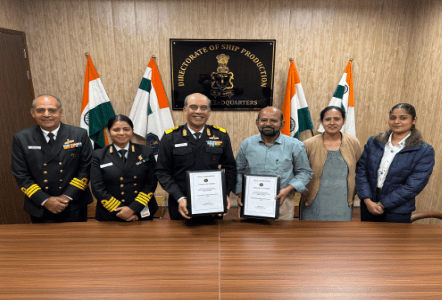
The Indian Navy has signed a contract for the construction and delivery of three 200-tonne Bottom Opening Non-Propelled Barges with M/s Suryadipta Projects Private Limited, Thane, an MSME shipyard. The agreement was concluded on January 16, 2026, marking another significant step towards strengthening indigenous shipbuilding and promoting self-reliance in defence manufacturing.


Boost to Make in India and Aatmanirbhar Bharat

The barges are described as proud flag bearers of the Government of India’s flagship initiatives Make in India and Aatmanirbhar Bharat. Their indigenous construction highlights the Indian Navy’s continued emphasis on:

  • Domestic defence manufacturing

  • Indigenous design and production

  • Reduced dependence on foreign procurement

  • Strengthening local industrial capability

All three barges will be built in accordance with the Classification Rules of the Indian Register of Shipping (IRS), ensuring quality, safety, and technical compliance with national maritime standards.


Strong Push for MSME Participation in Defence Shipbuilding

By awarding this contract to an MSME shipyard, the Indian Navy has reaffirmed its commitment to encouraging and supporting the growth of Micro, Small and Medium Enterprises (MSEs) in the defence sector.

This move is expected to:

  • Strengthen the domestic shipbuilding ecosystem

  • Generate skilled employment

  • Promote innovation in indigenous maritime platforms

  • Support long-term industrial capacity building


Aligned with Maritime India Vision 2030

The contract also aligns closely with the national framework of Maritime India Vision 2030, which aims to enhance India’s maritime infrastructure, boost indigenous shipbuilding capabilities, and establish India as a global maritime hub.

Through such initiatives, the Navy continues to play a pivotal role in nurturing self-reliant defence manufacturing and sustainable maritime development.


Conclusion

The signing of the contract for three Bottom Opening Non-Propelled Barges reflects the Indian Navy’s strategic focus on indigenisation, MSME empowerment, and ecosystem development. It reinforces the country’s broader vision of building a resilient, self-reliant, and globally competitive maritime industry.


For more real-time updates, visit Channel 6 Network.

Source: PIB

86th All India Presiding Officers’ Conference (AIPOC) Inaugurated in Lucknow; Lok Sabha Speaker Calls for Fairness and Greater Legislative Functioning Time

The 86th All India Presiding Officers’ Conference (AIPOC) was inaugurated on January 19, 2026, in Lucknow, Uttar Pradesh, marking the beginning of a three-day national-level dialogue on strengthening democratic institutions and legislative functioning. The conference brings together Presiding Officers from across the country to deliberate on key institutional challenges facing India’s legislative bodies.

The event was formally inaugurated by the Governor of Uttar Pradesh, Smt. Anandiben Patel, and features participation from Presiding Officers of 28 State Legislative Assemblies, 3 Union Territories, and 6 Legislative Councils.


Prime Minister Modi Conveys Greetings to Delegates

At the inaugural session, the Speaker of the Uttar Pradesh Legislative Assembly, Shri Satish Mahana, read out a message of greetings from Prime Minister Shri Narendra Modi, congratulating the organizers and participants for the successful conduct of the prestigious conference. The Prime Minister extended his best wishes for productive deliberations aimed at strengthening democratic governance in the country.


Om Birla Emphasises Impartiality of Presiding Officers

Delivering the keynote address, Lok Sabha Speaker Shri Om Birla stressed that the conduct of every Presiding Officer must rise above political affiliations.

“The conduct of a Presiding Officer must be above party politics. It must be fair, impartial, and must also appear to be fair,” he said.

He highlighted that the dignity and credibility of legislative institutions depend significantly on the neutrality and discipline maintained by those who preside over proceedings.


Concern Over Declining Sitting Days of Legislatures

Shri Birla expressed serious concern over the declining time devoted to the functioning of State Legislatures across the country. He emphasized the urgent need to ensure fixed and adequate sitting time for legislative bodies.

“The longer the House functions, the more meaningful, serious and outcome-oriented discussions can take place,” the Speaker observed.

He added that legislatures are the primary platforms through which the voices and aspirations of citizens reach the government, making their effective functioning critical for democracy.


Need for Discipline in the Age of Social Media

The Lok Sabha Speaker also pointed out that in the era of digital media and instant public scrutiny, the conduct of public representatives is continuously observed by citizens.

He emphasized that maintaining parliamentary decorum, discipline, and dignity is essential to preserve the credibility of legislative institutions. According to him, protecting the sanctity of the House is a collective responsibility of all members.


AIPOC Strengthens Democratic Cooperation

Shri Birla noted that platforms such as the All India Presiding Officers’ Conference play a vital role in:

  • Promoting cooperation among democratic institutions

  • Strengthening coordination between legislatures

  • Encouraging harmony in governance and welfare policies

  • Improving the overall effectiveness of democratic functioning

He further stressed the importance of providing greater opportunities to young and first-time legislators, ensuring that legislatures remain vibrant platforms for public representation.


Key Themes of the Conference

Over the next two days, participants will engage in detailed plenary discussions on key themes, including:

  • Use of technology in legislative processes

  • Capacity building of legislators

  • Accountability of legislatures to the people

  • Strengthening democratic institutions

The conference will conclude on January 21, 2026, with the valedictory address by Lok Sabha Speaker Om Birla, followed by a media interaction.


Uttar Pradesh Hosts AIPOC for the Fourth Time

This is the fourth occasion that Uttar Pradesh is hosting the prestigious AIPOC. The state had earlier hosted the conference in:

  • December 1961

  • October 1985

  • January–February 2015


Conclusion

The 86th AIPOC reflects India’s ongoing commitment to strengthening parliamentary democracy and institutional integrity. With a focus on neutrality, accountability, technological integration, and increased legislative functioning, the conference aims to reinforce the foundations of democratic governance across the country.


For more real-time updates, visit Channel 6 Network.

Source: PIB

C-DOT Wins SKOCH Award 2025 for Cell Broadcast Solution at 104th SKOCH Summit

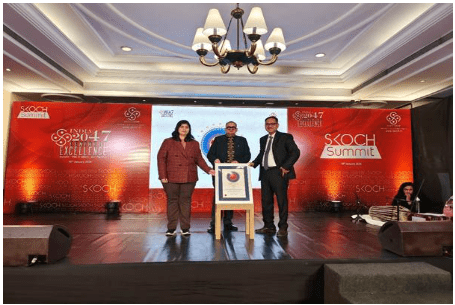
The Centre for Development of Telematics (C-DOT), the premier telecom R&D organization under the Department of Telecommunications, Government of India, has been conferred the prestigious SKOCH Award 2025 for its innovative Cell Broadcast Solution (CBS). The award was presented during the 104th SKOCH Summit, held under the theme “Resourcing Viksit Bharat”.

The recognition highlights C-DOT’s contribution to strengthening India’s disaster preparedness and public safety ecosystem through indigenous, technology-driven solutions.


What is the Cell Broadcast Solution (CBS)?

C-DOT’s Cell Broadcast Solution is a life-saving disaster and emergency alerting platform designed to deliver real-time, geo-targeted alerts directly to mobile phones within affected areas through cellular networks.

The platform integrates multiple national agencies on a single unified system, including:

  • India Meteorological Department (IMD) – Weather alerts

  • Central Water Commission (CWC) – Flood warnings

  • INCOIS – Tsunami and ocean event alerts

  • Defence Geo-informatics Research Establishment (DGRE) – Landslide warnings

  • Forest Survey of India (FSI) – Forest fire alerts

  • State Disaster Management Authorities (SDMAs)

  • National Disaster Management Authority (NDMA)

  • All mobile network operators

This integrated system enables end-to-end delivery of near real-time emergency information, helping minimize loss of life and property during disasters.


Indigenous, Automated and Multilingual Platform

The Cell Broadcast Solution stands out for being:

  • Fully indigenous and cost-effective

  • Fully automated end-to-end system

  • Supports 21 Indian languages

  • Enables multi-hazard, geo-targeted alerts

  • Delivers alerts even without internet connectivity

This has significantly enhanced the country’s overall disaster risk reduction and management capabilities, especially for vulnerable and remote populations.


Aligned with Global Standards and National Vision

The initiative is aligned with major global and national frameworks, including:

  • United Nations initiative: Early Warnings for All (#EW4All)

  • International Telecommunication Union (ITU) Common Alerting Protocol (CAP)

  • United Nations Sustainable Development Goals (SDGs)

  • India’s national vision of Aatmanirbhar Bharat

C-DOT’s achievement also places India among the select few countries globally with indigenous capability in this critical public safety technology.


CEO C-DOT Highlights Citizen-Centric Innovation

Speaking on the occasion, Dr. Rajkumar Upadhyay, CEO of C-DOT, said that the award is a meaningful recognition of C-DOT’s mission to place technology at the service of citizens.

He noted that the Cell Broadcast Solution strengthens public safety by ensuring timely and geo-targeted dissemination of critical information, even to the remotest regions. The award, he said, reinforces C-DOT’s commitment to building resilient digital infrastructure and supporting India’s long-term vision of secure, inclusive, and reliable communication systems.


C-DOT’s Role in India’s Technology Ecosystem

C-DOT continues to play a strategic role in advancing India’s technological self-reliance. The organization is actively working on cutting-edge domains such as:

  • 5G and 6G technologies

  • Quantum communications

  • Artificial Intelligence

  • Cybersecurity

  • Indigenous telecom infrastructure

Its work directly supports flagship initiatives like Digital India and Make in India.


Conclusion: SKOCH award

The SKOCH Award 2025 for C-DOT’s Cell Broadcast Solution marks a significant milestone in India’s journey toward technology-driven governance and disaster resilience. By combining innovation, inclusivity, and indigenous capability, the platform demonstrates how public sector technology can deliver real, life-saving impact for citizens across the country.


For more real-time updates, visit Channel 6 Network.

Source: PIB

January 19, 2026 : Nifty Ends Lower Near 25,585 Despite Late Recovery; Indigo, FMCG Stocks Support Market

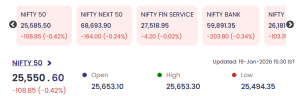
As of the market update at 3:30 PM IST on January 19, 2026, the Nifty 50 stood at 25,585.50, down 108.85 points or 0.42%.

Indian equity markets closed Monday’s session in negative territory but managed to recover from deeper losses in the second half of trade. Persistent selling pressure in select heavyweight stocks such as IT and energy majors kept benchmark indices under pressure, though strong gains in aviation, FMCG and select private banks helped cushion the fall.

Also Read: January 19, 2026 (Mid-cap): Nifty Trades Lower Around 25,550; Indigo, Tech Mahindra Outperform Amid Weak Broader Sentiment


Market Snapshot: Benchmarks End in the Red

Sectoral indices reflected a cautious undertone, with marginal weakness across key segments:

  • Nifty 50: 25,585.50 ▼ 0.42%

  • Nifty Next 50: 68,693.90 ▼ 0.24%

  • january 19Nifty Financial Services: 27,518.95 ▼ 0.02%

  • Nifty Bank: 59,891.35 ▼ 0.34%

  • Nifty IT: 26,181 (weaker bias)

The data indicates that while declines were moderate, the broader market lacked strong momentum toward the close.


Top Gainers: Indigo Extends Rally, Defensive Buying Visible

Buying interest remained concentrated in a handful of quality large-cap stocks, highlighting ongoing stock-specific strength.

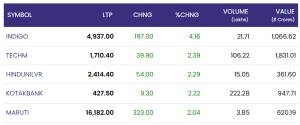
  • IndiGo (InterGlobe Aviation) surged 4.16% to ₹4,937.00, continuing its strong upward momentum on heavy volumes.

  • Tech Mahindra gained 2.39% to ₹1,710.40, outperforming the broader IT pack.

  • Screenshot 2026 01 19 164345Hindustan Unilever advanced 2.29% to ₹2,414.40, reflecting defensive buying in FMCG.

  • Kotak Mahindra Bank added 2.22% to ₹427.50, showing resilience within the banking space.

  • Maruti Suzuki climbed 2.04% to ₹16,182.00, supported by positive sentiment in auto stocks.

The composition of gainers suggests a shift toward quality, defensives, and consumption-led themes.


Top Losers: Wipro, Reliance Weigh Heavily

Selling pressure in select heavyweights continued to drag on the benchmarks.

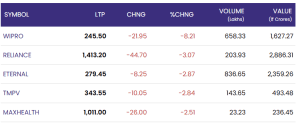
  • Wipro plunged 8.21% to ₹245.50, emerging as the worst performer of the session amid very high volumes.

  • Reliance Industries declined 3.07% to ₹1,413.20, exerting significant pressure on the index.

  • Screenshot 2026 01 19 164338Eternal fell 2.87% to ₹279.45.

  • Tata Motors DVR (TMPV) slipped 2.84% to ₹343.55.

  • Max Healthcare dropped 2.51% to ₹1,011.00.

The steep fall in Wipro and continued weakness in Reliance capped any strong upside attempt by the benchmark.


Market Sentiment: Selective Buying Amid Consolidation

Overall sentiment reflects a consolidation phase rather than a broad-based sell-off. While traders booked profits in certain large caps, consistent buying in stocks like Indigo, Hindustan Unilever, Maruti, and Kotak Bank highlights confidence in fundamentally strong names.

Technically, the 25,500 zone continues to act as a strong support, while upside momentum would require a sustained move above 25,750–25,800.


Conclusion: January 19, 2026

The session ended with moderate losses for the benchmark indices, but the underlying market structure remains healthy due to continued stock-specific participation. As long as Nifty holds above key support levels, the broader trend remains stable, with opportunities emerging in selective sectors rather than across the board.


For real time stock Updates, visit NSE website.

January 19, 2026 (Midcap): Nifty Trades Lower Around 25,550; Indigo, Tech Mahindra Outperform Amid Weak Broader Sentiment

Indian equity benchmarks continued to trade in negative territory during early afternoon trade on January 19, 2026, as selling pressure in heavyweight stocks capped any meaningful recovery. While frontline indices remained subdued, selective buying interest was visible in aviation, IT, auto and private banking stocks.

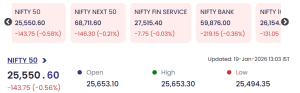
At 1:03 PM IST, the Nifty 50 was quoted at 25,550.60, down 143.75 points or 0.56%. The index traded within a narrow intraday range, touching a high of 25,653.30 and a low of 25,494.35.

Also Read: January 19, 2026 (opening): Nifty Slips Below 25,600 as Banking Stocks Weigh; Indigo, Tech Mahindra Lead Gainers


Market Snapshot: Indices Remain Under Pressure

Broader indices reflected cautious sentiment across sectors:

  • Nifty 50: 25,550.60 ▼ 0.56%

  • Nifty Next 50: 68,711.60 ▼ 0.21%

  • January 19Nifty Financial Services: 27,515.40 ▼ 0.03%

  • Nifty Bank: 59,876.00 ▼ 0.36%

  • Nifty IT: 26,154 (marginally lower)

The marginal decline in Nifty Financial Services suggests resilience in select financial stocks despite weakness in major banking counters.


Top Gainers: Indigo, Tech Mahindra Lead from the Front

Stock-specific action dominated the session, with several large-cap stocks recording healthy gains.

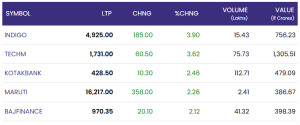
  • IndiGo (InterGlobe Aviation) climbed 3.90% to ₹4,925.00, supported by strong volumes and continued optimism in the aviation space.

  • Tech Mahindra gained 3.62% to ₹1,731.00, indicating renewed interest in quality IT stocks.

  • Screenshot 2026 01 19 132410Kotak Mahindra Bank advanced 2.46% to ₹428.50, outperforming the broader banking pack.

  • Maruti Suzuki rose 2.26% to ₹16,217.00, supported by positive sentiment in the auto sector.

  • Bajaj Finance added 2.12% to ₹970.35, reflecting steady accumulation in financial majors.

The presence of banking, auto and finance stocks among gainers points to selective institutional buying rather than broad-based risk-off behavior.


Top Losers: Wipro, Reliance, ICICI Bank Drag the Market

On the downside, a few heavyweight stocks continued to exert pressure on the benchmarks.

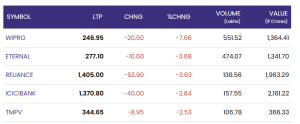
  • Wipro tumbled 7.66% to ₹246.95, emerging as the top laggard amid heavy volumes.

  • Eternal declined 3.68% to ₹277.10.

  • Reliance Industries slipped 3.63% to ₹1,405.00, weighing significantly on index movement.

  • Screenshot 2026 01 19 132417ICICI Bank fell 2.84% to ₹1,370.80, contributing to weakness in banking indices.

  • Tata Motors DVR (TMPV) dropped 2.53% to ₹344.65.

Persistent selling in index heavyweights such as Reliance and ICICI Bank limited any meaningful recovery in benchmark indices.


Market Sentiment: Consolidation with Stock-Specific Opportunities

Market sentiment remains cautious but not decisively bearish. While institutional profit booking is visible in select large caps, the strength in stocks like Indigo, Tech Mahindra, Maruti and Kotak Bank highlights a shift toward quality and defensives.

Technically, analysts view 25,500 as an important near-term support zone for Nifty, while a sustained breakout above 25,700–25,800 would be needed to revive bullish momentum.


Conclusion: January 19, 2026

The trading session reflects a market in consolidation mode, where index-level weakness masks underlying stock-specific strength. Until heavyweight selling eases, the benchmark is likely to remain range-bound, though selective opportunities continue to emerge for investors.


For real time stock Updates, visit NSE website.

January 19, 2026 (opening): Nifty Slips Below 25,600 as Banking Stocks Weigh; Indigo, Tech Mahindra Lead Gainers

Indian equity markets traded under pressure on January 19, 2026, with benchmark indices slipping into the red during mid-morning trade. Weakness in heavyweight banking and large-cap stocks dragged sentiment, even as selective buying was seen in aviation, IT, and FMCG counters.

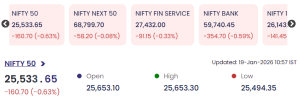
At 10:57 AM IST, the Nifty 50 stood at 25,533.65, down 160.70 points or 0.63%, after moving between an intraday high of 25,653.30 and a low of 25,494.35.

Also Read: January 16, 2026: Nifty Ends Flat as IT Stocks Rally, Banking Index Outperforms; Infosys, Tech Mahindra Lead Gains


Market Snapshot: Indices Under Pressure

Broader indices showed mixed trends, but overall sentiment remained cautious:

  • Nifty 50: 25,533.65 ▼ 0.63%

  • Nifty Next 50: 68,799.70 ▼ 0.08%

  • Indian equity markets traded under pressure on January 19, 2026, with benchmark indices slipping into the red during mid-morning trade. Weakness in heavyweight banking and large-cap stocks dragged sentiment, even as selective buying was seen in aviation, IT, and FMCG counters.

At 10:57 AM IST, the Nifty 50 stood at 25,533.65, down 160.70 points or 0.63%, after moving between an intraday high of 25,653.30 and a low of 25,494.35.

Also Read: January 16, 2026: Nifty Ends Flat as IT Stocks Rally, Banking Index Outperforms; Infosys, Tech Mahindra Lead Gains

Market Snapshot: Indices Under Pressure

Broader indices showed mixed trends, but overall sentiment remained cautious:

Nifty 50: 25,533.65 ▼ 0.63%

Nifty Next 50: 68,799.70 ▼ 0.08%

Nifty Financial Services: 27,432.00 ▼ 0.33%

Nifty Bank: 59,740.45 ▼ 0.59%

Nifty IT: 26,143 (downtrend visible)

The decline in Nifty Bank highlighted continued selling pressure in key banking names, keeping the benchmark index subdued.

Top Gainers: Indigo, Tech Mahindra Shine

Despite the weak headline indices, select stocks posted strong gains, indicating sector-specific buying interest.

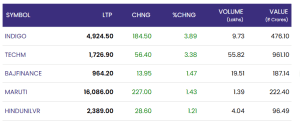
IndiGo (InterGlobe Aviation) surged 3.89% to ₹4,924.50, emerging as the top performer.

Tech Mahindra gained 3.38% to ₹1,726.90, supported by strong volumes.

Bajaj Finance rose 1.47% to ₹964.20, reflecting steady buying in quality financials.

Maruti Suzuki advanced 1.43% to ₹16,086.00.

Hindustan Unilever added 1.21% to ₹2,389.00, benefiting from defensive demand.

The presence of FMCG and auto stocks among gainers suggests investors are selectively rotating into relatively stable sectors.

Top Losers: Wipro, Reliance, ICICI Bank Drag

On the downside, heavyweights recorded sharp losses, contributing significantly to the index decline.

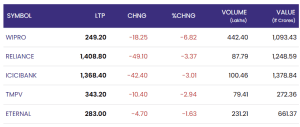
Wipro plunged 6.82% to ₹249.20, the steepest fall among major stocks.

Reliance Industries declined 3.37% to ₹1,408.80, exerting pressure on the broader market.

ICICI Bank dropped 3.01% to ₹1,368.40, pulling down banking sentiment.

Tata Motors DVR (TMPV) slipped 2.94% to ₹343.20.

Eternal fell 1.63% to ₹283.00.

The sharp correction in large-cap stocks indicates profit booking after recent rallies and cautious positioning by institutional investors.

Market Sentiment: Cautious With Stock-Specific Action

Overall, the market reflects a “sell-on-rise” sentiment in heavyweight sectors like banking and conglomerates, while stock-specific opportunities continue to attract traders. Volatility remains elevated as participants await stronger triggers.

Analysts believe that the 25,500 level on Nifty is acting as an immediate support, while a sustained move above 25,700–25,750 would be required to restore bullish momentum.

Conclusion: January 19, 2026

The session highlights a market in consolidation mode — where index-level weakness coexists with selective sectoral strength. While banking and IT drags continue to cap gains, buying in stocks like Indigo, Tech Mahindra, and defensive names suggests that investors are becoming increasingly selective rather than exiting the market entirely.

For real time stock Updates, visit NSE website.

Nifty Financial Services: 27,432.00 ▼ 0.33%

  • Nifty Bank: 59,740.45 ▼ 0.59%

  • Nifty IT: 26,143 (downtrend visible)

The decline in Nifty Bank highlighted continued selling pressure in key banking names, keeping the benchmark index subdued.


Top Gainers: Indigo, Tech Mahindra Shine

Despite the weak headline indices, select stocks posted strong gains, indicating sector-specific buying interest.

  • IndiGo (InterGlobe Aviation) surged 3.89% to ₹4,924.50, emerging as the top performer.

  • Tech Mahindra gained 3.38% to ₹1,726.90, supported by strong volumes.

  • Screenshot 2026 01 19 105756Bajaj Finance rose 1.47% to ₹964.20, reflecting steady buying in quality financials.

  • Maruti Suzuki advanced 1.43% to ₹16,086.00.

  • Hindustan Unilever added 1.21% to ₹2,389.00, benefiting from defensive demand.

The presence of FMCG and auto stocks among gainers suggests investors are selectively rotating into relatively stable sectors.


Top Losers: Wipro, Reliance, ICICI Bank Drag

On the downside, heavyweights recorded sharp losses, contributing significantly to the index decline.

  • Wipro plunged 6.82% to ₹249.20, the steepest fall among major stocks.

  • Reliance Industries declined 3.37% to ₹1,408.80, exerting pressure on the broader market.

  • Screenshot 2026 01 19 105808ICICI Bank dropped 3.01% to ₹1,368.40, pulling down banking sentiment.

  • Tata Motors DVR (TMPV) slipped 2.94% to ₹343.20.

  • Eternal fell 1.63% to ₹283.00.

The sharp correction in large-cap stocks indicates profit booking after recent rallies and cautious positioning by institutional investors.


Market Sentiment: Cautious With Stock-Specific Action

Overall, the market reflects a “sell-on-rise” sentiment in heavyweight sectors like banking and conglomerates, while stock-specific opportunities continue to attract traders. Volatility remains elevated as participants await stronger triggers.

Analysts believe that the 25,500 level on Nifty is acting as an immediate support, while a sustained move above 25,700–25,750 would be required to restore bullish momentum.


Conclusion: January 19, 2026

The session highlights a market in consolidation mode — where index-level weakness coexists with selective sectoral strength. While banking and IT drags continue to cap gains, buying in stocks like Indigo, Tech Mahindra, and defensive names suggests that investors are becoming increasingly selective rather than exiting the market entirely.


For real time stock Updates, visit NSE website.

Shiv Sena (UBT) Alleges 2026 Maharashtra Civic Elections Verdict Driven by Power Machinery

Introduction: Shiv Sena (UBT) Raises Concerns Over Civic Poll Verdict

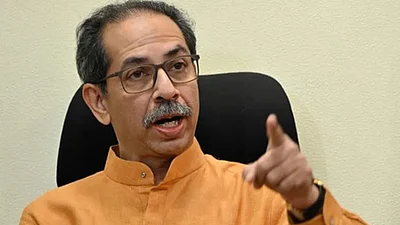
Shiv Sena (UBT), the faction of the once-united Shiv Sena led by Uddhav Thackeray, has alleged that the outcome of the 2026 Maharashtra civic elections was heavily influenced by power machinery and administrative leverage. In an editorial published in the party’s mouthpiece Saamana, leaders argued that these factors distorted the electoral process and undermined a free and fair verdict in urban local bodies, including the pivotal Brihanmumbai Municipal Corporation (BMC).

The party’s claims come amid a broader debate over the post-poll arithmetic and the distribution of municipal seats among major political players. As Maharashtra’s civic election results continue to shape the state’s political contours, Shiv Sena (UBT) has rejected what it described as an “unnatural outcome” driven by structural advantages rather than genuine voter preference.

Allegations of Power Machinery Influence

In its commentary, Shiv Sena (UBT) asserted that the election results did not reflect a level playing field due to the alleged involvement of administrative power and support from government machinery. The party claimed that disproportionate resources, infrastructural support and campaign advantages were extended to certain political formations, creating an uneven electoral contest.

The editorial stated that such influence compromised the ability of all parties to compete fairly, particularly in closely contested municipal wards. According to the party, the alleged power backing not only skewed public perception but also impacted voter behaviour by creating an impression of inevitability around specific outcomes.

Shiv Sena (UBT) described these developments as detrimental to the democratic process, arguing that civic elections, which are meant to represent local issues and community priorities, were instead overshadowed by broader displays of political dominance.

Key Figures and Seats Under Dispute

While comprehensive official data detailing the exact number of seats contested, won, or lost by each political formation has been released, Shiv Sena (UBT) leaders have focused on perceived discrepancies in ward-wise results. The party claimed that several urban municipalities including the BMC, which comprises 227 wards, saw outcomes that did not align with ground-level feedback from voters during the campaign.

According to the party’s estimates, its performance was substantially lower than anticipated in traditional strongholds, while formations backed by what Shiv Sena (UBT) called “power networks” exceeded projections in multiple regions. Leaders cited figures indicating that the party won fewer than 50 seats in municipal corporations where it expected a stronger showing, though exact numbers vary by locality.

The BMC remains a core point of contention, as municipal control carries administrative authority over infrastructure, public services, zoning and budget allocations in India’s largest civic body. Shiv Sena (UBT) leaders argued that their ideological base and grassroots support among Marathi voters did not translate into a commensurate number of seats, raising questions about the role of external influences.

Quotations and Public Statements

In Saamana, party leaders wrote that “the verdict as it stands does not reflect the will of the people but the impact of machinery that overshadowed sincere political effort.” The editorial suggested that the influence of administrative apparatus and campaign advantages extended beyond traditional party propaganda, shaping narratives and voter choices in ways that disadvantaged smaller or independent voices.

The commentary also stated that “those who wield power and influence must be held accountable for ensuring fairness in democratic processes,” and called for introspection within Maharashtra’s political ecosystem to safeguard civic polls from undue influence in future elections.

Context of Recent Political Dynamics in Maharashtra

The civic polls held in early 2026 were seen as a test of organisational strength and popular support across urban Maharashtra. With municipal elections in cities such as Mumbai, Pune, Thane, Nagpur and Nashik, the outcomes were expected to reflect public sentiment on local governance, public services, development issues and civic leadership.

Shiv Sena (UBT) had campaigned on issues such as infrastructure improvements, cultural identity, community welfare and local representation. Despite these efforts, the party’s performance in key municipalities appeared inconsistent with its pre-poll expectations, prompting internal assessments and public commentary on the factors influencing voter behaviour.

The faction’s assertions of administrative influence add to ongoing discussions about the fairness of local body elections and the mechanisms that can strengthen democratic integrity.

Reactions and Counterpoints

While Shiv Sena (UBT) has made strong claims about power machinery influence, other political formations have argued that the results reflect the evolving preferences of urban voters. Some have pointed to the increasing importance of development agendas, public services, economic opportunities and quality of life considerations as decisive factors for voters in civic elections.

Political analysts note that urban electorates often prioritise issue-based voting patterns, particularly in municipal contexts where infrastructure, sanitation, transportation and local governance directly affect daily life. These observers suggest that while allegations of influence merit scrutiny, voter behaviour is rarely governed solely by administrative advantages.

Nonetheless, the strength of the charges by Shiv Sena (UBT) underscores a pervasive scepticism in some quarters about the impartiality of political contests, reflecting broader debates on political influence and electoral fairness.

Calls for Electoral Reforms and Transparency

In response to the controversy, Shiv Sena (UBT) has reiterated the need for electoral reforms that can enhance transparency and level the playing field in civic polls. The party advocates for stronger safeguards against the misuse of administrative resources, clearer regulations on campaign financing, and more robust monitoring mechanisms to ensure equal opportunities for all political contenders.

Leaders have also called on the State Election Commission to review the conduct of the polls and assess any instances where procedural irregularities or undue influence may have occurred. Such review mechanisms, they argue, are essential to maintaining public trust in democratic institutions at the local level.

Public and Grassroots Response

Among grassroots supporters of Shiv Sena (UBT), the allegations have stirred debate about urban political engagement and representation. Many local activists expressed frustration that longstanding organisational work and community outreach did not translate into anticipated electoral success. Some supporters called for strengthened mobilisation strategies, while others emphasised the need for clearer communication of civic agendas to urban voters.

Citizens in several Maharashtra cities have offered mixed opinions, with some echoing concerns about administrative advantages in civic contests, and others underscoring the pragmatic considerations of everyday governance issues such as water supply, waste management, urban transport and health services as more significant to electoral decisions.

Looking Ahead: Implications for Future Elections

The controversy surrounding the 2026 civic poll verdict may have implications beyond immediate municipal governance. For Shiv Sena (UBT), the outcome and the public commentary that followed could influence its strategic planning for future state and national elections. Leaders may seek to reassess campaign strategies, build broader coalitions and engage more intensively with urban electorates.

The broader political discourse in Maharashtra may also shift toward addressing structural concerns about the conduct of local body elections and mechanisms to support balanced competition. As parties prepare for subsequent polls, issues of electoral fairness, administrative influence and grassroots engagement are likely to remain central to political narratives and campaigning.

Conclusion: A Verdict That Raises Questions and Sparks Debate

Shiv Sena (UBT)’s claims that the 2026 Maharashtra civic election outcomes were driven by power machinery reflect deep concerns about electoral fairness and the role of administrative influence in shaping political results. As the party continues to advocate for transparency and reforms, the debate underscores the challenges inherent in maintaining a level playing field in complex urban democracies.

While the official results stand, the broader conversation about democratic integrity, voter agency and political equity is likely to influence future electoral engagements and civic participation across Maharashtra’s evolving political landscape.

Read More: https://channel6network.com/maharashtra-man-loses-12-kg-90-days/

Berubari Border Land Mapping Bengal 2026 – Detailed Analysis of India‑Bangladesh Boundary Clarification, Governance Challenges, and Community Lessons

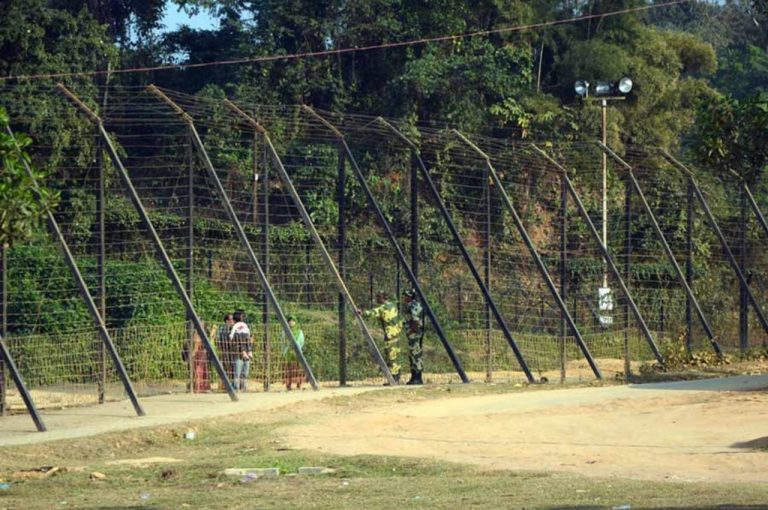
The Berubari border land mapping Bengal 2026 initiative represents a landmark step in resolving decades‑old disputes over land ownership and settlement boundaries near the India‑Bangladesh border. The West Bengal government has undertaken a detailed mapping exercise in Berubari mouza, Jalpaiguri district, to provide clarity to residents who have lived in uncertainty for generations. This exercise is expected to reduce confusion, prevent disputes, and strengthen governance in one of the most sensitive border regions of India.


2. Berubari Border Land Mapping Bengal 2026: The Exercise

  • Location: Berubari mouza, Jalpaiguri district, West Bengal.
  • Objective: To map land parcels near the India‑Bangladesh border.
  • Method: Survey teams deployed to demarcate plots and update records.
  • Outcome expected: Clear land titles, reduced disputes, and improved governance.
  • Community involvement: Residents consulted to verify historical claims.

3. Why Mapping Matters

  • Legal clarity: Provides residents with documented ownership rights.
  • Governance stability: Reduces disputes between citizens and authorities.
  • National security: Clear boundaries prevent cross‑border encroachment.
  • Economic development: Enables residents to access loans and government schemes with proper land titles.

4. Community Concerns

  • Residents: Many families lived without clarity on whether their land fell in India or Bangladesh.
  • Farmers: Faced difficulties in securing agricultural loans due to unclear land records.
  • Civil society: Welcomed the initiative but demanded transparency in implementation.
  • Opposition voices: Questioned whether mapping would be politicised ahead of elections.

5. Political Context

  • West Bengal government: Framed the exercise as a welfare measure for border residents.
  • Centre’s role: Ministry of Home Affairs oversees border management, but state executes local mapping.
  • Opposition parties: Raised concerns about timing and transparency.
  • Civil society: Called for prioritising community welfare over political rivalry.

6. Governance Challenges

The mapping exercise reflects systemic governance issues:

  • Historical disputes: Berubari was part of the Indo‑Bangladesh land boundary agreement.
  • Administrative gaps: Decades of unclear records created confusion.
  • Trust deficit: Residents sceptical about government promises.
  • Judicial oversight: Courts may need to intervene if disputes escalate.

7. Government External Links for Assistance


8. Historical Context of Berubari

  • 1947 Partition: Berubari became a disputed territory between India and East Pakistan.
  • 1969 Supreme Court ruling: Clarified that land transfer required constitutional amendment.
  • 1974 Indira‑Mujib Agreement: Proposed exchange of enclaves and settlement of disputes.
  • 2015 Land Boundary Agreement: Finalised exchange of enclaves between India and Bangladesh.
  • 2026: Mapping exercise provides long‑awaited clarity to residents.

9. Community Impact

  • Families: Relief at finally receiving documented land titles.
  • Farmers: Hope for access to credit and agricultural schemes.
  • Youth: Expect better opportunities with clarified citizenship and land rights.
  • Civil society groups: Demand grievance redressal mechanisms for disputes.

10. Global Comparisons

Similar border land clarifications worldwide:

  • Europe: Post‑WWII boundary settlements between Germany and Poland.
  • Africa: Land disputes resolved through mapping in Kenya and Uganda.
  • South America: Brazil‑Bolivia border settlements clarified through surveys.

Berubari’s case mirrors these global struggles where borderland residents face uncertainty until mapping provides clarity.


11. Governance Lessons

The Berubari mapping teaches:

  • Human sensitivity must guide bureaucratic processes.
  • Community engagement ensures inclusivity.
  • Transparency in records builds trust.
  • Judicial oversight is vital to protect democratic rights.

12. Future Outlook – Border Governance in Bengal

India must move towards:

  • Digitised land records accessible to border residents.
  • Periodic audits of border settlements.
  • Public dashboards showing mapping progress transparently.
  • Educational campaigns to help residents understand their rights.

13. Conclusion

The Berubari border land mapping Bengal 2026 is more than a bureaucratic exercise—it is a symbol of India’s democratic resilience. By clarifying land ownership near the India‑Bangladesh border, the West Bengal government has taken a step toward resolving decades of uncertainty. For Bengal, the lesson is clear: democracy thrives when governance delivers clarity, dignity, and security to borderland residents.

Also read: Home | Channel 6 Network – Latest News, Breaking Updates: Politics, Business, Tech & More

Shib Shankar Chowdhury Malda US Invite 2026 – Detailed Analysis of Western Classical Music Journey, Global Recognition, and Cultural Lessons for Bengal

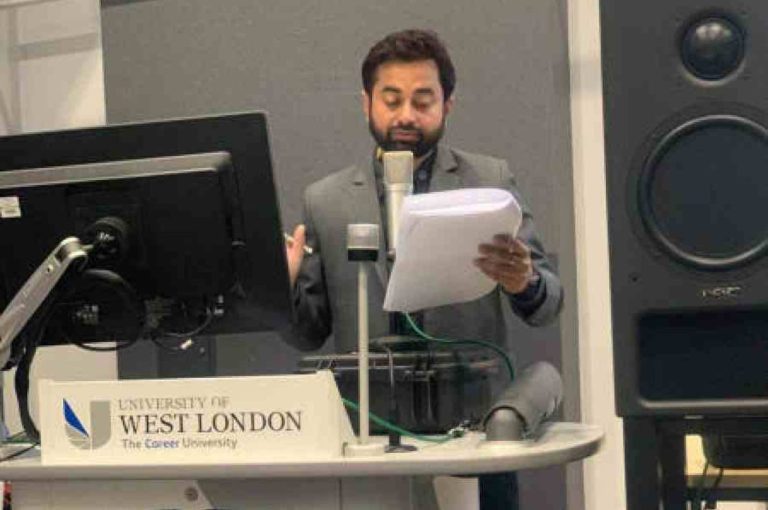
The Shib Shankar Chowdhury Malda US invite 2026 is a landmark achievement for Bengal’s cultural landscape. Chowdhury, a Western classical music composer and vocalist from Malda, has been invited to participate in a prestigious international event in the United States. His recognition underscores the growing global appreciation for Indian musicians who excel in genres beyond traditional Indian classical music.


2. Shib Shankar Chowdhury Malda US Invite 2026: The Achievement

  • Artist: Shib Shankar Chowdhury, composer and vocalist.
  • Origin: Malda, West Bengal.
  • Genre: Western classical music, blending composition and vocal performance.
  • Event: Invitation to perform and present at an international conference in the US.
  • Significance: Recognition of Bengal’s contribution to global music beyond its traditional heritage.

3. Why This Matters

  • Cultural pride: Bengal has long been a hub of music and literature; Chowdhury extends this legacy globally.
  • Breaking stereotypes: Indian musicians are often associated with Hindustani or Carnatic traditions; Chowdhury’s Western classical expertise challenges this perception.
  • Global recognition: His invitation highlights India’s growing role in international cultural exchanges.
  • Youth inspiration: Aspiring musicians in small towns see his journey as proof that global success is possible.

4. Community Reaction

  • Malda residents: Expressed pride in Chowdhury’s achievement.
  • Music students: Inspired by his journey from a small town to international recognition.
  • Civil society: Called for greater support for artists in non‑traditional genres.
  • Political leaders: Highlighted the need for cultural infrastructure in Bengal’s districts.

5. Political and Cultural Context

  • Government of West Bengal: Promotes cultural festivals but often focuses on traditional forms.
  • National cultural policy: Encourages global outreach through ICCR and Ministry of Culture.
  • Civil society: Advocates for inclusivity in supporting diverse genres.
  • Global context: Western classical music remains a niche in India but is gaining traction.

6. Governance Challenges

Chowdhury’s achievement reflects systemic challenges:

  • Infrastructure gaps: Lack of conservatories and Western classical training centres in Bengal.
  • Funding issues: Limited grants for non‑traditional genres.
  • Recognition barriers: Artists outside Kolkata often struggle for visibility.
  • Global outreach: Need for stronger institutional support for international collaborations.

7. Government External Links for Assistance


8. Historical Context of Bengal’s Musical Legacy

  • 19th century: Bengal Renaissance fostered experimentation in literature and music.
  • 20th century: Rabindranath Tagore blended Indian and Western influences.
  • Post‑Independence: Kolkata became a hub for Hindustani classical and modern music.
  • 21st century: Artists like Chowdhury expand Bengal’s reach into Western classical traditions.

9. Community Impact

  • Families: Proud of local talent achieving global recognition.
  • Students: Motivated to pursue diverse musical genres.
  • Educators: Call for inclusion of Western classical music in curricula.
  • Civil society groups: Demand better cultural infrastructure in districts like Malda.

10. Global Comparisons

Similar journeys worldwide:

  • China: Musicians trained in Western classical traditions now dominate global competitions.
  • South Korea: Government support has produced world‑class orchestras.
  • Latin America: Youth orchestras showcase how grassroots talent can achieve global recognition.

Chowdhury’s case mirrors these global trends where local talent transcends boundaries through dedication and institutional support.


11. Governance Lessons

The Malda US invite teaches:

  • Inclusivity in cultural policy is essential.
  • Infrastructure development must extend beyond metropolitan cities.
  • Global outreach programs should support diverse genres.
  • Community engagement ensures sustainability of cultural initiatives.

12. Future Outlook – Bengal’s Cultural Landscape

India must move towards:

  • Establishing conservatories for Western classical music in districts.
  • Digitised cultural archives showcasing diverse genres.
  • Public dashboards tracking grants and international collaborations.
  • Educational campaigns to inspire youth in small towns.

13. Conclusion

The Shib Shankar Chowdhury Malda US invite 2026 is more than a personal achievement—it is a symbol of Bengal’s evolving cultural identity. By excelling in Western classical music, Chowdhury has expanded the horizons of Indian artistry and inspired a new generation. For Bengal, the lesson is clear: cultural pride thrives when diversity is embraced and global recognition is matched by local support.

Also read: Home | Channel 6 Network – Latest News, Breaking Updates: Politics, Business, Tech & More

Darjeeling Foundation Day Celebration 2026 – Detailed Analysis of Captain Lloyd’s Legacy, Civic Cleaning Drive, and Cultural Lessons for Bengal

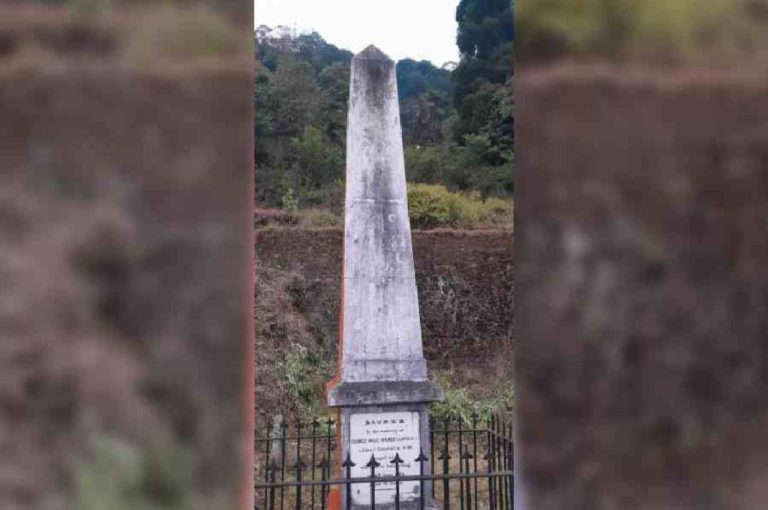
The Darjeeling foundation day celebration 2026 marks a historic milestone for the hill town. For the first time, Darjeeling is officially commemorating its “birthday” with a symbolic cleaning drive at the cemetery of Captain George Lloyd, the British officer credited with discovering and developing Darjeeling as a hill station in the 1830s. The initiative blends heritage preservation with civic responsibility, highlighting the town’s colonial past while promoting modern values of cleanliness and community pride.


2. Darjeeling Foundation Day Celebration 2026: The Event

  • Location: Darjeeling town, West Bengal.
  • Occasion: First official celebration of Darjeeling’s foundation day.
  • Activity: Cleaning drive at the cemetery of Captain Lloyd.
  • Symbolism: Honouring the town’s discoverer while promoting civic responsibility.
  • Community participation: Local civic bodies, schools, and NGOs expected to join.

3. Why Foundation Day Matters

  • Historical recognition: Acknowledges Darjeeling’s colonial origins and transformation into a cultural hub.
  • Civic pride: Encourages residents to take ownership of their town’s heritage.
  • Tourism potential: Foundation day can become an annual attraction for visitors.
  • Educational value: Teaches younger generations about Darjeeling’s history and legacy.

4. Captain Lloyd’s Legacy

  • Discovery: Captain George Lloyd, a British officer, identified Darjeeling’s potential as a hill station in the 1830s.
  • Development: The British established tea plantations, schools, and civic institutions.
  • Colonial heritage: Darjeeling became a retreat for colonial elites and a hub for missionary activity.
  • Modern impact: Tea, tourism, and education remain central to Darjeeling’s identity.

5. Community Concerns

  • Residents: Welcomed the initiative but demanded focus on infrastructure and waste management.
  • Civil society: Called for broader heritage preservation beyond symbolic gestures.
  • Tourism stakeholders: Saw potential for boosting visitor numbers through cultural events.
  • Youth: Expressed interest in linking heritage with modern civic activism.

6. Political Context

  • Government of West Bengal: Supported the initiative as part of cultural tourism promotion.
  • Local leaders: Framed the event as a step toward civic pride and heritage awareness.
  • Opposition voices: Questioned whether symbolic gestures distract from pressing civic issues.
  • Civil society: Urged integration of heritage preservation with sustainable development.

7. Governance Challenges

The foundation day celebration reflects systemic governance issues:

  • Heritage neglect: Many colonial structures in Darjeeling are in disrepair.
  • Tourism management: Overcrowding and waste disposal remain challenges.
  • Community engagement: Need for sustained participation beyond symbolic events.
  • Balancing past and present: Colonial legacy must be acknowledged without overshadowing local culture.

8. Government External Links for Assistance


9. Historical Context of Darjeeling

  • Pre‑colonial era: Darjeeling was part of the Kingdom of Sikkim.
  • 1835: British acquired Darjeeling from Sikkim, establishing it as a hill station.
  • 19th century: Tea plantations transformed Darjeeling into a global brand.
  • 20th century: Darjeeling became a hub for education, culture, and political movements.
  • 21st century: Heritage preservation and tourism remain central challenges.

10. Community Impact

  • Residents: Pride in Darjeeling’s recognition but demand for better civic services.
  • Business owners: Hope for increased tourism revenue.
  • Students: Opportunity to learn about local history.
  • Civil society groups: Call for sustainable tourism and heritage conservation.

11. Global Comparisons

Similar heritage celebrations worldwide:

  • USA: Cities celebrate foundation days with parades and civic events.
  • UK: Towns commemorate historical figures with heritage walks.
  • Japan: Local festivals honour founders and cultural heritage.

Darjeeling’s case mirrors these global practices where heritage celebrations strengthen civic identity and tourism appeal.


12. Governance Lessons

The Darjeeling foundation day teaches:

  • Heritage preservation must be continuous.
  • Community participation ensures legitimacy.
  • Tourism development must be sustainable.
  • Educational integration builds awareness among youth.

13. Future Outlook – Darjeeling’s Cultural Landscape

India must move towards:

  • Annual foundation day celebrations with broader cultural programs.
  • Digitised heritage archives accessible to citizens and tourists.
  • Public dashboards showing civic project progress.
  • Educational campaigns linking history with civic responsibility.

14. Conclusion

The Darjeeling foundation day celebration 2026 is more than a symbolic cleaning drive—it is a test of Bengal’s ability to balance heritage preservation with modern civic responsibility. By honouring Captain Lloyd while promoting cleanliness, Darjeeling has taken a step toward integrating its colonial past with its contemporary aspirations. For Bengal, the lesson is clear: democracy and civic pride thrive when cultural heritage is respected and community welfare is prioritised.

Also read: Home | Channel 6 Network – Latest News, Breaking Updates: Politics, Business, Tech & More