Sunday, December 28, 2025
Home Blog Page 103

Lokayukta Cracks Down on Khata Bribery Network in Karnataka: 10 Bold Raids Expose Deep Rot

The Lokayukta’s sweeping raids across multiple revenue offices in Karnataka have triggered a major political and administrative storm, exposing what investigators describe as a deeply entrenched bribery network linked to khata issuance and property documentation. The crackdown, conducted after weeks of surveillance, revealed widespread irregularities, unexplained cash flows, and alleged collusion among officials responsible for maintaining land and property records. For thousands of property owners and applicants across Karnataka, the raids have reignited concerns over corruption in local administration and highlighted the long-standing complexities of routine documentation services.

The operation began early in the morning when Lokayukta teams simultaneously stormed several revenue offices across different districts. Officials seized documents, digital records, cash bundles, and files suspected to have been used for illegal khata transfers. According to preliminary estimates, a network of middlemen and frontline staff may have been colluding to demand bribes ranging from a few thousand rupees to several lakhs, depending on the size and urgency of the khata application. The raids also reportedly exposed a pattern of deliberately delaying files to pressure applicants into making illicit payments.

Witness accounts from within the offices describe scenes of shock and confusion as investigators inspected cupboards, computer systems, and cash drawers for evidence. Several employees were questioned on the spot, while others were instructed to submit detailed explanations regarding suspicious entries in digital databases. Lokayukta officers said the department had been receiving multiple complaints for months, most involving allegations that applicants were forced to pay bribes even for routine updates such as change of ownership, bifurcation, or issuance of new khata certificates.

Citizens who had struggled with property documentation for years expressed mixed reactions to the crackdown. Some welcomed the raids as long overdue, saying corruption in khata applications had become almost normalised. Others said the system was so deeply entrenched that only continuous monitoring would create lasting reforms. For many urban homeowners, the khata is essential for tax payments, utility connections, bank loans, and property sales, making delays and bribery an enormous burden. The raids have therefore triggered widespread discussions on the need for procedural transparency.

Investigators also discovered several unofficial registers maintained alongside official records. These registers allegedly contained names of applicants who were willing to pay bribes and the corresponding “service charges” collected by intermediaries. In some offices, investigators found multiple versions of the same land records with conflicting entries, indicating possible manipulation for personal gain. The Lokayukta teams seized the documents and sealed certain sections of the offices to prevent tampering. Early reports suggest that more arrests could follow as evidence is examined.

Lokayukta raids revenue offices in khata bribery case - The Hindu


SYSTEMIC CORRUPTION UNDER THE SCANNER

The Lokayukta’s focus now appears to be expanding beyond individual bribe-taking incidents to examining systemic failures within the khata issuance framework. Officials believe that the bribery network could not have operated without support across multiple levels of administration. Some investigators suspect that mid-level supervisors may have turned a blind eye to irregularities in exchange for a share of the collected bribes. The possibility of collusion with external agents and document writers is also being examined, raising concerns about long-standing institutional weaknesses.

Sources within the investigative team indicated that the raids were planned after a whistleblower provided critical evidence, including audio recordings and screenshots of conversations allegedly involving revenue officials. The whistleblower claimed that bribes were openly discussed using coded language. The Lokayukta registered a formal complaint based on this testimony and began covert surveillance of multiple offices. Officials said the whistleblower may receive protection due to the sensitivity of the case and the risk of retaliation from powerful interest groups.

The raids have sparked renewed debate about the effectiveness of past government initiatives aimed at curbing corruption in property documentation. Despite the introduction of online khata services, many applicants still depend on physical paperwork, giving officials discretionary power over verifications and approvals. Critics argue that while digital systems have reduced some irregularities, loopholes still allow manipulation. For example, certain stages of approval still require offline verification, which becomes a fertile ground for bribery. The Lokayukta’s findings are expected to reignite the demand for full automation of documentation processes.

Revenue department officials have maintained that they will fully cooperate with the investigation, stating that the misconduct of a few staff members should not reflect on the entire department. However, political opposition leaders have accused the government of failing to strengthen anti-corruption mechanisms. They claim the bribery network has been flourishing due to weak oversight and insufficient disciplinary action against officials involved in previous complaints. The issue is expected to be raised in the upcoming legislative session, potentially leading to a heated political confrontation.


IMPACT ON PUBLIC, POLICYMAKERS AND FUTURE REFORMS

For thousands of property owners who have pending khata applications, the raids have created uncertainty about the status of their documents. Some fear delays as offices undergo scrutiny, while others hope the crackdown will clear the backlog once corruption is weeded out. Lokayukta officials assured the public that essential services will not be halted and that only officers directly involved in wrongdoing will be removed from administrative duties. Citizens have been encouraged to report demands for bribes, and a dedicated helpline is expected to be announced soon.

Policy experts believe the raids present an opportunity for the government to introduce stronger administrative reforms. Suggestions include mandatory digital timestamps for each stage of the khata application, random audits of land records, and direct monitoring by senior officers. Some experts advocate for decentralised service centers with strict surveillance measures, arguing that bringing the khata process closer to citizens while reducing discretionary powers can curb corruption. The government is reportedly reviewing these proposals and may convene a committee to study long-term solutions.

Lokayukta officers have also begun assessing whether the bribe money collected was being funneled into larger financial networks. Early indications suggest that some officials may have invested illicit earnings into real estate or unregistered financial schemes. If proven, these transactions could lead to charges under additional laws related to disproportionate assets. Investigators are now examining bank statements, transaction histories, and property documents belonging to officials under the scanner. More searches may take place in the coming days as the inquiry widens.Lokayukta raids revenue offices in khata bribery case - The Hindu

The raids have also placed a spotlight on the role of middlemen who operate outside revenue offices and frequently offer to “speed up” khata approvals. Many applicants, frustrated by delays, rely on these intermediaries without realising that they are part of an illegal network. Lokayukta officials said efforts are underway to identify and arrest these agents, who may have been instrumental in collecting bribes on behalf of officials. By targeting both internal and external players, the investigation aims to dismantle the entire bribery ecosystem.

Several civic groups have planned protests demanding accountability and transparency. Activists argue that corruption in property documentation affects ordinary citizens the most, especially those from lower-income backgrounds who lack the resources or influence to challenge officials. They are demanding strict penalties for those found guilty and immediate reforms to ensure that property-related services are delivered in a time-bound and corruption-free manner. Social media has also been flooded with stories of harassment and bribery, indicating that the issue resonates widely.

The raids have also brought renewed attention to the importance of whistleblowers. Advocacy groups are urging the government to introduce stronger protections and incentives for individuals who expose corruption. They argue that without robust support systems, potential whistleblowers may remain silent out of fear. The case has strengthened the call for a state-level whistleblower protection law, which activists say could significantly reduce corruption and enhance public trust in the administration.

Citizens and property lawyers believe the case could become a landmark moment in Karnataka’s fight against administrative corruption. If the investigation leads to significant disciplinary action and long-term reforms, it may set a precedent for future crackdowns. However, many also caution that without consistent monitoring and structural redesign, corruption may eventually resurface in different forms. They emphasise that the solution lies not only in punitive actions but in redesigning administrative processes to eliminate human discretion.

Senior officials involved in the investigation said the raids represent only the beginning of a larger effort to clean up the khata system. Teams are expected to revisit several revenue offices, collect additional evidence, and verify anomalies in land records. Investigators have warned that employees who attempt to destroy or alter evidence will face strict legal consequences. The Lokayukta plans to submit a preliminary report to the government within weeks, detailing the extent of corruption uncovered so far.Karnataka: Lokayukta raids 13 officials, finds assets worth Rs 35 crore

As Karnataka watches closely, the raids have ignited a broader conversation about the integrity of public institutions. The findings may push the government to develop a long-term blueprint for reforming property documentation, reducing public dependency on intermediaries, and ensuring transparency at every step. For now, the Lokayukta’s actions have struck a powerful chord across the state, offering hope for cleaner governance and fairer services—while reminding the administration that public trust is built only through accountability and sustained reform.

Follow: Karnataka Government

Also read: Home | Channel 6 Network – Latest News, Breaking Updates: Politics, Business, Tech & More

EIMA Agrimach India 2025 ends with strong push for green-fuel farm machinery and gender-friendly equipment

The 9th edition of EIMA Agrimach India, an international exhibition and conference on agri‑machinery and agri‑tech solutions, concluded in New Delhi with the Agriculture Ministry urging industry to prioritise green‑fuel‑based technologies and gender‑friendly farm equipment. Organised by FICCI and Italian industry body FederUnacoma in association with the Ministry of Agriculture & Farmers Welfare, the three‑day event at IARI, Pusa drew around 20,000 farmers, more than 4,000 domestic dealers and over 180 Indian and foreign companies, alongside 100‑plus overseas buyers from Africa, Asia and Europe.​

Green fuels and mechanisation vision for 2047

In his keynote address, Agriculture Secretary Dr Devesh Chaturvedi called on manufacturers to align with India’s Vision 2047 by shifting agri‑machinery towards green fuels over the next 5–10 years. He highlighted opportunities in electrically operated tractors and equipment running on compressed biogas from rural CBG plants, arguing that such technologies can cut both maintenance and operating costs while benefiting from government schemes that will increasingly favour green‑fuel solutions.​


Focus on women farmers and gender budgeting

Dr Chaturvedi stressed that women farmers are central to achieving the 2047 vision and pointed out that the UN has declared 2026 as the International Year of Women Farmers. He urged industry to move beyond symbolic gender budgeting and design genuinely gender‑friendly machinery—manual or motorised—that reduces the heavy drudgery women currently bear in farm operations, instead of merely transferring ownership of existing equipment in name.​

International participation and India–Italy cooperation

The exhibition featured a broad range of agri‑machinery and services, offering B2B opportunities across the farm value chain, with farmers coming largely from Uttar Pradesh, Punjab, Haryana and Odisha. Italy served as partner country, with participation from nations including the Netherlands, Japan, the United States and Poland; Italian Ambassador Antonio Bartoli expressed hope of appointing an agricultural attaché in New Delhi to deepen bilateral cooperation.​

Agriculture as a service and growth outlook

Organising Committee Chair T.R. Kesavan argued for promoting “agriculture as a service”, noting that many farmers cannot afford expensive implements like seeders that are used only for a few days, whereas shared service models can improve access and economics. FederUnacoma Director General Simona Rapastella cited Italian Trade Agency figures projecting India’s agri‑machinery market to grow from about USD 13.7 billion in 2023 to USD 31.6 billion by 2033, an annual rate near 9%, while a FICCI–PwC report titled “Farm Mechanisation: The Path Towards a Future‑Ready India” was released to map this transition.​

Productivity, technology adoption and next edition: EIMA

FICCI National Agriculture Committee Co‑Chair Subroto Geed of Corteva Agriscience said raising productivity is vital for food security and called for better access to quality seeds, crop solutions and mechanisation backed by technology and reforms. Italian Trade Agency officials noted rising adoption of modern mechanical solutions in India, from tillage and sowing to irrigation and threshing, and organisers confirmed that the 10th edition of EIMA Agrimach will be held in Italy next year, further cementing India–Italy collaboration in farm technology.​

For more real-time updates, visit Channel 6 Network.

Source: PIB

India builds strong large-scale chip design ecosystem across universities with ChipIN Centre and SCL Mohali: 2025

The Government of India is rapidly democratising semiconductor design by giving universities and start‑ups access to industry‑grade Electronic Design Automation (EDA) tools and multi‑project wafer (MPW) fabrication runs through the ChipIN Centre and Semiconductor Laboratory (SCL) Mohali. Union IT Minister Ashwini Vaishnaw, handing over 28 freshly fabricated student‑designed chips at SCL Mohali, said this large‑scale design ecosystem is “unique to India” and central to the country’s ambition of becoming a major global semiconductor power while remaining self‑reliant in strategic sectors.​

ChipIN Centre and C2S programme

The ChipIN Centre at C‑DAC Bengaluru functions as a national design hub, hosting advanced EDA tools, compute and hardware infrastructure, IP cores and expert mentorship for academic institutions and start‑ups under the Chips to Start‑up (C2S) programme of the IT Ministry. Designs created by students are collected every three months, checked for fab compliance and then aggregated into MPW shuttles for fabrication at SCL Mohali on 180 nm technology, dramatically cutting time and cost by placing multiple designs on a single mask.​


MPW shuttle performance and student output

Over the past year, ChipIN Centre has organised five MPW shuttle runs at SCL, receiving 122 design tape‑outs from 46 institutions nationwide. From these, SCL has already fabricated and delivered 56 student‑designed chips, including the 28 devices (600 bare dies and 600 packaged chips) handed over during the Minister’s November 28 visit.​

Massive EDA usage and start-up support

Teaching, research and project work at participating institutions have involved more than one lakh students, who together consumed over 125 lakh EDA tool hours in the last year. In parallel, around 90 supported start‑ups used an additional 50 lakh EDA hours, taking total usage beyond 175 lakh hours and making ChipIN Centre one of the world’s largest centrally managed chip‑design user facilities.​

Strategic vision and role of SCL Mohali Ecosystem

Shri Vaishnaw said this surge in design activity reflects Prime Minister Narendra Modi’s directive that India must build semiconductor capabilities of sufficient scale to become a major global player while eliminating external dependence for critical needs. SCL Mohali is expected to play a pivotal role in this strategy as a government‑run fab supporting student projects, start‑ups and strategic requirements, with its modernisation and planned capacity expansion aligned to the broader goal of using indigenous chips across high‑security and mission‑critical applications.​

For more real-time updates, visit Channel 6 Network.

Source: PIB

India to Proudly host global Ayurveda meet on integrative solutions for obesity and metabolic syndrome: 2025

India is stepping up evidence-based integrative approaches to tackle obesity and metabolic disorders, with the Central Council for Research in Ayurvedic Sciences (CCRAS) set to host a two-day International Conference on Ayurveda and Integrative Approaches to Obesity & Metabolic Syndrome at IISc Bengaluru on 1–2 December 2025. The event, organised through CCRAS’s Central Ayurveda Research Institute (CARI) and aligned with its 57th Foundation Day, aims to connect traditional Ayurvedic insights with modern biomedical science to address one of the world’s fastest‑growing public-health challenges.​

Vision of integrative, research-driven healthcare

The conference is being held in collaboration with the Indian Institute of Science (IISc) and NIMHANS, reflecting a strong emphasis on rigorous, interdisciplinary research. Ayush Minister of State (IC) and MoS for Health & Family Welfare Prataprao Jadhav said the government is committed to integrative healthcare where Ayurveda plays a central role, stressing that obesity and metabolic disorders require evidence-based strategies that blend classical knowledge with modern medical science.​


Scientific agenda and thematic focus

The academic programme includes plenary lectures, parallel scientific sessions and a symposium on translational science and integrative management of type‑2 diabetes, obesity and dyslipidaemia, bringing together experts from Ayurveda, allopathic medicine, life sciences and public health from India and abroad. A dedicated workshop on nanotechnology and molecular biology at the TCS Smart‑X Hub in IISc, along with a health‑screening camp run by Samatvam, PathShodh and CARI, will provide hands‑on exposure to cutting‑edge tools and clinical assessment approaches.​

Research outputs and knowledge sharing

CCRAS Director General Dr Rabinarayan Acharya said the meet is designed to bridge Ayurvedic concepts with contemporary biomedical research through evidence‑based dialogue, feeding into integrative care frameworks and global health policy. Organising Secretary Dr Sucholachana Bhatt noted that a special issue of CCRAS’s journal JDRAS on Obesity & Metabolic Disorders, plus ten additional books, will be released during the conference, showcasing the depth of ongoing research in lifestyle and metabolic health.​

Scale of participation and expected impact

More than 700 delegates are expected to attend, with 267 oral presentations, 120 virtual papers, 70 posters and 16 keynote and plenary talks by leading scientists and clinicians. By convening such a large body of researchers and practitioners, the conference seeks to strengthen global collaborations, generate robust clinical and translational evidence, and support India’s broader vision of holistic, accessible and scientifically validated healthcare for metabolic diseases.​

For more real-time updates, visit Channel 6 Network.

Source: PIB

International organic conclave in Shillong showcases Northeast India’s Strong green potential: 2025

A four-day international organic event combining the APEDA Buyer–Seller Meet, the first Northeast India Organic Week and the 4th IFOAM World Organic Youth Summit has opened in Shillong, bringing global buyers, experts and youth delegates to Meghalaya from 28 November to 1 December 2025. The programme, inaugurated at Courtyard by Marriott, is designed to spotlight the organic strengths of Meghalaya and the wider North Eastern Region while deepening global market linkages.​

Organisers and key dignitaries

The event is organised by the Meghalaya Department of Agriculture & Farmers’ Welfare in collaboration with MEGNOLIA, APEDA and IFOAM–Organics Asia, with NERAMAC providing support. The inaugural session was attended by senior officials from the North Eastern Council and Government of Meghalaya, APEDA leadership, IFOAM Asia representatives and industry stakeholders including CRISIL, reflecting strong institutional backing for the region’s organic push.​


Focus on global visibility and market access

APEDA Chairman Abhishek Dev said the first Northeast India Organic Meet has drawn stakeholders from 22 countries, signalling growing international interest in the region’s organic value chains. He emphasised plans to turn the conclave into an annual event rotating across Northeast states and urged farmers and FPOs from Meghalaya to participate in BIOFACH, where India is a partner country, to further showcase their products globally.​

Youth, sustainability and regional branding: Shillong

Alongside B2B buyer–seller sessions, the programme includes cultural events, field visits and the IFOAM World Organic Youth Summit to nurture youth leadership in sustainable and regenerative agriculture. Organisers say the initiative will help build long‑term international partnerships, strengthen organic branding for the Northeast and create new livelihood opportunities for farmers and agri‑entrepreneurs in Meghalaya and neighbouring states.​

For more real-time updates, visit Channel 6 Network.

Source: PIB

Chennai MTC digital shift draws attention as monthly bus pass becomes fully app-based in 2025

0

Chennai MTC introduces app-only monthly pass system

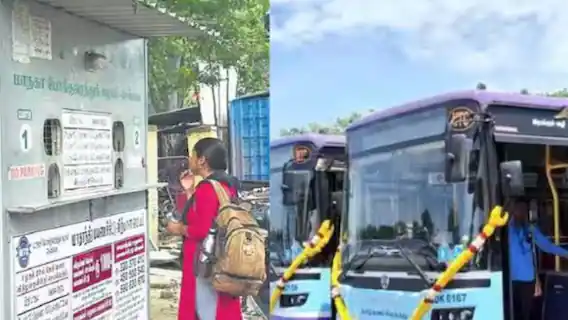
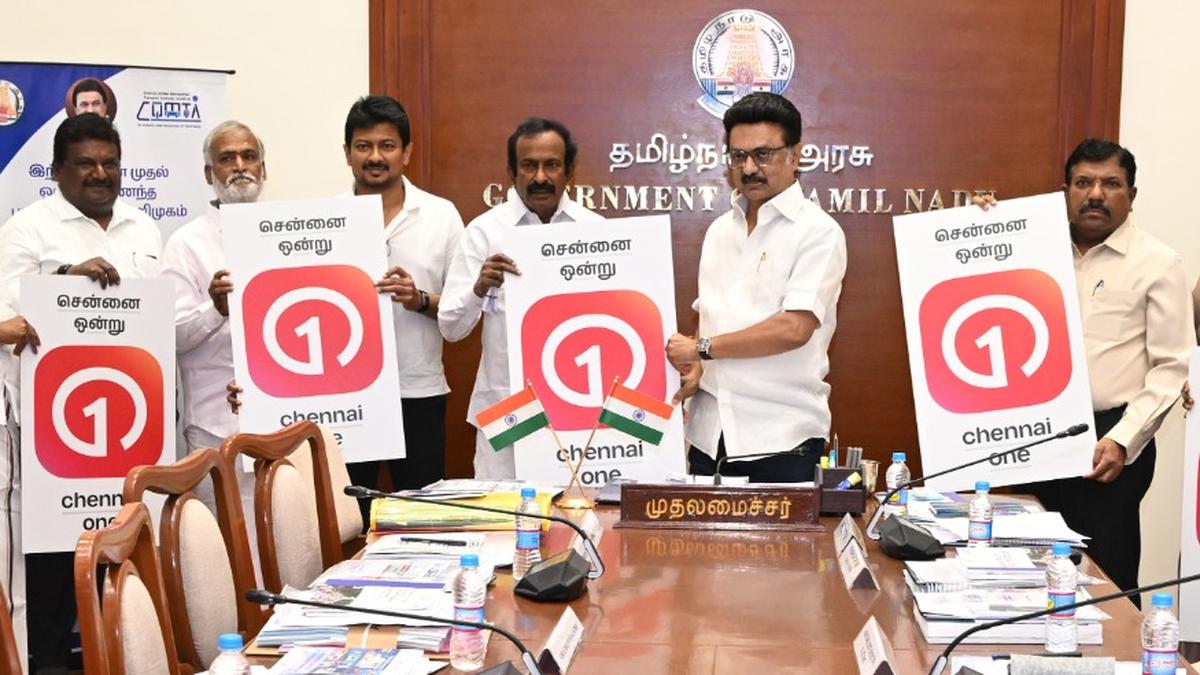
chennai MTC has moved another step into digital public transport by launching a fully app-based monthly bus pass on the Chennai One platform. This change is designed to cut down queues at depots and make everyday travel more direct for passengers who rely on Metropolitan Transport Corporation services. Instead of carrying paper passes or visiting physical counters, users can now complete the entire process from buying to activating their pass inside the mobile app. The transition signals a push toward a more streamlined and paperless system for city travel.MTC launched monthly digital passes via Chennai One app

The new feature builds on the steady growth of the Chennai One app, which has gained substantial traction among commuters since its launch. With lakhs of passengers already using digital tickets daily, integrating monthly passes is expected to increase app engagement and encourage more people to shift towards dependable public transport. The authorities are positioning this upgrade as a long-term step toward smoother urban mobility.

Chennai MTC expands digital services with new pass options

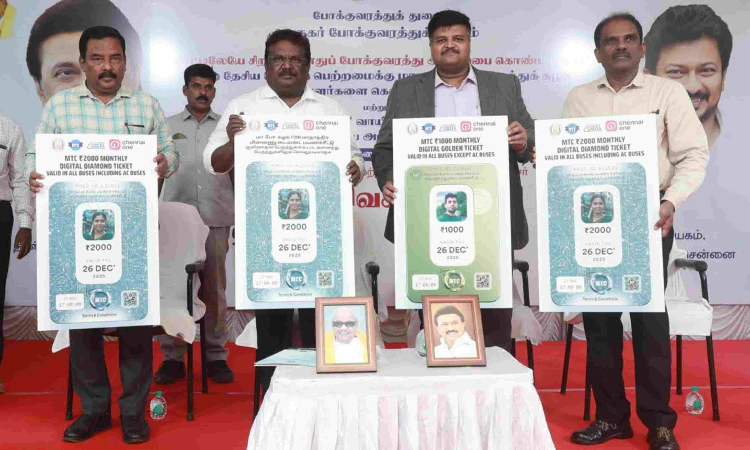
The digital pass system includes two categories meant to cover the needs of different types of commuters. The Gold pass, priced at ₹1,000, allows unlimited monthly travel on ordinary, deluxe, and express buses. The Diamond pass, priced at ₹2,000, extends this access to all services, including air-conditioned routes. Both options are available through the same app interface, allowing users to select, pay, and activate their preferred pass without visiting a depot.Live Chennai: Chennai One App to Offer Monthly Travel Pass Facility,Chennai One App to Offer Monthly Travel Pass Facility, Chennai One app, Chennai transport news, MTC monthly bus pass, Buy MTC bus

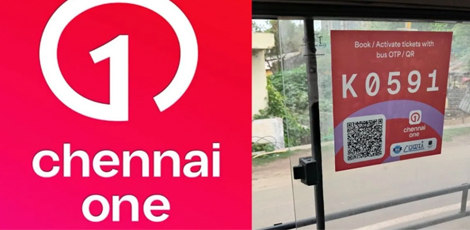
Activation is straightforward. After purchasing, commuters can either enter a one-time password or scan the QR code displayed inside the bus. Even though the pass is digital, passengers must still show it to the conductor on every trip to validate the ride. The goal here is to maintain accountability while removing the need for physical documentation.

Chennai Unified Metropolitan Transport Authority (CUMTA) and MTC have stated that this initiative is intended to simplify processes that have traditionally involved long waits and manual verification. By shifting to the Chennai One app, officials expect the adoption rate to increase steadily, especially among daily office-goers and frequent travellers who prefer predictable monthly expenses.

Chennai MTC sees rising app usage as travel patterns shift

Since its introduction, the Chennai One app has recorded impressive usage numbers. It was launched in 2025 and quickly crossed more than 6.8 lakh registered users. Over 14 lakh digital tickets have already been booked, along with significant growth in journey searches and route planning activities. This behaviour indicates a strong shift toward digital tools for everyday commuting.

Chennai One app: How to plan commute within city and book tickets - The HinduThe “One Rupee Ticket” campaign announced earlier played a role in drawing initial attention to the platform. That limited-time offer encouraged many first-time users to download and try the app. With the new monthly pass feature now included, authorities believe the adoption will continue to rise, driven by convenience and cost-saving opportunities.


A promotional incentive has also been introduced. Passengers who pay for their monthly pass through the BHIM app receive a ₹50 cashback. While the amount is modest, it may still attract regular commuters who prefer even small savings on monthly travel expenses. This incentive is part of a broader strategy to make digital transactions more common among public transport users. Also Read: Chennai One Serves Commuters Better as MTC Launches Fully Digital Monthly Pass in 2025

Chennai MTC aims for a smoother and more reliable commuter experienceTravel across Chennai for just Re 1: City introduces cashless public  transport offer

The Chennai One app functions as a single platform for route searches, live tracking, ticket booking, and now monthly pass management. For many commuters, the ability to handle everything in one place reduces uncertainty during peak hours. Instead of worrying about counters being crowded or passes running out, users can complete all steps from their phone in minutes.

Officials believe that a fully digital pass system will eventually reduce operational pressure on physical depots, freeing staff for other responsibilities and improving overall service efficiency. For passengers, the biggest advantage is predictability no last-minute hassles, no delays, and no dependency on intermediaries.

Conclusion

The new digital monthly pass marks a clear shift in how chennai MTC manages and delivers its services. With simple steps, app-based access, and growing user adoption, the system is set to make urban travel more manageable. As more commuters transition to the app, the city’s public transport network could gradually become more organised and user-friendly.

Chennai One Serves Commuters Better as MTC Launches Fully Digital Monthly Pass in 2025

0

Chennai One Serves as a Key Step Toward a Complete Shift to Paperless Bus Travel

Chennai One serves as the centre of a major digital push in the city’s public transport system, with the Metropolitan Transport Corporation rolling out a fully digital monthly bus pass for all regular commuters. The move aims to remove the need for passengers to visit depots, wait in queues or carry physical passes. Instead, the new system allows users to purchase, store and activate their monthly pass directly within the Chennai One app, creating a more organised and faster daily travel experience.Why Chennai One digital ticketing app calls for higher transparency from MTC

The introduction of digital passes marks a noticeable shift in how Chennai is approaching urban mobility. Launched in September 2025, the Chennai One app has already achieved strong usage numbers with 6.8 lakh registered users. More than 14 lakh digital tickets have been generated since its debut, showing that commuters quickly adapted to the new digital environment. With this latest update, authorities expect a further rise in regular users who depend on public transport for work, education and daily errands.

Under the new system, passengers can choose between two types of monthly passes. The ₹1,000 Gold Pass provides unlimited travel on ordinary, deluxe and express services, which cover most MTC routes. The ₹2,000 Diamond Pass offers full access to every category of bus including air-conditioned services. Both options are available directly in the app and come with a digital activation method to ensure a smooth entry into any bus.

Chennai One Serves Growing Demand with Simple Activation and Cashback Support

Once a commuter purchases the pass, Chennai One serves a simple method for activation. The user can either enter a one-time password or scan a QR code placed inside the bus. This ensures that the pass is tied to an actual journey and prevents misuse. However, passengers still need to show the activated pass to the conductor on every trip to complete verification. This keeps the process familiar while still reducing dependency on paper documentation.Chennai One app to be a reality as TN agrees to bear 1.39% platform fee

To encourage more commuters to test the digital pass, authorities have added a cashback benefit. Those who pay through the BHIM app receive a ₹50 cashback as part of the promotional campaign. This offer aims to improve early adoption and make passengers comfortable with digital payments. Earlier, CUMTA launched the ‘One Rupee Ticket’ offer for Chennai One app users, which saw strong responses from students, office workers and occasional travellers.

The Chennai One platform itself has expanded quickly due to its clear layout and its single-window approach to urban travel needs. In its first month, the app crossed 5.5 lakh registered users and witnessed 14 lakh journey searches. It also recorded more than 8 lakh tickets booked during the same period. These early achievements showed that Chennai’s commuters are willing to depend on digital systems when they are designed to be simple and reliable.

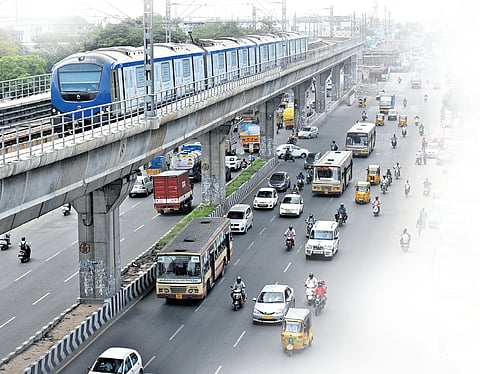
Chennai One Serves as an Integrated System That Strengthens Public Transport GrowthHow Chennai, India is Jump-Starting its Transition to E-Buses - Institute  for Transportation and Development Policy

Chennai One serves as more than a digital wallet for tickets; it has become an integrated commuter platform that supports various aspects of the city’s transport network. By introducing the digital monthly pass, MTC and CUMTA are taking a long-term step toward reducing paper usage, improving efficiency and bringing more people back to public transport. The platform centralises ticket purchases, route searches and real-time updates, allowing commuters to manage their travel without switching between different applications or physical counters.

This shift is expected to influence overall bus usage in the coming months. When people have easier access to monthly passes, they tend to use public transport more frequently. The digital approach also speeds up the boarding process, reducing delays caused by cash payments or physical ticket checks. As buses remain one of the most affordable modes of transport in Chennai, improving convenience is essential to keeping passengers loyal to the system. Also Read: An Indian company Meesho Moves Toward a $606 Million IPO, Marking a Bold Moment in India’s E-Commerce Story

Chennai One Serves a Broader Vision of Seamless Urban MobilityChennai One Serves

Officials view the digital monthly pass as part of a broader vision in which Chennai One serves every daily commuter through a unified platform. By reducing the dependency on physical interactions, the app supports a more modernised transport environment. It also aligns with efforts to make mobility predictable, transparent and easier for passengers across age groups. As the city grows, digital systems are expected to play a bigger role in linking various transport modes under one platform.

Conclusion

Chennai One serves the city’s push toward a more efficient and paperless public transport system. With the fully digital monthly bus pass gaining traction, commuters now have a simpler and faster option for daily travel, strengthening the long-term growth of Chennai’s urban mobility network.

Silver Hits New High as Global Market Turns More Unstable

0

Silver Hits Another Strong Breakout as Market Conditions Shift

Silver Hits a new milestone in the global commodities market as the metal moved past its previous records and continued its upward movement through the week. The strong rally is driven by global expectations of an upcoming rate cut by the US Federal Reserve along with tightening supplies in key markets. The latest rise pushed Comex silver (December delivery) above the $56 per ounce mark, touching a lifetime high of $56.26 per ounce. This sudden rise has renewed interest in precious metals as investors look for safer positions ahead of major economic changes expected in December.Silver Breakout May Lead to Historic Price Rally | Investing.com India

On the domestic front, silver futures on the Multi-Commodity Exchange also recorded sharp gains. Contracts for March 2026 delivery moved up by more than ₹9,400, rising nearly 6% to reach a fresh high of ₹1,75,484 per kilogram. Silver futures expiring in December also hit a new level at ₹1,72,077 per kilogram, crossing the earlier record made in October 2025. With back-to-back highs across global and Indian markets, the white metal has gained renewed momentum that traders have been tracking closely.

Silver Hits New Levels Fueled by Rate Cut Hopes and Supply Tightness

The recent economic data from the US has played a major role in strengthening the metal’s rally. Market trackers reported that investors now expect an almost 87% chance that the Federal Reserve may approve a rate cut in December. This expectation has been building for weeks, and the latest market readings only added more strength to the possibility. Lower interest rates generally weaken the dollar and make precious metals more attractive as alternative stores of value.Silver Price Breakout Nears As Cup-and-Handle Pattern Forms

Another factor shaping silver’s movement is the speculation around leadership changes within the US Federal Reserve. Reports suggest that Kevin Hassett, known for his preference toward softer interest rates, has moved ahead as the likely replacement for Jerome Powell. Any shift in leadership combined with the growing push for lower rates is adding more direction to investor sentiment.

At the same time, global supply developments have further tightened the market. China, one of the major players in the silver ecosystem, reported that its silver inventories dropped to their lowest level in ten years. To manage the shortage, China exported nearly 660 tonnes of silver to London, a move aimed at easing the supply stress that pushed silver to record levels earlier in October. The reduction in inventories, combined with strong demand across trading hubs, has kept prices elevated and expectations firm.The metal that beat the market: CA claims silver outshone Nifty with 57%  rally in 6 months - BusinessToday

Silver Hits Higher Ground as Gold Follows the Uptrend

The rising strength in silver also influenced gold, which recorded gains across domestic and international markets. On the MCX, gold futures for February 2026 delivery went up by ₹1,626 to trade at ₹1,29,293 per 10 grams. This rise, though smaller than silver’s movement, reflects the broader trend where investors are choosing precious metals as global currency conditions soften.

In the international market, Comex gold for February 2026 expiry marked a similar rise, reaching $4,241.90 per ounce after a $39.60 gain. The upward trend in both metals is also supported by the mild weakening of the US dollar index, which slipped by 0.08% to 99.52. A softer dollar typically strengthens metals, as they become more accessible for investors trading in other currencies.Is Silver on the Verge of Its Biggest Breakout in History? | The Jerusalem  Post

Silver Hits Momentum That May Continue into December

As traders look ahead, the behaviour of silver will likely depend on the official outcome of the Federal Reserve’s December policy meeting, the movement of global inventories and currency conditions. With multiple factors supporting the metal’s rise from supply challenges to policy expectations the sentiment around silver remains firm. The rising interest in commodities as a protection against volatility continues to push both domestic and global investors toward metals. Also Read: An Indian company Meesho Moves Toward a $606 Million IPO, Marking a Bold Moment in India’s E-Commerce Story

Silver’s current rally is different from earlier movements because it is being driven by multiple forces at the same time. The combination of falling inventories, steady demand, global uncertainty and an expected rate cut has created a unique setup that has allowed silver to touch levels not seen before. If any new supply challenges emerge or economic expectations shift further, the momentum may continue moving into early next year as well.

Conclusion

Silver Hits another record as global demand, supply limits and policy expectations push prices upward across markets. With strong domestic gains and firm international momentum, the metal remains in focus as traders watch the upcoming policy decisions and global economic signals.

The Reserve Bank of India Brings a Major Shift by Merging Thousands of Circulars into Clear Master Directions

0

The Reserve Bank of India Begins a New Phase of Simplified Regulations

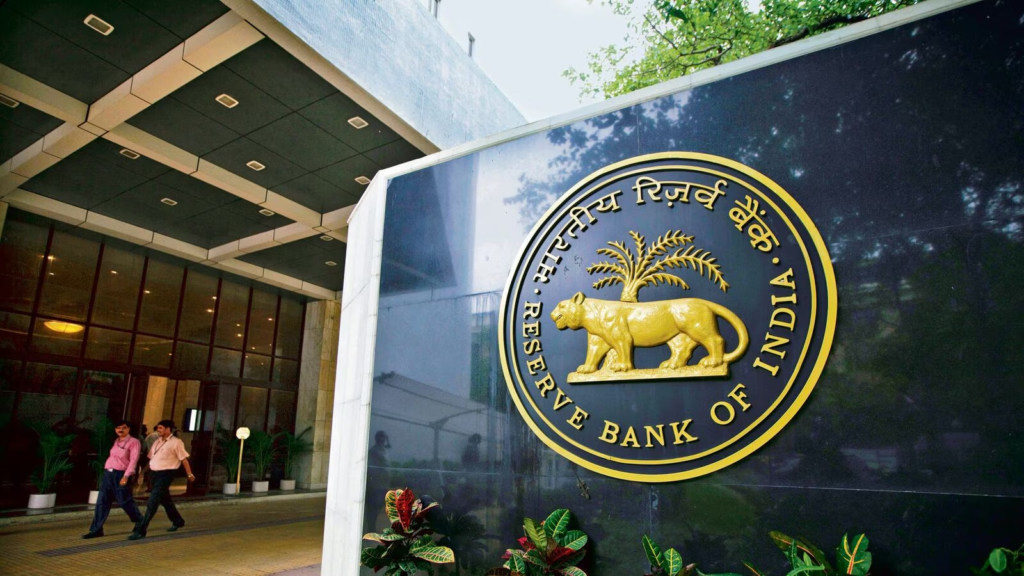
The Reserve Bank of India has started a major change in the way it manages regulatory communication by completing the consolidation of thousands of old circulars into a smaller, more organised set of master directions. This move marks one of the biggest clean-ups of RBI’s rulebook in many years, aimed at giving banks and financial institutions a clearer and more manageable framework to follow.A case for making RBI regulations plain, simple | Expert Views - Business  Standard

The Reserve Bank of India began this exercise to reduce confusion that had built up over years of incremental rule-making. As the financial sector expanded, circulars were issued repeatedly, creating layers of instructions that often overlapped or outdated each other. By reorganising everything into structured, function-wise master directions, the central bank is trying to make the compliance system easier to navigate for all regulated institutions.

The Reserve Bank of India Consolidates 9,445 Circulars into a Simplified Framework

In this major overhaul, the Reserve Bank of India has merged around 9,445 circulars into just 244 master directions. These directives now cover 11 broad categories of regulated entities, including commercial banks, small finance banks, payments banks, cooperative banks, asset reconstruction companies, NBFCs and credit information companies.Reserve Bank sets up committee for periodic review of regulations

Out of these, around 3,500 circulars were still in force and have now been grouped into 238 structured master directions. Many older and irrelevant circulars have been identified and removed as part of the clean-up. A parallel consolidation was conducted for Nabard’s regulatory instructions for rural and cooperative banks, making the entire financial supervision network more uniform.

The purpose of this consolidation is simple reduce clutter, increase clarity and allow institutions to focus on the core rules without searching through years of scattered notifications. This shift also reflects the central bank’s intention to present regulation in a more organised manner as the financial system becomes more digital, faster and more interconnected.RBI and its Functions - C4S Courses

The Reserve Bank of India Aims to Improve Compliance and Ease of Doing Business

The Reserve Bank of India has stated that this reorganisation will make compliance less confusing for banks and financial firms. When instructions are scattered, institutions spend more time interpreting rules, checking past circulars and ensuring there are no contradictions. With master directions, the rules for each function and each category of entity are placed in one structured document.The Reserve Bank of India

This is especially useful for commercial banks, cooperative banks, NBFCs, small finance banks and payments banks, which operate under multiple regulatory layers. Each category now has clear, grouping-based directions that explain ongoing requirements. For new entrants in the financial sector, this reform provides a simpler way to understand the regulatory environment.

The consolidation also helps remove outdated rules that no longer match the current financial reality. Over time, technology, risk models and consumer behaviour have changed. Many old circulars were irrelevant but remained in the system. Their removal not only improves clarity but also reduces the workload for banks that had to keep track of them.

The Reserve Bank of India Moves Toward Long-Term Regulatory Stability

This restructuring is not only about reducing the number of circulars but also about improving long-term regulatory stability. By shifting to master directions, the Reserve Bank of India is creating a system where updates can be made in a structured manner without adding new layers. Future changes can be placed inside the master direction instead of being issued as separate circulars each time.

This approach strengthens transparency and consistency across the sector. It benefits regulated entities, auditors, compliance teams and even consumers who depend on a stable, predictable financial environment. A simplified rulebook also supports digital transformation, since clear instructions can be integrated into internal systems more easily.

The consolidation marks an important moment for the Indian financial system, as it shows a shift toward more efficient, modern and organised regulatory supervision. Also Read:

Conclusion

The Reserve Bank of India has completed a major restructuring of its regulatory framework by merging thousands of circulars into clean, organised master directions. This step reduces complexity, strengthens clarity and prepares the financial sector for smoother compliance and better long-term stability.

An Indian company Meesho Moves Toward a $606 Million IPO, Marking a Bold Moment in India’s E-Commerce Story

0

An Indian company Meesho Prepares for a Landmark Market Debut

An Indian company Meesho is entering a major phase in its journey as it prepares for a public listing worth about $606 million. The Bengaluru-based e-commerce platform, known for serving value-driven shoppers and small sellers across India, is set to open its IPO in early December. The move comes at a time when global tech investors have been pulling back, making Meesho’s listing a strong signal of confidence in India’s expanding online retail market.An Indian company Meesho

The company plans to offer shares priced between ₹105 and ₹111, aiming to raise nearly ₹42.50 billion in fresh capital along with a smaller portion of secondary sales. This values the company at around ₹501 billion, placing it slightly above its last private valuation from 2021. Its ability to maintain and grow investor trust despite rising competition reflects how the platform has reshaped online commerce for middle-income consumers.

An Indian company Meesho Sees Strong Investor Support Despite Market Caution

Meesho’s IPO structure reveals the level of trust its major shareholders still place in the business. Large investors such as SoftBank, Prosus, and Fidelity have chosen not to sell any shares in the offering. Only a few early investors, including Elevation Capital, Peak XV Partners, and Y Combinator, are selling limited portions of their holdings.Meesho Launches Creator Club to Boost Content Commerce Growth - Indian  Retailer

The final offer-for-sale size is much smaller than what appeared in the draft prospectus, reduced by nearly 40%. Interestingly, the co-founders, Vidit Aatrey and Sanjeev Kumar, will sell a slightly larger amount of shares than previously planned to balance the reduced participation from other early investors. Their decision appears more structural than strategic, as the company continues reinforcing its long-term vision.

An Indian company Meesho’s Growth Model Focuses on Affordability and Small Sellers

Founded in 2015, Meesho began as a social-first commerce platform, enabling sellers to reach buyers through apps like WhatsApp. Over time, it evolved into a large marketplace serving millions of first-time online shoppers. The platform’s strength lies in its low-cost structure a model that has allowed it to challenge bigger players like Amazon and Flipkart.

Meesho charges minimal commissions on most product categories and earns mainly from logistics fees, advertising solutions, and small service charges. The company also operates a separate channel, Meesho Mall, where commissions apply. This cost-friendly setup has helped it attract both consumers looking for affordable goods and small businesses seeking easy entry into online retail.Rs 1,020 crore paycheck! Meesho IPO hands Elevation, Peak XV and founders  meteoric returns of up to 5,00,000% - The Economic Times

In the past year, Meesho has seen continued growth. It recorded revenue of ₹55.78 billion in the six months ending September 2025, a significant rise from the previous year. Its net merchandise value also increased by over 40%, showing strong activity on the platform. However, the company’s losses widened during the same period, reflecting its heavy push for scale, logistics expansion, and customer acquisition.

An Indian company Meesho Expands Its User and Seller Network Rapidly

The marketplace has grown into a massive ecosystem. In the last twelve months, over 234 million users bought something on Meesho, and more than 706,000 sellers completed at least one order. Alongside merchants, Meesho has built a community of over 50,000 active creators who help drive product discovery.Decoding Meesho's DRHP: a solid ecommerce story, but does it have a strong  public market one?

This wide network forms the backbone of its value-driven strategy. By positioning itself in the same segment as platforms like Pinduoduo in China and Shopee in Southeast Asia, Meesho continues to strengthen its hold on India’s mass-market segment. Its focus remains clear giving affordable access to a broad range of products and expanding consumption among new online shoppers.

An Indian company Meesho Sees the IPO as a Step Toward Stronger Governance and Talent GrowthMeesho IPO: Founders eye up to 55,000x windfall gains; FundsIndia upbeat  despite GMP slump - BusinessToday

According to the company’s leadership, the public listing is not just about raising funds. Going public strengthens credibility with job candidates, sellers, logistics partners, and customers. The firm believes that improved transparency, governance, and brand recognition will help attract high-quality talent from larger tech companies while boosting trust within its ecosystem. Also Read: HDB 630 launched: 2024 Edition Brings 1 Major Upgrade You Shouldn’t Ignore

The IPO opens for subscription on December 3, with an anchor round on December 2. Most of the issue is reserved for institutional investors, while retail and non-institutional investors share the remaining portion.

Conclusion

An Indian company Meesho is entering a defining chapter with its upcoming IPO. Its rise from a small social commerce startup to a major e-commerce force shows how strongly India’s value-focused market segment is growing. The listing signals long-term confidence from major investors and marks an important moment in India’s digital retail landscape.