Monday, December 29, 2025
Home Blog Page 106

Dooars Twin Tea Estate Protests Over Aid Halt and Unpaid Wages 2025: Workers’ Struggles, Governance Failures, Trade Union Politics, and Policy Reform Needs in West Bengal Plantation Sector

The Dooars Twin Tea Estate Protests Over Aid Halt and Unpaid Wages 2025 have once again brought national attention to the plight of tea workers in West Bengal. On November 24, 2025, workers from two estates — Dalsinghpara in Alipurduar and Bagrakot in Jalpaiguri — staged separate protests over halted government aid and unpaid wages. The incidents highlight the fragile state of the tea industry, governance failures, and the human cost of economic stagnation.


2. Dalsinghpara Tea Estate: Road Blockade Over Aid Halt

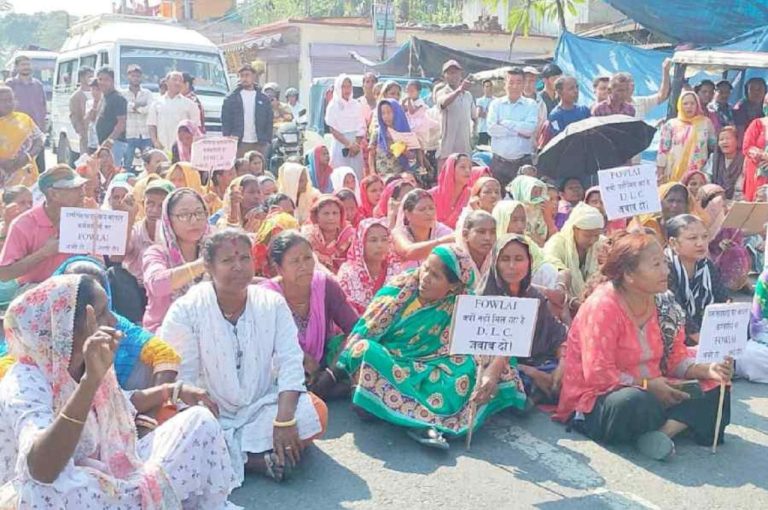
At Dalsinghpara, nearly 300 workers blocked Asian Highway 48 near Jaigaon.

  • They demanded resumption of Financial Assistance to Workers of Locked Out Industries (FAWLOI).
  • The scheme provides ₹1,500 per month to permanent workers of closed gardens.
  • Payments stopped in February 2025, leaving families in distress.
  • Workers also demanded reopening of the garden, closed since October 2023.

The blockade disrupted traffic until police intervened, underscoring the urgency of workers’ demands.


3. Bagrakot Tea Estate: Hunger Strike Over Unpaid Wages

In Bagrakot, women workers launched a relay hunger strike.

  • They had not received wages for three months.
  • Earlier protests included confining the manager inside the garden.
  • With no resolution, 20 women began fasting, vowing to continue until wages were paid.
  • The estate employs nearly 1,800 workers, making the crisis widespread.

Their hunger strike reflects the desperation of workers facing prolonged uncertainty.


4. Dooars Twin Tea Estate Protests: Governance Challenges Exposed

The twin protests highlight systemic governance failures:

  • Delayed disbursement of government aid schemes.
  • Weak enforcement of wage payment obligations.
  • Poor coordination between state administration and estate management.
  • Lack of accountability in plantation governance.

5. Human Dimension: Workers’ Voices

Workers expressed anguish:

  • “We were getting assistance, but since February it has stopped. How will we survive?” said Narina Gurung of Dalsinghpara.
  • “We were forced to take this step. Nothing has changed despite repeated appeals,” said Purnima Chhetri of Bagrakot.

Their voices reflect the emotional and psychological toll of economic neglect.


6. Historical Context: Tea Industry in Crisis

The tea industry in North Bengal has faced decades of decline:

  • Frequent closures due to mismanagement and market fluctuations.
  • Workers trapped in cycles of poverty and debt.
  • Government aid schemes often delayed or discontinued.
  • Trade unions divided along political lines, weakening collective bargaining.

The twin protests are part of this long history of struggle.


7. Trade Union Politics

Local trade unions backed the protests:

  • Both BJP‑aligned and TMC‑aligned unions joined workers at Dalsinghpara.
  • Political rivalry often shapes plantation disputes.
  • Workers remain caught between party politics and survival needs.

8. Broader Implications for Democracy and Development

The protests raise fundamental questions:

  • Can democracy thrive if workers starve due to unpaid wages?
  • Will aid schemes succeed if disbursement is irregular?
  • How can governance balance industry revival with worker welfare?

9. Recommendations for Reform

Experts suggest:

  • Timely disbursement of FAWLOI aid.
  • Strict enforcement of wage payments by estate management.
  • Revival packages for closed gardens.
  • Community awareness programs to empower workers.
  • Policy reforms to integrate tea workers into broader social security schemes.

10. Comparative Lessons from Other States

Other states face similar challenges:

  • Assam’s tea industry has also seen closures and wage disputes.
  • Kerala’s plantation sector experimented with cooperative models.
  • Bengal’s case reflects a national challenge of balancing plantation economics with worker dignity.

11. Human Stories: Families in Distress

Families of workers describe:

  • Children dropping out of school due to financial hardship.
  • Women struggling to feed families without wages.
  • Elderly workers unable to afford medical care.

These stories highlight the human cost of governance failures.


12. Conclusion: A Test of Governance and Human Dignity

The Dooars Twin Tea Estate Protests Over Aid Halt and Unpaid Wages 2025 are more than local disputes — they are a test of governance, democracy, and human dignity. Unless systemic reforms are undertaken, tea workers will remain vulnerable, and public trust in institutions will erode.

The protests underscore the urgency of balancing economic revival with compassion for frontline workers.


🔗 Government External Links

For further reading and official updates, here are relevant government sources:

Also read: Home | Channel 6 Network – Latest News, Breaking Updates: Politics, Business, Tech & More
Cooch Behar Civic Chief Rabindranath Ghosh Defies TMC Resignation Order 2025: Workers’ Public Praise, Governance Challenges, Political Fallout, and Policy Reform Needs in West Bengal Municipal Administration

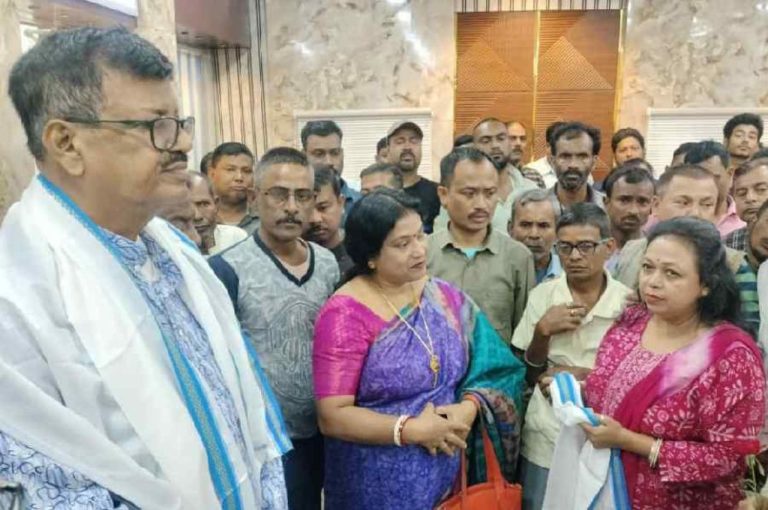
Rabindranath Ghosh Defies TMC Resignation: The Cooch Behar Civic Chief Rabindranath Ghosh Defies TMC Resignation Order 2025 controversy has become a defining moment in West Bengal’s municipal politics. On November 25, 2025, Rabindranath Ghosh, chairman of the Cooch Behar municipality, refused to step down despite instructions from the Trinamool Congress (TMC) district leadership. His defiance was met with public praise from municipal workers, who lauded his decision to grant them festival bonuses for the Raas Mela.


2. The TMC’s Order and Ghosh’s Response

District TMC president Abhijit De Bhowmik had instructed Ghosh to vacate his office.

  • Other civic chiefs in the district complied.
  • Ghosh declared: “I will step down only if Mamata Banerjee instructs me to.”
  • His refusal highlighted tensions between district leadership and grassroots workers.

This defiance reflects the complex dynamics of party discipline versus local popularity.


3. Workers’ Felicitation and Public Praise

On November 24, casual workers of the municipality felicitated Ghosh.

  • He had announced a ₹1,000 bonus for workers engaged during the Raas Mela festival.
  • Around 680 casual workers and 165 permanent staff benefited.
  • Workers praised his empathy and understanding, declaring: “We need such a civic chairman and will support him.”

Their voices reflect the human dimension of governance, where empathy earns loyalty.


4. Governance Challenges Exposed

The incident highlights systemic governance challenges:

  • Party discipline vs. local autonomy in municipal administration.
  • Resource allocation for festival management.
  • Balancing political instructions with worker welfare.
  • Public perception shaping political legitimacy.

5. Rabindranath Ghosh Defies TMC Resignation: Political Fallout

The controversy has political consequences:

  • TMC leadership faces questions about internal discipline.
  • Opposition parties may exploit the rift.
  • Workers’ support strengthens Ghosh’s local standing.

The issue has become a flashpoint ahead of the 2026 Assembly elections.


6. Human Dimension: Workers’ Voices

Workers expressed gratitude:

  • Many had never received festival bonuses before.
  • They praised Ghosh’s empathy and leadership.
  • Their felicitation was spontaneous, not organized by unions.

Their voices reflect the emotional bond between leader and workers.


7. Historical Context: Municipal Politics in Bengal

Municipal politics in Bengal has long been contentious:

  • Civic chiefs often caught between party orders and local demands.
  • Past incidents of defiance have shaped political narratives.
  • Cooch Behar’s case reflects this historical tension.

8. Broader Implications for Democracy

The incident raises fundamental questions:

  • Can democracy thrive if local leaders are punished for empathy?
  • Will party discipline override worker welfare?
  • Does governance risk losing legitimacy if grassroots voices are ignored?

9. Recommendations for Reform

Experts suggest:

  • Greater autonomy for municipal leaders.
  • Transparent resource allocation for festival management.
  • Dialogue between party leadership and civic chiefs.
  • Policy reforms to safeguard worker welfare.

10. Comparative Lessons from Other States

Other states have faced similar controversies:

  • In Kerala, local leaders often balance party discipline with community welfare.
  • In Maharashtra, municipal politics has shaped state elections.
  • Bengal’s case reflects a national challenge of balancing party control with local governance.

11. Conclusion: A Test of Governance and Democracy

The Cooch Behar Civic Chief Rabindranath Ghosh Defies TMC Resignation Order 2025 is more than a local controversy — it is a test of governance, democracy, and human dignity. Unless systemic reforms are undertaken, municipal leaders will remain vulnerable, and public trust in institutions will erode.

Ghosh’s defiance underscores the urgency of balancing party discipline with grassroots empathy.


🔗 Government External Links

For further reading and official updates, here are relevant government sources:

Also read: Home | Channel 6 Network – Latest News, Breaking Updates: Politics, Business, Tech & More
Silkyara Victory Operation hailed as global model at World Disaster Management Conference 2025

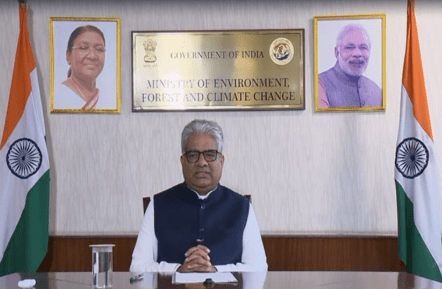
Union Environment, Forest and Climate Change Minister Bhupender Yadav described the “Silkyara Victory Operation” as a historic milestone for India in disaster management, saying it showed how firm political will, efficient leadership and scientific expertise can make “the impossible possible” even in extreme situations. He delivered a virtual address to the three‑day World Disaster Management Conference 2025 in Dehradun, organised by the Uttarakhand State Council for Science and Technology with support from national, state and international partners.​

Focus on Uttarakhand and the Himalayas

Greeting Uttarakhand on the silver jubilee of its formation, Shri Yadav said the hill state had carved out a progressive identity despite facing repeated natural challenges over the past 25 years. He credited Prime Minister Narendra Modi’s guidance and Chief Minister Pushkar Singh Dhami’s leadership for giving a new direction to the state’s development, and stressed that the Prime Minister has consistently drawn attention to Himalayan conservation and safety.​


Himalayas at the centre of disaster discourse

Calling the Himalayas India’s pride and a repository of spiritual, cultural, environmental and biodiversity wealth, the Minister underlined that rivers originating from the region form the bedrock of Indian civilisation. He urged that Himalayan concerns remain central in global disaster‑management discussions, especially as climate change and human‑induced pressures heighten the frequency and intensity of disasters worldwide.​

India’s global leadership and CDRI

Shri Yadav highlighted India’s growing leadership in disaster risk reduction, including Prime Minister Modi’s 10‑point agenda, which has received wide international backing. He noted that India spearheaded creation of the Coalition for Disaster Resilient Infrastructure, a global institution working on resilient infrastructure and disaster‑related challenges, which demonstrates New Delhi’s capacity to shape global norms and solutions.​

Lessons from Silkyara Victory Operation

Referring to the rescue of trapped workers from the Silkyara tunnel as the “Silkyara Victory Operation”, the Minister said the mission has become a symbol of how coordinated efforts, technology and specialised skills can save lives in extremely complex emergencies. He called it an inspiring example for other nations and argued that it underscores the value of science‑ and technology‑driven mitigation, forecasting and preparedness in modern disaster management.​

Call for science, technology and cooperation

Shri Yadav stressed that only through advanced technology, sustained research and strong international cooperation can countries effectively manage future multi‑hazard risks. Concluding his message, he expressed confidence that the ideas and recommendations emerging from the Dehradun conference would benefit India and the wider world, guiding the development of integrated strategies to tackle multiple disaster threats.​

For more real-time updates, visit Channel 6 Network.

Source: PIB

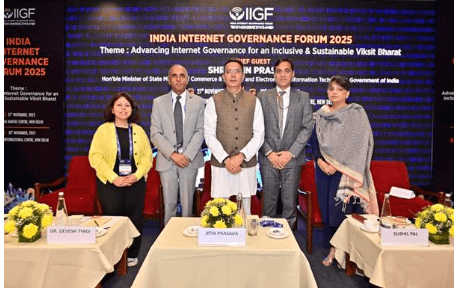
India Internet Governance Forum 2025 (IIGF) ends with roadmap for inclusive internet and responsible AI

The fifth India Internet Governance Forum (IIGF‑2025) concluded in New Delhi after two days of multi‑stakeholder deliberations focused on building an open, trusted and inclusive internet ecosystem for a “Viksit Bharat”. Held at the India Habitat Centre and India International Centre, the forum brought together officials from central ministries, global tech firms, civil‑society organisations, universities and international bodies, including the UN Internet Governance Forum.​

Themes: inclusion, infrastructure and AI

Guided by the theme “Advancing Internet Governance for an Inclusive and Sustainable Viksit Bharat”, discussions were organised around three pillars: Inclusive Digital Future, Digital Infrastructure for Resilient and Sustainable Growth, and AI for People, Planet and Progress. Four panel discussions and twelve workshops examined issues such as rural connectivity, digital public infrastructure, DNS and domain‑name security, cybersecurity readiness, data protection, content moderation and ethical deployment of artificial intelligence.​


Government’s vision on access and safety

In his inaugural address, Union MoS for Electronics & IT Jitin Prasada said the forum underscored that digital progress depends on collaboration among government, industry, academia and civil society. He highlighted India’s push for safe, affordable and reliable internet access for every citizen, backed by nationwide 5G rollout, robust digital public systems and a consent‑based Data Protection Act, while stressing that managing cyber risks is a shared responsibility.​

Building trust, resilience and multi-stakeholder governance

MeitY Joint Secretary Sushil Pal noted that with close to one billion Indians online, the India Stack has become a population‑scale model for both the Global South and developed economies, but that such scale demands stronger safeguards for trust, safety and resilience. He called for coordinated work across different layers of internet technologies to counter cyberattacks, misinformation and misuse of digital tools, ensuring a secure yet open network trusted by users.​

NIXI perspective and youth engagement

NIXI CEO Dr Devesh Tyagi underlined that IIGF is built on the belief that India’s internet story must be shaped through the multi‑stakeholder model, giving space for every voice. He pointed to special‑interest groups on future internet, domain names, numbers and protocols, and noted that the NIXI Internet Intern scheme has reached over 10,000 students in a year, with many now engaging in international internet‑governance processes and securing roles abroad.​

Outcomes and shared commitments

Across sessions, participants agreed that universal, meaningful access must remain central to India’s digital trajectory, alongside stronger digital public infrastructure and clear, responsible approaches to AI. The forum closed with a shared commitment to deepen cooperation across stakeholders to build a safer, more inclusive and resilient internet for India and to contribute to global internet‑governance debates.​

For more real-time updates, visit Channel 6 Network.

Source: PIB

India commits Rs 4,500 crore to modernise SCL Mohali; facility to remain government‑owned and expand as hub for swadeshi chips

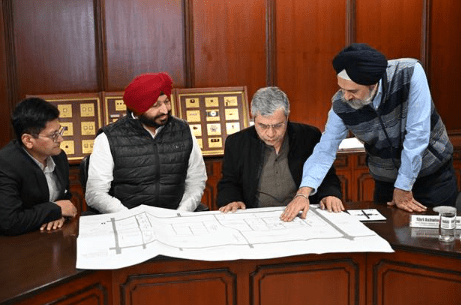
The Government of India will invest ₹4,500 crore to upgrade and expand the state‑run Semiconductor Laboratory (SCL) in Mohali, with Union Electronics and Information Technology Minister Ashwini Vaishnaw clearly stating that the facility will be modernised but not privatised. The announcement came during a visit by the Minister and Union MoS Ravneet Singh, where 28 student‑designed semiconductor chips fabricated at SCL were formally handed over, taking the total number of such designs produced under the Chips to Start‑up (C2S) programme to 56.​

Major investment and modernisation roadmap

Shri Vaishnaw said the ₹4,500‑crore infusion will overhaul SCL’s production lines, bring in new fabrication tools and scale wafer output to nearly 100 times the current capacity over the next few years. He underlined that Prime Minister Narendra Modi has laid out a clear roadmap to position SCL as a modern, government‑run R&D and training hub central to the India Semiconductor Mission, with no plan to privatise the lab.​


Student‑designed chips and talent pipeline

The 28 chips handed over at the event were designed by students from 17 academic institutions using Electronic Design Automation tools provided under the Chips to Start‑up programme. With these additions, a total of 56 student‑designed chips have now been fabricated at SCL, underscoring its role as a prototype foundry that converts young designers’ ideas into real silicon and helps build a domestic talent pool in chip design and fabrication.​

New training and process facilities

The Minister also inaugurated the Semiconductor Process Gallery and the Abhyuthanam Training Block at SCL. The gallery recreates a clean‑room environment with earlier‑generation tools to give students and visitors a realistic sense of how fabs and ATMP (assembly, testing, marking and packaging) facilities function, while the training block offers online and offline semiconductor courses along with hands‑on fire and safety training.​

Expansion plans and strategic ecosystem

To support the modernisation, the Centre has requested 25 acres of additional land from the Punjab government, which would enable future capacity expansion and ancillary infrastructure. Shri Vaishnaw said a strong consortium involving CDAC, DRDO and other organisations will collaborate on design, product development and manufacturing of swadeshi chips, with SCL serving both strategic requirements and the needs of students, researchers and start‑ups.​

Atmanirbhar push in semiconductors

The Minister emphasised that self‑reliance in strategic technologies like semiconductors is essential as chips underpin critical systems in healthcare, communications, transport, defence and space. By combining large‑scale public investment, student‑focused fabrication support and a national design‑to‑manufacturing ecosystem, the SCL roadmap is intended to make India a significant player in the global semiconductor value chain and turn Mohali into a key pillar of the country’s long‑term chip mission.​

For more real-time updates, visit Channel 6 Network.

Source: PIB

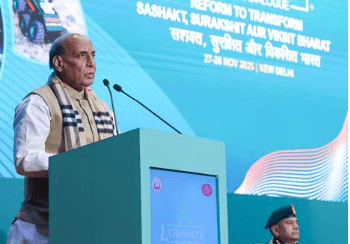
Chanakya Defence Dialogue 2025: India positions itself as balanced, responsible security partner

Addressing the Chanakya Defence Dialogue 2025 in New Delhi, Raksha Mantri Rajnath Singh said India’s economic rise, technological capabilities and principled foreign policy have made it a “voice of balance and responsibility” in a turbulent global environment, with Indo‑Pacific and Global South nations increasingly seeing India as a reliable partner. He linked this global trust to India’s consistent stand on sovereignty, rules‑based order and reform‑driven efforts to build a “Sashakt, Surakshit and Viksit Bharat” that contributes to global peace and human well‑being.​

The Chanakya Defence Dialogue 2025, organised by the Indian Army and the Centre for Land Warfare Studies (CLAWS), brought together service chiefs, senior officials, foreign diplomats, industry leaders, strategists and young scholars for two days of discussions.

Armed Forces, resilience and regional stability

The Defence Minister stressed that terrorism, cross‑border support to extremists, attempts to alter the status quo, maritime pressures and information warfare demand constant vigilance and institutional reform. He described the Armed Forces as the strongest pillar of national resilience, enabling India to handle neighbourhood challenges while supporting regional stability, and reiterated that while India believes in peace and dialogue, it will not compromise on sovereignty or the security of its people.​


Defence reforms and Aatmanirbharta

Rajnath Singh outlined reforms to strengthen border and maritime infrastructure, modernise the military with new platforms and structures, and streamline procurement to ensure speed, transparency and accountability. He highlighted Aatmanirbharta‑driven initiatives to build a defence industrial ecosystem that encourages innovation, deep‑tech R&D and start‑ups, while keeping the welfare of soldiers, veterans and their families at the core of decision‑making.​

Digital and AI initiatives launched

Several digitalisation and AI projects were launched on the sidelines of the dialogue. EKAM: AI as a Service – iDEX ADITI 2.0 was unveiled as an indigenous platform to host and deploy open‑source and home‑grown AI models for the Armed Forces, giving the military secure control over data and mission‑specific applications. The Minister also launched Prakshepan, an in‑house military climatology application for the Army with prediction modules for landslides, floods and avalanches that can also support civil authorities with early‑warning information in remote areas.​

AI handbook, Digitalisation 3.0 and green hydrogen microgrid

An AI Handbook for Military Leaders was released to equip commanders from tactical to strategic levels with foundational knowledge to employ AI in command, control, ISR, combat systems and autonomous platforms. The book “Digitalisation 3.0 – From Boots to Bytes & Towards AI Readiness” documents the Army’s transformation through more than 100 digital applications, reflecting its commitment to indigenisation and AI‑readiness. In a major green initiative, the Green Hydrogen Microgrid Project set up by NTPC  at Chushul in Ladakh was e‑inaugurated, designed to replace diesel generator sets at an altitude of about 4,500 metres and cut carbon emissions by roughly 1,500 tonnes annually while ensuring round‑the‑clock power for remote Army posts.​

Strategic dialogue platform and global engagement: Chanakya Defence Dialogue 2025

The Chanakya Defence Dialogue 2025, organised by the Indian Army and the Centre for Land Warfare Studies (CLAWS), brought together service chiefs, senior officials, foreign diplomats, industry leaders, strategists and young scholars for two days of discussions. Sessions focused on India’s security challenges, technological frontiers and strategic pathways to a secure and developed India by 2047, with the Defence Minister arguing that a strong, secure and developed India bolsters the global economy, sets ethical benchmarks in emerging technologies and adds moral weight to international cooperation.​

The Minister also launched Prakshepan, an in‑house military climatology application for the Army with prediction modules for landslides, floods and avalanches that can also support civil authorities with early‑warning information in remote areas.​

For more real-time updates, visit Channel 6 Network.

Source: PIB

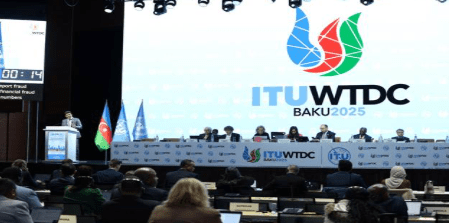
India leads global digital inclusion agenda as WTDC‑25 wraps up in Baku

The ITU World Telecommunication Development Conference 2025 (WTDC‑25) concluded in Baku, Azerbaijan, with India emerging as a key driver of global digital inclusion efforts towards universal, meaningful and affordable connectivity. Led by Union Minister of State for Communications and Rural Development Dr Pemmasani Chandra Sekhar, the Indian delegation combined high‑level diplomacy, technical leadership and coalition‑building to shape the development agenda of the ITU’s Development Sector for 2026–29.​

India’s leadership roles and high‑level outreach

India’s policy statement, framed around the theme “Vasudhaiva Kutumbakam – Driving global Digital Transformation with ancient wisdom and modern commitment”, highlighted the country’s experience in large‑scale digital public infrastructure and its commitment to inclusive growth. India held several key positions at WTDC‑25: Avinash Agarwal served as Conference Vice‑Chair, APT‑WTDC‑25 Coordination Chair and Chair of the Ad Hoc Group on Digital Transformation and Innovation, while Sunil Kumar Singhal and Sandeep Kumar Gupta were elected Vice‑Chairs of both ITU‑D Study Groups for 2026–29.​​

India led or co‑led more than 19 resolutions and APT Common Proposals, and held 11 ministerial‑level bilateral meetings as well as interactions with over 50 countries to advance shared priorities. The delegation also formally presented Ms M. Revathi as India’s candidate for Director of the ITU Radiocommunication Bureau and promoted India’s candidature for the ITU Council term 2027–2030.​


Digital transformation and innovation: Resolutions 85, 89, 90

Under the Digital Transformation and Innovation cluster, India was instrumental in strengthening Resolution 85, which extends the Smart Sustainable Cities and Communities framework to include “smart villages” so that rural and remote communities benefit from IoT‑enabled services and context‑specific planning. Resolutions 89 and 90, also heavily shaped by India, reinforce the ITU‑D Innovation and Entrepreneurship Alliance and the Global Innovation Forum, emphasising support for local innovators, strategic foresight and the use of regional offices to back startups and SMEs pursuing universal, meaningful connectivity.​

Cybersecurity, spam control and device security: Resolutions 45, 84

On Building Confidence and Security in ICTs, India steered updates to Resolution 45, tackling misuse of telecom networks such as voice spam and caller‑ID spoofing and calling for tools that improve SMEs’ cybersecurity and resilience. India also contributed to Resolution 84, which recognises the growing problem of mobile device theft and tampering and encourages international sharing of best practices to protect consumers and networks.​

Policy, spectrum and EMF awareness: Resolutions 9, 62

India’s proposals under policy and spectrum helped shape Resolution 9, which champions flexible regulatory approaches like regulatory sandboxes, experimental spectrum for emerging technologies including IMT‑2030 (6G) and UAVs, and improved tools for spectrum management in developing countries, including guidance on valuation, assignment and sharing of spectrum. Enhancements to Resolution 62, supported by India, aim to counter misinformation on electromagnetic field (EMF) exposure by updating ITU guidance on emissions from various wireless sources and expanding public awareness campaigns on safe device use.​

Disaster management, climate and inclusion: Resolutions 34, 66, 58

In emergency telecommunications, India helped strengthen Resolution 34, promoting use of emerging ICTs such as cell‑broadcast early‑warning systems, local‑language alerts, GIS mapping of telecom infrastructure and regional cooperation for cross‑border disaster information. On sustainability, India contributed to Resolution 66, which encourages national strategies to cut ICT‑related carbon footprints, improve e‑waste management and promote circular‑economy practices in the digital sector. India also backed Resolution 58 on diversity and inclusion, advancing measures to improve ICT accessibility for older persons and vulnerable groups in line with universal connectivity goals.​

Showcasing Indian innovation and ITU partnership

At the conference venue, India showcased indigenous solutions from C‑DOT through a dedicated exhibition stall that drew strong interest from delegations exploring affordable, scalable digital infrastructure. India also hosted a networking reception for ministers and heads of delegation, underlining its long‑standing partnership with ITU—recognised by Secretary‑General Doreen Bogdan‑Martin, who described India as a “valuable partner” that has served on the ITU Council since 1952.​

Conclusion

The conclusion of WTDC‑25 marks a significant consolidation of India’s position as a global champion for inclusive, secure and sustainable digital development. Through leadership roles, consensus‑driven negotiations and concrete resolution text, India has helped shape the ITU‑D roadmap for 2026–29, ensuring that universal meaningful connectivity, innovation and resilience remain at the heart of the global telecom agenda.​

For more real-time updates, visit Channel 6 Network.

Source: PIB

PCIM&H concludes national training programme to strengthen quality standards in Ayurveda, Siddha, Unani and Homoeopathy drugs: 2025

The Pharmacopoeia Commission for Indian Medicine & Homoeopathy (PCIM&H) under the Ministry of Ayush has completed a five-day National Capacity Building Training Programme aimed at upgrading quality assurance and regulatory capabilities in the Ayurveda, Siddha, Unani and Homoeopathy (ASU&H) drug sector. Held from 24–28 November 2025, the programme brought together drug enforcement officers, quality-control personnel and manufacturers from across the country.​

Training focus and technical sessions

Over the first two days, participants attended intensive sessions on NABL accreditation, quality management systems, Good Manufacturing Practices, and pharmacognostic, physico‑chemical and phytochemical evaluation techniques for herbal drugs. Subsequent modules covered shelf‑life studies, regulatory frameworks and practical approaches to quality control of ASU&H formulations.​


Industry visits and hands-on learning

The programme included field visits to leading manufacturers such as Dr. Willmar Schwabe India Pvt. Ltd. in Noida and Hamdard Laboratories in Ghaziabad, giving participants exposure to large‑scale production and quality systems. Hands‑on laboratory training in microbiological and pharmacological evaluation, along with a visit to an herbal garden, reinforced classroom learning with practical demonstrations of testing and standardisation methods.​

Participation and expert guidance

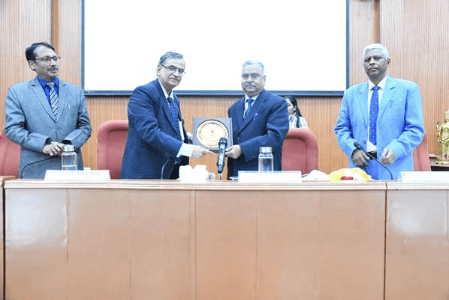
Thirty‑seven participants from regulatory bodies, research councils, pharmaceutical companies and academic institutions took part in the training, gaining first‑hand insight into emerging tools and protocols in traditional medicine quality control. The valedictory session featured senior dignitaries including Prof. (Dr.) B. L. Mehra, Chairperson of the National Commission for Indian System of Medicine, as well as experts from the Indian Pharmacopoeia Commission, FSSAI and PCIM&H, who stressed the need for rigorous, science‑based standards to enhance global acceptance of Indian systems of medicine.​

Impact on ASU&H quality ecosystem

Participants reported that the mix of theory, lab work and industry exposure significantly improved their understanding of pharmacopoeial standards, GMP requirements and regulatory expectations for ASU&H drugs. The initiative is expected to help build a more robust national quality‑assurance ecosystem for traditional medicines, supporting safer products, better compliance and stronger credibility in domestic and international markets.​

For more real-time updates, visit Channel 6 Network.

Source: PIB

FCI Pavilion at IITF‑2025 wins Bronze, showcases India’s modern foodgrain ecosystem

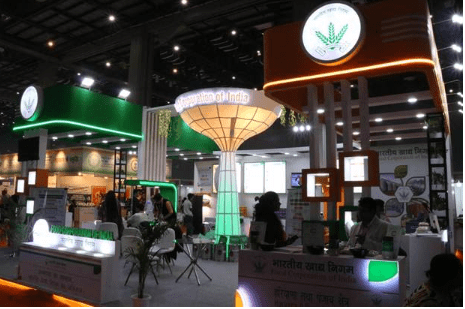
The Food Corporation of India (FCI) Pavilion at the India International Trade Fair (IITF)‑2025 has been awarded the Bronze Medal in the PSUs & PSBs category, recognising its high‑quality display, public engagement and communication on India’s evolving foodgrain management system. The pavilion, located in Hall 6 of Bharat Mandapam and open from 14–27 November, drew heavy public footfall and strong appreciation for highlighting FCI’s role in national food security.​

Theme and concept of the pavilion

Designed around the themes “किसानों का सम्मान, भारतीय खाद्य निगम का अभिमान” and “एक भारत, श्रेष्ठ भारत”, the pavilion traced India’s journey from traditional foodgrain storage to a modern, digital and transparent ecosystem. It showcased technologically advanced silos, real‑time digital monitoring, scientific stock rotation and improved hygiene and warehousing standards that together underpin a citizen‑centric food security architecture aligned with the Viksit Bharat @ 2047 vision.​


Ministerial visits and appreciation

The pavilion was visited on 18 November by Union Minister for Consumer Affairs, Food & Public Distribution and New & Renewable Energy Shri Pralhad Joshi, accompanied by senior ministry officials and FCI leadership. The Minister commended FCI for stabilising wheat and rice availability and prices, and for its sustained push on modernisation, digital monitoring and warehouse upgradation. On 23 November, Minister of State Smt. Nimuben Jayantibhai Bambhaniya also toured the pavilion, praising FCI’s efforts to strengthen national food security, promote transparency in grain movement and implement schemes such as the Open Market Sale Scheme (Small/Bulk).​

Affordable rice sale draws strong public response

A major attraction was the special retail sale of FCI rice—raw and boiled—sourced from six regions (Odisha, Chhattisgarh, Telangana, Andhra Pradesh, Punjab and Haryana) at affordable prices of ₹28.90 and ₹30.90 per kg. Varieties such as Kala Champa, Minikit and Pooja from Odisha; Sanalu (Samba Masuri) and Cotton Dora Sanalu from Telangana; and Dhruti, PR‑126 and Bondalu from Andhra Pradesh were offered at the stall. By the close of the fair, about 13 metric tonnes of rice had been sold, reflecting strong public trust in FCI’s quality standards, systematic stock rotation and hygiene‑compliant handling.​

Execution, leadership and national platform

The pavilion was curated and executed by FCI Delhi Region under the leadership of General Manager Smt. K. P. Asha, and was reviewed by senior officers including CMD Shri Ashutosh Agnihotri and joint secretaries from the Food Ministry, who praised its professional, visitor‑friendly design. FCI also expressed gratitude to India Trade Promotion Organisation (ITPO) for providing IITF‑2025 as a national platform to promote ‘Made in India’ products—from foodgrains to handloom and handicrafts—echoing the Prime Minister’s ‘Vocal for Local’ call.​

Conclusion

Through its award‑winning presence at IITF‑2025, FCI reaffirmed its commitment to transparency, efficiency and innovation in foodgrain management, encapsulated in its service motto “Food for All, Life for All”. The Bronze Medal and enthusiastic public response underscore the corporation’s central role in safeguarding India’s food security while modernising systems to meet future demands.​

For more real-time updates, visit Channel 6 Network.

Source: PIB

India, US sign Strong Rs 7,995‑crore sustainment pact for Indian Navy’s MH‑60R helicopter fleet

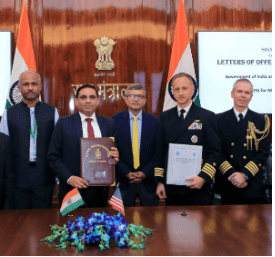
The Ministry of Defence has signed Letters of Offer and Acceptance with the United States government for a five‑year sustainment package for the Indian Navy’s fleet of MH‑60R Seahawk multi‑role helicopters, valued at approximately ₹7,995 crore. The agreement, concluded under Washington’s Foreign Military Sales framework in the presence of Defence Secretary Rajesh Kumar Singh, is aimed at keeping the high‑end anti‑submarine warfare platform at peak operational readiness over the long term.​

What the sustainment deal covers

The sustainment support is structured as a comprehensive “follow‑on support” and “follow‑on supply support” package, covering the full lifecycle needs of the MH‑60R fleet. This includes provisioning of spares, support and ground‑handling equipment, product support, training and technical assistance for Indian personnel, as well as repair and replenishment of critical components. The contract also provides for setting up intermediate‑level component repair and periodic maintenance inspection facilities within India, reducing turnaround times and dependence on overseas repair depots.​


Boost to Aatmanirbhar Bharat and domestic ecosystem

By localising key maintenance and overhaul capabilities, the deal aligns with the government’s Aatmanirbhar Bharat vision in defence. The in‑country facilities are expected to spur indigenous products and services, opening opportunities for micro, small and medium enterprises and other Indian firms to participate in the MH‑60R support value chain, from component repair to specialised technical services.​

Operational impact on the MH‑60R fleet

The MH‑60R, supplied by the US as part of a 24‑helicopter acquisition signed in 2020, is an advanced, all‑weather, ship‑borne platform optimised for anti‑submarine and anti‑surface warfare as well as surveillance and search‑and‑rescue roles. The new sustainment package is expected to significantly enhance the helicopters’ availability and maintainability, allowing them to operate effectively from dispersed coastal bases and frontline warships while delivering optimal performance across primary and secondary missions.​

Strategic significance of the agreement

Officials have underlined that this is a capability‑centred support pact rather than a fresh acquisition, coming at a time when India is modernising its naval aviation arm to counter under‑sea threats in the wider Indo‑Pacific. By locking in predictable, long‑term support and simultaneously building domestic maintenance infrastructure, the agreement deepens India–US defence cooperation and strengthens the Indian Navy’s ability to field a credible, networked anti‑submarine warfare grid in the region.​

For more real-time updates, visit Channel 6 Network.

Source: PIB