Tuesday, April 28, 2026
Home Blog Page 124

US Troops Middle East: Urgent Withdrawal From Key Bases Amid Iran Threat

Washington D.C. – The United States has initiated a precautionary withdrawal of US troops Middle East from key military installations amid escalating regional tensions and direct threats from Iran. This significant military repositioning represents a dramatic response to heightened security concerns as the situation in the Middle East continues to deteriorate.

Evacuation Orders for US Troops Middle East

US troops Middle East stationed at several critical bases have been advised to evacuate as tensions with Iran reach alarming levels. A US official confirmed that personnel from a key base in Qatar were instructed to depart by Wednesday evening, marking a significant shift in American military posture in the region.

Personnel deployed at Qatar’s Al Udeid military base, which houses the largest American military installation in the Middle East, were specifically told to leave their positions. The withdrawal of US troops Middle East from this strategic location underscores the seriousness of the perceived threat and the administration’s commitment to protecting American military personnel.

US officials have characterized the evacuation of US troops Middle East as a precautionary measure, though they did not elaborate on specific details regarding whether the departure was optional or mandatory for personnel stationed at affected facilities.

Iran’s Direct Warnings About US Troops Middle East

The withdrawal of US troops Middle East comes in direct response to Iran’s explicit warnings to neighboring countries hosting American forces. Iranian authorities stated they had warned regional neighbors that they would strike US military bases if Washington launches attacks against Iran.

These threats against US troops Middle East represent a significant escalation in rhetoric and underscore Iran’s willingness to expand any potential conflict beyond its borders. The warnings were directed specifically at countries in the region that host American military installations, putting these nations in a difficult diplomatic position.

A senior adviser to Supreme Leader Ayatollah Ali Khamenei issued a pointed reminder to President Trump about Iran’s capabilities to target US troops Middle East. Ali Shamkhani referenced a June attack on the Al Udeid air base as demonstration of “Iran’s will and capability to respond to any attack.”

Qatar’s Response to US Troops Middle East Evacuation

Qatar’s government acknowledged the precautionary measures affecting US troops Middle East, stating that such actions were being “undertaken in response to the current regional tensions.” The Qatari International Media Office issued a formal statement addressing the situation.

Also Read: Iran Protests 2026: Shocking Developments as Airspace Closes and Death Toll Rises

“The IMO reaffirms that the State of Qatar continues to implement all necessary measures to safeguard the security and safety of its citizens and residents as a top priority, including actions related to the protection of critical infrastructure and military facilities,” the statement declared.

Qatar’s measured response reflects the delicate balance the nation must maintain as host to the largest concentration of US troops Middle East while also managing relationships with regional powers including Iran.

Al Udeid Air Base Strategic Importance

The Al Udeid Air Base in Qatar serves as the most significant installation for US troops Middle East operations. This facility functions as a critical hub for American military activities throughout the region, including air operations, logistics coordination, and command functions.

The decision to evacuate personnel from this strategic location highlights the gravity of the threat assessment. The base has historically served as a cornerstone of American military presence and power projection capabilities for US troops Middle East missions.

Shamkhani’s specific reference to the June attack on Al Udeid serves as a stark reminder that this crucial installation housing US troops Middle East has already been targeted once, demonstrating Iran’s capability and willingness to strike at American assets in the region.

Saudi Arabia Security Measures for US Troops Middle East

The US embassy in Saudi Arabia issued advisories for American personnel to exercise heightened caution and avoid military installations amid the escalating tensions. This guidance extends protective measures for US troops Middle East beyond those directly ordered to evacuate from Qatar.

“Given ongoing regional tensions, the US mission to Saudi Arabia has advised its personnel to exercise increased caution and limit non-essential travel to any military installations in the region. We recommend American citizens in the Kingdom do the same,” the embassy statement warned.

This advisory affects not only US troops Middle East stationed in Saudi Arabia but also American citizens residing in or traveling through the Kingdom, reflecting the broad security concerns pervading the region.

Context of Regional Tensions Affecting US Troops Middle East

The withdrawal of US troops Middle East occurs against the backdrop of severe unrest in Iran, where protests have resulted in over 3,400 deaths according to reports. President Trump’s vocal support for Iranian protesters, telling them to “keep protesting” and “take over their institutions,” has fueled speculation about potential US intervention.

Trump’s remarks have intensified Iranian concerns about American intentions, prompting Tehran’s aggressive warnings about striking bases hosting US troops Middle East if Washington launches military operations against Iran.

Strategic Implications for US Troops Middle East

The repositioning of US troops in Middle East represents more than a temporary security measure—it signals potential shifts in American military strategy and regional engagement. The evacuation raises questions about long-term deployment patterns and the sustainability of current force postures given evolving threat environments.

The precautionary withdrawal of US troops in Middle East also sends diplomatic signals to regional allies and adversaries alike about American risk assessment and commitment to protecting its personnel. How this situation develops in coming days will significantly impact both immediate security calculations and longer-term strategic planning for US troops Middle East operations.

Uncertain Timeline for US Troops Middle East

Officials have not specified how long US troops in Middle East will remain withdrawn from affected bases or what conditions would need to be met for their return. This uncertainty adds another dimension to the regional security crisis as stakeholders await clarity on American military intentions and Iranian responses.

Iran Protesters: Trump’s Stunning Claims Killings Stopped Amid Tehran Crackdown

Washington D.C. – US President Donald Trump has made a controversial claim that the killing of Iran protesters has stopped, citing information he received “on good authority.” This statement comes even as Tehran’s judiciary chief signals intentions to proceed with fast trials and executions for detained demonstrators, creating a stark contradiction in narratives about the ongoing crisis.

Trump’s Claims About Iran Protesters

President Trump stated on Wednesday that he has been informed plans for executions of Iran protesters have ceased. Without providing detailed sources or evidence, Trump told reporters that Iran is halting its execution plans for detained demonstrators.

“We’ve been told that the killing in Iran is stopping, it’s stopped, it’s stopping,” Trump was quoted as saying. “And there’s no plan for executions, or an execution, or executions, so I’ve been told that on good authority.” His remarks suggest optimism about the fate of Iran protesters currently in custody, though the basis for his confidence remains unclear.

This statement regarding Iran protesters came amid escalating tensions between Washington and Tehran, with Trump having previously told protesting Iranians that “help is on the way” and that his administration would “act accordingly” in response to the Iranian government’s actions.

Conflicting Signals from Tehran

Despite Trump’s optimistic assessment about Iran protests, Tehran has sent contradictory signals about its intentions. Iran’s judiciary chief Gholamhossein Mohseni-Ejei signaled plans for fast trials and executions for those detained during nationwide protests, directly challenging Trump’s assertions.

Mohseni-Ejei made these comments in a video shared by Iranian state television on Wednesday, emphasizing the need for swift action and stating that delays would lessen the impact of judicial proceedings against Iran protesters. His remarks appear to be a direct response to President Trump’s warnings about executions.

The judiciary chief’s position creates significant uncertainty about the actual fate of detained Iran protesters and raises questions about the accuracy of the information Trump received regarding the cessation of killings.

Death Toll Among Iran Protesters

The crackdown on Iran protesters has resulted in catastrophic loss of life, with the US-based Human Rights Activists news agency reporting that at least 2,586 people have been killed by Iranian security forces. This staggering death toll underscores the severity of the government’s response to demonstrations.

The killings of Iran protesters have drawn international condemnation and heightened concerns about human rights violations in the country. The scale of casualties has prompted urgent diplomatic responses and consideration of various intervention options by the United States and its allies.

US National Security Consultations on Iran Protesters

President Trump consulted with his national security team on Tuesday about next steps regarding the situation of Iran protesters, following his assessment that the killing in Iran was “significant.” These high-level discussions indicate the seriousness with which the administration views the crisis.

Vice President JD Vance, Secretary of State Marco Rubio, and key White House National Security Council officials began meeting last Friday to develop a comprehensive range of options for Trump’s consideration. The deliberations have explored approaches spanning from diplomatic engagement to potential military strikes.

The consultations regarding Iran protesters reflect the administration’s effort to formulate an effective response to the humanitarian crisis while navigating complex geopolitical considerations in the Middle East region.

Diplomatic and Military Options Under Review

The range of options being developed for addressing the plight of Iran protesters extends across the diplomatic and military spectrum. Administration officials are carefully weighing approaches that could include economic sanctions, international pressure, humanitarian assistance, or more forceful interventions.

The involvement of Secretary of State Marco Rubio in these discussions suggests diplomatic channels remain a priority, even as military options are being prepared. The deliberations aim to identify strategies that could effectively support Iran protesters while managing risks of broader regional conflict.

Trump’s previous warnings to Iran about executions of Iran protesters demonstrated his willingness to threaten consequences, though the specific measures under consideration remain closely guarded by national security officials.

Trump’s Previous Support for Iran Protesters

In recent days, Trump has publicly expressed support for Iran protesters, telling them that “help is on the way” and encouraging them to continue their demonstrations against the Iranian government. These statements represent a clear departure from typical diplomatic restraint and signal American solidarity with the protest movement.

Trump warned that his administration would “act accordingly” in response to how the Iranian government treats Iran protesters, creating expectations of American intervention if the crackdown intensifies or executions proceed.

Judiciary Chief’s Challenge to Trump

Gholamhossein Mohseni-Ejei’s comments about fast trials for Iran protesters represent a direct challenge to President Trump’s warnings. By emphasizing the need for swift judicial action without delays, the judiciary chief appears to be asserting Iranian sovereignty and rejecting external pressure regarding the treatment of detained Iran protesters.

This defiant stance raises concerns that executions could proceed despite Trump’s claims to have received assurances otherwise, potentially forcing the administration to follow through on its threats of consequences.

Uncertainty About Iran Protesters’ Fate

The conflicting statements from Washington and Tehran create profound uncertainty about what will actually happen to detained Iran protesters. Trump’s claim that killings have stopped contradicts the Iranian judiciary’s signals about proceeding with trials and potential executions.

The discrepancy between these positions leaves family members of arrested Iran protestees in agonizing uncertainty about their loved ones’ safety. International observers remain vigilant, monitoring developments to determine whether Trump’s optimistic assessment or Tehran’s ominous signals prove more accurate.

International Pressure Continues

The international community continues applying pressure on Iran regarding its treatment of Iran protesters, with various countries issuing statements condemning the violence and calling for restraint. The situation remains fluid as diplomatic efforts continue alongside preparations for potential stronger measures should the crisis escalate further.

The coming days will prove critical in determining the actual fate of Iran protests and whether Trump’s claims about stopped killings reflect reality or wishful thinking.

Iran Protests 2026: Shocking Developments as Airspace Closes and Death Toll Rises

Iran – The escalating Iran protests have captured global attention as the death toll surpasses 3,000 and the country faces unprecedented international pressure. What began as demonstrations against economic hardship in late December has transformed into a major challenge to the Iranian theocracy, prompting airspace closures, mass evacuations, and warnings from world leaders.

Devastating Death Toll from Iran Protests

The Norway-based Iran Human Rights organization reports that at least 3,428 protestors have been killed during the government crackdown on Iran protests, with more than 10,000 arrests recorded. Alarmingly, approximately 3,379 of these deaths occurred during the peak period from January 8 to 12, highlighting the intensity of the confrontations.

The US-based Human Rights Activists News Agency had earlier reported the death toll at 2,571, though Iranian state television has acknowledged numerous casualties without providing specific figures, referring only to “a lot of martyrs.” The rapidly increasing numbers underscore the severity of the Iran protests and the government’s violent response to demonstrations.

Airspace Closure Disrupts International Travel

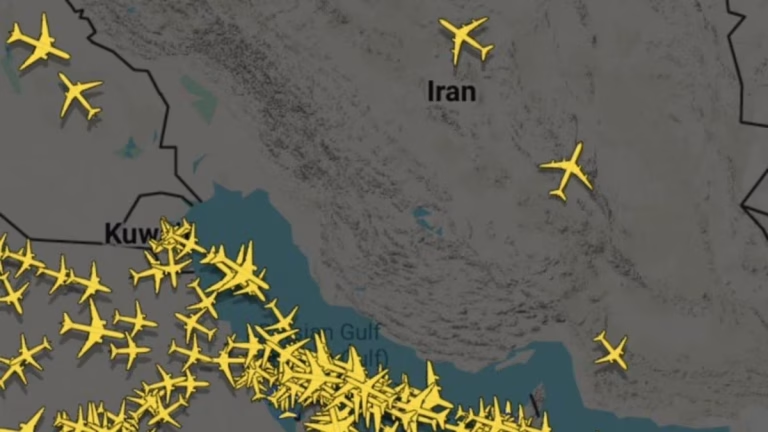
In a dramatic development related to the Iran protests, the country has shut its airspace for most flights, according to Flightradar24. This closure has forced major airlines to alter their routes significantly, affecting thousands of passengers worldwide.

Air India issued an advisory warning passengers of potential delays due to the Iran airspace closure, stating the airline would use alternative routing to navigate around the affected region. Similarly, IndiGo issued a travel advisory informing passengers about the airspace restrictions resulting from the ongoing Iran protests.

German airline Lufthansa announced it would bypass Iranian and Iraqi airspace “until further notice,” while Germany cautioned all flights from entering Iranian airspace. The aviation disruptions reflect the serious security concerns surrounding the Iran protests and their regional impact.

International Response to Iran Protests

Multiple countries have responded decisively to the Iran protests by issuing urgent advisories and evacuating personnel. The United Kingdom temporarily closed its embassy in Tehran and evacuated officials, citing security concerns. Italy, Spain, and Poland urged their citizens to leave Iran immediately due to the dangerous situation.

The Indian embassy in Iran issued an advisory on Wednesday urging Indian nationals to leave the country by available means of transport, including commercial flights. External Affairs Minister S Jaishankar received a call from Iranian Foreign Minister Seyed Abbas Araghchi to discuss the evolving situation. Indian citizens were advised to exercise caution, stay away from protest areas, and maintain contact with the embassy.

Also Read: US Visa Processing Halted: Shocking Suspension Affects 75 Nations Worldwide

Parents of Kashmiri students studying in Iran have appealed to the Indian government to bring their children back safely. Additionally, a Hyderabad student stranded in Iran prompted her father to request immediate evacuation assistance.

US Military Response and Trump’s Warnings

The Iran protests have triggered significant US military movements, with personnel at Qatar’s Al Udeid Air Base advised to evacuate. Qatar confirmed some personnel were departing the US base over “regional tensions,” while the UK also withdrew some personnel from the Qatar air base.

US President Donald Trump has been vocal about the Iran protests, urging demonstrators to “keep protesting” and promising that “help is on its way.” He warned of “very strong action” if Iranian authorities executed protestors, telling reporters the US would respond forcefully to such actions.

Trump later claimed he had been told “on good authority” that execution plans in Iran had stopped, though Tehran signaled intentions to proceed with fast trials and executions for detained protestors. The US embassy in Saudi Arabia urged its personnel to exercise caution and avoid military installations.

Execution Threats and Judicial Response

A deeply concerning aspect of the Iran protests involves the threat of executions for detained demonstrators. Twenty-six-year-old Erfan Soltani, arrested on January 8 during demonstrations in west Tehran’s Fardias, was reportedly sentenced to death and scheduled for execution, marking the first reported hanging since the Iran protests began.

Iran’s judiciary has hinted at fast trials and executions despite international warnings. An Iranian minister later stated “there is no plan for hanging” when questioned about the Iran protests, though a rights group reported that one protester’s execution had been postponed.

Internet Shutdown and Communication Challenges

The Iranian government imposed a nationwide internet shutdown that lasted over 132 hours, severely limiting protesters’ ability to communicate. However, Elon Musk’s Starlink satellite internet service began offering free connectivity in Iran, providing the only reliable means for Iranians to contact people outside the country during the Iran protests.

The government has eased some restrictions, allowing phone calls to other countries for the first time, though SMS services and regular internet access to international content remained blocked. A state-affiliated news agency suggested the internet would likely remain disconnected for “the next one to two weeks.”

Origins and Targets of Iran Protests

The Iran protests began in late December amid anger over the country’s deteriorating economy but quickly evolved to target the theocratic system itself. Supreme Leader Ayatollah Ali Khamenei became a primary focus, with graffiti and chants across Tehran reportedly calling for his death—an offense that could carry a death sentence.

The Iranian government accuses the United States of seeking a pretext for military intervention and has blamed Trump for encouraging political destabilization and inciting violence. Iran’s Revolutionary Guards have signaled battle readiness with increased missile stockpiles following US threats.

International Diplomatic Pressure

The G7 nations warned they are ready to impose new measures on Iran if the crackdown on Iran protests continues. France is exploring sending Eutelsat terminals to Iran amid the internet blackout, while Sweden summoned Iran’s envoy over the crackdown. The situation remains extremely tense as the international community watches developments closely.

US Visa Processing Halted: Shocking Suspension Affects 75 Nations Worldwide

Washington D.C. – The United States Department Of State has announced a sweeping suspension of immigrant visa processing for citizens of 75 countries, marking one of the most significant immigration policy shifts in recent years. This development represents a major expansion of immigration restrictions and will impact millions of potential applicants worldwide seeking to enter the United States.

Major Policy Shift in US Visa Processing

The suspension of US visa processing comes as part of the administration’s latest immigration crackdown, with the State Department citing concerns about immigrants who allegedly take welfare from American citizens at unacceptable rates. This unprecedented move affects a diverse range of nations across multiple continents, including Pakistan, Bangladesh, Russia, Iran, and Nepal.

According to the State Department’s official statement, the freeze on US visa processing will remain active until authorities can ensure that new immigrants will not extract wealth from American citizens. This justification forms the cornerstone of the policy change, though it has raised questions about the criteria used to determine which countries face restrictions.

Countries Affected by US Visa Processing Suspension

The comprehensive list of 75 countries subject to the US visa processing pause spans multiple regions globally. South Asian nations including Pakistan, Bangladesh, Nepal, and Bhutan are among those affected. Middle Eastern countries such as Iran, Iraq, Kuwait, Lebanon, Morocco, Sudan, and Yemen also face the suspension.

African nations constitute a significant portion of the list, with countries including Somalia, Ethiopia, Eritrea, Nigeria, Ghana, Senegal, Tanzania, Uganda, and many others experiencing halted US visa processing. Latin American and Caribbean countries are not exempt, with Brazil, Colombia, Cuba, Guatemala, Haiti, Jamaica, and Uruguay among those impacted.

Eastern European and Central Asian nations including Russia, Belarus, Albania, Bosnia, Kazakhstan, Kyrgyzstan, and Uzbekistan also find themselves on the restricted list. The State Department specifically highlighted that the US visa processing pause would impact dozens of countries whose immigrants often become public charges upon arrival in the United States.

Also Read: Muslim Brotherhood Terrorist Designation: US Makes Shocking Move

Complete List of Nations Under US Visa Processing Restrictions

The full roster of 75 countries affected by the US visa processing suspension includes: Afghanistan, Albania, Algeria, Antigua and Barbuda, Armenia, Azerbaijan, Bahamas, Bangladesh, Barbados, Belarus, Belize, Bhutan, Bosnia, Brazil, Burma, Cambodia, Cameroon, Cape Verde, Colombia, Cote d’Ivoire, Cuba, Democratic Republic of the Congo, Dominica, Egypt, Eritrea, Ethiopia, Fiji, Gambia, Georgia, Ghana, Grenada, Guatemala, Guinea, Haiti, Iran, Iraq, Jamaica, Jordan, Kazakhstan, Kosovo, Kuwait, Kyrgyzstan, Laos, Lebanon, Liberia, Libya, Macedonia, Moldova, Mongolia, Montenegro, Morocco, Nepal, Nicaragua, Nigeria, Pakistan, Republic of the Congo, Russia, Rwanda, Saint Kitts and Nevis, Saint Lucia, Saint Vincent and the Grenadines, Senegal, Sierra Leone, Somalia, South Sudan, Sudan, Syria, Tanzania, Thailand, Togo, Tunisia, Uganda, Uruguay, Uzbekistan, and Yemen.

Implementation Timeline for US Visa Processing Freeze

The suspension of US visa processing is scheduled to begin on January 21, affecting immigrant visa applications from all listed countries. The State Department, under Secretary Marco Rubio’s leadership, has instructed consular officers to halt processing in accordance with broader orders issued previously that tightened rules around potential immigrants who might become public charges.

Importantly, the US visa processing suspension will not apply to applicants seeking non-immigrant visas, which include temporary tourist or business visas. This distinction means that individuals from affected countries can still apply for short-term travel authorization, though immigrant visa pathways remain blocked.

Policy Justification and Public Charge Concerns

The rationale behind the US visa processing suspension centers on the public charge rule, which aims to prevent immigrants from becoming dependent on government assistance programs. The State Department’s statement emphasized that the freeze would continue until mechanisms are in place to ensure new immigrants do not extract wealth from American taxpayers.

White House Press Secretary Karoline Leavitt highlighted specific countries of concern, including Somalia, whose residents have faced criticism following immigrants’ involvement in a funding scandal in Minnesota. Russia and Iran were also specifically mentioned as nations whose citizens would face restricted US visa processing.

Impact on Global Immigration Patterns

This sweeping change to US visa processing represents a significant shift in American immigration policy, affecting individuals from countries across Africa, Asia, Europe, Latin America, and the Caribbean. The suspension impacts nations with varying economic profiles, geopolitical relationships with the United States, and emigration patterns.

The US visa processing halt raises questions about family reunification, employment-based immigration, and diversity visa programs for citizens of the affected nations. Thousands of pending applications and future immigration plans face uncertainty as the policy takes effect.

Looking Forward

As the January 21 implementation date approaches, individuals from the 75 affected countries must navigate this new reality in US visa processing. The State Department has indicated the suspension will remain until satisfactory assurances exist regarding immigrants’ financial self-sufficiency, though no specific timeline or criteria for lifting restrictions have been established.

Maharashtra Civic Elections 2026: Critical Voting Begins Today Across 29 Corporations

Maharashtra – The state of Maharashtra witnesses a crucial democratic exercise today as voters head to polling booths for the highly anticipated Maharashtra civic elections across 29 municipal corporations. With voting scheduled from 7:30 AM to 5:30 PM on January 15, this electoral process will determine the political landscape of the state’s urban governance for years to come.

Massive Scale of Maharashtra Civic Elections

The Maharashtra civic elections represent one of the largest municipal electoral exercises in the country, with an impressive scale that underscores their significance. The polls cover 2,869 seats distributed across 893 wards, involving a staggering 15,931 candidates competing for positions in various municipal corporations. Among these candidates, 1,700 are contesting in Mumbai alone, while Pune sees 1,166 candidates in the fray.

Approximately 3.48 crore eligible voters will exercise their democratic right in these Maharashtra civic elections, making their voices heard on crucial urban governance issues. The key municipal corporations participating in this electoral process include Mumbai, Pune, Pimpri-Chinchwad, Kolhapur, Vasai-Virar, Kalyan-Dombivli, Nagpur, Solapur, Amravati, Thane, and Parbhani, among others.

Security Arrangements and Voting Process

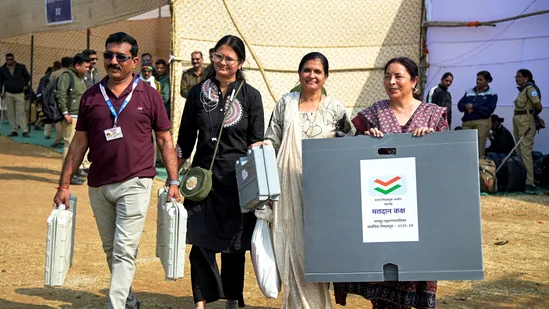
To ensure smooth and peaceful conduct of the Maharashtra civic elections, extensive security measures have been implemented across polling stations. More than 25,000 police personnel, including senior officers, have been deployed throughout Mumbai alone, reflecting the seriousness with which authorities are approaching these elections.

The Brihanmumbai Municipal Corporation announced on Wednesday that distribution of Electronic Voting Machines (EVMs) and other election materials was completed at 23 divisional centres across the metropolis. Each counting centre has been equipped with secure strong rooms for safeguarding election materials, with comprehensive arrangements to ensure transparency during the counting process scheduled for January 16.

Voter Engagement Initiatives

Various measures have been undertaken to encourage maximum voter participation in the Maharashtra civic elections. These include decoration of polling stations to create a welcoming environment, establishment of pink booths dedicated to women voters, selfie points for social media engagement, and media facilitation centres for comprehensive coverage of the electoral process.

High-Stakes Battle for Mumbai Municipal Corporation

The Maharashtra civic elections have captured particular attention in Mumbai, where the BJP-led Mahayuti coalition faces a formidable challenge from the reunited Thackeray cousins. Raj Thackeray’s Maharashtra Navnirman Sena (MNS) and Uddhav Thackeray’s Shiv Sena (UBT) have joined forces, marking a significant political development.

The Brihanmumbai Municipal Corporation has been controlled by the undivided Shiv Sena for 26 consecutive years. In the last elections held in 2017, the BJP secured 82 seats while Shiv Sena obtained 84 seats. Other major players in the Maharashtra civic elections include the NCP, its rival NCP (SP), Congress, and Samajwadi Party.

Strategic Political Alliances

The Maharashtra civic elections have witnessed remarkable political realignments that could reshape the state’s civic governance. The estranged Thackeray cousins have reunited after nearly two decades, joining forces for the first time since 2005. This alliance represents a significant shift in Maharashtra’s political dynamics.

In western Maharashtra, another noteworthy development has emerged with Ajit Pawar forming an alliance with his uncle’s Nationalist Congress Party (SP) for crucial municipal corporations including Pune, Parbhani, and Pimpri-Chinchwad. These strategic partnerships add complexity to the Maharashtra civic elections and could significantly influence outcomes.

Critical Issues Driving Voter Sentiment

The Maharashtra civic elections are being contested on several pressing urban governance issues that directly impact residents’ daily lives. Persistent problems with potholes on roads, severe waterlogging in low-lying areas during monsoons, and deteriorating air quality in cities have emerged as major concerns.

Traffic congestion and overwhelming pressure on public transport systems remain critical challenges that voters expect the newly elected civic bodies to address. These civic issues have dominated campaign discussions and will likely influence voting patterns across municipal corporations.

Campaign Promises and Final Push

Campaigning for the Maharashtra civic elections concluded on Tuesday, with Chief Minister Devendra Fadnavis conducting a roadshow in Nagpur as part of his final campaign push. Political parties have made several promises to attract voters.

The Mahayuti alliance has promised a 50 percent concession for women on BEST bus travel, while the Shiv Sena (UBT)-MNS alliance has pledged a monthly allowance of ₹1,500 for women domestic workers. These welfare-oriented promises reflect the competitive nature of the Maharashtra civic elections.

Looking Ahead

As Maharashtra civic elections unfold today, the results announced on January 16 will determine the direction of urban governance across the state’s major cities and towns, impacting millions of residents in the coming years.

1 Congress Leader Booked for Threatening Municipal Commissioner

Follow: Karnataka Government

Also read: Home | Channel 6 Network – Latest News, Breaking Updates: Politics, Business, Tech & More

1 Exciting Launch as Kia Seltos Hits Hubballi

Kia Motors has officially launched the all-new Kia Seltos in Hubballi, marking a significant expansion of its SUV lineup in northern Karnataka. The launch event drew car enthusiasts, dealers, and prospective buyers eager to witness the latest iteration of the popular compact SUV. Known for its combination of bold styling, advanced technology, and versatile performance, the new Seltos aims to strengthen Kia’s presence in the competitive SUV market while catering to evolving customer preferences in semi-urban regions.

The all-new Seltos features a refreshed exterior design, with a sportier front grille, sharper LED headlights, and aerodynamic contours that enhance both aesthetics and efficiency. Inside, the cabin has been upgraded with premium materials, intuitive controls, and enhanced comfort features such as ventilated seats and ambient lighting. Kia representatives highlighted the focus on combining style with practicality, making the Seltos suitable for city driving as well as longer highway journeys.Kia Seltos Price in Hubli | CarWale

Performance and Features That Stand Out

Under the hood, the new Seltos offers multiple engine options, including petrol and diesel variants, paired with manual, automatic, and intelligent gearbox options. Kia claims improved fuel efficiency, smoother handling, and enhanced ride comfort compared to its previous model. Features such as advanced suspension, hill start assist, and drive mode selection ensure adaptability across different terrains, making it ideal for Hubballi’s mixed urban and semi-urban roads.

On the technology front, the SUV comes equipped with a large touchscreen infotainment system, connected car capabilities, and multiple driver-assist features including blind-spot monitoring, rear cross-traffic alert, and parking sensors. Safety remains a key highlight, with multiple airbags, electronic stability control, and reinforced chassis design. Kia emphasized that the new Seltos is designed to provide both performance and peace of mind for drivers and passengers alike.

Dealers in Hubballi reported strong pre-booking interest, reflecting the brand’s growing popularity in Karnataka. Kia’s marketing team noted that the vehicle’s modern design, coupled with competitive pricing, is expected to attract first-time SUV buyers as well as customers upgrading from smaller vehicles. The launch also included test drives, enabling potential buyers to experience the car’s handling, features, and comfort firsthand.Kia Seltos - On Road Price In Hubli January 2026 | V3Cars

Kia Motors plans to expand the availability of the Seltos across multiple dealerships in Hubballi and nearby cities. Company representatives assured customers of a robust after-sales support network, including service centres, roadside assistance, and warranty packages. The launch is part of Kia’s broader strategy to strengthen its market footprint in Karnataka and respond to rising demand for premium compact SUVs in tier-two cities.

With the all-new Seltos, Kia aims to blend modern aesthetics, innovative technology, and dynamic performance, creating an SUV that appeals to both urban and semi-urban consumers. The Hubballi launch not only demonstrates the brand’s commitment to regional markets but also highlights the growing significance of tier-two cities in India’s automotive landscape. For car enthusiasts in northern Karnataka, the new Seltos represents a combination of style, performance, and practicality ready to meet their daily driving and lifestyle needs.

Used 2024 Kia Seltos [2023-2024] HTX 1.5 Diesel iMT [2023-2024] for sale in  Hubli at Rs.16,00,000 - CarWale

Automobile experts observing the launch noted that Kia Seltos continues to set benchmarks in the compact SUV segment, particularly with its focus on premium features at competitive pricing. The new model’s enhancements, including a refined suspension system and improved engine performance, are designed to provide a smoother ride on the diverse road conditions typical of Hubballi and surrounding areas. Analysts predict that the updated Seltos could capture a significant market share among young professionals, small families, and tech-savvy buyers who prioritise comfort alongside style.

Dealership staff highlighted that customer queries during the launch revolved around connectivity features, fuel efficiency, and safety specifications. The touchscreen infotainment system, compatible with Android Auto and Apple CarPlay, was among the most discussed features. Prospective buyers also expressed interest in the vehicle’s multiple drive modes, which allow the SUV to adapt to city traffic, highways, or rough rural roads. This versatility, according to experts, strengthens Seltos’ appeal in tier-two cities.

Kia’s marketing team emphasised that the Seltos was engineered to meet both aesthetic and functional demands. The vehicle’s aerodynamic design, coupled with bold grille styling and LED lighting, has been refined to provide a sportier look without compromising cabin space or fuel efficiency. Interiors have been upgraded with high-quality materials, ergonomic seating, and noise-reduction measures, making longer drives more comfortable for passengers.

Regional automotive analysts note that the new Seltos competes directly with other popular compact SUVs in the market, such as Hyundai Creta, Tata Harrier, and MG Astor. Kia aims to differentiate through its combination of advanced safety features, connected car technology, and customizable drive experiences. Dealers believe this positioning will attract buyers seeking both luxury-inspired features and reliable performance in a compact SUV format.

Hubballi residents at the launch expressed excitement over the availability of test drives, allowing them to experience the vehicle firsthand. Several attendees praised the intuitive dashboard layout, premium upholstery, and smooth handling. Company representatives encouraged visitors to explore the multiple engine and gearbox combinations to select a model best suited to their driving style and commuting needs.

The launch event also included presentations on Kia’s after-sales service infrastructure. Representatives detailed plans for regular maintenance schedules, roadside assistance, and extended warranty options. The company stressed that its growing service network in Karnataka, including parts availability and trained technicians, is designed to complement the Seltos’ modern features and ensure a seamless ownership experience.

Kia executives highlighted the importance of tier-two cities like Hubballi for expanding sales beyond metropolitan regions. With increasing disposable incomes, rising aspirations, and improved road connectivity, these cities represent significant growth opportunities. The Seltos launch reflects a broader industry trend of targeting semi-urban buyers with SUVs that balance performance, technology, and affordability.

Safety demonstrations during the event drew considerable attention, with experts showcasing features like electronic stability control, anti-lock braking system, and multiple airbags. Kia emphasised that these features are standard across most variants, reflecting the brand’s commitment to passenger protection. Attendees were shown the vehicle’s response under simulated emergency conditions, further building confidence in its safety credentials.

The company also discussed future updates and potential new variants of the Seltos, including hybrid or CNG-compatible models, to cater to changing market demands. While no official launch dates were announced, Kia signalled that customer feedback from cities like Hubballi will guide product planning and service improvements. This approach highlights the brand’s emphasis on adapting to regional needs while maintaining global design and engineering standards.

In conclusion, the all-new Kia Seltos launch in Hubballi signals the brand’s intention to strengthen its presence in northern Karnataka and tier-two markets. With a combination of bold design, versatile performance, advanced technology, and comprehensive after-sales support, the SUV is positioned to attract a wide range of customers. For buyers in Hubballi, the Seltos offers a compelling option for urban commuting, long drives, and family travel, promising both style and substance in one package.

DESIGN AND COMFORT: A SUV THAT BLENDS STYLE WITH FUNCTION

The all-new Kia Seltos has been praised for its attention to design details that elevate both aesthetics and practicality. The exterior features sharp lines, a bold tiger-nose grille, and sleek LED daytime running lights that give the SUV a dynamic presence on Hubballi roads. Inside, the cabin has been thoughtfully designed with spacious legroom, premium seat upholstery, and noise insulation, ensuring a comfortable ride even on long journeys. Ergonomically placed controls, a digital instrument cluster, and ambient lighting enhance the driving experience, reflecting Kia’s commitment to blending style with functionality.

Comfort features extend to climate control, ventilated seats in higher variants, and a sunroof that adds a sense of openness to the cabin. Passengers benefit from multiple storage compartments and USB charging ports, making daily commutes and weekend trips convenient. Kia representatives noted that every aspect of the interior has been designed to balance technology and user-friendliness, ensuring that drivers of all experience levels feel in control and connected.

TECHNOLOGY AND CONNECTIVITY: SMART FEATURES FOR MODERN DRIVERS

Kia has equipped the Seltos with a suite of advanced technology features aimed at enhancing convenience, safety, and entertainment. The infotainment system includes a large touchscreen with wireless Android Auto and Apple CarPlay, providing seamless connectivity for navigation, media, and communication. Higher variants offer a premium sound system, voice command features, and multiple display modes, catering to tech-savvy drivers who prioritise digital integration in daily travel.

Connected car features allow drivers to monitor vehicle health, track location, and receive alerts via a mobile app, adding a layer of security and convenience. Safety technology has been a key focus, with multiple airbags, electronic stability control, hill start assist, rear parking sensors, and tire pressure monitoring included across several variants. Kia emphasizes that integrating these features ensures both driver confidence and passenger protection, making the Seltos suitable for diverse driving conditions in urban and semi-urban settings.

Engine options in the Seltos have been upgraded to provide efficient yet responsive performance. Petrol and diesel variants are offered with multiple transmission choices, including manual, automatic, and intelligent gearbox options. Features like drive mode selection allow drivers to switch between Comfort, Eco, and Sport modes depending on road conditions or personal preference. Kia claims that these enhancements provide smoother handling, improved fuel efficiency, and an overall enjoyable driving experience on both city streets and highways.

Dealerships in Hubballi reported strong interest in the Seltos from first-time SUV buyers and existing vehicle owners looking to upgrade. Test drives conducted during the launch event allowed prospective buyers to experience handling, acceleration, and comfort firsthand. Feedback highlighted the SUV’s responsive steering, smooth ride, and quiet cabin as major positives. Many attendees appreciated the balance between performance, technology, and affordability, indicating strong market potential for the new model in northern Karnataka.

With the all-new Seltos, Kia Motors demonstrates a continued focus on understanding regional customer needs while offering global standards of design and technology. The Hubballi launch reflects a strategy to expand brand presence beyond metropolitan areas and cater to semi-urban buyers who seek a modern, versatile SUV. For consumers in Hubballi, the Seltos offers not just a vehicle, but a combination of style, safety, comfort, and connectivity tailored to everyday life and longer journeys.

Kia’s after-sales service network, including authorised workshops and roadside assistance, complements the SUV’s modern features, ensuring a reliable ownership experience. Warranty options and maintenance packages have been structured to provide peace of mind, reinforcing confidence among new buyers. Overall, the launch of the all-new Kia Seltos in Hubballi signals an exciting era for compact SUVs in Karnataka, offering customers a compelling blend of design, performance, and technology.

Follow: Karnataka Government

Also read: Home | Channel 6 Network – Latest News, Breaking Updates: Politics, Business, Tech & More

1 Intimate Look at Tejaswi’s Writing and the Life Beyond It: Quiet Brilliance

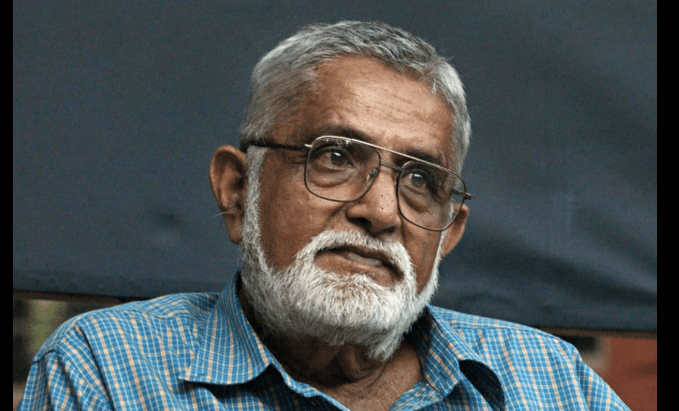
The world of K.P. Poornachandra Tejaswi has always resisted easy categorisation. Widely celebrated as one of Kannada literature’s most original voices, Tejaswi was never merely a writer confined to paper and print. His stories, essays, novels, and scientific writings were deeply intertwined with his lived experiences, his observations of nature, and his skepticism towards rigid thinking. To read Tejaswi is to enter a universe where curiosity is central and certainty is constantly questioned. A closer look at his life beyond writing reveals how inseparable his creative output was from his everyday existence.

INSIDE TEJASWI’S WORLD: 1 Visionary Who Blended Life and Literature

Tejaswi’s life beyond the written page is as compelling as his literary output. Friends and contemporaries often recall his days spent exploring forests, photographing wildlife, or tending to his farm with the same patience and curiosity he brought to writing. Unlike many writers who compartmentalise work and life, Tejaswi merged the two seamlessly. For him, observing nature, interacting with people, and questioning societal norms were not distractions but fuel for his stories and essays. This integration gave his writing authenticity and depth, reflecting lived experience rather than imagination alone.

Even in casual conversations, Tejaswi’s mind was constantly analysing, questioning, and connecting ideas. He maintained meticulous notes on flora, fauna, local legends, and human behaviour, often transforming these observations into literature. While his novels explored human relationships and societal dynamics, his scientific essays addressed natural phenomena with clarity and insight. This dual engagement made him a polymath in the truest sense, demonstrating that curiosity, not credentials, defines intellectual breadth.

LIVING CURIOUSLY: TEJASWI’S PHILOSOPHY AND PRACTICES

Tejaswi’s approach to life was rooted in curiosity and simplicity. He actively rejected rigid hierarchies and urban pretension, preferring rural landscapes and modest living. This grounded lifestyle influenced his storytelling, which often centred on ordinary people navigating complex ethical, social, and environmental dilemmas. He believed that literature should emerge from observation, not abstract theory. As such, his characters often mirror the nuanced ambiguity of real life, making them relatable and enduring across generations.

His fascination with nature extended beyond aesthetics into practical engagement. He studied ecosystems, noted bird migration patterns, and experimented with sustainable farming practices. These activities informed his environmental writings, which were both passionate and scientifically informed. Tejaswi consistently emphasised that human intervention must be tempered with respect for natural systems. In an era where ecological awareness is critical, his writings offer insights not only into science but into ethical responsibility towards the environment.

Photography was another dimension through which Tejaswi expressed his vision. Unlike conventional photographers who sought spectacle, he focused on subtleties—the interplay of light and shadow, textures of leaves, patterns in water, and fleeting animal behaviour. These images were extensions of his literary gaze, capturing moments that often inspired essays or fiction. Photography became a tool for reflection, enabling him to observe the minutiae of the world with the patience required for deeper understanding.

Tejaswi’s interactions with people were equally reflective of his philosophy. He valued dialogue over debate, listening over lecturing. His conversations revealed an ethical curiosity, an eagerness to understand diverse perspectives without judgment. He often engaged with farmers, students, and local artisans, learning from their knowledge systems. These interactions shaped his writings, which portray human behaviour with both empathy and honesty, highlighting the complexity of everyday life.

Education and public engagement were important to Tejaswi, yet he preferred informal, experiential methods. He believed learning should be exploratory and grounded in reality rather than confined to classrooms. This belief manifested in his writing style, which was accessible and devoid of pretension. His essays on science, culture, and social issues reach audiences beyond academia, making complex ideas comprehensible and engaging for all readers.

Despite his achievements, Tejaswi remained distant from fame and institutional accolades. He declined invitations to literary festivals and public ceremonies, choosing instead the quiet of observation and creation. This detachment was not aloofness but a deliberate effort to maintain intellectual independence. It allowed him to pursue topics and forms unconstrained by market pressures or prevailing literary trends, resulting in work that is timeless in its relevance and originality.

The interplay of scepticism and imagination defined much of Tejaswi’s creative output. He challenged unquestioned norms and beliefs while simultaneously celebrating wonder and curiosity. His writing demonstrates that critical thinking and imagination are not opposites but complementary tools for understanding the world. Through this approach, he encouraged readers to question assumptions, explore uncertainties, and remain engaged with life’s complexities.

Tejaswi’s environmental advocacy emerged naturally from his daily life rather than as a formal agenda. His writings often critique human arrogance and highlight ecological fragility. Importantly, these messages are interwoven with narratives and anecdotes rather than presented as lectures, making them persuasive and relatable. Readers not only learn about conservation but also experience the world through the author’s attentive, empathetic gaze.

His influence extends to contemporary Kannada literature, environmental discourse, and public thought. Writers, educators, and activists cite Tejaswi as an inspiration for interdisciplinary engagement and ethical observation. Yet, his life and work resist imitation, as they are the product of a deeply personal approach to living, learning, and writing. His legacy lies as much in his method—careful observation, ethical engagement, and integrated curiosity—as in his literary output.

Ultimately, Tejaswi’s life offers a template for holistic intellectual engagement. He demonstrates that writing is inseparable from lived experience, that curiosity is a lifelong practice, and that ethical attention to the world around us enriches both thought and art. Through his stories, essays, and actions, Tejaswi leaves readers with more than literature; he leaves a lens through which to observe, question, and cherish life itself.

Tejaswi’s literary voice was shaped not by urban literary circles but by landscapes, forests, and small-town rhythms. Born into a family already immersed in literature, he could easily have followed a conventional intellectual path. Instead, he chose solitude, long walks, experimentation, and hands-on engagement with nature. This choice influenced the tone of his writing, which often feels conversational yet sharp, playful yet deeply philosophical. His work carries an unmistakable sense of freedom, reflecting a mind unwilling to be constrained by ideology or expectation.

What sets Tejaswi apart is his refusal to treat literature as an isolated pursuit. Writing, for him, was one among many ways of engaging with the world. He was equally passionate about science, photography, farming, wildlife observation, and indigenous knowledge systems. These interests were not hobbies but integral to his worldview. They seeped into his essays and fiction, giving them an authenticity that resonated strongly with readers who sensed that his ideas emerged from lived reality rather than abstract theory.A window into Tejaswi's writing and life beyond it - The Hindu

Tejaswi’s prose often carries the clarity of a scientific mind and the wonder of a poet. He believed that rationality and imagination were not opposites but companions. This belief is evident in his popular science writings, where complex ideas are explained with simplicity, humour, and respect for the reader’s intelligence. He rejected the notion that science must be dry or inaccessible, arguing instead that curiosity is a shared human trait. Through this approach, he expanded the boundaries of what Kannada literature could encompass.

Beyond the page, Tejaswi lived a life marked by deliberate distance from fame and institutional recognition. Despite his stature, he avoided literary festivals, public appearances, and academic gatekeeping. He preferred conversations over debates, exploration over argument. Friends and contemporaries recall him as someone who listened more than he spoke, and when he did speak, it was often with irony and gentle provocation. This withdrawal from the spotlight was not arrogance but a conscious choice to protect intellectual independence.

Nature occupies a central place in understanding Tejaswi the person. His relationship with forests and wildlife was not romanticised but rooted in observation and respect. He documented ecological systems with precision while also acknowledging their fragility. Long before environmentalism became a mainstream concern, Tejaswi wrote about human interference, ecological imbalance, and the arrogance of assuming dominance over nature. These themes emerged organically from his life, making his environmental concerns deeply personal rather than ideological.

Tejaswi’s fiction often blurs the line between reality and imagination, reflecting his belief that truth is rarely singular. His characters are rarely heroic in the traditional sense. Instead, they are inquisitive, flawed, humorous, and reflective. They mirror his own temperament, curious but cautious, skeptical yet hopeful. Through them, he explored human behaviour, social structures, and the quiet absurdities of everyday life. His stories invite readers not to judge but to observe, much like he did.

His essays, perhaps more than his fiction, offer direct insight into his mind. They reveal a writer unafraid to question authority, tradition, and even his own assumptions. Tejaswi challenged blind belief, whether religious, political, or cultural. At the same time, he respected lived wisdom and local knowledge. This balance between critique and empathy made his voice distinctive and enduring. He did not seek to dismantle systems aggressively but to expose their inconsistencies through reason and wit.

Photography was another medium through which Tejaswi expressed his way of seeing. His photographs, much like his writing, focused on the ordinary rather than the spectacular. They captured textures, patterns, and moments that others might overlook. This visual practice complemented his literary sensibility, reinforcing his belief that meaning lies in careful attention. For Tejaswi, observing was an ethical act, a way of engaging honestly with the world.

Those who knew him personally often speak of his simplicity. Despite his intellectual depth, he lived without excess and resisted the trappings of success. His lifestyle choices reflected his values of sustainability, self-reliance, and moderation. This alignment between belief and practice lends credibility to his work. Readers sense that his ideas were not performative but deeply internalised, making his writing resonate across generations.

Tejaswi’s legacy extends beyond literature into the realm of thought. He inspired readers to question, to observe, and to remain curious. His influence can be seen in contemporary writers, environmental thinkers, and science communicators who draw from his interdisciplinary approach. Yet, he remains difficult to imitate precisely because his work emerged from a life lived on his own terms. He did not follow trends but followed his interests wherever they led.A window into Tejaswi's writing and life beyond it - The Hindu

In examining Tejaswi’s life beyond writing, one realises that his greatest contribution may not be any single book or essay, but a way of thinking. He demonstrated that intellectual engagement need not be confined to institutions, that creativity flourishes in freedom, and that humility is essential to understanding the world. His life serves as a reminder that writing is not merely about expression but about attention, integrity, and curiosity.

Today, as readers revisit Tejaswi’s work, they are not just engaging with literature but with a worldview that feels increasingly relevant. In an age of noise, speed, and certainty, his quiet brilliance offers pause. It invites readers to slow down, look closely, and ask questions without rushing to answers. That enduring invitation may be the most intimate window into Tejaswi’s writing and the life that shaped it.A window into Tejaswi's writing and life beyond it - The Hindu

Follow: Karnataka Government

Also read: Home | Channel 6 Network – Latest News, Breaking Updates: Politics, Business, Tech & More

1 Bold Move to Ease Travel Stress as KSRTC Introduces Advance Ticket Booking at Bengaluru-One and Karnataka-One Centres

Follow: Karnataka Government

Also read: Home | Channel 6 Network – Latest News, Breaking Updates: Politics, Business, Tech & More

1 Bold Crossroad of Development and Grief as Mysuru Resists Tree Felling

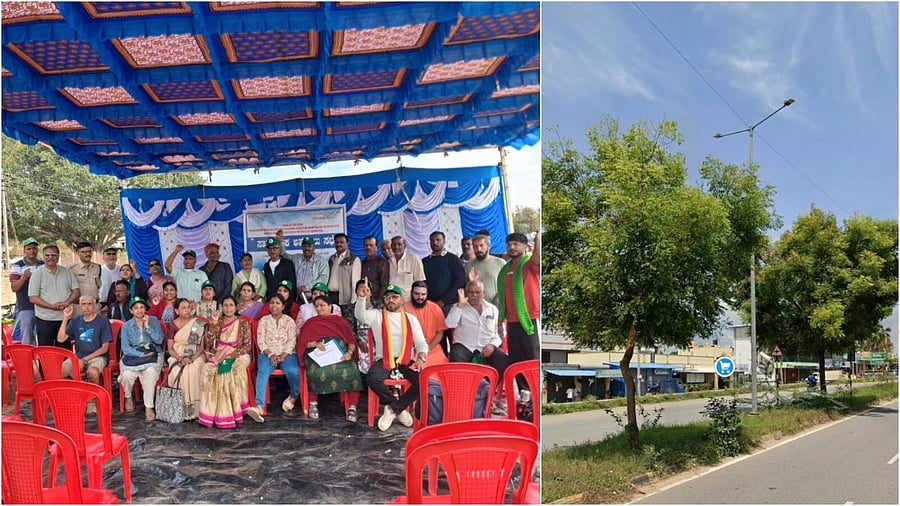
Opposition has intensified in Mysuru against the proposed cutting of trees for the construction of a flyover at Devalapura Cross on the city’s ring road, with residents, environmental activists, and citizen groups voicing strong resistance to what they describe as “avoidable ecological damage.” The issue has sparked a wider debate on urban planning priorities, environmental responsibility, and the cost at which infrastructure development is being pursued in one of Karnataka’s greenest cities.

Devalapura Cross, located along the outer ring road, is lined with mature avenue trees that have stood for decades, offering shade, regulating temperature, and serving as a natural buffer against pollution. The proposed flyover project, aimed at easing traffic congestion at the busy junction, is expected to require the removal of a significant number of these trees. This has triggered protests and petitions from local residents who argue that the project prioritises speed over sustainability.

Urban planners have pointed out that Mysuru’s ring road was originally designed to distribute traffic evenly and reduce pressure on the city core. They argue that repeated additions of flyovers along the ring road could gradually convert it into a high-speed corridor, undermining its original purpose. Such transformations, they warn, often marginalise pedestrians, cyclists, and local traffic, making roads less inclusive. At Devalapura Cross, residents fear that a flyover could physically divide neighbourhoods and reduce accessibility for nearby villages that depend on the junction for daily movement.

Environmental scientists have also flagged the microclimatic impact of tree removal in this zone. The Devalapura Cross stretch is known to remain relatively cooler due to dense tree cover, especially during peak summer months. Removing these trees, experts say, could increase surface temperatures and worsen the urban heat island effect. This would not only affect commuters but also nearby residential areas, schools, and small businesses that rely on natural shade to cope with rising temperatures.

There is growing concern that the flyover proposal reflects a larger pattern of infrastructure-first planning without adequate environmental assessment. Activists argue that environmental impact assessments are often treated as procedural formalities rather than meaningful evaluations. In the case of Devalapura Cross, they demand a detailed, publicly accessible study outlining traffic data, environmental costs, and alternative solutions. Without such transparency, they say, public trust in planning authorities will continue to erode.Opposition to cut trees for flyover at Devalapura Cross on ring road in  Mysuru - The Hindu

Several former city planners have recalled that Mysuru once prioritised tree-lined boulevards and human-scale roads as part of its planning philosophy. They warn that abandoning these principles could strip the city of its distinct identity. Unlike megacities where flyovers dominate the skyline, Mysuru has traditionally balanced mobility with aesthetics and ecology. The current opposition, they say, reflects citizens’ desire to protect this legacy rather than resist development outright.

Local traders operating near Devalapura Cross have expressed mixed reactions. While some hope a flyover might ease congestion and improve access, others worry about long-term disruption during construction. Past infrastructure projects in the city have led to prolonged road closures, reduced footfall, and loss of business. Shop owners fear that extended construction activity could hurt livelihoods, especially if the benefits of the flyover are not immediately visible.

Traffic experts have suggested that congestion at Devalapura Cross may be more episodic than structural. According to them, peak-hour traffic spikes are often linked to school timings, office hours, or festival seasons. Targeted measures such as staggered timings, better signal coordination, and enforcement against illegal parking could address these spikes effectively. They caution that building a flyover for intermittent congestion risks overengineering the problem.

Citizen groups have also raised questions about financial priorities. They argue that funds allocated for flyover construction could instead be invested in improving public transport, pedestrian infrastructure, and cycling networks. Mysuru’s bus connectivity, they say, still has scope for improvement, particularly in outer areas. Strengthening public transport could reduce private vehicle dependence, easing congestion without major ecological costs.

The issue has begun to attract political attention, with some local representatives expressing support for citizens’ concerns. While avoiding outright opposition to the flyover, they have called for dialogue and reconsideration of tree felling. Political observers note that environmental issues increasingly influence urban voters, particularly in cities like Mysuru where quality of life is a key concern. How leaders respond could have electoral implications in the future.

Legal experts point out that tree felling for infrastructure projects often invites scrutiny under existing environmental and municipal laws. If proper permissions, public hearings, or compensatory measures are found lacking, projects can face legal challenges. Activists have hinted that they may explore legal options if authorities proceed without addressing concerns. Such litigation, they warn, could delay the project and increase costs, making early consultation a more pragmatic approach.

As the debate continues, Devalapura Cross has become a symbol of a larger question facing Mysuru: what kind of growth does the city want to pursue. The outcome will likely influence future infrastructure decisions and citizen engagement across the city. For now, residents remain determined to make their voices heard, insisting that development must respect both people and nature. Whether the flyover plan is modified, delayed, or implemented unchanged will reveal how Mysuru balances progress with preservation.

Citizens opposing the move say they were neither adequately consulted nor provided with transparent details about the number of trees to be felled or the alternatives explored. Several resident welfare associations have demanded that authorities place the project details in the public domain and hold consultations before proceeding with any tree cutting. For many locals, the trees are not merely part of the landscape but integral to Mysuru’s identity as a heritage city.

Environmental groups have also raised concerns that repeated infrastructure projects are steadily eroding Mysuru’s green cover. They warn that incremental losses, when viewed collectively, could have long-term consequences for the city’s climate resilience, groundwater levels, and overall livability.Mysuru's Devalapura flyover: Activists oppose felling of 48 Neem trees for ring  road project

CITIZEN PROTESTS AND ENVIRONMENTAL CONCERNS

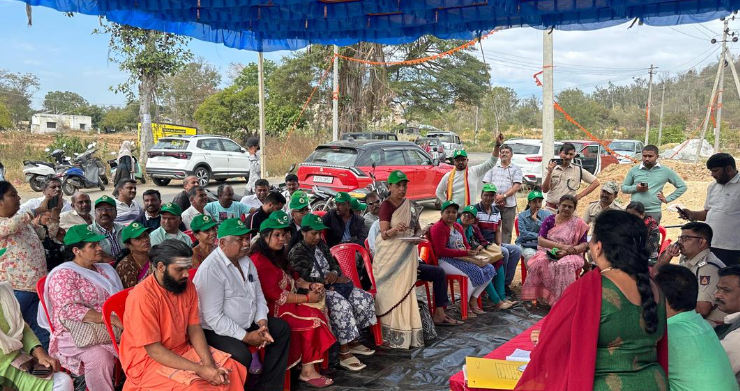
Protests near Devalapura Cross have seen participation from students, senior citizens, environmentalists, and daily commuters. Demonstrators held placards calling for “development without destruction” and demanded that the flyover plan be reconsidered. Some protesters tied ribbons around trees as a symbolic gesture, appealing to authorities to treat them as living assets rather than obstacles.

Activists argue that flyovers often offer only temporary relief from congestion and encourage more vehicular traffic in the long run. They claim that alternative solutions such as better traffic management, signal optimisation, and improved public transport could reduce congestion without sacrificing trees. Mysuru, they point out, has historically adopted more measured urban growth compared to larger cities, and residents fear that uncritical adoption of flyover-centric planning could change that character.

Environmental experts have emphasised the ecological role of mature trees, noting that saplings planted as compensatory afforestation cannot replace the benefits of decades-old trees for many years. They stress that tree transplantation, often cited as a mitigation measure, has limited success rates and should not be treated as a guaranteed solution.

Several citizens have also questioned the choice of location for the flyover, arguing that traffic congestion at Devalapura Cross is not severe enough to justify such a large intervention. They claim peak-hour congestion could be addressed through better enforcement and minor road redesigns rather than major construction.Karnataka News: Permit sought to clear 48 neem trees for Mysuru flyover

OFFICIAL STAND AND DEVELOPMENT ARGUMENTS

Officials associated with the project have defended the flyover, stating that traffic volume on the ring road has increased significantly due to urban expansion and growing vehicle ownership. According to them, Devalapura Cross has emerged as a bottleneck, particularly during peak hours, and the flyover is part of a long-term plan to ensure smoother traffic flow around the city.

Authorities have maintained that all required permissions will be obtained and that environmental norms will be followed. They have assured that compensatory afforestation will be undertaken in accordance with existing guidelines. However, critics argue that such assurances have become routine and rarely address the deeper ecological impact of losing mature trees within city limits.

Some officials have suggested that delaying infrastructure projects due to environmental concerns could hamper economic growth and increase traffic-related pollution caused by idling vehicles. They contend that well-planned flyovers can reduce travel time and fuel consumption. This argument, however, has not convinced protesters, who counter that induced demand often negates such benefits over time.

A BROADER DEBATE ON URBAN FUTURE

The Devalapura Cross controversy has reignited a broader conversation in Mysuru about the city’s development trajectory. Urban planners note that Mysuru stands at a crossroads, balancing its heritage and green legacy with pressures of modernisation. Decisions taken now, they say, will shape the city’s character for decades to come.

Many citizens have urged the government to adopt participatory planning processes that involve residents from the earliest stages of project design. They argue that inclusive decision-making could help identify solutions that meet mobility needs while preserving environmental assets. Suggestions such as redesigning junctions, restricting heavy vehicles during peak hours, and enhancing public transport connectivity have gained traction during discussions.

The issue has also found resonance on social platforms, with many Mysuru residents expressing emotional attachment to the trees at Devalapura Cross. For them, the opposition is not just about one flyover but about preserving a way of life that values balance over unchecked growth.

As authorities weigh their next steps, the standoff reflects a deeper tension between development and conservation that many Indian cities face. Whether the flyover project proceeds as planned or is modified will serve as a signal of how Mysuru chooses to define progress. For now, the trees at Devalapura Cross stand as silent witnesses to a city grappling with the cost of development and the value of its green heritage.

Follow: Karnataka Government

Also read: Home | Channel 6 Network – Latest News, Breaking Updates: Politics, Business, Tech & More