Earthquake in Kolkata 2025: On the morning of November 21, 2025, Kolkata and several adjoining districts of South Bengal were shaken by tremors originating from a 5.7‑magnitude earthquake in Bangladesh. The epicentre was located near Narsingdi, about 13–14 km south‑southwest of the Ghorashal area, at a shallow depth of 10 km. The quake struck at 10:08 AM IST, according to both the United States Geological Survey (USGS) and the European‑Mediterranean Seismological Centre (EMSC).
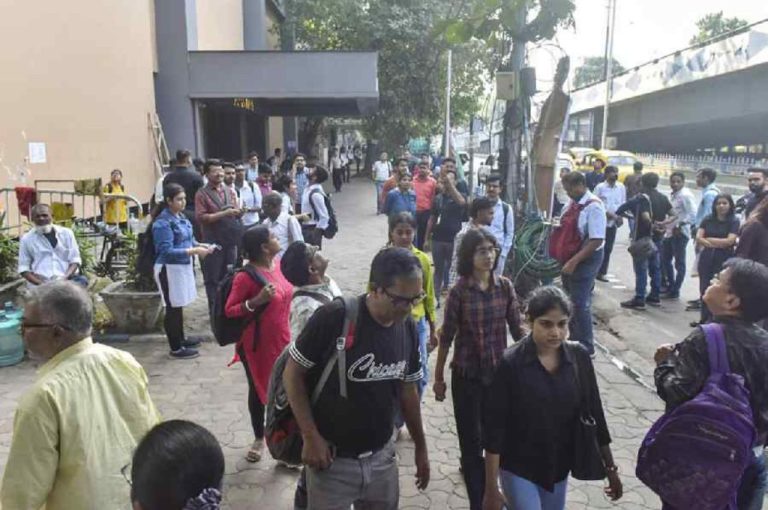
Though the tremors lasted only about 20 seconds, they caused widespread panic. Residents rushed out of homes, office workers evacuated buildings, and social media was flooded with accounts of swinging fans and shaking furniture.
2. Seismological Details: Understanding the Quake
Magnitude: 5.7 on the Richter scale.
Depth: 10 km (shallow quakes cause stronger surface tremors).
Location: Near Narsingdi, Bangladesh.
Timing: 10:08 AM IST.
Agencies reporting: USGS, EMSC, National Centre for Seismology (India).
Shallow earthquakes like this one often produce more noticeable shaking even if the magnitude is moderate, explaining why Kolkata felt such strong tremors despite being outside Bangladesh.
3. Impact in Kolkata and South Bengal
Residents across Kolkata, Salt Lake, and Sector V reported intense shaking.
Fans and furniture visibly moved.
Tremors lasted 20–30 seconds in some areas.
Panic led to mass evacuations from offices and schools.
Social media users described it as “small quake but big panic.”
Despite the alarm, no immediate casualties or major structural damage were reported.
4. Regional Seismic Vulnerability
South Asia lies in a seismically active zone due to the collision of the Indian and Eurasian plates. Bangladesh, West Bengal, and the Northeast are particularly vulnerable because of:
Dense population: High risk of casualties in urban centres.
This quake followed two moderate earthquakes earlier the same day in Pakistan and Afghanistan, highlighting the region’s seismic instability.
5. Public Reaction and Panic
Eyewitness accounts show the psychological impact of even moderate quakes:
Workers in Sector V IT hub evacuated offices.
Residents in Salt Lake reported fans and sofas shaking.
Social media amplified panic, with users posting videos of swinging fixtures.
This underscores the need for public awareness campaigns on earthquake safety.
6. Government and Institutional Response
National Centre for Seismology (NCS): Confirmed tremors across Bengal.
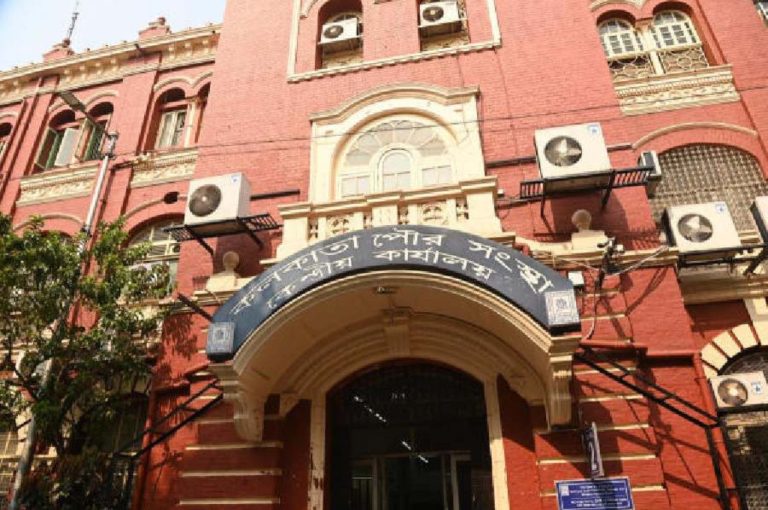
Kolkata Municipal Corporation (KMC): Monitored for damage reports.
Disaster Management Authorities: Issued advisories on preparedness.
Though no casualties were reported, the event served as a wake‑up call for disaster readiness.
7. Preparedness Challenges in Kolkata
Kolkata faces unique risks:
Old buildings: Many colonial‑era structures are vulnerable.
High population density: Evacuation is difficult.
Limited drills: Few residents know safety protocols.
The tremors highlight the urgent need for earthquake‑resistant infrastructure and public drills.
8. Lessons from Global Best Practices
Countries like Japan have invested heavily in:
Earthquake‑resistant construction codes.
Public education campaigns.
Early warning systems.
India, and specifically West Bengal, can adapt these practices to reduce vulnerability.
9. Broader Implications
The quake raises important questions:
How prepared is Kolkata for a stronger earthquake?
Are building codes being enforced?
Is public awareness sufficient?
The answers will determine whether future tremors remain mere scares or escalate into disasters.
10. Conclusion
The Earthquake in Kolkata 2025 was a reminder of the region’s seismic vulnerability. Though no casualties occurred, the panic it caused shows the gap in preparedness. Strengthening infrastructure, enforcing building codes, and educating citizens are essential steps to ensure safety in future quakes.
🔗 Government External Links
For further reading and official updates, here are relevant government sources:
Birth Certificates for Orphans in Kolkata: A recent query raised before the Kolkata Municipal Corporation (KMC) regarding the issuance of birth certificates for orphans has placed the spotlight firmly on long-standing gaps in West Bengal’s documentation processes for vulnerable children. Adoption agencies and child rights organisations are seeking clarity on how civic bodies should handle birth registration when no parental details exist—a situation increasingly common in cases of abandonment or rescue by authorities.
SECTION 1: WHY BIRTH CERTIFICATES MATTER FOR ORPHANS
1.1 Birth Certificate as a Fundamental Legal Document
Birth certificates determine access to:
Government schemes
Education systems
Healthcare
Aadhaar
Legal identity and citizenship indicators
For children without known parentage, these certificates become the first and often only legal proof of their existence.
1.2 Birth Certificates for Orphans in Kolkata: The Consequences of Being Undocumented
Child rights experts emphasise that lack of documentation leads to:
Exclusion from welfare programs
Difficulty accessing education
Barriers in adoption
Lifetime challenges in securing jobs or government IDs
SECTION 2: THE CASE THAT TRIGGERED THE DEBATE
2.1 Adoption Agency’s Request and KMC’s Query
The current dispute arose when an adoption agency sought a birth certificate for an abandoned infant with unknown parental details. KMC, following standard protocol, asked for parental information or hospital records—documents impossible to produce in such cases.
2.2 Why Civic Bodies Hesitate
Officials argue that birth records form the legal backbone of civil registration systems. They worry that inaccurate entries could affect demographic data and national documentation databases.
SECTION 3: LEGAL FRAMEWORK AND POLICY AMBIGUITIES
3.1 What the Registration of Births & Deaths Act, 1969 Says
The Act allows:
Delayed registration
Late entries
But does not clearly specify steps when parental identity is completely unknown.
3.2 Role of Child Welfare Committee (CWC)
Under the Juvenile Justice Act:
CWC certifies a child’s orphan/abandoned status
Their order should carry legal authority
CWC documents should ideally suffice for registration
3.3 The Gap Between Law and Implementation
Despite legal safeguards, municipal interpretations vary widely. Without explicit state-level orders, officials choose caution—resulting in major delays.
SECTION 4: CHILD RIGHTS PERSPECTIVE AND GLOBAL PRACTICES
4.1 Activists Demand a Human-Centric Approach
Child rights groups say:
Children should not be penalised due to lack of parental information
CWC documentation should be accepted as primary proof
“Not Known” entries should be permitted for parental fields
4.2 International Best Practices
In many countries:
Institutional care documents suffice for birth registration
Courts or welfare authorities can authorise entries
Children are not denied identity documents due to missing lineage data
SECTION 5: SYSTEMIC CHALLENGES IN WEST BENGAL
5.1 Digital Birth Registration and the Orphan Exception
West Bengal has modernised the civil registration system, but:
Digital platforms cannot generate records without input data
System fails to address cases where no information exists
5.2 Inconsistent Administrative Interpretation
Adoption agencies face varying demands across different municipal offices, creating unpredictability and delays.
5.3 The Impact on Adoption Timelines
Under CARA guidelines, complete documentation is mandatory.
Birth certificate delays:
Stall adoption eligibility
Prolong institutionalisation
Negatively impact child development
SECTION 6: THE HUMAN COST OF DOCUMENTATION DELAYS
6.1 Psychological Impact on Children
Studies show:
Longer institutional stays slow emotional and cognitive development
Children miss critical bonding periods that adoptive families could provide
6.2 Legal Experts’ Observations
Courts have consistently upheld a child’s right to:
Identity
Dignity
Non-discrimination
Yet, administrative obstacles continue to override these rights in practice.
SECTION 7: WHAT STAKEHOLDERS ARE PROPOSING
7.1 Suggested Administrative Solutions
NGOs suggest:
State-wide SOP for orphan birth registration
Acceptance of CWC orders as primary documents
Dedicated municipal help desks
Training programs for officials
Digital orphan register to auto-trigger documentation
7.2 Proposal for a Multi-Stakeholder Task Force
Some municipal officials propose a task force with:
Health Department
KMC
Adoption agencies
WCD Department
Child rights experts
This would ensure legally sound and child-friendly processes.
SECTION 8: NATIONAL AND INTERNATIONAL OBLIGATIONS
8.1 UN Convention on the Rights of the Child (UNCRC)
India’s commitment mandates:
Every child must have a name and identity at birth
States must prevent discrimination based on circumstances of birth
8.2 Supreme Court Directives on Child Identity Rights
The judiciary has repeatedly asked governments to:
Reduce procedural hurdles
Provide protective rights to abandoned children
SECTION 9: ADMINISTRATIVE RESPONSE AND FUTURE DIRECTIONS
9.1 KMC’s Position
KMC officials say they:
Are not against simplifying the process
Need clearer state guidelines to avoid legal challenges
Welcome discussions with welfare bodies
9.2 State Government Review Underway
Departments involved include:
Health & Family Welfare
Home Affairs
Women & Child Development
Sources indicate that interdepartmental discussions are likely soon.
9.3 Potential for Landmark Policy Reform
If a uniform state guideline is issued, it could transform:
Adoption timelines
Identity documentation framework
Rights protection for thousands of orphans
SECTION 10: BROADER SOCIAL AND LEGAL IMPLICATIONS
10.1 Debate Highlights Larger Issues of Identity and Citizenship
The case forces society to question how:
Children without families are assimilated into legal systems
10.2 Need for a Flexible and Inclusive Documentation System
Scholars argue the need for documentation frameworks that recognise:
Rescued children
Trafficking survivors
Abandoned newborns
Children born outside institutions
SECTION 11: WHAT HAPPENS NEXT
11.1 Advocate Groups Prepare Formal Submissions
Child rights organisations will present:
JJ Act provisions
CARA and MWCD guidelines
Constitutional rights arguments
11.2 KMC Expected to Revisit the Case
Officials hint toward:
Reviewing procedural expectations
Engaging with WCD Department
Exploring legal leeway
11.3 Outcome Will Influence Documentation Across West Bengal
Whatever the decision, it will set a precedent for:
All municipal bodies
All district-level registrations
All childcare institutions
CONCLUSION: A PIVOTAL MOMENT FOR ORPHAN RIGHTS IN WEST BENGAL
The issue of birth certificates for orphans is far more than an administrative complication. It touches fundamental rights of identity, dignity, equality, and future opportunity. As West Bengal transitions to stronger digital and welfare governance systems, activists hope this case becomes the turning point for long-needed reforms.
Whether KMC and the state government deliver a clear, compassionate, and uniform policy will determine whether thousands of institutionalised children receive the fair start in life they deserve.
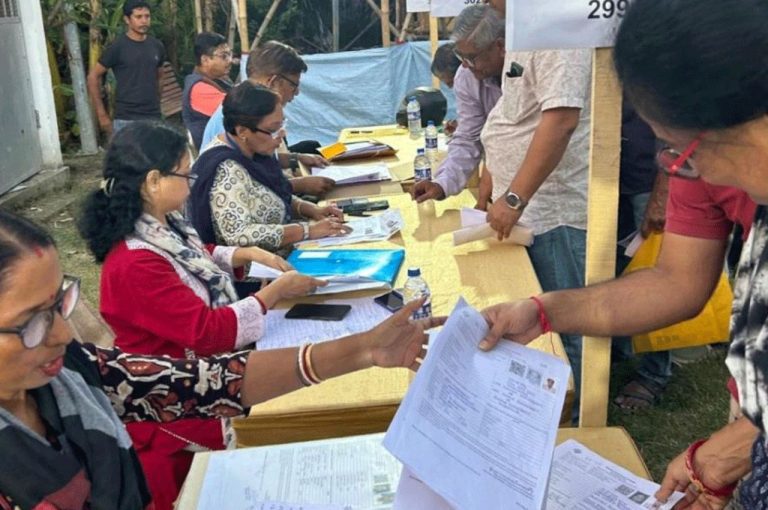
BLO Workload Crisis in India: The Special Intensive Revision (SIR) of electoral rolls is a nationwide exercise designed to update voter lists before major elections. In 2025, the Election Commission of India (ECI) launched the SIR across 12 states and Union Territories, including West Bengal. While the goal is to ensure accuracy and inclusivity, the process has come under fire after reports of BLO deaths allegedly linked to work pressure.
The article from The Telegraph India highlights the human cost of this exercise, with BLOs describing unrealistic workloads, malfunctioning apps, harassment from voters, and lack of institutional support.
2. What is the SIR?
The Special Intensive Revision involves:
Distribution of enumeration forms to households.
Verification of voter details by BLOs.
Digitisation of collected data using mobile apps.
Correction of errors and inclusion of new voters.
BLOs are appointed under Section 13B(2) of the Representation of People Act, 1950, drawn from teachers, clerical staff, anganwadi workers, postmen, and other government employees.
3. BLO Workload Crisis in India: Reported Deaths
At least five BLOs have died during the SIR:
Two in West Bengal
One each in Kerala, Rajasthan, and Gujarat
One case cited is that of Rameshbhai Parmar, a Gujarat schoolteacher who died of a heart attack after working late into the night on BLO duties. His family attributed the death to excessive work pressure.
4. BLO Testimonies
BLOs interviewed described:
Unrealistic workloads: Hundreds of forms to distribute and collect.
Constant phone calls: Voters call from early morning until late at night.
Malfunctioning apps: Slow, unresponsive, and prone to errors.
Harassment: Verbal abuse from booth‑level agents of political parties.
Health toll: Skipping meals, working double shifts, exhaustion.
One BLO, a school principal in Kolkata, said she had been eating lunch as late as 6 p.m. due to workload.
5. Political Response
West Bengal Chief Minister Mamata Banerjee wrote to the Chief Election Commissioner demanding a halt to the SIR, citing:
Unrealistic workload
Impossible timelines
Inadequate support for online data entry
She warned that the credibility of the electoral process was at risk.
Meanwhile, the Bengal Chief Electoral Officer issued show‑cause notices to seven BLOs for alleged lapses in digitisation, further intensifying tensions.
6. Governance Challenges
The crisis highlights systemic issues:
Understaffing: BLOs juggle regular duties with SIR responsibilities.
Digital divide: Apps malfunction in rural areas with poor connectivity.
Accountability gaps: BLOs face punishment for delays despite lack of support.
Political pressure: BLOs are caught between voters, parties, and supervisors.
7. Broader Implications
The controversy raises questions about:
Human cost of electoral administration
Balance between accuracy and feasibility
Need for better planning and technology support
Risk of undermining voter confidence
8. Historical Context
India has faced similar controversies in past electoral roll revisions, with BLOs often complaining of overwork and inadequate compensation. The current crisis is notable because it has led to deaths across multiple states, making it a national issue.
9. Recommendations
To prevent further tragedies:
Reduce workloads: Assign fewer households per BLO.
Improve technology: Fix app glitches and provide offline options.
Support staff: Hire temporary workers to assist BLOs.
Health safeguards: Ensure reasonable hours and medical support.
Transparency: Publicly acknowledge challenges and adjust timelines.
10. Conclusion
The SIR exercise, intended to strengthen democracy, has instead exposed serious flaws in electoral administration. The deaths of BLOs underscore the need for urgent reforms. Without addressing work pressure and systemic inefficiencies, the credibility of India’s electoral process may suffer.
🔗 Government External Links
For further reading and verification, here are official government sources relevant to this issue:
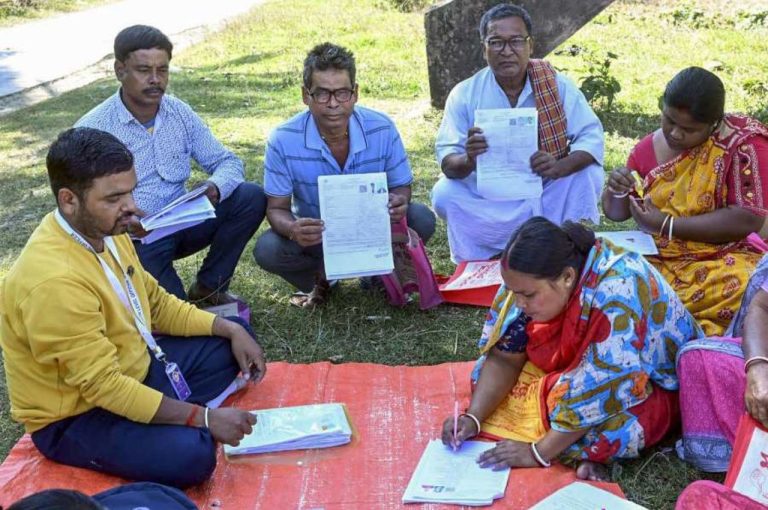
West Bengal Voter Roll Drive 2025: As West Bengal prepares for the 2026 Assembly elections, the Election Commission of India (ECI) has launched a Special Intensive Revision (SIR) of electoral rolls. This massive exercise aims to ensure that every eligible voter is included, errors are corrected, and the rolls are digitised for transparency.
The article highlights that 7.64 crore enumeration forms have already been distributed across households, covering 99.74% of bona fide voters. Of these, 2.45 crore forms (32.01%) have been digitised.
This initiative reflects both the scale of India’s democracy and the challenges of maintaining accurate voter rolls in a state with over 100 million residents.
2. West Bengal Voter Roll Drive 2025: Electoral Roll Revision in India
Electoral rolls are the backbone of free and fair elections. In India, they are revised annually and before major elections. The Special Intensive Revision (SIR) is a more thorough process, involving:
House‑to‑house verification by Booth Level Officers (BLOs).
Distribution of enumeration forms to every household.
Collection of updated information (new voters, address changes, deletions).
Digitisation of data for transparency and efficiency.
3. Scale of the West Bengal Exercise
Forms distributed: 7,64,35,236.
Coverage: 99.74% of bona fide voters.
Digitisation completed: 2.45 crore forms (32.01%).
Timeline: Began November 4, 2025; final stretch underway.
This scale underscores the logistical complexity of managing elections in a populous state.
4. Challenges Faced
4.1 Human Resource Pressure
BLOs are tasked with visiting households, distributing forms, and verifying data. Reports suggest they face immense workload, sometimes described as “two years’ work in a month.”
4.2 Data Accuracy
Errors in spelling, age, or address can disenfranchise voters. The ECI has introduced app‑based corrections, but implementation remains uneven.
4.3 Digitisation Bottlenecks
Uploading millions of forms requires robust infrastructure. Delays in digitisation can affect the final roll publication.
5. Technology Interventions
The ECI has tweaked the BLO app to allow corrections at the booth level. This reduces dependency on district offices and speeds up error resolution.
Digitisation also ensures:
Transparency: Citizens can check their status online.
Efficiency: Faster roll preparation.
Accountability: Reduced scope for manipulation.
6. Political Context
Electoral rolls are politically sensitive. Allegations of exclusion or inclusion of fake voters often arise. In West Bengal, where elections are fiercely contested, the accuracy of rolls is crucial.
The SIR is therefore not just an administrative exercise but a political battleground.
7. Implications for 2026 Elections
Higher voter confidence if rolls are accurate.
Reduced disputes over bogus voting.
Greater participation from newly enrolled voters, especially youth.
8. Historical Perspective
West Bengal has a history of electoral controversies, including allegations of rigging and violence. The current SIR aims to restore faith in the process by ensuring near‑universal coverage and digitisation.
9. Governance Lessons
The exercise highlights:
The importance of inter‑departmental coordination (ECI, state government, IT infrastructure).
The need for adequate staffing and support for BLOs.
The role of technology in modern elections.
10. Conclusion
The distribution of 7.64 crore enumeration forms and digitisation of one‑third of them marks a significant milestone in West Bengal’s voter roll preparation. While challenges remain, the initiative reflects India’s commitment to inclusive democracy.
The success of this drive will directly impact the credibility of the 2026 Assembly elections, shaping the political future of the state.
🔗 Government External Links
For further reading and verification, here are official government sources relevant to this issue:
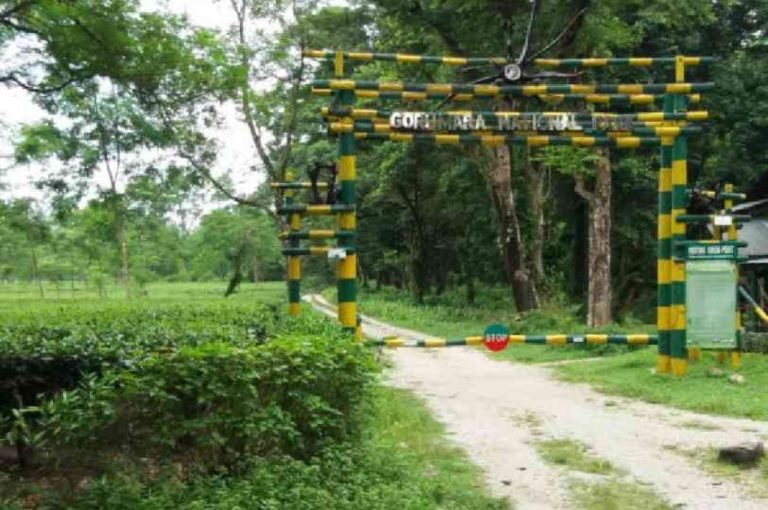
Preventing Animal Deaths on Highways: Highways cutting through forested areas in India often become deadly corridors for wildlife. The article highlights a plea by wildlife organisations in West Bengal to the Forest Department, urging immediate action to prevent recurring animal deaths along highways near Gorumara National Park.
This issue is not isolated. Across India, road networks intersect with protected areas, leading to habitat fragmentation, vehicle collisions, and biodiversity loss. The plea reflects growing frustration among conservationists who believe that policy measures and enforcement remain inadequate.
2. Preventing Animal Deaths on Highways: Gorumara National Park
Located in Jalpaiguri district, West Bengal, Gorumara is famous for its Indian one‑horned rhinoceros, elephants, bison, and diverse birdlife.
The park is surrounded by tea gardens, villages, and highways, making it vulnerable to human–wildlife conflict.
Highways near the park, especially those connecting Lataguri, Chalsa, and Malbazar, witness heavy traffic, including trucks and tourist vehicles.
The proximity of highways to forest zones creates a constant risk of animal crossings, leading to fatalities.
3. Wildlife Organisations’ Plea
The organisations have demanded:
Speed restrictions on highways passing through forested zones.
Installation of signboards warning drivers about wildlife crossings.
Night traffic regulation, as most animal movements occur after dusk.
Construction of underpasses or overpasses to allow safe crossings.
Increased patrolling by forest guards to monitor traffic and prevent reckless driving.
Their plea is rooted in repeated incidents of elephants, leopards, and deer being killed by speeding vehicles.
4. Broader Issue: Road Ecology in India
India has one of the largest road networks in the world. While highways boost connectivity, they also fragment habitats.
Key Problems
Wildlife mortality: Thousands of animals die annually due to road collisions.
Noise and pollution: Disturbs breeding and feeding patterns.
Tourism pressure: Increased traffic in eco‑sensitive zones.
5. Case Studies in West Bengal
Gorumara & Chapramari: Frequent elephant deaths due to train and road collisions.
Buxa Tiger Reserve: Roads through forest corridors threaten leopards and deer.
Sundarbans: Though less road‑dense, boat traffic poses similar risks to aquatic species.
These examples show that transport infrastructure often clashes with conservation goals.
6. Government Responsibility
The West Bengal Forest Department is tasked with protecting wildlife, but coordination with the Public Works Department (PWD) and Transport Department is essential.
Measures Needed
Wildlife crossings: Overpasses and underpasses designed for elephants and deer.
Speed enforcement: Cameras and fines for speeding in forest zones.
Awareness campaigns: Educating drivers and tourists.
Data collection: Monitoring animal deaths to design targeted interventions.
7. National Policy Framework
India has several policies addressing this issue:
Wildlife Protection Act, 1972 – prohibits harm to protected species.
Eco‑Sensitive Zone Guidelines – restricts development near protected areas.
National Green Tribunal (NGT) rulings – have ordered restrictions on night traffic in sensitive areas.
MoEFCC guidelines – recommend mitigation structures like underpasses.
Despite these frameworks, implementation gaps remain wide.
8. International Comparisons
Countries like the US and Canada have invested in wildlife crossings (e.g., Banff National Park in Canada). These have reduced animal deaths by over 80%. India has begun similar projects (e.g., underpasses in Madhya Pradesh for tigers), but West Bengal lags behind.
9. Ecological Consequences
Animal deaths on highways are not just individual tragedies; they threaten population viability.
Elephants: Slow‑breeding species; each death impacts herd stability.
Deer and smaller mammals: Losses affect prey–predator balance.
10. Recommendations
Based on the plea and global best practices, the following steps are critical:
Immediate speed limits in forest stretches.
Wildlife crossings funded jointly by Centre and state.
Night traffic bans in sensitive corridors.
Community involvement: Local villagers and tea garden workers can help monitor.
Technology use: Drones and sensors to detect animal movement.
11. Conclusion
The plea by wildlife organisations is a wake‑up call. Preventing animal deaths on highways requires political will, inter‑departmental coordination, and investment in infrastructure. Gorumara’s situation reflects a larger national challenge: balancing development with conservation.
If ignored, the highways of North Bengal will continue to be death traps for wildlife, undermining India’s biodiversity commitments.
🔗 Government External Links
For further reading and verification, here are official government sources relevant to this issue:
Ministry of Environment, Forest and Climate Change (MoEFCC):https://moef.gov.in
North Bengal Development Crisis: The political landscape of West Bengal has long been defined by tensions between the ruling Trinamool Congress (TMC) and the Bharatiya Janata Party (BJP). The article from The Telegraph India highlights a particularly sharp dispute over development in North Bengal, a region often described as marginalized in terms of state resource allocation.
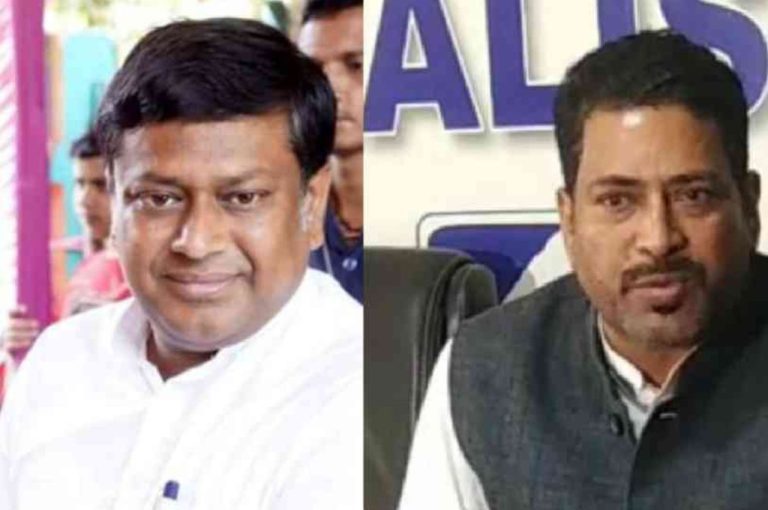
At the heart of the controversy are allegations by BJP leaders Sukanta Majumdar (Balurghat MP and Union minister) and Shankar Ghosh (Siliguri MLA) that the Mamata Banerjee government has shown apathy toward North Bengal, mismanaging central funds, and obstructing local development projects.
This issue is not merely about budgetary numbers; it reflects deeper questions of regional equity, governance, healthcare access, and political rivalry.
2. North Bengal Development Crisis: North Bengal’s Strategic Importance
North Bengal comprises eight districts: Darjeeling, Kalimpong, Jalpaiguri, Alipurduar, Cooch Behar, Uttar Dinajpur, Dakshin Dinajpur, and Malda. Together, they account for nearly 18% of West Bengal’s population, yet according to BJP leaders, they receive only 0.23% of the state’s budget allocation.
Why North Bengal Matters
Geopolitical location: Borders with Bhutan, Nepal, and Bangladesh make it strategically important.
Cultural diversity: Home to Nepali, Rajbanshi, Bengali, and tribal communities.
Economic potential: Tea, tourism, agriculture, and cross-border trade.
Political volatility: The region has seen demands for separate statehood (e.g., “Greater Cooch Behar” movement, Gorkhaland agitation).
Thus, neglecting North Bengal is not just a matter of underdevelopment — it risks political instability and separatist sentiment.
3. BJP’s Allegations Against TMC
3.1 Budgetary Allocation
Sukanta Majumdar argued that the allocation for a single flyover in Kolkata exceeds the total allocation for North Bengal’s eight districts. This stark comparison is meant to highlight the imbalance in resource distribution.
3.2 Healthcare Deficiencies
North Bengal Medical College & Hospital lacks specialists like neurosurgeons.
Patients, including TMC leaders themselves, often travel to Kolkata or other states for treatment.
Central funds of ₹113.40 crore (for medical colleges in Cooch Behar and Raiganj) and ₹112 crore (for a trauma centre in Malda) were allegedly not utilized properly.
3.3 Infrastructure Projects
Majumdar pointed to central projects such as:
Elevated road in Siliguri.
Development of Bagdogra Airport.
He claimed the state government failed to complement these with its own initiatives.
3.4 Political Obstruction
Shankar Ghosh accused the Siliguri Municipal Corporation (SMC), controlled by TMC, of blocking projects funded by his MLA development fund. These included road and fencing projects. He warned of protests in the Assembly if obstruction continued.
4. TMC’s Position
While the article focuses on BJP’s criticism, TMC has historically argued that:
The state faces financial constraints due to limited revenue and dependence on central transfers.
BJP exaggerates figures to create a narrative of neglect.
Development projects are ongoing, but political interference slows progress.
Mamata Banerjee has also opposed the Centre’s move to appoint an interlocutor for a permanent solution in the Darjeeling hills, claiming it undermines state authority.
5. Healthcare Crisis in North Bengal
Healthcare is a recurring theme in the debate. Despite the establishment of medical colleges, the lack of doctors and specialists undermines their utility.
Key Issues
Infrastructure without manpower: Buildings exist, but staffing is inadequate.
Referral culture: Patients are routinely referred to Kolkata.
Public vs. private divide: Wealthier families seek private care, while poorer households suffer.
This reflects a broader problem in Indian healthcare: capital expenditure without adequate operational planning.
6. Infrastructure Development
Infrastructure projects in North Bengal are often caught between central funding and state implementation.
Bagdogra Airport: Expansion funded by the Centre, but land acquisition and local coordination depend on the state.
Road projects: Elevated corridors in Siliguri are crucial for reducing congestion, but delays persist.
Rail connectivity: North Bengal is a gateway to the Northeast, making railway modernization vital.
The BJP accuses TMC of deliberate obstruction to deny credit to the Centre.
7. Political Implications
The dispute is not just administrative; it is deeply political.
BJP’s strategy: Position itself as the champion of North Bengal, highlighting neglect by TMC.
TMC’s counter: Paint BJP as opportunistic, using central funds as leverage.
Electoral stakes: In the 2021 Assembly elections, BJP won most seats in North Bengal, making it a battleground region.
The rhetoric of neglect feeds into identity politics, with some groups demanding autonomy or separate statehood.
8. Historical Context of Neglect
North Bengal has long felt marginalized compared to South Bengal (Kolkata and surrounding districts).
Colonial legacy: Infrastructure concentrated in Kolkata.
Post-independence: Industrialization bypassed North Bengal.
Thus, the current debate is part of a long-standing grievance.
9. Governance Challenges
The controversy highlights broader governance issues:
Centre–state relations: Disputes over fund utilization.
Transparency: Lack of clarity on how funds are spent.
Local autonomy: Municipal bodies vs. MLAs.
Healthcare planning: Infrastructure vs. manpower.
10. Conclusion
The article underscores a deep divide in West Bengal politics. For BJP, North Bengal is a symbol of TMC’s neglect. For TMC, it is a test of defending its governance record against accusations of apathy.
Ultimately, the issue reflects the struggles of regional equity in Indian federalism. North Bengal’s development is not just about numbers; it is about ensuring that marginalized regions receive fair treatment, healthcare access, and infrastructure support.
🔗 Government External Links
For further reading and verification, here are some official government sources relevant to the issues discussed:
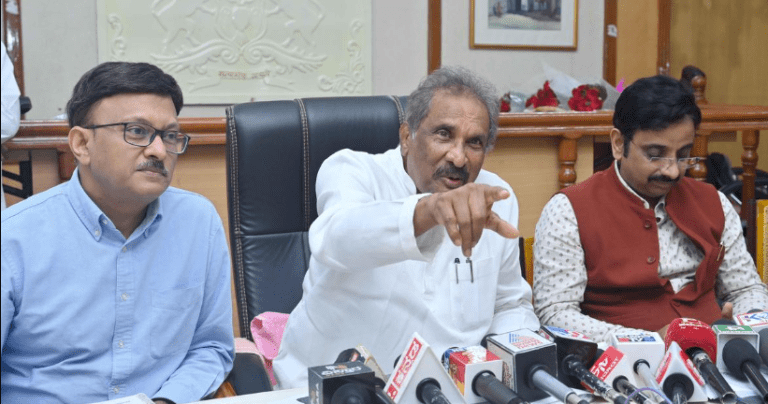
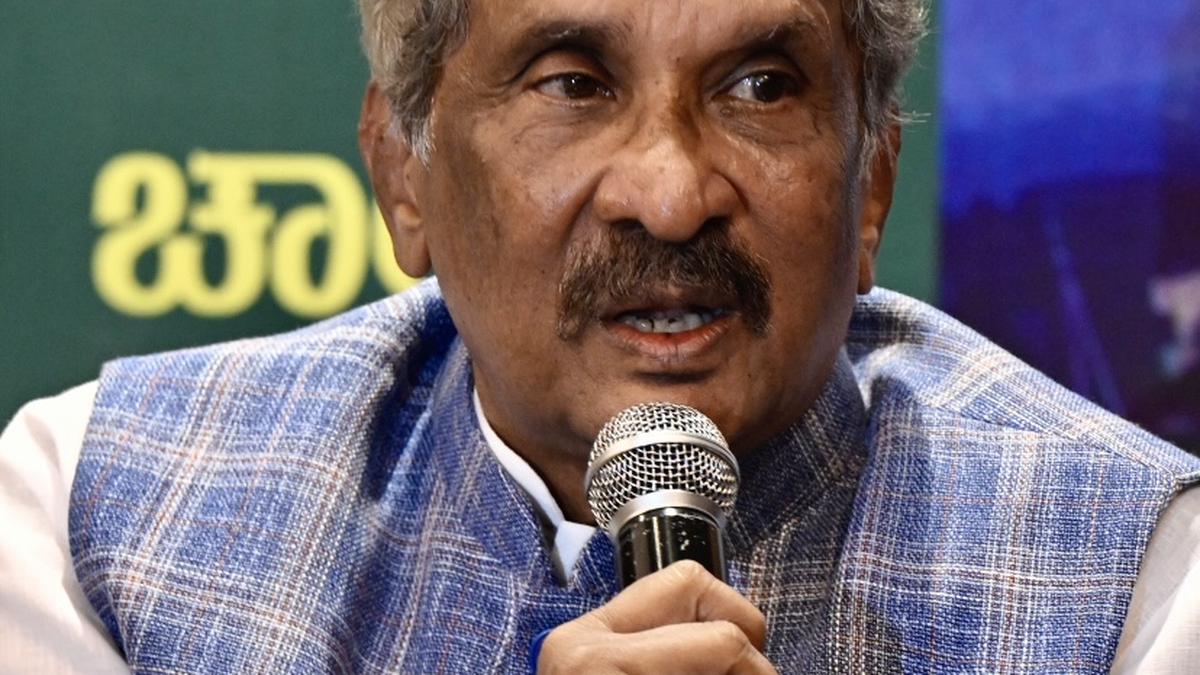
The Karnataka government has announced a concrete plan to fill thousands of vacant posts across all electricity supply companies in the state, offering a renewed sense of hope to engineers, technicians, and staff whose workload has sharply increased due to manpower shortages. Energy Minister K. J. George, speaking at a public interaction in Bengaluru, emphasised that the department would immediately begin the recruitment process to strengthen power distribution systems. His announcement comes at a crucial juncture where power supply demands have soared, technical challenges have intensified, and existing workers struggle with mounting responsibilities that affect their efficiency, safety, and morale.
George highlighted that the decision is not merely administrative, but a developmental necessity tied to Karnataka’s rising energy consumption. With the state expanding its industrial zones, accelerating digital infrastructure, boosting rural electrification, and increasing solar and wind energy installations, the energy department must now expand its human resources to keep pace with growing needs. The Minister acknowledged that inadequate staffing had delayed repairs, prolonged outages in rural areas, and imposed excessive burdens on technical teams, especially during monsoon disasters, transformer failures, and load management emergencies. The government, he said, must ensure that human infrastructure matches the scale of physical infrastructure.
Officials say that power companies, including BESCOM, MESCOM, HESCOM, GESCOM, and CESC, currently face major workforce deficiencies in engineering and field roles. These positions include assistant engineers, junior engineers, linemen, substation operators, meter readers, and administrative staff who support billing operations. Experts argue that without adequate staffing, reforms in modern power distribution—such as smart metering, renewable integration, and grid automation—cannot proceed effectively. The government is expected to clear recruitments in phases, allowing companies to function without disruptions while new hires receive training and safety orientation. The plan parallels recent reforms aimed at improving rural connectivity, reducing energy losses, and addressing widespread transformer overloads
Union leaders and employees welcomed the announcement, saying it brings long-awaited relief to front-line workers who risk their lives during routine maintenance and emergency repairs. Field technicians have been at the forefront of dangerous operations involving high-voltage lines, often working without sufficient manpower or advanced safety gear. Representatives from employee associations said that vacancies have turned emergencies into high-risk situations, with workers handling heavy line work that should require two or three people. The new recruitment drive, they hope, will reduce accident risks and support the creation of a more professional, well-equipped workforce capable of managing Karnataka’s increasingly complex power infrastructure.
Rising Demand, Shrinking Workforce: Why Staffing Became a Critical Crisis
One of the major factors forcing the government to accelerate hiring is the unprecedented expansion of electrification under various schemes. Over the past decade, Karnataka has achieved almost universal connectivity, bringing millions of new consumers into the grid. However, staffing levels have not increased in proportion to this growth, leaving existing employees to handle exponentially higher consumer loads. In rural districts, a single lineman frequently handles more than 10 villages, travelling long distances to resolve faults or complaints. Similarly, urban technicians often manage multiple substations, making timely monitoring and maintenance difficult.
Energy experts believe that Karnataka’s current energy infrastructure is transitioning from conventional systems to smart-grid operations, requiring specialised skills. The addition of rooftop solar units, electric vehicle charging points, underground cable works, smart meters, and high-capacity feeders demands trained personnel with technical expertise in digital and grid-synchronised systems. Without proper recruitment, power companies may struggle to upgrade systems efficiently. Universities and technical institutions affiliated with the government are expected to collaborate with power companies by offering skill-specific training modules, creating a future workforce that is capable of operating modernised networks with technological precision.
The Energy Department has also been facing criticism from consumers over power outages during peak demand seasons. Farmers have demanded consistent supply for irrigation pumps, while industries complain that even short interruptions disrupt manufacturing and cause financial losses. Consumer groups argue that delays in fixing local faults or replacing damaged transformers stem not only from budget constraints but from the lack of adequate workers. In certain villages, farmers have protested transformer breakdowns that remained unresolved for days due to insufficient manpower. The government hopes that hiring new technical staff will help reduce such delays, ensuring fair and efficient service for all categories of consumers.
Safety is another issue at the heart of staffing shortages. Power employees frequently encounter dangerous situations without adequate manpower, from climbing poles in rain to handling live wires with outdated protective gear. Industry observers point out that employee safety is often overshadowed by public expectations for fast restoration of electricity. Workers often risk electrocution, burns, and falls while conducting emergency maintenance. George affirmed that improving safety standards must go hand in hand with filling vacancies. Training programmes, modern protective equipment, and safety-compliance auditing may accompany new recruitment, helping companies develop a safety-first culture for field operations.
Public Expectations, Political Accountability, and the Future of Karnataka’s Energy Network
The hiring announcement has triggered discussions about how public expectations shape electricity policy. In urban centres such as Bengaluru, consumers prioritise uninterrupted power for commercial activities, household comfort, and digital services. Rural communities, meanwhile, depend on reliable supply for agriculture, small industries, and drinking water systems powered by electric pumps. These competing demands often put pressure on elected representatives to push for quicker solutions. Recruitment, therefore, becomes both a governance tool and a political statement about the government’s commitment to equitable development across regions.
However, experts warn that recruitment must not be the only solution. Karnataka also needs reforms in management efficiency, consumer grievance systems, and loss-reduction mechanisms. While new hires will reduce staffing overloads, operational inefficiencies in billing, theft-prevention, meter accuracy, and transformer maintenance need policies that emphasise accountability. Analysts note that hiring without structural reforms could improve manpower numbers without necessarily improving service quality. The government, they argue, should combine recruitment with stricter operational targets and transparent public reporting of performance indicators.
Recruitment is also expected to boost employment opportunities for trained youth in Karnataka. Engineering graduates, diploma holders, and ITI-qualified candidates have long been demanding more government technical jobs. Opposition leaders had earlier criticised the delay in filling vacancies despite budget provisions for recruitment. The new move may weaken criticism and draw public support for the government among unemployed youth. Analysts say the move could strengthen the Energy Ministry’s political goodwill, especially in districts where unemployment and power issues intersect, such as rural Bengaluru, Ballari, Belagavi, and Chikkaballapura.
Employee unions have requested the government to ensure that new hires are not contractual but permanent employees. They argue that contractual hiring erodes job security and increases exploitation within essential services. Contract workers, they say, often work longer hours with lower pay and fewer benefits despite managing critical aspects of power supply. The government is yet to clarify whether all vacancies will be filled through permanent positions, but workers hope that stability and proper remuneration will be prioritised. Offering permanent roles would build stronger institutional knowledge and help retain skilled workers.
In addition to strengthening the workforce, George stated that technology upgrades would be implemented alongside recruitment. Smart metering, automated feeder management, digital mapping of infrastructure, and real-time monitoring systems are expected to reduce inefficiencies over time. Skilled workers will be crucial in adopting these systems as Karnataka moves toward smarter and renewable-friendly energy models. With electric vehicle use growing and solar power expanding rapidly, the state needs a robust workforce capable of managing not only electricity flow but also data integration, grid synchronisation, and load balancing for green energy contributions.
Conclusion: A Promise That Must Become Practice
The promise to fill vacant posts across Karnataka’s power supply companies has set high expectations among workers, consumers, and industrial stakeholders. The decision signals a shift toward recognising the importance of human resources in maintaining complex infrastructure. However, its success will depend on the government’s ability to execute recruitment without delays, ensure safety compliance, provide modern training, and balance technological progress with practical ground realities. The move represents more than hiring; it reflects a strategy to build a resilient, future-ready electricity network. If implemented sincerely, the decision could transform Karnataka’s power sector into a stronger, safer, and more efficient systems.
Public policy experts argue that the success of any staffing initiative depends on coordinated decision-making between the Finance Department, recruitment bodies, and power utilities. They say that delays often occur when departments operate independently without shared timelines or unified action plans. A recruitment drive of this scale, they believe, should come with a centralised monitoring system that tracks progress and immediately resolves bureaucratic bottlenecks. Experts insist that if the government can streamline approvals and maintain transparent processes, Karnataka could set an example for other states facing similar challenges in the energy sector.
Another concern raised by consumers is whether improved staffing will translate into faster and more accountable grievance redressal. Currently, many consumers complain that helplines remain unresponsive during outages, and field complaints take significant time to resolve due to limited manpower. Providing additional staff may help reduce waiting periods and allow for dedicated grievance teams to address specific issues like faulty meters, transformer failures, and billing errors. Analysts suggest that appointing consumer service coordinators at subdivision levels could help build trust and improve communication, reducing frustration and enhancing transparency in service delivery.
Power sector researchers emphasise that modernisation must coincide with sustainability goals. They suggest that while staffing shortages urgently need attention, Karnataka must also invest in training workers to operate systems designed to incorporate renewable energy seamlessly. The state’s ambition to expand solar farms, wind installations, and rooftop energy must be supported by a technically skilled workforce capable of integrating clean energy into the grid without destabilising supply. The researchers argue that hiring without future-focused skill development might temporarily solve workload issues but fail to secure long-term energy resilience for Karnataka.
Ultimately, the government’s announcement has opened the door to institutional change, but its success hinges on how effectively recruitment aligns with practical needs. Filling vacancies can relieve pressure on frontline workers, but the true measure of progress will be how well it enhances safety, speeds up maintenance, and prepares the grid for new energy systems. Citizens, industries, and workers now expect the government to convert its commitment into concrete results. Whether through transparent hiring, skill-based training, or consumer-oriented reforms, the coming months will determine whether George’s promise is remembered as a genuine milestone or simply another statement of intent.
Rani Channamma University (RCU), located in Belagavi, is preparing for a significant moment of academic and public recognition as it announces the award of honorary doctorates to three distinguished individuals: a renowned social activist, a veteran industrialist, and a senior police officer. The university’s decision reflects a broader acknowledgment of diverse forms of leadership that shape society through public service, economic development, and civic protection. According to officials involved in the selection process, this year’s recipients were chosen for their contributions to public life that extend well beyond individual career achievements. The announcement has drawn attention across Karnataka and sparked conversations about how universities recognise and reward impact-driven work.
This year’s honorary doctorate list, sources say, was compiled after months of evaluation of several nominees whose service spans grassroots activism, industry innovation, and law enforcement. The activist selected is celebrated for decades of work with marginalised communities, particularly focusing on women’s empowerment, welfare of workers, and rural development initiatives. The industrialist being honoured is credited with boosting employment opportunities in northern Karnataka by creating manufacturing units that support the regional economy. Meanwhile, the police officer awarded the title is known for exemplary work in crime prevention, community policing, and strengthening law and order in sensitive regions. Together, their selection reflects the university’s effort to highlight leadership born from action, not only academia.
Honorary doctorates, while symbolic, hold a strong cultural value in Indian academic traditions. They signify recognition of knowledge beyond classrooms and laboratories, acknowledging real-world contributions. For Rani Channamma University, named after the legendary queen and freedom fighter who resisted British rule, such recognition carries additional historical sentiment. University authorities say that the chosen individuals echo values associated with Rani Channamma herself—courage, public responsibility, and a commitment to societal welfare. This connection between historical inspiration and modern service has resonated among students, faculty, and community members who see the awards as an extension of the university’s ethos.
Campus discussions indicate that students are particularly enthusiastic about the recognition given to the activist. Many university clubs and youth organisations have been studying social work models and community-based interventions as part of their academic or extracurricular activities. Students believe that honouring a grassroots leader affirms that real change can emerge from local struggles and people-centred advocacy. They hope the event will lead to workshops, public lectures, or mentorship activities involving activists who can inspire young scholars to engage with rural challenges through internship programmes or research initiatives. For many students, this recognition is not merely ceremonial, but an educational opportunity.
The industrialist’s recognition has also generated excitement among faculty members who work in business, industry studies, and skill development programmes. They believe that the honorary doctorate highlights a crucial yet often underappreciated reality: that industrial development is not limited to large cities or multinational corporations. By recognising a regional entrepreneur who invested in Belagavi and surrounding areas, the university is celebrating local growth models and encouraging future partnerships that could boost entrepreneurship among students. Faculty members hope that the recognition leads to collaborations that facilitate training, internships, and vocational programmes for commerce and engineering students.
Diverse Contributions, One Purpose: Celebrating Service Beyond Professions
The selection of a senior police officer has sparked conversations about how law enforcement is understood in civilian contexts. While police officers frequently emerge in public discussions due to criminal investigations or political controversies, this recognition highlights dedication to duty that often goes unnoticed—long-term reformative action, efforts to prevent crime through community engagement, and protection of vulnerable groups. According to university sources, the officer being honoured has earned respect across multiple districts for improving police–public relations and launching initiatives that support children, women, and senior citizens through awareness drives. The decision to honour a police leader, therefore, is not merely symbolic—it draws attention to the importance of ethical policing.
The inclusion of three distinctly different fields—social activism, industrial innovation, and policing—indicates a shift in how academic institutions view leadership. Earlier, most honorary doctorates in Indian universities went predominantly to politicians, bureaucrats, or prominent scholars. Rani Channamma University, however, seems to be adopting a broader lens that values everyday social leadership. Officials emphasise that the purpose is not to honour popularity or power, but to recognise tangible contributions measured through community welfare, livelihood generation, or societal safety. They argue that a university’s responsibility extends beyond classrooms and campuses into recognising individuals whose work enriches social knowledge and professional ethics.
This perspective has raised expectations among scholars and civil society members who believe that educational institutions must remain connected to real-life experiences. They argue that engagement with public service leaders could help build a generation of students who study society not just through theoretical models, but by interacting directly with practitioners. For instance, discussions are underway about introducing guest lectures where the honoured activist could speak on rural livelihoods or women’s rights. Similarly, the police officer could deliver sessions on cyber safety, traffic awareness, or crime prevention, while the industrialist could help students understand how industries sustain communities outside metropolitan areas.
The awards also highlight the role of universities as platforms for dialogue between professions that often operate in isolated spheres. Activists, industrialists, and police officials seldom share spaces for collaborative discourse. Yet, each profession impacts common societal goals such as justice, economy, security, and dignity. By bringing them together through a shared moment of honour, the university creates a symbolic space for interdisciplinary learning. Leaders from diverse sectors may engage in discussions that break typical boundaries—activists may challenge industrial ethics, industrialists may raise concerns about regulatory support, and police officials may share challenges faced in public engagements. These interactions, if nurtured, could produce innovative solutions to contemporary social issues.
While the decision has received praise, some critics question whether honorary doctorates risk being influenced by government pressure, political endorsement, or institutional favour. University authorities maintain that the selections were independent, rigorous, and based on merit, supported by documented evidence of public service. They also state that such recognitions are not lifetime verdicts but acknowledgements that invite ongoing scrutiny, learning, and accountability. Critics argue that universities must remain vigilant to ensure that honorary doctorates never become transactional gestures, but remain grounded in genuine contributions. This exchange of perspectives demonstrates that academic recognition itself is a topic of active debate.
Legacy and Future: A Moment That Goes Beyond Titles
The event is expected to include a ceremonial convocation in which the honourees will be presented with the honorary doctorate degrees, invited to deliver speeches, and interact with students and faculty. Preparations on campus are underway, with committees working on event coordination, security measures, and public outreach. Students have begun planning cultural celebrations and exhibitions that depict Rani Channamma’s historical legacy alongside the achievements of the honourees. The university aims to use the occasion as a platform not only for celebration, but also for critical reflection on leadership, public duty, and social progress.
Academic experts believe that such recognitions could shape how universities identify excellence in future years. They argue that honouring activists could encourage greater research funding into social justice issues; honouring industrialists may promote collaborations in skill building and entrepreneurship; and honouring police officers could inspire courses that deepen understanding of law, civic responsibility, and security ethics. They suggest that universities should build structures—research chairs, community fellowships, innovation labs—to convert symbolic honours into sustained partnerships. Such institutional continuity would ensure that honorary doctorates contribute meaningfully to academic and public knowledge.
Students from rural backgrounds have expressed particular admiration for the social activist receiving recognition. Many say that their families face the same hardships the activist has fought against—lack of healthcare access, limited resources for women, exploitation in informal work sectors, and repeated social discrimination. For them, the recognition is personal and emotional. They believe that celebrating someone who champions vulnerable communities validates their own lived experiences and amplifies their voices within an academic space often dominated by urban perspectives. It reminds them that universities are not reserved for the privileged, but belong to every learner seeking empowerment.
Industry-linked students, meanwhile, hope that the honoured industrialist’s presence will translate into more opportunities for apprenticeships, local job placements, and industrial research. They argue that industrial growth in non-metropolitan areas reduces migration pressure on bigger cities and creates employment stability closer to home. They believe that industrial partnerships with universities can generate region-specific innovations in manufacturing technology, design thinking, and sustainable production models. Such collaborations, they say, can transform Belagavi into a hub of industrial skill development, making Rani Channamma University a laboratory for future economic growth.
For students pursuing criminology, political science, or social welfare disciplines, the decision to recognise a police officer is particularly encouraging. They argue that meaningful law enforcement is central to social development. Ethical policing protects vulnerable communities, reduces violence, builds public trust, and makes rehabilitation possible. They believe that universities must engage more closely with institutions of law and justice to produce informed citizens who understand rights, responsibilities, and the complexities of policing. They hope that classroom theory will increasingly intersect with field experiences through internships at police stations, workshops on public safety, or collaborative research on crime trends.
Ultimately, the honorary doctorates given by Rani Channamma University serve as more than academic decoration—they carry symbolic weight that reflects a society’s values. By celebrating an activist, an industrialist, and a police officer, the university acknowledges that progress is not built by one type of contribution, but by collective effort across professions. This recognition reminds students that leadership begins where service meets responsibility, and that intellectual growth is incomplete without public engagement. As preparations continue, the event stands poised to reinforce the idea that universities are not just centres of learning, but spaces that celebrate and inspire social transformation.
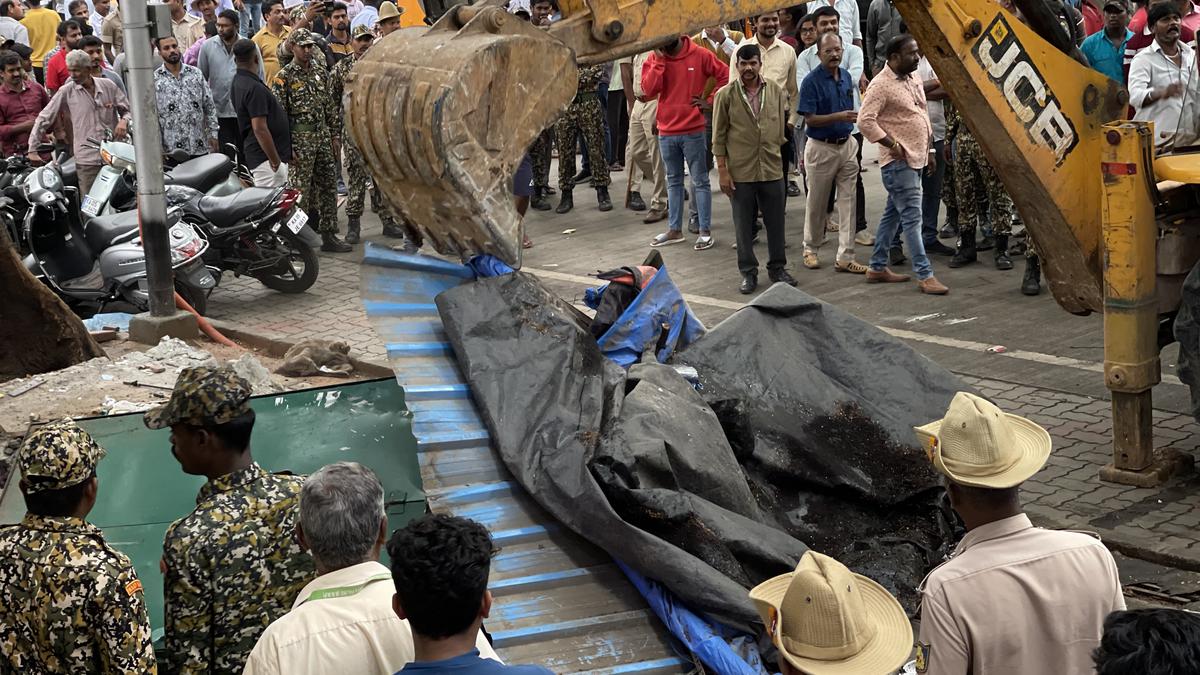
Tension has been mounting across several bustling stretches of Bengaluru as the Greater Bengaluru Authority (GBA) initiated removals of what it calls “unauthorised” street vendor stalls, sparking outrage and distress among local hawkers. Many vendors, who depend entirely on daily earnings, claim the action is abrupt, unfair, and deeply damaging to their livelihood. The GBA, however, argues that the operation is essential to resolve traffic congestion, enforce pedestrian safety rules, and restore regulated public spaces. The conflicting perspectives have now evolved into a full-scale debate over urban rights, informal economies, governance, and the ethics of sudden regulatory enforcement.
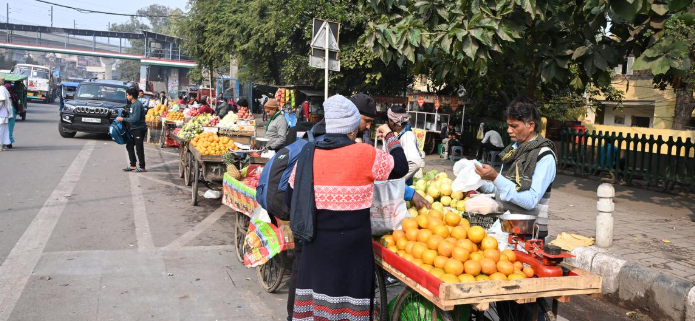
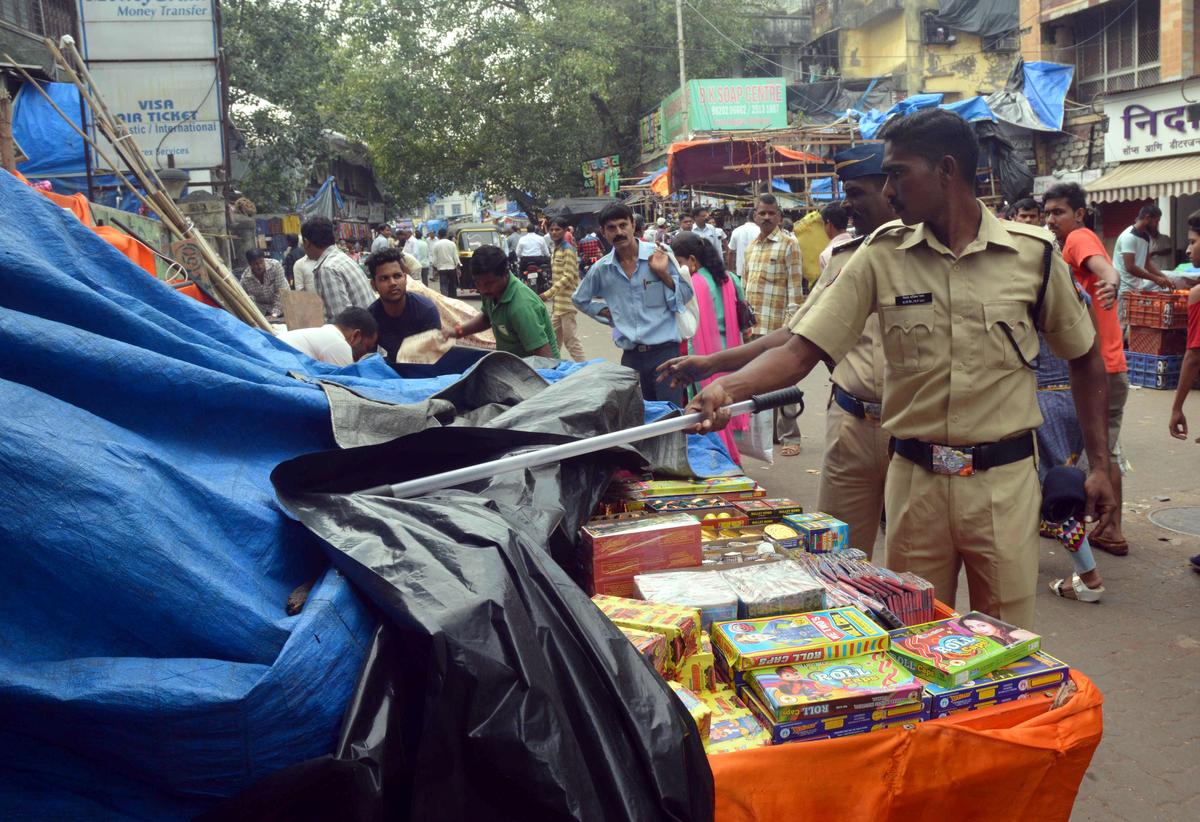
Street vendors operating across key market hotspots such as Shivajinagar, K.R. Market, Majestic, Gandhi Bazaar, and Malleswaram expressed shock as officials arrived with eviction teams. Cardboard kiosks, tin-roofed stalls, fruit carts, and roadside tea counters were dismantled or marked for removal. Many vendors claimed they were not given sufficient notice, causing panic and chaos as they scrambled to salvage goods. Several stalls were destroyed before owners could react, leaving vendors not only without a workspace but also with damaged inventory worth thousands of rupees. For daily wage sellers, this loss is more than economic—it is a blow to dignity and stability.
The sudden enforcement comes amid growing complaints from commuters, local businesses, and resident associations who argue that too many informal stalls are occupying public pathways. They claim that street vending has gradually spilled beyond designated stretches and turned busy sidewalks into narrow passages, forcing pedestrians to walk on roads and risk accidents. On the other hand, street vending unions counter that Bengaluru has failed to map vending zones and issue proper licenses, leaving vendors trapped between informal survival and legal vulnerability. They argue that many stalls labelled “unauthorised” are actually awaiting pending registrations or approvals.
Opinions among ordinary citizens are split. While some commuters appreciate the effort to clear congested footpaths, others sympathise with the vendors who play a crucial role in Bengaluru’s everyday culture. The city’s street vending ecosystem provides affordable food, daily household products, clothing, accessories, and essential services like key-making and phone repairs. For economically weaker sections, these vendors form an indispensable social network. Removing them abruptly, critics argue, disrupts urban inclusivity and widens the gap between privileged consumers and those who survive on informal labour. This ethical dimension has deepened emotional reactions across the city.
Street vending unions have labelled the removals “selective targeting” and “anti-poor governance.” They insist that the GBA should follow national Street Vendors (Protection of Livelihood and Regulation of Street Vending) Act norms, which mandate surveys, vending committees, and warning notices prior to demarcation and eviction. Several vendors allege that the crackdown favours elite business lobbies who want streets free of informal competition. They question why traffic violations by private vehicles or encroachments by high-end establishments are not met with the same urgency. These allegations underscore long-standing debates about which stakeholders urban development should prioritise.
Clashing Rights: Vendors Demand Legal Process, Not Sudden Force
Street vendor associations in Bengaluru argue that the law clearly requires authorities to first conduct a citywide survey of vending stations before declaring stalls as illegal. They say that the GBA has not completed this survey transparently, leaving tens of thousands of vendors operating without clarity. Many vendors have applied for identity cards and vending licenses but claim they have been waiting months or even years for official approval. Without documentation, they remain easy targets for eviction. This deadlock, activists argue, is not merely administrative negligence but a failure to recognise informal workers as legitimate contributors to urban life.
The vending unions are now demanding that the GBA immediately halt the removal operations and begin dialogues with vendor representatives. They propose a collaborative mapping exercise that can designate vending stretches without harming public movement or street commerce. According to them, an inclusive plan could benefit vendors and pedestrians alike. They point out that many metropolitan cities across the world have successfully integrated street vending using regulated clusters, timings, rotating slots, and uniform stall sizes. Bengaluru, they argue, can become a model city if it shifts from punitive action to creative planning. They also warn that aggressive enforcement may drive vendors into confrontation.
The GBA maintains that footpath misuse has reached unsustainable levels. Officials assert that they have been issuing warnings for months and that vendors who received verbal and written alerts ignored them. They report that many stalls had spread beyond acceptable limits, blocking drains, piling garbage, and posing fire hazards due to unsafe cooking equipment. Some vendors also allegedly encroached on road margins in busy traffic junctions. For GBA officials, eviction is a last-resort corrective measure. They insist that civic bodies are not anti-poor but must protect public space access, which is a right of all citizens, not just vendors.
The debate has resulted in emotional confrontations between vendors and officials during some eviction drives. Videos recorded locally show hawkers pleading, crying, or arguing with personnel as their stalls are dismantled. Small-time flower sellers and fruit vendors expressed that losing a day’s trade means losing essential funds for household expenses. Many of them said they live hand-to-mouth, without savings. For them, working on the street is not a choice but a compulsion due to lack of formal job opportunities. The eviction, therefore, becomes a question of livelihood survival rather than regulatory compliance.
Activists working with informal workers say that Bengaluru’s governance is increasingly reflecting “elite urbanism,” where cosmetic beautification dictates policy decisions. They argue that the crackdown prioritises a polished city image over social equity. They emphasise that informal workers are the backbone of urban affordability, making services accessible to students, labourers, migrants, and low-income residents. For these communities, street shops are not just convenience—they are economic lifelines. Removing vendors without creating designated spaces, activists warn, will push the urban poor further into insecurity, and possibly illegal networks of bribery or exploitation.
Whose Streets? A City Forced to Decide Between Order and Livelihoods
The larger issue growing from these removals is the question of who owns or controls public space. Some civic experts argue that policies must balance multiple rights—pedestrian freedom, public health, traffic movement, and livelihood security. They say the solution lies not in eviction but in structured vending zones, barricaded stations, time-based vending licenses, and waste management guidelines. They propose that local skill training and cooperative models could ensure vendors follow rules while earning sustainably. Such an approach would treat vendors as participants in city-building, not obstacles.
The Bengaluru police department has also been drawn into the controversy, as vendors claim that sudden evictions increase their vulnerability to bribery and harassment. They argue that when stalls become “illegal,” officials gain discretionary power to exploit them. Some vendors allege that informal payments are sometimes demanded to allow them to operate. If licensing remains unimplemented, unions say that corruption will flourish under the guise of enforcement. Police officials have denied such accusations but agree that clear regulations would reduce street tensions and arbitrary decision-making, benefiting both vendors and officers.
Resident welfare groups supporting the crackdown have defended the GBA’s intervention, saying that street vending has expanded beyond tolerable limits. They cite examples of people struggling to walk on congested pavements or visually impaired individuals finding it difficult to navigate footpaths filled with carts and goods. They emphasise that the city must first protect pedestrian rights, especially as Bengaluru plans to become more walkable and public transport-oriented. They argue that vending must not come at the cost of safety, cleanliness, or universal accessibility. They insist that regulation does not equal removal—it simply demands order.
As emotions continue to rise, the question now is whether the government will pursue confrontation or collaboration. Many Bengaluru residents recognise the cultural and economic value of vendors and want solutions that offer coexistence, not exclusion. Experts believe that harassment, demolition, and sudden evictions are unsustainable strategies that only deepen inequality. While informal markets may appear disorderly, they reflect the social needs of the majority. For any real change, governance must engage with lived realities rather than enforcing top-down planning models borrowed from cities with far fewer informal workers.
Vendors and trade unions are likely to intensify their agitation if the crackdown continues without negotiation. Representatives have warned of protests across major markets, which may affect city traffic and disrupt business ecosystems. Analysts caution that both sides stand to lose if conflict escalates. For vendors, prolonged protests mean lost income; for the government, worsening public optics and pressure from labour rights groups could damage credibility. The success of any policy will depend on consensus, not coercion. The coming weeks will serve as a critical test of whether Bengaluru can craft an urban policy that respects its people as much as its pavements.
Vendors and trade unions are likely to intensify their agitation if the crackdown continues without negotiation. Representatives have warned of protests across major markets, which may affect city traffic and disrupt business ecosystems. Analysts caution that both sides stand to lose if conflict escalates. For vendors, prolonged protests mean lost income; for the government, worsening public optics and pressure from labour rights groups could damage credibility. The success of any policy will depend on consensus, not coercion. The coming weeks will serve as a critical test of whether Bengaluru can craft an urban policy that respects its people as much as its pavements.
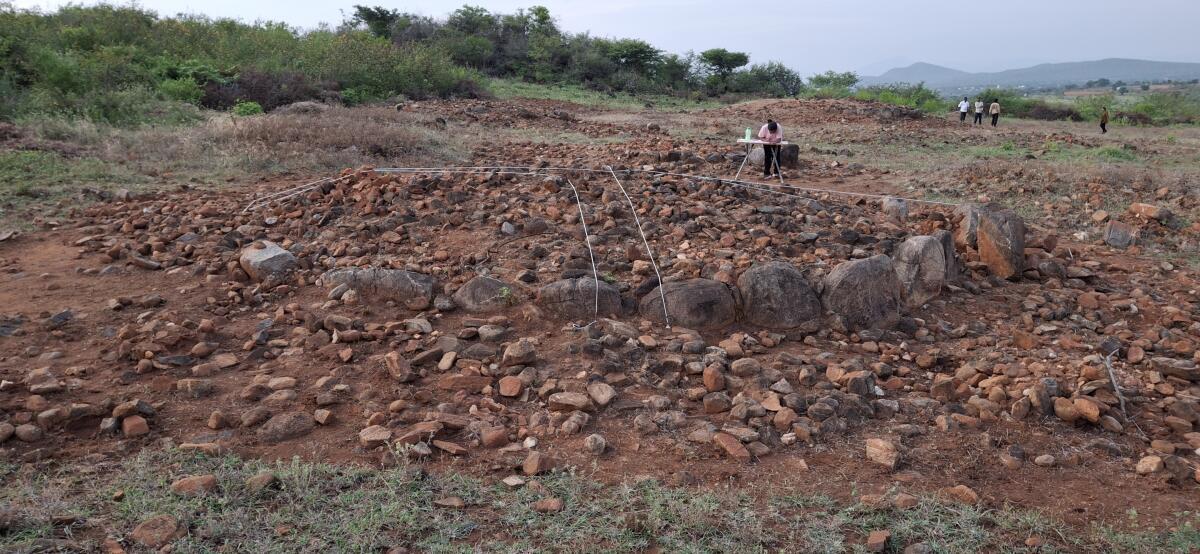
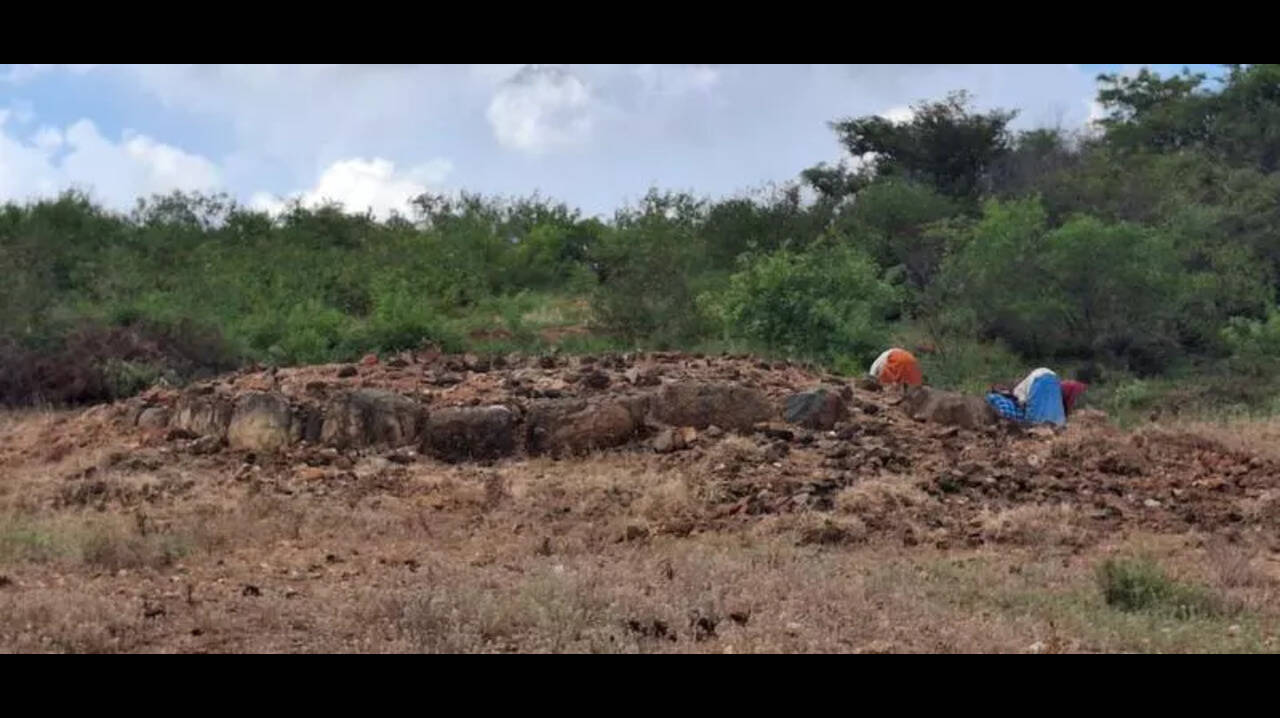
Archaeologists in Karnataka have uncovered remarkably rare burial practices and intriguing rock art during the latest excavation at Doddalathur, a village located near the southern plains of Karnataka. The findings, described by experts as unusually well-preserved and culturally unique, are considered a major breakthrough for South Indian archaeology. The site, believed to belong to the Megalithic period, has unveiled a complex burial system, artefacts made of iron, pottery fragments, and symbolic engravings that hint at prehistoric beliefs concerning life, death, and the afterlife. Researchers say the discoveries not only illuminate undocumented traditions but also expand the narrative of ancient life in the Deccan region.
The Doddalathur excavation has been underway for several months, led by a team from a state archaeology research institution in collaboration with local history enthusiasts. The village has long been considered rich in unexplored ancient heritage due to scattered dolmens and stone circles found in nearby agricultural lands. However, the latest discoveries mark the first time that archaeologists have obtained clear structural remains, ritualistic artefacts, and evidence of artistic expression from the region. The team reports that the excavation has revealed not just burial customs, but also clues suggesting a more sophisticated belief system tied to community life and ritualistic symbolism.
What sets Doddalathur apart from other Megalithic sites in South India is the nature of the burial chambers and associated offerings. Excavators discovered several cairn circles, underground pits, and chambers lined with large slabs of stone, some of which contained fragments of skeletal remains. These remains were accompanied by iron spearheads, bowls, beads, and potsherds painted with distinct patterns. According to researchers, these findings imply that the buried individuals may have held special social or ritual roles. Some chambers contained double burials, suggesting familial or companion-based rituals, an aspect rarely seen in earlier finds from Karnataka’s megalithic landscapes.
Alongside the burials, archaeologists also found rock engravings that depict geometric motifs, human figures, and scenes that appear to represent hunting or ritual activities. These engravings, etched into nearby boulders, are thought to have served a symbolic or commemorative purpose. While rock art has been discovered elsewhere in Karnataka, the proximity of such engravings to a burial site makes this find particularly unique. Experts believe that the art might have represented community identity, spiritual beliefs, or instructions for post-death journeys. The diversity of patterns and iconography suggests a symbolic language that is still being decoded by researchers.
Symbolism in Stone: What the Burials and Rock Art Reveal
Archaeologists say the elaborate nature of the burials reveals a striking degree of social organisation. The presence of grave goods indicates that the Megalithic communities of Doddalathur believed in an afterlife where the deceased required possessions for protection, sustenance, or status. The inclusion of weapons like spearheads may indicate that some individuals were warriors or protectors within their groups. Meanwhile, the presence of ornamental beads and pottery suggests an artistic and aesthetic identity among the people. Taken together, the burial contents suggest respect for the deceased and a belief that death marked a transition rather than an end.
The double burials, in particular, have provoked considerable academic interest. Researchers are analysing whether these represent kinship bonds such as spouses, parent-child pairs, or ritual companions. Some chambers were found to contain two bodies separated by a slab, while others featured remains buried together with shared grave goods. According to specialists, these types of burials are uncommon in the region and could point to a distinct cultural tradition within the Megalithic communities of southern Karnataka. Further studies, including DNA analysis and osteoarchaeological evaluation, are expected to shed more light on how relationships influenced burial rites during that period.
The rock art presents another layer to the mystery. Several engravings show repeated geometric motifs, including concentric circles, intersecting lines, and triangles. One boulder contains an intriguing depiction that appears to combine a human figure with homestead-like symbols, possibly signifying guardianship or reverence. Another rock engraving seems to illustrate figures surrounding what appears to be a ceremonial object. Experts believe these artistic elements could be indicative of ritual practices conducted at the burial site or representations of community leadership. The exact meaning of these engravings remains speculative, but scholars agree that they reflect a purposeful form of prehistoric communication.
Local historians argue that discoveries like Doddalathur help dismantle older assumptions that the Megalithic populations of the Deccan region were technologically or socially simple. Iron tools, evidence of material craftsmanship, and structured burial sites point to a society that valued specialised occupations, social hierarchy, and ritual symbolism. The site suggests that communities here were not mere nomadic groups but functionally organised settlements with cultural identities and spiritual ideologies. The sophistication found in burial planning and artwork challenges stereotypes and reinforces the view that South India had rich prehistoric cultures that evolved independently, with their own philosophical frameworks and artistic expressions.
Natural elements also seem to have influenced burial planning. Archaeologists noticed that many cairn circles and pit chambers were constructed in alignment with slopes or granite formations. This suggests that the ancient inhabitants selected burial spots deliberately based on landscape attributes rather than random placement. The choice of rock surfaces for engraving also indicates an awareness of durability and visibility. Some researchers even propose that elevated boulder surfaces may have served as markers or memorials to guide future generations. The interplay between geology and ritual practice highlights how ancient communities perceived the land not merely as territory, but as a sacred space intertwined with memory and identity.
A Community’s Heritage: Conservation, Challenges, and Local Voices
The excavation has brought newfound excitement among villagers, who now see Doddalathur as a potential historical landmark. However, with enthusiasm comes concern. Local residents worry that increasing public interest might invite tourists before the site is properly protected. Agricultural lands near the excavation area have already been disturbed by earlier unregulated exploration attempts by relic hunters, and villagers fear that more damage could occur if the site is not formally secured. Archaeologists are urging authorities to declare Doddalathur a protected heritage location and ensure scientific supervision for future research and public access.
Government support is expected to play a decisive role in preserving the site. For now, funding is limited and excavation work is progressing slowly. Experts say that comprehensive conservation requires not only money but also a long-term strategy involving documentation, laboratory analysis, training for local guides, archaeological tourism guidelines, and educational outreach. Without such measures, uncovered artefacts could degrade rapidly when exposed to changing weather conditions, human interference, or improper handling. Advocates argue that safeguarding Doddalathur is not merely about protection but about enabling careful storytelling of a past that belongs to both scholars and the local community.
Despite challenges, archaeologists emphasise that involving local residents can be a transformative step. Many villagers possess oral knowledge about unusual stones, burial mounds, and ancient artefacts found in fields over decades. Their memory of such occurrences could guide future excavation plans, helping researchers identify potential burial clusters or ritual sites. Recognising the community as a collaborator rather than a bystander, experts say, could foster sustainable stewardship. Some residents have already expressed willingness to contribute to preservation initiatives, seeing the excavation as a source of pride that adds cultural value to their village identity.
Historians believe that the findings at Doddalathur could reshape academic understanding of the Megalithic period in southern Karnataka. Unlike better-documented regions such as Tamil Nadu or Andhra Pradesh, Karnataka’s prehistoric narrative still has large gaps, with many sites yet to be excavated. The discoveries at this site may inspire more systematic research across unexplored pockets of the state. Researchers say that the fresh evidence helps fill missing cultural links and may eventually lead to a more complete timeline of settlement patterns, trade routes, ritual systems, and artistic developments in the Deccan plateau.
There is also growing interest in how Doddalathur might connect with other megalithic traditions across India. Some scholars suggest that similarities in burial offerings, iron craftsmanship, and decorative pottery link southern Karnataka to wider prehistoric networks. They argue that these communities may have exchanged materials or shared cultural ideas. As laboratory tests uncover material composition, metalwork details, and pigment analysis from artworks, researchers hope to trace connections between regional groups. These investigations could reveal whether the Megalithic communities functioned as isolated cultures or as nodes within much broader prehistoric exchanges.
Experts caution that the popularity of megalithic discoveries must not outweigh the rigour of scientific investigation. While the site has rightly attracted media attention, premature speculation about rituals or identities could mislead the public and distort academic interpretation. Archaeologists emphasise that findings must be studied systematically through carbon dating, osteological assessments, artefact classification, and landscape analysis. Only then can definitive narratives be constructed. They argue that cultural fascination should complement research rather than replace it, ensuring that excitement does not eclipse evidence.
In the coming months, newly discovered artefacts will be transferred to laboratories for preservation and scientific analysis. Excavators say that dating techniques, microscopic soil studies, and residue tests may uncover more precise information about diet, social structure, trade materials, and weapon use. Such data could reveal how hierarchical the society was, whether they practiced organized agriculture, and what belief systems guided burial customs. The team hopes that laboratory findings will eventually be integrated into a public exhibition that brings prehistoric art, ritual objects, and burial practices to a wider audience in Karnataka.
The discovery at Doddalathur stands as a reminder that ancient history is not just about stones in the earth, but about lived experiences, spiritual systems, and the stories of forgotten communities. Each grave and engraving reflects not only death, but a continuity of values, relationships, and cultural imagination. The emotions embedded in these stones—of reverence, honour, remembrance, and artistic expression—demonstrate that prehistoric people shared a profound bond with their dead, their land, and their collective identity. As investigations continue, Doddalathur offers a rare emotional bridge between modern society and an ancient world still waiting to speak.