Tuesday, April 28, 2026
Home Blog Page 133

India U19 vs England U19: Dramatic Rain-Affected Warm-up Clash

0

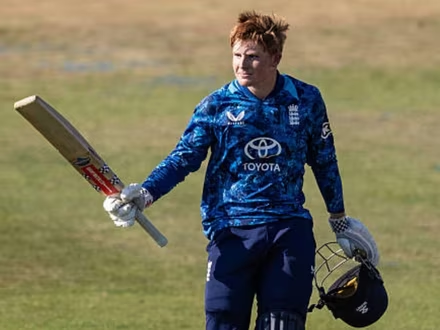
New Delhi – The India U19 vs England U19 World Cup warm-up match concluded with England securing a 20-run victory via the DLS method after rain interrupted play. England posted 196/3 in 34.3 overs before rain halted proceedings, with Thomas Rew remaining unbeaten on 71 and Caleb Falconer contributing 29. The victory showcased England’s batting depth and composure, sending a strong message ahead of the upcoming U19 World Cup tournament. The India U19 vs England U19 encounter provided valuable insights into both teams’ preparations, with the result highlighting areas where India needs improvement before the main competition begins.

This final warm-up game before the U19 World Cup gave both teams crucial match practice against quality opposition. The India U19 vs England U19 clash was designed to help teams identify weaknesses and polish their strategies before facing genuine tournament pressure in the days ahead.

India’s Batting Display Sets Competitive Total

India won the toss and elected to bat first, eventually posting 295/8 in their allotted 50 overs. The innings featured several notable performances, though it fell short of providing the dominant display India might have hoped for in this India U19 vs England U19 warm-up fixture. The opening partnership showed promise initially, with Ayush Mhatre and young sensation Vaibhav Suryavanshi beginning India’s innings with expectations running high.

However, Suryavanshi departed early for just 1 run, falling quickly and failing to provide the explosive start that has become his trademark. Mhatre played with more freedom, unleashing boundaries with four fours and four sixes, but his dismissal for 49 represented a missed opportunity to convert a strong start into a substantial score. His inability to reach fifty in this India U19 vs England U19 match continued a concerning pattern of underperformance at the U19 level despite his success against senior opposition.

Middle Order Contributions Build India’s Total

Following the early setbacks, RS Ambrish and Abhigyan Kundu constructed a crucial partnership that steadied India’s innings. The duo added a vital 50-run partnership, with both batsmen displaying patience and shot selection appropriate for the match situation. Ambrish contributed a valuable 48 before departing, while Kundu progressed to a well-constructed fifty, providing stability during the middle overs of the India U19 vs England U19 contest.

Kundu continued his impressive knock, eventually reaching 34 runs before missing out on what would have been a deserved century. His dismissal was a turning point in India’s innings, as the team had hoped he could anchor the innings through to the end. Vihaan Malhotra made a brief contribution of 10 runs before falling, leaving India at 88/4 after 15 overs and requiring lower-order contributions to reach a competitive total.

England’s Chase Demonstrates Batting Depth

Chasing a revised target after rain interruptions, England’s response in the India U19 vs England U19 match showcased their batting credentials. Khilan Patel provided early breakthroughs for India, dismissing Mayes and striking again to put England under pressure. Henil Patel also contributed with a wicket, giving India hope of restricting England’s chase.

However, Thomas Rew emerged as the standout performer in this India U19 vs England U19 encounter, playing a mature and composed innings. His unbeaten 71 demonstrated excellent technique and temperament, guiding England’s chase with authority. Rew’s ability to rotate strike while finding boundaries at crucial moments put England firmly in control, even as wickets fell at the other end.

Rain Intervention and DLS Calculations

Rain stopped play with England positioned at 196/3 in 34.3 overs, forcing match officials to apply the DLS method to determine the result. The calculations revealed that England were 20 runs ahead of the par score at that stage, securing victory for the visitors in this India U19 vs England U19 warm-up match. The rain interruption added complexity to team strategies, with both sides needing to adjust their approaches based on revised targets and overbowling restrictions.

Suryavanshi’s Form Remains Critical Concern

The India U19 vs England U19 match highlighted India’s heavy reliance on Vaibhav Suryavanshi’s explosive batting at the top of the order. While the young left-hander enters the World Cup as one of the tournament favorites due to his incredible power-hitting ability, his early dismissal in this match exposed India’s vulnerability when he fails to fire. The team cannot afford to depend solely on Suryavanshi’s performances throughout the tournament, making contributions from other batsmen essential.

Mhatre’s Mental Block Continues

Captain Ayush Mhatre’s struggles at U19 level remain puzzling, particularly given his success against senior opposition. In the India U19 vs England U19 warm-up, Mhatre showed glimpses of his ability with aggressive stroke-play, but his dismissal for 49 continued a pattern of getting starts without converting them into substantial scores. With very little time remaining before the World Cup begins, Mhatre needs to resolve whatever mental block is preventing him from realizing his potential at this level.

Key Takeaways and Tournament Implications

The India U19 vs England U19 match provided several important lessons for both teams ahead of the World Cup. England demonstrated superior depth and composure, with their batting lineup showing the ability to absorb pressure and maintain scoring momentum despite losing wickets. India, conversely, must find ways to generate consistent contributions throughout their batting order rather than relying on individual brilliance.

India’s bowling attack showed promise, with Khilan Patel and Henil Patel claiming important wickets. However, they were unable to consistently trouble England’s middle order, particularly Rew, whose match-winning knock highlighted the difference between the two sides. As India U19 vs England U19 encounters in competitive tournaments often prove decisive, this warm-up result serves as a valuable learning experience for the young Indian team.
Cold Wave Health Risks: Urgent AIIMS Warning for Vulnerable Groups

0

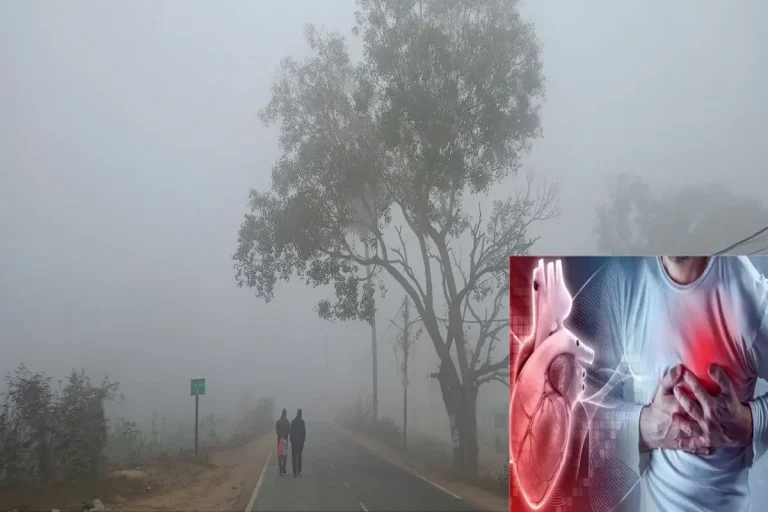
New Delhi – As the India Meteorological Department continues to issue cold wave alerts for the National Capital Region, doctors at the All India Institute of Medical Sciences have cautioned the public about serious cold wave health risks that plunging temperatures pose. The warning particularly targets people with chronic illnesses, the elderly, and young children who face heightened vulnerability during extreme winter conditions. During a press conference on Monday, AIIMS experts emphasized that cold wave health risks trigger a range of physiological changes across all age groups, urging policy-level preparedness for cold wave conditions similar to heat wave action plans.

The comprehensive warning from AIIMS highlights the urgent need for public awareness and structured governmental response to protect vulnerable populations from the cold wave health risks that intensify during severe winter weather patterns affecting northern India.

Cardiac Complications and Blood Vessel Stress

Cardiologists have identified significant cold wave health risks affecting the cardiovascular system, warning that winter cold puts additional stress on the heart and blood vessels. Dr Rajiv Narang, professor of cardiology at AIIMS, explained that cold weather causes blood vessels to narrow, a process known as vasoconstriction. Combined with reduced water intake and higher salt consumption typical during winter months, these factors can significantly elevate blood pressure levels.

These combined physiological changes create cold wave health risks that substantially increase the likelihood of heart attacks and other serious cardiac events. Dr Narang advised heart patients to avoid early morning walks during periods of intense cold and high pollution, emphasizing the critical importance of continuing prescribed cardiac medications without interruption. The intersection of cold temperatures and air pollution creates a particularly dangerous environment for individuals with existing cardiovascular conditions.

Call for Structured Cold Action Plans

Dr Narang made a compelling case for policy-level preparedness, stating that cold wave health risks should be treated with the same seriousness as heat waves. He called for structured cold action plans to protect vulnerable groups, noting that “just as heat action plans exist, cold action plans are equally necessary to protect vulnerable populations.” This recommendation reflects growing recognition that cold wave health risks deserve dedicated public health infrastructure and emergency response protocols comparable to those established for extreme heat events.

Diabetes Management Challenges During Winter

Endocrinologists have flagged specific cold wave health risks for diabetic patients during winter months. Dr Rajesh Khadgawat from the endocrinology department at AIIMS noted that reduced physical activity in cold weather often leads to poorer blood sugar control, creating additional complications for diabetes management. The cold wave health risks for diabetics extend beyond glucose regulation to include increased susceptibility to infections.

Dr Khadgawat encouraged patients to remain active indoors through light exercises, stretching, or yoga to maintain metabolic health despite cold conditions. He emphasized the importance of vaccinations, particularly noting that pneumococcal vaccines can significantly reduce the risk of severe infections such as pneumonia in elderly and diabetic patients, addressing multiple cold wave health risks simultaneously.

Pediatric Vulnerabilities and Infant Care

Paediatricians have highlighted critical cold wave health risks affecting infants and young children who are especially susceptible to cold stress. Dr Rakesh Lodha, associate dean and professor of paediatrics, explained that newborns and premature babies lose heat rapidly due to their body composition, making them prone to lethargy, feeding difficulties, and breathing problems. These cold wave health risks manifest quickly in young children, requiring constant vigilance from caregivers.

Respiratory infections remain the leading cause of paediatric hospitalisation during winter, Dr Lodha noted, making it crucial to keep children adequately covered, especially their heads. The cold wave health risks for children require specific protective measures that differ from adult precautions, emphasizing the need for targeted public health messaging for families with young children.

Kidney Disease and Hypertension Concerns

Dr Sandeep Mahajan, professor of nephrology, identified additional cold wave health risks for patients with kidney disease. He explained that blood pressure tends to rise in winter, posing added risks for patients with kidney disease, most of whom also have hypertension. This creates a dangerous combination of cold wave health risks that can lead to serious complications if not properly managed.

Dr Mahajan advised strict blood pressure monitoring, limiting salt intake, and avoiding excessive consumption of certain seasonal vegetables that can raise potassium levels without medical guidance. These recommendations address the specific cold wave health risks faced by nephrology patients who must navigate both their underlying condition and winter-related complications.

Respiratory System Under Attack

Physicians have reported a sharp rise in breathing-related complaints, identifying severe cold wave health risks for respiratory patients. Dr Sanjeev Sinha from the department of medicine explained that cold air directly irritates the airways, causing them to narrow and trigger sudden spasms in people with underlying lung disease. This physiological response to cold represents one of the most immediate cold wave health risks for vulnerable populations.

These cold wave health risks make patients with chronic obstructive pulmonary disease and asthma particularly vulnerable, leading to worsening cough, breathlessness, and wheezing. In some cases, the cold wave health risks extend to increased likelihood of developing pneumonia, which can be life-threatening for individuals with compromised respiratory systems. Dr Sinha’s warning underscores the critical need for respiratory patients to take extra precautions during cold wave conditions, including staying indoors during peak cold hours and ensuring adequate warm clothing when venturing outside.

Vande Bharat Sleeper Train: Revolutionary Launch On 17th January

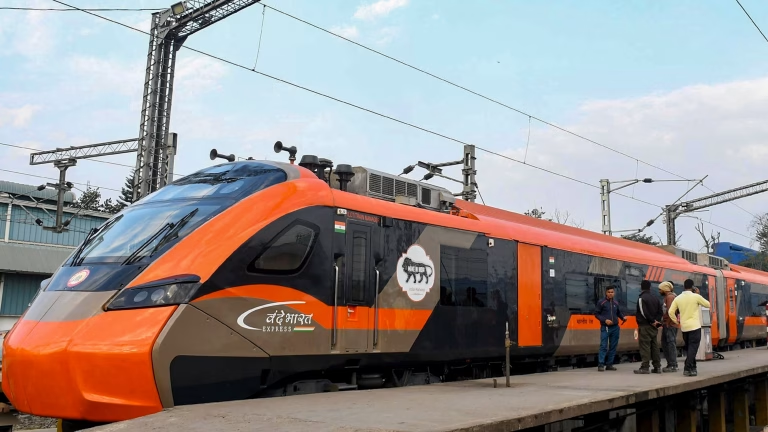
West Bengal – Indian Railways’ first Vande Bharat sleeper train, scheduled to operate between Assam’s Guwahati and West Bengal’s Howrah, is set to be inaugurated on Saturday, January 17, by Prime Minister Narendra Modi. This landmark development represents a significant milestone for Indian Railways, its passengers, and the nation as a whole, according to Union minister of railways Ashwini Vaishnaw. The Vande Bharat sleeper train will run on the 958-kilometer-long Howrah-Kamakhya (Guwahati) route, connecting crucial economic and cultural centers in eastern India.

West Bengal’s leadership confirmed the inauguration details on Monday, emphasizing that the Vande Bharat sleeper train would significantly boost connectivity over the northern districts of West Bengal. This new service aims to revolutionize long-distance rail travel by combining the comfort of sleeper accommodations with the speed and modern amenities associated with the Vande Bharat brand.

Enhanced Regional Connectivity Across Multiple Districts

The Howrah-Guwahati Vande Bharat sleeper train will connect key districts in both Assam and West Bengal, serving as a vital transportation link for millions of passengers. In Assam, the train will serve Kamrup metropolitan and Bongaigaon districts, while in West Bengal, it will connect Coochbehar, Jalpaiguri, Maldah, Murshidabad, Purba Bardhaman, Hooghly, and Howrah districts. This comprehensive coverage ensures that the Vande Bharat sleeper train will benefit a vast geographical area spanning multiple administrative regions.

Railway officials have confirmed that the train will operate on the 958-kilometer route, providing an efficient alternative for passengers currently using conventional sleeper trains or other modes of transportation. The Vande Bharat sleeper train is expected to reduce travel time significantly while offering superior comfort and amenities compared to existing services.

Coach Configuration and Passenger Capacity

The Vande Bharat sleeper train will feature a total of 16 coaches designed to accommodate different passenger preferences and budgets. The configuration includes 11 three-tier AC coaches, 4 two-tier AC coaches, and 1 first-class AC coach, with a combined capacity of approximately 823 passengers. This thoughtful distribution of coach types ensures that the Vande Bharat sleeper train can serve diverse passenger segments while maintaining high occupancy rates.

The newly designed bogies incorporate advanced design parameters and improved suspension systems to enhance passenger comfort during the long journey. The interior features an ergonomic design with special parameters implemented throughout for safety and security, ensuring that the Vande Bharat sleeper train meets the highest standards of modern rail travel.

Culinary Offerings and Regional Cuisine

A unique feature of the Vande Bharat sleeper train is its region-specific culinary offerings that celebrate local food cultures. Passengers will be able to enjoy authentic Assamese cuisine when the train originates from Guwahati, while traditional Bengali delicacies will be served when the journey commences from Kolkata. This attention to regional preferences demonstrates Indian Railways’ commitment to providing a culturally enriching travel experience on the Vande Bharat sleeper train.

The catering service aims to go beyond standard railway food offerings by incorporating authentic regional recipes and ingredients, making the dining experience an integral part of the journey rather than merely a functional necessity.

Also Read: Minister Chouhan Inspires Leaders at Viksit Bharat Young Leaders Dialogue 2026

Advanced Safety and Technology Features

The Vande Bharat sleeper train incorporates cutting-edge safety and convenience features that set it apart from conventional trains. Automatic doors with vestibules facilitate smooth movement between coaches, while the Kavach anti-collision technology provides an additional layer of safety. The train also includes an emergency talk-back system for rapid communication during emergencies and special arrangements designed specifically for physically challenged passengers.

Security features on the Vande Bharat sleeper train include CCTV cameras installed in all coaches, ensuring passenger safety throughout the journey. These comprehensive safety measures reflect Indian Railways’ commitment to providing a secure travel environment for all passengers.

Comprehensive Fare Structure Details

The fare structure for the Vande Bharat sleeper train has been carefully designed to remain competitive while reflecting the premium services offered. In the Third AC (3AC) category, passengers traveling from Howrah to Kamakhya will pay ₹2,299, from Howrah to New Jalpaiguri ₹1,334, and from Howrah to Malda Town ₹960.

For Second AC (2AC) category, the Vande Bharat sleeper train fare from Howrah to Kamakhya is set at ₹2,970, from Howrah to New Jalpaiguri ₹1,724, and from Howrah to Malda Town ₹1,240. First AC (1AC) category passengers will pay ₹3,640 from Howrah to Kamakhya, ₹2,113 from Howrah to New Jalpaiguri, and ₹1,520 to Malda Town.

Between Kamakhya and Malda Town, the Vande Bharat sleeper train fare in Third AC category is ₹1,522, in Second AC ₹1,965, and in First AC ₹2,409. Between Kamakhya and New Jalpaiguri, the Third AC fare is ₹962, Second AC ₹1,243, and First AC ₹1,524.

Minimum Distance and Tax Considerations

For fare determination on this premium Vande Bharat sleeper train, Indian Railways has established a minimum distance requirement of 400 kilometers. Additionally, passengers must pay 5 percent GST on the ticket fare, which is standard for premium train services. According to a January 9 circular, the Vande Bharat sleeper train will drop the reservation against cancellation (RAC) system option from its ticket booking system, representing a significant change in booking procedures for this service.

Pakistan JF-17 Fighter Jets: Shocking Sales Surge After India Clash

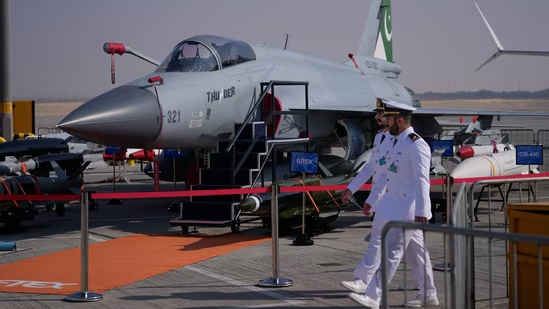
New Delhi – Pakistan’s defence minister Khawaja Asif has announced that sales of Pakistan JF-17 fighter jets have reached unprecedented levels following the military escalation with India during Operation Sindoor in May 2025. The minister made bold claims suggesting that if current trends continue, Islamabad may no longer require bailouts from the International Monetary Fund within six months. This represents a significant shift in Pakistan’s economic outlook, with defense exports emerging as a potential solution to the country’s chronic financial challenges.

During an interview with Pakistani broadcaster, Asif stated that Pakistan JF-17 fighter jets have been thoroughly tested in combat conditions, leading to a surge in international orders. He declared that Pakistan may not need the International Monetary Fund in six months if the current pace of orders continues, marking an ambitious projection for a country heavily dependent on international financial assistance.

Claims of Military Effectiveness Drive Export Interest

The defence minister further claimed that the conflict with India in May 2025 demonstrated to the world Pakistan’s resolve and military effectiveness, particularly regarding Pakistan JF-17 fighter jets performance. According to Asif, the operational deployment of these aircraft during Operation Sindoor served as a real-world demonstration of their capabilities, significantly enhancing their marketability in the international arms market.

Pakistan is currently under a $7 billion IMF programme, its 24th such arrangement, which followed a short-term $3 billion payout that helped avert a sovereign default in 2023. The minister’s assertion that Pakistan JF-17 fighter jets sales could eliminate this dependency represents an optimistic economic forecast for a nation struggling with persistent financial difficulties.

Major Arms Deals in Recent Months

In recent months, Pakistan has signed substantial arms deals with countries such as Saudi Arabia, Bangladesh, and Libya at a time when economic challenges continue to burden the South Asian country. These Pakistan JF-17 fighter jets agreements represent a strategic pivot toward leveraging military exports as an economic lifeline.

Pakistan is currently in talks with Saudi Arabia to convert approximately $2 billion of Saudi loans into a Pakistan JF-17 fighter jets deal, according to reports from January 7 citing two Pakistani sources. This creative financial arrangement would allow Pakistan to reduce its debt burden while simultaneously boosting its defense exports, creating a win-win scenario for both nations.

Additionally, Pakistan has held discussions with Bangladesh regarding the possible sale of Pakistan JF-17 fighter jets. The negotiations have focused primarily on providing JF-17 Thunder fighter jets, the light combat aircraft co-developed by Pakistan and China and produced in Pakistan. However, sources indicate that while the jets are the primary option, other military equipment remains under discussion as well.

Also Read: US Strike Iran: Urgent Warning as Americans Ordered to Evacuate

Expert Analysis on Marketability and Cost-Effectiveness

Aamir Masood, a retired Air Marshal and defense analyst, provided insights into why Pakistan JF-17 fighter jets have gained traction in the international market. He noted that the aircraft’s marketability has increased significantly because it has been tested and used in combat situations. This real-world operational experience provides potential buyers with confidence in the platform’s capabilities and reliability.

Masood also emphasized that Pakistan JF-17 fighter jets are cost-effective compared to other options in the international market, making them attractive to nations with limited defense budgets. The combination of combat-proven performance and affordability positions these aircraft as competitive alternatives to more expensive Western or Russian platforms.

Expanded Defense Export Strategy

India’s nuclear-armed neighbor has in recent months stepped up its defense outreach, actively seeking to expand arms exports and monetize its domestic defense industry. The Pakistan JF-17 fighter jets represent the centerpiece of this export strategy, serving as the flagship product in Islamabad’s military sales portfolio.

Last month, Islamabad struck a weapons deal worth more than $4 billion with Libya’s eastern-based Libyan National Army. This agreement stands as one of Pakistan’s largest-ever arms sales and includes Pakistan JF-17 fighter jets along with training aircraft. The magnitude of this deal demonstrates the growing international interest in Pakistani military hardware and the potential revenue streams available through defense exports.

India’s Counterclaims Regarding Operation Sindoor

While Pakistan has made several claims about the performance of Pakistan JF-17 fighter jets during Operation Sindoor, India has consistently countered these assertions. The Indian Air Force reiterated that its armed forces downed five Pakistani jets during Operation Sindoor, which included F-16 and JF-17 class aircraft. Chief of Air Staff Air Chief Marshal Amar Preet Singh made this statement during his remarks at the 93rd Air Force Day celebrations.

India has maintained that it chose to accept a ceasefire after a request from Pakistan’s military leadership, asserting that Indian forces had already achieved their operational goals of hitting terror hubs. This version of events contradicts Pakistan’s narrative about the effectiveness of Pakistan JF-17 fighter jets during the conflict.

Technical Specifications and Joint Development

The Pakistan JF-17 fighter jets, officially known as JF-17 Thunder, are light combat aircraft co-developed by Pakistan and China. The jets are produced domestically in Pakistan, representing a significant achievement in the country’s defense manufacturing capabilities. This local production capacity allows Pakistan to offer competitive pricing and customization options to potential buyers.

The discussions regarding Pakistan JF-17 fighter jets sales have been limited primarily to the provision of these fighter aircraft, though some negotiations include additional military equipment and training aircraft. The versatility and proven combat record of these platforms continue to attract interest from nations seeking to modernize their air forces without incurring the substantial costs associated with top-tier Western fighter jets.

Trump India Envoy Sergio Gor: Bold Entry With Friendship Promise

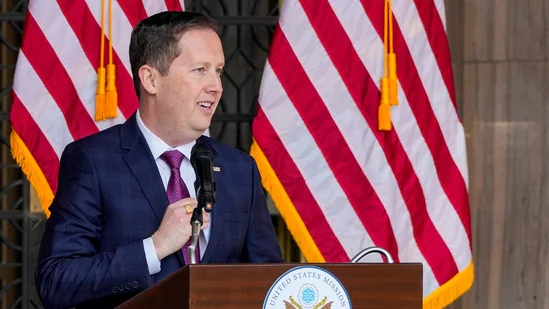
New Delhi – Trump India envoy Sergio Gor formally assumed his role on Monday as the new US ambassador to India and special envoy to South and Central Asia during a memorable ceremony at the US Embassy in New Delhi. The swearing-in event captured significant attention due to Gor’s distinctive entrance and his subsequent remarks about the relationship between President Trump and Prime Minister Modi. As Trump India envoy Sergio Gor walked up to the podium to take the oath of office, the 1966 soul classic “Hold On, I’m Comin” by Sam & Dave played in the background, drawing enthusiastic cheers from those present at the embassy.

The song choice was deliberate and symbolic. Written by Isaac Hayes and David Porter, the track is known for its upbeat rhythm and chorus, having topped the Billboard Hot R&B chart during its era. Sam Moore, one half of the legendary duo, passed away last year at the age of 89, adding a poignant layer to the musical selection for this diplomatic milestone.

Taking Charge Amid Challenging Bilateral Dynamics

The ceremony marked the formal beginning of Trump India envoy Sergio Gor’s tenure in New Delhi at a particularly sensitive time in bilateral relations. India-US ties have recently faced strains amid President Trump’s repeated claims about brokering an India-Pakistan ceasefire after Operation Sindoor. Additionally, Trump’s decision to impose a 50% tariff on Indian imports over the country’s purchases of Russian oil during the Ukraine conflict has created tension between the two nations.

Despite these challenges, Trump India envoy Sergio Gor approached his new role with optimism and a clear mandate to strengthen the partnership between Washington and New Delhi. His first address emphasized the importance of maintaining strong ties even during periods of disagreement.

Emphasizing Genuine Trump-Modi Friendship

In his inaugural address after taking charge, Trump India envoy Sergio Gor highlighted the relationship between President Trump and Prime Minister Modi, describing it as “genuine” and rooted at the highest political level. Drawing from his personal experience, Gor stated that he had traveled all over the world with President Trump and could personally attest that Trump’s friendship with Prime Minister Modi is real and substantial.

Trump India envoy Sergio Gor emphasized that the United States and India are bound not only by shared interests but also by a relationship anchored at the highest levels of leadership. In a particularly notable statement, he declared that “real friends can disagree but always resolve their differences in the end,” signaling his diplomatic approach to navigating current tensions between the two nations.

Mission to Elevate Bilateral Partnership

Trump India envoy Sergio Gor articulated his vision for US-India relations, describing his role with clarity and purpose. He stated that he comes to India with profound respect and a clear mission: to elevate the partnership between the two nations to the next level. Gor characterized the relationship as representing “the intersection between the world’s oldest democracy and the world’s largest democracy,” highlighting the shared democratic values that unite both countries.

Also Read: Umar Khalid: MEA’s Sharp Response To NYC Mayor’s Controversial Letter

Referring to his recent interaction with President Trump, Trump India envoy Sergio Gor shared insights into the President’s affection for India. He revealed that during his last dinner with Trump, the President recounted his most recent visit to India and spoke fondly of his great friendship with Prime Minister Modi, demonstrating the personal bonds that exist at the highest levels of government.

Anticipating Presidential Visit and Working Style

Trump India envoy Sergio Gor also addressed the possibility of a future presidential visit to India, expressing hope that President Trump would visit soon, potentially within the next year or two. In a lighter moment, Gor made a humorous observation about President Trump’s working style and how it might align with the time difference between Washington and New Delhi.

He noted that President Trump has a habit of calling at 2am Washington time, and with the time difference in New Delhi, that timing might actually work out quite well for coordination between the two capitals. This candid remark provided insight into Trump India envoy Sergio Gor’s close working relationship with the President and his understanding of Trump’s unconventional schedule.

Background and Qualifications of the New Envoy

Trump India envoy Sergio Gor brings extensive experience and credentials to his new diplomatic role. He is widely recognized as a trusted Trump confidant and businessman, considered a key ally within the President’s inner circle. His steadfast loyalty throughout Trump’s various political campaigns has earned him significant trust and responsibility.

Before his diplomatic nomination, Trump India envoy Sergio Gor served as CEO of Winning Team Publishing, a firm he co-founded to promote conservative voices and authors. In this capacity, he worked closely with Donald Trump Junior, the President’s son, further cementing his position within the Trump family’s trusted network.

Trump India envoy Sergio Gor played a pivotal role in Republican Party finances, previously leading the Right for America PAC, which raised significant funds to support Trump’s re-election efforts. His fundraising prowess and political acumen make him well-suited for the diplomatic challenges ahead.

Legislative Experience and Business Acumen

Trump India envoy Sergio Gor possesses extensive legislation-aligned experience, having served as a long-time senior aide and communications director for influential Republican Senator Rand Paul in Washington. This background provides him with deep understanding of legislative processes and Capitol Hill dynamics that will prove valuable in his diplomatic role.

Beyond politics, Trump India envoy Sergio Gor is a seasoned businessman whose private sector experience is expected to significantly influence his approach to strengthening US-India bilateral trade and commerce, particularly important given current trade tensions between the two nations.

US Strike Iran: Urgent Warning as Americans Ordered to Evacuate

Washington D.C. – The possibility of a US strike Iran scenario has intensified as the US Embassy issued an urgent directive ordering all American citizens to leave the country immediately. The embassy warned that protests across Iran are escalating rapidly and could turn increasingly violent, with reports of arrests and injuries mounting. The situation has become so volatile that airlines are limiting or canceling flights, forcing Americans to consider alternative evacuation routes through neighboring countries.

The embassy’s warning emphasized that the security situation remains highly unstable across Iran. Increased security measures, road closures, public transportation disruptions, and internet blockages are ongoing throughout the country. Several airlines have suspended service until Friday, January 16, creating additional challenges for Americans attempting to leave. The embassy specifically advised US citizens to expect continued internet outages, plan alternative means of communication, and, if safe to do so, consider departing Iran by land to Armenia or Turkey.

Special Risks for Dual Nationals Amid US Strike Iran Concerns

As speculation about a potential US strike Iran operation grows, the embassy issued specific guidance for dual nationals, underlining the significant risks they face. US-Iranian dual nationals must exit Iran using Iranian passports, as the Iranian government does not recognize dual nationality and treats such individuals solely as Iranian citizens. The embassy warned that US nationals face substantial risk of questioning, arrest, and detention in Iran, with merely showing a US passport or demonstrating connections to the United States providing sufficient reason for Iranian authorities to detain someone.

This warning takes on added significance given the current tensions and the possibility of a US strike Iran action. Dual nationals could find themselves caught in an extremely dangerous position should military action commence or diplomatic relations deteriorate further.

Trump Weighs Military Options While Keeping Diplomatic Channels Open

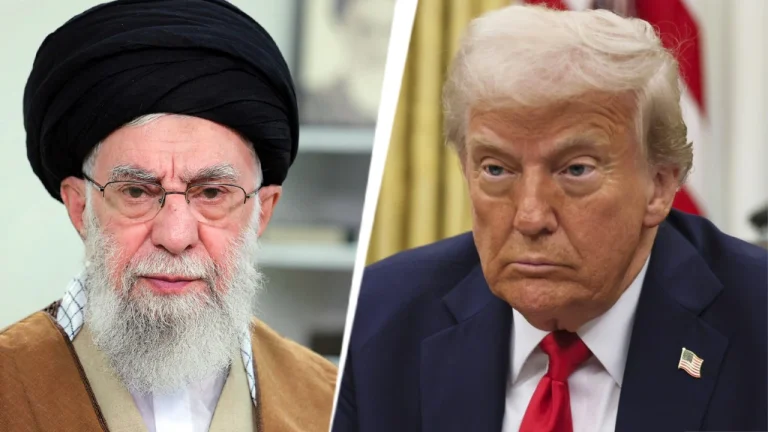
Tehran confirmed on Monday that it was keeping communication channels with Washington open as President Donald Trump weighed his response to Iran’s deadly crackdown on nationwide protests. The potential for a US strike Iran operation has become a central consideration in the administration’s deliberations. Trump stated on Sunday that the US could meet with Iranian officials and that he remained in contact with Iran’s opposition, while simultaneously stepping up pressure on Tehran’s leadership and warning of possible military action over the killing of protesters.

The threat of a US strike Iran action represents a significant escalation in the ongoing crisis. White House press secretary Karoline Leavitt clarified that while airstrikes were among the alternatives available to Trump, diplomacy remained the administration’s preferred path. She emphasized that “diplomacy is always the first option for the president” when addressing questions about the potential for a US strike Iran scenario.

Mixed Signals Complicate US Strike Iran Calculations

Leavitt also noted a clear gap between Tehran’s public statements and private signals to Washington, complicating assessments about whether a US strike Iran operation might become necessary. She explained that what the public hears from the Iranian regime differs significantly from the messages the administration receives privately, and President Trump has an interest in exploring those private communications before making any final decisions about military action.

Iranian Foreign Minister Abbas Araqchi acknowledged that Tehran was reviewing proposals from Washington but described them as inconsistent with concurrent US threats. This mixed messaging has made the prospect of a US strike Iran action both more and less likely simultaneously, as both sides appear to be keeping multiple options open while testing each other’s resolve.

Deadly Crackdown Fuels US Strike Iran Discussions

The scale of violence in Iran has significantly influenced discussions about a potential US strike Iran response. US-based rights group HRANA confirmed the deaths of 599 people since demonstrations erupted on December 28 and spread nationwide. This total includes 510 protesters and 89 members of security forces. The group also reported that 10,694 people have been arrested during this period, highlighting the severity of the government’s crackdown.

Also Read: Trump 25% Tariff Iran: Shocking New Trade Warning Against Countries

These casualty figures have intensified calls within the Trump administration for strong action, with a US strike Iran option remaining on the table as officials monitor the situation. The killing of hundreds of protesters has particularly outraged American officials and strengthened the hand of those advocating for military intervention.

Evacuation Routes and Safety Considerations

With the possibility of a US strike Iran operation looming, the embassy’s specific guidance about evacuation routes has taken on critical importance. Americans are being advised to leave by land via Armenia or Turkey due to ongoing flight cancellations and suspensions. This recommendation reflects the embassy’s assessment that the situation could deteriorate rapidly, potentially leaving Americans trapped if a US strike Iran scenario materializes.

The emphasis on immediate departure underscores the seriousness with which American officials view the current crisis. Internet blockages and communication disruptions make coordination of any potential US strike Iran operation more complex while simultaneously making it more difficult for American citizens to receive updated guidance.

Regional Implications of Potential Military Action

The possibility of a US strike Iran action has significant implications for regional stability. Neighboring countries like Armenia and Turkey, mentioned as evacuation routes, would likely face immediate consequences from any military confrontation. The administration’s deliberations about a US strike Iran scenario must balance multiple competing interests, including the safety of American citizens, support for Iranian protesters, regional stability, and broader strategic considerations in the Middle East.

Delhi Colder Than Shimla: Alarming Cold Wave Grips Northern India

New Delhi – Northern India is experiencing an unusual weather phenomenon as the India Meteorological Department has confirmed that Delhi colder than Shimla conditions are prevailing across the region. The national capital and surrounding plains have recorded temperatures significantly lower than traditional hill stations, marking a remarkable reversal of typical winter patterns. The IMD has issued cold wave warnings for the next several days across multiple states including Delhi, NCR, Haryana, Punjab, Rajasthan, Uttar Pradesh, Uttarakhand, and Himachal Pradesh.

According to the official bulletin released on Sunday, January 11, cold wave to severe cold wave conditions are very likely at isolated places across various northern states. The weather department has predicted that minimum temperatures in Delhi could plummet to 3-4.2 degrees Celsius on Monday, while maximum temperatures might hover between 18-20 degrees Celsius, creating challenging conditions for residents.

Temperature Comparison Reveals Startling Differences

The Delhi colder than Shimla situation has surprised meteorologists and residents alike. On Monday, Shimla is expected to experience maximum and minimum temperatures of 16 and 9 degrees Celsius respectively. In stark contrast, Delhi’s minimum temperature is forecast to drop to 3-4.2 degrees Celsius, making the capital significantly colder than the popular hill station. This unusual temperature inversion has extended to other plain areas as well, with Chandigarh also recording lower temperatures than typical hilly regions.

The phenomenon of Delhi colder than Shimla conditions highlights the severity of the current cold wave affecting northern plains. While hill stations typically experience lower temperatures during winter months, the current weather pattern has reversed this expectation, with plains bearing the brunt of the freezing conditions.

IMD Issues Extensive Cold Wave Warnings

The India Meteorological Department has issued comprehensive warnings for multiple regions. Cold wave to severe cold wave conditions are very likely at isolated places over Himachal Pradesh, Rajasthan, and west Uttar Pradesh. Additionally, isolated places over Haryana, Chandigarh, Delhi, Punjab, Saurashtra and Kutch, and Uttarakhand may witness cold wave conditions on Monday, January 12.

The cold wave streak is expected to continue on Tuesday as well at isolated places over Himachal Pradesh, Jharkhand, Rajasthan, Uttarakhand, and west Uttar Pradesh. For Jharkhand specifically, the cold wave is likely to persist until Thursday. The Delhi colder than Shimla conditions are expected to remain in place over the next two days, with the capital likely to witness partly cloudy skies for the subsequent two days.

Interestingly, Himachal districts such as Shimla and Kullu have no warnings issued for the rest of the week, further emphasizing how the Delhi colder than Shimla scenario reflects the unusual concentration of cold conditions in the plains rather than the hills.

Dense Fog Compounds Weather Challenges

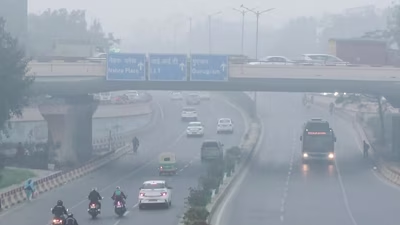
While there is no major prediction of significant rain or snow for the next six days, several areas are facing another weather challenge. Dense fog is marked as very likely at places in Bihar, Haryana, Chandigarh, Delhi, Himachal Pradesh, Jammu and Kashmir, Ladakh, Punjab, Rajasthan, sub-Himalayan West Bengal, Sikkim, and Uttarakhand on Monday. These areas are likely to remain engulfed in dense fog until Thursday, January 15, creating additional hazards for transportation and daily activities.

Also Read: Delhi Sewage Treatment Plants Fail: Alarming Report Reveals Crisis

Several areas of Uttar Pradesh may witness particularly dense fog on Monday, compounding the challenges posed by the Delhi colder than Shimla temperatures and making travel treacherous across the region.

Health and Safety Impacts of Severe Cold Conditions

According to the IMD, the Delhi colder than Shimla conditions and severe cold wave across the region could lead to significant impacts on health, agriculture, transport, and other aspects of life. Health officials warn of increased likelihood of various illnesses like flu, running or stuffy nose, and nosebleeds, which usually set in or get aggravated due to prolonged exposure to cold.

The weather department emphasizes that people should not ignore shivering, as it is the first sign that the body is losing heat. Immediate action should be taken to get indoors and warm up. Frostbite can occur due to prolonged exposure to cold, causing skin to turn pale, hard, and numb, with black blisters eventually appearing on exposed body parts such as fingers, toes, nose, and earlobes. Severe frostbite requires immediate medical attention and treatment.

Agricultural and Infrastructure Concerns

The Delhi colder than Shimla conditions and widespread cold wave are expected to impact agriculture, crops, livestock, water supply, transport, and the power sector at various locations. Farmers are particularly concerned about crop damage during this extended cold spell.

Space Heaters Emerge as Silent Threat

Amid the freezing temperatures making Delhi colder than Shimla, space heaters have emerged as a significant safety concern. Several tragic incidents have been reported from Delhi, Punjab, and Bihar over the past month. In Delhi’s Mukundpur area, a family of three were killed in a fire last Tuesday, with authorities suspecting a room heater explosion or short circuit. Similarly, a young couple and their month-old infant died in Punjab’s Tarn Taran on Sunday from asphyxiation due to fumes after sleeping with a brazier in a closed room.

Trump 25% Tariff Iran: Shocking New Trade Warning Against Countries

Washington D.C. – US President Donald Trump unveiled a comprehensive trade warning on Monday, declaring that any nation conducting business with Iran will face significant economic consequences. The Trump 25% tariff Iran announcement marks a dramatic escalation in Washington’s approach to isolating Tehran economically and politically.

In a statement posted on Truth Social, Trump made his position unequivocally clear about the new policy direction. The president declared that effective immediately, any country doing business with the Islamic Republic of Iran will be subject to a 25% tariff on all transactions with the United States. Trump emphasized that this order is final and conclusive, leaving no room for negotiation or exceptions.

Major Economies Potentially Affected by New Policy

The Trump 25% tariff Iran policy could have far-reaching implications for several major economies that maintain business relationships with Tehran. According to reports, China, Brazil, Turkey, and Russia are among the prominent nations that have established business relations with Iran. These countries now face a critical decision about whether to continue their Iranian partnerships or avoid the substantial tariffs threatened by the Trump administration.

The economic impact of this directive could ripple through international trade networks, potentially forcing companies and governments to choose between access to the American market and their existing Iranian business relationships. The 25% tariff represents a significant financial penalty that could fundamentally alter trade patterns and diplomatic alignments.

Diplomatic Developments and Military Considerations

Beyond the Trump 25% tariff Iran announcement, the president indicated on Sunday that the United States might meet with Iranian officials. Trump revealed that he has been in contact with Iran’s opposition while simultaneously intensifying pressure on Tehran’s leadership. The administration has not ruled out military action, particularly in response to the killing of protesters within Iran.

White House press secretary Karoline Leavitt clarified the administration’s stance during a Monday briefing, explaining that while airstrikes remain among the options under consideration, diplomacy continues to be the preferred approach. Leavitt emphasized that President Trump views diplomatic solutions as the first option, though the administration maintains the flexibility to pursue alternative courses of action if necessary.

The press secretary also noted that Washington has been receiving mixed signals from Tehran, with public statements from Iranian officials differing significantly from private communications received by the administration. This discrepancy has prompted Trump to explore these private messages further, seeking potential pathways toward resolution.

Iran’s Internal Crisis and Regional Position

The Trump 25% tariff Iran policy comes at a particularly challenging time for Tehran’s leadership. Iran’s government is currently confronting widespread protests that initially erupted over severe economic hardship but have since evolved into open calls for overthrowing the clerical establishment. The country’s regional influence has notably weakened, making the regime more vulnerable to external pressure.

These domestic challenges, combined with the new tariff threats and potential military action, place Iran’s leadership in an increasingly precarious position. The protests represent a fundamental challenge to the regime’s authority, while the Trump 25% tariff Iran announcement threatens to further isolate the country economically.

Also Read: Iran Protests Escalate: President Offers Talks as Deaths Surpass 500

Iranian Response and Ongoing Communications

Iranian Foreign Minister Abbas Araqchi acknowledged that Tehran is reviewing proposals from Washington but characterized them as inconsistent with concurrent US threats. In an interview with Al Jazeera, Araqchi confirmed that communications between US special envoy Steve Witkoff and himself have continued before and after the protests and remain ongoing.

The Iranian foreign minister’s comments suggest that despite the Trump 25% tariff Iran announcement and other pressure tactics, diplomatic channels remain open between Washington and Tehran. However, the mixed messaging from both sides indicates that significant obstacles remain before any meaningful breakthrough can be achieved.

Implications for Global Trade and Diplomacy

The Trump 25% tariff Iran policy represents a bold attempt to leverage America’s economic power to achieve foreign policy objectives. By threatening substantial penalties on countries that maintain Iranian business ties, the administration aims to maximize pressure on Tehran while potentially forcing other nations to reconsider their relationships with the Islamic Republic.

The effectiveness of the Trump 25% tariff Iran strategy will depend largely on how major economies respond to the ultimatum. Countries like China and Russia, which have their own complex relationships with Washington, may resist American pressure, while others might calculate that maintaining access to US markets outweighs the benefits of Iranian partnerships.

As the situation continues to develop, the international community watches closely to see whether this Trump 25% tariff Iran approach will achieve its intended objectives or create new complications in an already volatile region.

ED vs Mamata Banerjee TMC: Bengal Govt Files Caveat in Supreme Court

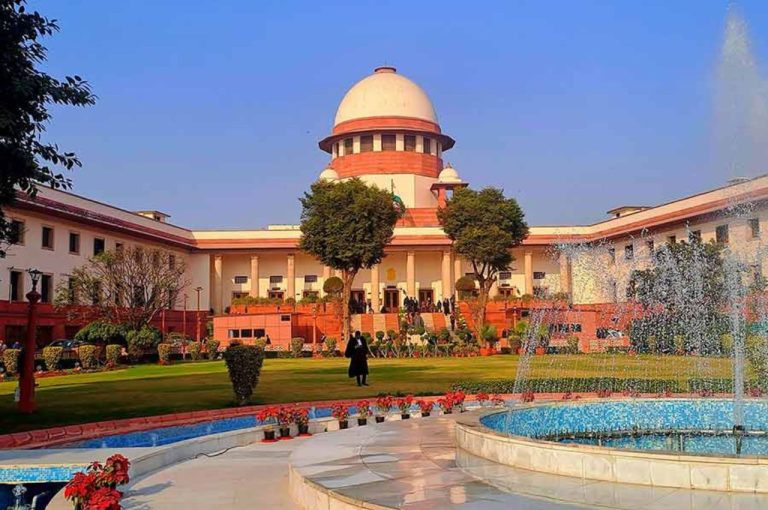
ED vs Mamata Banerjee TMC: The Bengal government has filed a caveat in the Supreme Court in connection with the ongoing Enforcement Directorate (ED) versus Trinamool Congress (TMC) confrontation, ensuring that the state will be heard before any order is passed. This move escalates the political and legal battle between Mamata Banerjee’s government and central agencies, highlighting tensions over federalism, electoral integrity, and agency neutrality.


1. Background of the Case

  • The Enforcement Directorate (ED) has been investigating matters linked to TMC and its associates, including alleged irregularities in financial dealings.
  • Chief Minister Mamata Banerjee has accused the Centre of weaponising agencies to intimidate political opponents.
  • The confrontation intensified after Mamata personally stormed into the ED office in Kolkata, accusing officials of harassment.

2. ED vs Mamata Banerjee TMC: The Caveat Filing

  • A caveat is a legal notice filed in court to ensure that no order is passed without hearing the party that filed it.
  • By filing the caveat, the Bengal government ensures it will be represented if the ED approaches the Supreme Court.
  • This is a defensive legal strategy, signalling that the state anticipates further escalation of the dispute.

3. Political Context

  • The caveat comes amid a series of ED raids on I‑PAC, the political consultancy firm working with TMC.
  • TMC leaders frame the raids as political vendetta, while BJP insists the ED is acting within its mandate.
  • The matter has now moved beyond state politics into the judicial arena of India’s highest court.

4. Governance Challenges

The case reflects broader issues:

  • Agency neutrality in politically sensitive contexts.
  • Trust deficit between state and Centre.
  • Public perception of bias in enforcement actions.
  • Need for institutional safeguards to protect democratic processes.

5. Historical Context of ED vs TMC

  • 2019–2021: ED and CBI raids on TMC leaders during Narada and Saradha scams.
  • 2024–25: Multiple raids on opposition leaders across states, intensifying debates on agency misuse.
  • 2026: Current confrontation escalates to the Supreme Court, marking a new phase in the conflict.

6. Community Impact

  • Citizens express concern about erosion of democratic norms.
  • TMC cadres mobilise in Kolkata, chanting slogans against BJP.
  • Civil society groups debate the role of agencies in democracy.
  • Opposition parties frame the issue as a larger democratic struggle.

7. Global Comparisons

Similar controversies worldwide:

  • Turkey: Opposition accuses government of using agencies to suppress dissent.
  • USA: Debates over FBI investigations during election cycles.
  • Pakistan: NAB raids often criticised as politically motivated.

Bengal’s case mirrors these global struggles where state power and democratic freedoms collide.


8. Governance Lessons

The caveat filing teaches:

  • Judicial independence must be safeguarded.
  • Transparency in enforcement actions builds public trust.
  • Federal dialogue can reduce tensions between Centre and states.
  • Civil society vigilance is crucial to protect democratic rights.

9. Future Outlook – Democracy in Bengal

India must move towards:

  • Codified rules for agency raids during election periods.
  • Judicial oversight of politically sensitive investigations.
  • Public dashboards for transparency in enforcement actions.
  • Strengthening federal institutions to balance Centre‑state relations.

10. Conclusion

The ED versus Mamata Banerjee’s TMC case has now reached the Supreme Court, with the Bengal government filing a caveat to ensure its voice is heard. This move underscores the seriousness of the confrontation, reflecting the fragile balance between agency independence, judicial integrity, and political accountability. For India, the lesson is clear: democracy must be defended not only at the ballot box but also in the courts where its principles are tested.


Here are some relevant government external links you can use for context, credibility, and references in your article about the ED vs Mamata Banerjee’s TMC case and the Bengal government’s caveat in the Supreme Court:


Also read: Home | Channel 6 Network – Latest News, Breaking Updates: Politics, Business, Tech & More

Ministry of Education Hosts QS Rankings Workshop to Boost Global Standing of Indian Universities: 2026

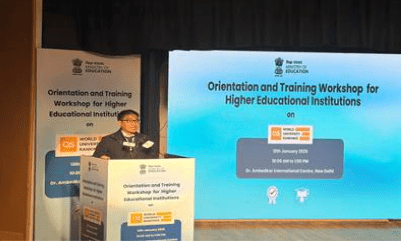
In a strategic step toward strengthening the global presence of Indian higher education, the Ministry of Education organised an Orientation and Training Workshop on the QS World University Rankings for Vice-Chancellors and senior university officials. The initiative aims to enhance institutional understanding of global ranking frameworks and align university strategies with the objectives of the National Education Policy (NEP) 2020.


National-Level Workshop for HEIs on QS World University Rankings

The half-day workshop was organised for Vice-Chancellors and Nodal Officers of Higher Educational Institutions (HEIs) and was conducted by QS Quacquarelli Symonds, the global ranking agency. The programme focused on improving awareness of ranking methodologies, global benchmarks, best practices, and strategic pathways for enhancing institutional performance.

The workshop witnessed strong participation across the higher education ecosystem:

  • Around 400 participants joined online

  • Over 60 participants attended in person

  • Venue: Dr. Ambedkar International Centre, New Delhi

  • Participants included representatives from Central, State, Private, and autonomous institutions nationwide


Secretary (Higher Education) Emphasises Global Benchmarking

Addressing the participants, Dr. Vineet Joshi, Secretary (Higher Education), underlined the importance of international recognition and global benchmarking for Indian universities. He appreciated the initiative and encouraged institutions to proactively engage with global ranking frameworks to strengthen their academic reputation, credibility, and international standing.

His remarks reinforced the government’s broader vision of positioning Indian universities among the world’s leading institutions.


Ministry Highlights Internationalisation Initiatives

Mr. Armstrong Pame, Joint Secretary, Ministry of Education, presented an overview of key internationalisation initiatives, including:

  • SPARC (Scheme for Promotion of Academic and Research Collaboration)

  • Supernumerary seats for international students

  • Study in India (SII) portal

He noted that indicators linked to internationalisation significantly influence global ranking outcomes. Institutions were encouraged to focus on:

  • International student recruitment

  • Faculty development programmes

  • Long-term global academic collaborations

  • Enhanced institutional outreach and branding

These efforts, he emphasised, are essential for improving India’s global academic visibility.


QS Experts Provide Practical Guidance on Rankings Strategy

The workshop was conducted in two structured sessions by Dr. Ashwin Fernandes, Executive Director (AMESA), QS Quacquarelli Symonds.

Session One focused on:

  • QS ranking methodology and eligibility criteria

  • Entry points across various ranking categories (world, subject, regional, business, sustainability)

  • Guidance on accurate data submission through the QS Hub

Session Two covered:

  • Research impact and visibility

  • Academic and employer reputation surveys

  • Strategies to improve citation performance and research outreach

The sessions offered practical, actionable insights for institutions aiming to improve performance across ranking indicators.


India’s Rising Presence in QS Rankings

Indian higher education has shown remarkable progress on the global stage. The number of Indian institutions featured in the QS World University Rankings 2026 has risen to 54, compared to just 12 in 2014.

While this growth reflects increasing global recognition, experts highlighted the need for further improvement in key areas such as:

  • International faculty and student presence

  • Citations per faculty

  • Faculty–student ratios

Workshops like this are seen as critical capacity-building platforms to help institutions systematically address these gaps.


Conclusion

The QS Rankings Orientation Workshop marks an important step in India’s journey toward global academic excellence. By equipping university leaders with deeper insights into ranking methodologies, internationalisation strategies, and research visibility, the Ministry of Education is fostering a more globally competitive higher education ecosystem. As Indian institutions continue to climb global rankings, such initiatives will play a pivotal role in transforming India into a recognised global education hub.


For more real-time updates, visit Channel 6 Network.

Source: PIB