Wednesday, April 29, 2026
Home Blog Page 138

32-Year-Old Soldier on Paternity Leave Dies Hours Before Child’s Birth in Maharashtra Tragedy

In a heartbreaking incident that has left a community in mourning, an Indian Army soldier on paternity leave died in a road accident just hours before his daughter was born in Maharashtra’s Satara district. Havildar Pramod Parshuram Jadhav had returned home from his posting in Ladakh to be with his wife as she prepared for the birth of their first child. Instead of joy, the family was struck by tragedy when Jadhav lost his life in a collision, underscoring the unpredictable and painful realities faced by service members and their families.

The 32-year-old soldier, originally from Dare village in Satara taluka, had come home about a week earlier to support his wife, Rutuja, during her pregnancy. On the evening of January 9, 2026, after escorting Rutuja to a private nursing home in Satara for her delivery, Jadhav was returning on his motorcycle when a mini-truck collided with his vehicle at Wadegaon Phata. The impact left him with fatal injuries, and he was declared dead on arrival at a nearby hospital.

A Tragic Turn of Events

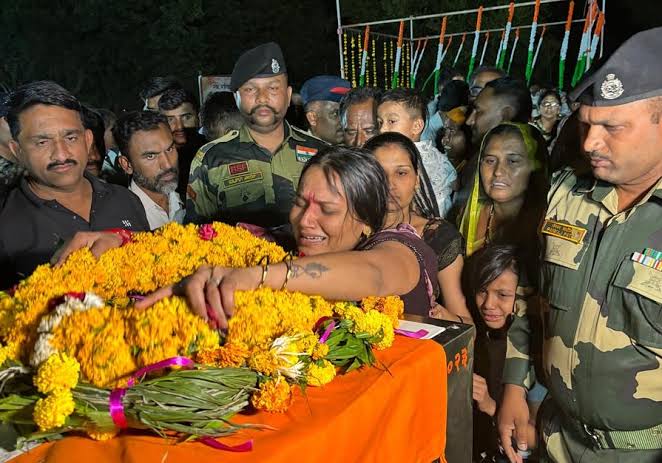
Just hours after Jadhav’s untimely death, Rutuja delivered a healthy baby girl early on January 10, 2026. The stark contrast between life and loss brought an overwhelming emotional weight to the family and local residents. In an emotionally charged scene that was widely shared on social media, Rutuja — still recovering and on a hospital stretcher — was brought to her husband’s funeral procession along with their newborn daughter. Villagers, relatives and officials watched as the grieving mother reached out toward her late husband’s body in a moment that encapsulated both profound sorrow and the fragile beauty of life.

The funeral was conducted with full state and military honours, reflecting Jadhav’s service and sacrifice for the nation. Fellow soldiers, local administrators, villagers and family members gathered to pay their respects as the flag-draped coffin was lowered for the final rites. The poignant sight of an eight-hour-old infant and her mother at the funeral site drew deep emotions, reminding many of the human cost behind military duty.
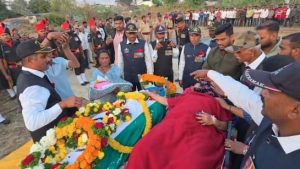
32 years old soldier's death in accident
His wife was brought from the hospital on a stretcher to bid him farewell.

Life and Service of Pramod Jadhav

Pramod Jadhav joined the Indian Army in 2014 and had been serving as a havildar, a senior non-commissioned rank entrusted with leadership and experience. His posting in the Secunderabad–Srinagar sector involved challenging operational responsibilities in the high-altitude terrain of Ladakh, far from his rural roots in Maharashtra. Despite the distance, he remained deeply connected to his family, ensuring that his wife was well supported throughout her pregnancy.

Colleagues and friends describe Jadhav as a committed soldier who balanced duty with deep family values. Prior to his deployment, he had taken steps to ensure the well-being of his relatives, arranging for his sisters’ futures and remaining a dependable member of his community. His sudden death has left a void among those who knew him, highlighting the sacrifices made not just in battle but in everyday life.

Safety on Roads and Risk to Riders

Road accidents remain a significant cause of fatalities in India, particularly among two-wheeler riders who are vulnerable due to limited protection in collisions. The fatal crash involving Jadhav occurred as he was navigating local traffic on a motorcycle, a common mode of transport in rural and semi-urban areas. Improving road safety measures — including better traffic management, stricter enforcement of vehicle regulations and enhanced public awareness — continues to be an urgent priority to prevent such tragedies.

In Satara district and across Maharashtra, statistics show that a large number of road mishaps involve two-wheelers, often resulting in severe injuries or fatalities. The loss of Jadhav highlights not only the personal grief suffered by his family but also the broader need for targeted interventions to make roads safer for all users.

Family’s Grief and Community Support

The community’s response to the tragedy has been marked by solidarity and shared sorrow. Villagers and local leaders have offered support to Jadhav’s family, ensuring that immediate needs are met as they navigate their grief. Many expressed admiration for Jadhav’s dedication and lamented the cruel timing of his death, arriving just before what should have been a moment of celebration.

Friends recounted how he had been looking forward to welcoming his daughter, reflecting a universal hope shared by parents everywhere. The juxtaposition of life’s beginning and end in such close proximity has resonated deeply, stirring emotions across the community.

Veteran Affairs and Family Assistance

In cases where soldiers die while on duty or during authorised leave, the Indian Army and government provide support to the bereaved family. This support typically includes compassionate allowances, pension benefits, and assistance with education for children, among other measures. The family of Jadhav is expected to receive such benefits, aimed at offering financial stability during a difficult time.

Officials from the defence establishment and local administration have highlighted that processes are underway to ensure that the family’s entitlements are secured without delay. Such support systems are crucial in helping families chart a path forward following the loss of a loved one who dedicated years of service to the country.

Road Ahead for the Newborn and Mother

For Rutuja and her newborn daughter, the weeks ahead will be filled with adjustments and emotional recovery. Being without Jadhav in the early days of their child’s life will pose significant challenges, both practical and emotional. Support from extended family, neighbours and official assistance will be vital in creating a stable environment for mother and child.

Community organisations in Satara are also stepping in to assist, offering help with childcare, medical needs and other essentials. The newborn, whose birth was shadowed by tragedy, represents hope and continuity for the family. Community members have rallied around the family, ensuring that the child receives care and opportunities as she grows older.

Remembering a Life of Service

The tragic incident in Satara serves as a poignant reminder of the inherent uncertainties of life, even in moments filled with anticipation and joy. The story of Havildar Pramod Jadhav — a soldier returning home to celebrate the birth of his child, only to be taken by a sudden accident — encapsulates both the selfless spirit of service and the fragility of human existence.

As Maharashtra mourns the loss of a brave son, husband and father, his legacy will live on through his daughter and the impact he made on those around him. The community’s collective grief is also a tribute to his dedication, reflecting deep respect for soldiers who serve far from home while carrying the dreams of family in their hearts.

Read More: https://channel6network.com/mumbai-bmc-election-2026-full-schedule/
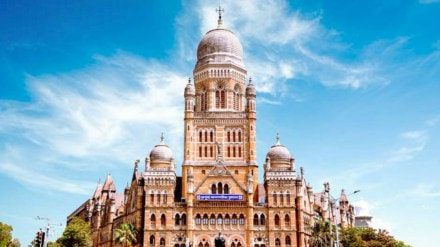
Mumbai BMC Election 2026: Full Schedule, Voting Time and Results Announce

The Brihanmumbai Municipal Corporation (BMC) election 2026 has been officially scheduled, marking a significant moment in Mumbai’s civic life as voters prepare to elect representatives to one of the most powerful municipal bodies in India. The State Election Commission (SEC) has announced that polling will take place on January 15, 2026, across all 227 wards of the BMC, with vote counting set for January 16, 2026. This election follows a prolonged period without elected local representatives and is expected to draw intense public and political engagement.

The BMC election holds considerable importance for Mumbai’s governance, as the municipal corporation oversees essential services such as water supply, sewage and sanitation, road infrastructure, public health, and educational institutions. With a vast electorate and high civic expectations, the 2026 poll is seen as a crucial indicator of public sentiment on local governance, quality of life issues and development performance.

BMC election 2026
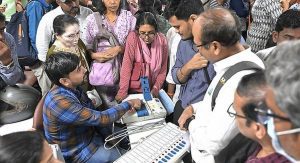
BMC officials at a training camp for the civic polls.

Complete Timeline and Key Dates of BMC election 2026

According to the official election schedule released by the SEC, the BMC election process will follow a structured timetable designed to ensure transparency and orderly conduct of the polls:

  • Nominations Open: December 23, 2025
  • Last Date for Filing Nominations: December 30, 2025
  • Scrutiny of Nominations: December 31, 2025
  • Last Date for Withdrawal: January 2, 2026
  • Final List of Candidates and Symbol Allotment: January 3, 2026
  • Polling Day: January 15, 2026
  • Voting Hours: 7:30 am to 5:30 pm
  • Counting of Votes: January 16, 2026 starting from 10:00 am 

These dates provide voters and candidates with a clear roadmap of the election process, from filing nominations to casting and counting votes. Campaigning is regulated by the Model Code of Conduct, which came into effect from mid-December 2025, restricting certain activities and ensuring a fair environment for all contestants.

What Voters Need to Know

Mumbai’s electorate is large and diverse, with over 10 million eligible voters set to participate in the BMC election. The voter base includes residents from all major demographic groups, reflecting the city’s cosmopolitan makeup. Voters can cast their ballots at designated polling stations located throughout Mumbai, with authorities deploying electronic voting machines (EVMs) and trained poll officials to manage the process efficiently.

On polling day, security and administrative personnel will be present at polling centres to ensure a smooth and safe voting experience. Mobile phones are prohibited inside voting booths to maintain confidentiality and election integrity. Special provisions, such as women-staffed “pink polling stations,” have been introduced in some areas to encourage greater participation.

Why the BMC Polls Are Significant

The Brihanmumbai Municipal Corporation is one of the richest and most influential civic bodies in Asia, managing a multi-crore budget and directing policy on key aspects of urban living. Control over the BMC allows elected representatives to shape initiatives related to urban planning, sanitation, public transport, and citizen services. Outcomes of the BMC elections often reflect public perceptions of governance performance at the municipal level.

Moreover, the 2026 BMC election carries broader political significance because it is one of the first major local elections after significant political realignments in Maharashtra. Voters and political analysts alike see it as a barometer of public opinion that could influence strategies in future state and national polls.

Candidates and Contest Dynamics

A large number of candidates have filed nominations for the 227 seats in the BMC, representing a mix of established political parties, independents and community leaders. Many candidates have deep roots in their respective wards and are campaigning on issues that directly affect local residents, including traffic congestion, waste management, water scarcity, slum infrastructure, and public health services.

In several wards, especially those with large slum populations and economically disadvantaged groups, the number of candidates has surged, reflecting a highly competitive and fragmented contest. Analysts suggest that intense competition in these areas may lead to close outcomes and could influence the overall result margins.

Key Issues Driving Voter Priorities

Mumbai residents are weighing multiple civic concerns as they prepare to vote. Among the top issues highlighted by voters and campaigners are:

  • Traffic and transport challenges: Commuters are seeking better public transit options and reduced congestion.
  • Housing and slum redevelopment: Affordable housing and slum infrastructure remain pressing community priorities.
  • Water supply and sanitation: Consistent access to clean water and efficient waste management are major expectations.
  • Flood control and infrastructure resilience: With monsoon season still fresh in memory, voters are attentive to drainage and flood mitigation efforts.
  • Public safety and health services: Ensuring safer neighbourhoods and quality healthcare facilities continues to rank high on citizen concerns.

These local governance issues are central to the campaign promises of many candidates, shaping how constituencies engage with their choices and what they expect from their future corporators.

Public Participation and Voter Engagement

Election authorities and civic groups are actively encouraging voter participation in the BMC polls. To facilitate a high turnout, the Maharashtra government declared January 15, 2026, a public holiday across multiple urban centres, including Mumbai, prompting schools, offices and institutions to close and making it easier for residents to vote.

Advanced digital tools and voter assistance applications have been introduced to help citizens verify their voter details, locate polling booths and access candidate information ahead of the election. This effort aims to reduce confusion and boost confidence among first-time voters and long-term residents alike.

Counting and Results Day

Once polling concludes on January 15, election officials will begin the vote counting process on January 16, 2026. Counting is expected to start in the morning and continue throughout the day, with results likely to be declared by the evening. The announcement will determine which party or coalition gains control of the BMC and will shape Mumbai’s civic direction for the next five years.

The counting day is anticipated to draw significant public and media attention, as stakeholders and citizens alike await the final verdict. Winning control of the municipal corporation is a coveted political objective due to the authority and resources vested in the BMC.

Challenges and Expectations

While the election schedule has been set and preparations are underway, several challenges remain. Concerns about duplicate voter entries and inaccuracies in the electoral roll have been raised by political parties and civic observers, prompting calls for a thorough review of voter lists to ensure fairness and credibility. The SEC has implemented verification mechanisms to address these issues ahead of polling day.

Additionally, ensuring that elections run smoothly across all 10,000+ polling stations in the city will require meticulous planning and coordination among officials, volunteers and security personnel.

Looking Ahead

The Mumbai BMC election of 2026 stands as a pivotal event in the city’s civic and political calendar. With active voter engagement, diverse candidate representation and intense debate over urban priorities, the election will test how well local governance structures align with citizen aspirations and address pressing urban challenges.

As Mumbai prepares for January 15 polling and January 16 results, voters will play a decisive role in determining the future of their municipal leadership, shaping the policies and services that affect everyday life in one of India’s largest and most dynamic cities.

Read More: https://channel6network.com/bmc-election-2026-marathi-manoos/

BMC Election 2026: ‘Marathi Manoos’ in Focus as Mumbai Heads Toward Crucial Civic Polls

As Mumbai moves closer to the Brihanmumbai Municipal Corporation election in 2026, the issue of Marathi manoos has once again emerged as a central theme in political discourse. With parties sharpening their strategies for one of India’s most powerful civic bodies, appeals to local identity, language and cultural pride are shaping campaign narratives across the city. The BMC, which controls a massive annual budget and plays a key role in urban governance, has always been politically significant, and the renewed emphasis on Marathi interests is adding intensity to the contest.

Mumbai’s political landscape has historically been influenced by issues related to regional identity and the rights of local residents. The term Marathi manoos refers to the native Marathi-speaking population of Maharashtra, especially in Mumbai, who often raise concerns about employment, housing, cultural recognition and political representation in a city that attracts people from across the country. In the lead-up to the 2026 civic polls, these issues are once again becoming rallying points for parties seeking to secure a strong base of support.

Why the BMC Election Matters

The Brihanmumbai Municipal Corporation is not just another civic body. It is India’s richest municipal corporation, with control over key urban services including water supply, sanitation, public health, roads, schools and hospitals. The party or alliance that controls the BMC gains significant administrative power and political influence in Mumbai, making the election a high-stakes battle.

Over the years, control of the BMC has allowed political parties to build strong networks at the grassroots level. Civic contracts, development projects and welfare schemes provide both visibility and influence, which is why every major political force in Maharashtra treats the BMC election as a mini state-level contest.

Marathi Identity Returns to Centre Stage

The renewed focus on Marathi manoos is rooted in long-standing concerns among local residents about migration, job competition and rising living costs. Many Marathi families feel that despite being native to the city, they are being pushed to the margins as housing prices soar and employment becomes more competitive.

Political parties are tapping into these sentiments by promising to protect local interests, ensure greater job opportunities for Marathi youth and promote the Marathi language and culture in public life. Campaign speeches, party manifestos and public meetings are increasingly referring to these themes, making identity politics a defining feature of the election.

For some parties, the Marathi manoos narrative is a way to reconnect with traditional voter bases that may have felt neglected in recent years. For others, it is a strategic tool to challenge rivals by positioning themselves as the true defenders of Mumbai’s original inhabitants.

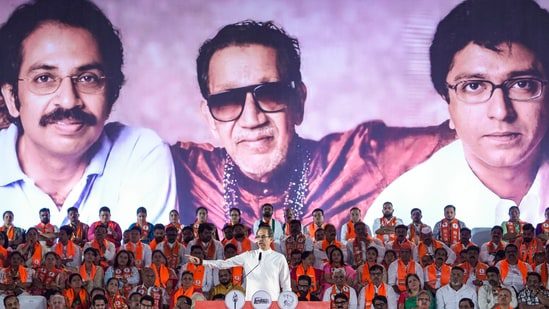
Bmc election
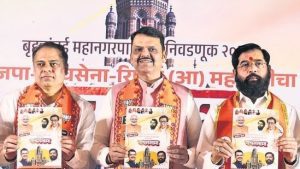
Maharashtra CM Devendra Fadnavis, Dy CM Eknath Shinde and other party leaders take part in the launch of the Mahayuti manifesto.

Key Issues Facing Mumbai Voters

While identity plays a strong role, voters are also deeply concerned about everyday civic issues. Mumbai continues to struggle with traffic congestion, flooding during the monsoon, waste management, air pollution and the availability of affordable housing. The BMC’s performance in addressing these problems will be a crucial factor in how citizens cast their votes.

Local residents want better roads, reliable public transport, improved drainage systems and more green spaces. Slum redevelopment, coastal road projects and metro expansion have also generated debate, with some praising the push for infrastructure and others questioning the impact on communities and the environment.

Against this backdrop, parties must balance emotional appeals with practical governance promises. The focus on Marathi manoos may attract attention, but voters will also judge whether leaders have credible plans to improve quality of life in the city.

Political Strategies Take Shape

Different parties are approaching the election with distinct strategies. Some are emphasising cultural pride and regional rights, while others are focusing on governance, development and efficiency. In many cases, both approaches are being blended to appeal to a broad cross-section of voters.

Campaigns are expected to be highly localised, with ward-level issues and neighbourhood concerns playing a big role. Candidates will likely highlight their work in specific areas, such as fixing roads, improving sanitation or resolving water supply problems, while also aligning with broader party narratives about Mumbai’s future.

The battle for the BMC is also being seen as a test of political strength ahead of future state and national elections. A strong performance in Mumbai can boost morale, resources and public perception, giving parties an edge in subsequent contests.

Voters Caught Between Identity and Development

For many Mumbai residents, the choice is not simple. While they may feel a strong connection to Marathi identity, they are also practical about the need for effective governance. Middle-class voters, in particular, often prioritise infrastructure, safety and cleanliness, while lower-income groups may focus on housing, healthcare and access to basic services.

The challenge for political leaders is to convince voters that they can deliver on both fronts. Appeals to Marathi pride must be matched with clear plans for urban development, or they risk being seen as empty rhetoric.

At the same time, non-Marathi communities in Mumbai are also watching the campaign closely. In a city known for its diversity, parties must be careful not to alienate large sections of the population while addressing the concerns of local residents.

The Road Ahead

As the 2026 BMC election draws nearer, the intensity of political campaigning is set to increase. More rallies, public meetings and debates will focus on what kind of city Mumbai should become in the coming years. The emphasis on Marathi manoos will remain a powerful theme, but it will be tested against the realities of urban governance and development.

Ultimately, the election will reflect how well parties understand the complex identity of Mumbai. It is a city that is both deeply rooted in Maharashtrian culture and proudly cosmopolitan. The political force that best captures this balance may well emerge victorious in one of the most important civic elections in the country.

Read More: https://channel6network.com/maharashtra-ladli-behna-rs3000-transfer/

Maharashtra Govt to Transfer Rs 3,000 to Ladli Behna Accounts on Makar Sankranti as Congress Raises Strong Objection

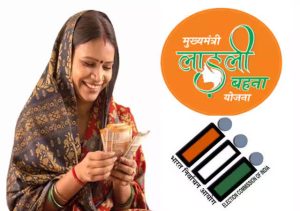
The Maharashtra government has announced that Rs 3,000 will be credited to the bank accounts of beneficiaries under the Ladli Behna scheme on the occasion of Makar Sankranti, a move that has triggered a political debate just weeks ahead of the upcoming civic and state-level electoral milestones. The scheme, aimed at providing direct financial assistance to women from economically weaker sections, has been projected by the state administration as a key welfare initiative designed to improve household stability and empower women.

Under the plan, eligible women registered under the Ladli Behna scheme will receive a direct cash transfer into their linked bank accounts. The government has said that the transfer has been timed with Makar Sankranti to symbolise a fresh beginning for beneficiary families, many of whom rely on such support to meet daily expenses, healthcare costs and education needs of their children.

However, the opposition Congress has raised strong objections, alleging that the timing of the disbursement is politically motivated and aimed at influencing voters. Party leaders have questioned whether public money is being used to gain electoral advantage rather than being distributed strictly based on administrative schedules and welfare planning.

What is the Ladli Behna Scheme

The Ladli Behna scheme is one of Maharashtra’s flagship women-focused welfare programmes. It provides regular financial support to eligible women, particularly those from low-income households, widows, and single mothers. The scheme is designed to ensure a basic level of economic security for women, allowing them to manage household expenditures and emergencies without depending entirely on others.

The government has stated that the Rs 3,000 payment for Makar Sankranti is part of the scheme’s continued rollout and not an extraordinary or one-time benefit. According to officials, funds have been allocated in the state budget to ensure timely transfers, and the banking system has been instructed to complete the credit process within a fixed window.

Authorities also said that digital monitoring tools are being used to ensure transparency and to prevent duplication or misuse. Beneficiaries are required to have Aadhaar-linked bank accounts to receive the amount, which helps verify identity and eligibility.

Ladli Behna payout sparks poll code row in Maharashtra

Why the Makar Sankranti Transfer Matters

Makar Sankranti holds cultural and social significance across Maharashtra and many parts of India. It is seen as a festival marking the transition into a brighter phase of the year, often associated with new beginnings and prosperity. By choosing this date for the transfer, the government is aiming to create a positive emotional and financial impact for beneficiaries.

For many families, Rs 3,000 is a meaningful amount. It can help pay for essential groceries, school supplies, utility bills or medical needs. In rural and semi-urban areas, where income can be irregular, such assistance provides a sense of stability.

Government representatives have said that the scheme reflects their commitment to inclusive development and women’s welfare. They argue that empowering women financially has a direct impact on nutrition, education and overall family well-being.

Congress Raises Concerns Over Timing

The Congress party has strongly criticised the announcement, claiming that releasing funds just before crucial elections creates an unfair advantage for the ruling alliance. Party leaders argue that welfare schemes should operate on a fixed calendar rather than being aligned with festivals or politically sensitive periods.

Congress spokespersons have said that while they do not oppose financial assistance to women, they question the intent behind the Makar Sankranti timing. According to them, the move blurs the line between governance and campaigning, and could potentially violate the spirit of election fairness.

The party has also demanded clarity on how many beneficiaries will receive the amount and whether the payments were already scheduled or specially arranged for this date. They have called on the Election Commission and relevant authorities to examine the matter closely.

Government’s Response to Opposition Criticism

In response to the allegations, the Maharashtra government has defended its decision, stating that the Ladli Behna scheme has been operational for months and that regular transfers are part of its design. Officials have insisted that the Makar Sankranti transfer is simply one of the scheduled installments and not an election-driven announcement.

State leaders have also pointed out that welfare schemes should not be stalled or altered because of political calendars. They argue that beneficiaries should not be deprived of their entitled funds simply because elections are approaching.

The government has further emphasised that all financial disbursements are routed through proper administrative channels, audited and monitored to ensure accountability. They have urged opposition parties not to politicise programmes meant to support vulnerable sections of society.

Impact on Beneficiaries

For the women enrolled in the Ladli Behna scheme, the debate in political circles matters less than the actual receipt of money. Many beneficiaries see the Rs 3,000 as crucial support that helps them manage rising costs of living.

Women in rural districts have said that such financial aid allows them to contribute to household decisions and reduce their dependence on male family members. In urban areas, beneficiaries often use the money for school fees, rent supplements or healthcare expenses.

The government has highlighted stories of women who have used the scheme’s benefits to start small businesses, pay for vocational training or invest in their children’s education, underlining the long-term impact of such welfare programmes.

Broader Political Implications

The Ladli Behna payment has become a focal point in Maharashtra’s wider political contest. Welfare schemes targeted at women and lower-income groups have increasingly become a central strategy for parties seeking to expand their voter base.

With multiple elections on the horizon, every major decision is being closely scrutinised for political intent. The opposition sees the Makar Sankranti transfer as part of a larger pattern of using welfare announcements to shape public opinion, while the government maintains that governance should continue uninterrupted.

Analysts note that women voters form a significant and influential segment of the electorate, making schemes like Ladli Behna politically as well as socially important. How voters perceive this latest transfer could play a role in shaping electoral outcomes.

What Comes Next

As the Rs 3,000 transfers begin reaching beneficiary accounts, attention will shift to how smoothly the process is executed. Any technical glitches or delays could affect public perception, while a seamless rollout could strengthen confidence in the scheme.

At the same time, political debate over the timing and intent of the disbursement is likely to continue. The coming weeks will see more scrutiny of government welfare programmes as parties prepare for the electoral battles ahead.

For now, thousands of women across Maharashtra are set to receive financial assistance on Makar Sankranti, a development that underscores both the importance of social welfare and the intensity of the state’s political climate.

Read More: https://channel6network.com/raut-annamalai-mumbai-row/

Mumbai Not in Maharashtra Controversy: Sanjay Raut’s Fierce Attack on Annamalai

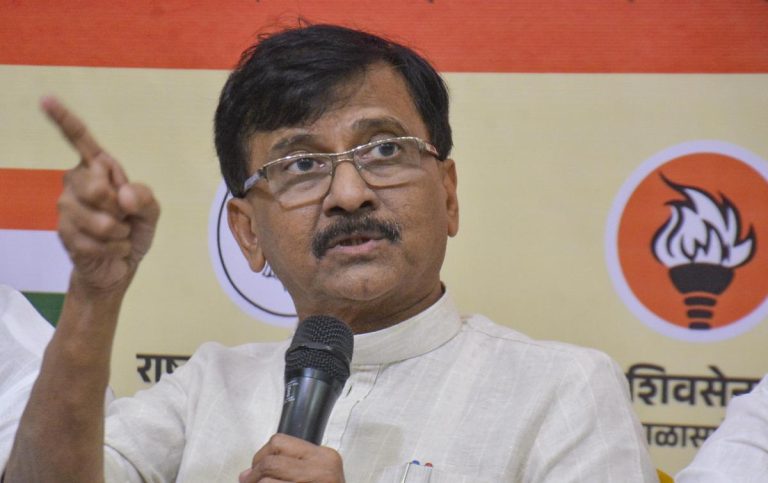
Political tensions in Maharashtra escalated sharply this week after a remark by Bharatiya Janata Party leader K Annamalai during campaigning for the forthcoming municipal elections triggered a strong backlash from opposition leaders. Annamalai’s assertion that Mumbai was “not a city of Maharashtra” but instead an “international city” ignited controversy, drawing criticism from senior Shiv Sena (UBT) leader Sanjay Raut, who demanded legal action and accused the BJP of insulting the identity and pride of Maharashtra.

The comments came as Maharashtra prepares for high-stakes municipal polls, including the crucial Brihanmumbai Municipal Corporation elections. Mumbai, as the state capital and India’s financial hub, holds deep emotional and historical significance for citizens across Maharashtra. Any suggestion that it does not belong to the state provoked swift reactions from political circles and civil society groups, highlighting how sensitive regional identity remains in electoral politics.

Remark Sparks Political Firestorm Ahead of Polls

Annamalai’s remarks were made while campaigning in Mumbai’s western suburbs, where he emphasised the city’s global stature and budgetary size compared to other metropolitan centres. He argued that effective administration was necessary to manage such a complex urban environment and that voters should support candidates aligned with strong leadership. However, the phrasing he used — suggesting that Mumbai was not primarily a Maharashtra city — was interpreted by opponents as a challenge to the city’s status and emotional connection to the state.

Shiv Sena (UBT) MP Sanjay Raut described Annamalai’s comment as an insult not only to the people of Maharashtra but also to the legacy of the Samyukta Maharashtra Movement, which fought to ensure that Mumbai remained the capital of the state after its reorganisation. Raut demanded that the chief minister file charges against Annamalai and have him arrested, saying such statements could not be taken lightly given their potential to inflame public sentiment.

Raut’s Accusations and Political Context

In his strongly worded response, Sanjay Raut called the BJP leader’s statement disrespectful and asserted that it reflected a broader pattern of undermining Marathi pride. He questioned why neither the chief minister nor the deputy chief minister had publicly clarified the party’s position on the controversy. Raut challenged the ruling alliance to take a definitive stand and disassociate itself from any narrative that appeared to diminish Mumbai’s identity as part of Maharashtra.

The controversy comes just days before the municipal polls, where local identity and governance issues have become central talking points for all parties. Opposition leaders, including those from rival Shiv Sena factions and other regional outfits, have seized on the remark to portray the BJP as disconnected from Marathi aspirations and concerns. They argue that political leaders campaigning in the state should respect local history and sentiments rather than make statements that could alienate voters.

BJP Leaders Respond to Backlash

State BJP leaders have attempted to downplay the controversy, suggesting that Annamalai’s words were taken out of context or misunderstood. They have argued that his emphasis was on Mumbai’s global importance and administrative complexity rather than any intention to challenge its status within Maharashtra.

A senior state BJP functionary stated that political opponents were deliberately distorting the remark to create a narrative for electoral gain. According to this view, framing Mumbai as a globally significant city was meant to highlight the need for competent governance and capable leadership to manage its resources and challenges, not to question its belonging to Maharashtra.

Historical Significance of Mumbai’s Identity

The link between Mumbai and Maharashtra is rooted in decades of political struggle and cultural pride. During the linguistic reorganisation of states in the 1950s and 1960s, the Samyukta Maharashtra Movement mobilised millions of people to ensure that Marathi-speaking regions, including Mumbai, remained unified under one state. That effort culminated in the formation of Maharashtra on May 1, 1960, with Mumbai as its capital. This historical backdrop gives the city particular emotional resonance for residents and political leaders alike.

Opposition leaders have repeatedly invoked this legacy in their critiques, arguing that any suggestion that Mumbai did not belong to Maharashtra was not merely a semantic issue but a symbolic affront to the sacrifices of those who fought for statehood.

Reactions From Other Political Figures

Beyond Sanjay Raut’s criticism, other regional leaders also weighed in on the controversy. Some senior figures in the opposition emphasised that Mumbai’s identity as a Maharashtra city is non-negotiable and central to the state’s cultural and political ethos. They warned that statements perceived as challenging this identity could deepen divisions and distract from substantive civic issues during the election season.

Other critics highlighted that political rhetoric surrounding identity should be handled with care, especially in a diverse urban centre like Mumbai, where economic migrants from across India and abroad have contributed to its dynamic demographic profile. Striking a balance between celebrating the city’s multicultural character and affirming its place in Maharashtra’s history has become a delicate task for political communicators.

Public Sentiment and Civic Response

Among residents and civic observers, reactions to the controversy have been mixed. Some citizens expressed outrage at the remark and supported Raut’s demand for a strong response, emphasising the emotional and cultural importance of Mumbai to Maharashtra. Many social media users and community leaders reiterated that the city’s identity should be upheld without compromise.

Others called for the focus to remain on practical issues affecting urban voters, such as infrastructure, traffic management, housing affordability, sanitation services and local governance. These observers cautioned against allowing symbolic disputes to overshadow essential discussions about quality of life and public services during the municipal election season.

Impact on Municipal Elections

The controversy around Annamalai’s remark and Raut’s response has added an extra layer of political intensity to the upcoming Brihanmumbai Municipal Corporation elections. Municipal polls in Maharashtra have often been influenced by narratives around local identity, language and heritage, as well as governance performance.

Candidates and parties are now likely to address concerns about civic infrastructure, economic opportunity and community representation more prominently, while also navigating the heightened sensitivities stirred by the recent clash over Mumbai’s identity. Supporters of rival parties see this issue as an opportunity to mobilise core voter blocs and galvanise public sentiment ahead of the polls.

Looking Ahead

As election day approaches, Maharashtra’s political environment remains highly charged, with leaders on all sides gearing up for intense campaigning. The controversy over whether Mumbai is primarily a Maharashtra city may continue to reverberate through public discourse, particularly as leaders attempt to translate identity politics into electoral advantage.

The municipal elections will test how voters balance concerns about local identity, governance issues and party promises. In this context, how political parties respond to controversies like the one triggered by Annamalai’s remark could influence voter perceptions and campaign dynamics across urban Maharashtra.

Read More: https://channel6network.com/maharashtra-municipal-election-2026-showdown/

January 12, 2026 (mid-day): Nifty Holds Flat Near 25,682 as Financials Support; Coal India, Asian Paints Outperform

Indian equity benchmarks traded largely flat in the afternoon session on January 12, 2026, as gains in banking and financial services helped offset weakness in select auto and new-age technology stocks. While the Nifty 50 hovered around the unchanged mark, market action remained stock-specific, with strong participation seen in energy, paints and consumption-related counters.

Also Read: January 12, 2026 (opening): Nifty Slips Below 25,600 as Financials Weigh; HDFC Life, Coal India Lead Gains


Benchmarks Trade Range-Bound

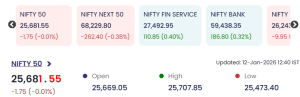
At 12:40 IST, the Nifty 50 stood at 25,681.55, marginally down 1.75 points or 0.01%, indicating consolidation after a volatile morning. The index traded within a wide intraday range, reflecting ongoing tug-of-war between bulls and bears.

  • january 12Open: 25,669.05

  • High: 25,707.85

  • Low: 25,473.40

Sectoral performance was mixed:

  • Nifty Next 50: 68,229.80 (−0.38%)

  • Nifty Financial Services: 27,492.95 (+0.40%)

  • Nifty Bank: 59,438.35 (+0.32%)

The positive move in banking and financial stocks provided crucial support to the headline index.


Top Gainers: Energy, Paints and Retail Stocks Lead

Select heavyweight stocks attracted strong buying interest, supported by healthy volumes and traded value.

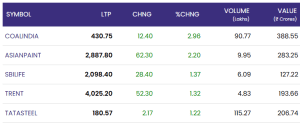
  • Coal India surged 2.96% to ₹430.75, with robust volumes of 90.77 lakh shares, indicating strong institutional demand.

  • Asian Paints climbed 2.20% to ₹2,887.80, supported by renewed interest in consumption-driven themes.

  • SBI Life Insurance added 1.37% to ₹2,098.40, benefiting from the broader strength in financial services.

  • Screenshot 2026 01 12 124048Trent gained 1.32% to ₹4,025.20, continuing its steady upward momentum.
  • Tata Steel rose 1.22% to ₹180.57, reflecting mild recovery in metal stocks.

The rally in Coal India and Asian Paints played a key role in keeping the broader market sentiment positive.


Top Losers: Auto and Financial Stocks Face Pressure

On the downside, selling pressure was visible in select auto and financial counters:

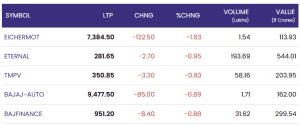
  • Eicher Motors declined 1.63% to ₹7,384.50, emerging as the top laggard.

  • Eternal slipped 0.95% to ₹281.65 amid heavy volumes, suggesting active profit booking.

  • Screenshot 2026 01 12 124107TMPV fell 0.93% to ₹350.85.

  • Bajaj Auto eased 0.89% to ₹9,477.50.

  • Bajaj Finance dropped 0.88% to ₹951.20, limiting the upside in financials.

The weakness in auto majors prevented the index from building on early gains.


Market Mood: Consolidation with Sector Rotation

The afternoon trade reflects a consolidation phase, with investors rotating capital across sectors rather than exiting the market. Strength in banking, insurance and select commodities suggests underlying confidence, while profit booking in autos and select high-beta stocks indicates caution at higher levels.

Traders are closely tracking earnings expectations and global cues, which are likely to determine the next directional move.


Conclusion: January 12, 2026

The Nifty’s flat trade near 25,682 highlights a market in balance, supported by financials but capped by weakness in autos and select large caps. Strong performance by Coal India, Asian Paints, and Trent underscores continued stock-specific opportunities. In the near term, market direction is expected to remain data- and earnings-driven, with volatility likely around key levels.


For real time stock Updates, visit NSE website.

January 12, 2026 (opening): Nifty Slips Below 25,600 as Financials Weigh; HDFC Life, Coal India Lead Gains

Indian equity benchmarks traded lower in late morning deals on January 12, 2026, with the Nifty 50 slipping below the 25,600 mark amid broad-based profit booking in heavyweight financials and select large caps. Despite the headline index weakness, pockets of strength were visible in insurance, FMCG and select PSU stocks, highlighting a stock-specific market tone.

Also Read: January 9, 2026: Markets End Lower for Second Straight Session as Nifty 50 Closes Near Day’s Low at 25,683


Benchmarks Under Pressure

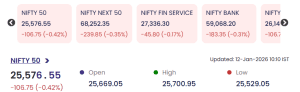
At 10:10 IST, the Nifty 50 stood at 25,576.55, down 106.75 points or 0.42%. The index opened at 25,669.05, touched an intraday high of 25,700.95, and a low of 25,529.05, indicating heightened volatility in early trade.

Sectoral peers also reflected a cautious undertone:

  • january 12Nifty Next 50: 68,252.35 (−0.35%)

  • Nifty Financial Services: 27,336.30 (−0.17%)

  • Nifty Bank: 59,068.20 (−0.31%)

The weakness in banking and NBFC counters remained the key drag on the broader market.


Top Gainers: Insurance, Energy and Consumption Stocks Shine

Buying interest was visible in select frontline names, with investors rotating into relatively defensive and fundamentally strong counters.

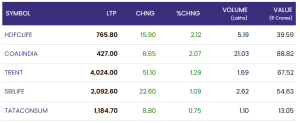
  • HDFC Life Insurance rose 2.12% to ₹765.80, supported by steady volumes of 5.19 lakh shares.

  • Coal India gained 2.07% to ₹427.00, backed by strong traded value of ₹88.82 crore, suggesting institutional participation.

  • Screenshot 2026 01 12 101032Trent advanced 1.29% to ₹4,024.00, continuing its long-term consumption-led growth narrative.
  • SBI Life Insurance added 1.09% to ₹2,092.60.

  • Tata Consumer Products climbed 0.75% to ₹1,184.70, reflecting resilience in the FMCG space.

The outperformance of insurance and consumption stocks indicates that investors are selectively positioning in sectors with stable earnings visibility.


Top Losers: Financials and Cyclicals Drag

On the downside, pressure was evident in financial services and capital goods stocks:

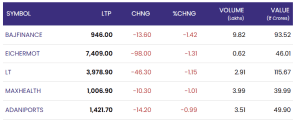
  • Bajaj Finance slipped 1.42% to ₹946.00, emerging as one of the key drags on the index.

  • Eicher Motors declined 1.31% to ₹7,409.00 amid mild profit booking in auto counters.

  • Larsen & Toubro (L&T) fell 1.15% to ₹3,978.90, weighing on the infrastructure and capital goods pack.

  • Screenshot 2026 01 12 101048Max Healthcare eased 1.01% to ₹1,006.90.
  • Adani Ports dropped 0.99% to ₹1,421.70.

The selling in heavyweight stocks like Bajaj Finance and L&T contributed significantly to the benchmark’s decline.


Market Sentiment: Stock-Specific, Not Broad-Based Panic

The current session reflects a “selective buying, selective selling” environment rather than outright risk-off sentiment. While benchmark indices remain under pressure, strong volumes in certain gainers suggest that institutional investors are actively reallocating capital rather than exiting equities altogether.

Short-term volatility is likely to persist as traders react to valuations, earnings expectations, and global cues. However, the resilience in defensive sectors like insurance and FMCG points to underlying market stability.


Conclusion: January 12

The Nifty’s dip below 25,600 underscores near-term caution, driven primarily by weakness in financials and large-cap cyclicals. Yet, the continued strength in HDFC Life, Coal India, Trent, and Tata Consumer Products signals that investors remain optimistic on select sectors with robust fundamentals. Going forward, market direction is expected to hinge on earnings momentum and sectoral leadership rather than broad-based rallies.


For real time stock Updates, visit NSE website.

Delhi Sewage Treatment Plants Fail: Alarming Report Reveals Crisis

0

New Delhi – A concerning report from the Delhi Pollution Control Committee reveals that 12 of Delhi sewage treatment plants failed to meet prescribed standards in November, highlighting a worsening crisis in the capital’s wastewater management infrastructure. The DPCC’s latest assessment, dated December 17, examined 37 facilities across the city and found widespread non-compliance with Central Pollution Control Board parameters. Additionally, samples could not be collected from a 13th facility at Sonia Vihar due to no flow during inspection, further complicating the assessment of Delhi sewage treatment plants performance.

Alarming Increase in Non-Compliance

The number of Delhi sewage treatment plants failing treatment norms has increased significantly, with nine such facilities identified in September and October reports compared to twelve in November. This upward trend indicates deteriorating performance across the capital’s wastewater treatment infrastructure. The monthly assessment reveals that a substantial section of Delhi sewage treatment plants do not meet prescribed norms for critical parameters including faecal coliform, biological oxygen demand, chemical oxygen demand, and total suspended solids.

Shocking Faecal Coliform Violations

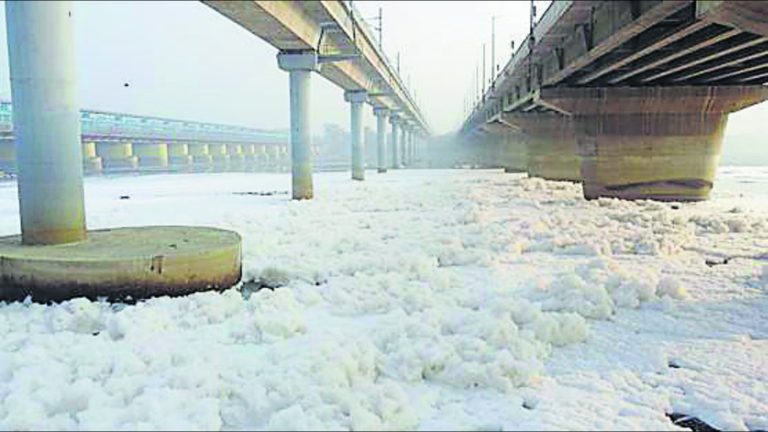
The most alarming findings concern faecal coliform levels at several Delhi sewage treatment plants. At Molarband STP, faecal coliform levels reached 234 times the prescribed limit, representing a catastrophic failure in treatment standards. The Ghitorni treatment plant recorded levels 73 times higher than permissible limits, while Vasant Kunj-2 STP showed contamination 70 times above standards. These excessive levels pose serious public health risks, particularly as treated water from Delhi sewage treatment plants is discharged into the Yamuna River.

Against the prescribed limit of 230 MPN/100ml, specific Delhi sewage treatment plants recorded shocking readings: Molarband outlet showed 54,000 units, Mehrauli recorded 3,500 units, Vasant Kunj-2 measured 16,000 units, and Vasant Kunj-1 registered 9,200 units. These extreme violations underscore systemic failures in treatment processes across multiple facilities.

Facilities Failing Multiple Parameters

The DPCC report identified twelve Delhi sewage treatment plants that failed to meet standards: Sen Nursing Home STP, Delhi Gate, Kapashera, Molar Band, Okhla (old), Mehrauli, Vasant Kunj 1 and 2, Ghitorni, Yamuna Vihar Phase 1 and Phase 3, and Nilothi New (Phase-1). While most Delhi sewage treatment plants failed faecal coliform treatment levels, facilities at Mehrauli, Vasant Kunj, and Yamuna Vihar failed on three or more parameters simultaneously, indicating comprehensive treatment failures.

Total Suspended Solids Violations

Six Delhi sewage treatment plants failed to meet TSS and BOD standards, both of which should be less than 10mg/L according to CPCB parameters. TSS levels at outlets were three to four times higher than permissible limits: 36mg/L at Yamuna Vihar Phase-1, 27mg/L at Yamuna Vihar Phase-3, and 24mg/L at Vasant Kunj-2. These elevated suspended solid levels indicate inadequate filtration and treatment processes at these Delhi sewage treatment plants.

Also Read: Pollution Record: Explosive Clash Between BJP And AAP Over Delhi Air

Biochemical Oxygen Demand Failures

Biochemical oxygen demand levels—representing the amount of oxygen required by aquatic life to survive—were two to three times higher at several Delhi sewage treatment plants. The CPCB standard sets BOD levels at 10mg/L, but multiple facilities consistently exceeded this threshold. High BOD levels in treated water released into the Yamuna River severely impact aquatic ecosystems and contribute to the river’s ongoing pollution crisis.

Capacity and Infrastructure Challenges

Delhi sewage treatment plants face significant capacity constraints in addressing the city’s wastewater crisis. Delhi estimates sewage generation at 3,600 million liters per day or 792 million gallons per day, with approximately 80% of the water supply (990 MGD) returning as wastewater. However, the 37 Delhi sewage treatment plants at 20 locations have an installed capacity to treat only 667 MGD.

The Delhi Economic Survey highlights that actual capacity utilization of Delhi sewage treatment plants reaches only 565 MGD, creating a treatment gap of 227 MGD. This untreated sewage ends up in drains, water bodies, and the Yamuna River, exacerbating pollution problems. Even the 565 MGD that undergoes treatment suffers from underperforming facilities that fail to meet prescribed standards.

Groundwater Factor Ignored

Environmental experts point out that estimated sewage generation figures do not account for groundwater extraction by residents. Yamuna activist Bhim Singh Rawat, a member of the South Asia Network on Dams, Rivers and People, criticized this oversight. “The real quantum of sewage is much more, the STPs are inadequate and underperforming and even the water that gets treated does not meet norms,” he stated, emphasizing that Delhi sewage treatment plants face challenges beyond documented capacity constraints.

Systemic Accountability Failures

The recurring failures of Delhi sewage treatment plants highlight systemic accountability gaps in environmental governance. Rawat noted: “From years, we have been hearing about STPs not meeting norms but no accountability is fixed. There is no monitoring mechanism which involves civil society and violations continue every month without any repercussions.”

This absence of consequences enables persistent non-compliance, with Delhi sewage treatment plants repeatedly violating standards without facing meaningful penalties or corrective interventions.

Yamuna River Impact

The underperformance of Delhi sewage treatment plants directly impacts Yamuna cleanup efforts, as the river receives inadequately treated wastewater carrying excessive pollutants. Experts recommend that the government focus on improving STP management, restoring ecological flow, and protecting floodplains to address the Yamuna pollution crisis comprehensively.

The November report on Delhi sewage treatment plants underscores the urgent need for infrastructure upgrades, enhanced monitoring, stricter enforcement, and accountability mechanisms to protect public health and environmental quality in the national capital.

Ganga Expressway Launch: Revolutionary 594-km Project Opens Next Month

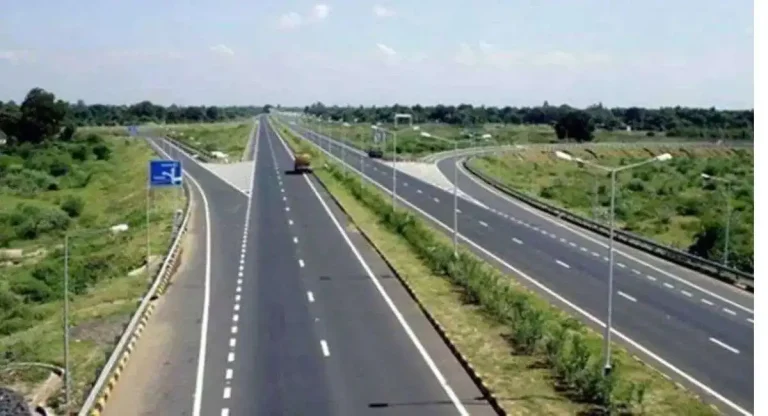
Lucknow – The Ganga Expressway is set to become operational next month following successful trials of its FASTag-enabled toll booth system, marking a historic milestone in India’s infrastructure development. Spanning an impressive 594 kilometers, the Ganga Expressway will be the country’s longest expressway, connecting 12 districts across Uttar Pradesh. The UPEIDA has confirmed that comprehensive trial runs demonstrate the readiness of contactless toll collection mechanisms, signaling the final phase of this ambitious project’s completion.

Successful FASTag Technology Implementation

Trial runs conducted on the Ganga Expressway have validated the efficiency of the FASTag-enabled toll booth systems installed throughout the route. During testing, automatic boom barriers opened smoothly as vehicles slowed down, with the system immediately scanning FASTags installed on vehicles. Officials confirmed these tests demonstrated the effectiveness and preparedness of the contactless toll collection mechanism being implemented across the Ganga Expressway infrastructure.

A significant trial was successfully conducted on January 10 at kilometer 146 in Badaun district, marking a key milestone in the Ganga Expressway project’s progress. The boom barrier functioned flawlessly as the system scanned vehicle FASTags, confirming operational readiness. Following this success, similar tests are being conducted at other toll booths under Group 2, Group 3, and Group 4 packages of the Ganga Expressway development.

Extensive Geographic Coverage

The Ganga Expressway passes through 12 districts of Uttar Pradesh: Meerut, Hapur, Bulandshahr, Amroha, Sambhal, Budaun, Shahjahanpur, Hardoi, Unnao, Rae Bareli, Pratapgarh, and Prayagraj. This extensive coverage will dramatically reduce travel time across these regions, facilitating economic development and connectivity. The strategic routing of the Ganga Expressway ensures it serves both urban and rural populations, creating new opportunities for commerce and mobility.

Impressive Engineering Infrastructure

The engineering complexity of the Ganga Expressway is evident in its comprehensive infrastructure components. The expressway spans 140 water bodies and includes seven road overbridges, 17 interchanges, 14 major bridges, 126 minor bridges, 28 flyovers, 50 vehicle underpasses, 171 light vehicle underpasses, 160 small vehicle underpasses, and 946 culverts. This intricate network of structures ensures seamless connectivity while managing environmental and geographical challenges across the Ganga Expressway route.

Swiss Technology for Enhanced Safety

The state government has partnered with ETH Zurich University and RTDT Laboratories AG of Switzerland to enhance safety standards on the Ganga Expressway. This agreement focuses on implementing artificial intelligence and sensor-based systems for monitoring the expressway’s quality and comfort levels. The innovative approach allows detection and correction of road defects during the construction phase itself, representing a paradigm shift in Indian infrastructure development.

Also Read: Capital Expenditure: Massive Rs. 2,100 Crore Boost In Revised Delhi Budget

An Innova vehicle equipped with vibration technology and seven accelerometer sensors—four for quality assessment and three for comfort measurement—is inspecting all six lanes of the Ganga Expressway. This vehicle continuously gathers data on road surface conditions, comfort levels, and elevation variations, which can be monitored in real-time through online graphs.

Revolutionary Quality Monitoring

The Swiss technology implementation on the Ganga Expressway transforms traditional quality assurance processes. Previously, road quality checks occurred only after construction completion, making it extremely difficult to rectify manufacturing defects. The adoption of advanced monitoring systems enables quality and comfort assessment during the construction phase of the Ganga Expressway itself, ensuring superior standards before operational launch.

The sensors measure road undulations and comfort levels, enabling immediate corrective action wherever required on the Ganga Expressway. This proactive approach guarantees that commuters will experience world-class road quality from day one of operations.

Adani Enterprises’ Role

Adani Enterprises is developing multiple stretches of the Ganga Expressway project, including the toll plaza where successful FASTag trials were conducted in Badaun. The company’s involvement encompasses various packages across the Ganga Expressway, contributing to the project’s timely completion and technological sophistication.

Benefits of FASTag System

The FASTag-based toll collection system on the Ganga Expressway is expected to deliver multiple benefits for commuters. The contactless mechanism will ease congestion at toll plazas, significantly speed up vehicle movement, and improve overall commuter convenience. By eliminating manual toll collection delays, the Ganga Expressway will maintain smooth traffic flow even during peak hours.

Technology Expansion Plans

After successful implementation on the Expressway, the state government plans to deploy the same AI and sensor-based monitoring technology on the Gorakhpur Link Expressway. This expansion demonstrates confidence in the Swiss technology’s effectiveness and commitment to maintaining high infrastructure standards across Uttar Pradesh’s expressway network beyond just the Expressway.

Final Preparations Underway

Senior state government officials confirm the Expressway is nearly complete and in its final operational stage. All major construction work has been finished, with teams now focusing on testing systems, finalizing safety protocols, and preparing for the official inauguration. The successful FASTag trials represent one of the last major checkpoints before the Ganga Expressway opens to public traffic.

Economic and Social Impact

The Expressway opening next month will transform connectivity across Uttar Pradesh, reducing travel time between major cities and creating new economic corridors. The expressway will facilitate faster movement of goods and people, boost tourism, attract investment to districts along its route, and significantly enhance quality of life for millions of residents. As India’s longest expressway, the Ganga Expressway symbolizes the nation’s infrastructure ambitions and technological capabilities, setting new benchmarks for future highway projects nationwide.

India vs New Zealand Thriller: Stunning 4-Wicket Victory Sealed

New Delhi – The first India vs New Zealand ODI delivered edge-of-the-seat entertainment as the hosts secured a narrow four-wicket victory at Kotambi Stadium on Sunday. KL Rahul‘s unbeaten 29 proved decisive in a tense finish, guiding India to 306/6 in 49 overs while chasing New Zealand’s competitive total of 300/8. This India vs New Zealand encounter showcased the classic characteristics of limited-overs cricket—partnerships, crucial breakthroughs, and nerve-wracking final moments that tested both teams’ composure under pressure.

Rahul’s Match-Winning Cameo

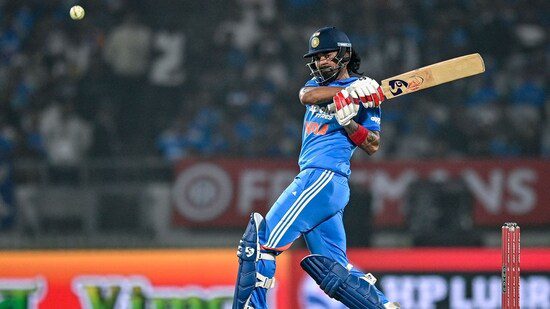
When India vs New Zealand reached its critical juncture, KL Rahul demonstrated why he remains one of India’s most reliable finishers. Starting cautiously at 14 off 17 balls with an injured Washington Sundar for support, Rahul calculated his approach perfectly. The pair accumulated singles through the 49th over before Rahul unleashed his class against Kristian Clarke, smashing back-to-back boundaries followed by a six. This explosive burst sealed the India vs New Zealand contest, with Rahul finishing unbeaten on 29 while Sundar contributed an important 7 not out.

Harshit Rana’s valuable contribution of 29 runs off 23 balls earlier in the innings provided crucial breathing space, easing pressure on Rahul during the final stages of this India vs New Zealand thriller.

Kohli’s Heartbreaking Near-Miss

Virat Kohli produced another masterclass during this India vs New Zealand encounter, crafting a brilliant 93 off 91 balls before falling agonizingly short of his century. His innings featured eight fours and a six, showcasing the technical excellence and shot-making prowess that has defined his career. Kohli entered the 90s with confidence but couldn’t convert this promising start into three figures, dismissed by Adithya Ashok just seven runs shy of the milestone.

The India vs New Zealand match saw Kohli anchor the middle-order beautifully, building crucial partnerships and keeping the required run rate manageable despite regular wickets falling at the other end.

Strong Opening Platform

The India vs New Zealand chase began positively as openers Rohit Sharma and Shubman Gill attacked New Zealand’s bowlers from the outset. Rohit unleashed his trademark pull shot for six early, signaling aggressive intent. Despite finding boundaries regularly, including a six and four in consecutive overs, the Indian captain departed for 26 off 29 balls after chipping one into the air.

Gill capitalized on his start more substantially in this India vs New Zealand fixture, reaching fifty and providing stability alongside Kohli. The young opener eventually fell for 56 off 71 deliveries, picking out Glenn Phillips at mid-off. Their partnership of 106 runs laid the foundation for India’s successful chase.

Also Read: Vaibhav Suryavanshi Ton: Stunning India U19 Whitewash Victory

Middle-Order Contributions and Collapses

Shreyas Iyer’s return to the India vs New Zealand series showed promise as he counter-attacked effectively, particularly against spinners where he plundered 15 runs in a single over. However, Kyle Jamieson struck twice in quick succession, removing both Iyer for 49 off 47 balls and Ravindra Jadeja cheaply, creating tension in this India vs New Zealand contest.

These twin blows threatened to derail India’s chase, but Rana’s aggressive cameo and Rahul’s composure ultimately prevailed.

New Zealand’s Strong Start

Earlier in this India vs New Zealand encounter, the visitors posted 300/8 after winning the toss and batting first. Henry Nicholls and Devon Conway constructed a formidable 117-run opening partnership, with both batsmen reaching fifty on consecutive balls. Their century stand gave New Zealand momentum and set the platform for a competitive total.

Conway began aggressively after the powerplay, while Nicholls capitalized on dropped chances to look increasingly comfortable. Their partnership dominated the early phases of this India vs New Zealand clash before India’s bowlers fought back.

Indian Bowlers Strike Back

India dominated the middle overs of this India vs New Zealand match with disciplined bowling and crucial breakthroughs. Harshit Rana dismissed Nicholls to break the opening partnership, then returned to knock over Devon Conway, breaching his defense comprehensively. Mohammed Siraj removed Will Young, while Kuldeep Yadav’s dismissal of Glenn Phillips further restricted New Zealand.

Prasidh Krishna delivered a jaffa that crashed through Mitchell Hay’s guard, hitting the top of the stumps. Excellent fielding from Shreyas Iyer, who hit the stumps directly to run out Michael Bracewell, showcased India’s intensity in this India vs New Zealand encounter.

Mitchell’s Crucial Knock

Daryl Mitchell played a vital innings for New Zealand in this India vs New Zealand fixture, counter-attacking with powerful strokes after losing partners regularly. He reached fifty amidst the carnage and accelerated during the death overs, launching boundaries and sixes. Mitchell’s 84 off 91 balls ensured New Zealand reached 300, smashing sequences of 4, 6, 4 in one over before finally falling to Prasidh Krishna.

His knock transformed New Zealand’s innings from potentially falling short of 280 to posting a genuinely challenging total in this India vs New Zealand contest.

Death Overs Drama

The final overs of this India vs New Zealand match provided breathless entertainment. Mitchell and the lower order added crucial runs, with Zak Foulkes falling after chopping on against Siraj. New Zealand managed 14 runs in their final over, finishing on 300/8.

India’s chase similarly went down to the wire, requiring 18 runs in 18 balls before Rahul’s explosive finishing sealed victory with an over to spare.

Historical Significance

This India vs New Zealand encounter marked Kotambi Stadium’s first ODI match, adding historical significance to an already memorable contest. The victory gives India a 1-0 lead in the series and continues their strong limited-overs form heading into 2026. With both teams rotating squads and managing workloads, this India vs New Zealand series promises more competitive cricket in upcoming matches.