Friday, May 1, 2026
Home Blog Page 189

Dense Fog in Delhi: Critical Airport Advisory as AQI Reaches Severe Levels

0

New Delhi – The national capital region faced severe air quality and visibility challenges on Sunday as dense fog in Delhi once again disrupted normal life and travel operations. The Indira Gandhi International Airport issued a fresh advisory as the city’s Air Quality Index plummeted to dangerous levels, marking another episode in the region’s ongoing environmental crisis.

IGI Airport Implements Low Visibility Procedures

Delhi’s Indira Gandhi International Airport operator DIAL announced on Sunday evening that low visibility procedures were in progress due to the dense fog in Delhi. At 11:03 pm, the airport authority issued an official statement on its X handle, alerting passengers to the challenging weather conditions affecting operations.

“Low visibility procedures are in progress at Delhi airport,” the announcement stated, signaling the implementation of special protocols designed to manage flight operations during adverse weather conditions. Despite the challenging circumstances, DIAL confirmed that all flight operations were currently maintaining normal status.

However, the airport operator urged passengers to remain vigilant and proactive. “While all flight operations are currently normal, passengers are requested to contact their concerned airline for their updated flight information,” DIAL emphasized, acknowledging the potential for sudden changes in flight schedules due to the dense fog in Delhi.

Air Quality Reaches Severe Category

The environmental situation in the capital deteriorated significantly on Sunday, with air quality measurements painting a grim picture. According to data from the Central Pollution Control Board’s Sameer app, Delhi’s Air Quality Index stood at 404 at approximately 11:20 pm, firmly placing it in the ‘severe’ category.

This alarming AQI level, combined with the dense fog in Delhi, created a double challenge for residents and authorities alike. The severe air quality poses significant health risks, particularly for vulnerable populations including children, elderly citizens, and individuals with respiratory conditions.

Airlines Issue Travel Advisories

Recognizing the potential impact of weather conditions on flight operations, major airlines serving the capital issued precautionary advisories to passengers scheduled to travel through Delhi.

Air India released a comprehensive travel advisory on Saturday night, warning passengers about probable disruptions in flight operations. “Weather forecast for tomorrow morning indicates dense fog with low visibility in parts of northern India, including Delhi, which is likely to impact flight operations,” the airline stated on its official X handle.

The airline acknowledged taking proactive measures to minimize disruptions but remained realistic about the challenges posed by dense fog in Delhi. “Although proactive steps have been taken to minimise any disruption, there is a possibility of unexpected delays, diversions, or cancellations,” Air India’s advisory noted, assuring passengers that ground teams would provide necessary assistance during any disruptions.

SpiceJet also issued a similar advisory, specifically highlighting concerns about Delhi airport operations. The airline warned that “all departures and arrivals at Delhi and their consequential flights might get affected due to concerns over poor visibility.” Passengers were advised to monitor their flight status through the airline’s official website to stay informed about any changes.

Widespread Visibility Challenges Across NCR

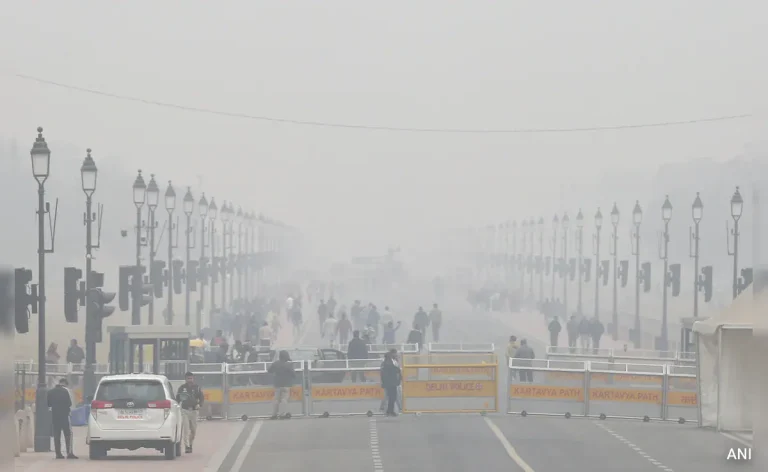
The dense fog in Delhi extended well beyond the airport, affecting the entire National Capital Region. Residents across Delhi-NCR reported experiencing low and near-zero visibility in several areas, particularly in Noida.

Also Read: Delhi 13 Districts: Revolutionary Administrative Restructuring From January 2026

Just over a week after Delhi’s IGI airport operations faced similar weather-related challenges, the city found itself enveloped once again in a thick blanket of fog. The situation was particularly severe in Noida, where residents documented the hazardous conditions on social media.

One resident shared video footage on X, cautioning fellow travelers: “Dense fog blankets Delhi-NCR, especially Noida. Travel with caution.” The visual evidence showed the intensity of the fog covering the area, making normal visibility nearly impossible.

Another resident posted similar documentation, emphasizing the severity of conditions with a brief but telling message: “Noida rn! Fog hi fog,” accompanied by video showing extremely poor visibility throughout the area.

Impact on Daily Life and Travel

The dense fog in Delhi created significant challenges for daily commuters and travelers throughout the region. The combination of poor visibility and severe air quality forced residents to exercise extreme caution during travel, with authorities recommending people avoid unnecessary outdoor exposure.

Road traffic across the NCR moved at slower speeds as drivers navigated through the thick fog, while pedestrians faced difficulties in basic navigation. The conditions necessitated additional safety measures across all modes of transportation.

Preparedness and Safety Measures

Aviation authorities and airlines remained on high alert, continuously monitoring weather conditions to ensure passenger safety. The implementation of low visibility procedures at IGI airport demonstrated the coordinated response to the dense fog in Delhi, with trained personnel following established protocols to manage aircraft movements safely.

As the situation continues to evolve, residents and travelers are advised to stay updated through official channels, check flight statuses regularly, and prioritize safety over convenience when dealing with the persistent challenge of dense fog in Delhi and surrounding areas.


Russia-Ukraine Peace Deal: Trump Claims Big Progress After Zelensky Talks

Washington D.C. – US President Donald Trump announced on Sunday that a Russia-Ukraine peace deal is moving significantly closer to reality following intensive discussions with Ukrainian President Volodymyr Zelensky at his Florida resort. The meeting, held at Mar-a-Lago, marked a pivotal moment in efforts to end the conflict that has devastated Eastern Europe.

Trump Describes “Terrific” Meeting at Mar-a-Lago

Addressing a joint press conference with Zelensky after their talks at his Florida club, Trump characterized the meeting as highly productive. “We had a terrific meeting. We discussed a lot of things. As you know, I had an excellent phone call with President Putin, and I do think we’re getting a lot closer,” Trump told reporters, suggesting momentum toward achieving a Russia-Ukraine peace deal.

The Republican leader expressed optimism about the progress made during the discussions, though he acknowledged that significant challenges remain. When pressed about the percentage of agreement reached on security guarantees, Trump suggested it could be “close to 95%,” indicating substantial common ground has been established between the parties.

Donbas Region Remains Key Obstacle

Trump identified the fate of the eastern Donbas region as one of the most contentious issues still requiring resolution for a comprehensive Russia-Ukraine peace deal. Russia has demanded that Ukraine surrender control of this strategic territory, creating a major sticking point in negotiations.

“It’s unresolved, but it’s getting a lot closer. That’s a very tough issue, but one that I think will get resolved,” Trump stated when questioned specifically about the Donbas situation. The region has been at the center of the conflict, with both sides viewing control of the territory as critical to their strategic interests.

When asked directly about the thorniest remaining issue, Trump was unequivocal: “Land.” The territorial question continues to pose the greatest challenge to finalizing a Russia-Ukraine peace deal, as both nations have staked significant claims to disputed regions.

Timeline and Next Steps

While expressing confidence in the trajectory of peace discussions, Trump acknowledged the complexity of the negotiations and declined to provide a definitive timeline. However, he did offer a general timeframe for when clarity might emerge regarding the Russia-Ukraine peace deal.

“In a few weeks, we will know one way or the other, I think,” Trump said, suggesting that crucial decisions and breakthroughs could materialize in the near term. His comments reflect both optimism and realistic assessment of the diplomatic challenges ahead.

The US President also made a pointed observation about the urgency of reaching an agreement. “You’re better off making a deal now,” he said, praising Ukraine’s courage while emphasizing that “it’s time to end” the conflict. Trump noted that Ukraine has been “very brave and done tremendous damage,” but maintained that continued fighting serves neither side’s interests.

Zelensky’s Response and European Involvement

Volodymyr Zelensky thanked Donald Trump for hosting the discussions and confirmed that European and Ukrainian teams will continue their collaborative efforts on the Russia-Ukraine peace deal. He announced that these teams will meet “in upcoming weeks” to “finalize all discussed matters.”

In a significant development, Zelensky revealed that Trump will host European and Ukrainian teams in the United States in January for further negotiations. This announcement underscores the multilateral nature of efforts to achieve a lasting Russia-Ukraine peace deal.

Also Read: Kyiv Russian Assault: Devastating Missile Attack Before Peace Talks

During the Mar-a-Lago meeting, Trump and Zelensky also conducted a phone conversation with several European leaders, including French President Emmanuel Macron, UK Prime Minister Keir Starmer, and German Chancellor Friedrich Merz. This coordination demonstrates the international commitment to supporting the peace process.

Security Guarantees Central to Agreement

“We agree that security guarantees is a key milestone in achieving lasting peace, and our teams will continue working on all aspects,” Zelensky stated, highlighting a critical component of any potential Russia-Ukraine peace deal.

Trump indicated that Europe would assume a significant portion of responsibility for Ukraine’s security guarantees, suggesting a burden-sharing approach that would involve multiple nations in ensuring Ukraine’s future stability and territorial integrity.

Path Forward

The Mar-a-Lago talks represent a potentially decisive moment in efforts to end the conflict between Russia and Ukraine. While substantial progress appears to have been made, with Trump suggesting agreement on approximately 95% of security guarantee terms, the territorial questions—particularly regarding the Donbas region—remain significant obstacles.

As negotiations continue in the coming weeks, the international community watches closely to see whether the momentum generated at Mar-a-Lago can translate into a comprehensive Russia-Ukraine peace deal that ends the devastating conflict and establishes a framework for lasting peace in the region.

Traditional Medicines of India Gain Global Recognition Through Strategic International Engagements: 2025

India’s traditional systems of Traditional Medicine are increasingly gaining visibility and acceptance on international platforms through sustained policy initiatives, global partnerships, and institutional collaborations led by the Ministry of Ayush. These efforts are strengthening India’s position as a global leader in traditional, complementary and integrative healthcare systems.


International Cooperation in Ayush (IC) Scheme

The Ministry of Ayush has formulated a Central Sector Scheme for Promotion of International Cooperation in Ayush (IC Scheme) to enhance the global footprint of India’s traditional medicine systems. Under this scheme, the Ministry provides support to:

  • Indian Ayush drug manufacturers and service providers to boost exports

  • International promotion, development and global recognition of Ayush systems

  • Stakeholder interaction and international market development

  • Academic and research collaboration through Ayush Academic Chairs in foreign universities

  • Organisation of international workshops, symposiums and training programmes

  • Research, teaching and collaborative projects with reputed foreign institutions, international agencies and UN bodies, including the World Health Organization (WHO)


India–WHO Collaboration

A major milestone in globalising India’s traditional medicine systems has been achieved through extensive collaboration with the World Health Organization (WHO).

WHO–Global Traditional Medicine Centre (GTMC), Jamnagar

India signed an agreement with WHO to establish the WHO–Global Traditional Medicine Centre (GTMC) at Jamnagar, Gujarat. This global outposted centre for traditional medicine aims to:

  • Support implementation of WHO’s Traditional Medicine Strategy

  • Strengthen the role of traditional medicine in Universal Health Coverage

  • Serve as a global knowledge hub for Traditional, Complementary and Integrative Medicine (TCIM)

  • Provide leadership on global health matters related to traditional medicine

  • Ensure quality, safety, efficacy, accessibility and rational use of traditional medicine

  • Develop global norms, standards, guidelines, tools and methodologies

  • Establish a WHO Traditional Medicine Informatics Centre connecting global data banks, virtual libraries and research institutions

  • Conduct capacity-building and training programmes through on-campus, residential and digital modes in partnership with WHO Academy and other global partners


Global Standardisation and Documentation

Significant progress has been made in standardising India’s traditional medicine systems at the global level:

  • Benchmark documents for training and practice of Ayurveda and Unani were published in 2022 under a WHO collaboration agreement signed in 2016.

  • WHO-published terminology documents for Ayurveda, Unani and Siddha were released to facilitate global understanding and integration of these systems.

  • On 24 May 2025, the Ministry of Ayush and WHO signed an agreement to develop Traditional Medicine intervention categories and index under the International Classification of Health Interventions (ICHI), focusing on Ayurveda, Siddha and Unani. This marks the creation of a dedicated Traditional Medicine module under ICHI, integrating traditional wisdom with international scientific classification standards.


Bilateral and Institutional Collaborations

To strengthen international outreach, the Ministry of Ayush has undertaken extensive global partnerships:

  • 25 country-to-country MoUs with foreign nations for cooperation in Traditional Medicinary and Homoeopathy

  • 15 MoUs with international institutions for establishing Ayush Academic Chairs abroad

  • 52 institute-to-institute MoUs for collaborative research and academic exchange

  • Establishment of 43 Ayush Information Cells across 39 foreign countries to promote Ayush systems globally

Additionally, the Ministry offers International Ayush Fellowship and Scholarship Programmes to foreign nationals for pursuing Ayush education in recognised institutions in India.


India as a Global Hub of Traditional Medicine

Through structured policy support, global collaborations, WHO partnerships and academic outreach, India is positioning itself as a global hub for medicine, ensuring that ancient healthcare wisdom is integrated into modern global health systems with scientific credibility, quality assurance and international standards. These efforts are strengthening India’s position as a global leader in traditional, complementary and integrative healthcare systems.

This information was provided by the Minister of State (Independent Charge) for Ayush, Shri Pratap Rao Jadhav, in a written reply to a question in the Rajya Sabha.

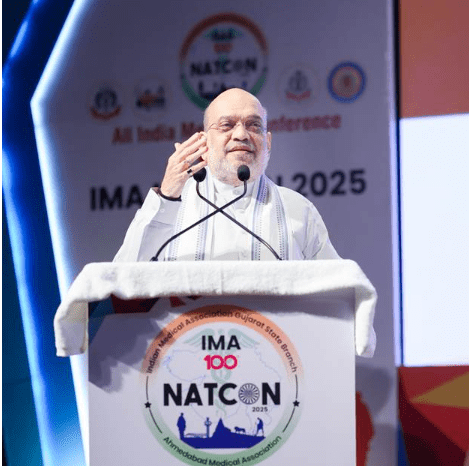
Amit Shah Proudly Addresses IMA NATCON 2025 in Ahmedabad, Calls Doctors Pillars of Viksit Bharat’s Health Ecosystem

Union Home Minister and Minister of Cooperation Shri Amit Shah today addressed the Indian Medical Association’s National Conference – IMA NATCON 2025 in Ahmedabad, Gujarat, marking a historic milestone as the IMA reaches its 100th national convention. Addressing doctors, medical professionals and stakeholders from across the country, Shri Shah said that the Modi government is firmly committed to building a strong, inclusive and resilient health ecosystem for Viksit Bharat, in which doctors will play a decisive and central role. Gujarat Chief Minister Shri Bhupendra Patel and several other dignitaries were present on the occasion.


IMA’s Century of Service: A Legacy of Sacrifice and Commitment

Shri Amit Shah said that completing 100 years is not merely an institutional achievement but a reflection of the IMA’s century-long sacrifice, service, and continuous contribution to the nation’s healthcare system. He said the centenary year should be used to take the story of IMA’s service to every section of society, strengthening the spirit of duty, ethics, and public trust.

He noted that the medical profession has evolved significantly—from Registered Medical Practitioners to highly specialised domains—and institutions like the IMA must adapt to these changes while preserving the core values of service.


Redefining Medical Ethics for the 21st Century: IMA NATCON

The Union Home Minister emphasised that healthcare is fundamentally a service-oriented profession, where a patient often sees a doctor as a form of divinity. He said that ethical frameworks framed a century ago need to be re-examined and redefined to remain relevant in today’s complex healthcare environment.

Shri Shah urged the IMA to constitute a dedicated team to redefine medical ethics and integrate them into medical education. He stressed that ethics cannot be enforced through law alone but must be internalised through education and professional culture. If redefined ethics are made part of the curriculum, he said, it would ensure that future generations of doctors see service as a sacred duty, preserving public trust for centuries to come.


Doctors at the Heart of Viksit Bharat 2047

Shri Amit Shah said Prime Minister Shri Narendra Modi has placed before the nation the resolve to build a Viksit Bharat by 2047, where India leads the world in every sector. Achieving this vision, he said, requires a healthy population—physically, mentally and emotionally—and doctors will be indispensable in this national mission.

He stated that between 2014 and 2025, the Modi government has built a holistic health ecosystem, beginning with the Swachh Bharat Mission, which addressed sanitation and disease prevention at the grassroots level. This was followed by initiatives such as Fit India, Khelo India, and the global celebration of the International Day of Yoga, which increased yoga adoption by nearly 40 per cent.


Transformational Health Reforms Under the Modi Government

Highlighting major health reforms, Shri Shah said the Ayushman Bharat Mission has brought about a qualitative transformation by providing free treatment up to ₹5 lakh, with several states extending coverage up to ₹15 lakh. He said Mission Indradhanush has laid a strong foundation for a child’s healthy future through universal immunisation.

He informed that:

  • ₹1.65 lakh crore has been invested in strengthening CHC and PHC infrastructure

  • 1.81 lakh Ayushman Bharat Health Centres (Ayushman Mandirs) have empowered poor and rural citizens

  • GST removal on health insurance has made healthcare more affordable

  • Jan Aushadhi Kendras have expanded access to low-cost generic medicines

  • Medical seats have increased from 51,000 to nearly 1.30 lakh, significantly boosting the supply of trained doctors

He added that the health budget has risen from ₹37,000 crore in 2013–14 to ₹1.28 lakh crore today, an increase of over 102 per cent, with schemes effectively implemented on the ground.


Measurable Health Outcomes and Disease Control

Shri Amit Shah highlighted concrete outcomes of sustained policy implementation:

  • 97% reduction in malaria cases, putting India on track to become malaria-free

  • Over 90% improvement in kala-azar control

  • Dengue mortality reduced to around 1%

  • 25% decline in maternal mortality rate

  • 20% increase in institutional deliveries

  • Infant mortality rate reduced by half

He said these achievements demonstrate that health reforms have gone beyond announcements to real-world impact.


IMA’s Future Role: Telemedicine, Research and Wellness

Calling for a forward-looking approach, Shri Amit Shah said the IMA must play a more active role in strengthening telemedicine, medical research and optimal utilisation of doctors through video consultations and digital platforms. He asked whether the IMA could propose schemes to promote doctors engaged in research and innovation.

He also urged a shift in focus from illness to wellness, emphasising preventive healthcare, lifestyle guidance, and greater awareness about Ayushman Bharat and generic medicines.


Doctors’ Heroic Role During COVID-19

Paying tribute to doctors, Shri Shah said that during the COVID-19 pandemic, Indian doctors displayed extraordinary courage and dedication, serving patients without regard for their own lives. He described this as India’s greatest human capital, noting that not a single doctor turned away from duty.

He highlighted the IMA’s role during the pandemic in vaccination drives, helplines, blood donation camps, ethical monitoring, and public outreach, calling it a shining example of professional unity and national service.


Conclusion
Concluding his address, Shri Amit Shah said the IMA’s 100-year journey is a matter of pride but not complacency. With changing healthcare needs, advancing technology and rising public expectations, the IMA must redefine its role, ethics and priorities to help India achieve affordable, accessible and quality healthcare. He expressed confidence that under its new leadership, the IMA will continue to strengthen India’s health infrastructure and remain a cornerstone of the nation’s march towards Viksit Bharat 2047.


For more real-time updates, visit Channel 6 Network.

Source: PIB

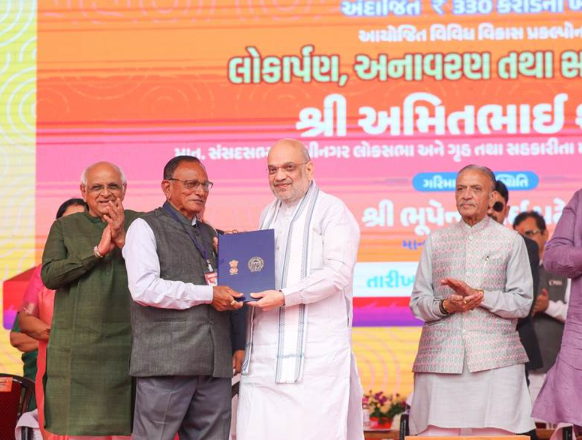
Amit Shah Distributes Land Allotment Certificates to 205 Displaced Families in Ahmedabad, Reinforces Modi Government’s Commitment to Public Servicea

Union Home Minister and Minister of Cooperation Shri Amit Shah on December 28, 2025, distributed land allotment certificates to 205 displaced families of Nava Vanjar village in Ahmedabad, Gujarat, marking a significant step towards long-pending rehabilitation and social justice. The event was attended by Gujarat Chief Minister Shri Bhupendra Patel and several other dignitaries. Addressing the gathering, Shri Shah said the distribution symbolises the Modi government’s unwavering commitment to public service, dignity, and permanent solutions for citizens.


From Uncertainty to Security: Permanent Rehabilitation for Displaced Families

Speaking at the programme, Shri Amit Shah said that the displaced families had earlier been temporarily settled by previous governments and left in uncertainty, but the present government proactively identified them and provided legal land ownership.

He described the initiative as a small yet deeply significant milestone, stating that land title deeds restore not just shelter but security, dignity, and a sense of belonging to affected families.


₹400 Crore Drainage Project to Benefit 15 Lakh People

Highlighting major urban infrastructure development, Shri Shah said that Asia’s first ₹400 crore drainage pipeline laid using micro-tunneling technology has been completed in Ahmedabad. The project will benefit around 15 lakh residents across nine wards, including Gota, Chandlodiya, Bodakdev, Ghatlodiya, Jodhpur, Makarpura, Sarkhej, Vejalpur and Thaltej, covering nearly 4,500 colonies.

He said the project provides a permanent solution to sewage disposal, a problem that had persisted for decades. The initiative has been implemented using funds from the AMRUT scheme, the Government of Gujarat, and the Ahmedabad Municipal Corporation.


Asia’s First Use of Micro-Tunneling Technology

Shri Amit Shah noted that the Western Trunk Line project marks Asia’s first use of micro-tunneling technology for sewage pipelines, allowing pipes to be laid completely underground without surface excavation. This ensured that traffic flow and daily life remained uninterrupted during construction.

He praised the Ahmedabad Municipal Corporation for completing the project in a remarkably short time and said such innovations reflect efficient governance and administrative sensitivity.


Politics of Performance and Proactive Governance

The Union Home Minister said that solving people’s problems even before they raise demands is the responsibility of a public representative. He added that this work culture was established by Prime Minister Narendra Modi in Gujarat and has now spread across the country.

Shri Shah said the seamless coordination between the Municipal Corporation, the Government of Gujarat, and the Government of India reflects the politics of performance initiated by Modi ji, where governance is driven by results, foresight, and empathy.


Strong Confidence in Electoral Mandate

Referring to political developments, Shri Amit Shah said that the opposition continues to oppose what the people support, which is why its defeats are inevitable. He expressed confidence that the opposition would face defeat in West Bengal and Tamil Nadu, and asserted that in 2029 too, the government will be formed under the leadership of Prime Minister Narendra Modi.

He said that policies and decisions such as Ram Temple construction, surgical and air strikes, abrogation of Article 370, triple talaq abolition, action against infiltrators, and the push for a Uniform Civil Code resonate deeply with the people, while persistent opposition to these measures distances rivals from public support.


Gujarat as a Model of Sensitive and Development-Oriented Governance

Concluding his address, Shri Amit Shah expressed satisfaction that the development-driven, people-centric work culture initiated by Modi ji is being followed effectively in Gujarat. He said the land allotment to displaced families and the large-scale drainage infrastructure project together reflect a governance model that combines compassion with competence.


Conclusion
The distribution of land allotment certificates to 205 families in Nava Vanjar village and the completion of a ₹400 crore, technologically advanced drainage project underline the Modi government’s focus on permanent solutions, urban resilience, and citizen dignity. With proactive governance, innovative infrastructure, and a performance-oriented political culture, Gujarat continues to exemplify development with sensitivity, reinforcing public trust in leadership and institutions.


For more real-time updates, visit Channel 6 Network.

Source: PIB

MoCA Establishes Strong Passenger Assistance Control Room to Accelerate Grievance Redressal and Enhance Air Passenger Experience: 2025

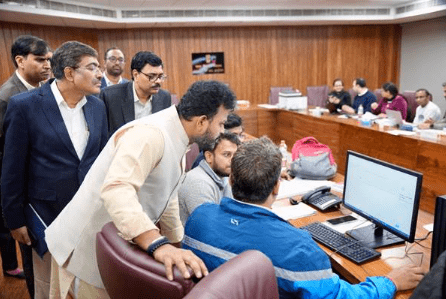
In a major step towards strengthening passenger-centric governance in civil aviation, the Ministry of Civil Aviation (MoCA) has established a 24×7 Passenger Assistance Control Room (PACR) to ensure faster, coordinated and real-time resolution of air passenger grievances. Since becoming operational on December 03, 2025, the PACR has already facilitated the resolution of over 13,000 passenger grievances, reflecting the Government’s commitment to responsive, transparent and accountable service delivery.


Responding to Rapid Growth in India’s Aviation Sector

India’s civil aviation sector has witnessed phenomenal expansion over the past decade, particularly during the last eleven years, resulting in a sharp rise in passenger traffic and connectivity. While this growth has strengthened mobility and economic activity, it has also led to challenges such as flight delays, cancellations, refund disputes, baggage issues, congestion, long queues and inadequate passenger facilities during peak hours.

These persistent issues highlighted the need for a structured, unified and real-time response mechanism capable of addressing passenger concerns promptly and effectively.


PACR: A Permanent, Round-the-Clock Passenger Support Mechanism

Recognising this need, the Ministry of Civil Aviation, under the leadership of Hon’ble Civil Aviation Minister Shri Ram Mohan Naidu, established the Passenger Assistance Control Room (PACR) as a permanent, institutionalised solution.

The initiative is spearheaded by MoCA Secretary Shri Samir Kumar Sinha, with the objective of creating a future-ready, integrated passenger assistance and crisis response system.

“The PACR operates round-the-clock, continuously monitoring aviation operations, attending to passenger calls and coordinating real-time assistance and grievance resolution very efficiently and effectively,” said Shri Samir Kumar Sinha.


Integrated Hub for Real-Time Coordination

Located at Udaan Bhawan, New Delhi, the PACR functions as an integrated operational hub, bringing together officials from:

  • Ministry of Civil Aviation

  • Directorate General of Civil Aviation (DGCA)

  • Airports Authority of India (AAI)

  • Airline operators and other key aviation stakeholders

The physical presence of airline representatives within the Control Room enables immediate coordination and on-the-spot resolution of passenger issues, significantly reducing response time.


Technology-Driven Grievance Handling through AirSewa

The PACR has been fully integrated with the AirSewa grievance redressal platform, allowing seamless handling of passenger complaints received through digital channels.

An omni-channel technology backbone converts passenger inputs—calls, online complaints and messages—into actionable cases. These are supported by data-driven dashboards providing real-time visibility into:

  • Nature of grievances

  • Timelines for resolution

  • Actions taken by stakeholders

This enables evidence-based decision-making and continuous performance monitoring.


Measurable Impact: 13,000+ Grievances Resolved

Shri Samir Kumar Sinha expressed satisfaction over the PACR’s performance, noting that:

  • Over 13,000 passenger grievances have been resolved since December 03, 2025

  • 500+ call-based interventions have directly assisted passengers during operational disruptions

Priority is given to grievances related to flight delays, cancellations, refunds and baggage, which are addressed strictly in accordance with the Passenger Charter.


Passenger-First Vision at the Core

The PACR is anchored in a clear and well-defined vision to place the passenger at the centre of India’s civil aviation ecosystem. Its guiding principles include:

  • Passenger First

  • Collaborative Action

  • Stakeholder Convergence

  • Future-ready, technology-driven operations

This framework ensures scalability, transparency and sustained improvement in passenger assistance.


Leadership Oversight and Continuous Improvement

Demonstrating strong leadership commitment, Shri Samir Kumar Sinha personally visits the PACR daily to review operations and ensure timely redressal of grievances. The support of the Chairman, AAI; Joint Director General, DGCA; Deputy Director General, MoCA, and other senior officials has been instrumental in the PACR’s effective functioning.

The Ministry has received positive feedback from passengers and stakeholders, citing improved speed, transparency and accountability in grievance resolution.


Conclusion
The establishment of the Passenger Assistance Control Room (PACR) marks a significant milestone in India’s civil aviation governance. By combining round-the-clock monitoring, inter-agency coordination and advanced technology, the PACR is transforming passenger grievance redressal into a faster, more empathetic and transparent process. The Ministry of Civil Aviation has reaffirmed its commitment to further strengthening the PACR with enhanced manpower, technology and infrastructure—ensuring that India’s rapidly growing aviation sector remains firmly passenger-first.


For more real-time updates, visit Channel 6 Network.

Source: PIB

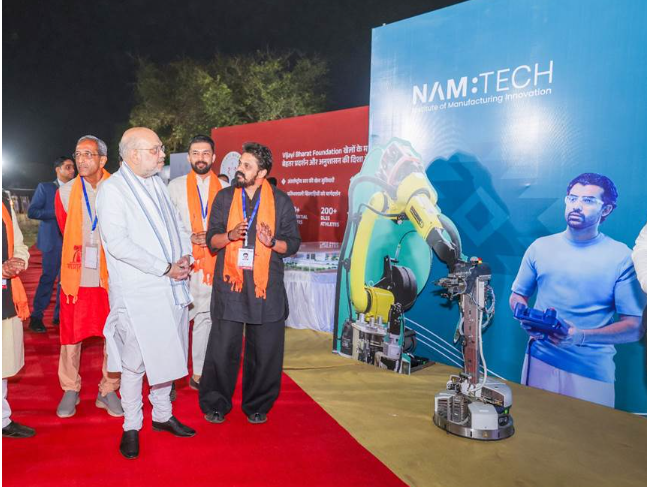
‘Namotsav’ Showcases the Inspiring Life and Vision of Prime Minister Narendra Modi: Amit Shah in Ahmedabad: 2025

Union Home Minister and Minister of Cooperation Shri Amit Shah on December 28, 2025, addressed the cultural programme ‘Namotsav’ in Ahmedabad, Gujarat, a grand artistic presentation based on the life, values, and public journey of Prime Minister Shri Narendra Modi. Describing the event as a celebration of inspiration, Shri Shah said that Modi ji’s life has become a source of motivation for millions, and ‘Namotsav’ beautifully presents that inspiration before the nation.


A Life That Inspires 140 Crore Indians

Addressing the gathering, Shri Amit Shah said that through ‘Namotsav’, the country is witnessing an artistic portrayal of a leader whose life, duties, and principles have instilled in the hearts of 140 crore Indians the belief that India will be number one in every field by 2047. He said this confidence emerges only when a leader dedicates his entire life to a vision, relentlessly experiments to achieve it, and builds a nationwide team that shares and works for that dream.

Shri Shah noted that the idea of creating ‘Namotsav’ emerged from the extraordinary life journey of Prime Minister Narendra Modi, whose story continues to inspire people across generations.


From a Tea Seller’s Son to a Global Leader

The Union Home Minister said that ‘Namotsav’ narrates the journey of a child born into an ordinary tea-seller’s family, who grew up in extreme poverty and today stands as a symbol of hope for the aspirations of 140 crore citizens. He highlighted that Prime Minister Modi, who emerged from deep poverty, has been honoured with the highest civilian awards by 29 countries, an honour that belongs not only to him but to the entire nation.

He said that when such global recognition is bestowed upon a leader, it inspires countless children, youth, and social workers, and ‘Namotsav’ serves as a new source of inspiration for society.


Integrity, Discipline and Tireless Public Service

Shri Amit Shah described Prime Minister Modi as a leader who rose through integrity, discipline, and unwavering dedication. From his early years, to working as a Pracharak of the Rashtriya Swayamsevak Sangh (RSS), to serving as an organiser in the Bharatiya Janata Party, Modi ji cultivated a work culture rooted in commitment and service, which today influences millions of workers across the country.

He emphasised that in 24 years of public life, from 7 October 2001 to 28 December 2025, Prime Minister Modi has not taken a single day off nor rested, dedicating every day to the service of the nation.


Transformational Welfare and Poverty Alleviation

Highlighting the Prime Minister’s focus on the poor, Shri Shah said that despite being born into poverty, Modi ji chose not bitterness but service as his life’s mission. Over the past 11 years, Prime Minister Modi’s welfare initiatives have lifted 27 crore people above the poverty line.

He said that 60 crore poor citizens have been freed from fundamental concerns such as housing, electricity, toilets, healthcare, drinking water, food security, and education. Through schemes providing four crore houses, free ration, healthcare coverage up to ₹5 lakh, electricity, gas connections, and sanitation, Modi ji has brought qualitative transformation in the lives of the poor.

Shri Shah remarked that the person who does not even own a room for himself has ensured homes for four crore homeless families, reflecting unparalleled commitment and personal transparency.


Exemplary Governance as Chief Minister of Gujarat

Recalling Modi ji’s tenure as Chief Minister of Gujarat, Shri Amit Shah said that when he took oath on 7 October 2001, he set a unique record by becoming Chief Minister without ever contesting even a sarpanch election. His tenure, Shri Shah said, became a national model of good governance.

He highlighted initiatives like the Jyotigram Yojana, through which Gujarat became the first state to provide 24-hour electricity to all villages, permanently resolving power shortages and transforming rural life.


A Living Inspiration for Future Generations

Shri Amit Shah concluded by saying that Prime Minister Narendra Modi’s life journey—from poverty to global leadership, from tireless service to transformational governance—is a living inspiration for children, youth, and citizens across the country. ‘Namotsav’, he said, is not just a cultural programme but a celebration of values, dedication, and national aspiration, reminding every Indian that determined leadership can transform a nation.


For more real-time updates, visit Channel 6 Network.

Source: PIB

Glenary Liquor Licence Case – Detailed Analysis of Calcutta High Court Order, Festive Tourism Impact, and Governance Lessons for Darjeeling Hospitality

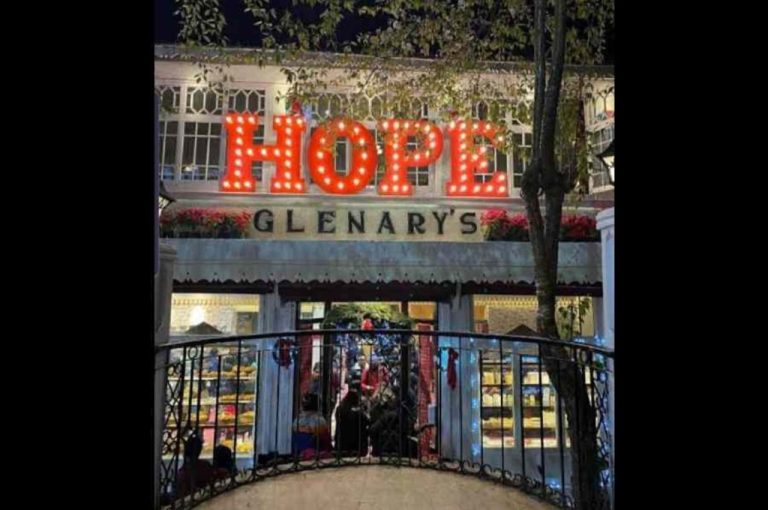
The Glenary liquor licence case has become a defining moment in Darjeeling’s hospitality and governance narrative. On December 24, 2025, the Calcutta High Court (Jalpaiguri circuit bench) passed an interim order staying the suspension of Glenary’s bar licence, allowing the iconic restaurant to resume liquor sales until January 12, 2026. The ruling came just in time for Christmas and New Year celebrations, ensuring that Darjeeling’s festive spirit remained intact.


2. Background of the Suspension

  • On December 9, 2025, district excise officials suspended Glenary’s bar licence for three months.
  • Allegations included:
    • Irregularities in accounts.
    • Storage of liquor in unauthorized premises.
    • Deviations from approved alcohol storage plans.
  • Authorities also invoked Section 239 of the West Bengal Excise (Foreign Liquor) Rules, 1998, which regulates live music in bars, halting Glenary’s live band performances.

3. The Interim Court Order

  • Justice Amrita Sinha passed the order staying the suspension.
  • Directed authorities to de‑seal liquor storage by 5 p.m. on December 24.
  • Allowed Glenary’s to sell liquor until January 12, 2026.
  • Stressed that every ounce of liquor sold must be properly accounted for.
  • Did not grant relief for live band performances, as Glenary’s management did not press for it.

4. Glenary’s Response

  • Glenary’s management welcomed the order, emphasizing their compliance with rules.
  • Owner Ajoy Edwards, also leader of the Indian Gorkha Janshakti Front (IGJF), alleged the suspension was politically motivated.
  • Edwards claimed the state government approached the division bench to block relief but failed.
  • He linked the suspension to his role in building a symbolic bridge named “Gorkhaland” in Darjeeling.

5. Glenary Liquor Licence Case: Governance Challenges

The case reflects:

  • Tension between political activism and business regulation.
  • Need for transparency in excise enforcement.
  • Fragile balance between tourism, hospitality, and state revenue.
  • Judicial intervention as a corrective mechanism in governance disputes.

6. Government External Links for Assistance


7. Historical Context of Glenary’s

  • Glenary’s is nearly 150 years old, housing a bakery, restaurant, and resto‑bar.
  • It has long been a symbol of Darjeeling’s colonial heritage and modern tourism.
  • Past disputes have occasionally disrupted operations, but the 2025 suspension was among the most serious.
  • The case highlights how heritage institutions often become entangled in political and regulatory battles.

8. Community and Tourism Impact

  • Tourists flock to Glenary’s during Christmas and New Year for its festive ambience.
  • Suspension threatened to dampen Darjeeling’s holiday economy.
  • Local businesses feared ripple effects on tourism revenue.
  • The court’s order reassured both residents and visitors, preserving Darjeeling’s festive charm.

9. Global Comparisons

Similar hospitality disputes occur worldwide:

  • France: Iconic Parisian cafés face closures over licensing disputes.
  • UK: Pubs often clash with councils over live music and alcohol regulations.
  • Thailand: Tourist bars face sudden closures due to political sensitivities.

Darjeeling’s case mirrors these global struggles where heritage hospitality venues become flashpoints for governance and politics.


10. Governance Lessons

The Glenary’s case teaches:

  • Regulatory enforcement must be transparent and consistent.
  • Judicial oversight is crucial to prevent arbitrary suspensions.
  • Community heritage institutions need protection from political vendetta.
  • Tourism‑driven economies require sensitive governance balancing revenue and culture.

11. Future Outlook – Hospitality Governance in Bengal

India must move towards:

  • Digitized excise monitoring systems for transparency.
  • Clear guidelines on live music and entertainment licensing.
  • Tourism councils to mediate disputes between businesses and government.
  • Heritage protection laws for iconic establishments like Glenary’s.

12. Conclusion

The Glenary’s liquor licence case is more than a festive reprieve. It reflects the intersection of heritage, politics, governance, and tourism in Darjeeling. While the High Court’s interim order restored spirits until January 12, the larger lesson is clear: heritage institutions must be safeguarded, governance must remain transparent, and festive tourism must not be held hostage to political disputes.

Also read: Home | Channel 6 Network – Latest News, Breaking Updates: Politics, Business, Tech & More


Malda Civic Volunteer Suspension – Detailed Analysis of Humayun Kabir’s JUP Candidate Nomination, Political Fallout, and Governance Lessons for Bengal Democracy

The Malda civic volunteer suspension has become a flashpoint in Bengal’s pre‑election politics. On December 22, 2025, the Janata Unnayan Party (JUP), newly floated by suspended Trinamool MLA Humayun Kabir, announced Mustara Bibi as its prospective candidate from the Baishnabnagar Assembly constituency in Malda. Hours later, Mustara was suspended from her civic volunteer job, sparking allegations of political vendetta and raising questions about the neutrality of state institutions.


2. Background of the Case

  • Mustara Bibi, originally from Kaleswar in Birbhum, currently resides in Binnagar‑I panchayat, Baishnabnagar with her husband Kurban Ansari, who heads a voluntary organization.
  • Kurban was once associated with Trinamool but later became politically inactive.
  • On December 22, Kabir formally announced the launch of JUP and simultaneously declared Mustara’s candidature.
  • That same day, she received suspension orders from her civic volunteer position.

3. Mustara’s Response

  • Mustara told media: “I have no regret about being dropped from service. I am ready to contest the election for the JUP, and I am confident of winning the Assembly seat.”
  • She alleged her suspension was directly linked to her political association with JUP.
  • She emphasized that she did not wish to return to service, choosing instead to focus on her political career.

4. Police and Administrative Position

  • Malda Superintendent of Police Avijit Banerjee declined to comment.
  • Police sources claimed Mustara was irregular in her duties.
  • They also argued that civic volunteers are not permitted to engage directly in political activities.
  • This justification has been contested by opposition voices who see it as selective enforcement.

5. Malda Civic Volunteer Suspension: Political Fallout

  • Trinamool Congress (TMC): District spokesperson Ashis Kundu dismissed Kabir as an “eccentric politician” and said JUP candidates would secure fewer votes than NOTA.
  • BJP: District president Ajay Ganguly downplayed JUP’s significance, alleging the party was indirectly helping TMC.
  • Civil society: Raised concerns about the shrinking space for political dissent and the vulnerability of grassroots workers.

6. Governance Challenges

The suspension reflects:

  • Conflict between state employment and political participation.
  • Weak safeguards for civic volunteers against arbitrary action.
  • Polarization of institutions in Bengal’s political climate.
  • Fragile democratic space for new parties like JUP.

7. Government External Links for Assistance


8. Historical Context of Political Suspensions in Bengal

  • 2011 onwards: Multiple civic volunteers and contractual staff faced suspension for alleged political activity.
  • 2019 Lok Sabha elections: Allegations of bias in administrative action against opposition supporters.
  • 2021 Assembly elections: Several grassroots workers claimed harassment for political affiliations.
  • The 2025 Malda case continues this trend, highlighting the intersection of employment and political rights.

9. Community Impact

  • Local residents expressed sympathy for Mustara, seeing her as a symbol of grassroots resilience.
  • Her suspension has created fear among other civic volunteers considering political participation.
  • The incident has energized JUP supporters, who view it as proof of establishment resistance.

10. Global Comparisons

Similar disputes occur worldwide:

  • Turkey: Civil servants suspended for alleged political affiliations.
  • Egypt: Public employees barred from contesting elections.
  • USA: Strict rules on government employees engaging in partisan politics (Hatch Act).

The Malda case mirrors these global struggles where employment rules collide with democratic participation rights.


11. Governance Lessons

The Malda suspension teaches:

  • Clear legal frameworks are needed for civic volunteers’ political rights.
  • Independent oversight can prevent arbitrary suspensions.
  • Community engagement strengthens trust in institutions.
  • Balance between neutrality and rights is essential in governance.

12. Future Outlook – Democracy in Bengal

India must move towards:

  • Codified rules on political participation for contractual staff.
  • Judicial safeguards against politically motivated suspensions.
  • Awareness campaigns to protect grassroots workers’ rights.
  • Inclusive politics that allows new parties like JUP to compete fairly.

13. Conclusion

The Malda civic volunteer suspension of Mustara Bibi after her nomination as JUP candidate underscores the fragility of democratic space in Bengal. While police cite irregularity and rules against political activity, the timing of her suspension raises serious questions. For Bengal, the challenge is to ensure that employment rules do not become tools of political vendetta, and that democracy remains open to new voices.


Also read: Home | Channel 6 Network – Latest News, Breaking Updates: Politics, Business, Tech & More

Matua Electoral Roll Dispute – Detailed Analysis of Thakurnagar Factional Clash, Political Fallout, and Governance Lessons for Bengal Democracy

The Matua electoral roll dispute has once again exposed the fragile balance between community identity and political rivalry in Bengal. On December 24, 2025, at least four devotees were injured in violent clashes between rival factions of the All India Matua Mahasangha at Thakurnagar, the spiritual headquarters of the Matua community in North 24‑Parganas. The confrontation stemmed from remarks by Union Minister of State Shantanu Thakur, who suggested that nearly one lakh Matua voters might be excluded from the electoral roll during the ongoing Special Intensive Revision (SIR).


2. Incident Details

  • Location: Thakurbari premises, Thakurnagar, Bongaon subdivision.
  • Rival factions: One led by Shantanu Thakur (BJP), another by his aunt Mamatabala Thakur (TMC Rajya Sabha MP).
  • Trigger: Shantanu’s statement that one lakh Matua names could be excluded to ensure exclusion of 50 lakh “illegal” voters from Bangladesh, Pakistan, and Myanmar.
  • Mobilization: Around 100 persons, allegedly organized by Mamatabala’s aide Sukhen Chowdhury, marched to Shantanu’s residence seeking clarification.
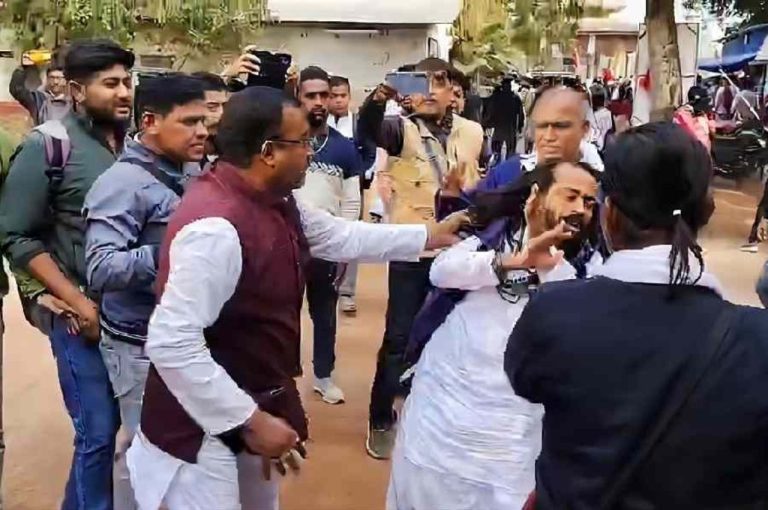
  • Violence: Shantanu’s aides allegedly stopped them, leading to punching, slapping, and kicking of devotees.
  • Police: Present outside but did not intervene without administrative orders.

3. Matua Electoral Roll Dispute: Political Fallout

  • Mamatabala Thakur (TMC): Accused Shantanu of sheltering criminals and orchestrating attacks on innocent devotees. Claimed BJP betrayed the Matua community by encouraging citizenship applications but later “snatching away” voting rights.
  • Shantanu Thakur (BJP): Denied allegations, accused Mamatabala of sending hooligans disguised as devotees. Stated: “They should be asking the Election Commission, not me. Am I excluding them, or is the commission?”
  • Community sentiment: Deep divisions between BJP‑aligned and TMC‑aligned factions, with ordinary devotees caught in the crossfire.

4. Governance Challenges

The feud reflects:

  • Electoral roll transparency issues during SIR.
  • Community vulnerability when political parties exploit identity for votes.
  • Weak law enforcement as police refrained from intervening.
  • Trust deficit between community leaders and state institutions.

5. Government External Links for Assistance


6. Historical Context of Matua Politics

  • The Matua community, originally refugees from Bangladesh, has been a decisive vote bank in Bengal.
  • 2019 Lok Sabha elections: BJP gained support by promising citizenship rights under the CAA.
  • 2021 Assembly elections: TMC countered with welfare schemes and promises of inclusion.
  • 2025 SIR exercise: Sparked fears of disenfranchisement, leading to factional clashes.
  • Past disputes show how citizenship and voting rights remain central to Matua identity politics.

7. Community Impact

  • Ordinary devotees expressed fear and confusion over their voting rights.
  • Families worry about exclusion from rolls despite filing citizenship applications.
  • Women and elderly devotees were reportedly assaulted, deepening resentment.
  • The incident has eroded trust in both BJP and TMC leadership.

8. Global Comparisons

Similar disputes occur worldwide:

  • Rohingyas in Myanmar: Citizenship denial leading to disenfranchisement.
  • Palestinian refugees: Electoral exclusion in host countries.
  • Dominican Republic: Haitian‑origin citizens face voter roll disputes.

The Matua case mirrors these global struggles where refugee‑origin communities face contested identities and political exploitation.


9. Governance Lessons

The Thakurnagar clash teaches:

  • Electoral roll revisions must be transparent and inclusive.
  • Community dialogue platforms can reduce factionalism.
  • Law enforcement neutrality is vital to prevent violence.
  • Political parties must avoid exploiting refugee identities for votes.

10. Future Outlook – Democracy in Bengal

India must move towards:

  • Digitized voter verification linked to Aadhaar.
  • Special provisions for refugee‑origin communities like Matuas.
  • Awareness campaigns to guide citizens through SIR hearings.
  • Judicial oversight to prevent arbitrary exclusions.

11. Conclusion

The Matua electoral roll dispute and the Thakurnagar factional clash underscore the fragility of democracy when identity politics collides with governance. While four devotees were injured, the larger wound is to community trust and democratic credibility. For Bengal, the challenge is to ensure that every eligible voter is included, every community is respected, and political rivalry does not tear apart social harmony.

Also read: Home | Channel 6 Network – Latest News, Breaking Updates: Politics, Business, Tech & More