Sunday, May 3, 2026
Home Blog Page 195

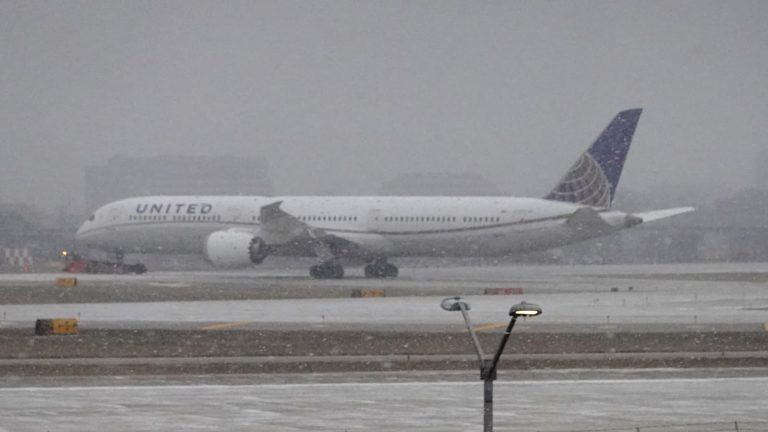
US Airports Winter Storm: Massive Disruptions Cancel 1800+ Flights

Washington D.C. – A severe winter storm has wreaked havoc across major transportation hubs in the United States, causing widespread flight cancellations and delays during the peak holiday travel season. The US airports winter storm has created hazardous conditions affecting thousands of travelers attempting to return home after Christmas celebrations.

Unprecedented Flight Disruptions

The US airports winter storm resulted in significant operational challenges for airlines across the country on Friday. According to flight tracking data, a total of 1,802 flights were cancelled and 22,349 were delayed as of 4:04 PM ET, creating massive disruptions for holiday travelers.

JetBlue Airways bore the brunt of the cancellations, grounding 225 flights—the most among all carriers. This represents a significant portion of the airline’s daily operations and highlights the severity of weather conditions affecting flight operations.

The scale of these disruptions underscores how the US airports winter storm has created one of the most challenging travel days of the holiday season, leaving thousands of passengers stranded or significantly delayed at airports nationwide.

Geographic Scope of Winter Storm Warnings

The National Weather Service issued comprehensive winter storm warnings on Friday afternoon, cautioning that conditions “will cause hazardous travel conditions for the Great Lakes into the northern Mid-Atlantic and southern New England today through Saturday morning.”

A winter storm warning stretched from New York City to northeast New Jersey and into the Lower Hudson Valley, with additional coverage extending to parts of Long Island and Connecticut. The weather service predicted that some areas could experience snowfall of up to 10 inches in the heaviest bands, creating treacherous conditions for both ground and air travel.

This extensive geographic reach of the US airports winter storm demonstrates why so many flights across multiple states faced cancellations and delays simultaneously.

Major Airports Hit Hardest

The US airports winter storm disproportionately affected New York City’s aviation infrastructure. Roughly half of all cancelled flights were clustered around the city’s three major airports: LaGuardia, John F. Kennedy International (JFK), and Newark Liberty International.

These three airports serve as critical hubs for domestic and international travel, meaning disruptions there create ripple effects throughout the national aviation network. Passengers connecting through New York faced particularly challenging circumstances as delays cascaded through flight schedules.

Beyond the New York metropolitan area, the US airports winter storm also severely impacted Detroit Metropolitan Airport and Boston Logan International Airport, both of which experienced significant cancellations and delays. These cities’ positions in the storm’s path made operations extremely difficult.

Travel Advisories and Safety Warnings

New York City issued an official travel advisory for the duration of the storm. City officials emphasized that cold temperatures would limit snowmelt, substantially increasing the risk of slippery and hazardous road conditions for those attempting ground transportation.

“Road conditions will be treacherous for those travelling back from the holiday,” the weather service warned, advising residents and visitors to avoid unnecessary travel during the most severe weather periods.

Several airports posted warnings on social media platform X, proactively alerting travelers to potential delays or cancellations. This communication strategy aimed to help passengers make informed decisions about their travel plans amid the US airports winter storm.

Weather Patterns and Future Forecasts

The US airports winter storm involves a complex combination of freezing rain, sleet, and snow creating hazardous travel conditions from the Great Lakes into New England and the mid-Atlantic region through Saturday morning.

Also Read: US Strikes ISIS Nigeria: Trump’s Christmas Message to Dead Terrorists

The upper Midwest experienced “a swath of snow and ice blossoming” Friday morning as a clipper system collided with a high-pressure system in eastern Canada. This interaction fed cold air south over the border, bringing significant precipitation to already affected areas.

Meteorologists predict that later this weekend, a potentially stronger cold front will move across the Northeast, including the Washington area. This system could lead to blustery conditions during the final days of the year, extending the period of challenging travel conditions.

Parts of western Pennsylvania face particular danger, as the US airports winter storm threatens ice storm conditions that could cause widespread power outages and make travel extremely hazardous.

Economic and Energy Implications

While winter weather typically leads to soaring electricity demand—potentially crimping power supplies—grids have not yet shown significant signs of stress. However, the colder temperatures are impacting energy markets, particularly helping to lift prices for US natural gas, which serves as a primary fuel for home heating.

Natural gas futures rose as much as 3.3 percent on Friday, reflecting increased demand expectations as the US airports winter storm drives heating needs higher across affected regions.

Passenger Impact and Holiday Season Timing

The timing of the US airports winter storm during peak holiday travel season has amplified its impact on passengers. Many travelers were attempting to return home after Christmas celebrations when the severe weather struck, leaving them stranded far from their destinations or facing significant delays that disrupted holiday plans and work schedules.
China Sanctions US Defence Firms: Bold Retaliation Over Taiwan Arms Deal

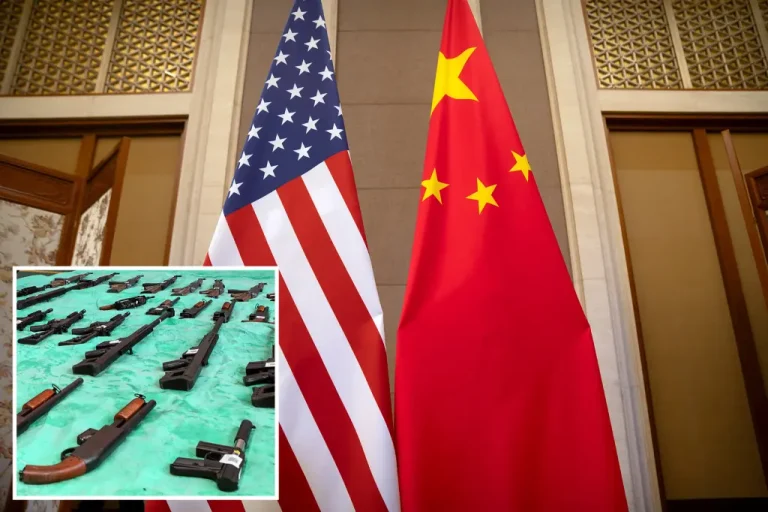
Washington D.C. – China has announced sweeping sanctions against American defence companies and their senior executives in direct response to Washington’s approval of substantial arms sales to Taiwan. The move represents Beijing’s firm stance on what it considers violations of its sovereignty and territorial integrity regarding the self-governing island.

Immediate Implementation of Sanctions

The Chinese Foreign Ministry announced on Friday that China sanctions US defence firms through immediate implementation under the country’s Anti-Foreign Sanctions Law. The comprehensive action targets 20 American defence-related companies and 10 senior executives who have participated in supplying weapons to Taiwan in recent years.

A foreign ministry spokesperson issued a stern warning accompanying the announcement: “Anyone who attempts to cross the line and make provocations on the Taiwan question will be met with China’s firm response. Any company or individual who engages in arms sales to Taiwan will pay the price for the wrongdoing. No country or force shall ever underestimate the resolve, will and ability of the Chinese government and people to safeguard national sovereignty and territorial integrity.”

Beijing’s Core Grievances

China sanctions US defence firms based on allegations that American arms sales to Taiwan “seriously violate the one-China principle and the three China-US Joint Communiques, interfere in China’s internal affairs, and undermine China’s sovereignty and territorial integrity.”

The one-China principle represents Beijing’s fundamental position that Taiwan is an inseparable part of Chinese territory. The three China-US Joint Communiques, established between 1972 and 1982, form the diplomatic foundation of US-China relations and address Washington’s approach to Taiwan.

By invoking these foundational diplomatic agreements, Beijing frames the sanctions as a defensive response to what it perceives as American provocations rather than an aggressive escalation.

Complete List of Sanctioned Companies

China sanctions US defence firms including major American aerospace and defence contractors. The targeted companies represent a cross-section of the US defence industrial base, spanning traditional manufacturers to emerging technology providers.

The sanctioned entities include Northrop Grumman Systems Corporation, L3Harris Maritime Services, Boeing in St. Louis, Gibbs & Cox, Advanced Acoustic Concepts, VSE Corporation, and Sierra Technical Services. Additionally, China sanctions US defence firms specializing in emerging technologies such as Red Cat Holdings, Teal Drones, ReconCraft, High Point Aerotechnologies, Epirus, and Dedrone Holdings.

The list also encompasses Area-I, Blue Force Technologies, Dive Technologies, Vantor, Intelligent Epitaxy Technology, Rhombus Power, and Lazarus Enterprises, demonstrating the broad scope of Beijing’s retaliatory measures.

Asset Freezes and Business Restrictions

Under the sanctions framework where China sanctions US defence firms, all movable and immovable assets belonging to these companies located within Chinese territory will be frozen immediately. This represents a significant financial penalty for firms maintaining operations or investments in China.

Furthermore, Chinese organizations and individuals face prohibitions from conducting business, cooperation, or any other dealings with the listed entities. This effectively cuts off the sanctioned companies from accessing the Chinese market and collaborating with Chinese partners.

Individual Executives Targeted

The measures extend beyond corporate entities, as China sanctions US defence firms’ leadership through restrictions on 10 senior executives. Notable individuals include Palmer Luckey, founder of Anduril Industries, along with top executives from companies such as L3Harris, VSE Corporation, and other sanctioned organizations.

Also Read: Trump Zelensky Meeting: Critical Peace Talks Set for Florida Summit

These executives will have their assets in China restricted and face significant limitations on activities related to China. This personal accountability component sends a clear message that Beijing holds individuals responsible for corporate decisions regarding Taiwan arms sales.

The Triggering Arms Package

China sanctions US defence firms following the Trump administration’s approval last week of a major arms package for Taiwan. According to the US State Department, the proposed sales exceed $10 billion in value and include medium-range missiles, howitzers, and drones.

The comprehensive package encompasses eight separate arms deals with an estimated total cost of $11.1 billion. Key components include HIMARS rocket systems, M109A7 howitzers, TOW 2B anti-tank missiles, anti-armor drones, and FGM-148 Javelin anti-tank missiles.

Taiwan’s Defence Budget Response

Five of the eight arms packages are covered in a special defence budget of approximately $39.85 billion put forth last month by the Taiwan government. This budget currently awaits lawmakers’ review, according to Taiwan’s Defence Ministry, reflecting Taipei’s commitment to enhancing its defensive capabilities.

The substantial defence investment underscores Taiwan’s determination to maintain credible deterrence capabilities amid increasing military pressure from mainland China.

Strategic Implications

The decision where China sanctions US defence firms represents more than mere economic retaliation. It signals Beijing’s willingness to employ its Anti-Foreign Sanctions Law as a tool for enforcing its red lines on Taiwan-related issues. As cross-strait tensions continue evolving, these sanctions demonstrate that companies engaging in Taiwan arms sales face concrete consequences from the world’s second-largest economy.

Trump Zelensky Meeting: Critical Peace Talks Set for Florida Summit

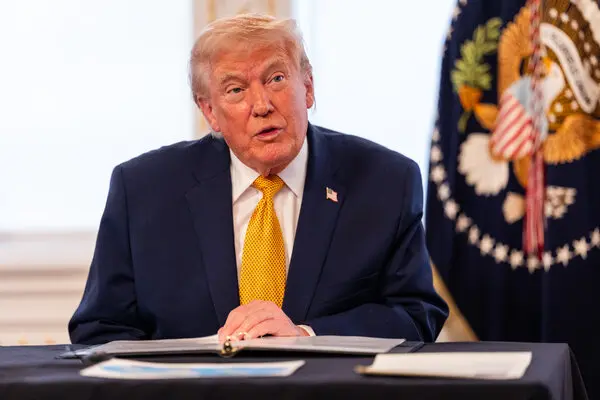
Washington D.C. – US President Donald Trump has made it clear that Ukrainian President Volodymyr Zelensky requires his explicit approval for any peace agreement, setting the stage for high-stakes discussions scheduled for Sunday in Florida. The Trump Zelensky meeting comes at a pivotal moment as efforts intensify to end the nearly four-year conflict between Ukraine and Russia.

Trump’s Firm Position on Ukraine Peace Deal

Speaking ahead of the scheduled Trump Zelensky meeting, the US President emphasized his decisive role in any potential peace agreement. Trump stated that Zelensky “doesn’t have anything until I approve it,” referencing the peace plan currently being developed by his administration to end the ongoing war between Kyiv and Moscow.

In an interview published on Friday, Trump expressed cautious optimism about the upcoming discussions. “He doesn’t have anything until I approve it. So we’ll see what he’s got,” the Republican leader remarked, indicating his expectation for substantive proposals from the Ukrainian President during their Florida encounter.

Trump also revealed his intention to communicate with Russian President Vladimir Putin “soon and as much as I want,” suggesting active diplomatic engagement with both parties to the conflict. This approach underscores the administration’s hands-on strategy in mediating the dispute.

Key Issues on the Agenda

The Trump Zelensky meeting will focus primarily on territorial disputes, which represent the main obstacle in negotiations to end Russia’s full-scale invasion of Ukraine. These territorial questions have proven to be the most contentious elements in peace discussions, with both sides maintaining firm positions on control of specific regions.

Zelensky announced his expectations for the Florida summit, stating that “a lot can be decided before the New Year.” This timeline reflects the urgency both leaders attach to making progress in ending Europe’s deadliest conflict since World War Two.

The Ukrainian President specified that discussions would cover multiple sensitive areas. “As for the sensitive issues, we will discuss both Donbas and the Zaporizhzhia nuclear power plant. We will certainly discuss other issues as well,” Zelensky explained to reporters through a WhatsApp chat.

The 20-Point Peace Framework

As the Trump Zelensky meeting approaches, a comprehensive 20-point peace framework and security guarantee deal are nearing completion. This framework represents months of diplomatic efforts by the Washington-led initiative to establish a sustainable path toward ending hostilities.

Zelensky has indicated openness to democratic processes regarding the peace plan. He stated that he would be willing to put the Washington-led framework to a referendum, though with a significant condition: Russia must agree to a 60-day ceasefire to allow Ukraine adequate time to prepare for and conduct such a vote.

This referendum proposal demonstrates Zelensky’s commitment to ensuring Ukrainian citizens have a voice in determining their nation’s future, even as difficult territorial compromises are being discussed at the highest levels.

Territorial Disputes and Competing Demands

The territorial dimension of the Trump Zelensky meeting centers on fundamentally different positions between Moscow and Kyiv. Russia demands that Ukraine withdraw from portions of the eastern Donetsk region that Russian forces have not succeeded in occupying during the conflict’s duration. Moscow seeks complete control of the Donbas, encompassing both Donetsk and Luhansk regions.

In contrast, Kyiv’s position advocates for halting combat operations at the current battle lines, effectively freezing the territorial status quo. This represents a significant gap between the two sides that negotiators must bridge.

US Compromise Proposal

Seeking middle ground between these opposing positions, the United States has proposed establishing a free economic zone if Ukraine agrees to leave certain contested areas. However, the proposal has not yet detailed how such a zone would function operationally or what specific economic benefits it would provide to affected populations.

This American compromise attempt will likely feature prominently in the Trump Zelensky meeting discussions, as both leaders evaluate whether such arrangements can satisfy Ukrainian security concerns while addressing Russian territorial demands.

Looking Ahead

The Trump Zelensky meeting represents a crucial juncture in peace negotiations. With a comprehensive framework nearly complete and both leaders expressing willingness to engage seriously, the Florida summit could mark a turning point in efforts to end the devastating conflict.

The outcome of Sunday’s discussions will significantly influence the trajectory of peace efforts and could determine whether the new year brings renewed hope for a diplomatic resolution to the war that has reshaped European security dynamics and caused immense humanitarian suffering.

J P Nadda Chairs High-Level Review with Madhya Pradesh and Chhattisgarh; Calls for Mission-Mode Health Reforms and TB Mukt Bharat; 2025

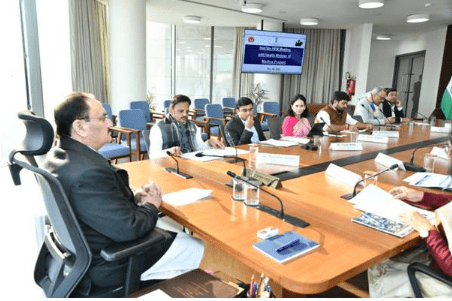
Union Minister of Health and Family Welfare Shri Jagat Prakash Nadda on Friday chaired a high-level review meeting with the Health Ministers and senior officials of Madhya Pradesh and Chhattisgarh, stressing the need for mission-mode healthcare reforms, strict drug regulation, strengthened diagnostics, and accelerated progress towards TB Mukt Bharat. The meeting focused on enhancing healthcare delivery, patient satisfaction, regulatory oversight, and Centre–State coordination in public health.


Mission-Mode Push for Healthcare Reforms

Shri Nadda underlined that healthcare reforms must be pursued with a mission-oriented approach, placing patient-centric care at the core. He emphasised that improving patient satisfaction, strengthening regulatory supervision, and ensuring compliance should be treated as continuous national priorities, rather than one-time interventions.


Strengthening Drug Regulation and Supply Chains

Highlighting the importance of robust drug regulation, the Union Health Minister stressed continuous monitoring of the entire supply chain—from manufacturing to distribution—to ensure quality and safety of medicines. On the Free Drugs and Free Diagnostics schemes, he directed both States to strengthen supply-chain mechanisms and address monitoring gaps.

He informed that the Ministry is collaborating with IIM Ahmedabad to enhance logistics, transparency, and accountability in drug and diagnostic procurement systems across states.


Diagnostics and Professional Hospital Management

Shri Nadda noted that quality diagnostics and timely testing are the backbone of effective healthcare delivery and must be strengthened across primary, secondary, and tertiary healthcare levels. While acknowledging the central role of doctors in clinical care, he stressed the need for professional hospital administration and dedicated regulatory oversight.

Special emphasis was laid on strengthening regulation of blood banks, hospital systems, and safety protocols to ensure consistent quality standards.


Leveraging Telemedicine for Wider Access

The Union Health Minister highlighted telemedicine as a key enabler for expanding access to quality healthcare, particularly in remote and underserved areas. He encouraged Madhya Pradesh and Chhattisgarh to integrate telemedicine platforms more deeply into routine service delivery to ensure uninterrupted access to specialist consultations.


TB Mukt Bharat: District-Level Mission Approach

Reiterating the Government’s commitment to eliminate tuberculosis, Shri Nadda called for district-specific interventions, focusing on intensified screening, diagnostics, treatment adherence, and nutritional support. He stressed that TB elimination must be driven in mission mode, with close monitoring at district and block levels to achieve measurable outcomes.


Jan Bhagidari and Political Engagement

Emphasising Jan Bhagidari (people’s participation), Shri Nadda proposed sensitisation workshops for MLAs to encourage active engagement with Block Medical Officers (BMOs) and Chief Medical Officers (CMOs) through regular reviews. He said people’s participation is vital for accountability, improved outcomes, and building public trust in government health programmes.


Centre–State Partnership and Support

Deputy Chief Minister and Minister of Public Health and Medical Education, Madhya Pradesh, Shri Rajendra Shukla, and Minister of Health & Family Welfare and Medical Education, Chhattisgarh, Shri Shyam Bihari Jaiswal, assured full cooperation with the Union Health Ministry to strengthen implementation and outcomes.

Shri Nadda reiterated the Centre’s continued support through National Health Mission (NHM) interventions, PPP models, expansion of medical education, viability gap funding, and infrastructure support. He also assured technical training and hand-holding support to Chhattisgarh, particularly for prioritised management of Leprosy.


Nationwide Consultative Drive on Health Reforms

The Union Health Minister announced that similar consultative meetings will be held with Health Ministers of other States in the coming days, as part of a nationwide mission-mode consultative drive to accelerate health sector reforms and strengthen cooperative federalism in public health.


Conclusion

The high-level review concluded with a shared resolve to strengthen drug regulation, diagnostics, hospital administration, medical education, and TB elimination efforts in Madhya Pradesh and Chhattisgarh. The meeting reaffirmed the Centre–State partnership in building accessible, affordable, and modern healthcare systems, aligned with the national vision of TB Mukt Bharat and patient-centric public health governance.


For more real-time updates, visit Channel 6 Network.

Source: PIB

Amit Shah Inaugurates Anti-Terrorism Conference-2025, Calls for Strong, Unified National Grid Against Emerging Threats

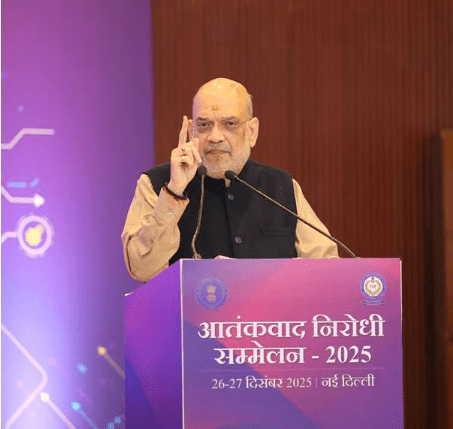
Union Home Minister and Minister of Cooperation Shri Amit Shah on Friday inaugurated the Anti-Terrorism Conference-2025 in New Delhi, reiterating the Government of India’s zero-tolerance policy against terrorism under the leadership of Prime Minister Shri Narendra Modi. Organised by the National Investigation Agency (NIA), the two-day conference brought together senior police leadership, central agencies, and domain experts to strengthen India’s counter-terrorism framework amid rapidly evolving threats.


A Strategic Platform Against Emerging Terror Threats

Addressing the gathering, Shri Amit Shah said the Anti-Terrorism Conference has evolved into a permanent and actionable national platform, where deliberations translate into year-round implementation by the NIA and state agencies. He emphasised that every terrorist incident—domestic or global—must be systematically analysed to continuously upgrade India’s counter-terrorism preparedness.

He noted that terrorism today is undergoing a technological transformation, and India must remain “two steps ahead” by anticipating future and invisible threats rather than merely reacting to past incidents.


Unveiling New Tools to Strengthen Investigations

During the event, the Union Home Minister unveiled three major initiatives:

  • Updated Crime Manual prepared by the NIA

  • Organised Crime Network Database

  • Lost/Looted and Recovered Weapon Database

Shri Shah urged all State Directors General of Police to ensure the immediate adoption and study of the updated crime manual to improve investigation and prosecution standards across the country.


Cracking Down on Organised Crime and Terror Linkages

Highlighting the dangerous nexus between organised crime and terrorism, Shri Shah explained that criminal syndicates often begin with extortion and ransom but later fund terror networks, especially when leaders operate from foreign soil. He directed states to work closely with NIA, CBI, IB, and central databases to eliminate organised crime networks within their jurisdictions, adding that the government is preparing a 360-degree strike plan against organised crime.


Operational Successes: Operation Sindoor and Operation Mahadev

Referring to the Baisaran Valley terror attack, Shri Amit Shah said the incident aimed to destabilise communal harmony and disrupt Kashmir’s renewed development and tourism momentum. He highlighted that:

  • Operation Sindoor punished those who planned the attack

  • Operation Mahadev neutralised the terrorists who executed it

For the first time, India ensured accountability at both the planning and execution levels, delivering a strong message to Pakistan’s terror sponsors. He added that the Pahalgam terror investigation will be studied internationally and will place Pakistan under scrutiny on global platforms.


Need for a Common ATS Structure Nationwide

The Home Minister strongly advocated for a uniform Anti-Terrorism Squad (ATS) structure across all states, stressing that operational uniformity is essential for:

  • Accurate threat assessment

  • Effective intelligence sharing

  • Coordinated counter-terror action

He urged states to mandatorily adopt platforms like NATGRID and NIDAAN, ensuring investigations are not conducted in isolation and that hidden linkages are uncovered.


From ‘Need to Know’ to ‘Duty to Share’

Shri Amit Shah called for a paradigm shift from “Need to Know” to “Duty to Share”, stating that siloed data and fragmented technology weaken national security. He proposed the creation of a seamless national technology and data framework, supported by the Ministry of Home Affairs, NIA, and Intelligence Bureau, to empower states with integrated systems.


Building an Impenetrable Anti-Terror Grid

Highlighting India’s growing global and economic stature, the Home Minister said that internal security challenges will rise alongside economic growth. He stressed that border security begins far beyond physical borders and that India must develop a multi-layered, technology-driven, and ruthless counter-terror mechanism capable of tackling cyber warfare, hybrid terrorism, and misuse of economic networks.

He also supported the use of Trial-in-Absentia to compel fugitives to return to India and face justice.


Conclusion

The Anti-Terrorism Conference-2025 reaffirmed India’s resolve to combat terrorism through unity, intelligence integration, operational uniformity, and technological superiority. Shri Amit Shah’s call for a ‘Team India’ approach, combined with stronger databases, common ATS structures, and proactive intelligence sharing, marks a decisive step toward building an impenetrable anti-terrorism grid for present and future generations.


For more real-time updates, visit Channel 6 Network.

Source: PIB

NIFTEM-K Proudly Signs MoU with Ministry of Minority Affairs to Implement PM VIKAS Scheme: 2025

The National Institute of Food Technology Entrepreneurship and Management (NIFTEM), Kundli, has signed a Memorandum of Understanding (MoU) with the Ministry of Minority Affairs to implement the PM VIKAS (Pradhan Mantri Virasat Ka Samvardhan) scheme. The agreement, signed on 22 December 2025 in New Delhi, designates NIFTEM-K as a Project Implementing Agency (PIA), reinforcing the government’s commitment to skill development and livelihood generation among minority communities.


NIFTEM-K Selected as Project Implementing Agency

NIFTEM-K has been selected as one of the few Institutes of National Importance (INI) to serve as a PIA under the PM VIKAS scheme. The initiative focuses on enhancing the employability of minority youth by providing need-based, industry-relevant skill training and facilitating sustainable employment and entrepreneurship opportunities.


Training 2,110 Beneficiaries Across Four States

Under the project, NIFTEM-K will train 2,110 beneficiaries from minority communities across seven locations in Jharkhand, Bihar, Punjab, and Haryana. The training will be delivered under three specialized job roles aligned with the food processing sector:

  • Multi Skill Technician (Food Processing)

  • Millet Products Processor

  • Assistant Baking Technician

This targeted intervention aims to bridge skill gaps, strengthen employability, and create viable livelihood pathways for beneficiaries.


NSQF-Compliant Courses and Employment Linkages

The program will offer NSQF-compliant skill training through NCVET-approved courses, ensuring nationally recognized standards. NIFTEM-K will also facilitate placement opportunities for eligible candidates across wage employment, self-employment, and apprenticeship routes, including roles in the organized sector. Beneficiaries will receive certification from MSDE/NCVET-approved institutions, enhancing their credibility in the job market.


Rollout Timeline and Impact

The PM VIKAS training program implemented by NIFTEM-K is expected to be rolled out in January 2026. By combining skill development with market and credit linkages, the project seeks to integrate minority communities into the economic mainstream and promote inclusive growth.


Conclusion

The MoU between NIFTEM-K and the Ministry of Minority Affairs marks a significant step toward inclusive skill development in India. By equipping minority youth with industry-relevant skills and assured certification, the PM VIKAS scheme is poised to create meaningful employment opportunities and strengthen livelihoods across multiple states.


For more real-time updates, visit Channel 6 Network.

Source: PIB

J P Nadda Reviews Indian Pharmacopoeia Commission’s Progress; Highlights Global Recognition of Indian Pharmacopoeia: 2025

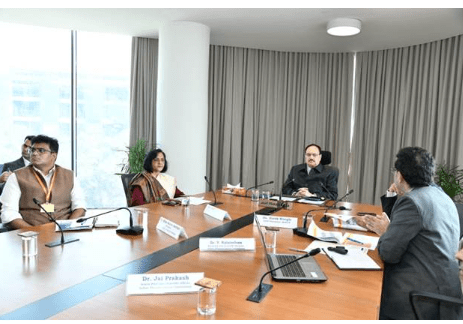
Union Minister of Health and Family Welfare, Shri Jagat Prakash Nadda, on Friday reviewed the progress and key initiatives of the Indian Pharmacopoeia Commission (IPC), reaffirming its critical role in strengthening India’s pharmaceutical standards and pharmacovigilance framework. The review underscored the Government’s vision of Atmanirbhar Bharat and Viksit Bharat, with a strong emphasis on scientific excellence, self-reliance, and robust healthcare regulation.


Strengthening Pharmacopoeial Standards and Public Health

During the review meeting, held in the presence of Ms. Nivedita Shukla Verma, Secretary, Department of Chemicals and Petro-Chemicals (DoCP) and holding additional charge as Secretary, Ministry of Health and Family Welfare (MoHFW), Shri Nadda commended IPC’s sustained efforts in ensuring the quality, safety, and efficacy of medicines. He noted that the Indian Pharmacopoeia continues to serve as a vital scientific and regulatory reference, maintaining uniform standards of medicines across the country and safeguarding public health.


Indian Pharmacopoeia Gains Global Recognition

Highlighting India’s growing stature in global healthcare regulation, Shri Nadda stated that the Indian Pharmacopoeia is now recognised in 19 countries, reflecting increasing international confidence in India’s regulatory and scientific capabilities. He observed that this recognition further strengthens India’s position as the “Pharmacy of the World” and reinforces the global credibility of Indian pharmacopoeial standards.


Launch of Indian Pharmacopoeia 2026 Announced

The Union Health Minister also announced that the 10th edition of the Indian Pharmacopoeia 2026 is scheduled to be launched in the first week of January 2026. The upcoming edition is expected to further enhance India’s regulatory framework by incorporating updated scientific standards aligned with global best practices.


Focus on Pharmacovigilance and Patient Safety

Shri Nadda emphasized IPC’s pivotal role in implementing the Pharmacovigilance Programme of India (PvPI), which monitors adverse drug reactions to ensure patient safety. He appreciated IPC’s efforts to strengthen reporting mechanisms and build capacity among healthcare professionals, thereby improving drug safety surveillance across the country.


Driving Atmanirbhar Bharat and Global Harmonisation

The Minister lauded IPC’s contribution to Atmanirbhar Bharat by strengthening indigenous scientific expertise and regulatory standards while supporting global public health objectives. He encouraged IPC to continue focusing on innovation, digitalisation, and global harmonisation of standards, in line with the broader vision of Viksit Bharat, to ensure universal access to safe and quality medicines.


IPC Reaffirms Commitment to National and Global Health

Presenting details of IPC’s ongoing activities, Dr. V. Kalaiselvan, Secretary-cum-Scientific Director, IPC, reaffirmed the Commission’s commitment to further strengthening pharmacopoeial and pharmacovigilance standards. He also highlighted IPC’s efforts to enhance international collaboration and contribute meaningfully to national and global health goals.


Conclusion

The review meeting reaffirmed the Indian Pharmacopoeia Commission’s central role in India’s healthcare and pharmaceutical ecosystem. With growing international recognition, strengthened pharmacovigilance systems, and the forthcoming launch of the Indian Pharmacopoeia 2026, IPC continues to advance India’s journey towards self-reliance, global leadership in pharmaceuticals, and a resilient public health framework.


For more real-time updates, visit Channel 6 Network.

Source: PIB

Markets End Lower on December 26 as Financial Stocks Drag; PSU and Infra Counters Outperform

Indian equity markets closed lower on Thursday, December 26, 2025, as sustained selling pressure in banking and financial stocks weighed on benchmark indices. Despite the broader weakness, strong buying interest in select PSU, infrastructure, and mid-cap stocks provided pockets of strength, resulting in a mixed but highly stock-specific market close.

Also Read: Nifty Slips Further on December 26 as Financials Weigh Heavily; Broader Market Shows Selective Strength


Benchmark Indices: Nifty Closes Below 26,050

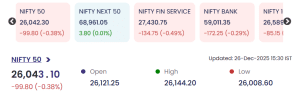
The Nifty 50 settled at 26,043.10, down 99.80 points (-0.38%) for the day. The index opened at 26,121.25, touched an intraday high of 26,144.20, and slipped to a low of 26,008.60, indicating steady selling pressure as the session progressed.

December 26Sector-wise, Nifty Financial Services declined 134.75 points (-0.49%) to 27,430.75, while Nifty Bank ended at 59,011.35, down 172.25 points (-0.29%), emerging as the key drag on the market. Meanwhile, Nifty Next 50 managed to close marginally higher at 68,961.05, gaining 3.80 points (+0.01%), reflecting selective accumulation in broader market stocks.


Top Gainers: PSU and Infrastructure Stocks Steal the Show

Several stocks recorded sharp gains on strong volumes, underscoring investor preference for PSU and infrastructure-linked counters:

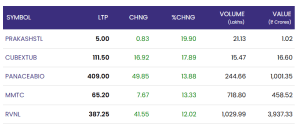
  • Prakash Steelage (PRAKASHSTL) surged 19.90% to ₹5.00, remaining locked near its upper circuit with steady volumes.

  • Cubex Tubings (CUBEXTUB) rallied 17.89% to ₹111.50, supported by increased investor interest.

  • Screenshot 2025 12 26 234158Panacea Biotec rose 13.88% to ₹409.00, with value turnover crossing ₹1,000 crore, indicating strong institutional participation.
  • MMTC advanced 13.33% to ₹65.20, driven by optimism in commodity and PSU stocks.

  • RVNL gained 12.02% to ₹387.25, recording massive volumes of over 1,029 lakh shares, reinforcing bullish sentiment around railway and infrastructure plays.


Top Losers: Selling Pressure in Select Counters

On the downside, several stocks witnessed sharp corrections:

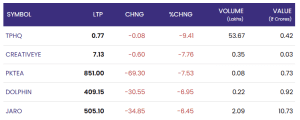
  • TPHQ declined 9.41% to ₹0.77, emerging as the top loser of the session.

  • Creative Eye fell 7.76% to ₹7.13, amid weak buying interest.

  • Screenshot 2025 12 26 234151PKTEA slipped 7.53% to ₹851.00, reflecting profit booking at higher levels.

  • Dolphin Offshore dropped 6.95% to ₹409.15.

  • Jaro Education declined 6.45% to ₹505.10, rounding off the list of major laggards.


Market Outlook: Stock-Specific Action to Continue

Market experts believe that near-term market movement will remain volatile and stock-specific, with investors closely tracking sectoral cues, PSU performance, and corporate fundamentals. Weakness in financial stocks may continue to cap upside in benchmark indices, while selective opportunities could emerge in infrastructure, PSU, and mid-cap segments.


Conclusion: December 26

The December 26 trading session reflected a divergent market trend, where benchmark indices ended lower due to persistent pressure from banking and financial stocks, even as PSU and infrastructure counters delivered strong gains on heavy volumes. As markets head into the year-end, investors are expected to stay cautious, focusing on selective buying rather than broad-based rallies.


For real time stock Updates, visit NSE website.

Nifty Slips Further on December 26 as Financials Weigh Heavily; Broader Market Shows Selective Strength

Indian equity markets extended losses in afternoon trade on Thursday, December 26, 2025, with benchmark indices slipping deeper into the red amid sustained pressure on banking and financial stocks. Despite the weakness in frontline indices, selective mid-cap and PSU stocks continued to attract strong buying interest, reflecting a cautious yet stock-specific market sentiment.

Also Read: Nifty Ends Lower on December 26 as Financials Drag; Select Midcaps Rally on Heavy Volumes


Benchmark Indices: Financials Drag Markets Lower

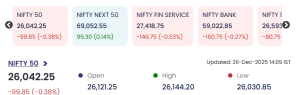
The Nifty 50 closed at 26,042.25, declining 99.85 points (-0.38%). The index opened at 26,121.25, touched an intraday high of 26,144.20, and slipped to a low of 26,030.85, indicating persistent selling pressure through the session.

December 26Among sectoral indices, Nifty Financial Services witnessed sharper losses, falling 146.75 points (-0.53%) to 27,418.75, while the Nifty Bank index declined 160.75 points (-0.27%) to 59,022.85. In contrast, Nifty Next 50 outperformed the benchmarks, rising 95.30 points (+0.14%) to 69,052.55, highlighting resilience in broader market segments.


Top Gainers: Strong Momentum in Select Midcaps and PSUs

Despite overall market weakness, several stocks posted robust gains on healthy volumes:

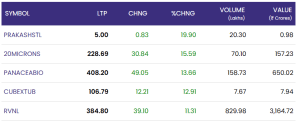
  • Prakash Steelage (PRAKASHSTL) surged 19.90% to ₹5.00, emerging as the top gainer of the session.

  • 20 Microns rallied 15.59% to ₹228.69, supported by strong volumes and value buying.

  • Panacea Biotec advanced 13.66% to ₹408.20, with heavy turnover reflecting sustained investor interest.

  • Screenshot 2025 12 26 141048Cubex Tubings gained 12.91% to ₹106.79, indicating renewed buying momentum.
  • RVNL rose 11.31% to ₹384.80, recording exceptionally high volumes of over 829 lakh shares, underlining continued optimism around infrastructure and railway-related stocks.


Top Losers: Sharp Selling in Select Counters

On the downside, several stocks witnessed notable corrections:

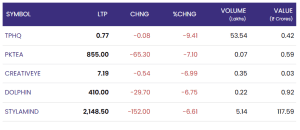
  • TPHQ fell 9.41% to ₹0.77, remaining under selling pressure.

  • PKTEA declined 7.10% to ₹855.00, marking one of the steepest losses of the day.

  • Screenshot 2025 12 26 141054Creative Eye slipped 6.99% to ₹7.19, reflecting weak investor sentiment.

  • Dolphin Offshore dropped 6.75% to ₹410.00.

  • Stylam Industries fell 6.61% to ₹2,148.50, as profit booking emerged at higher levels.


Market Outlook: Volatility Likely to Persist

Market participants remained cautious as selling pressure in heavyweight financial stocks overshadowed gains in broader market pockets. Analysts expect continued volatility in the near term, with investors likely to focus on fundamentally strong stocks, PSU plays, and infrastructure-linked opportunities while avoiding aggressive positions ahead of year-end.


Conclusion: December 26

The December 26 session highlighted a divergent market trend, where benchmark indices weakened due to sustained pressure in banking and financial stocks, even as select mid-cap and PSU counters delivered strong gains on heavy volumes. Going forward, market direction is expected to remain stock-specific, with selective buying amid broader caution.


For real time stock Updates, visit NSE website.

Nifty Ends Lower on December 26 as Financials Drag; Select Midcaps Rally on Heavy Volumes

Indian equity benchmarks closed slightly in the red on Thursday, December 26, 2025, as weakness in financial and banking stocks weighed on overall sentiment. The Nifty 50 slipped below the 26,100 mark despite strong buying interest in select mid-cap and PSU stocks, indicating a mixed and cautious market mood ahead of the year-end.

Also read: Indian Equity Markets End Lower on December 24: NIFTY 50 Slips Below 26,150 Amid Broad-Based Profit Booking


Benchmark Indices: Modest Losses Amid Volatility

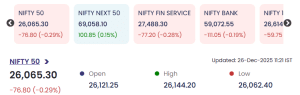
The Nifty 50 ended the session at 26,065.30, down 76.80 points (-0.29%). The index opened at 26,121.25, touched an intraday high of 26,144.20, and slipped to a low of 26,062.40, reflecting narrow-range but volatile trading.

December 26Sectorally, the Nifty Bank closed at 59,072.55, declining 111.05 points (-0.19%), while Nifty Financial Services fell 77.20 points (-0.28%) to settle at 27,488.30. In contrast, Nifty Next 50 outperformed, rising 100.85 points (+0.15%) to 69,058.10, signaling selective accumulation beyond frontline stocks.


Top Gainers: PSU and Infra Stocks Shine

Broader markets witnessed strong buying in several stocks, particularly in PSU, infrastructure, and metals-related counters:

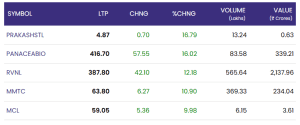
  • Prakash Steelage (PRAKASHSTL) surged 16.79% to ₹4.87, backed by steady volumes.

  • Panacea Biotec rallied 16.02% to ₹416.70, with significant value turnover, indicating institutional interest.

  • Screenshot 2025 12 26 112230RVNL jumped 12.18% to ₹387.80, supported by massive volumes exceeding 565 lakh shares, reflecting continued optimism in railway and infrastructure plays.
  • MMTC gained 10.90% to ₹63.80, benefiting from strength in commodity-linked stocks.

  • MCL advanced 9.98% to ₹59.05, rounding off the list of major gainers.


Top Losers: Sharp Cuts in Select Counters

On the downside, some stocks faced notable profit booking and selling pressure:

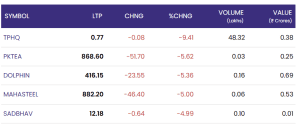
  • TPHQ dropped 9.41% to ₹0.77, emerging as the top loser of the session.

  • PKTEA declined 5.62% to ₹868.60, despite thin trading volumes.

  • Screenshot 2025 12 26 112241Dolphin Offshore slipped 5.36% to ₹416.15.

  • MahaSteel fell 5.00% to ₹882.20.

  • Sadbhav Engineering edged lower by 4.99% to ₹12.18, reflecting weakness in select construction stocks.


Market Outlook: Cautious but Stock-Specific

Market participants remained cautious as heavyweight financial stocks failed to provide support, even as broader market pockets showed resilience. Analysts believe that near-term movements will continue to be stock-specific, with investors focusing on fundamentals, order flows, and sectoral cues rather than broad-based rallies.


Conclusion: December 26

The December 26 session underscored a divergent market trend, where benchmark indices ended lower due to financial sector drag, while select mid-cap and PSU stocks delivered strong gains on robust volumes. As the year draws to a close, investors are expected to remain selective, balancing profit booking with opportunities in fundamentally strong sectors.


For real time stock Updates, visit NSE website.