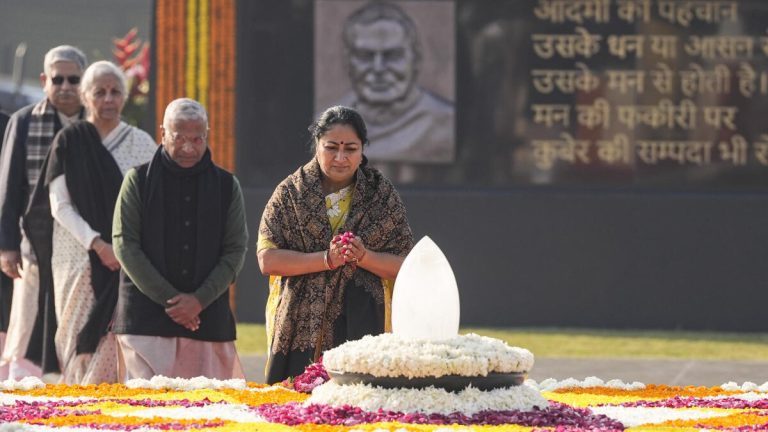
New Delhi – The Delhi government yesterday commemorated the 101st birth anniversary of former Prime Minister Atal Bihari Vajpayee with the launch of the Atal canteens Delhi scheme, a groundbreaking initiative to provide nutritious meals at just ₹5 to workers, the urban poor, and other needy residents across the capital. The subsidised food program represents a significant step toward ensuring food security for the city’s most vulnerable populations.
The Atal canteens Delhi scheme was inaugurated at Nehru Nagar in south Delhi by Union Minister Manohar Lal Khattar and Delhi Chief Minister Rekha Gupta, marking a new era in welfare-oriented governance in the national capital.
Comprehensive Rollout Plan for Atal Canteens
According to officials, the Atal canteens Delhi scheme will cover 100 canteens citywide, with 45 becoming operational immediately. The remaining 55 Atal canteens Delhi locations are expected to start functioning within 15-20 days, ensuring rapid expansion of this critical social welfare program.
The Atal canteens Delhi initiative has been implemented through the Delhi Urban Shelter Improvement Board (DUSIB), which will oversee operations, maintain quality standards, and ensure consistent service delivery across all locations throughout the capital.
Meal Service and Menu Details
The Atal canteens Delhi will serve meals twice daily, offering a standardised menu comprising dal, rice, roti, and vegetables. This nutritionally balanced meal combination ensures that beneficiaries receive adequate nutrition at an extremely affordable price point of just ₹5 per meal.
All Atal canteens Delhi facilities have been equipped with modern kitchens, LPG-based cooking systems, and industrial RO water plants to ensure hygiene and quality. The infrastructure investment demonstrates the government’s commitment to providing dignified dining experiences for beneficiaries.
Quality Control and Monitoring Systems
To maintain high standards, the Atal canteens Delhi scheme has instituted comprehensive monitoring mechanisms. A digital token system has been implemented for efficient service delivery, while CCTV surveillance ensures transparency and accountability in operations.
Food quality at Atal canteens Delhi locations will be tested periodically by FSSAI and NABL-accredited laboratories. Regular audits have been instituted to ensure compliance with health and safety standards, giving beneficiaries confidence in the meals they consume.
Symbolic Pricing and Dignity Preservation
Union Minister Manohar Lal Khattar stated that the launch of Atal canteens Delhi “reflects an approach centred on service and welfare.” The nominal ₹5 charge represents a thoughtful balance between accessibility and dignity.
Chief Minister Rekha Gupta explained that the ₹5 charge at Atal canteens Delhi is a symbolic contribution designed to preserve beneficiaries’ dignity and discourage waste. She directed officials to maintain high hygiene and quality standards across all canteen locations, emphasizing that affordability should never compromise quality.
Chief Minister’s Metro Journey and Environmental Message
To reach the inauguration venue, CM Gupta took the Metro, where she interacted with commuters and emphasized the role of public transport in reducing pollution. Her choice to use public transportation for the Atal canteens Delhi launch event sent a strong message about environmental responsibility.
Gupta noted that the Metro project was initiated during Vajpayee’s tenure as Prime Minister. The network now spans 394 kilometers and carries approximately 3.5 million passengers daily, representing one of Vajpayee’s lasting legacies to Delhi’s infrastructure.
Atal Bihari Vajpayee Sadbhavana Udyan Inauguration
In addition to the Atal canteens Delhi launch, the Delhi Development Authority formally named an 11-acre green space in Daryaganj as Atal Bihari Vajpayee Sadbhavana Udyan. Lieutenant Governor VK Saxena presided over the naming ceremony in the presence of Chief Minister Gupta.
The park is the second in a series of three being redeveloped along Mahatma Gandhi Marg near the Walled City. It features lawns, white marble pathways, shaded plazas, baradaris, sculpted fountains, public amenities, and recreational zones.
A central installation of five horses driven by a sarathi symbolizes leadership and progress. Four Yakshini sculptures by Padma Vibhushan awardee Sudarshan Sahoo are installed, a clock tower is under construction, and a food van facility is planned near the parking area.
Larger Urban Development Vision
DDA officials stated that the park is part of a larger 35-acre green belt redevelopment along 1.7 kilometers of Ring Road, aimed at expanding public recreational space and decongesting central Delhi’s landscaped areas. This comprehensive urban development complements the Atal canteens Delhi social welfare initiative.
Vajpayee’s Legacy Remembered
At an Atal Smriti Sammelan in Kasturba Nagar, BJP national executive president Nitin Naveen praised Vajpayee’s leadership qualities. He recalled Vajpayee’s historic speech at the United Nations delivered in Hindi, which instilled national pride and restored the language’s global prominence.
Naveen noted that Vajpayee stood firmly for the honor of soldiers after the Kargil conflict and consistently placed national interest above personal power. The launch of Atal canteens Delhi continues this legacy of service-oriented governance that defined Vajpayee’s political career.
New Delhi – In a disturbing gang-rape outer Delhi case, two men have been arrested for the sexual assault of a 13-year-old girl near Samaypur Badli. The accused, identified as Narottam alias Neta and Rishabh Jha, were apprehended by Delhi Police on Sunday following a complaint filed by the victim’s family about the horrific incident that took place on Saturday.
The gang-rape outer Delhi case has shocked the local community and prompted swift police action, with authorities forming a special investigation team to ensure thorough prosecution of the perpetrators.
Details of the Accused in Gang-Rape Case
Police identified the suspects in the gang-rape outer Delhi case as Narottam alias Neta, 28, who runs a barber shop near his residence in Raja Vihar and was known to the girl and her family. The second accused, Rishabh Jha, 26, works as an employee in a private bank and lives with his family in Badli jhuggi-jhopri camp.
The fact that one of the accused in the gang-rape outer Delhi incident was known to the victim’s family highlights the disturbing reality that many crimes against children are perpetrated by individuals in positions of trust within their communities.
Incident Details and Police Action
The gang-rape outer Delhi incident occurred on Saturday when the two accused took the victim to Narottam’s residence. According to police reports, the suspects forced the minor girl to consume alcohol before sexually assaulting her in this horrific crime.
Deputy Commissioner of Police (outer-north) Hareshwar Swami confirmed that based on the girl’s detailed statement and her medical examination report, the two suspects in the gang-rape outer Delhi case were booked under Bharatiya Nyaya Sanhita section 70 (gang-rape) and section 6 (aggravated penetrative sexual assault) of the Protection of Children from Sexual Offences (POCSO) Act on Sunday.
Family’s Alert and Police Response
Later on Saturday, the victim’s family called the police and informed them that their daughter had been coerced into drinking alcohol. A subsequent statement by family members and a thorough investigation revealed that she had also been sexually assaulted in the gang-rape outer Delhi case.
The prompt action by the family in reporting the gang-rape outer Delhi incident enabled police to act swiftly and apprehend both accused on the same day charges were filed. Both suspects were arrested on Sunday, demonstrating the seriousness with which authorities are treating this case.
Special Investigation Team Formed
Given the gravity of the gang-rape outer Delhi crime, a special investigation team has been constituted under the supervision of the Deputy Commissioner of Police. According to a Delhi Police statement, the SIT has been “directed to complete the investigation and file chargesheet as soon as possible.”
The gang-rape outer Delhi case is currently under further investigation to ensure a strong legal trial that can stand up to judicial scrutiny and deliver justice to the victim. Authorities have emphasized their commitment to building an airtight case against the perpetrators.
Related Case: Sultanpuri Sexual Assault
In a separate but related development highlighting the prevalence of such crimes, an 18-year-old woman filed a case at the Sultanpuri police station on Monday. The woman accused a 21-year-old auto driver of raping her several times over the past three years after promising to marry her.
The woman approached police after learning last week that the man had married another woman approximately a month ago. While distinct from the gang-rape outer Delhi case, this incident underscores the ongoing challenges Delhi faces regarding crimes against women and minors.
A case under relevant sections of the BNS as well as the POCSO Act was registered, given that the assaults also occurred when the complainant was a minor. Police are conducting raids to apprehend the suspect.
Legal Framework and Prosecution
The gang-rape outer Delhi case is being prosecuted under stringent provisions designed to protect children from sexual offenses. The POCSO Act provides for enhanced punishment for crimes against minors, recognizing their vulnerability and the lifelong trauma such incidents can cause.
Section 70 of the Bharatiya Nyaya Sanhita addresses gang-rape specifically, while POCSO Act section 6 deals with aggravated penetrative sexual assault, both carrying severe penalties including lengthy imprisonment.
Community Impact and Concerns
The gang-rape outer Delhi incident has raised serious concerns about child safety in the area. The fact that one of the accused was known to the victim’s family has particularly disturbed residents, as it challenges assumptions about who poses risks to children.
The gang-rape outer Delhi case serves as a grim reminder of the need for increased vigilance, better community awareness about child protection, and swift justice system responses to deter such heinous crimes. As the investigation continues, authorities remain committed to ensuring that justice is served and the perpetrators face the full consequences of their actions under Indian law.
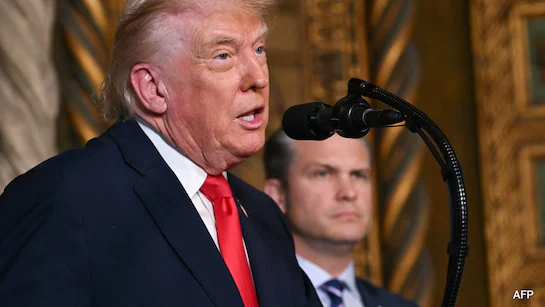
Washington D.C. – Ukrainian President Volodymyr Zelensky today reported having “a very good conversation” with US envoys in what he described as constructive Zelensky Trump envoys talks aimed at ending Russia’s war against Ukraine. The Ukrainian leader met with Steve Witkoff and Jared Kushner, representing President-elect Donald Trump’s administration, to discuss substantive details regarding potential pathways to peace.
The Zelensky Trump envoys talks focused on exploring viable solutions to end the nearly four-year conflict between Ukraine and Russia. According to Zelensky’s statements on social media platform X, several promising ideas emerged from the discussions that “can work toward a shared outcome and lasting peace.”
Substantive Details Discussed in High-Level Meeting
During the Zelensky Trump envoys talks, President Zelensky stated that they “discussed certain substantive details of the ongoing work.” He emphasized that good ideas were explored during the conversation, expressing optimism about their potential effectiveness in achieving lasting peace for Ukraine.
“We discussed certain substantive details of the ongoing work. There are good ideas that can work toward a shared outcome and lasting peace,” Zelensky wrote in his social media post following the Zelensky Trump envoys talks.
The Ukrainian President expressed gratitude to both envoys for their approach to the negotiations. “We are truly working 24/7 to bring closer the end of this brutal Russian war against Ukraine and to ensure that all documents and steps are realistic, effective, and reliable,” he stated.
Appreciation for Constructive Approach
Zelensky thanked the two American representatives for their “constructive approach, the intensive work, and the kind words” during the Zelensky Trump envoys talks. This acknowledgment suggests a positive working relationship between the Ukrainian government and Trump’s incoming administration, potentially signaling a shift in diplomatic dynamics.
The Zelensky Trump envoys talks demonstrated a commitment from both sides to engage seriously with the complex challenges of ending the conflict. Zelensky’s emphasis on working “24/7” underscores the urgency with which Ukrainian leadership views the peace process.
Follow-Up Negotiations Scheduled
An important outcome of the Zelensky Trump envoys talks was the agreement to continue dialogue. Ukrainian negotiator Rustem Umerov is scheduled to speak with Witkoff and Kushner again today, indicating that the discussions are part of an ongoing, intensive diplomatic effort rather than a one-time meeting.
This commitment to continued engagement following the Zelensky Trump envoys talks suggests that substantive progress may be underway, with all parties recognizing the need for sustained diplomatic effort to achieve a breakthrough in peace negotiations.
Context: The 20-Point Peace Plan
The Zelensky Trump envoys talks came just one day after Zelensky announced that Ukraine had won some limited concessions in the latest version of a US-led draft plan to end the war with Russia. The comprehensive 20-point peace plan, agreed upon by US and Ukrainian negotiators, is currently being reviewed by Russian authorities.
Kremlin spokesman Dmitry Peskov told media today that Moscow is reviewing information delivered to President Vladimir Putin by his envoy, Kirill Dmitriev, after weekend talks with the United States in Miami. The Zelensky Trump envoys talks appear to be part of this broader diplomatic framework.
However, the Kremlin has previously shown reluctance to abandon its territorial demands, insisting on full Ukrainian withdrawal from eastern regions. This position presents a significant challenge to the peace efforts discussed during the Zelensky Trump envoys talks.
Ukrainian Concessions and Red Lines
President Zelensky conceded on Wednesday that there were some points in the peace document that he did not favor. However, he emphasized that the Zelensky Trump envoys talks and broader negotiations had achieved important victories for Ukraine’s position.
Kyiv succeeded in removing immediate requirements for Ukraine to withdraw from the Donetsk region from the peace plan. Additionally, provisions that would have recognized land seized by Moscow’s army as Russian territory were also eliminated from the document under discussion during the Zelensky Trump envoys talks.
These concessions represent significant diplomatic achievements for Ukraine, as they preserve the country’s territorial integrity claims while still engaging in good-faith peace negotiations.
Path Forward After Diplomatic Engagement
The Zelensky Trump envoys talks represent a crucial moment in the effort to end the Russia-Ukraine conflict. With Trump’s inauguration approaching on January 20, 2025, his administration’s approach to the conflict could significantly influence the trajectory of peace efforts.
The constructive nature of the Zelensky Trump envoys talks suggests potential for continued diplomatic engagement under the new US administration. However, significant challenges remain, particularly regarding Russia’s territorial demands and Ukraine’s insistence on sovereignty and territorial integrity.
As follow-up discussions continue today with Ukrainian negotiator Rustem Umerov, the international community watches closely to see whether the momentum generated by the Zelensky Trump envoys talks can translate into concrete progress toward ending the brutal war that has devastated Ukraine since Russia’s invasion began.
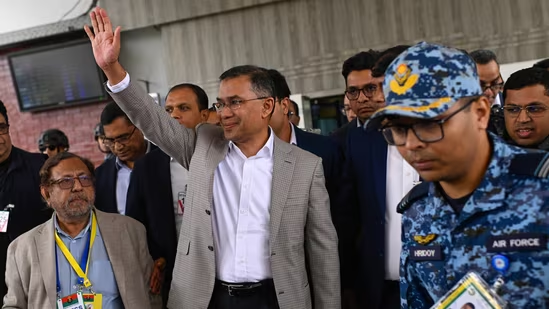
Dhaka, Bangladesh – The Tarique Rahman homecoming today marked a historic moment in Bangladesh’s political landscape as the Bangladesh Nationalist Party acting chief returned to Dhaka after 17 years of exile in London. The son of former Prime Minister Khaleda Zia, Rahman’s return comes amid widespread unrest in Bangladesh over the death of student leader Sharif Osman Hadi.
The Tarique Rahman homecoming witnessed an overwhelming response from supporters, with approximately 50 lakh people gathering to welcome the BNP leader back to his homeland. Following his arrival, Rahman addressed a massive rally at 300 Feet Road, where he outlined his vision for Bangladesh’s future and called for national unity.
Call for Peace and National Unity
During the Tarique Rahman homecoming rally, the BNP acting chief emphasized the urgent need for peace in Bangladesh. He stated that as the leader of the Bangladesh Nationalist Party, he has developed a comprehensive plan to address the nation’s challenges and restore stability to the country.
“The time has come for all of us to build the country together. This country belongs to people of the hills and the plains, Muslims, Hindus, Buddhists and Christians,” Rahman declared during his Tarique Rahman homecoming address. He stressed his commitment to building a safe Bangladesh where every woman, man, and child can leave home and return safely.
The BNP leader’s message of inclusivity during the Tarique Rahman homecoming reflected his understanding of Bangladesh’s diverse population and the need for communal harmony in the country’s political future.
Warning Against External Conspiracies
In a significant statement during the Tarique Rahman homecoming event, Rahman warned supporters about ongoing conspiracies. “Agents of various dominant powers are still engaged in conspiracies. We must remain patient. We have to exercise caution,” he stated, urging his followers not to respond to any form of provocation.
While Rahman made no specific mention of which external forces he was referring to during the Tarique Rahman homecoming speech, his comments highlighted concerns about foreign interference in Bangladesh’s internal affairs. The BNP leader called for vigilance and restraint among his supporters during this politically charged period.
Democratic Rights and Freedom of Expression
The Tarique Rahman homecoming address emphasized the restoration of fundamental democratic rights for all Bangladeshis. Rahman stated that the people want to regain their right to speak freely and have their democratic rights restored, reflecting widespread concerns about civil liberties in the country.
During the Tarique Rahman homecoming rally, the acting chief articulated his vision for a Bangladesh where democratic principles are respected and upheld, positioning himself as a champion of political freedom and citizen rights.
Honoring Martyrs and Historical Struggles
Rahman used the Tarique Rahman homecoming platform to recall Bangladesh’s liberation war of 1971 and the student uprising of 2024. He stated that the people must repay those who were martyred in these two conflicts by working towards building a Bangladesh “we all dream of.”
This reference to historical struggles during the Tarique Rahman homecoming speech connected past sacrifices with future aspirations, creating a narrative of continuity and national purpose.
Vision Inspired by Martin Luther King Jr.
In a powerful moment during the Tarique Rahman homecoming event, Rahman invoked American civil rights activist Martin Luther King Jr. and his historic “I have a dream” speech. The BNP acting chief declared that he “has a plan” to build a better Bangladesh for all people.
“This plan is for the interest of the people, for the development of the country, for changing the lot of the country. To implement the plan, I need the support of all the people of the country. If you stand beside us, God willing, we will be able to implement my plan,” Rahman stated during his Tarique Rahman homecoming address.
Appeal for Cross-Party Cooperation
The Tarique Rahman homecoming speech included a strong appeal for unity across political and religious lines. Rahman urged all citizens to come together for the betterment of Bangladesh, regardless of their political affiliations or religious beliefs.
“Whatever political party we belong to, whatever religion we believe in, whether we are non-partisan individuals — all must join hands to maintain law and order,” the BNP leader emphasized during his return.
Significance of the Return
The Tarique Rahman homecoming represents a crucial moment in Bangladesh’s political evolution. After 17 years away from his homeland, Rahman’s return signals a potential shift in the country’s political dynamics. His barefoot walk on Bangladesh soil and emotional reception from millions of supporters underscored the significance of this historic moment.
As Bangladesh navigates through current challenges, the Tarique Rahman homecoming has set the stage for renewed political engagement and potential transformation in the nation’s governance structure.
Dhaka – Bangladesh’s interim government today condemned the Bangladesh Hindu killing of a man identified as Amrit Mondal alias Samrat by a mob in Rajbari Town. The caretaker administration led by Muhammad Yunus issued a detailed statement addressing the incident and announced that legal action will be taken against all persons involved in the violent attack.
The Bangladesh Hindu killing occurred on Wednesday night in the Pangsha police station area of Rajbari, prompting the government to release an official statement countering what it described as “misleading information” being circulated on social media platforms about the nature and circumstances of the incident.
Government Denies Communal Nature of Attack
In addressing the Bangladesh Hindu killing, the interim government emphasized that information gathered from police and initial investigations indicated that “the incident was not a communal attack.” The statement, issued in Bengali, described Mondal’s death as a “tragic murder” while providing context about the circumstances surrounding the fatal encounter.
According to the government’s account of the Bangladesh Hindu killing, Mondal had arrived in the area allegedly to extort money and “lost his life during a clash with an angry local crowd.” The statement stressed that the incident arose from criminal activity rather than religious persecution or communal tensions.
Criminal Background of the Deceased
The government’s statement regarding the Bangladesh Hindu killing revealed that Mondal was an “accused in several serious cases, including murder and extortion cases registered in 2023.” Officials confirmed that there were active arrest warrants against him, positioning the deceased as a known criminal figure rather than an innocent victim of communal violence.
Police arrested Mondal’s associate, identified as Selim, from the scene with a foreign pistol and a pipe gun, according to the statement. “Three cases have already been filed in this incident,” the government announced, indicating swift legal action following the Bangladesh Hindu killing.
Strong Government Condemnation and Legal Action
Despite the criminal background of the victim, the interim government issued a strong condemnation of the Bangladesh Hindu killing. “The government strongly condemns this killing. The government wants to make it clear that the government does not support any kind of illegal activities, mass beatings or violence,” the statement declared.
The authorities emphasized their commitment to legal accountability, stating that legal action will be taken against all persons directly or indirectly involved in the Bangladesh Hindu killing incident. This position underscores the government’s stance against mob violence regardless of the victim’s criminal history or the circumstances leading to the confrontation.
Warning Against Communal Narratives
The government expressed serious concern at efforts to “portray the incident as a communal attack by bringing up the religious identity of the deceased, which is completely baseless and malicious.” This statement regarding the Bangladesh Hindu killing reflects official anxiety about the potential for the incident to be exploited for communal or political purposes.
Authorities urged people to “refrain from spreading misleading, provocative and sectarian statements” about the Bangladesh Hindu killing. The government emphasized its determination to “establish the rule of law and justice” while preventing the incident from being weaponized to inflame religious tensions.
Context of Recent Religious Violence
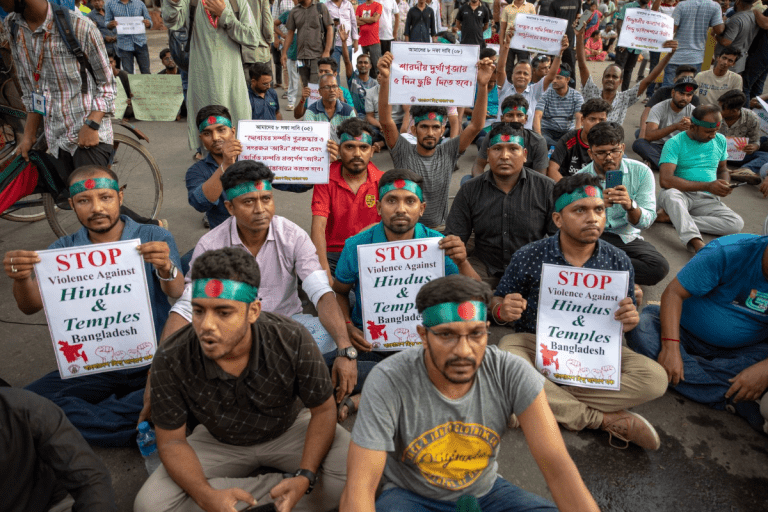
The Bangladesh Hindu killing comes just one week after another tragic incident in which a Hindu man named Dipu Chandra Das was lynched in Mymensingh after being accused of blasphemy. Bangladeshi authorities arrested 12 people for Das’s murder, which drew widespread international condemnation, including from the Indian government.
The timing of the Bangladesh Hindu killing has raised concerns about the safety of Hindu minorities in Bangladesh, despite the government’s insistence that the Rajbari incident was not communally motivated. The two incidents occurring in close succession have intensified scrutiny of religious tolerance and minority protection in the country.
Political Context and National Unity Message
The Bangladesh Hindu killing was reported in local media hours after the return from self-exile of Bangladesh Nationalist Party leader Tarique Rahman. In his address following his return, Rahman emphasized national unity, stating that the “country belongs to Muslims, Hindus, Buddhists and Christians.”
Rahman’s inclusive message came at a significant moment, as the Bangladesh Hindu killing and recent religious violence have sparked debates about minority rights and communal harmony in Bangladesh. His statement appeared aimed at reassuring all religious communities of their place in the nation.
Government’s Commitment to Rule of Law
In concluding its statement on the Bangladesh Hindu killing, the interim government reiterated its commitment to establishing rule of law and ensuring justice for all citizens regardless of religious identity. The administration emphasized that it would not tolerate mob violence or extrajudicial killings, while also rejecting attempts to mischaracterize criminal incidents as religiously motivated attacks.
The Bangladesh Hindu killing case continues to develop as investigations proceed and legal cases move forward against those allegedly involved in the mob violence.
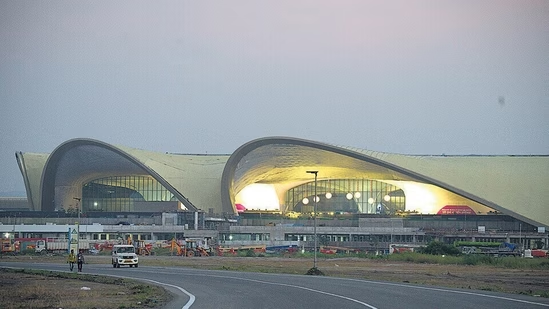
Mumbai – The Navi Mumbai airport operations commenced successfully today morning, marking a historic milestone in Maharashtra’s aviation infrastructure development. The Navi Mumbai International Airport (NMIA) officially began commercial flight services, establishing itself as a critical new aviation hub for the Mumbai Metropolitan Region after years of extensive planning and construction.
The inaugural scheduled departure from the new facility was an early morning flight to Hyderabad, which took off at 8:40 am today, officially inaugurating the Navi Mumbai airport operations. This momentous event represents the culmination of intensive infrastructure development and regulatory preparations.
Massive Infrastructure Spanning 2,866 Acres
The Navi Mumbai airport operations are supported by one of the largest airport developments in India, spanning approximately 2,866 acres. The facility has been strategically designed to accommodate up to 90 million passengers annually, positioning it as a mega aviation hub capable of handling substantial passenger traffic and reducing congestion in the Mumbai Metropolitan Region.
The airport’s massive scale reflects the growing demand for air travel in the region and the government’s commitment to creating world-class aviation infrastructure. The Navi Mumbai airport operations will serve as a testament to India’s expanding civil aviation sector and its capability to develop large-scale infrastructure projects.
Phased Rollout of Flight Services
Today marks the initial phase of Navi Mumbai airport operations, with 15 departure flights scheduled for key domestic destinations on the first day. This measured approach allows operational teams to ensure smooth functioning and passenger facilitation while gradually scaling up services.
From today onwards, the Navi Mumbai airport operations will expand significantly, with 25 scheduled departure flights operating daily. This rapid increase demonstrates the confidence of airlines and airport authorities in the facility’s readiness to handle growing traffic volumes.
By the end of January 2026, the frequency of Navi Mumbai airport operations is expected to further increase to 40 departures per day. This progressive scaling strategy ensures that operational efficiency is maintained while meeting the growing demand for air connectivity in the region.
Airlines Operating from NMIA
Three major carriers have commenced Navi Mumbai airport operations, bringing competitive options for passengers. IndiGo, Akasa Air, and Air India Express have all initiated flight services to and from the new airport, offering connectivity to various domestic destinations across India.
The participation of these airlines in the Navi Mumbai airport operations ensures that passengers have multiple options for travel, competitive pricing, and convenient scheduling. Additional airlines are expected to join operations as the airport continues to expand its route network and passenger handling capacity.
Enhanced Passenger Experience and Security
Passengers arriving at and departing from the terminal during the Navi Mumbai airport operations were welcomed by officials from Navi Mumbai International Airport Limited (NMIAL) and partner airline representatives. The airport authority has prioritized passenger comfort and seamless travel experience from day one of operations.
Prior to the commencement of flight schedules, all security protocols were implemented in strict compliance with Bureau of Civil Aviation Security (BCAS) standards. The Navi Mumbai airport operations maintain the highest standards of safety and security, ensuring passenger confidence and regulatory compliance.
Strategic Regional Connectivity Benefits
The launch of Navi Mumbai airport operations will significantly enhance regional connectivity for passengers traveling to domestic destinations including Maharashtra, Gujarat, Karnataka, and Telangana. The airport’s strategic location provides convenient access for residents of Navi Mumbai and surrounding areas.
One of the primary advantages of Navi Mumbai airport operations is the reduction in travel time and the provision of an alternative to passengers who previously relied solely on the congested Chhatrapati Shivaji Maharaj International Airport. This dual-airport system for Mumbai will distribute passenger traffic more efficiently and reduce congestion-related delays.
The Navi Mumbai airport operations are expected to facilitate significant economic activity and tourism growth in the Mumbai Metropolitan Region and adjoining areas. The airport will serve as a catalyst for business development, job creation, and infrastructure improvements in Navi Mumbai and surrounding regions.
The 90 million passenger annual capacity of the facility positions it to handle future growth in air travel demand, ensuring that the Mumbai Metropolitan Region has adequate aviation infrastructure for decades to come. The Navi Mumbai airport operations represent a long-term investment in the region’s economic prosperity and connectivity.
Accessibility and Transportation
Currently, the Navi Mumbai International Airport is accessible only via road. Passengers traveling to the airport should plan their journeys accordingly and allow sufficient time to reach the facility. Future connectivity plans may include metro rail and other public transportation options to enhance accessibility.
The successful launch of Navi Mumbai airport operations today marks the beginning of a transformative era for aviation in Maharashtra, promising enhanced connectivity, reduced congestion, and improved passenger experience for millions of travelers in the years ahead.
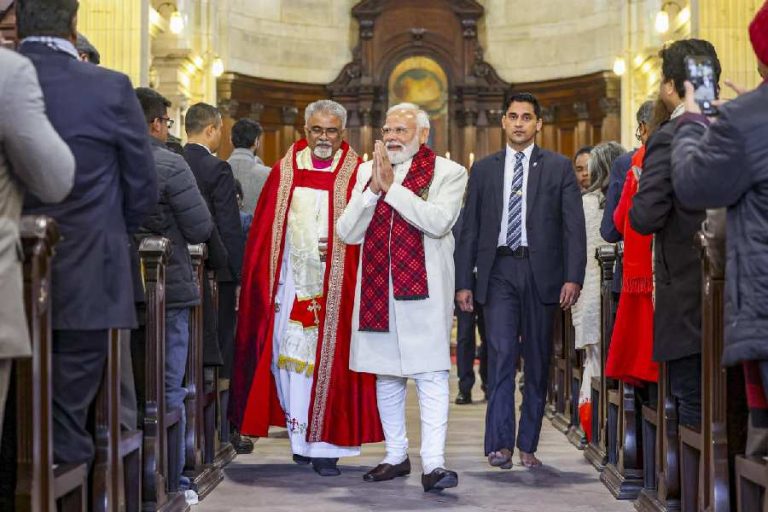
New Delhi – Prime Minister Narendra Modi attended the Christmas morning service at The Cathedral Church of the Redemption in New Delhi, marking another occasion of the leader’s engagement with the Christian community. The PM Modi Christmas service attendance came as opposition parties raised serious concerns about alleged attacks on minorities, particularly Christians, across the country.
During the PM Modi Christmas service visit, the Prime Minister emphasized themes of unity and compassion in his Christmas greetings to the nation. “The service reflected the timeless message of love, peace and compassion. May the spirit of Christmas inspire harmony and goodwill in our society,” Modi stated following his participation in the religious ceremony.
BJP Leadership’s Christmas Participation
Bharatiya Janata Party President JP Nadda also participated in Christmas celebrations today at Christian Higher Secondary School in New Delhi, organized by the Mao Naga Christian Fellowship Delhi. In a post on social media platform X, Nadda expressed his joy at being part of the gathering and reflected on the teachings of Jesus Christ.
The PM Modi Christmas service attendance is part of a pattern of engagement with the Christian community. Officials highlighted that over recent years, Modi has regularly participated in Christian religious events. During Easter 2023, he attended a programme at the Sacred Heart Cathedral in Delhi. In Christmas 2023, he hosted a celebration at his residence at 7, Lok Kalyan Marg. In 2024, he attended a dinner at minister George Kurian’s residence and a programme hosted by the Catholic Bishops’ Conference of India.
Opposition Raises Alarm Over Minority Attacks
Despite the PM Modi Christmas service participation, opposition parties criticized the BJP-led government over alleged atrocities against Christian communities. Trinamool Congress leader Derek O’Brien referenced a recent incident in Jabalpur where a BJP leader allegedly assaulted a visually impaired woman over suspicions of religious conversion ahead of Christmas.
“PM Modi and HM Shah, your silence on incidents like these in the Christmas season is deafening. Shame on you and your ilk,” O’Brien stated. The Rajya Sabha member questioned the Prime Minister’s Christmas message, asking sarcastically: “Love? Peace? Compassion? Harmony? Goodwill? Christmas?”
Tamil Nadu CM Criticizes Rising Hate Speech
Tamil Nadu Chief Minister MK Stalin also criticized attacks on minorities while the PM Modi Christmas service was taking place. “When a few right-wing violent groups, acting in the name of the majority, indulge in attacks and riots, even as the PM participates in Christmas celebrations, it sends a disturbing message to the nation,” Stalin wrote on X.
The DMK chief cited alarming statistics, stating: “A reported 74% rise in hate speech against minorities since the Union BJP government assumed office signals grave danger ahead.” This data point has become central to opposition criticism of the government’s handling of minority rights and religious freedom.
Communist Leader Highlights Continued Attacks
CPI(M) MP John Brittas emphasized that there has been “no let-up in the attacks on Christians across the country” despite the PM Modi Christmas service attendance. Brittas acknowledged that the Prime Minister took time to attend the church service in the capital but expressed disappointment over the lack of acknowledgment regarding attacks on Christians.
“If only he had spent just two minutes to acknowledge that these attacks on Christians, their churches, schools, and gatherings are attacks on the nation and its Constitution, and that the perpetrators will be held accountable — that single, firm statement would have made a real difference,” Brittas stated on social media.
The MP claimed that attacks against Christians have spiked significantly over the last decade. “This year till November 700 incidents have been reported, by the end it would touch 1000 or more,” he added, presenting concerning figures about religious violence.
Catholic Church Leadership Appeals for Protection
Andrews Thazhath, president of the Catholic Bishops’ Conference of India, the country’s top Catholic body, condemned the attacks on Christians while the PM Modi Christmas service was being observed. He appealed directly to the Prime Minister, Union Home Minister Amit Shah, and chief ministers of various states to “ensure strict enforcement of law and extend proactive protection to Christian communities.”
“Such incidents deeply wound the spirit of our Constitution, which guarantees freedom of religion, which promises every Indian to worship their faith, freedom of religion and the right to worship without fear,” Thazhath said in a video message. “With a heavy heart, but yet with hope, I unequivocally condemn these acts of hatred and violence.”
Contrasting Narratives
The PM Modi Christmas service attendance highlights the contrasting narratives surrounding religious harmony in India. While the government emphasizes its outreach to minority communities through such participatory events, opposition parties and religious leaders point to data and incidents suggesting a deteriorating situation for religious minorities.
The PM Modi Christmas service visit underscores ongoing debates about religious freedom, constitutional protections, and the state’s role in safeguarding minority communities in India’s diverse society.
Washington D.C. – United States President Donald Trump today announced that American forces launched military strikes targeting ISIS terrorists in Northwest Nigeria. The US strikes ISIS Nigeria operation marks a significant escalation in American involvement in the West African nation’s security challenges, coming after months of warnings from the Republican leader about threats to Christian communities.
The strikes were announced by Trump on his Truth Social platform, where he detailed the military action carried out under his direction as Commander in Chief. According to the President, the US strikes ISIS Nigeria operation targeted what he called “ISIS Terrorist Scum” responsible for attacks on civilian populations, particularly Christian communities in the region.
Trump’s Warning to Terrorists
In his announcement, Trump revealed that the military action was a direct response to what he described as “vicious killing” of innocent Christians in Northwest Nigeria. The President stated that violence against Christian communities has reached levels “not seen for many years, and even Centuries.”
“Tonight, at my direction as Commander in Chief, the United States launched a powerful and deadly strike against ISIS Terrorist Scum in Northwest Nigeria, who have been targeting and viciously killing, primarily, innocent Christians,” Trump wrote on Truth Social.
The US strikes ISIS Nigeria operation was executed by what Trump referred to as the “Department of War,” with the President emphasizing that multiple targets were successfully hit during the military action.
Military Confirmation and Details
The US military’s Africa Command confirmed the US strikes ISIS Nigeria operation on social media platform X, stating that the strikes were conducted at the request of Nigerian authorities. According to Africa Command, the military action resulted in the deaths of multiple ISIS militants operating in the region.
The confirmation from US military officials adds credibility to Trump’s announcement and demonstrates coordination between American and Nigerian forces in combating terrorist activities in the West African nation.
Background of US Involvement
Trump’s decision to authorize the US strikes ISIS Nigeria operation comes after months of increasingly stern warnings to terrorist groups operating in the region. Starting in late October, the President began emphasizing what he characterized as an “existential threat” to Christianity in Nigeria.
The Republican leader had previously threatened military intervention in Nigeria, criticizing what he described as the country’s failure to adequately protect Christian communities from violence. Today’s US strikes ISIS Nigeria action represents the fulfillment of those warnings.
“I have previously warned these terrorists that if they did not stop the slaughtering of Christians, there would be hell to pay, and today, there was,” Trump declared in his statement.
In an unconventional Christmas message, Trump wished “MERRY CHRISTMAS to all, including the dead Terrorists.” The President warned that more militants would face similar consequences if attacks on Christian communities continue.
“The Department of War executed numerous perfect strikes, as only the United States is capable of doing. Under my leadership, our Country will not allow Radical Islamic Terrorism to prosper,” Trump stated, emphasizing his administration’s commitment to combating terrorism globally.
The US strikes ISIS Nigeria announcement included Trump’s assertion that America would not tolerate continued violence against religious communities under his presidency.
Nigeria’s Response and Complex Reality
Nigeria’s government has maintained that armed groups in the country target both Muslims and Christians, suggesting that Trump’s characterization of Christian-specific persecution oversimplifies a complex security situation. Nigerian authorities have stated that the narrative of exclusive Christian persecution ignores the country’s broader efforts to safeguard religious freedom for all citizens.
Despite these disagreements over characterization, Nigeria has agreed to cooperate with the United States to strengthen its forces against militant groups operating within its borders. This cooperation facilitated today’s US strikes ISIS Nigeria operation.
The country’s population is divided between Muslims, who primarily reside in the northern regions, and Christians, who are predominantly located in the south. This religious geography plays a significant role in the nation’s security challenges.
International Implications
The US strikes ISIS Nigeria operation represents a significant moment in American foreign policy toward Africa and the global fight against ISIS-affiliated groups. The strikes demonstrate Trump’s willingness to use military force to address terrorism in regions where American interests or values are perceived to be threatened.
As the situation develops, the effectiveness of the US strikes ISIS Nigeria action in deterring future attacks and the potential for expanded American military involvement in West Africa remain questions that will shape regional security dynamics in the coming months.
The operation underscores the ongoing global challenge of combating ISIS and affiliated terrorist organizations, even as the group’s territorial caliphate in Iraq and Syria has been defeated.
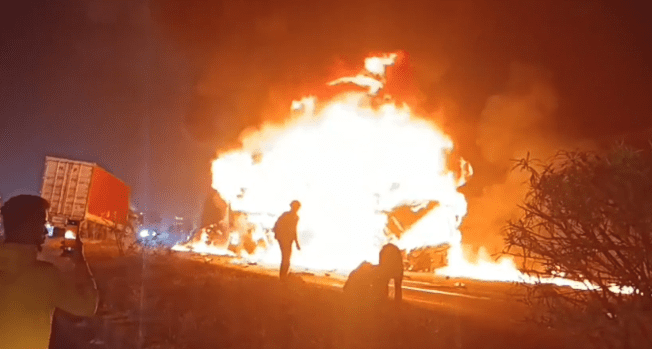
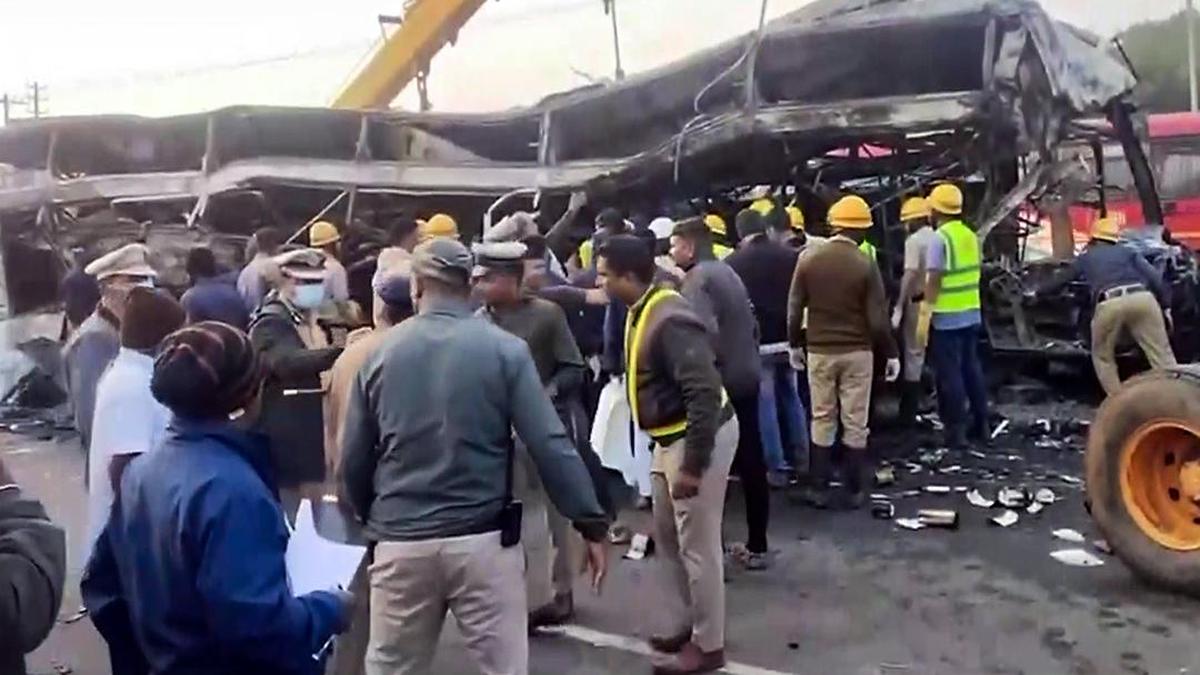
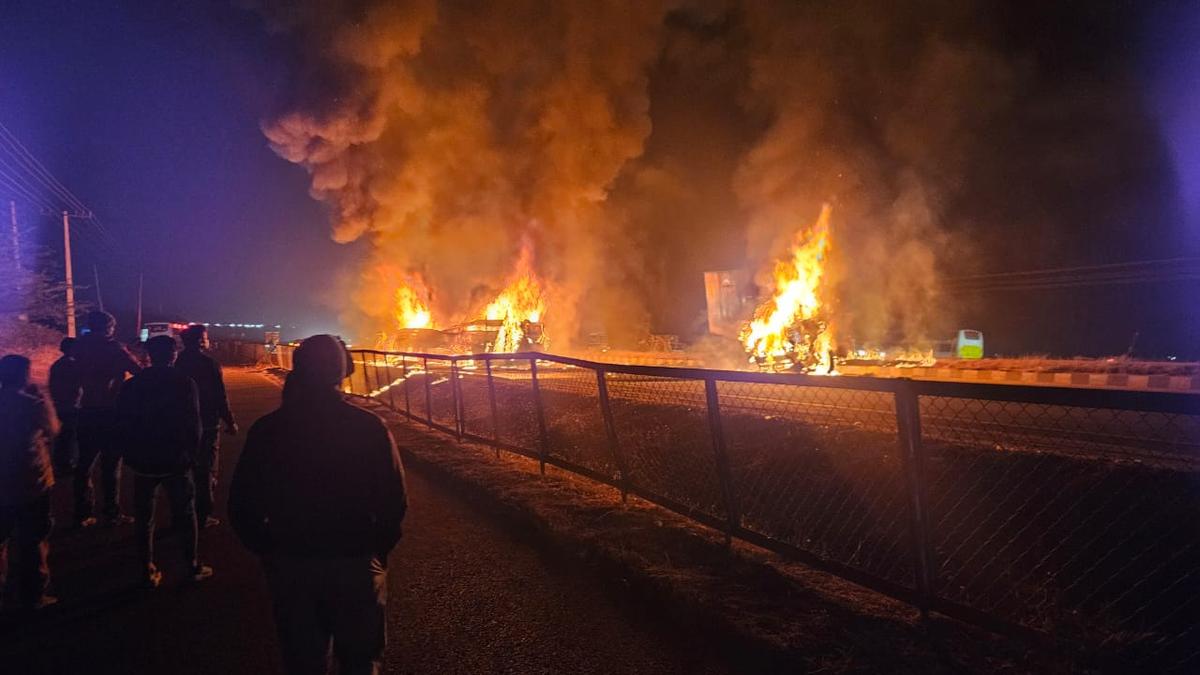
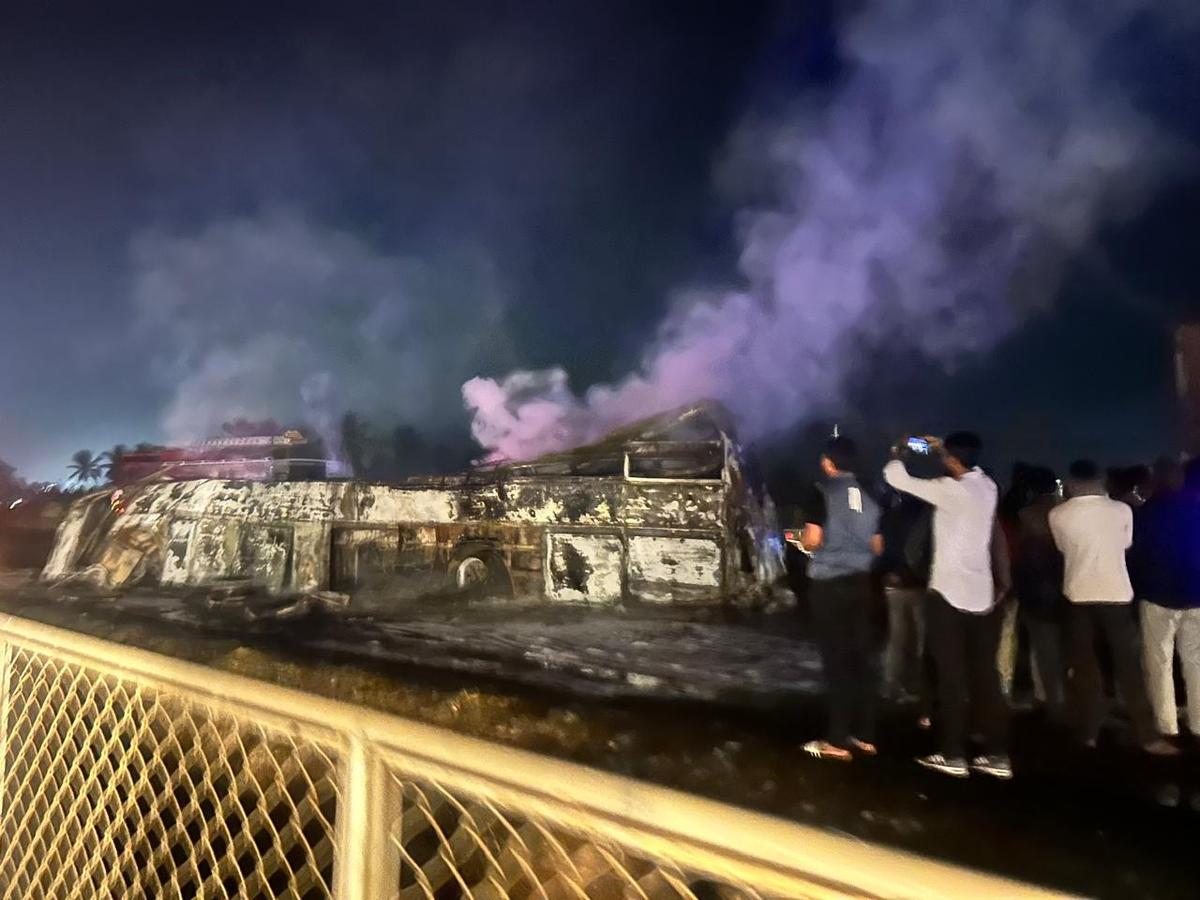
A devastating road accident in Chitradurga, Karnataka, has left six people dead after a truck collided with a private sleeper bus, causing a fire on Thursday. The Chitradurga Police have registered a case against the truck driver, who was among the deceased, as investigations into the accident continue. The collision has once again raised concerns about road safety, vehicle maintenance, and enforcement of traffic regulations in the state.
Eyewitnesses reported that the collision occurred late at night on a busy stretch of highway, when the truck reportedly lost control and rammed into the stationary or slow-moving bus. The impact caused the bus to catch fire almost immediately, trapping passengers inside. Rescue operations by local authorities and fire services were initiated promptly, but several victims could not be saved due to the intensity of the blaze.
Investigation into Causes Underway
Authorities are conducting a detailed investigation into the Chitradurga accident to determine the precise cause of the collision. While eyewitnesses suggest the truck may have been speeding or unable to control its brakes, investigators are examining vehicle logs, driver history, and mechanical conditions of both vehicles. Forensic analysis of skid marks, fire patterns, and vehicle positions will help reconstruct the sequence of events. Police officials emphasised that identifying the root cause is crucial not only for legal accountability but also for preventing similar accidents on Karnataka highways.
Mechanical Failures and Vehicle Safety
Preliminary reports indicate that mechanical failure could have played a role in the truck’s loss of control. Experts have highlighted that trucks and long-distance buses require regular inspections to ensure brakes, tires, and suspension systems are fully functional. Overloaded vehicles, wear-and-tear on older trucks, and inadequate maintenance can dramatically increase accident risks. Authorities are reviewing maintenance records to determine if negligence contributed to the disaster, underlining the need for stricter compliance with vehicle safety norms.
Human Error and Driver Fatigue
Human error, particularly driver fatigue, is being examined as a possible factor. Drivers operating on long routes often face extended hours without proper rest, increasing the likelihood of mistakes. The Ministry of Transport has previously noted that a significant percentage of highway accidents in India are caused by driver exhaustion, distraction, or impaired judgment. Officials stress that stricter enforcement of driving-hour regulations, mandatory rest breaks, and training in defensive driving could reduce fatalities in similar accidents.
Fire Safety in Sleeper Buses
The rapid spread of fire in the bus highlights the urgent need for fire safety protocols. Investigators are checking whether the vehicle had functioning fire extinguishers, accessible emergency exits, and safety signage. Experts warn that many private buses lack adequate fire-retardant materials, smoke detectors, or emergency evacuation plans, which exacerbates the impact of accidents. Implementing stringent fire-safety regulations and regular inspections could save lives during future incidents.
Impact on Survivors and Families
Survivors of the crash recounted harrowing experiences, including being trapped by flames and struggling to evacuate amid chaos. Families of the deceased are facing emotional trauma, compounded by uncertainty over compensation and legal proceedings. Social workers and local NGOs have mobilised to provide counseling, financial assistance, and logistical support. Health officials have also prioritised follow-up medical care for burn victims and those suffering from shock, emphasising the long-term health impact of such accidents.
State Transport Authorities’ Response
State transport authorities have pledged to review safety norms for long-distance buses and trucks in light of the accident. Proposed measures include mandatory GPS tracking, speed governors, and regular vehicle audits. Officials also stressed that private operators must ensure fire-safety compliance, proper driver training, and adherence to weight limits. The accident has prompted discussions on strengthening penalties for safety violations, ensuring that operators prioritise passenger welfare over profit margins.
Policy Reforms and Road Safety Measures
Road safety experts argue that this accident highlights systemic issues requiring policy reform. Proposed initiatives include dedicated highway patrol units, automated traffic monitoring systems, and stricter enforcement of vehicle fitness certificates. Experts also advocate for a comprehensive accident database that tracks incidents, identifies high-risk routes, and guides resource allocation for emergency services. Policymakers hope that lessons learned from Chitradurga will inform long-term strategies to reduce highway fatalities statewide.
Nationwide Context of Bus and Truck Accidents
This tragedy adds to a troubling pattern of bus and truck accidents in India, where thousands of fatalities occur annually on highways. Between 2021 and 2025, multiple high-profile incidents involving private sleeper buses and heavy trucks have been reported in Karnataka and other states. Analysts point out that a combination of aging vehicles, lax enforcement, inadequate driver training, and insufficient emergency infrastructure contributes to these frequent disasters. Raising awareness, strengthening regulations, and improving response mechanisms are critical to preventing future casualties.
Community and Social Reactions
The accident has prompted widespread grief and outrage in Chitradurga and surrounding districts. Residents have urged authorities to take immediate action against negligent operators and improve highway safety. Social media has been flooded with condolences for the victims, calls for stricter enforcement, and demands for better emergency response infrastructure. Community leaders emphasised that public pressure can accelerate policy action, ensure accountability, and create safer travel conditions for passengers.
Future Preventive Measures
In the aftermath, authorities are considering long-term preventive strategies. Recommendations include mandating fire-resistant materials in buses, installing emergency alarms and lighting, enhancing roadside firefighting capabilities, and implementing driver monitoring systems. Public awareness campaigns focusing on safety, emergency evacuation procedures, and responsible driving practices are also being planned. Officials believe that combining policy reforms, technological interventions, and community engagement can significantly reduce the occurrence and impact of such catastrophic accidents in the future.
Casualties and Immediate Response
The accident claimed the lives of six individuals, including the truck driver, and injured several others. Survivors described chaotic scenes as passengers struggled to escape the flames. Firefighters and emergency responders worked through the night to bring the situation under control. Injured passengers were rushed to nearby hospitals, where doctors attended to burn injuries and trauma. Local police and disaster management teams coordinated evacuation and relief efforts.
Authorities have confirmed that the truck driver is being included in the FIR due to negligence and possible violation of traffic rules, even though he succumbed to injuries. The police are collecting statements from witnesses, examining CCTV footage, and inspecting the vehicles involved to ascertain the precise sequence of events leading to the collision.
Investigation and Legal Action
The Chitradurga Police have initiated a formal investigation under relevant sections of the Indian Penal Code related to negligent driving, causing death, and destruction of property. The case aims to determine accountability and whether the accident was a result of speeding, overloading, mechanical failure, or driver error. Authorities stressed that swift legal action is necessary to send a strong message on road safety compliance.
Transport officials indicated that both the bus and the truck would be inspected for roadworthiness, insurance compliance, and adherence to safety regulations. Preliminary reports suggest that mechanical failure or brake malfunction on the truck may have contributed to the accident, though investigations are ongoing.
Road Safety Concerns
This accident comes amid growing concerns about road safety in Karnataka, particularly on highways frequented by heavy trucks and long-distance buses. Safety experts warn that overspeeding, overloading, poorly maintained vehicles, and insufficient traffic monitoring continue to pose serious risks to passengers and drivers alike.
The government has urged transport operators to comply strictly with traffic norms, conduct regular vehicle maintenance, and train drivers in emergency response procedures. Public awareness campaigns highlighting the importance of seat belts, fire exits, and safe driving practices are also being recommended to reduce the frequency and severity of such incidents.
Support for Victims and Families
Officials have assured that families of the deceased and injured passengers will receive assistance, including compensation under the Motor Vehicles Act and state relief schemes. Local authorities and social organisations are providing immediate support, including counselling and medical aid for survivors. Police and municipal teams are coordinating with hospitals to ensure the injured receive appropriate treatment.
Previous Incidents and Statistical Context
This tragedy adds to a worrying trend of bus and truck accidents in Karnataka. Over the past few years, multiple incidents involving heavy vehicles have resulted in fatalities, often due to mechanical failures, negligence, or poor adherence to traffic regulations. Experts emphasise that stricter enforcement, better emergency infrastructure, and public vigilance are necessary to prevent such catastrophic events.
Calls for Policy Review
Transport and safety advocates have called for a comprehensive review of vehicle safety policies, including mandatory fire-safety measures on buses, speed monitoring for trucks, and routine vehicle inspections. They argue that proactive policies and technological solutions, such as GPS tracking and automated braking systems, could reduce accidents on high-risk highway stretches.
Community Reaction
The accident has left the local community in Chitradurga and surrounding areas shocked and grieving. Residents expressed sorrow for the victims and urged authorities to take strong measures to prevent similar tragedies in the future. Social media platforms have been flooded with tributes to the deceased and calls for stricter road safety enforcement.
Future Measures and Awareness Campaigns
Authorities have indicated plans to strengthen road safety protocols, including enhanced monitoring, stricter penalties for traffic violations, and awareness campaigns for drivers and passengers. Emergency response drills and fire-safety training for bus operators are also being considered to ensure quicker, safer evacuation in case of accidents.
In conclusion, the Chitradurga accident highlights the urgent need for vigilance, enforcement, and infrastructure improvements on highways. While investigations continue, authorities stress that compliance with traffic rules, vehicle maintenance, and passenger safety measures can significantly reduce the risk of similar catastrophic incidents in the future.
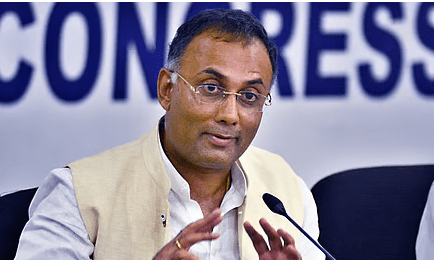
Minister for Health, Dinesh Gundu Rao, on Thursday highlighted the urgent need to strengthen research in Ayurveda and build specialised expertise within India’s traditional system of medicine. Speaking at a national conference on public health and traditional medicine, Rao emphasised that Ayurveda holds critical insights into addressing contemporary lifestyle-related health challenges, including chronic diseases, stress, obesity, and metabolic disorders.
Bridging Tradition and Modern Science
Health Minister Dinesh Gundu Rao emphasised that bridging the gap between Ayurveda and modern medical science is vital for the system’s evolution. While Ayurveda relies on centuries-old texts, observation, and empirical practices, modern medicine relies on clinical trials, statistical validation, and mechanistic understanding. Rao highlighted that combining these approaches can provide scientifically credible solutions to contemporary health challenges, making Ayurveda more acceptable to doctors, patients, and policymakers alike.
Strengthening Research Infrastructure
Rao pointed out the need to build dedicated research infrastructure for Ayurveda. Currently, many colleges and research institutes lack advanced laboratories, analytical equipment, and multidisciplinary teams needed to conduct high-quality pharmacological and clinical studies. Strengthening infrastructure will enable systematic investigation of medicinal plants, herbal formulations, and therapeutic techniques, while also supporting collaborations with biomedical and pharmaceutical institutions.
Encouraging Clinical Trials and Evidence-Based Practices
A major challenge for Ayurveda, the minister noted, is the limited number of rigorous clinical trials. He urged research councils, universities, and private practitioners to design well-structured studies that follow international standards. Such trials would not only validate traditional treatments but also identify dosage norms, contraindications, and potential side effects, enhancing safety and public trust. Rao emphasised that evidence-based practice is key to integrating Ayurveda into hospitals, wellness centers, and public health programs.
Developing Specialised Educational Programs
Specialised expertise in Ayurveda, according to Rao, is critical for both research and treatment. He proposed introducing advanced degree programs, fellowships, and postdoctoral opportunities focused on clinical research, pharmacology, and interdisciplinary healthcare studies. By combining traditional knowledge with laboratory-based research and modern diagnostic skills, Ayurveda practitioners will be better equipped to innovate, evaluate therapies, and contribute to scientific literature.
Integration with Preventive Healthcare
The Health Minister highlighted Ayurveda’s preventive healthcare potential. Chronic diseases such as diabetes, hypertension, and cardiovascular disorders are rising in India, largely due to sedentary lifestyles, poor diet, and stress. Ayurveda’s focus on diet, exercise, detoxification, and mental well-being offers preventive solutions. Rao urged researchers to study these interventions scientifically, enabling government health programs to incorporate Ayurveda strategies for disease prevention.
Quality Control and Standardisation Challenges
One of the persistent obstacles in Ayurveda is quality control and standardisation. Variation in herb sourcing, preparation techniques, and dosage can affect efficacy and patient safety. Rao stressed the need for regulatory frameworks that standardise cultivation, extraction, and formulation processes. Certification systems and traceability of raw materials were suggested to ensure that Ayurvedic products meet consistent quality standards, both domestically and internationally.
Global Recognition and Export Potential
Ayurveda is gaining international attention, and Rao pointed out the opportunity to position India as a global leader in traditional medicine. Scientific validation, high-quality products, and specialised expertise can enhance credibility abroad, increasing export opportunities for herbal medicines and wellness therapies. Collaboration with international universities and research institutes will also help in validating Ayurvedic treatments and building global trust.
Rao also called for the development of specialised expertise in Ayurveda, stressing that practitioners need advanced training beyond conventional college curricula. He recommended integrating modern diagnostic techniques, laboratory research skills, and knowledge of contemporary healthcare practices into Ayurveda education.
Health Minister Dinesh Gundu Rao emphasised that bridging the gap between Ayurveda and modern medical science is vital for the system’s evolution. While Ayurveda relies on centuries-old texts, observation, and empirical practices, modern medicine relies on clinical trials, statistical validation, and mechanistic understanding. Rao highlighted that combining these approaches can provide scientifically credible solutions to contemporary health challenges, making Ayurveda more acceptable to doctors, patients, and policymakers alike.
Role of Government Policy and Funding
Rao underscored that government support is essential for the growth of Ayurveda. Policy measures, research grants, and funding for centres of excellence can catalyse innovation and ensure systematic development of the field. Scholarships and incentives for researchers and students were highlighted as crucial to attracting talent into Ayurveda research and clinical practice. These efforts aim to institutionalise a long-term vision for Ayurveda in India’s healthcare system.
Public Awareness and Community Engagement
The minister also stressed the importance of public awareness campaigns. While Ayurveda is widely known, misconceptions and inconsistent practices limit its adoption. Educating citizens on scientifically validated therapies, preventive care practices, and lifestyle interventions can empower communities to make informed health choices. Public engagement, combined with rigorous research, will strengthen the credibility and effectiveness of Ayurveda.
Health Minister Dinesh Gundu Rao emphasised that bridging the gap between Ayurveda and modern medical science is vital for the system’s evolution. While Ayurveda relies on centuries-old texts, observation, and empirical practices, modern medicine relies on clinical trials, statistical validation, and mechanistic understanding. Rao highlighted that combining these approaches can provide scientifically credible solutions to contemporary health challenges, making Ayurveda more acceptable to doctors, patients, and policymakers alike.
The Health Minister highlighted Ayurveda’s preventive healthcare potential. Chronic diseases such as diabetes, hypertension, and cardiovascular disorders are rising in India, largely due to sedentary lifestyles, poor diet, and stress. Ayurveda’s focus on diet, exercise, detoxification, and mental well-being offers preventive solutions. Rao urged researchers to study these interventions scientifically, enabling government health programs to incorporate Ayurveda strategies for disease prevention.
Future Outlook and Strategic Vision
Concluding his address, Rao articulated a strategic vision for Ayurveda over the next decade. The focus will be on building research excellence, specialised expertise, policy support, and global collaboration. By integrating traditional knowledge with scientific validation, India can ensure that Ayurveda contributes meaningfully to modern healthcare, addresses pressing lifestyle-related diseases, and positions itself as a respected, evidence-based system both nationally and internationally.
The minister stressed that while Ayurveda has a rich heritage and centuries of empirical knowledge, its potential remains underutilised due to gaps in research, standardisation, and professional training. By combining traditional wisdom with scientific investigation, Rao said, India can modernise the system while ensuring credibility, safety, and broader applicability in modern healthcare.
Research and Scientific Validation Needed
A core message from Rao’s address was the need for evidence-based research in Ayurveda. Clinical trials, pharmacological studies, and systematic documentation of herbal formulations are essential to validate efficacy, optimise treatments, and ensure patient safety. Authorities emphasised that without rigorous scientific validation, Ayurveda risks remaining a peripheral healthcare option rather than an integrated solution to lifestyle and chronic ailments.
Experts noted that strengthening research infrastructure, funding dedicated laboratories, and fostering interdisciplinary collaboration with biomedical institutions could significantly accelerate the validation of traditional practices. Standardisation of medicinal herbs, preparation methods, and dosage protocols was also highlighted as a key requirement for scaling Ayurveda’s adoption.
Rao emphasised that integrating Ayurveda into public health programs, wellness initiatives, and community health interventions could reduce the burden of chronic diseases, promote preventive care, and improve overall quality of life. Policy measures and research support will be critical to achieving this goal.
Developing Specialised Expertise
Rao also called for the development of specialised expertise in Ayurveda, stressing that practitioners need advanced training beyond conventional college curricula. He recommended integrating modern diagnostic techniques, laboratory research skills, and knowledge of contemporary healthcare practices into Ayurveda education.
Universities and training institutions have been encouraged to create advanced courses, fellowships, and research-oriented programs that equip students with both traditional and scientific knowledge. Such initiatives aim to produce a generation of practitioners capable of conducting high-quality research, delivering specialised treatments, and contributing to global recognition of Ayurveda.
Minister for Health, Dinesh Gundu Rao, on Thursday highlighted the urgent need to strengthen research in Ayurveda and build specialised expertise within India’s traditional system of medicine. Speaking at a national conference on public health and traditional medicine, Rao emphasised that Ayurveda holds critical insights into addressing contemporary lifestyle-related health challenges, including chronic diseases, stress, obesity, and metabolic disorders.
Addressing Lifestyle-Related Health Challenges
The Health Minister pointed out that lifestyle-related health issues—such as diabetes, hypertension, cardiovascular disease, and stress—have become pressing concerns. Ayurveda, with its emphasis on diet, exercise, herbal therapies, and mental well-being, provides a holistic approach that can complement modern medicine in preventing and managing these conditions.
Rao emphasised that integrating Ayurveda into public health programs, wellness initiatives, and community health interventions could reduce the burden of chronic diseases, promote preventive care, and improve overall quality of life. Policy measures and research support will be critical to achieving this goal.
Future Directions and Policy Support
Looking ahead, the minister indicated that the government will support initiatives to strengthen research, enhance professional expertise, and integrate Ayurveda into mainstream healthcare. Measures under consideration include funding research projects, establishing centres of excellence, providing scholarships for advanced training, and promoting interdisciplinary collaborations.
Rao concluded by stating that with systematic research, specialised expertise, and policy backing, Ayurveda could play a transformative role in addressing modern health challenges, benefiting millions of citizens while showcasing India’s traditional knowledge on the global stage.





_vb_02.jpeg)