Monday, May 4, 2026
Home Blog Page 200

South Delhi Flyovers Upgrade: Major Infrastructure Breakthrough Approved

0

New Delhi – The Delhi government has allocated substantial funds for major infrastructure upgrades along three south Delhi flyovers, marking a significant step toward addressing chronic traffic congestion and persistent waterlogging issues. The comprehensive project encompasses improvements at Modi Mill, Savitri Cinema, and along Mehrauli-Badarpur Road, promising relief to thousands of daily commuters.

Major Financial Approval Announced

The Expenditure Finance Committee approved the upgrades for the south Delhi flyovers on Tuesday, clearing the way for the Public Works Department to begin execution at a combined cost of ₹759 crore. Officials confirmed that these approvals will enable construction to commence after years of delays linked to planning challenges and financial clearances.

This substantial investment in the south Delhi flyovers represents one of the most significant infrastructure initiatives undertaken by the Delhi government in recent years, addressing multiple urban challenges simultaneously.

Comprehensive Approach to Urban Problems

PWD minister Parvesh Verma emphasized the government’s holistic approach to the south Delhi flyovers project. He stated that flyovers alone cannot solve urban problems, which is why traffic decongestion and stormwater drainage are being planned together to ensure citizens receive lasting relief rather than temporary fixes.

The integrated planning for the south Delhi flyovers demonstrates a shift from piecemeal solutions to comprehensive infrastructure development that addresses both mobility and drainage concerns in a coordinated manner.

Modi Mill Flyover Expansion Details

The corridor between the Modi Mill Flyover and the IIT Gate intersection will be widened to three lanes in each direction to facilitate uninterrupted traffic movement. Of the ₹371.75 crore approved for flyover upgrades, ₹312.94 crore has been earmarked specifically for the Modi Mill component of the south Delhi flyovers project.

A new two-way Modi Mill Flyover is planned at the intersection of Outer Ring Road and Captain Gaur Marg. The project includes a 1,140-metre three-lane carriageway from Kalkaji Mandir to Modi Mill and an 870-metre three-lane carriageway in the opposite direction, significantly enhancing capacity along this critical corridor.

Savitri Cinema Flyover Enhancement

The doubling of the existing Savitri Cinema Flyover at the Savitri Cinema junction represents another key component of the south Delhi flyovers initiative. The government has allocated ₹58.81 crore for this upgrade, which will dramatically improve traffic flow at this busy intersection.

The Savitri Cinema component of the south Delhi flyovers project involves constructing a 435-metre-long three-lane half flyover. This addition will complement the existing structure and provide enhanced capacity for one of south Delhi’s most congested junctions.

Also Read: Delhi Online Classes: Alarming Digital Divide Impacts Thousands

Timeline for Completion

The completion period for the south Delhi flyovers upgrades has been fixed at 30 months from the commencement of construction. This timeframe encompasses all phases of work, including detailed engineering, land acquisition if required, construction, and final commissioning of the improved infrastructure.

Officials expressed confidence that with EFC clearance now secured, the south Delhi flyovers project can move firmly toward execution without further bureaucratic delays.

Expected Traffic Benefits

Once completed, the south Delhi flyovers are expected to provide signal-free movement at key intersections, including Captain Gaur Marg–Outer Ring Road and Outer Ring Road–GK-2 Road. This will significantly reduce congestion and improve average travel speeds along the entire stretch.

The upgrades to the south Delhi flyovers are expected to benefit thousands of commuters who use the Outer Ring Road and the MB Road corridors daily, potentially saving valuable time and reducing vehicle emissions through improved traffic flow.

Addressing Waterlogging Along MB Road

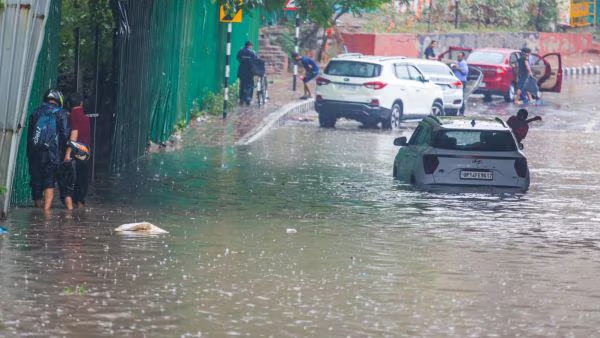
Beyond the flyover improvements, the south Delhi flyovers project includes a comprehensive stormwater drain initiative along MB Road. This component will address persistent flooding caused by damaged and inadequate drainage infrastructure that has plagued the area for years.

The drainage project covers the stretch from Lado Sarai T-Point to Pul Prahladpur, spanning 11.38 kilometers, with a total drain length of 22.76 kilometers. Officials identified this as one of the most persistent waterlogging hot spots under PWD jurisdiction.

Advanced Drainage Technology

The drain will be constructed as a precast reinforced cement concrete box system at an estimated cost of ₹387.84 crore. This modern construction method ensures durability and rapid installation compared to traditional drainage systems used in other parts of the city.

The implementation period for the drainage component of the south Delhi flyovers project is 2.5 years, including pre-construction activities. The project aims to rectify missing drain sections, repair damage caused during metro construction, and enhance the limited carrying capacity of existing drains.

Alignment with Master Plan

The drainage improvements associated with the south Delhi flyovers initiative have been designed in line with the Delhi Drainage Master Plan. This ensures that the new infrastructure meets established standards and integrates seamlessly with the city’s broader drainage network.

Officials emphasized that this comprehensive approach to the south Delhi flyovers project represents a paradigm shift in urban infrastructure development, moving beyond isolated interventions to create integrated solutions that address multiple challenges simultaneously.

Long-Term Impact on Commuters

The south Delhi flyovers upgrades promise to transform the daily commute experience for residents and workers across the southern part of the capital. By combining improved traffic infrastructure with enhanced drainage systems, the project addresses two of the most persistent complaints from citizens in these corridors.


Goa Nightclub Fire: Critical Bail Decisions for Club Managers

0

Goa – A Goa court delivered critical bail decisions on Tuesday in the devastating Goa nightclub fire case that claimed 25 lives earlier this month. The court granted bail to two managers while rejecting the general manager’s plea, marking a significant development in the ongoing legal proceedings surrounding the Birch By Romeo Lane tragedy.

Bail Granted to Bar and Gate Managers

Additional sessions judge Dvijple Patkar granted bail to bar manager Rajveer Singhania and gate manager Priyanshu Thakur of the nightclub where the catastrophic Goa nightclub fire occurred. The decision came with strict conditions designed to prevent any interference with the ongoing investigation.

Advocate Vinayak Parab, who represented Singhania and Thakur in the Goa nightclub fire case, confirmed that the bail was granted on the condition that the accused shall not, directly or indirectly, make any inducement, threat, or promise to any person acquainted with the facts of the case. These conditions aim to ensure the integrity of witness testimonies and evidence collection.

General Manager’s Bail Plea Rejected

In a contrasting decision regarding the Goa nightclub fire case, the court rejected the bail plea filed by Vivek Singh, the club’s general manager. This rejection suggests the court views Singh’s role in the tragedy as potentially more significant than that of the two managers who received bail.

Rajiv Modak, the chief general manager of the nightclub Birch By Romeo Lane, has not yet applied for bail, leaving his legal status pending as investigations continue into the Goa nightclub fire incident.

Pending Decisions on Restaurant Manager

The court has reserved its verdict in the bail plea filed by Bharat Singh Kohli, who managed the restaurants on behalf of the Luthras. Kohli’s role in the Goa nightclub fire case involves his management responsibilities for the dining establishments associated with the venue. The court is expected to deliver its ruling on Kohli’s bail application on December 26.

This reserved decision indicates the court requires additional time to evaluate Kohli’s specific responsibilities and potential culpability in the events leading to the Goa nightclub fire tragedy.

Village Officials Await Bail Decision

The court has also reserved its verdict in the anticipatory bail plea filed by village sarpanch Roshan Redkar and panchayat secretary Raghuvir Bagkar, both named as accused in the Goa nightclub fire case. Lawyer Nitin Sardesai, who represented sarpanch Redkar, confirmed that the court heard final arguments and reserved the matter for order on December 30.

Redkar and Bagkar face accusations for having failed to act against the allegedly illegal nightclub. However, they have argued that they cannot be held personally liable in the Goa nightclub fire case since the decision to grant a trade licence was taken by the panchayat body collectively.

Defence Arguments of Village Officials

The village officials maintain that a trade licence issued by the panchayat does not automatically permit the licence holder to run the premises without other mandatory permissions. This defence strategy in the Goa nightclub fire case attempts to distinguish between administrative licensing procedures and operational oversight responsibilities.

Their argument highlights the complex web of permissions and regulatory oversight that contributed to the circumstances surrounding the Goa nightclub fire incident.

Arrests and Deportation of Nightclub Owners

Four managers of the nightclub were among those initially arrested by police for the Goa nightclub fire that engulfed the entire premises of Birch By Romeo Lane on December 6. Hours after the tragedy, the Luthra brothers, Saurabh and Gaurav, fled to Phuket, Thailand.

The brothers were later deported from Thailand and arrested by Goa Police upon their return to Delhi on December 16. In their initial statements regarding the Goa nightclub fire, the brothers insisted they were not responsible for day-to-day operations and that this responsibility lay with the hired managers.

New Arrests for Forgery and Cheating

In a significant development in the Goa nightclub fire investigation, Goa Police has rearrested Ajay Gupta, described as the sleeping business partner of the Luthras. The rearrest follows charges of cheating and forgery after the ongoing investigation revealed that the company used a forged health no objection certificate to apply for various licences to run the premises.

This revelation adds another layer of criminal activity to the Goa nightclub fire case, suggesting systematic regulatory violations beyond the immediate fire safety failures.

Legal Charges Filed

The First Information Report filed on December 7 in the Goa nightclub fire case charges the accused under several sections of the Bharatiya Nyaya Sanhita. These include Section 105 for culpable homicide not amounting to murder, Sections 125(a) and (b) for endangering life and personal safety, and Section 287 for negligent conduct with fire or combustible matter.

These serious charges reflect the gravity of the Goa nightclub fire tragedy and the potential criminal liability of those involved in operating the establishment. The culpable homicide charges indicate prosecutors believe the deaths resulted from criminal negligence rather than mere accident.

Ongoing Investigation Impact

As the legal proceedings in the Goa nightclub fire case continue, the varied bail decisions demonstrate the court’s careful consideration of individual roles and responsibilities. The tragedy has exposed systemic failures in licensing, safety enforcement, and regulatory oversight that contributed to the loss of 25 lives in the devastating Goa nightclub fire.

Lake Michigan Incident Exposed: Disturbing Trump-Epstein DOJ Revelations

Washington D.C. – A newly released document from the Department of Justice‘s investigation into convicted sex trafficker Jeffrey Epstein contains disturbing allegations involving President Donald Trump. The DOJ files released on Tuesday include an FBI complaint that details a shocking Lake Michigan incident from 1984, placing Trump at the center of serious allegations.

FBI Complaint Details Emerge

A victim’s complaint to the FBI dated March 8, 2020, has been released by the DOJ on Tuesday under file number EFTA00025010. In this complaint, the victim alleges she was trafficked by Epstein and her uncle as a pregnant 13-year-old in 1984. The complainant claims her newborn daughter was murdered and disposed of because she gave birth to her while in the middle of this sex trafficking ordeal.

The Lake Michigan incident represents one of the most serious allegations to emerge from the extensive DOJ investigation into Epstein’s criminal network. The victim’s testimony provides detailed information about events that allegedly occurred over four decades ago.

The Lake Michigan Incident: Key Allegations

The complainant provides specific details about the disposal of her newborn child in the Lake Michigan incident. She alleges that the baby’s body was dumped into the lake from a yacht, and President Donald Trump was present at the scene. Trump has been listed as a witness in this allegation, though no criminal charges have been filed against him in connection with the Lake Michigan incident.

The victim states that the infanticide occurred “mostly from a yacht in Lake Michigan originating from Mona Lake, MI.” This specific geographical detail adds a layer of precision to the allegations surrounding the Lake Michigan incident, suggesting the complainant has clear memories of the location.

Victim’s Attempts to Report the Crime

The complainant, whose name has been redacted in the DOJ documents to protect her identity, provided a tip to the FBI regarding the investigation into Jeffrey Epstein. Beyond being a victim of his sex-trafficking operations, she attempted to assist investigators by sharing information about the Lake Michigan incident and other aspects of the trafficking network.

In her complaint, she describes trying to locate an NYPD detective who allegedly called her about the sex trafficking investigation a few days before the claimed infanticide. She places this contact around May or September 1984, providing investigators with a timeframe for the Lake Michigan incident.

Contact with NYPD Detective

The victim writes in her complaint: “A detective from NYPD FBI sex trafficking task force called me a couple of weeks ago from a 212 area code number.” She indicates that she spoke with this detective for approximately 20 to 30 minutes about being sex trafficked by her uncle and Jeffrey Epstein in 1984 while she was 13 years old and pregnant.

This conversation occurred decades after the alleged Lake Michigan incident, suggesting the victim had been carrying this traumatic experience for years before finally reporting it to authorities. The detail about the phone conversation demonstrates her attempt to provide comprehensive information to investigators.

High-Profile Individuals Implicated

The complainant told the detective “some other important information about other high-profile individuals involved in my sex trafficking and the murder and disposal of my newborn daughter.” This statement suggests that the Lake Michigan incident involved multiple prominent figures beyond those specifically named in the complaint.

The victim emphasizes that she gave birth to her daughter “while in the middle of this sex trafficking ordeal,” highlighting the horrific circumstances surrounding the Lake Michigan incident. Her testimony suggests a coordinated effort involving multiple perpetrators in both the trafficking operation and the alleged disposal of the infant.

Trump Listed as Witness

In the DOJ documents related to the Lake Michigan incident, Donald Trump is specifically listed as a witness to the alleged infanticide and disposal. This designation indicates that the victim claims Trump was present during the events on the yacht but does not necessarily implicate him as a perpetrator in the alleged crime.

The Lake Michigan incident allegations place Trump at the scene of a serious criminal act, though the documents do not indicate what role, if any, he may have played. No charges have been brought against Trump in connection with these allegations.

Context of 1984 Allegations

The Lake Michigan incident allegedly occurred in 1984 when the victim was just 13 years old. She claims to have been trafficked by both her uncle and Jeffrey Epstein during this period, suggesting a familial connection to the trafficking network that enabled the abuse.

The timeframe of the Lake Michigan incident places it during an early period of Epstein’s alleged criminal activities, potentially providing investigators with historical context about the development of his trafficking operation.

DOJ Document Release Significance

The release of documents containing the Lake Michigan incident allegations is part of a broader DOJ disclosure of materials related to the Epstein investigation. These files, running into tens of thousands of pages, include various complaints, testimonies, and investigative materials collected over years of investigation.

The Lake Michigan incident represents one of the most serious allegations contained within these documents, involving claims of infanticide connected to a sex trafficking operation. The DOJ has cautioned that some materials may contain unverified or false claims submitted to investigators.

The Lake Michigan incident allegations remain under investigation, with authorities continuing to examine the extensive documentation related to Epstein’s criminal network and its alleged participants.

Bangladesh Envoy Summoned: Critical Developments in India Relations

New Delhi – India and Bangladesh engaged in a diplomatic exchange on Tuesday as both nations summoned each other’s envoys to lodge protests over recent incidents that have significantly impacted bilateral relations. The development of Bangladesh Envoy Summoned underscore fresh tensions between the two neighbors, further straining ties already at an all-time low following months of deteriorating relations.

Morning Summons in Dhaka

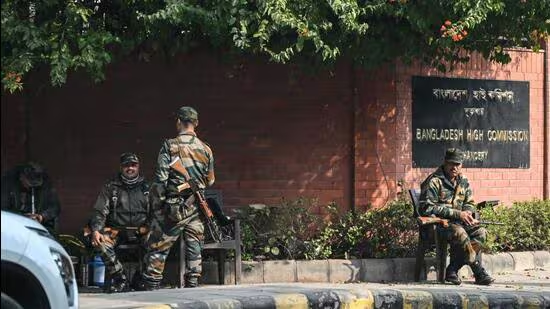
Indian high commissioner Pranay Verma was summoned to the foreign ministry in Dhaka during the morning hours by foreign secretary Asad Alam Siam. The summons came as a protest against what Bangladesh termed regrettable incidents outside the Bangladesh high commission in New Delhi and the vandalization of a visa centre in Siliguri.

This marked the second time in just 10 days that the Indian envoy was called to the foreign ministry in Dhaka to receive a formal protest, highlighting the escalating nature of diplomatic friction between the two South Asian neighbors.

India Summons Bangladesh Envoy

In a reciprocal move, the Bangladesh envoy Riaz Hamidullah was called in by B Shyam, the joint secretary who heads the Bangladesh-Myanmar division of the external affairs ministry, late in the evening. The Bangladesh envoy was informed of India’s demand for a proper investigation into the recent killing of Bangladeshi radical student leader Sharif Osman Hadi.

People familiar with the matter emphasized that instead of jumping the gun and blaming India for Hadi’s death, there should be a thorough investigation to identify the perpetrators. The unsubstantiated allegations about an Indian hand in Hadi’s killing had triggered anti-India protests in Bangladesh, including an attempt by a mob to storm the Indian assistant high commission in Chittagong last week.

Bangladesh’s Formal Protest

A readout issued in Dhaka revealed that the foreign ministry conveyed its grave concern to the Indian high commissioner over regrettable incidents outside the perimeter of the Bangladesh high commission and residence in New Delhi on December 20. Additionally, acts of vandalism at the Bangladesh visa centre in Siliguri on December 22 by extremist elements were strongly condemned.

Bangladesh also expressed deep concern over violent protests staged outside the premises of different diplomatic missions in India. The Bangladesh envoy’s government sought assurances regarding the protection of its diplomatic facilities and personnel on Indian soil.

India’s Position on Protest Equivalence

Indian officials stressed that there could be no equivalence between the violent protest outside India’s assistant high commission in Chittagong on December 18 and the protests outside Bangladesh’s diplomatic facilities in India. A senior official explained that in New Delhi, protesters were stopped more than 500 meters away from the Bangladeshi mission with heightened security measures in place.

In contrast, during the Chittagong incident, protesters came right up to the Indian mission, and petrol bombs and stones were thrown at the facility. This distinction was crucial in India’s response when addressing concerns raised by the Bangladesh envoy.

Protests Over Hindu Man’s Lynching

The Vishwa Hindu Parishad and Bajrang Dal announced protests outside the Bangladeshi mission on Tuesday over the recent lynching of a Hindu man named Dipu Chandra Das in Mymensingh. Das, a garment factory worker, was beaten to death, and his body was tied to a tree and burnt in a horrific incident that sparked outrage across India.

A large police contingent was deployed near the Bangladeshi mission on Tuesday morning. Security personnel stopped protesters with barricades more than 500 meters away and later transported them in buses from the spot. No untoward incidents were reported during the demonstration, despite the charged atmosphere.

Competing Narratives on Security

Following protests outside the Bangladesh high commission over Das’s killing late on Saturday night, India dismissed reports of a security breach at the mission as misleading propaganda. India expressed concern at the horrendous killing of the Hindu man and called for the perpetrators to be brought to justice.

Also Read: Karbi Anglong Protests Explode: Deadly Violence Rocks Assam District

However, Bangladesh’s foreign ministry contested India’s description of the incident outside its mission in New Delhi. The Bangladesh envoy’s government stated that an isolated attack on a Bangladeshi Hindu man should not be depicted as an attack on minorities, revealing differing interpretations of the situation.

Hadi Investigation Demands

Protests were organized near India’s missions in Dhaka, Chittagong, Khulna, and Rajshahi last week after some of Bangladesh’s student leaders and politicians claimed Hadi’s killers had sneaked into India. However, Bangladesh Police announced over the weekend that the whereabouts of the assailants remain unknown.

The Bangladesh envoy was specifically told that proper investigative procedures should be followed rather than making premature accusations against India without evidence.

Visa Services Suspended

The diplomatic tensions have resulted in practical consequences for citizens of both nations. Bangladesh has suspended visa services at its missions in New Delhi and Agartala and at the visa centre in Siliguri. India has suspended visa services only at the mission in Chittagong, reflecting the targeted nature of the diplomatic responses.

Government Response to Das Killing

Bangladesh’s caretaker administration leader Muhammad Yunus expressed profound sorrow over the killing of Das and extended condolences to his family. The de facto education minister CR Abrar visited Das’s family in Mymensingh to convey government sympathy and assurance of support.

Bangladesh’s law enforcement agencies have arrested 12 people in connection with Das’s lynching, and the interim government has directed that the case be pursued fully and without exception, demonstrating action following India’s concerns raised with the Bangladesh envoy.

Libya Military Chief Killed: Devastating Jet Crash Near Ankara

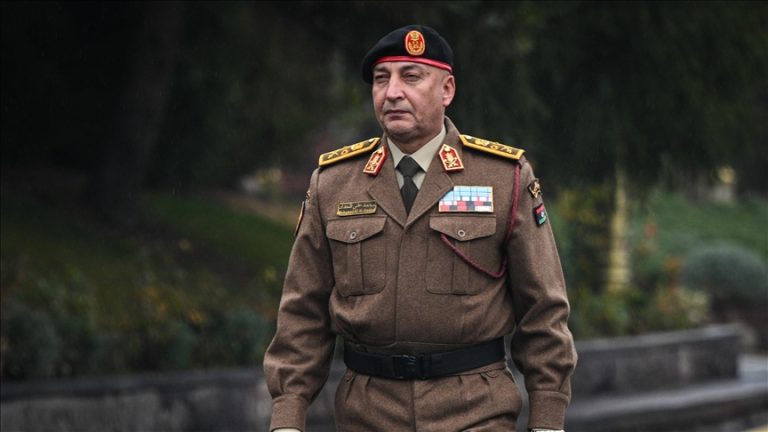
Turkey – A devastating private jet crash in central Turkey claimed the life of the Libya military chief and several senior officers on Tuesday night, sending shockwaves through the North African nation. The tragedy occurred shortly after the aircraft departed from Ankara, killing all eight people aboard in what officials have described as a catastrophic technical malfunction.

Fatal Crash Claims Top Military Leadership

Libya’s internationally recognized government confirmed that General Mohammed Ali Ahmed al-Haddad, the Libya military chief of staff, perished in the crash along with four other senior officers and three crew members. The loss represents a significant blow to Libya’s military establishment and its efforts toward national reunification.

Prime Minister Abdul-Hamid Dbeibah addressed the nation following the tragedy, describing the incident as a tragic accident and a great loss for Libya in a statement posted on social media. The death of the Libya military chief has left a leadership vacuum at a critical time for the divided nation.

Details of the Fatal Flight

The Dassault Falcon 50 business jet had departed from Ankara’s Esenboga Airport on Tuesday evening, heading back to Libya after completing a high-level defence visit. Turkish Interior Minister Ali Yerlikaya confirmed that the plane took off around 8:30 pm local time and lost contact approximately 40 minutes later after issuing an emergency landing signal near Haymana.

The aircraft carrying the Libya military chief suffered a technical malfunction shortly after departure. Turkish officials located the wreckage near the village of Kesikkavak in Haymana district, approximately 70 kilometers south of the capital. The crash site revealed the devastating impact of the incident.

Technical Malfunction and Emergency Response

Burhanettin Duran, head of the presidential communications office, revealed that the crew had reported an electrical fault and requested an emergency landing. Air traffic controllers immediately redirected the aircraft back to Esenboga Airport in response to the distress call from the jet carrying the Libya military chief.

However, the plane vanished from radar while descending, indicating a catastrophic failure that prevented the crew from completing the emergency landing. Security camera footage aired by local television channels captured the night sky over Haymana briefly lighting up in what appeared to be an explosion, marking the tragic final moments of the flight.

Ankara’s airport was temporarily closed following the incident, and several flights were diverted as authorities responded to the emergency and launched rescue operations.

Senior Officers Lost in Tragedy

Along with the Libya military chief, the crash claimed the lives of several other high-ranking military officials who were integral to Libya’s defense establishment. General Al-Fitouri Ghraibil, head of Libya’s ground forces, died in the incident, representing another significant loss to the military hierarchy.

Brigadier General Mahmoud al-Qatawi, who led the military manufacturing authority, was also killed. Mohammed al-Asawi Diab, an adviser to the Libya military chief, perished alongside Mohammed Omar Ahmed Mahjoub, a military photographer with the chief of staff’s office. The three crew members’ identities were not immediately disclosed.

Libya Military Chief’s Critical Role

Al-Haddad was appointed as Libya military chief in 2020 and served as the top military commander in western Libya. He played a crucial role in United Nations-backed efforts to reunify the country’s fractured armed forces, working to bridge divisions that have plagued Libya since the 2011 uprising that toppled longtime ruler Moammar Gaddafi.

Also Read: Epstein Files Expose: Shocking Trump Revelations and Rape Claims

The Libya military chief had been working to consolidate military power and establish unified command structures across rival administrations and militias entrenched in the eastern and western regions of the country. His death creates uncertainty about the continuity of these reunification efforts.

Purpose of Ankara Visit

The Libyan delegation led by the Libya military chief had been in Ankara for critical talks aimed at deepening military cooperation between the two nations. During the visit, al-Haddad met with Turkish Defence Minister Yasar Guler and senior military officials to discuss enhanced security partnerships.

The trip came just one day after Turkey’s parliament approved a two-year extension of the mandate for Turkish troops deployed in Libya under a 2019 security agreement. This timing underscored the strategic importance of the visit and Turkey’s continued support for Libya’s Tripoli-based government.

Investigation Underway

Turkey, a key ally of Libya’s Tripoli-based government, announced that four prosecutors have been appointed to investigate the crash that killed the Libya military chief. The investigation will examine the technical malfunction, maintenance records, and circumstances leading to the tragic incident.

Libya will send its own investigative team to Ankara to participate in the inquiry alongside Turkish authorities, according to a government statement. The joint investigation aims to determine the exact cause of the electrical fault and why the emergency landing attempt failed.

The loss of the Libya military chief and his senior officers represents a profound setback for Libya’s stability efforts and its military modernization programs during a critical period of national reconstruction.

Epstein Files Expose: Shocking Trump Revelations and Rape Claims

Washington D.C. – A new batch of documents linked to the investigation into disgraced financier Jeffrey Epstein has thrust US President Donald Trump back into intense scrutiny. The recently released Epstein files from the United States Department of Justice comprise tens of thousands of pages containing internal emails, flight records, handwritten notes, and disputed material that officials caution may include untrue and sensationalist claims.

While Trump has not been accused of any crime in connection with Epstein, these disclosures have raised uncomfortable questions about their past association. The Epstein files reveal previously unknown details that contradict Trump’s public statements and expose the depth of their relationship during the 1990s.

Trump’s Frequent Flights on Epstein’s Private Jet

One of the most significant revelations in the Epstein files involves Trump’s travel on Epstein’s private aircraft. An internal email from January 2020, sent by a Manhattan federal prosecutor, confirms that Trump traveled on Epstein’s private jet at least eight times between 1993 and 1996. This represents many more trips than previously reported or known to investigators.

The correspondence was circulated among officials for situational awareness, indicating that even those investigating the case were surprised by the frequency of these flights. This information directly contradicts Trump’s earlier public claims about the extent of his relationship with the convicted sex offender.

Ghislaine Maxwell and Young Women on Board

The Epstein files further reveal that on at least four of these flights, Ghislaine Maxwell was also on board. Maxwell, Epstein’s close associate, was later convicted of sex trafficking charges for her role in recruiting and grooming young girls for Epstein’s abuse.

Particularly concerning is a 1993 flight where the only passengers listed were Epstein, Trump, and a 20-year-old woman whose name was redacted from the documents. On two additional flights, women later identified as possible witnesses in the Maxwell case were present. These details add disturbing context to Trump’s travels with Epstein during this period.

Flight Records Contradict Trump’s Public Denials

Trump has publicly claimed he was never on Epstein’s plane, but the newly released Epstein files directly contradict these statements. The flight logs explicitly list Trump as a repeat passenger across multiple trips during the 1990s.

The records also show that some trips included Trump’s then-wife Marla Maples and his children. While the Epstein files make no allegations of criminal conduct by Trump, they fundamentally undercut his long-standing narrative about the limited nature of his ties with Epstein and raise questions about his credibility on this matter.

Unverified FBI File Contains Rape Allegation

Among the most serious revelations in the Epstein files is an FBI case file dated October 2020 that references a rape allegation involving Trump. Names and identifying details are redacted throughout the document to protect privacy.

The file recounts a limousine driver’s testimony about a very concerning phone call during a 1995 ride to an airport. According to the account, Trump allegedly repeatedly said the name Jeffrey and made references to abusing some girl during the conversation.

Critically, the Epstein files document records an unnamed individual alleging that Trump raped her. The statement specifically claims that Donald Trump had raped her along with Jeffrey Epstein. Another line in the document alleges the encounter occurred after being taken into a fancy hotel or building. However, these allegations remain unverified and no criminal charges have been filed.

Controversial Handwritten Letter Surfaces

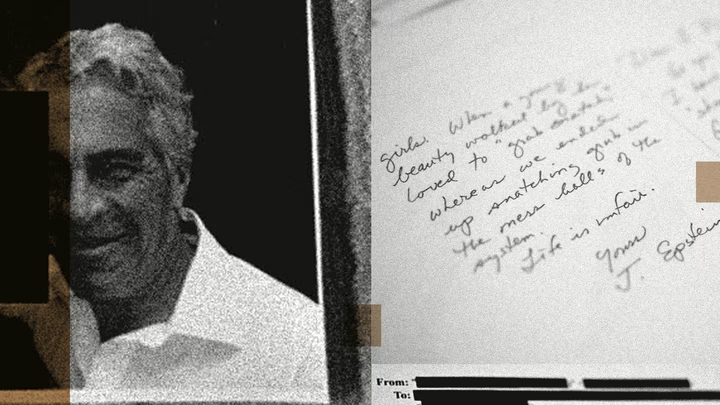
Perhaps the most controversial disclosure in the Epstein files is a handwritten letter attributed to Epstein and addressed to fellow sex offender Larry Nassar, the former Team USA gymnastics doctor. The note was reportedly written just days before Epstein’s death in August 2019.

Also Read: Epstein Files Release: Shocking Update on Remaining Documents from Justice Dept

The letter contains the line: “Our president shares our love of young, nubile girls.” It continues with sexually explicit claims about a president who liked to grab snatch. While the letter does not name Trump directly, he was serving as president at the time it was allegedly written.

The Department of Justice has emphasized that this document in the Epstein files is unverified, noting anomalies in the envelope, postmark, and return address. The FBI sent the letter for handwriting analysis, but no public conclusion regarding its authenticity has been released.

Questions About Document Handling

The release of the Epstein files has not been without controversy. Reports indicate that when Data Set 8 briefly disappeared from the DOJ website and was subsequently reposted, several pages including the handwritten letter and its envelope appeared to be missing before reappearing later under resequenced file numbers.

The DOJ has not provided an explanation for these changes, fueling accusations from lawmakers and critics that the Epstein files have been mishandled or inconsistently released.

Trump has repeatedly denied any knowledge of or involvement in Epstein’s crimes, stating their friendship ended in the mid-2000s. The Justice Department has confirmed that Trump faces no criminal allegations in the case.

Karbi Anglong Protests Explode: Deadly Violence Rocks Assam District

Assam – Fresh violence has erupted in Assam’s Karbi Anglong region, transforming a long-simmering land dispute into deadly clashes that have claimed two lives and injured dozens. The Karbi Anglong protests have prompted authorities to suspend internet services and impose strict prohibitory orders as the state government scrambles to restore calm in the troubled hill district.

Deadly Clashes and Widespread Violence

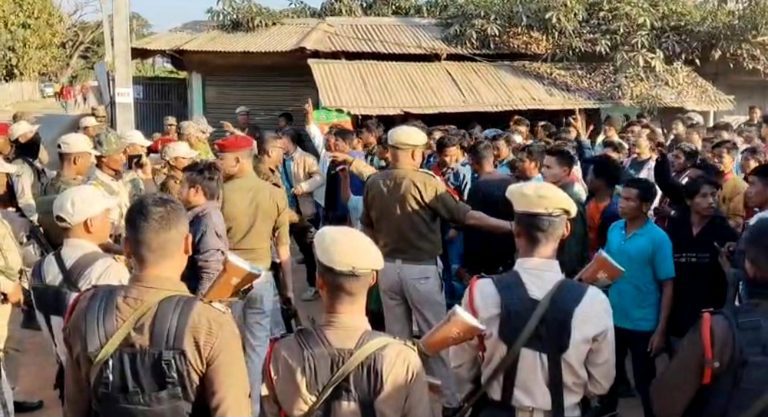
The Karbi Anglong protests turned violent when clashes broke out between two groups of demonstrators in the Kheroni and Dongkamukam areas. At least two people were killed and 45 others injured, including 38 police personnel who were caught in the confrontations. Police forces responded by resorting to lathi-charge and deploying tear gas to disperse the aggressive crowds.

The violence resulted in extensive property damage across the region. Several houses, shops, and public properties were vandalized or set ablaze in parts of Kheroni and surrounding areas as the situation spiraled beyond control. The unrest quickly spread to neighboring areas, demonstrating the widespread nature of public anger.

The Root Cause: Land Eviction Dispute

At the heart of the Karbi Anglong protests lies a contentious demand for the eviction of alleged encroachers from Village Grazing Reserve and Professional Grazing Reserve lands. These protected areas fall under the Sixth Schedule of the Constitution, which specifically safeguards tribal land rights in autonomous districts.

Protesters have alleged that over 7,184 acres of protected land have been encroached upon, fueling long-standing grievances about land rights and resource management. This land dispute has been further complicated by ongoing legal cases in the Gauhati High Court, creating a complex situation that has festered for years.

Trigger Point: Medical Evacuation Sparks Outrage

The Karbi Anglong protests escalated dramatically after police picked up nine hunger-striking agitators for medical treatment. This action triggered widespread rumors of detention, fueling public anger and leading to mass mobilization across the district. The incident transformed what had been a relatively contained protest into widespread civil unrest.

The perception that authorities were suppressing peaceful protesters galvanized support for the movement, drawing larger crowds and intensifying the confrontational atmosphere that ultimately led to the violent clashes.

Attack on Political Leader’s Residence

In a significant escalation of the Karbi Anglong protests, demonstrators marched to the ancestral residence of Tuliram Ronghang, chief of the Karbi Anglong Autonomous Council, and set it ablaze on Monday. This targeted attack on a prominent political figure’s property underscores the depth of anger and frustration among protesters.

The assault on Ronghang’s residence in Dongkamokam, which falls within his constituency, represents a direct challenge to the autonomous council’s authority and its handling of the land dispute.

Government Response and Security Measures

In response to the deteriorating situation during the Karbi Anglong protests, authorities imposed Section 163 of the Bharatiya Nyaya Suraksha Sanhita. This prohibitory order bans gatherings of five or more people, rallies, torch processions, and the use of loudspeakers. Movement restrictions have been implemented between 5 pm and 6 am to maintain order.

The Assam Home and Political Department suspended internet services across Karbi Anglong and West Karbi Anglong districts to prevent the spread of rumors and inflammatory content. However, voice calls and fixed-line broadband services remain functional to ensure basic communication needs are met.

Official Statements and Peace Efforts

Inspector General of Police Akhilesh Kumar Singh confirmed that peaceful talks were underway to resolve the Karbi Anglong protests. He urged people to pursue their grievances through legal means rather than taking the law into their own hands, emphasizing the importance of maintaining public order.

Assam Chief Minister Himanta Biswa Sarma announced he was closely monitoring the unfolding situation. The state government has deployed additional security forces to the affected areas to prevent further violence and restore normalcy. Sarma expressed his condolences to the families of those killed in the clashes.

Also Read: Assam Congress Controversy: Explosive Claims About 1946 Partition Plot Examined

Constitutional and Legal Context

The Karbi Anglong protests highlight the complex interplay between constitutional protections and ground realities in Sixth Schedule areas. These autonomous hill districts enjoy special provisions designed to preserve tribal culture and protect indigenous land rights, making land disputes particularly sensitive.

The ongoing legal proceedings in various courts add another layer of complexity to resolving the Karbi Anglong protests, as multiple stakeholders await judicial clarity on land ownership and eviction rights.

Current Situation and Path Forward

As the Karbi Anglong protests continue, authorities face the challenging task of balancing security concerns with addressing legitimate grievances. The suspension of internet services and movement restrictions have temporarily contained the violence, but lasting peace requires addressing the underlying land dispute that sparked the unrest in this troubled Assam district.

H-1B Visa Lottery Scrapped: Trump Administration’s Revolutionary Changes

Washington D.C. – The Trump administration has announced a major overhaul of the work visa selection process, eliminating the long-standing H-1B visa lottery system. This significant policy shift marks a fundamental change in how the United States allocates work visas to foreign nationals, prioritizing higher-skilled and higher-paid workers over the previous random selection method.

New Wage and Skill-Based Selection Process

The US Department of Homeland Security revealed on Tuesday that the H-1B visa lottery will be replaced with a weighted selection process focused on wage levels and skill requirements. This transformation aims to ensure that visa allocations favor candidates with higher qualifications and compensation packages, fundamentally altering how employers petition for foreign workers.

The DHS emphasized that this new approach would better protect American workers’ wages, working conditions, and job opportunities. Under the revised system, the random selection process that has governed the program for years will give way to a merit-based framework that considers both the skill level of applicants and their proposed compensation.

Implementation Timeline and Cap Details

The new rules will become effective on February 27, 2026, and will apply to the fiscal year 2027 H-1B cap registration season. Currently, the annual limit for the H-1B visa lottery stands at 65,000 visas, with an additional 20,000 reserved specifically for foreign workers holding advanced degrees from US institutions.

This implementation timeline provides employers and prospective applicants with adequate notice to prepare for the upcoming changes. The transition period allows stakeholders to understand the new requirements and adjust their application strategies accordingly.

Addressing Exploitation and Abuse Concerns

The DHS stated that the current H-1B visa lottery system has faced substantial criticism for enabling unscrupulous employers to manipulate the process. The department highlighted that the lottery-based approach had resulted in an influx of lower-skilled foreign workers receiving low wages, which negatively impacted the American workforce.

US Citizenship and Immigration Services spokesman Matthew Tragesser explained that the existing random selection process had been exploited and abused by various US employers. These employers sought to import foreign workers at compensation levels significantly lower than what they would pay American workers for similar positions.

Weighted Selection Process Details

The final rule implements a weighted selection mechanism designed to increase the probability that visas are allocated to higher-skilled and higher-paid foreign nationals. Importantly, the new system maintains opportunities for employers to secure workers across all wage levels, though higher-paid positions will receive preferential treatment in the selection process.

This weighted approach represents a departure from the purely random nature of the H-1B visa lottery, introducing a stratified system that rewards employers willing to offer competitive compensation packages. The administration believes this change will better align with Congressional intent for the program.

Strengthening American Competitiveness

According to Tragesser, the new weighted selection process will better serve the original purpose of the program while strengthening America’s competitive position globally. By incentivizing American employers to petition for higher-paid and higher-skilled foreign workers, the administration expects to elevate the overall quality of the foreign workforce entering the country.

The Trump administration has indicated its commitment to continue updating the program through additional regulatory changes. These modifications aim to help American businesses access necessary talent without allowing the abuses that have historically harmed American workers.

Alignment with Broader Policy Changes

The elimination of the H-1B visa lottery aligns with other significant changes implemented by the Trump administration. These include a substantial increase in visa fees, with the application cost rising to $100,000 per visa as a condition of eligibility. The DHS confirmed that this fee structure works in conjunction with the new selection process to reshape the program fundamentally.

Also Read: H-1B Visa Screening: Critical Changes Impact Thousands of Applicants

Impact on Foreign Workers and Employers

The transition away from the H-1B visa lottery system will significantly impact both foreign workers and their prospective employers. Higher-skilled professionals commanding premium salaries will benefit from increased selection probability, while those in lower-wage positions may face greater challenges securing visas.

Employers will need to reassess their hiring strategies and compensation structures to remain competitive in the new system. The weighted selection process encourages companies to offer higher salaries and target more qualified candidates, potentially raising the overall standard of foreign workers entering the United States.

This comprehensive reform of the H-1B visa lottery represents one of the most significant changes to US immigration policy in recent years, reshaping how America attracts and selects foreign talent for its workforce.

1 Grand Milestone as Kishkinda University Hosts First Convocation in Ballari

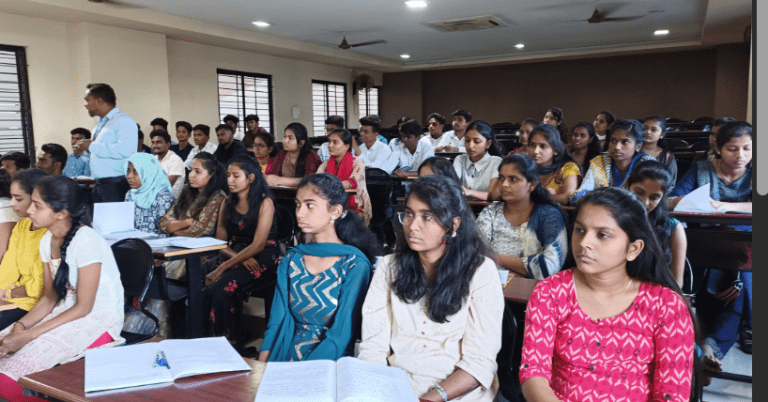
Kishkinda University is set to host its first-ever convocation in Ballari today, marking a significant milestone in the institution’s history. The event, attended by university officials, faculty, graduating students, and dignitaries, celebrates the successful completion of academic programs by the first batch of graduates. University authorities have highlighted the convocation as a landmark occasion that recognises academic excellence, perseverance, and the institution’s commitment to fostering higher education in the region.

The university has also taken measures to make the convocation inclusive and memorable for all participants. Special arrangements have been made for differently-abled graduates, ensuring accessible seating, stage access, and support throughout the ceremony. Officials highlighted that creating an inclusive environment reflects Kishkinda University’s commitment to equity and respect for all students, reinforcing the values of diversity and social responsibility.

In preparation for the event, the university conducted meticulous verification of all degrees, ensuring that each graduate meets the academic requirements for conferment. The academic council and examination cell worked closely to confirm eligibility, resolve discrepancies, and maintain the integrity of the graduation process. Authorities emphasised that these measures uphold the credibility of the degrees awarded and provide graduates with recognition that is nationally and internationally respected.

Cultural programs organised as part of the convocation aim to celebrate the heritage and diversity of Karnataka. Traditional performances, musical renditions, and student-led presentations will accompany the formal proceedings, creating a festive atmosphere that blends ceremony with local cultural pride. University officials noted that these performances provide graduates and attendees with an enriching experience, highlighting the institution’s dedication to holistic education beyond academics.

The university has invited key dignitaries, including education department officials, local leaders, and eminent academicians, to grace the ceremony. Their presence is expected to underscore the importance of higher education in regional development and create networking opportunities for graduates. Officials highlighted that interaction with distinguished guests will inspire students, providing insights into professional pathways, research opportunities, and leadership development.

Graduate students who have excelled in research, innovation, and entrepreneurship will be specially recognised during the convocation. Awards and honours will be conferred to acknowledge contributions in fields such as science and technology, social initiatives, and creative projects. University authorities stressed that highlighting these achievements encourages a culture of excellence and motivates upcoming students to pursue ambitious academic and professional goals.

Faculty members have played a central role in mentoring and guiding students throughout their academic journey. During the convocation, senior professors and department heads will be acknowledged for their contributions, reflecting the collaborative effort that underpins student success. Officials emphasised that recognising faculty efforts reinforces institutional commitment to quality education and a supportive academic environment.

In addition to the formal ceremony, the university has organised interactive sessions and networking opportunities for graduates and their families. These sessions aim to provide guidance on career planning, higher studies, and professional development. University authorities highlighted that such interactions foster lifelong engagement between alumni and the institution, strengthening the support network for students as they transition into professional roles.

Preparations for media coverage and documentation of the event have been undertaken to ensure that the convocation receives wide recognition. Photographs, videos, and official records will be preserved to commemorate the inaugural ceremony and provide a reference for future events. Officials noted that meticulous documentation helps create a legacy for the university and serves as an inspiration for successive graduating batches.

Finally, the university has emphasised that the first convocation is not only a ceremonial milestone but also a symbolic reflection of Kishkinda University’s mission, vision, and values. By celebrating academic achievement, recognising individual and collective contributions, and engaging with the broader community, the event sets a benchmark for future convocations. Officials expressed hope that the ceremony will strengthen institutional identity, inspire graduates to excel in their professional and personal lives, and contribute meaningfully to society.

The convocation ceremony is expected to include the formal conferment of degrees across undergraduate, postgraduate, and doctoral programs offered by the university. Officials have emphasised that the event is not only a celebration of student achievement but also a platform to strengthen the bond between the university, its alumni, and the broader community. The convocation is seen as an important step in establishing Kishkinda University’s reputation as a centre of academic excellence in Karnataka.

University officials noted that the ceremony will be conducted following strict protocols to ensure a smooth and dignified event. Graduating students will receive their degrees in person, with faculty members and administrative staff coordinating to manage seating, stage arrangements, and ceremonial proceedings. Authorities have also highlighted the inclusion of cultural programs and speeches from prominent academicians and guest speakers, adding both ceremonial and inspirational elements to the event.

The first convocation is significant for students who completed their programs under challenging circumstances, including adapting to online learning during the COVID-19 pandemic. University officials stated that the event recognises the resilience, hard work, and dedication of graduates, many of whom have excelled in academics, research, and co-curricular activities. The ceremony aims to inspire graduates to pursue professional and academic excellence in their chosen fields.About Us - Kishkinda University

Academic and Institutional Significance

Kishkinda University has steadily expanded its academic offerings since its inception, focusing on a range of disciplines including science, technology, commerce, arts, and humanities. The first convocation reflects the institution’s growth and commitment to providing quality education to students in the Ballari region and beyond. Authorities emphasised that the event also serves as a platform to showcase the university’s achievements in research, innovation, and community engagement.

The convocation ceremony is expected to feature keynote addresses by university officials, distinguished alumni, and guest speakers from academia and industry. These addresses will focus on the importance of higher education, career development, and societal contributions, providing graduates with guidance and motivation as they transition into professional and academic pursuits. University authorities noted that such engagements are essential to building a strong alumni network and fostering ongoing mentorship opportunities.About Us - Kishkinda University

Students and their families have expressed excitement over the convocation, viewing it as a moment of pride and accomplishment. Graduates highlighted the significance of the ceremony as a recognition of their academic journey, challenges overcome, and dedication to their studies. Many families have travelled from different parts of Karnataka to attend the event, underscoring the emotional and symbolic importance of the first convocation in the university’s history.

Kishkinda University is set to host its first-ever convocation in Ballari today, marking a significant milestone in the institution’s history. The event, attended by university officials, faculty, graduating students, and dignitaries, celebrates the successful completion of academic programs by the first batch of graduates. University authorities have highlighted the convocation as a landmark occasion that recognises academic excellence, perseverance, and the institution’s commitment to fostering higher education in the region.

University authorities have also highlighted the role of faculty and administrative staff in organising the convocation. Coordinating a large-scale event involves meticulous planning, from stage arrangements and degree verification to seating and ceremonial protocols. Officials emphasised that the success of the first convocation reflects teamwork, commitment, and attention to detail, reinforcing Kishkinda University’s capability to host significant academic events in the future.

Future Outlook and Legacy

The first convocation of Kishkinda University is expected to set a precedent for future ceremonies, establishing traditions and protocols that will be followed by subsequent graduating batches. University officials noted that the event underscores the institution’s long-term vision of academic excellence, community engagement, and fostering a culture of achievement among students. The convocation also provides an opportunity for the university to strengthen relationships with local authorities, educational institutions, and the community in Ballari.

Officials have emphasised that the convocation is not only a celebration but also a platform for recognising exceptional achievements, including academic distinctions, research contributions, and community service by students. Certificates of merit, awards, and honours will be conferred alongside degrees, providing graduates with recognition for their hard work and motivating future students to excel.Best Private University in Ballari, Karnataka | Kishkinda University

The convocation ceremony is also seen as a step toward enhancing the university’s visibility and prestige at the national level. By hosting a well-organised, dignified, and ceremonious event, Kishkinda University aims to attract prospective students, faculty, and collaborators, further establishing itself as a prominent centre for higher education. Authorities noted that the event is an important milestone in the university’s journey toward academic prominence.

In conclusion, Kishkinda University’s first convocation in Ballari represents a landmark achievement in the institution’s history. By recognising the accomplishments of its inaugural graduating batch, celebrating academic excellence, and reinforcing institutional values, the sets the stage for future growth, stronger alumni engagement, and a legacy of higher education excellence in the region. The event marks a moment of pride for students, families, faculty, and the broader Ballari community.

Kishkinda is set to host its first-ever convocation in Ballari today, marking a significant milestone in the institution’s history. The event, attended by officials, faculty, graduating students, and dignitaries, celebrates the successful completion of academic programs by the first batch of graduates. University authorities have highlighted the convocation as a landmark occasion that recognises academic excellence, perseverance, and the institution’s commitment to fostering higher education in the region.

Follow: Karnataka Government

Also read: Home | Channel 6 Network – Latest News, Breaking Updates: Politics, Business, Tech & More

1 Bold Move by Speaker to Link MLAs’ Development Grants to Attendance

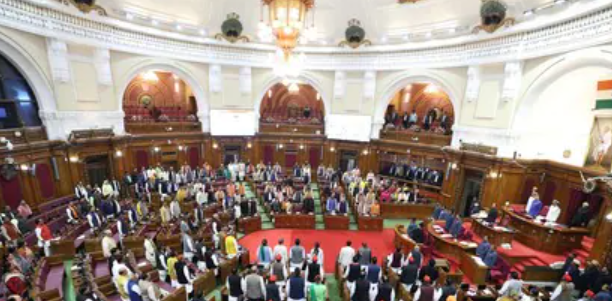
In a significant development aimed at promoting accountability and active participation in legislative affairs, the Speaker of the Karnataka Legislative Assembly has announced that the release of Members of Legislative Assembly (MLAs)’ development grants will be examined in relation to their attendance records. The initiative seeks to ensure that elected representatives not only access funds for constituency development but also actively participate in legislative proceedings, debates, and committee meetings. Officials noted that this step reflects a broader effort to strengthen democratic accountability and enhance the efficiency of governance.

Officials have clarified that the proposed linkage between development grants and legislative attendance will include both quantitative and qualitative measures. Quantitative measures will account for the number of Assembly sessions attended, participation in question hours, and committee meetings, while qualitative measures will evaluate contributions to debates, policy discussions, and legislative interventions. Authorities emphasised that this balanced assessment will ensure that the measure recognises meaningful participation rather than mere physical presence.

MLAs have been encouraged to maintain detailed logs of constituency engagements and legislative contributions, which will be reviewed alongside attendance records. This dual documentation is expected to provide a comprehensive picture of a legislator’s commitment to public service and policy-making. Officials noted that by integrating constituency work with legislative participation, the initiative aims to foster accountability in both spheres of an MLA’s responsibilities.

Political analysts have observed that the measure could shift the focus of elected representatives from purely constituency-centric work to more holistic governance. By linking financial incentives with legislative engagement, authorities hope to create a culture where attending sessions, contributing to debates, and monitoring government performance become integral to an MLA’s role, thereby improving the overall effectiveness of the Assembly.

The Speaker’s office has assured that procedural fairness will be central to the initiative. Guidelines for exemptions due to health issues, official duties outside the Assembly, or unavoidable personal commitments will be clearly defined. This ensures that no MLA is unfairly penalised for legitimate absences, maintaining the credibility and integrity of the accountability mechanism.

Training sessions and workshops are being planned to familiarise MLAs with the new monitoring and reporting framework. These sessions will provide guidance on digital attendance systems, documentation of legislative contributions, and integration of constituency development reports. Officials emphasised that capacity building is key to ensuring smooth implementation and avoiding confusion or disputes.

The initiative is also expected to enhance public oversight. Once attendance-linked fund allocation data and compliance reports are made publicly accessible, citizens and civil society organisations will be able to track their representatives’ performance. Analysts suggest that such transparency could improve trust between elected officials and constituents, as well as encourage more responsible use of development funds.

Legal experts have pointed out that clear guidelines and robust monitoring mechanisms are essential to prevent misuse or misinterpretation of the new system. By defining criteria for fund allocation, exemptions, and dispute resolution, the Speaker’s office aims to create a framework that is legally sound, equitable, and enforceable, reducing the potential for controversy or political friction.

Finally, the proposed linkage between MLAs’ development grants and legislative attendance is expected to have long-term implications for governance in Karnataka. By incentivising active participation, promoting transparency, and encouraging a balanced focus on constituency and legislative duties, the initiative has the potential to enhance both policy-making and public service delivery. Officials reiterated that the measure reflects a forward-looking approach to strengthening democratic accountability and fostering responsible governance across the state.

The Speaker’s office clarified that the proposal is still under examination and involves assessing attendance trends, participation in key debates, and overall engagement in Assembly sessions. The linkage between development grants and attendance aims to incentivise MLAs to prioritise legislative responsibilities alongside constituency work. Authorities emphasised that responsible use of development funds is closely tied to an elected representative’s commitment to fulfilling parliamentary duties.

According to sources, MLAs’ attendance records will be verified through official registers and digital tracking systems maintained by the Assembly Secretariat. The proposal includes a phased approach in which preliminary checks will identify legislators with low participation, followed by a structured review of fund release schedules. Officials highlighted that transparency and fairness will be central to the process, ensuring that legitimate absences due to official duties or health reasons are accounted for.

The move comes amid growing public scrutiny over the utilisation of constituency development funds, with concerns that some elected representatives may prioritise personal or political engagements over active legislative participation. By linking fund disbursal to attendance, the Speaker hopes to create an incentive structure that rewards diligent participation, encourages timely reporting of constituency work, and promotes a culture of responsibility within the Assembly.Speaker examining linking the release of MLAs' development grants to their  legislature attendance - The Hindu

Legislative Participation and Accountability

Experts have welcomed the Speaker’s initiative, noting that it aligns with global best practices in parliamentary governance. Linking development grants to attendance not only encourages lawmakers to engage meaningfully in legislative processes but also ensures that funds allocated for constituency development are tied to a demonstrable commitment to governance. Authorities believe that this approach could enhance transparency, accountability, and public trust in elected representatives.

MLAs are expected to maintain detailed records of constituency projects, expenditure reports, and progress updates alongside their attendance in Assembly sessions. Officials have suggested integrating these reports with the Assembly’s digital portal to facilitate real-time monitoring and ensure that compliance with attendance-linked fund allocation is tracked accurately. By combining legislative participation with project reporting, authorities aim to create a comprehensive accountability framework.

The Speaker’s office has also indicated that the proposal will involve consultations with political parties to ensure consensus and clarity on implementation guidelines. Party leaders are likely to provide inputs on exemptions, procedural fairness, and mechanisms for resolving disputes. Officials emphasised that the initiative is not intended as punitive but as a measure to enhance the overall quality of governance and ensure that MLAs fulfil both legislative and constituency responsibilities.

In a significant development aimed at promoting accountability and active participation in legislative affairs, the Speaker of the Karnataka Legislative Assembly has announced that the release of Members of Legislative Assembly (MLAs)’ development grants will be examined in relation to their attendance records. The initiative seeks to ensure that elected representatives not only access funds for constituency development but also actively participate in legislative proceedings, debates, and committee meetings. Officials noted that this step reflects a broader effort to strengthen democratic accountability and enhance the efficiency of governance.

The proposed linkage has sparked debate among legislators, with some expressing support for accountability measures while others have raised concerns about rigid criteria or potential bureaucratic delays in fund release. The Speaker’s office has assured that the system will be designed to account for genuine absences and that no MLA will be unfairly penalised. Authorities emphasised that the focus is on encouraging participation rather than imposing blanket restrictions.

Potential Implications for Governance

By examining the connection between attendance and development grants, the Speaker aims to reinforce the principle that public funds should be disbursed responsibly and in tandem with active legislative engagement. Analysts noted that this could lead to increased participation in Assembly debates, more consistent committee work, and improved oversight of government policies and initiatives. Enhanced attendance could also improve the quality of policymaking and legislative scrutiny.

Officials further indicated that the initiative may encourage MLAs to balance constituency work with legislative duties more effectively. By tying development grants to active participation, elected representatives may be more motivated to attend sessions, engage in discussions, and contribute constructively to lawmaking. Authorities stressed that this approach is intended to strengthen democratic processes and ensure that citizens’ interests are represented consistently in the Assembly.

In conclusion, the Speaker’s examination of linking MLAs’ development grants to legislature attendance represents a strategic effort to promote accountability, transparency, and responsible governance. By incentivising active participation, ensuring fair fund disbursal, and enhancing public oversight, the initiative aims to strengthen democratic processes, improve the quality of representation, and foster trust between elected officials and citizens. The final framework, once implemented, is expected to have lasting implications for legislative efficiency and the responsible use of public resources in Karnataka.Every MP and MLA takes commission, says Union Minister Jitan Ram Manjhi -  The Hindu

The Speaker has also emphasised transparency in monitoring and reporting, stating that attendance records, fund allocation data, and compliance reports will be made publicly available. This move is expected to empower citizens, civil society organisations, and media outlets to assess the performance of elected representatives, fostering accountability and informed public discourse.

The proposal has drawn attention at both state and national levels, with experts observing that it could serve as a model for other legislatures seeking to integrate accountability mechanisms with development fund allocation. By combining fiscal responsibility with legislative engagement, the initiative underscores the importance of holistic governance and the role of elected representatives in shaping public policy while delivering tangible benefits to constituents.Karnataka govt. not paying salary grants to HDMC, alleges MLA Tenginakai -  The Hindu

In conclusion, the Speaker’s examination of linking MLAs’ development grants to legislature attendance represents a strategic effort to promote accountability, transparency, and responsible governance. By incentivising active participation, ensuring fair fund disbursal, and enhancing public oversight, the initiative aims to strengthen democratic processes, improve the quality of representation, and foster trust between elected officials and citizens. The final framework, once implemented, is expected to have lasting implications for legislative efficiency and the responsible use of public resources in Karnataka.

Follow: Karnataka Government

Also read: Home | Channel 6 Network – Latest News, Breaking Updates: Politics, Business, Tech & More