Monday, May 4, 2026
Home Blog Page 204

Maha Jungle Raj Bengal Rally – Detailed Analysis of Modi’s Attack on TMC, Bihar Comparisons, and Governance Lessons for Political Change

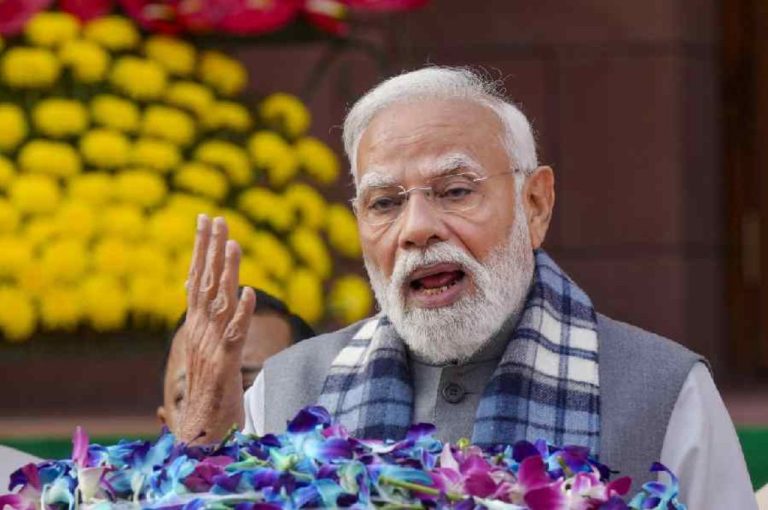
The Maha Jungle Raj Bengal rally in Nadia has become a defining moment in Bengal’s political narrative. On December 21, 2025, Prime Minister Narendra Modi launched a scathing attack on the Trinamool Congress (TMC), accusing Chief Minister Mamata Banerjee’s government of corruption, nepotism, and lawlessness. He described Bengal as suffering under a “Maha Jungle Raj,” worse than Bihar during the 1990s under Lalu Prasad and Rabri Devi.


2. Modi’s Speech Highlights

  • Modi said Bengal was “crying out for change” and demanded that voters reject TMC.
  • He alleged corruption in welfare schemes, claiming funds were siphoned off by party leaders.
  • He accused TMC of blocking central projects meant for Bengal’s development.
  • He invoked slogans like “Banchte chai, BJP tai” (We want to survive, so we want BJP).
  • He compared Bengal unfavourably to Bihar’s “Jungle Raj,” calling Bengal’s situation even worse.

3. Maha Jungle Raj Bengal Rally: Political Context

  • The rally came days after BJP’s victory in Bihar, which Modi framed as proof of voters rejecting misgovernance.
  • Bengal is heading towards the 2026 Assembly elections, making this rhetoric part of BJP’s campaign strategy.
  • Modi’s remarks are designed to mobilize rural voters frustrated with corruption and unemployment.

4. TMC’s Response

  • TMC leaders dismissed Modi’s remarks as political propaganda.
  • They accused BJP of ignoring governance failures in its own states.
  • TMC spokespersons argued Bengal was performing better in welfare delivery compared to BJP‑ruled states.
  • Mamata Banerjee’s party framed Modi’s speech as an attempt to malign Bengal’s pride and culture.

5. Governance Challenges in Bengal

The “Maha Jungle Raj” debate reflects:

  • Allegations of cut‑money practices in welfare schemes.
  • Concerns about women’s safety and law enforcement.
  • Accusations of blocking central schemes like PM Awas Yojana.
  • Polarization over infiltration and citizenship issues.

6. Historical Context of “Jungle Raj”

  • The term “Jungle Raj” was popularized during Bihar’s RJD rule (1990–2005).
  • It symbolized alleged lawlessness, corruption, and collapse of governance.
  • Modi’s use of “Maha Jungle Raj” in Bengal is a rhetorical escalation, meant to resonate with voters familiar with Bihar’s history.

7. Global Comparisons

Political leaders worldwide use evocative labels to frame governance failures:

  • USA: “Rust Belt” to describe economic decline.
  • UK: “Broken Britain” invoked during governance crises.
  • South Africa: “State capture” used to describe corruption under Jacob Zuma.

Modi’s “Maha Jungle Raj” mirrors this global trend of using sharp rhetoric to mobilize voters.


8. Governance Lessons

The Bengal rally teaches:

  • Political rhetoric must be matched with policy solutions.
  • Citizens need transparency in governance.
  • Electoral reforms must prevent disenfranchisement.
  • Dialogue between state and centre is essential for development.

9. Future Outlook – Bengal’s Political Battleground

India must move towards:

  • Inclusive development policies that address rural and urban needs.
  • Strengthening law enforcement to counter allegations of lawlessness.
  • Transparent electoral processes to build trust.
  • Balanced political communication that avoids deepening polarization.

10. Conclusion

The Maha Jungle Raj Bengal rally is more than a campaign speech. It reflects the high‑stakes battle for Bengal’s political future. Modi’s remarks signal BJP’s aggressive strategy, while TMC’s counterattacks highlight Bengal’s pride in its governance model. As the 2026 Assembly elections approach, the phrase “Maha Jungle Raj” will likely dominate political discourse, shaping narratives of corruption, lawlessness, and development.


🏛️ Governance & Politics

  • Election Commission of India (ECI): https://eci.gov.in
    Official portal for electoral rolls, election schedules, and political party regulations.
  • Government of West Bengal: https://wb.gov.in
    State government’s official website with updates on administration, schemes, and governance.
  • Ministry of Home Affairs (MHA): https://mha.gov.in
    Central government body overseeing law and order, internal security, and state–centre relations.

⚖️ Judiciary & Legal Oversight

  • Supreme Court of India: https://main.sci.gov.in
    For constitutional matters, governance disputes, and cases involving state governments.
  • Calcutta High Court: https://calcuttahighcourt.gov.in
    Bengal’s highest judicial authority, often hearing cases related to governance and elections.

🌐 Policy & Development

  • Ministry of Law and Justice: https://lawmin.gov.in
    For legislative frameworks and governance reforms.
  • NITI Aayog: https://niti.gov.in
    India’s policy think‑tank, publishing reports on governance, development, and state performance.


Also read: Home | Channel 6 Network – Latest News, Breaking Updates: Politics, Business, Tech & More
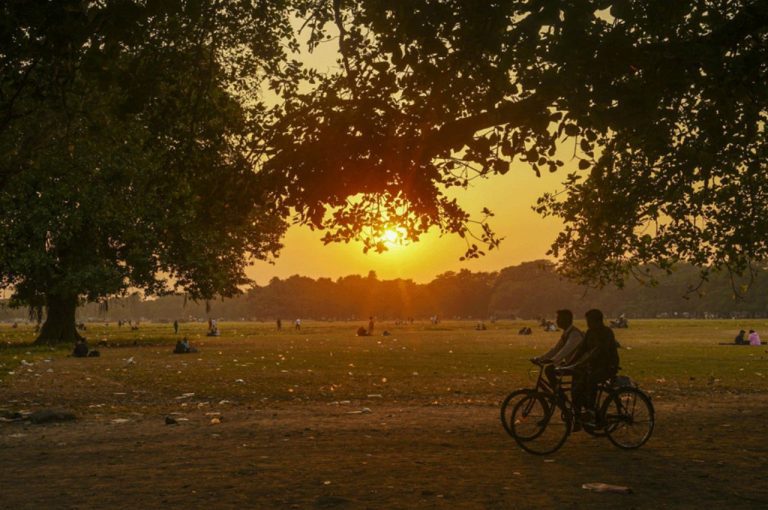
West Bengal Weather Dry Spell Forecast – Detailed Analysis of IMD Bulletin, Temperature Trends, and Governance Lessons for Climate Preparedness

The West Bengal weather dry spell forecast has drawn attention across the state as the India Meteorological Department (IMD) announced that dry conditions will prevail for at least five days. Minimum temperatures are expected to remain steady, with a slight dip of around two degrees Celsius thereafter. This forecast comes at a crucial time when Bengal is preparing for the festive season, and residents are keenly watching the skies for signs of winter’s arrival.


2. IMD’s Forecast

  • Dry weather will dominate across Bengal for five days.
  • Minimum temperatures will remain steady during this period.
  • A gradual fall of around 2°C is expected in the subsequent two days.
  • Shallow fog may occur in one or two places across districts.
  • Kolkata recorded a minimum temperature of 16.2°C on Saturday.
  • Darjeeling logged 5.8°C, Kalimpong 11°C, Alipurduar 10°C, Purulia 11°C, Bardhaman 11.6°C, Sriniketan 11.9°C, and Bankura 12.4°C.

3. West Bengal Weather Dry Spell Forecast: Regional Variations

  • Hills: Darjeeling and Kalimpong are experiencing crisp winter mornings.
  • Plains: Alipurduar and Purulia recorded some of the lowest minimums.
  • Urban centres: Kolkata remains relatively warmer, though residents feel the chill in early mornings.
  • Western districts: Bankura and Bardhaman show moderate winter conditions.

4. Impact on Daily Life

  • Festive season: The dry spell coincides with Christmas and New Year celebrations, ensuring clear skies for events.
  • Agriculture: Farmers benefit from stable weather but await winter chill for certain crops.
  • Transport: Fog in some districts may disrupt morning flights and train schedules.
  • Health: Cold mornings increase cases of seasonal flu and respiratory issues.

5. Government External Links for Assistance


6. Historical Context of Bengal Winters

  • Bengal winters are typically short and mild compared to northern India.
  • 2010–2015: Winters saw sharper dips, with Kolkata recording lows of 9–10°C.
  • 2016–2020: Winters became milder, reflecting climate change impacts.
  • 2021–2025: IMD data shows steady warming trends, with fewer cold waves.

7. Governance Challenges

The forecast highlights:

  • Urban heat islands keeping Kolkata warmer than rural districts.
  • Fog management in transport hubs.
  • Public health preparedness for seasonal illnesses.
  • Climate change adaptation in agriculture and urban planning.

8. Global Comparisons

Similar winter patterns are seen worldwide:

  • London: Mild winters with fog disrupting transport.
  • Tokyo: Short, crisp winters with occasional cold waves.
  • Sydney: Seasonal shifts marked by dry spells rather than extreme cold.

Bengal’s winter reflects a global trend of milder winters due to climate change.


9. Governance Lessons

The Bengal dry spell teaches:

  • Accurate forecasting builds public trust in IMD.
  • Awareness campaigns help citizens prepare for fog and cold.
  • Integration of climate data into agriculture planning.
  • Urban planning reforms to mitigate heat island effects.

10. Future Outlook – Climate Preparedness in Bengal

India must move towards:

  • Smart weather monitoring systems in districts.
  • Digital alerts for fog and temperature dips.
  • Climate‑resilient crops for farmers.
  • Green urban planning to balance rising temperatures.

11. Conclusion

The West Bengal weather dry spell forecast is more than a routine IMD bulletin. It reflects broader climate trends, governance challenges, and the need for preparedness. While residents enjoy clear skies during the festive season, the slight dip in temperatures ahead will remind Bengal of its fleeting winter. By integrating forecasting, governance, and citizen awareness, Bengal can adapt to changing climate realities while safeguarding livelihoods and celebrations.

Also read: Home | Channel 6 Network – Latest News, Breaking Updates: Politics, Business, Tech & More
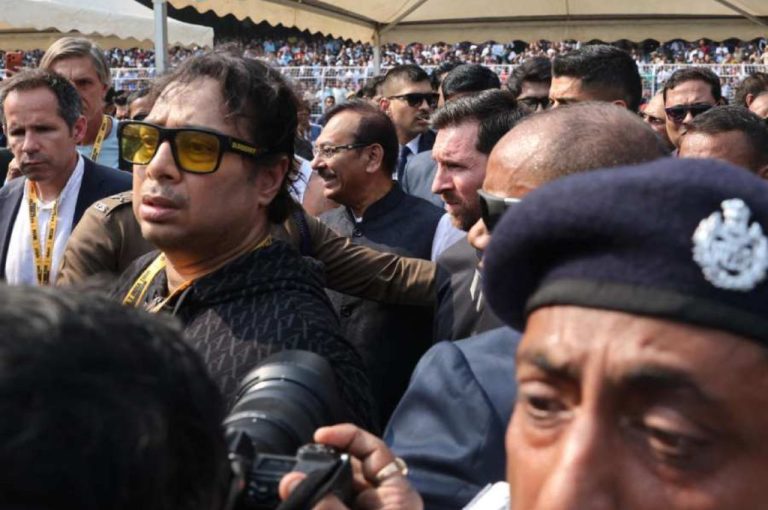
Messi Kolkata Event Chaos – Detailed Analysis of Crowd Control Collapse, Satadru Dutta’s SIT Testimony, and Governance Lessons for Sports Management in India

The Messi Kolkata event chaos has become one of the most talked‑about sports controversies in India. On December 13, 2025, Argentine football legend Lionel Messi appeared at Salt Lake Stadium in Kolkata as part of his India tour. What was meant to be a grand celebration of football turned into a fiasco, with collapsed crowd control, unauthorized access, and repeated breaches of security. Messi, visibly uncomfortable with being hugged and touched, left the venue early, cutting short his scheduled stay.


2. Satadru Dutta’s Testimony to SIT

  • Satadru Dutta, the arrested chief organizer, told the Special Investigation Team (SIT) that Messi was “unhappy with being touched or hugged.”
  • Foreign security officials had warned in advance that Messi disliked physical contact.
  • Despite repeated public announcements, fans and officials crowded around Messi, embracing him and touching his back.
  • Dutta claimed that once a “very influential person” arrived at the stadium, the flow‑chart of the program collapsed, and ground passes were tripled from 150 to nearly 450.
  • He admitted Messi was paid ₹89 crore for the tour, with ₹11 crore in taxes, making the total expenditure ₹100 crore.

3. Financial Details and Sponsorship

  • 30% of the funds came from sponsors.
  • Another 30% was generated through ticket sales.
  • SIT found over ₹20 crore in Dutta’s frozen bank accounts, allegedly from ticket sales and sponsorships.
  • Thousands of fans had purchased high‑priced tickets, but chaos on the ground left them angry and disappointed.

4. Messi Kolkata Event Chaos: Political Fallout

  • West Bengal Sports Minister Aroop Biswas was seen holding Messi around the waist for photographs.
  • He was accused of misusing influence to allow relatives and acquaintances access to Messi.
  • Amid criticism, Biswas resigned pending investigation.
  • The SIT is probing whether political interference contributed to the collapse of crowd control.

5. Governance Challenges

The incident reflects:

  • Weak crowd management at high‑profile events.
  • Political interference in sports administration.
  • Financial opacity in organizing mega events.
  • Failure to respect athlete privacy and security protocols.

6. Global Comparisons

Similar controversies have occurred worldwide:

  • Diego Maradona in Kolkata (2017): Overcrowding disrupted his charity event.
  • Cristiano Ronaldo in Saudi Arabia (2023): Security breaches during public appearances.
  • Michael Jordan in China (2004): Fans stormed the stage, forcing early exit.

Messi’s Kolkata fiasco mirrors these global challenges in balancing fan enthusiasm with professional event management.


7. Historical Context of Football in Bengal

  • Bengal has a rich football culture, with clubs like Mohun Bagan and East Bengal.
  • Salt Lake Stadium has hosted legends like Pele, Maradona, and Messi.
  • However, repeated incidents of poor crowd control have tarnished Bengal’s reputation in sports management.

8. Governance Lessons

The Messi chaos teaches:

  • Respect for athlete boundaries is non‑negotiable.
  • Strict enforcement of access passes is essential.
  • Transparency in finances builds public trust.
  • Professional event management firms should handle global icons, not politically connected individuals.

9. Government External Links for Assistance


10. Future Outlook – Sports Management in India

India must move towards:

  • Professionalized sports event management.
  • Digital ticketing and crowd monitoring systems.
  • Zero‑tolerance policies for unauthorized access.
  • Athlete‑centric protocols ensuring comfort and dignity.

11. Conclusion

The Messi Kolkata event chaos is more than a sports mishap. It reflects systemic weaknesses in governance, crowd control, and financial transparency. Messi’s discomfort and early exit should serve as a wake‑up call for India’s sports administrators. If India hopes to host global icons and major tournaments, it must prioritize professionalism, respect, and accountability.

Also read: Home | Channel 6 Network – Latest News, Breaking Updates: Politics, Business, Tech & More
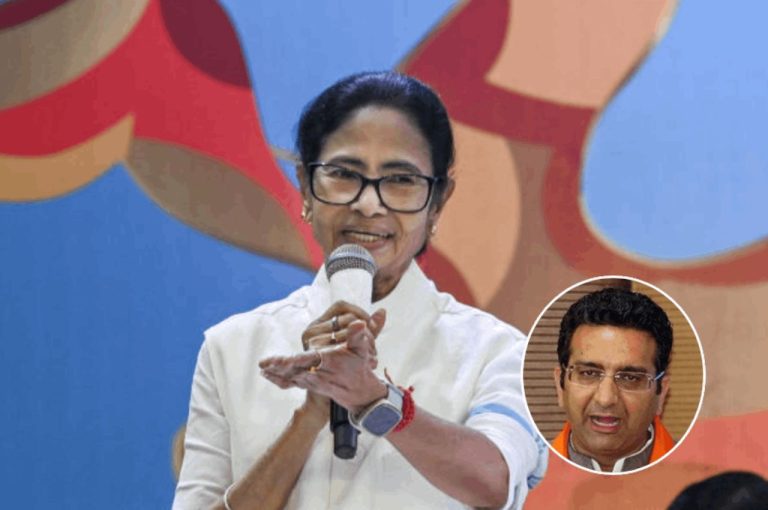
Bengal Communal Politics Allegations – Detailed Analysis of BJP’s Attack on Mamata Banerjee, Riot Fears, and Governance Lessons for Democracy

The Bengal communal politics allegations have reignited fierce debate in the state’s political arena. On December 20, 2025, BJP national spokesperson Gaurav Bhatia accused Chief Minister Mamata Banerjee of indulging in divisive politics and attempting to incite Hindu‑Muslim riots. Addressing a press conference in New Delhi, Bhatia claimed Banerjee’s silence over controversial remarks by TMC MLA Madan Mitra reflected her strategy of appeasement and communal polarization.


2. The Trigger – Madan Mitra’s Remarks

  • TMC MLA Madan Mitra allegedly said “Prabhu Ram is Muslim, not Hindu.”
  • BJP claimed this hurt the sentiments of crores of Hindus.
  • Bhatia questioned why Banerjee had not taken disciplinary action against Mitra.
  • He asked whether any FIR had been lodged or expulsion ordered.
  • BJP alleged the remarks were made under Banerjee’s instructions to appease a particular community.

3. BJP’s Allegations

  • Bhatia accused Banerjee of encouraging divisive politics.
  • He alleged she wanted to incite Hindu‑Muslim riots ahead of the 2026 Assembly elections.
  • He claimed Banerjee considered Hindus “second‑grade citizens.”
  • He cited past incidents, including Banerjee’s angry response to chants of “Jai Shri Ram” in 2019 and her description of the Maha Kumbh as “Mrityu Kumbh.”
  • BJP framed these as evidence of long‑standing appeasement politics.

4. Political Context

  • Bengal is heading into Assembly elections in 2026.
  • BJP sees communal polarization as a key issue to challenge TMC’s dominance.
  • TMC accuses BJP of exaggerating incidents to stoke fear.
  • The debate reflects Bengal’s complex religious and cultural landscape, where identity politics often shapes electoral outcomes.

5. Government External Links for Assistance


6. Historical Context of Communal Politics in Bengal

  • Bengal has a long history of communal tensions, dating back to Partition in 1947.
  • The 1980s and 1990s saw sporadic riots in districts like Howrah and Murshidabad.
  • In recent decades, political parties have often accused each other of appeasement or polarization.
  • Mamata Banerjee’s government has faced repeated allegations of minority appeasement, while BJP has been accused of majoritarian politics.

7. Bengal Communal Politics Allegations: Governance Challenges

The controversy reflects:

  • Balancing religious sentiments with secular governance.
  • Preventing inflammatory remarks from political leaders.
  • Ensuring law and order during election season.
  • Maintaining public trust in institutions amid polarization.

8. Global Comparisons

Similar debates occur worldwide:

  • USA: Accusations of racial polarization in campaigns.
  • UK: Tensions over immigration and cultural identity.
  • Sri Lanka: Political use of ethnic divisions between Sinhalese and Tamils.

Bengal’s case mirrors these global struggles where identity politics becomes a tool for electoral mobilization.


9. Governance Lessons

The Bengal communal politics debate teaches:

  • Political accountability is essential when leaders make divisive remarks.
  • Independent institutions like the Election Commission must act swiftly.
  • Dialogue between communities can reduce mistrust.
  • Media responsibility is crucial in reporting sensitive issues.

10. Future Outlook – Democracy and Polarization

India must move towards:

  • Stronger hate‑speech laws to prevent incitement.
  • Community‑based peace committees during elections.
  • Educational campaigns promoting secular values.
  • Balanced political communication that avoids deepening divides.

11. Conclusion

The Bengal communal politics allegations are more than a war of words between BJP and TMC. They reflect the fragility of communal harmony in a state with a diverse population. As elections approach, both parties are likely to intensify rhetoric, but governance must prioritize peace, law and order, and inclusivity. In a democracy, unity must prevail over division, and political gains must never come at the cost of social harmony.

Also read: Home | Channel 6 Network – Latest News, Breaking Updates: Politics, Business, Tech & More
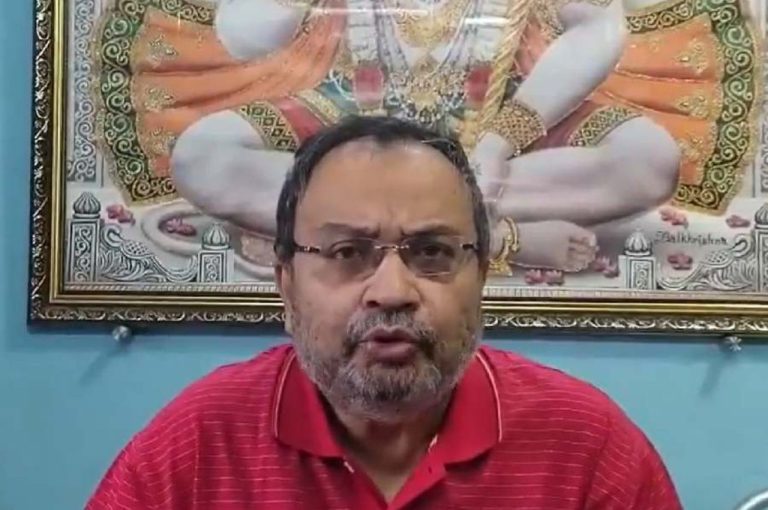
Matua Fears Ignored: TMC Targets PM Modi’s Taherpur Speech

Matua Fears Ignored: The Trinamool Congress (TMC) has sharply criticized Prime Minister Narendra Modi’s speech at the Taherpur rally in West Bengal, accusing him of showing a “lack of concern” for the anxieties of the Matua community. The controversy stems from the Special Intensive Revision (SIR) of electoral rolls, which has triggered widespread fear among the Matuas about identity, citizenship, and voting rights.

🔹 Who Are the Matuas?

  • The Matua community is a Dalit Hindu refugee group that migrated from Bangladesh over decades due to religious persecution.
  • They have become a key political constituency in Bengal, with both the BJP and TMC vying for their support.
  • Their concerns are deeply tied to citizenship laws, refugee rights, and electoral inclusion, making them a decisive factor in upcoming elections.

🔹 Electoral Roll Controversy

  • The SIR exercise, the first statewide revision since 2002, has led to 58,20,898 names being excluded from draft rolls.
  • West Bengal’s electorate shrank from 7.66 crore to 7.08 crore.
  • Around 1.36 crore entries were flagged for discrepancies, and nearly 30 lakh voters were marked as unmapped.
  • This means 1.66 crore voters may face hearings, and community leaders claim a large portion of these belong to the Matuas.
  • For the Matuas, this raises existential fears about being disenfranchised or even questioned about their citizenship.

🔹 TMC’s Criticism of Modi

  • Kunal Ghosh, TMC state general secretary, accused Modi of ignoring these anxieties in his rally speech.
  • He said Modi’s address “lacked vision and responsibility” and failed to reassure the Matuas.
  • Ghosh also alleged Modi avoided discussing harassment of Bengali-speaking people in BJP-ruled states, citing the case of Sunali Khatun, a migrant who was deported to Bangladesh but returned after judicial intervention.
  • TMC further criticized the Centre for withholding funds for welfare schemes in Bengal, including the 100-day rural employment program, housing projects, and drinking water initiatives.

🔹 Public Anger and Rally Fallout

  • TMC spokesperson Arup Chakraborty claimed that public anger was visible even before Modi’s speech, with posters reading “Narendra Modi go back”.
  • Tragically, three BJP workers died and three others were injured while traveling to the rally, after being hit by a train in dense fog. TMC blamed this on poor crowd management.

🔹 Modi’s Counterattack

  • Modi, addressing the rally remotely from Kolkata, accused the TMC government of running a “maha jungle raj” (lawless state).
  • He alleged corruption, nepotism, and appeasement had blocked development in Bengal.
  • He urged voters to give the BJP a chance in the 2026 assembly polls, promising a “double-engine government” (BJP at both state and Centre) to accelerate progress.

🔹 CPI(M)’s Perspective

  • CPI(M) leader Sujan Chakraborty added that the Matua community is unhappy with both BJP and TMC.
  • He argued that both parties have used the Matuas as a vote bank, while failing to deliver on the crucial issue of citizenship.

✨ Matua Fears Ignored: Broader Implications

  • The Matua vote could be a deciding factor in the 2026 Bengal assembly elections.
  • The citizenship debate (linked to NRC and CAA) continues to haunt refugee communities, making electoral roll revisions highly sensitive.
  • The Centre vs. State conflict over welfare funds adds another layer of tension, with TMC portraying itself as the protector of Bengal’s poor against alleged BJP neglect.
  • The deaths of BJP workers en route to the rally highlight the risks of large-scale mobilization and the political stakes involved.

📌 Key Takeaways

  1. TMC’s attack: Modi ignored Matua fears, avoided refugee harassment issues, and blocked welfare funds.
  2. Electoral anxiety: Over 1.6 crore voters face hearings; many are Matuas.
  3. Modi’s defense: He accused TMC of corruption and urged voters to back BJP in 2026.
  4. CPI(M)’s critique: Both BJP and TMC are accused of exploiting the Matuas without solving their citizenship concerns.
  5. Political stakes: The Matua community remains a crucial swing vote in Bengal politics.

Government External Links for Assistance

  • Government of West Bengal: https://wb.gov.in
  • Election Commission of India: https://eci.gov.in
  • Ministry of Tribal Affairs: https://tribal.nic.in
  • Ministry of Home Affairs: https://mha.gov.in

Also read: Home | Channel 6 Network – Latest News, Breaking Updates: Politics, Business, Tech & More
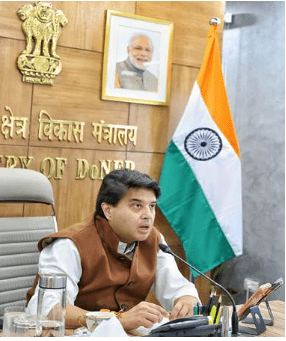
Tripura CM Chairs 3rd High-Level Task Force Meeting to Boost Infrastructure, Logistics and Connectivity in Northeast

The 3rd meeting of the High-Level Task Force (HLTF) on Infrastructure, Logistics Cost and Connectivity in the North Eastern Region (NER) was chaired by Manik Saha, Chief Minister of Tripura, on December 22, 2025. The meeting marked a key step toward positioning the Northeast as India’s next engine of growth and a strategic gateway to Southeast Asia, with active participation from Jyotiraditya Scindia, Union Minister, Ministry of Development of North Eastern Region (MDoNER), along with Chief Ministers of Northeastern states and senior officials from Central Ministries.


High-Level Participation and Strategic Review

The meeting was attended by Lalduhoma, Chief Minister of Mizoram, and senior representatives from Central Ministries and North Eastern States. The HLTF reviewed regional logistics and connectivity challenges, assessed short-, medium- and long-term infrastructure priorities, and deliberated on institutional mechanisms and inter-ministerial coordination for effective implementation across the NER.


Tripura CM Presents Comprehensive Roadmap

Chief Minister Manik Saha presented a phase-wise, comprehensive roadmap aimed at strengthening:

  • Logistics efficiency and reduced logistics costs

  • Multimodal connectivity

  • Cross-border trade corridors

  • Digital and power enablers

  • Institutional and financial mechanisms

Emphasising the need to view the Northeast as a unified economic region, he called for close coordination among key Central Ministries, including Roads & Highways, Railways, Civil Aviation, Ports, Shipping & Waterways, Power, IT & Telecom, and Petroleum & Natural Gas. He also highlighted the importance of proactive resolution of forest and environmental clearance challenges to fast-track infrastructure projects.


Mizoram’s Role under Act East Policy

Chief Minister Lalduhoma underscored Mizoram’s potential to act as a regional gateway to neighbouring countries under the Act East Policy. He advocated for accelerated progress on strategic connectivity projects such as the Kaladan Multi-Modal Transit Transport Project, and highlighted the role of border trade, logistics development, and institutional support in achieving the Task Force’s objectives.


Union Minister Highlights Need for Multi-Ministry Coordination

Union Minister Jyotiraditya Scindia appreciated the roadmap proposed by the Tripura Chief Minister, noting it as a comprehensive, multi-sectoral strategy for enhancing logistics and connectivity in the NER. He emphasised that effective execution would require close collaboration between Central Ministries and State Governments. Given the framework’s cross-cutting nature, he suggested seeking inputs from Line Ministries such as MoRTH, Ministry of Power, Ministry of Railways, and NITI Aayog before finalising the HLTF report.


Background: HLTFs for Focused Regional Development

Earlier in 2025, MDoNER constituted eight High-Level Task Forces, each chaired by a Chief Minister from the Northeast, with the Union Minister (MDoNER) and three other NE Chief Ministers as members. This initiative followed a consensus reached at the 72nd Plenary Session of the North Eastern Council (NEC) held on December 21, 2024, in Agartala, aimed at accelerating region-specific development through focused, outcome-oriented frameworks.


Conclusion
The 3rd HLTF meeting reaffirmed the Government’s commitment to transforming the Northeast into a logistics-efficient, well-connected growth hub integral to India’s Act East ambitions. With a unified regional approach, robust inter-ministerial coordination, and targeted investments, the NER is poised to emerge as a critical driver of India’s economic growth and a strategic bridge to Southeast Asia.


For more real-time updates, visit Channel 6 Network.

Source: PIB

Modern Technologies Are Driving Employment Generation: Union MoS Shri Jitin Prasada- 2025

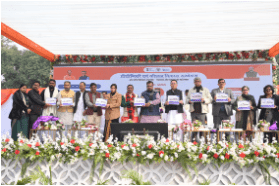
Union Minister of State for Electronics and Information Technology and Commerce & Industry, Jitin Prasada, has highlighted the critical role of modern and emerging technologies in creating new employment opportunities across India. Addressing the Technology and Skill Development Conference at the Atal Bihari Vajpayee National Institute of Electronics and Information Technology (NIELIT) Extension Centre in Pilibhit, Uttar Pradesh, the Minister underscored the importance of skill development, innovation, and entrepreneurship in shaping India’s future workforce.


Emerging Technologies as Employment Catalysts

Speaking as the Chief Guest at the conference held on December 21, 2025, Shri Jitin Prasada stated that technologies such as drone technology, Internet of Things (IoT), and cybersecurity are opening up vast employment avenues for the youth. He emphasized that these technologies are not only transforming industries but are also generating new job roles that demand advanced technical skills and practical exposure.

The conference aimed to promote technology-based skill development, foster innovation, and encourage entrepreneurship, particularly among students and young professionals from rural and semi-urban regions.


NIELIT’s Role in Digital India and Atmanirbhar Bharat

Referring to the national visions of Digital India and Atmanirbhar Bharat, the Minister noted that institutions like NIELIT serve as a vital bridge between policy formulation and on-ground implementation. He emphasized NIELIT’s contribution in taking advanced technical education and skill development to remote and underserved areas, thereby ensuring inclusive growth.

Shri Prasada further stressed that industry-aligned skill development is essential for India to emerge as a global leader in technology and innovation.


Broad Participation from Government, Industry and Academia

The conference witnessed participation from Members of the Legislative Assembly, senior district and administrative officials, representatives from academia and industry, startup entrepreneurs, and NIELIT officials. A large number of students, trainees, and local youth actively engaged in the event, reflecting growing interest in emerging technology-driven careers.


Startup-Led Drone Technology Exhibition

A major highlight of the conference was a technology exhibition by drone technology startups. These startups showcased innovative drone-based applications in:

  • Agriculture and crop monitoring

  • Pesticide spraying

  • Land surveying and mapping

  • Disaster management

  • Surveillance and logistics

The exhibition offered participants hands-on insights into real-world technological applications and demonstrated the expanding role of startups in driving innovation and employment.


Inauguration of State-of-the-Art IoT Laboratory

On the occasion, Shri Jitin Prasada inaugurated a state-of-the-art IoT Laboratory at NIELIT Pilibhit. The lab is designed to provide hands-on, industry-oriented training to students from Pilibhit and neighbouring regions.

The facility will enable learners to gain practical experience in:

  • Smart sensors

  • Embedded systems

  • Automation

  • Real-time IoT applications

This initiative is expected to significantly enhance employability, promote innovation-led learning, and support local startups by providing access to modern infrastructure and expert technical guidance.


Cyber Security Workshop and Technical Sessions

The conference also featured a special workshop on Cyber Security, where experts discussed cybercrime awareness, prevention of digital fraud, data privacy, safe internet practices, and emerging cyber threats. The sessions benefited students, educators, officials, and citizens by promoting secure and responsible digital behaviour.

In addition, technical sessions, interactive discussions, and awareness programmes were organised to disseminate information on emerging technologies, government skill initiatives, and career opportunities in the electronics and IT sectors.


Commitment to Empowering Rural and Semi-Urban Youth

The Technology and Skill Development Conference concluded with a reaffirmation of NIELIT’s commitment to strengthening the digital and technological ecosystem in rural and semi-urban India and empowering youth through skill development, innovation, and entrepreneurship.


Conclusion
Shri Jitin Prasada’s address at the Technology and Skill Development Conference highlighted how emerging technologies are reshaping India’s employment landscape. With institutions like NIELIT driving last-mile skill delivery and industry-oriented training, India is steadily moving toward a future-ready, inclusive, and technology-driven workforce aligned with the goals of Digital India and Atmanirbhar Bharat.


For more real-time updates, visit Channel 6 Network.

Source: PIB

DRDO and Rashtriya Raksha University Sign MoU to Strengthen Research, Education and Technology Support for Defence and Internal Security: 2025

In a significant step toward deepening India’s defence and internal security capabilities, the Defence Research and Development Organisation (DRDO) and Rashtriya Raksha University (RRU) have signed a Memorandum of Understanding (MoU) to foster collaboration in research, education, training, and technology support. The partnership aligns with the national vision of Aatmanirbhar Bharat and the whole-of-nation approach during Amrit Kaal.


MoU Signing in the Presence of the Raksha Mantri

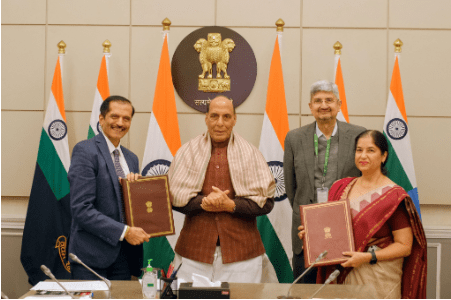
The MoU was inked on December 22, 2025, at South Block, New Delhi, by Dr Chandrika Kaushik, Distinguished Scientist and Director General (Production Coordination & Services Interaction), DRDO, and Prof. (Dr) Bimal N. Patel, Vice Chancellor of RRU. The signing took place in the presence of Rajnath Singh, Raksha Mantri.

Also present on the occasion was Dr Samir V. Kamat, Secretary, Department of Defence R&D and Chairman, DRDO, underscoring the strategic importance of the collaboration.


Advancing Aatmanirbhar Bharat in Security Technologies

The MoU aims to strengthen India’s self-reliance in defence and internal security technologies by integrating cutting-edge research with academic and operational expertise. It reflects a shared commitment to enhancing national security preparedness and reinforcing India’s strategic autonomy through indigenous innovation and knowledge-driven solutions.


Complementary Strengths of DRDO and RRU

RRU, an institution of national importance under the Ministry of Home Affairs and the University Grants Commission (UGC)-designated Nodal Centre for Defence Studies, brings strong academic, training, and policy expertise in internal security.

DRDO, India’s premier defence R&D organisation, contributes indigenous technologies and system-level expertise tailored to the operational needs of the Armed Forces and security agencies.


Key Areas of Collaboration

Under the MoU, the two institutions will collaborate on:

  • Joint research projects in defence and internal security

  • PhD and fellowship programmes to build advanced human capital

  • Specialised training and capacity-building programmes for security forces

  • Studies on emerging operational challenges and technology gap analysis

  • Forecasting future capability requirements

  • Life-cycle management of DRDO-developed systems inducted into Central Armed Police Forces and other agencies under the Ministry of Home Affairs

This comprehensive framework is designed to translate research into deployable capabilities while ensuring sustained operational effectiveness.


Conclusion
The DRDO–RRU MoU marks a strategic convergence of research, academia, and operations to bolster India’s defence and internal security ecosystem. By fostering collaborative innovation, advanced training, and technology support, the partnership is poised to play a vital role in strengthening national security and advancing India’s journey toward Aatmanirbhar Bharat during Amrit Kaal.


For more real-time updates, visit Channel 6 Network.

Source: PIB

IOL Proudly Signs Strategic Collaboration with Safran to Manufacture High-Precision Defence Systems in India: 2025

In a significant boost to India’s indigenous defence manufacturing capabilities, India Optel Limited (IOL) has signed a collaboration agreement with Safran Electronics & Defense for the transfer of production of two high-precision, combat-proven systems. The agreement marks a major milestone under the Make-in-India initiative envisioned by Narendra Modi and reinforces India’s push towards self-reliance in advanced defence technologies.


Key Defence Systems to Be Manufactured in India

Under the agreement, two critical systems will be locally manufactured in India:

  • SIGMA 30N Digital Ring Laser Gyro Inertial Navigation System
    A combat-proven system used in artillery guns, air defence platforms, missiles, and radar systems, providing high-accuracy navigation and targeting capability.

  • CM3-MR Direct Firing Sight
    An advanced sighting system designed for artillery guns and anti-drone applications, enhancing precision, situational awareness, and operational effectiveness on the battlefield.

These systems are currently deployed by armed forces worldwide and are regarded as benchmarks in inertial navigation and fire-control technologies.


Agreement Signing and Leadership Presence

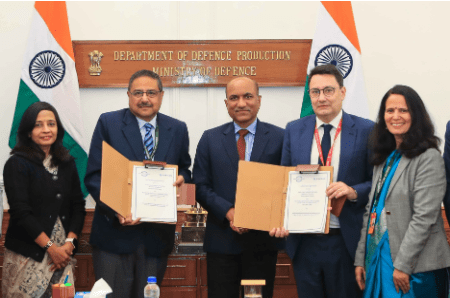
The collaboration agreement was formally signed on December 22, 2025, in New Delhi by Shri Tushar Tripathi, Chairman & Managing Director of IOL, and Mr. Alexandre Ziegler, Head of the Defence Global Business Unit at Safran Electronics & Defense.

The signing took place in the presence of Sanjeev Kumar, Secretary (Defence Production), underscoring the Government of India’s strong support for strategic defence partnerships and technology transfer.


Strengthening Make-in-India and Aatmanirbhar Bharat

Building upon the Memorandum of Understanding signed in January 2024, the agreement confirms the long-term commitment of both partners to manufacture, support, and sustain these advanced systems in India.

Under the collaboration:

  • IOL will handle manufacturing, final assembly, testing, quality control, and full life-cycle support

  • Systems will be produced to meet the operational requirements of the Indian Army

  • Indigenous manufacturing will significantly reduce import dependence and lifecycle costs

By combining IOL’s industrial infrastructure and workforce in India with Safran’s global expertise in inertial navigation and fire-control systems, the partnership directly strengthens India’s defence manufacturing ecosystem.


Enhancing Operational Readiness of Indian Land Forces

The locally manufactured systems are expected to enhance the readiness, accuracy, and survivability of India’s land-based weapon platforms. Indigenous production will also ensure timely availability, faster upgrades, and assured long-term support, which are critical for modern battlefield requirements.


Conclusion
The IOL–Safran collaboration represents a decisive step toward Aatmanirbhar Bharat in defence, bringing cutting-edge, combat-proven technologies under Indian manufacturing control. By enabling the local production of advanced inertial navigation and firing systems, the partnership not only strengthens the Indian Army’s combat capability but also reinforces India’s position as a growing global hub for high-end defence manufacturing.


For more real-time updates, visit Channel 6 Network.

Source: PIB

Operation Angel’s Honor: Massive ICE Crackdown Apprehends 1,000

Washington D.C. – Immigration and Customs Enforcement officials have successfully apprehended more than 1,000 illegal aliens under the Laken Riley Act during a two-week initiative called Operation Angel’s Honor. Homeland Security Secretary Kristi Noem announced the operation’s results on social media, noting that the enforcement action was designed to honor Laken Riley, a nursing student brutally murdered by an illegal immigrant in 2024.

Secretary Noem Announces Operation Results

Homeland Security Secretary Kristi Noem praised the outcomes of Operation Angel’s Honor in her public statement. “In honor of Laken Riley, ICE launched Operation Angel’s Honor—in the last 2 weeks alone arresting more than 1,000 criminal illegal aliens under the authority of the Laken Riley Act,” Noem wrote. She emphasized that President Trump has empowered enforcement agencies to arrest and remove millions of violent criminal illegal aliens allegedly unleashed on the United States by the previous administration.

Memorial Mission and Justice Commitment

Noem acknowledged the profound loss while emphasizing the operation’s purpose. “Now these criminals will face justice and be removed from our country. We can never bring Laken back, but we can do everything in our power to bring these heinous criminals to justice,” she stated regarding Operation Angel’s Honor. The Secretary expressed pride in the brave men and women of ICE who worked to remove criminals from America’s streets during this intensive enforcement period.

Operation Timeline and Memorial Purpose

Operation Angel’s Honor concluded on Monday, December 22, after two weeks of targeted enforcement activities. The operation was conducted in memory of Riley, a nursing student who was murdered by an illegal immigrant last year. The initiative represents one of the largest coordinated enforcement actions undertaken by ICE in recent months, specifically targeting individuals accused of serious criminal offenses beyond their immigration violations.

Heinous Crimes Among Those Apprehended

Some of the illegal immigrants nabbed by ICE under Operation Angel’s Honor were accused of heinous crimes that shocked investigators. The charges against arrested individuals included rape, assault with intent to cause injury to an officer, indecent liberties with a child, and numerous other serious offenses. The severity of these criminal allegations underscored the operation’s focus on removing individuals who posed significant public safety threats to American communities.

ICE Director’s Statement on Mission Success

ICE Director Todd Lyons characterized Operation Angel’s Honor as both a massive success and a solemn reminder. “This operation, while a massive success, also serves as a solemn reminder of the profound impact that immigrant violence and crime can have on victims and their loved ones,” Lyons stated. He emphasized that ICE’s mission is to ensure that no more Americans will fall victim to illegal alien crime, reflecting the agency’s commitment to public safety.

The Laken Riley Act Background

The Laken Riley Act was passed by the Senate hours after Donald Trump was sworn in as the 47th president of the United States. The act was named after Riley, a 22-year-old Georgia nursing student who was brutally murdered by 26-year-old Jose Antonio Ibarra, an illegal immigrant. She was found dead near a lake on the University of Georgia’s campus in Athens in February 2024. The legislation provided enhanced authority for immigration enforcement operations like Operation Angel’s Honor.

High-Profile Criminal Arrests

Operation Angel’s Honor resulted in the apprehension of what the Department of Homeland Security described as the “worst of the worst criminal aliens.” Among those arrested was 37-year-old Alejandro Ojose-Asto, whose criminal record includes rape, criminal obstruction of breathing, assault with intent to cause physical injury, and additional charges. His arrest exemplified the operation’s focus on individuals with extensive violent criminal histories.

Also Read: H-1B Visa Screening: Critical Changes Impact Thousands of Applicants

Child Exploitation and Sexual Assault Cases

Several individuals arrested during Operation Angel’s Honor faced serious charges related to crimes against children. Carlos Gomez-Diaz, a 27-year-old illegal immigrant from Mexico, was previously convicted of sexual exploitation of a child. Jamie Escobar-Mirales, a 37-year-old from Mexico, was arrested for two counts of rape of a child. These cases highlighted the operation’s emphasis on protecting vulnerable populations from predatory criminals.

Weapons and Domestic Violence Offenders

Operation Angel’s Honor targeted individuals involved in armed violence and domestic abuse. Jose Jimenez-Munoz, an illegal alien from Mexico, was arrested for being armed with a deadly weapon with intent to kill, assault on a female, assault with a deadly weapon with a minor present, domestic violence, and additional charges. Brandon Barrientos-Garcia, a 28-year-old from Guatemala, faced charges including assault by strangulation, burglary, breaking and entering to terrorize or injure, and domestic assault.

Repeat Offenders and Prior Removal Orders

Some arrests under Operation Angel’s Honor involved individuals who had previously been ordered removed from the United States. Fernando Manzanares-Cruz, 40 years old and ordered removed in 2016, was arrested for assault and battery on a pregnant victim, witness intimidation, destruction of property, and assault and battery of family or household members. Braulio Rosas-Ayala, with a history of rape and sodomy, had been ordered removed in 1999 but apparently remained in the country.

Additional Serious Criminal Cases

Javier Diaz-Cabrera was arrested with a criminal record including illegal sexual contact with a victim under age 13, sexual assault with a victim under 18 by a guardian, and conviction for evading responsibility for physical injury. These cases demonstrated that Operation Angel’s Honor focused on removing individuals whose criminal conduct posed ongoing threats to community safety.

Operation Angel’s Honor represents a significant enforcement milestone in immigration policy, combining memorial purpose with public safety objectives through targeted apprehension of criminal offenders.