Wednesday, May 6, 2026
Home Blog Page 256

9 December 2025: Nifty 50 Falls 120 Points Amid Market Pressure; Small-Cap Stocks Dominate Gainers’ Chart with Strong Double-Digit Rally

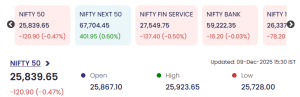
The Indian stock market witnessed continued volatility on 9 December 2025, with the Nifty 50 declining 120.90 points (–0.47%) to close at 25,839.65 by 15:30 IST. While frontline indices faced selling pressure, the broader market saw selective strength, especially in micro-cap and mid-cap counters, helping balance overall market sentiment.

Also Read: 9 December 2025 (Mid-cap): Nifty 50 Edges Lower by 64 Points; Broader Markets Mixed as Small-Cap Stocks Lead Intraday Gains


Market Snapshot: Index Performance

  • Nifty 50: 25,839.65 (–120.90 / –0.47%)

  • Open: 25,867.10

  • High: 25,923.65

  • Low: 25,728.00

9 December 2025Performance of other key indices:

  • Nifty Next 50: +0.60%

  • Nifty Financial Services: –0.50%

  • Nifty Bank: –0.03%

The divergence highlights ongoing sector rotation and selective buying in broader market spaces.


Top Gainers: Broad-Based Momentum in Small-Cap Stocks

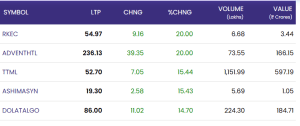
A strong rally was observed among select small-cap stocks, many of which recorded double-digit percentage gains backed by heavy trading volumes:

Screenshot 2025 12 09 221556

SYMBOL LTP CHNG %CHNG VOLUME (Lakhs) VALUE (₹ Cr)
RKEC 54.97 +9.16 +20.00% 6.68 3.44
ADVENTHTL 236.13 +39.35 +20.00% 73.55 166.15
TTML 52.70 +7.05 +15.44% 1,151.99 597.19
ASHIMASYN 19.30 +2.58 +15.43% 5.69 1.05
DOLATALGO 86.00 +11.02 +14.70% 224.30 184.71

Key Observations

  • RKEC and Advent International Hotels (ADVENTHTL) both hit 20% upper circuits, demonstrating strong investor appetite.

  • TTML stood out with extraordinary volume activity of 1,151 lakh shares, translating into nearly ₹600 crore in value—indicating widespread retail and speculative participation.

  • Dolat Algo and Ashima Syntex recorded steady gains driven by sustained market momentum in low-to-mid-tier counters.


Top Losers: Profit Booking Weighs on Select Mid-Cap Stocks

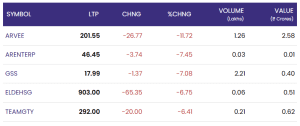
Several mid-cap and specialty counters faced sharp declines due to profit booking and sectoral weakness:

Screenshot 2025 12 09 221605

SYMBOL LTP CHNG %CHNG VOLUME (Lakhs) VALUE (₹ Cr)
ARVEE 201.55 –26.77 –11.72% 1.26 2.58
ARENTERP 46.45 –3.74 –7.45% 0.03 0.01
GSS 17.99 –1.37 –7.08% 2.21 0.40
ELDEHSG 903.00 –65.35 –6.75% 0.06 0.51
TEAMGTY 292.00 –20.00 –6.41% 0.21 0.62

Key Observations

  • Arvee Industries continued its downward trajectory, dropping nearly 12%, extending prior session losses.

  • Team Global Logistics (TEAMGTY) and Eldeco Housing (ELDEHSG) saw notable declines as investors booked profits following recent rallies.

  • Weak trading volumes in ARENTERP and GSS reflected cautious sentiment among small-cap investors.


Conclusion: 9 December 2025

The market on 9 December 2025 showcased a mixed risk environment. While benchmark indices drifted lower due to sectoral weakness and global uncertainty, small-cap stocks displayed strong resilience, with several hitting upper circuits and witnessing heightened trading activity.

Analysts expect volatility to persist in the short term, with opportunities emerging in selective small- and mid-cap counters that continue to attract institutional and retail interest.


9 December 2025 (Mid-cap): Nifty 50 Edges Lower by 64 Points; Broader Markets Mixed as Small-Cap Stocks Lead Intraday Gains

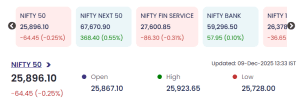
The Indian stock market witnessed a mildly negative trend during mid-session on 9 December 2025, with the Nifty 50 trading at 25,896.10, down 64.45 points (–0.25%) as of 13:33 IST. While benchmark indices remained subdued, the broader market showed resilience, with the Nifty Next 50 gaining 0.55%, indicating selective strength in mid- and small-cap segments.

Also Read: 9 December 2025 (Opening): Nifty 50 Slips 136 Points Amid Weak Market Sentiment; Select Small-Cap Stocks Clock Strong Gains


Market Snapshot: Index Performance

  • Nifty 50: 25,896.10 (–64.45 / –0.25%)

  • Open: 25,867.10

  • High: 25,923.65

  • Low: 25,728.00

9 December 2025Other major indices displayed a mixed trend:
  • Nifty Next 50: +0.55%

  • Nifty Financial Services: –0.31%

  • Nifty Bank: +0.10%

The divergence in indices suggests sectoral rotation and selective institutional positioning.


Top Gainers: Small- and Mid-Cap Stocks Surge with Strong Buying Momentum

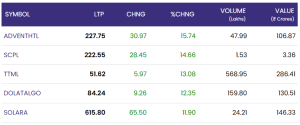
A cluster of small-cap counters outperformed the market, registering robust double-digit intraday gains:

Screenshot 2025 12 09 133321

SYMBOL LTP CHNG %CHNG VOLUME (Lakhs) VALUE (₹ Cr)
ADVENTHTL 227.75 +30.97 +15.74% 47.99 106.87
SCPL 222.55 +28.45 +14.66% 1.53 3.36
TTML 51.62 +5.97 +13.08% 568.95 286.41
DOLATALGO 84.24 +9.26 +12.35% 159.80 130.51
SOLARA 615.80 +65.50 +11.90% 24.21 146.33

Key Observations

  • ADVENTHTL topped the gainers with a 15.74% surge, driven by strong volume and renewed investor interest.

  • TTML witnessed massive activity, with trading volumes surpassing 568 lakh shares, indicating heightened retail and speculative interest.

  • Solara Active Pharma gained nearly 12%, supported by strong delivery-based buying.

  • Dolat Algo and SCPL recorded double-digit jumps, reflecting positive sentiment in selective small-cap pockets.


Top Losers: Correction Continues in Mid-Cap and Specialty Counters

A handful of stocks saw notable declines due to profit booking and sector-specific weakness:

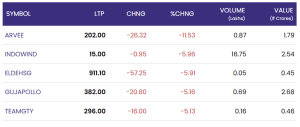
Screenshot 2025 12 09 133327

SYMBOL LTP CHNG %CHNG VOLUME (Lakhs) VALUE (₹ Cr)
ARVEE 202.00 –26.32 –11.53% 0.87 1.79
INDOWIND 15.00 –0.95 –5.96% 16.75 2.54
ELDEHSG 911.10 –57.25 –5.91% 0.05 0.45
GUJAPOLLO 382.00 –20.80 –5.16% 0.69 2.68
TEAMGTY 296.00 –16.00 –5.13% 0.16 0.46

Key Observations

  • Arvee Industries saw the steepest decline, falling over 11%, extending its bearish trend from recent sessions.

  • Indowind Energy and Gujarat Apollo registered moderate declines amid low-to-medium volume trading.

  • Team Global Logistics slipped over 5%, reflecting cooling sentiment in logistics and supply chain-related counters.

  • Eldeco Housing (ELDEHSG) continued to correct after recent gains, signaling profit booking.


Conclusion: 9 December 2025

The market on 9 December 2025 reflected a mixed intraday sentiment, with benchmark indices edging lower while select small- and mid-cap names staged strong rallies.
The divergence across indices indicates ongoing sector rotation and cautious institutional positioning ahead of key macroeconomic announcements.

Analysts expect short-term volatility to persist but highlight opportunities emerging in niche sectors showing consistent accumulation.


9 December 2025 (Opening): Nifty 50 Slips 136 Points Amid Weak Market Sentiment; Select Small-Cap Stocks Clock Strong Gains

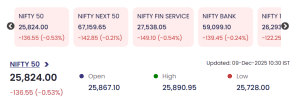
The Indian equity market opened on a subdued note on 9 December 2025, with the Nifty 50 declining 136.55 points (–0.53%) to 25,824.00 as of 10:30 AM IST.
While headline indices traded lower amid cautious global cues, selective buying was visible in micro- and small-cap counters, which helped offset broader weakness.

Also Read: 8 December 2025: Nifty 50 Declines 225 Points Amid Broad Market Weakness; Select Mid- and Small-Cap Stocks Outperform


Market Snapshot: Index Performance

  • Nifty 50: 25,824.00 (–136.55 / –0.53%)

  • Open: 25,867.10

  • High: 25,890.95

  • Low: 25,728.00

9 December 2025Other key indices also reflected mild negativity:
  • Nifty Next 50: –0.21%

  • Nifty Financial Services: –0.54%

  • Nifty Bank: –0.24%

The sentiment remained cautious as investors awaited global economic signals and domestic inflation data.


Top Gainers: Small-Cap Stocks Outperform with Double-Digit Rallies

A handful of small-cap and low-float stocks attracted strong investor interest, posting impressive intraday gains:

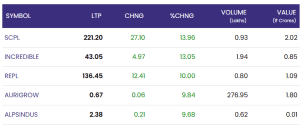
Screenshot 2025 12 09 103030

SYMBOL LTP CHNG %CHNG VOLUME (Lakhs) VALUE (₹ Cr)
SCPL 221.20 +27.10 +13.96% 0.93 2.02
INCREDIBLE 43.05 +4.97 +13.05% 1.94 0.85
REPL 136.45 +12.41 +10.00% 0.80 1.09
AURIGROW 0.67 +0.06 +9.84% 276.95 1.80
ALPSINDUS 2.38 +0.21 +9.68% 0.62 0.01

Key Observations

  • SCPL led the gainers with a near 14% jump driven by strong investor accumulation.

  • Aurigrow witnessed extremely high trading volumes (276 lakh shares), indicating heavy retail participation despite its low price band.

  • REPL and Incredible maintained momentum with double-digit percentage gains, reflecting bullish sentiment in niche small-cap counters.


Top Losers: Mid-Cap and Micro-Cap Stocks Witness Sharp Declines

Weakness continued in select mid-cap stocks, with several names experiencing notable declines:

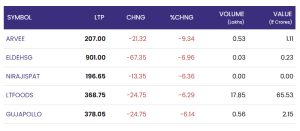
Screenshot 2025 12 09 103039

SYMBOL LPT CHNG %CHNG VOLUME (Lakhs) VALUE (₹ Cr)
ARVEE 207.00 –21.32 –9.34% 0.53 1.11
ELDEHSG 901.00 –67.35 –6.96% 0.03 0.23
NIRAJISPAT 196.65 –13.35 –6.36% 0.00 0.00
LTFOODS 368.75 –24.75 –6.29% 17.85 65.53
GUJAPOLLO 378.05 –24.75 –6.14% 0.56 2.15

Key Observations

  • Arvee Industries saw the steepest decline of the session, falling over 9%, extending its recent weakness.

  • LT Foods dropped sharply despite high trading value (₹65.53 crore), suggesting institutional selling.

  • Ultra-low volume declines in Eldehsg and Niraj Ispat reflect cautious sentiment in selective mid-cap segments.


Conclusion: 9 December 2025

The market on 9 December 2025 reflected a continuation of the cautious tone seen throughout the week. While benchmark indices traded lower due to global uncertainties and domestic macroeconomic expectations, selective strength in small-cap stocks demonstrated persistent bottom-up interest among investors.

Analysts expect short-term volatility to persist, with key triggers likely to emerge from global policy cues, domestic inflation readings, and institutional flow data.


Bengal Polls Announcement – Mamata Banerjee Claims EC Timing Strategy

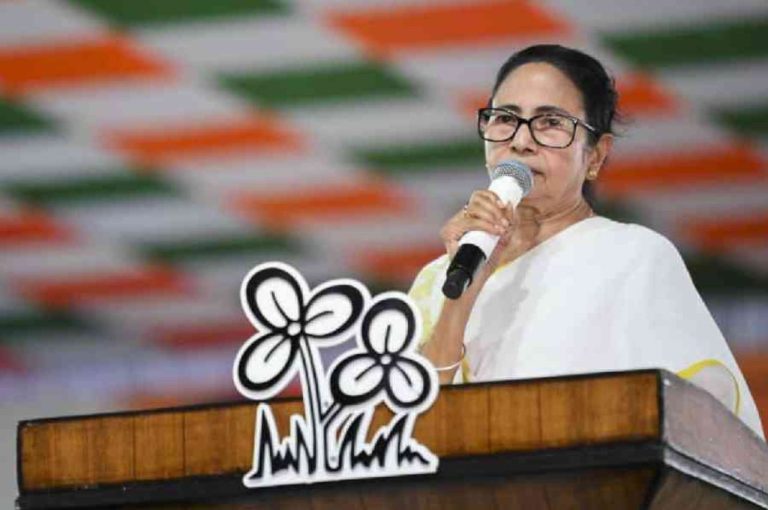
Bengal Polls Announcement : The political landscape of West Bengal has once again been thrust into the spotlight following Chief Minister Mamata Banerjee’s allegations against the Election Commission of India (ECI). At a public meeting, she claimed that the state assembly elections would be announced immediately after the publication of the final voters’ list under the Special Intensive Revision (SIR) exercise. According to her, this timing was deliberately chosen to prevent any legal challenges to the electoral rolls.

This article provides a revised and expanded 3000‑word narrative of the incident, its political implications, historical context, and broader lessons for electoral democracy in India. It also integrates official government external links for readers who wish to explore more about election processes, constitutional provisions, and governance frameworks.


Bengal Polls Announcement: Mamata Banerjee’s Allegations

  • Mamata Banerjee accused the Election Commission of orchestrating a “political conspiracy” by timing the elections immediately after the final voter list publication.
  • She argued that this would block citizens and political parties from approaching the courts to challenge deletions or irregularities.
  • According to her, the SIR exercise was designed to delete names, divide votes, and intimidate citizens, particularly minorities, migrant workers, and married women.

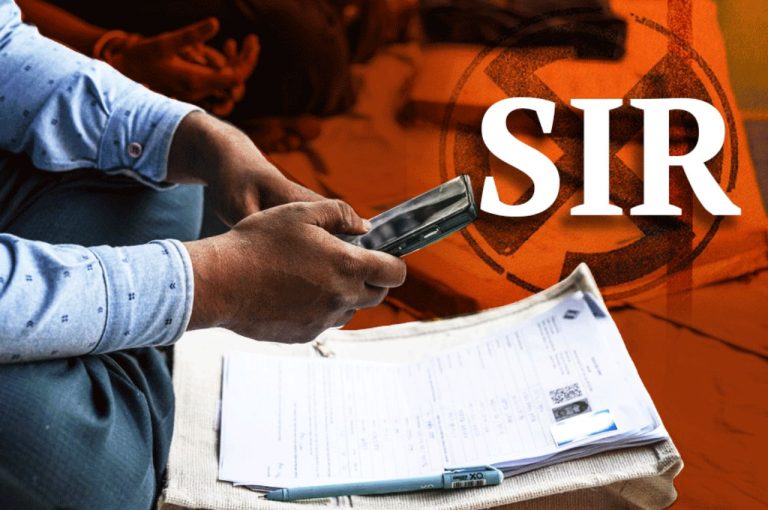
The Special Intensive Revision (SIR)

The SIR is a voter list revision exercise conducted by the Election Commission.

  • Objective: To update electoral rolls by verifying voter details.
  • Allegations: Mamata claimed that the SIR was being misused to delete valid voters.
  • Impact: Reports of names being struck off, including married women and migrant workers.
  • Political Context: The exercise was rolled out just months before the 2026 elections.

For more details, readers can visit:


Political Rhetoric and Symbolism

Banerjee’s speech was filled with symbolic language:

  • She compared the exercise to “notebandi”, calling it “votebandi”.
  • She warned that if the BJP came to power, Bengal’s identity, honour, and language would be destroyed.
  • She accused the BJP of attempting to turn Bengal into a detention camp, drawing parallels with states like Assam and Uttar Pradesh.

Community Concerns

  • Minority communities expressed fear of disenfranchisement.
  • Migrant workers worried about being excluded due to documentation issues.
  • Married women faced challenges in proving identity after name changes.
  • The Rajbanshi community was cited as being targeted with notices from Assam.

Government and Institutional Links

For deeper exploration of policies and governance frameworks:


Judicial and Constitutional Dimensions

  • Mamata argued that the timing of elections was meant to block judicial review.
  • Constitutional experts have debated whether the SIR has a legal basis.
  • Opposition leaders, including Congress MP Manish Tewari, claimed there is “no provision for SIR in the Constitution or law.”
  • The issue raises questions about the balance between electoral management and judicial oversight.

Broader Political Implications

  • The allegations highlight the polarized political climate in Bengal.
  • The TMC has positioned itself as the defender of minority rights and Bengali identity.
  • The BJP, on the other hand, has emphasized national integration and electoral transparency.
  • The controversy may influence voter sentiment ahead of the 2026 elections.

Preventive Measures and Recommendations

To strengthen electoral integrity:

  • Transparency: Ensure voter list revisions are publicly accessible.
  • Judicial Safeguards: Allow time for legal challenges before elections.
  • Community Outreach: Educate citizens about documentation requirements.
  • Technology Use: Employ digital verification to reduce manual errors.

External Government Links for Deeper Exploration


Conclusion

The Bengal polls announcement controversy reflects the deep tensions between electoral management and political trust. Mamata Banerjee’s claims underscore the challenges of ensuring free, fair, and transparent elections in a diverse democracy. By addressing concerns about voter list integrity, judicial oversight, and community inclusion, India can strengthen its democratic foundations.

Also read: Home | Channel 6 Network – Latest News, Breaking Updates: Politics, Business, Tech & More

West Bengal BLO Protest – Stroke Patient Brought to CEO Office Over Workload

West Bengal BLO Protest: The Booth Level Officers (BLOs) of West Bengal play a crucial role in the democratic process, ensuring the accuracy of voter lists and the smooth functioning of electoral exercises. However, the recent protest staged outside the Chief Electoral Officer’s (CEO) office in Kolkata has brought to light the immense physical and mental strain these officers endure. The dramatic act of bringing a 57‑year‑old stroke patient in an ambulance to the protest site underscored the seriousness of their grievances.

This article provides a comprehensive 3000‑word revised narrative of the incident, its background, the demands of BLOs, the government’s response, and the broader implications for electoral management in India. It also integrates official government external links for readers who wish to explore more about election processes, labor rights, and public health policies.


West Bengal BLO Protest: The Incident

On December 9, 2025, BLOs under the banner of the BLO Adhikar Raksha Committee staged a sit‑in protest outside the CEO’s office.

  • They brought Debashish Das, a BLO from South 24 Parganas, who had suffered a severe brain stroke allegedly due to excessive workload during the Special Intensive Revision (SIR) of electoral rolls.
  • Das had been discharged from SSKM Hospital earlier that day and was taken directly to the protest site in an ambulance.
  • His family demanded ₹15 lakh compensation under the insurance scheme meant for BLOs.

BLOs’ Grievances

The BLOs raised several concerns:

  • Excessive workload during the SIR exercise, which began on December 4.
  • Lack of medical safeguards and compensation for those falling ill on duty.
  • Reports of multiple BLOs collapsing during training sessions.
  • Allegations of deaths linked to work pressure.
  • Absence of support from the Election Commission compared to state government ex‑gratia schemes.

Government Response

West Bengal Chief Minister Mamata Banerjee announced financial assistance:

  • ₹2 lakh each to families of 39 people who allegedly died due to “SIR‑induced panic.”
  • ₹1 lakh each to 13 individuals, including BLOs, who fell ill during the exercise.
  • Compensation already extended to families of four BLOs who died due to work stress.

Broader Context – Electoral Workload

The BLOs’ protest highlights systemic issues in India’s electoral management:

  • BLOs are the backbone of voter list revision, tasked with door‑to‑door verification.
  • The SIR exercise involves tight deadlines, extensive paperwork, and digital updates.
  • Many BLOs are schoolteachers or government staff assigned additional duties, leading to dual workload.

For more details on electoral processes, readers can visit:


Public Health Concerns

The case of Debashish Das illustrates the intersection of work stress and health risks.

  • Stroke and other stress‑related illnesses are rising among government employees.
  • Lack of medical monitoring during intensive electoral exercises exacerbates risks.
  • Families of affected officers demand better insurance and healthcare support.

Relevant government resources:


Social and Political Implications

  • The protest has sparked debates on labor rights in government service.
  • Opposition parties have criticized the Election Commission for neglecting BLO welfare.
  • The incident has raised questions about constitutional provisions for SIR and whether workload guidelines need reform.

External Government Links for Deeper Exploration


Preventive Measures Suggested

To avoid similar incidents in the future:

  • Workload rationalization: Spread tasks across longer timelines.
  • Medical safeguards: Mandatory health check‑ups for BLOs before and during SIR.
  • Insurance coverage: Automatic compensation for illness or death linked to duty.
  • Digital reforms: Use technology to reduce manual verification burden.
  • Training support: Psychological counseling and stress management workshops.

Conclusion

The West Bengal BLO protest is not just about one officer’s tragic health crisis—it is a wake‑up call for the entire electoral system. BLOs, who ensure the integrity of voter lists, deserve better working conditions, medical safeguards, and institutional recognition. By addressing their grievances, the Election Commission and government can strengthen both democracy and human dignity.

Also read: Home | Channel 6 Network – Latest News, Breaking Updates: Politics, Business, Tech & More

Balurghat Murder Case – Youth Sentenced to Life Imprisonment

Balurghat Murder Case: The sentencing of Saddam Hossain Molla, a 35‑year‑old man from South Dinajpur district, West Bengal, has become a significant legal development in the state. Convicted of murdering his lover, Sulekha Khatun Bibi, the case underscores the importance of judicial accountability, forensic investigation, and community justice. The verdict, delivered by the Additional District and Sessions Judge (First Court) Santosh Kumar Pathak, imposed life imprisonment with rigorous punishment and additional penalties for destruction of evidence.

This article provides a revised and expanded 3000‑word narrative of the case, its background, judicial process, social implications, and broader lessons for law enforcement and society. It also integrates official government external links for readers who wish to explore more about criminal justice, forensic science, and women’s safety policies in India.


Balurghat Murder Case: Case Background

  • Victim: Sulekha Khatun Bibi, a homemaker from Nimpur village.
  • Missing Date: June 18, 2024.
  • Discovery: On June 22, 2024, a farmer in Kalinagar found human bones in his field.
  • Forensic Confirmation: DNA testing confirmed the remains belonged to Sulekha.
  • Relationship: Police revealed she was in an extramarital relationship with Saddam.
  • Crime Scene: She went to meet him in a nearby field, where a heated argument led to her murder.

Police Investigation

  • Evidence: Saddam attempted to destroy evidence by using a tractor to dismember the body.
  • Forensic Role: DNA samples from the victim, her son, and the tractor were crucial in solving the case.
  • Arrest: Saddam was arrested and charged with murder and destruction of evidence.
  • Prosecution: Public prosecutor Ritabrata Chakraborty presented the case, leading to conviction.

For more details on forensic and policing frameworks, readers can visit:


Judicial Verdict

  • Sentence: Life imprisonment with rigorous punishment and a fine of ₹10,000.
  • Additional Punishment: Seven years of rigorous imprisonment for destruction of evidence, with a fine of ₹5,000.
  • Default Clause: Failure to pay fines results in additional imprisonment.
  • Timeline: The trial concluded in just 13 months, reflecting judicial efficiency.

Social Impact

  • Family Reaction: Relatives expressed satisfaction but noted they would have preferred a death sentence.
  • Community Response: The case sparked discussions on women’s safety and extramarital relationships.
  • Broader Implications: Highlights the vulnerability of women in rural areas and the need for stronger protective measures.

Government and Institutional Links

For deeper exploration of policies and justice frameworks:


Broader Lessons

  • Forensic Science: DNA testing played a decisive role in securing conviction.
  • Judicial Efficiency: The relatively quick trial demonstrates progress in reducing case backlogs.
  • Community Awareness: The case highlights the importance of reporting missing persons promptly.
  • Policy Measures: Strengthening women’s safety initiatives and rural policing is essential.

Preventive Measures

Authorities and communities can adopt several strategies:

  • Enhance forensic infrastructure in rural districts.
  • Increase awareness campaigns on women’s rights and safety.
  • Strengthen police‑community partnerships.
  • Provide counseling and mediation services for domestic disputes.

Conclusion

The Balurghat murder case serves as a stark reminder of the consequences of violence and the importance of justice delivery systems. By combining forensic science, judicial efficiency, and community vigilance, India can continue to strengthen its criminal justice framework.

Also read: Home | Channel 6 Network – Latest News, Breaking Updates: Politics, Business, Tech & More

Alipurduar Religious Event Theft Arrests – Snatching Gang of 18 Held

Alipurduar Religious Event Theft Arrests: The recent arrests in Alipurduar, West Bengal, have drawn significant public attention. During the 138th birth anniversary celebrations of Anukul Thakur, a large gathering of devotees became the target of a coordinated theft operation. Police successfully apprehended 18 individuals, including 14 women, who allegedly snatched gold ornaments and cash from unsuspecting devotees. This incident highlights broader issues of public safety, law enforcement efficiency, and community trust in religious and cultural gatherings.


Alipurduar Religious Event Theft Arrests: The Incident

  • The theft occurred at the Parade Ground in Alipurduar during the religious programme.
  • The gang disguised themselves as devotees to blend into the crowd.
  • Victims reported missing ornaments and cash, prompting immediate police complaints.
  • Police raids in the Alipurduar Junction area led to the arrest of all 18 suspects.
  • Authorities recovered 30 grams of gold and ₹1.3 lakh in cash.

Police Action and Judicial Process

  • The arrests were made swiftly after the complaint was filed.
  • The suspects were produced in court and remanded to judicial custody for 14 days.
  • Investigations continue to determine if other members of the gang escaped.
  • Police are working to recover all stolen items and trace the gang’s network.

For official updates on law enforcement, readers can visit the West Bengal Police official website.


Social and Cultural Context

Religious gatherings in India often attract large crowds, making them vulnerable to thefts and crimes.

  • The incident raises concerns about security arrangements during such events.
  • It underscores the need for community vigilance and better coordination between organizers and law enforcement.
  • Religious events are meant to foster unity, but criminal activities can erode trust.

Government and Institutional Links

For deeper exploration of policies and safety measures:


Broader Implications

  • Public Safety: The incident highlights the importance of crowd management and surveillance.
  • Judicial Accountability: Quick remand shows judicial responsiveness.
  • Community Awareness: Devotees must remain cautious in crowded events.
  • Policy Measures: Government may consider stricter guidelines for event security.

Preventive Measures for Future Events

Authorities and communities can adopt several strategies:

  • Deploy more police personnel at large gatherings.
  • Use CCTV surveillance and metal detectors.
  • Encourage community policing and volunteer security.
  • Educate devotees about safeguarding valuables.

Conclusion

The Alipurduar theft arrests serve as a reminder of the challenges in balancing religious freedom, cultural celebration, and public safety. While police action was commendable, the incident calls for systemic improvements in event security. By integrating law enforcement, community vigilance, and government support, future religious gatherings can remain safe and spiritually enriching.

Also read: Home | Channel 6 Network – Latest News, Breaking Updates: Politics, Business, Tech & More

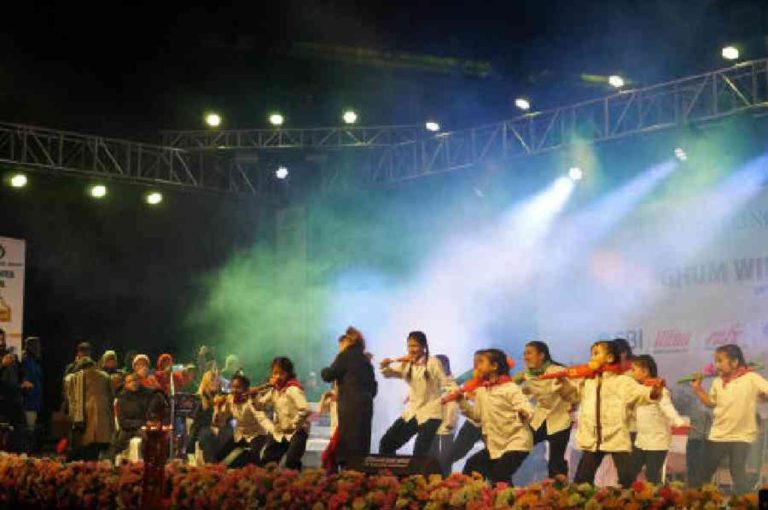
Ghum Winter Festival Darjeeling – Heritage Railway Celebration at Chowrasta Mall

Ghum Winter Festival Darjeeling: The Ghum Winter Festival in Darjeeling has become one of the most anticipated cultural and heritage events in West Bengal. Organized annually by the Darjeeling Himalayan Railway (DHR), this festival blends heritage railway experiences, cultural performances, local crafts, and tourism promotion. The 2025 edition concluded at the iconic Chowrasta Mall, leaving behind a vibrant memory for locals and visitors alike.

This article provides a comprehensive 3000‑word revised narrative of the festival, its historical significance, cultural highlights, railway heritage, and tourism impact. It also integrates official government external links for readers who wish to explore more about Indian Railways, tourism policies, and heritage conservation.


Historical Background of the Darjeeling Himalayan Railway

  • The Darjeeling Himalayan Railway (DHR), a UNESCO World Heritage Site, was established in the late 19th century.
  • Known as the “Toy Train”, it connects the plains of Siliguri to the hills of Darjeeling.
  • The railway is celebrated for its engineering marvels, including loops, zigzags, and narrow‑gauge tracks.
  • The Ghum station, the highest railway station in India, serves as the focal point of the festival.

For more details, readers can visit the Indian Railways official website and the Ministry of Tourism, Government of India.


Ghum Winter Festival Darjeeling: The 2025 Festival Highlights

The nine‑day festival featured:

  • Cultural performances: Folk dances, music, and theatre showcasing Himalayan traditions.
  • Heritage rides: Special centenary runs of steam locomotives, including the legendary 806B “Queen of the Hills”.
  • Museum inauguration: The renovated Ghum Museum was opened to enrich visitor experiences.
  • Locomotive launches: Diesel locomotives No. 606 and 607 were inaugurated with enhanced safety features.
  • Local crafts and food stalls: Promoting Darjeeling’s artisans and culinary heritage.
  • Adventure activities: Trekking, paragliding, and guided heritage walks.

Government Involvement and Railway Initiatives

The presence of Chetan Srivastava, General Manager of Northeast Frontier Railway (NFR), highlighted the government’s commitment to railway heritage. His inspection of the Tindharia–Rongtong section emphasized ongoing restoration and modernization efforts.

Relevant government resources:


Cultural Significance of Chowrasta Mall

  • Chowrasta Mall is the heart of Darjeeling’s social life.
  • Hosting the closing ceremony here symbolizes the blending of heritage and modern tourism.
  • The venue allowed locals and tourists to engage in cultural exchange.

Tourism Impact

The festival boosts tourism by:

  • Attracting domestic and international visitors.
  • Promoting Darjeeling as a heritage tourism hub.
  • Supporting local businesses through crafts and food stalls.
  • Encouraging sustainable tourism practices.

For official tourism policies, see the Incredible India portal.


Heritage Railway Preservation

The centenary celebration of Locomotive 806B underscores the importance of preserving steam engines.

  • Heritage locomotives are maintained as living museums.
  • They provide educational experiences for younger generations.
  • Preservation aligns with UNESCO’s heritage conservation guidelines.

Future of the Festival

The next edition is scheduled from November 28 to December 6, 2026. Organizers plan to expand cultural programming, heritage rides, and international collaborations.


External Government Links (for deeper exploration)


Conclusion

The Ghum Winter Festival 2025 was not just a cultural event but a celebration of heritage, tourism, and community spirit. By combining railway heritage with cultural vibrancy, Darjeeling continues to strengthen its identity as a global heritage destination.

Also read: Home | Channel 6 Network – Latest News, Breaking Updates: Politics, Business, Tech & More

Cash Donations Surge for Kabir’s Proposed Babri Masjid in Beldanga 2025

Cash Donations Surge: The Cash Donations Kabir Babri Masjid Beldanga 2025 story has become a defining moment in Bengal’s socio‑political landscape. On December 6, 2025, suspended Trinamool leader Humayun Kabir announced plans to construct a Babri Masjid in Beldanga, Murshidabad. Within hours, collection boxes overflowed with cash, and online contributions through QR codes surpassed ₹2 crore. The sheer spontaneity of donations stunned observers, raising questions about faith, governance, and social priorities.

2. The Scale of Donations

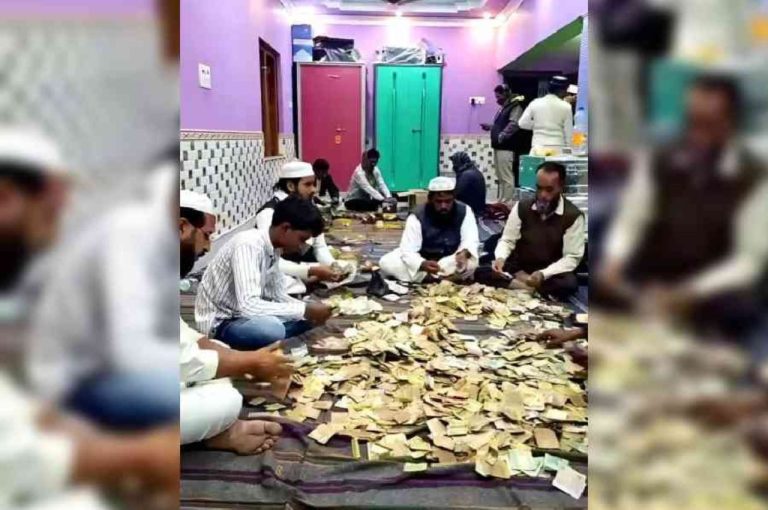
  • Offline collections touched nearly ₹38 lakh in just two days.
  • Online contributions exceeded ₹2.37 crore by December 8.
  • Donation boxes at the venue were filled within hours, forcing volunteers to use sacks.
  • Cash‑counting machines ran continuously under CCTV surveillance, with the process streamed live on social media.

This reflects the unprecedented scale of community mobilization for a religious project.

3. Cash Donations Surge: The Launch Event

On December 6, Kabir cut the ribbon at the ceremonial launch.

  • Crowds jostled to put cash into stainless‑steel boxes.
  • When the designated bank’s deposit limit was exhausted, people flung notes toward the boxes.
  • Volunteers struggled to manage the surge of contributions.

The scenes resembled a festival of giving rather than a routine fundraiser.

4. Governance and Transparency

Kabir emphasized transparency:

  • Thirty madrasa teachers were engaged to count cash.
  • CCTV cameras monitored the process.
  • Social media livestreams ensured public accountability.

This reflects an attempt to balance faith‑driven enthusiasm with governance norms.

5. Community Voices

Residents expressed mixed reactions:

  • Supporters hailed the donations as proof of devotion.
  • Social activists lamented that people donate freely for religious causes but hesitate to fund medical treatment or education.
  • A youth from Nadia said: “The way people are donating money for the proposed Babri mosque can well be termed a mass obsession.”

These voices highlight the contradictions in social priorities.

6. Historical Context: Babri Masjid Symbolism

The Babri Masjid has long been a symbol of religious and political contestation in India.

  • Its demolition in Ayodhya in 1992 reshaped national politics.
  • The Supreme Court’s 2019 verdict paved the way for a Ram temple at the site.
  • Kabir’s initiative in Bengal revives the Babri name in a new context, sparking debates on symbolism and identity.

7. Political Fallout

The controversy has political consequences:

  • Kabir, a suspended TMC leader, gained sudden visibility.
  • Opposition parties debated the legality and implications of the project.
  • Kabir claimed donations even came from outside India, though he dismissed rumors of foreign currency deposits.

The issue has become a flashpoint ahead of the 2026 Assembly elections.

8. Governance Challenges

The incident highlights systemic governance issues:

  • Regulation of religious donations remains weak.
  • Banking limits hinder large‑scale deposits.
  • Transparency concerns persist despite livestreams.
  • Potential communal sensitivities require careful handling.

9. Broader Implications for Democracy

The incident raises fundamental questions:

  • Can democracy thrive if social priorities tilt overwhelmingly toward religious projects?
  • Will governance prioritize secular development over faith‑driven mobilization?
  • How can communities balance devotion with civic responsibility?

10. Recommendations for Reform

Experts suggest:

  • Legal frameworks for managing religious donations.
  • Community awareness campaigns on funding education and healthcare.
  • Transparent auditing of religious trusts.
  • Dialogue platforms to balance faith and development.

11. Comparative Lessons from Other States

Other states have witnessed similar phenomena:

  • Uttar Pradesh saw massive donations for the Ram temple.
  • Kerala mobilized funds for church restoration projects.
  • Bengal’s case reflects a national trend of faith‑driven fundraising overshadowing civic causes.

12. Human Stories: Families in Distress

Social activists noted:

  • Families struggling to raise funds for spinal muscular atrophy treatment.
  • Students lacking resources for higher education.
  • Relief efforts during floods facing donor fatigue.

These stories highlight the human cost of skewed donation priorities.

13. Law Enforcement and Security

Kabir reported receiving a death threat after the launch.

  • His trust arranged armed private security.
  • He sought central forces through Calcutta High Court.
  • The state government provided three policemen for protection.

This reflects the security challenges of high‑profile religious initiatives.

14. Mistaken Identity

Another Humayun Kabir, a TMC MLA from Debra, faced hundreds of calls from donors seeking bank details.

  • He clarified he was not associated with the project.
  • He expressed resentment among Muslims over waqf decisions and OBC reservations.

This humorous yet telling episode underscores the confusion and intensity surrounding the initiative.

15. Scientific and Economic Impact

Researchers emphasized:

  • Religious donations divert funds from secular development.
  • Sudden surges of cash can destabilize local economies.
  • Faith‑driven mobilization reflects psychological impulses of community identity.

This adds a scientific perspective to the crisis.

16. Conclusion: A Test of Governance and Faith

The Cash Donations Kabir Babri Masjid Beldanga 2025 case is more than a fundraising story — it is a test of governance, democracy, and social priorities. Unless systemic reforms are undertaken, communities will remain vulnerable to faith‑driven mobilization, and public trust in institutions will erode.

The controversy underscores the urgency of balancing religious devotion with civic responsibility, transparency, and governance accountability.

🔗 Government External Links

For further reading and official updates, here are relevant government sources:

  • Ministry of Home Affairs (MHA): https://mha.gov.in
  • West Bengal Police (Official Portal): https://wbpolice.gov.in
  • Income Tax Department (Donations and Trusts Regulation): https://incometaxindia.gov.in
  • Press Information Bureau (Government of India): https://pib.gov.in
  • West Bengal Government Official Portal: https://wb.gov.in
  • National Commission for Minorities: https://ncm.nic.in

Vande Mataram Debate: Explosive Clash Between Kharge and Shah in Parliament

0

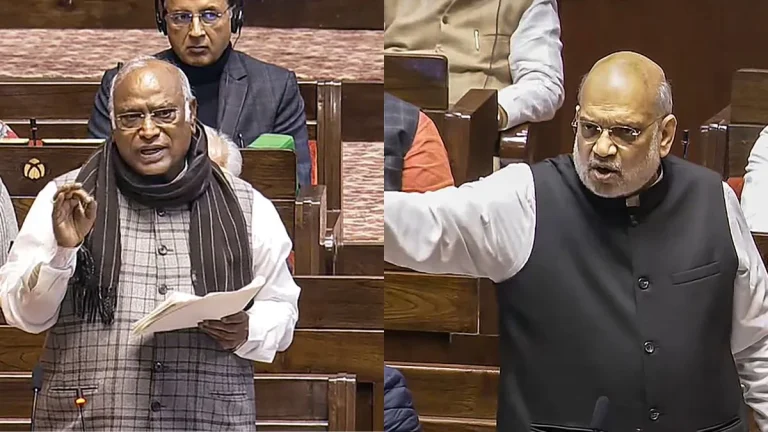
New Delhi – The ongoing Vande Mataram debate in Parliament erupted into a fierce political confrontation on Tuesday as Union Home Minister Amit Shah and Congress President Mallikarjun Kharge sparred over accusations of political opportunism and historical revisionism. The contentious discussion centered on why only two stanzas of the national song were adopted, with opposition leaders charging that the Vande Mataram debate was being used to deflect attention from pressing national issues.

Priyanka Gandhi’s Initial Challenge

The Vande Mataram debate was initially sparked by Congress leader Priyanka Gandhi Vadra’s remarks in the Lok Sabha on Monday, where she characterized the parliamentary discussion as “an insult” to freedom fighters and Constitution makers who had originally decided to adopt only two stanzas of Bankim Chandra Chattopadhyay’s poem. Her intervention set the stage for Tuesday’s heated exchanges in the Rajya Sabha.

Priyanka Gandhi had questioned the necessity and timing of the Vande Mataram debate, suggesting it was politically motivated rather than genuinely historical or cultural in nature. She also challenged the government to discuss Jawaharlal Nehru’s legacy “once and for all” since Prime Minister Modi “repeatedly insults” him.

Amit Shah Denies Bengal Election Connection

Union Home Minister Amit Shah initiated the Vande Mataram debate in the Rajya Sabha by firmly rejecting suggestions that it was timed to benefit the BJP in upcoming West Bengal assembly elections. “Those linking the Vande Mataram discussion to the Bengal polls must reconsider their understanding,” Shah remarked, attempting to establish the discussion’s legitimacy.

Shah attacked Congress leaders for “questioning” the need for the Vande Mataram debate, stating, “Some people believe that because there are elections in Bengal, this discussion is being held. They want to link the glorification of Vande Mataram with the West Bengal elections. This is unfortunate.”

Historical Accusations Against Nehru

During the Vande Mataram debate, Shah directly accused India’s first Prime Minister Jawaharlal Nehru of “dividing” the poem and limiting it to two stanzas in 1937. He characterized this decision as the “beginning of appeasement politics” and claimed it “led to partition of India,” making serious historical allegations that drew immediate rebuttals from Congress leaders.

The Home Minister argued that the Vande Mataram debate was “as relevant when the song was written, during the freedom movement, today, and will be as relevant in 2047 when Viksit Bharat would be achieved,” positioning it as a timeless discussion rather than politically motivated.

Understanding the Stanzas Controversy

The Vande Mataram debate centers on a fundamental historical decision regarding which portions of the song would represent India’s cultural nationalism. Only the first two stanzas were adopted at a 1937 Congress session and later in the Constitution in 1950, while the remaining four stanzas were excluded.

The rationale behind this selective adoption, which forms the core of the Vande Mataram debate, was inclusivity. While the first two stanzas refer to mother and motherland broadly, the latter four directly invoke Hindu goddesses by name with strong religious imagery. Leaders determined that the first two stanzas would be more inclusive for India’s diverse population.

Kharge’s Forceful Rebuttal

Congress President Mallikarjun Kharge entered the Vande Mataram debate after Shah’s speech, characterizing the entire discussion as a diversionary tactic. “The discussion on Vande Mataram is being held to deflect attention from the problems country is facing,” Kharge asserted, framing it as political maneuvering rather than genuine historical inquiry.

Kharge accused Prime Minister Modi and Amit Shah of constantly insulting Jawaharlal Nehru and other Congress leaders, adding with sarcasm, “But that is only natural. Wherever PM goes, Amit Shah follows!”

Collective Decision, Not Nehru Alone

A crucial element of Kharge’s contribution to the Vande Mataram debate was his emphasis that the 1937 decision on stanza selection was collective, not unilateral. He cited correspondence among freedom fighters to demonstrate that leaders including Mahatma Gandhi, Rabindranath Tagore, Subhash Chandra Bose, Madan Mohan Malaviya, and Acharya JB Kripalani were all involved.

“The 1937 resolution on the stanzas’ selection was passed by the Congress Working Committee, not by Nehru alone,” Kharge emphasized during the Vande Mataram debate, challenging the government’s singular focus on Nehru.

Tagore’s Position on the Stanzas

Strengthening his argument in the Vande Mataram debate, Kharge quoted Nobel laureate Rabindranath Tagore, who had stated he found “no difficulty” in dissociating the first two stanzas from the rest of the song. This citation demonstrated that respected cultural figures supported the selective adoption approach.

“You are insulting all these tall leaders. It was their combined decision. Why do you target Nehru ji alone?” Kharge challenged during the Vande Mataram debate, defending the historical consensus.

Historical Context of the Song

The Vande Mataram debate necessarily involves understanding the song’s origins. Written by Bengali author Bankim Chandra Chatterjee as a poem in Sanskritised Bengali in the 1870s literary tradition, “Bande Mataram” consisted of six stanzas. It was later set to music by Jadunath Bhattacharya.

Shah noted during the Vande Mataram debate that although written in Bengal, the song “spread across the nation, and became the chant for India’s freedom struggle,” establishing its pan-Indian significance.

Political Implications for Bengal Elections

Despite Shah’s denials, the timing of the Vande Mataram debate ahead of West Bengal assembly elections has fueled speculation about political motivations. The extensive parliamentary time devoted to this historical question, critics argue, suggests strategic positioning rather than pure historical interest.

RSS and Hindu Mahasabha References

Kharge made pointed remarks during the Vande Mataram debate about organizations considered precursors to the BJP. “Those who did not sing it have also started singing it now. It is the power of Vande Mataram,” he jibed, alleging that the RSS and Hindu Mahasabha were “serving the British” when Congress members were “going to jail chanting Vande Mataram.”