Friday, May 15, 2026
Home Blog Page 320

Steve Harrington and 3 Subtle Moves Showing Joe Keery’s Support for LGBTQ+ Youth

0

Steve Harrington Actor Joe Keery Extends Quiet Support Through His Tour Initiative

Steve Harrington remains the character most associated with Joe Keery, but beyond his on-screen work, he has made a modest yet consistent contribution toward LGBTQ+ youth support. During his “Another Bite” tour under the stage name Djo, he allocated one dollar from every ticket toward The Ally Coalition, an organisation dedicated to assisting young people seeking safe and accepting environments. There was no marketing campaign tied to the gesture, and no external push to highlight the effort. It was simply attached to the tour and executed without additional attention.Stranger Things actor Joe Keery: Season 4 will be a lot scarier - India Today

This step aligns with what Keery has described as a period of personal changes and adjustments. Instead of presenting the year through dramatic statements, he used a portion of his growth to create a tangible benefit for others. For many, this reflects a practical version of allyship direct assistance rather than public declarations. It also reinforces how performers can use their platforms for measured but effective impact.

Steve Harrington Link and the Rising Focus on Responsible Touring Practices

Across the music and entertainment industry, there has been a growing move toward directing tour profits or ticket-based contributions toward community causes. Joe Keery’s decision fits into this pattern, but with a difference. His contribution was not positioned as a promotional tool for the tour. Instead, it functioned as a quiet addition that acknowledged the challenges faced by LGBTQ+ youth, particularly regarding safety and identity.Joe Keery Says 'Stranger Things' Ending "Won't Be Easy" But "It Does Feel Like It's Time"

Industry observers note that smaller donations, when applied consistently over an entire tour, often accumulate into meaningful support. Keery’s approach demonstrates how public figures can integrate charitable action into their routine professional activities without treating it as a commercial amplification. By doing so, he offered practical backing while maintaining focus on the tour itself.

Steve Harrington Actor’s Influence Beyond Screen and Stage

Joe Keery has built a distinctive profile not only because of his acting but also because of his music career. This dual visibility places him in a unique position where his actions reach varied audiences. His quiet financial support for LGBTQ+ youth extends the influence of his public work into a more grounded and useful direction.DJ: Joe Keery, the actor who plays the endearing Steve Harrington on 'Stranger Things,' is now a music star | People | EL PAÍS English

Supporters have pointed out that actions like these contribute to the broader ecosystem that young people rely on. Assistance programs, safe communities, and resource networks often depend on steady funding rather than large one-time contributions. Keery’s step aligns with that need, allowing regular ticket sales to create practical outcomes.

Steve Harrington Name Still Carries Weight in Conversations About Positive Influence

Even years after the initial popularity of Stranger Things, the association with the character continues to shape how viewers interpret Keery’s actions. While the character is fictional, the visibility attached to the role gives him a longer-lasting influence. Using that reach to contribute to a support organisation reflects a grounded approach to public responsibility.

His action serves as an example for other performers who may want to contribute without transforming their efforts into publicity campaigns. The consistent message is that assistance does not require dramatic presentation; steady, structured support can be equally effective. Also Read: Parineeti Chopra: 1 Heartfelt Reveal That Has Captured Everyone’s Attention

Conclusion

The Steve Harrington actor’s decision shows how measured actions can provide real value. Joe Keery’s quiet contribution during his tour stands as a practical form of allyship, supporting young people who rely on safe and stable spaces.
PM Modi G20 Summit: Latest Visit to South Africa Marks Crucial Diplomatic Milestone

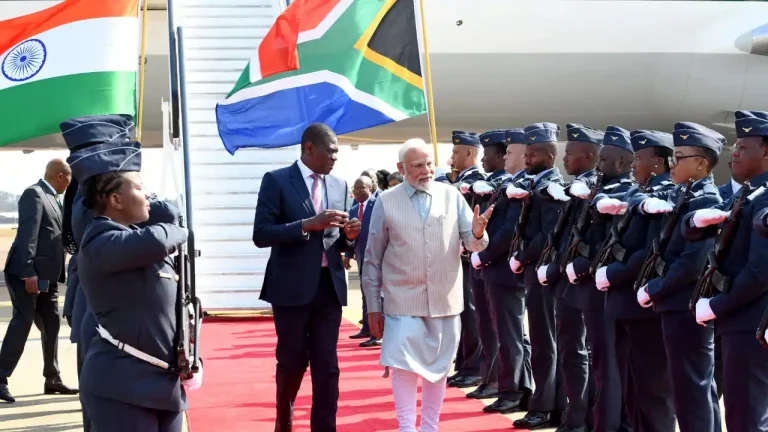
New Delhi – Prime Minister Narendra Modi arrived in Johannesburg, South Africa on Friday to participate in the G20 Leaders’ Summit, marking a significant diplomatic milestone as the African continent hosts the prestigious gathering for the first time. The PM Modi G20 Summit visit received a ceremonial welcome, setting the stage for crucial discussions on global cooperation and development priorities.

Warm Ceremonial Welcome in Johannesburg

Upon arrival at Johannesburg airport, the PM Modi G20 Summit visit began with a traditional welcome ceremony. Khumbudzo Ntshavheni, South Africa’s minister in the presidency, received the Prime Minister at the airport. The ceremonial reception featured a cultural group performing traditional South African dances and songs, providing a vibrant introduction to the PM Modi G20 Summit engagement.

“Landed in Johannesburg for the G20 Summit related engagements. Look forward to productive discussions with world leaders on key global issues,” the Prime Minister wrote in a social media post shortly after his arrival.

Africa’s Historic G20 Hosting Debut

The PM Modi G20 Summit participation holds special significance as this marks the first time the G20 meeting is being held on African soil. This historic moment gained additional importance following the African Union’s admission as a G20 member during India’s presidency in 2023, expanding the forum’s representation and ensuring greater African participation in global economic governance.

The PM Modi G20 Summit agenda reflects India’s commitment to strengthening international cooperation and advancing collective development priorities while building toward a better future for all nations.

Bilateral Meeting with Australian Prime Minister

Shortly after landing in Johannesburg, the PM Modi G20 Summit schedule included a bilateral meeting with Australian Prime Minister Anthony Albanese. The discussion covered issues of mutual and bilateral interest, demonstrating the importance of strengthening ties between the two nations.

During the meeting, Albanese expressed condolences over recent tragedies affecting India, including a blast in Delhi and a bus accident in Saudi Arabia that claimed several Indian lives. This compassionate gesture during the PM Modi G20 Summit visit underscored the strong bonds between the two democracies.

Vasudhaiva Kutumbakam: India’s Guiding Philosophy

Prior to his departure, Modi emphasized that the PM Modi G20 Summit participation would be guided by India’s ancient philosophy of ‘Vasudhaiva Kutumbakam’ (the world is one family) and the vision of ‘One Earth, One Family and One Future’. This approach positions India as a nation committed to inclusive global development and collective problem-solving.

The PM Modi G20 Summit strategy focuses on presenting India’s perspectives while ensuring that developing nations’ voices are heard and their priorities addressed in global decision-making forums.

Three-Session Summit Structure

The PM Modi G20 Summit includes three comprehensive sessions covering critical global challenges. The Prime Minister is expected to speak in all three sessions, presenting India’s vision and solutions for pressing international issues.

Also Read: Bihar Result Mandate Infiltrators: Shah’s Powerful Warning to Opposition Parties

The first session of the PM Modi G20 Summit addresses “Inclusive and Sustainable Economic Growth Leaving No One Behind: Building our economies, the role of trade, financing for development and the debt burden.” This session focuses on ensuring economic benefits reach all segments of global society.

Climate and Resilience Discussions

The second session of the PM Modi G20 Summit tackles “A Resilient World – the G20’s Contribution: Disaster Risk Reduction, Climate Change, Just Energy Transitions, Food Systems.” These topics represent urgent challenges requiring coordinated international responses, making the PM Modi G20 Summit discussions particularly timely.

Future-Focused Technologies and Fair Work

The third and final session of the PM Modi G20 Summit explores “A Fair and a Just Future for All: Critical Minerals, Decent Work, Artificial Intelligence.” This forward-looking agenda addresses emerging challenges and opportunities in the rapidly evolving global landscape.

IBSA Summit Participation

Beyond the PM Modi G20 Summit, the Prime Minister will also attend the sixth Summit of IBSA (India, Brazil, South Africa Forum), a trilateral grouping that strengthens South-South cooperation. This additional engagement during the PM Modi G20 Summit trip underscores India’s commitment to fostering partnerships with fellow developing nations.

Engaging with Indian Diaspora

The PM Modi G20 Summit itinerary includes meeting with the Indian diaspora in South Africa, which represents one of the largest overseas Indian communities globally. This engagement reflects the Prime Minister’s consistent focus on connecting with Indian communities abroad and strengthening people-to-people ties.

Multiple Bilateral Discussions Planned

While the PM Modi G20 Summit serves as the primary focus, the visit will feature multiple bilateral discussions with various world leaders present in Johannesburg. These side meetings provide opportunities for India to advance its diplomatic objectives and strengthen relationships with key partner nations.

Strengthening Global Cooperation

The PM Modi G20 Summit participation demonstrates India’s growing role as a responsible global stakeholder committed to addressing shared challenges. By focusing on cooperation, development priorities, and ensuring a better future for all, India positions itself as a bridge between developed and developing nations.

The comprehensive agenda of the PM Modi G20 Summit reflects the multifaceted nature of contemporary global challenges, from economic inequality and climate change to technological advancement and fair labor practices. India’s active participation and Modi’s expected contributions across all three sessions underscore the nation’s commitment to shaping a more equitable and sustainable global order.

Delhi School Suicide Protest: Heartbreaking Accounts Reveal Pattern of Staff Harassment

0

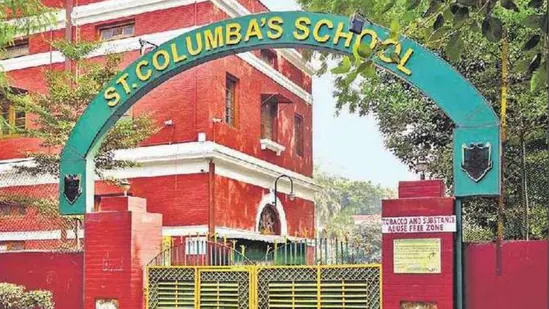
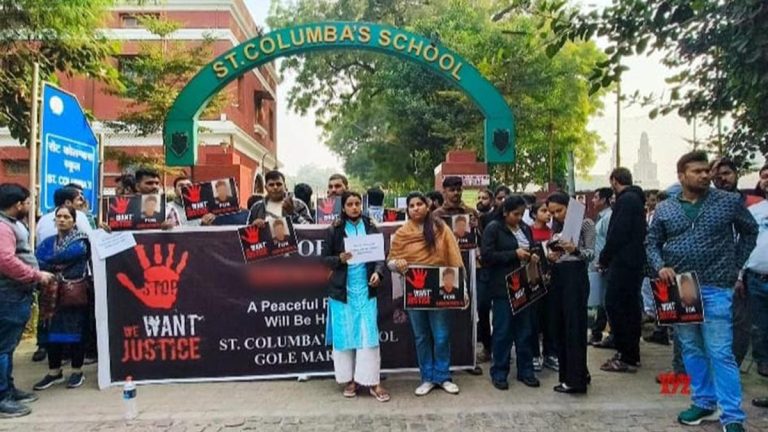
New Delhi – Nearly 100 protesters gathered outside St Columba’s School on Friday afternoon in a poignant Delhi school suicide protest, demanding accountability after a 16-year-old Class 10 student took his own life earlier this week. The demonstration brought together parents, students, and family friends carrying placards and seeking justice for the boy who accused four staff members of sustained harassment in a note found after his death.

Tragic Incident Sparks Community Outrage

The Delhi school suicide protest was triggered by a devastating incident that occurred on Tuesday afternoon when the student jumped from the upper level of a west Delhi Metro station. Police subsequently registered a case of abetment to suicide after discovering a note in his bag that detailed alleged harassment by three teachers and the school’s headmistress.

The Delhi school suicide protest reflected the community’s collective grief and anger over what many described as preventable tragedy resulting from systemic failures in student welfare and protection.

Pattern of Harassment and Humiliation Revealed

During the Delhi school suicide protest, numerous parents and students stepped forward to share disturbing accounts of intimidation and humiliation by the same staff members named in the police complaint. These testimonies painted a picture of systematic targeting rather than isolated incidents, with multiple families reporting similar experiences.

Protesters at the Delhi school suicide protest described teachers singling out students for pending fees, threatening physical violence, and publicly mocking children in full classrooms. The consistent pattern of behavior reported by multiple sources suggested a toxic environment that had persisted unchecked for an extended period.

Friends Recall Desperate Search

Among the most heartbreaking moments of the Delhi school suicide protest came when the victim’s closest friends huddled together to share their experiences. One friend recounted the frantic search that unfolded on Tuesday after the boy’s mother called to report he hadn’t returned home.

“We kept looking for him for almost an hour around the school. Later we were told to go back. We heard aunty crying in the background. Then uncle called and said he had found him… and that he was gone,” the friend said with a trembling voice during the Delhi school suicide protest.

Victim’s Dreams and Aspirations

Friends speaking at the Delhi school suicide protest described a talented young man with dreams of becoming an actor. They revealed that all four members of their friend group had been “picked on” by the accused teachers, suffering constant troubling, scolding, and humiliation.

“He was so good at acting and writing. He wanted to become an actor,” one friend shared during the Delhi school suicide protest. Another friend mentioned that the boy could write drama scripts “in minutes” and admired actors who had studied at the school, particularly expressing his desire to “carry the legacy forward like SRK.”

EWS Student Humiliation Exposed

A particularly disturbing account emerged during the Delhi school suicide protest from a mother whose son, admitted under the Economically Weaker Section (EWS) quota, faced months of public humiliation. She alleged that one of the accused teachers made her Class 8 son stand up daily and demanded fee payment, even though other EWS parents hadn’t paid either.

“Kids laughed at him. After a month of this humiliation, we finally paid,” she stated at the Delhi school suicide protest, highlighting how financial circumstances were used as tools for student degradation.

Alleged Classroom Lockdown

The mother also revealed disturbing information about the school’s response following media coverage. She claimed that on Thursday, students were confined to classrooms the entire day without bathroom breaks because teachers feared they would “talk to each other” about the incident—a revelation that added fuel to the Delhi school suicide protest.

Students Join Despite Warnings

When the school day ended at 1:45 PM, several students joined the Delhi school suicide protest with their faces covered by green mufflers and handkerchiefs. They reported being warned against speaking to media or participating in protests, with threats of disciplinary action hanging over them.

“We have been told disciplinary action will be taken if we talk or protest,” one student said while clutching a placard demanding justice during the Delhi school suicide protest.

Teachers’ Reputations Confirmed

Students participating in the Delhi school suicide protest confirmed the accused teachers’ problematic reputations. A Class 9 student described them as “rude” individuals who “take everything personally” and want to “give back” to students.

One particularly chilling account shared during the Delhi school suicide protest involved a teacher’s alleged remark: “I can easily slap you… the worst is I’ll get suspended. It won’t change anything in my life.” This statement exemplified the casual attitude toward student welfare that protesters condemned.

Community Demands Justice

A family friend who had known the boy for four years spoke at the Delhi school suicide protest about his cheerful nature and constant joke-telling. She emphasized adolescent vulnerability, stating, “Teenagers are sensitive. When you humiliate a child in front of classmates, it leaves scars.”

The Delhi school suicide protest represented more than grief—it was a community’s demand for systemic change, accountability, and protection for students against harassment and intimidation in educational institutions.

Bihar Congress Workers Protest: Explosive Demonstrations Target Party Leadership After Loss

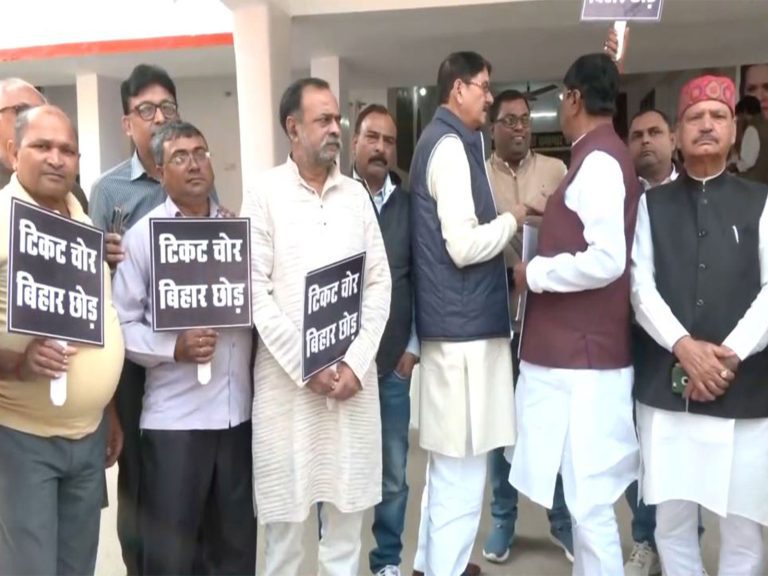
Bihar – One week after the Mahagathbandhan suffered a crushing defeat in the Bihar assembly elections, Bihar Congress workers protest erupted in Patna on Friday, targeting state party chief Rajesh Ram and Bihar in-charge Krishna Allavaru. The demonstrations highlight deepening fissures within the party organization following its humiliating electoral performance that saw the NDA secure a landslide victory.

Massive Electoral Defeat Triggers Internal Unrest

The Bihar Congress workers protest comes in the aftermath of a devastating electoral outcome where the NDA won 202 of 243 assembly seats. While the BJP emerged as the single largest party with 89 seats, the RJD-Congress-led Mahagathbandhan managed to secure only 35 seats, triggering widespread dissatisfaction among party cadres and workers.

The scale of the defeat has prompted intense soul-searching within the organization, with grassroots workers now openly challenging the leadership decisions that they believe contributed to the debacle. The Bihar Congress workers protest represents a significant escalation in internal party tensions.

“Ticket Chor, Gaddi Chhod” Campaign

Visuals from the Bihar Congress workers protest showed several party members carrying provocative banners with slogans like “Ticket Chor, Gaddi Chhod” (Ticket Thief, Leave the Chair), directly targeting both Rajesh Ram and Krishna Allavaru. The aggressive nature of these demonstrations underscores the depth of frustration among party workers.

The Bihar Congress workers protest focused on allegations regarding ticket distribution, with protesters accusing the leadership of corruption and favoritism in selecting candidates for the assembly elections. These charges have struck at the heart of party unity at a critical juncture.

Confrontation with Pappu Yadav

During the Bihar Congress workers protest, tensions escalated when Independent MP from Purnea, Rajesh Ranjan, popularly known as Pappu Yadav, arrived at the scene attempting to pacify the agitated workers. However, his intervention backfired as angry Congress leaders reportedly argued with him.

The protestors accused Yadav of collaborating with “non-political” Bihar in-charge Allavaru and alleged that party tickets had been “put up for sale.” These serious allegations during the Bihar Congress workers protest suggest systemic issues in the candidate selection process that may have contributed to the electoral disaster.

Women’s Wing President Resigns

Adding to the party’s woes, the Bihar Congress workers protest coincided with another significant development—the resignation of state women’s wing president Sarwat Jahan Fatema. Her departure represents a major blow to an already reeling organization struggling to manage multiple crises simultaneously.

Fatema’s resignation highlighted issues that aligned with concerns raised during the Bihar Congress workers protest, particularly regarding representation and ticket distribution policies within the party structure.

Also Read: Shreyasi Singh Bihar Minister: Inspiring Journey From Commonwealth Gold to Politics

Gender Representation Controversy

In her resignation letter, Fatema revealed that only eight percent of the party’s 61 candidates were women, a statistic that amplified the grievances expressed during the Bihar Congress workers protest. She pointed out that she served as women’s wing president for 28 months, working to mobilize women supporters with promises of political empowerment.

“I have been in the post for 28 months, trying to galvanise women in support of the Congress with the promise that the party will work for their political empowerment. But when it came to tickets, only eight per cent of the 61 candidates were women,” she stated, echoing concerns raised during the Bihar Congress workers protest about fairness in ticket allocation.

Unprecedented Denial of Ticket

Fatema further emphasized her unique situation during her resignation, noting that unlike “all my predecessors,” she was not given a party ticket despite holding the women’s wing president position. The Bihar Congress workers protest gained additional momentum from such examples of perceived leadership failures.

“There have been at least twelve or thirteen persons, all belonging to different communities, who have been Bihar Mahila Congress presidents before me. All of them got party tickets in the elections. But I did not,” she wrote, providing concrete evidence for claims made during the Bihar Congress workers protest about favoritism and discrimination.

National Leadership Response

While the Bihar Congress workers protest raged in Patna, national leaders offered contrasting responses to the electoral defeat. Rahul Gandhi appeared to dismiss the election as “unfair,” while Congress chief Mallikarjun Kharge adopted a more measured approach, stating that the party “respects the decision” but would conduct a detailed study to understand the reasons for the outcome.

This disconnect between ground-level anger manifested in the Bihar Congress workers protest and national leadership responses suggests deeper organizational challenges requiring urgent attention.

Crisis of Confidence

The Bihar Congress workers protest represents more than just post-election disappointment—it signals a crisis of confidence in state leadership. The combination of electoral humiliation, allegations of ticket corruption, gender discrimination, and leadership resignations has created a perfect storm threatening party cohesion.

Path Forward Uncertain

As the Bihar Congress workers protest continues to reverberate through party corridors, questions remain about how national leadership will address these grievances. The party faces the dual challenge of managing internal dissent while preparing for future electoral battles, with worker morale at an all-time low following the comprehensive defeat in Bihar.

Bihar Result Mandate Infiltrators: Shah’s Powerful Warning to Opposition Parties

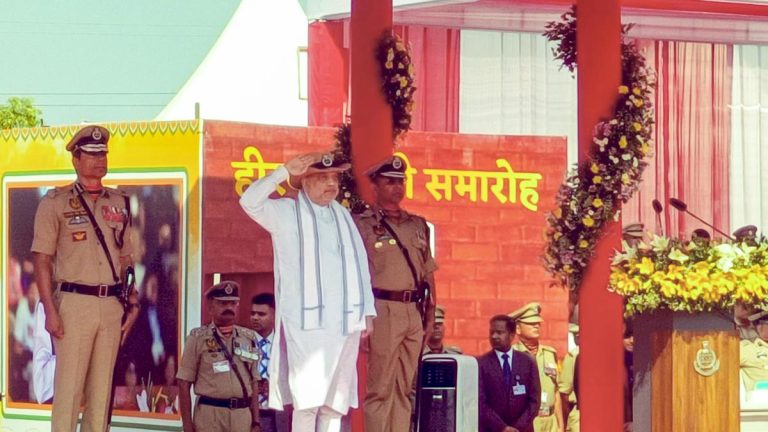
Bhuj, Gujarat – Union Home Minister Amit Shah delivered a forceful message on Friday, declaring that the recent Bihar Assembly election result represents a clear mandate against infiltrators. Speaking at the Border Security Force (BSF) Diamond Jubilee celebrations in Gujarat’s Bhuj, Shah warned opposition parties that protecting infiltrators in voter lists would cost them public support. The Bihar result mandate infiltrators issue has emerged as a central political talking point following the state elections.

SIR Process Described as Voter List Purification

During his address at the BSF’s 61st Raising Day celebrations, Shah characterized the ongoing special intensive revision (SIR) of electoral rolls as a “purification” of the voters’ list. The Home Minister asserted that the Bihar result mandate infiltrators message should serve as a warning to political parties attempting to oppose this electoral revision process.

Shah emphasized that some political parties are opposing the Election Commission’s SIR process because they want to ensure infiltrators’ names remain on electoral rolls. According to him, the Bihar result mandate infiltrators interpretation demonstrates public rejection of such protective measures for illegal residents.

BSF’s Role in Preventing Electoral System Pollution

The Home Minister highlighted the BSF’s critical role in stopping infiltration across all Indian borders. He stressed that preventing infiltration is essential not only for national security but also to protect the country’s democratic system from being compromised. The Bihar result mandate infiltrators significance, according to Shah, underscores the importance of maintaining electoral integrity.

“The BSF is engaged on all borders of the country in stopping infiltration. Stopping infiltration is necessary not only for the country’s security, but it is equally essential to prevent the country’s democratic system from being polluted,” Shah stated during his speech.

Opposition Concerns About Valid Voter Removal

Opposition parties, particularly the Trinamool Congress in poll-bound West Bengal, have expressed concerns that the SIR process could remove large numbers of valid voters from electoral rolls. However, Shah dismissed these concerns, asserting that the Bihar result mandate infiltrators verdict proves people support efforts to cleanse voter lists of unauthorized entries.

The Home Minister hit back at critics, warning that parties backing infiltrators will not receive public support. He made it clear that identifying and deporting every infiltrator from the country remains a firm resolve of the government.

Firm Commitment to Identify and Deport Infiltrators

Shah used the Bihar result mandate infiltrators interpretation to reinforce his government’s commitment to addressing illegal immigration. “Unfortunately, some political parties are busy trying to weaken this campaign to remove infiltrators. Those very political parties are opposing the ongoing SIR process being conducted by the Election Commission and the purification of the voter lists,” he said.

The Home Minister declared unequivocally: “I want to make it absolutely clear today – it is our firm resolve that we will identify and deport every single infiltrator from this country, one by one.” This statement tied directly to his reading of the Bihar result mandate infiltrators message.

Democracy Protection Through Electoral Revision

Shah emphasized that only Indian citizens should decide who becomes chief minister of any state or Prime Minister of India. He argued that no infiltrator has the right to pollute the democratic system or influence democratic decisions. The Bihar result mandate infiltrators theme formed the cornerstone of his argument for the SIR process as a democratic safeguard.

Also Read: Modi Gamcha Moment Bihar: Viral Video From Nitish Kumar’s Historic Swearing-In

“In a way, this SIR is a process to protect and purify our democracy,” Shah added, appealing to people to extend full support to the revision process. He characterized it as a vital step to protect India’s democracy from infiltrators and strengthen it further.

Warning to Political Parties

The Home Minister issued a stern warning to political parties protecting infiltrators, citing the Bihar result mandate infiltrators verdict as evidence of public sentiment. “The recent Bihar election is the mandate of the people of the country, and that mandate is against the presence of infiltrators. Parties that are trying to safeguard infiltrators in the voter lists must remember that the people of this country will never support such intentions,” he declared.

BSF’s Success Against Drug Infiltration

Shah also highlighted the BSF’s achievements in curbing narcotics infiltration, noting that the force has seized more than 18,000 kilograms of drugs in 2025. This success story was presented as evidence of effective border management alongside the Bihar result mandate infiltrators political message.

Advanced Border Security Initiatives

The Home Minister announced the forthcoming introduction of ‘e-Border Security,’ with the BSF playing a central role in ground-level implementation. He expressed confidence that within five years, India’s entire land border would be protected under this advanced security shield.

Shah also described the establishment of the National Academy for Coastal Policing at Okha in Gujarat as a historic step toward making India’s maritime borders impregnable, with the BSF responsible for its operation and management.

Opposition Response

Bengal’s Commerce and Industries Minister Shashi Panja criticized Shah’s statements, pointing to recent security incidents including the Pahalgam terror attack and Delhi bomb blast as evidence that borders are not being properly guarded, while the government targets Bengal instead of addressing actual security concerns.

Marjorie Taylor Greene Resigns: Shocking Exit After Trump Fallout Over Epstein

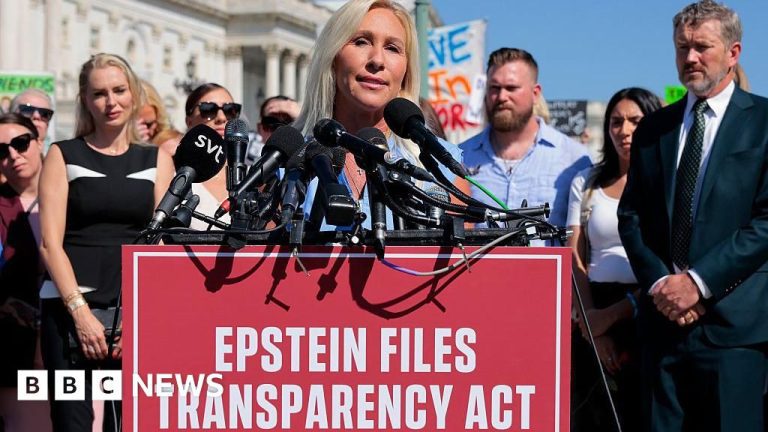
Washington D.C. – In a stunning political development, US Representative Marjorie Taylor Greene announced her resignation from the House of Representatives, marking the end of her tumultuous congressional career. The announcement that Marjorie Taylor Greene resigns comes after a dramatic falling out with President Donald Trump, whom she once counted as one of her closest political allies. Her final day in office will be January 5, 2026.

Breaking Point: Standing Up for Trafficking Victims

The decision that Marjorie Taylor Greene resigns stems from her vocal stance on the Jeffrey Epstein scandal and her advocacy for victims of sexual trafficking. In her resignation announcement, Greene explained that she was “standing up for American women who were raped at 14, trafficked and used by rich powerful men,” a position that ultimately cost her the President’s support.

Greene revealed that she was “called a traitor” for defending these women, expressing frustration that her advocacy on behalf of trafficking victims resulted in severe political consequences. The fact that Marjorie Taylor Greene resigns highlights the personal toll of her decision to speak out on this sensitive issue, despite her previous unwavering loyalty to Trump.

Presidential Attacks and Threats

The circumstances under which Marjorie Taylor Greene resigns involve direct confrontation with the President she once championed. Greene stated that standing up for victims “should not result in me being called a traitor and threatened by the President of the United States, whom I fought for.”

Trump’s response to Greene’s position on the Epstein scandal was swift and harsh. The President labeled her a “traitor” and “wacky,” going so far as to threaten that he would endorse a challenger against her when she ran for reelection. This presidential rebuke created an untenable political situation that ultimately led to the decision that Marjorie Taylor Greene resigns.

Loyalty as a Two-Way Street

A central theme in Greene’s resignation announcement was her belief that political loyalty should be reciprocal. The Georgia representative emphasized that “loyalty should be a two-way street” while announcing that Marjorie Taylor Greene resigns from her congressional seat.

Greene characterized Trump’s attacks as “unfair and wrong,” particularly given her years of steadfast support for his political agenda. She argued that representatives “should be able to vote our conscience and represent our district’s interest, because our job title is literally ‘representative.'” This statement underscores the tension between party loyalty and constituent representation that contributed to why Marjorie Taylor Greene resigns.

Also Read: Trump Mamdani Meeting: Stunning Common Ground Found in Historic Oval Office Talk

Never Fitting In Washington

In a video posted online explaining why Marjorie Taylor Greene resigns, the congresswoman reflected on her time in the nation’s capital with candor. She admitted that she had always been “despised in Washington, D.C., and just never fit in,” painting a picture of isolation and alienation from the political establishment.

This sense of being an outsider, combined with the betrayal she felt from Trump, created a political environment where continuing in office became untenable. The announcement that Marjorie Taylor Greene resigns reflects not only her dispute with the President but also her broader disillusionment with Washington politics.

From Staunch Ally to Vocal Critic

The transformation that led to Marjorie Taylor Greene resigns is particularly striking given her political history. Greene had been one of Trump’s most vocal supporters and a prominent advocate for his Make America Great Again agenda since the beginning of her political career five years ago.

Her evolution from loyal supporter to critic represents a significant shift in the Republican political landscape. The fact that Marjorie Taylor Greene resigns demonstrates how quickly political alliances can fracture, even among those who seemed ideologically aligned.

Part of Broader Republican Exodus

The decision that Marjorie Taylor Greene resigns occurs against the backdrop of multiple departures from Trump’s political orbit. According to reports, several moderate establishment Republicans have also parted ways with the President, suggesting broader tensions within the party.

Greene’s exit, however, is particularly significant because she represented the populist, MAGA wing of the Republican Party rather than its moderate establishment. That Marjorie Taylor Greene resigns indicates that Trump’s influence may be waning even among his core supporters.

The Epstein Scandal Catalyst

Central to understanding why Marjorie Taylor Greene resigns is the Jeffrey Epstein scandal that served as the catalyst for her break with Trump. Greene’s willingness to speak out about wealthy and powerful men who exploited young women put her at odds with the President, revealing fault lines in their relationship.

Her emphasis on standing up for women “who were raped at 14” and “trafficked” demonstrates that some issues transcended her political allegiance to Trump. The controversy surrounding the Epstein case became the issue on which their alliance ultimately fractured, leading directly to the announcement that Marjorie Taylor Greene resigns.

Looking Ahead

As the January 5, 2026 date when Marjorie Taylor Greene resigns approaches, questions remain about her political future and the implications for Republican politics. Her departure removes one of Congress’s most controversial and outspoken members, potentially reshaping debates within the party and creating an open seat in Georgia that will likely be closely contested in any special election.

Trump Mamdani Meeting: Stunning Common Ground Found in Historic Oval Office Talk

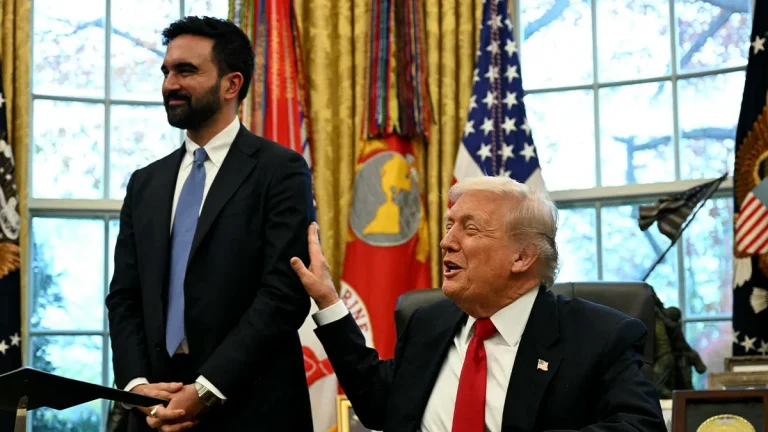
Washington D.C. – In an unexpected display of bipartisan cooperation, US President Donald Trump and New York City mayor-elect Zohran Mamdani discovered substantial common ground during their first in-person encounter at the White House on Friday. The Trump Mamdani meeting, which took place in the Oval Office, marked a potential turning point in a relationship previously characterized by public disagreements and partisan tensions.

Mayor-Elect Initiates Historic Discussion

The Trump Mamdani meeting occurred at the request of the incoming New York City mayor, who sought to discuss pressing urban challenges facing the nation’s largest city. Mamdani, a democratic socialist who gained national attention following his surprise electoral victory earlier this month, came to the White House with a clear agenda focused on New York’s escalating cost of living crisis and mounting public safety concerns.

The meeting represented a significant moment for Mamdani, who transitioned from relative obscurity to one of the country’s most prominent municipal leadership positions. His decision to reach out to Trump, despite their ideological differences, demonstrated a pragmatic approach to governance that prioritizes city needs over partisan politics.

Shared Goals on Crime and Housing

Following the private discussion, Trump expressed genuine surprise at the level of agreement reached during the Trump Mamdani meeting. Speaking to reporters, the President acknowledged finding unexpected alignment with the mayor-elect on fundamental urban policy issues.

“We had a meeting today that actually surprised me. He wants to see no crime. He wants to see housing being built. He wants to see rents coming down. All things that I agree with,” Trump stated, highlighting the productive nature of their exchange.

The Trump Mamdani meeting revealed consensus on critical objectives, even if the two leaders might pursue different strategies to achieve them. Trump specifically noted their shared vision for addressing New York’s housing crisis through increased construction.

Housing Solutions Take Center Stage

A significant portion of the Trump Mamdani meeting focused on strategies to make New York City more affordable for its residents. Trump elaborated on their discussion about rent reduction, acknowledging both agreement and potential methodological differences.

“One of the things I really gleaned very, very much today — he’d like to see them come down ideally by building a lot of additional housing. That’s the ultimate way… He agrees with that and so do I,” Trump explained, emphasizing their mutual recognition that increased housing supply represents a fundamental solution to affordability challenges.

This aspect of the Trump Mamdani meeting demonstrated how leaders from vastly different political backgrounds can identify practical solutions to urban problems when focusing on outcomes rather than ideology.

Also Read: Trump Ukraine Peace Plan: Controversial Proposal Demands Major Territorial Concessions

Presidential Praise for Electoral Victory

During the Trump Mamdani meeting, the President extended congratulations to the mayor-elect for his remarkable electoral achievement. Trump characterized Mamdani’s victory as “an incredible race against some very tough people, very smart people,” acknowledging the competitive nature of the New York City mayoral contest.

Trump further emphasized the positive outcome of the Trump Mamdani meeting, stating, “We agreed on a lot more than I thought,” and noting their shared commitment to New York City’s success. The President stressed their common bond: “We want this city of ours that we love to do very well.”

Challenging Media Narratives

An interesting dimension of the Trump Mamdani meeting involved the President’s criticism of media coverage. Trump pushed back against journalistic portrayals of their relationship, suggesting that news reports failed to capture the genuine cooperation evident in their discussion.

“If I read the newspapers and the stories, I don’t hear that. But I heard him say it today and I think that’s a very positive step,” Trump remarked, adding, “I expect to be helping him, not hurting him.”

Personal Connection to New York

The Trump Mamdani meeting also highlighted the President’s deep personal ties to New York City. Trump emphasized his commitment to the city’s prosperity, stating, “I want New York City to be great. I love New York City. It’s where I come from.”

This personal investment in New York’s success appeared to transcend political differences, creating a foundation for constructive dialogue during the Trump Mamdani meeting.

Mamdani’s Response and Future Cooperation

The mayor-elect characterized the Trump Mamdani meeting as “productive,” focusing on their shared objectives rather than ideological divisions. Mamdani stated, “It was a productive meeting focused on a place of shared admiration and love, which is New York City, and the need to deliver affordability to New Yorkers.”

Trump reciprocated the conciliatory tone, expressing genuine interest in Mamdani’s success as mayor. “The better he does the happier I am,” the President declared, signaling potential ongoing cooperation.

A Departure from Previous Tensions

The cordial atmosphere of the Trump Mamdani meeting represented a dramatic shift from months of public disagreements between the two leaders. Previous conflicts had spanned multiple policy areas, including immigration enforcement and New York’s fiscal management. However, the Trump Mamdani meeting demonstrated that despite past tensions and continued ideological differences, practical governance concerns can create bridges between seemingly incompatible political figures.

New Labour Codes: Revolutionary Changes Transform India’s Workforce Benefits

New Delhi – India’s employment framework underwent a historic transformation as the Union government officially notified four new labour codes on Friday, marking a significant milestone in the country’s labour reform journey. Union Labour Minister Mansukh Mandaviya announced the implementation of these comprehensive new labour codes, which were originally passed by Parliament during 2019-20, bringing sweeping changes to worker benefits and employment conditions across the nation.

Understanding the New Labour Codes Framework

The new labour codes represent a comprehensive overhaul of India’s employment laws, consolidating 29 archaic regulations into four streamlined codes. These include The Code on Wages, 2019, Industrial Relations Code, 2020, Occupational Safety, Health and Working Conditions (OSH) Code, 2020, and the Code on Social Security, 2020. After multiple deferrals, the new labour codes have finally been made operational with all necessary rules notified.

Revolutionary Gratuity Provisions

One of the most significant changes introduced by the new labour codes concerns gratuity payments for fixed-term employees. Under the reformed system, all fixed-term employees will become eligible for gratuity payments after just one year of continuous service, a dramatic reduction from the previous requirement of five years. This provision ensures that workers on fixed-term contracts receive the same financial security as permanent employees, marking a major shift in employment benefits.

National Minimum Wage for Universal Coverage

The new labour codes establish a national minimum wage framework that extends coverage to all workers across India, replacing the previous system that covered only select scheduled industries. This universal minimum wage provision represents a fundamental shift in ensuring fair compensation for every worker, regardless of their industry or employment sector. The implementation of these new labour codes guarantees that no worker falls outside the protective umbrella of minimum wage regulations.

Defining Gig and Platform Work

For the first time in Indian labour legislation, the new labour codes formally define gig and platform work. Section 2(35) of the Code on Social Security, 2020 defines a gig worker as “a person who participates in a work arrangement and earns from such activities outside of a traditional employer–employee relationship.” This recognition addresses the growing segment of India’s workforce engaged in non-traditional employment arrangements.

Enhanced Healthcare and Employment Standards

The new labour codes mandate several progressive healthcare and employment standards. Employers across all sectors must now offer free annual medical checkups to workers above 40 years of age, promoting preventive healthcare. Additionally, no worker can be hired without receiving a written appointment letter, ensuring transparency and formal documentation of employment relationships.

Equal Benefits for Fixed-Term Employees

Under the new labour codes, fixed-term employees gain access to the same benefits as permanent staff members. These benefits include regulated leave provisions, standardized working hours, and comprehensive medical benefits. This equalization of benefits eliminates the historical disparity between permanent and contract workers, creating a more equitable employment environment.

Also Read: Governor Bill Assent Ruling: Landmark Supreme Court Verdict on Constitutional Powers

Industry-Specific Salary Payment Requirements

The new labour codes introduce strict salary payment timelines. While all companies must pay salaries punctually, Information Technology firms face specific requirements to release salaries by the 7th of every month. This provision ensures consistent cash flow for workers and establishes accountability for employers across different sectors.

Expanding Women’s Workforce Participation

The new labour codes contain progressive provisions aimed at enhancing female labour force participation rates. The reforms allow women to work night shifts and enter industries previously restricted, including hazardous sectors such as mining. However, these provisions require women’s explicit consent and mandate necessary safety measures. Union Labour Minister Mansukh Mandaviya emphasized that the new labour codes “promote employment opportunities for women and are gender neutral.”

Enhanced Social Security Coverage

Enrolment in the Employees’ State Insurance Corporation (ESIC) has been made compulsory under the new labour codes for establishments with even one employee engaged in hazardous processes. Furthermore, ESIC coverage now extends countrywide, replacing the previous system of select notified regions. This expansion significantly broadens the social security net for Indian workers.

Greater Flexibility for Employers

While prioritizing worker benefits, the new labour codes also provide companies with greater flexibility in workforce management. The reforms enable more streamlined hiring and termination processes while simultaneously introducing enhanced safety standards and expanded social security benefits. This balance aims to create a business-friendly environment without compromising worker protections.

Implementation Timeline and Impact

After years of anticipation and multiple postponements, the new labour codes became effective on Friday with all necessary operational rules in place. This implementation represents a watershed moment in India’s labour policy, potentially affecting millions of workers across various sectors and employment types.

Looking Forward

The introduction of these new labour codes signals India’s commitment to modernizing its employment framework while adapting to contemporary workforce realities. By addressing issues ranging from gig work definition to gender equality and universal minimum wage, the new labour codes establish a foundation for a more inclusive, secure, and progressive employment landscape that balances worker protection with economic flexibility.

Delhi Class 10 Student Suicide: Shocking CCTV Evidence Reveals Teacher Humiliation

0

New Delhi – Three days after a tragic Delhi Class 10 student suicide at St Columba’s School in central Delhi, investigators have made significant progress in understanding the events that led to the 16-year-old’s death. Delhi Police have identified and begun questioning five of the boy’s friends and their families as the investigation into the devastating incident continues to unfold.

Five Friends Questioned as Key Witnesses

The investigation into the Delhi Class 10 student suicide has focused on testimonies from the victim’s close friends. Among the five boys being examined as witnesses, three classmates were specifically named in the First Information Report (FIR) filed based on the father’s complaint. These three students were the first to inform the family that their son had been “picked on” repeatedly during the four days preceding his death.

According to an investigator familiar with the case, the statements from these friends present a uniform narrative. The boys described how their particular group felt targeted, intimidated, and routinely humiliated by three teachers and the school’s headmistress. This consistent account has become a crucial element in understanding the circumstances surrounding the Delhi Class 10 student suicide.

Disturbing CCTV Evidence Emerges

Perhaps the most compelling evidence in the Delhi Class 10 student suicide investigation comes from CCTV footage recovered by police. Investigators have retrieved surveillance recordings covering the period from November 11 to 18 from inside and around the school premises. This footage has proven instrumental in corroborating the students’ accounts.

A police officer involved in the case revealed that at least one recording shows a teacher “seen humiliating him in front of other kids.” This visual evidence has strengthened the investigation and provided concrete support for the allegations of harassment and mistreatment that preceded the Delhi Class 10 student suicide.

Pattern of Harassment and Intimidation

The FIR in the Delhi Class 10 student suicide case details several specific incidents of alleged misconduct by school staff. According to the complaint, the boy confided in his friends that he had been threatened with expulsion and physically shoved by one teacher. Another teacher allegedly accused him of “overacting” and creating “drama” when he refused to participate in a dance rehearsal due to an ankle sprain.

Early accounts from students suggest a disturbing pattern of persistent scolding and disproportionate punishment directed at the boy and his friends. These revelations have painted a picture of systematic targeting rather than isolated incidents, raising serious questions about the school’s handling of student welfare.

School Staff Suspended and Face Legal Action

Following the Delhi Class 10 student suicide, swift action was taken against the accused staff members. On Thursday, the school suspended four staff members—three teachers and the headmistress—after they were booked under Bharatiya Nyaya Sanhita (BNS) sections 107 (abetment to suicide) and 3(5) (common intention).

Also Read: Delhi Teen Suicide Case: 4 School Teacher Suspended After Metro Tragedy

Police officials have announced that all four suspended staff members, including the headmistress, will be summoned for questioning this weekend. This development marks a significant escalation in the Delhi Class 10 student suicide investigation as authorities work to establish the exact sequence of events and determine criminal liability.

National Human Rights Commission Intervenes

The gravity of the Delhi Class 10 student suicide has attracted attention at the national level. The National Human Rights Commission (NHRC) has taken cognisance of the case and demanded an action report from the Deputy Commissioner of Police (DCP) and District Magistrate (DM) of Central Delhi within 10 days.

In its notice, the NHRC highlighted critical failures in the school’s duty of care. The commission noted that “complaints were ignored, and no counselling or child protection measures were provided, amounting to violations of the Juvenile Justice (Care & Protection of Children) Act, 2015, Right to Education (RTE) Act, 2009, and child safety norms.”

Community Response and Protests

The Delhi Class 10 student suicide has sparked outrage among parents and students. A protest was held outside St Columba’s School in central Delhi, with parents and fellow students demanding justice and accountability. The demonstration reflected growing concerns about student safety and the need for better protection mechanisms in educational institutions.

School Administration Remains Silent

Despite repeated attempts to obtain a response, the St Columba’s principal has not commented on the Delhi Class 10 student suicide. Queries sent to the Edmund Rice Organisation, which operates the school, have also gone unanswered. This silence has further fueled concerns among parents and the wider community about transparency and accountability.

Looking Ahead

As the investigation into the Delhi Class 10 student suicide continues, authorities are working to build a comprehensive case. The combination of eyewitness testimonies, CCTV evidence, and formal complaints provides investigators with substantial material to examine. The outcome of this case could have far-reaching implications for how schools handle student discipline and welfare across the country, potentially prompting reforms in educational institutions to prevent similar tragedies.

Al-Falah NAAC Accreditation Scandal: University Blames Oversight for Misleading Claims

0

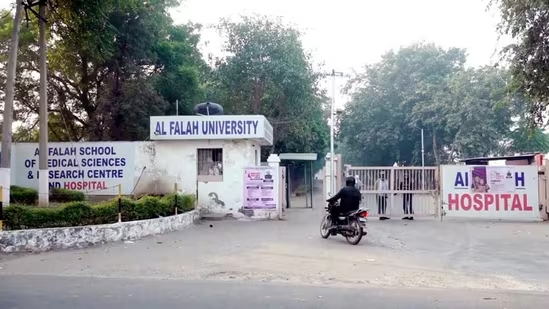
Faridabad, Haryana – Faridabad’s Al-Falah University has found itself at the center of a major controversy after admitting to displaying false and outdated Al-Falah NAAC accreditation information on its website. The institution recently submitted its response to a show-cause notice issued by the National Assessment and Accreditation Council (NAAC) on November 12, acknowledging significant lapses in maintaining accurate accreditation status.

University Acknowledges Website Errors

According to senior officials from NAAC, Al-Falah University attributed the misleading Al-Falah NAAC accreditation claims to “oversight,” “website-design errors,” and “unintentional lapses.” The university expressed regret for the situation and confirmed that all misleading information has been removed from its website. The institution’s explanation centered on outdated webpages that were allegedly overlooked and staff members who failed to remove expired content.

The controversy surrounding Al-Falah NAAC accreditation emerged when the accreditation body flagged the university for displaying “absolutely wrong and misleading” information. Specifically, the institution had been showcasing an “A Grade” for its engineering college dating back to 2013 and accreditation for its teacher education school from 2011, despite NAAC accreditation being valid for only five years.

NAAC’s Response and Broader Implications

NAAC officials have taken a measured approach to the Al-Falah NAAC accreditation issue. One senior official explained that the university provided a lengthy explanation about why outdated information remained on their website, citing oversight and website-design mistakes. However, a second official noted that the university’s explanation “was not entirely straightforward.”

The official pointed out the challenges of manually monitoring thousands of institutions, particularly when expired claims are hidden in inner webpages. Despite these complications, NAAC has decided not to pursue further action against Al-Falah University at this time, though the institution remains under scrutiny for other matters.

Widespread Accreditation Misrepresentation

The Al-Falah NAAC accreditation case has prompted broader action from the accreditation body. Following the investigation, NAAC issued notices to approximately 25 other institutions found displaying expired accreditation grades, directing them to remove such information immediately. This initiative is part of a larger policy push to ensure transparency and compliance in how institutions display their accreditation status.

NAAC has consistently warned educational institutions about misrepresenting their credentials. In a cautionary note issued in March 2018, the body stated that displaying outdated or false accreditation information amounts to “misleading stakeholders” and makes institutions “liable to face stringent action.”

Connection to Red Fort Blast Investigation

The timing of the Al-Falah NAAC accreditation investigation coincided with a separate, more serious matter. NAAC’s notice to Al-Falah University came just two days after investigators linked several doctors from Al-Falah Medical College to the Red Fort blast that occurred on November 10, which tragically killed at least 12 people.

The National Medical Commission removed four doctors—Muzaffar Ahmad Rather, Adeel Ahmad Rather, Muzammil Shakeel Ganaie, and Shaheen Shahid—from its medical register after they were booked under the Unlawful Activities (Prevention) Act for their alleged role in the attack. This development brought unprecedented attention to Al-Falah University and its various operations.

Financial Irregularities and Leadership Arrests

The scrutiny of Al-Falah University extended beyond the Al-Falah NAAC accreditation controversy. On November 18, the Enforcement Directorate arrested Jawad Ahmed Siddiqui, chairman of the Al-Falah group, in connection with a money laundering case. The investigation focuses on alleged fraudulent claims of accreditation and various financial irregularities within the institution.

The Association of Indian Universities has already taken decisive action by revoking Al-Falah University’s membership, signaling serious concerns about the institution’s operations and governance.

University Administration’s Response

On November 12, Vice-Chancellor Bhupinder Kaur issued a statement attempting to distance the university from the arrested doctors. She emphasized that the institution had “no connection” with them beyond their work in their official capacity. However, this statement has done little to quell concerns about the multiple investigations surrounding the university.

Looking Forward

The Al-Falah NAAC accreditation case highlights systemic issues in educational oversight and the importance of accurate institutional representation. While NAAC has accepted the university’s explanation regarding the false Al-Falah NAAC accreditation claims, the institution faces mounting challenges from multiple regulatory bodies and law enforcement agencies.

The case serves as a cautionary tale for other educational institutions about the importance of maintaining accurate accreditation information and the potential consequences of misleading stakeholders. As investigations continue, the future of Al-Falah University remains uncertain, with its reputation significantly damaged by the combination of accreditation misrepresentation and its connection to serious criminal investigations.