Friday, May 15, 2026
Home Blog Page 325

Bold 20-Day Uproar: BJP and JD(S) Lend Heartfelt Support to Koppal Agitation

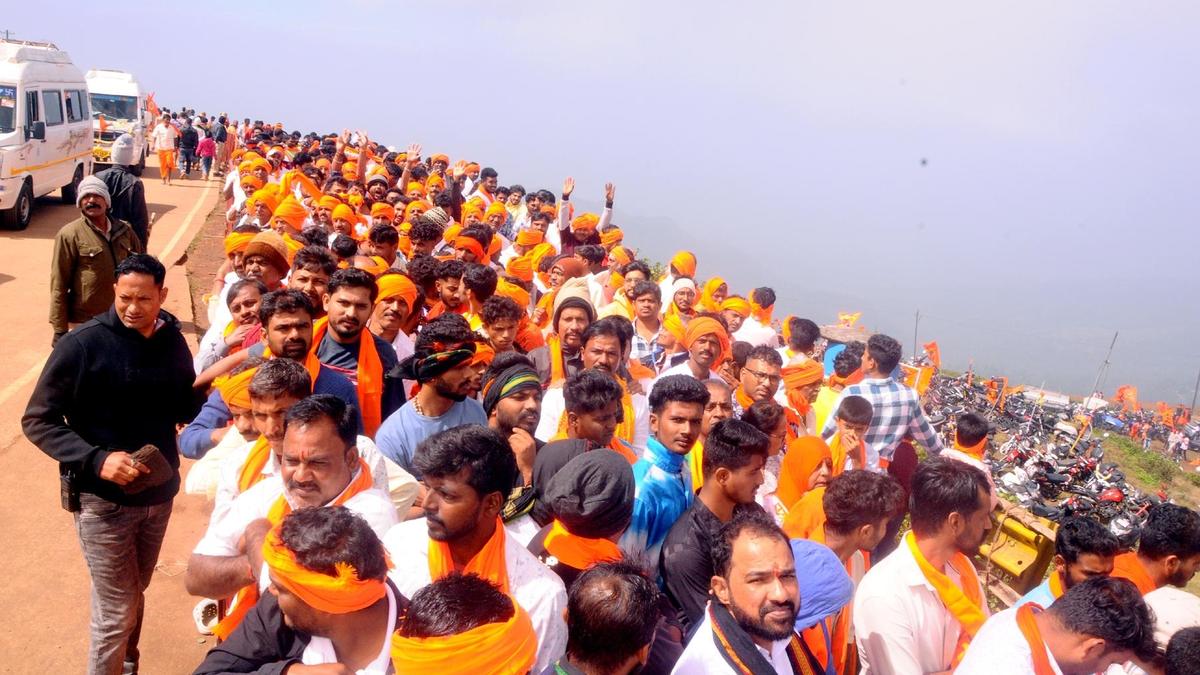
KOPPAL, Karnataka — An ongoing protest in Koppal district has entered its twentieth day, drawing increasingly wide political attention as leaders from both the BJP and Janata Dal (Secular) have extended support to the agitating community. The protest, largely driven by farmers, youth, and local social organisations, originally began over demands for water rights, infrastructure development, and fair compensation for agricultural land. Over nearly three weeks, demonstrators have maintained continuous sit-ins, road blockades, and symbolic fasts, arguing that repeated government assurances have failed to translate into action. The inflection of political backing marks a significant turning point in what was previously seen as a localised campaign.

From early morning, protesters gathered at the district headquarters, carrying placards demanding a special package for drought-affected farmers, long-term irrigation solutions, and the implementation of pending welfare schemes. Many complained that promises made during earlier rounds of negotiation remained unfulfilled. Demonstrators highlighted chronic issues such as erratic power supply, inadequate drinking water, and the absence of proper agricultural support systems. As the protest gained momentum, BJP and JD(S) leaders publicly visited the site, meeting with agitators, pledging solidarity, and promising to raise their demands in state-level forums.


Political Intervention and Support Escalates

On the 20th day of the agitation, BJP district and state-level leaders arrived at Koppal to show their backing. Senior party figures addressed the crowd, acknowledging the legitimacy of farmers’ and villagers’ grievances. They condemned the lack of timely government response and called for immediate remedial action. BJP leaders promised to push through a formal motion in the Karnataka Legislative Assembly calling for comprehensive relief measures, including improved irrigation facilities and expedited payments for rehabilitated landowners. Their presence on the protest front has bolstered the morale of local agitators, many of whom remain hopeful that political leverage may finally bring lasting solutions.

Simultaneously, JD(S) representatives also made a show of solidarity. Known for its appeal among agrarian communities in northern Karnataka, the party’s local MLAs visited protest sites and held open forums with farmers and youth leaders. JD(S) officials stated that the current state government has ignored persistent distress in Koppal and neighbouring districts, and promised to support the agitation’s demands through legislative and grassroots channels. They urged both the government and opposition to view the protest not as a political tactic but as an urgent call for state accountability. Their support signalled a rare bipartisan creation of pressure in regional politics.

The joint political backing from BJP and JD(S) marks a crucial moment in the protest’s trajectory. For many protesters, this shows that their struggle is not merely local, but resonates across ideological divides. The leaders’ appearances reinforce the idea that the demands are not partisan but reflect genuine developmental deficits. Community leaders argue that such political engagement could translate into concrete policy shifts. Activists on site say they are preparing to send a unified memorandum, signed by local bodies and political actors, calling for immediate formation of a task force to resolve pending grievances.
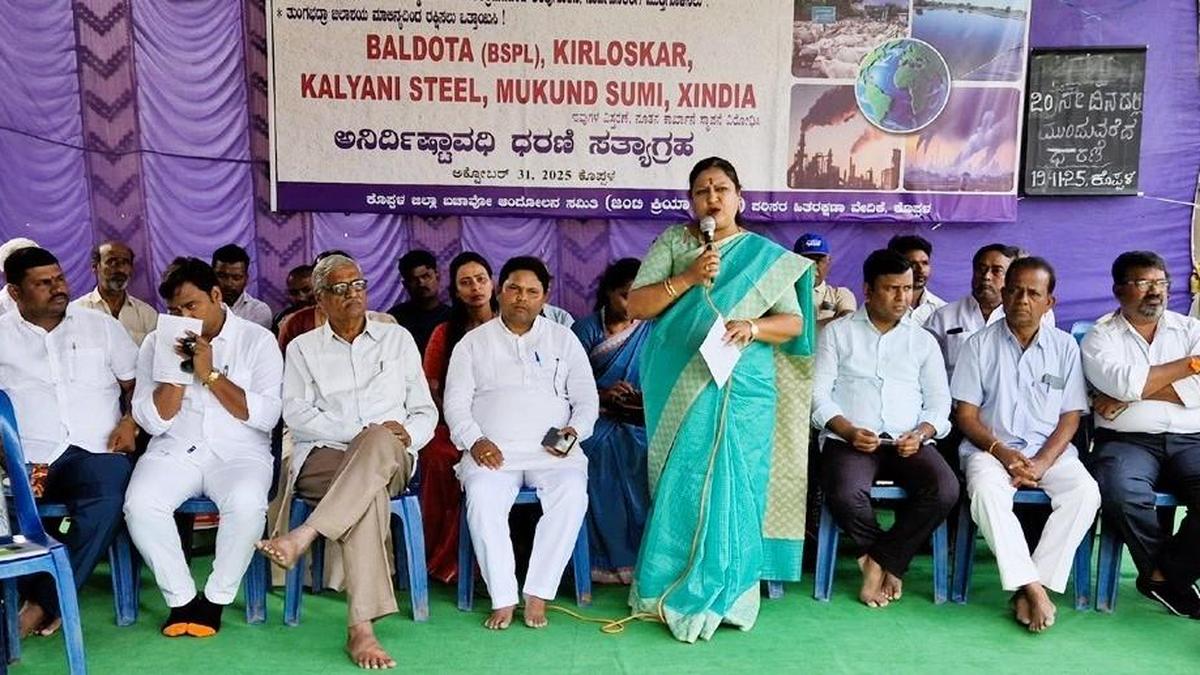
BJP, JD(S) leaders extend support as agitation enters 20th day in Koppal -  The Hindu


Roots of the Agitation: Water, Land, and Livelihood

At the heart of the agitation lies a complex web of water scarcity and failing irrigation infrastructure. Several villages in Koppal are part of drought-prone belts, where groundwater levels are dangerously low and canal-based irrigation has repeatedly failed. Farmers participating in the protest say that despite repeated official assurances, canal maintenance remains neglected, making water distribution sporadic and insufficient. As a result, yields remain low, and agricultural income continues to decline. People are calling for a revamp of canal networks and repairs that guarantee equitable water access across villages.

Land rights and compensation add another critical layer. The protesters demand that the State accelerate processes to regularise fishing, grazing, and cultivation rights for small farmers whose lands were submerged or degraded in earlier reservoir projects. They also seek clarity on pending payments for land acquired, claiming that compensation has either been delayed or undervalued. According to community representatives, many affected families have waited for years while their livelihoods erode. The presence of BJP and JD(S) leaders has revived hope that such promises will now be translated into action.

Youth leaders, many of whom are part of local farmer unions, highlight the link between migration and distress. With limited opportunities at home, young people from protest villages say they are forced to leave for urban centres or other states. Their activism is fueled by the belief that only restoration of agricultural viability can stem rural exodus. They demand not only immediate relief but long-term developmental planning that includes skill-based training, youth employment guarantees, and infrastructure investment in their home districts. The protest thus represents more than a plea for water — it is a demand for dignity, stability, and future.

Women in the agitation have played a central role, emphasising their stakes as cultivators, collectives, and homemakers. They report that declining crop yields and uncertain land compensation hamper their capacity to support their families. Several women have pledged non-stop participation in sit-ins, asserting that the crisis affects their households directly. Their involvement has been a rallying point for wider community mobilisation. By supporting the protest, BJP and JD(S) leaders acknowledge that gendered perspectives must be part of any durable solution, including compensation, land titles, and water access.


Government Response and Challenges Ahead

In response to the growing pressure, the Karnataka government has issued statements promising to send a delegation to Koppal to review the demands. Officials say that they will examine the feasibility of a relief package, canal repair mechanism, and improved compensation framework. However, residents and leaders remain wary. Based on previous promises, many feel that commitments have failed on implementation. They are calling for the delegation to include representatives from agitation groups, political supporters, and technical experts to ensure that negotiations are comprehensive and not superficial.BJP, JD(S) leaders extend support as agitation enters 20th day in Koppal -  The Hindu

Local administrators have, in some cases, cited budget constraints and bureaucratic delays as reasons for their slow response. They argue that restarting or maintaining canal systems requires coordination with multiple agencies including irrigation departments, revenue officials, and environmental regulators. Still, residents say that the delay appears deliberate, designed to weaken the protest’s momentum. With BJP and JD(S) now raising the stakes, agitation leaders hope that the government will be pushed into action. They are demanding a public timeline for resolving core issues, backed by written guarantees and periodic progress reports.

Political analysts suggest that the support from BJP and JD(S) may alter the power dynamics in Ballari-Koppal politics. The two parties, often rivals, may be joining hands to pressure the ruling coalition into making meaningful concessions. For BJP, the issue presents an opportunity to consolidate its rural support base ahead of future elections. For JD(S), alignment with local APM (agrarian and protest movement) leaders could strengthen its influence among greenbelt constituencies. Observers note that if handled sincerely, the agitation could become a turning point in state-level agrarian policy.

However, there are risks involved for the protesting movement as well. Some worry that with major parties entering the fray, the agenda may shift toward electoral gain rather than genuine reform. Community elders caution that political backing must not dilute the original demands or compromise grassroots autonomy. They stress that any settlement must be negotiated in writing, with clear safeguards for forest rights, water-sharing and land tenure. Agitators fear that superficial deals may emerge if the government and political parties prioritise short-term resolution over systemic change.

In addition, there are logistical concerns related to sustaining a 20-day protest. Demonstrators depend on food donations, medical provisions, sanitation and crowd management — all of which require significant coordination. Local civil society groups have stepped in, helping to organise supply points, medical check-ups and water stations. However, the strain is showing, especially during the hot daytime hours. With political leaders now present, the protest may scale up, but sustaining essential basics could become a serious challenge for organisers without committed support.

Civil society organisations across Karnataka have expressed solidarity with the Koppal agitation. Several NGOs working on agrarian rights, environmental justice, and tribal welfare have visited the protest site, offering legal and organisational aid. These groups argue that the demands raised by the protesters reflect systemic neglect, especially for communities that depend on common resources like forests, streams and grazing lands. They added that sustainable policy reforms, rather than doles, are necessary to ensure long-term justice.

Farmers unions participating in the agitation have warned that if the government fails to respond meaningfully within the next few days, they may escalate the protest. Possible steps include major demonstrations in Bengaluru, blockades on regional highways, and staging of sit-ins in district offices. Leaders say such escalations will be aimed not just at demanding compensation but pushing for political reforms. They want their voices to influence the state’s agrarian policy table, ensuring that Koppal’s crisis becomes a statewide priority rather than a local grievance.

Public sentiment in the region has grown sharply divided. While many support the protest’s core demands, others worry about the economic disruption caused by protests, especially merchants and small businesses in neighboring towns. Ordinary citizens also express concern that prolonged agitation may deter outside investment or affect cattle markets. Community leaders, however, choose to prioritise the struggle, saying that long-term justice for agrarian communities is worth the risk and discomfort.

As the protest enters its third week, internal leadership is consolidating among agitators. A steering committee has been formed, including farmer representatives, youth leaders, and women activists. This committee is tasked with negotiating with the government, coordinating supply chains, managing protest logistics, and communicating with political supporters. The formation of this committee reflects the growing seriousness and organisation of the movement. According to protesters, it ensures that decisions are collective rather than made by a few vocal individuals.

The presence of BJP and JD(S) leaders at the site has also sparked hope among protesters for a political resolution. Both parties have made promises to advocate for Koppal’s demands at the state assembly level. But agitation leaders say they will not accept symbolic gestures alone. They demand written assurances, clear deadlines, and follow-through on rehabilitation, compensation, and infrastructure measures. Their goal is to develop sustainable frameworks, not short-term relief packages that vanish after election cycles.BJP-JDS vow to continue agitation until Congress government falls in  Karnataka


Conclusion: A Defining Moment for Koppal and Karnataka

The 20-day-long agitation in Koppal has reached a crucial juncture. What began as a local outcry over water, land, and farming rights has grown into a powerful, politically supported movement. The endorsement by BJP and JD(S) could amplify the pressure on the state government to act. Still, protesters and civil society insist that transparency, justice, and long-term planning must form the basis of any agreement. For the APM communities, this is not just a fight for survival — it is a fight for dignity, rights, and rightful recognition of their historic connection to land. As both sides prepare for potential negotiations, all eyes remain on whether the government will deliver on promises this time or risk further escalation and unrest.

Follow: Karnataka Government

Also read: Home | Channel 6 Network – Latest News, Breaking Updates: Politics, Business, Tech & More

Adivasi : 9 Powerful Voices Demand Justice as Leaders Slam Karnataka CM Over Forest Rights Delay

Adivasi leaders, representing forest-dependent communities across Karnataka, have strongly criticised the State government for depriving tribal families of long-promised rehabilitation and settlement of forest land rights. Speaking at recent meetings and local gatherings, they accused Chief Minister Siddaramaiah’s administration of ignoring the Forest Rights Act (FRA) mandates and delaying compensation packages for displaced people. Many leaders said that incomplete claims, pending settlement processes, and stalled livelihood programmes have pushed entire communities into uncertainty. They argued that while political announcements emphasise welfare, in reality, thousands of affected Adivasi families still await formal recognition of their land rights.

Several organisations representing Soliga, Jenu Kuruba, Yerava, Koraga, and Siddhi tribes stated that displacement without rehabilitation continues in multiple districts, particularly in areas falling under conservation zones and wildlife reserves. They pointed out that families living in these regions are regularly pressured to vacate their lands without receiving proper documentation or alternative land. Community leaders say forced relocation and withheld compensation contradict the FRA’s guarantee that no eviction can take place without final settlement and consent of the community. They questioned why the government continues to treat tribal settlements as illegal even after decades of habitation and recorded occupation.

Many activists have claimed that the government’s repeated failure to process community and individual claims reflects a systemic bias against indigenous communities. They pointed out that State panels often prioritise forest conservation strategies over tribal rights, even though the FRA legally recognises Adivasis as traditional custodians of biodiversity. Leaders said that this narrow interpretation of conservation is erasing indigenous knowledge and weakening forests by alienating the very people who sustain them. They argued that the government must stop acting as a gatekeeper and instead honour the FRA’s original spirit, which empowers communities as stewards, not trespassers.Tribal Rights Protest: Adivasis Oppose Forced Evictions in Tiger Reserves

Communities Say Conservation Policies Cannot Override Human Dignity

For many families residing in the Western Ghats and forested regions of Chamarajanagar, Kodagu, Uttara Kannada, Shivamogga, and Dakshina Kannada, continuing uncertainty has deeply affected education, healthcare, and social security access. Adivasi groups explained that ration cards, voter IDs, and housing benefits often remain blocked because settlements are not officially recognised. This bureaucratic limbo creates a harmful cycle where communities are treated as illegal residents in their own ancestral lands. Activists said that this denial strips them not only of land but basic dignity and citizenship, forcing them to depend on inconsistent charity-driven relief.

Some families have reportedly faced intimidation during eviction attempts, including threats of losing access to forest routes, grazing corridors, and collection of minor produce such as honey, herbs, bamboo, and medicinal plants. Community elders argue that these threats weaponise conservation policies against indigenous livelihoods. They insist that responsible forest protection must not exclude Adivasis, whose cultural and ritual practices revolve around sustainability. Adivasi women’s collectives highlighted that restricted access to forest produce also affects household incomes, nutrition, and traditional medicinal practices. They criticised the government for overlooking the gendered impact of delayed rehabilitation and rights recognition.

Legal rights groups supporting tribal communities have emphasised that the FRA requires State governments to complete field investigations, mapping, and paperwork at the panchayat level before moving to district committees. However, many claims in Karnataka have allegedly been rejected without proper verification. Activists say that such rejections often cite “lack of evidence,” even when satellite records, revenue archives, and oral histories confirm occupancy. They stress that oral testimonies are recognised as valid evidence under the Act, yet officials continue to demand documentary proof that never existed before colonial-era forest restrictions. This outdated interpretation undermines both the law and justice.

Forest department representatives, when questioned, maintained that certain relocation measures are necessary to protect fragile ecosystems and wildlife corridors. They also stated that rehabilitation packages are being revised to ensure fair compensation. However, tribal activists argue that these assurances have remained unchanged for years without implementation. They accuse authorities of speaking the language of conservation while ignoring the real pressures faced by forest communities. They assert that relocating people without legal settlement of rights is not conservation but dispossession. Community leaders demand a transparent timeline for rehabilitation and an end to bureaucratic delays that erase indigenous presence.Rights in the forest: Supreme Court's crucial test for FRA implementation

Adivasi Voices Call for Policy Accountability and Transparent Dialogue

At recent district-level meetings, tribal representatives demanded that the Chief Minister create a special monitoring committee to track FRA implementation in Karnataka. They asked that this committee include elected tribal representatives, village elders, and women organisers rather than bureaucrats alone. Leaders said that decisions about forest rights must not remain confined to secretive boardrooms, as those most affected by relocation are rarely included in policymaking. They stressed that continuous dialogue between communities and government would prevent misinformation, arbitrary eviction threats, and corruption in compensation processes. They repeated that accountability cannot exist without representation.

Adivasi youth groups have also stepped forward, declaring that they will not remain silent in the face of delayed justice. Many said they are organising awareness sessions in villages to educate people about their legal rights under the FRA. They believe that informed communities will resist unlawful pressure more effectively and collectively document their traditional land use. Youth leaders emphasised that tribal futures cannot depend solely on outdated forest labour or seasonal tourism jobs, but require secure land titles that enable economic independence. They said the government must ensure that land rights lead to long-term development, not temporary welfare.

Women-led organisations questioned the State’s promise of inclusive development, saying that rehabilitation schemes rarely address women’s land rights or autonomy. They pointed out that compensation packages typically list male heads of households, overlooking women who are primary gatherers of forest produce. Leaders argued that this exclusion perpetuates patriarchal norms and ignores the central role of Adivasi women in stewardship and community survival. They urged the government to recognise women’s land ownership within rehabilitation policies. Without clear rights, they fear that displacement will only deepen gender inequality, leaving women more vulnerable to exploitation and economic dependence.

Experts in environmental governance argue that the ongoing conflict between tribal communities and conservationists reflects a flawed understanding of nature. They say that modern conservation must abandon the colonial mindset that treats forests as empty landscapes to be protected from humans. Historical evidence worldwide shows that indigenous stewardship is critical to biodiversity. Karnataka’s Adivasis, these experts affirm, have nurtured ecosystem balance through seed preservation, controlled burning for soil renewal, sustainable harvesting, and wildlife coexistence. They claim that ignoring these contributions is not only unjust but environmentally counterproductive, making forests more vulnerable to commercial exploitation and climate stresses.

The controversy has sparked support from several civil society organisations, who stated that the government must release district-wise data on pending FRA claims, rejected applications, and rehabilitation packages. They called for transparency in land allocation and mapping, describing the current process as opaque. Many believe that without public scrutiny, political pressures will continue to override constitutional mandates. They pointed out that Karnataka prides itself on progressive policy leadership, and must now prove this reputation by resolving delays affecting the very communities that sustain forest heritage. Public disclosure, they said, will reduce corruption and build trust.

Several tribal activists recalled earlier promises made during election campaigns, where leaders vowed expedited settlement of community rights and dignified rehabilitation. They expressed disappointment that these commitments have not translated into action. They said that the gap between political rhetoric and governance reveals a pattern where Adivasi concerns are acknowledged for public applause but sidelined in administrative priorities. This sentiment has sparked anger, prompting some groups to consider peaceful protests if delays persist. Elders emphasised that while they prefer dialogue, silence cannot be mistaken for acceptance, and their struggle for recognition will continue.

Administrative officials have responded by citing procedural complexities, including disputes over boundary markings, overlapping claims, and restrictions imposed by protected forest categories. However, Adivasi organisations countered that such explanations cannot justify indefinite delays. They argued that complex governance structures must serve justice, not stall it. They reminded authorities that constitutional protections exist precisely to ensure that vulnerable communities are not left at the mercy of inconsistent bureaucratic systems. They reiterated that administrative red tape must yield to the FRA’s purpose: restoring historical injustice and granting secure land rights to indigenous people.

Policy analysts have suggested that Karnataka must invest in capacity building for local officials responsible for implementing FRA decisions. They observed that many committee members lack training to verify community land records, understand tribal customs, or conduct participatory mapping. As a result, decisions are often arbitrary or poorly informed. Analysts argue that empowering local governance mechanisms, particularly gram sabhas, would streamline implementation and reduce the burden on district officials. They believe that empowering communities through self-governance aligns with FRA principles and is more effective than top-down bureaucratic interventions.

Urban activists, who often advocate wildlife protection, suggested that conservation debates must evolve to include indigenous justice. They said that environmental priorities need not conflict with human rights if guided by informed collaboration. They proposed joint stewardship models in which forest departments and Adivasi communities share decision-making authority. Leaders emphasised that coexistence, not exclusion, must shape future policies. They pointed out that international frameworks already acknowledge indigenous leadership as critical to ecosystem resilience. They asked why Karnataka, home to rich tribal cultures, has yet to fully embrace this transformative approach.The Chhattisgarh High Court upheld the cancellation of community forest rights (CFR) of Ghatbarra village in Hasdeo Arand. For residents, mostly Adivasis whose forests were taken over and felled for the Parsa

Grassroots workers said that documenting cultural practices is essential to strengthening FRA claims, as indigenous heritage often defines territorial relationships. They recommended that community knowledge of seeds, seasonal cycles, sacred groves, and wildlife migration be officially recorded. Such efforts, they argued, would safeguard both culture and ecology while providing strong legal support for land rights. They emphasised that rehabilitation must not only relocate families but protect cultural relationships to land. Leaders stressed that uprooting communities without cultural integration is not resettlement but cultural erasure, breaking the identity of generations.

Conclusion: A Call for Urgent Justice and Meaningful Rehabilitation

Adivasi leaders maintain that the delayed settlement of forest rights is not merely a bureaucratic lapse but an ongoing injustice that threatens dignity, security, and cultural identity. They demand that the Karnataka government demonstrate its commitment to equitable development by ensuring transparent rehabilitation, community ownership, and timely resolution of claims. They insist that conservation must coexist with indigenous rights, not override them. As community members await decisive action, their message to the Chief Minister remains clear: promises must become policy, and policy must become justice. Karnataka’s forests cannot thrive if the people who sustain them are silenced.

Follow: Karnataka Government

Also read: Home | Channel 6 Network – Latest News, Breaking Updates: Politics, Business, Tech & More
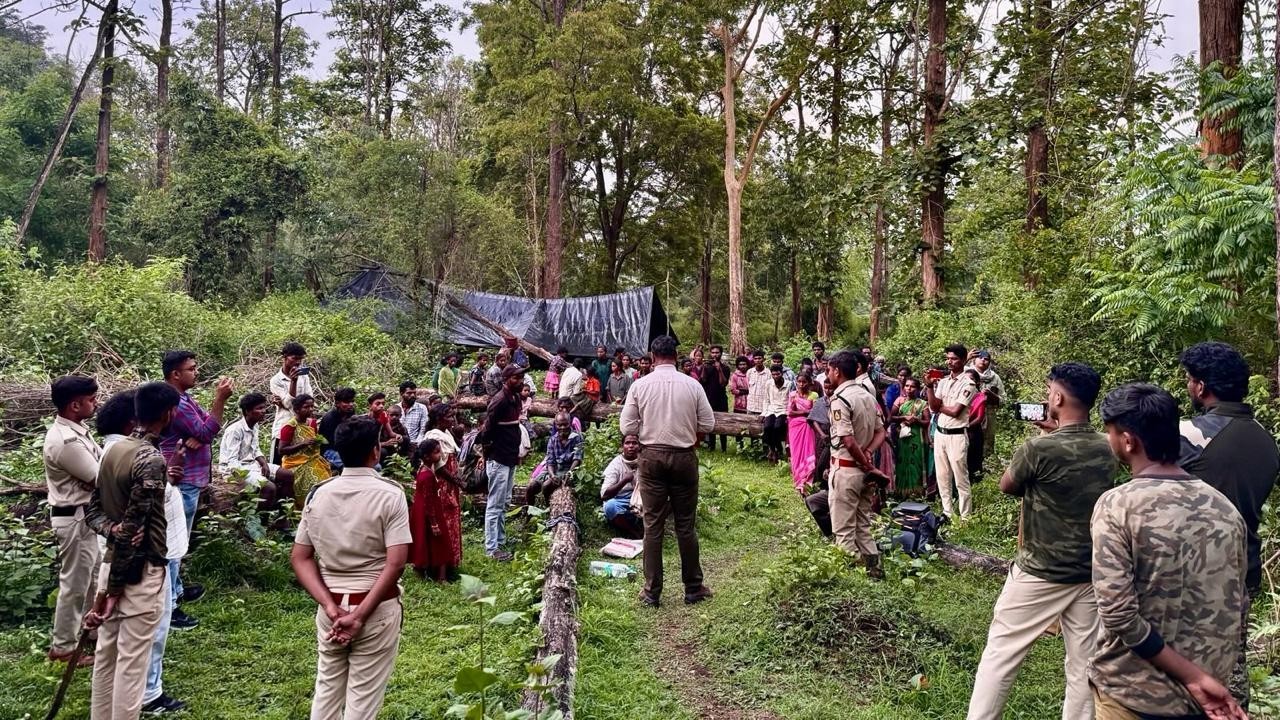
Bold Victory: 7-Point Emotional Verdict as Karnataka High Court Stays Suspension of AEE in Ballari

The Karnataka High Court has stayed the suspension of an Assistant Executive Engineer (AEE) of the Ballari City Corporation, who was penalised after removing illegal flex and banners allegedly linked to the husband of a local councillor. The court’s interim order has generated intense public debate, with many framing the issue as a fight between individual officers seeking to enforce civic rules and the political pressures that obstruct their responsibilities. The incident has now escalated into a larger discussion on whether municipal employees can carry out their duties independently when actions affect influential political families.

The case began when the AEE initiated the removal of unpermitted banners installed in public spaces in Ballari. These advertisements reportedly promoted events associated with the husband of a councillor representing the Ballari City Corporation. The officer cited municipal regulations and local governance laws that forbid unauthorised banners, posters and hoardings in public areas. Soon after the removal drive, complaints were allegedly lodged against the AEE, accusing him of misconduct, leading to his suspension. Civic activists argue that the punishment signalled a message that laws can be selectively applied depending on who is affected.

Judiciary Questions Administrative Fairness and Political Targeting

In its decision, the Karnataka High Court observed that the suspension appeared to be hasty and lacked sufficient justification. The court questioned whether disciplinary proceedings were initiated merely because the officer acted against individuals with political influence. Legal experts note that the court’s scrutiny aligns with established jurisprudence asserting that suspension cannot be used as a punitive measure without evidence of wrongdoing. The court emphasised that officers should not be penalised for performing duties mandated by law, especially when the action concerns the protection of public property and civic order.Karnataka High Court stays suspension of AEE after he removed illegal  banners of husband of councillor of Ballari City Corporation - The Hindu

During the hearing, the court reportedly asked whether there was any enquiry establishing misconduct before placing the officer under suspension. It also sought clarity on whether the banners in question were indeed illegal. Preliminary reports submitted by municipal authorities confirmed that the banners had not received mandatory permissions. The High Court found that this fact strengthened the argument that the AEE was performing his lawful duty. Legal observers say the situation could have implications for how municipal administrations respond to future complaints that arise from politically sensitive enforcement actions.

The court also highlighted that suspension may only be justified when a continued presence of an officer in service could influence the investigation or hinder public interest. In this case, the government failed to demonstrate any such reason. Instead, the court noted that the removal of illegal banners was a necessary civic function, and the officer’s actions should have been supported rather than penalised. Commentators view the interim stay of suspension as a signal that the judiciary remains vigilant about administrative decisions driven by political pressures rather than objective criteria.

Municipal law experts argue that banner regulations are often misused by politicians who seek informal control over public display spaces. Unauthorised banners frequently violate advertising rules, obstruct traffic, and alter public landscapes without accountability. When enforcement officials attempt to remove them, they can face retaliation from elected representatives who believe civic controls should bend to political influence. The High Court’s order, they say, may deter such unwarranted interference and embolden officers to act in accordance with legal duties without fear of punitive reprisal from local politicians.

Debate Sparks Between Civic Duty and Political Influence

The Ballari incident has also ignited a public discussion about decentralised urban governance and how closely it is linked with electoral influence. Local civic activists argue that councillors often treat public property as an extension of their personal political branding. Events conducted for social causes, festivals or public celebrations are frequently used as platforms for political visibility, and illegal flex banners become informal advertisement channels. In several cities, these banners appear on electric poles, drains, bus shelters and heritage structures, often causing visual pollution and obstructing maintenance activities.

Environmental groups have also reacted to the case. They note that illegal banners made of plastic and vinyl contribute to waste generation and are often dumped on roadsides when removed. Despite statewide initiatives against single-use plastics, enforcement remains weak when the offenders are politically connected. Civic engineers and municipal workers say they regularly encounter threats during removal campaigns. Some officers, they claim, prefer to ignore violations to avoid political backlash. Many believe that the High Court’s stay order may encourage stronger implementation of banner-removal rules, promoting a cleaner urban environment.

Social media responses have been divided, but a large portion of the public has expressed support for the AEE. Users have praised the officer for standing by rules despite possible consequences, seeing the suspension as symbolic of systemic misuse of authority. Some have called for legislation that would protect civic officers from political intimidation. Others caution that public outrage should not overshadow due process and insist that each case must be judged objectively based on evidence. However, the general sentiment reflects growing frustration over the politicisation of municipal services.

Veteran administrators have weighed in, recalling similar episodes in Karnataka and other states where officers faced transfers or disciplinary action after enforcing laws against political banners or encroachments. They maintain that urban governance often suffers because officials hesitate to act when enforcement affects local leaders. An officer’s career progression, they argue, is shaped not only by performance but by how well they navigate political sensitivities. Some retired administrators have urged lawmakers to develop a framework that shields civic workers from punitive action when they implement court orders or laws approved by elected bodies.

Legal analysts suggest that this case could lead to more litigation on the protection of honest public servants. Discussions are underway among civil service associations about approaching courts to reinforce guidelines preventing suspension without adequate grounds. They argue that disciplinary measures must not discourage lawful enforcement. Advocates emphasise that temporary stays must eventually be followed by structural reforms. Without long-term solutions, they warn, individual victories in court cannot resolve the deep-rooted imbalance between civic power and political pressure that affects municipal governance across India.

Public policy researchers note that while courts can intervene, the primary responsibility lies with governments to frame fair administrative protocols. They stress that political establishments must recognise that strengthening civic enforcement is not a threat to elected representatives but a necessary component of functional urban governance. A robust framework that discourages illegal banners, encroachments and visual clutter can improve public safety, ease traffic management and elevate the visual identity of cities. Bengaluru, Mysuru and Hubballi-Dharwad are among Karnataka’s cities where similar challenges persist with limited success.Classic case of abuse of power: Karnataka HC slams AEE suspension over banner  removal

Cultural commentators have also reflected on a broader sentiment that public spaces are gradually being overtaken by private interests, sometimes under the guise of community events. They question whether political visibility should depend on occupying streets, walls and poles rather than transparent communication through regulated channels. The criticism highlights the emotional attachment ordinary citizens have to shared public spaces, which serve as symbolic assets of community identity. The push to protect them from misuse, therefore, is not merely an administrative concern but a cultural aspiration rooted in civic dignity and collective ownership.

The High Court’s decision in the Ballari case has temporarily restored the officer’s reputation and position. However, many believe that the larger battle lies ahead. The outcome of further hearings will determine whether disciplinary inquiries will be dropped or pursued with greater transparency. For now, the stay order reinforces that the judiciary remains an important safeguard for municipal officials attempting to uphold public laws. Supporters of the AEE hope that the case sets a precedent encouraging officers across Karnataka to perform their duties without fear, and that elected representatives will respect legally mandated urban regulations.

In the weeks to come, civic activists, legal experts and government officials are expected to follow the case closely. Pressure may build on city corporations to ensure that enforcement drives are backed by written orders and transparent approvals to shield officers from retaliation. The debate may also prompt bureaucratic associations to advocate stronger protection mechanisms. Ultimately, the case has drawn attention to a fundamental question: Can urban governance thrive when enforcement is vulnerable to political influence? The High Court’s intervention offers hope, but its long-term impact will depend on whether institutions respond with structural reforms.

Conclusion: Hope for Fair Governance and Respect for Civic Law

The suspension stay granted by the Karnataka High Court represents more than an individual officer’s relief. It symbolises a collective aspiration for governance that respects lawful enforcement over political convenience. As the legal process continues, many hope this episode will mark a shift in how municipal duties are perceived and protected. Advocates of good governance argue that civic officers must be empowered to implement legal mandates without fear of reprisal. If reinforced through policymaking, the Ballari case could emerge as a milestone in protecting the integrity of urban administration across Karnataka.Karnataka HC upholds dismissal of 7 BSP councillors from Kollegal |  Bengaluru News - Times of India

The suspension stay granted by the Karnataka High Court represents more than an individual officer’s relief. It symbolises a collective aspiration for governance that respects lawful enforcement over political convenience. As the legal process continues, many hope this episode will mark a shift in how municipal duties are perceived and protected. Advocates of good governance argue that civic officers must be empowered to implement legal mandates without fear of reprisal. If reinforced through policymaking, the Ballari case could emerge as a milestone in protecting the integrity of urban administration across Karnataka.

Follow: Karnataka Government

Also read: Home | Channel 6 Network – Latest News, Breaking Updates: Politics, Business, Tech & More
Surprising 1 Photographic Art Book ‘Hampi: The Rituals of Time’ by Saibal Das Launched in Bengaluru

A photographic art book titled Hampi: The Rituals of Time, created by eminent photographer Saibal Das, was unveiled in Bengaluru, drawing art enthusiasts, historians, and cultural scholars to celebrate the living heritage of the Vijayanagara empire. The launch highlighted Hampi’s complex interplay of art, rituals, mythology, and landscape captured through an immersive visual narrative. Described as both a cultural archive and an artistic journey, the book attempts to portray not just the archaeological grandeur of Hampi but also the evolving religious rituals and human interactions around its historic monuments. Attendees praised the effort as an important documentation of India’s continuing heritage.

The book also highlights lesser-known ritual spaces that often lie beyond popular tourist routes in Hampi. Saibal Das shared that many of the images were captured in quiet courtyards, small shrines and temple kitchens that are rarely recognised as heritage hotspots. He said that understanding these intimate spaces is essential to comprehending how sacred geography functions in a living heritage site. These areas may not appear monumental, yet they nurture spiritual continuity through shared labour, communal cooking, distribution of prasada and local offerings. By documenting these everyday acts, the book expands the idea of heritage to include invisible labour that sustains devotion.


Curators who attended the launch remarked that the book’s visual rhythm reveals how time behaves differently in sacred landscapes. They observed that rituals impose their own sense of chronology, independent of the modern pace of tourism or academic study. While tourists rush through monuments, the rituals demand patience, repetition and attention to detail. This rhythm is reflected in multiple images that show priests preparing lamps, flower vendors waiting for worshippers and devotees crossing the river with offerings. According to experts, such images resist hurried consumption and encourage viewers to recognise that heritage is lived slowly, repeatedly and mindfully.


Public discussions at the event explored how cultural memory survives in places where monumental history has collapsed. Scholars pointed out that while the Vijayanagara empire fell centuries ago, the cultural ecosystem remains robust through continuity of worship. This suggests that empires may perish, but faith practices adapt and endure by integrating with communities. The book portrays this idea by foregrounding people, rather than kings or legends. It captures the persistence of culture in the hands of ordinary devotees whose relationship with Hampi is shaped not by historical nostalgia but by immediate spiritual relevance. Their participation keeps the ruins alive with purpose.


Art educators present at the launch suggested that the book could be integrated into creative and academic courses for architecture, fine arts, photography and anthropology students. They argued that visual interpretation of heritage nurtures interdisciplinary thinking and encourages students to examine cultural spaces with sensitivity rather than objectification. When young professionals learn to analyse heritage through multiple lenses, they become better equipped to make ethical and informed decisions about conservation, design and public engagement. Teachers added that such books are essential learning tools in a time when digital consumption often reduces heritage to aesthetic fragments detached from cultural context.

Why BJP MP Lahar Singh Siroya sponsored art book on Hampi by photographer  Saibal Das - The Hindu


Many participants expressed hope that the success of Hampi: The Rituals of Time would inspire similar artistic research on other heritage landscapes in India. They mentioned locations such as Badami, Pattadakal, Srirangapatna and Kanchipuram, where worship practices coexist with historical monuments. Documenting these living ecosystems, they said, could help shift public perception from seeing heritage as a tourist commodity to recognising it as a community practice. They also emphasised that collaborative projects involving scholars, photographers and local communities could influence heritage policy in meaningful ways. By placing lived culture at the centre, art has the potential to reshape preservation priorities.


Background: Documenting Living History Through Photography


According to Saibal Das, the book was conceptualised as a long-term study that captured how ancient temples and iconography in Hampi are still embedded in everyday lives of people. Das explained that Hampi is not merely a relic to be studied as a fallen empire, but a living ecosystem where rituals, festivals and community worship continue in the shadow of monumental ruins. He emphasised that documenting these cultural layers through photography helps show history as emotion rather than just information. The photographs therefore include priests performing centuries-old rituals, pilgrims interacting with deities, and ordinary moments unfolding against dramatic architectural remains.


Visual Portrayal of Rituals, Landscapes and Human Interaction


The book combines landscape frames, portraiture, architectural close-ups and ritualistic sequences, offering viewers an immersive understanding of how time influences sacred spaces. Saibal Das spoke about his attempt to explore the “tempo of worship,” which continues unchanged despite the ruinous setting. Many of the photographs depict the Virupaksha Temple, the Tungabhadra River ghats, the chariot festival, and traditional processions that bring life to monuments typically seen in silence by tourists. Instead of prioritising grand vistas alone, Das chose to capture quiet interactions, gestures of reverence, and daily routines around ancient shrines. These narrative techniques underline how heritage remains alive through practice, not preservation alone.


The Launch Event Draws Curators, Scholars and Art Collectors
The launch event was attended by curators from Karnataka’s major museums, historians, architects, art collectors and members of photography circles. Discussions centred on how initiatives like this expand understanding of heritage beyond tourism perspectives. Speakers observed that the book arrives at a time when India’s archaeological spaces are often discussed only for economic prospects or visitor footfalls. The focus on rituals repositions Hampi as a cultural organism rather than merely a visual spectacle. Curators suggested the book could be used as a reference for museums, cultural sociologists and students of heritage management, as it offers interpretive visual documentation rather than mere illustration.


Role of Photography in Cultural Storytelling Highlighted
A panel discussion during the event explored the role of photography in retelling historical narratives. Experts noted that photographers like Das offer a bridge between academic heritage studies and public imagination by drawing attention to elements that are often unnoticed. They stressed that photography can be both poetic and informative, capturing fragments that text-based history may overlook. When such work is compiled into books, it becomes accessible to wider audiences who may not read scholarly essays but engage strongly with visual storytelling. The book was described as a valuable medium that democratizes heritage knowledge through art.


Relevance for Karnataka’s Heritage Conservation Work
Officials associated with Karnataka’s heritage conservation initiatives attended the launch and welcomed the book’s contribution. They noted that artistic studies encourage public involvement in protecting cultural sites, especially when images reveal how communities continue to engage with them. While archaeological development often focuses on structural restoration, cultural preservation demands attention to practices, rituals and community memory. They remarked that documenting living religious practices in historic spaces supports the case for safeguarding non-material heritage. The book, they said, reinforces the notion that heritage belongs to people, not just to monuments, and its survival depends on lived traditions.


Hampi’s Ritual Identity Often Overlooked by Tourism Narratives
Cultural historians present at the event stated that Hampi is usually discussed as a destination known for massive architectural remains and boulder-filled landscapes, but its religious ecology receives comparatively less attention. They observed that visitors often perceive Hampi as a ruin rather than as an active spiritual landscape. The book counters this misconception by placing rituals in the centre of interpretation. Scholars pointed out that the continued worship at the Virupaksha temple, the Malyavanta Raghunatha shrine, and small village deities around Hampi demonstrate the continuity of faith that transcends the fall of the Vijayanagara empire. This perspective deepens understanding of how heritage survives across centuries.Why BJP MP Lahar Singh Siroya sponsored art book on Hampi by photographer  Saibal Das - The Hindu


Emphasis on Artistic Research in Heritage Documentation
Photographers and curators emphasized that works like Hampi: The Rituals of Time represent artistic research rather than travel photography. They explained that the book was not created through short visits or aesthetic sightseeing, but through sustained observation, relationship building with priests and devotees, and an understanding of the socio-religious context. Such research-led photography, they argued, brings nuance to heritage dialogues by acknowledging lived realities. Instead of framing heritage as static beauty, the photographer positions it as dynamic, shaped by contemporary human action. This philosophy challenges conventional ideas of preservation that isolate heritage from the communities who sustain it.


Future Exhibitions and Academic Collaborations Planned
Publishers associated with the book stated that exhibitions are being planned in Bengaluru, Hampi, New Delhi and Mumbai, along with possible academic collaborations with institutions focusing on archaeology, anthropology and visual arts. Discussions are underway to expand the project into a travelling exhibition and public lecture series on ritual-centric heritage documentation. The publisher also expressed interest in producing translated editions to make the work available beyond English-speaking audiences. Scholars suggested that regional versions could help local communities recognize the value of their traditions in preserving heritage. Such collaborations may position visual documentation as a key pillar in cultural research.


Turning Art into Heritage Advocacy
Speakers at the event expressed that projects like this can act as advocacy tools when policy discussions tend to treat monuments as isolated assets. Visual narratives depicting worshippers, festival participants and caretakers show that heritage is shaped by ordinary citizens, not just historians or governments. Artists therefore become cultural mediators, showing how infrastructure decisions affect practices, and how tourism policies intersect with community spaces. Several participants advised that the book could spark conversations on improving visitor behaviour, protecting ritual zones, and developing heritage-sensitive tourism models. Art, they argued, reveals heritage values that statistics and reports often overlook.

Photographic art book 'Hampi: The Rituals of Time' by Saibal Das launched  in Bengaluru - hospet.online


Conclusion

Hampi: The Rituals of Time stands out as a reminder that history is not confined to ruins or textbooks, but exists in gestures, worship, storytelling and collective memory. The book expands public understanding of Hampi’s identity by recognising that cultural practices sustain heritage beyond architectural preservation. Saibal Das’s work blends artistic expression with ethnographic sensitivity, reinforcing that documentation must reflect not only what monuments look like, but what they mean to communities. The launch event in Bengaluru highlighted a growing aspiration to protect living heritage, suggesting that photography, when rooted in research, can become a meaningful instrument of cultural conservation.

Follow: Karnataka Government

Also read: Home | Channel 6 Network – Latest News, Breaking Updates: Politics, Business, Tech & More
1000 Skilled Bold Women Comeback Careers: Karnataka’s Empowering Tech Push for Women in Semiconductors

The Karnataka government has announced a major initiative to train women who have taken career breaks, enabling them to re-enter the workforce in the rapidly expanding semiconductor industry. The programme aims to support women engineers, science graduates, and technology professionals who may have stepped away from their jobs due to childcare, family responsibilities, relocation, or other personal reasons. By building a specialised training pathway for such women, the government hopes to reduce gender disparities in emerging industries and expand India’s pool of skilled semiconductor talent. Officials describe this as a strategic workforce investment that aligns with national ambitions in electronics manufacturing and chip design.

This effort comes at a time when India is rapidly pushing to build self-reliance in semiconductor manufacturing amid global supply chain disruptions and high dependence on imports. Karnataka, already a leader in technology and electronics, believes that women who wish to restart their careers represent a valuable but overlooked resource. Many of these women possess strong academic qualifications and prior experience, yet they are unable to return to industry roles due to skill gaps created by rapid technological advances. The government aims to solve this by offering updated curriculum, technical mentorship, and paid internship pathways that help women regain professional confidence and receive industry acceptance.

Many women returning after career breaks struggle to re-enter tech sectors due to rapid technological upgrades and limited hands-on exposure. Experts note that even trained engineers lose professional confidence without industry engagement. The government programme is designed to directly address this challenge by providing skill-refresh modules, practical semiconductor training, soft skills, and mock interview support. Officials believe this holistic approach will create a smoother transition from domestic responsibilities to professional environments. The initiative also intends to assist women battling societal pressures and family hesitations, helping them restart careers with renewed knowledge, mentorship, and equal opportunities in high-growth industries.


Industry Representatives Seek Inclusive Hiring Policies and On-Job Apprenticeships
Semiconductor companies collaborating with the Karnataka government are keen on creating inclusive hiring practices along with apprenticeships tailored specifically for returning women. Industry representatives stated that project-based assessments, flexible hours, and blended learning could allow women to simultaneously upskill while managing personal responsibilities. Several companies have reportedly agreed to reserve apprenticeship seats for programme graduates, ensuring that training leads to employment opportunities. Discussions are ongoing regarding policy incentives such as reduced corporate taxes or recognition credits for firms that recruit returning women engineers. Officials believe such measures could build a strong ecosystem of workforce reintegration and gender-balanced industrial expansion across Karnataka.

Karnataka government to train women who've taken career breaks in semiconductor  industry - The Hindu


National Semiconductor Mission Alignment Could Boost Karnataka’s Model
The initiative is expected to align with the National Semiconductor Mission, potentially giving Karnataka’s model national visibility. Government officials say that a robust women-oriented semiconductor workforce programme could position Karnataka as a leader in inclusive chip manufacturing talent. The state already houses major design facilities and upcoming chip plants, making it a strong candidate for national partnerships. If successful, the programme could receive funding for expanding labs, research spaces, and women-focused training clusters. Policy analysts suggest that Karnataka could export its model to other states, thereby strengthening India’s overall semiconductor capabilities while simultaneously boosting women’s representation in future technologies.


Experts Emphasise Long-Term Monitoring and Continual Upskilling for Women Trainees
Technology researchers have stressed that training alone will not guarantee successful reintegration unless supported by long-term monitoring, performance tracking, and periodic skill upgrades. Semiconductor technologies evolve rapidly, demanding continuous learning even after employment. Experts propose that alumnae should receive access to refresher courses, digital platforms, and industry seminars through subsidised models. They also advocate building alumni support and mentorship networks to help women sustain careers without dropping out again. The government is reportedly evaluating these recommendations, aiming to build a self-supporting system that equips women not just to re-enter the semiconductor industry, but to grow and thrive sustainably.

Officials emphasise that this initiative is not merely a social welfare programme, but an economic strategy grounded in skill development. Semiconductor companies, research organisations, and design start-ups are facing shortages of engineers trained in chip architecture, fabrication processes, electronics design automation, and packaging. Training returning women professionals can expand the talent pipeline without waiting years for fresh graduates to build expertise. Additionally, organisations benefit from diversity-driven innovation, as multiple studies show that teams with gender diversity perform better in research and problem-solving. Karnataka plans to leverage this diverse talent pool to strengthen its presence in global semiconductor networks.


Bridging Skill Gaps With Industry-Driven Training Modules

The training curriculum will be formulated in consultation with leading semiconductor companies, ensuring that participants learn skills that match real industry requirements rather than generic coursework. It will cover chip design fundamentals, system-on-chip (SoC) architecture, fabrication technology, validation methods, clean-room protocols, and semiconductor supply chain management. Participants will also receive guidance in programming languages used in chip design such as Verilog, VHDL, and SystemVerilog, along with practical exposure to design automation tools used by global firms.

Beyond technical content, the programme will help participants navigate workplace reintegration challenges. Trainers will provide sessions on resume building for comeback careers, communication skills, confidence building, and interview preparation tailored to women returning after career gaps. Experts argue that skill gaps are not just academic; many women feel uncertain about technological changes or fear bias in recruitment. The programme aims to eliminate these psychological barriers by granting participants equal opportunities to showcase their skills through hands-on projects and assessments. Women will be encouraged to work on collaborative designs, simulation exercises, and prototype development, helping them build portfolios that speak louder than traditional resumes.

A key advantage of the programme is that it will not require women to immediately relocate or commit full-time during training. Multiple learning modes, including hybrid and flexible schedules, will be offered to accommodate family responsibilities. Officials recognise that returning to work cannot be forced or rushed and that a smooth, respectful transition is essential. By prioritising flexibility, the government hopes to create an accessible model that adapts to women’s lives instead of expecting them to fit into rigid corporate structures. The intention is to break the stereotype that only uninterrupted career trajectories can lead to advanced technical roles.Karnataka government to train women who've taken career breaks in semiconductor  industry - The Hindu

Industry leaders supporting the programme say that companies will be encouraged to offer internships and job placements through a structured pathway. Trained women may be assigned to chip validation teams, packaging research centres, electronic system design units, or fabless semiconductor enterprises. Some may also pursue research collaborations with academic institutions or work in government-supported semiconductor labs. The government intends to incentivise companies that hire women returnees, possibly through subsidies, tax benefits, or recognition awards. This public–industry partnership is viewed as critical for building confidence among employers who may hesitate to hire mid-career returnees without assured support measures.


Creating an Inclusive Semiconductor Ecosystem for the Future

Karnataka’s semiconductor initiative also holds broader implications for gender equality in India’s tech landscape. Despite high numbers of women pursuing science and engineering degrees, fewer women build long-term careers in the semiconductor sector due to societal pressures, caregiving burdens, and limited maternity support in specialised industries. By addressing these barriers through structured training and industry engagement, the government is aiming to shift workplace culture in sectors traditionally dominated by men. Officials hope that the presence of more women in leadership, design, and research teams will create a cascading effect, motivating future generations to pursue semiconductor careers without fear of career stagnation.

Participants in the programme will also receive awareness on intellectual property rights, ethics in semiconductor development, and opportunities for entrepreneurship in chip design services. Start-up incubation support may be offered to those who wish to launch businesses rather than enter corporate employment. Recognising India’s growing prominence in fabless design and chip research outsourcing, experts encourage women to consider entrepreneurial routes that do not depend on expensive fabrication units. A strong network of women-led semiconductor start-ups could position Karnataka as a global hub of inclusive innovation, generating patents and indigenous technologies.

The government is exploring partnerships with global semiconductor giants to provide advanced tools, mentorship, and exposure. Talks are underway with companies involved in fabrication, advanced packaging, design automation, and optical semiconductor manufacturing. These collaborations may allow participants to work on global problem statements and access training platforms used by international chip specialists. Officials believe that global partnerships will help women returnees understand market expectations beyond India, preparing them for high-value engineering roles in multinational teams. This strategy could also attract international investment to Karnataka by showcasing its gender-inclusive innovation culture.

Another objective of the initiative is to create a strong mentorship community consisting of senior women engineers, retired scientists, and experienced professionals who earlier faced similar interruptions in their careers. Mentors will share strategies to balance family and career demands, negotiate fair pay, and handle workplace bias, while also helping trainees chart long-term professional pathways. Networking platforms are planned to help women build professional support systems that persist beyond training. Experts note that while skill-building is essential, workplace success depends heavily on networks, confidence, and visibility—areas where returnees often feel disadvantaged.

The government aims to collect performance data from the programme to track training outcomes, hiring rates, salary trends, and career progression. This information can help policymakers scale the programme to include other high-tech sectors such as artificial intelligence hardware, quantum electronics, aerospace semiconductors, and automotive chip design. Officials stress that gender equity in advanced manufacturing is not just a symbolic measure but a national economic priority. As India competes globally for semiconductor investment, inclusive talent development becomes a competitive advantage rather than a social obligation.Government to train women who've taken career breaks in semiconductor  industry - The Hindu

Industry analysts say that this initiative may also help stabilise India’s semiconductor workforce in the long term. Global chip shortages are expected to continue due to geopolitical tensions and increasing consumer demand. Workforce stability will be crucial as companies plan fabrication plants and research centres in India. Women who re-enter with specialised training are likely to stay in their careers longer after overcoming barriers, contributing to long-term retention and leadership pipelines. Karnataka hopes to leverage this stability to position itself as India’s most reliable state for semiconductor skill supply.

The programme reflects a powerful shift in policymaking, where investment in women’s careers is seen as a strategic economic decision rather than merely empowerment rhetoric. By identifying returning women as a highly capable talent pool, Karnataka is challenging outdated hiring practices that often overlook experienced candidates due to temporary breaks. The initiative shows that career interruptions do not diminish expertise; with the right training, women can drive innovation in one of the world’s most complex and competitive industries. As the semiconductor sector shapes the future of global technology, Karnataka is building an inclusive pathway where skilled women reclaim their place at the centre of innovation—contributing not only to industry growth but to a more equitable technological future for India.

Follow: Karnataka Government

Also read: Home | Channel 6 Network – Latest News, Breaking Updates: Politics, Business, Tech & More
₹25 Crore Bold Tech Shield: Karnataka’s Proud Leap Toward a Safer Digital Future

A cybercrime training lab has been established at the Kalaburagi Police Training Centre, marking a transformative milestone in Karnataka’s efforts to strengthen digital policing and cyber security. At a time when the State has been witnessing a rise in online financial scams, identity theft, malware attacks, and cyber harassment, the facility promises specialised training for police personnel in both urban and rural regions. The government views the lab as a critical addition to its strategy of building a technically proficient police force capable of tackling emerging threats across banking, e-commerce, communication networks, and social media platforms.

The establishment of this training facility reflects an evolving understanding that cybercrime is no longer a niche concern restricted to major cities or high-profile cases. With increasing internet penetration, smartphones reaching remote villages, and digital transactions being encouraged by government initiatives, cybercriminals now exploit unsuspecting citizens from all socioeconomic backgrounds. The police require not only conventional policing skills but also technical expertise in digital forensics, data extraction, and algorithm-based tracking. The Kalaburagi lab will serve as a dedicated space to build this expertise, enabling officers to identify cybercriminal networks, trace digital footprints, and secure electronic evidence needed for prosecution.

Officials have emphasised that Karnataka, with its rapid shift toward digital governance and e-payments, cannot afford to rely solely on urban specialised cyber units. Rural and semi-urban police stations also require trained personnel, as cyber fraud cases are increasingly being reported outside major hubs like Bengaluru, Mysuru, and Mangaluru.

The training centre in Kalaburagi is expected to bridge this gap. The lab will enable police officers from northern districts—including Bidar, Kalaburagi, Vijayapura, and Yadgir—to gain hands-on experience in fighting sophisticated online crimes. This decentralised approach aims to ensure equitable access to cyber training and enhance the responsiveness of the police force across Karnataka.Cybercrime training lab established at Kalaburagi Police Training Centre in  Karnataka - The Hindu


Building a Digitally Skilled Police Force

The cybercrime training lab is equipped with digital forensic tools, simulation software, networking devices, and specialised systems designed to demonstrate real-world hacking techniques. Such tools allow officers to replicate different types of cyberattacks, examine data breaches, track cryptocurrency transactions, and dissect malicious codes. Trainers will guide personnel in recovering deleted files, securing compromised systems, and analysing digital trails without contaminating evidence. Authorities believe that officers trained in these methods will be better positioned to collaborate with banks, telecom operators, and cyber agencies while addressing complaints involving social media impersonation, phishing scams, ransomware, and child exploitation.

The facility is also expected to focus on the legal aspects of cybercrime investigation. Officers will learn how to invoke relevant provisions under the Information Technology Act, Indian Penal Code, and other regulatory frameworks. Trainers will emphasize the importance of properly documented evidence, adherence to procedures governing data privacy, and timely submission of digital evidence in courts to prevent acquittals due to loopholes.

Senior officials have stressed that technology-based crimes need a combination of investigative skill, courtroom preparation, and multidisciplinary teamwork. Police personnel must learn to present digital evidence convincingly before judges, ensuring that offenders cannot escape on technical grounds.

In addition to forensic training, the lab will introduce modules on preventive cyber security strategies. Policemen will receive instruction on educating citizens about safe digital practices, including using secure passwords, verifying online sources before financial transactions, and avoiding suspicious links. Awareness campaigns are expected to form part of their duties after training. Police stations will be encouraged to provide public guidance on cyber hygiene through community outreach programmes, school workshops, and digital literacy camps. These preventive strategies will supplement the investigative abilities developed at the lab, strengthening grassroots cyber resilience.

Cybersecurity trainers emphasise that cyber threats evolve rapidly, making it necessary for the police to undergo continuous upskilling. The lab will host periodic workshops with experts from the private sector, academia, and national cyber agencies. Developers and ethical hackers may be invited to demonstrate new vulnerabilities and attack patterns, allowing trainees to gain firsthand insight into emerging digital threats. Authorities believe that collaboration with external experts will make training more dynamic and industry-relevant, ensuring that officers do not rely solely on outdated mechanisms. The objective is to nurture a future-ready police force that thrives on innovation instead of reacting slowly to cyber threats.


Boosting Digital Policing Beyond Bengaluru

Kalaburagi’s inclusion as a regional cyber training hub is part of a broader strategy to ensure tech-enabled policing outside Bengaluru’s high-tech zone. Karnataka’s northern districts have already recorded multiple cyber fraud cases involving ATM card cloning, online betting, fraudulent job portals, and fake loan apps targeting low-income families. Police officers in these regions often struggle with limited resources or lack of specialised expertise. The new lab aims to sharpen their investigative capabilities and reduce dependence on cyber units located in Bengaluru. Officials hope that rural complainants, especially labourers and small business owners, will receive prompt and informed assistance instead of delayed support due to bureaucratic transfers.Cybercrime training lab established at Kalaburagi Police Training Centre in  Karnataka - The Hindu

The training centre will also serve as a platform for regional coordination between police units. Officers from neighbouring states such as Telangana and Maharashtra may eventually be invited to participate in joint sessions, especially where interstate cyber networks operate across borders. Interstate collaboration is increasingly crucial in cybercrime investigations, as offenders frequently use servers, SIM cards, and banking accounts located in multiple regions to evade detection. Kalaburagi’s strategic geographic location could make it a nodal point for such partnerships, enhancing the State’s influence in national cyber defence frameworks.

Observers believe that the lab can significantly improve conviction rates in cybercrime cases, a critical issue that has troubled law enforcement agencies. While complaints have risen sharply in recent years, the percentage of cybercrime convictions remains low due to inadequate evidence, slow forensic analysis, or lack of digital expertise among investigating officers. With specialised training, police personnel can ensure faster evidence collection, secure digital storage, and professional presentation in courts. These improvements could deter offenders who currently exploit delays and systemic weaknesses to avoid prosecution.

Another expected benefit is that trained officers may eventually lead cyber units in every district. Karnataka plans to steadily assign cyber-trained investigators to local police stations, where they will handle cases related to online extortion, cryptocurrency fraud, cyberstalking, and fake investment schemes. The government hopes to integrate these officers into district control rooms to assist in emergency responses involving digital threats. Their presence is also expected to inspire increased public confidence, as victims often hesitate to report cyber offences due to the fear that they will not be understood or assisted effectively.

Beyond crime-solving, the lab’s presence may contribute to building a culture of ethical digital citizenship in northern Karnataka. Police personnel trained in cyber awareness are expected to partner with schools, colleges, and panchayat bodies to promote safe internet use, especially among children and vulnerable citizens. Workshops on cyberbullying, online gaming risks, and identity protection could eventually become part of community policing initiatives. Officials believe that transforming the public mindset is as crucial as punishing cybercriminals. With responsible digital behaviour becoming a priority, preventive cyber culture may evolve gradually across rural and semi-urban populations.

The establishment of the cybercrime training lab at the Kalaburagi Police Training Centre signals an ambitious shift in Karnataka’s law enforcement vision. By decentralising digital policing, empowering rural officers, and prioritising scientific investigation, the State is positioning itself at the forefront of cyber defence in India. The initiative reflects a long-term commitment to training, collaboration, and public awareness instead of relying exclusively on punitive measures. As the cyber world becomes more complex, Karnataka’s decision to equip its police force with advanced skills shows a forward-looking approach rooted in technological preparedness, community protection, and justice for victims in an increasingly digital society.

The State government is also exploring long-term budgeting to sustain such laboratories and training infrastructure. Officials have indicated that cybercrime units cannot depend on short-term grants if they are to match the speed at which technology evolves. Plans are under discussion to create a dedicated fund for digital policing, covering equipment upgrades, forensic software subscriptions, and specialised recruitment. Policymakers believe that cyber labs must be treated as essential institutions rather than optional add-ons, much like physical police stations. Sustained investment will ensure that trained officers continue to work with modern tools instead of outdated systems.

There is also growing attention on the mental stress faced by officers dealing with cybercrime, particularly cases involving exploitation, identity theft, and financial ruin of victims. Trainers at the Kalaburagi lab intend to integrate emotional resilience and communication skills into the curriculum, enabling police personnel to counsel victims sensitively. A cybercrime victim may not physically see an attacker, making the psychological impact distressing and deeply personal. Officers require training to handle distressed complainants, particularly those who suffer financial loss or cyber harassment. Authorities believe that trauma-sensitive policing will encourage more citizens to report offences.Kalaburagi's cybercrime lab to lead the way

Technology companies based in Karnataka, including firms from Bengaluru’s IT corridors, may soon be invited to collaborate with the training centre. Discussions have begun on partnerships for developing advanced investigative software, big-data analysis tools, and artificial intelligence support for tracking cybercriminal behaviour. Some companies have expressed willingness to share research insights or donate software as part of corporate social responsibility initiatives. Such collaborations could enable the lab to work with cutting-edge tools and encourage innovation in policing. Experts argue that bridging the gap between private cyber expertise and public policing is essential for India’s digital security future.

As Karnataka moves toward deeper digital transformation, the Kalaburagi cybercrime training lab represents an investment not only in security infrastructure but also in public trust. Citizens are more likely to embrace digital payments, online services, and governance platforms if they believe that cybercriminals can be caught and punished. This training centre, therefore, serves as a cornerstone in building a confident digital society.

The initiative highlights that cyber security is not merely a technological challenge but a civic responsibility shared by law enforcement, government, corporations, and ordinary users. With this step, Karnataka sets a path toward a safer digital ecosystem where citizens can navigate technology without fear, backed by a police force equipped to protect them in a rapidly changing online world.

Follow: Karnataka Government

Also read: Home | Channel 6 Network – Latest News, Breaking Updates: Politics, Business, Tech & More

₹1 Crore Tribute: Karnataka’s Memorable Move to Honour Thimmakka’s Environmental Legacy

The Karnataka government tribute has announced the formation of a ₹1 crore corpus fund in the Karnataka State Pollution Control Board (KSPCB), marking a significant step toward strengthening environmental initiatives in the State. Chief Minister Siddaramaiah declared that the corpus fund would support innovative programmes aimed at preserving nature, improving air and water quality, and promoting sustainable development. Along with this, the State will institute a new award named after renowned environmentalist Saalumarada Thimmakka, honouring her lifelong dedication to ecological conservation. The announcement demonstrates the government’s resolve to combine policy and people-led conservation efforts.

By instituting an award in the name of Saalumarada Thimmakka, Karnataka seeks to celebrate environmental leadership at a citizen level, encouraging individuals and organisations engaged in grassroots ecological work. Thimmakka, who is celebrated globally for planting over 8,000 trees, including thousands of banyans, represents a model of devotion to environmental causes without expecting material benefits. The award aims to build a generational legacy of tree protectors, climate defenders, and sustainability advocates. It is expected that the award will be presented annually to exemplary contributors to environmental protection across the State.

The Chief Minister emphasised that this initiative is part of a growing recognition that environmental conservation is not merely a government responsibility, but a collective effort that must involve communities. With rapid urbanisation, shrinking green spaces, and challenges posed by industrial waste and pollution, Karnataka needs initiatives that directly engage citizens and institutions. The corpus fund, therefore, seeks to empower the KSPCB to run campaigns, fund ecological innovations, and support projects that prioritise sustainability at both rural and urban levels.

50 years of KSPCB: CM proposes award in name of Saalumarada Thimmakka - The Hindu


Strengthening Policy and Public Participation

The creation of the fund signals deeper collaboration between regulatory bodies, civil society, and local administrations. Siddaramaiah stressed that clean air, safe water, and living ecosystems must be treated as fundamental needs rather than optional government mandates. The KSPCB has been instructed to utilise the corpus fund in a transparent manner, ensuring that projects prioritise environmental impact over symbolic gestures. The government aims to build mechanisms where scientific interventions and citizen-driven initiatives can work together to address environmental degradation.

There is growing concern over pollution levels in major cities such as Bengaluru, Belagavi, and Mysuru. These regions face stress from industrial waste, vehicular pollution, unsafe effluent disposal, and rapid construction activities. The fund could support strict monitoring, research projects, and public-awareness campaigns to mitigate these challenges. Additionally, grants may be used to incentivise communities to engage in large-scale tree planting, rainwater harvesting, and lake conservation efforts. The State hopes that such initiatives will reduce the burden on public infrastructure, while nurturing more environmentally conscious communities.

Environmental experts have welcomed the creation of a corpus fund, but they also insist on accountability and independent monitoring. They believe that the fund will be successful only if its utilisation is based on scientific evidence rather than political influence. Moreover, they advocate for citizen data initiatives that allow the public to monitor local pollution and track ecological changes. Such measures can increase transparency and ensure that funds are not diverted into short-term publicity efforts. Many environmentalists emphasise that Karnataka needs sustained investment in green infrastructure rather than isolated plantation drives.


A Living Tribute to a Green Icon

The award named after Saalumarada Thimmakka is expected to be more than a symbolic honour. It is intended to inspire individuals working without recognition and provide them a platform to encourage others to join environmental movements. The award will be accompanied by a financial grant, though its amount and selection criteria are still being finalised. The State government believes that this recognition will encourage young activists, school groups, farmers, volunteers, and other citizens to actively participate in ecological conservation.

Saalumarada Thimmakka’s lifelong work offers an important lesson for contemporary conservation challenges. At a time when environmental protection often depends on large grants, research institutions, and government machinery, her achievements are a reminder that ordinary citizens have immense power to create change. Her example proves that conservation is a continuous commitment rather than an event-based activity. Planting trees, protecting lakes, saving soil health, and building sustainable lifestyles require consistent dedication, which cannot be replaced by short-term campaigns.

Chief Minister Siddaramaiah praised Thimmakka as a “living embodiment of environmental citizenship,” noting that her work stands as a moral force against the increasing exploitation of natural resources. He suggested that conservation must become a culturally rooted habit rather than an occasional government initiative. Through the award, the government intends to integrate environmental values into educational institutions, civic organisations, industries, and research organisations.

The award initiative is also expected to strengthen the moral foundation of environmental governance. By honouring a grassroots environmentalist instead of political leaders or large corporate donors, Karnataka is sending a message about what constitutes true ecological leadership. Environmental groups have welcomed the move as an example of prioritising authenticity over publicity. They hope that other states will adopt similar models that honour community-level conservation efforts.

50 years of KSPCB: CM proposes award in name of Saalumarada Thimmakka - The Hindu


The establishment of a ₹1 crore environmental corpus fund and a commemorative award reflects Karnataka’s attempt to balance development pressures with long-term ecological planning. However, the success of this initiative will depend on sustained political will, transparent implementation, and meaningful participation from citizens across rural and urban landscapes. Conservation has become a defining challenge of our time, and Karnataka’s new measures represent a significant step toward nurturing climate resilience. As the State takes inspiration from Saalumarada Thimmakka’s selfless commitment to nature, it sets the stage for a future where environmental protection becomes a community-driven, emotionally rooted, and scientifically informed mission.

The announcement also places greater responsibility on the KSPCB to evolve beyond a regulatory body that only issues clearances and penalties. Environmentalists believe that the board must now serve as an engine of innovation, using the corpus to introduce scientific waste management systems, improve industrial compliance, and develop green public infrastructure. They also suggest that the KSPCB hire more researchers, field experts, and technology advisers to address new-age pollution threats such as microplastics, electronic waste, and toxic industrial effluents. With climate-related disasters increasing, the board’s role must expand to climate adaptation, urban planning coordination, and sustainable development frameworks.

One key expectation is that the fund will support the rejuvenation of Karnataka’s water bodies and green belts, many of which are severely degraded due to encroachment and pollution. Lakes in Bengaluru, including Bellandur and Varthur, have garnered international attention due to toxic froth and frequent fires. Experts emphasise that the restoration of these ecosystems demands long-term funding rather than short-lived clean-up campaigns. Community-driven wetland monitoring, desilting efforts, decentralised sewage treatment, and rigorous industrial inspections could be financed through the new corpus. Strengthening lake governance could significantly boost biodiversity and groundwater recharge.

With increasing urbanisation, Karnataka’s rural regions also face ecological stress due to illegal mining, deforestation, monoculture plantations, and unplanned tourism. The corpus fund may support biodiversity mapping, indigenous afforestation, and soil conservation projects in these regions. Activists believe that rural communities should be incentivised to plant native trees rather than commercial species that harm soil quality and water systems. They also urge the State to invest in awareness programmes that empower gram panchayats to regulate environmentally harmful activities. The government has been encouraged to create training modules tailored for farmers, village youth, and local leaders to protect natural resources.

The initiative could also strengthen environmental justice by ensuring that marginalised communities receive support in pollution-affected regions. Industrial clusters often impact poor localities the most, exposing them to unsafe water, toxic emissions, and hazardous waste. Communities living near steel factories, chemical plants, and mining sites have long complained about health risks without receiving compensation or rehabilitation. Experts suggest that part of the fund should be used for health surveys, impact studies, and legal assistance for communities affected by industrial pollution. This would help create a rights-based approach to conservation, ensuring that environmental protection is equitable.

Educational institutions are likely to play a key role in the implementation of this initiative. Schools, colleges, and universities may receive grants to support eco-clubs, climate research, and urban farming projects. Siddaramaiah has previously stressed that developing environmental literacy should begin early in life, linking conservation to classroom learning and community involvement. The award named after Thimmakka could inspire young students to treat conservation as a collective responsibility rather than an extracurricular hobby. Teachers and institutions may also be recognised for innovative approaches to sustainability, further encouraging academic participation in climate action.

Industries will also be expected to align closely with this new environmental framework. Karnataka’s industrial growth, especially in Bengaluru, Mysuru, Hubballi-Dharwad, and Belagavi, has increased pollution risks. The government may push for stricter compliance targets, green certifications, and mandatory investment in cleaner technology. The corpus could support pilot programmes that encourage companies to produce with reduced emissions, adopt circular economy models, and eliminate hazardous waste. Firms that show exceptional commitment to sustainability might be recognised through the new award programme, promoting competitive ecological responsibility within the corporate sector.Corpus fund of ₹1 cr will be set up in KSPCB: CM – IBC World News

Over time, the award could become a national benchmark in honouring environmental work rooted in humility and public service. The government aims to showcase how small-scale efforts, such as planting trees or restoring a lake, can produce generational benefits. By celebrating a grassroots icon like Thimmakka, the award policy reflects a shift away from glamour-driven conservation. It emphasises patience, empathy, and devotion as core values in environmental stewardship. Officials believe that such cultural symbolism will strengthen societal respect for those who silently work to protect biodiversity and natural landscapes.

Ultimately, Karnataka’s decision to combine a financial corpus with an iconic award represents a vision for sustainable governance that values science as well as human dedication. Its success will depend on how efficiently funds are utilised and whether they reach genuine environmental priorities. The announcement marks a hopeful shift toward building a conservation framework that involves citizens, rewards sincerity, and protects ecosystems through knowledge and collective passion. As Saalumarada Thimmakka’s legacy inspires the State, Karnataka stands poised to cultivate a greener identity, backed by policy, compassion, and long-term ecological responsibility.

Follow: Karnataka Government

Also read: Home | Channel 6 Network – Latest News, Breaking Updates: Politics, Business, Tech & More

Shocking 48-Hour Tourist Ban Sparks Emotional Outcry in Chikkamagaluru

Tourism has come to a sudden standstill in Chikkamagaluru as the district administration imposed a temporary ban on visitors to popular hill stations ahead of the annual Datta Jayanti celebration. The restrictions apply to well-known tourist hotspots such as Bababudangiri, Mullayyanagiri, Datta Peetha, and surrounding scenic locations. Authorities said the decision was taken to maintain law and order and avoid overcrowding during the religious event, which draws thousands of devotees every year. With security forces deployed and checkpoints installed, officials insist the move is necessary to prevent potential disputes and ensure a peaceful environment over the next two days.

The ban has impacted both casual tourists and those who had scheduled trekking, sightseeing, and holiday plans during the festive period. Forest trails, hilltop routes, and vehicle access to key viewpoints remain closed until the event concludes. Visitors arriving at the foothills were turned back and advised to reschedule their trips. Some travellers expressed disappointment but acknowledged the importance of maintaining discipline during large gatherings. The police clarified that locals living in villages near hill stations will not be restricted, but vehicles transporting non-residents will not be permitted to proceed beyond designated checkpoints during the restricted period.


ADMINISTRATION CITES SAFETY AND RELIGIOUS SENSITIVITY

The decision follows previous instances of tension during Datta Jayanti celebrations at Bababudangiri, a heritage-rich site known for both its spiritual significance and political controversies. Officials from the district administration explained that the festival witnesses massive footfall, and allowing tourists to crowd the same areas may strain security arrangements. They emphasised that the crowd management plan must prioritise devotees while also protecting the fragile hill ecosystem from damage caused by uncontrolled movement. The temporary ban, they argue, is not a punishment for tourists but a precaution to maintain balance between religious sentiments, public safety, and environmental safeguards.Tourists banned from hill stations in Chikkamagaluru due to Datta Jayanti  from Dec 1-5 - The Hindu

Security personnel, including Karnataka State Reserve Police, Rapid Action Force units, and local police teams, have been stationed at sensitive points. Surveillance cameras, drone monitoring, and barricades have been set up across access routes. Forest officials have also been roped in to prevent trekkers from entering reserve areas. Authorities stated that they cannot risk overcrowding, given the number of devotees expected and the potential for traffic chaos on narrow hill roads. The administration has urged citizens to respect the temporary measure and avoid attempting to bypass restrictions, warning that violations will invite immediate legal action.

Tour operators in Chikkamagaluru have raised concerns over recurring restrictions imposed during peak travel seasons. They point out that the hill district has grown into a major tourism destination, and sudden bans affect business stability. According to them, stakeholders such as homestay owners, vehicle operators, guides, and local vendors suffer losses whenever tourist access is halted for religious or political reasons. While they support maintaining peace during festivals, they demand that the government develop a long-term plan that protects both tourism revenue and sensitive community sentiments. Several operators are considering requesting compensation mechanisms for repeated disruptions.


VISITORS EXPRESS FRUSTRATION BUT LOCALS ARGUE FOR CALM

Travellers from Bengaluru, coastal Karnataka, and neighbouring states who reached Chikkamagaluru expecting to explore lush viewpoints and trekking routes expressed disappointment after being turned away. Many had made advance bookings, and some had limited travel windows due to work or study commitments. Families and backpackers shared that they were unaware of the ban and would have rearranged plans had authorities issued wider publicity earlier. Despite the frustration, several visitors acknowledged that local culture must be prioritised and that religious gatherings require space and disciplined crowds. Others urged authorities to announce restrictions more responsibly in the future.

Meanwhile, local communities have largely welcomed the decision, stating that Datta Jayanti holds deep cultural and historical value. Residents near Bababudangiri argue that the festival already brings logistical challenges in managing crowds, parking, and waste disposal. They say that combining tourism with heavy pilgrim turnout increases pressure on limited infrastructure. Some shopkeepers near the hilltop claim that tourist restrictions help them focus on serving devotees instead of handling overwhelming footfall. A few community members noted that protecting religious harmony is more important than weekend tourism, especially in areas that have witnessed ideological clashes in past years.

Environmentalists also supported the temporary ban, arguing that the hills are extremely vulnerable to degradation caused by mass movement. Conservationists pointed out that popular tourist spots witness littering, trampling of vegetation, and irregular campfires, especially when footfall is high. With the festival crowd already expected to strain natural resources, additional tourist traffic could worsen the situation. They suggested that sensitive ecosystems should be closed periodically to reduce human impact. Some ecologists even advocated year-round visitor quotas to regulate tourism and protect biodiversity in areas such as Mullayyanagiri and Bababudangiri, which are part of ecologically rich Western Ghats landscapes.

The Chikkamagaluru district administration has clarified that the ban on tourists is not a permanent measure and will be lifted once Datta Jayanti concludes. Officials assured that hill stations would reopen soon, and tour operators would be informed in advance to resume normal schedules. They reiterated that security and sentiment-sensitive areas must be prioritised for crowd control. The administration added that they are exploring ways to prevent future misunderstandings by introducing official notifications through tourism websites, public transport networks, and booking platforms. They emphasised that transparency and timely communication will help avoid disruption to visitors’ plans in future years.Tourists banned from hill stations in Chikkamagaluru due to Datta Jayanti  from Dec 1-5 - The Hindu

Hotels, homestays, and roadside eateries have reported last-minute cancellations triggered by the ban. Owners said they had stocked food supplies and prepared for an influx of tourists before learning of the restrictions. Some businesses claim they will bear financial losses, especially since this period usually attracts visitors seeking winter mountain experiences. However, a few proprietors expressed understanding, adding that peak pilgrim seasons require compromises. Several homestay owners are considering flexible booking policies in future to avoid losses during sudden restrictions. They hope the government will coordinate more regularly with tourism stakeholders before passing such orders.

The district police have urged tourists to refrain from attempting treks on unofficial trails or entering restricted zones through forest interiors. Officials warned that some travellers try to bypass checkpoints by riding motorcycles through minor routes or rural roads. They emphasised that enforcement units are monitoring all entry points, and violators will be detained or fined immediately. The police also said that beyond security concerns, treacherous terrain poses risks during the festival rush, as emergency services will be busy managing devotees. They appealed to visitors to avoid unnecessary confrontations and cooperate until the hills reopen to the public.

The administration has assured devotees that adequate facilities, medical support, and transportation arrangements have been prepared at Bababudangiri and surrounding areas. Drinking water kiosks, first-aid centres, temporary shelters, and parking lots have been set up to handle the crowds. Volunteers will assist elderly pilgrims, and multiple control rooms will oversee safety. Forest officers and waste management teams will monitor littering and ensure eco-friendly practices during the festival. Authorities said their intent is to make Datta Jayanti peaceful, orderly, and dignified, while also ensuring that nature and heritage sites are not damaged by uncontrolled foot traffic.

Local economists believe that the repeated imposition of tourism restrictions calls for long-term planning in sensitive hill regions. They suggest that the government should create a calibrated visitor management strategy, allowing tourism to thrive without conflicting with large-scale religious events. Proposed ideas include staggered tourist entry timings, weekend-only bans, or special festival passes for visitors from outside the district. Analysts also believe that developing nearby alternative tourist circuits during such restrictions could help balance economic loss. With careful policy design, they argue, Karnataka can protect its heritage spaces while sustaining tourism growth in ecologically fragile zones.

Transportation networks in the district witnessed heavy diversions due to the ban, with buses and taxis rerouting to other destinations. KSRTC officials said they will continue operations to Chikkamagaluru town but not to popular hill routes until order modifications are announced. Taxi operators faced cancellations and idle hours due to the sudden blockade. A few drivers redirected tourists to coffee estates and wildlife sites farther from the hills. Travel planners said such adaptive routing could become a regular practice during festival seasons if authorities offer clear guidelines ahead of time, helping minimise revenue losses for the transport sector.

The sudden ban has added to the ongoing debate over managing multi-faith sensitivities at Bababudangiri, where both Hindu and Sufi traditions mark religious presence. Political observers noted that crowd control at the site often sparks controversies linked to identity and ritual practices. Officials avoided engaging in ideological discussions, asserting that the current restrictions serve purely administrative and logistical purposes. They emphasised that the objective is to prevent crowd-related disputes, not endorse ideological interpretations. Policymakers insist they must remain neutral, managing high-turnout religious events in a manner that preserves communal peace in historically sensitive hill regions.Chikkamagaluru DC issues advisory note to people planning hill station  visits - The Hindu

As authorities and communities remain focused on ensuring a peaceful Datta Jayanti, stakeholders hope that tourism activities will resume smoothly after the celebratory rush. Officials said plans are in place to reopen hill stations gradually, ensuring that security personnel can withdraw in phases without compromising safety. Tourism operators expect a surge of rescheduled visitors once restrictions are lifted. The administration reiterated that Chikkamagaluru remains a welcoming tourist hub, urging travellers to support responsible and respectful tourism practices. For now, the priority remains safeguarding sentiment, security, and environmental balance during the festival, with long-term harmony as the ultimate goal.

Follow: Karnataka Government

Also read: Home | Channel 6 Network – Latest News, Breaking Updates: Politics, Business, Tech & More

Cooch Behar Political Crisis Deepens: How the Civic Boss Exit Order on Rabindranath Ghosh Triggered a Trinamool Congress Feud – A Comprehensive Analysis of the Power Struggle in Bengal Politics

Cooch Behar Political Crisis Deepens: The political landscape of Cooch Behar, a district known for its strategic electoral importance and complex factional history, has plunged into turmoil following an unprecedented internal conflict within the Trinamool Congress (TMC). The crisis erupted after the district leadership directed senior TMC leader and municipal chairman Rabindranath Ghosh to step down by November 19. His refusal to comply—accompanied by a bold declaration that he would resign only if instructed by Chief Minister Mamata Banerjee—sent shockwaves through the party’s local structure.

This dispute did not emerge in a vacuum. It comes at a critical juncture when TMC is restructuring municipal and organizational posts across multiple districts following mixed electoral performances. The unfolding episode has now escalated into a major confrontation between two entrenched camps: one loyal to Ghosh, a heavyweight of Cooch Behar politics, and the other aligned with the district’s current leadership.

This long-form analysis explores the origins of the feud, the turning points, the reaction of different political camps, the potential consequences for governance, and what the conflict reveals about internal dynamics inside TMC and Bengal’s shifting political equations.


Section 1: Who is Rabindranath Ghosh — The Man at the Heart of the Storm

Rabindranath Ghosh is far more than a municipal chairman. He is one of the most well-established political figures in North Bengal, with a public life spanning over two decades. His long tenure as the Cooch Behar district president of TMC, beginning in 1998, earned him immense influence over regional cadres, civic boards, and grassroots networks.

His political clout was built on:

  • Consistent grassroots engagement
  • Strong ties with traditional TMC cadre
  • A loyal voter base that has remained steadfast for years
  • Deep influence over civic administration in Cooch Behar

Thus, the directive for his removal did not merely ask a chairperson to resign—it challenged the foundational structure he had built over decades.


Section 2: What Sparked the Exit Order? Understanding the Party’s Restructuring Drive

Sources within the ruling camp suggest that the decision to replace civic chiefs across several municipalities stemmed from a post-election organizational assessment. Multiple civic bodies in North Bengal had unexpectedly delivered underwhelming results in the 2024 Lok Sabha polls.

To improve electoral performance ahead of upcoming state and national elections, TMC began a restructuring exercise of civic posts, including chairperson and vice-chairperson positions, particularly in regions where:

  • vote share declined
  • local factions were in open conflict
  • civic bodies were accused of inefficiency
  • internal complaints against leadership had accumulated

Cooch Behar Municipal Corporation was one of the top targets for administrative “realignment.”

But why was Ghosh singled out?

Insiders point to:

  • A growing rift with certain district leaders
  • Complaints regarding decision-making monopolization
  • Resistance to younger leadership entering the civic body
  • Perception among some leaders that his long tenure had stalled “organizational rejuvenation”

Whether these concerns were genuine or politically motivated remains contested.


Section 3: The Flashpoint — Ghosh’s Declaration of Defiance

When the directive arrived from district TMC president Abhijit De Bhowmik, asking Ghosh to resign by November 19, many expected the veteran to quietly step aside. Instead, Ghosh issued a firm ultimatum:

“I will resign only if the Chief Minister, Mamata Banerjee, asks me to.
I will not obey directions from district-level leaders.”

This was the moment the issue escalated from a routine reshuffling to a full-scale political confrontation.

His statement carried three unmistakable messages:

  1. Delegitimization of district leadership authority
  2. Assertion of his direct relationship with the top leadership
  3. Open rebellion against internal party discipline

Within hours, the district split into rival factions.


Section 4: Two Camps Emerge — Loyalty vs. Reformation

Camp 1: The Ghosh Loyalists

This faction is composed of:

  • senior party workers who grew with him since the ’90s
  • many municipal councillors aligned with him
  • grassroots members who consider him a protector of their political interests
  • local trade unions and student wings with long-term ties

A significant show of strength came when around 500–600 supporters gathered at a meeting hosted at the residence of former MP Partha Pratim Roy.

Statements during the meeting made it clear that they saw the move as an attack on the “original Trinamool workers.”

Camp 2: The District Leadership Bloc

This faction mainly includes:

  • district party president Abhijit De Bhowmik
  • North Bengal Development Minister Udayan Guha
  • councillors aligned with the district faction
  • leaders who joined TMC from other parties over the last decade

Their position is that organizational restructuring is necessary to improve the party’s electoral chances.

They also believe Ghosh’s long dominance has prevented the growth of new leadership in the region.


Section 5: The BJP Steps In — “TMC Is Collapsing Internally”

The Bharatiya Janata Party (BJP), which has grown significantly in Cooch Behar over the past decade, swiftly capitalized on the feud.

A senior BJP leader argued:

  • TMC’s internal decay is now visible
  • Original TMC workers are being sidelined
  • Leaders from other parties are dominating local politics

Their remarks were clearly aimed at creating the impression of a party losing coherence before crucial elections.


Section 6: What Does This Mean for Governance in Cooch Behar?

The conflict has immediate implications for civic functioning:

1. Municipal operations at risk

A divided council could hamper:

  • budget clearing
  • implementation of welfare schemes
  • infrastructure and sanitation projects
  • administrative decisions needing chairperson approval

2. Central schemes may slow down

Key development programs such as:

may face delays due to political instability.

3. Impact on citizens

When municipal politics destabilize, the first casualties are:

  • water distribution projects
  • road maintenance
  • waste management
  • streetlighting
  • public grievance redressal

Residents may experience slower responses and stalled projects.


Section 7: The Larger Political Context — Why North Bengal Matters

North Bengal has emerged as a fierce battleground between TMC and BJP over the last three election cycles.

Cooch Behar is especially significant because:

  • It is one of the few Lok Sabha seats the BJP consistently performed well in.
  • It borders Assam, where BJP’s influence is strong.
  • Cross-border narratives, identity politics, and citizenship issues are prominent.
  • The region has a history of politically agile voters who shift allegiance quickly.

Any internal conflict in TMC here may translate into electoral opportunities for the opposition.


Section 8: Impact on Upcoming Elections

Local Body Elections

If the feud continues:

  • BJP may consolidate anti-TMC votes
  • internal sabotage within TMC is possible
  • voter confidence in TMC’s governance may decline

2026 Assembly Elections

Internal conflict, if unresolved, could have deeper ramifications in multiple constituencies of North Bengal.

2029 Lok Sabha Elections

Long-term instability weakens organizational structures essential for running large-scale campaigns.


Section 9: What the Crisis Reveals About TMC’s Internal Structure

1. Centralized leadership vs. district autonomy

Ghosh’s insistence that only Mamata Banerjee can remove him indicates the dominance of centralized authority.

2. Power of veteran leaders

Veterans with deep-rooted networks often wield influence independent of party hierarchy.

3. Rise of new power centers

District presidents and ministers are becoming assertive in reshaping local organizational setups.

4. Growing pressure for generational change

Younger leaders want space, while older leaders resist being sidelined.

5. Factionalism

Factional politics is not new in Bengal, but the Cooch Behar episode shows factions growing stronger.


Section 10: Can the Crisis Be Resolved? Possible Scenarios

Scenario 1: Mamata Banerjee Intervenes

If the Chief Minister steps in:

  • Ghosh may resign gracefully
  • district leadership may retain its decision
  • the party may project unity

Scenario 2: Compromise Formula

A new role may be created for Ghosh, allowing him to retain influence without holding the chairmanship.

Scenario 3: No-Confidence Motion

The district bloc may proceed with a formal no-confidence motion in the municipal board.

Scenario 4: Parallel Faction Formation

If tensions escalate, Ghosh loyalists may operate informally as a pressure group.

Scenario 5: Silent Voter Backlash

Even if resolved internally, voters may perceive TMC as unstable.


Section 11: What Experts Say

Political analysts believe:

  • the feud is symptomatic of deeper structural issues
  • North Bengal TMC has long suffered from factional rivalries
  • removal of longtime leaders may backfire without proper groundwork
  • opposition parties will likely exploit every misstep
  • such conflicts weaken administrative efficiency

Several analysts also point out that the party must manage transitions sensitively, especially where leaders have enjoyed decades of influence.


Section 12: Voices on the Ground — Citizens React

Ordinary residents express mixed views:

  • Some fear civic projects may stall.
  • Others believe leadership reshuffles are necessary for better governance.
  • A section of business owners worry that political instability could affect municipal approvals and trade licenses.
  • Youth groups appear divided along party-factional lines.

Section 13: Governmental Framework Impacted — Useful External Government Links

To understand the governance implications, here are relevant sections of official government frameworks:

These portals help explain how civic bodies, municipal leadership, and public welfare schemes interact with political structures.


Section 14: Long-Term Consequences for TMC

If unresolved, the crisis may have:

  • organizational consequences: weakened cadre discipline
  • administrative consequences: stalled projects
  • electoral consequences: erosion of support
  • strategic consequences: opposition gains ground

For a party that has maintained a stronghold over Bengal for more than a decade, internal fractures pose risks far more severe than external opposition.


Cooch Behar Political Crisis Deepens: The Road Ahead for Cooch Behar and the Trinamool Congress

The Cooch Behar political crisis triggered by the exit order for Rabindranath Ghosh represents far more than a local dispute. It exposes the core tensions within the Trinamool Congress—between veterans and emerging leadership, central authority and district power, long-term loyalty and modern political restructuring.

How the leadership navigates this crisis will not only determine the immediate future of Cooch Behar’s civic governance but may also shape the trajectory of TMC’s political fortunes in North Bengal for years to come.

The coming days will be crucial. Every decision made—by the veteran leader, the district authorities, and ultimately the Chief Minister—will influence whether the party emerges stronger, fractured, or caught in a cycle of internal conflict.

Also read: Home | Channel 6 Network – Latest News, Breaking Updates: Politics, Business, Tech & More

Trinamool Congress Faces Internal Turmoil as Councillors Condemn Party Colleague Over Attacks on Siliguri Mayor and Deputy Mayor — A Deep Report on Governance, Dissent and Party Discipline

Trinamool Congress Faces Internal Turmoil: A major political confrontation has erupted inside the Trinamool Congress (TMC) at the Siliguri Municipal Corporation (SMC), triggering deep internal tension within the ruling party. The dispute centers around Dilip Barman, the councillor of Ward 46 and a member of the Mayor-in-Council (MMIC), who stands accused by fellow party councillors of repeatedly attacking the Mayor, Gautam Deb, and Deputy Mayor, Ranjan Sarkar. His remarks, delivered publicly and often sharply, have pushed the civic body into a phase of serious intra-party turbulence. The recent collective resolution by the majority councillors to escalate the matter to the TMC’s state leadership signifies the gravity of the crisis.


Trinamool Congress Faces Internal Turmoil: The Triggering Incident

The current flashpoint emerged after officials from the SMC’s building department — accompanied by police personnel — arrived in Ward 46 to demolish an illegal structure. According to officials, the operation was part of routine compliance under urban development norms and the West Bengal Municipal Act, 1993. Barman, however, allegedly opposed the demolition operation and publicly blamed the Mayor and Deputy Mayor for “targeting” his ward or “mismanaging” civic affairs. His statements quickly escalated into a public controversy, drawing sharp criticism from fellow TMC councillors who described them as unverified and damaging to the administration.


Background of the Tension

The November incident is not an isolated case but part of a series of confrontations dating back several months. Barman has repeatedly accused the civic leadership of neglecting his ward, ignoring illegal construction concerns, and allegedly failing to respond to genuine public complaints. Earlier this year, during a monthly board meeting, he had raised similar issues and exchanged heated words with the leadership. These frequent confrontations have only intensified over time, culminating in the current face-off.


Councillors Unite Against Barman

Earlier this week, 36 out of 37 TMC councillors at the Siliguri Municipal Corporation convened an internal meeting and adopted a unanimous resolution against Barman’s conduct. The councillors termed his consistent public outbursts “unjustified,” “harmful,” and “contradictory to party discipline.” They announced that the entire matter would be formally submitted to the TMC state leadership for corrective action. This unified stance suggests the rare occurrence of almost absolute consensus within a political body, underscoring the seriousness with which the party views the matter.


Formal Condemnation by Senior Councillors

Prominent councillors including Sanjay Sharma and Ranjan Shil Sharma addressed the media, stating that Barman’s allegations were “baseless” and “lacking evidence.” They emphasized that if Barman had proof of corruption or mismanagement, he should have submitted it through proper administrative and legal channels. Evangelizing grievances through the public domain, they argued, only weakens the trust people place in municipal governance.


Mayor and Deputy Mayor Respond

Mayor Gautam Deb and Deputy Mayor Ranjan Sarkar have so far maintained a restrained response to the controversy. Both leaders claimed that the demolition drive was part of the civic body’s regular enforcement activity. They reiterated that the corporation is committed to transparent governance and follows due legal procedures before demolishing any unauthorized construction. Their remarks align with established municipal norms under state government rules.


TMC’s Past Action: Show-Cause Notice

The party has disciplined Barman in the past. Earlier this year, the TMC’s state president had issued him a show-cause notice for violating party discipline. The notice alleged that Barman’s public comments were inappropriate and harmful to the party’s public image. He was given an opportunity to explain his conduct, a move consistent with internal disciplinary procedure often used in political organizations to maintain control and cohesion.


Barman’s Defense and Claims

Despite facing criticism from fellow councillors and the party leadership, Dilip Barman remains steadfast in his stance. He asserts that his statements reflect genuine concerns affecting Ward 46. He claims he has been working tirelessly for his constituents and that the municipal leadership has ignored repeated pleas for intervention. Barman argues that his criticism is not political but administrative, insisting that his objective is solely to improve the living conditions of residents.


The Identity Factor

Barman has also brought identity politics into the discourse, stating that he belongs to the Rajbanshi community, a prominent ethnic group in North Bengal, and that his views are often ignored due to internal biases. While no official within TMC has acknowledged such claims, his statements point to the possible emergence of ethnic representation becoming entangled with civic administration debates — an issue that can alter local political dynamics if it gains traction.


Paragraph 10 — Governance vs. Politics

The dispute highlights a crucial friction point between governance and politics. While Barman insists his claims highlight genuine administrative issues, the majority councillors argue that public dissent damages public trust and disrupts development work. The civic leadership must balance between accommodating dissent and ensuring cohesive functioning of the municipal corporation.


Paragraph 11 — Implications for Civic Administration

Internal conflicts within a ruling party often impact public services. If the dispute remains unresolved, key administrative decisions — such as issuing permits, approving ward budgets, undertaking infrastructure work, and coordinating inter-departmental tasks — may experience delays. Civic bodies rely heavily on cooperation between councillors and municipal officers, and persistent conflict can slow down policy execution.


Political Reputation at Stake

For the Trinamool Congress, which positions itself as a development-oriented party, such internal disputes could erode public perception. At a time when the party is focused on maintaining dominance in North Bengal, adversarial exchanges within the civic body may be perceived as a sign of organizational instability.


Reaction From Party Base

Grassroots supporters often form the backbone of political parties in regions like Siliguri. Observers note that the conflict has caused unrest among the party’s local workers. Some support Barman’s claims of administrative neglect, while others believe such disputes should remain internal and not be aired through public statements.


Residents of Ward 46 Speak Out

Residents of Ward 46 are closely watching the evolving situation. Many local citizens confirm that several civic issues — including garbage collection, drainage, and unauthorized constructions — remain unresolved. Whether these issues stem from internal disputes, administrative inefficiency, or miscommunication remains unclear, but the public sentiment leans toward demanding quicker resolution.


Development Work in Siliguri

Despite ongoing tension, the SMC claims that development work continues across several wards. Road repair, street lighting installations, water supply upgrades, and sanitation improvements are ongoing, according to civic officials. Their statements reflect the corporation’s effort to insulate administrative work from political disagreements.


What Government Rules Say About Civic Conduct

Municipal councillors in West Bengal operate under the West Bengal Municipal Act, 1993, which outlines their duties, responsibilities, and behavioral expectations. While criticism is not prohibited, persistent public allegations against colleagues may be considered misconduct under party rules — particularly if they impact governance.

Official Government Link:
West Bengal Municipal Act (via WB Government portal)
https://www.wb.gov.in


Role of the State Leadership

The dispute now awaits a decision from the TMC’s state leadership. In the past, the party has taken strict steps against intra-party confrontations to maintain unity. The current situation offers the leadership another test to reinforce discipline while allowing internal grievances to be expressed constructively.


Expected Outcomes

Political analysts suggest several possible outcomes:

  1. Reconciliation Effort:
    The leadership may initiate a dialogue between Barman and the city’s top civic leaders, seeking compromise.

  2. Reprimand or Disciplinary Action:
    The party may issue a fresh notice or reduce Barman’s role within the MMIC.

  3. Reorganization of Civic Responsibilities:
    Some responsibilities may be redistributed to prevent administrative gridlock.

  4. Defection or Rebellion:
    If tensions are not managed, Barman may consider distancing himself from the party, though this remains speculative.


Administrative Transparency and Accountability

The situation has reignited debate on civic transparency. Citizens have called for the SMC to publish actionable timelines, audit reports, and project updates on its official website to ensure residents remain informed.

Official Civic Link:
Siliguri Municipal Corporation (SMC):
https://www.siligurismc.in


The Role of Police and Enforcement Proceedings

The presence of police during demolition activities follows standard guidelines issued by the Home Department, Government of West Bengal. Police assistance is mandated to prevent law and order issues during administrative actions.

Official Link:
West Bengal Home Department
https://home.wb.gov.in


The Political Importance of Siliguri

Siliguri is strategically significant due to its demographic diversity, economic role, and geographic position. Political leadership in the city often affects TMC’s broader image in North Bengal. Thus, the internal conflict has implications for larger regional political dynamics.


Past Instances of Civic Disputes

Civic disputes within political parties are not new in urban local bodies. Across the country, such disagreements have occurred in various states, prompting government-level directives to maintain discipline. The Ministry of Housing and Urban Affairs has repeatedly emphasized cooperative governance.

Official Link:
Ministry of Housing & Urban Affairs
https://mohua.gov.in


Local Law Experts’ View

Law experts say that unless Barman can substantiate his allegations with evidence, his statements may be considered politically motivated rather than administrative. However, they also argue that genuine dissent within councils must not be suppressed but addressed through systematic dialogue.


Public Expectations from Civic Leaders

Residents expect councillors to uphold unity, ensure smooth delivery of services, and avoid confrontation that hampers development work. For them, political stability translates directly to availability of basic public amenities.


Possible Ripple Effect

If the issue escalates further, other civic bodies in West Bengal may observe ripple effects — either through stricter discipline or heightened political caution among councillors.


Governance Challenges Ahead

Going forward, the SMC faces the challenge of balancing political harmony with administrative efficiency. Whether the leadership can manage dissent while maintaining development momentum remains to be seen.


What Happens Next?

The TMC state leadership is expected to summon both sides for a detailed discussion. Once the report submitted by the 36 councillors is reviewed, the party will decide the next course of action. Such actions may include warnings, reassignment of roles, mediation, or disciplinary measures.


Citizens Await Resolution

With civic services directly tied to councillor participation, the public clearly hopes for a quick resolution. A prolonged dispute may lead to unease among residents already facing local issues.


The Broader Political Message

For political observers, the dispute sends a message that internal discipline remains a pressing concern for the TMC. How the party responds will be closely watched, particularly with upcoming electoral cycles.


Conclusion

The unfolding conflict between Dilip Barman and the leadership of the Siliguri Municipal Corporation represents more than an isolated civic dispute. It symbolizes the delicate balance between administrative governance, political loyalty, community representation, and personal expression. As the party prepares to address the concerns raised by both sides, the outcome will shape not only the future of SMC’s governance but also the political narrative of the region. With residents, councillors, administrators, and the party’s state leadership now deeply invested, the coming weeks will determine whether the dispute becomes a catalyst for internal reform or a sign of deeper fractures.

Also read: Home | Channel 6 Network – Latest News, Breaking Updates: Politics, Business, Tech & More