Sunday, May 17, 2026
Home Blog Page 372

Seventh Edition of Indo-Pacific Regional Dialogue Proudly Opens at Manekshaw Centre, New Delhi: 2025

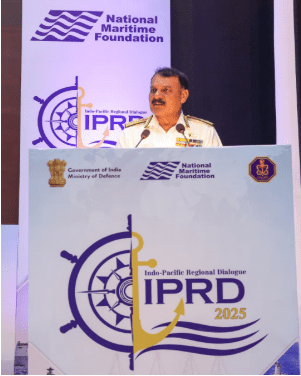
The Indo-Pacific Regional Dialogue 2025 (IPRD 2025) commenced on October 28, 2025, at the Manekshaw Centre, New Delhi. Gathering leaders, policymakers, diplomats, and maritime experts from across the Indo-Pacific and beyond, the dialogue centers on the theme of ‘Promoting Holistic Maritime Security and Growth: Regional Capacity-Building and Capability-Enhancement’. It represents the Indian Navy’s flagship international outreach to address the pressing strategic and environmental challenges facing the vast maritime Indo-Pacific region.

Key Addresses and Discussions

The event launched with an inaugural address by Admiral Karambir Singh (Retd), former Chief of the Naval Staff, highlighting the complex strategic turbulence caused by Great Power Competition, non-State actors, and escalating non-traditional threats such as climate change. He advocated for a cooperative maritime architecture to address these challenges collectively.

The opening panel included distinguished speakers from Bangladesh, Japan, Indonesia, Singapore, and South Africa, focusing on joint regional efforts to assess and mitigate security impacts of climate change in Indo-Pacific waters.


Commemorative and Special Highlights

Admiral Dinesh K Tripathi, current Chief of the Naval Staff, delivered the commemorative address emphasizing the centrality of the Indo-Pacific for India’s economic growth and security. He introduced India’s maritime policy framework called MAHASAGAR, emphasizing collaboration, cooperation, and mutual growth across the region’s oceanic spaces.

The dialogue also featured “Chaupal ki Charcha,” a session fostering open conversation among senior maritime leaders and diplomats including representatives from Germany, France, the Bay of Bengal Initiative for Multi-Sectoral Technical and Economic Cooperation (BIMSTEC), and the Netherlands. Their discussions reinforced the need for regional trust-building, information sharing, and a unified approach aligned with the MAHASAGAR vision.

A special academic highlight was the release of a special edition of Maritime Affairs, the flagship journal of the National Maritime Foundation, by Professor Christian Bueger from the University of Copenhagen.

Outlook and Significance

With over 40 speakers from 19 countries, IPRD 2025 serves as a premier platform fostering maritime cooperation and strategic collaboration. Future sessions will focus on practical measures for regional capacity-building, innovation, and cooperative frameworks under the evolving geopolitical dynamics of the Indo-Pacific.

For more real-time updates, visit Channel 6 Network.

Source: PIB

Fake Birth-and-Death Certificate Racket Exposed in Kharibari: Siliguri MLA’s RTI Probe Raises “Certificate Fraud in West Bengal Health & Panchayat System” Alarm

Fake Birth-and-Death Certificate Racket: A seemingly routine public-health record fraud case in the Kharibari block of Darjeeling district has expanded into a major governance and electoral integrity issue, as Shankar Ghosh, the BJP MLA from Siliguri and party whip, has filed a formal RTI seeking detailed data on all birth and death certificates issued by hospitals and panchayat systems in the region since July 2025. His move follows the arrest of two alleged certificate-fraudsters and spotlights the deep-seated challenge of certificate integrity in health and civic systems at the grassroots level in West Bengal.

The alleged racket involved issuing hundreds of fake certificates — reportedly with cash payments of around ₹10,000 per certificate — from a state-run rural hospital in Kharibari, raising questions not just of criminal misuse of records but also of implications for voter-registration, migration oversight and citizenship documentation in the lead-up to the upcoming voter-roll revision exercise.


Fake Birth-and-Death Certificate RacketUnfolding of the Case

On 17 October 2025, the Block Medical Officer of Health (BMOH) of Kharibari rural hospital lodged a formal written complaint with the local police station, alleging that a group of individuals had for months been issuing fake birth and death certificates from within the hospital premises.

The complaint noted that some of the certificates were being back-dated, carried false entries, and were used by applicants residing not only in the local block but from neighbouring states. Two individuals were soon arrested: one, Nabhajit Guha (also spelt Niyogi) of the local Bangla Sahayata Kendra, and the other, Partha Saha, a data-entry operator who allegedly fled to Nepal but was later apprehended while attempting to exit via Bihar. (MillenniumPost)

The police sources suggest that the number of certificates issued — over 450 suspected fake certificates — far exceeds typical rates of official births and deaths in the block within the recent months. Some of the fake certificates may have been used to procure voter identity cards, Aadhaar updates or other official documents, thus potentially impacting electoral roll integrity. (MillenniumPost)

MLA Shankar Ghosh commented:

“I have filed an RTI requesting all data on certificates issued in Kharibari block from July this year onwards. The rate is far higher than usual, which suggests systematic fraud rather than isolated incidents.”


Why This Matters: Governance, Elections & Citizenship

Health & Civic Record Integrity

Birth and death certificates are fundamental documents used across administrative, electoral, social-welfare and identity systems. When such documents are issued fraudulently, they corrupt the foundational databases and may facilitate illegal migration, false identity claims, duplicate voter entries or unreported deaths.

Electoral Implications

With the state preparing for the major voter-roll revision exercise under the Special Intensive Revision (SIR) ahead of the 2026 Assembly polls, the timing of this certificate fraud case is politically significant. Certificates issued improperly may feed into bogus entries or ghost voters, raising fears of manipulation. The MLA’s RTI underscores these concerns:

“Fake birth certificates could legitimise infiltrators in the region,” he warned.

This is especially sensitive in border-districts like Darjeeling, where migration, identity and citizenship issues have been politically and socially volatile.

Health System Oversight

The fraud also reflects deeper governance weaknesses in public health delivery and record-keeping. The fact that a rural hospital’s birth-&-death certificate system was allegedly abused suggests gaps in supervision, digital record-keeping, audit trails and inter-departmental coordination (health, panchayat, data-entry, identity issuance).

Administrative Responsibility & Oversight

The RTI application by the MLA is directed not only at health-department certificate records but also panchayat-level issuance systems — implying that civic bodies, local governments and hospital administration all might be implicated. The scale of alleged fraud (hundreds of certificates) suggests not just localised wrongdoing but systemic vulnerability.


Local Context: Kharibari Block & Darjeeling District

Kharibari block lies in the Siliguri subdivision of Darjeeling district. The region contains a mix of rural habitations, tea-garden workers, migratory populations and is proximate to border zones with Nepal and Bangladesh. Social-welfare, public-health delivery, identity systems and electoral administration are complex in such settings.

Residents of Kharibari and nearby gram panchayats told reporters they were unaware of any unusual certificate volumes but did notice “agents” offering quick certificate issuance in exchange for cash. One local resident said:

“We heard of someone offering ‘certificate in a day’ for ₹10,000. Many villagers suspected but feared to report.”

Such local perceptions underscore how informal networks may exploit weaknesses in record-issuance systems, especially in semi-urban and rural nodes where oversight may be weaker.


Legal & Institutional Dimensions

RTI Filing by MLA

Under the Right to Information Act, 2005, the MLA has sought from the relevant departments: names of certificate recipients, addresses, panchayat areas, hospital/health-unit involved, certificate numbers and dates, and the volume of certificates issued since July 2025. This move aims to map irregular certificate issuance and detect anomalies.

Police Investigation

The local police have registered a complaint (FIR) based on the BMOH’s submission of October 17, arrested two suspects and initiated tracing of network links. They are investigating whether the fraudulent certificates were used for voter-ID applications, migration records or other identity purpose.

Health & Panchayat Department Response

The hospital administration reportedly suspended data-entry staff, initiated internal audit, and forwarded records to police. The district health deputy director has confirmed that a verification of certificate issuance logs is underway. At the panchayat level, the local gram-panchayat offices are being audited for certificate submission protocols (birth/death) and cross-linkages with district registries.

Electoral Commission Implication

While the case is at the health/identity end, the electoral commission will have interest because of the upcoming roll-revision exercise. Fake certificates can feed into erroneous electoral registers. A senior official within the CEO’s office said (off the record) that they were monitoring certificate‐issuance data and district-wise anomalies ahead of the SIR.


Scale & Patterns of the Racket

According to a report by Millennium Post, one of the arrests states that around 450 fake certificates may have been issued, many with back-dated entries, and charged at ₹10,000 each.

While the exact number remains to be confirmed via the health department’s records, the MLA’s RTI suggests that the certificate-volume in Kharibari from July onwards is “much higher than usual”. The vertical spike of certificate issuance in a short period raises red-flags for audit and verification.

Some aspects of the pattern:

  • Certificates were allegedly issued even to applicants from other states (which if true, shows cross-border misuse).
  • Data-entry operators reportedly manipulated the hospital’s digital or manual registry to create entries.
  • Middle-men (‘agents’) possibly advertised quick certificate issuance in exchange for cash, indicating organised network.
  • Certificates used may serve a variety of purposes: school admissions, migration, identity proof, voter-registration, social-scheme access.

Implications for Voter Rolls, Citizenship & Migration

Voter Roll Integrity

Given the SIR is expected soon, the inflated issuance of certificates may allow for ghost entries or fraudulent voter registration. Certificates are often used to prove legal identity or residence — if bogus certificates are in circulation, the risk of bogus voters or phantom entries increases.

Citizenship & Identity Issues

Fake death certificates can obscure actual deaths (so deceased persons appear alive in registers), while fake birth certificates can create manufactured identities. In border zones such as Darjeeling, where migration/movement is monitored, these distortions have serious national-security and electoral implications.

Migration and Inter-State Flows

Reports suggest applicants from neighbouring states used the fake certificates — an allegation that amplifies the cross-state migration concern. While these allegations are under investigation, the mere possibility raises questions about regional mobility, jurisdictional oversight and certificate control.

Trust in Public Institutions

For residents, such rackets undermine trust in public health units, panchayat offices and civil-registration systems. If certificate issuance is perceived as corrupt or arbitrary, the larger institutional credibility suffers.


Challenges & Systemic Weaknesses Revealed

  1. Digital/Manual Data Vulnerability
    While many rural health units still rely on manual registries or outdated digital systems, data-entry manipulation becomes easier. The hospital’s data-entry operator in this case allegedly generated hundreds of fake certificates using back-dated entries.
  2. Weak Internal Audit & Oversight
    The certificate-fraud went undetected for months according to the arresting authorities, which points to weak periodic audits, insufficient supervision of certificate flows, and lack of cross-verification between hospital, panchayat and registry offices.
  3. Agent/Intermediary Networks
    The role of intermediaries (‘agents’) offering fast-track certificates in exchange for cash suggests an external market for forged certificates, which public officials struggle to control.
  4. Inter-departmental Coordination Gaps
    The health department, civil-registration department, electoral roll office, panchayat offices and police all have a stake. Coordination across these departments often lags at block-level offices.
  5. Vulnerability of Border/Difficult Terrain Areas
    Blocks such as Kharibari in Darjeeling are geographically remote, administratively stretched, and often serve transient or migrant populations. Oversight is harder and fraud easier to conceal.
  6. Election-Cycle Sensitivity
    With the electoral roll revision due, certificate fraud becomes more than administrative—it becomes political. This heightened sensitivity increases the stakes and the urgency of controls.

Stakeholder Reactions & Political Fallout

MLA Shankar Ghosh

The MLA has taken a high-profile stance, filing an RTI and publicly highlighting the risk of fraud feeding into voter-lists and citizenship systems. He said:

“We suspect many more people are involved—the data entry operator alone cannot have done such large-scale work.” (Telegraph India)

Health & Civil Registration Officials

The BMOH lodged the complaint; block health administration has acknowledged the case. The deputy director of health in Darjeeling district said investigations are ongoing, and certificate-issuance logs will be audited.

Local Panchayat & Gram Offices

Some panchayat members have expressed concern that their offices may be implicated or that innocent residents may also face delays in getting legitimate certificates while the probe continues.

Political Parties

The BJP has used the issue to highlight larger governance lapses in the state’s certificate systems and link it to election-integrity concerns. The ruling Trinamool Congress (TMC) has yet to issue a detailed public comment on this matter but may see this as a reputational risk given the timing ahead of elections.

Civil-Society & Voter-Rights Groups

Local NGOs and voter-rights groups are calling for transparent audits of all certificate-issuance units, free verification portals for citizens, and protections for vulnerable populations who may lack documentation or be susceptible to exploitation.


What Needs to Happen: Path Forward

Comprehensive Audit of Certificates

Authorities must conduct a complete audit of all birth and death certificates issued in Kharibari block (and possibly other vulnerable blocks) from a specified start date (e.g., July 2025) to identify outlier volumes, patterns, unusual entries or non-resident addresses.

Data Matching with Voter Rolls

Certificates must be cross-matched with voter-ID applications, electoral roll databases, Aadhaar updates and migration registers to detect inconsistencies.

Strengthen Digital Civil Registration Systems

The health department and civil-registration units should upgrade to secure digital platforms with audit trails, logs of issuance, unique identifiers, officer authentication and real-time monitoring.

Agent Network Crackdown

Police and administrative units should map and dismantle agent/intermediary networks that solicit cash for fraudulent certificates. Stringent prosecution is necessary as a deterrent.

Citizen Awareness & Free Verification

Villagers must be informed of how to verify their certificates, report suspected fraud, and access corrected records. Mobile grievance units, local help-desks and helplines can help.

Inter-departmental Coordination

A joint monitoring cell for certificate-fraud involving health, registration, electoral office, panchayats and police should be instituted. Regular meetings, shared dashboards and accountability matrices are required.

Protect Vulnerable Groups

Special attention must be paid to communities with weak documentation, migrants, tea-garden workers, forest-fringe populations, and the elderly—to ensure they are not disenfranchised or exploited.

Transparency and Political Will

Given the sensitive election context, transparency in investigation progress, public dashboards, open access to data (within privacy norms) and timely prosecution will boost public trust in systems.


Broader Context: Certificate Fraud & Electoral Integrity in India

Certificate fraud is not unique to Kharibari. Across India, bogus birth and death certificates have been used to create false identities, enable migration, manipulate electoral rolls, access welfare schemes, and even to facilitate money-laundering. The linkage with the upcoming special roll revision in West Bengal gives this case a higher profile.

The upcoming SIR (Special Intensive Revision) is set to be one of the largest administrative tasks in the state’s electoral history. Ensuring certificate integrity is fundamental to the credibility of that process. Any perception that election processes may be compromised via fraudulent records can undermine public trust and voter turnout.

In border-states such as West Bengal, with diverse populations, migration history and sensitive citizenship issues, the risk of certificate-fraud being used for illicit vote-registration or phantom entries is heightened. Hence, this case is replaying at the intersection of health administration, civic registration, identity systems and electoral governance.


Potential Scenarios & Impacts

If the Case is Handled Well

  • Fraudulent certificate networks are broken, key perpetrators prosecuted
  • Certificate issuance systems overhauled, digital logs and audits become regular
  • Upcoming electoral roll revision proceeds with improved integrity and public confidence
  • Vulnerable citizens feel protected and system credibility improves

If the Case is Mishandled

  • Unknown numbers of bogus certificates remain in circulation, feeding fake identities and voter-roll vulnerabilities
  • Public trust in health, registration and electoral systems erodes, especially among marginalised groups
  • Political conflict intensifies — one party accusing another of facilitating fraud; potential mobilisation of disenfranchised voters
  • The upcoming roll revision exercise may face legal challenges, protests or legitimacy issues

Conclusion

What began as a complaint by a Block Medical Officer in Kharibari over fraudulent certificate issuance has grown into a flash-point of governance, electoral-integrity and civic-registration concerns in West Bengal. MLA Shankar Ghosh’s RTI marks an important step in exposing systemic vulnerabilities. But the real test lies ahead: can the health department, civil-registration units, police and electoral machinery collaborate swiftly to audit, rectify and fortify processes?

In this era where identity, documentation and citizenship are deeply intertwined with democracy and rights, the integrity of something as basic as a birth or death certificate cannot be under-estimated. As West Bengal moves toward the 2026 Assembly elections, the robustness of its administrative systems will matter just as much as the political contests.

For Kharibari’s residents, the assault on certificate-fraud is about reclaiming trust and protecting their civic rights. For the state, it is about safeguarding the foundations of its electoral and identity architecture. The outcome may well set the tone for how certificate and registration systems are managed in other vulnerable rural and border regions across India.


External Links (Government / Official)

Also read: Home | Channel 6 Network – Latest News, Breaking Updates: Politics, Business, Tech & More

AAIB Hosts 4-Day Asia Pacific Region Accident Investigation Group Meeting and Workshop in New Delhi

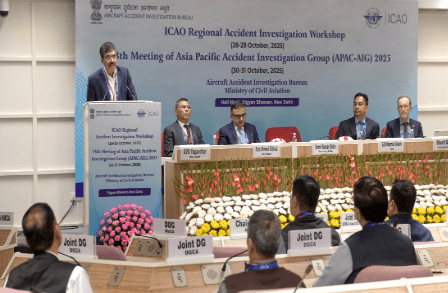
The Aircraft Accident Investigation Bureau (AAIB), under the Ministry of Civil Aviation, inaugurated a four-day Asia Pacific Accident Investigation Group (APAC-AIG) meeting and workshop from October 28 to 31, 2025, at Vigyan Bhawan, New Delhi. This event marks India’s first time hosting the APAC-AIG, bringing together approximately 90 international delegates from Asia Pacific aviation safety authorities and related global organizations.

Event Inauguration and Participation

The meeting was inaugurated by Shri Samir Kumar Sinha, Secretary, Ministry of Civil Aviation, with participation from dignitaries representing the Ministry of Civil Aviation, AAIB India, DGCA India, ICAO APAC Regional Office, and senior officials from various Asia Pacific Accident Investigation Authorities. Shri GVG Yugandhar, Director General of AAIB, emphasized the bureau’s active role in global aviation safety initiatives and offered India’s aviation laboratory facilities for accident investigations to member states. Delegates received gifts promoting Yoga and wellness, and a cultural tour of Akshardham Temple was arranged during the event.


Key Focus and Contributions

Mr. Stuart Godley, ICAO APAC-AIG Chairman, highlighted the meeting’s objective to enhance cooperation among accident investigation authorities across the Asia Pacific region. The gathering promotes sharing technical knowledge, experiences, and best practices to strengthen regional accident investigation capabilities. The Secretary of Civil Aviation discussed India’s adherence to ICAO standards, capacity-building initiatives such as establishing the National Aviation Safety Center at Jewar, and legislative enhancements aimed at elevating safety oversight through organizations like DGCA and AAIB.

Regional Aviation Safety Milestones

Union Minister of Civil Aviation Shri Kinjarapu Rammohan Naidu’s message underscored the Asia Pacific region’s leadership in maintaining a lower accident rate compared to global averages over the past decade, reflecting robust collective safety commitment. India has significantly improved its ICAO Standard and Recommended Practices (SARPs) implementation from 70% in 2018 to 85% in 2025, moving its global safety ranking from 112 to 55. The expanding Indian aviation market, rapidly growing under Prime Minister Narendra Modi’s leadership, aims to develop up to 400 airports by 2047, emphasizing the continuation of high safety standards.

Conclusion

The four-day APAC-AIG meeting and workshop signify India’s expanding role in global aviation safety and regional leadership in accident investigations. Fostered by collaboration among Asia Pacific member states and international experts, this event contributes to building a safer aviation ecosystem aligned with India’s ambitious growth in air connectivity.

For more real-time updates, visit Channel 6 Network.

Source: PIB

Rs 38,000 Crore Fertiliser Subsidy; Reviews Strong Agriculture Progress

Union Agriculture Minister Shri Shivraj Singh Chouhan expressed gratitude to Prime Minister Shri Narendra Modi on behalf of all farmers for approving a substantial ₹38,000 crore fertiliser subsidy. This major subsidy was sanctioned under the Cabinet decision chaired by the Prime Minister, aimed at supporting the upcoming Rabi 2025-26 sowing season. Alongside this, Shri Chouhan reviewed the ongoing progress in India’s agriculture sector, highlighting excellent sowing and favourable conditions.

Fertiliser Subsidy Approval

The Cabinet’s approval of the ₹38,000 crore fertiliser subsidy ensures the availability of phosphorus and potassic (P&K) fertilisers, including widely used Di Ammonium Phosphate (DAP), at affordable prices for farmers. This subsidy is crucial amid rising global input costs, providing fiscal support to maintain balanced nutrient supply and promote sustainable crop production. The decision aligns with the Nutrient Based Subsidy (NBS) Scheme and supports the Rabi crop cycle starting October 1, 2025, until March 31, 2026.


Agricultural Sowing and Progress

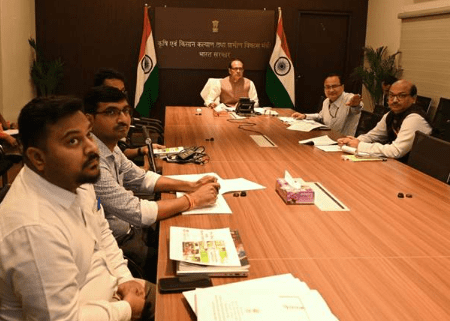
During a review meeting chaired by Shri Chouhan, it was conveyed that the Kharif 2025 sowing season was highly satisfactory:

  • Paddy sown area reached 441.58 lakh hectares, exceeding last year’s coverage.

  • Oilseeds covered 190.13 lakh hectares, prominently including soybean and groundnut.

  • Pulses were sown on 120.41 lakh hectares, contributing to national nutritional security.

  • Sugarcane cultivation extended over 59.07 lakh hectares, benefiting growers.

Favourable monsoon rains, consistent soil moisture, and improved water availability in reservoirs have contributed significantly to boosting agricultural productivity. Water storage in 161 reservoirs stands at 104.30% of last year’s levels and 115.95% of the ten-year average, ensuring irrigation needs are met effectively.

Outlook for Rabi Season and Crop Health

Harvesting of Kharif crops has already begun, covering around 27% of the area, while early Rabi sowing has started in several regions. The health of key crops such as onions, potatoes, and tomatoes is satisfactory. Rice and wheat stock levels exceed buffer norms, supporting food security.

Shri Shivraj Singh Chouhan credited the government’s farmer-friendly policies and strategic resource management for these successes, emphasizing ongoing efforts to further expand sowing areas, particularly for pulses and oilseeds, in the upcoming Rabi season.

Conclusion

The approval of the ₹38,000 crore fertiliser subsidy, combined with favorable weather and increased reservoir levels, provides a strong foundation for enhancing India’s agricultural output and food security ahead of the Rabi 2025-26 season. Continued government support and collaborative efforts across states aim to sustain record productivity and farmer prosperity.

For more real-time updates, visit Channel 6 Network.

Source: PIB

SECL Releases India Post Special Cover Commemorating Coal India’s Golden Jubilee and SECL’s Ruby Jubilee: 2025

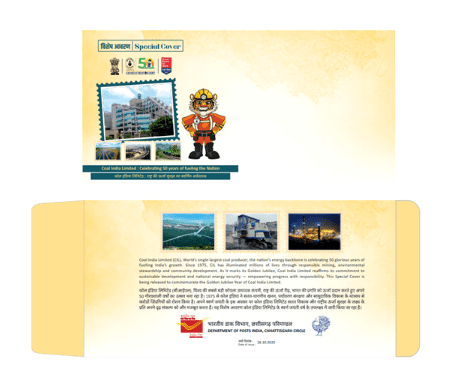
South Eastern Coalfields Limited , a subsidiary of Coal India Limited (CIL), has marked a historic milestone by releasing an India Post ‘Special Cover’ celebrating Coal India’s 50th anniversary and SECL’s 40 years of dedicated contribution to India’s energy sector. The ceremony also unveiled a Special Cancellation Cachet, with top leadership and officials from Coal India and India Post present to commemorate the occasion.​

Philatelic Tribute & Institutional Milestones

The India Post Special Cover, created in collaboration with the Department of Posts, Chhattisgarh Postal Circle, is a collectible philatelic item reflecting the industrial achievements and institutional journey of Coal India and SECL. Highlighting Coal India’s five-decade legacy of powering India’s growth and SECL’s four decades of operational excellence, these philatelic releases serve as lasting tributes to both organizations.​


Golden Jubilee Year Achievements

Coal India Limited, established in 1975, is the world’s largest coal-producing company and the bedrock of India’s energy security, supplying over 70% of India’s coal demand. In its Golden Jubilee year, Coal India reached historic highs in coal production, coal dispatch, and overburden removal. The nation hit a landmark milestone of 1 billion tonnes of coal production in FY 2024–25.​

SECL’s Role and Commitment

SECL is a leading subsidiary operating mainly in Chhattisgarh and Madhya Pradesh. Its Gevra Mine, the largest coal mine in Asia, stands as a symbol of operational excellence and technological advancement. SECL, besides its core production role, prioritizes sustainable mining, environmental stewardship, and extensive CSR initiatives in areas like healthcare, education, skill development, and ecological restoration.​

Special Campaign 5.0 and Legacy

The release of the Special Cover was conducted under Special Campaign 5.0, a Government of India effort for cleanliness, record management, and celebration of public sector achievements. The Special Cover and Cachet together encapsulate the enduring legacy and shared commitment of Coal India and SECL to sustainability, social responsibility, and nation-building.​

Conclusion

Coal India’s Golden Jubilee and SECL’s Ruby Jubilee mark not only significant achievements in coal production and energy security, but also their commitment to nation-building, technological innovation, and sustainable practices. The commemorative India Post Special Cover stands as a symbol of pride for these organizations and the country.​

For more real-time updates, visit Channel 6 Network.

Source: PIB

INDIAN AIR FORCE GEARS UP FOR THE SEKHON IAF MARATHON 2025: A TRIBUTE TO VALOUR, UNITY AND FITNESS

On November 2, 2025, the Indian Air Force (IAF) will host the Sekhon IAF Marathon 2025 (SIM-25), uniting thousands at the Jawaharlal Nehru Stadium in New Delhi and simultaneously at 60 Air Force stations nationwide. Celebrating the ethos of courage, discipline, and unity, the event is named in honor of Flying Officer Nirmal Jit Singh Sekhon, the only Air Force officer awarded the Param Vir Chakra for heroic actions during the 1971 Indo-Pak war.​

Honoring Heroic Legacy

The Sekhon IAF Marathon stands as a powerful tribute to Flying Officer Sekhon, symbolizing the highest standards of valor. By immortalizing his legacy, SIM-25 inspires citizens to embrace fitness, patriotism, and national pride. The marathon theme, “Run with Pride, Soar with Spirit”, highlights collective resolve and honors the indomitable spirit of air warriors and the nation’s commitment to health and unity.​


Event Details & Categories

The flagship event features Half Marathon (21.097 km), 10 km, and 5 km runs—inviting seasoned athletes and amateurs alike. The races commence at 5:30 AM, 6:00 AM, and 6:30 AM respectively, with a 3.5-hour cut-off time for the half marathon. Organized by the Air Force Sports Control Board with support from local stations, the marathon is powered by Indian Oil, presented by IDFC First Bank, and supported by HAL & BEL.​

Impact & National Significance

SIM-25 aims to foster national unity, fitness, and discipline beyond its sporting dimension. Over 93,000 runners from across the country—including civilians and Air Force personnel—are expected to participate, reinforcing the bond between the forces and the community. The event further aligns with the Fit India Movement, promoting healthier lifestyles for all age groups.​

Safety & Organization

Volunteers, fitness trainers, and health professionals will ensure smooth and safe conduct. Medical and hydration stations will be positioned throughout the route. Participants, supporters, and citizens are encouraged to join, celebrating both fitness and the legacy of Flying Officer Sekhon.​

Conclusion

The Sekhon IAF Marathon 2025 is more than an endurance challenge; it is a movement honoring the valor of Indian Air Force heroes, championing fitness, and celebrating unity across the nation. Citizens are invited to participate and pay homage to the heroic legacy of Flying Officer Sekhon while embracing the spirit of wellness and teamwork.


For more real-time updates, visit Channel 6 Network.

Source: PIB

Political Turmoil at the Poll Panel Over Voter List Clean-Up: Citizenship Charges, Electoral Roll Revision and the SIR Showdown in West Bengal

Political Turmoil at the Poll Panel: In a heated all-party meeting convened by Manoj Kumar Agarwal, Chief Electoral Officer of West Bengal, the process of the upcoming Special Intensive Revision (SIR) of electoral rolls triggered sharp accusations from political parties over citizenship demands, exclusion fears and the potential disenfranchisement of voters. The meeting, held on 29 October 2025, was marked by pointed questions about whether the voter-list exercise was morphing into a covert citizenship verification exercise.

At the heart of the agitation were questions raised by Samik Lahiri (CPI(M) central committee member) and Sujan Chakraborty, who queried why documentary requirements for inclusion in the roll seemed to echo those used for citizenship determination. Lahiri asked whether the SIR was being used as a proxy for the dreaded National Register of Citizens (NRC) exercise.

Supporters of the ruling All India Trinamool Congress (TMC) echoed similar concerns—accusing the BJP and the poll panel of staging voter-list manipulation under the guise of a revision. In turn, the Bharatiya Janata Party (BJP) defended the SIR as a “sanitisation” effort necessary to strengthen democracy, rejecting the citizenship-exclusion narrative.

This confrontation uncovers deep fault-lines in West Bengal’s electoral preparedness, the intersection of voter-list revision with identity politics, and institutional trust in the lead-up to the 2026 Assembly polls.


Political Turmoil at the Poll Panel: What is SIR and Why Now?

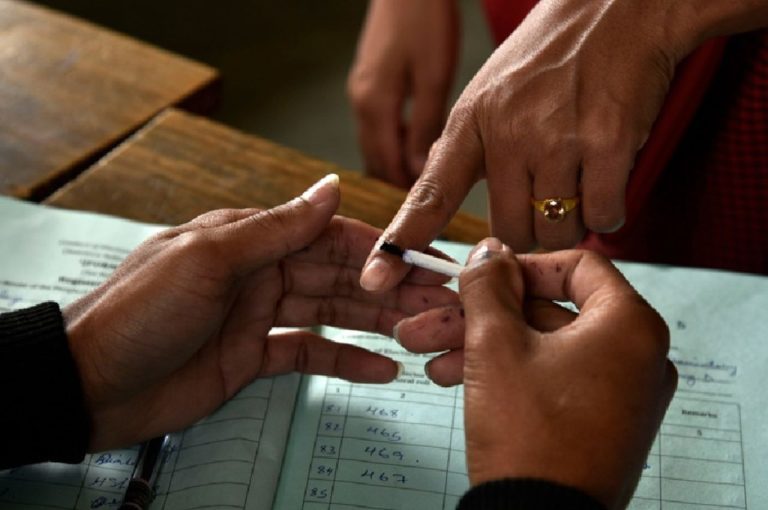
The SIR, an expansive house-to-house revision of voter rolls, has been mandated by the Election Commission of India prior to major elections. Under the exercise, forms are distributed to all households, names are verified or added, obsolete entries removed and new polling booths created as necessary.

West Bengal, with a large and complex electorate of over 8 crore voters, is scheduled to undertake SIR ahead of its next Assembly election (likely April 2026). The CEO’s office has indicated that each booth will be capped at around 1,200 voters, which implies an increase in booth-count and logistical intensity.

While roll-list cleaning is routine, the current SIR coincides with heightened concerns about citizenship, cross-border migration, and electoral integrity—especially in border-districts of North Bengal. This context has elevated the SIR from administrative exercise to a politically charged operation.


The Meeting That Sparked the Furor

At the meeting convened by CEO Agarwal, which included district electoral officers, political party representatives and civil-society stakeholders, the document list for the SIR became the flash-point. According to Lahiri, he asked:

“There are twelve documents specified by the EC — under the Supreme Court’s supervision — of which it is stated Aadhaar is not proof of citizenship. Does that mean the other eleven prove citizenship? Is the SIR a preparatory stage of the feared NRC?”

Lahiri added that Agarwal had no adequate response to the direct question. Meanwhile, TMC national general secretary Abhishek Banerjee accused the EC of being aligned with the BJP in an “exclusion-exercise” aimed at removing genuine voters and tilting the electoral outcome.

The BJP’s state unit countered forcefully. State election-management head Sishir Bajoria rejected the exclusion claims as “fear-mongering” and insisted that the SIR is fully within the EC’s constitutional powers and necessary for voter-list integrity.


Citizenship, Migration and the Underlying Politics

The deeper friction arises from the issue of citizenship and electoral entitlement. West Bengal, sharing a long border with Bangladesh and hosting large migrant populations, has for decades been a flash-point for migration debates, citizenship claims and electoral registrations.

For the opposition parties, the present SIR raises the spectre of the NRC debate: that the revision is less about correcting voter lists and more about defining who qualifies as a citizen—and hence as a voter. The demand for birth-certificates, parental lineage, long-term residence, etc., mirrors earlier exercises in Assam and elsewhere. While the EC has clarified that this is not an NRC exercise, the overlap of documentary requirements has generated suspicion.

The TMC argues that any perceived exclusion will disproportionately impact marginalised communities, especially among minorities, rural poor and border-region residents, who may not have the documentation that urban voters possess. In contrast, the BJP presents exclusion fears as unfounded and emphasises the need for rid of duplicate, bogus or foreign entries in the rolls.


Administrative Capacity and Implementation Challenges

Carrying out SIR at scale is a massive operational challenge. The CEO’s office has identified that booths with more than 1,200 voters will be re-structured, and volunteers drawn in to assist Booth-Level Officers (BLOs). The Times of India reports that government employees are being mapped as potential volunteers, and the booth-count in Bengal may rise from 80,000 to about 94,000.

Additional complications include:

  • Document-verification logistics: verifying thousands of documents, interacting with rural households, handling missing or incomplete records.
  • Training BLOs and volunteers: need for sensitisation about documentation, citizenship vs residence, rights of voters.
  • Data-handling & transparency: maintaining secure databases, preventing misuse of forms, ensuring accessible grievance mechanisms.
  • Political oversight and public trust: given the heightened citizenship discourse, even routine deletions will be scrutinised as potential political exclusion.

In such a scenario, an all-party meeting devolving into citizenship accusations signifies a trust deficit and raises the risk of electoral litigation or mobilisation of protests.


Implications for Democracy and Electoral Rights

1. Voter exclusion risk

Whenever eligibility criteria become stricter, the risk of eligible citizens being left out of the roll increases. The opposition parties fear that voters without documentary proof might be silently excluded. This poses democratic concerns around disenfranchisement.

2. Perception of bias or manipulation

If the SIR is perceived as being steered by the ruling party or partisan interest, the legitimacy of the process may erode. The TMC’s charge that the commission is favouring the BJP aims to reinforce this perception.

3. Administrative credibility

The EC’s credibility depends on being seen as neutral and transparent. Allegations that the SIR is a front for the NRC may tarnish its impartial image, especially in Bengal. Conversely, if the EC delivers smoothly and inclusively, it could strengthen institutional trust.

4. Coalition politics and minority mobilisation

With Assam-style citizenship debates in the backdrop, the SIR in Bengal intersects with religious, caste and minority politics. Political parties may use the revision exercise as a campaign issue. Any misstep may result in mobilisation of voters on identity lines.

5. Legal and judicial scrutiny

Challenges regarding procedural fairness, bulletins of rights, deletion methods and grievance redress may end up in the courts. Indeed, previous SIRs and citizenship-related exercises (e.g., in Assam) have been subject to Supreme Court oversight.


Key Questions the Process Faces

  • Are documentary demands in the SIR narrower, broader, or similar to earlier roll-revisions?
  • Will the SIR data-forms be simple or complex for rural and border households?
  • What safeguards exist to ensure genuine voters are not wrongly deleted?
  • How will the EC handle cross-border migration and alleged infringers in the rolls while protecting citizen rights?
  • What is the timeline for publication of draft rolls, claims/objections and final rolls?
  • What transparency mechanisms (public access, dashboards, data privacy) will be used?
  • How will political parties and civil society be engaged to build trust in the process?

What to Watch Next

  1. Publication of draft rolls — Will it indicate large scale deletion or addition of names?
  2. Claims & objections phase — Will new filings surge in border-districts?
  3. Grievance redressal — How accessible and responsive is the mechanism for wrongly excluded voters?
  4. Political mobilisation — Will parties frame the SIR as a citizenship test or a voter-list clean-up?
  5. Legal challenges — Will there be writ petitions or injunctions claiming violation of voter rights?
  6. Polling-booth readiness — Are increased booths, volunteers and infrastructure being ready in time for next year’s election?
  7. Roll-out in sensitive districts — Especially along Indo-Bangladesh border and in minority-dominated areas.

Conclusion

The all-party meeting in Kolkata has spotlighted more than an administrative exercise. The SIR in West Bengal is rapidly becoming a symbol of how citizenship, electoral rights and identity intersect in contemporary Indian democracy. The question is no longer simply “who gets added or deleted from the roll?” but “on what basis, how transparently, and with what consequences for disenfranchisement?”

If the process is executed with fairness, clarity and accessibility, it could strengthen voter confidence and elevate electoral integrity. If not, it risks deepening fault-lines, undermining trust and provoking political conflict.

West Bengal’s 2026 election cycle may well be shaped not only by parties and candidates, but by how voters themselves are counted, confirmed and retained on the electoral roll. The path of the SIR will be consequential.


External Links (Government / Official)

Also read: Home | Channel 6 Network – Latest News, Breaking Updates: Politics, Business, Tech & More
Wild Elephant Strays into Mainaguri Villages Triggering West Bengal Human-Elephant Conflict Concerns: Crop Damage Highlights Crisis in North Bengal Wildlife Management

Wild Elephant Strays into Mainaguri Villages: A lone wild elephant roaming across main agricultural pockets in Mainaguri over the past several days has brought renewed attention to the increasing human-elephant conflict in West Bengal, particularly in the tea belt and forest-fringe villages of Jalpaiguri district. The incident has left multiple acres of farmland flattened, residents terrified, and forest officials struggling with round-the-clock response operations.

Residents of Chakiagachh, Ghughumari, and adjoining areas woke up to panic as the adult tusker wandered through fields overnight, uprooting fences, knocking down boundary walls, damaging vegetable patches, and feasting on seasonal crops such as paddy, maize, and banana plants. Though no human casualties have been reported so far, villagers remained anxious, fearing unpredictable aggression.

Villagers Spend Nights Awake, Fearful of Sudden Attacks

Families living near cultivation belts said they stayed alert throughout the night. Many gathered on terraces or village watch posts, drumming utensils or flashing torches whenever the elephant approached.

One local farmer described his ordeal while surveying the damaged crops.

“Months of hard work disappeared in one night. The elephant is not at fault. Our fields stand on what used to be their corridor,” he said, looking at the trampled produce.

This region sits at the edge of the forests near Gorumara National Park and the elephant corridors between the Jalpaiguri plains and the forests of Assam. Such villages experience frequent seasonal movement of elephant herds, but a solitary tusker wandering deep into agricultural land poses unpredictable risks.

Forest Team Attempts to Guide Elephant Back to Habitat

A team from the Belakoba Wildlife Squad and Mainaguri Range Forest Office has been continuously monitoring the animal’s movement. The operation requires coordination among forest guards, trained elephant drivers known as “kunkis,” and local police officers to maintain crowd control along the tusker’s path.

Officials used searchlights and crackers to nudge the elephant toward safer forest zones. The operation must balance safety and cruelty-free measures.

A senior forest officer explained:

“It is not about pushing the animal away aggressively. We are ensuring it finds a natural path back toward the forests without panic or injury.”

Heat, food scarcity, and habitat fragmentation push elephants away from forests into farmlands. Banana and paddy offer high calorie levels that elephants instinctively seek.

Wild Elephant Strays into Mainaguri Villages: A Growing Ecological Struggle

According to government and wildlife experts, North Bengal records the highest rate of human-elephant conflict in the state. Jalpaiguri, Alipurduar, and parts of Darjeeling see dozens of crop raids and multiple fatal encounters annually.

Drivers of the conflict include:
• Rapid expansion of settlements
• Conversion of forest land into tea gardens
• Highway and railway intrusions across elephant corridors
• Seasonal food scarcity inside forests
• Climate-driven changes in vegetation patterns

Retired wildlife biologist Soumen Barua noted in a written commentary:

“Elephants have strong memory maps of migration routes. When development blocks those paths, they find alternate routes through human-dominated areas. We must restore safe corridors instead of treating the animal as a threat.”

Compensation Demand Grows Among Affected Farmers

Farmers expect compensation from the state Forest Department for crop loss. However, villagers allege delays and paperwork challenges.

A local panchayat member stated:

“Damage assessment takes time. Farmers cannot wait months for compensation because their earnings rely on these seasonal harvests.”

The West Bengal government has schemes for relief compensation covering:
• Crop destruction
• Property damage
• Human injuries or deaths caused by wildlife

Yet rural communities say processing speeds must increase.

Community Volunteers Mobilized

Given the unpredictable movement of the tusker, volunteers known as hulla parties work through night shifts to help warn villagers and avoid direct animal contact. These locally formed groups assist forest officials by:
• Sounding alert signals
• Preventing curious crowds from approaching the elephant
• Guiding cattle and children to safe zones

Local schools remained alert to avoid early morning student movement until the situation calms.

Past Deadly Incidents Serve as Caution

North Bengal has witnessed a history of tragedies in recent years:
• Elephants electrocuted by illegal fences
• People trampled while trying to take photographs
• Train accidents through elephant corridors
• Nighttime herds entering market areas

Elephant conservation groups continuously stress awareness campaigns, especially on avoiding confrontation and respecting forest boundaries.

Tourism and Conservation Balance

Mainaguri and neighboring areas are part of a significant eco-tourism belt. Wildlife visibility contributes to the local economy. Yet unsupervised human-elephant encounters cause severe risk.

Forest officials believe the conflict can be reduced through:
• Solar fencing where suitable
• Clear route mapping of elephant corridors
• Minimizing crop types that attract elephants near forest edges
• Rapid-response teams equipped with safer deterrence methods
• Dedicated compensation kiosks in each affected block

Pending Return to the Wild

As of the latest update, the tusker continues to hover close to villages while slowly shifting toward a greener patch near Nagrakata route. Authorities hope a safe path back into the deep forest emerges soon.

An officer confirmed:

“The elephant is calm for now. We must ensure neither it nor the villagers get harmed during the movement.”

Residents remain both anxious and compassionate. Many say the elephant deserves its home and dignity, just like they deserve security in theirs.

An Issue Beyond a Single District

The human-elephant conflict is now a statewide governance and environmental sustainability challenge. Wildlife experts call for a multi-stakeholder action framework involving:
• State government wildlife divisions
• Local forest community groups
• Agricultural planning departments
• NGOs focused on biodiversity
• Academic experts in ecology and climate

Enhanced monitoring through real-time GPS tracking of elephant herds may also help predict movement and reduce surprise crop raids.

––––––––––––––––––––––––––
🔹 Official Government External Links for Reference
(Directly related to wildlife governance and conflict policy)
––––––––––––––––––––––––––

West Bengal Forest Department
www.westbengalforest.gov.in

Government of India: Project Elephant (Ministry of Environment, Forest and Climate Change)
www.moef.gov.in/en/project-elephant

National Green Tribunal (environmental regulatory body)
www.greentribunal.gov.in

Compensation and Relief Schemes in Wildlife Conflict (Govt. of India)
https://pib.gov.in/PressReleasePage.aspx?PRID=1928943

Eco-Tourism under West Bengal Forest Directorate
http://www.wbfdc.com

Also read: Home | Channel 6 Network – Latest News, Breaking Updates: Politics, Business, Tech & More

Fake Acid Attack Exposed: DU Student’s Family Staged Crime

New Delhi – Delhi Police has uncovered a shocking conspiracy involving a fake acid attack on a 20-year-old Delhi University student, revealing that her own family orchestrated the incident to settle scores with rival families. The elaborate deception, which initially appeared to be a crime against a young woman walking to college, has now exposed a web of family disputes, property conflicts, and serious criminal allegations including rape and blackmail.

The fake acid attack case took a dramatic turn after investigators discovered multiple contradictions in statements and evidence, ultimately leading to the arrest of the victim’s father and exposing the family’s carefully planned scheme.

Initial Report of the Fake Acid Attack

The woman, a student at DU’s School of Open Learning, had initially reported that three men on a motorcycle threw acid on her while she was walking to college near Lakshmi Bai College on Sunday. Following the alleged incident, she was admitted to RML Hospital with burn injuries to her hands, lending apparent credibility to her account.

However, the fake acid attack claim quickly began unraveling as Delhi Police examined CCTV footage and found significant discrepancies between the woman’s statement and visual evidence. These contradictions prompted investigators to dig deeper into the circumstances surrounding the incident.

Investigation Reveals Family Conspiracy

Through meticulous investigation, police discovered that the fake acid attack was actually perpetrated by the victim’s own father using a strong toilet cleaner. The elaborate scheme involved multiple family members working together to make the incident appear genuine and to implicate three specific men with whom the family had existing disputes.

During questioning on Tuesday, the woman admitted that her father had attacked her with the toilet cleaner, while her brother later dropped her near the college to create the appearance of an external attack. “The father influenced his daughter and son to stage this. He carefully planned the whole charade to make it appear as if a stalker targeted his daughter near the college,” a police officer stated.

The fake acid attack conspiracy involved not just the immediate family but also potentially extended relatives, as police continue questioning additional individuals connected to the case.

Multiple Disputes Behind the Fake Acid Attack

Investigators uncovered that the fake acid attack scheme was designed to frame specific individuals involved in separate ongoing disputes with the family. The man named as the main accused in the fake acid attack had filed an FIR against the woman’s father on October 24, accusing him of raping his wife and blackmailing her with objectionable photos and videos.

Police verification confirmed that this “main accused” was actually in Karol Bagh, not Ashok Vihar, at the time of the alleged incident, providing a solid alibi that contradicted the fake acid attack narrative.

Further investigation revealed that two of the supposed co-accused in the fake acid attack were distant relatives of the woman. Their mother and the woman’s father were locked in a property dispute dating back years. In a disturbing revelation, police discovered that in 2018, the woman’s family had allegedly attacked the relatives’ mother with acid—a genuine attack that now appears to have set the stage for this fabricated revenge scenario.

Father Arrested on Multiple Charges

The father, who was apprehended from Sangam Vihar late Monday night, has been arrested on multiple serious charges. Beyond orchestrating the fake acid attack, he faces arrest for the rape and blackmail of his neighbor’s wife—the allegations that had prompted the original FIR against him just days before the staged incident.

“He has been held for both offences,” a senior police officer confirmed, indicating that the fake acid attack was likely an attempt to deflect from the rape and blackmail charges by portraying himself as a victim of false accusations and retaliation.

Police have indicated plans to invoke criminal conspiracy charges in the rape FIR and potentially book the entire family for their roles in the fake acid attack scheme.

Evidence Clears Named Accused

DCP (northwest) Bhisham Singh confirmed that investigators have gathered substantial evidence proving that the main accused named in the woman’s complaint was not behind the fake acid attack. “The other two people she named are residents of Mangolpuri and are aged around 15-17. They are both out of town (even at time of incident) and have agreed to join the probe,” Singh stated.

This evidence not only exposes the fake acid attack but also clears innocent individuals who were falsely implicated in a serious crime that could have resulted in severe legal consequences.

Family Members Questioned and Released

On Tuesday, police detained the woman, her brother, and her uncle for questioning regarding the fake acid attack. The brother admitted to the conspiracy during interrogation, while the uncle denied any involvement. All three were later released, though they remain part of the ongoing investigation.

The woman has been discharged from the hospital following treatment for the injuries inflicted by her father as part of the fake acid attack staging.

Implications and Ongoing Investigation

The fake acid attack case highlights the extreme lengths to which individuals may go to settle personal disputes and evade serious criminal charges. Police continue to investigate the full extent of the conspiracy, questioning additional individuals who may have been aware of or participated in planning the elaborate deception.

The case serves as a reminder of the importance of thorough police investigation and the dangers of false accusations, which not only waste crucial law enforcement resources but also potentially destroy innocent lives. As the investigation continues, authorities are working to ensure all responsible parties face appropriate legal consequences for orchestrating this fake acid attack and the underlying crimes it was designed to conceal.

MCD Bypolls Announced: 12 Wards Vote November 30, Results December 3

New Delhi – The State Election Commission (SEC) of Delhi has officially announced that MCD bypolls for 12 vacant wards of the Municipal Corporation of Delhi will be conducted on November 30, 2025, with vote counting scheduled for December 3. This announcement marks a significant moment in Delhi’s municipal politics as parties prepare to contest for seats that became vacant following the election of councillors to higher legislative positions.

The MCD bypolls come at a time when the BJP currently holds majority control of the corporation with 116 councillors, followed by the Aam Aadmi Party with 98 councillors, making these elections crucial for both parties’ municipal governance strategies.

Reasons Behind the Vacant Seats

According to the SEC, the MCD bypolls have been necessitated after 11 councillors were elected as Members of the Legislative Assembly (MLAs) earlier in 2025. Additionally, the Dwarka-B ward has remained vacant since last year following Kamaljeet Sehrawat’s election as Member of Parliament from West Delhi constituency.

Of the 12 vacant seats going to the MCD bypolls, nine were previously held by BJP councillors and three by AAP councillors, creating an interesting dynamic where the BJP has more seats to defend while AAP sees an opportunity to rebuild its municipal presence.

Complete List of Wards for MCD Bypolls

The MCD bypolls will be held across 12 wards spread throughout Delhi, covering both general and reserved categories. The wards include Shalimar Bagh-B, Greater Kailash, Ashok Vihar, Chandni Chowk, Chandni Mahal, Dwarka-B, Dichaon Kalan, Naraina, Sangam Vihar-A, Dakshin Puri, Mundka, and Vinod Nagar.

These wards represent diverse geographical and demographic segments of Delhi, from the upscale Greater Kailash to densely populated areas like Sangam Vihar-A, ensuring the MCD bypolls will serve as a comprehensive test of political sentiment across different sections of the capital.

Election Schedule and Nomination Process

The SEC has laid out a detailed timeline for the MCD bypolls. The election notification will be issued on November 3, 2025, marking the official commencement of the electoral process. Candidates will have the opportunity to file their nominations from November 3 through November 10, providing a week-long window for potential contestants.

The withdrawal of candidature for the MCD bypolls will be permitted until November 15, giving candidates and political parties time to finalize their strategies and ticket distribution. The Model Code of Conduct has come into force with immediate effect in all 12 wards and will remain operational until the completion of the entire election process.

Current Political Landscape of MCD

The MCD bypolls occur against the backdrop of significant political upheaval in Delhi’s municipal governance. Following the 2022 unification and delimitation exercise, the MCD area was reorganized into 250 municipal wards. In the 2022 municipal elections, AAP had secured a majority with 134 seats, while BJP won 104 seats and Congress obtained eight.

However, the political landscape shifted dramatically after a series of defections and legal battles. The BJP secured majority control earlier this year, fundamentally altering the power dynamics within the corporation. A faction of AAP councillors broke away to form the Indraprastha Vikas Party (IVP), further weakening AAP’s position in the municipal body.

According to official records, the current strength stands at BJP with 116 councillors, AAP with 98, IVP with 15, Congress with 8, and one Independent, making the MCD bypolls results potentially significant for the overall balance of power.

BJP’s Confident Response to MCD Bypolls

Delhi BJP President Virendra Sachdeva expressed strong confidence in his party’s prospects in the MCD bypolls. “In the past eight months, the people of Delhi have witnessed how, after the formation of the BJP’s ‘triple-engine’ government, Delhi’s development has gained a new direction and momentum,” Sachdeva stated.

Also Read: Latest Delhi Cloud Seeding Trial Fails: Rs.1.2 Crore Experiment Brings No Rain

He predicted that the MCD bypolls results will “come one-sidedly in favour of the BJP,” claiming that voters will overwhelmingly support the party based on its recent governance record. This confidence stems from BJP’s current majority position and its control at multiple levels of governance in Delhi.

AAP’s Strategic Outlook

In an official statement regarding the MCD bypolls, AAP acknowledged the electoral challenge while expressing optimism about its prospects. “Out of these, nine seats were previously held by BJP councillors who became MLAs in the recent Assembly elections, while three were held by AAP councillors who have also been elected as MLAs,” the party noted.

AAP expressed confidence that it will “significantly increase its tally” in the MCD bypolls, suggesting an aggressive campaign strategy to reclaim lost ground in municipal governance. The party views these elections as an opportunity to demonstrate continued public support despite recent setbacks.

Implications for Delhi Politics

The MCD bypolls represent more than just municipal seat contests; they serve as a barometer for broader political trends in Delhi. The results could influence momentum heading into future state and national elections, making them closely watched by political observers and party strategists.

With the Model Code of Conduct now in effect and parties gearing up for intensive campaigning, the MCD bypolls promise to be a keenly contested electoral battle that will shape Delhi’s municipal governance landscape and potentially provide insights into the evolving political preferences of the capital’s residents.

Conclusion

As Delhi prepares for the MCD bypolls on November 30, all eyes will be on these 12 wards to gauge public sentiment and party strength. The December 3 counting day will reveal whether BJP can consolidate its majority or if AAP can mount a successful comeback in municipal politics.