Sunday, May 17, 2026
Home Blog Page 373

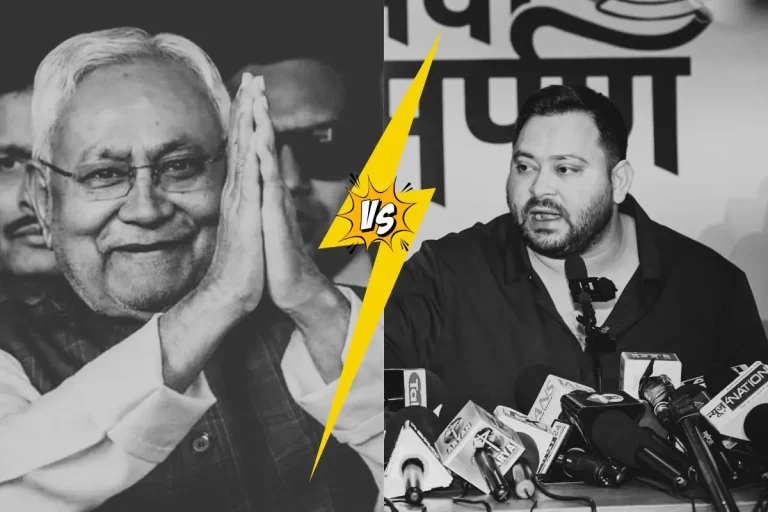
Tejashwi Yadav BJP Bold Accusation Ahead Bihar Polls 2025: Claims Nitish Kumar Won’t Be CM

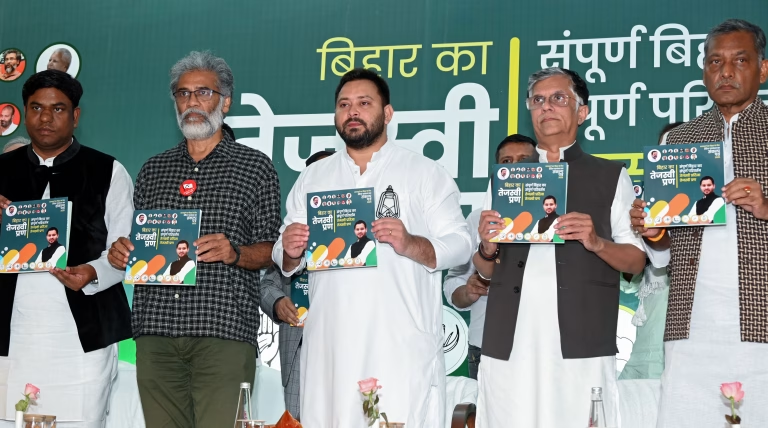
Bihar – Rashtriya Janata Dal leader and Mahagathbandhan’s Chief Ministerial candidate Tejashwi Yadav has launched a scathing attack on the National Democratic Alliance, claiming that the BJP will not make Nitish Kumar the Chief Minister after the Bihar Assembly elections. The Tejashwi Yadav BJP confrontation escalated on Tuesday as the opposition alliance released its manifesto titled ‘Bihar Ka Tejashwi Pran’ in Patna.

The political discourse has intensified with Tejashwi Yadav’s sharp criticism of the BJP-led NDA coalition, alleging that the current Chief Minister is being used as a mere figurehead while the real power dynamics favor different leadership arrangements post-election.

Tejashwi Yadav BJP Allegations: Nitish Kumar as ‘Puppet’

During a press conference in Patna, the Tejashwi Yadav BJP criticism took center stage as he characterized Nitish Kumar’s position within the NDA as that of a “puppet.” According to Tejashwi Yadav, the BJP is strategically using Kumar’s face for electoral advantage without genuine commitment to his continued leadership.

“Nitish Kumar is like a puppet in NDA. The BJP is just using the face of Bihar CM Nitish Kumar,” Tejashwi stated emphatically. He further referenced Union Home Minister Amit Shah’s statements, claiming, “Amit Shah has already confirmed that Nitish Kumar will not become the CM of Bihar. He said that the MLAs will decide the CM for Bihar. BJP will not make Nitish Kumar the Chief Minister after the elections.”

This Tejashwi Yadav BJP confrontation highlights a strategic attempt to create doubt among NDA supporters about Kumar’s political future and leadership prospects.

Leadership Contrast: Clear CM Face vs Uncertainty

Drawing a sharp contrast with the NDA’s approach, the Tejashwi Yadav BJP critique emphasized the INDIA alliance’s transparent leadership structure. “The INDIA alliance has declared me as the CM face, but the NDA has not done even a single press conference to declare who will be the CM face of the NDA,” Tejashwi pointed out.

This criticism forms a central pillar of the Tejashwi Yadav BJP attack strategy, positioning the Mahagathbandhan as offering clarity and certainty to voters regarding post-election governance, in contrast to what he portrays as NDA’s ambiguity.

Serious Allegations of Vote Manipulation

The Tejashwi Yadav BJP accusations extended beyond leadership questions to raise serious concerns about electoral integrity. The RJD leader alleged that central forces have been deployed in unprecedented numbers for the Bihar elections to “steal votes” through deliberate slow polling in Mahagathbandhan strongholds.

“We have seen that, for the first time in Bihar, 1,500 companies of central forces are being deployed,” Tejashwi stated. He claimed to have information about specific instructions given to these forces regarding polling procedures.

The Tejashwi Yadav BJP allegations included claims that instructions have been issued for slow polling in booths where the Mahagathbandhan has strong support, suggesting a systematic attempt at vote manipulation. “We came to know that instructions have been given for slow polling in the booths where Mahagathbandhan has a stronghold,” he asserted.

Appeal to Central Forces Officers

In a direct appeal to deployed officers, the Tejashwi Yadav BJP criticism was tempered with requests for professional conduct. “I would like to humbly say to all those officers who have taken an oath to the Constitution: do not carry out anyone’s wrongful orders, do not act dictatorially, do not be dishonest, and do not steal votes,” Tejashwi urged.

He emphasized that the Mahagathbandhan and Bihar’s people remain vigilant against any attempts at electoral malpractice. “This time, the people of Bihar, all of us in the Mahagathbandhan, are vigilant. The people will not allow their policy of deceit and dictatorship to succeed,” the RJD leader declared.

Mahagathbandhan Manifesto Promises

Alongside the Tejashwi Yadav BJP confrontation, the Mahagathbandhan released its comprehensive manifesto making several significant promises. The alliance has committed to passing legislation within 20 days of forming government to provide government jobs to one member of every family in the state.

Under the ‘Mai-Behin Maan Yojana’, women will receive financial assistance of ₹2,500 per month from December 1 for the next five years. The manifesto also promises implementation of the Old Pension Scheme (OPS), addressing a long-standing demand from government employees.

The alliance has pledged to put the Waqf (Amendment) Bill on hold and make Waqf property management “welfare-oriented and transparent,” taking a clear position on this contentious issue.

Deputy CM Face Mukesh Sahani’s Statement

Vikassheel Insaan Party chief and Mahagathbandhan’s Deputy CM face, Mukesh Sahani, supported the Tejashwi Yadav BJP criticism during the manifesto launch. “Today we have launched the Sankalp Patra for a new Bihar. For the next 30-35 years, we will work for the service of the people of Bihar,” Sahani stated.

He contrasted the alliance’s vision with the NDA’s approach: “On the other hand, the NDA has no ‘Sankalp’.”

Electoral Landscape and Competition

The Tejashwi Yadav BJP confrontation unfolds against the backdrop of Bihar’s complex electoral landscape. The Mahagathbandhan, led by RJD, includes Congress, CPI-ML, CPI, CPM, and VIP. The NDA comprises BJP, JD(U), LJP (Ram Vilas), Hindustani Awam Morcha (Secular), and Rashtriya Lok Morcha.

Additionally, Prashant Kishor’s Jan Suraaj has entered the fray, contesting all 243 seats. The assembly elections will be held in two phases on November 6 and 11, with results declared on November 14.

Conclusion: Battle for Bihar’s Future

The Tejashwi Yadav BJP allegations represent a multi-pronged strategy combining leadership questions, electoral integrity concerns, and welfare promises. Expressing confidence in victory, Tejashwi stated, “The people of Bihar are desperate and eager for a change of power.” As voting day approaches, these accusations and promises will significantly influence Bihar’s political discourse and potentially determine the state’s governance direction for years to come.

INDIA Bloc Bihar Manifesto Unveiled: Big Promises Of Jobs, Rs.2,500 Monthly Aid

Bihar – The opposition INDIA bloc in Bihar has released its comprehensive election manifesto, titled ‘Tejashwi Pratigya Pran,’ making ambitious promises to voters ahead of the crucial assembly elections. The Bihar manifesto, unveiled on Tuesday during a high-profile event in Patna, outlines the coalition’s vision for governance and social welfare if voted to power.

Led by the Rashtriya Janata Dal (RJD) and Congress, the INDIA bloc’s Bihar manifesto launch saw attendance from key alliance leaders including RJD’s Tejashwi Yadav, Congress leader Pawan Khera, Vikassheel Insaan Party (VIP) chief Mukesh Sahani, and CPI(ML)’s Dipankar Bhattacharya, signaling a united front despite internal challenges.

Flagship Promise: Government Jobs for Every Family

The centerpiece of the Bihar manifesto is an unprecedented commitment to provide government employment to one member of every family in the state. The alliance has promised to pass legislation within just 20 days of forming the government to implement this ambitious employment guarantee scheme.

This promise in the Bihar manifesto directly addresses Bihar’s chronic unemployment crisis and positions job creation as the coalition’s top priority. The implementation mechanism and financial implications of this scheme, however, remain to be detailed as the campaign progresses.

Mai-Behin Maan Yojana: Financial Support for Women

Another major highlight of the Bihar manifesto is the ‘Mai-Behin Maan Yojana,’ a comprehensive women’s welfare program. Under this scheme outlined in the Bihar manifesto, women across the state will receive direct financial assistance of ₹2,500 per month starting from December 1, continuing for the next five years.

This initiative, if implemented, would provide annual assistance of ₹30,000 to each beneficiary woman, totaling ₹1.5 lakh over the five-year period. The Bihar manifesto positions this scheme as a measure to enhance women’s economic independence and social security.

Waqf Amendment Bill: A Controversial Stand

Taking a clear position on a contentious national issue, the Bihar manifesto promises to put the Waqf (Amendment) Bill on hold if the alliance comes to power. The coalition has committed to making the management of Waqf properties “welfare-oriented and transparent,” addressing concerns raised by various communities about the proposed amendments.

This stance in the Bihar manifesto is likely to resonate with Muslim voters and position the alliance as protective of minority community interests, potentially becoming a significant factor in the electoral battle.

Bihar Election Schedule and Stakes

Bihar will conduct its assembly elections in two phases on November 6 and November 11, with vote counting scheduled for November 14. The Bihar manifesto has been released at a crucial juncture, giving the opposition alliance limited time to communicate its promises to voters across the state.

The Opposition Grand Alliance has named Tejashwi Yadav as its chief ministerial candidate and Mukesh Sahani as the deputy chief ministerial face for the assembly polls, providing clear leadership options to voters considering the Bihar manifesto promises.

Seat Sharing Arrangement and Internal Challenges

Despite the unified presentation of the Bihar manifesto, the alliance faces significant internal challenges regarding seat distribution. According to the current arrangement, the RJD is contesting 143 seats, Congress 61 seats, VIP 15 seats, the three Left parties 33 seats, and the Indian Inclusive Party one seat.

Also Read: Tejashwi Yadav JDU Realignment: Bold Declaration Rules Out Nitish Alliance Amid Bihar Polls 2025

However, this creates a mathematical anomaly where the alliance has fielded 253 candidates for 243 seats, resulting in “friendly fights” in 10 constituencies. This internal competition threatens to dilute the impact of the Bihar manifesto and weaken the coalition’s electoral prospects.

The public infighting over candidate selection and seat allocation has reportedly hampered the alliance’s campaigning efforts over the past two weeks, potentially reducing the reach and effectiveness of the Bihar manifesto messaging.

Tejashwi Yadav’s Response to Unity Questions

Addressing concerns about alliance cohesion, Tejashwi Yadav has insisted that all INDIA bloc partners remain united despite the visible friction. “Friendly contests have happened in the past in many elections in Jharkhand and other states in a few seats among partners of any coalition. It happens,” Tejashwi explained, attempting to downplay the significance of the internal disputes.

The RJD leader claimed that allies are working to resolve “certain tricky issues” and that “things are taking shape,” expressing confidence that the Bihar manifesto and alliance unity would ultimately prevail in the electoral contest.

Challenge to Nitish Kumar’s Dominance

The Bihar manifesto represents the opposition’s comprehensive strategy to dislodge Chief Minister Nitish Kumar from power after four consecutive terms. The alliance is banking on the appeal of its welfare promises and employment guarantees to counter Kumar’s experience and development narrative.

The success of the Bihar manifesto in swaying voters will depend significantly on the credibility of the promises, the alliance’s ability to present a united front, and the effectiveness of its campaign outreach in the remaining days before polling.

Implementation Feasibility Questions

While the Bihar manifesto makes sweeping promises, questions about implementation feasibility and financial sustainability remain. The commitment to provide government jobs to one member of every family and monthly payments of ₹2,500 to all women would require substantial financial resources and administrative capacity.

Critics are likely to scrutinize these aspects of the Bihar manifesto, demanding clarity on funding mechanisms and implementation timelines. The alliance’s ability to address these concerns convincingly could determine voter reception of the manifesto.

Conclusion

The Bihar manifesto released by the INDIA bloc presents an ambitious vision for the state, centered on employment generation, women’s welfare, and minority community concerns. As voters prepare to cast their ballots on November 6 and 11, the manifesto’s promises will be weighed against the alliance’s credibility, internal unity, and the incumbent government’s track record, ultimately determining Bihar’s political future.

Cyclone Montha Devastates Andhra and Odisha: 1 Dead, Thousands Evacuated

Andhra Pradesh – Cyclone Montha made a powerful landfall along the Andhra Pradesh coast near Kakinada on Tuesday evening, unleashing torrential rain and destructive winds that have left one person dead and caused extensive damage across coastal regions. The severe weather system brought maximum sustained winds of 90-100 kmph, with gusts reaching up to 110 kmph, affecting millions of residents in Andhra Pradesh and Odisha.

As Cyclone Montha continues to weaken while moving inland, authorities are assessing the full extent of damage to infrastructure, agricultural lands, and communities across the affected states.

Landfall and Intensity of Cyclone Montha

The India Meteorological Department (IMD) confirmed that Cyclone Montha made landfall between Machilipatnam and Kalingapatnam around 7 pm on Tuesday. The system arrived with maximum sustained winds of 90-100 kmph, gusting up to 110 kmph, causing immediate and widespread impact across coastal districts.

Since its landfall, Cyclone Montha has gradually weakened into a cyclonic storm. As of Wednesday morning, the IMD reported that Cyclone Montha was centered approximately 20 km west-northwest of Narsapur and 90 km west-southwest of Kakinada. Weather officials predict that Cyclone Montha will further weaken into a deep depression as it continues moving northwestwards inland through Andhra Pradesh.

Tragic Loss of Life and Injuries

The destructive power of Cyclone Montha claimed at least one life in Andhra Pradesh’s Konaseema district, where an elderly woman died after a tree fell on her house during the height of the storm. The incident underscores the deadly potential of falling trees during severe weather events.

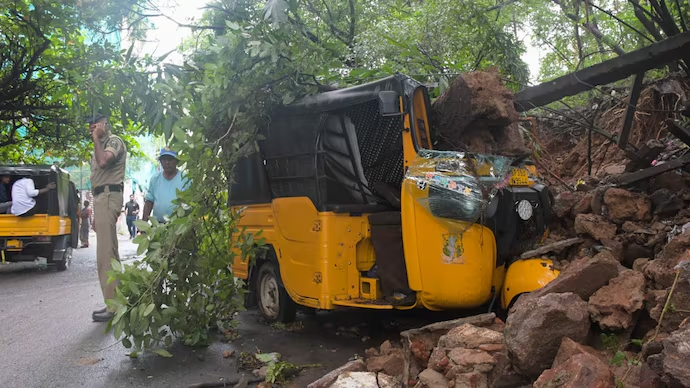
In addition to the fatality, Cyclone Montha caused multiple injuries across the affected region. A boy and an auto driver sustained injuries when strong winds associated with Cyclone Montha uprooted coconut trees in the Konaseema district, highlighting the dangers posed by flying debris and falling vegetation during the cyclone.

Massive Evacuation Operations

In response to the approaching threat of Cyclone Montha, the Andhra Pradesh government executed large-scale evacuation operations, moving nearly 76,000 people to safety before the storm’s landfall. This proactive measure likely prevented a higher casualty count during the cyclone’s most intense period.

The state government established comprehensive relief infrastructure, setting up over 219 medical camps to address health emergencies and deploying 865 tonnes of animal fodder to protect livestock. To facilitate rapid response and recovery operations, authorities deployed 1,447 earthmovers, 321 drones, and 1,040 chainsaws specifically for clearing debris and fallen trees left in the wake of Cyclone Montha.

Preventive Measures and Safety Protocols

Ahead of Cyclone Montha’s landfall, Andhra Pradesh authorities implemented strict safety measures, including a vehicular curfew in seven districts: Krishna, Eluru, East and West Godavari, Kakinada, Dr BR Ambedkar Konaseema, and parts of Alluri Sitarama Raju. This curfew ensured that residents remained indoors and away from potential hazards during the storm’s peak intensity.

Transportation Disruptions from Cyclone Montha

Cyclone Montha caused significant disruptions to air and rail transportation across the affected states. At Visakhapatnam Airport, 32 flights were cancelled, while Vijayawada saw 16 cancellations and Tirupati recorded four cancelled flights. These cancellations stranded thousands of passengers and disrupted travel plans across the region.

Rail services experienced equally severe disruptions, with the South Central Railway cancelling 120 trains across its zone. The East Coast Railway was forced to divert several services to avoid areas most affected by Cyclone Montha, creating cascading delays throughout the railway network.

Agricultural Devastation

The agricultural impact of Cyclone Montha has been catastrophic for farmers in Andhra Pradesh. Officials reported that standing crops over 38,000 hectares were destroyed, while horticultural crops across 1.38 lakh hectares suffered extensive damage. The IMD issued warnings of further damage to paddy and vegetable fields in inundated low-lying areas as floodwaters continue to affect agricultural regions.

This widespread agricultural destruction threatens the livelihoods of thousands of farming families and could impact food supplies and prices in the coming months.

Odisha Bears the Brunt

Cyclone Montha extended its destructive reach beyond Andhra Pradesh into neighboring Odisha, where 15 districts experienced heavy rain and strong winds. Chief Minister Mohan Charan Manjhi reported that over 11,000 people were relocated to 2,048 cyclone shelters as a precautionary measure.

Educational institutions across nine Odisha districts have been ordered to remain closed until October 30, ensuring student safety during the ongoing severe weather conditions associated with Cyclone Montha.

Heavy rainfall triggered by Cyclone Montha caused landslides and flooding in Odisha’s Malkangiri, Koraput, Rayagada, Gajapati, and Ganjam districts. Roads were blocked by boulders and fallen trees in several areas, isolating communities and hampering relief efforts. One person was injured in a house collapse in Gajapati district, adding to the casualty toll from the cyclone.

Ongoing Weather Alerts

The IMD has issued red and orange alerts for both Odisha and Andhra Pradesh, indicating that severe weather conditions will persist. As Cyclone Montha continues weakening and moving inland as a deep depression, the weather department predicts heavy rainfall will affect Telangana, Tamil Nadu, Jharkhand, and West Bengal over the next few days.

Recovery and Assessment

As Cyclone continues its inland trajectory and gradually weakens, authorities in both states are focusing on damage assessment, debris removal, and restoration of essential services. The full economic and social impact of Cyclone Montha will become clearer in the coming days as officials complete comprehensive surveys of affected areas and communities begin the long process of recovery and reconstruction.

Trump Israel Gaza Bold Response: President Backs Strike Rights Amid Ceasefire Tensions

Washington D.C. – United States President Donald Trump has reinforced his administration’s position on the Trump Israel Gaza situation, asserting that “nothing will jeopardize” the ceasefire currently in place despite escalating tensions. His strong statements came in response to Israeli Prime Minister Benjamin Netanyahu’s orders for “immediate, powerful” strikes on Gaza following alleged violations by Hamas.

Speaking to reporters aboard Air Force One on Wednesday, Trump made clear his support for Israel’s right to respond to what he described as Hamas violations of the truce agreement, marking a decisive moment in the ongoing Trump Israel Gaza dynamics.

Trump’s Strong Warning to Hamas

The Trump Israel Gaza stance took a firm turn when the President issued a stark warning to the Palestinian militant group. “If Hamas does not behave, they will be terminated,” Trump stated emphatically, underscoring the consequences of continued ceasefire violations.

Trump explained his rationale for supporting Israeli military action: “As I understand it, they took out an Israeli soldier. So the Israelis hit back and they should hit back. When that happens, they should hit back,” the President told reporters.

This clear endorsement of Israel’s right to respond represents a critical element in the Trump Israel Gaza policy framework, demonstrating Washington’s unwavering support for Tel Aviv’s security concerns.

Ceasefire Status: Trump’s Reassurance

Despite the renewed violence, President Trump maintained that the ceasefire agreement remains intact. “Nothing is going to jeopardize” the truce, Trump insisted, though tensions continue to rise in the region.

The President emphasized Hamas’s relatively minor role in the broader regional context: “You have to understand Hamas is a very small part of peace in the Middle East, and they have to behave.” This statement reflects the Trump Israel Gaza approach that prioritizes the larger Middle East peace framework while demanding compliance from Palestinian militant groups.

Trump’s confidence in the ceasefire’s durability comes despite mounting evidence of violations and escalating military actions on the ground, highlighting the administration’s determination to maintain the agreement regardless of localized conflicts.

Vice President’s Support for Trump’s Position

US Vice President JD Vance echoed the President’s sentiments regarding the Trump Israel Gaza situation, stating that the ceasefire is “holding” despite reports of casualties in the war-torn Gaza Strip due to Israeli strikes.

Vance’s remarks align with the administration’s unified messaging on the Trump Israel Gaza policy, presenting a consistent front from the White House regarding support for Israeli military responses to perceived threats.

Netanyahu’s Military Orders and Israeli Strikes

Israeli Prime Minister Benjamin Netanyahu’s directive for “immediate, powerful” strikes on Gaza directly precipitated the current escalation in the Trump Israel Gaza crisis. Following this order, the Israeli military conducted fresh strikes across Gaza overnight.

According to local reports, at least 20 people were killed in these latest attacks, significantly raising the death toll and threatening the fragile ceasefire that both Trump and Israeli officials claim remains in effect.

The intensity and scope of these strikes underscore the serious nature of the alleged violations that prompted the Israeli response, further complicating the Trump Israel Gaza ceasefire dynamics.

Also Read: Trump Xi Meeting at APEC Summit: Bold Talks to Resolve 100% Tariff Trade War

Hamas Response and Captive Negotiations

In response to the Israeli military actions, Hamas’s armed wing, the Qassam Brigades, accused Tel Aviv of violating the truce agreement. The group announced it would postpone the planned handover of the body of a missing captive, adding another layer of complexity to the Trump Israel Gaza situation.

In a formal statement, the Hamas-affiliated group issued a warning about the consequences of continued Israeli military operations: any escalation “will hinder search, digging, and retrieval operations of the bodies, which will lead to a delay in recovering the bodies” of the remaining 13 captives held in Gaza.

This threat to withhold captive remains represents a significant bargaining chip in the ongoing negotiations and directly impacts the Trump Israel Gaza ceasefire implementation.

Implications for Middle East Peace

The Trump Israel Gaza developments carry profound implications for broader Middle East peace efforts. President Trump’s assertion that Hamas represents only “a very small part of peace in the Middle East” suggests the administration’s strategy focuses on marginalizing the militant group while pursuing larger regional normalization agreements.

The current crisis tests whether the ceasefire framework can withstand localized violations and military responses, or whether these incidents will cascade into a complete breakdown of the truce.

International Reactions and Concerns

The Trump Israel Gaza escalation has drawn international attention, with observers questioning whether the ceasefire can survive sustained military operations. The death toll from overnight strikes has raised humanitarian concerns, while Trump’s strong backing of Israeli actions signals limited pressure from Washington for restraint.

The administration’s position that Israel has an inherent right to respond to attacks, as articulated in Trump’s statements, provides Tel Aviv with diplomatic cover for continued military operations in Gaza.

Looking Ahead: Ceasefire Sustainability

As the Trump Israel Gaza situation evolves, questions persist about the long-term viability of the ceasefire agreement. Trump’s insistence that “nothing will jeopardize” the truce stands in tension with the reality of ongoing strikes and casualties on the ground.

The President’s ultimatum to Hamas—behave or face “termination”—sets clear parameters for the Trump Israel Gaza policy moving forward. Whether this approach can achieve sustainable peace or will lead to further escalation remains to be seen.

The coming days will prove critical in determining whether the ceasefire can withstand current pressures or whether the Trump Israel Gaza situation will deteriorate into renewed full-scale conflict. For now, the administration maintains its unwavering support for Israel’s security actions while insisting the broader truce remains intact.

Trump Xi Meeting at APEC Summit: Bold Talks to Resolve 100% Tariff Trade War

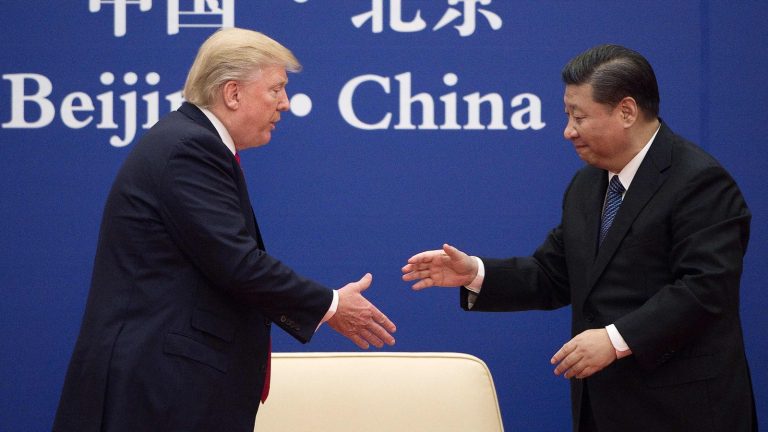
Washington D.C. – United States President Donald Trump arrived in South Korea on Wednesday for a highly anticipated diplomatic engagement that could reshape global economic relations. The Trump Xi meeting, scheduled for Thursday in Gyeongju, represents the first face-to-face encounter between the two leaders in six years and comes at a critical juncture as both nations navigate escalating trade tensions.

The meeting will take place on the sidelines of the Asia-Pacific Economic Cooperation (APEC) summit, with world leaders closely watching whether this crucial Trump Xi meeting can thaw relations between the world’s two largest economies.

Trump’s Optimistic Outlook on China Talks

Speaking to reporters aboard Air Force One while departing for South Korea, President Trump expressed considerable optimism about the upcoming Trump Xi meeting. “I think we’re going to have a great meeting with President Xi of China, and a lot of problems are going to be solved,” Trump stated, signaling his expectations for productive discussions.

This optimistic tone marks a potential shift in the relationship between Washington and Beijing, which has been strained by ongoing trade disputes and tariff implementations that have affected global markets. The Trump Xi meeting represents the first opportunity during Trump’s second term to directly address these concerns with his Chinese counterpart.

APEC Summit: The Stage for Historic Diplomacy

South Korea is hosting the Asia-Pacific Economic Cooperation summit in the historic city of Gyeongju, with meetings scheduled to continue through Saturday. The timing of the Trump Xi meeting during this multilateral forum adds significant weight to the bilateral discussions, as both leaders will be surrounded by representatives from other major economies.

Founded in 1989, APEC brings together 21 member economies that collectively account for over half of global GDP and represent approximately 2.7 billion people—roughly 40 percent of the world’s population. Among its largest members are the United States, China, and Russia, making it an ideal platform for high-stakes diplomatic engagement.

This year’s APEC summit, according to host South Korea, will focus on supply chain resilience and advancing the proposed Free Trade Area of the Asia-Pacific, an ambitious agreement designed to eventually include all APEC members.

Trump’s Asia Tour: Building Regional Partnerships

The Trump Xi meeting in South Korea represents the third stop on President Trump’s first Asia tour during his second term. Previously, he visited Malaysia and Japan, where he presided over the signing of a peace deal between Cambodia and Thailand and met newly elected Japanese Prime Minister Sanae Takaichi.

While Trump is visiting South Korea for two days starting Wednesday, he will depart before the APEC leaders’ summit itself concludes. During his stay, Trump is expected to meet South Korean President Lee Jae Myung on Wednesday and will address a summit of CEOs, where discussions are anticipated to emphasize and resolve trade ties between the US and South Korea.

Trade War Context: Six Years Since Last Meeting

The Trump Xi meeting carries enormous significance as it marks their first in-person encounter in six years. During this period, trade relations between the United States and China have deteriorated significantly, with both nations implementing tariffs and counter-tariffs that have disrupted global supply chains and affected businesses worldwide.

The ongoing trade war has been characterized by Trump’s global tariff policies, which have created growing trade tensions not only with China but across multiple regions. The outcome of the Trump Xi meeting could determine whether these conflicts take a softer turn or continue to escalate.

Also Read: China US Trade Deal: Shocking Developments After 100% Tariff Removed

Taiwan Question: A Delicate Topic

When asked about whether Taiwan would feature in discussions during the Trump Xi meeting, President Trump offered a measured response. “I don’t know that we’ll even speak about Taiwan. I’m not sure. He may want to ask about it. There’s not that much to ask about. Taiwan is Taiwan,” Trump stated.

This ambiguous stance on Taiwan reflects the delicate balance the United States maintains in its Asia-Pacific strategy, particularly regarding its relationship with China and its unofficial support for Taiwan.

What to Expect from the Trump Xi Meeting

The Trump Xi meeting is expected to address multiple critical issues beyond trade tensions. Key agenda items likely include:

Economic Relations: Direct discussions about tariffs, market access, and trade balance between the two nations are anticipated to dominate the conversation. Both leaders will seek to find common ground that benefits their respective economies.

Regional Stability: With both nations playing crucial roles in Asia-Pacific security and economic development, the Trump Xi meeting provides an opportunity to discuss regional stability and cooperation.

Global Challenges: As leaders of the world’s two largest economies, Trump and Xi are expected to touch upon broader global issues that require coordinated responses.

Implications for Global Markets

The outcome of the Trump Xi meeting will have far-reaching implications for global markets and international trade. Investors, businesses, and governments worldwide are watching closely for signals that might indicate a de-escalation of trade tensions or the continuation of current policies.

Any agreement or positive signals emerging from the Trump Xi meeting could boost market confidence and provide clarity for businesses operating in or between the two countries.

Conclusion

As the Trump Xi meeting approaches, the world holds its breath for what could be a turning point in US-China relations. With President Trump expressing optimism about solving “a lot of problems,” there is cautious hope that this historic encounter in South Korea during the APEC summit might pave the way for more constructive engagement between these two superpowers. The coming days will reveal whether this diplomatic opportunity translates into tangible progress in resolving the complex challenges facing the US-China relationship.

Latest Delhi Cloud Seeding Trial Fails: Rs.1.2 Crore Experiment Brings No Rain

New Delhi – The Delhi government’s ambitious attempt to combat air pollution through artificial rain has ended in disappointment, with the Delhi cloud seeding trial on Tuesday failing to produce any measurable rainfall despite costing approximately ₹1.2 crore. The expensive experiment, conducted amid ‘very poor’ air quality conditions, has sparked both scientific debate and political controversy in the national capital.

Understanding the Delhi Cloud Seeding Initiative

The Delhi cloud seeding project was approved by the cabinet on May 7, 2025, with a total budget allocation of ₹3.21 crore for five trials. Each attempt was estimated to cost roughly ₹64 lakh. Planned in partnership with IIT Kanpur, the initiative aimed to induce artificial rainfall as a measure to reduce particulate matter and improve air quality in the smog-choked city.

The project faced multiple delays before Tuesday’s trials. Initially scheduled for late May and early June, the Delhi cloud seeding experiments were first postponed to late August and early September due to the southwest monsoon’s arrival. Further delays occurred as rainfall continued in the region, pushing the trials to late October.

How the Cloud Seeding Experiment Was Conducted

On Tuesday, a Cessna aircraft operated by IIT Kanpur conducted two separate Delhi cloud seeding trials over the national capital. The small, single-propeller aircraft hovered over northwest Delhi and parts of the National Capital Region, firing a total of 16 flares—eight in each trial—containing silver iodide and sodium chloride compounds.

The first trial targeted areas including Burari and surrounding regions, Mayur Vihar, and Noida. The aircraft completed this operation by 2 pm. The second trial was conducted later in the day, taking off from Meerut around 4 pm and covering outer Delhi areas like Badli. The entire operation was completed within an hour.

Environment Minister Manjinder Singh Sirsa emphasized that Delhi had taken “an unprecedented, science-first step” by adopting Delhi cloud seeding as a tool to control air pollution. The minister stated that the focus was to assess how much rainfall could be triggered under the city’s real-life humidity conditions.

Why the Delhi Cloud Seeding Trial Failed

According to official reports, the primary reason for the unsuccessful Delhi cloud seeding attempt was unfavorable meteorological conditions. The moisture content predicted by the India Meteorological Department (IMD) was extremely low, at around 10-15 percent, which is far from ideal for cloud seeding operations. Effective cloud seeding typically requires higher humidity levels to produce rainfall.

Despite the failure to produce rain, the official government report claimed that the Delhi cloud seeding trials helped reduce particulate matter at locations where the exercise was carried out, even though conditions were not optimal.

Minister Sirsa had mentioned that according to IIT Kanpur, rain could occur within 15 minutes to four hours after the exercise. However, he cautioned that rainfall wouldn’t be heavy since humidity levels were only at 15 to 20 percent. IMD data confirmed that no rainfall was recorded in Delhi until late evening.

Also Read: Heavy Metals Delhi Air: Alarming CPCB Report Reveals Toxic Presence Of PM10 Levels

Political Controversy Surrounding the Initiative

The Delhi cloud seeding project quickly became another flashpoint in the capital’s political landscape. The Aam Aadmi Party (AAP), which led the previous government, sharply criticized the BJP-led administration’s decision to conduct trials on a day when the IMD had already forecast rain.

AAP leader Saurabh Bharadwaj held a press conference questioning the timing and authenticity of the experiment. “Will Lord Indra come down to clarify whether it is artificial rain or natural rain?” he asked mockingly, sharing clips from his inspection visits to check if there was actual rainfall.

The previous AAP government had first introduced the Delhi cloud seeding plan in winter 2023 but failed to implement it, citing unfavorable meteorological conditions. Last winter, AAP again proposed the program but claimed it didn’t receive the necessary flight and environmental permissions from the BJP-led central government.

Minister Sirsa has previously criticized AAP for “only talking about such plans” without taking action, highlighting the political finger-pointing surrounding pollution control measures.

Future Plans for Cloud Seeding Trials

Despite the setback, the government remains committed to the initiative. Nine to ten Delhi cloud seeding trials are planned over the coming days. The minister indicated that since the IMD informed that wind direction is towards the north, areas falling under that region would be targeted in subsequent attempts.

The government maintains that with every trial, science guides their actions, not just for winter but throughout the year. However, the success of future Delhi cloud seeding experiments will heavily depend on favorable meteorological conditions, particularly adequate humidity levels and suitable cloud formations.

Conclusion

The unsuccessful Delhi cloud seeding trial represents both the government’s willingness to explore innovative solutions for air pollution and the challenges of implementing such technology under suboptimal conditions. As more trials are scheduled, the focus will remain on whether this expensive experiment can deliver tangible results in improving the capital’s air quality.

Russia Highlights Progress in Central African Republic Stabilization at UN Security Council

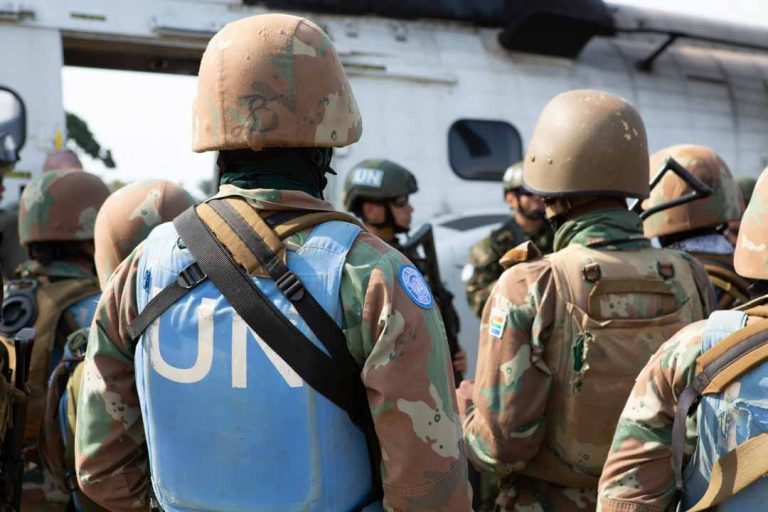
Russia’s permanent representative to the United Nations, Vasily Nebenzya, delivered a comprehensive assessment of the security situation in the Central African Republic during a recent UN Security Council meeting, highlighting significant CAR stabilization progress achieved through sustained disarmament efforts. The Russian diplomat emphasized that the troubled Central African nation continues to show consistent improvement in establishing governmental control and reducing violence against civilians, while simultaneously issuing a stark warning about potential threats emanating from the ongoing crisis in neighboring Sudan.

CAR stabilization progressAlso Read: CAR stabilization progress

Other: Energy Trade constricted

During his address to the Security Council, Nebenzya noted that the CAR stabilization progress has been achieved through collaborative efforts involving Russia, other bilateral partners, and the United Nations. The Russian representative specifically welcomed Bangui’s initiatives to advance the political process and extend state control throughout the national territory, marking a significant departure from the fragmented authority that has historically plagued the resource-rich but conflict-torn nation.

Disarmament Initiatives Drive Security Improvements

The centerpiece of the CAR stabilization progress has been the ongoing Disarmament, Demobilization, and Reintegration (DDR) program, which has successfully encouraged former militants to surrender their weapons and reintegrate into civilian society. This challenging process represents a critical step toward establishing lasting peace in a country that has been ravaged by armed conflict for over a decade. The DDR program has helped numerous former combatants transition from violent militancy to productive civilian life, contributing to measurable reductions in attacks against civilians.

According to Nebenzya’s statement, recent UN statistical estimates confirm a continuing decrease in crimes committed against civilians, providing concrete evidence of the CAR stabilization progress taking root across the country. This positive trend represents a significant achievement given the Central African Republic’s turbulent history, which has seen multiple coups, ethnic violence, and the proliferation of armed groups controlling vast swathes of territory outside government authority.

The CAR stabilization progress has also manifested in encouraging demographic indicators, with growing numbers of Central African refugees choosing to return to their homeland. This voluntary repatriation suggests that displaced populations increasingly perceive their country as safe enough to rebuild their lives, a powerful testament to the improving security environment. Russian military instructors, working alongside the Central African Armed Forces (FACA), have conducted operations to neutralize militants who refuse to participate in the disarmament process, demonstrating the government’s determination to consolidate security gains.

1605ff34 df0a 48d1 9abd 7a2e7666ae13 e1761685344814Sudan Crisis Poses Significant Threat to Regional Stability

Despite the encouraging CAR stabilization progress, Nebenzya issued a serious warning about the deteriorating situation along the Central African Republic’s border with Sudan. The Russian diplomat characterized the ongoing military-political crisis in Sudan as a continuing threat to the fragile security improvements achieved in CAR. The porous border between the two nations has witnessed increased militant activity, particularly involving fighters from Sudan’s Rapid Support Forces (RSF), who have illegally crossed into Central African territory.

Nebenzya strongly condemned the unauthorized movement of RSF fighters into the sovereign territory of the Central African Republic and the crimes they have perpetrated against local populations. The spillover from Sudan’s internal conflict threatens to undermine the CAR stabilization progress by introducing new sources of violence and instability into border regions that have only recently begun experiencing relative peace. The Russian representative noted that one such cross-border incident resulted in the death of a UN peacekeeper from the Multidimensional Integrated Stabilization Mission in the Central African Republic (MINUSCA), underscoring the lethal consequences of this regional instability.

The deteriorating situation in Sudan, where fighting between rival military factions has created a humanitarian catastrophe, has already forced over 31,000 refugees to flee into the Central African Republic since April 2023. Many of these displaced persons have settled in remote areas beyond effective government control, creating additional challenges for maintaining the CAR stabilization progress and potentially providing recruitment opportunities for armed groups seeking to expand their influence.

International Partnerships and Peacekeeping Efforts

The CAR stabilization progress has been substantially supported by the presence of MINUSCA, which currently maintains over eighteen thousand peacekeepers operating throughout the country. This robust international force was established by the UN Security Council in April 2014 with a mandate to protect civilians and facilitate the disarmament of militia groups. MINUSCA has played a crucial role in creating space for the government to extend its authority and for humanitarian organizations to deliver essential services to vulnerable populations.

Russia’s involvement in supporting the CAR stabilization progress has included providing military training and operational support to Central African government forces. This assistance has helped strengthen the capacity of national security institutions to maintain order and respond to threats from armed groups that continue to operate in certain regions. The collaborative approach involving multiple international partners reflects the complex nature of achieving sustainable peace in the Central African Republic.

The CAR stabilization progress has also benefited from various peace agreements signed in recent years, including the 2019 Political Agreement for Peace and Reconciliation, which brought together the government and fourteen armed groups. While implementation of these agreements has faced challenges, they represent important frameworks for ongoing dialogue and conflict resolution. Several armed groups and militant factions have disbanded and integrated into the national reconciliation process, demonstrating the viability of peaceful solutions.

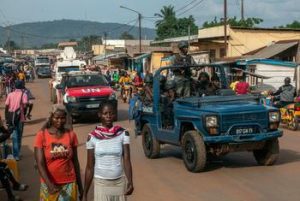
CAR stabilization progress
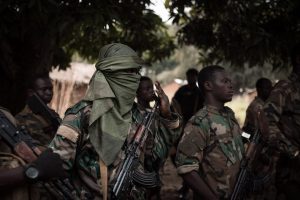
Central African Armed Forces (FACA) soldiers stand on attention on the road between Boali and Bangui.

Ongoing Challenges and Future Prospects

Despite the notable CAR stabilization progress, significant challenges remain on the path toward lasting peace and stability. The humanitarian situation continues to be dire, with approximately 70 percent of the population living in extreme poverty and 3.4 million people requiring assistance. Infrastructure remains severely limited, particularly in rural areas where government presence is minimal or non-existent. The proliferation of small arms, historical ethnic tensions, and competition for natural resources continue to fuel localized conflicts.

The CAR stabilization progress must also contend with political controversies, including a 2023 referendum that removed presidential term limits, allowing President Faustin-Archange Touadéra to potentially remain in power indefinitely. Opposition groups have criticized this development as undermining democratic principles, raising questions about the country’s long-term political stability. Elections held in 2024 were marked by accusations of manipulation and concerns about security conditions in large portions of the country.

Looking forward, sustaining the CAR stabilization progress will require continued international support, strengthened national institutions, economic development opportunities for former combatants, and effective management of cross-border security threats. The situation in Sudan presents an immediate concern that could reverse recent gains if not addressed through regional cooperation and diplomatic engagement. Russia’s warning at the UN Security Council highlights the interconnected nature of regional security challenges and the need for comprehensive approaches that address both internal reforms and external threats to ensure the CAR stabilization progress continues its positive trajectory toward sustainable peace and prosperity for the long-suffering Central African population.

Shinde Thackeray Political War: A Deep Dive into Maharashtra’s Most Explosive Political Confrontation

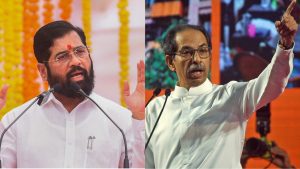
The Shinde Thackeray political war has reached a fever pitch in Maharashtra, with Deputy Chief Minister Eknath Shinde launching a scathing counterattack against former Chief Minister Uddhav Thackeray over allegations of municipal resource misuse. This intensifying battle centres on accusations surrounding the Brihanmumbai Municipal Corporation (BMC), one of India’s wealthiest civic bodies, and has become a defining moment in Maharashtra’s tumultuous political landscape.

Shinde Thackeray political warAlso Read: Shinde Thackeray political war

Others: Mumbai Blue flag certification

The Anaconda Metaphor: Origins of the Controversy

The latest chapter in the Shinde Thackeray political war began when Uddhav Thackeray, chief of Shiv Sena (UBT), referred to Union Home Minister Amit Shah as an “anaconda” during a rally at Mumbai’s Worli Dome. Thackeray accused the Bharatiya Janata Party (BJP) of attempting to “swallow Mumbai” through political manipulation and questionable land acquisitions. Drawing parallels with a newly introduced anaconda at Mumbai’s Jijamata Udyan, he suggested the ruling party’s appetite for controlling Mumbai was insatiable.

Eknath Shinde’s response was swift and equally aggressive. The Deputy Chief Minister turned the metaphor back on Thackeray, declaring that if anyone deserved the anaconda label, it was Thackeray himself. Shinde’s remarks specifically targeted Thackeray’s tenure and his family’s long association with the BMC, suggesting years of accumulated wealth and power through municipal governance.

BMC Resource Allegations: The Heart of the Dispute

The Shinde Thackeray political war has brought the BMC’s operations under intense scrutiny. The undivided Shiv Sena controlled Mumbai’s municipal corporation for 25 consecutive years, from 1997 to 2022, making it a central point of contention in the current political battle. Shinde accused Thackeray of being “coiled around Mumbai’s treasury,” alleging that his administration had systematically exploited the city’s financial resources.

According to recent Comptroller and Auditor General (CAG) reports, contracts worth approximately Rs 12,000 crore were awarded during the COVID-19 pandemic period under the BMC’s jurisdiction. The audit revealed significant irregularities, including Rs 3,500 crore specifically allocated for pandemic management. The report highlighted that 64 contractors and BMC officials received work orders and payments without proper contracts in place, raising serious questions about transparency and accountability.

Shinde’s faction has pointed to these findings as evidence supporting their corruption allegations. Dr Manisha Kayande, a legislator from the Shinde-led Shiv Sena, specifically accused Aaditya Thackeray, Uddhav’s son, of awarding contracts without proper tender processes during the pandemic. She cited manipulated tender procedures in the BMC’s Information Technology Department, which allegedly led to inflated costs and wasteful expenditure.

The Historical Context of Municipal Control

Understanding the Shinde Thackeray political war requires examining the historical significance of BMC control. The Brihanmumbai Municipal Corporation is not just India’s richest civic body but also one of Asia’s wealthiest municipal corporations, with a budget exceeding Rs 45,000 crore for the 2024-25 fiscal year. Control over this institution has long been synonymous with political power in Maharashtra.

The Shiv Sena’s quarter-century dominance of the BMC provided substantial political capital and influence over Mumbai’s development trajectory. This control extended to major infrastructure projects, land allocations, and civic amenities, making it a crucial power centre in Maharashtra politics. When Shinde led his rebellion in June 2022, fracturing the Shiv Sena and collapsing the Maha Vikas Aghadi government, one of the underlying issues was alleged mismanagement of municipal resources.

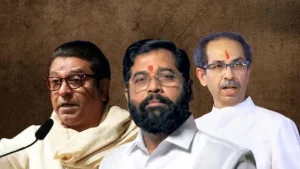
vr6ktp8 eknath shinde raj uddhav thackeray 625x300 20 April 25Counter-Allegations and Political Positioning
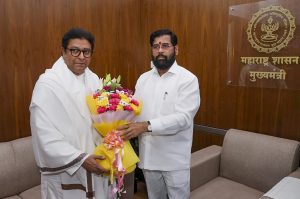
The Shinde Thackeray political war has seen both camps exchange serious allegations. Uddhav Thackeray’s faction has countered by pointing to cost escalations during the previous BJP-led Devendra Fadnavis administration. In a 2022 legislative assembly speech, Thackeray questioned a Rs 10,269 crore cost escalation in Mumbai Metro projects, asking Shinde, then the Urban Development Minister, to investigate the matter.

Thackeray also defended his administration’s record, arguing that many corruption allegations were politically motivated attempts by the BJP to weaken his government. He famously declared his willingness to face jail if it meant protecting his family from what he termed harassment by enforcement agencies.

Maharashtra Revenue Minister Chandrashekhar Bawankule joined the attack on Thackeray, comparing him to a “python” rather than an anaconda. Bawankule accused Thackeray of idleness and mismanagement, claiming he “sits at home, sleeps all day, and ruins Mumbai.” This rhetoric has become characteristic of the intensifying Shinde Thackeray political war, with both sides employing increasingly aggressive language.

The Electoral Dimension

The Shinde Thackeray political war carries significant electoral implications. The upcoming BMC elections have become a crucial battleground where both factions seek to establish their legitimacy as the true inheritors of Bal Thackeray’s legacy. Eknath Shinde has announced that his Shiv Sena will contest the BMC polls as part of the Mahayuti alliance, which includes the BJP and Ajit Pawar’s Nationalist Congress Party faction.

In the 2024 Maharashtra Assembly elections, Shinde’s faction demonstrated electoral superiority, winning 57 seats compared to Uddhav’s 20. The Mahayuti alliance secured 237 of 288 seats with 49.30% vote share, a decisive victory that Shinde’s supporters cite as validation of his rebellion and subsequent political journey. The alliance also performed strongly in Mumbai, winning 22 of the city’s 36 assembly constituencies.

These electoral results have intensified the Shinde Thackeray political war, with both factions positioning themselves for the crucial BMC elections. Control of Mumbai’s municipal corporation would provide not just financial resources but also immense political legitimacy to whichever faction emerges victorious.

Institutional Recognition and Party Control

The Election Commission of India’s recognition of Shinde’s faction as the authentic Shiv Sena in February 2023 marked a pivotal moment in the Shinde Thackeray political war. The Commission awarded Shinde’s group the party name and the iconic bow-and-arrow symbol, while Thackeray’s faction was redesignated as Shiv Sena (Uddhav Balasaheb Thackeray) or Sena (UBT).

The Election Commission’s decision cited undemocratic amendments to the Shiv Sena constitution made in 2018 under Uddhav Thackeray’s leadership. These amendments allegedly centralised party control and eliminated provisions for free, fair, and transparent elections for party positions. The Maharashtra Legislative Assembly Speaker subsequently ruled that Shinde’s faction constituted the “real Shiv Sena,” dealing a significant legal and political blow to Thackeray.

PTI12 23 2022 000196BDevelopment Versus Corruption Narrative

A crucial aspect of the Shinde Thackeray political war involves competing narratives about governance priorities. Shinde’s administration has emphasised development and infrastructure projects, pointing to initiatives launched during his tenure as Chief Minister from June 2022 to December 2024. His supporters credit him with advancing projects that were allegedly stalled during the Maha Vikas Aghadi government.

At his Dussehra rally in October 2024, Shinde explicitly framed the conflict in ideological terms: “Their agenda is corruption first, ours is nation first.” He accused the previous government of blocking development projects and increasing state debt by Rs 17,000 crore through what he termed “arrogance and project stalling.”

Conversely, Thackeray’s camp has portrayed itself as defending Mumbai’s interests against attempts by the BJP and its allies to capture the city’s resources. Thackeray’s anaconda metaphor was embedded in a broader narrative about protecting Mumbai from outsiders seeking to exploit its wealth and status.

The Path Forward: BMC Elections and Political Future

As the Shinde Thackeray political war continues to unfold, the impending BMC elections loom as a decisive confrontation. Both factions recognise that municipal control translates directly into political power, financial resources, and public legitimacy. Shinde has emphasised booth-level organisation and membership drives across Mumbai’s 227 civic wards, signalling the importance his faction places on this contest.

Meanwhile, Thackeray’s Shiv Sena (UBT) has hinted at potentially contesting the BMC elections independently, outside the broader Maha Vikas Aghadi alliance framework. This strategic consideration reflects the unique importance of Mumbai’s municipal politics and the desire to establish a distinct political identity.

The outcome of this electoral battle will likely shape Maharashtra’s political landscape for years to come. It will determine not just who controls one of Asia’s wealthiest municipal corporations but also which faction can legitimately claim to represent the political legacy of Bal Thackeray and the original Shiv Sena ideology.

Conclusion: A Battle Beyond Rhetoric

The Shinde Thackeray political war represents more than a simple dispute between political rivals. It embodies fundamental questions about governance, corruption, political legitimacy, and the control of critical urban infrastructure. The allegations of BMC resource misuse reflect broader concerns about transparency and accountability in municipal governance, issues that affect millions of Mumbai residents daily.

As both factions prepare for the crucial BMC elections, the intensity of their confrontation shows no signs of diminishing. Whether through anaconda metaphors or detailed corruption allegations, the Shinde Thackeray political war has become central to Maharashtra’s political discourse. The resolution of this conflict, whenever it comes, will significantly influence not just who governs Mumbai but how the city develops and serves its citizens in the years ahead.

The people of Mumbai and Maharashtra ultimately hold the power to determine which narrative prevails—whether Shinde’s claims of freeing Shiv Sena from corrupt influences or Thackeray’s defence of his legacy and accusations of betrayal. As this political drama continues to unfold, one certainty remains: the Shinde Thackeray political war will remain at the forefront of Maharashtra politics for the foreseeable future.MaharashtraMaharashtra

Asia-Africa Democracy-Building: Revolutionary Lessons from International IDEA’s 30-Year Journey

The International Institute for Democracy and Electoral Assistance (International IDEA) marked its 30th anniversary in 2025, reflecting on transformative lessons from Asia-Africa democracy-building initiatives that have shaped democratic governance across continents. Founded in February 1995 with 14 founding member states, the intergovernmental organisation has evolved into a global leader supporting sustainable democracy in 35 member nations, with two observer states and 20 offices spanning the Global South and North.

The anniversary celebrations coincided with the 70th anniversary of the historic Asia-Africa Conference originally held in Bandung, Indonesia, creating a powerful moment to examine the enduring legacy of South-South cooperation and Asia-Africa democracy-building engagements. These parallel milestones underscore the continued relevance of regional solidarity principles that have guided democratic development across developing nations for generations.

Asia-Africa democracy-buildingAlso Read: Asia-Africa democracy-building

Other: Voter roll revision SIR

The Asia-Africa Conference Legacy and Democratic Cooperation

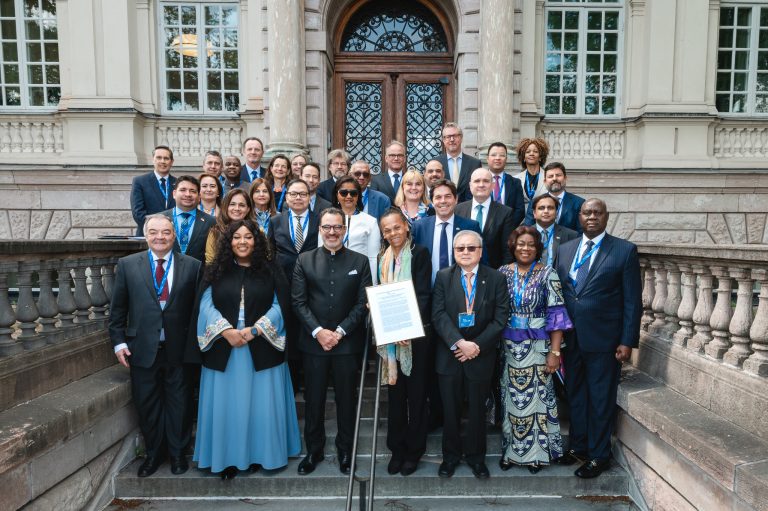
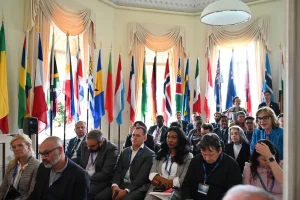
The original Asia-Africa Conference brought together representatives from numerous countries, establishing foundational principles for South-South cooperation and future collaboration between continents. In October 2025, International IDEA, the Non-Aligned Movement Centre for South-South Technical Cooperation, and Indonesia’s State Secretariat hosted an International Workshop on Electoral Efficiency and Sustainability, bringing together electoral commissioners and representatives from 15 Electoral Management Bodies across the Pacific, Asia, and Africa.

This gathering served as a critical platform for candid dialogue on safeguarding elections, often considered democracy’s cornerstone. Ms Noviyanti, Head of the Bureau for International Technical Cooperation at Indonesia’s Ministry of State Secretariat, emphasised the continued relevance of regional solidarity principles that have guided both the Asia-Africa Conference and International IDEA’s 30-year journey promoting sustainable democracy. She affirmed that elections embody people’s participation in shaping their government, acknowledging that electoral complexities continue evolving across diverse national contexts.

Political Participation: The Foundation of Democratic Systems

Asia-Africa democracy-building efforts have consistently emphasised political participation as fundamental to democratic legitimacy. The workshop participants agreed that elections represent long-term investments in democracy rather than mere expenses, setting the tone for discussions on sustainable electoral financing. Electoral commissioners from across regions recognised that sustainable financing constitutes an essential component of democratic resilience, particularly in regions grappling with complex socio-political challenges.

Discussions highlighted that electoral integrity depends not solely on operational efficiency but critically on public confidence in process fairness and transparency. Representatives emphasised that trust serves as the lifeblood of well-functioning societies. To maintain this trust, electoral systems require independent Electoral Management Bodies, timely and sufficient funding, and robust accountability mechanisms. Without these foundational pillars, even adequately funded elections risk losing legitimacy among citizens.

A representative from the Asian Network for Free Elections emphasised that financing laws must be strengthened through coordinated efforts, reflecting the collaborative spirit inherent in Asia-Africa democracy-building initiatives. This emphasis on institutional independence and financial sustainability demonstrates the maturation of democratic thinking across developing nations.

Pretoria High-Level Dialogue: Reimagining Democracy from the Global South

During June 2025, International IDEA’s Africa and West Asia team organised a landmark 30th anniversary commemorative event in Pretoria, South Africa. Approximately 200 prominent voices from the Global South gathered at a conference titled “Re-imagining Democracy in Africa: Comparative Experiences from the Global South.” This high-level dialogue, organised in collaboration with the African Union, Open Society Foundations, Switzerland’s Federal Department of Foreign Affairs, and the European Union, showcased positive democratic transformations from across developing nations.

Dr Roba D. Sharamo, Regional Director for Africa and West Asia at International IDEA, described the dialogue as a strategic intervention rather than a mere celebration. He emphasised that Asia-Africa democracy-building partnerships must rise together not only to defend democratic institutions but to reinvent them in ways that serve people more justly, inclusively, and transparently. The conference produced the Pretoria Consensus, a statement for democratic transformation reflecting collective insights from parliamentarians, judicial officers, electoral body managers, policymakers, civil society actors, and media representatives from Africa, Asia Pacific, and Latin America.

Asia-Africa democracy-buildingDemocratic Frameworks: Learning from Global South Experiences

The Pretoria dialogue showcased successful democratic frameworks from diverse contexts. Indonesia and South Korea demonstrated transitions from authoritarianism to robust democracies, while Costa Rica and Uruguay exemplified progressive legal frameworks coupled with high civic trust. Chile and Malaysia highlighted institutional reforms emphasising gender inclusion and anti-corruption progress. South Africa, a founding member of International IDEA in 1995, symbolises both the promise and complexity of post-authoritarian democracies, with its 1994 peaceful transition remaining a beacon of hope.

These comparative experiences demonstrate that Asia-Africa democracy-building initiatives benefit tremendously from peer learning and knowledge exchange. Several Global South democracies have shown notable resilience and democratic innovation, offering valuable lessons for other nations navigating similar challenges. The dialogue emphasised that democracy remains a universal value embraced across diverse countries, histories, and cultures, despite facing contemporary pressures from authoritarian resurgence and shrinking civic space.

Electoral Integrity and Democratic Resilience

International IDEA’s Electoral Integrity Project Report, published during the anniversary year, reviewed the 2024 super-cycle year of elections, analysing trends, challenges, and opportunities. The report described challenges facing elections, including aggression against officials, extreme weather conditions, and undue pressure to introduce politically motivated reforms. However, it also outlined how election authorities are meeting these challenges through inter-agency cooperation, innovative technology, and active citizen trust-building efforts.

Asia-Africa democracy-building frameworks increasingly recognise that democratic resilience depends on delivering tangible outcomes to citizens. While support for democracy remains strong in principle across most African and Asian nations, research indicates that openness to non-democratic alternatives grows in contexts where authoritarian systems appear to deliver better results. This reality underscores the importance of making democratic systems responsive, efficient, and accountable to citizens’ needs.

Stockholm Anniversary Week and Global Commitment

International IDEA’s Anniversary Week from June 9-13 in Stockholm brought together member states, the Board of Advisers, and representatives from Electoral Management Bodies. The Stockholm Conference on Electoral Integrity provided a platform for electoral bodies from member states and partners to share experiences and discuss leadership in a transforming world. His Excellency Andreas Norlén, Speaker of the Swedish Parliament, hosted council representatives at a reception honouring the institute’s milestone.

Switzerland assumed the chairship of International IDEA in 2025, with Swiss ambassador Adrian Junker calling for focused action to promote democracy worldwide and counter growing pressure on democratic systems. At the council meeting, Patricia Danzi, director general of Switzerland’s Agency for Development and Cooperation, reaffirmed Switzerland’s commitment to promoting democratic system resilience, emphasising that democracy requires constant nurturing rather than representing a finished product.

print International IDEA Logo 30 Portrait Colour 1The Future of Asia-Africa Democracy-Building
International IDEA’s Council of Member States formally recognised the organisation’s achievements in its official anniversary statement, acknowledging that the institute has improved and consolidated electoral institutions, supported constitution-building processes across continents, promoted political rights and representation, and become one of the world’s most trusted sources of comparative research on democracy. The statement highlighted International IDEA’s work addressing challenges to democracy posed by digitalisation and climate change.

Looking forward, Asia-Africa democracy-building efforts will continue focusing on building, strengthening, and safeguarding democratic institutions and processes. The organisation’s commitment to championing democracy as a universal human aspiration and enabler of sustainable development remains unwavering. Through policy-relevant knowledge, capacity development, advocacy, and dialogue facilitation, International IDEA continues to support locally owned democratic processes that respond to specific cultural and political contexts.

The lessons from 30 years of Asia-Africa democracy-building demonstrate that sustainable democracy requires collective effort, regional cooperation, and continuous adaptation to emerging challenges. As International IDEA embarks on its next chapter, the principles of South-South cooperation and peer learning established through Asia-Africa partnerships will continue guiding global democracy assistance efforts, ensuring that democratic institutions serve diverse populations effectively and inclusively.

West Bengal Bridge Connectivity Restoration Crisis: PWD Completes Stop-gap Balason River Bridge After Disaster Disruption, But Permanent Solution Remains Critical

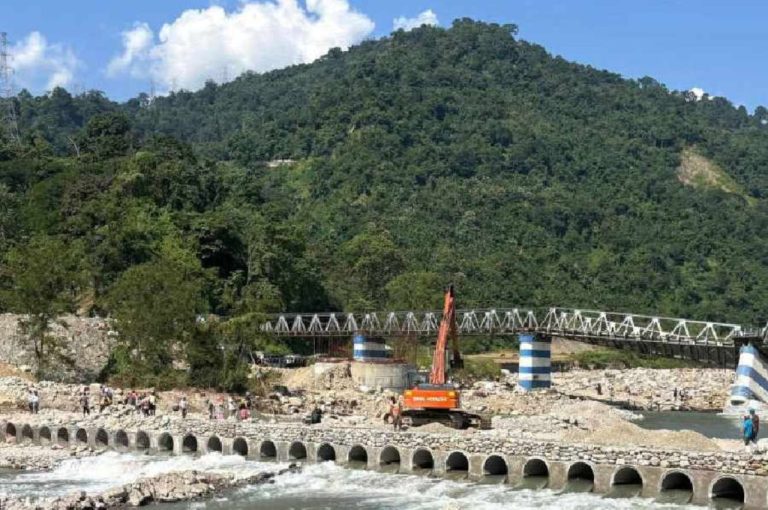
West Bengal Bridge Connectivity Restoration Crisis— A rapid yet temporary engineering solution has brought relief to communities cut off by natural calamity: the state Public Works Department (PWD) has announced the completion of an interim “stop-gap” bridge over the Balason River at Dudhia, aimed at restoring road connectivity between Siliguri and the hill town of Mirik. The project follows the October 5 floods that washed away the original iron‐girder bridge, isolating residents and commerce across several weeks.

Though the structure remains conditional pending administrative approval for traffic, the milestone marks a key moment in disaster-response infrastructure work. It highlights not only the physical challenge of reconnecting terrain disrupted by nature, but also the administrative and governance dynamics of rural infrastructure renewal in West Bengal’s hilly districts. With thousands of users, tea-garden workers, students and tourists dependent on the link, the temporary fix delivers relief—but flags the need for the promised permanent bridge, advanced engineering solutions and long-term resilience.


West Bengal Bridge Connectivity Restoration Crisis: Disruption and the Bridge Collapse

Late in the heavy monsoon season, flooding in the Balason river basin caused rapid erosion of the river banks and undermined the foundations of the 1965 iron‐girder bridge that previously carried vehicular traffic. The floodwaters, swollen by upstream rainfall and drainage catchments, breached the embankments, swept away approach roads, and left the structure unsafe for transit. The collapse severed the direct road route between Siliguri—a major plains transport hub—and Mirik, situated in the lower Himalayas.

Residents and commuters described the impact as sudden and severe. Daily bus services were cancelled or rerouted, goods movement slowed sharply, student commutes lengthened, and tourism flows dropped. Business owners in Mirik reported lost revenue. Local travel via alternate routes faced landslide risk, narrow passages and steep gradients, making everyday travel hazardous and slow.

Within days, the state government took note. The Chief Minister visited the site, directed expedited restoration, and tasked the PWD with providing a replacement link “within the fortnight”.


Stop-Gap Bridge: Engineering and Execution

Technical Specifications

The interim bridge is designed as a causeway with a Hume-pipe base rather than a full span steel girder. Work details: approximately 132 reinforced concrete Hume pipes (1,200 mm diameter) arrayed across the riverbed, embedded into a bedding layer and topped by embankments. The carriageway width measures eight metres in the causeway section, extending across a length of approximately 468 metres. The work took two major shifts daily to complete in record time. The structure’s conception emphasises speed, practicality and provisional load limits, rather than long-term endurance.

Construction Timeline

  • October 7: The Chief Minister’s inspection and directive to restore the link.
  • October 10: Work begins on the Hume-pipe causeway; engineers bypass riverflow using diversion channels.
  • Late October: Pipe­laying completed, embankment finishing underway.
  • End October: Project enters final inspection phase; district administration scheduled certification for traffic opening.

Traffic Conditions & Load Restrictions

Given the causeway structural design and provisional nature, traffic will initially be restricted primarily to light vehicles—cars, small jeeps, local buses, passenger taxis. Heavy trucks, multiple-axle lorries, and large transport vehicles will continue to use the alternate route until the permanent bridge is completed and traffic loads reassessed. Approach roads, signage, speed limits and safety barricades are being added ahead of full opening.

Administrative Approval

Opening the link to vehicles requires formal inspection by the district administration. The approval process includes structural integrity checks, verification of embankment stability, load testing, signage installation, safety barriers, and rupture contingency plans. Only after the district nod will traffic be permitted officially. Meanwhile, variable message signs, temporary barricades and traffic police are posted for readiness.


Why This Matters: Connectivity, Economy and Resilience

Restoring Access to the Hills

The Siliguri–Mirik route is a critical connection for Darjeeling district, linking plains transit hubs with hillside settlements, tea estates, schools, healthcare, and tourism circuits. The road link supports daily commuting, goods transport (fresh vegetables, tea leaves, hospital supplies), and tourist access. Disruption meant delayed supplies, higher transport costs, and inconvenience for residents. The bridge’s opening alleviates these hardships.

Economic and Social Impact

With the direct route disrupted, supply chains lengthened, transport fares increased, and tourism dipped. The interim bridge mitigates these losses, enabling faster mobility, restoring bus and taxi services, and reviving commerce. For remote rural settlements dependent on Siliguri markets or Mirik-tourism inflows, the link is essential to livelihoods.

Disaster Response & Infrastructure Resilience

The quick turnaround showcases a functioning emergency response chain: site inspection, mobilization of materials, coordination across departments, fast-tracked work. It demonstrates how infrastructure resilience must include both preventative reinforcement and rapid reconstruction capacity. However, it also highlights that despite rapid response, the root issue—permanent robust infrastructure—remains.

Administrative and Governance Implications

During disaster events, lines of responsibility blur. The PWD, district administration, forest and environment departments, local municipal bodies, and local elected leadership must coordinate. This bridge episode shows how top-level direction (from the Chief Minister) combined with field execution can accelerate outcomes. But sustainable governance will depend on institutionalising such agility, not just in emergency mode.


Voices from the Field: Relief, Caution and Expectations

Local residents expressed a mixture of relief and caution. Nar Bahadur Limboo, a local shop-owner, stated:

“At last we see movement again. The detour had doubled our travel time and cost of goods rose accordingly. We hope the bridge opens soon fully.”

A local school-teacher noted the hardship:

“Students and teachers had to leave half an hour earlier; buses were full, landslide danger on alternate hill roads high. This interim link is a blessing, but we worry about the long run.”

Tea-garden labourers commented on the increased duty-travel burden: previously a 30-minute ride became over an hour. They welcomed the restoration eagerly.

On the administrative side a PWD executive said:

“We have delivered within time under difficult terrain and seasonal challenge, but this is only the first step. The permanent bridge will take at least 18-24 months.”

Civil-society groups emphasised caution:

“This bridge is vital, but the key is that it must be safe, well-monitored and not just a temporary patch. We will monitor the load limits, maintenance and future construction of the permanent span.”

Opposition political representatives used the disruption as an example of infrastructure risk:

“When key connectivity collapses in a flood, we ask whether design or maintenance was weak. The temporary fix helps but shouldn’t replace proactive investment.”


Engineering, Terrain and Challenges of the Region

Terrain & Hydrology

Darjeeling district’s terrain presents many challenges: steep gradients, unstable soils, high rainfall, landslides, logistic constraints, forest intersecting road corridors. Rivers like Balason swell quickly. The old iron-girder bridge’s 1965 design was inadequate for current volumes and hazard levels.

Maintenance & Ageing Infrastructure

Many old bridges in hill-districts face wear, erosion, increased vehicular loads and higher flood counts. Regular inspection, structural health monitoring and preventive maintenance have often lagged budgeted timelines. The collapsed bridge was previously marked for repair, but funding and schedule bottlenecks delayed works.

Logistics of Bridge Construction in Hills

Building bridges in upland terrain demands mobilising heavy equipment over narrow roads, getting materials transported uphill, managing slope stability, suitable foundation works in riverbeds, dealing with monsoon delays. The PWD project used 132 Hume pipes, diversion works, and compacted embankments to accelerate delivery. Yet this is not a substitute for full foundation design, girder span, long-term load capacity, and geotechnical anchoring of a permanent bridge.

Environmental & Forestry Constraints

Bridge sites often require forest clearance, river eco-flow compliance, sedimentation control, embankment protection—all under environmental consent regimes. In emergency restorations, some of these are truncated or fast-tracked; the permanent bridge will need full clearances.


Broader Implications for Infrastructure & Disaster Policy

Vulnerability of Connectivity in Hilly India

This incident emphasises how remote regions often rely on singular links that, if disrupted, isolate communities. Disaster-resilient connectivity must entail redundancy, alternate routes, quick replacement capacity and local contingency planning.

Emergency Procurement & Contracting

The rapid mobilization by PWD illustrates emergency procurement flexibility: mobilising materials, manpower, allied agencies under compressed timelines. Future policy must codify such procurement protocols for disaster zones, with quick-response frameworks and predefined vendor lists.

Investment for Permanence

Temporary fix underscores the need for permanent infrastructure investment. The state sanction for a ₹54 crore permanent bridge is a good signal; but long term budgets, resilient design (flood-proofing, seismic design, higher load capacity) must follow.

Equity and Rural-Hill Development

Connectivity is not merely technical—it underpins economic opportunity, access to healthcare, education, markets, tourism, and inclusive development. Hill districts often suffer service lags; infrastructure gaps contribute to marginalisation. A restored link is both a physical and social lifeline.

Monitoring, Maintenance & Institutional Reform

Post-construction, maintenance schedules, structural health monitoring sensors, community alerts, local oversight and preventive inspections are essential. The PWD should embed sensors, schedule periodic checks and create local liaison cells for early warning.


What Happens Next: Roadmap & Key Milestones

Traffic Commencement & Monitoring

Once district approval is granted, traffic will begin for light vehicles. Monitoring must track daily traffic numbers, load compliance, any settlement or distress signs. Data must be published for transparency.

Permanent Bridge Construction

The state should publish a timeline for the permanent bridge: project sanction, tendering, foundation works, girder erection, commissioning, and final opening. Key milestones: procurement, land clearance, environmental consent, river‐bed geology study, girder installation.

Approach Road Upgrades

Approach roads to the new link must be upgraded: widening, guard-rails, hazard signage, drainage and slope stability. Monsoon season may soon return; interim works must be protected.

Communication and Public Information

Villagers, commuters, school authorities, tourism operators must be informed of load limits, vehicle restrictions, alternate routes during maintenance, and transition to the permanent bridge. Transparent information reduces risk of accidents or confusion.

Institutional Review of Bridge Network

The PWD, state disaster management authority and district administrations should conduct a review of other vulnerable bridges in hill districts, assess risk of wash-out or erosion, prioritise high-risk links for upgrading, and pre-position emergency response resources.

Budget and Financing

Budget allocations must be monitored. The state’s capital works budget should reflect expenditure for the permanent bridge, maintenance funds for the interim structure and contingency for future disasters. Accountability in spending is key.


Conclusion: Relief Arrives, But the Real Work Begins

The opening of the stop-gap Balason river bridge at Dudhia offers near-instant relief to a community that faced weeks of disruption. For residents, commuters, students and businesses in the Siliguri–Mirik corridor, it is a crucial lifeline restored. For the state’s governance and infrastructure policy, however, the moment is not just about relief—it is about resilience.

The crisis laid bare how vulnerable vital links in remote regions can be to natural hazards, how quickly disruption can cascade into social and economic hardship, and how administrative urgency combined with engineering ingenuity can restore access. But the temporary nature of the fix means the work is not done. What matters now is the timely construction of a permanent bridge, the safe management of the interim link, the enforcement of load and safety protocols, the publication of performance metrics and the institutionalisation of preventive infrastructure planning.

In a region marked by terrain challenges, rainfall extremes and service access constraints, this episode may serve as a blueprint. Yet its success depends on execution—not only today’s traffic opening, but tomorrow’s durable connectivity, persistent maintenance, community trust and institutional strength.

For Darjeeling district, this bridge is more than just concrete and pipes—it is a promise of continuity, opportunity and security. For the state of West Bengal, it is a test of how well governance, engineering and accountability converge in the face of disruption. The relief is real—but the long view remains.


External Links (Government / Official)

  1. Public Works Department, Government of West Bengal – Roads & Bridges Division
    https://pwdwb.gov.in/
  2. Government of West Bengal – Infrastructure Projects and Status Portal
    https://wb.gov.in/ (navigate to “Infrastructure / Bridges & Connectivity”)
  3. Ministry of Road Transport & Highways (MoRTH), Government of India – Guidelines for Emergency Restoration of Connectivity after Natural Calamities
    https://morth.nic.in/
  4. District Administration, Darjeeling – Disaster Management & Public Infrastructure Notifications
    http://darjeeling.gov.in/
  5. Government of West Bengal – Budget & Capital Works (Surface Transport / Public Works)
    https://finance.wb.gov.in/

Also read: Home | Channel 6 Network – Latest News, Breaking Updates: Politics, Business, Tech & More