Sunday, May 17, 2026
Home Blog Page 382

In UP Horror: 22-Year-Old Law Student’s Stomach Cut Open, Fingers Chopped Off After Argument In Kanpur

In UP, Law Student Brutally Attacked After Argument Turns Violent

In UP, a shocking case of violence has left residents horrified after a 22-year-old law student was brutally attacked in Kanpur following an argument at a local medical shop. The young student, identified as Abhijeet Singh Chandel, is a first-year law student at Kanpur University. He suffered multiple injuries, including a deep stomach wound and the loss of two fingers, after the altercation spiraled out of control.In UP

According to police, the fight began when Chandel argued with a shop operator named Amar Singh over the price of a medicine. What started as a verbal dispute quickly turned into a violent confrontation. Amar Singh allegedly called his brother, Vijay, and two other men to the scene. Together, they attacked the student with sharp objects, leaving him critically injured.

Witnesses reported that Chandel tried to escape and ran toward his house for help, but the attackers chased and caught him again. They struck him on the head, causing severe bleeding, before slashing his stomach and chopping off two of his fingers. Locals who heard his cries rushed to the spot, forcing the attackers to flee before police arrived.

In UP, Kanpur Student Left Fighting For Life After Shocking Assault

The injured student was taken to a nearby hospital, where doctors confirmed he had suffered life-threatening wounds and required multiple stitches, including 14 on his head. Police have filed a case and launched a search for the suspects. Preliminary investigations indicate that the attack was deliberate and planned in anger after the argument.Kanpur Shocker! Law student's stomach cut open, fingers chopped off after  heated argument with shopkeeper | Today News

Senior police officials from Kanpur have assured that strict action will be taken against the culprits. “The accused will be arrested soon, and no leniency will be shown,” an officer stated. Authorities are examining CCTV footage from nearby shops to trace the attackers’ movements and confirm their identities.

In UP, Police Arrest Suspects As Investigation Deepens

The shocking In UP incident has triggered widespread outrage and fear among residents, with many expressing concern over the growing number of violent crimes in the region. Locals say arguments over trivial matters often turn deadly, pointing to the urgent need for stronger law enforcement and public safety awareness.

This brutal assault occurred just days after another tragic case shook Kanpur the kidnapping and murder of a six-year-old boy from the Barra locality. The child, identified as Ayush Sonkar, was found dead hours after going missing. Police suspect that personal enmity and resentment toward the boy’s mother might have motivated the crime.Law student's stomach cut open, fingers chopped after argument with shop  owner in Kanpur

According to Deputy Commissioner of Police (South) Deependra Nath Chowdhary, initial investigations suggest the child was strangled to death, though confirmation awaits the post-mortem report. The accused, who lived nearby, has since been arrested.

In UP, Another Disturbing Crime Adds To Growing Safety Concerns

The back-to-back incidents have left In UP residents alarmed about the deteriorating law and order situation in Kanpur and surrounding areas. Many citizens are demanding stronger policing, especially during evening hours, and stricter punishment for those committing violent crimes.22-Year-Old Law Student's Stomach Cut Open, Fingers Chopped Off In Kanpur:  Cops

Community leaders have urged authorities to conduct safety drives and spread awareness about conflict management to prevent minor arguments from turning deadly. “Disputes over small issues must not lead to bloodshed. People need to learn restraint, and the police must act swiftly in such cases,” said a local resident.

Police have intensified patrolling in sensitive areas and assured that the attackers in the law student’s case will be caught soon. The victim, meanwhile, remains in critical condition under medical care, fighting for recovery after the horrific assault. Also Read: GCC Official Confirms Suspension After Chennai Girl Lands in ICU Following School Assault in 2025

In conclusion, the In UP incident has once again highlighted the pressing need for stronger public safety measures and stricter law enforcement. As the young law student battles for his life, the people of Kanpur hope justice will be served swiftly and that such brutality never repeats in their city again.

Maharashtra Doctor Suicide: Shocking New Evidence & Procedural Lapses Exposed

Maharashtra – The Maharashtra doctor suicide case has taken several dramatic turns with new allegations of procedural irregularities and claims of a potential second suicide note. The tragic death of the 29-year-old government doctor in Satara has triggered a wave of shock across the state, as competing claims and counterclaims continue to emerge, painting a complex picture of alleged harassment, professional pressure, and investigative lapses.

The Maharashtra doctor suicide case involves serious allegations of rape by a police sub-inspector and harassment by her landlord’s son, while also raising troubling questions about the treatment of medical professionals and the handling of the investigation itself.

Allegations of Postmortem Procedural Violations

In a significant development in the Maharashtra doctor suicide case, the deceased doctor’s cousin has raised serious concerns about procedural lapses following her death. He alleged that no postmortem was conducted until 6 am, despite the doctor dying late Thursday night in a hotel room.

The cousin stated that the body was transported from her residence to the hospital without family members present, which he claims violated standard protocols. “When she died, there was no one to perform her postmortem till 6 am. They brought her dead body from her residence to the hospital in our absence. All this should have happened in front of the family members,” the cousin stated, highlighting what he perceives as irregular handling of the Maharashtra doctor suicide investigation.

These procedural concerns have added another layer of complexity to the already contentious Maharashtra doctor suicide case, raising questions about whether proper investigative protocols were followed from the outset.

Claims of Professional Pressure and Coercion

The cousin’s allegations in the Maharashtra doctor suicide case extend beyond procedural concerns to include claims that the doctor faced intense professional pressure. He asserted that she was forced to produce false postmortem reports and forge fitness certificates under political and police pressure for approximately one year.

“She was under a lot of political and police pressure for the last year. Medical staff at the hospital are also involved…She was being forced to perform more and more postmortems despite other officers being present at the hospital,” the cousin explained, suggesting systemic issues may have contributed to the Maharashtra doctor suicide tragedy.

These allegations paint a picture of a medical professional caught between competing pressures, forced to compromise professional ethics under duress from multiple sources of authority.

Police Present Counter-Narrative

In response to family allegations in the Maharashtra doctor suicide case, police officials have presented a contrasting narrative. Senior officers claim the doctor had been “reluctant to conduct pre-arrest medical examinations at night” and frequently failed to cooperate in issuing fitness certificates for accused individuals brought to the hospital.

Police allege she routinely declared accused persons unfit “without sufficient grounds” and refused to remain available round-the-clock for medical formalities, which allegedly prompted them to seek her replacement. This counter-narrative suggests the Maharashtra doctor suicide case involves disputed professional conduct and conflicting interpretations of the doctor’s duties.

The Possibility of a Second Suicide Note

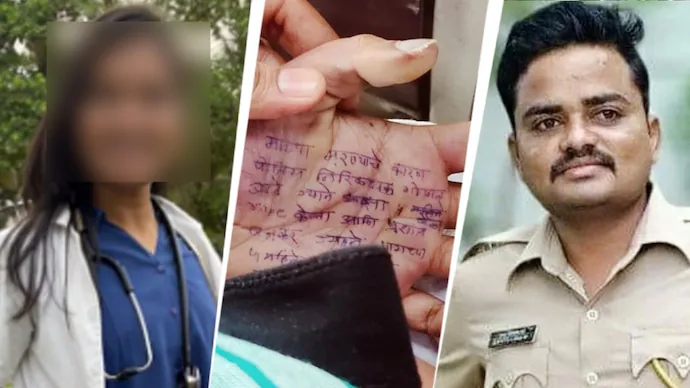
Perhaps the most intriguing development in the Maharashtra doctor suicide case is the cousin’s suggestion that another suicide note may exist. When the doctor was initially found dead, a note written in Marathi was discovered on her palm, accusing Police Sub-Inspector Gopal Badane of raping her four times and her landlord’s son, Prashant Bankar, of physically and mentally harassing her for five months.

However, the cousin believes this brief note doesn’t fully represent his sister’s struggle. “We believe that when her dead body was taken to the hospital, she must have left behind another suicide note. She fought hard and wrote 4-page complaint letters. She cannot die with just a little note on her palm,” he stated, suggesting the Maharashtra doctor suicide case may involve additional evidence yet to be discovered.

Previous Complaints and Ignored Warnings

Maharashtra doctor suicide case

The Maharashtra doctor suicide case reveals a disturbing pattern of ignored complaints. The doctor had written to the Sub-Divisional Police Officer in June 2025, detailing how she was “forced” to issue fitness certificates for accused individuals. Gopal Badane was specifically named in that letter.

Following her complaint, Phaltan police submitted a counter-complaint to the Satara Civil Surgeon, accusing her of deliberately issuing “not fit” certificates that delayed arrests and custodial remands. After her June complaint was ignored, she filed an RTI appeal on August 13, seeking details of action taken on her earlier letter, demonstrating persistent efforts to address her concerns in the Maharashtra doctor suicide case.

Arrests and Political Implications

Both Gopal Badane and Prashant Bankar were arrested on Saturday, October 25, following the Maharashtra doctor suicide revelations. However, the case has also acquired political dimensions, with Maharashtra Chief Minister Devendra Fadnavis giving a clean chit to former BJP MP Ranjitsinh Naik Nimbalkar, whose name surfaced in an earlier letter by the deceased doctor.

Opposition leader Ambadas Danve questioned this decision, asking, “Is the chief minister himself an investigating officer now? Without waiting for the police report, how can he announce that someone is innocent?” MLA Sachin Patil was also given a clean chit in connection with the Maharashtra doctor suicide case, raising questions about the investigation’s independence and thoroughness as this tragic case continues to unfold.

Young Women Shocked As 20-Year-Old Of Indian Origin Raped In UK – Police Launch Urgent Hunt For Suspect

Young Women Terrified After Indian-Origin Victim Raped In UK

Young women across the UK are left shaken after a 20-year-old woman, believed to be of Indian heritage, was reportedly raped in a racially motivated attack in Walsall, northern England. The West Midlands Police confirmed the incident and released CCTV footage of the suspect to seek public assistance in identifying him. The case has sparked deep concern among local communities, especially following similar racially aggravated incidents in recent weeks.Young Women

Detective Superintendent Ronan Tyrer, who leads the investigation, described the assault as “an absolutely appalling attack on a young woman.” Police teams are collecting evidence, reviewing CCTV footage, and building a profile of the suspect to ensure his quick arrest. Authorities have urged residents who may have seen a suspicious man or have relevant footage to come forward immediately.

Young Women Targeted In Racially Aggravated Attack In Walsall

The suspect has been described as a white male in his 30s, with short hair and dressed in dark clothing. Although police are exploring several lines of inquiry, they have not yet confirmed if this case is connected to previous racially motivated assaults in nearby areas.

Community organisations have expressed deep outrage and fear following the crime. The Sikh Federation UK cited local sources claiming the victim was a Punjabi woman. This recent assault follows the rape of a British Sikh woman in Oldbury just a few weeks earlier, which too had racial motivations.Indian-Origin Woman, 20, Raped In UK In 'Racially Aggravated Attack'; Suspect Seen On CCTV

Detective Tyrer assured that specialist officers from the Public Protection Unit and local policing teams are working tirelessly to trace the attacker. “We understand the fear this causes in the community. Our priority is to find the person responsible and bring them to justice,” he said.

Chief Superintendent Phil Dolby also acknowledged the community’s growing concerns. He stated that Walsall, being a diverse area, must remain safe for everyone. Police have increased their presence in the region to reassure residents and prevent further incidents. “We are speaking directly with community members to understand their worries. Our officers will continue to patrol the area and support those affected,” he added.

Young Women’s Safety Concerns Grow Amid Investigation

Local groups have called for urgent action, stressing that young women from minority communities are increasingly vulnerable to hate-driven crimes. The Sikh Federation urged the West Midlands Police to intensify efforts and ensure accountability. “Two racially aggravated rapes within two months raise serious questions about women’s safety in the area. These incidents must not go unnoticed,” the organisation said in a statement.Indian student seen carrying UK woman to his flat to rape her in chilling  video, arrested | World News

Authorities are encouraging anyone with information, dashcam footage, or eyewitness accounts to come forward. Detectives believe that even minor details could help identify the suspect and prevent similar attacks. The police have reassured that any information shared will remain confidential and will play a crucial role in strengthening the case. Also Read: Park Bom’s Massive Lawsuit Could Make Her the Richest Person Alive, Surpassing Elon Musk

Young Women Urged To Stay Alert As Police Hunt Suspect Continues

As the investigation continues, young women in the region are being urged to take precautions, remain vigilant, and report suspicious activities to local police. Community leaders have also called for awareness programs and stronger measures to ensure women’s safety in public spaces.


View this post on Instagram


A post shared by The Tatva (@thetatvaindia)

The Walsall case has reignited a nationwide conversation on racial violence and gender safety. Many residents and advocacy groups are demanding faster justice and better protection for women from ethnic minority backgrounds.

In conclusion, the tragic assault has left the local community in shock and fear. While police efforts are ongoing, the incident serves as a painful reminder of the challenges young women continue to face due to racial hatred and gender-based violence. The hope now rests on swift justice and stronger steps to ensure no woman experiences such horror again.

US Navy Crashes: Shocking Double Aircraft Loss in South China Sea Revealed

Washington D.C. – The United States Navy experienced two separate US Navy crashes on Saturday when both a helicopter and a fighter jet went down in the South China Sea during what military officials described as routine operations. The incidents, occurring just 30 minutes apart, raised immediate concerns about operational safety, though all personnel involved were successfully recovered and reported to be in stable condition.

These US Navy crashes represent a significant operational setback for American naval forces operating in one of the world’s most strategically important maritime regions, where tensions frequently run high due to competing territorial claims and military presence.

First Incident: MH-60R Sea Hawk Helicopter Goes Down

The first of the US Navy crashes involved an MH-60R Sea Hawk helicopter assigned to the “Battle Cats” of Helicopter Maritime Strike Squadron (HSM) 73. According to an official Navy statement, the incident occurred at approximately 2:45 PM local time on October 26, 2025, while the aircraft was conducting routine operations from the aircraft carrier USS Nimitz (CVN 68).

The helicopter went down in South China Sea waters, prompting an immediate response from search and rescue assets assigned to Carrier Strike Group 11. In what represented a successful rescue operation, all three crew members aboard the helicopter were safely recovered from the water. The swift response demonstrated the Navy’s preparedness for such emergencies, even as investigators began examining the circumstances that led to these US Navy crashes.

The MH-60R Sea Hawk is a sophisticated multi-mission helicopter designed for anti-submarine warfare, anti-surface warfare, search and rescue, combat search and rescue, vertical replenishment, and naval gunfire support. Its loss represents a significant equipment setback for the carrier strike group’s operational capabilities.

Second Incident: F/A-18F Super Hornet Fighter Jet Crashes

Merely 30 minutes after the helicopter incident, the second of the US Navy crashes occurred when a Boeing F/A-18F Super Hornet fighter jet went down in the same waters. The aircraft was also conducting routine operations from the USS Nimitz when the incident took place.

According to official Navy statements regarding these US Navy crashes, both crew members aboard the fighter jet successfully ejected from the aircraft before impact. The two aviators were subsequently recovered safely from the South China Sea and reported to be in stable condition, marking another successful rescue operation despite the loss of valuable military hardware.

The F/A-18F Super Hornet is a twin-engine, carrier-capable multirole fighter aircraft that serves as a cornerstone of US naval aviation. The loss of such an advanced aircraft in these US Navy crashes represents a substantial financial and operational impact for the Navy’s Pacific operations.

Investigation and Safety Protocols

US Navy crashes

Following these US Navy crashes, military officials confirmed that the causes of both incidents are currently under thorough investigation. The Navy statement emphasized that “all personnel involved are safe and in stable condition,” while investigators work to determine what factors contributed to both aircraft going down within such a short timeframe.

The proximity of these US Navy crashes—both in time and location—will likely prompt investigators to examine whether any common factors, such as weather conditions, operational tempo, or other environmental elements, may have played a role in both incidents. The fact that both aircraft were operating from the same carrier, USS Nimitz, will also be a focal point of the investigation.

Also Read: Jaishankar-Rubio Meeting: Critical Breakthrough in India-US Relations During ASEAN Summit 2025

Strategic Timing and Political Context

The timing of these US Navy crashes carries additional significance as they occurred during President Donald Trump’s first Asia tour and just ahead of Defence Secretary Pete Hegseth’s planned multi-country Asia tour. The incidents highlight the operational risks faced by American military personnel deployed in the region, even during routine operations.

The South China Sea remains one of the most contested maritime regions globally, with multiple nations asserting territorial claims and maintaining significant military presence. These US Navy crashes occurred in waters where the United States regularly conducts freedom of navigation operations to challenge what it views as excessive maritime claims.

Pattern of Recent Naval Aviation Incidents

These US Navy crashes are not isolated occurrences but part of a concerning pattern of naval aviation accidents. Earlier in 2025, two US warplanes fell off the Navy’s Harry S. Truman aircraft carrier while operating in the Middle East, raising questions about operational safety across the fleet.

In May 2025, an F/A-18F Super Hornet crashed while attempting to land on the Truman’s flight deck when the landing manoeuvre failed, “causing the aircraft to go overboard,” according to officials. This incident followed another Super Hornet that similarly failed its landing manoeuvre and went overboard, suggesting potential systemic issues that may require broader examination.

Operational Implications

The US Navy crashes underscore the inherent dangers of naval aviation operations, particularly those conducted from aircraft carriers in challenging maritime environments. Despite advanced technology and extensive training, carrier operations remain among the most demanding and dangerous missions in military aviation.

As investigations into these US Navy crashes continue, the incidents serve as a reminder of the risks undertaken by naval aviators and the importance of maintaining the highest safety standards while conducting operations in strategically vital regions like the South China Sea.

Artificial Yamuna Row: Explosive Political Battle Erupts Over Chhath Puja in Delhi

New Delhi – The artificial Yamuna row has emerged as the latest flashpoint in Delhi’s political landscape, with the Aam Aadmi Party and Bharatiya Janata Party engaging in a bitter war of words over Chhath Puja preparations. The controversy centers on allegations that filtered water has been used to create a cleaner section of the river at Vasudev Ghat, where Prime Minister Narendra Modi is expected to participate in the traditional festivities.

This artificial Yamuna row has exposed deep political divisions as both parties compete for the support of Delhi’s significant Purvanchali community, estimated at four million residents, who celebrate Chhath Puja with great devotion.

AAP’s Allegations of “Fake Yamuna” Construction

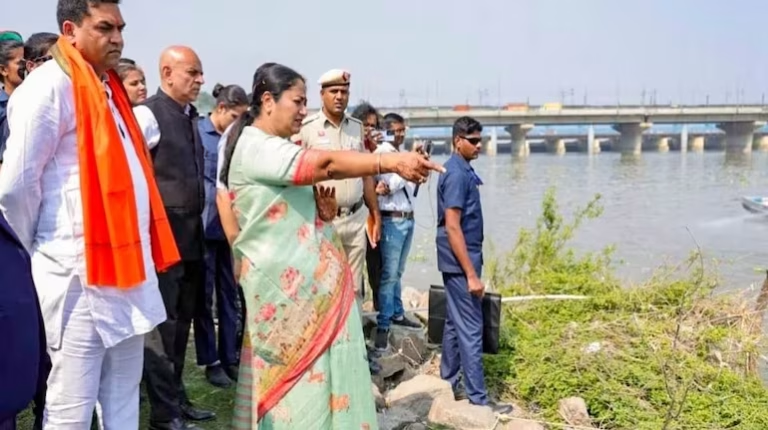
At the heart of the artificial Yamuna row are serious accusations made by AAP Delhi head Saurabh Bhardwaj during a press conference. He alleged that the BJP-led Delhi government had constructed what he termed a “fake Yamuna” by secretly filling a small stream at Vasudev Ghat with filtered water sourced from the Wazirabad Water Treatment Plant, which typically supplies the capital’s drinking water.

Bhardwaj claimed that this artificial Yamuna row was designed to stage “another drama” before Delhi’s residents and the nation. “Prime Minister Narendra Modi will take a dip in that filtered-water Yamuna to fool the people of Delhi, Bihar and Purvanchal, and to show that the BJP has cleaned the Yamuna,” he stated, questioning the authenticity of the government’s river cleaning efforts.

The artificial Yamuna row intensified when AAP released video evidence allegedly showing the stark contrast between the clean water at Vasudev Ghat and the polluted conditions at other ghats along the river.

Health and Safety Concerns Raised

The artificial Yamuna row extends beyond political posturing to encompass genuine public health concerns. AAP highlighted that while one section may have filtered water, other ghats continue to have highly polluted water with dangerous faecal coliform levels, potentially exposing devotees to serious health risks during their religious observances.

AAP national convenor Arvind Kejriwal amplified the artificial Yamuna row by posting on social media that “the BJP has made a mockery of the deep religious sentiments attached to Chhath Parv in Delhi.” Leader of Opposition Atishi characterized the situation as “outright discrimination,” suggesting that ordinary devotees would not receive the same quality arrangements as those prepared for the Prime Minister’s visit.

BJP’s Counterarguments and Defense

Delhi Assembly Polls - Delhi BJP chief Virendra Sachdeva to not contest  Assembly elections: Sources - India Today

Delhi BJP chief Virendra Sachdeva strongly rejected the artificial Yamuna row allegations, turning the accusations back on AAP by highlighting their governance record. He accused the former AAP government of banning Chhath Puja celebrations on Yamuna banks between 2018 and 2024, questioning why AAP now objects to cleanliness initiatives.

Addressing the artificial Yamuna row, Sachdeva described it as “the first-ever political drama in which an opposition leader raised objections against the government’s efforts to ensure cleanliness and sanitation.” He emphasized that the BJP government had completed basic cleaning of the Yamuna within eight months and made natural ghats available for devotees to celebrate their festival.

Also Read: J&K Rajya Sabha Polls: Historic Election Delivers Stunning Results Post Article 370

Questions Over Previous Administration’s Policies

The artificial Yamuna row prompted Sachdeva to pose direct questions to AAP leadership regarding their previous governance decisions. He specifically asked on what administrative basis AAP had imposed a ban on Chhath Puja celebrations at Yamuna banks during their tenure, and why they now object to the current government’s sanitation and clean water initiatives at the river ghats.

Sachdeva further stated that while opposition parties nationwide typically criticize lack of development or unclean religious sites, the artificial Yamuna row represents an unprecedented instance of an opposition party protesting against cleanliness efforts themselves.

The Purvanchali Vote Bank Factor

The artificial Yamuna row cannot be separated from its political context, particularly the competition for Purvanchali community support. This demographic, comprising approximately four million residents in Delhi, has emerged as a crucial vote base in recent elections. Chhath Puja holds immense cultural and religious significance for this community, making any controversy surrounding the festival politically sensitive.

Both parties recognize that their handling of the artificial Yamuna row and Chhath Puja arrangements could significantly impact their electoral prospects among this influential voter bloc.

Technical Aspects of River Management

The artificial Yamuna row has also brought attention to technical aspects of river management and water treatment. AAP accused the BJP government of using “defoamer solutions,” a practice they claim the BJP had previously opposed while in opposition. This highlights the complexity of maintaining water quality standards for religious ceremonies while managing a heavily polluted urban river.

The artificial Yamuna row underscores broader challenges Delhi faces in balancing environmental management, religious accommodations, and political considerations.

Implications for Governance and Public Trust

Beyond immediate political gains, the artificial Yamuna row raises important questions about governance transparency and public trust. Whether the allegations prove accurate or not, the controversy highlights the need for clear communication about environmental management practices and religious event preparations. As both parties continue their verbal sparring over the artificial Yamuna row, Delhi’s residents and devotees await clarity on the actual conditions at various ghats and the authenticity of cleaning efforts undertaken for this important religious festival.

Jaishankar-Rubio Meeting: Critical Breakthrough in India-US Relations During ASEAN Summit 2025

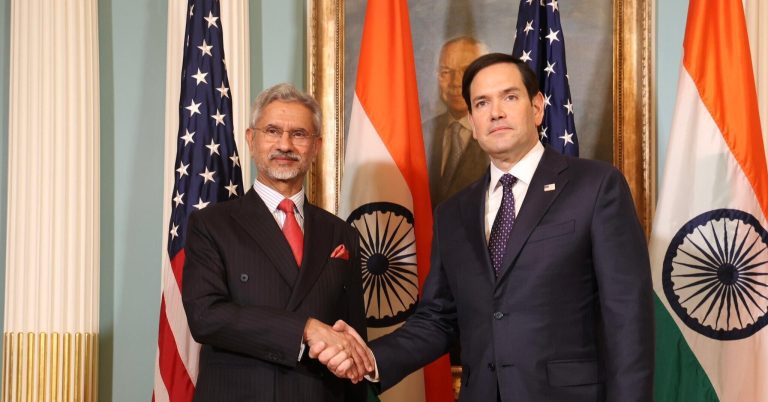
Kuala Lumpur, Malaysia – External Affairs Minister S Jaishankar and US State Secretary Marco Rubio held a significant diplomatic discussion on the sidelines of the 48th ASEAN Summit in Kuala Lumpur, Malaysia. The Jaishankar-Rubio meeting focused on strengthening bilateral ties between India and the United States while addressing pressing regional and global issues amid ongoing trade negotiations between the two nations.

In a social media post following the discussion, Jaishankar expressed satisfaction with the engagement, stating his appreciation for the comprehensive dialogue that covered both bilateral relations and broader international matters. The Jaishankar-Rubio meeting comes at a crucial juncture as both countries work toward finalizing a mutually beneficial trade agreement.

Strategic Context of the Jaishankar-Rubio Meeting

The timing of the Jaishankar-Rubio meeting holds particular significance as India and the United States continue intensive negotiations on a bilateral trade agreement. This high-level diplomatic engagement demonstrates the commitment of both nations to maintaining strong ties while navigating complex trade discussions that could reshape economic relations between the world’s largest democracy and its most powerful economy.

The ASEAN Summit in Kuala Lumpur provided an ideal platform for this crucial Jaishankar-Rubio meeting, allowing both leaders to discuss not only bilateral concerns but also regional security challenges and global economic trends affecting the Indo-Pacific region.

India’s Principled Approach to Trade Negotiations

Understanding the broader context of the Jaishankar-Rubio meeting requires examining India’s recent stance on trade talks. Union Commerce and Industry Minister Piyush Goyal has articulated New Delhi’s measured and strategic approach to international trade agreements, emphasizing that India will not rush into any deal or accept conditions that limit its trading flexibility.

Goyal made clear that trade agreements extend beyond simple tariff reductions or market access provisions. Instead, they represent opportunities to build trust, establish long-term partnerships, and create sustainable frameworks for global business cooperation. This philosophy likely influenced discussions during the Jaishankar-Rubio meeting, as both nations seek to balance immediate economic interests with long-term strategic objectives.

Long-Term Vision Over Short-Term Gains

In statements preceding the Jaishankar-Rubio meeting, Goyal emphasized that India’s trade strategy focuses on sustainable relationships rather than quick wins. He specifically noted that the current negotiations are not about immediate outcomes within a six-month timeframe, using steel exports to America as an example of thinking beyond short-term opportunities.

“Trade deals are for a longer duration. It’s not only about tariffs, it’s also about trust and a relationship. Trade deals are also about businesses,” Goyal explained, highlighting the comprehensive nature of India’s approach that likely featured in the Jaishankar-Rubio meeting discussions.

This measured approach reflects India’s determination to secure agreements that serve its long-term national interests while maintaining flexibility in its global trading relationships. The Jaishankar-Rubio meeting provided an opportunity to reinforce these principles at the highest diplomatic levels.

Progress in India-US Trade Negotiations

Commerce Secretary Rajesh Agrawal recently indicated that trade talks between India and the United States are “progressing well,” with both sides “converging” on most issues. His optimistic assessment suggests that discussions complementing the Jaishankar-Rubio meeting are yielding positive results, bringing a mutually beneficial deal closer to reality.

“I think we are very close,” Agrawal stated, referring to the Bilateral Trade Agreement proposed by Prime Minister Narendra Modi and President Donald Trump in February. The Jaishankar-Rubio meeting likely addressed remaining obstacles and explored pathways to finalize this significant agreement.

Timeline and Technical Details

According to the joint statement from February, the first phase of the proposed Bilateral Trade Agreement was expected to conclude by fall, spanning September through November. The Jaishankar-Rubio meeting occurred within this critical timeframe, making the diplomatic engagement particularly timely.

Trade negotiators from both countries maintain regular contact to resolve issues related to non-tariff barriers and are currently refining the language of the draft agreement. These technical discussions complement high-level diplomatic engagements like the Jaishankar-Rubio meeting, ensuring that political understanding translates into concrete legal frameworks.

Regional and Global Dimensions

Beyond bilateral trade matters, the Jaishankar-Rubio meeting addressed regional and global issues affecting both nations. The Indo-Pacific region faces numerous challenges, from security concerns to economic competition, making regular high-level consultations essential for coordinating responses and maintaining strategic alignment.

The ASEAN Summit context of the Jaishankar-Rubio meeting underscored the importance of multilateral engagement in addressing shared challenges. Both India and the United States play crucial roles in maintaining regional stability and promoting a rules-based international order.

Building Trust Through Dialogue

The Jaishankar-Rubio meeting exemplifies the broader relationship between India and the United States, which extends far beyond commercial transactions. By engaging in frank discussions on bilateral ties, regional security, and global challenges, both nations demonstrate their commitment to a comprehensive strategic partnership.

As trade negotiations continue, the foundation of trust and mutual understanding established through meetings like the Jaishankar-Rubio meeting will prove essential. These diplomatic engagements ensure that technical trade discussions occur within a framework of shared strategic interests and common democratic values, positioning both nations for a successful and enduring partnership that benefits their citizens and contributes to global prosperity and stability.

US-China Trade Deal: Massive Breakthrough as 100% Tariff Threat Removed Before Summit

Washinton D.C. – The United States and China have reached significant agreements on multiple contentious issues, marking a crucial breakthrough in the ongoing US-China trade deal negotiations. Treasury Secretary Scott Bessent announced that President Donald Trump‘s threat to impose 100% tariffs on Chinese goods has been “effectively removed from consideration,” signaling a major de-escalation in trade tensions between the world’s two largest economies.

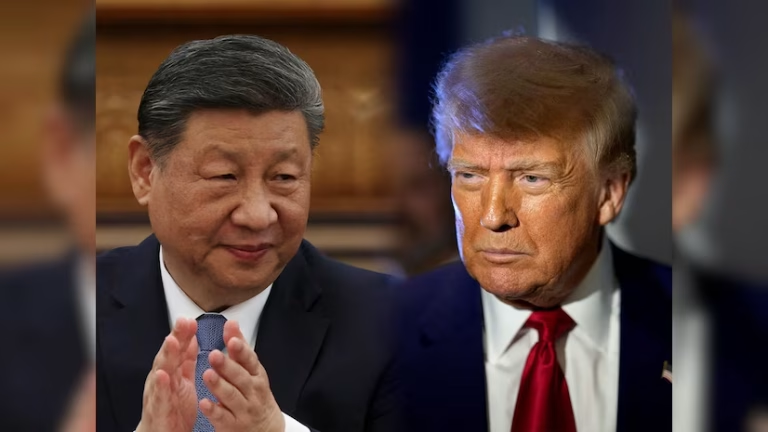
This development comes just days before a highly anticipated meeting between Trump and Xi Jinping scheduled for later this week, which will be their first face-to-face discussion since Trump’s return to the White House.

Understanding the US-China Trade Deal Framework

The emerging US-China trade deal addresses several critical areas that have strained bilateral relations in recent months. According to Bessent, who participated in intensive two-day meetings with Chinese counterparts, both nations have made substantial progress on issues ranging from export controls to fentanyl trafficking and international shipping charges.

A Chinese official confirmed that both sides had reached an initial consensus on these matters, representing a dramatic shift from recent weeks when escalating tensions threatened to trigger an all-out trade war. China’s implementation of new export restrictions had prompted Trump’s counter-threat of additional tariffs, creating uncertainty in global markets.

The 100% Tariff Threat: What Changed

In a detailed interview, Bessent explained the significance of removing the tariff threat from the US-China trade deal negotiations. “We had a very good two-day meeting,” he stated, adding that the proposed 100% increase from current tariff levels is now “effectively off the table.”

The threatened tariffs were Trump’s response to Beijing’s expanded export controls on rare earth materials, which are vital components for global industries including electronics and defense manufacturing. These materials have become a strategic bargaining chip in the US-China trade deal discussions, given their critical importance to technological advancement and national security.

Bessent emphasized that with this breakthrough in the US-China trade deal, “the threat of the immediate imposition of the Chinese initiating a worldwide export control regime” has also been eliminated, providing relief to industries dependent on these essential materials.

Key Components of the Emerging Agreement

The comprehensive US-China trade deal encompasses several major elements that have been sources of friction between the two nations:

Tariff Truce Extension

The agreement will extend the existing tariff truce, providing stability for businesses and manufacturers operating in both countries. This extension represents a commitment from both sides to avoid escalating trade barriers that could harm economic growth.

TikTok Sale Resolution

One of the most politically charged issues in the US-China trade deal involves the future of TikTok. The agreement includes provisions to settle disputes over the sale of the popular social media platform, addressing national security concerns while finding a path forward for the app’s continued operation.

Also Read: Trump Putin Meeting: Stunning Precondition Announced for Russia Summit

Rare Earth Magnets Supply Chain

Perhaps most critically for American industries, the US-China trade deal ensures the continued supply of rare earth magnets. These materials are indispensable for manufacturing everything from smartphones to military equipment, making their uninterrupted availability essential for US economic and strategic interests.

Agricultural Benefits: Soybean Purchases to Resume

A significant component of the US-China trade deal involves China’s commitment to make “substantial” purchases of American soybeans. This pledge offers crucial relief to US farmers who have experienced severe financial strain after China, their largest customer, significantly reduced purchases this season.

American agricultural producers have been among the hardest hit by trade tensions, with the soybean sector particularly vulnerable to Chinese purchasing decisions. Throughout the US-China trade deal negotiations, Beijing has strategically used soybean imports as a major bargaining tool, leveraging the importance of the Chinese market to American farmers.

Strategic Implications for Global Trade

The progress in the US-China trade deal represents more than just bilateral economic cooperation. It signals a potential stabilization of global trade relationships at a time when economic uncertainty has affected markets worldwide. The removal of the 100% tariff threat eliminates a major source of anxiety for international businesses that depend on trade flows between these economic superpowers.

Looking Ahead: The Trump-Xi Summit

The upcoming meeting between Trump and Xi will provide an opportunity to formalize elements of the US-China trade deal and potentially address remaining areas of disagreement. This first in-person discussion since Trump’s return to office carries significant weight for the future trajectory of US-China relations.

As both nations move toward finalizing the US-China trade deal, the agreements reached on tariffs, technology, rare earth materials, and agricultural products demonstrate that despite deep differences, pragmatic cooperation remains possible when economic stakes are sufficiently high for both sides.

BJP Minority Strategy Unveiled: Suvendu Adhikari Reaches Out to ‘Indian Muslims’ as Polls Near in Bengal

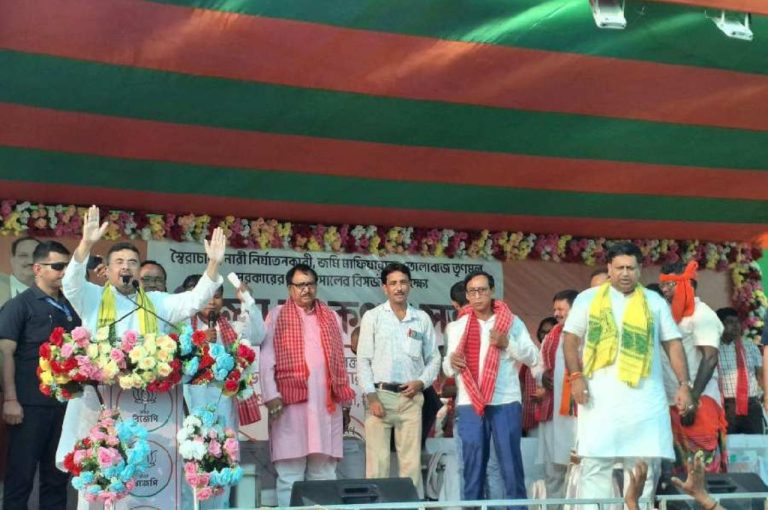
BJP Minority Strategy Unveiled — With the next election cycle drawing near, the Bharatiya Janata Party (BJP) in West Bengal is visibly sharpening its minority-outreach strategy, as evidenced in recent remarks made by Suvendu Adhikari, Leader of the Opposition in the West Bengal Legislative Assembly and a prominent face of the party. At public meetings in the border districts of South Dinajpur and Malda, Adhikari sought to assure Muslim voters that the BJP did not disregard them, while simultaneously emphasising the party’s broader agenda of identity, rights and immigration control.

Analysts say the dual-track messaging — reaching out to Muslim voters while consolidating Hindu majorities in districts with large minority populations — illustrates the BJP’s evolving approach in the state. What remains to be seen, however, is whether this strategy will translate into meaningful electoral gains.


A Two-pronged Outreach: Assurance and Alarm

At one of the rallies held in Gangarampur in South Dinajpur district, Adhikari addressed minorities directly by saying:

“Whenever I speak, minorities think I may say something against them. But I never said we don’t want Muslim votes. It’s just that we don’t usually get them. Narendra Modi has worked for everyone’s development, and Indian Muslims have nothing to fear.”

Later on the same day in Gazole, Malda, he offered a sharper pitch:

“Rohingya refugees and infiltrators from Bangladesh will be removed from the electoral rolls. Nearly a crore such voters will be identified, and 90 % of them vote for Trinamool.”

Taken together, the statements reflect a tactical balancing act. On the one hand, he explicitly invites the allegiance of Indian Muslims. On the other, he draws a rigid distinction between “Indian Muslims” and “infiltrators” — the latter defined as non-citizens or undocumented migrants often associated with Bangladesh. The implication: “We embrace you, if you are rightful citizens; we will remove those we deem external.”

This messaging is particularly aimed at districts like Malda (with ~53 % minority population) and South Dinajpur (with ~27 % minority population) ­— both border regions with Bangladesh, which have long been hotspots of migration, identity questions and contestation over electoral rolls.


BJP Minority Strategy Unveiled: What’s the Context? Why Now?

Elections Looming

As Bengal moves closer to its next round of polling — whether for the Legislative Assembly, Lok Sabha, or local panchayats — parties are gearing up. For the BJP, which has made deep inroads in recent years but remains short of power in the state, the minority vote is an under-exploited terrain. Adhikari’s outreach comes at a moment when the BJP senses opportunity in districts where its Hindu vote base may be large, but where minority votes have historically gone elsewhere.

Demographics and Geography

Malda and South Dinajpur are borderland districts abutting Bangladesh. Their demographic mix, socio-economic profile and proximity to the international boundary make them politically sensitive — especially when issues of migration, citizenship, identity and electoral rolls are at play. The BJP evidently sees this geography not only as a challenge but as a battleground where “infiltrators” and “genuine citizens” narratives can be leveraged.

Roll Revision & Citizenship Issues

One of the undertones of Adhikari’s remarks was the special intensive revision (SIR) of electoral rolls in West Bengal, a process that often heightens anxiety among communities uncertain about citizenship, residency and electoral participation. Adhikari sought to address such fears by assuring “Indian Muslims” about their inclusion, while raising the spectre of removal for “infiltrators.”

Identity Politics & Electoral Strategy

While the BJP often positions itself as a national developmental alternative, in West Bengal its strategy appears to combine that with strong identity signalling: Hindu consolidation on one hand, and outreach to select minority segments (particularly “Indian Muslims” as distinct from foreign or “infiltrator” Muslims) on the other. Political observers note that the BJP’s gains in districts like Malda (winning the Malda Uttar Lok Sabha seat twice and several Assembly seats in 2021) were built more on Hindu mobilisation than minority outreach — this new campaign may reflect an attempt to change that dynamic.


How Are Political Observers Reading This?

One analyst in Malda explained the significance:

“Given the demography of Malda and nearby districts, the BJP appears eager to strengthen its Hindu vote base. Such consolidation helped the party win the Malda Uttar Lok Sabha seat twice and four of the district’s 12 Assembly seats in 2021. This time, it aims to increase the tally.”

At the same time, pushing for minority outreach suggests the party senses limits to relying solely on majority mobilisation. The message to “Indian Muslims” may be: “We respect you, you are citizens, you won’t be penalised — but you should also align with us for development.”

However, such strategies are not without risk. They rely heavily on differentiating “genuine” from “foreign,” “citizen” from “infiltrator” — a distinction that is politically potent but socially destabilising. Critics say the rhetoric may deepen divisions, rather than widen inclusion.


The BJP’s Messaging Architecture

Assurance to Muslims

  • “Indian Muslims have nothing to fear” — a clear reassurance.
  • The BJP invites trust by referencing PM Narendra Modi’s development record — implying minority communities stand to gain from the party’s governance.
  • Highlighting that the party does not reject Muslim votes — elevation of the inclusive overtone.

Emphasis on Infiltration and Citizenship

  • By explicitly naming “Rohingya refugees” and “infiltrators from Bangladesh,” Adhikari appears to channel concerns about illegal migration. He claimed a large number will be identified and removed.
  • This plays to anxieties among majority voters about demographic shifts, while also signalling that the BJP considers national security, border control and identity as core concerns.

Consolidation of Hindu Base

  • The message to Hindu voters is one of protection and dominance: formation of “Hindu Adhikar Raksha Committees” in every locality to defend rights and religion (as called for by Adhikari).
  • Political mobilisation, especially in border districts with large Muslim populations, includes tactics of assembling Hindu votes to neutralise minority influence.

Implications for Minority Politics in Bengal

Minority Voter Uncertainty

Statements such as these may sow confusion amongst Muslim voters: are they welcomed, or are they just tolerated? The “Indian Muslim” vs “infiltrator” binary may cause citizens to question their own status or fear state scrutiny. The BJP’s reassurance may help, but the accompanying rhetoric of removal of “infiltrators” may undermine trust.

Citizenship & Electoral Fear

In border districts, communities may already feel insecure about their citizenship, residency and electoral rights. The SIR (Special Intensive Revision) of electoral rolls and other identification drives create an environment where minority voters may feel vulnerable. Adhikari’s assurance tries to allay this fear but mixed messages may undercut that effect.

Hindu-Muslim Dynamics

By focusing both on reaching out to Muslims and consolidating Hindus, the BJP is walking a tightrope. Overemphasis on “infiltrators” can antagonise minority communities; simultaneous focus on Hindu protection committees may aggravate communal divides. How this plays out before voting day could shape community relations and electoral outcomes.

Competitive Response by Other Parties

The ruling All India Trinamool Congress (TMC), Left parties and Congress will likely frame this dual messaging as cynical or divide-and-rule. Minority outreach by the BJP may push these parties to reinforce their own minority base or sharpen critiques of the BJP’s identity politics. The electoral battleground is not only votes but narratives — about identity, inclusion, rights, and fear.


Border Districts Under the Spotlight

Malda and South Dinajpur are central to the BJP’s current strategy.

Malda

With a large minority population (about 53 %), the BJP faces the challenge of minority disengagement, while trying to maintain Hindu momentum. In 2021 the BJP won four out of 12 Assembly seats and captured the Malda Uttar Lok Sabha seat. To progress further, the party must make inroads in smaller pockets of minority votes without alienating them totally.

South Dinajpur

Smaller minority percentage (~27 %) but close to border. The handling of migration, citizenship and local politics is especially delicate here. Adhikari’s Gangarampur rally highlighted how the BJP intends to operate: emphasising development to all, but with strong signals on citizenship and rights.

These districts are strategically important — successful outcomes here could spell wider advances for the BJP in West Bengal’s complex electoral geography.


Political Risks & Uncertainties

Risk of Backlash

The rhetoric around “infiltrators” may fuel backlash from minority communities, civil society, and human rights organisations. The BJP will need to demonstrate tangible actions that reassure rather than alienate.

Trust Deficit

Even though Adhikari offered assurances to Indian Muslims, many voters may view the outreach as tactical and conditional rather than genuine. The question: will the BJP follow through on inclusive governance, or will the identity-based message leave a trust gap?

Communal Polarisation

The strategy could deepen polarisation. If large numbers of Hindu voters consolidate behind the BJP and minority voters drift away, the margin of victory may widen, but at the cost of social harmony — a risk in Bengal’s multi-religious border districts.

Execution on Development

While identity is one front, development and job creation remain key issues. Adhikari also linked job creation to defeating the TMC government, saying jobs were impossible under the current administration. If the BJP fails on the development front, outreach to minorities may not translate into votes.


What the BJP Needs to Show Next

  • Concrete policies and campaign promises tailored to minority communities, especially in border districts.
  • Clear differentiation between “Indian Muslims” and “infiltrators” with transparent criteria, avoiding arbitrary exclusions.
  • Visible development initiatives in minority-dominated areas (schools, health, employment) to back up the outreach.
  • Inter-community units (Hindu and Muslim) working together to show consensus rather than division.
  • Careful language management: while asserting citizenship rights, avoid stigmatising entire communities.

What Other Political Players Are Saying

While the TMC and other parties have not yet responded in full to the latest remarks by Adhikari, the political machinery is expected to engage aggressively in the coming days. Opposition voices are likely to accuse the BJP of electoral engineering through identity politics, while also spotlighting administrative and campaign tactics such as unauthorised rallies. At the Gangarampur event the BJP held their rally at a local stadium reportedly without clearance from the district administration and police — hinting at administrative tensions.

Observers expect that minority-led parties and secular dots within civil society will lean heavily into this outreach moment to portray themselves as defenders of inclusive citizenship.


Larger Picture: Beyond Bengal

The strategy being deployed in West Bengal is not unique; the BJP has in recent years attempted similar outreach to minority communities in other states (for example, the Pasmanda Muslim strategy in Uttar Pradesh). Madhya unsettled minority segments may represent latent votes for the BJP if approached with credible offers and identity reconceptualisations. The Bengal campaign may be a test case of whether such outreach can succeed in a state with a longstanding minority base aligned with multiple parties.


Forecast: Will It Work?

At this stage, no guarantee exists that the outreach will convert into majority-shifting electoral gains. The key factors to watch:

  • Increase in minority votes for the BJP compared to previous elections.
  • Retention and growth of Hindu vote base in target districts.
  • Reduced margin of victory for non-BJP parties in districts like Malda and South Dinajpur.
  • Actual policy moves post-election that show minority integration rather than tokenism.

If the BJP succeeds in all of these, West Bengal could witness a real shift in political arithmetic. If not, the outreach may be dismissed as tactical and ephemeral.


Conclusion: A Strategy That Treads a Fine Line

The remarks made by Suvendu Adhikari signal a deliberate voter-outreach strategy by the BJP — one that attempts to combine minority assurance with majority consolidation. The party appears to be saying: “Indian Muslims, we value you; illegal infiltrators, we will deal with you.” This binary may resonate with certain segments, but it also risks alienating others.

For a state like West Bengal — with its diverse and sensitive cultural, communal and geographical landscape — such strategies hold immense promise and equally immense risk. Whether the BJP’s minority outreach becomes a turning point will depend on execution, the party’s ability to deliver development, and how rival parties react.

As polling draws near, all eyes will be on whether this outreach translates into turnout, support and ultimately seats.

Here are some government / official links relevant to minority outreach, citizenship, and welfare schemes in West Bengal (and India broadly) that you can include for your article:

  • West Bengal Minority Development and Finance Corporation (WBMDFC) – official website for welfare schemes for religious minorities in West Bengal.

  • Bangla Sahayata Kendra – state-government public service portal of West Bengal, useful for citizen-scheme interface. West Bengal Board of Madrasah Education – a government board for minority-community education in West Bengal.

Also read: Home | Channel 6 Network – Latest News, Breaking Updates: Politics, Business, Tech & More

Jumbo Rampage Kills Trio as Lone Elephant Tramples Villagers in Alipurduar

Jumbo Rampage — In a harrowing sequence of events that has shaken local communities and raised fresh alarms about human-elephant conflict, a single wild elephant is suspected of killing three people — including a toddler — in a span of just six hours in the Madarihat block of Alipurduar district on Wednesday evening and night.

The first attack occurred around 6:00 p.m. in the Madhya Chhekamari village area when a male tusk-less elephant (makna) allegedly emerged from forest fringe zones and trampled 43-year-old Kader Ali to death while he was returning home. He died at the spot.

The second attack happened some hours later — at around 11:45 p.m. — roughly seven kilometres away in Kheriapara village, Khayerbari region. Returning from the Kali Puja celebrations, a family was attacked. The 35-year-old mother, Sonai Munda, and her 2-year-old daughter were killed. Her husband, Sitaram, narrowly escaped. “I was a little behind them when I saw the elephant trample my wife and daughter. It would have been better if it had killed me too,” he told reporters.

Forest department officials of the Jaldapara wildlife division, including Divisional Forest Officer Parveen Kaswan, said they are making efforts to identify the elephant and assess whether both incidents involve the same animal. “We are trying to identify the elephant. The affected families will receive compensation and one member from each family will be offered a job under the state government’s policy,” Kaswan said.

According to foresters, elephants from Jaldapara National Park typically stay along the Torsha riverbank and the adjoining grasslands, but the recent floods (on 5 October) have damaged large tracts of grass and grazing areas, forcing pachyderms to move closer to human habitations in search of food. The same mechanism, officials believe, may have triggered the current spate of attacks.


The Human Toll: Lives Lost, Families Shattered

The village of Madhya Chhekamari was jolted when Kader Ali collapsed under the attack. Residents rushed to the site but could do little as the elephant turned back into the forest belt. His body was retrieved and sent for post-mortem.

Later that night, in Kheriapara, the mood of festivity after the Kali Puja celebration turned to grief. Sitaram Munda, his wife and their young daughter were returning home on foot. The sudden appearance of the elephant sent everyone into panic. Sitaram escaped, but the elephant caught up with his wife and child, leaving them fatally injured.

Local villagers described a scene of chaos — shouting, stampeding, children wailing, and a giant pachyderm moving with deadly force. Many of them said this kind of night‐time movement by wild elephants has become more frequent in the area.

In both households, grief prevails. Elders, neighbours and children continue to replay the moments. The local funeral rites are underway, while forest department teams and police are conducting investigations into the exact identity of the animal, its movements, and possible tracks.

The district administration has announced ex-gratia relief under the state policy for human casualties caused by wild animals, and forest officials confirmed that at least one job opportunity will be offered from each affected family as part of a government safety net scheme.


Why This Happened: Ecological and Environmental Context

Repeat Xenophobia in the Wild-Human Interface

Human-elephant conflict has become a recurring and tragic phenomenon in the Dooars region — the belt of forests, rivers and tea estates at the foothills of the Eastern Himalayas. The presence of dense tea gardens, fragmented habitats, tea estate infrastructure, human settlements right at forest fringes, and river-grassland ecosystems make this region particularly vulnerable.

Floods and Habitat Damage

Forest department officials point out that recent heavy floods on 5 October damaged large stretches of grassland and the riparian vegetation along the Torsha river. The grasslands, which serve as natural foraging and lawn‐like spaces for elephants, were washed away, reducing available food and forcing elephants into villages. This is consistent with previous research that shows habitat damage and food scarcity drive wild elephants closer to human habitations.

Single Bull Elephants (Makna) Are Especially Dangerous

Maknas — male elephants without tusks — are often more aggressive and unpredictable than females or tusked males. When separated from herds or when scent‐marking, their chances of conflict with human settlements go up. The fact the attacking elephant was described as a makna suggests a higher risk profile.

Forest Overlap and Human Encroachment

Tea gardens, old villages, estate quarters, foot‐paths between tea estates and forest fringes, and settlements with minimal safety barriers make these zones high-risk for wildlife intrusions. Many villagers in Madhya Chhekamari, Kheriapara and surrounding zones said the elephant came in from forest edges where the boundary between human habitation and forest is quasi-blurred.


Response, Investigation & Compensation

Forest department teams of the Jaldapara wildlife division moved quickly to the two sites. Their tasks include:

  • Tracking the elephant’s footprints, dung and movement patterns
  • Setting up traps or barricades where possible and safe
  • Alerting local tea estates and villagers about night watch and emergency contacts
  • Collaborating with local police for crowd and site control
  • Offering compensation and relief to affected families

Divisional Forest Officer Parveen Kaswan reiterated that relief and compensation under the “State Policy for Human Casualties due to Wild Animals” will be provided to the victims’ families. He confirmed one job opportunity each is part of the relief package.

Police have been asked to support traffic and foot‐path monitoring in the region, especially at night. Villagers have been requested to avoid returning home late, to travel in groups, carry lights and alarms, and to alert forest control rooms when wild animals are sighted near habitation.


Broader Impacts: Communities at Risk

Tea Estate Labour & Villages

The Dooars region’s economy is heavily reliant on tea estates. Many labour quarters are immediately adjacent to forest patches. Workers often commute by foot in early morning or evening hours when light is poor, making them vulnerable. Family members of tea workers were among those affected.

Children and Vulnerable Individuals

The death of a 2-year-old child in Kheriapara underscores how children and the elderly are especially at risk when animals stray into settlements. Young children may lack quick response ability, and elders may not be able to run away or sound alarms quickly.

Night Travel & Festive Movement

The incident occurred during the return from a festival (Kali Puja), when families were returning late at night; light was low and vigilance may have been compromised. Festivals often mean extra movement into and out of settlements near forest fringes, which creates increased vulnerability.


What Local People Are Saying

Villagers in Madhya Chhekamari and Kheriapara described how they heard rustling near homes, distantly saw the silhouette of a large animal, then the sound of shouts and crash. A local resident recalls: “We were packing up after the festival when we heard something heavy moving near the path. Before we could alert everyone, it was upon us.”

Tea-estate labourers said they avoid walking alone after dusk and try to travel in groups for safety. One elder said: “Our houses are near forest boundary; earlier we heard trumpet calls at dawn, now we hear them at night. The grasslands are gone, the animals are hungry.”

Families of victims said they were still in shock, demanding better fencing, more lighting, patrols, compensation and a lasting solution rather than periodic relief.


Historical Context: Alipurduar’s Runtime with Elephants

This region has recorded multiple human-elephant conflict incidents over years. For example, in 2020, a wild elephant killed a man and ransacked a village near Chhekamari in Alipurduar district. Earlier, in 2021, two people died in elephant attacks in the same district.

These recurring episodes underscore the pattern: increasing forest-to-village animal movement, especially during periods of habitat stress such as floods, drought or human encroachment.


Policy Challenges & Prevention Measures

Habitat Restoration

Forest officials emphasise the need to restore grasslands and river‐bank vegetation so that elephants have fewer reasons to stray. Replenishment of lost grazing zones is being planned.

Buffer Zones & Early Warning Systems

Installing electric fences, motion sensor alarms, night-lights, barracks and community watch systems around high-risk villages are part of broader mitigation strategy.

Community Awareness & Safe Movement Protocols

Villagers must be educated on safe practices—moving in groups, avoiding paths after dusk, using lights and horns when returning home late, and reporting animal sightings early.

Compensation & Livelihood Support

Prompt compensation for victims is key to trust. The state policy allows relief for human casualty due to wild animal attacks and offers jobs to immediate family members in some cases. This incident’s compensation policy was reaffirmed by DFO Kaswan.

Cross-department Coordination

Foresters, police, local municipality, tea estates and community leaders must coordinate. Patrols need better equipment, off‐hours travel should be monitored, and forest boundary management should be stronger.


What’s Next — Monitoring the Elephant & Preventing Further Tragedy

The forest division is now watching for the suspected lone elephant’s next moves. A special team has been assigned to identify the animal, either by physical tracking or camera traps. If confirmed as the same culprit, steps will include tranquilisation or directed translocation where feasible. The challenge remains balancing wildlife protection with human safety.

In the meantime, local tea estates, village panchayats and police have been asked to distribute whistles, flashlights and instruct villagers to travel in groups and alert forest control rooms via hotline numbers when there is an intrusion.

Officials hope that such swift action combined with habitat restoration will reduce the chances of another deadly encounter.


Reflections: The Cost of Co-existence

This incident spotlights the deeper tension between human habitation and wildlife in forest-fringe zones in India. While elephants are officially protected under Indian law (Schedule I of the Wildlife Protection Act) and carry significant cultural value, their increasing intrusion into human spaces is forcing a reckoning.

Villages like Madhya Chhekamari and Kheriapara stand at the frontline of this conflict — suffering losses, yet still dependent on the very ecosystem that is now overlapping with habitation.

For the families who lost loved ones, there is grief, anger and rising demand for accountability. For the forest department, there is urgency, a need for resources and a challenge of balancing conservation and community safety.

For the state of West Bengal and India’s forest-policy planners, this is yet another sad metric in the ongoing ledger of human-animal encounters — one that calls for renewed investment in habitat resilience, early-warning systems, and community-centric safety nets.


Jumbo Rampage: Conclusion

As another moonlit night falls over the tea-estate belt of Alipurduar, the villages affected by Wednesday’s tragedy are still in mourning. Three lives — a father, a mother and a toddler — were lost in what may have been a rampage by a single, distraught elephant. The grief is raw, the questions are many and the demands for a sustainable answer are loud.

Officials promise relief, compensation and job offers under state policy. Investigations are underway. But beyond the immediate response lies a deeper challenge: creating a world where a villager walking home from festival celebrations need not fear a silent giant emerging from the darkness.

This incident is not just about a rampaging elephant. It is about habitat erosion, shifting ecosystems, vulnerable human communities, and the urgent need for coexistence strategies that truly work.

For Madhya Chhekamari and Kheriapara, the next steps must be meaningful changes — fences that hold, lights that deter, alerts that save and habitats that nourish. Until then, the shadow of the elephant will remain large, and the grief of the families even larger.


Here are some government-external links you can use (for West Bengal / India) about compensation and procedure for wild animal attacks / human-wildlife conflict.

  • “Procedure for Processing application Form for claiming Ex-gratia Compensation due to Wildlife Depredation” – West Bengal Forest Department. westbengalforest.gov.in

  • Advisory on “Wild Animal Depredation in Tea Estates of North Bengal” by the State wildlife department. wildbengal.com

  • Official answer in Lok Sabha about human lives lost due to wild animal attacks, and compensation in West Bengal. Digital Sansad

Also read: Home | Channel 6 Network – Latest News, Breaking Updates: Politics, Business, Tech & More
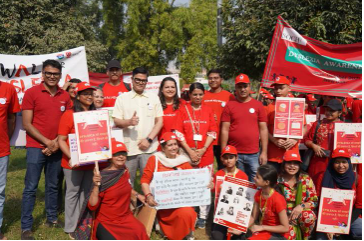
#GoRedforDyslexia Campaign Marks Strong Global Movement in India: 2025

The #GoRedforDyslexia campaign witnessed nationwide participation this October as prominent landmarks like Rashtrapati Bhavan, Secretariat, and historical monuments across India were illuminated in red to mark Dyslexia Awareness Month. The initiative aimed to foster inclusion and empathy for children and adults with learning disabilities, especially Dyslexia.​

Walk for Dyslexia 2025 Flagged Off in New Delhi

Union Secretaries Shri Sanjay Kumar (Department of School Education & Literacy) and Shri Rajesh Agarwal (Department of Empowerment of Persons with Disabilities) inaugurated the ‘Walk for Dyslexia 2025’ at Kartavya Path, New Delhi. Over 300 participants from diverse backgrounds took part in the event co-organized by Changeinkk Foundation, UNESCO MGIEP, Orkids Foundation, and Soch Foundation, emphasizing the theme of compassion and inclusion.​


Promoting Awareness and Early Screening

Shri Sanjay Kumar stressed that Dyslexia is not a limitation but a unique way of learning, and called for early identification and acceptance within the education system. He highlighted the development of a mobile app, PRASHAST 2.0, by NCERT, enabling teachers to screen children for learning disabilities at an early stage. Modules on inclusive education have also been integrated into the Integrated Teacher Education Programme (ITEP) to build teaching capacity.​

Inclusive Education Under Samagra Shiksha

Under the Samagra Shiksha scheme, the government has expanded initiatives to support children with Specific Learning Disabilities (SLDs), including Dyslexia. Measures include assistive technologies such as text-to-speech tools, customized learning aids, therapeutic interventions, and collaborative screening programs at block levels with the Departments of Health & Family Welfare and DEPwD.​

Red Illumination and Nationwide Impact

Landmarks including Rashtrapati Bhavan, the Parliament House, and India Gate were lit up in red, symbolizing nationwide solidarity. The illumination was part of a larger global effort to promote understanding and inclusion for individuals with Dyslexia. Similar events across cities like Patna, Ranchi, Jaipur, Shimla, and Mumbai reinforced the movement’s reach and awareness.​

Transforming Dyslexia Awareness Into Action

The event concluded with a commitment to ensure inclusive classrooms, greater teacher awareness, and early diagnosis of SLDs. Officials reaffirmed India’s dedication to creating systems that value diverse learning abilities. Aligning with NEP 2020, efforts to empower children with learning differences point towards a more inclusive and equitable future for education.​

For more real-time updates, visit Channel 6 Network.

Source: PIB