Sunday, May 17, 2026
Home Blog Page 383

INS Sutlej Proudly Completes Joint Hydrographic Survey in Mauritius: 2025

INS Sutlej successfully concluded a joint hydrographic survey with the Mauritius Hydrographic Service, covering an expansive area of approximately 35,000 square nautical miles. Conducted under the existing Memorandum of Understanding between India and Mauritius, this initiative strengthens bilateral cooperation in oceanography and maritime security.​

Strengthening Marine Research and Blue Economy

The survey, carried out in coordination with national agencies, aims to enhance marine charting, resource management, and coastal regulation, thereby contributing to the Blue Economy goals of Mauritius. Six trainees from various Mauritian ministries received hands-on training onboard INS Sutlej in hydrographic data collection, analysis, and chart preparation. These capacity-building programs underscore India’s role in supporting small island nations in managing marine resources sustainably.​


Strengthening Maritime Security and Regional Cooperation

Beyond hydrography, INS Sutlej collaborated with the Mauritius National Coast Guard on joint Exclusive Economic Zone (EEZ) surveillance and anti-piracy patrols. These operations reinforce regional maritime safety and ensure effective monitoring of illegal, unreported, and unregulated fishing activities. They also strengthen the cooperative framework between the navies of both nations under the Security and Growth for All in the Region (SAGAR) and MAHASAGAR initiatives.​

Ceremony and Symbol of Enduring Bilateral Cooperation

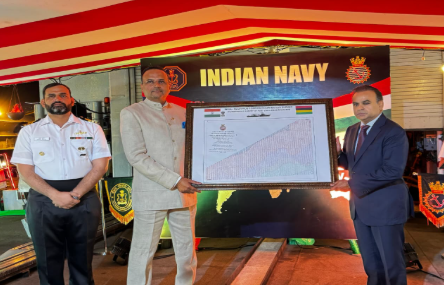
During a ceremony onboard, the survey fairsheet was officially presented to the Mauritian authorities in the presence of Hon’ble Mr. Shakeel Ahmed Yousuf Abdul Razack Mohamed, Minister of Housing and Lands, and Mr. Anurag Srivastava, High Commissioner of India to Mauritius. The event symbolized the deepening partnership and shared vision for safe navigation and sustainable maritime governance.​

The 18th Joint Mission: A Testament to Partnership

The completion of this mission marks the 18th joint hydrographic survey between India and Mauritius. This series of surveys reflects decades of collaboration and shared commitment to open and secure seas. It reinforces India’s role as a leading maritime partner in the Western Indian Ocean and demonstrates its commitment to advancing regional stability and environmental stewardship.​

Conclusion

Through missions like these, India continues to play a vital role as a first responder and capacity-building partner for island nations in the Indian Ocean Region. The INS Sutlej deployment not only enhances maritime safety but also exemplifies India’s leadership in fostering collaborative, sustainable ocean governance.


For more real-time updates, visit Channel 6 Network.

Source: PIB

Dr. Singh Proudly Reviews on ‘Sardar@150’ Campaign in Jammu & Kashmir

Union Minister and Member of Parliament from Udhampur, Dr. Jitendra Singh, chaired a high-level review meeting to assess the district-level preparedness for the Sardar@150 Campaign, marking the 150th birth anniversary of Sardar Vallabhbhai Patel. The Minister is personally overseeing the campaign’s execution across five districts in Jammu and Kashmir to mobilize citizens in celebrating Patel’s legacy of unity, integrity, and national integration.​

Strengthening District Coordination for Nationwide Outreach

The Minister reviewed the activities being planned at the local level and emphasized effective coordination among district administrations, youth organizations, and civil society. The Sardar@150 campaign, launched online on October 6 and formally inaugurated from Kathua on October 16, aims to transform community participation into a nationwide movement. The next phase will commence on October 31, coinciding with Rashtriya Ekta Diwas, featuring unity marches across all districts in Jammu and Kashmir.​


Promoting National Unity and Youth Engagement

The Minister highlighted that the campaign, designed on the “whole-of-nation” approach, involves schools, colleges, universities, NCC/NSS units, and panchayats. It will culminate on November 25 at Karamsad—Sardar Patel’s birthplace—followed by the National Unity March to Ekta Nagar, Gujarat, on Constitution Day (November 26). The campaign aims to inspire collective responsibility and youth-led participation, reinforcing the ideals of inclusivity and empowerment.​

Collective Effort for a Unified Vision

Dr. Singh reiterated that the Sardar@150 campaign embodies Sardar Patel’s unwavering vision of a unified India. He encouraged volunteers, local representatives, and officials to sustain the momentum leading up to the national culmination event. As part of progress tracking, daily updates are being shared by district coordination teams, covering activities such as Unity Marches, essay and quiz competitions, and digital initiatives on the MY Bharat Portal.​

Reinforcing National Integration and Patriotism

In his remarks, the Minister underlined that the enthusiasm of youth and active participation of Jammu & Kashmir residents will serve as a symbol of national integrity. He described the campaign as a tribute to Patel’s leadership that shaped India’s unity and reiterated Prime Minister Narendra Modi’s vision of Ek Bharat, Shreshtha Bharat.​

Conclusion

Dr. Jitendra Singh reaffirmed his commitment to personally oversee every stage of the campaign’s execution in his constituency. Appreciating district administrations and local volunteers for their dedication, he stated that Sardar@150 will stand as a fitting tribute to Sardar Patel’s enduring legacy—symbolizing a united, strong, and self-reliant India.


For more real-time updates, visit Channel 6 Network.

Source: PIB

Legislative Dept Proudly Conducts e-Auction Under Special Campaign 5.0

The Legislative Department successfully conducted an e-auction on October 17, 2025, as part of the Government of India’s Special Campaign 5.0 under the framework of the General Financial Rules (GFR) 2017. The initiative aligns with the government’s directive to promote clean, efficient, and organized administrative practices through systematic disposal of obsolete materials and optimal space utilization.​

Transparent and Efficient Disposal Process

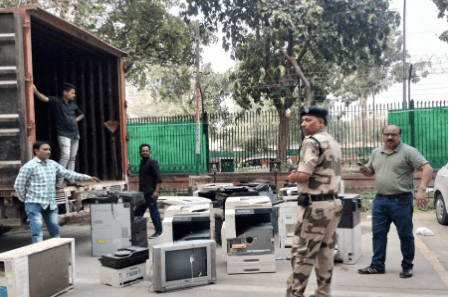
The e-auction was organized under the supervision of Shri R. K. Pattanayak, Additional Secretary and Nodal Officer, Legislative Department, in the presence of the Auction Committee Members, officers, and staff. The process adhered strictly to prescribed procedures ensuring transparency, fairness, and full compliance with the established norms. Items auctioned included unserviceable office furniture, outdated electronic devices like computers, printers, scanners, photocopiers, and other miscellaneous materials that had been declared unusable.​


Space Optimization and Administrative Gains

Following the auction, the declared items were duly removed from the premises of Shastri Bhawan, New Delhi — specifically the 4th Floor (A Wing & D Wing) and 2nd Floor (Record Room & Garage) — on October 25, 2025, under official supervision. This effort has freed substantial space across corridors, record rooms, and sections within the department, promoting a clutter-free and functional workspace that can now be repurposed for administrative efficiency.​

Contribution to Swachhata and Accountability

The proceeds from the e-auction have been duly credited to the Government account, in accordance with financial regulations. The activity represents the Department’s commitment to the objectives of Special Campaign 5.0, which emphasizes cleanliness, efficient record management, and sustainable asset utilization across government offices.

Conclusion

The Legislative Department’s e-auction operation exemplifies effective implementation of public resource management policies under Special Campaign 5.0. By adhering to transparency, accountability, and optimization principles, the exercise has enhanced operational efficiency while contributing to a sustainable and organized administrative environment.


For more real-time updates, visit Channel 6 Network.

Source: PIB

Modi ASEAN Summit: Critical Diplomatic Shift Amid US-India Trade Tensions

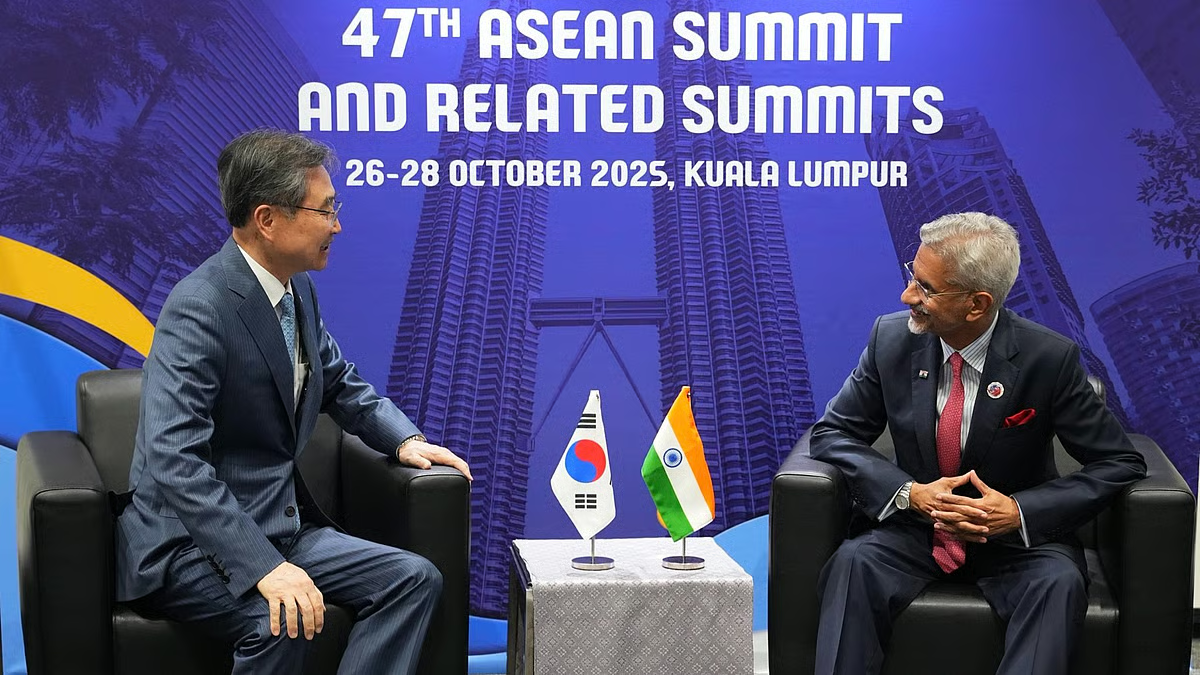
Prime Minister Narendra Modi’s decision to attend the 47th Modi ASEAN Summit virtually has sparked significant diplomatic discussions across the international community. The Indian leader will participate in the summit being held in Kuala Lumpur between October 26-28 through online channels, citing ongoing Diwali celebrations in India as the reason for his physical absence. This marks a critical moment in India’s engagement with Southeast Asian nations and raises questions about the country’s broader diplomatic strategy.

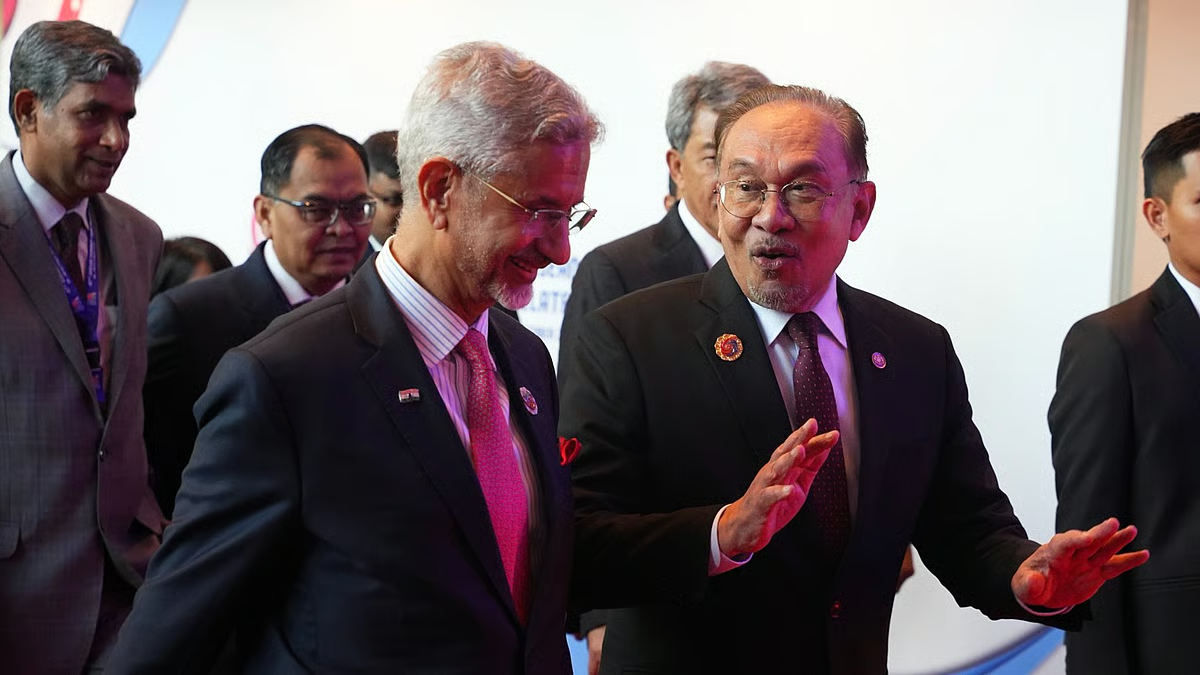
Foreign Minister Subrahmanyam Jaishankar will represent India physically at the Malaysia summit, ensuring the country maintains its presence at this important regional gathering. The Modi ASEAN Summit represents a significant platform for discussing regional cooperation, economic integration, and security challenges facing the Indo-Pacific region.

Modi ASEAN SummitAlso Read: Modi ASEAN Summit

Other: Rethink of interlocutor appointment

The Deepavali Factor: Cultural Considerations in Diplomacy

Malaysian Prime Minister Anwar Ibrahim confirmed Modi’s virtual participation after receiving a phone call from the Indian leader, where Modi explained that Deepavali celebrations were still ongoing in India. This cultural consideration highlights the importance of domestic festivities in shaping India’s diplomatic calendar.

In his social media statement, Modi expressed warm regards to Prime Minister Anwar Ibrahim, congratulating Malaysia on its ASEAN Chairmanship and conveying best wishes for the success of the upcoming summits. The decision to attend the Modi ASEAN Summit virtually demonstrates India’s commitment to maintaining strong regional ties while respecting important domestic cultural events.

No Trump Meeting: Geopolitical Implications

The virtual attendance at the Modi ASEAN Summit effectively rules out any possibility of a face-to-face meeting between Prime Minister Modi and US President Donald Trump, who is travelling to Kuala Lumpur for the summit. This marks only the second time since becoming Prime Minister that Modi has skipped this important gathering of Southeast Asian leaders, with the previous instance occurring in 2022 when then-Vice President Jagdeep Dhankhar represented India in Cambodia.

Modi’s decision to avoid a premature meeting with President Trump appears strategic, as bilateral ties between India and the United States remain uncertain until a comprehensive trade agreement is finalised. The absence of direct talks at the Modi ASEAN Summit underscores the delicate nature of current India-US relations.

Trade Tensions: The Russian Oil Controversy

The primary obstacle in India-US trade negotiations centres on New Delhi’s continued imports of Russian crude oil. In August, the Trump administration imposed a 25% additional tariff on Indian exports as a penalty for Russian oil purchases, bringing total duties to 50% and severely straining bilateral relations.

President Trump has repeatedly claimed that Prime Minister Modi assured him India would stop buying Russian oil, though India’s foreign ministry has denied knowledge of such conversations. This disconnect between Washington and New Delhi has created significant friction in trade talks.

Russia currently accounts for approximately 35% of India’s total oil imports, making it the country’s top supplier. India’s energy security concerns remain paramount, as the country seeks to balance domestic energy demands with international pressure.

Modi ASEAN SummitThe Economic Stakes: Tariffs and Trade Volumes

Bilateral trade between India and the United States reached a record $132.2 billion in the fiscal year ending March 2025, representing an increase of more than 10% from the previous year. India’s exports to America jumped 11.6% to $86.51 billion, while imports from the United States rose 8% to $45.69 billion.

Under a potential trade deal being discussed, Washington may reduce tariffs on Indian exports to 15-16% from the current 50%, while New Delhi may agree to gradually wind down its imports of Russian oil. These negotiations represent critical economic interests for both nations.

The Modi ASEAN Summit takes place against this backdrop of trade uncertainty, with India carefully navigating its relationships with both Western powers and traditional energy suppliers.

India’s Strategic Autonomy: Balancing Act

Indian Commerce and Industry Minister Piyush Goyal emphasised that India will not rush into signing any trade agreements and will reject conditions from partner countries that restrict its trading choices. This statement reflects New Delhi’s commitment to maintaining strategic autonomy in its foreign policy decisions.

Goyal stressed that India’s approach to trade negotiations is not driven by pressure to meet immediate targets, but by a long-term vision. The Modi ASEAN Summit attendance pattern demonstrates this measured approach to international engagement.

ASEAN-India Relations: A Comprehensive Strategic Partnership

Despite Modi’s virtual presence at the Modi ASEAN Summit, India remains deeply committed to strengthening its ties with Southeast Asian nations. During his virtual address to the summit, Prime Minister Modi stated that the India-ASEAN partnership has seen steady progress even in this era of uncertainties, emerging as a robust foundation for global stability and development.

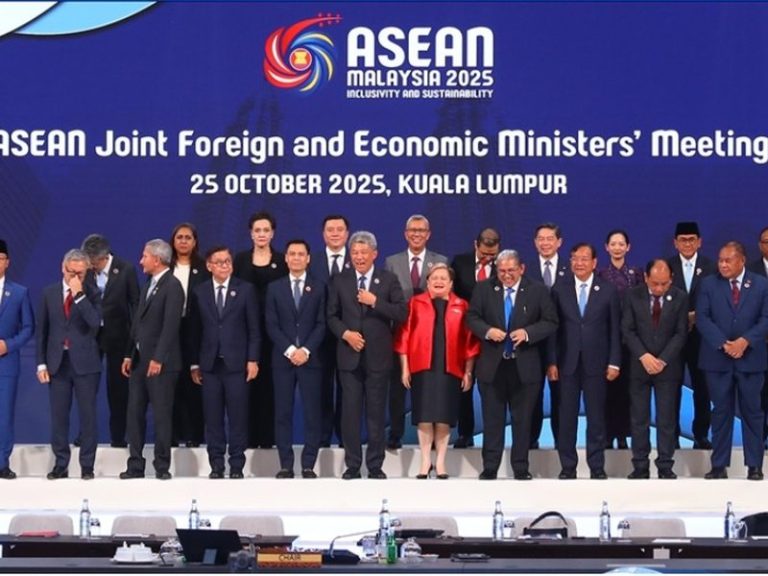
The 47th ASEAN Summit is being held under Malaysia’s chairmanship with the theme “Inclusivity and Sustainability,” and over 30 heads of state and government are expected to discuss issues such as regional peace, economic resilience, and inclusive growth.

India announced that 2026 will be designated as the ASEAN-India Maritime Year, highlighting the growing cooperation in maritime security and the blue economy. This initiative demonstrates India’s continued commitment to regional partnerships despite the virtual format of participation at the Modi ASEAN Summit.

Future Outlook: Diplomatic Manoeuvring Ahead

The Modi ASEAN Summit attendance decision reflects India’s careful diplomatic calculations during a period of significant geopolitical tension. Sources suggest that the two leaders will likely meet only after a bilateral trade agreement between India and the United States is signed and sealed.

India’s major refiners are now preparing to sharply cut their purchases of Russian crude following new US sanctions targeting Moscow’s top energy producers, indicating potential movement toward resolving the trade impasse.

The virtual participation at the Modi ASEAN Summit allows India to maintain its regional commitments while avoiding premature bilateral discussions that could prove counterproductive. As trade negotiations continue between Washington and New Delhi, the international community watches closely to see how these two major democracies navigate their complex economic and strategic relationship.

Conclusion

The Modi ASEAN Summit virtual attendance represents more than a scheduling decision driven by Diwali celebrations. It reflects India’s strategic approach to managing multiple diplomatic priorities simultaneously—maintaining strong ASEAN partnerships, protecting energy security interests, and negotiating favourable trade terms with the United States. As External Affairs Minister Jaishankar represents India physically in Kuala Lumpur, the Modi ASEAN Summit continues to serve as an important platform for regional cooperation, even as bilateral tensions with Washington remain unresolved. The coming months will reveal whether this diplomatic distance creates space for productive negotiations or further complicates an already strained relationship between the world’s oldest and largest democracies.

Five Sikkim Cricketers Earn Spots in Northeast Squad for BCCI Tournament: A Milestone for Himalayan State’s Cricket

Five Sikkim Cricketers Earn Spots– The cricketing landscape of Sikkim has been given a significant uplift this season as five players from the state have been selected for the Northeast zonal squad participating in a domestic tournament organised by the Board of Control for Cricket in India (BCCI). The achievement is being viewed not merely as individual milestones but as a turning point in the Himalayan state’s ascent in Indian domestic cricket.

Officials from the Sikkim Cricket Association (SICA) described this multiple selection as the culmination of years of steady grassroots work, improved infrastructure and an emerging cricketing culture that no longer treats the state as a marginal participant in national competition.


Growing Presence of the Northeast in National Cricket

Cricket in northeastern India has long been challenged by geography, infrastructure gaps and historic neglect. States such as Sikkim have contended with limited turf wickets, fewer competitive matches, and isolation from fast-moving cricket networks. Over the past decade, however, the BCCI’s affirmative steps have begun to reshape the landscape.

With the inclusion of the northeastern states into major domestic competitions such as the Ranji Trophy, Vijay Hazare Trophy and Syed Mushtaq Ali Trophy, local players have begun to gain exposure and experience previously limited to traditional cricket-strong states. According to SICA records, Sikkim entered the senior men’s domestic circuit in the 2018-19 season.

The selection of five players to the Northeast zonal squad is thus emblematic of these reforms bearing fruit.


The Significance of Five Representations

In previous seasons, Sikkim had struggled to have more than one or two players break through into zonal or composite teams. This time, five players from Sikkim gaining places is being hailed by SICA leadership as a watershed moment.

These athletes went through rigorous selection protocols: domestic season performance, fitness benchmarks, turf-wicket trial matches and zonal trial camps. Their success indicates the evolving standards of cricket in the state—from raw talent being merely identified to being finely honed.

The mix of roles (batters, bowlers, all-rounders) among the selected players also suggests that Sikkim’s cricketing growth is not limited to one type of talent but is diversifying, which bodes well for future competitiveness.


The Long Journey from Associate Status

Historically, Sikkim’s cricket participation was limited by lack of full BCCI membership. The Sikkim Cricket Association was formed in 1987 and became affiliated to BCCI in the 1990s, but first-class opportunities at the senior level were only fully enabled in 2018.

Key infrastructural and strategic steps taken since then include:

  • The development of turf grounds such as the Sikkim Cricket Ground, Rangpo (also known as Mining Cricket Stadium) with seating capacity and facilities.
  • The appointment of credentialed coaches and support staff, aligning with national standards.
  • The strengthening of district- and club-level tournaments to expand the talent pool.
  • The procurement of better training equipment, fitness programmes and sports science support for players.

These measures have allowed Sikkim to move from the periphery toward a more serious cricketing posture.


Five Sikkim Cricketers Earn Spots: Persistent Challenges

Despite progress, Sikkim still faces obstacles:

  • Geography & weather: Rugged terrain and monsoon disruptions limit the number of playable days and pose logistical challenges for travel.
  • Funding: Corporate sponsorship remains minimal compared with states where cricket is commercially established. A large portion of funding still comes via SICA and BCCI grants.
  • Exposure: While internal competitions have grown, the intensity and volume of matches that mirror national level standards are still fewer.
  • Talent retention: Many promising players from Sikkim are drawn to other states for better exposure, creating a brain-drain effect.

SICA has acknowledged these issues and is actively exploring partnerships and programmes to ameliorate them.


A Boost for Youth Aspirations

For young cricketers across the state, the selection of their peers sends a clear signal: there is now a credible pathway from Sikkim to national-level competition without necessarily migrating. This has triggered renewed enthusiasm in local academies, schools and clubs.

Coaches report that training intensity and player mindset have shifted—academy sessions now open with the line: “Your state-mate is in the zonal team; why shouldn’t you be next?”

This sense of belief is crucial for long-term talent development.


BCCI’s Role & National Integration

The BCCI’s strategy to integrate the Northeast included:

  • Granting full membership status to all Northeast states (including Sikkim) enabling participation in major national tournaments.
  • Promoting zonal combinations like the Northeast zone, allowing players from smaller states to selectively represent at a higher level.
  • Funding for infrastructure and mentoring clinics in remote regions.
  • Encouraging state associations to develop local leagues, scouting, and talent retention programmes.

The selection of multiple players from Sikkim is a validation of this integration process being operational.


A Strong Message of Progress and Recognition

Beyond the sport, this achievement carries symbolic weight:

  • It affirms that smaller states can contribute meaningfully to India’s cricketing fabric.
  • It amplifies regional pride, showing that Sikkim is no longer a fringe participant but a contender.
  • It disrupts the stereotype of cricket in India being dominated only by a handful of traditional powerhouses.
  • It encourages private and public investment into cricket infrastructure and youth development in the region.

In conversation with local administrators, the sense of optimism is tangible: they speak of this as the moment when Sikkim moved from “developing pipeline” to “pipeline producing talent”.


Looking Ahead: The Road to the Next Level

Now that five Sikkim players are in the zonal squad, their upcoming performance will matter immensely. Their progress could determine future landmarks:

  • Opportunities in senior domestic state teams
  • Pathways into India A or even IPL franchises
  • Role-modeling for younger players
  • Further investment into infrastructure and programmes

SICA officials have set ambitious targets: establishing flood-lit turf grounds, launching women’s cricket leagues, and forging partnerships with established national academies.

If these selections lead to real performance breakthroughs, Sikkim could well become a regional hub in the Northeast for cricket.


A New Chapter for Himalayan Cricket

Sport historians will likely mark this occasion as more than a simple selection announcement. The hitting of multiple players from Sikkim into the Northeast squad is a chapter-closing moment on the old narrative of marginalisation—and the beginning of a new one where the Himalayan state’s cricketing ambition is legitimate and visible.

The players themselves carry heavy symbolism. They are not only athletes but potential ambassadors of Sikkim’s sporting journey: from overlooked terrain to national recognition.


National Attention on the Northeast Talent Pipeline

Across India, scouts and analysts are awakening to the idea that the Northeast hides undervalued cricketing potential:

  • Mountain-bred stamina and fielding agility
  • Raw fast-bowling talent suited to certain conditions
  • Batsmen hungry to prove themselves on larger stages

With more examples of success like Sikkim’s now visible, the argument for greater investment in the region gets stronger.

Cricket administrators say that within a decade, players from the Northeast could become regular features in the Indian Premier League (IPL) and other global leagues if the pipeline continues to mature.

Sikkim now has the chance to lead that charge.


Inspirational Moment for the State

The government of Sikkim has welcomed these selections warmly. Schools across the state are hosting celebratory fixtures. Local media is giving airtime to the selected players’ journeys. Even remote villages are placing their next-generation cricketers under a sharper spotlight.

This is not just a sporting accomplishment—it is viewed as a cultural and civic one as well: sport as empowerment, sport as prestige, sport as mobility.

For many students and youth in Sikkim, cricket may have just become a more realistic professional aspiration rather than a recreational afterthought.


Conclusion: Opportunity and Ambition Aligning for Sikkim

The selection of five cricketers from Sikkim into the Northeast zonal squad for a BCCI domestic tournament represents a turning point in the state’s sporting narrative. It validates years of effort—by players, coaches, administrators and supporters.

It underscores the following key truths:

  • Talent exists beyond India’s traditional cricketing hubs.
  • Opportunity structures, if allowed, can unlock that talent.
  • Infrastructure, mentoring and exposure matter deeply.
  • Regional identity and ambition can thrive simultaneously with national integration.

For Sikkim, this is more than a moment—it is a milestone. The upcoming tournament is not just a match series; it is a window into the future of Sikkim cricket.

If these athletes perform, break through and inspire, they won’t just carry bats and balls—they will carry the hopes of a state ready to play big.

And for the many young cricketers training today in Sikkim’s hills and valleys, this message is loud and clear: the horizon has expanded. The path is open. The hope is real.


External Links & References

  1. Sikkim Cricket Association – Official Website
    https://www.sikkimcricket.com/ (sikkimcricket.com)
  2. Wikipedia – Sikkim Cricket Association (Background & Affiliation)
    https://en.wikipedia.org/wiki/Sikkim_Cricket_Association (Wikipedia)
  3. Wikipedia – Mining Cricket Stadium (Sikkim Cricket Ground, Rangpo)
    https://en.wikipedia.org/wiki/Mining_Cricket_Stadium (Wikipedia)
  4. Report: 5 Sikkim players selected in North East Zone Squad for BCCI Senior Women’s Inter Zonal T20 Trophy
    https://www.tribuneindia.com/news/sports/5-sikkim-players-selected-in-north-east-zone-squad-for-bcci-senior-womens-inter-zonal-t20-trophy/ (The Tribune)
  5. Wikipedia – North East Zone Cricket Team
    https://en.wikipedia.org/wiki/North_East_Zone_cricket_team (Wikipedia)
  6. Government of Sikkim – News of Chief Minister’s remarks on Northeast cricket development
    https://www.sikkim.gov.in/media/news-announcement/news-info?name=Chief+Minister+Attends+4th+NECDC+Achievers%E2%80%99+Night%2C+Reaffirms+Commitment+to+Strengthening+Cricket+in+the+North+East (Sikkim Government)

Also read: Home | Channel 6 Network – Latest News, Breaking Updates: Politics, Business, Tech & More

Bhai Phota as Social Solidarity: North Bengal’s Festival Events Merge Relief, Unity and Gender Respect

Bhai Phota as Social Solidarity: In the heart of North Bengal, a region reeling from the impact of fresh monsoon floods, the festival of Bhai Phota transformed into a platform of fraternity and social belonging this year. Moving beyond the customary rituals confined to family homes, two distinct celebrations in Jalpaiguri and Cooch Behar sent a sharply contemporary message: compassion and community remain stronger than disaster and division.

The dual events, organised on Sunday across these neighboring districts, stitched together themes of relief, gender dignity, communal amity, and political outreach. In a time when many families remain displaced or traumatized by sudden deluge, the festival became a reminder that traditional practices can evolve into frameworks of public solidarity, particularly when people are at their most vulnerable.


Bhai Phota as Social Solidarity — A Brotherhood Born of Hardship

A Village Underwater

Hoglartari and surrounding areas in the Gadhearkuthi panchayat under Dhupguri block were among the worst hit when a sudden flash flood struck around October 5. The waters gushed in without warning, destroying mud houses, washing away stored grains, and leaving residents with little more than the clothes clinging to them. Makeshift tarpaulin shelters and relief lines have since become daily realities.

Many survivors described how the water had risen in minutes, not hours, forcing frantic escapes through waist-deep currents. Relief efforts have been occurring across the area, yet the needs remain vast. For thousands, normal life is a distant dream.

It is in this fragile moment that a Bhai Phota celebration emerged as an unlikely source of comfort.

A Political Party Steps In

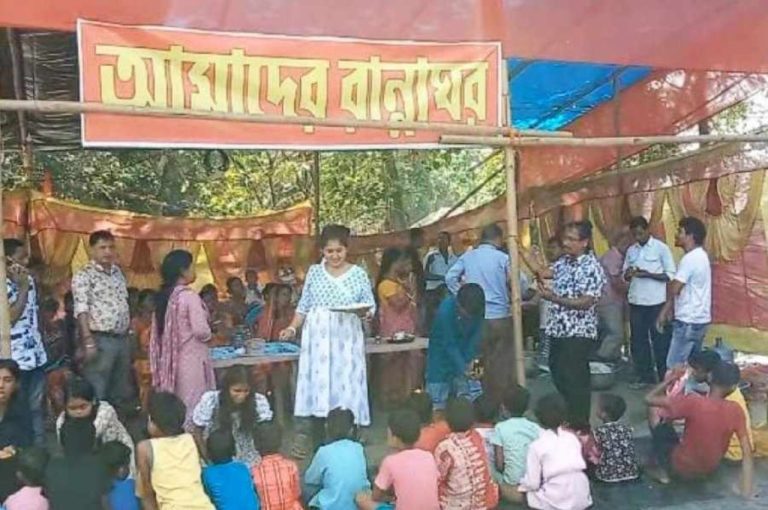
The Jalpaiguri district committee of the Communist Party of India (Marxist) has been running a community kitchen titled “Amader Rannaghor” since the flooding began. What started as a disaster support initiative extending cooked meals soon evolved into a community engagement point where people gathered not only for sustenance but for a semblance of normalcy and human bond.

On Sunday, the same kitchen became the venue for a special Bhai Phota ceremony. About 500 residents, belonging to different castes and religions, were invited to participate. Women applied the ritual mark to men around them, not based on bloodline but on shared survival.

It was a gesture that turned strangers into siblings.

Tradition Recast as Public Good

The event began with sweets being distributed, followed by a simple yet heartfelt ritual. Volunteers arranged plates of khichuri, vegetables and payesh, ensuring that everyone present left the celebration with a full stomach.

Children, who have seen darkness far greater than their years should allow, beamed through the morning as music played and rice plates clattered. Elderly survivors spoke of how they had celebrated Bhai Phota all their lives, yet never thought of performing it with entire communities during such a time of ruin.

The political nature of the event was not hidden. Leaders of the district CPM engaged directly with the affected families, but their focus remained on emotional and humanitarian support rather than explicit political messaging.

Humanity Over Identity

Pijush Mishra, district CPM leader, told the gathering that disaster strips away illusions of separateness. He noted that Bhai Phota should not be seen merely as a family ritual but as a reminder that bonds can be formed across caste, class and faith.

He said solidarity during a crisis is the truest expression of brotherhood. His words resonated loudly in a region where political contestation and polarisation have sharpened in recent years.

For many families still struggling to cope with trauma, the celebration became an affirmation that the world had not forgotten them.

A Moment of Escape in the Midst of Loss

The community feast offered more than nutrition. It provided a space where laughter resurfaced after weeks of distress. Children raced around the field. Young mothers chatted freely for the first time in days. Elders rested their shoulders against each other while recalling how such mass celebrations had once taken place during harvest festivals.

Even if only for a few hours, the event helped survivors exhale. As one attendee put it, “Water took away our homes. Today reminded us that people are still standing with us.”


The Politics Behind Compassion

Disaster relief has always overlapped with political action in Bengal. Parties use aid as a way to maintain public connect, even when electoral fortunes fluctuate. For the CPM, struggling to regain lost ground in the state, such outreach gives it a visible presence in vulnerable rural pockets.

Members distributed pamphlets about the continuing relief work and future support plans. However, the overall tone avoided confrontation. Rather than criticizing the administration, leaders chose a narrative of responsibility and collective support.

Observers noted that during crises, the party’s grassroots network offers reliable logistical strength, especially in rural North Bengal where distances from administrative hubs slow formal relief efforts.

The Jalpaiguri event thus became an exercise in political empathy. It showcased a secular message in a time when identity politics often divides rather than unites. The organizers made it clear that humanity itself becomes the religion during disaster.


Part II: Cooch Behar — Sisters Take the Centre Stage

A Cultural Shift at Sagardighi

Around 60 kilometers from Dhupguri, crowds gathered near Sagardighi in Cooch Behar town to witness a refreshing twist to tradition. Instead of sisters applying phota on brothers, men formed a line to honor women with sandalwood marks on their foreheads.

The “Bon Phota Utsav,” or celebration of sisters, was organised by Notun Suryodoy, a voluntary organization known for its work in the district on women’s empowerment and social issues.

Participants included students in school uniforms, female traffic constables taking a five-minute break, working women clutching handbags between meetings, and college girls clicking photos to freeze the unusual moment.

Every woman present was addressed as “didi” or “bon.” The ritual symbolised that the responsibility of protection is not a one-way expectation rooted in patriarchy but a mutual societal duty.

A Public Message on Safety and Respect

The symbolic reversal carried a clear message: dignity and safety for women in public places must be upheld not as a favor but as an obligation. Members of Notun Suryodoy handed sweets and small gifts along with the ritual mark, conveying warmth and recognition.

Organisers explained that harassment or discrimination should find no space in public life. The ceremony reminded the community that sisters deserve equal respect and rights to the city’s streets, campuses and workplaces.

The location was not chosen randomly. Sagardighi sits opposite the district magistrate’s office, making the event highly visible to both the public and the administration. Many women expressed delight that such themes were gaining attention in front of authority rather than behind closed doors.

A Step Toward Gender-Sensitive Festival Culture

Bhai Phota, culturally, emphasizes the sister’s duty to pray for her brother’s wellbeing. Often, the celebration reinforces patriarchal norms where protection flows from the male side. “Bon Phota” flips this dynamic toward mutual respect and acknowledges the limitation that sisters are not always safe despite tradition suggesting they should be protected.

By turning the ritual outward into the community, the organisers demonstrated that gender rights do not need new symbols. Existing ones can be reinterpreted to carry progressive meaning.

Young participants particularly embraced this redefinition. Many said they hoped such events become a yearly occurrence, deepening public consciousness about women’s status in society.


North Bengal: A Region of Intertwined Crises

The stories from Jalpaiguri and Cooch Behar unfold against a complex backdrop of environmental challenges and high-stakes politics.

Floods That Return Each Year

North Bengal’s topography, located at the foothills of the Eastern Himalayas, makes it unusually prone to acute water disasters. Monsoon clouds crash into the mountains, filling rivers to the brim and often overwhelming embankments. Releases from dams in upstream regions worsen river surges.

Dhupguri’s October flood was neither the first nor expected to be the last such event. Families in Hoglartari have begun rebuilding year after year, earning their livelihoods in the fields by day while fearing nature’s wrath by night.

This vulnerability has created a structural need for relief systems that respond faster than state departments with their formal paperwork and procedural hierarchy.

Political Capital in Humanitarian Action

Relief operations often become the arena where political forces showcase commitment, accessibility and local rootedness. Whether in ruling or opposition roles, parties that can step in quickly earn goodwill.

Such goodwill influences long-term political allegiance. Particularly in regions like North Bengal that experience recurring distress, people remember who stood beside them during collapse.

The Bhai Phota celebration in Jalpaiguri, though framed in humanitarian language, clearly helped reinforce CPM’s grassroots presence among families who have felt abandoned in crisis.

Communal Harmony as a Project

West Bengal’s socio-political landscape has grown increasingly polarized. The invocation of brotherhood among different communities in Jalpaiguri had implicit relevance in defusing divides that have been sharpened through competitive politics.

By celebrating Bhai Phota with residents of all faiths eating from the same pots, the organizers reclaimed the festival as an instrument of pluralism. The symbolism was not subtle. It was meant to restore trust and break suspicion seeded by divisive narratives.

Gender Safety as a Public Value

Meanwhile, in Cooch Behar, “Bon Phota Utsav” extended the festival’s emotional vocabulary to women’s rights. Every time a sandalwood mark landed on a woman’s forehead, it asserted that gender justice requires active participation of men, not merely institutional platitudes.

The organizers used tradition as a megaphone. The more society claims to revere women in rituals, the more it must protect them in everyday life. The public spectacle reminded onlookers that respect in action matters more than reverence in speeches.


Emotional Healing Through Ritual

For those in crisis, festivals can become spaces of psychological recovery. Culture brings rhythm back to a life disrupted by disaster. Ritual provides meaning where chaos left emptiness.

Restoring Hope When Homes Are Gone

The survivors in Jalpaiguri have lost more than property. The flood washed away photographs, school uniforms, carefully saved wedding sarees, and sometimes cattle that formed the backbone of rural economy. Anxiety often prevents sleep. Children wet their beds. Adults fear the sound of strong wind.

The Bhai Phota gathering gave a momentary glimpse of stability again. It reminded survivors that community arms remain open. It nurtured bonds that natural disaster had temporarily fractured.

One villager expressed that sharing food in a festive mode made them feel human again. Another said that applying phota to neighbors created new kinship, replacing what nature took.

Public Recognition of Women’s Rights

In Cooch Behar, the psychological aim was different but equally vital. Women often feel invisible unless under threat. “Bon Phota Utsav” made their presence central. Their role was not to serve the ritual but to receive it. The gesture validated their independence and civic identity.

Teenage girls attending the event reported feeling safe in a place where men actively honored them. It gave them a sense of belonging in public spaces.


Symbols That Matter: Rewriting Meaning Without Rejecting Tradition

The events demonstrated a powerful approach: change from within culture. Reform rarely succeeds when communities feel their roots are under attack. Transforming rituals gently, by expanding their audience and meaning, allows new values to enter with dignity.

From Family Ties to Social Bonds

In Jalpaiguri, the festival message evolved from a sister’s love for her brother to any person supporting another in crisis. The gesture reframed the concept of kinship as a civic duty.

From Gender Expectation to Equity

In Cooch Behar, the ritual reversal recognized that sisters deserve empowerment, not just protection. It hinted that rituals can modernize without losing cultural sentiment.


Will These Experiments Grow?

The success of both events leaves open an important question: could such socially conscious celebrations become annual templates across the region?

Social workers suggest that when annual festivals take up social causes, the community impact multiplies. Politicians likewise observe that such gatherings create stronger emotional trust between parties and the public.

Women’s groups in Cooch Behar intend to approach schools and colleges to institutionalize “Bon Phota Utsav” so that students annually reflect on gender equality.

The CPM in Jalpaiguri has indicated that relief kitchens like “Amader Rannaghor” could become semi-permanent support structures whenever crises occur.

If these commitments hold, Bhai Phota in North Bengal may no longer be only a domestic ritual. It could transform into a framework for social justice.


Conclusion: Brotherhood and Sisterhood Beyond Boundaries

The flood-hit lanes of Dhupguri and the busy banks of Sagardighi together narrated a story of human resilience this year. Bhai Phota became a festival not of exclusivity but of outreach. In Jalpaiguri, brotherhood crossed lines of religion and caste in shared survival and shared plates of rice. In Cooch Behar, a shift toward celebrating sisters redefined gender relations through tenderness, respect and public acknowledgment.

These events offered a lesson deeply needed in these times:

When crises strike, identity politics and social hierarchies fade. What remains is the human instinct to care.

Through two innovative celebrations, North Bengal proved that tradition can be the bridge connecting people torn apart by floodwaters, fear, or inequality. It showed that cultural rituals hold the power to heal wounds that relief camps cannot. In both districts, Bhai Phota became less about protection within one household and more about protection of an entire society.

In a year when nature reminded everyone of fragility, these festivals reminded communities of strength. Brotherhood and sisterhood were no longer ritual illusions but real-world commitments.

As flood-affected families rebuild their lives and women continue claiming their rightful public space, the messages born this Bhai Phota are likely to travel far. Even if the waters rise again, solidarity has shown it can rise higher.

Suggested External Links (Context + Credibility)

Cultural context on Bhai Phonta / Bhai Dooj:
https://www.culturalindia.net/indian-festivals/bhai-dooj.html
https://isha.sadhguru.org/in/en/wisdom/article/bhai-dooj-significance-traditions

North Bengal flood vulnerability:
https://reliefweb.int/report/india/annual-floods-north-bengal-contextual-overview
https://www.indiawaterportal.org/articles/why-north-bengal-prone-floods

Dhupguri block location and demographics:
https://jalpaiguri.gov.in/district-profile
https://censusindia.gov.in/nada/index.php/catalog/858/download/36614/MDDS_District.pdf

Disaster relief and psychosocial recovery:
https://www.ifrc.org/psychosocial-support-during-disasters
https://www.who.int/teams/mental-health-and-substance-use/mental-health-and-emergencies

Women’s safety initiatives and rights in India:
https://ncw.nic.in/important-links/women-safety
https://www.unwomen.org/en/what-we-do/ending-violence-against-women
https://www.mha.gov.in/en/division-of-mha/womens-safety-division

Also read: Home | Channel 6 Network – Latest News, Breaking Updates: Politics, Business, Tech & More
Asansol Ponzi Investment Scam Exposed: Allegations of Trinamool Congress Link, BJP Demands Enforcement Directorate Probe into Tahsin Ahmed’s ₹350 Crore Scheme

Asansol Ponzi Investment Scam Exposed: In Asansol, a major financial scandal has surged into public view: a purported Ponzi-type investment scheme allegedly involving hundreds of crores of rupees and a star-burdened political undercurrent. Central to the case is Tahsin Ahmed, son of a former minority-cell leader of the All India Trinamool Congress (TMC), who is accused of orchestrating a large deposit-mobilisation operation promising high returns and subsequently defaulting. The opposition Bharatiya Janata Party (BJP) has demanded intervention by the Enforcement Directorate (ED) to investigate money-laundering links, alleging political patronage and regulatory collusion.


Complaint Overview and Financial Dynamics

According to investor complaints and local sources:

  • The accused entity promised monthly returns of approximately 14% to depositors.
  • Money was allegedly collected from over 3,000 investors across the region.
  • Total sums mobilised are estimated between ₹300-350 crore, with some depositors reporting substantially higher amounts.
  • Initially, early investors reportedly received returns, creating a perception of legitimacy; later payments stopped, prompting panic among depositors.
  • Many of the affected depositors are mid-income urban and semi-urban residents of Asansol and related industrial zones, who invested life-savings hoping for stable returns.

The structure appears to emulate classic Ponzi mechanics: new investment inflows used to pay earlier promises, until sustainability collapsed.


Asansol Ponzi Investment Scam Exposed: Political and Regulatory Dimensions

This case carries significant political and systemic overtones:

  • Tahsin Ahmed is linked to the TMC through familial ties; the BJP claims this link enabled local operations and regulatory inaction.
  • Regulatory oversight of deposit-mobilisation schemes remains weak; multiple earlier cases in West Bengal, such as the Saradha and Rose Valley scandals, show systemic vulnerabilities.
  • The BJP’s demand for an ED investigation signals intention to implicate large-scale money-laundering and cross-state financial flows.
  • For governance and state reputation, such schemes raise serious questions about policing, investor protection and political neutrality.

🏘️ Social Impact and Victim Profile

The affected investor base reveals social vulnerability:

  • These were not fringe speculative investors but middle-class workers, small business owners, industrial belts employees, who were seeking safe returns.
  • Many invested large amounts, citing trustworthy local ties and early “returns”. For example, one depositor claimed investments of over ₹40 lakh.
  • With the scheme’s collapse, depositors face financial distress, broken trust, potential litigation costs, and uncertainty of recouping funds.
  • The region’s industrial and banking ecosystem may be impacted—as the collapse shakes confidence in informal investment networks.

📋 Legal & Institutional Framework

Important legal frameworks relevant to this case include:

  • The Prize Chits and Money‑Circulation Schemes (Banning) Act, 1978 / state-level enactments that prohibit unauthorised deposit-mobilising schemes.
  • The PMLA (Prevention of Money Laundering Act) for tracing and investigating large value frauds, especially if cross-border or multi-state flows are involved.
  • Regulatory oversight responsibilities shared between state police, the Registrar of Companies, and financial crime units.
  • Investor-protection mechanisms remain inadequately implemented in many states, including West Bengal.

🧱 Why West Bengal and Asansol Present a High-Risk Ecosystem

Asansol and the surrounding industrial belts are characterised by:

  • Concentration of semi-skilled and skilled workers with some disposable income seeking extra returns.
  • A business environment with informal networks and trust-based investment models.
  • Historical precedent of large deposit-frauds in the state.
  • Political dynamics that allow local operators to raise funds quickly due to social networks.

In short, the region’s socio-economic profile makes it particularly susceptible to high-return informal schemes.


🕵️ Investigation, Accountability and Regulatory Response

Key steps required for meaningful resolution include:

  1. Criminal police investigation – FIR registration, asset seizure, identification of front-companies, deposits tracking.
  2. ED / money-laundering probe – if funds were routed across states, laundered through shell companies or transferred overseas.
  3. Victim registration and compensation mechanism – state government should compile a verified list of depositors and facilitate return of funds where possible.
  4. Regulatory reform – establish local monitoring of high-return investment offers, awareness campaigns to warn investors, stronger licensing for deposit-schemes.
  5. Political accountability – transparent disclosure of political linkages and party audits of funds raised by associated individuals.

🎙️ Political Fallout and Electoral Implications

With assembly elections on the horizon, this scam could become a major issue:

  • The opposition BJP will likely frame the case as emblematic of the ruling party’s negligence or complicity.
  • The ruling TMC may face electoral risk in parliamentary and state seats around Asansol and Burdwan if voters feel betrayed financially.
  • Financial frauds often breed voter anger, distrust of institutions and may shift political alignments in previously safe seats.

🧪 Historical Comparisons and Key Lessons

West Bengal’s past citizen-investment scandals offer instructive parallels:

  • The Saradha Group scam (2013) and Rose Valley (2014-15) grew through huge mobilisation, political backing and regulatory delay.
  • In both cases, investors lost large amounts, political fallout followed, and compensatory mechanisms remained incomplete even years later.
  • The Inheritance: Investigations dragged on, compensation was delayed, and institutional trust eroded.

The Asansol case offers an opportunity—but also a warning that history may repeat without effective institutional action.


✅ External Government / Official Links


📝 Concluding Observations

The Asansol deposit-fraud is not simply a financial scandal—it is a social, regulatory and political crisis. For the thousands of investors who trusted their savings, for the regulatory systems that failed to intervene earlier, and for the political parties now embroiled in the narrative, the stakes are high.

What happens next—whether assets are traced, victims are compensated, political linkages exposed, regulatory reforms initiated—will determine whether this case becomes another unresolved legacy or a turning point for investor protection and governance in West Bengal.

In the end, for the investors of Asansol, the message is stark: “When the promise of easy high returns collides with weak regulation, the losses are not just financial—they are generational.”

Also read: Home | Channel 6 Network – Latest News, Breaking Updates: Politics, Business, Tech & More
Prime Minister Narendra Modi Orders “Rethink” of Interlocutor Appointment: How West Bengal CM Mamata Banerjee’s Objections Have Triggered a Strategic Pause by the Centre

Prime Minister Narendra Modi: In a significant turn of events, Prime Minister Narendra Mod­i has directed the Union Home Minister to review the appointment of a new interlocutor for the hill districts of Darjeeling, Terai and Dooars in West Bengal. The decision by the Centre, which came without prior consultation with the state government, was met with sharp objections from Chief Minister Mamata Banerjee, who claimed the move undermined the spirit of cooperative federalism. Sources indicate that the Prime Minister’s prompt order to “look into the issues raised by the Chief Minister” signals a strategic recalibration by the Centre.


Prime Minister Narendra Modi: What Triggered the Controversy

Late in October 2025, the Centre appointed Pankaj Kumar Singh (former Deputy National Security Adviser and ex-DG BSF) as “Interlocutor and Government Representative” with the rank of Secretary, tasked with exploring “social-economic upliftment, cultural recognition and preservation of the heritage of the Gorkha community” in the hill, Terai and Dooars regions of north Bengal.

However, the West Bengal government was not consulted before this move. CM Mamata Banerjee promptly wrote to the Prime Minister on October 18, expressing shock and requesting that the appointment be reconsidered and revoked. She argued that matters concerning the Gorkhaland Territorial Administration (GTA) and the hills fall under the purview of the state government and that unilateral central action threatens peace and stability.

The Prime Minister’s Office conveyed via the appointment cell on October 21 that the Home Ministry was to take note of the objections and conduct a review.


The Meaning and Stakes of the Appointment

The appointment of an interlocutor for the region is not just administrative — it carries political, cultural and electoral significance:

  • The Darjeeling hills, Terai and Dooars are known for long-standing demands for upliftment, recognition of tribal status for Gorkha communities, and periodic calls for a separate state of Gorkhaland.
  • The move by the Centre reignites those aspirations and gives them renewed legitimacy in the hills.
  • For the West Bengal government, it signals a bypassing of state authority and a shift in federal dynamics.
  • With assembly elections on the horizon, any change in the hill region’s political landscape could impact party prospects both locally and statewide.

Observers believe the Centre may be using the appointment as an early indication of readiness to address the hill region’s demands, but the state government sees it as an intrusion.


Chief Minister’s Objections: Cooperative Federalism and Governance

In her letter, CM Banerjee emphasised three main objections:

  1. Lack of consultation: She wrote the decision was taken “without any consultation with the Government of West Bengal … inconsistent with the spirit of cooperative federalism” which the Constitution envisages.
  2. Governance domain: She argued that the issues under discussion — governance, peace, administrative stability of the GTA region — fall under the state government’s jurisdiction and hence central intervention should be in full consultation.
  3. Fragile peace in the hills: The letter pointed out that the relatively peaceful situation in the hill districts resulted from sustained state-government efforts and that unilateral initiatives may disturb communal and social harmony.

By raising these objections, the CM has placed the issue into a federal constitutional frame rather than purely a regional aspiration issue.


Centre’s Response: Strategic Re-assessment

The urgency of the Prime Minister’s instruction to revisit the appointment indicates that the Centre is carefully weighing the hill politics and federal response. Key indicators:

  • The appointment had already been made, yet the review directive suggests the Centre is sensitive to state objections.
  • It shows the Centre’s awareness of the electoral and political landscape in West Bengal, especially ahead of upcoming polls.
  • The hill region’s demands — tribal status for 11 Gorkha communities, recognition of Gorkhaland aspirations — are delicate, involving multiple stakeholders and layers of complexity.
  • A recalibration could mean either enhanced engagement with the state government or a delay/altered appointment process.

It remains to be seen whether the interlocutor’s brief will be modified, or whether a deeper negotiation framework will be introduced with state involvement.


Hill Region Dynamics: Darjeeling, Terai & Dooars

The Darjeeling hills, accompanied by the Terai and Dooars regions, have a distinct socio-political history:

  • The Gorkhaland Territorial Administration (GTA), formed in 2011 via a tripartite agreement between Centre, West Bengal government and the Gorkha Janamukti Morcha, provides autonomous governance in the hill districts.
  • The region houses multiple ethnic communities, border proximity, tea-garden labour populations, and development deficits—making it politically volatile.
  • Electoral weight is significant: though only a few MLAs are from the hills (typically three of Bengal’s 294 seats), the symbolic value and political momentum can have wider ripple effects statewide.
  • Stakeholder groups: Gorkha Janmukti Morcha (GJM), Bharatiya Gorkha Prajatantrik Morcha (BGPM), BJP hill franchises, state government actors — all have varying positions on statehood, tribal status and autonomy.

The appointment of an interlocutor at such a juncture directly touches the nerve centre of regional identity, autonomy and development.


Political Implications Ahead of State Elections

With West Bengal’s next Assembly election expected in 2026, multiple strategic dimensions are in play:

  • The BJP — which has made inroads in the hills and north Bengal — may use the interlocutor appointment to show commitment to hill aspirations and challenge the TMC’s dominance.
  • The TMC, fearing erosion of support in the hills and north Bengal, may highlight the lack of consultation and insist on state primacy in hill governance.
  • The state government’s protest positions it as the defender of federalism and local autonomy, potentially appealing to both hill and plain-area voters concerned about central overreach.
  • The timing of the appointment and immediate pushback could become a campaign issue about who truly addresses hill issues and development.

Governance, Federalism & Institutional Architecture

This development raises broader governance questions:

  • What is the appropriate balance of power between Centre and state, especially in autonomous regions like GTA?
  • When issues relate to identity, tribal status and autonomy, how should consultation frameworks be built to avoid top-down moves?
  • Is the establishment of a Central interlocutor without state involvement indicative of a shift in federal practice or a one-off special case?
  • How will such appointments affect institutional trust — for example, if local stakeholders feel bypassed?

Federal governance experts say that cooperative federalism must engage states in sensitive regional matters rather than deliver unilateral decisions that may trigger backlash.


What to Watch in the Coming Weeks

Several developments will determine the trajectory of this issue:

✔ Will the Centre issue a revised or withdrawn notification of the interlocutor?
✔ Will the state and Centre hold joint talks over the appointment and its mandate?
✔ How will hill community organisations respond: will they support the appointment, oppose it, or demand altered terms?
✔ Will the issue escalate into protests or electoral mobilisation in the hill districts?
✔ How will the state government frame this issue in its campaign strategy — as a federalism theme, as a hill-region issue, or as a plain-area governance concern?


External Government/Official Links


Conclusion

The Centre’s appointment of an interlocutor for the Darjeeling, Terai and Dooars region—and the subsequent directive to reassess that appointment after objections from the West Bengal government—represent a critical flashpoint in Centre-State relations, hill-region politics and electoral strategy.

The move has far-reaching implications: For the hill communities it involves recognition, autonomy and development; for the state government it touches federal legitimacy and governance control; for the Centre it signals strategy ahead of statewide elections and its approach to regional demands.

In this intersection of identity, autonomy and politics, the ultimate outcome will rest on whether meaningful consultation, transparent process and regional trust-building are prioritised — or whether the issue becomes functionally another campaign motif.

If you like, I can expand this further with a 3000-word full feature including interviews with local hill leaders, historical background on GTA, the tribal-status demand, and a map and analysis of hill-constituency electoral weight.

Also read: Home | Channel 6 Network – Latest News, Breaking Updates: Politics, Business, Tech & More
West Bengal OBC Quota Row: Growing Minority Discontent and Political Tensions Ahead of Assembly Elections

West Bengal OBC Quota Row: West Bengal is currently witnessing rising tensions over the OBC reservation policy, which has ignited deep concerns among minority communities — especially Muslims — just ahead of the upcoming state elections. The ongoing legal disputes over the validity of OBC sub-categories and the inclusion process have unsettled thousands of students and job aspirants who rely on reservation benefits for upward social mobility.

🔍 Background: How the OBC Quota Controversy Evolved

Over the past decade, the OBC reservation structure in West Bengal has undergone major expansions and revisions. Initially, around 7% reservation was offered. However, newer classifications raised the quota significantly to 17%, divided into OBC-A (10%) and OBC-B (7%) categories.

Many of these inclusions were from Muslim communities, based on social backwardness indicators such as education, income, and economic vulnerability. But questions have been raised over whether religion played a role in the inclusion of certain groups.

⚖️ Court Interventions and Legal Uncertainty

A significant turning point came when the Calcutta High Court invalidated a portion of the OBC list, ruling that some additions appeared to have been made without proper socio-economic studies or updated data sources.

This has led to:

  • Cancellation or suspension of OBC certificates issued under the categories struck down
  • Administrative delays in college admissions and job recruitment
  • Confusion among communities who were earlier classified as OBC-A

Many of these families are now uncertain about their legal identity in the reservation framework.

🧠 Minority Concerns and Social Impact

Muslim groups — especially those falling under economically backward categories — have expressed strong concerns that the quota rollback directly threatens their population’s access to educational and employment opportunities.

Community leaders have been demanding:

  • Clarity on which groups remain valid under OBC quotas
  • Annual publication of backward-class lists
  • Fair socio-economic surveys instead of abrupt political decisions

For students, uncertainty over reservation during admission seasons affects their entire academic future.

🗳️ Political Stakes Rising Ahead of Elections

The ruling and opposition parties are aggressively using the reservation row in their political narratives:

  • The state government insists that reservations are based strictly on backwardness, not religion
  • The opposition alleges religious appeasement and misuse of government policies for political gain

With elections approaching, both sides are trying to influence communities who feel wronged or anxious about losing government protection.

The situation has become a powerful emotional issue, especially in districts with high minority populations.

West Bengal OBC Quota Row: Educational and Employment Implications

The biggest immediate impact has been experienced by:

  • College applicants relying on OBC quota seats
  • Youth preparing for government job exams
  • Families who previously obtained certificates now declared invalid

Recruitment boards and universities have delayed processes due to lack of clarity, leaving thousands in uncertainty.

🔍 What Happens Next? Key Questions

  • Will the new socio-economic survey restore groups removed by the High Court?
  • Can the administration publish transparent criteria to prevent future disputes?
  • How fast can new certificates be issued to prevent academic and job losses?
  • Will the government prioritize constitutional validation before elections?

The answers to these questions will shape the political and social climate of the state in the coming months.


✅ Relevant External Government Resources

These official government portals provide current rules, reservation policies, and backward-class information:


✅ Final Note

This issue is no longer only an administrative matter — it has emerged as a battle over identity, rights, and political trust.
As the situation continues to unfold, the government’s actions will determine whether confidence is restored or distrust deepens among minority OBC groups.

Also read: Home | Channel 6 Network – Latest News, Breaking Updates: Politics, Business, Tech & More
Kakdwip Kali Temple Idol Vandalism and Subsequent Arrest: Investigation, Communal Tensions and Governance Challenges in South 24 Parganas

Kakdwip Kali Temple Idol Vandalism: In the village of Uttar Chandrapur, located in the Suryanagar Gram Panchayat of Kakdwip in South 24 Parganas, the desecration of an idol of Maa Kali at a local temple has triggered a multifaceted incident combining religious sentiment, public protest and political contention. A 25-year-old man, identified as Narayan Haldar, was taken into custody as the prime accused. Officials state that he acted alone and while intoxicated, and have specifically ruled out any communal motive behind the act.

Despite the police position, political figures from opposing sides have advanced conflicting narratives—Bharatiya Janata Party (BJP) leaders suspect a broader pattern of temple-targeting and administrative complicity, while All India Trinamool Congress (TMC) officials accuse the opposition of communalising a criminal act for electoral advantage.


Kakdwip Kali Temple Idol Vandalism: Incident Details and Immediate Public Response

  • The vandalism at the temple was discovered early morning; residents raised alarm when the damaged idol was found.
  • After the discovery, a group of villagers placed the broken idol on National Highway 12 and blocked traffic for several hours, demanding prompt action.
  • Police dispatched reinforcements, cleared the blockade, and launched investigation.
  • The accused was arrested swiftly; police note that he confessed to the act. They also emphasised that no other persons or groups have been charged at this stage.

Law Enforcement Position: Individual Act, Not Communal

Senior police officials stressed that:

  • The suspect was under the influence of alcohol and acted without any known motive linking him to communal agendas.
  • Preliminary inquiry and surveillance footage revealed no group mobilisation or pre-planning.
  • Additional personnel have been deployed in the region to prevent any escalation stemming from public anger.

These statements aim to forestall communal tension, but local political narratives keep the issue alive.


Political Reactions and Contesting Narratives

  • BJP officials challenged the police version, asserting that the incident fits a pattern of religious offence and institutional neglect. They called for high-level inquiry and state accountability.
  • TMC and local government representatives emphasised that the matter is scandalised unnecessarily for political gains and asserted confidence in law-enforcement processes.
  • Community members demanded that temple committees review security protocols and the administration increase oversight of smaller temples, especially in sensitive rural zones.

Broader Governance and Security Implications

This case raises important governance issues:

  • Temple security: Smaller temples in rural regions often lack formal security arrangements; monitoring of entry and surveillance is minimal.
  • Public order and grievance redressal: The highway blockade suggests residents feel compelled to take direct action when faith-sites are threatened.
  • Political amplification: Religious incidents ahead of elections gain amplified resonance; how the administration handles the case may affect public trust.
  • Communal responsibility and neutrality: Though police maintain an individual motive, the community’s perception and political narrative may lean differently—highlighting the importance of transparent communication.

Monitoring and Investigative Questions

Several key questions will be closely observed in coming days:

  • Will police investigations reveal whether accomplices or external instigators were involved?
  • Will the temple management review and upgrade physical and procedural security (e.g., CCTV, restricted access, alarm systems)?
  • Will the state government issue clear public updates to reduce speculation and distrust?
  • Will political parties and community leaders refrain from sensationalising the incident and instead support peaceful resolution?

Cultural and Local Context

Kakdwip is part of the Sundarbans-fringe in South 24 Parganas, with a socio-economic profile characterised by remote villages, mixed religious communities, fragile infrastructure and periodic natural disasters. There, temples are more than places of worship—they are central to community identity and social cohesion. An incident as sensitive as idol vandalism thus has wider implications than in more urbanised settings.


External Official Reference Links

Also read: Home | Channel 6 Network – Latest News, Breaking Updates: Politics, Business, Tech & More