The Telecommunication Engineering Centre (TEC), the technical arm of the Department of Telecommunications (DoT), signed a landmark Memorandum of Understanding with the Indian Institute of Technology Hyderabad (IIT Hyderabad) on October 24, 2025. The agreement aims to foster collaboration in advanced telecom research, standards development, and accelerate India’s presence in global standardisation processes.
Advancing Next-Gen Telecom Standards
This partnership establishes a structured framework for joint studies, research, and technical contributions to cutting-edge telecom domains such as 6G, Artificial Intelligence (AI), and Non-Terrestrial Networks (NTNs). Key focus areas include joint work on mobile communication technologies (4G, 5G, NB-IoT), Open RAN interfaces, SAR (Specific Absorption Rate) compliance, as well as integration of terrestrial and non-terrestrial networks for future-ready infrastructure.
Strengthening India’s Influence in Global Forums
The collaboration will see both TEC and IIT Hyderabad participating in international standardisation bodies—including ITU-T and 3GPP—driving India-specific standards, test frameworks, and technical contributions relevant for emerging network technologies. It aims to develop indigenous R&D, bolster the Atmanirbhar Bharat vision, and secure critical communications infrastructure with reduced import dependency.
Framework for Innovation and Indigenous Design
By developing India-specific standards and home-grown technology solutions, this partnership will increase the nation’s influence in global telecom policy forums and help establish secure, interoperable, and high-quality networks. The collaboration also strengthens India’s technical workforce and provides IIT Hyderabad with a platform for research in 5G/6G, AI, and ICT, aligning academic innovation with national priorities.
Conclusion
The MoU between TEC and IIT Hyderabad exemplifies India’s growing emphasis on indigenous telecom R&D and standards leadership. This partnership will accelerate the creation of next-gen telecom networks, reinforce India’s global influence in standardisation, and drive national self-reliance in the critical digital infrastructure space.
The Ministry of Coal, through its Nominated Authority, has issued vesting orders for three coal blocks under the ongoing commercial coal block auctions. The orders, released on October 23, 2025, mark another step towards increasing domestic coal production and ensuring energy self-sufficiency. The Coal Mine Development and Production Agreements (CMDPAs) for these blocks were previously signed on August 21, 2025.
Details of the Allocated Blocks
The three coal blocks for which vesting orders have been issued are Rajgamar Dipside (Deavnara), Tangardihi North, and Mahuagarhi. Among these, two blocks are partially explored while one is fully explored. Together, they have an estimated total geological reserve of 1,484.41 million tonnes (MT) and a peak rated capacity (PRC) of approximately 1.00 million tonnes per annum (MTPA).
These blocks are expected to generate an annual revenue of ₹189.77 crore, attract capital investment of ₹150 crore, and provide employment opportunities to around 1,352 people, both directly and indirectly.
Expanding India’s Coal Production Capacity
With the issuance of these latest vesting orders, a total of 130 coal blocks have now been allocated under the commercial auction regime, with a cumulative PRC of 267.244 MTPA. Collectively, these blocks are projected to generate annual revenues of around ₹37,700 crore and employ about 3,61,301 people across the country.
This milestone further strengthens India’s energy security while promoting transparent, investment-driven, and sustainable coal mining operations under the government’s reform-oriented coal auction policy.
Encouraging Private Participation and Economic Growth
The Ministry of Coal’s sustained push for commercial mine auctions continues to unlock potential in the private sector. These initiatives not only improve coal supply reliability for industries but also enhance state revenues, foster infrastructure development, and create large-scale employment in mining belts and allied sectors. The government’s transparent auction mechanism ensures accountability and global competitiveness in India’s coal ecosystem.
Conclusion: Ministry of Coal
The issuance of vesting orders for three more commercial coal blocks reflects the Ministry of Coal’s strong commitment to boosting production capacity, creating jobs, and supporting India’s ambition for energy independence. The ongoing commercial coal auction program remains a cornerstone of sustainable resource management and national economic growth.
Karnataka’s electoral integrity has come under scrutiny following revelations in Aland, where a Special Investigation Team (SIT) has uncovered a troubling pattern of voter manipulation. The probe found that money was being exchanged, with ₹80 allegedly paid for each voter deletion application submitted. The discovery has raised serious questions about the sanctity of the voter registration process and prompted calls for immediate reforms. Local authorities, opposition parties, and civil society groups are now demanding stringent action. The case has attracted statewide attention, highlighting vulnerabilities in electoral processes and the need for heightened vigilance ahead of upcoming elections.
Political parties across Karnataka are closely monitoring the developments in Aland, aware of the potential electoral implications. Leaders are weighing public reactions and adjusting campaign strategies to emphasize integrity and transparency. Opposition parties have seized the opportunity to highlight governance lapses and demand accountability, framing the issue as indicative of systemic weaknesses. Meanwhile, the ruling party faces pressure to demonstrate swift action and ensure that responsible officials are held accountable. Analysts suggest that this scrutiny may influence voter sentiment, particularly in constituencies where margins are narrow and electoral manipulation could have decisive consequences.
Grassroots activists and local organizations have intensified efforts to protect voter rights following the revelations. Workshops, awareness campaigns, and public consultations aim to educate citizens on how to verify their voter registration status and report irregularities. Civil society leaders stress the importance of citizen vigilance in safeguarding democratic processes, arguing that community engagement can serve as a critical check against manipulation. Observers note that these efforts are not only reactive but also preventive, fostering a culture of accountability that extends beyond Aland to other constituencies across Karnataka.
The SIT’s findings have sparked discussions about systemic reforms in voter registration procedures. Experts advocate for comprehensive digitization, biometric verification, and stricter audits to prevent similar incidents in the future. Some suggest mandatory tracking of deletion applications and transparent reporting to the public as additional safeguards. Legal authorities also emphasize the need for swift prosecution of offenders to deter future malpractice. Analysts believe that combining technological, administrative, and legal measures could significantly reduce opportunities for electoral manipulation, ensuring the integrity of Karnataka’s democratic processes.
The scandal has also prompted broader debate about political accountability and ethical leadership. Citizens and commentators alike question the role of elected representatives, bureaucrats, and intermediaries in enabling or curbing malpractice. Ethical lapses in electoral management can erode public trust, with long-term consequences for civic engagement and governance. Observers stress that maintaining democratic norms requires a commitment to fairness, transparency, and justice from all stakeholders, highlighting that political responsibility extends beyond elections to the everyday functioning of institutions and the protection of citizen rights.
Looking forward, Karnataka’s political landscape may be shaped by the outcomes of investigations, corrective measures, and public response to the Aland scandal. Restoring confidence in the voter registration process will be crucial, particularly as future elections approach. Political actors, civil authorities, and citizens must work collaboratively to ensure integrity, fairness, and accountability. The Aland case serves as a pivotal moment, emphasizing the need for vigilance, legal rigor, and civic awareness to safeguard democracy. The lessons learned here could inform reforms across the state, shaping the way Karnataka protects electoral rights for years to come.
Background The Aland constituency has a history of politically sensitive contests, making any irregularity in voter registration particularly significant. Allegations first emerged when local activists noticed inconsistencies in voter lists, prompting complaints to the Election Commission. Following an internal review, the Commission referred the matter to the SIT, which began tracing the flow of money associated with deletion applications. Initial findings suggest that the practice was not limited to isolated incidents, hinting at a systematic approach to manipulating the electoral roll. This has intensified concerns about the potential impact on electoral outcomes in the region.
Investigation Findings According to the SIT report, a clear monetary trail was identified linking individuals who submitted voter deletion applications to intermediaries collecting payments. Each deletion application reportedly carried a price of ₹80, raising questions about the involvement of organized networks. Investigators discovered that payments were often made through informal channels, making detection difficult. While the SIT has not yet disclosed the total number of affected voters, preliminary estimates indicate that hundreds of entries may have been manipulated. The investigation continues, with authorities working to identify both perpetrators and beneficiaries of this scheme.
Stakeholder Reactions The revelations have elicited strong reactions from political leaders and civil society. Opposition parties accuse ruling authorities of either tacitly allowing manipulation or failing to prevent it. Civil society organizations have emphasized the need for independent monitoring to ensure transparency and safeguard voter rights. Meanwhile, Election Commission officials have assured the public that all necessary measures will be taken to correct the voter lists and prevent recurrence. Analysts note that this case underscores broader concerns about electoral malpractice in sensitive constituencies, highlighting the importance of robust systems for accountability.
Financial Trail Exposed
The most startling aspect of the investigation is the financial trail uncovered by the SIT. Payments of ₹80 per voter deletion application point to a commodification of the electoral process, raising ethical and legal concerns. Investigators revealed that the system involved multiple intermediaries, suggesting coordination across different levels. This monetization of voter manipulation not only undermines public trust but also sets a dangerous precedent for future elections. Experts argue that if left unchecked, such practices could erode democratic norms and disenfranchise legitimate voters, emphasizing the urgency of systemic reforms to strengthen electoral safeguards.
Current Status Authorities have begun reviewing the affected voter lists, with the aim of reinstating wrongly deleted names and ensuring the integrity of future elections. Legal proceedings are expected against individuals identified in the SIT probe. Meanwhile, the political narrative in Aland is shifting as parties scramble to address concerns raised by the scandal. Residents of the constituency have expressed anxiety over potential misuse of electoral mechanisms and called for immediate corrective action. Officials maintain that public cooperation will be essential to restore confidence in the democratic process and prevent similar incidents from occurring elsewhere.
Expert Opinions Election law specialists emphasize that the Aland case reflects deeper systemic vulnerabilities. They argue that reliance on paper-based and manually processed applications can facilitate fraudulent activity. Experts suggest digitization of voter records, tighter verification procedures, and stricter penalties for malpractice as essential reforms. Observers note that exposure of a financial motive—₹80 per deletion—highlights the transactional nature of voter manipulation in certain areas, making deterrent measures critical. In the broader context of Karnataka politics, ensuring voter list integrity is crucial for fair representation, particularly in constituencies with closely contested elections.
Timeline of Events The sequence of events leading to the SIT probe began months ago, when activists flagged irregularities in voter rolls. Subsequent internal audits revealed patterns of deletions that could not be explained by administrative errors alone. Complaints were escalated to the Election Commission, prompting the formation of the SIT. Investigators then traced financial transactions, interviewed local officials, and mapped networks allegedly involved in the scheme. The investigation is ongoing, with further discoveries expected as authorities expand their inquiry into intermediaries, beneficiaries, and administrative lapses that may have facilitated the illicit activity.
Electoral Implications and Accountability
The Aland voter deletion case carries profound implications for electoral integrity and accountability. If proven widespread, it could influence election outcomes and weaken public confidence in democratic processes. Political parties are now reassessing candidate strategies, campaign planning, and constituency outreach in light of potential voter roll irregularities. Legal experts emphasize the need for immediate corrective measures to reinstate wrongly deleted voters, prosecute offenders, and strengthen monitoring mechanisms. Meanwhile, civil society advocates stress that awareness campaigns and citizen vigilance are crucial to ensure that democratic participation is not compromised in future elections.
Public Response Local communities in Aland have reacted with a mix of anger and apprehension. Many residents express concern that political influence may have compromised the fairness of voter registration. Public forums and social media discussions have amplified calls for transparency and justice. Civil society groups are organizing awareness drives to educate voters about their rights and the mechanisms to report irregularities. Observers suggest that active citizen engagement can serve as a counterbalance to manipulation attempts, highlighting the importance of grassroots vigilance in maintaining the credibility of democratic processes at the constituency level.
Political Repercussions The fallout from the voter deletion scandal is affecting local political dynamics. Parties are under pressure to demonstrate zero tolerance for malpractice, and leaders are engaging in damage-control measures to reassure constituents. Analysts note that constituencies like Aland, where electoral margins are narrow, are particularly susceptible to the impact of voter manipulation. The revelation of financial transactions linked to deletions adds a layer of complexity, as accountability may extend beyond local operatives to senior political actors. This development underscores the intertwined nature of governance, ethics, and electoral strategy in Karnataka politics.
Legal and Administrative Measures Authorities have initiated steps to strengthen administrative oversight and prevent recurrence. The Election Commission is reviewing processes for deletion applications, introducing verification protocols, and considering penalties for intermediaries involved in financial inducements. Legal experts emphasize that effective prosecution will require coordination between investigative agencies and electoral authorities, ensuring that accountability is enforced without delay. Observers argue that lessons from Aland could inform reforms across Karnataka, prompting a reassessment of voter registration safeguards to protect the sanctity of the democratic process.
Social and Ethical Considerations Beyond legal and administrative dimensions, the Aland scandal raises important social and ethical questions. Manipulation of voter lists undermines the principle of fair representation and erodes public trust in governance. Citizens expect impartiality, transparency, and adherence to democratic norms, and incidents like this can have long-lasting consequences for civic engagement. Ethical considerations also extend to political actors, civil servants, and intermediaries, highlighting the importance of personal responsibility and institutional accountability. Analysts argue that addressing these dimensions is critical to restoring faith in the electoral system and ensuring that citizens feel empowered to participate fully in democracy.
Conclusion The Aland voter deletion scandal serves as a stark reminder of vulnerabilities in electoral systems and the importance of vigilance, accountability, and reform. With the SIT uncovering a financial trail linked to ₹80 payments per application, the case has captured statewide attention, prompting demands for transparency and corrective action. Authorities, political actors, and citizens now face the challenge of restoring confidence, safeguarding voter rights, and ensuring fair representation. As Karnataka prepares for future elections, lessons from Aland will likely shape policy, legal frameworks, and public engagement, emphasizing the enduring need to protect the integrity of the democratic process.
Karnataka’s political corridors have been abuzz with speculation in recent days, as uncertainty clouds the leadership of the state. Amid the swirl of rumors and political maneuvering, the name of senior Congress leader Satish Jarkiholi has surfaced prominently as a potential figure to steer the party forward. Sources indicate that this development has created ripples not only within the Congress camp but also among opposition parties closely monitoring every move. The growing attention on Jarkiholi comes at a time when intra-party dynamics and electoral strategies are under intense scrutiny from stakeholders across the state.
Background Satish Jarkiholi, a veteran politician from the Belagavi district, has long been recognized for his influence within the party and the state legislature. With decades of experience in managing constituency affairs and handling legislative responsibilities, Jarkiholi’s name emerging in leadership discussions is being interpreted as both strategic and symbolic. Analysts suggest that his rise may reflect the party’s attempt to consolidate support in northern Karnataka, a region considered electorally pivotal. Additionally, Jarkiholi’s image as a consensus builder is seen as potentially helpful in managing internal factionalism, which has been a recurring challenge for the state unit.
Stakeholder Reactions Party insiders reveal mixed reactions regarding the speculation surrounding Jarkiholi’s potential role. Some senior leaders appear supportive, viewing him as a stabilizing force capable of navigating turbulent political waters. Others remain cautious, concerned that elevating one leader could trigger rivalries and dissent within the state unit. Opposition parties, meanwhile, are observing these developments keenly, anticipating shifts in the political balance. Political analysts note that the speculation itself may be a tactical move, intended to gauge public perception and consolidate influence among key regional leaders before any formal announcements are made.
Legal and Political Context The political landscape in Karnataka has been shaped by constitutional provisions and party regulations, particularly regarding leadership selection. Any formal elevation of Jarkiholi or other contenders would require adherence to both party statutes and the broader framework of state governance. Historically, leadership speculation has often intersected with legal and procedural debates, particularly when internal elections or appointments are concerned. Experts suggest that careful navigation of these frameworks will be crucial to ensuring stability, as hasty decisions could provoke legal challenges or weaken the party’s public image during a sensitive political phase.
Rising Influence Amid Factional Challenges
Public opinion across Karnataka appears divided regarding the speculation around Satish Jarkiholi’s potential rise. Social media platforms, regional forums, and local gatherings are abuzz with debates on his leadership capabilities. Supporters highlight his legislative experience, constituency outreach, and ability to mediate conflicts as key strengths that could stabilize party functioning. Critics, however, express concerns about favoritism, regional bias, or the risk of igniting rivalries within the party. Analysts note that such mixed sentiments are common during leadership speculation, and how the party addresses public perception could significantly impact Jarkiholi’s credibility and influence in the weeks ahead.
The opposition has been quick to respond to the swirling rumors, with several leaders framing Jarkiholi’s emergence as a tactical move by Congress to consolidate northern Karnataka support. Party strategists emphasize that while speculation can signal intent, formal leadership decisions will ultimately determine political traction. Opposition parties are reportedly reassessing electoral strategies, alliance negotiations, and regional outreach programs to account for possible changes in Congress leadership. Observers note that this dynamic underscores the strategic chessboard that Karnataka politics represents, where each rumor or announcement has the potential to reshape the balance of power.
Media coverage of Jarkiholi’s potential elevation has been extensive, with news outlets analyzing his past performance, alliances, and public image. Political talk shows and commentary sections dissect his strengths and weaknesses, while opinion polls attempt to gauge public sentiment. Experts caution that media amplification can sometimes distort perceptions, creating expectations or pressures that do not always align with internal party deliberations. Nevertheless, the coverage has heightened public awareness and engagement, further intensifying the scrutiny on Jarkiholi and other potential contenders for leadership roles within the state unit.
Internal party discussions reportedly continue behind closed doors, with senior leaders evaluating the strategic implications of positioning Jarkiholi at the forefront. Considerations include electoral viability, regional representation, and the capacity to maintain unity among competing factions. Sources suggest that consultation with grassroots workers, district-level representatives, and political advisors is ongoing, reflecting a methodical approach to leadership deliberation. Analysts note that while speculation dominates headlines, the decision-making process within the party is likely far more calculated, emphasizing consensus-building over impulsive announcements.
The potential rise of Satish Jarkiholi also carries implications for Karnataka’s governance priorities. Observers predict that if he assumes a more prominent role, attention may shift toward addressing constituency development, rural welfare, and regional infrastructure initiatives. Policy emphasis could also include strengthening local administration and improving responsiveness to public grievances. Political commentators argue that leadership decisions are increasingly tied to governance performance, with public expectations demanding visible action on development, social welfare, and economic planning. Jarkiholi’s ability to deliver on these fronts could ultimately define his long-term influence and reputation.
Looking ahead, Karnataka’s political landscape remains in flux, with leadership speculation likely to continue shaping narratives across the state. Stakeholders—including party insiders, opposition members, and the electorate—are closely monitoring developments, anticipating formal announcements or strategic alignments. Analysts caution that while speculation creates intrigue, tangible outcomes will depend on careful negotiation, internal cohesion, and public messaging. As Jarkiholi’s name continues to surface in discussions, the coming weeks will be critical in determining whether this senior leader emerges as a unifying figure or remains a symbol of political possibility amid uncertainty.
Jarkiholi’s emergence comes at a time when internal factionalism within the Congress has been particularly pronounced. Regional leaders are reportedly seeking clarity on the party’s long-term strategy, especially in light of recent electoral setbacks. Jarkiholi’s reputation as a mediator and strategic planner has contributed to perceptions that he could unify different factions under a single vision. Political commentators argue that his potential elevation may serve both symbolic and practical purposes, signaling inclusivity while also strengthening organizational coherence. The coming weeks are expected to be decisive, with various interest groups lobbying behind the scenes to secure influence.
Current Status While official announcements remain pending, speculation around Jarkiholi continues to dominate political discourse. Media channels, political analysts, and social commentators have all engaged in discussions regarding the possible ramifications of his emergence. Party sources indicate that informal consultations are ongoing with senior leaders and regional stakeholders to assess the feasibility of positioning Jarkiholi as a central figure. At the same time, grassroots supporters are reportedly reacting with cautious optimism, reflecting the broader sentiment of anticipation and uncertainty that currently defines the state’s political atmosphere.
Expert Opinions Political strategists emphasize the importance of both perception and pragmatism in this scenario. Jarkiholi’s political acumen, familiarity with legislative processes, and network of regional allies are viewed as significant assets. Experts argue that leadership speculation can sometimes be as powerful as formal announcements, influencing public sentiment and shaping the expectations of party members. In Karnataka’s current political climate, where regional considerations and local loyalty often outweigh national directives, the careful cultivation of a leader’s image can be a decisive factor in consolidating support and securing future electoral gains.
Timeline of Key Events Over the past few months, Karnataka has witnessed several events that have intensified leadership speculation. Internal party meetings, constituency-level consultations, and informal discussions with key regional leaders have all contributed to the narrative surrounding Jarkiholi. Additionally, recent electoral performance in select districts has prompted leaders to re-evaluate strategies and explore alternative leadership options. Analysts suggest that the sequence of these events has created an environment ripe for speculation, where even informal discussions can generate widespread attention and media focus, highlighting the delicate interplay between political maneuvering and public perception.
Implications for Party Strategy and Governance
Should Satish Jarkiholi emerge as a prominent figure in the leadership discussions, the implications could be far-reaching. Party strategy may be recalibrated to emphasize regional consolidation and grassroots engagement, reflecting his strengths in constituency management. Governance priorities could also shift, with potential emphasis on policies that appeal to northern Karnataka and other electorally significant regions. Additionally, such a development may influence coalition dynamics, prompting both allies and adversaries to reconsider tactical alignments. Political analysts warn that while this move could strengthen the party’s position in certain areas, it will require careful management to avoid exacerbating internal tensions.
Environmental and Social Context The broader social and environmental climate also intersects with political developments in Karnataka. Leaders are increasingly expected to address local concerns, ranging from resource management to infrastructure and public welfare. Jarkiholi’s record on constituency development and social engagement is likely to be scrutinized in this context. Observers note that leadership selection is no longer solely a matter of internal party politics; it is increasingly tied to performance on social, economic, and environmental issues, reflecting a shift in public expectations and democratic accountability. The convergence of political and social responsibilities underscores the complexity of leadership considerations in the current era.
Conclusion As Karnataka navigates this period of uncertainty, the emergence of Satish Jarkiholi as a potential leadership figure underscores the fluidity of political dynamics in the state. With mixed reactions from party insiders, careful observation by opposition parties, and public interest intensifying, the coming weeks are expected to be critical in shaping the state’s political future. Whether Jarkiholi ultimately assumes a central role or remains a figure of speculation, his name has already become emblematic of broader debates around strategy, unity, and governance. For now, stakeholders across the spectrum continue to watch developments closely, anticipating the next significant move in Karnataka’s evolving political narrative.
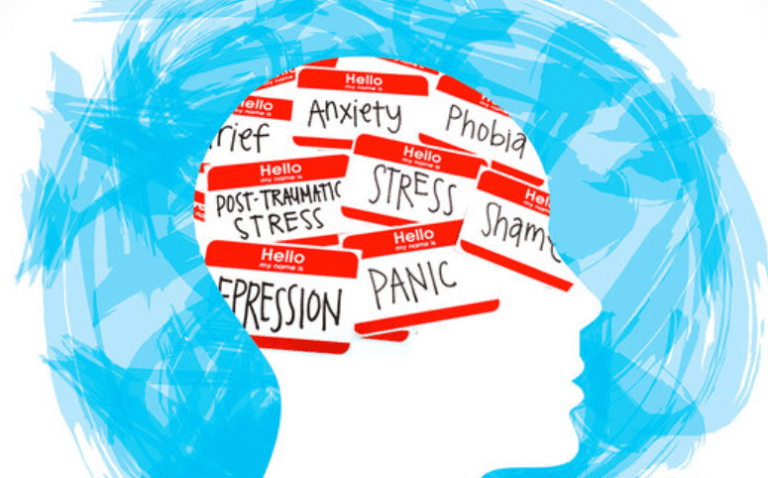
Mental health, once a topic confined to urban conversations and elite circles, is now gaining recognition and acceptance across rural Karnataka. Over the past few years, government initiatives, local NGOs, and healthcare professionals have worked tirelessly to take mental health awareness to small towns and villages. The stigma surrounding psychological well-being is gradually fading, giving way to open discussions, early interventions, and community-driven care models. This shift reflects not just improved outreach, but also a deep cultural transformation in how mental health is perceived across diverse regions of the state.
Community Outreach and Counselling Centres Expand Health officials report that over 60 taluks in Karnataka now have active mental health counselling centers functioning under the District Mental Health Programme (DMHP). These centers provide free psychiatric consultations, counselling sessions, and awareness drives for residents who earlier had limited or no access to mental healthcare. In many districts, especially Raichur, Ballari, and Chikkamagaluru, primary health centers have begun integrating basic mental health screening as part of their routine check-ups. Local doctors are being trained to identify symptoms early and refer patients to specialized facilities for timely treatment.
Role of Accredited Social Health Activists (ASHAs) One of the key reasons behind this expansion has been the active participation of ASHA workers, who now act as first points of contact for mental health cases in rural areas. Through community visits, they identify individuals struggling with anxiety, depression, or substance abuse and guide them toward professional help. These workers, trained through state-supported modules, also organize neighborhood discussions to dispel myths about mental illness. In districts like Koppal and Hassan, ASHA-led campaigns have seen significant participation from women, marking a crucial step toward normalizing mental health dialogue at the household level.
Rural Youth and the Changing Narrative The growing influence of social media and digital campaigns has played a vital role in bridging the information gap between rural and urban populations. Many college students in smaller towns have started organizing mental health awareness clubs, peer support networks, and open sessions to share personal experiences. In places like Mandya and Tumakuru, student-led initiatives have reached hundreds of young people, creating safe spaces for discussion. Experts note that rural youth are increasingly viewing therapy and counselling as valid tools for personal growth rather than signs of weakness or failure.
Subhead: Government’s Strengthened Mental Health Infrastructure The Karnataka government has significantly ramped up mental health services under the Manasadhara and Manochaitanya schemes, which focus on rehabilitation and community awareness. Mobile mental health units are now deployed in districts with limited psychiatric facilities, offering periodic check-ups and teleconsultation access. Additionally, district hospitals are being equipped with counselling rooms and psychiatric wards, bridging the service gap between city hospitals and rural clinics. Officials state that the goal is to ensure “mental health for all” by integrating psychological care into the broader primary healthcare framework across the state.
Involvement of NGOs and Faith-Based Groups Several non-governmental organizations and local religious institutions have started collaborating with mental health professionals to promote awareness. Programs like Spandana Trust’s Community Wellness Drive and Ashwini Rural Health Mission have reached remote tribal and agrarian communities. In many cases, religious leaders are being sensitized to refer individuals showing signs of emotional distress to health centers instead of relying solely on spiritual remedies. This combined approach of faith and science is helping overcome deep-rooted stigma and building trust among conservative rural populations.
Women’s Mental Health in Rural Areas Gains Focus
Women, particularly in farming and working-class families, have emerged as a priority group in recent mental health campaigns. Experts report a rise in stress-related disorders among rural women due to financial pressures, domestic workloads, and social isolation. NGOs and self-help groups have been instrumental in providing peer counselling and workshops on emotional resilience. Many women now participate in group therapy sessions facilitated by trained counsellors. The visibility of such programs has made it easier for other women to seek help, signaling a quiet but steady cultural shift.
Subhead: Technology’s Role in Bridging the Divide Telemedicine and mobile health apps have become powerful tools in making mental health services accessible beyond urban limits. Platforms like e-Manas allow registered professionals to provide remote counselling to patients from their homes, drastically reducing travel costs and stigma. The Karnataka Health Department’s collaboration with NIMHANS has also led to the creation of digital resource libraries in Kannada, making information about mental well-being easier to understand. Rural health officers report that these tools are particularly useful in reaching youth and first-time therapy seekers.
Breaking Stigma through Education and Dialogue One of the most profound changes observed in recent years is the growing openness to discuss mental health within families and schools. Teachers are being trained to identify early behavioral changes in students, while parent-teacher meetings now include sessions on emotional wellness. Local radio stations and community theaters have also taken up the cause, airing plays and talk shows that portray mental illness as a treatable condition. These efforts have helped demystify mental health issues and encourage more people to approach professionals instead of hiding their struggles.
Challenges that Still Remain Despite visible progress, challenges persist. Shortages of psychiatrists, lack of rehabilitation facilities, and continued social stigma in certain regions still hinder full-scale transformation. Experts note that while awareness is growing, affordability remains a concern, as many families cannot bear recurring consultation or medicine costs. Moreover, the need for trained counsellors in Kannada and other regional languages remains high. Officials emphasize that long-term success will depend on sustained government funding, capacity building, and consistent community involvement.
A State Moving Toward Holistic Wellness
Karnataka’s evolving mental health landscape represents a broader shift toward holistic well-being and inclusivity. From the heartlands of Gadag to the coastal belts of Udupi, conversations around mental health are no longer taboo. Rural communities are learning that emotional health is as vital as physical health — a realization once limited to city clinics and campuses. The combined efforts of healthcare professionals, government departments, and local citizens are fostering a hopeful new era where compassion, awareness, and accessibility redefine mental health care across the state.
Outlook for the Future Mental health awareness in Karnataka has undeniably entered a new chapter, one characterized by empathy and decentralization. As more institutions adopt community-based models, experts predict that the next five years will see a more balanced distribution of services across districts. The goal is to make mental wellness a fundamental right, not a privilege. The growing momentum in rural Karnataka shows that understanding and acceptance can indeed overcome silence and stigma — turning what was once an urban conversation into a statewide movement for dignity, healing, and hope.
health awareness in Karnataka is steadily moving beyond city boundaries and reaching smaller towns and rural areas. Once seen as a concern of urban professionals, well-being is now being recognized as essential for all, regardless of geography or social status. With the combined efforts of government initiatives, NGOs, schools, and healthcare workers, rural communities are beginning to understand the importance of emotional and psychological health. This widespread recognition marks a crucial step toward inclusivity and holistic development in the state’s healthcare system.
Government Initiatives Gain Ground The Karnataka government has intensified its health outreach programs under the District Health Programme (DMHP). This initiative aims to make psychiatric consultations, awareness sessions, and rehabilitation accessible in remote villages. health vans and mobile clinics now reach isolated regions every month, providing free check-ups and medicines. Under schemes like Manasadhara, community-based centers have opened in districts such as Chamarajanagar, Hassan, and Bidar. These efforts are transforming how rural residents perceive mental health, encouraging them to seek help early instead of ignoring symptoms.
The Role of ASHA and Anganwadi Workers Accredited Social Health Activists (ASHA) and Anganwadi workers play a key role in spreading mental health awareness across villages. Trained through state-run programs, they now identify early signs of distress, depression, and anxiety among villagers. Their trusted presence within the community makes them ideal messengers for mental health education. In many cases, they accompany patients to hospitals or organize group counselling sessions in schools and community halls. Their involvement has helped reduce stigma and create a supportive environment for open discussion.
Schools Become Centers of Awareness In many government schools, teachers and counsellors are conducting mental health sessions for students to help them deal with stress, exam anxiety, and emotional issues. Programs initiated by the Education Department in partnership with NIMHANS include storytelling workshops, peer listening circles, and teacher training on identifying warning signs. This focus on emotional literacy is especially important in rural schools, where access to professional help is limited. By normalizing such discussions early, Karnataka is nurturing a generation that values \well-being as much as academic success.
NGOs and Civil Groups Step Up Non-governmental organizations have been instrumental in bridging the gap between professional care and community understanding. Groups like Spandana, Samarthanam Trust, and The Live Love Laugh Foundation have launched district-level workshops, particularly in Mandya, Udupi, and Dharwad. Their campaigns often use street plays, Kannada-language posters, and storytelling sessions to reach villagers effectively. These grassroots approaches demystify illness and show people that seeking therapy or counselling is not a sign of weakness but of courage and self-care.
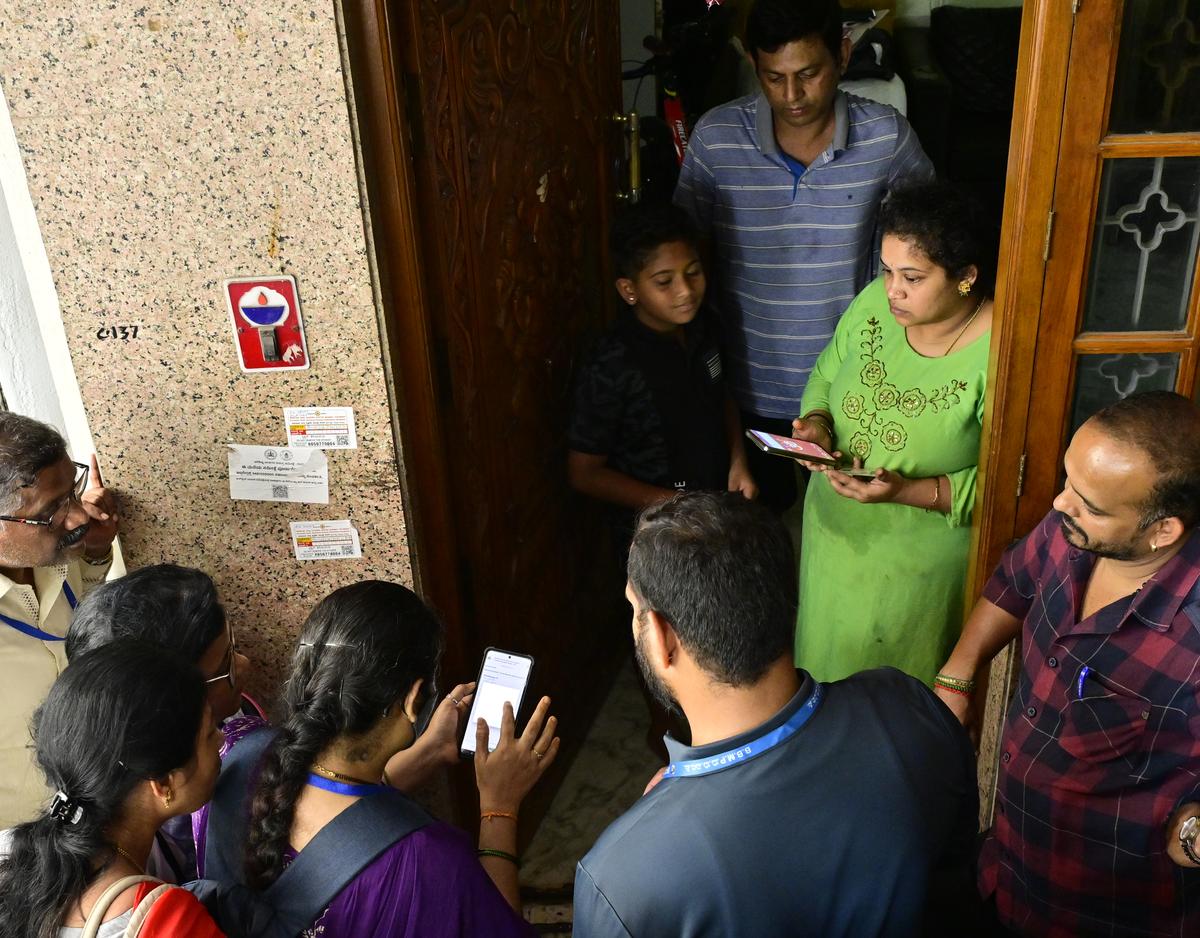
After a brief pause for the Deepavali festivities, Karnataka’s much-debated Social and Educational Caste Survey has resumed across districts — but progress has been noticeably sluggish. The delay stems from a shortage of field enumerators, as many schoolteachers who previously assisted with data collection have not rejoined the process due to academic duties resuming post-holiday. The situation has caused concern among officials, who fear that the survey’s completion schedule may be further delayed, jeopardizing its timely submission and raising doubts about data reliability and accuracy.
Teachers’ Absence Hampers Enumeration Work In earlier phases, schoolteachers played a crucial role in conducting door-to-door surveys, managing both digital data entry and verification processes. However, as schools reopen after the festival break, the Education Department has instructed teachers to prioritize classes, leaving the Social Welfare Department scrambling to find replacements. Many districts, including Bengaluru Urban, Mysuru, and Belagavi, have reported minimal daily progress, with enumerators struggling to cover even half of the assigned households per day. The absence of trained staff has significantly slowed data collection in both rural and urban areas.
Administrative Coordination Issues Surface Officials coordinating the survey have admitted to logistical challenges, particularly in reassigning field duties to newly recruited temporary staff. Several of these recruits are yet to receive proper training on digital tablets and the complex questionnaire structure. Technical issues with data synchronization have added to the delay, with enumerators reporting frequent software lags and network failures. The lack of synchronization between district-level and taluk-level supervisors has also resulted in duplicated entries and incomplete uploads, further complicating the already delayed process.
Rural Areas Worst Hit by Delays Rural regions, especially in north Karnataka, are experiencing the most severe setbacks. Teachers, who were the main force behind enumeration in these areas, are now unavailable, leaving local volunteers to shoulder the burden. Many villages remain partially surveyed, with data entry on caste, occupation, and educational qualifications still pending. Field workers report that residents are becoming increasingly reluctant to participate due to repeated visits and confusion over the purpose of the survey. Officials worry that this lack of momentum could lead to inconsistent data and incomplete representation of marginalized communities.
Subhead: Political Sensitivities and Growing Public Attention The caste survey, which aims to gather comprehensive socio-economic data to inform welfare and reservation policies, has become politically sensitive. With opposition parties closely monitoring its progress, the government faces mounting pressure to demonstrate transparency and efficiency. Delays have already prompted criticism from several quarters, with some accusing the state of poor planning and lack of inter-departmental coordination. Political analysts note that the survey’s outcome could significantly influence upcoming elections, as it is expected to reshape caste-based welfare strategies and power equations within Karnataka’s political landscape.
Teachers Torn Between Duties and Expectations Teachers involved in the earlier phase of the survey are caught in a difficult position. Many have expressed frustration at being repeatedly pulled from classroom duties for administrative work. With the academic calendar running behind schedule, headmasters are reluctant to release staff again, fearing disruption to ongoing exams and assessments. The Education Department, on its part, has requested the Social Welfare Department to explore alternative staffing options. However, without experienced enumerators, officials admit the quality and pace of data collection have declined sharply since the festival break.
Training and Resource Gaps Add to Woes To fill the staffing void, district administrations have begun hiring temporary enumerators from local communities, but many lack the necessary training to handle digital data entry devices and structured interview techniques. Workshops have been organized to train these replacements, but the learning curve remains steep. In several districts, technical glitches with mobile survey applications have compounded the problem, leading to incomplete uploads. Officials are now exploring offline data entry methods as a backup, but they caution that manual processes could increase the risk of errors and further delay verification.
Subhead: Government’s Push to Meet Deadlines The Social Welfare Department has announced plans to extend working hours for enumerators and deploy additional supervisors to accelerate progress. Senior officials have also scheduled review meetings across all districts to assess completion targets. Despite these measures, insiders acknowledge that the pace remains far below expectations. The state government hopes to finish data collection before the year-end, but experts predict that full verification and analysis may extend well into the next financial year. The uncertainty has created anxiety within departments waiting for caste-based data to design new welfare schemes.
Impact on Policy and Future Planning
The sluggish progress of the caste survey could have a cascading effect on social policy formulation. Several welfare departments, including backward classes and minority development boards, have postponed new project proposals pending the release of caste data. Economists and social researchers warn that any delay could weaken evidence-based policymaking, particularly in identifying resource allocation gaps. The accuracy of data will also determine how effectively the government can address disparities in education, employment, and economic empowerment among various caste groups.
Public Trust and Credibility at Stake Amid growing skepticism, officials are trying to reassure citizens about the survey’s importance and confidentiality. Public outreach campaigns are being planned to explain how the data will be used solely for welfare purposes, not political manipulation. However, experts caution that prolonged delays and inconsistent field performance could erode public trust in the process. With every passing week, pressure mounts on the government to deliver credible results. For many, the sluggish progress of the caste survey is not just an administrative hurdle — it reflects the larger struggle to balance governance priorities with ground realities.
Call for Coordinated Effort and Accountability
Social scientists and civil society groups have urged the state to restore coordination between education and social welfare departments for a smoother survey process. They recommend the use of technology-driven scheduling, better training modules, and financial incentives for enumerators to maintain efficiency. The government is also being advised to hold district collectors accountable for progress metrics. As the survey drags on, citizens await not just the data, but also evidence that Karnataka can manage large-scale social documentation with precision, transparency, and empathy for its diverse communities.
The slow resumption of the caste survey has become a matter of concern for both bureaucrats and political observers. Officials in several districts have admitted that only about 30 to 40 percent of the data entry targets have been achieved since the survey restarted. In Bengaluru Urban and Rural, where population density is high, enumerators have been unable to keep up with their daily quotas due to technical bottlenecks and limited staff. District authorities are now preparing revised timetables to compensate for lost days and ensure that progress does not stall further.
Teachers’ unions have voiced their dissatisfaction with the repeated use of educators for non-academic administrative work. They argue that pulling teachers away from schools disrupts the learning process, particularly for students preparing for board exams. Many teachers who participated earlier claim they were not paid the promised allowances or travel reimbursements. The Karnataka State Teachers’ Association has written to the Education Department demanding that survey responsibilities be reassigned to trained government enumerators instead. Their appeal highlights the ongoing tension between educational priorities and administrative obligations.
In some taluks, local panchayat staff and anganwadi workers have been roped in temporarily to fill the manpower gap. However, these workers too are juggling multiple responsibilities and lack the time to complete detailed interviews with each household. Officials have observed that incomplete or hurriedly entered data could compromise the quality of information collected. With each household requiring multiple data points on caste, income, education, and housing, accuracy remains a key concern. Supervisors have been instructed to conduct random checks, but limited oversight means many errors may go unnoticed.
District-level coordination meetings held after Deepavali revealed that certain regions, such as Mandya, Tumakuru, and Raichur, are lagging behind the most. While some progress has been made in urban pockets, remote areas continue to face connectivity issues that delay digital uploads. Field enumerators often have to travel to district headquarters to sync their devices, consuming precious hours each day. Officials are considering the establishment of mobile data hubs or local upload centers to mitigate this delay, but the infrastructure will take time to deploy effectively.
The Social Welfare Department has been facing questions from the state’s finance and planning divisions regarding expenditure on the survey so far. With repeated extensions and additional training costs, the budget has reportedly exceeded initial estimates. Critics argue that poor planning has led to duplication of work and inefficient resource allocation. Government sources maintain that the survey is a long-term investment aimed at ensuring data-driven welfare, but opposition leaders are demanding a formal audit to assess how funds have been utilized since the survey’s initial launch.
Public perception of the caste survey has also evolved since its inception. While some communities view it as an opportunity for fair representation in welfare policies, others remain skeptical about how the results will be used politically. Several residents have complained about survey fatigue due to multiple visits by enumerators who request clarifications or re-verify data. The lack of clear communication from authorities has created confusion in villages, where misinformation about the purpose of the survey has spread. Social workers suggest that the government must ramp up awareness efforts to rebuild confidence.
Technical training sessions held for replacement enumerators have faced low attendance in certain districts. Many newly recruited workers have found the digital interface challenging, particularly when it comes to navigating multi-layered caste classifications. Supervisors are struggling to maintain consistency in data coding, leading to mismatched entries across districts. This inconsistency could complicate the data collation process at the state level. To address this, officials plan to introduce simplified data entry formats, but experts warn that frequent format changes may further slow down progress.
At the policy level, the slow pace of the survey has implications for the state’s upcoming socio-economic planning cycle. Several new welfare schemes, including housing subsidies and education scholarships, depend on accurate caste and income data for targeted distribution. With the 2025–26 budget preparation already underway, policymakers are worried that incomplete survey results may force departments to rely on outdated demographic information. Economists caution that this could widen inequalities and reduce the effectiveness of government spending in reaching marginalized groups.
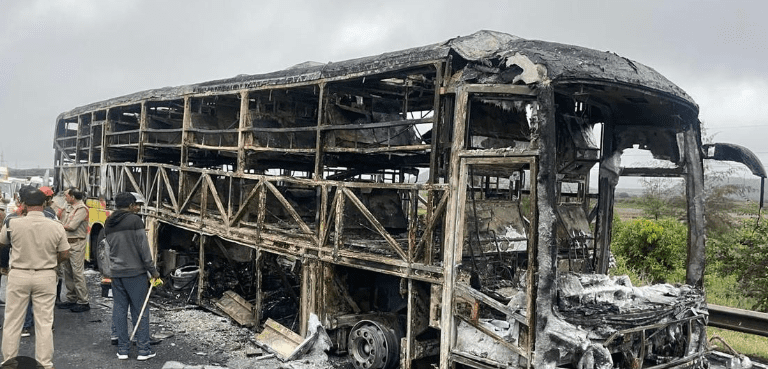
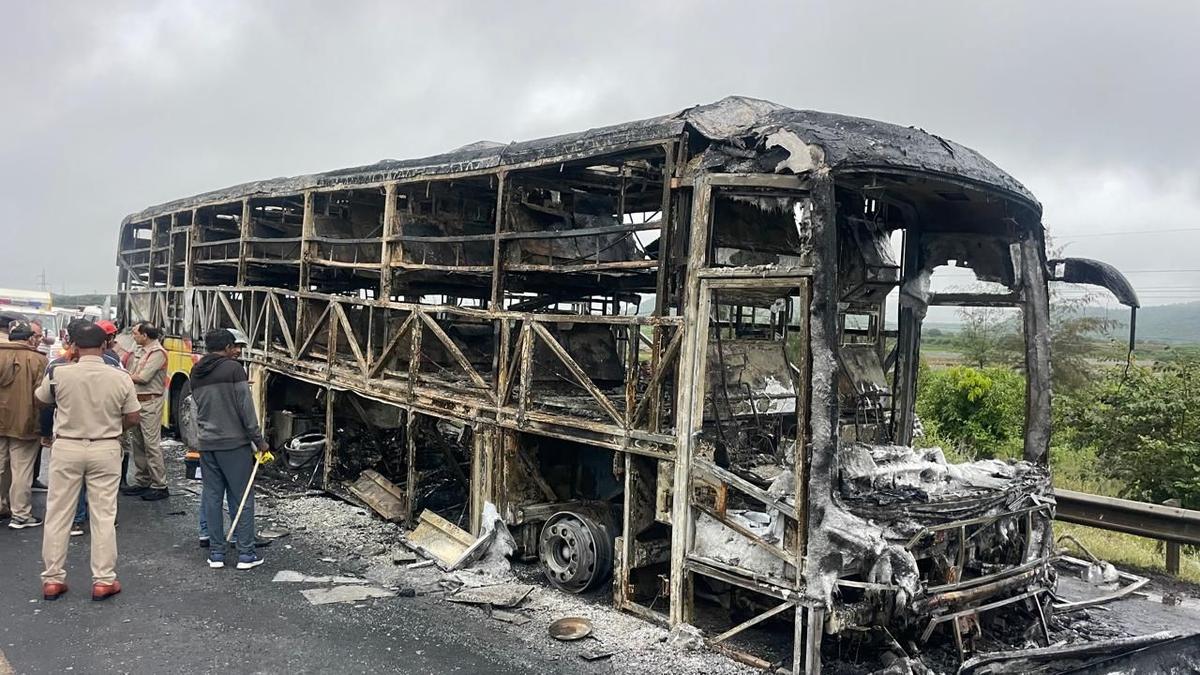
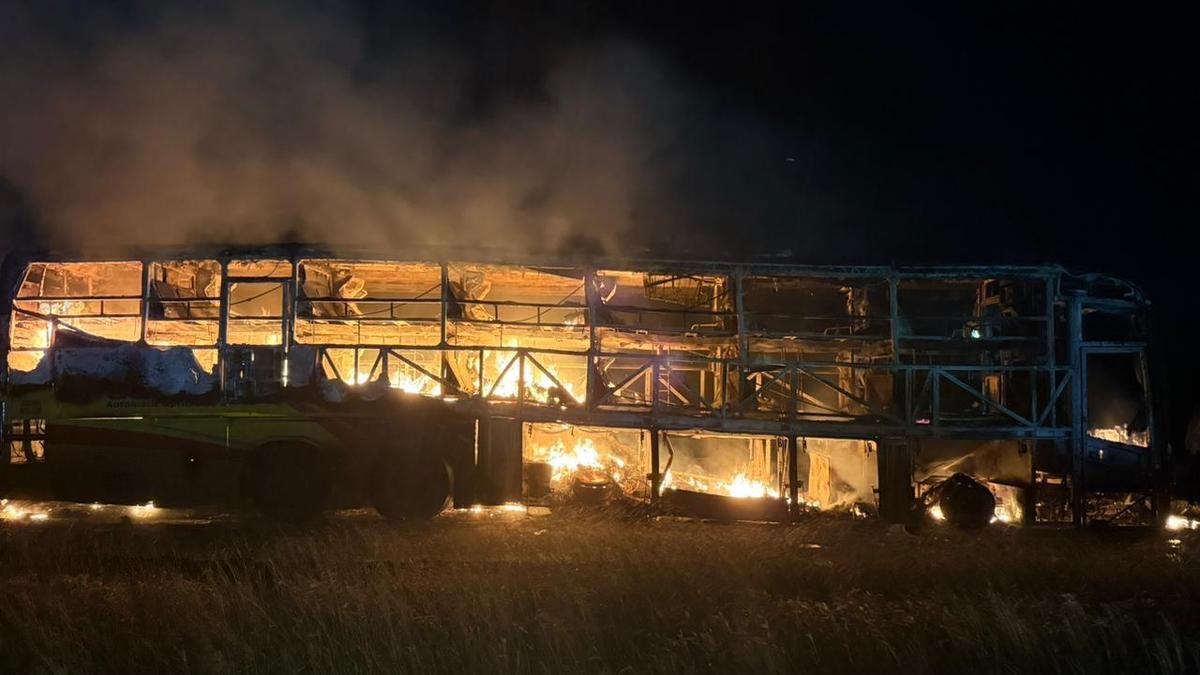
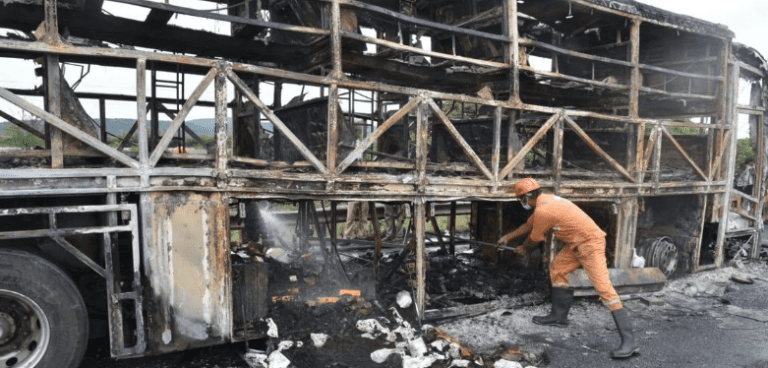
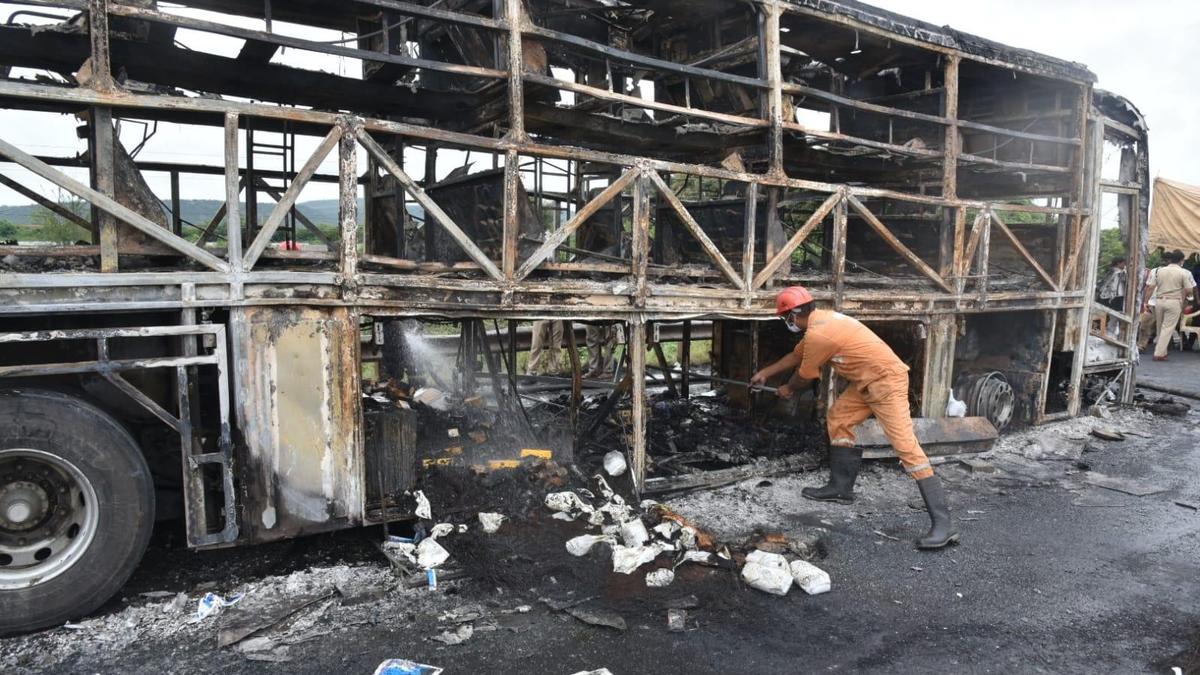
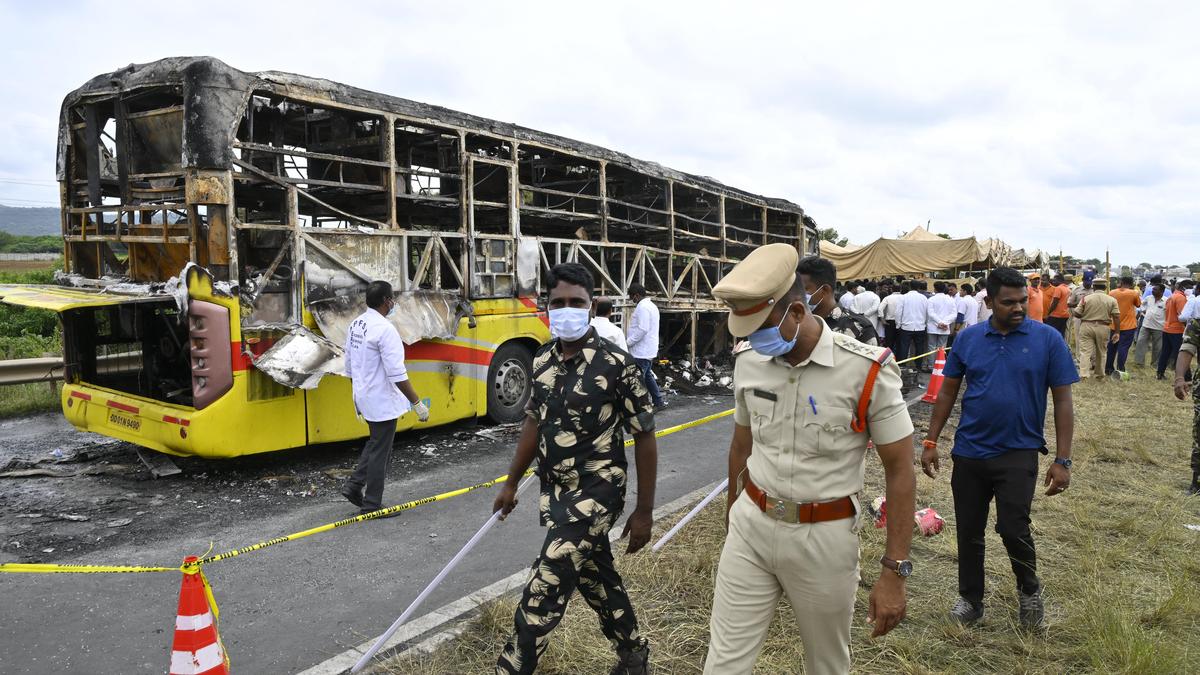
A devastating fire broke out on a private sleeper bus traveling from Hyderabad to Bengaluru near Kurnool in Andhra Pradesh, leaving several passengers lives dead and many injured. However, amid the tragedy, there emerged stories of miraculous escapes and near-misses. Out of the total passengers, 23 individuals managed to escape the inferno moments before the vehicle was engulfed in flames. One passenger had even cancelled his trip shortly before boarding, a twist of fate that likely saved his life. The incident has since sparked shock, grief, and renewed concerns over passenger safety in private transport operations.
The fire accident near Kurnool has left both states of Andhra Pradesh and Karnataka in deep shock, with leaders cutting across party lines expressing grief over the tragedy. Karnataka’s Transport Minister called it a “grim wake-up call” for all private operators and urged immediate checks on vehicle safety. Andhra Pradesh officials stated that the district administration was quick to respond, dispatching fire engines and ambulances within minutes. Yet, for many families, the swiftness of the response could not undo the irreversible loss that occurred within moments on that fateful night.
Local residents of Gooty and nearby villages, who were among the first to arrive at the scene, are being hailed as heroes for their courageous rescue efforts. Many villagers broke windows and helped passengers escape the burning vehicle before the fire spread completely. Despite the danger, they used water containers and blankets to douse flames on survivors whose clothes had caught fire. The bravery of these villagers, who risked their own safety, prevented the death toll from being even higher, earning them heartfelt praise from officials and survivors alike.
Investigators are currently examining the bus’s fuel tank and electrical systems to determine the exact cause of ignition. Preliminary findings indicate that a possible short circuit or fuel leakage near the rear engine may have triggered the fire. Experts from the transport department are analyzing debris samples to confirm if the bus was carrying any additional fuel or inflammable materials in violation of safety norms. The final report is expected to be submitted within a week, after which authorities will decide on legal proceedings against the travel operator.
The bus company, whose name has not been officially disclosed pending investigation, has faced criticism for its safety record. Sources revealed that the firm had been fined previously for operating vehicles without proper maintenance checks. Former employees have alleged that some of the buses continued to run despite repeated mechanical complaints from drivers. Passenger associations are now demanding a full audit of all private travel operators on inter-state routes and strict implementation of fire safety drills for both staff and passengers before every trip.
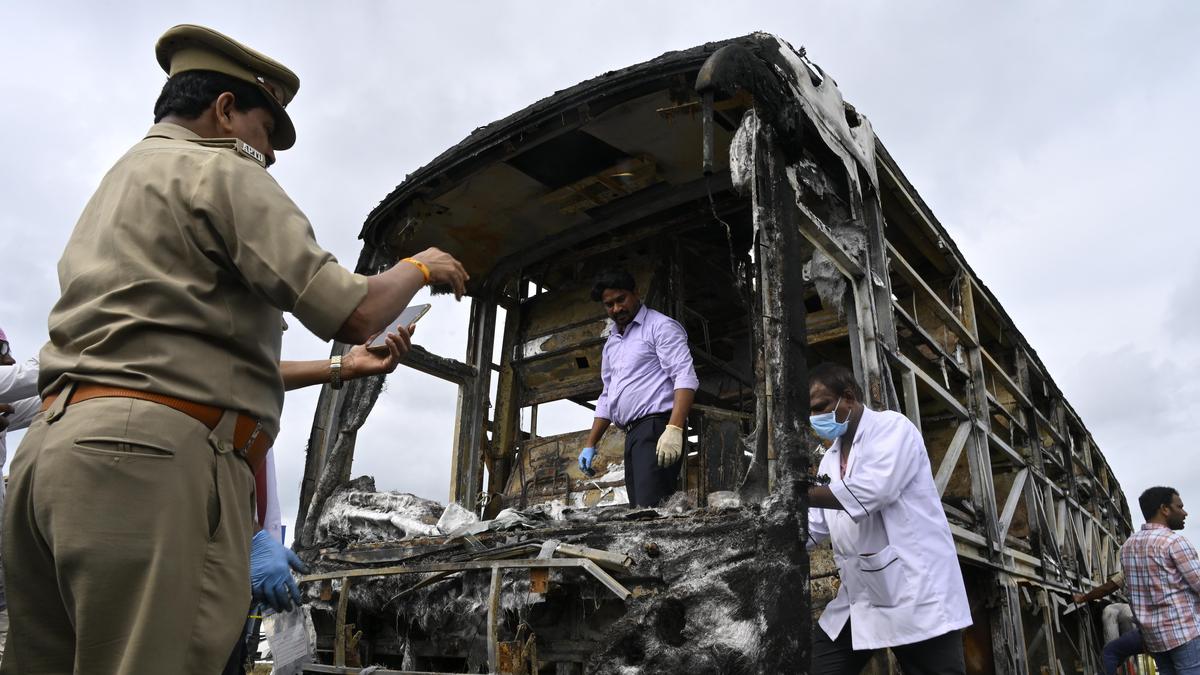
Meanwhile, forensic teams working at the accident site faced difficulties due to the intensity of the fire, which charred most of the bus’s interior beyond recognition. Authorities had to rely on the metal chassis number and ticketing records to confirm vehicle identity. DNA samples from victims are being collected for matching with relatives to facilitate identification. The process is expected to take a few days, and the district administration has assured families that all measures will be taken to preserve transparency and compassion throughout the investigation.
Emotional scenes unfolded at Kurnool General Hospital as relatives of passengers rushed in search of their loved ones. Many waited outside the mortuary, clutching photographs and praying for news. For those who learned their family members had survived, relief came with tears and gratitude. For others, the confirmation of loss brought heart-wrenching cries that echoed through the hospital corridors. Volunteers from local NGOs distributed food, water, and blankets to support families who had traveled long distances, ensuring they were not left unattended in their grief.
Transport unions have joined the call for systemic reforms following the tragedy. Representatives emphasized the need for real-time fire detection systems, automated emergency exits, and training programs for bus staff. They also urged authorities to consider limiting overnight travel hours for private buses to reduce fatigue-related accidents. The unions have demanded that both state governments set up a high-level task force to examine private transport safety mechanisms and ensure continuous inspection schedules instead of periodic checks that often get delayed or ignored.
The Andhra Pradesh police have registered a case of negligence and culpable homicide against the bus operator and driver. While the driver remains under observation due to burn injuries, statements from survivors will form a crucial part of the case. The police have already collected CCTV footage from nearby toll plazas and GPS data to trace the bus’s movements before the accident. Officials stated that determining whether the bus was speeding or overloaded at the time will be key to understanding the sequence of events leading up to the disaster.
In Bengaluru and Hyderabad, passengers who had earlier traveled with the same operator shared their own concerns online, recounting experiences of faulty air conditioning, cramped seating, and occasional engine overheating. Many took to social media demanding transparency about the company’s ownership and its adherence to safety regulations. The growing public pressure has prompted both governments to announce random checks across state borders for all night buses, ensuring vehicles meet operational safety requirements before departure. The move has been welcomed by passenger advocacy groups.
Beyond the investigations and official responses, the tragedy has reignited a moral debate about road safety culture in India. Experts note that while technological upgrades can reduce risks, true safety depends on consistent enforcement and accountability. Every fire extinguisher left unchecked, every overworked driver, and every unmonitored vehicle represents a potential disaster waiting to happen. As the nation grieves for the victims and counts the survivors’ blessings, the Kurnool bus fire stands as a reminder that the cost of negligence is always measured in human lives.
The Horrific Incident Unfolds According to initial reports, the bus, operated by a private travel company, caught fire late at night after colliding with a divider on the highway near Kurnool. The impact is suspected to have damaged the fuel system, leading to an explosion that spread rapidly. Witnesses described scenes of chaos as passengers struggled to break windows and escape the smoke-filled bus. Fire and rescue teams rushed to the spot, but by the time the flames were doused, several lives were lost. Survivors later recounted how the fire spread within minutes, leaving little room for reaction.
A List of Survivors Who Escaped Death
Authorities released a list of 23 passengers who managed to escape the fire with minor injuries or none at all. Many of them had been seated near emergency exits or were alert enough to break windows and jump to safety. Among them were students, tech professionals, and families traveling home after Deepavali. The passenger who had cancelled his journey before boarding reportedly did so due to a sudden work commitment, a decision now seen as a miraculous turn of fate. The released list has brought relief to anxious families awaiting updates.
Eyewitness Accounts and Panic on the Highway Eyewitnesses from nearby villages reported hearing a loud explosion followed by screams for help. Several locals rushed to the scene before emergency services arrived, attempting to rescue those trapped inside. Survivors said that thick smoke and panic made it difficult to see or move, forcing many to crawl or push their way out through shattered windows. One survivor described jumping from the burning bus moments before it was completely engulfed, calling it “a rebirth.” The harrowing accounts have drawn nationwide attention and sympathy for the victims.
Questions Over Safety and Compliance The tragic event has reignited debates over the safety standards of private travel buses operating on long routes. Preliminary investigations suggest that the bus might have been carrying extra luggage in compartments close to the engine, which could have intensified the fire. Officials are also examining whether fire extinguishers were available and if safety protocols were followed. Experts from the transport department have pointed out that many private operators often neglect periodic maintenance, putting passenger lives at risk to meet travel demands and cut costs.
Government Response and Investigation Updates The Andhra Pradesh and Karnataka governments have both initiated joint inquiries into the incident. Karnataka’s Transport Department has sent senior officials to Kurnool to coordinate with their Andhra counterparts and assess the cause of the fire. Meanwhile, Chief Ministers of both states have expressed condolences and announced compensation for victims’ families. Rescue operations concluded after several hours of search and recovery, with police securing the site for forensic examination. Authorities have also suspended the bus operator’s license pending investigation into possible negligence or safety lapses.
Passenger Verification and Helpline Support
In the aftermath of the tragedy, helplines were set up to help families trace their loved ones. Rail and road transport departments collaborated to verify passenger manifests and confirm the identities of those who escaped or perished. The survivor list, made public by the Kurnool district administration, was cross-checked with booking records to avoid misinformation. Families of survivors have expressed immense gratitude to the local villagers and rescue teams who acted swiftly, saying their timely efforts prevented an even greater loss of life.
Subhead: Survivors’ Recovery and Psychological Support Medical teams in Kurnool and nearby hospitals are providing treatment and counseling for the survivors. Many are reported to be in shock, struggling to process the traumatic experience. Authorities have arranged for psychological counselors to assist victims suffering from post-traumatic distress. Hospitals have also set up help desks to connect families and provide updates on patients’ recovery. Meanwhile, social welfare organizations have extended support, offering temporary accommodation and travel assistance to survivors and their families who are far from home.
Private Transport Under Scrutiny Once Again The tragedy has once again highlighted long-standing safety concerns surrounding private inter-state bus operators. Past incidents of fires, speeding, and overloading have prompted several advisories, but enforcement remains inconsistent. Experts argue that without stronger regulation and routine safety audits, such accidents will continue to occur. Road safety advocates are calling for stricter penalties, real-time GPS monitoring of private buses, and installation of automated fire suppression systems. For many, this disaster serves as a grim reminder of the urgent need for reform in passenger transport safety protocols.
A Night of Tragedy and a Testament to Fate While the nation mourns the lives lost in the Kurnool bus fire, stories of the 23 passengers who escaped — and the one who cancelled his ticket just in time — serve as bittersweet reminders of fate’s unpredictability. For the survivors, it is a second chance at life, though one marked by haunting memories. As investigations continue and accountability is sought, the tragedy stands as a stark call for change — a plea for every journey to be safeguarded by the value of human life over profit and negligence.
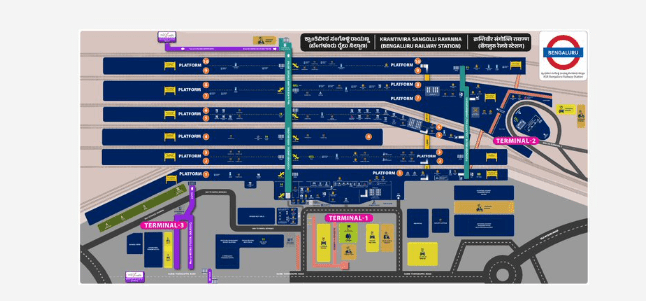
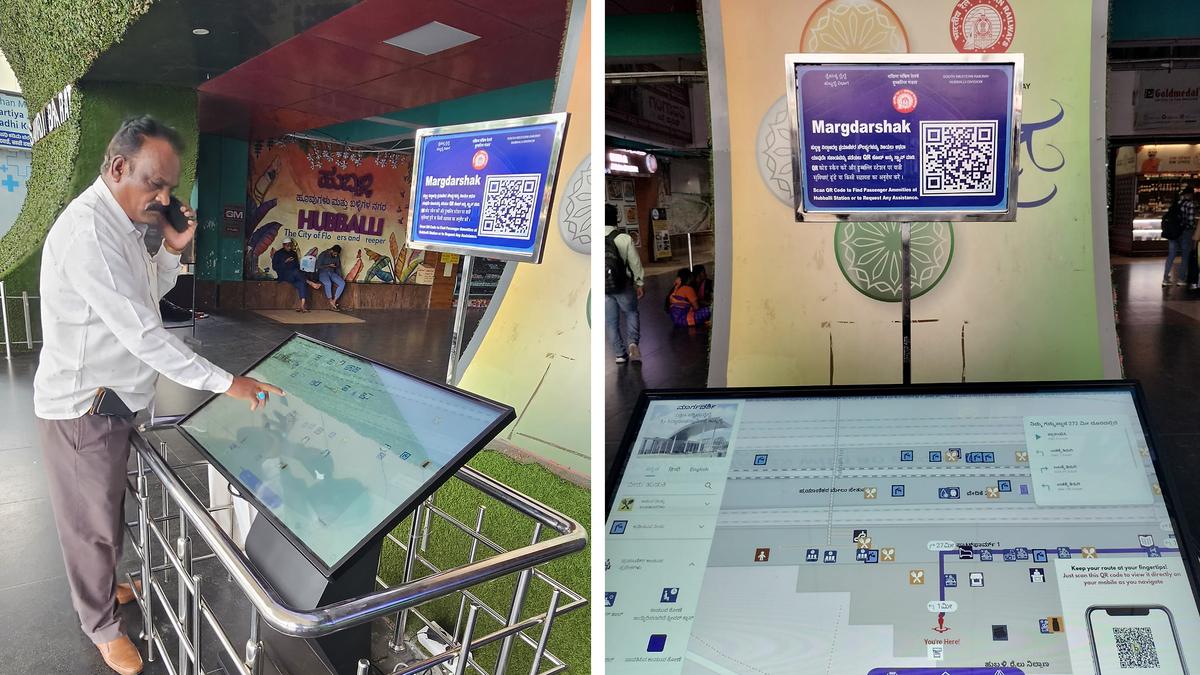
In a major step toward digital modernization, the South Western Railway (SWR) has expanded its innovative ‘Namma Nakshe’ digital navigation system to 14 additional railway stations within the Bengaluru Division. The initiative aims to make railway travel more seamless and accessible for passengers by integrating technology-driven station maps, navigation tools, and essential amenity locators. Officials said this digital mapping project represents a milestone in SWR’s ongoing efforts to enhance commuter convenience, improve station management, and create smarter, more connected railway environments that cater to India’s rapidly urbanizing population and growing passenger expectations.
The South Western Railway (SWR) has expanded its innovative digital navigation system, Namma Nakshe, to 14 railway stations across Bengaluru Division, marking a significant leap towards passenger convenience and technological advancement. Designed to help passengers navigate complex station layouts with ease, the expansion comes as part of SWR’s broader digital initiative to enhance user experience and accessibility. The move has been met with widespread appreciation from daily commuters, especially those who rely heavily on local trains and suburban routes across the city.
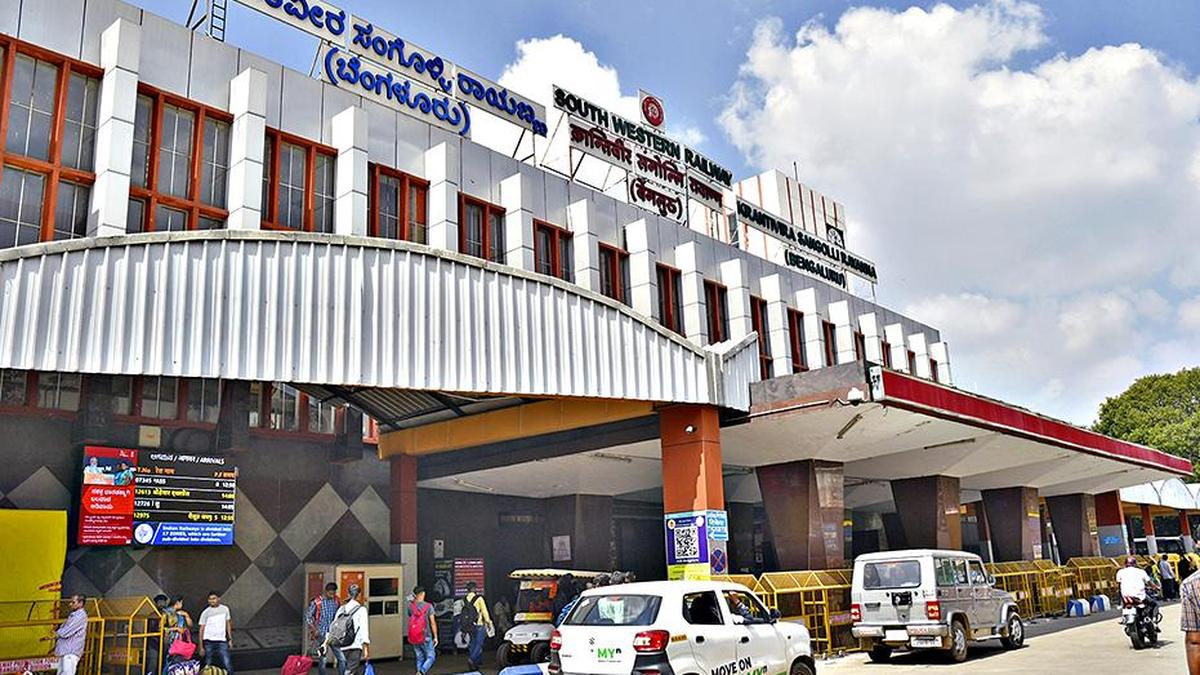
Digital Leap for Commuter-Friendly Navigation Namma Nakshe, which translates to “Our Map” in Kannada, allows passengers to digitally view real-time layouts of stations, helping them locate platforms, exits, restrooms, waiting areas, and ticket counters. The initiative, initially launched at major hubs like Krantivira Sangolli Rayanna (KSR) Station and Yeshwanthpur, has now been extended to 14 more stations across the Bengaluru Division, including Baiyappanahalli, Whitefield, Cantonment, and Banaswadi. The feature-rich system has been integrated into the Rail Madad app, enabling easy access via smartphones and touch-screen kiosks installed at stations.
Smart Railways for a Smarter City According to railway officials, the expansion of Namma Nakshe aligns with Bengaluru’s growing reputation as India’s technology capital. With daily footfalls ranging between 50,000 and 1.5 lakh in major railway stations, the new system is expected to drastically reduce confusion among passengers during rush hours. The project also reflects SWR’s commitment to leveraging technology for better service delivery, particularly for senior citizens and first-time travelers who often find navigating large stations challenging.
Enhancing Passenger Accessibility and Inclusion The SWR has also ensured that Namma Nakshe is designed with inclusivity in mind. The interface provides multi-language support, including English, Kannada, and Hindi, ensuring accessibility for a diverse group of passengers. Moreover, the digital maps highlight amenities for differently abled individuals such as ramps, accessible restrooms, and tactile flooring. This focus on universal accessibility has drawn praise from passenger associations and civic groups advocating for inclusive public infrastructure.
Subhead: A Step Toward ‘Digital Railways Mission’ The Namma Nakshe initiative is part of the Ministry of Railways’ broader Digital Railways Mission, which aims to use smart technologies to streamline operations and improve commuter experiences nationwide. Bengaluru Division’s proactive adoption of such tools places it at the forefront of innovation within Indian Railways. Officials revealed that future updates would allow real-time crowd tracking and emergency alerts within the app, further empowering passengers to make informed travel decisions.
Public Reception and Commuter Benefits Passengers have welcomed the expansion with enthusiasm, noting how the digital layout has simplified their navigation through busy terminals. Regular commuters at Yeshwanthpur and Baiyappanahalli reported that the system helped them save time, especially during peak hours. “Earlier, it was confusing to locate platform numbers or waiting halls, but now, the app shows everything clearly,” said a daily traveler. The initiative also helps tourists unfamiliar with the stations, enhancing Bengaluru’s reputation as a global and tech-forward city.
Integration with Other Smart City Systems In collaboration with the Bengaluru Smart City Project, SWR plans to integrate Namma Nakshe with other urban navigation tools, such as metro maps and BMTC bus route information. This integration will allow commuters to seamlessly plan multi-modal journeys using a single interface. Officials added that discussions are underway to include real-time parking availability and nearby taxi zones in the digital map. If implemented, this could significantly ease the first and last-mile connectivity challenges faced by commuters.
Subhead: Sustainability and Future Plans Beyond convenience, Namma Nakshe also contributes to sustainability by reducing dependence on printed maps and manual guidance systems. The SWR is now planning to link the platform data with energy usage and crowd density monitoring, optimizing lighting and air circulation systems accordingly. Future plans include AI-based predictive crowd management to prevent bottlenecks during festive seasons and long weekends. The initiative showcases how digital solutions can merge passenger welfare with environmental responsibility.
Boost to Railway Image and Local Economy Experts believe that the successful implementation of Namma Nakshe will enhance Bengaluru Division’s image as a model for other railway zones. Increased passenger satisfaction can translate into better revenues from tourism and station-based commerce. Vendors operating within the stations also benefit from greater visibility on the digital map, helping travelers discover shops, food stalls, and services they might have otherwise missed. The combined effect is an ecosystem that benefits both passengers and local businesses alike.
A Step Towards the Future of Public Travel The expansion of Namma Nakshe marks a milestone in SWR’s journey toward modern, technology-driven public transport infrastructure. With 14 stations now digitally mapped, officials aim to cover all major stations under Bengaluru Division by the next fiscal year. The move symbolizes a growing recognition of how digital innovation can transform daily experiences for millions of commuters. As Bengaluru continues to evolve as a global tech hub, Namma Nakshe stands as a testament to how tradition and technology can work together to redefine India’s railway experience.
Digital Expansion for Smarter Stations
‘Namma Nakshe,’ introduced as a pilot project last year, uses interactive digital maps to help passengers navigate railway premises efficiently. Following its success at Bengaluru City and Yesvantpur stations, the system has now been extended to 14 more stations, including KSR Bengaluru, Baiyappanahalli, Cantonment, Yelahanka, and Whitefield. The platform allows users to locate facilities such as ticket counters, restrooms, platforms, waiting rooms, and food stalls through an intuitive digital interface. Officials said that expanding this service marks an important leap toward digitization, making station navigation faster and more accessible to travelers from diverse age groups and backgrounds.
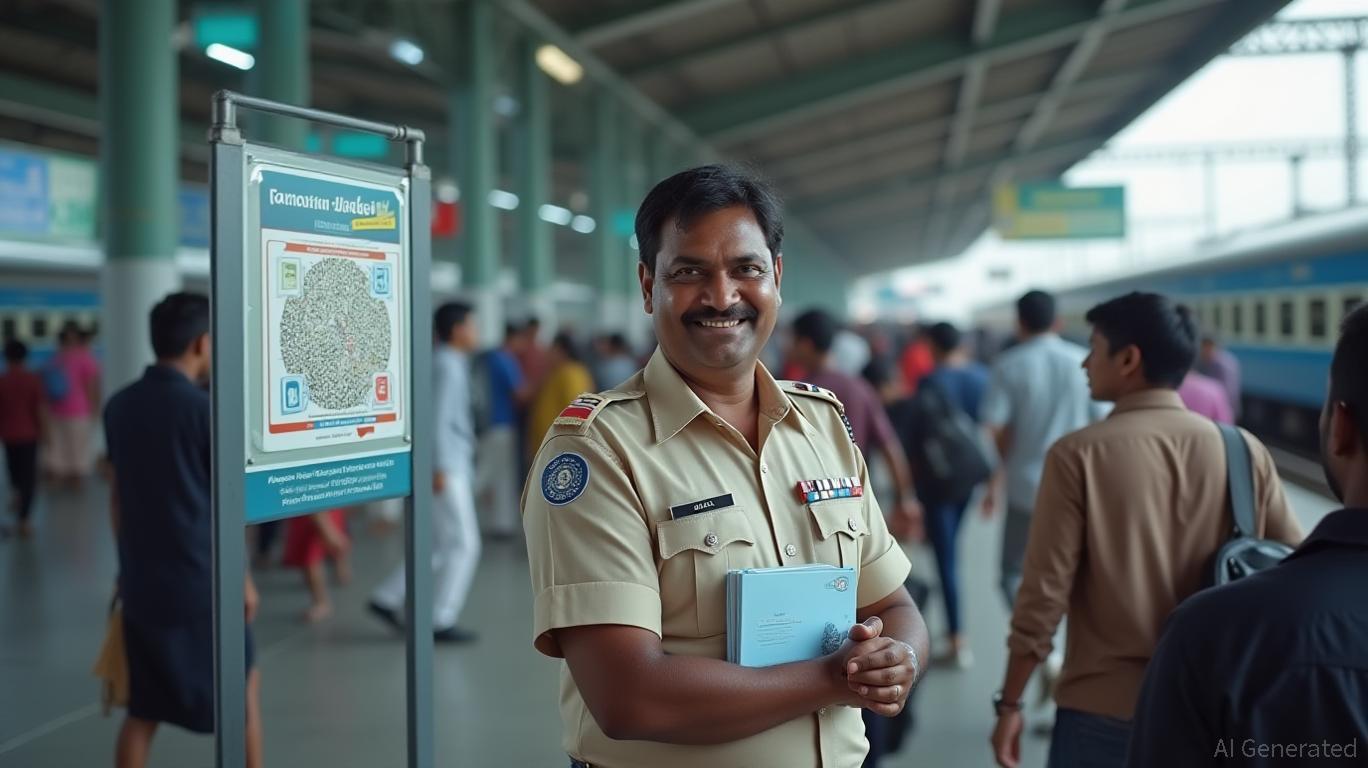
Each digital map is designed to provide real-time updates on train arrivals, departures, and crowd movement within station premises. Passengers can access the system through QR codes displayed prominently across platforms and concourse areas. By scanning the code, users are directed to an interactive web-based map that offers voice-assisted guidance in multiple languages. SWR authorities explained that this feature particularly benefits elderly passengers, tourists, and those unfamiliar with major urban stations. The initiative aligns with the broader vision of Indian Railways to create inclusive, user-friendly, and technologically advanced transport hubs.
Subhead: Bridging Technology and Passenger Convenience
Senior railway officials noted that the project combines data-driven infrastructure management with a people-centric approach. Beyond simplifying navigation, ‘Namma Nakshe’ enables railway authorities to monitor footfall and identify congestion points in real time. This data helps optimize crowd control, maintenance, and security deployment. Authorities said that the digital maps have also been linked with emergency response systems, allowing passengers to instantly locate exits, first-aid counters, and help desks during critical situations. Officials believe that this integration of smart navigation with safety tools will transform how passengers experience travel at Bengaluru’s busiest railway stations.
SWR’s Chief Public Relations Officer emphasized that digital innovation is no longer an option but a necessity for modern transportation networks. By embracing tools like ‘Namma Nakshe,’ the Bengaluru Division aims to redefine passenger engagement through convenience and reliability. Officials stated that such advancements not only improve commuter satisfaction but also streamline daily operations for railway staff. The digital navigation system is expected to reduce dependence on manual assistance and paper signage, ensuring smoother movement during peak hours. Authorities reaffirmed their commitment to gradually extending this system to all stations under the SWR network.
Enhancing Accessibility and Inclusivity
The expansion of ‘Namma Nakshe’ has been widely praised for its accessibility features. The system includes visual icons for hearing-impaired users, text enlargement options for visually challenged passengers, and audio guidance compatible with screen readers. Officials said these inclusivity measures are designed to make railway travel more equitable and comfortable for all. The digital platform is also compatible with mobile devices, ensuring that even passengers with basic smartphones can use the service without downloading an app. SWR officials described this as a critical step toward bridging the digital divide within public transportation infrastructure.
Passenger feedback from the initial rollout has been overwhelmingly positive. Travelers have highlighted how the navigation tool reduced confusion and anxiety, particularly during tight train connections. Parents traveling with children and elderly passengers appreciated the ease of locating restrooms, food counters, and ticket kiosks without having to walk long distances unnecessarily. Station managers reported a noticeable reduction in crowding at information desks since passengers could now access most details through the QR system. Officials confirmed that such digital solutions would play a key role in shaping future passenger services across India’s rapidly evolving railway ecosystem.
Subhead: Bengaluru Division’s Model for the Future
The Bengaluru Division’s proactive approach to adopting digital infrastructure has positioned it as a model for other railway zones across the country. Officials said that the ‘Namma Nakshe’ initiative reflects the city’s broader identity as India’s technology hub. Collaborations with tech startups and mapping experts have enabled SWR to design a user-friendly system capable of scaling across different station layouts. Plans are already underway to integrate additional features such as live train tracking, dynamic platform changes, and digital feedback modules. Authorities believe that these upgrades will make Bengaluru’s railway network a benchmark for smart mobility solutions nationwide.
Railway officials also highlighted environmental benefits associated with digitization. By reducing paper-based signage and printed timetables, the initiative supports Indian Railways’ broader green mission. The use of data analytics derived from ‘Namma Nakshe’ will further enable resource optimization in lighting, waste management, and station maintenance. Officials hope to expand this sustainable model to Tier-2 and Tier-3 stations across Karnataka. SWR management stated that embracing eco-friendly and tech-driven solutions together ensures both operational efficiency and environmental responsibility, reflecting the dual priorities of modernization and sustainability within India’s transport sector.
Public Engagement and Future Expansion
To promote public engagement, SWR has launched awareness campaigns encouraging passengers to use the digital navigation system. Demonstration booths have been set up at major stations where volunteers assist travelers in understanding how to access and utilize the platform. Feedback forms are being distributed to gather user experiences and suggestions for improvement. Officials said that incorporating passenger feedback is central to refining the system’s usability and relevance. Plans include integrating the ‘Namma Nakshe’ maps with ticket booking apps and online platforms to create a unified digital ecosystem for rail passengers.
Railway experts view this initiative as part of a larger digital transformation strategy aimed at improving India’s transport efficiency. By prioritizing technology-enabled services, SWR seeks to make every journey more predictable, comfortable, and transparent. Officials believe that ‘Namma Nakshe’ represents the future of railway travel — one where data, design, and human convenience converge seamlessly. As the project continues to expand, it reinforces Bengaluru’s reputation not only as the nation’s IT capital but also as a pioneer in implementing smart public mobility solutions that serve millions of passengers daily with safety, speed, and clarity.
In the aftermath of the devastating Hyderabad–Bengaluru bus fire that left several passengers dead and many others injured, the Karnataka government has dispatched a high-level team of transport department officials to Kurnool, Andhra Pradesh. The tragic incident, which occurred in the early hours of Thursday, has shaken commuters and authorities alike, prompting swift inter-state coordination to investigate the cause of the fire and extend assistance to the victims. The state government has vowed full cooperation with Andhra Pradesh officials to ensure a thorough probe and immediate relief to the affected families.
Authorities from both Karnataka and Andhra Pradesh have agreed to form a joint investigation committee to examine broader safety lapses in inter-state bus operations. Officials said this collaborative framework would help streamline inspections, certification, and permit renewals, ensuring uniform standards across both states. The committee will review previous accident reports and identify common safety violations among private transport operators. It will also propose mechanisms for real-time data sharing between regional transport offices. Senior officials emphasized that long-term safety improvements require sustained coordination, consistent enforcement, and industry accountability rather than temporary measures following each tragedy.
The families of the deceased have demanded strict action against the bus company and compensation beyond the standard government relief. Many relatives questioned how the bus continued to operate if it had mechanical faults or lacked proper fire safety certification. Lawyers representing victims’ families indicated plans to file negligence suits against the transport operator. Civil rights organizations have joined these efforts, urging the government to introduce a transparent compensation mechanism for private bus passengers similar to the framework used by national carriers. Authorities have assured that all legal routes for justice will remain open.
Meanwhile, survivors recovering in hospitals have recounted their terrifying experiences. Some described waking up to the smell of burning plastic and thick smoke, while others recalled breaking windows with bare hands to escape. Many expressed gratitude to villagers who rushed to their aid before fire services arrived. Doctors treating the injured confirmed that several patients suffered severe burns and respiratory complications due to smoke inhalation. Trauma counselors are providing continuous psychological support, noting that survivors face long-term emotional recovery despite receiving medical treatment for physical injuries sustained in the accident.
Transport experts have highlighted the need for stricter oversight of bus modification practices. Many luxury buses, they explained, undergo unauthorized structural alterations that compromise fire safety and hinder emergency escape. Experts recommend that the government introduce standardized design regulations prohibiting materials that release toxic fumes during combustion. Additionally, passenger advocacy groups have called for the introduction of digital fire safety audit certificates accessible to consumers before booking tickets. These reforms, experts argue, would make safety information transparent, empowering passengers to make informed choices while holding transport companies accountable for compliance.
As both states mourn the victims and pledge reform, public sentiment continues to emphasize the value of life over commercial gain. Civil society groups have demanded that future policy reforms prioritize preventive infrastructure and long-term enforcement rather than reactive investigations. The tragedy, they argue, should compel state agencies and private operators to rethink their approach to passenger safety as a shared moral responsibility. Citizens across Karnataka and Andhra Pradesh have expressed solidarity with the victims’ families, reaffirming that only collective vigilance and consistent accountability can prevent such heartbreaking incidents from recurring on the nation’s highways.
Karnataka Responds to Tragedy
Soon after receiving news of the accident, the Karnataka Transport Minister convened an emergency meeting with senior officials from the department and the Karnataka State Road Transport Corporation (KSRTC). A seven-member delegation comprising transport inspectors, safety officers, and forensic experts was immediately sent to the accident site near Kurnool. Their primary responsibility is to coordinate with Andhra Pradesh police, assess the condition of the vehicle, and gather evidence related to fire safety compliance and operational procedures. Preliminary reports suggest that the bus was operated by a private company based in Bengaluru, which has been asked to submit detailed documentation.
The Karnataka team has also been tasked with assisting in identifying passengers and facilitating communication with families in Bengaluru, Tumakuru, and surrounding districts. Officials stated that several passengers hailed from North Karnataka, and arrangements are being made to transport the remains of the deceased to their hometowns. The delegation will also evaluate whether the bus adhered to prescribed road safety and fire prevention norms, including the maintenance of fire extinguishers and emergency exits. Authorities said that their findings will be crucial in determining accountability and recommending safety enhancements across interstate services.
Eyewitness Accounts and Local Response
Eyewitnesses from nearby villages described the horrifying scene as the bus suddenly burst into flames after what some claimed was a loud explosion from the rear. Passengers trapped inside struggled to escape as the fire spread rapidly, consuming the interior within minutes. Local residents were among the first to respond, breaking windows and using buckets of water in desperate attempts to save those inside. Fire services from Kurnool arrived shortly after but faced challenges due to the intensity of the blaze. Several survivors were taken to nearby hospitals with burn injuries, and their statements are expected to aid the ongoing investigation.
Residents near the accident site expressed concern about the safety of night buses plying on national highways. Many reported that heavy vehicles often travel at high speeds during nighttime hours, increasing the risk of fatal accidents. Local authorities have since installed temporary barricades and signboards warning drivers about reduced visibility and accident-prone stretches. Meanwhile, volunteers and NGOs in Kurnool have come forward to provide food, water, and basic amenities to survivors and families awaiting identification procedures at hospitals and morgues. Their swift humanitarian response has been widely appreciated.
Investigations Underway
Andhra Pradesh police have launched a comprehensive probe into the fire’s origin. Forensic teams are examining whether a short circuit, fuel leakage, or mechanical fault triggered the blaze. Preliminary reports indicate that the fire may have started near the engine compartment, spreading quickly due to synthetic materials in the cabin. Officials have taken the bus’s driver and cleaner into custody for questioning, seeking details about the vehicle’s condition and maintenance schedule. Meanwhile, transport authorities are verifying whether the bus had undergone recent safety inspections and adhered to state-mandated fitness certification norms.
The Karnataka delegation will work closely with Kurnool district officials to ensure all procedural formalities are followed, including post-mortem examinations and compensation processes. Sources indicated that the two states are coordinating efforts to compile a verified passenger list, as discrepancies were found between ticket bookings and actual occupants. Karnataka’s transport department has emphasized that data verification is critical to ensure accurate communication with victims’ families and to avoid misinformation. Officials added that the government will bear transportation and funeral expenses for deceased passengers from Karnataka.
Subhead: Officials Vow Stringent Safety Reforms
Karnataka Transport Minister has assured that this tragedy will serve as a turning point for tightening road safety and passenger protection measures. Addressing reporters in Bengaluru, he stated that all private bus operators would undergo surprise inspections in the coming days. The department plans to conduct audits on vehicle maintenance, fire safety equipment, and driver fitness. A proposal is also being prepared to mandate fire suppression systems in all long-distance buses operating under both private and public ownership. The minister emphasized that negligence in safety compliance will invite suspension of licenses and criminal prosecution if lapses are proven.
Officials further revealed that new technological solutions are being considered, including the installation of smoke detectors and GPS-linked emergency alert systems in intercity buses. These would automatically notify control rooms in case of sudden temperature surges or fires. KSRTC already follows such safety protocols, and private operators may soon be required to meet similar standards. The government aims to introduce stricter penalties for companies that fail to adhere to mandatory safety regulations. Authorities also highlighted the importance of passenger awareness, advising travelers to check emergency exits and report unsafe conditions before boarding.
Public Anger and Emotional Reactions
The accident has triggered widespread grief and outrage across Karnataka. Families of the victims expressed shock that such incidents continue despite repeated warnings about lax enforcement of safety norms among private operators. Social organizations and citizen groups held candlelight vigils in Bengaluru, demanding stronger accountability measures and improved oversight of transport firms. Emotional scenes were witnessed outside hospitals as relatives waited for confirmation of their loved ones’ identities. Several survivors recounted harrowing experiences of escaping through broken windows, describing how panic and smoke made it nearly impossible to see or breathe.
Counseling support has been arranged for survivors suffering from trauma, with psychologists volunteering to provide assistance at hospitals in both states. State-run helplines have been activated for information requests, and the Disaster Management Authority has deployed teams to assist affected families. Karnataka’s Chief Minister expressed deep condolences, announcing immediate compensation for the deceased and injured. He assured that stringent action would be taken if negligence was found, adding that the state government was working closely with Andhra Pradesh counterparts to complete investigations at the earliest.
Subhead: Lessons for Future Travel Safety
Experts have emphasized that the Kurnool bus fire should serve as a wake-up call for transport authorities and private operators across India. Fire safety in passenger vehicles, particularly long-distance luxury buses, remains a neglected issue despite multiple accidents in recent years. Engineers noted that modern buses use flammable materials that accelerate fire spread, making it crucial to adopt fire-retardant interiors and better emergency exits. Transport unions have urged the Centre to update the Motor Vehicles Act to include advanced fire prevention standards and mandatory periodic inspection of all buses operating across state borders.
Safety experts also underlined the importance of regular driver training in emergency response and passenger evacuation. They recommend mock drills, standardized safety signage, and public awareness campaigns to reduce casualties in similar incidents. The Kurnool tragedy, they said, underscores that technological measures must be complemented by human preparedness. State authorities are now considering statewide safety audits, including night travel restrictions on certain routes during peak festival seasons. Policymakers argue that such steps, coupled with transparent enforcement and inter-state cooperation, can prevent future disasters and restore public confidence in bus travel safety.
Conclusion
As investigations continue and families grieve, the Hyderabad–Bengaluru bus fire stands as a grim reminder of the urgent need for accountability and reform in public transport safety. The tragedy has not only exposed systemic failures in regulation but also united officials, citizens, and activists in demanding safer travel standards. Karnataka’s proactive response, through its team in Kurnool and planned reforms, marks an important step toward preventing recurrence. Yet, beyond inquiries and compensation, the lasting tribute to those lost will lie in building a culture of safety, vigilance, and empathy that ensures no such disaster repeats.
Karnataka may soon witness a boost in silk production following a proposal to develop land in Bidadi township as a special mulberry cultivation zone. MP Dr. C.N. Manjunath emphasized that designating the area specifically for mulberry farming could revitalize the state’s sericulture industry, support local farmers, and strengthen Karnataka’s position as a leading silk producer in India. The proposal has sparked widespread interest among agricultural experts, sericulture enthusiasts, and local stakeholders, who see it as an opportunity to generate employment, enhance rural incomes, and modernize sericulture practices in the region, particularly in Bidadi and surrounding districts.
Local farmers in Bidadi have expressed cautious optimism regarding the mulberry zone proposal. Many see it as an opportunity to diversify their crops and increase income stability, especially given the fluctuating returns from traditional crops. Farmer cooperatives are reportedly preparing to participate actively in the initiative, pooling resources and knowledge to maximize yield. Training programs on mulberry cultivation and silkworm rearing are expected to empower farmers with modern techniques. Experts believe that consistent support, combined with access to quality saplings and technical guidance, could significantly reduce cultivation risks and ensure higher productivity in the township and surrounding areas.
Entrepreneurs and private sector players have also shown interest in the Bidadi mulberry zone. Silk yarn producers, textile companies, and export-oriented businesses recognize the potential for a reliable supply of high-quality raw materials. Analysts suggest that this initiative could attract investment in processing units, weaving centers, and ancillary industries, creating a localized silk ecosystem. By integrating cultivation with processing and market linkages, stakeholders hope to enhance value addition and ensure sustainable economic benefits. This approach aligns with broader goals of rural industrialization and employment generation while strengthening Karnataka’s position in the global silk market.
Environmental experts have highlighted the importance of sustainable practices in the proposed mulberry zone. Mulberry cultivation requires careful water management, soil conservation, and responsible use of fertilizers and pesticides. The plan includes measures to monitor environmental impact, promote organic practices, and prevent soil degradation. Observers argue that integrating eco-friendly techniques from the outset will enhance long-term productivity and maintain ecological balance. Community participation in environmental monitoring is also being encouraged, ensuring that local knowledge informs cultivation practices while promoting sustainable and responsible agriculture.
Government authorities have emphasized the role of capacity-building programs in the zone’s success. Training centers, demonstration plots, and workshops are being planned to provide hands-on guidance for farmers and youth interested in sericulture. Universities and research institutions will offer technical support, research insights, and quality testing facilities. Experts note that institutional support is critical not only for improving yields but also for fostering innovation and adoption of modern sericulture techniques. These measures are expected to create a skilled workforce capable of sustaining high-quality silk production over the long term.
The proposal is expected to have significant socio-economic implications for Bidadi and nearby regions. Structured mulberry cultivation and silkworm rearing can generate direct employment opportunities, particularly for women and youth, while promoting rural entrepreneurship. Secondary benefits include development of local markets, supply chain linkages, and skill-based employment in processing and textile production. Analysts suggest that the initiative could reduce urban migration by offering viable livelihood options locally. Inclusive planning and equitable distribution of benefits are central to ensuring that all segments of the community share in the economic gains from the mulberry zone.
Looking ahead, the success of the Bidadi special mulberry zone could set a precedent for similar initiatives across Karnataka and India. Policymakers are considering replication models in other sericulture-friendly regions, leveraging lessons from Bidadi to optimize productivity, farmer engagement, and market integration. If effectively implemented, the initiative could enhance India’s global silk competitiveness, increase rural incomes, and promote sustainable agricultural practices. Continuous monitoring, adaptive management, and collaborative governance will be essential to ensure that the zone achieves its full potential, benefitting both farmers and the broader silk industry.
Background Bidadi township, located on the outskirts of Bengaluru, has long been recognized for its industrial activity and strategic connectivity. However, sericulture has remained underdeveloped despite Karnataka’s prominence in silk production nationally. Dr. C.N. Manjunath’s proposal envisions the integration of modern sericulture techniques, scientific mulberry cultivation, and supportive infrastructure to maximize yield. By creating a dedicated mulberry zone, the initiative aims to provide a structured framework for farmers, reduce dependence on conventional crops, and ensure the consistent supply of quality leaves essential for silk rearing. Experts view this as a potential game-changer for Karnataka’s silk economy.
Stakeholder Reactions The proposal has received varied reactions from stakeholders. Local farmers express cautious optimism, noting the potential for higher incomes and reduced crop risks. Agricultural scientists emphasize the importance of soil testing, water management, and pest control to ensure the success of large-scale mulberry cultivation. Meanwhile, industry representatives highlight opportunities for value addition, such as silk yarn production, weaving, and export-oriented activities. Political leaders and civic authorities are reportedly discussing frameworks for land allocation, training programs, and incentives to encourage farmer participation, reflecting a collaborative approach to realizing the vision of a specialized mulberry zone.
Policy and Economic Context Karnataka has historically been the hub of India’s silk industry, accounting for a significant portion of mulberry silk production nationally. However, challenges such as irregular leaf supply, fragmented farms, and outdated cultivation practices have limited output. The government has introduced various incentives, subsidies, and training schemes for sericulture farmers, and the Bidadi proposal aligns with broader policy goals to modernize agriculture and enhance rural livelihoods. Economists suggest that a dedicated mulberry zone could stabilize silk supply chains, attract private investment, and create new market linkages, reinforcing the state’s competitive edge in both domestic and international markets.
Boosting Sericulture and Farmer Livelihoods
Designating Bidadi as a special mulberry zone could have transformative effects on farmer livelihoods. With organized land use, scientific cultivation practices, and assured access to technical support, local farmers could see increased productivity and profitability. Training programs, access to high-yield mulberry varieties, and mechanized farming tools are expected to reduce labor intensity and cultivation risks. Experts note that this initiative could also encourage younger generations to engage in sericulture, reversing trends of urban migration and crop abandonment. The multiplier effect on rural employment and allied activities like silkworm rearing, silk weaving, and trade is expected to be substantial.
Current Status The proposal is currently under discussion with district authorities, agricultural experts, and local stakeholders to finalize land allocation, cultivation guidelines, and infrastructure requirements. Environmental assessments, water resource planning, and soil suitability studies are underway to ensure long-term sustainability. MP Dr. C.N. Manjunath has reportedly convened meetings with government agencies, farmer associations, and industry representatives to create a comprehensive roadmap. While formal approvals are pending, momentum is building, with community engagement programs and informational campaigns being planned to familiarize farmers and investors with the potential benefits and operational details of the special mulberry zone.
Expert Opinions Agricultural scientists and sericulture experts have welcomed the initiative, emphasizing the potential for innovation in cultivation practices and higher silk yield. Recommendations include integrated pest management, drip irrigation, and use of disease-resistant mulberry varieties. Economists argue that structured zones can attract private players to invest in processing facilities, boosting the value chain from leaf production to silk yarn and finished textiles. Observers also note that Karnataka’s global reputation in silk production could be further enhanced, positioning Bidadi as a model township for modern sericulture practices, combining scientific innovation, farmer welfare, and economic growth.
Timeline of Initiatives Over the past few months, discussions regarding the Bidadi mulberry zone have accelerated. Initial conceptualization involved consultations between policymakers, sericulture boards, and local representatives. Follow-up visits by experts assessed soil, water, and climate suitability, while stakeholder meetings refined proposals for training, subsidies, and land management. Public consultations are ongoing, allowing farmers to voice concerns and suggest improvements. Once final approvals are granted, phased implementation is expected, beginning with pilot cultivation plots, technical support centers, and integration with local silkworm rearing units. This timeline reflects a methodical approach to establishing a sustainable and high-impact mulberry cultivation zone.
Regional Impact and Future Prospects
If realized, the Bidadi mulberry zone is expected to have significant regional impact, including increased rural employment, higher incomes, and expanded silk production capacity. Adjacent townships may benefit from spillover effects, including training opportunities, supply chain expansion, and market access. Policymakers anticipate that successful implementation could serve as a template for similar initiatives across Karnataka and India, encouraging other regions to explore crop-specific zones for high-value agriculture. The initiative aligns with broader goals of sustainable rural development, economic diversification, and promoting India’s silk industry on global platforms, potentially attracting export opportunities and foreign investment.
Social and Environmental Considerations The proposal emphasizes sustainability, integrating water management, soil conservation, and eco-friendly cultivation practices. Mulberry cultivation requires careful planning to avoid overuse of fertilizers and pesticides, and environmental impact assessments are being conducted. Socially, structured zones can empower women and youth to participate in cultivation, silkworm rearing, and post-harvest activities, promoting inclusive growth. Community involvement is central to the plan, ensuring that benefits are distributed equitably and local knowledge informs cultivation practices. Experts stress that balancing productivity with environmental responsibility is key to long-term success.
Government and Institutional Role The success of the Bidadi mulberry zone depends heavily on coordinated government and institutional support. State sericulture departments, agricultural universities, and research institutions are expected to provide technical guidance, quality monitoring, and capacity-building initiatives. Policy incentives, subsidies for high-quality saplings, and training programs for mechanized farming are planned to encourage farmer participation. Observers note that institutional backing not only ensures effective implementation but also reinforces farmer confidence, creating an ecosystem conducive to long-term growth, innovation, and sustainability in sericulture.
Conclusion The proposal to designate Bidadi township as a special mulberry zone represents a bold step toward revitalizing Karnataka’s silk industry. With potential benefits for farmer livelihoods, regional development, and national silk production, the initiative is being closely watched by stakeholders across sectors. Careful planning, scientific cultivation practices, and collaborative governance are essential to ensuring its success. If executed effectively, Bidadi could emerge as a model for sustainable, high-yield sericulture, combining traditional expertise with modern agricultural practices. The coming months will be critical in translating this vision into reality, shaping the future of Karnataka’s silk economy.