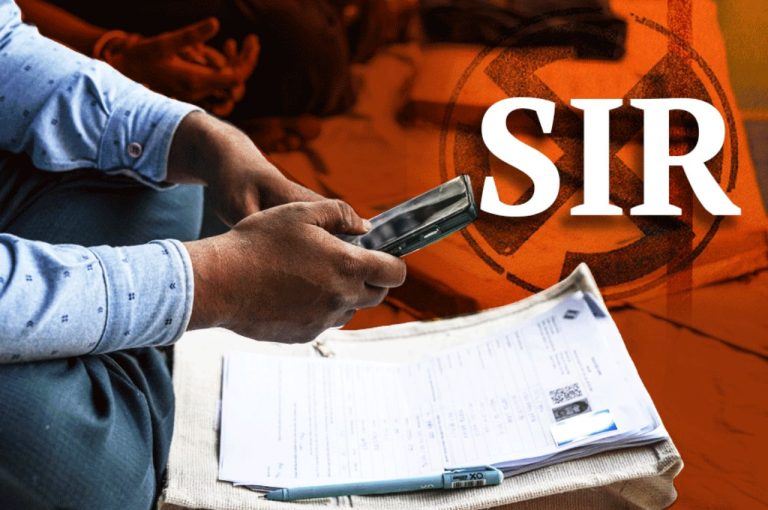
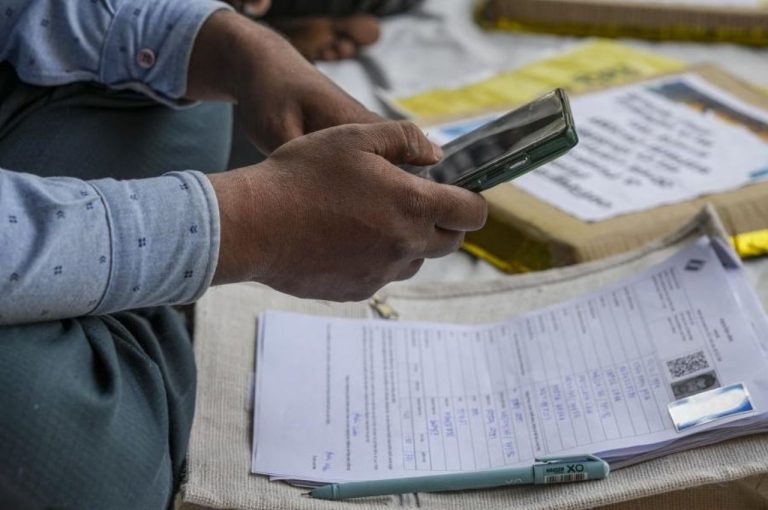
The BLO Deaths in Bengal SIR 2025 controversy has become a defining moment in India’s democratic process. Reports of Booth Level Officers (BLOs) dying by suicide while performing duties linked to the Special Intensive Revision (SIR) of electoral rolls have shocked Bengal. Families blame excessive workload, unrealistic deadlines, and lack of institutional support. The tragedies have intensified political tensions between the Trinamool Congress (TMC) and the Election Commission (EC), with both sides trading accusations over responsibility.
2. The Special Intensive Revision (SIR): What It Means
The SIR is a voter roll update exercise mandated by the EC.
BLOs must verify voter identities against the 2002 electoral roll benchmark.
Families without proper linkage risk exclusion.
Aadhaar is accepted only as identity proof, not citizenship proof.
Normally, the process takes 18–24 months.
In 2025, the EC compressed it into two months, sparking chaos.
This hurried timeline has become the root of the crisis, with BLOs collapsing under workload pressure and communities fearing disenfranchisement.
3. The Human Cost: BLO Deaths Reported
Reports confirm:
BLOs in Jalpaiguri, Nadia, Murshidabad, and Purba Bardhaman have died while on duty.
Families blamed stress, exhaustion, and unrealistic deadlines.
TMC claimed at least 40 deaths statewide were linked to SIR duties.
BLOs described overwhelming workloads and fear of punitive action.
This reflects the tragic human dimension of governance failures.
4. BLO Deaths in Bengal SIR 2025: Governance Challenges Exposed
The incident highlights systemic governance failures:
Unrealistic deadlines imposed by EC.
Weak communication with BLOs and communities.
Poor technology infrastructure in rural areas.
Delayed response to BLO grievances and deaths.
Without reforms, electoral integrity itself is at risk.
5. Political Fallout
The controversy has political consequences:
TMC accused EC of burdening BLOs with “inhumane workload.”
TMC leaders alleged EC had “blood on its hands.”
BJP defended EC, claiming stress stemmed from state government mismanagement.
Civil society debated governance failures in electoral processes.
The issue has become a flashpoint ahead of the 2026 Assembly elections.
6. Observers’ Warning
Special observers flagged:
BLOs were keeping forms without uploading them on the BLO app.
Dead, absent, shifted, and duplicate voters were not being marked.
Opposition parties alleged ruling party cadres pressured BLOs to hand over forms.
Around 7.03 crore forms digitised out of 7.65 crore distributed, but progress was slower than expected.
Their warning reflects the systemic risks of rushed electoral exercises.
7. Historical Context: Electoral Roll Controversies
India has witnessed similar controversies:
Assam’s NRC excluded millions due to documentation gaps.
Past revisions saw BLOs complain of underpayment and overwork.
Bengal’s SIR echoes these controversies, highlighting systemic flaws.
8. Broader Implications for Democracy
The incident raises fundamental questions:
Can elections be credible if BLOs collapse under workload?
Will voter rolls be accurate if frontline staff are demoralised?
Does democracy risk losing legitimacy if electoral processes are rushed?
9. Recommendations for Reform
Experts suggest:
Staggered timelines for voter roll revision.
Hiring additional staff to support BLOs.
Improved technology for faster digitisation.
Compensation packages for BLO families.
Policy reform to recognise BLOs as permanent electoral staff.
10. Comparative Lessons from Other States
Other states have faced similar controversies:
Assam’s NRC excluded millions despite decades of residence.
Bengal’s case reflects a national challenge of balancing electoral integrity with human dignity.
11. Human Stories: Families in Distress
Families of BLOs describe:
Sudden collapses from exhaustion.
Panic attacks and high blood pressure.
Anxiety about punitive action if targets are missed.
These stories highlight the human cost of governance failures.
12. Law Enforcement and Accountability
Observers directed district magistrates to ensure:
BLOs are not forced to visit homes more than thrice.
No false information is uploaded on the BLO app.
Accountability measures are enforced to prevent manipulation.
This reflects the importance of institutional safeguards in democracy.
13. Conclusion: A Test of Governance and Democracy
The BLO Deaths in Bengal SIR 2025 are more than bureaucratic tragedies — they are a test of governance, democracy, and human dignity. Unless systemic reforms are undertaken, BLOs will remain vulnerable, and public trust in institutions will erode.
The controversy underscores the urgency of balancing electoral integrity with compassion for frontline workers.
🔗 Government External Links
For further reading and official updates, here are relevant government sources:
The Fourth BLO Death Fuels TMC–EC Dispute in Bengal SIR 2025 controversy has become a defining moment in India’s democratic process. On November 28, 2025, a BLO in Murshidabad’s Khargram collapsed and died of cardiac arrest while performing duties linked to the Special Intensive Revision (SIR) of electoral rolls. His family blamed the excessive workload imposed by the Election Commission of India (ECI). The tragedy has intensified political tensions between the Trinamool Congress (TMC) and the EC, with both sides trading accusations over responsibility.
2. The Special Intensive Revision (SIR): What It Means
The SIR is a voter roll update exercise mandated by the ECI.
BLOs must verify voter identities against the 2002 electoral roll benchmark.
Families without proper linkage risk exclusion.
Aadhaar is accepted only as identity proof, not citizenship proof.
Normally, the process takes 18–24 months.
In 2025, the EC compressed it into two months, sparking chaos.
This hurried timeline has become the root of the crisis, with BLOs collapsing under workload pressure and communities fearing disenfranchisement.
3. The Human Cost: Four Deaths in Bengal
Reports confirm:
One BLO died in Murshidabad’s Khargram of cardiac arrest.
Earlier deaths were reported in Purba Bardhaman, Nadia, and Jalpaiguri.
Families blamed stress, exhaustion, and unrealistic deadlines.
TMC claimed at least 40 deaths statewide were linked to SIR duties.
This reflects the tragic human dimension of governance failures.
Bengal’s case reflects a national challenge of balancing electoral integrity with human dignity.
11. Human Stories: Families in Distress
Families of BLOs describe:
Sudden collapses from exhaustion.
Panic attacks and high blood pressure.
Anxiety about punitive action if targets are missed.
These stories highlight the human cost of governance failures.
12. Law Enforcement and Accountability
Observers directed district magistrates to ensure:
BLOs are not forced to visit homes more than thrice.
No false information is uploaded on the BLO app.
Accountability measures are enforced to prevent manipulation.
This reflects the importance of institutional safeguards in democracy.
13. Conclusion: A Test of Governance and Democracy
The Fourth BLO Death Fuels TMC–EC Dispute in Bengal SIR 2025 is more than a bureaucratic exercise — it is a test of governance, democracy, and human dignity. Unless systemic reforms are undertaken, BLOs will remain vulnerable, and public trust in institutions will erode.
The controversy underscores the urgency of balancing electoral integrity with compassion for frontline workers.
🔗 Government External Links
For further reading and official updates, here are relevant government sources:
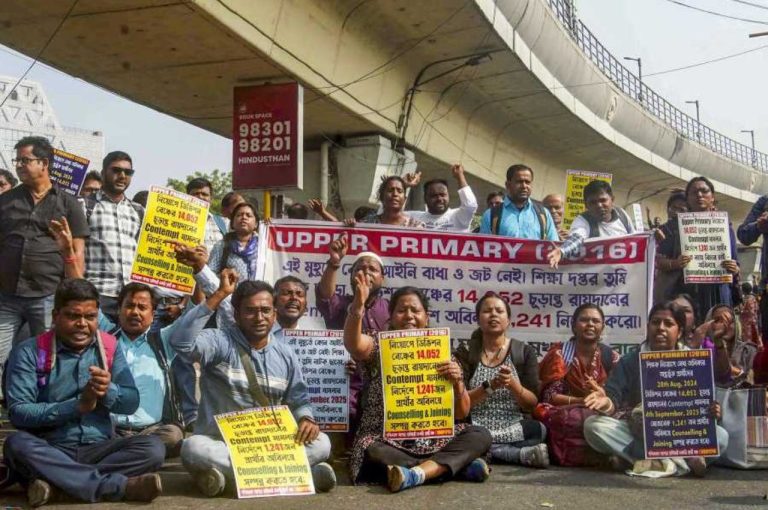
The Calcutta HC Directs SSC on 2016 Teacher List 2025 controversy has become a defining moment in Bengal’s education governance. On November 28, 2025, the Calcutta High Court ordered the School Service Commission (SSC) to furnish details of teacher appointments made after the expiry of the 2016 selection panel. The directive came during hearings on petitions challenging the 2025 recruitment rules for government‑run and aided schools.
2. Background: The 2016 Selection Panel
The SSC conducted the School Level Selection Test (SLST) in 2016.
The panel for classes 11–12 expired in November 2018.
The panel for classes 9–10 expired in March 2019.
Petitioners alleged appointments continued even after expiry.
This raised questions about legality and fairness in recruitment.
3. Calcutta HC Directs SSC: The 2025 Recruitment Rules
The new rules introduced provisions such as:
Granting 10 marks for prior teaching experience.
Revised eligibility criteria for candidates.
Modified transparency mechanisms.
Petitioners argued these rules disadvantage newcomers and violate Article 14 of the Constitution (equal opportunity).
4. Petitioners’ Concerns
Lawyers representing petitioners emphasized:
SSC failed to submit appointment lists despite repeated demands.
Fresh candidates are unfairly penalized by experience marks.
Transparency in recruitment remains questionable.
Their arguments highlight constitutional and governance challenges.
5. Court’s Directive
Justice Amrita Sinha directed SSC to:
Produce the list of appointments made after panel expiry.
Ensure transparency in ongoing recruitment.
Respond to allegations of irregularities.
The next hearing is scheduled for December 10, 2025.
6. Governance Challenges Exposed
The case highlights systemic governance failures:
Delayed response by SSC to court demands.
Weak transparency mechanisms in recruitment.
Political interference alleged in teacher appointments.
Public mistrust in education governance.
7. Political Fallout
The controversy has political consequences:
Opposition parties accused SSC of corruption.
Ruling party defended SSC, citing reforms.
Civil society debated governance failures in education.
The issue has become a flashpoint ahead of the 2026 Assembly elections.
8. Historical Context: Teacher Recruitment in Bengal
Bengal has witnessed similar controversies:
Past SSC recruitments faced allegations of nepotism.
Court interventions have been frequent.
The 2016 panel expiry echoes earlier disputes.
9. Broader Implications for Democracy
The incident raises fundamental questions:
Can education thrive if recruitment lacks transparency?
Will constitutional principles be upheld in governance?
Does democracy risk losing legitimacy if institutions fail?
10. Recommendations for Reform
Experts suggest:
Transparent audits of SSC recruitment.
Legal safeguards against arbitrary rule changes.
Community participation in monitoring education governance.
Policy reforms to balance experience with equal opportunity.
11. Comparative Lessons from Other States
Other states have faced similar controversies:
Uttar Pradesh teacher recruitments challenged in courts.
Bihar faced allegations of irregularities in appointments.
Bengal’s case reflects a national struggle for education integrity.
12. Human Stories: Teachers and Aspirants
Aspirants described:
Anxiety about fairness in recruitment.
Fear of exclusion due to lack of experience.
Hope for judicial intervention to restore trust.
These stories highlight the human dimension of governance failures.
13. Law Enforcement and Accountability
The court emphasized:
SSC must comply with judicial directives.
Transparency is non‑negotiable in recruitment.
Accountability measures must be enforced.
This reflects the importance of institutional safeguards in democracy.
14. Conclusion: A Test of Governance and Education Integrity
The Calcutta HC Directs SSC on 2016 Teacher List 2025 is more than a recruitment dispute — it is a test of governance, democracy, and education integrity. Unless systemic reforms are undertaken, aspirants will remain vulnerable, and public trust in institutions will erode.
The controversy underscores the urgency of balancing education integrity with governance accountability.
🔗 Government External Links
For further reading and official updates, here are relevant government sources:
The Sonarpur Student Suicide After AI‑Generated Nude Images 2025 has become a defining moment in India’s struggle with digital safety, cybercrime, and governance. On November 28, 2025, a Class 10 student in Sonarpur, South 24 Parganas district, was found dead after AI‑generated nude images of her were circulated online. Her family alleged harassment by a local man who misused her photographs to create manipulated content. The incident has sparked outrage, grief, and urgent calls for stronger cyber safety laws.
2. The Rise of AI‑Generated Abuse
Artificial Intelligence has enabled powerful tools for image generation.
While AI can be used for art, education, and innovation, it is increasingly misused for deepfake pornography.
Victims often face social humiliation, bullying, and harassment.
Teenagers and women are disproportionately targeted.
The Sonarpur case highlights the dark side of AI technology when left unregulated.
3. Sonarpur Student Suicide: The Human Cost
The victim’s family alleged:
A married man from the locality collected her photos.
He used AI tools to generate nude images.
These were circulated online, causing humiliation and distress.
Family members of the accused allegedly participated in harassment.
The tragedy underscores the psychological toll of online abuse.
4. Governance Challenges
The incident exposes systemic governance failures:
Weak cybercrime enforcement at local levels.
Delayed response to complaints of harassment.
Lack of awareness about AI misuse among police and communities.
Insufficient safeguards for minors online.
5. Political Fallout
The case has political consequences:
Opposition parties accused authorities of negligence.
Civil society groups demanded stricter cyber laws.
Women’s rights organizations called for accountability.
The issue has become a flashpoint in Bengal’s governance debates.
6. Broader Implications for Democracy
The incident raises fundamental questions:
Can democracy thrive if citizens are unsafe online?
Will AI misuse undermine trust in technology?
Does governance risk losing legitimacy if cybercrime victims remain unprotected?
7. Recommendations for Reform
Experts suggest:
Stronger cybercrime units in every district.
Awareness campaigns on AI misuse.
School‑level digital safety education.
Legal reforms to criminalize deepfake pornography explicitly.
Community support systems for victims of online abuse.
8. Comparative Lessons from Other Countries
Other nations have faced similar challenges:
The UK criminalized deepfake pornography in 2023.
South Korea introduced strict laws against AI‑generated sexual abuse.
India’s case reflects a global struggle for digital safety.
9. Human Stories: Families in Distress
Families of victims describe:
Shock at sudden tragedies.
Fear of social stigma.
Anxiety about justice and accountability.
These stories highlight the human dimension of cybercrime.
10. Law Enforcement and Accountability
Police confirmed:
A complaint was filed against the accused.
Digital evidence is being examined.
Family members demanded strict legal action.
This reflects the importance of institutional safeguards in democracy.
11. Historical Context: Cybercrime in India
India has witnessed similar controversies:
Deepfake videos of celebrities circulated online.
Women journalists targeted with AI‑generated abuse.
Students harassed through manipulated images.
The Sonarpur case echoes these controversies, highlighting systemic flaws.
12. Broader Social Impact
The incident has sparked:
Fear among parents about children’s online safety.
Calls for stricter monitoring of social media platforms.
Debates about balancing free expression with regulation.
13. Conclusion: A Test of Governance and Humanity
The Sonarpur Student Suicide After AI‑Generated Nude Images 2025 is more than a tragic incident — it is a test of governance, democracy, and humanity. Unless systemic reforms are undertaken, victims will remain vulnerable, and public trust in institutions will erode.
The tragedy underscores the urgency of balancing technological innovation with compassion, accountability, and digital safety.
🔗 Government External Links
For further reading and official updates, here are relevant government sources:
Ministry of Home Affairs – Cyber & Information Security Division:https://mha.gov.in
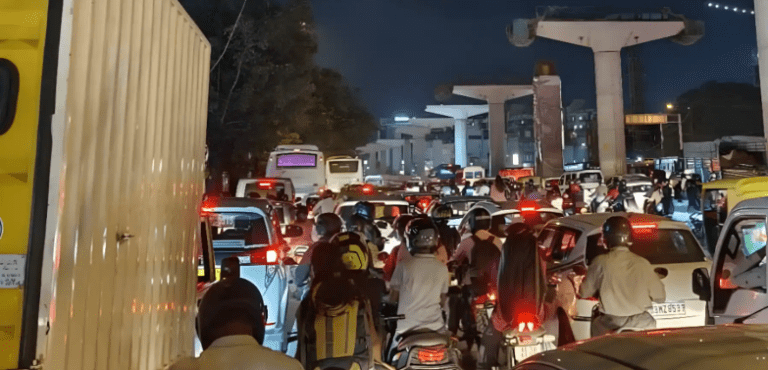
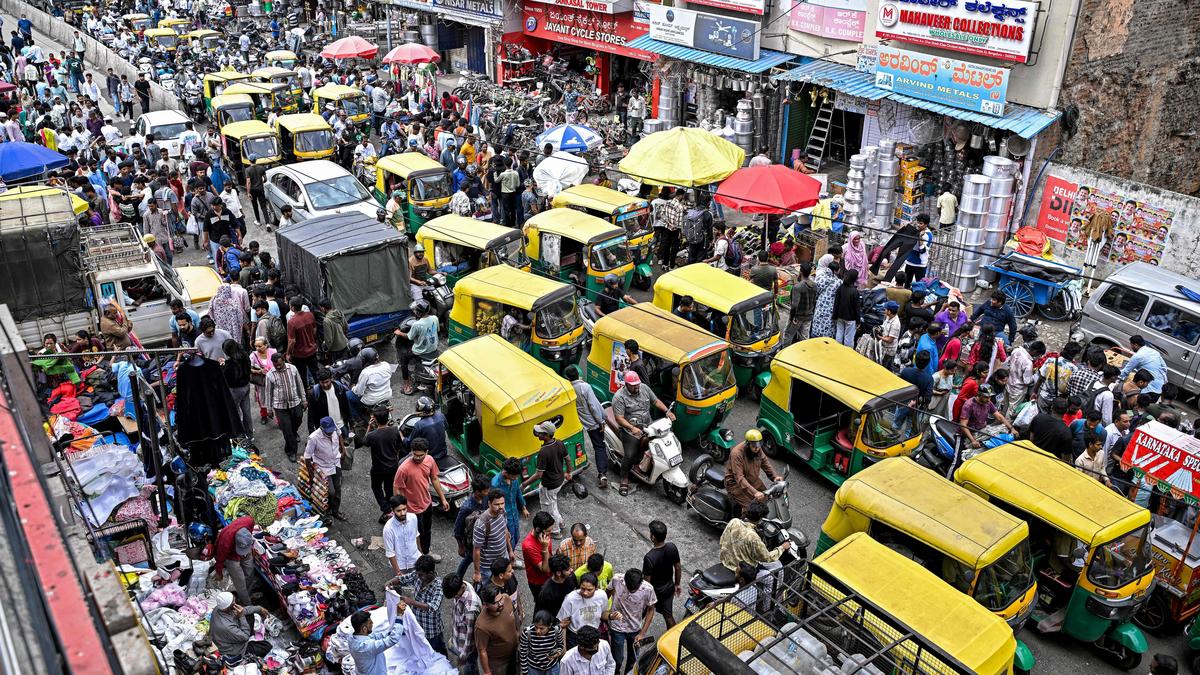
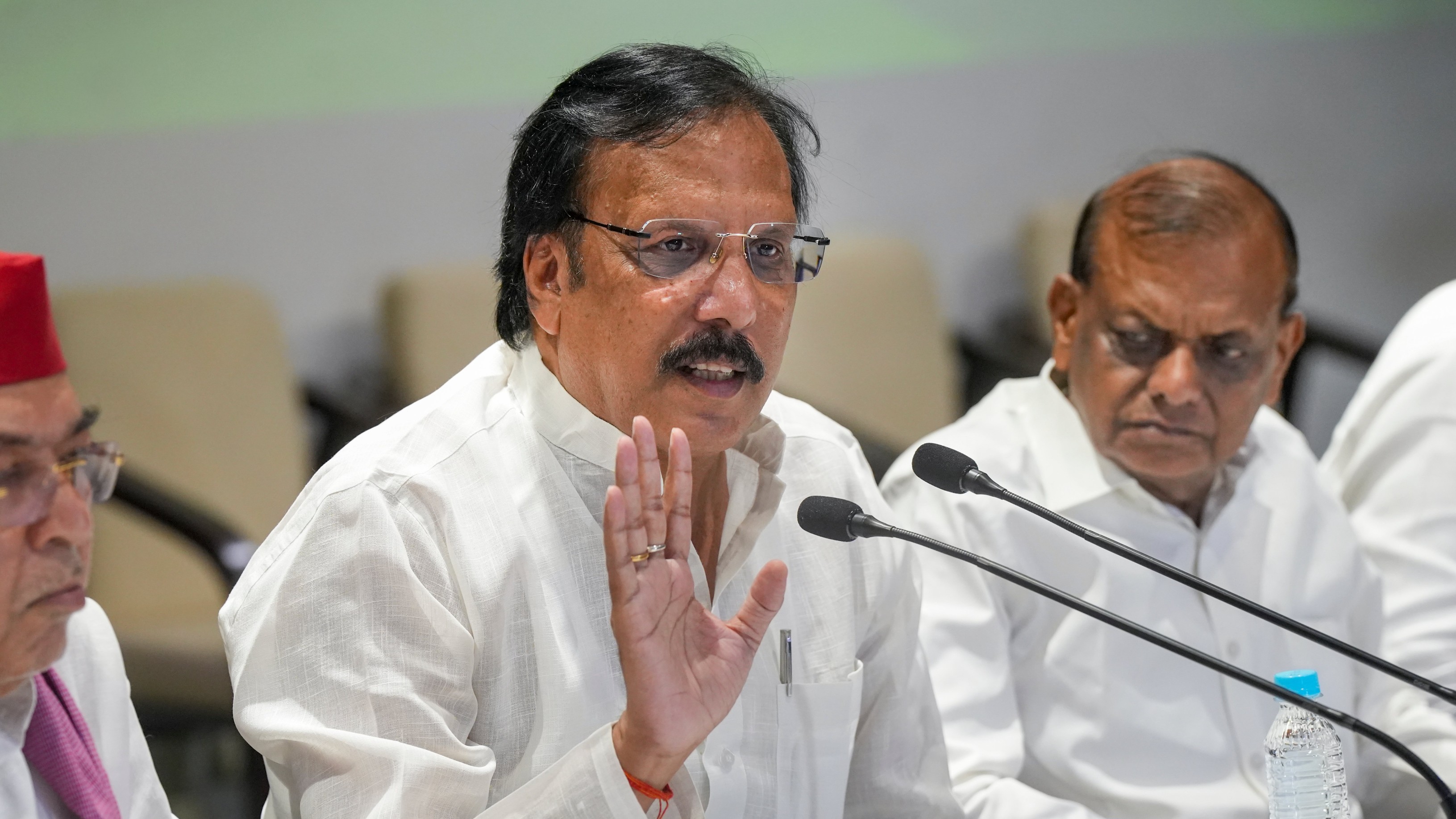
A Member of Parliament (MP) from Uttar Pradesh faced an unexpected standstill in Bengaluru’s notorious traffic, triggering a wave of reactions from residents who described his frustration as a daily reality for millions in the city. The MP, who was visiting Bengaluru for a private event, reportedly remained stuck at a single junction for nearly an hour before reaching his destination. The experience prompted him to publicly criticise the city’s traffic management, highlighting what he described as “acute mismanagement” and “complete lack of flow discipline.” His comments gained rapid traction online, leading to a larger debate about urban mobility, policing, infrastructure, and the lived experience of Bengaluru’s residents.
The incident also reignited long-standing debates among urban planners who argue that Bengaluru’s rapid vertical expansion has not been matched by proportional improvements in transport planning. They note that while the city has seen a surge in high-rise apartments, tech parks, and commercial complexes, the supporting road network has remained largely unchanged for years. This mismatch, they say, creates inevitable pressure points during peak hours, resulting in long delays such as the one experienced by the MP. The episode, in their view, is a reminder that infrastructure growth must keep pace with urbanisation.
Commuters who regularly use the Outer Ring Road and major junctions said the MP’s frustration mirrors their daily struggle. Many shared stories of missing medical appointments, interviews, and flights due to unpredictable congestion. Some added that even though the police deploy additional personnel during critical hours, the sheer number of vehicles on the road makes smooth movement difficult. For citizens, the MP’s viral post served less as a shock and more as validation of a problem they have been raising for years.
Traffic experts pointed out that Bengaluru’s congestion is worsened by the high dependency on private vehicles. With public transport options still insufficient for the city’s size, many residents resort to cars and two-wheelers for even short commutes. Experts stressed the need for better last-mile connectivity, faster metro expansion, and reliable bus corridors. They argue that without such measures, even well-intentioned traffic management efforts can only provide temporary relief, not a lasting solution.
Meanwhile, the MP’s remarks triggered political reactions within Karnataka as well. Some leaders defended the city’s growth trajectory and highlighted ongoing infrastructure projects such as metro extensions and elevated corridors. Others said the MP’s criticism should be seen as constructive feedback that underscores the urgency of speeding up pending works. They noted that although Bengaluru contributes significantly to the country’s economy, its internal mobility challenges often go unaddressed due to bureaucratic delays and funding gaps.
The Bengaluru Traffic Police later issued a brief statement acknowledging the MP’s inconvenience and reiterating their commitment to improving traffic flow. Officials said they are working on synchronising signals across more corridors, introducing real-time congestion alerts, and deploying technology-based monitoring tools. While these steps may ease movement in certain areas, officers admitted that long-term improvement depends heavily on infrastructure upgrades being completed on schedule.
As the discussion grew online, several citizens called for a joint approach involving the state government, BBMP, BTP, and metro authorities. They emphasised that only coordinated planning can ease the city’s chronic gridlocks. For many Bengalureans, the MP’s experience was not just an isolated event but a snapshot of the everyday challenges faced by millions across the city. The hope, they said, is that national attention on the issue might finally accelerate the long-pending reforms the city urgently needs.
Background
The MP was travelling from Kempegowda International Airport to the central part of the city when his vehicle encountered severe congestion near Hebbal, one of the city’s busiest traffic junctions. According to his team, the convoy moved only a few meters across several minutes, leaving the MP visibly frustrated. Upon arriving late at his scheduled programme, he voiced criticism against the Bengaluru Traffic Police, saying the situation was “unacceptable for a leading global technology hub.” His remarks, shared widely on social media, quickly struck a chord with citizens who expressed both sympathy and irony, noting that the MP had experienced only a small portion of what they endure on a daily basis.
Public Reaction
Residents across Bengaluru reacted swiftly, with many posting comments that said the MP had finally lived through the city’s most defining challenge. Several wrote that they spend much longer durations on short commutes and questioned whether the MP’s complaint would now push authorities to act. The incident sparked spirited discussions, with users sharing personal experiences of missing flights, arriving late for medical appointments, and feeling emotionally drained by the city’s gridlock. For many, the MP’s remarks were an opportunity to draw attention to systemic issues such as poor planning, lack of enforcement, uncontrolled construction, and inadequate public transport integration.
Traffic Police Response
Officials from the Bengaluru Traffic Police acknowledged congestion in the city but attributed it to rapid urban growth, infrastructure constraints, and high vehicular density. They maintained that personnel are deployed strategically across junctions and that efforts are underway to manage flow more efficiently through signal upgrades, lane discipline drives, and coordination with civic agencies. They also pointed out that construction activity, particularly ongoing flyover and metro works, has contributed to bottlenecks in northern and eastern zones. Senior officers assured that the city continues to refine its traffic management strategy, but admitted that capacity expansion had long been outpaced by population and vehicle growth.
Expert Commentary
Urban mobility experts observed that the MP’s experience reflects broader structural issues affecting Bengaluru’s transport ecosystem. Analysts noted that the city’s infrastructure has not kept pace with its economic—especially tech-sector—expansion. Key arterial roads have limited lane width, inconsistent footpath availability, and no dedicated bus lanes. Experts added that flyover-centric development, while helping at certain points, often redistributes congestion rather than resolving underlying volume problems. They argued that the long-term solution lies in multimodal systems, including suburban rail, integrated BMTC corridors, and feeder services to metro stations. Some stressed that political will and sustained funding are essential to deliver long-term improvements.
The Scale of Bengaluru’s Traffic Problem
Bengaluru consistently ranks among the world’s most congested cities, with average commute times steadily rising over the past decade. Reports indicate that peak-hour speeds on major corridors have dropped dramatically, making even short distances feel arduous. The problem is magnified by an ever-increasing number of private vehicles, many owned by individuals who consider public transport unreliable or poorly connected. The city’s geography — including lakes, narrow roads, and dense localities — combined with limited scope for expansion, creates a natural bottleneck. As a result, even small disturbances such as minor breakdowns or signal failures can cause cascading delays affecting large swathes of commuters.
Linking Infrastructure Gaps to Commuter Stress
Psychologists and workplace counsellors have previously noted the toll that long commutes impose on Bengaluru’s residents. Prolonged hours spent in traffic contribute to stress, fatigue, and reduced productivity. Employees working in technology parks often leave early in the morning to avoid peak congestion and return home late, sacrificing personal and family time. The MP’s hour-long delay served as a reminder of the everyday emotional and physical strain associated with navigating the city. Public sentiment suggests that residents hope increased visibility and political pressure will prompt authorities to prioritise long-discussed solutions such as road widening, metro connectivity, and traffic signal optimisation.
Government Response and Policy Implications
State government officials emphasised that several projects are underway to ease congestion, including ongoing metro extensions, elevated corridor proposals, and junction redesign initiatives. Ministers responded to the MP’s comments by acknowledging the frustration while urging patience during large-scale infrastructure work. They pointed out that transformative changes require time and significant investment, especially in a city with complex urban dynamics. However, critics argue that project delays, insufficient coordination across departments, and lack of long-term vision have contributed to the problem. They call for disciplined implementation of transport master plans and more transparency regarding project timelines.
Role of Technology in Future Traffic Management
Bengaluru, known globally as a technology hub, has initiated the use of intelligent transport systems for smoother traffic flow. These include adaptive signal control, digital surveillance, automated enforcement, and GPS-based monitoring of road conditions. Tech firms have collaborated with the government to pilot data-driven solutions capable of predicting congestion and guiding commuters through alternate routes. Experts, however, caution that technology alone cannot solve structural deficiencies like narrow roads and inadequate public transport. They argue that it must be combined with policy reforms, enforcement discipline, and behavioural change. Citizens also point out that consistent and fair enforcement is necessary to discourage violations that worsen congestion.
Conclusion
The MP’s criticism may have begun as a personal expression of frustration, but it quickly evolved into a much larger reflection of Bengaluru’s long-standing mobility crisis. While the city remains a powerhouse of innovation and economic growth, its infrastructure struggles to support its rapid expansion. Citizens’ reactions underline a vast reservoir of daily hardship, impatience, and hope for meaningful reform. Whether the MP’s experience sparks serious political engagement or becomes another momentary flashpoint remains to be seen. Yet, the incident has once again placed Bengaluru’s chronic traffic problem under the spotlight, reminding all stakeholders of the urgent need for coordinated, sustainable, and long-term solutions.
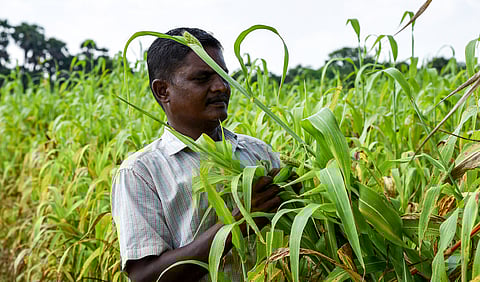
The Government of Karnataka has issued a directive directing the Karnataka State Co‑operative Marketing Federation (KSCMF) to procure maize and supply it to distilleries across the state. The move marks a significant shift in agricultural-industrial policy, aiming to regulate raw-material supply, stabilise maize prices, and ensure secure sourcing for distilleries. Officials described the order as part of a broader effort to balance farmers’ interests, agro-industry needs, and state regulatory oversight.
The order mandates that KSCMF undertake bulk purchase of maize from farmers at government-declared procurement rates, aggregate the produce, and then channel it to licensed distilleries under controlled supply arrangements. The government has asserted that this will help provide farmers with assured market access and price stability while preventing fluctuations that often result from open-market volatility. At the same time, distilleries will benefit from a steady, documented supply chain, reducing dependence on speculative procurement and grey-market sourcing.
Officials said the directive applies to all major maize-growing zones in Karnataka, and that storage, transport, and distribution logistics will be coordinated centrally. Procurement centres will be set up — some in existing agricultural hubs, others in new locations — and KSCMF will be responsible for quality checks, appropriate storage to prevent spoilage, and timely delivery to distillery units. The government expects this arrangement to bring order and transparency to the maize-to-spirits supply chain, benefiting farmers, industries, and regulators alike.
WHY THE DECISION: Agricultural Realities, Price Volatility, and Industry Needs
Maize cultivation in Karnataka has increasingly become significant, with many farmers shifting from traditional crops to maize driven by demand from multiple sectors: feed industry, food processing, and now distilleries. However, maize prices have often seen steep fluctuations, influenced by seasonal variation, transport constraints, and speculative trading — leaving farmers vulnerable and industries scrambling for reliable supply.
With rising demand from distilleries, some farmers reportedly received collapse-level prices last season due to oversupply and market glut. On the industry side, erratic procurement, inflated raw-material costs, and uncertain supplies hampered operations. The new order aims to address both sides of the problem: giving maize growers assured procurement at stable rates and ensuring distilleries access to vetted maize without under-the-table purchases or risk of supply disruption.
Government-backed procurement also promises to improve transparency. Under the order, every batch of maize must be recorded, quality-tested, and transported through documented channels. This will reduce black-market activity, hoarding, and sub-standard supplies — problems that have often plagued loosely regulated supply chains. For farmers, it provides certainty; for distilleries, it enables planning and compliance with licensing requirements and regulation.
Moreover, the directive aligns with broader state agricultural and agro-industrial policies: promoting crop diversification, supporting farmers’ income security, and integrating agriculture with value-added industries. By leveraging KSCMF’s cooperative structure and administrative reach, the government is betting on institutional procurement to strengthen the supply-demand framework and prevent exploitation of both farmers and industries.
HOW THE PROCUREMENT & SUPPLY SYSTEM WILL WORK
Under the new arrangement, KSCMF will establish procurement centres across maize-producing districts. Farmers willing to sell under the scheme can bring their harvest to designated centres, where maize will be weighed, quality-checked, and procured at a price fixed by the government’s procurement policy. Payment is to be made promptly to the farmers — within days of submission — to avoid financial distress or delay.
After procurement, maize consignments will be transported to central aggregation hubs managed by KSCMF. From there, batches earmarked for distilleries will be further tested for quality, moisture content, and storage suitability, to ensure that raw-material standards are met. The government has directed that all maize supplied to distilleries must meet prescribed quality norms; any sub-standard or damaged stock will be rejected or re-processed.
Distilleries will be required to place orders through official channels, indicating their requirement volumes and expected delivery schedule. KSCMF will then dispatch maize through approved transporters, maintaining a full paper trail from farm to industry. The government has also mandated audit and compliance checks to prevent diversion or misuse, and to ensure that the supply chain remains transparent and legally compliant.
The plan includes logistical support: cold-storage or moisture-controlled storage where required, transport subsidies or reimbursements for long-distance consignments, and periodic quality audits. KSCMF officials have said they are preparing infrastructure upgrades — warehousing, sorting machinery, and transport fleets — to handle the increased procurement load efficiently.
EXPECTED BENEFITS: Farmers, Industries, and Rural Economy
For maize growers in Karnataka, this policy promises a stable and assured market. With procurement centres available and guaranteed payment, farmers can avoid distress sales triggered by market price collapses. This could encourage more farmers to take up maize cultivation, enabling crop diversification and potentially enhancing rural incomes.
Distilleries, too, stand to benefit from predictable raw-material supply. Steady supplies at controlled costs enable better production planning, compliance with licensing conditions, and reduction of procurement-related uncertainties. This stability could translate into improved capacity utilization, investment in expansion, and long-term viability — potentially boosting employment and economic activity in rural and semi-urban areas.
The broader rural economy may also gain. With assured procurement, ancillary services — transport, storage, logistics — will see increased demand. Rural youth may find employment in warehousing, transport, quality testing, and supply-chain operations. The multiplier effect could support local economies, especially in districts where agriculture and agro-industry are key contributors to livelihoods.
The move could also help reduce unregulated trading, hoarding, and price manipulation. With government-backed procurement and documentation, chances for illegal diversion to black markets diminish. This would lead to a fairer price realisation for farmers and a regulated supply for industries — reducing exploitation across the supply chain.
CONCERNS, CHALLENGES & POINTS TO WATCH
Despite the promise, several challenges lie ahead. First, procurement at a government-declared price must be attractive enough to encourage farmer participation; if prices are too low, farmers may avoid the scheme, undermining its efficacy. The government must calibrate procurement prices carefully, considering production costs, market trends, and farmer incentives.
Quality control is another challenge. Distilleries demand maize of specific standards — moisture content, purity, free from mildew or contamination. Ensuring all procured maize meets these standards will require robust quality-testing infrastructure, trained staff, and regular audits. Any lapse could result in supply disruption or rejection of consignments.
Logistics and storage infrastructure pose practical constraints. Rural procurement centres might be far from aggregation hubs or distilleries; transporting maize safely over long distances, especially during monsoon or humid conditions, could lead to spoilage or losses if not managed properly. The government and KSCMF will need to ensure proper storage, transport conditions, and timely dispatch to avoid wastage.
Another concern is the risk of diversion of maize to other uses or black-market sale, if oversight is weak. Ensuring transparency, documentation and strict audit trails will be crucial. The government must also guard against corruption, misuse of supply privileges, or collusion between middlemen, farmers and buyers.
Finally, this policy could affect other maize consumers — such as feed-mills, poultry, food-processing industries, and small buyers. If distilleries get preferential, regulated supply via KSCMF, the demand–supply balance for other sectors may shift, potentially affecting prices or availability for them. The government must monitor impact across the sector to ensure equity.
STAKEHOLDER REACTIONS: Farmers, Industry, and Civil Society
Initial reactions from farmer organisations have been cautiously optimistic. Some maize growers, especially those who faced losses in past years due to price crashes, said they would consider supplying under the new scheme if procurement prices are fair and payments timely. Others said they would wait to see how the first procurement round unfolds before committing larger harvest quantities.
Distillery operators welcomed the move, calling it a “step in the right direction.” Many said that unpredictable raw-material sourcing has been a major concern affecting their operations. A regulated supply chain, they believe, would improve their planning, reduce cost uncertainty, and promote expansion. Some small-scale distillers, however, expressed concern that supply quotas or prioritization might favour larger establishments, disadvantaging smaller operators.
Agricultural economists warned that the success of the policy depends on effective implementation. They urged the government and KSCMF to ensure transparency, timely payments, and minimise bureaucratic delays. They also suggested the inclusion of safeguards for small and marginal farmers, ensuring they are not crowded out by large producers.
Environmentalists and civil-society actors raised caution on potential unintended consequences. Increased maize cultivation incentivized by assured procurement could lead to monoculture, overuse of water, and stress on soil health. They called for promoting sustainable agricultural practices, crop rotation, and ecological balance even as maize production scales up.
IMPLEMENTATION TIMELINE AND GOVERNMENT MONITORING
According to official sources, the procurement-supply scheme will be rolled out in phases. In the first three months, pilot procurement centres will be established in a few high-production districts, and supply to select distilleries will begin. The performance of procurement, quality checks, payment disbursal, and logistics will be closely monitored.
Based on feedback and initial performance, the scheme may be expanded statewide. A special monitoring committee, comprising representatives from agriculture, cooperatives, industry, and civil society, is expected to oversee implementation, audit processes, and redress grievances.
The government has promised transparency — publishing fortnightly reports on quantities procured, prices paid, consignment dispatched, and distillery allotments. Citizens and stakeholders will be allowed to flag irregularities; a helpline and online grievance-redressal portal are expected to be set up under KSCMF for the purpose.
Corruption watchdogs and agricultural forums have welcomed these measures, but emphasised the need for independent audits, especially because of past experiences with cooperative procurement systems suffering from mismanagement or political interference.
WIDER IMPLICATIONS: Agriculture, Industry, and Policy Lessons
If successful, the maize procurement-supply initiative could set a precedent for future collaborations between agriculture and industry in Karnataka. It could encourage similar institutional procurement mechanisms for other staple crops or industrial raw materials — bringing stability, transparency, and protection to farmers and industries alike.
The model may also influence policy on crop planning, input subsidies, infrastructure investment (storage, transport), and rural employment. By integrating agriculture with value-added industry, the state could promote agro-industrial clusters, decentralized processing, and rural economic growth.
Moreover, by ensuring regulated supply, the government may reduce dependence on external imports or grey-market sourcing for distilleries — which can have benefits for state tax revenues, regulatory compliance, and monitoring of liquor production chains. This could improve accountability and reduce illicit trade.
For farmers, the initiative may encourage renewed interest in maize cultivation — especially at a time when many traditional crops face market uncertainty or climate-related stress. Diversifying crops and linking them to assured demand could stabilise rural incomes and reduce migration pressures.
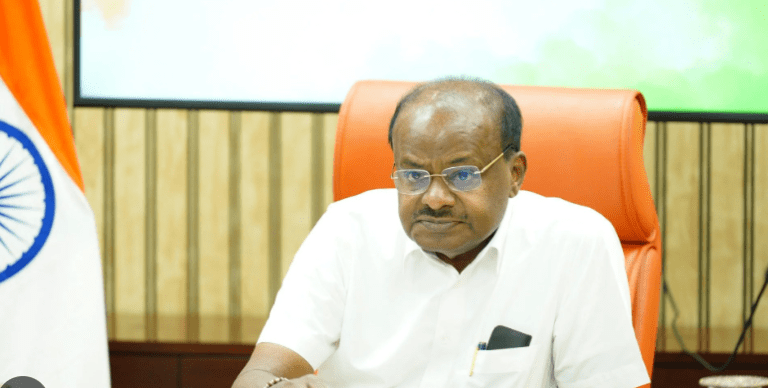
The announcement by former Chief Minister H.D. Kumaraswamy regarding a ₹4,000 crore investment to revive the Visvesvaraya Iron and Steel Plant in Bhadravati has sparked renewed interest in the future of one of Karnataka’s oldest industrial establishments. The plant, which has been struggling for years due to financial stress and low productivity, has long been a symbol of the State’s industrial legacy. Kumaraswamy’s promise has not only raised hopes among thousands of workers and their families but has also brought political focus back to the need for revitalising ageing public-sector units in Karnataka.
Background
Established in 1923, VISP has been a pioneering institution in the country’s steel production sector. Over the decades, it has transitioned from a key industrial hub to a unit grappling with operational constraints, technological obsolescence, and lowered output. Multiple governments have attempted revival efforts, but none have led to long-term sustainability. The unit’s incorporation into the Steel Authority of India was expected to turn its fortunes, yet persistent capital shortages and outdated infrastructure left the plant struggling. The latest promise of investment once again highlights the long-standing need for a complete overhaul of VISP’s machinery and systems.
The prospect of a large-scale revival has also shifted attention to the employment potential attached to VISP’s restart. Local trade unions have repeatedly highlighted that thousands of skilled workers who once depended on the plant were forced into unstable, low-paying jobs after operations slowed. HDK’s assurance of renewed recruitment, skill-training programmes and phased re-absorption of experienced labourers has been received as a sign of long-awaited stability. However, some workers’ groups remain cautious, emphasising that past revival proposals often stalled midway due to bureaucratic hurdles, inconsistent policy direction and financial constraints that were never fully addressed by successive administrations.
In addition to employment prospects, the proposal has reopened discussions on the need for modernising VISP with environment-friendly technologies. Experts note that while the plant has historical significance, its machinery and operational systems require an overhaul to meet contemporary sustainability benchmarks. HDK has indicated that green-steel manufacturing, efficient waste-processing units, and pollution-control upgrades could form part of the new investment plan. Environmental advocates, while welcoming the signals, insist that implementation must be monitored closely, as outdated industrial zones across Karnataka have struggled to balance economic revival with ecological responsibility, resulting in recurring legal and regulatory challenges.
The ₹4,000-crore proposal has also triggered comparisons with previous governments’ approaches to industrial rehabilitation. Policy analysts point out that VISP has been the subject of multiple committees, feasibility studies and funding discussions, yet the absence of a unified vision often resulted in fragmented execution. HDK’s latest assurance is being interpreted as an attempt to project administrative decisiveness ahead of electoral cycles. Critics argue that each revival promise must be backed by transparent timelines, financial clarity and inter-departmental coordination—elements that have historically remained weak, slowing down progress and undermining public confidence in large-scale industrial policies.
Local businesses, meanwhile, view the potential revival as a catalyst for broader economic regeneration in Bhadravati. Small manufacturers, transport operators and service providers have stated that VISP’s revival could significantly boost local circulation of capital, attracting ancillary units and improving market activity. Civic groups in the region have urged the government to pair industrial revival with urban-development improvements, including better roads, upgraded utilities and strengthened public infrastructure. They argue that a revived VISP should not function in isolation but must integrate into a long-term district-level development plan that supports inclusive growth, prevents economic disparities and ensures steady opportunities for both workers and small enterprises.
Political Context
H.D. Kumaraswamy’s announcement comes at a politically sensitive time, with various parties positioning themselves for the next electoral cycle. The promise of reviving VISP aligns with his party’s broader narrative about strengthening Karnataka’s industrial base and preserving traditional employment clusters. While some political observers see this as an attempt to reclaim influence in the region, supporters argue that the proposal addresses a genuine long-term demand. The political stakes are high because VISP’s revival would affect thousands of families across Bhadravati and Shivamogga district, making it a cornerstone issue for regional voters.
Proposed Investment Structure
According to Kumaraswamy, the proposed ₹4,000 crore investment would focus on a phased programme that includes modernising production lines, introducing energy-efficient systems, and adopting new technologies to improve output quality. The plan also includes exploring public–private partnerships to strengthen the plant’s financial viability. While specific details of the funding model have not been disclosed, the emphasis on technological upgradation suggests a complete shift from the plant’s decades-old operational design. This framework, if implemented effectively, could allow VISP to compete with modern steel manufacturers and reestablish its relevance in the national market.
Workers’ Response
VISP workers, many of whom have witnessed years of uncertainty, have welcomed the announcement with cautious optimism. Generations of families in Bhadravati have depended on the plant for employment, creating deep emotional and social ties. The prolonged stagnation had led to fears of closure, voluntary retirement schemes, and reduced morale. The promise of investment has rekindled hope but also raised concerns about the terms of modernisation, especially potential workforce restructuring. Union representatives have insisted that revival efforts must prioritise job security, retraining, and the welfare of employees who have remained loyal to the plant despite its long stagnation.
Economic Significance
The potential revival of VISP carries significance far beyond the boundaries of Bhadravati. The plant once contributed substantially to the local economy through auxiliary industries, housing colonies, transport networks, and service sectors. A functional steel plant could stimulate renewed commercial activity, create new supply chains, and attract small and medium enterprises into the region. Additionally, local farmers and traders could benefit from increased demand for raw materials and services. Economists argue that VISP’s restoration could act as a catalyst for balanced industrial development in central Karnataka, particularly at a time when many small towns are seeking economic diversification.
Challenges in Implementation
While the promise of investment is encouraging, the practical challenges remain substantial. The plant’s infrastructure is aged, requiring complex engineering interventions. Machinery replacement, environmental compliance, supply chain correction, and skilled workforce training involve significant logistical effort. Additionally, achieving sustained profitability in the steel sector is difficult due to global market fluctuations and competition from private players with advanced facilities. Administrators also point to long-pending regulatory clearances and land-use permissions that must be addressed before any major upgrade begins. Without a carefully planned timeline and monitoring system, the revival attempt could face the same delays as earlier initiatives.
Stakeholder Expectations
Local leaders, trade unions, industrial experts, and citizen groups have outlined their expectations from the project. Many emphasise transparency in financial planning and accountability in executing each phase of the revival plan. There is strong demand for involving local engineers and specialists rather than outsourcing all operations to external firms. Environmental groups have also insisted on strict adherence to emission norms, given the plant’s proximity to residential neighbourhoods. Most stakeholders agree that the revival must not merely restore past operations but aim for a future-ready facility capable of competing in an increasingly technology-driven steel market.
Regional Development Linkages
Bhadravati has long aspired to retain its industrial character, with VISP at the core of its identity. Reviving the plant aligns with larger development plans for Shivamogga district, including expansions in road connectivity, electricity supply, and industrial infrastructure. If executed effectively, the investment could complement ongoing projects such as logistics hubs and agro-processing units. Such regional integration could encourage new investors to explore Bhadravati as a viable industrial location. Regional planners argue that VISP cannot be viewed in isolation; its revival must synchronise with long-term development strategies designed for the entire district.
Environmental Impact Assessment
Any major expansion or technological upgrade at VISP will require comprehensive evaluation of environmental impacts. Historically, industrial emissions and waste disposal have been concerns for residents living near the plant. The adoption of new technology presents an opportunity to incorporate cleaner production methods, energy-efficient furnaces, and improved waste recycling systems. Environmental experts believe the plant’s revival should serve as a model for sustainable industrial operations in older industrial towns. Ensuring minimal ecological disruption will require coordination between government departments, environmental scientists, and the plant management to ensure compliance with national sustainability norms.
Industry Expert Opinions
Industry analysts have responded to the announcement with a mixture of anticipation and caution. Many emphasise that a large-scale investment is essential for any meaningful turnaround, but warn that technological upgrades alone will not suffice unless the plant adopts competitive pricing strategies and improves supply chain reliability. Some experts suggest forging collaboration with modern steel producers to introduce contemporary manufacturing practices. Others highlight the importance of digital monitoring systems and automated production lines in increasing output efficiency. The consensus, however, is that VISP requires deep structural reform rather than incremental adjustments.
The Road Ahead for VISP
For the revival plan to succeed, coordination between political leadership, technical experts, financial institutions, and workers will be crucial. A clear road map, with goals for each upgrade phase and transparent reporting practices, can help build confidence among stakeholders. Setting realistic production targets and ensuring availability of raw materials are equally vital. Additionally, the government must prepare contingency plans to address potential disruptions in funding or supply chains. The success of the project could ultimately redefine Bhadravati’s economic trajectory and restore VISP’s reputation as a landmark industrial institution in Karnataka.
Timeline Considerations
A revival project of this scale cannot be executed overnight; experts estimate that full modernisation may take several years, depending on approvals, procurement timelines, and the complexity of engineering work. Detailed feasibility studies must precede investment decisions to avoid resource misallocation. The government will need to establish an implementation committee with representatives from all relevant sectors to monitor progress consistently. Timely action in the early stages will help ensure that the project remains aligned with its financial and operational goals. Delay in any phase could impact the morale of stakeholders who have waited decades for progress.
Conclusion
HD Kumaraswamy’s promise of a ₹4,000 crore investment to revive the Visvesvaraya Iron and Steel Plant has reopened debates about industrial heritage, regional development, and economic policy in Karnataka. While the announcement brings renewed hope to Bhadravati, its success rests on pragmatic planning, financial discipline, and long-term commitment. The revival of VISP could transform the region’s economy and reaffirm the importance of preserving historic industrial institutions. Yet the real test will lie in converting political intent into actionable outcomes that secure sustainable employment, technological advancement, and economic growth for the future.
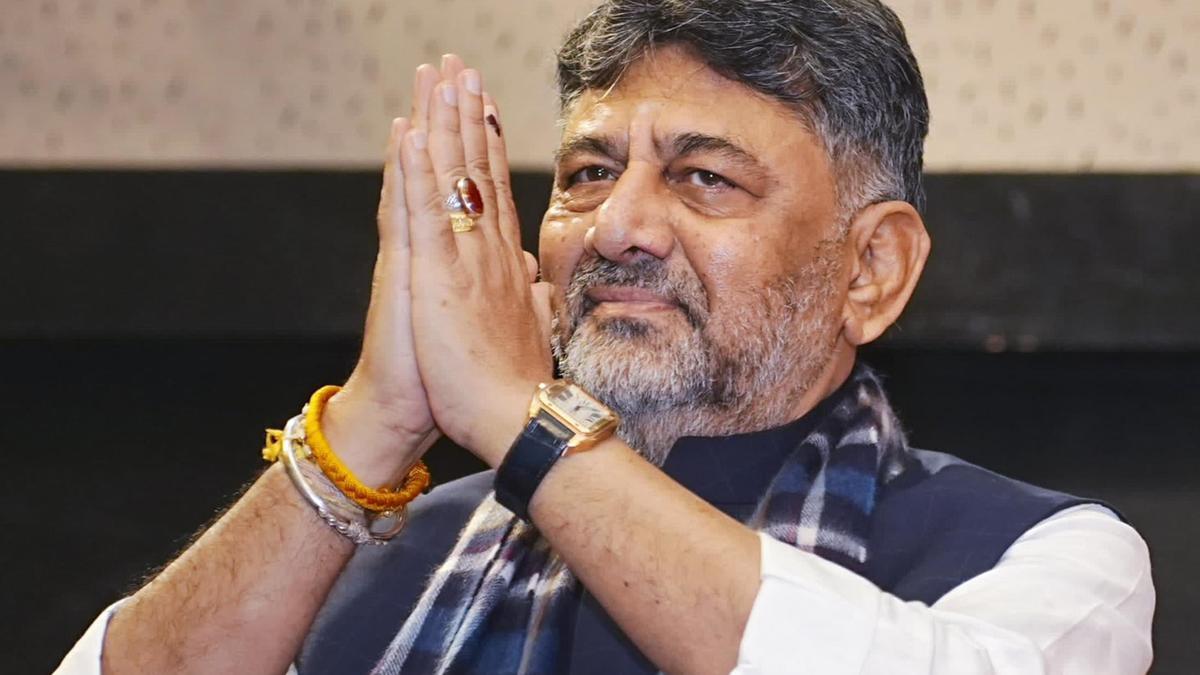
In a strong and pointed message aimed at silencing rumour mills within the party and outside it, Deputy Chief Minister D.K. Shivakumar declared that he will “never indulge in factional politics or backstabbing,” insisting that loyalty to the party and its leadership remains the foundation of his political life. His statement comes at a politically sensitive moment, with debates over leadership roles, internal equations, and the future direction of the government dominating Karnataka’s political atmosphere.
Making his stand clear, Shivakumar said that the party must move forward unitedly and not allow internal disagreements to weaken the larger mission of governance and public welfare. He reminded party workers that the organisation has weathered storms in the past through discipline and collective resolve, not through internal confrontations. His message was widely viewed as both an assurance to the high command and a signal to his supporters to avoid unnecessary speculation.
UNITY VS. TENSION: SHIVAKUMAR’S BALANCING ACT AMID LEADERSHIP DEBATES
Shivakumar’s comments arrive amid persistent speculation about the leadership dynamics between the Chief Minister and Deputy Chief Minister. Though both leaders have repeatedly stated they will abide by the decisions of the party high command, whispers of internal differences continue. By asserting that he will neither sabotage nor destabilise the government, Shivakumar attempted to project himself as a disciplined organisational leader focused on strengthening the party at every level.
Observers noted that his statement also attempts to calm anxieties within the party’s grassroots cadre, many of whom were caught between loyalties and uncertainties. Shivakumar reminded them that factionalism has historically hurt parties more than external challenges. According to party insiders, this message was also aimed at preventing over-enthusiastic supporters from making provocative comments that could be interpreted as pressure tactics.
What makes the statement notable, analysts say, is its timing. With the Assembly session approaching and the government expected to present important policy decisions, ensuring a stable internal climate is crucial. Shivakumar’s efforts to frame unity as a strategic necessity rather than merely a moral commitment may help stabilise the mood within the legislature and bureaucracy.
POLITICAL SIGNALS: A MESSAGE TO HIGH COMMAND AND OPPOSITION ALIKE
Beyond internal implications, Shivakumar’s remarks also send a message to the opposition, which has been alleging instability in the ruling dispensation. By projecting himself as a leader uninterested in backroom maneuvers, Shivakumar attempted to close the door to allegations that the government is internally divided and inching towards conflict. In political terms, it reaffirms that the coalition between the top two leaders remains intact, at least publicly.
Within the party’s national leadership, Shivakumar’s statement is being perceived as a gesture of reassurance. The high command has already called for discipline and unity among Karnataka leaders, and his words emphasize that he stands firmly behind that directive. Whether this contributes to long-term clarity within the party hierarchy remains to be seen, but it strengthens the narrative that Karnataka leaders are mindful of Delhi’s expectations.
His invocation of loyalty and organisational values also aligns with his broader positioning within the party. Shivakumar has long portrayed himself as a team-builder, crisis-manager and loyalist, often reminding leaders of past sacrifices made to protect the party’s interests during difficult years. The current message fits that storyline and reinforces his political identity.
WHAT THIS MEANS FOR THE MONTHS AHEAD
As the government enters a crucial phase with legislative priorities, budget preparation, and district-level reviews, political stability will play a decisive role in implementation. Shivakumar’s message may help ease anxieties among administrators who often take cues from leadership dynamics when executing policy decisions. A clear public stance on unity may translate into smoother coordination across departments.
For the party’s organisational machinery, the message helps set the tone for upcoming political strategies. Leaders expect local-level workers to focus on governance delivery, welfare outreach, and constituency strengthening — areas that often get neglected when infighting dominates political discourse. By framing unity as an organisational duty, Shivakumar attempts to push the cadre into election-ready discipline rather than speculation-driven politics.
In a strong and emotionally charged statement, Deputy Chief Minister D.K. Shivakumar on Monday asserted that he would never indulge in factional politics or betray anyone within his party. His remarks come at a time when Karnataka continues to witness rising tensions and speculation over leadership stability, internal coordination, and the political future of the ruling party. Speaking at a public event attended by party workers and supporters, Shivakumar stated that loyalty has always been the core of his political journey and would continue to remain non-negotiable.
He emphasised that his commitment to the party, its workers, and the larger organisational discipline goes beyond posts or power equations. Without naming any individual or group, he noted that backstabbing and factionalism weaken the party’s foundations and ultimately harm governance. His tone reflected a deeper intent to counter speculation surrounding leadership equations, while signaling to the high command that he remains firmly aligned with the broader party interest.
Shivakumar reiterated that he had always handled political challenges with dignity and restraint, choosing dialogue over confrontation and collective growth over personal gain. He added that differences within a party are natural, but they must be resolved internally and respectfully. His remarks were received with loud applause by supporters present, many of whom claimed that Shivakumar’s message reflects his long-standing reputation as a loyal organiser and crisis manager within the party structure.
LEADERSHIP STABILITY AND MESSAGING TO PARTY CADRES
Political observers believe that Shivakumar’s statement serves a dual purpose — calming internal tensions and reassuring party cadres of his continued loyalty. Over the past few weeks, Karnataka politics has been dominated by speculations about leadership change, second-round talks between the Chief Minister and Deputy Chief Minister, and high-level interventions by senior national leaders. In such a context, Shivakumar’s public stance seeks to reduce friction and prevent factional lines from deepening further.
Party insiders reveal that a significant section of MLAs and district-level workers view Shivakumar as an organisational backbone whose influence is vital for electoral mobilisation. His assurance against indulging in backstabbing is therefore being interpreted as an attempt to keep the cadre united while countering misinformation and political rumours. Analysts say that the timing of this statement is equally crucial, as the party is preparing for an intense legislative session, local body elections, and internal restructuring.
At the administrative level, government officials are reportedly relieved by the Deputy CM’s stance, as clarity and internal harmony are essential for smooth governance. Frequent speculation about leadership tussles had created uncertainty within bureaucratic circles, slowing decision-making in key departments. A strong public message from one of the state’s top leaders, therefore, is expected to stabilise the internal climate and redirect focus toward governance.
Shivakumar also highlighted that politics, especially at the state level, requires patience, maturity, and a sense of responsibility toward citizens. He stated that leaders must demonstrate the strength to rise above personal aspirations, especially when the public expects stability and efficient administration. He pointed out that Karnataka is witnessing significant socio-economic challenges that require coordinated teamwork, not internal rivalry. By positioning himself as a leader focused on collective progress, Shivakumar sought to shift the narrative from power struggles to governance priorities.
He further noted that social welfare schemes, rural development projects, and infrastructure proposals cannot be delayed due to political disagreements. According to him, political leadership must take a unified approach to guarantee smooth implementation of government programmes — from guarantee schemes to farmer support and urban development initiatives. Shivakumar’s remarks underscored his attempt to project himself as a guardian of governance continuity and administrative discipline.
Responding indirectly to critics, Shivakumar said that his entire political life has been built on trust — trust from voters, party workers, and senior leaders. He emphasised that every responsibility he has undertaken has been fulfilled with honesty and determination. This statement was interpreted as a subtle but pointed message to those who have questioned his intentions or attempted to portray him as a contender for leadership change. His comment that “loyalty cannot be bought or borrowed” resonated strongly with the gathered audience.
Senior party leaders in the state have reportedly welcomed Shivakumar’s statement, calling it “necessary and timely.” They believe that such assurances from top leaders help maintain discipline at the grassroots level and prevent local-level disputes from escalating. Many legislators have also expressed relief, saying that such statements reduce speculation-driven anxiety and allow them to work confidently in their constituencies without fear of political instability.
The opposition, however, remains skeptical. Some leaders have argued that political tensions within the ruling party are too deep to be resolved through public statements alone. They claim that Shivakumar’s remarks indicate underlying friction rather than complete harmony. Yet, analysts note that despite opposition criticism, the Deputy CM’s strong articulation of unity carries weight, especially among his large support base and within party organisational networks.
Observers also highlight that the statement could be a strategic message directed at the party high command. By publicly committing to unity and discipline, Shivakumar positions himself as a reliable and stable figure who prioritises the larger interest of governance. This could potentially strengthen his standing in any future deliberations on leadership or organisational restructuring. His supporters see this as an important moment in shaping his long-term political trajectory.
The timing of Shivakumar’s message also aligns with ongoing preparations for the next Assembly session, where the government plans to table several important bills and welfare-related measures. For the ruling party, internal cohesion is essential to smoothly pass legislation and counter the opposition’s expected attacks. Shivakumar’s comments therefore serve as a reassurance that governance will not be disrupted by internal politics.
Political analysts have noted that the Deputy CM’s tone was firm yet reconciliatory. This combination, they argue, reflects his desire to maintain influence without projecting aggression. By choosing this approach, Shivakumar projects himself as a mature leader capable of handling pressure, balancing expectations, and preserving organisational unity. This contrasts with the tension-filled atmosphere that had previously dominated the political landscape.
Civil society groups and commentators have also reacted positively to the message, stating that political stability is essential for public welfare. They argue that citizens are more concerned about effective delivery of services, rural development, public safety, and economic support than about leadership tussles. Shivakumar’s statement, therefore, aligns with broader public sentiment seeking continuity rather than conflict.
As Karnataka moves into a crucial period of legislative activity and administrative commitments, the Deputy Chief Minister’s firm denial of factional politics may set the tone for more coordinated governance. Whether this public assurance leads to a sustained phase of internal unity remains to be seen, but the immediate impact is clear: it signals a temporary cooling of tensions, encourages stability within the party, and refocuses the political narrative on governance rather than rivalry.
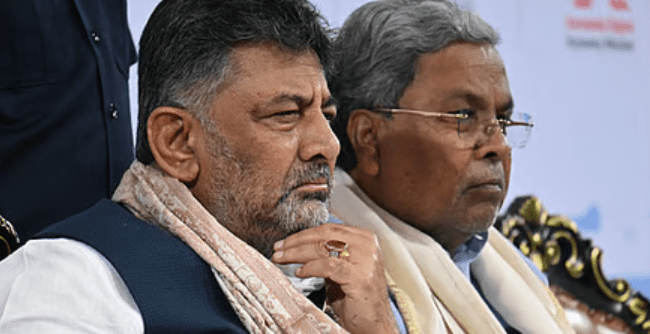
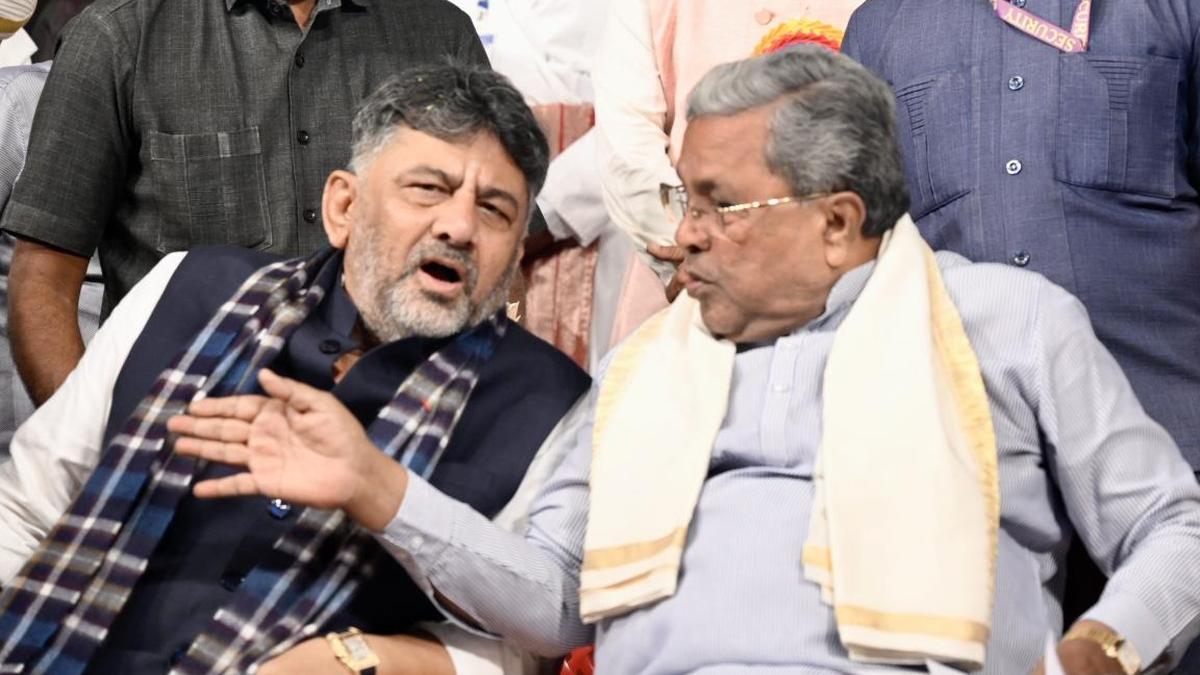
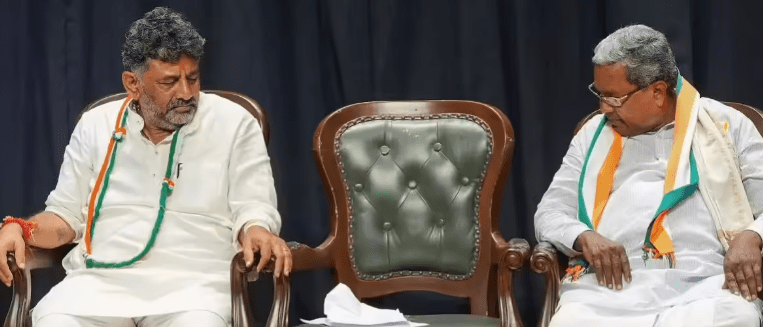
The political waters in Karnataka remain choppy as the state’s Chief Minister siddaramaiah and his Deputy Chief Minister prepare for a second “breakfast meeting” on December 2. The first round — held recently — had drawn intense public interest after both leaders publicly pledged unity and renewed commitment to their government, declaring they would abide by party high-command decisions. With speculation refusing to die down, party cadres, opposition observers and political analysts are watching the upcoming meeting closely, seeing it as more than a courtesy meal — but possibly a decisive session that could shape leadership arrangements ahead of future elections.
The meeting is slated to take place at the official residence of the Chief Minister, signalling a continuation of dialogue rather than confrontation. According to sources within the ruling party, both leaders will go over key points raised by the party high command — including issues of perceived factionalism, public messaging, and coordination ahead of the next Assembly session. While details are being kept under wraps, insiders suggest the agenda may also include discussions on ministerial reshuffle, power-sharing formula, and a roadmap for governance over the coming months.
For many observers, the second breakfast is an opportunity to test whether public statements of unity reflect genuine understanding, or merely a tactical suspension of hostilities for the moment. For the bureaucracy and administration, clarity in leadership and chain of command is crucial — especially as government gears up for legislative business, welfare implementation, and policy announcements targeting farmers, social sectors, and infrastructure development. A mis-step or ambiguity could create delays and dampen public trust.
In the days leading up to the meeting, party workers across districts have been expressing mixed emotions. While many believe that the leadership must remain undisturbed to maintain continuity in governance, others feel that unresolved tensions could eventually spill into organisational work at the grassroots. District-level committees have reportedly been instructed to stay neutral and avoid public statements that may hint at factional preferences. This careful messaging highlights how deeply the leadership debate has permeated different layers of the party, even as senior leaders continue to downplay internal rifts.
Public sentiment around the issue has also become increasingly vocal. Voters, particularly in urban centres, have begun questioning whether political uncertainty is affecting decision-making in key departments such as transport, urban development, and agriculture. Citizen groups argue that large infrastructure proposals and welfare schemes require clear political direction, and extended ambiguity risks slowing down their execution. The upcoming breakfast meeting is therefore being viewed not just as an internal party affair but as a moment that could influence developmental momentum across the state.
Observers note that the manner in which the meeting’s outcomes are communicated may be as important as the decisions themselves. If both leaders appear together, issue a uniform statement, and project a sense of stability, it could quell speculation and reassure government machinery. However, if their communications are separate or vague, it may intensify rumours of an unresolved power struggle. Political communication in this context becomes a strategic tool — shaping public expectation, investor confidence, and even media narratives.
Ultimately, the December 2 meeting holds significance because it may determine how the ruling party navigates the remainder of its term. With major festivals, legislative sessions, and administrative deadlines approaching, the need for cohesion is greater than ever. Whether the breakfast meeting becomes a symbol of resolution or a reminder of internal tension will depend on what unfolds behind closed doors — and how sincerely both leaders commit to steering the state forward together.
WHAT HANGS IN THE BALANCE: Leadership Clarity, Governance Stability, and Electoral Strategy
At the heart of the leadership tussle are competing political currents within the party — one leaning toward organisational strength and grassroots mobilisation, the other centered on governance experience and administrative stewardship. The first breakfast meeting appeared to bridge the divide, at least publicly. But many in the party believe that without concrete resolutions on power-sharing or defined protocol, tensions will resurface. The December 2 meeting is seen as a litmus test for whether both camps are willing to formalise a mutually acceptable arrangement and present a united front.
One of the major stakes is the upcoming Assembly session, where the government may push key welfare, budgetary, and legislation proposals. For smooth functioning, ministers, party MLAs, and bureaucrats need clarity on leadership hierarchy. The absence of that could lead to confusion over roles, policy ownership, and decision-making authority. In political terms, the meeting might shape the line-up of candidates for the next round of local and state elections — a factor that both leaders are reportedly keen to influence.
Moreover, in a state with complex caste and regional equations, the leadership issue carries broader social significance. A committee of senior party leaders, nominated by the high command, has been reportedly reviewing the balance of regional representation, caste factor, performance and public acceptability. The December 2 breakfast could mark a turning point — either consolidating current leadership or paving the way for structural recalibration within the party ahead of upcoming electoral battle.
As of now, both leaders have publicly maintained that they respect party discipline and any decision from the high command will be accepted. But insiders say that behind the scenes, both camps have prepared contingency plans, making the upcoming session critical — not just for headlines, but for realignment of power, influence, and future political direction.
POTENTIAL SCENARIOS AFTER THE MEETING
There are few possible outcomes from this second meeting, each carrying implications for governance and politics:
Formal reaffirmation of current leadership structure — Both leaders could issue a joint statement reiterating unity, with assurances that there will be no attempt to alter Chief Ministership before the next scheduled change. This would help restore stability and allow the government to focus on welfare and development work.
Agreement on power-sharing modalities — The meeting could result in a roadmap for sharing of responsibilities, ministries or portfolios between the CM and Deputy CM, outlining areas of cooperation, joint decision-making, or delegation. This could placate factional aspirations while preserving unity.
Commitment to rotational leadership or predefined succession calendar — Though more sensitive, there is speculation about an internal agreement for future leadership transition — which could involve a timetable indicating when the Deputy CM may assume leadership. Such an agreement would be complex but could mitigate long-term uncertainty.
Continued ambiguity and internal contestation — If the meeting ends without clarity, it may prolong uncertainty within the party, embolden factions, and lead to renewed rumours — potentially impacting public confidence in governance.
RESPONSES FROM WITHIN AND OUTSIDE THE PARTY
Within the ruling party, MLAs and ministers have apparently pinned hopes on the December 2 meeting delivering clarity. Some backbenchers feel a definitive outcome could end months of speculation, allowing them to concentrate on constituency work and welfare delivery without political distractions. Senior ministers have reportedly urged both leaders to present a united front, underscoring that internal stability is essential to implement guarantee schemes, social welfare programs and development projects.
Opposition leaders are, understandably, watching the proceedings warily. Some have criticized the leadership uncertainty, arguing it undermines governance and reflects poorly on the ruling party’s internal management. Others suggest that regardless of outcome, electoral rhetoric and opposition strategies may shift — capitalising on any perceived disunity or dissatisfaction. Civil society groups, meanwhile, have appealed for stability — noting that frequent leadership uncertainty can slow down policy implementation and impact development, especially in critical sectors like health, education, and infrastructure.
Political analysts argue that the upcoming breakfast meet may also serve a symbolic role — signalling to the public that the party addresses differences through dialogue rather than rebellion. In a time when public expectations are high on governance outcomes, such symbolism can help restore confidence, provided substantive decisions accompany it.
WHAT TO WATCH FOR: PUBLIC SIGNALS, GOVERNANCE ACTIONS AND FOLLOW-UP
As December 2 approaches, several indicators will help assess whether the breakfast meeting achieves its objective:
Joint public statement or press conference by both leaders, indicating consensus on leadership, power-sharing, or future roadmap.
Cabinet or portfolio reshuffle — Early or mid-term changes may signal internal balancing or reward for loyalty, especially if accompanied by redistribution of responsibilities.
Implementation of pending welfare/development schemes — Prompt action on stalled projects or announcements of new schemes may indicate focus shifting back to governance rather than politics.
Internal party reorganisation — Changes in party office-bearers, state-level committees or district-level responsibilities may reflect reshuffling of influence zones and power centers.
Public reaction and media framing — Media reports, editorials, public statements by supporters or opponents will reveal whether the meeting has succeeded in containing speculation or igniting new debates.
Civil society and citizen groups will also be watching — especially in constituencies where public welfare and development plans have been delayed or impacted by political uncertainty. For ordinary citizens, consolidation of leadership means smoother governance, stability in public service delivery, and clearer accountability.
CONCLUSION: A PIVOTAL MOMENT FOR Karnataka’s Political Future
The second breakfast meeting between the Chief Minister and Deputy Chief Minister on December 2 could prove to be a turning point in Karnataka’s current leadership saga. At stake is not only the personal aspirations of powerful leaders but also the stability, effectiveness, and public perception of governance. A successful meeting with a clear outcome could restore confidence among party members, civil society, and voters — enabling the administration to focus on policy implementation, welfare distribution, and development projects.
On the other hand, a non-committal or muddled outcome may prolong uncertainty, fuel speculation, and distract from governance priorities. In that scenario, both internal governance and public trust could suffer, especially at a time when citizens expect delivery on promises rather than intra-party drama.
For the people of Karnataka, this meeting — dubbed “Round Two Breakfast” — is about more than politics; it is about whether their leaders can rise above ambition and ego, prioritise governance over rivalry, and steer the state toward stability and progress.
As the date draws near, all eyes will be on the breakfast table at the CM’s residence — hopeful that the aroma of compromise will usher in a season of cooperation and clarity.
The Media & Entertainment (M&E) sector is set for tremendous growth but must rapidly adapt to deep disruption from Artificial Intelligence, said Shri Sanjay Jaju, Secretary, Ministry of Information & Broadcasting, at the 12th CII Big Picture Summit in Mumbai. Addressing industry leaders, he called for converting India’s cultural strengths and storytelling legacy into globally competitive content powered by new technologies.
AI Era and Creative Economy Vision
Delivering the inaugural address on the theme “The AI Era – Bridging Creativity and Commerce,” Shri Jaju stressed that AI is transforming how content is created, distributed and consumed. He warned that India’s global market share—currently only about 2% of the worldwide M&E market—could shrink further if the industry fails to embrace emerging technologies and new business models. At the same time, he underlined that the “orange economy” of creativity and culture is entering a decisive phase in India, with stories “immersed with technology” becoming the key to commercial success.
Economic Impact and Global Storytelling Ambition
The Secretary highlighted that India’s creative economy provides direct or indirect livelihoods to over 10 million people and contributes around ₹3 lakh crore to the national GDP. Drawing on the country’s storytelling heritage from oral Shruti to written Kriti and visual traditions, he said India must transform this rich legacy into content that resonates with global audiences. As a rising economic power, he asserted, India’s stories “must reach all parts of the world,” forming the core of its soft power and helping connect people and nations.
Government as Enabler, Industry as Driver
Shri Jaju clarified that the government’s role is to provide an enabling ecosystem, including level playing fields, fiscal incentives and world‑class skilling frameworks, while industry must drive innovation and growth. He cited the Union Cabinet’s approval of the Indian Institute of Creative Technologies (IICT) in Mumbai as a landmark initiative to bridge skill gaps in the creative economy, noting that the Film City campus is expected to be completed in two years, with the NFDC campus already operational. Platforms like WAVES Bazaar, he added, are helping creators connect with investors and buyers, strengthening the broader content ecosystem.
Policy Roadmap and Investment Platforms
During the summit, the Secretary released CII’s White Paper on “Priority Policy Reforms for a Globally Competitive Creative Economy of India,” which lays out key policy actions to boost growth, innovation and global competitiveness. The event also saw the inauguration of the CII M&E Investors’ Meet and CII WAVES Bazaar, alongside participation from senior industry leaders including Shri Gaurav Banerjee, Shri Rajan Navani and Ms. Gunjan Soni, signalling strong public‑private alignment on the future of India’s M&E sector.
Conclusion: Entertainment sector
Shri Sanjay Jaju’s address at the Big Picture Summit framed India’s M&E sector at a pivotal crossroads—facing disruptive AI‑driven change but also unprecedented opportunities to scale its creative output worldwide. With government playing the role of facilitator and industry leading on innovation, India aims to convert its cultural capital into a powerful global creative economy, where technology‑infused stories drive both commerce and soft power.